Adhyaya 66
पाण्डवपरिचयः—विराटसभायां प्रकाशनम् (Identification of the Pāṇḍavas in Virāṭa’s Court)
Upa-parva: Ajñātavāsa-prakāśana (Revelation and Reconciliation at Matsya Court)
Virāṭa interrogates the identity of the disguised figures, asking which among them are Yudhiṣṭhira, Arjuna, Bhīma, Nakula, Sahadeva, and Draupadī, noting that the Pāṇḍavas had remained unrecognized since the dice defeat. Arjuna answers by mapping each disguise to the true person: the ‘Ballava’ is Bhīma, credited with obtaining the divine saugandhika flowers and with the slaying of the Kīcakas and dangerous animals; Nakula and Sahadeva are identified by their service functions and martial capacity; Draupadī is named as the Sairandhrī whose affront precipitated the Kīcaka episode. Arjuna then discloses himself and frames the year of concealment as a protected gestation-like interval. Vaiśaṃpāyana reports Virāṭa’s admiration as he recounts Arjuna’s battlefield prowess and accepts the Pandavas’ status. Virāṭa proposes honoring them with gifts, even offering his kingdom, and proposes Uttara’s hand for Arjuna; Uttara supports honoring the Pandavas. The sequence closes with Arjuna accepting the relationship but specifying acceptance in a manner consistent with dynastic propriety (receiving Uttara as a daughter-in-law connection), thereby formalizing alliance while preserving social-legal decorum.
Chapter Arc: वैशम्पायन जनमेजय से कहते हैं—अर्जुन के युद्ध-ललकारते ही दुर्योधन ऐसा तिलमिलाता है जैसे अंकुश की चोट खाया मतवाला गजराज; सभा-अपमान का प्रतिशोध अब रण में उतर आता है। → अर्जुन के तीखे वचनों से दुर्योधन का धैर्य डगमगाता है; वह रथ मोड़ता है, तभी कर्ण उसे थामकर पीछे से आ खड़ा होता है। गाण्डीव की गर्जना और पैने, पंखदार बाण दिशाओं को भर देते हैं; कुरु-वीर क्षण भर के लिए हतप्रभ होकर फिर संभलते हैं, और भीष्म की दृष्टि युद्ध-नीति को दिशा देती है। → अर्जुन भीष्म को रणभूमि में छोड़कर उनके सारथी को बाणों से बेधता हुआ रथ-घेरों से बाहर निकल आता है; फिर वह दुर्योधन के रत्नजटित मुकुट को एक शर से काट गिराता है—कौरव-गौरव पर सीधा प्रहार, और रण में मनोबल का निर्णायक क्षण। → भीष्म के हितकारी वचन सुनकर कौरव-वीर अर्जुन-रूपी ‘अग्नि’ को बढ़ता देख उसे रोकने का मन बनाते हैं और दुर्योधन की रक्षा में जुटते हैं; अर्जुन देवदत्त शंख बजाकर शत्रुओं के हृदय विदीर्ण करता हुआ अन्य माननीय योद्धाओं को भी बाण-वर्षा से दबाता है। → कौरव-सेना भीष्म के संकेत पर संगठित होकर अर्जुन को घेरने की तैयारी करती है—अगला प्रहार किस ओर टूटेगा, और कौन-सा महारथी आगे बढ़ेगा?
Shlokas
Verse 1
वैशम्पायनजी कहते हैं--जनमेजय! महात्मा अर्जुनने जब इस प्रकार युद्धके लिये ललकारा, तब धूृतराष्ट्रपुत्र दुर्योधन अंकुशकी चोट खाये हुए मतवाले गजराजकी भाँति उनके कटुवचनरूपी अंकुशसे पीड़ित हो पुन: लौट पड़ा
Vaiśampāyana said: “O Janamejaya! When the great-souled Arjuna thus challenged for battle, then Duryodhana, the son of Dhṛtarāṣṭra—like a maddened lordly elephant struck by the goad—pained by the goad of Arjuna’s harsh words, turned back again.”
Verse 2
सो<मृष्यमाणो वचसाभिमृष्टो महारथेनातिरथस्तरस्वी । पर्याववर्ताथ रथेन वीरो भोगी यथा पादतलाभिमृष्ट:,महारथी कुन्तीकुमारने अपने वचनोंद्वारा उसका तिरस्कार किया था; अतः वह वेगशाली अतिरथी वीर इस अपमानको न सह सका, अतएव जैसे पैरोंसे कुचला हुआ सर्प बदला लेनेके लिये लौट पड़ता है, उसी प्रकार दुर्योधन अपने रथके साथ लौट आया
Vaiśampāyana said: Stung by the words that had insulted him, the swift and mighty atiratha could not endure the affront. The hero wheeled his chariot back—like a serpent, trampled underfoot, turning again to strike in retaliation—and so Duryodhana returned with his chariot.
Verse 3
त॑ प्रेक्ष्य कर्ण: परिवर्तमानं निवर्त्य संस्तभ्य च विद्धगात्रम् । दुर्योधनस्योत्तरतो 5 भ्यगच्छत् पार्थ नृवीरो युधि हेममाली,उसको लौटते देख कर्ण भी अपने घायल शरीरको किसी प्रकार सँभालकर लौट पड़ा और दुर्योधनके उत्तर (वाम)-भागमें रहकर युद्धभूमिमें पार्थका सामना करनेके लिये चला। नरवीर कर्ण सोनेकी मालासे अलंकृत था
Seeing him turn back, Karṇa too withdrew, steadying his wounded body with effort. Taking position on Duryodhana’s northern (left) side, the hero—adorned with a golden garland—advanced on the battlefield to confront Pārtha.
Verse 4
भीष्मस्तत: शान्तनवो विवृत्य हिरण्यकक्षस्त्वरयाभिषड़्ी । दुर्योधन पश्चिमतो<भभ्यरक्षत् पार्थान्महाबाहुरधिज्यधन्वा,तदनन्तर सुनहरे रंगकी चादर ओढ़े शान्तनुनन्दन भीष्म भी बड़े वेगसे रथ घुमाकर वहाँ आ पहुँचे। वे शत्रुको पराजित करनेमें समर्थ थे। महाबाहु भीष्म धनुषकी प्रत्यंचा चढ़ाकर पश्चिम या पीछेकी ओरसे पार्थके आक्रमणोंसे दुर्योधनकी रक्षा करने लगे
Vaiśampāyana said: Then Bhīṣma, the son of Śāntanu, turning his chariot about, rushed forward—his golden-hued mantle visible as he advanced. Mighty-armed and with his bow strung, he took position to the west (rear) and began protecting Duryodhana from the assaults of the Pāṇḍavas.
Verse 5
द्रोण: कृपश्चैव विविंशतिश्न दुःशासनश्वैव विवृत्य शीघ्रम् सर्वे पुरस्ताद् विततोरुचापा दुर्योधनार्थ त्वरिता<5भ्युपेयु:,तत्पश्चात् द्रोण, कृपाचार्य, विविंशति और दुःशासन भी शीघ्र ही घूमकर आ गये। वे सब अपने विशाल धनुषको ताने हुए पूर्व या सामनेकी ओरसे दुर्योधनकी रक्षाके लिये बड़ी उतावलीके साथ आये थे
Vaiśampāyana said: Drona and Kripa, along with Viviṁśati and Duḥśāsana, quickly wheeled about. All of them, their great bows drawn, hurried forward to the front in order to protect Duryodhana—eager and intent on shielding their leader in the press of danger.
Verse 6
स तान्यनीकानि निवर्तमाना- न्यालोक्य पूर्णौघनिभानि पार्थ: । हंसो यथा मेघमिवापततन्तं धनंजय: प्रत्यतपत् तरस्वी,जैसे सूर्य घिरती हुई मेघोंकी घटाको अपनी किरणोंसे तपाता है, उसी प्रकार वेगशाली कुन्तीपुत्र धनंजयने भारी जलप्रवाहके समान लौटती हुई उन कौरवसेनाओंको देखकर उन्हें संताप देना आरम्भ किया
Vaiśampāyana said: Seeing those Kaurava battle-formations turning back—dense and surging like a full flood—Pārtha (Arjuna), swift in might, pressed upon them and began to scorch them in battle, as the sun heats and burns through masses of cloud with its rays.
Verse 7
ते सर्वतः सम्परिवार्य पार्थ- मस्त्राणि दिव्यानि समाददाना: । ववर्षुरभ्येत्य शरै: समन्ता- न्मेघा यथा भूधरमम्बुवर्गैं:,दिव्य अस्त्र धारण किये हुए उन योद्धाओंने अर्जुनको चारों ओरसे घेर लिया और जैसे बादल पहाड़के ऊपर सब ओरसे पानी बरसाते हैं, उसी प्रकार वे निकट आकर उनपर बाणोंकी वर्षा करने लगे
Vaiśampāyana said: Bearing celestial weapons, those warriors surrounded Pārtha on every side. Then, closing in from all directions, they showered him with arrows—just as clouds pour down masses of water upon a mountain from every quarter.
Verse 8
ततोअस्त्रमस्त्रेण निवार्य तेषां गाण्डीवधन्वा कुरुपुड्रवानाम् | सम्मोहन शत्रुसहो <न्यदस्त्रं प्रादुश्षकारैन्द्रिरपारणीयम्,तब शत्रुओंका वेग सहन करनेवाले इन्द्रपुत्र गाण्डीवधारी अर्जुनने अपने अस्त्रसे कौरवदलके जन श्रेष्ठ वीरोंके अस्त्रोंका निवारण करके सम्मोहन नामक दूसरा अस्त्र प्रकट किया, जिसका निवारण करना किसीके लिये भी असम्भव था
Vaiśaṃpāyana said: Then Arjuna, bearer of the Gāṇḍīva and son of Indra—one who could endure the onrush of enemies—checked the weapons of those foremost warriors among the Kurus and the Puṇḍras with his own weapon. Having thus restrained their assault, he manifested another missile, the ‘Sammohana’ (Delusion) weapon, an irresistible force that none could counter.
Verse 9
ततो दिशश्वानुदिशो विवृत्य शरै: सुधारैर्निशितै: सुपत्रै: । गाण्डीवघोषेण मनांसि तेषां महाबल: प्रव्यथयाज्चकार,फिर तो उन महाबलीने सुन्दर पंख और पैनी धारवाले बाणोंद्वारा सम्पूर्ण दिशाओं और दिक्कोणोंको आच्छादित करके गाण्डीव धनुषकी (भयंकर) टंकारसे कौरवयोद्धाओंके हृदयमें बड़ी व्यथा उत्पन्न कर दी
Then that mighty warrior, spreading forth his arrows—keen-edged, sharp-pointed, and well-feathered—covered all the directions and intermediate quarters. With the thunderous twang of the Gāṇḍīva bow, he struck deep fear and agitation into the hearts of those Kaurava fighters, unsettling their resolve in the midst of battle.
Verse 10
ततः पुनर्भीमरवं प्रगृहाय दोर्भ्या महाशड्खमुदारघोषम् । व्यनादयत् स प्रदिशो दिश: खं भुवं च पार्थो द्विषतां निहन्ता,तत्पश्चात् शत्रुहन्ता कुन्तीकुमारने भयंकर शब्द करनेवाले अपने महाशंखको, जिसकी आवाज बहुत दूरतक सुनायी पड़ती थी, दोनों हाथोंसे थामकर बजाया। उसकी ध्वनि सम्पूर्ण दिशाओं-विदिशाओं, आकाश तथा पृथ्वीमें सब ओर गूँज उठी
Then again, Pārtha—the slayer of foes—grasped with both arms his great conch, whose roar was like Bhīma’s thunder and whose sound carried far. He blew it so that its resonance filled every direction and intermediate quarter, the sky, and the earth—an awe-inspiring proclamation of resolve before the coming clash.
Verse 11
ते शड्खनादेन कुरुप्रवीरा: सम्मोहिता: पार्थसमीरितेन । उत्सृज्य चापानि दुरासदानि सर्वे तदा शान्तिपरा बभूवु:,अर्जुनके बजाये हुए उस शंखकी आवाजसे वे समस्त कौरव वीर मोहित (मूर्च्छित) हो गये और अपने दुर्लभ धनुषोंको त्यागककर सब-के-सब गहरी शान्ति (बेहोशी)-में डूब गये
Struck by the conch-blast raised by Pārtha, all the Kuru champions were bewildered, as though stunned into swoon. They let fall their hard-to-withstand bows, and in that moment every one of them sank into a deep stillness—like men bereft of consciousness.
Verse 12
तथा विसंज्ञेषु च तेषु पार्थ: स्मृत्वा च वाक्यानि तथोत्तराया: । निर्याहि मध्यादिति मत्स्यपुत्र- मुवाच यावत् कुरवो विसंज्ञा:,उन कौरव महारथियोंके अचेत हो जानेपर अर्जुनको उत्तराकी कही हुई बातें स्मरण हो आयीं और उन्होंने मत्स्यनरेशके पुत्र उत्तरसे कहा--“नरवीर! ये कौरव अभी बेहोश पड़े हुए हैं। ये जबतक होशमें आवें, उसके पहले ही सेनाके बीचसे निकल जाओ। आचार्य द्रोण और कृपाचार्यके शरीरपर जो श्वेत वस्त्र सुशोभित हैं, कर्णके अंगोंपर जो सुन्दर पीले रंगका वस्त्र है, अश्वत्थामा तथा राजा दुर्योधनके शरीरपर जो नीले रंगके कपड़े हैं, उन सबको उतार लो
When those warriors lay unconscious, Pārtha (Arjuna), recalling the words spoken earlier by Uttarā, addressed the Matsya prince Uttara: “Drive out from the midst of the army while the Kurus are still senseless. Before they regain awareness, strip off the distinctive garments that adorn them—Drona’s and Kripa’s white robes, Karṇa’s fine yellow cloth, and the blue garments worn by Aśvatthāman and King Duryodhana.”
Verse 13
आचार्यशारद्वतयो: सुशुक्ले कर्णस्य पीतं रुचिरं च वस्त्रम् । द्रौणेश्ष राज्ञक्ष तथैव नीले वस्त्रे समादत्स्व नरप्रवीर,उन कौरव महारथियोंके अचेत हो जानेपर अर्जुनको उत्तराकी कही हुई बातें स्मरण हो आयीं और उन्होंने मत्स्यनरेशके पुत्र उत्तरसे कहा--“नरवीर! ये कौरव अभी बेहोश पड़े हुए हैं। ये जबतक होशमें आवें, उसके पहले ही सेनाके बीचसे निकल जाओ। आचार्य द्रोण और कृपाचार्यके शरीरपर जो श्वेत वस्त्र सुशोभित हैं, कर्णके अंगोंपर जो सुन्दर पीले रंगका वस्त्र है, अश्वत्थामा तथा राजा दुर्योधनके शरीरपर जो नीले रंगके कपड़े हैं, उन सबको उतार लो
Vaiśampāyana said: “O best of men, take those garments as well: the very white robes of the two teachers—Droṇa and Śāradvata (Kṛpa); the handsome yellow garment of Karṇa; and likewise the blue garments of Droṇa’s son (Aśvatthāman) and of the king (Duryodhana).”
Verse 14
भीष्मस्य संज्ञां तु तथैव मन्ये जानाति सो<स्त्रप्रतिघातमेष: । एतस्य वाहान् कुरु सव्यतस्त्व- मेवं हि यातव्यममूढसंज्ञै:,“मैं समझता हूँ, पितामह भीष्मको होश बना हुआ है; क्योंकि वे इस सम्मोहन अस्त्रको निवारण करनेकी विधि जानते हैं। उनके घोड़ोंको बाँयीं ओर छोड़कर जाना; क्योंकि जिनकी चेतना लुप्त नहीं हुई है, ऐसे वीरोंके निकटसे जाना हो, तो इसी प्रकार जाना चाहिये”
Vaiśampāyana said: “I believe that Bhīṣma has indeed regained full awareness, for he knows how to counter this deluding weapon. Keep his horses to your left as you pass; for when one must go near heroes whose consciousness has not been lost, this is the proper way to approach.”
Verse 15
रश्मीन् समुत्सृूज्य ततो महात्मा रथादवप्लुत्य विराटपुत्र: । वस्त्राण्युपादाय महारथानां तूर्ण पुनः स्वं रथमारुरोह,तब महामना विराटपुत्र घोड़ोंकी रास छोड़कर रथसे कूद पड़ा और उन महारथियोंके कपड़े लेकर फिर शीघ्र ही अपने रथपर चढ़ आया
Vaiśampāyana said: Then the high-souled son of Virāṭa, letting go of the reins, leapt down from the chariot. Taking up the garments of those great warriors, he quickly climbed back onto his own chariot—an impulsive act that reveals both the urgency of the moment and a lapse in prudent conduct amid the pressures of battle.
Verse 16
ततो<न्वशासच्चतुर: सदश्वान् पुत्रो विराटस्य हिरण्यकक्षान् । ते तद् व्यतीयुर्ध्वजिनामनीक॑ श्वेता वहन्तोडर्जुनमाजिमध्यात्,तत्पश्चात् विराटकुमारने सोनेके साज-सामानसे सुशोभित उन चारों सुन्दर घोड़ोंको हाँक दिया। वे श्वेत घोड़े अर्जुनको रथमें लिये हुए रणभूमिके मध्यभागसे निकले और रथारोहियोंकी ध्वजायुक्त सेनाका घेरा पार करके बाहर पहुँच गये
Vaiśampāyana said: Then the son of Virāṭa urged on the four excellent horses, fitted with golden trappings. Those white steeds, bearing Arjuna in the chariot, drove out from the very midst of the battlefield and passed through the bannered ranks of the chariot-warriors, breaking free of their encircling formation. The scene underscores disciplined courage and skilled action under pressure—strength guided by purpose rather than panic.
Verse 17
"3 ८. ,7244> ४१ ह ० फिजिडशकमहााःम2+न्चाहटट ४4% छ्च पर 0 04 ० ॥ जता ््कुपज... 3०० न् 8. ॥ 3 है आओ 5 5-७. तथानुयान्तं पुरुषप्रवीरं भीष्म: शरैरभ्यहनत् तरस्वी । स चापि भीष्मस्य हयान् निहत्य विव्याध पार्थों दशभि: पृषत्कै:,मनुष्योंमें प्रधान वीर अर्जुनको इस प्रकार जाते देख वेगशाली भीष्मने बाण मारकर उन्हें घायल कर दिया। तब अर्जुनने भी भीष्मके घोड़ोंको मारकर दस बाणोंसे उन्हें भी घायल कर दिया
As the foremost of men advanced, the mighty Bhīṣma struck him with a swift volley of arrows. Arjuna, the son of Pṛthā, in turn slew Bhīṣma’s horses and then pierced Bhīṣma himself with ten sharp shafts—an exchange that underscores the warrior code: meeting force with force while aiming to disable the opponent’s capacity to fight.
Verse 18
दुर्भद्य धनुषवाले अर्जुन भीष्मको युद्धभूमिमें छोड़कर और उनके सारथिको बाणोंसे बींधकर रथोंके घेरेसे बाहर जा खड़े हुए। उस समय वे बादलोंको छिल्न-भिन्न करके प्रकाशित होनेवाले सूर्यदेवकी भाँति शोभा पा रहे थे
Vaiśampāyana said: Arjuna, hard to assail and mighty with the bow, left Bhīṣma on the battlefield; and after piercing his charioteer with arrows, he moved out beyond the encircling ring of chariots and stood apart. At that moment he shone like the sun, breaking through and illuminating the clouds—an image that underscores the warrior’s decisive prowess and the moral gravity of combat where skill and resolve determine the course of duty-bound action.
Verse 19
लब्ध्वा हि संज्ञां तु कुरुप्रवीरा: पार्थ निरीक्ष्याथ सुरेन्द्रकल्पम् । रणे विमुक्तं स्थितमेकमाजौ स धार्तराष्ट्रस्त्वरितं बभाषे,थोड़ी देर बाद होशमें आकर कौरववीरोंने देखा, देवराज इन्द्रके समान पराक्रमी कुन्तीपुत्र अर्जुन युद्धमें रथोंके घेरेसे बाहर हो अकेले खड़े हैं। उन्हें इस अवस्थामें देखकर धृतराष्ट्रपुत्र दुर्योधन तुरंत बोल उठा--
When the Kuru heroes regained consciousness, they looked and saw Pārtha (Arjuna), mighty like Indra, standing alone on the battlefield, having broken free from the press of chariots. Seeing him in that condition, the son of Dhṛtarāṣṭra (Duryodhana) spoke at once in haste—setting the next turn of the encounter in motion.
Verse 20
अयं कथं वै भवतो विमुक्त- स्तथा प्रमथ्नीत यथा न मुच्येत् । तमब्रवीच्छान्तनव: प्रहस्य क्व ते गता बुद्धिरभूत् क्व वीर्यम्
“How is it,” he said, “that this man, once released by you, was again so violently subdued that he could not escape?” Then the son of Śāntanu replied with a laugh: “Where has your judgment gone? Where is your valor?”
Verse 21
न त्वेष बीभत्सुरलं नृशंसं कर्तु न पापे5स्य मनो विशिष्टम्,'ये अर्जुन कभी निर्दयताका व्यवहार नहीं कर सकते। इनका मन कभी पापाचारमें प्रवृत्त नहीं होता। ये त्रिलोकीके राज्यके लिये भी अपना धर्म नहीं छोड़ सकते। यही कारण है कि इन्होंने इस युद्धमें हम सबके प्राण नहीं लिये। कुरुकुलके प्रमुख वीर! अब तू शीघ्र ही कुरुदेशको लौट चल। अर्जुन भी गायोंको जीतकर लौट जायूँ। अब मोहवश तेरा अपना स्वार्थ भी नष्ट न हो जाय, इसका ध्यान रख। सबको वही काम करना चाहिये, जिससे अपना कल्याण हो”
Vaiśampāyana said: “But this Arjuna (Bībhatsu) is not the sort to commit cruel, inhuman deeds. His mind is not inclined toward sin. Even for sovereignty over the three worlds he would not abandon his dharma. That is why, in this conflict, he did not take the lives of us all. O foremost hero of the Kuru line, return quickly to the land of the Kurus; Arjuna too will return after winning back the cattle. Take care that, through delusion, your own self-interest is not ruined. One should undertake only that action which leads to one’s welfare.”
Verse 22
त्रैलोक्यहेतोर्न जहेत् स्वधर्म सर्वे न तस्मान्निहता रणे5स्मिन् । क्षिप्रं कुरून् याहि कुरुप्रवीर विजित्य गाश्च प्रतियातु पार्थ: । मा ते स्वको<र्थों निपतेत मोहात् तत् संविधातव्यमरिष्टबन्धम्,'ये अर्जुन कभी निर्दयताका व्यवहार नहीं कर सकते। इनका मन कभी पापाचारमें प्रवृत्त नहीं होता। ये त्रिलोकीके राज्यके लिये भी अपना धर्म नहीं छोड़ सकते। यही कारण है कि इन्होंने इस युद्धमें हम सबके प्राण नहीं लिये। कुरुकुलके प्रमुख वीर! अब तू शीघ्र ही कुरुदेशको लौट चल। अर्जुन भी गायोंको जीतकर लौट जायूँ। अब मोहवश तेरा अपना स्वार्थ भी नष्ट न हो जाय, इसका ध्यान रख। सबको वही काम करना चाहिये, जिससे अपना कल्याण हो”
Vaiśampāyana said: “For the sake of the three worlds’ sovereignty he would not abandon his own dharma; therefore, in this battle he did not slay all of us. O foremost hero of the Kurus, go quickly back to the Kuru land. Let Pārtha too return after winning the cattle. Do not let your own interest fall to ruin through delusion; you must arrange what is safe and beneficial, free from harm.”
Verse 23
वैशम्पायन उवाच दुर्योधनस्तस्य तु तन्निशम्य पितामहस्यात्महितं वचो5थ । अतीतकामो युधि सोउत्यमर्षी राजा विनि:श्वस्य बभूव तूष्णीम्,वैशम्पायनजी कहते हैं--जनमेजय! पितामहके ये अपने लिये हितकर वचन सुनकर राजा दुर्योधनके मनमें युद्धकी इच्छा नहीं रह गयी। वह भीतर-ही-भीतर अत्यन्त अमर्षका भार लिये लंबी साँसें भरता हुआ चुप हो गया
Vaiśampāyana said: Hearing those words of the grandsire—spoken for his own true welfare—King Duryodhana’s craving for battle ebbed away. Yet, burdened inwardly with intense resentment, he drew long breaths and fell silent.
Verse 24
तद् भीष्मवाक्यं हितमीक्ष्य सर्वे धनंजयाग्निं च विवर्धमानम् | निवर्तनायैव मनो निदध्यु- दुर्योधनं ते परिरक्षमाणा:,अन्य सब योद्धाओंको भी भीष्मजीका वह कथन हितकर जान पड़ा; क्योंकि युद्ध करनेसे तो धनंजयरूपी अग्नि उत्तरोत्तर बढ़कर प्रचण्ड रूप ही धारण करती जाती, यह सब सोचकर उन सबने दुर्योधनकी रक्षा करते हुए अपने देशको लौट जानेका ही निश्चय किया
Vaiśampāyana said: Seeing Bhīṣma’s counsel to be salutary, and recognizing that the fire of Dhanañjaya (Arjuna) would only blaze ever more fiercely if battle were pressed, they fixed their minds solely on withdrawal. Protecting Duryodhana, they resolved to turn back and return to their own land—choosing prudence over a war that would inflame destruction.
Verse 25
तान् प्रस्थितान् प्रीतमना: स पार्थो धनंजय: प्रेक्ष्य कुरुप्रवीरान् । अभाषमाणोनुनयं मुहूर्त वचोडब्रवीत् सम्परिह्ृत्य भूय:,पितामहं शान्तनवं च वृद्ध द्रोणं गुरुं च प्रणिपत्य मूर्ध्ना । उन कौरववीरोंको वहाँसे प्रस्थान करते देख कुन्तीपुत्र धनंजय मन-ही-मन बड़े प्रसन्न हुए। वे दो घड़ीतक किसीसे अनुनय-विनयपूर्ण वचन न कहकर मौन रहे। फिर लौटकर उन्होंने वृद्ध पितामह भीष्म और गुरु द्रोणाचार्यके चरणोंमें मस्तक झुकाकर प्रणाम किया और कुछ बातचीत भी की
Vaiśampāyana said: Seeing those foremost heroes of the Kurus setting out, Pārtha Dhanañjaya felt inwardly pleased. For a while he remained silent, offering no words of appeasement or entreaty; then, turning back again, he bowed his head in reverence at the feet of the aged grandsire Bhīṣma, son of Śantanu, and of his teacher Droṇa, and spoke with them.
Verse 26
द्रौ्णिं कृपं चैव कुरूंश्व मान्या- जछरैर्विचित्रैरभिवाद्य चैव
Vaiśampāyana said: Having respectfully greeted Droṇa’s son (Aśvatthāman), Kṛpa, and the venerable elders among the Kurus, and having offered salutations with carefully chosen, well-formed words, he proceeded in due decorum—honouring rank and relationship even amid the tensions of impending conflict.
Verse 27
आमन्त्र्य वीरांश्न तथैव मान्यान् गाण्डीवघोषेण विनाद्य लोकान्
Having formally taken leave of the valiant warriors and the revered elders, he made the worlds resound with the thunder of the Gāṇḍīva—an act that signals both respectful departure and the public proclamation of readiness for righteous action.
Verse 28
ततोअ्र्जुनो भीष्ममपास्य युद्धे विद्ध्वास्य यन्तारमरिष्ट थन्वा । तस्थौ विमुक्तो रथवृन्दमध्या- न्मेघं विदार्येव सहसत्ररश्मि:,ध्वजेन सर्वानिभि भूय शत्रून् सहेममालेन विराजमान: इस प्रकार अपने रथकी सुवर्णमालामण्डित ध्वजासे सम्पूर्ण शत्रुओंका तिरस्कार करके अर्जुन विजयोल्लाससे विशेष शोभा पाने लगे। कौरव चले गये, यह देखकर किरीटधारी अर्जुनको बड़ा हर्ष हुआ। उन्होंने मत्स्यनरेशके पुत्र उत्तरसे वहाँ इस प्रकार कहा --'राजकुमार! अब घोड़ोंको लौटाओ। तुम्हारी गौओंको जीत लिया गया और शत्रु भाग गये; इसलिये अब तुम आनन्दपूर्वक नगरकी ओर चलो”
Vaiśampāyana said: Then Arjuna, setting Bhīṣma aside in the battle and striking down his charioteer, stood freed in the midst of the mass of chariots—like the thousand-rayed sun breaking through a cloud. Shining with a banner adorned by a golden garland, he overpowered the enemies and, by the very splendor of his standard, seemed to humble the whole opposing host. Seeing the Kauravas withdraw, the diademed Arjuna rejoiced; and he spoke to Prince Uttara, son of the king of Matsya: “Prince, now turn the horses back. Your cattle have been recovered and the foes have fled; therefore return to the city in safety and joy.”
Verse 29
दृष्टवा प्रयातांस्तु कुरून् किरीटी ह्ृष्टोडब्रवीत् तत्र स मत्स्यपुत्रम् । आवर्तयाश्वान् पशवो जितास्ते याता: परे याहि पुरं प्रह्ृष्ट:,इस प्रकार अपने रथकी सुवर्णमालामण्डित ध्वजासे सम्पूर्ण शत्रुओंका तिरस्कार करके अर्जुन विजयोल्लाससे विशेष शोभा पाने लगे। कौरव चले गये, यह देखकर किरीटधारी अर्जुनको बड़ा हर्ष हुआ। उन्होंने मत्स्यनरेशके पुत्र उत्तरसे वहाँ इस प्रकार कहा --'राजकुमार! अब घोड़ोंको लौटाओ। तुम्हारी गौओंको जीत लिया गया और शत्रु भाग गये; इसलिये अब तुम आनन्दपूर्वक नगरकी ओर चलो”
Seeing the Kauravas withdraw, the diadem-wearing Arjuna, filled with joy, spoke there to Uttara, the son of the Matsya king: “Turn the horses back. Your cattle have been recovered and the enemy has fled; therefore go to the city gladly.”
Verse 30
देवास्तु दृष्टवा महददभुतं तद् युद्ध कुरूणां सह फाल्गुनेन । जम्मुर्यथास्वं भवन प्रतीता: पार्थस्य कर्माणि विचिन्तयन्त:,अर्जुनके साथ होनेवाला कौरवोंका वह अत्यन्त अद्भुत युद्ध देखकर देवतालोग बड़े प्रसन्न हुए और अर्जुनके पराक्रमका स्मरण करते हुए अपने-अपने भवनको चले गये
Vaiśaṃpāyana said: Having witnessed that great and wondrous battle of the Kurus fought together with Phālguna (Arjuna), the gods were filled with joy. Remembering and reflecting upon Pārtha’s deeds of valor, they departed, each returning to his own celestial abode.
Verse 66
इति श्रीमहाभारते विराटपर्वणि गोहरणपर्वणि समस्तकौरवपलायने षट्षष्टितमो5ध्याय:
Thus ends the sixty-sixth chapter of the Virāṭa Parva of the Śrī Mahābhārata, within the section on the cattle-raid, describing the complete flight of the Kauravas. This closing colophon marks the narrative resolution of the episode: the aggressors, having acted through greed and hostility, are routed and forced to retreat—underscoring the ethical theme that unrighteous seizure and arrogance culminate in disgrace and withdrawal.
Verse 203
शान्तिं परां प्राप्प यदा स्थितो भू- रुत्सृज्य बाणांश्व धनुर्विचित्रम् । “पितामह! यह आपके हाथसे कैसे बच गया? आप इसे इस प्रकार मथ डालिये, जिससे यह छूटने न पावे।” तब शान्तनुनन्दन भीष्मने हँसकर दुर्योधनसे कहा--“राजन्! जब तू अपने विचित्र धनुष और बाणोंको त्यागकर यहाँ गहरी शान्तिमें डूबा हुआ अचेत पड़ा था, उस समय तेरी बुद्धि कहाँ गयी थी? और पराक्रम कहाँ था?
Vaiśampāyana said: When he had sunk into profound calm, lying senseless on the ground after casting aside his arrows and his wondrous bow, Bhīṣma, the son of Śantanu, laughed and said to Duryodhana: “O king, when you had abandoned your splendid bow and arrows and lay here overwhelmed in deep stupor, where then was your judgment—and where was your valor?”
Verse 263
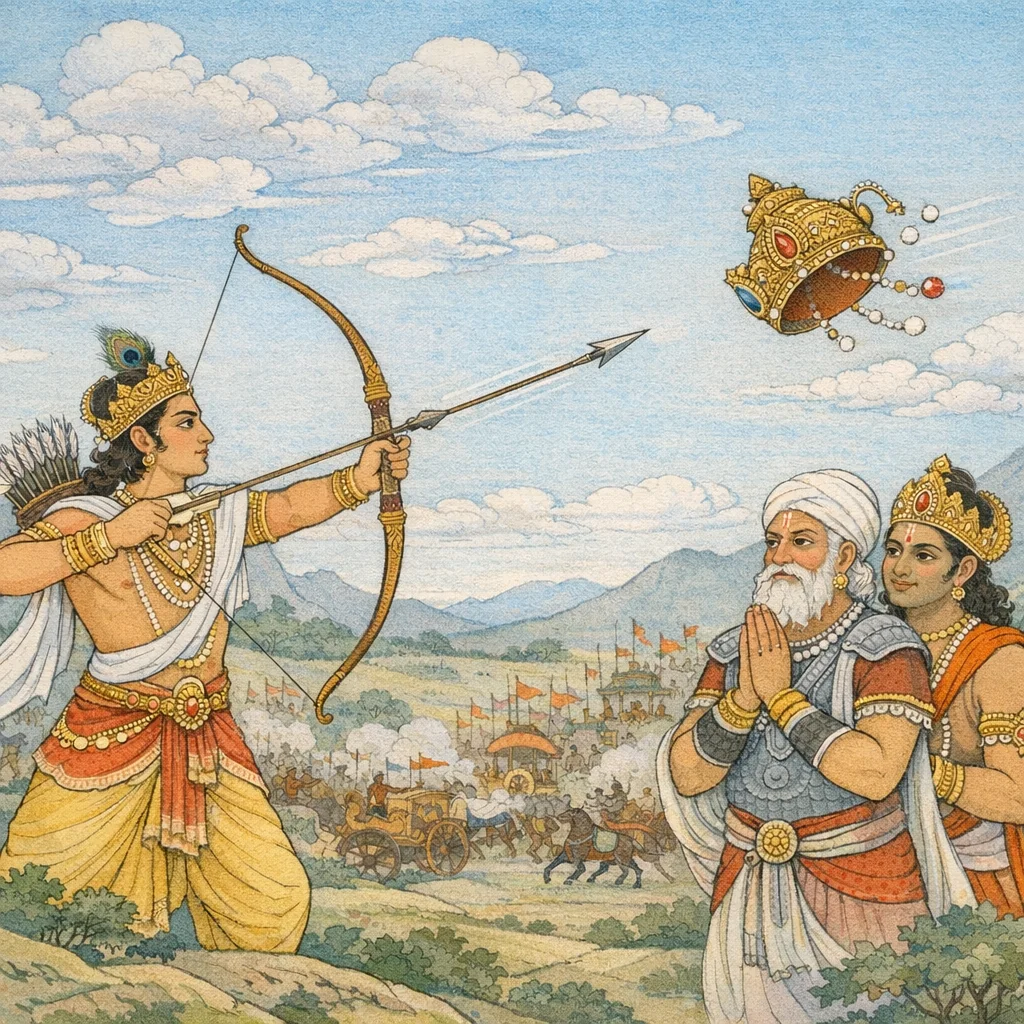
दुर्योधनस्योत्तमरत्नचित्रं चिच्छेद पार्थो मुकुर्ट शरेण । फिर अअभश्रवत्थामा, कृपाचार्य तथा अन्य माननीय (बाह्लीक, सोमदत्त आदि) कौरवोंको बाणोंकी विचित्र रीतिसे नमस्कार करके पार्थने एक बाण मारकर दुर्योधनके उत्तम रत्नजटित विचित्र मुकुटको काट डाला
Vaiśaṃpāyana said: Arjuna (Pārtha) severed Duryodhana’s splendid, jewel-inlaid crown with a single arrow. In the midst of battle, the act functions as a pointed humiliation and a measured display of mastery—asserting superiority without immediately taking life—thus highlighting the warrior’s capacity to restrain violence even while fulfilling kṣatriya-duty in war.
Verse 273
स देवदत्तं सहसा विनाद्य विदार्य वीरो द्विषतां मनांसि । इसी प्रकार अन्य माननीय वीरोंसे भी विदा ले गाण्डीवकी टंकारसे सम्पूर्ण जगत्को प्रतिध्वनित करके वीर अर्जुनने सहसा देवदत्त नामक शंख बजाया और शत्रुओंका दिल दहला दिया
Vaiśaṃpāyana said: The heroic Arjuna suddenly sounded the conch named Devadatta; its blast, like a thunderclap, tore through the hearts of his enemies, proclaiming his fearless resolve and the righteous readiness to meet conflict when duty demands it.
Frequently Asked Questions
The dilemma concerns when and how to shift from strategic concealment to truthful disclosure: the Pandavas must reveal identity to secure justice and alliance without violating the prior obligation to remain unrecognized until the concealment term is complete.
The chapter models timed truth (satya with kāla-viveka): ethical action includes not only honesty but also prudent sequencing, combined with forgiveness for harm done in ignorance and restitution by those in authority.
No explicit phalaśruti is stated here; the meta-level emphasis is narrative validation—public attribution of deeds and formal reconciliation—positioning the audience to understand the alliance logic and the restoration of the Pandavas’ social legitimacy.