Adhyaya 24
Kīcaka-vadha-pratisaṃjñā: Rumor in Matsya and the Kaurava Scouts’ Report (कीचकवध-प्रतिसंज्ञा)
Upa-parva: Kīcaka-vadha Upaparva (Kīcaka’s Slaying Episode)
Vaiśaṃpāyana describes the public astonishment in Matsya after Kīcaka and his associates are found slain. Citizens discuss Kīcaka’s former power, valor, and abusive conduct, and the event is framed as a nocturnal killing by unseen ‘Gandharvas,’ a narrative that both explains the extraordinary outcome and obscures human agency. The focus then shifts to Kaurava-directed scouts who have searched widely—forests, mountains, settlements, and cities—yet fail to trace the Pāṇḍavas or Draupadī. Returning to the Kaurava court, they report their exhaustive reconnaissance and request further instruction. They also relay the intelligence that Kīcaka, who had previously defeated the Trigartas, has been killed at night along with his brothers, and they present this as favorable news of an enemy’s setback, prompting Duryodhana to consider next steps.
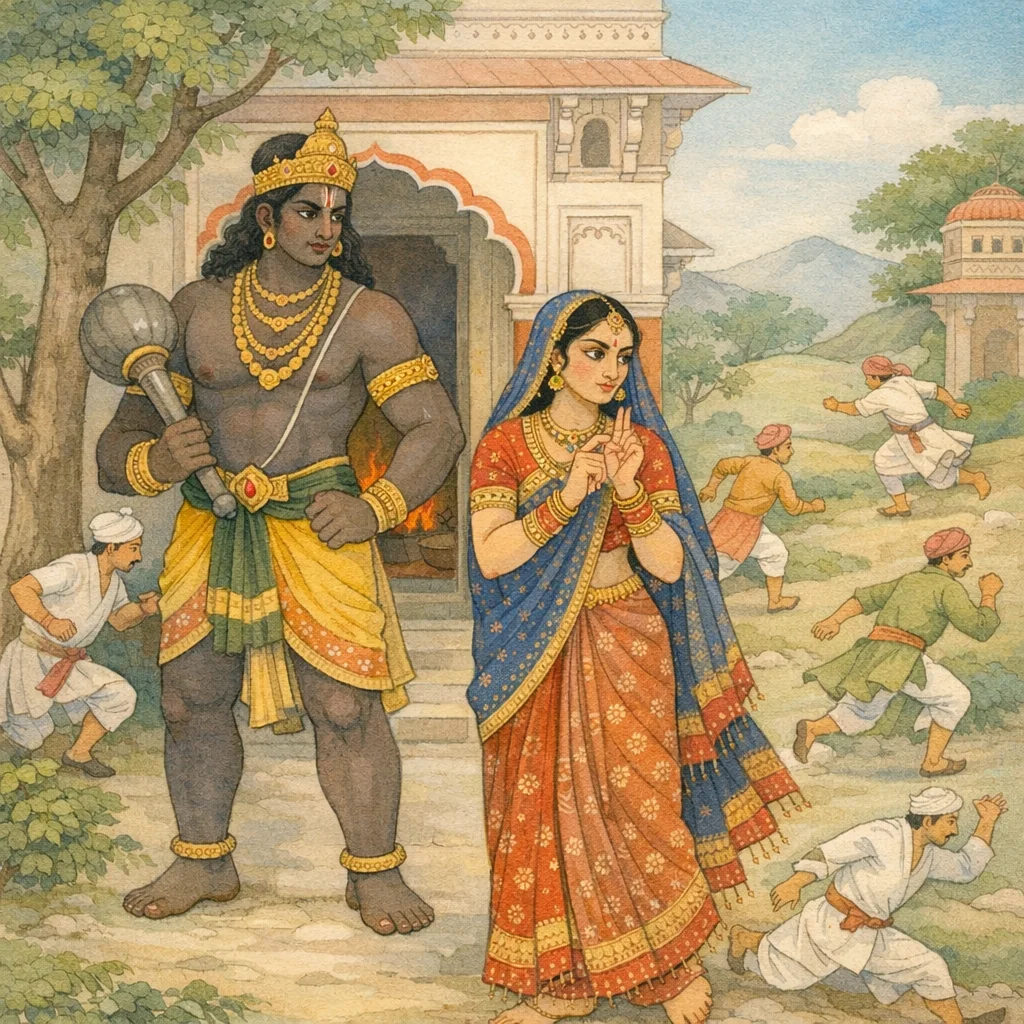
Chapter Arc: भीमसेन द्वारा कीचक-पक्ष के सूतपुत्रों का संहार हो चुका है; भयमुक्त द्रौपदी (सैरन्ध्री) राजमहल की ओर लौटती है और नगर में गन्धर्व-भय की लहर दौड़ जाती है। → मार्ग में बिखरे-गिरे सूतों का दृश्य ‘वज्र से विदीर्ण पर्वत-शिखर’ जैसा प्रतीत होता है; लोग दिशाओं में भागते हैं, कोई आँखें मूँद लेता है—सबको लगता है कि गन्धर्वों ने विराटनगर पर धावा बोल दिया है। → पाकशाला-द्वार पर द्रौपदी मतवाले गजराज-से अडिग भीमसेन को देख संकेतों में कृतज्ञता प्रकट करती है; फिर बृहन्नला (अर्जुन) सैरन्ध्री से पूछती है—कैसे छूटी, वे पापी कैसे मारे गए—और द्रौपदी घटना का सूत्र खोलती है। → सुदेष्णा, विराट के कथनानुसार, भयभीत होकर सैरन्ध्री को जहाँ चाहे जाने की अनुमति देती है; द्रौपदी उत्तर देती है कि उसके लिए केवल तेरह दिन और क्षमा रखें—तब गन्धर्व (पाण्डव) कृतकृत्य होकर राजा का हित करेंगे। → द्रौपदी का ‘तेरह दिन’ का संकेत गुप्त-परिचय के अंतिम चरण और निकट भविष्य में विराट के साथ पाण्डवों के प्रकट सहयोग की आहट देता है।
Shlokas
Verse 1
हि आय न [हुक है - दोनों हाथोंको फैलानेपर जितनी लंबाई होती है, उसे एक व्याम कहते हैं। चतुर्विशो$ध्याय: द्रोपदीका राजमहलमें लौटकर आना और बृहन्नला एवं सुदेष्णासे उसकी बातचीत वैशम्पायन उवाच ते दृष्टवा निहतान् सूतान् राज्ञे गत्वा न्यवेदयन् । गन्धर्वर्निहता राजन् सूतपुत्रा महाबला:,वैशम्पायनजी कहते हैं--राजन्! नगरवासियोंने सूतपुत्रोंका यह संहार देख राजा विराटके पास जाकर निवेदन किया--“महाराज! गन्धर्वोने महाबली सूतपुत्रोंको मार डाला
Vaiśampāyana said: Seeing the charioteers’ sons slain, the townspeople went to King Virāṭa and reported, “O King, the mighty sons of the charioteers have been killed by the Gandharvas.”
Verse 2
यथा वज्ञेण वै दीर्ण पर्वतस्य महच्छिर: । व्यतिकीर्णा: प्रदृश्यन्ते तथा सूता महीतले,'जैसे पर्वतका महान् शिखर वज्से विदीर्ण हो गया हो, उसी प्रकार वे सूतपुत्र पृथ्वीपर बिखरे दिखायी देते हैं
Vaiśaṃpāyana said: “As when a mountain’s lofty peak is split apart by a thunderbolt, so the Sūtas are seen scattered across the face of the earth.”
Verse 3
सैरन्ध्री च विमुक्तासौ पुनरायाति ते गृहम् । सर्व संशयितं राजन् नगरं ते भविष्यति,'सैरन्ध्री बन्धनमुक्त हो गयी है, अब वह पुन: आपके महलकी ओर आ रही है। उसके रहनेसे आपके सम्पूर्ण नगरका जीवन संकटमें पड़ जायगा
Vaiśampāyana said: “That maidservant (Sairandhrī) has been released from bondage and is now returning again to your palace. O King, because of her presence your entire city will fall into a state of fear and suspicion—its safety and order will be imperiled.”
Verse 4
यथारूपा च सैरन्ध्री गन्धर्वाश्न महाबला: । पुंसामिष्टश्ष विषयो मैथुनाय न संशय:,'सैरन्ध्रीका जैसा अप्रतिम रूप-सौन्दर्य है, वह सबको विदित ही है। उसके पति गन्धर्व भी बड़े बलवान हैं। पुरुषोंको मैथुनके लिये विषयभोग अभीष्ट है ही; इसमें संशय नहीं है
Vaiśampāyana said: “The Sairandhrī is indeed of such extraordinary beauty as is well known. Her Gandharva husbands too are exceedingly powerful. And for men, the enjoyment of sensual objects—especially with a view to sexual union—is naturally desired; of this there is no doubt.”
Verse 5
यथा सैरन्ध्रिदोषेण न ते राजन्निदं पुरम् । विनाशमेति वै क्षिप्रं तथा नीतिर्विधीयताम्,“अतः राजन! आप शीघ्र ही कोई ऐसी नीति अपनावें, जिससे सैरन्ध्रीके दोषसे आपका यह नगर नष्ट न हो जाय”
Vaiśaṃpāyana said: “O King, adopt a prudent course at once, so that this city of yours does not quickly fall into ruin because of the fault connected with the Sairandhrī (the maidservant).”
Verse 6
तेषां तद् वचन श्रुत्वा विराटो वाहिनीपति: । अब्रवीत् क्रियतामेषां सूतानां परमक्रिया,उनकी वह बात सुनकर सेनाओंके स्वामी राजा विराटने कहा--“इन सूतपुत्रोंका अन्त्येष्टि-संस्कार किया जाय
Hearing their words, King Virāṭa, commander of the host, declared: “Let the final rites be performed for these sons of the sūtas.”
Verse 7
एकस्मिन्नेव ते सर्वे सुसमिद्धे हुताशने । दहान्तां कीचका: शीघ्र रत्नैर्गन्चैश्व सर्वशः,“एक ही चितामें अग्नि प्रजजलित करके रत्न और सुगन्धित पदार्थोके साथ सम्पूर्ण कीचकोंका दाह करना चाहिये'
Vaiśampāyana said: “Let all those Kīcakas be cremated at once on a single pyre, with the fire well kindled, and let it be done quickly—accompanied on every side by offerings of jewels and fragrant substances.”
Verse 8
सुदेष्णामब्रवीद् राजा महिषीं जातसाध्वस: । सैरन्ध्रीमागतां ब्रूया ममैव वचनादिदम्,तदनन्तर राजाने भयभीत होकर रानी सुदेष्णाके पास जाकर कहा--'देवि! जब सैरन्ध्री यहाँ आ जाय, तो मेरी ही ओरसे उससे यों कहो--
Vaiśampāyana said: The king, seized with sudden fear, spoke to his chief queen Sudeṣṇā: “When the maid Sairandhrī comes here, tell her this—convey it as my very words.”
Verse 9
गच्छ सैरन्दध्रि भद्रं ते यथाकामं वरानने । बिभेति राजा सुश्रोणि गन्धर्वेभ्य: पराभवात्,'सैरन्ध्री! तुम्हारा कल्याण हो। वरानने! तुम्हारी जहाँ रुचि हो, चली जाओ। सुश्रोणि! गन्धर्वोके तिरस्कारसे राजा डरते हैं
Vaiśampāyana said: “Go, O Sairandhrī; may good befall you. O fair-faced one, go wherever you wish. O woman of beautiful hips, the king is afraid—because of his earlier humiliation at the hands of the Gandharvas.”
Verse 10
न हि त्वामुत्सहे वक्तुं स्वयं गन्धर्वरक्षिताम् | स्त्रियास्त्वदोषस्तां वक्तुमतस्त्वां प्रब्रवीम्पहम्,“तुम गन्धर्वोंसे सुरक्षित हो। मैं पुरुष होनेके कारण स्वयं तुमसे कोई बात नहीं कह सकता। किंतु स्त्रीके मुखसे तुम्हारे प्रति यह सब कहलानेमें दोष नहीं है; अत: अपनी पत्नीके द्वारा स्वयं ही तुमसे यह बात कह रहा हूँ"
Vaiśampāyana said: “You are under the protection of the Gandharvas; therefore I do not presume, as a man, to address you directly. But when such words are spoken through a woman, there is no impropriety. Hence, through my wife, I convey this message to you.”
Verse 11
वैशम्पायन उवाच अथ मुक्ता भयात् कृष्णा सूतपुत्रान् निरस्थ च | मोक्षिता भीमसेनेन जगाम नगरं प्रति,वैशम्पायनजी कहते हैं--राजन्! जब सूतपुत्रोंकी मारकर भीमसेनने द्रौपदीका बन्धन खोल दिया और वह भयसे मुक्त हो गयी, तब जलसे स्नान करके अपने शरीर और वस्त्रोंको धोकर सिंहसे डरायी हुई हरिणीकी भाँति वह मनस्विनी बाला नगरकी ओर चली
Vaiśampāyana said: Then Kṛṣṇā (Draupadī), freed from fear, repelled the sons of the charioteer; and released by Bhīmasena, she set out toward the city.
Verse 12
त्रासितेव मृगी बाला शार्टूलेन मनस्विनी । गात्राणि वाससी चैव प्रक्षाल्य सलिलेन सा,वैशम्पायनजी कहते हैं--राजन्! जब सूतपुत्रोंकी मारकर भीमसेनने द्रौपदीका बन्धन खोल दिया और वह भयसे मुक्त हो गयी, तब जलसे स्नान करके अपने शरीर और वस्त्रोंको धोकर सिंहसे डरायी हुई हरिणीकी भाँति वह मनस्विनी बाला नगरकी ओर चली
Vaiśampāyana said: O King, like a young doe terrified by a tiger, the resolute maiden—having washed her limbs and her garments with water after being freed from fear—set out toward the city.
Verse 13
तां दृष्टवा पुरुषा राजन प्राद्रवन्त दिशो दश । गन्धर्वाणां भयत्रस्ता: केचिद् दृष्टवा न्न्यमीलयन्
Seeing her, O King, the men fled in all ten directions. Terrified at the thought of the Gandharvas, some, upon looking, shut their eyes—overcome by fear.
Verse 14
जनमेजय! उस समय द्रौपदीको देखकर गन्धर्वोके भयसे डरे हुए पुरुष दसों दिशाओंकी ओर भाग जाते थे और कोई-कोई उसे देखकर आँख मूँद लेते थे ।। ततो महानसद्वारि भीमसेनमवस्थितम् । ददर्श राजन पाञज्चाली यथा मत्तं महाद्विपम्
Janamejaya, at that time, on seeing Draupadī, men—terrified by fear of the Gandharvas—fled in all ten directions, and some, upon looking at her, even shut their eyes. Then Pāñcālī saw Bhīmasena standing at the doorway of the royal kitchen, like a great elephant in musth.
Verse 15
तदनन्तर पाकशालाके द्वारपर पहुँचकर पांचालीने वहाँ मतवाले गजराजके समान भीमसेनको खड़ा देखा ।। तं॑ विस्मयन्ती शनकै: संज्ञाभिरिदमब्रवीत् । गन्धर्वराजाय नमो येनास्मि परिमोचिता,और विस्मयविमुग्ध होकर उसने धीरेसे संकेतपूर्वक इस प्रकार कहा--'उन गन्धर्वराजको नमस्कार है, जिन्होंने मुझे भारी संकटसे मुक्त किया है”
After that, Pāñcālī (Draupadī) came to the doorway of the royal kitchen and saw Bhīmasena standing there, like an intoxicated lordly elephant. Astonished, she spoke softly with guarded signs: “Salutations to the king of the Gandharvas—by whom I have been freed from a great peril.”
Verse 16
भीमसेन उवाच ये पुरा विचरन्तीह पुरुषा वशवर्तिन: । तस्यास्ते वचन श्रुत्वा हनूणा विहरन्त्वतः,भीमसेन बोले--देवि! जो पुरुष तुम्हारी आज्ञाके अधीन होकर यहाँ पहलेसे विचर रहे हैं, वे तुम्हारी यह बात सुनकर प्रतिज्ञासे उऋण हो इच्छानुसार विहार करें
Bhīmasena said: “O goddess, those men who have long moved about here under your command—having heard your word—should now be released from their vow and roam freely as they wish.”
Verse 17
वैशम्पायन उवाच ततः सा नर्तनागारे धनंजयमपश्यत । राज्ञ: कन्या विराटस्य नर्तयानं महाभुजम्,वैशम्पायनजी कहते हैं--राजन्! तत्पश्चात् द्रौपदीने नृत्यशालामें पहुँचकर महाबाहु अर्जुनको देखा, जो राजा विराटकी कनन््याओंको नृत्य सिखा रहे थे
Vaiśampāyana said: Then she (Draupadī) went into the dancing-hall and saw Dhanañjaya (Arjuna), the mighty-armed hero, instructing King Virāṭa’s daughters in dance.
Verse 18
ततस्ता नर्तनागाराद विनिष्क्रम्य सहार्जुना: । कन्या ददृशुरायान्तीं क्लिष्टां कृष्णामनागसम्,उसके आनेका समाचार पाकर अर्जुनसहित वे सब कन्याएँ नृत्यगृहसे बाहर निकल आयीं और वहाँ आती हुई निरपराध सतायी गयी कृष्णाको देखने लगीं
Then those maidens, accompanied by Arjuna, came out from the dancing-hall and saw Kṛṣṇā (Draupadī) approaching—distressed and afflicted, though innocent of any fault.
Verse 19
कन्या ऊचु: दिष्ट्या सैरन्ध्रि मुक्तासि दिष्ट्यासि पुनरागता । दिष्ट्या विनिहता: सूता ये त्वां क्लिश्यन्त्यनागसम्,उसे देखकर कन्याओंने कहा--सैरन्ध्री! सौभाग्य-की बात है कि तुम संकटसे मुक्त हो गयीं और सौभाग्यसे यहाँ पुन: लौट आयीं। वे सूतपुत्र जो तुम्हें बिना किसी अपराधके ही वष्ट दे रहे थे, मार दिये गये, यह भी भाग्यवश अच्छा ही हुआ
The maidens said: “Fortune indeed—O Sairandhrī—you have been freed from danger; fortune indeed that you have returned again. And it is well, by good luck, that those men of the Sūta class who were tormenting you though you were blameless have been slain.”
Verse 20
बुह्तन्नलोवाच कथं सैरन्ध्रि मुक्तासि कथं पापाश्न ते हता: । इच्छामि वै तव श्रोतुं सर्वमेव यथातथम्,बृहन्नलाने पूछा--सैरन्ध्री! तू उन पापियोंके हाथसे कैसे छूटी? और वे पापी कैसे मारे गये? मैं ये सब बातें तेरे मुखसे ज्यों-की-त्यों सुनना चाहती हूँ
Bṛhannalā said: “How were you, Sairandhrī, set free? And how were those wicked men slain? I wish to hear everything from you exactly as it happened.”
Verse 21
सैरन्ध्युवाच बृहन्नले कि नु तव सैरन्ध्र्या कार्यमद्य वै । या त्वं वससि कल्याणि सदा कन्यापुरे सुखम्,सैरन्ध्री बोली--बृहन्नले! अब तुम्हें सैरन्ध्रीसे क्या काम है? कल्याणी! तुम तो मौजसे इन कन्याओंके अन्तःपुरमें रहती हो
The Sairandhrī said: “O Bṛhannalā, what business do you have with the Sairandhrī today? Auspicious lady, you live comfortably and happily in the maidens’ quarters all the time.”
Verse 22
न हि दुःखं समाप्रोषि सैरन्ध्री यदुपाश्रुते । तेन मां दुःखितामेवं पृच्छसे प्रहसन्निव,सैरन्ध्री जो दुःख भोग रही है, उसे दूर तो करोगी नहीं या उसका अनुभव तो तुम्हें होता नहीं; इसीलिये मुझ दुखियाकी केवल हँसी उड़ानेके लिये ऐसा प्रश्न कर रही हो?
Vaiśampāyana said: “O Sairandhrī, you do not truly share in the suffering that has come upon me; nor can you remove it. Therefore you question me in this way as if merely to mock—laughing at one who is already afflicted.”
Verse 23
इस प्रकार श्रीमह्याभारत विराटपर्वके अन्तर्गत कीचकवधपर्वमें तेईसवाँ अध्याय पूरा हुआ,बुह्॒त्न॒लोवाच बृहन्नलापि कल्याणि दुः:खमाप्रोत्यनुत्तमम् । तिर्यग्योनिगता बाले न चैनामवबुध्यसे बृहन्नलाने कहा--कल्याणी! पशुओंकी-सी नीच या नपुंसक योनिमें पड़कर बृहन्नला भी महान् दुःख भोग रही है, तू अभी भोली-भाली है; इसीलिये बृहन्नलाको नहीं समझ पाती
Bṛhannalā said: “O auspicious girl, even I—Bṛhannalā—have fallen into an exceedingly painful condition. Having come to a low state, like that of animals (a degraded condition), you are still innocent; therefore you do not truly understand who I am.”
Verse 24
त्वया सहोषिता चास्मि त्वं च सर्व: सहोषिता । क्लिश्यन्त्यां त्वयि सुश्रोणि को नु दुःखं न चिन्तयेत्,सुश्रोणि! तेरे साथ तो मैं रह चुकी हूँ और तू भी हम सबके साथ रही है; फिर तेरे ऊपर कष्ट पड़नेपर किसको दुःख न होगा? इसके बाद वे मुझे तो ले ही जायँगे, आपका भी प्रिय करेंगे। (गन्धर्वोकी प्रसन्नतासे) अवश्य ही राजा विराट अपने भाई-बन्धुओंसहित कल्याणके भागी होंगे ।। (राज्ञा कृतोपकाराश्च कृतज्ञाश्व सदा शुभे । साधवश्न बलोत्सिक्ता: कृतप्रतिकृतेप्सव: ।। अर्थिनी प्रब्रवीम्येषा यद् वा तद् वेति चिन्तय । भरस्व तदहमात्र ततः श्रेयो भविष्यति ।। शुभे! राजा विराटने गन्धर्वोका बड़ा उपकार किया है; अतः वे सदा उनके प्रति कृतज्ञ बने रहते हैं। गन्धर्वलोग बलके अभिमानी होते हुए भी साधु स्वभावके पुरुष हैं और अपने प्रति किये हुए उपकारका बदला चुकानेकी इच्छा रखते हैं। मैं एक प्रयोजनसे यहाँ रहती हूँ; इसीलिये तुमसे अभी कुछ दिन और यहाँ ठहरने देनेके लिये अनुरोध करती हूँ। तुम अपने मनमें जो कुछ भी सोच-विचार करो, किंतु कुछ गिने गिनाये दिनोंतक अभी और मेरा भरण-पोषण करती चलो; इससे तुम्हारा कल्याण होगा। वैशम्पायन उवाच तस्यास्तदू वचन श्रुत्वा कैकेयी दुःखमोहिता । उवाच द्रौपदीमार्ता भ्रातृव्यसनकर्शिता ।। वस भट्रे यथेष्ट॑ त्वं त्वामहं शरणं गता । त्रायस्व मम भर्तरिं पुत्रांश्षेव विशेषतः ।।) वैशम्पायनजी कहते हैं--राजन! सैरन्ध्रीकी यह बात सुनकर केकयराजकुमारी सुदेष्णा भाईके शोकसे पीड़ित और दुःखसे मोहित हो आर्त होकर द्रौपदीसे बोली--“भट्रे! तुम्हारी जबतक इच्छा हो, यहाँ रहो; परंतु मेरे पति और पुत्रोंकी विशेषरूपसे रक्षा करो। इसके लिये मैं तुम्हारी शरणमें आयी हूँ'। इति श्रीमहाभारते विराटपर्वणि कीचकवधपर्वणि कीचकदाहे चतुर्विशो5ध्याय: ।। २४ ।। इस प्रकार श्रीमहाभारत विराटपर्वके अन्तर्गत कीचकवधपर्वमें कीचकोंके दाह- संस्कारविषयक चौबीसवाँ अध्याय पूरा हुआ
Bṛhannalā said: “I have lived together with you, and you too have lived among all of us. When you, O fair-hipped lady, are afflicted, who would not feel sorrow?” In the surrounding episode, the Gandharva (in truth, Bhīma in disguise) speaks with composed goodwill: since King Virāṭa has rendered a great service, the Gandharvas remain grateful and, though proud of their strength, are noble and eager to repay kindness with kindness. Therefore the speaker requests that the lady be allowed to remain for a few more days under protection and maintenance, assuring that such conduct will bring welfare. Hearing this, Sudeshnā—overwhelmed by grief and confusion due to her brother’s calamity—turns to Draupadī (as Sairandhrī) and pleads: “Stay as long as you wish; but especially protect my husband and my sons. I take refuge in you.”
Verse 25
न तु केनचिदत्यन्तं कस्यचिद्धृदयं क्वचित् । वेदितुं शक््यते नूनं तेन मां नावबुध्यसे,निश्चय ही, कोई अन्य व्यक्ति किसी दूसरेके हृदयको कभी पूर्णरूपसे नहीं समझ सकता, यही कारण है कि तुम मुझे नहीं समझ पाती; मेरे कष्टका अनुभव नहीं कर पाती
Vaiśampāyana said: “Truly, no one can ever fully know another person’s heart. That is why you do not understand me—you cannot feel the weight of my suffering from within.”
Verse 26
वैशम्पायन उवाच ततः सहैव कन्याभिद्रौपदी राजवेश्म तत् । प्रविवेश सुदेष्णाया: समीपमुपगामिनी,वैशम्पायनजी कहते हैं--जनमेजय! तदनन्तर उन कन्याओंके साथ ही द्रौपदी राजभवनमें गयी और रानी सुदेष्णाके पास जाकर खड़ी हो गयी
Vaiśampāyana said: “Then Draupadī, accompanied by the maidens, entered that royal residence and approached Queen Sudeṣṇā, coming to stand near her.”
Verse 27
तामब्रवीद् राजपुत्री विराटवचनादिदम् । सैरन्दध्रि गम्यतां शीघ्र यत्र कामयसे गतिम्
Vaiśampāyana said: “At King Virāṭa’s instruction, the princess addressed her thus: ‘O Sairandhrī, depart at once—go quickly wherever you wish to go.’”
Verse 28
तब राजपुत्री सुदेष्णाने विराटके कथनानुसार उससे कहा--'सैरन्ध्री! तुम जहाँ जाना चाहो, शीघ्र चली जाओ ।। राजा बिभेति ते भद्रे गन्धर्वेभ्य:ः पराभवात् । त्वं चापि तरुणी सुभ्रु रूपेणाप्रतिमा भुवि । पुंसामिष्ट श्व विषयो गन्धर्वाश्वातिकोपना:,“भद्रे! तुम्हारे गन्धर्वोद्वारा प्राप्त होनेवाले पराभवसे महाराजको भय हो रहा है। सुभ्रु! तुम अभी तरुणी हो, रूप-सौन्दर्यमें भी तुम्हारी समानता कर सके, ऐसी कोई स्त्री इस भूमण्डलमें नहीं है। पुरुषोंको विषयभोग प्रिय होता ही है; (अतः उनसे प्रमाद होनेकी सम्भावना है।) इधर तुम्हारे गन्धर्व बड़े क्रोधी हैं (वे न जाने कब क्या कर बैठें?2)”
Vaiśampāyana said: Following the account, Queen Sudeṣṇā spoke to Virāṭa’s maid (Sairandhrī): “Good lady, go quickly wherever you wish. The king is afraid because of the defeat that may come to him at the hands of your Gandharvas. And you, fair-browed one, are still young—on this earth there is no woman comparable to you in beauty. Men are naturally drawn to sensual objects; and your Gandharvas are exceedingly quick to anger.”
Verse 29
सैरन्ध्युवाच त्रयोदशाहमात्र मे राजा क्षाम्यतु भामिनि । कृतकृत्या भविष्यन्ति गन्धर्वास्ते न संशय:,सैरन्ध्रीने कहा--भामिनि! मेरे लिये तेरह दिन और महाराज क्षमा करें। निःसंदेह तबतक गन्धर्वों-का अभीष्ट कार्य पूर्ण हो जायगा--वे कृतकृत्य हो जायँगे
Sairandhrī said, “O passionate lady, let the king pardon me for only thirteen days more. By then, without doubt, those Gandharvas will have accomplished their intended task and will be fully satisfied.”
Verse 30
ततो मामुपनेष्यन्ति करिष्यन्ति च ते प्रियम् । ध्रुवं च श्रेयसा राजा योक्ष्यते सह बान्धवै:
Then they will bring me back and will do what is dear to you. And the king, together with his kinsmen, will surely be joined to prosperity and well-being—restored to a better state through what is truly beneficial.
Frequently Asked Questions
The dilemma concerns accountability versus protection: extraordinary force has removed a coercive figure, yet open attribution could endanger the concealed protagonists and destabilize the host kingdom; the narrative therefore emphasizes a socially acceptable explanation while preserving safety and vows.
Ethical action in complex environments may require disciplined restraint in self-disclosure and careful management of public knowledge; truth, safety, and duty interact through context, and prudent speech can be a form of dharma when it prevents wider harm.
No explicit phalaśruti appears in this excerpt; its meta-function is historiographic—showing how events become ‘known’ through rumor and official reports, and how such mediated knowledge influences subsequent royal strategy.