Adhyaya 69
ऋतुपर्णस्य विदर्भयात्रा-निश्चयः तथा बाहुकस्य हयपरिक्षा (Ṛtuparṇa’s resolve to go to Vidarbha and Bāhuka’s examination of horses)
Upa-parva: Nalopākhyāna (The Tale of Nala and Damayantī)
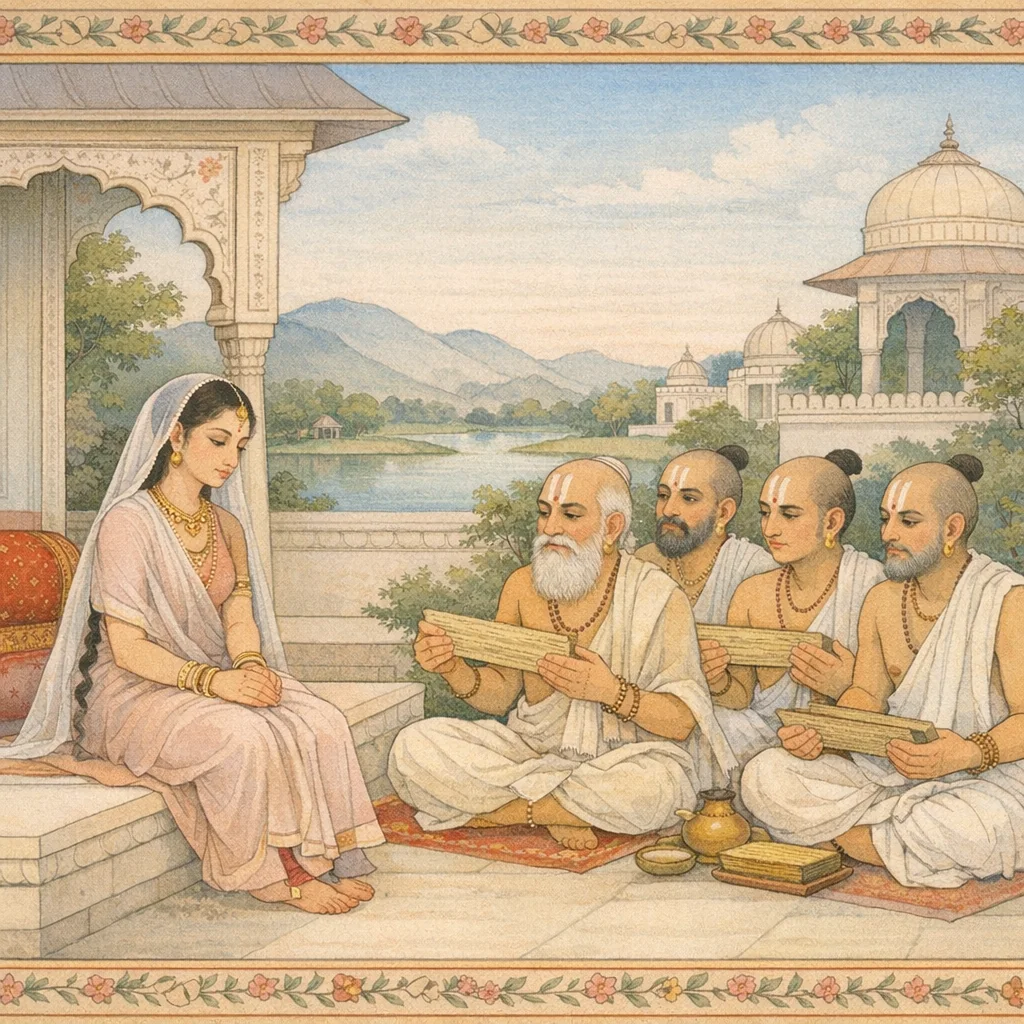
Bṛhadaśva narrates that after hearing Sudeva’s words, King Ṛtuparṇa addresses Bāhuka with conciliatory speech and expresses a desire to go to Vidarbha to attend Damayantī’s proclaimed svayaṃvara, asking if the journey can be completed in a single day. Nala, hearing this while in disguise, experiences acute inner rupture—oscillating between fear that Damayantī may act under grief and hope that a deliberate stratagem is underway for his sake. He reproaches himself for past wrongdoing and weighs assumptions about human instability, yet concludes he must go to ascertain what is true and beneficial, serving both Ṛtuparṇa’s purpose and his own. With folded hands, Bāhuka promises the king that Vidarbha will be reached within one day. He proceeds to the royal stables, inspects and selects horses, and withstands Ṛtuparṇa’s initial displeasure at the seemingly inadequate team. Bāhuka asserts their capability; Ṛtuparṇa defers to his expertise. Four well-bred, swift horses are yoked; the king mounts, and Nala skillfully manages the reins, urging the team to extraordinary speed. Observers—especially Vārṣṇeya—marvel at Bāhuka’s charioteering and horse-knowledge, speculating whether he resembles Mātali, Śālihotra, or even Nala himself, noting congruence in knowledge despite bodily alteration. Ṛtuparṇa, recognizing the display of strength, zeal, and technical mastery in horse-handling, feels heightened satisfaction as the journey commences.
Chapter Arc: दमयन्ती के वियोग-वृत्तान्त से व्याकुल ब्राह्मण पृथ्वी पर भटकते-भटकते विदर्भ-राज के द्वार पर पहुँचते हैं—और कहते हैं कि वे उसी के लिए खोज में निकले हैं। → ब्राह्मण नल के पतन का समाचार सुनाते हैं—द्यूत में पराजय, राज्य-हरण, और दमयन्ती के साथ अज्ञात दिशा में प्रस्थान; फिर दमयन्ती की पहचान उसके मलिन वेश के भीतर भी उजागर होती है, जैसे बादल हटने पर चन्द्रमा। घर-परिवार का स्नेह उसे रोकना चाहता है, पर उसका लक्ष्य एक ही है: नल का पता। → दमयन्ती लज्जा त्यागकर स्वयं स्पष्ट आदेश देती है कि राजसेवक और ब्राह्मण ‘पुण्यश्लोक’ नल की खोज में लगें—और उसके संदेश/वचन को नगर-नगर, ग्राम-ग्राम सुनाते फिरें, ताकि नल तक उसकी पुकार पहुँच सके। → विदर्भ-राज के संरक्षण में खोज-योजना बनती है; ब्राह्मण और दूत पुराने राष्ट्रों, ग्रामों, गोष्ठों और आश्रमों में दमयन्ती का वचन सुनाते हुए नल की तलाश में निकल पड़ते हैं। → संदेश तो दिशाओं में फैल गया—पर नल कहाँ है, किस रूप में है, और क्या वह उस पुकार को सुन पाएगा?
Shlokas
Verse 1
हि लय ० () हि 2 7 एकोनसप्ततितमो< ध्याय: दमयन्तीका अपने पिताके यहाँ जाना और वहाँसे नलको ढूँढनेके लिये अपना संदेश देकर ब्राह्मणोंको भेजना युदेव उवाच विदर्भराजो धर्मात्मा भीमो नाम महाद्युति: । सुतेयं तस्य कल्याणी दमयन्तीति विश्रुता,सुदेवने कहा--देवि! विदर्भदेशके राजा महा-तेजस्वी भीम बड़े धर्मात्मा हैं। यह उन्हींकी पुत्री है। इस कल्याणस्वरूपा राजकन्याका नाम दमयन्ती है
Yudeva said: “In the land of Vidarbha there is a king named Bhīma, devoted to dharma and of great splendor. His daughter is this auspicious lady, renowned by the name Damayantī.”
Verse 2
राजा तु नैषधो नाम वीरसेनसुतो नलः । भार्येयं तस्य कल्याणी पुण्यश्लोकस्य धीमत:,वीरसेनपुत्र नल निषधदेशके सुप्रसिद्ध राजा हैं। उन्हीं (परम) बुद्धिमान पुण्यश्लोक नलकी यह कल्याणमयी पत्नी है
“There is a king named Nala of Niṣadha, the son of Vīrasena. This auspicious lady here is the wife of that wise Nala, whose fame is sanctified by righteous deeds.”
Verse 3
स द्ूतेन जितो क्रात्रा हृतराज्यो महीपतिः । दमयन्त्या गतः सार्ध न प्राज्ञायत कस्यचित्,एक दिन राजा नल अपने भाईके द्वारा जूएमें हार गये। उसीमें उनका सारा राज्य चला गया। वे दमयन्तीके साथ वनमें चले गये। तबसे अबतक किसीको उनका पता नहीं लगा
Yudhiṣṭhira said: “That king, having been defeated in the dice-game by the gambler, was stripped of his kingdom. He departed together with Damayantī into the forest, and from that day onward his whereabouts have not been known to anyone.”
Verse 4
ते वयं दमयन्त्यर्थे चराम: पृथिवीमिमाम् । सेयमासादिता बाला तव पुत्रनिवेशने,हम अनेक ब्राह्मण दमयन्तीको ढूँढ़नेके लिये इस पृथ्वीपर विचर रहे हैं। आज आपके पुत्रके महलमें मुझे यह राजकुमारी मिली है
“We are roaming over this earth for the sake of Damayantī. Today, in your son’s residence, I have found this young princess.”
Verse 5
अस्या रूपेण सदृशी मानुषी न हि विद्यते । अस्या होष भ्रुवोर्मध्ये सहज: पिप्लुरुत्तम:,रूपमें इसकी समानता करनेवाली कोई भी मानवकन्या नहीं है। इसके दोनों भौंहोंके बीच एक जन्मजात उत्तम तिलका चिह्न है
Yudhiṣṭhira said: “Among human maidens there is none to match her in beauty. And between her two eyebrows there is a naturally formed, excellent mark—like a tilaka—set there from birth.”
Verse 6
श्यामाया: पद्मसंकाशो लक्षितो<न्तर्हितो मया । मलेन संवृतो हास्याश्छन्नो 5 भ्रेणेव चन्द्रमा:,मैंने देखा है, इस श्यामा राजकुमारीके ललाटमें वह कमलके समान चिह्न छिपा हुआ है। मेघमालासे ढँके हुए चन्द्रमाकी भाँति उसका वह चिह्न मैलसे ढक गया है
Yudhiṣṭhira said: “I have observed in this dark-complexioned princess a lotus-like mark upon her forehead, yet it lies concealed. Like the moon veiled by a mass of clouds, that sign—meant to shine forth—has been covered over by grime.”
Verse 7
चिह्नभूतो विभूत्यर्थमयं धात्रा विनिर्मित: । प्रतिपत्कलुषस्येन्दोलेंखा नातिविराजते,विधाताके द्वारा निर्मित यह चिह्न इसके भावी ऐश्वर्यका सूचक है। इस समय यह प्रतिपदाकी मलिन चन्द्रकलाके समान अधिक शोभा नहीं पा रही है। इसका सुवर्ण-जैसा सुन्दर शरीर मैलसे व्याप्त और संस्कारशून्य (मार्जन आदिसे रहित) होनेपर भी स्पष्ट रूपसे उद्धासित हो रहा है। इसका रूप-सौन्दर्य नष्ट नहीं हुआ है। जैसे छिपी हुई आग अपनी गरमीसे पहचान ली जाती है, उसी प्रकार यद्यपि देवी दमयन्ती मलिन शरीरसे युक्त है तो भी इस ललाटवर्ती तिलके चिह्नसे ही मैंने इसे पहचान लिया है
Yudhiṣṭhira said: “This mark has been fashioned by the Creator as a sign pointing toward future prosperity. Yet at present it does not shine greatly—like the faint, blemished crescent of the moon on the first lunar day. Still, even when the body is soiled and devoid of adornment, an innate radiance can remain evident; beauty is not truly destroyed. Just as hidden fire is recognized by its heat, so too, though Damayantī is covered in grime, I recognized her by this forehead-mark.”
Verse 8
न चास्या नश्यते रूप॑ वपुर्मलसमाचितम् । असंस्कृतमभिव्यक्त भाति काञ्चनसंनिभम्,विधाताके द्वारा निर्मित यह चिह्न इसके भावी ऐश्वर्यका सूचक है। इस समय यह प्रतिपदाकी मलिन चन्द्रकलाके समान अधिक शोभा नहीं पा रही है। इसका सुवर्ण-जैसा सुन्दर शरीर मैलसे व्याप्त और संस्कारशून्य (मार्जन आदिसे रहित) होनेपर भी स्पष्ट रूपसे उद्धासित हो रहा है। इसका रूप-सौन्दर्य नष्ट नहीं हुआ है। जैसे छिपी हुई आग अपनी गरमीसे पहचान ली जाती है, उसी प्रकार यद्यपि देवी दमयन्ती मलिन शरीरसे युक्त है तो भी इस ललाटवर्ती तिलके चिह्नसे ही मैंने इसे पहचान लिया है
Yudhiṣṭhira said: “Her beauty has not perished, though her body is covered with grime. Even without grooming or refinement, her form shines forth clearly, resembling gold. Though she appears outwardly soiled and afflicted, her innate radiance remains intact—virtue and true nature are not erased by misfortune, but reveal themselves even through neglect and hardship.”
Verse 9
अनेन वपुषा बाला पिप्लुनानेन सूचिता । लक्षितेयं मया देवी निभृतो5ग्निरिवोष्मणा,विधाताके द्वारा निर्मित यह चिह्न इसके भावी ऐश्वर्यका सूचक है। इस समय यह प्रतिपदाकी मलिन चन्द्रकलाके समान अधिक शोभा नहीं पा रही है। इसका सुवर्ण-जैसा सुन्दर शरीर मैलसे व्याप्त और संस्कारशून्य (मार्जन आदिसे रहित) होनेपर भी स्पष्ट रूपसे उद्धासित हो रहा है। इसका रूप-सौन्दर्य नष्ट नहीं हुआ है। जैसे छिपी हुई आग अपनी गरमीसे पहचान ली जाती है, उसी प्रकार यद्यपि देवी दमयन्ती मलिन शरीरसे युक्त है तो भी इस ललाटवर्ती तिलके चिह्नसे ही मैंने इसे पहचान लिया है
Yudhiṣṭhira said: “By this very body—though soiled and worn—this young woman is revealed. I have recognized the noble lady, just as hidden fire is known by its heat.”
Verse 10
तच्छुत्वा वचन तस्य सुदेवस्य विशाम्पते | सुनन्दा शोधयामास पिप्लुप्रच्छादनं मलम्,युधिष्ठिर! सुदेवका यह वचन सुनकर सुनन्दाने दमयन्तीके ललाटवर्ती चिह्नको ढँकनेवाली मैल धो दी
O lord of the people, having heard the words of Sudeva, Sunandā set about cleansing away the grime that concealed the mark upon the forehead, so that the true identity and dignity might no longer remain hidden.
Verse 11
स मलेनापकृष्टेन पिप्लुस्तस्या व्यरोचत । दमयन्त्या यथा व्यभ्रे नभसीव निशाकर:,मैल धुल जानेपर उसके ललाटका वह चिह्न उसी प्रकार चमक उठा, जैसे बादलरहित आकाशकमें चन्द्रमा प्रकाशित होता है
When the grime was wiped away, the mark upon her forehead shone forth clearly—like the moon gleaming in a cloudless sky.
Verse 12
पिप्लुं दृष्टवा सुनन्दा च राजमाता च भारत । रुदत्यौ तां परिष्वज्य मुहूर्तमिव तस्थतु:,भारत! उस चिह्नको देखकर सुनन्दा और राजमाता दोनों रोने लगीं और दमयन्तीको हृदयसे लगाये दो घड़ीतक स्तब्ध खड़ी रहीं
O Bhārata, on seeing that mark, Sunandā and the queen-mother were overcome with grief. Weeping, they embraced Damayantī and stood motionless for what seemed a long moment.
Verse 13
उत्सृज्य बाष्पं शनकै राजमातेदमब्रवीत् । भगिन्या दुहिता मे5सि पिप्लुनानेन सूचिता,तत्पश्चात् राजमाताने आँसू बहाते हुए धीरेसे कहा--“बेटी! तुम मेरी बहिनकी पुत्री हो। इस चिह्नके कारण मैंने भी तुम्हें पहचान लिया
Wiping away her tears, the queen-mother spoke softly: “Daughter, you are the child of my sister. By this mark you have been made known to me, and thus I have recognized you.”
Verse 14
अहं च तव माता च राज्ञस्तस्य महात्मन: । सुते दशार्णाधिपते: सुदाम्नश्नारुदर्शने,'सुन्दरी! मैं और तुम्हारी माता दोनों दशार्णदेशके स्वामी महामना राजा सुदामाकी पुत्रियाँ हैं
“I, and your mother as well, are daughters of that great-souled king Sudāman, the sovereign of Daśārṇa—O fair one of lovely appearance.”
Verse 15
भीमस्य राज्ञ: सा दत्ता वीरबाहोरहं पुनः । त्वं तु जाता मया दृष्टा दशार्णेषु पितुर्गहिे,तुम्हारी माँका ब्याह राजा भीमके साथ हुआ और मेरा चेदिराज वीरबाहुके साथ। तुम्हारा जन्म दशाणंदिशमें मेरे पिताके ही घरपर हुआ और मैंने अपनी आँखों देखा
“She (your mother) was given in marriage to King Bhīma, while I, in turn, was given to Vīrabāhu. As for you—you were born in the land of the Daśārṇas, in my father’s own house, and I saw it with my own eyes.”
Verse 16
यथैव ते पितुर्गेहं तथैव मम भामिनि । यथैव च ममैश्वर्य दमयन्ति तथा तव,'भामिनि! तुम्हारे लिये जैसा पिताका घर है, वैसा ही मेरा घर है। दमयन्ती! यह सारा ऐश्वर्य जैसे मेरा है, उसी प्रकार तुम्हारा भी है”
“Beloved—my home is yours, just as your father’s house is yours. And Damayantī, this prosperity and lordship: as they are mine, so too are they yours.”
Verse 17
तां प्रहटेन मनसा दमयन्ती विशाम्पते । प्रणम्य मातुर्भगिनीमिदं वचनमब्रवीत्,युधिष्ठि!! तब दमयन्तीने प्रसन्न हृदयसे अपनी मौसीको प्रणाम करके कहा --
O lord of the people, Damayantī—her heart gladdened—bowed respectfully to her mother’s sister and then spoke these words.
Verse 18
अज्ञायमानापि सती सुखमस्म्युषिता त्वयि । सर्वकामै: सुविहिता रक्षयमाणा सदा त्वया,“माँ! यद्यपि तुम मुझे पहचानती नहीं थी, तब भी मैं तुम्हारे यहाँ बड़े सुखसे रही हूँ। तुमने मेरी इच्छानुसार सारी सुविधाएँ कर दीं और सदा तुम्हारे द्वारा मेरी रक्षा होती रही
“Mother, even though you did not recognize who I truly was, I lived in your home in comfort. You provided every desired arrangement, and I was always protected by you.”
Verse 19
सुखात् सुखतरो वासो भविष्यति न संशय: । चिरविप्रोषितां मातर्मामनुज्ञातुमहसि,“अब यदि मैं यहाँ रहूँ तो यह मेरे लिये अधिक-से-अधिक सुखदायक होगा, इसमें संशय नहीं है, किंतु मैं बहुत दिनोंसे प्रवासमें भटक रही हूँ, अतः माताजी! मुझे विदर्भ जानेकी आज्ञा दीजिये
“Living here would be more comfortable than comfort itself—of that there is no doubt. Yet, Mother, I have long been away, wandering in exile; therefore grant me permission to go to Vidarbha.”
Verse 20
दारकौ च हि मे नीतौ वसतस्तत्र बालकौ । पित्रा विहीनौ शोकार्तो मया चैव कथं नु तौ,“मैंने अपने बच्चोंको पहले ही कुण्डिनपुर भेज दिया था। वे वहीं रहते हैं। पितासे तो उनका वियोग हो ही गया है; मुझसे भी वे बिछुड़ गये हैं, ऐसी दशामें वे शोकार्त बालक कैसे रहते होंगे?
Yudhiṣṭhira said: “Indeed, I had already sent my two little children to Kuṇḍinapura; they are living there. They have been deprived of their father, and now they are separated from me as well. In such a condition, how can those grief-stricken boys possibly be living?”
Verse 21
यदि चापि प्रियं किंचिन्मयि कर्तुमिहेच्छसि । विदर्भान् यातुमिच्छामि शीघ्रं मे यानमादिश,“माँ! यदि तुम मेरा कुछ भी प्रिय करना चाहती हो तो मेरे लिये शीघ्र किसी सवारीकी व्यवस्था कर दो। मैं विदर्भदेश जाना चाहती हूँ।” राजन! तब “बहुत अच्छा” कहकर दमयन्तीकी मौसीने प्रसन्नतापूर्वक अपने पुत्रकी राय लेकर सुन्दरी दमयन्तीको पालकीपर बिठाकर विदा किया। उसकी रक्षाके लिये बहुत बड़ी सेना दे दी। भरतश्रेष्ठ! राजमाताने दमयन्तीके साथ खाने-पीनेकी तथा अन्य आवश्यक सामग्रियोंकी अच्छी व्यवस्था कर दी
She said, “Mother, if you truly wish to do what pleases me, then arrange a conveyance for me at once. I desire to go to Vidarbha.” Thus she made her respectful appeal within the bonds of family duty, seeking swift aid not for indulgence, but for an urgent purpose, trusting in her elder’s goodwill and protective charge.
Verse 22
बाढमित्येव तामुक्त्वा हृष्टा मातृष्वसा नृप । गुप्तां बलेन महता पुत्रस्यानुमते तत:,“माँ! यदि तुम मेरा कुछ भी प्रिय करना चाहती हो तो मेरे लिये शीघ्र किसी सवारीकी व्यवस्था कर दो। मैं विदर्भदेश जाना चाहती हूँ।” राजन! तब “बहुत अच्छा” कहकर दमयन्तीकी मौसीने प्रसन्नतापूर्वक अपने पुत्रकी राय लेकर सुन्दरी दमयन्तीको पालकीपर बिठाकर विदा किया। उसकी रक्षाके लिये बहुत बड़ी सेना दे दी। भरतश्रेष्ठ! राजमाताने दमयन्तीके साथ खाने-पीनेकी तथा अन्य आवश्यक सामग्रियोंकी अच्छी व्यवस्था कर दी
“So be it,” she replied. O King, Damayantī’s maternal aunt, delighted, then—having gained her son’s consent—sent the fair lady forth, seating her in a palanquin and granting a great armed escort for her protection. With food, drink, and all necessities properly arranged, Damayantī set out toward Vidarbha, upheld by her elders’ care and prudent security.
Verse 23
प्रास्थापयद् राजमाता श्रीमतीं नरवाहिना । यानेन भरतश्रेष्ठ स्वन्नपानपरिच्छदाम्,“माँ! यदि तुम मेरा कुछ भी प्रिय करना चाहती हो तो मेरे लिये शीघ्र किसी सवारीकी व्यवस्था कर दो। मैं विदर्भदेश जाना चाहती हूँ।” राजन! तब “बहुत अच्छा” कहकर दमयन्तीकी मौसीने प्रसन्नतापूर्वक अपने पुत्रकी राय लेकर सुन्दरी दमयन्तीको पालकीपर बिठाकर विदा किया। उसकी रक्षाके लिये बहुत बड़ी सेना दे दी। भरतश्रेष्ठ! राजमाताने दमयन्तीके साथ खाने-पीनेकी तथा अन्य आवश्यक सामग्रियोंकी अच्छी व्यवस्था कर दी
Yudhiṣṭhira said: The queen-mother, blessed with prosperity, sent her forth with a strong escort of men. O best of the Bharatas, she dispatched her in a conveyance, fully supplied with food and drink and all necessary equipment, thus ensuring her safety and proper care upon the road.
Verse 24
ततः सा न चिरादेव विदर्भानगमत् पुनः । तां तु बन्धु जन: सर्व: प्रहष्ट समपूजयत्,तदनन्तर वहाँसे विदा हो वह थोड़े ही दिनोंमें विदर्भदेशकी राजधानीमें जा पहुँची। उसके आगमनसे माता-पिता आदि सभी बन्धु-बान्धव बड़े प्रसन्न हुए और सबने उसका स्वागत-सत्कार किया
Then, before long, she returned to Vidarbha. At her arrival, all her kinsfolk—her parents and the rest—were filled with joy and received her with due honor and hospitality, upholding the dharmic duty of family to protect and welcome their own in times of distress.
Verse 25
सर्वान् कुशलिनो दृष्टवा बान्धवान् दारकौ च तौ । मातरं पितरं चोभौ सर्व चैव सखीजनम्,राजन! समस्त बन्धु-बान्धवों, दोनों बच्चों, माता-पिता और सम्पूर्ण सखियोंको सकुशल देखकर यशस्विनी देवी दमयन्तीने उत्तम विधिके साथ देवताओं और ब्राह्मणोंका पूजन किया
Yudhiṣṭhira said: “O King, when the illustrious Damayantī saw that all her kinsmen were safe—both the children as well—and beheld her mother and father, together with the whole circle of her companions, she worshiped the gods and honored the brāhmaṇas according to the best and proper rites.”
Verse 26
देवता: पूजयामास ब्राह्मणांश्न यशस्विनी । परेण विधिना देवी दमयन्ती विशाम्पते,राजन! समस्त बन्धु-बान्धवों, दोनों बच्चों, माता-पिता और सम्पूर्ण सखियोंको सकुशल देखकर यशस्विनी देवी दमयन्तीने उत्तम विधिके साथ देवताओं और ब्राह्मणोंका पूजन किया
Yudhiṣṭhira said: “O lord of the people, O King—having seen all her relatives and friends, her two children, and her parents safe and well, the illustrious lady Damayantī duly worshipped the gods and honored the brāhmaṇas according to the highest prescribed rites. The episode underscores gratitude after deliverance and the dharmic response to regained welfare: reverence to the divine and generosity toward the learned.”
Verse 27
अतर्पयत् सुदेवं च गोसहस््रेण पार्थिव: । प्रीतो दृष्टवैव तनयां ग्रामेण द्रविणेन च,राजा भीम अपनी पुत्रीको देखकर अत्यन्त प्रसन्न हुए। उन्होंने एक हजार गौ, एक गाँव तथा धन देकर सुदेव ब्राह्मणको संतुष्ट किया
The king, delighted upon seeing his daughter, satisfied the brahmin Sudeva by gifting a thousand cows, along with a village and wealth. The episode highlights the ruler’s duty to honor worthy brahmins and to express gratitude and joy through righteous generosity rather than mere personal indulgence.
Verse 28
सा व्युष्टा रजनीं तत्र पितुर्वेश्मनि भाविनी । विश्रान्ता मातरं राजन्निदं वचनमब्रवीत्,युधिष्ठिर! भाविनी दमयन्तीने उस रातमें पिताके घरमें विश्राम किया। सबेरा होनेपर उसने मातासे कहा--
When that night had passed, the noble lady rested there in her father’s house. At dawn, she addressed her mother with these words, O King—setting in motion the next step of her resolve and duty-bound course.
Verse 29
दमयन्त्युवाच मां चेदिच्छसि जीवन्तीं मातः सत्यं ब्रवीमि ते । नलस्य नरवीरस्य यतस्वानयने पुन:,दमयन्ती बोली--माँ! यदि मुझे जीवित देखना चाहती हो तो मैं तुमसे सच कहती हूँ, नरवीर महाराज नलकी खोज करानेका पुनः प्रयत्न करो
Damayantī said: “Mother, if you truly wish to see me alive, I will tell you the truth. Make renewed effort to bring back Nala, that heroic king among men.”
Verse 30
दमयन्त्या तथोक्ता तु सा देवी भृशदुः:खिता । बाष्पेणापिहिता राज्ञी नोत्तरं किंचिदब्रवीत्,दमयन्तीके ऐसा कहनेपर महारानीकी आँखें आँसुओंसे भर आयीं। वे अत्यन्त दुःखी हो गयीं और तत्काल उसे कोई उत्तर न दे सकी
Thus addressed by Damayantī, the queen—overwhelmed by intense sorrow—had her eyes veiled with tears. Stricken with grief, she could not at once utter any reply.
Verse 31
तदवस्थां तु तां दृष्टवा सर्वमन्तःपुरं तदा । हाहाभूतमतीवासीद् भृशं च प्ररुरोद ह,तब महारानीकी यह दयनीय अवस्था देख उस समय सारे अन्तःपुरमें हाहाकार मच गया। सब-के-सब फूट-फूटकर रोने लगे
Seeing her in that pitiable condition, the whole inner palace at once broke into a loud outcry. Overwhelmed by grief, they all wept bitterly.
Verse 32
ततो भीम॑ महाराजं भार्या वचनमब्रवीत् । दमयन्ती तव सुता भर्तारमनुशोचति,तदनन्तर महाराज भीमसे उनकी पत्नीने कहा--'प्राणनाथ! आपकी पुत्री दमयन्ती अपने पतिके लिये निरन्तर शोकमें डूबी रहती है
Then Bhīma’s wife addressed King Bhīma: “O lord, your daughter Damayantī remains continually immersed in grief for her husband.”
Verse 33
अपकृष्य च लज्जां सा स्वयमुक्तवती नृप । प्रयतन्तां तव प्रेष्या: पुण्यश्लोकस्य मार्गणे,“नरेश्वरर उसने लाज छोड़कर स्वयं अपने मुँहसे कहा है, अतः आपके सेवक पुण्यश्लोक महाराज नलका पता लगानेका प्रयत्न करें"
O king, casting aside her sense of shame, she spoke of her own accord: “Let your attendants make every effort to search for and discover Puṇyaśloka (King Nala).”
Verse 34
तया प्रदेशितो राजा ब्राह्मणान् वशवर्तिन: । प्रास्थापयद् दिश: सर्वा यतध्वं नलमार्गणे,महारानीसे प्रेरित हो राजा भीमने अपने अधीनस्थ ब्राह्मणोंको यह कहकर सब दिशाओंमें भेजा कि 'आपलोग नलको दूँढ़नेकी चेष्टा करें!
Urged on by her, the king dispatched the Brahmins under his authority in every direction, instructing them: “Strive diligently in the search for Nala.”
Verse 35
ततो विदर्भाधिपतेर्नियोगाद् ब्राह्मणास्तदा । दमयन्तीमथो सृत्वा प्रस्थिता:स्मेत्यथाब्रुवन्,तत्पश्चात् विदर्भनरेशकी आज्ञासे ब्राह्मणलोग प्रस्थित हो दमयन्तीके पास जाकर बोले --'राजकुमारी! हम सब नलका पता लगाने जा रहे हैं (क्या आपको कुछ कहना है?)
Then, at the command of the lord of Vidarbha, the Brahmins set out. Approaching Damayantī, they said: “Princess, we are departing to seek news of Nala—do you have any message to convey?”
Verse 36
अथ ताननब्रवीद् भैमी सर्वराष्ट्रेष्विदं वच: । ब्रुवध्वं जनसंसत्सु तत्र तत्र पुन: पुन:,तब भीमकुमारीने उन ब्राह्मणोंसे कहा--'सब राष्ट्रोमें घूम-घूमकर जनसमुदायमें आपलोग बार-बार मेरी यह बात बोलें--
Then Bhīmī (Damayantī) addressed those Brahmins: “As you travel through all the kingdoms, proclaim these words of mine again and again in the public assemblies, in every place.”
Verse 37
क्व नु त्वं कितवच्छित्त्वा बस्त्रार्थ प्रस्थितो मम । उत्सृज्य विपिने सुप्तामनुरक्तां प्रियां प्रिय,'“ओ जुआरी प्रियतम! तुम वनमें सोयी हुई और अपने पतिमें अनुराग रखनेवाली मुझ प्यारी पत्नीको छोड़कर तथा मेरे आधे वस्त्रको फाड़कर कहाँ चल दिये?
“Where have you gone, you gambler—after tearing away my cloth for your own garment—abandoning in the forest my beloved wife, asleep and devoted to her husband? O dear one!”
Verse 38
सा वै यथा त्वया दृष्टा तथा<जस्ते त्वत्प्रतीक्षिणी । दहामाना भृशं बाला वस्त्रार्थेनाभिसंवृता,“उसे तुमने जिस अवस्थामें देखा था, उसी अवस्थामें वह आज भी है और तुम्हारे आगमनकी प्रतीक्षा कर रही है। आधे वस्त्रसे अपने शरीरको ढँककर वह युवती तुम्हारी विरहाग्निमें निरन्तर जल रही है
“She is exactly as you saw her then; even today she remains the same, waiting for your return. That young woman, covering herself with only a half-garment, is being fiercely consumed—unceasingly—by the fire of separation from you.”
Verse 39
तस्या रुदत्या: सततं तेन शोकेन पार्थिव । प्रसादं कुरु वै वीर प्रतिवाक्यं ददस्व च,“वीर भूमिपाल! सदा तुम्हारे शोकसे रोती हुई अपनी उस प्यारी पत्नीपर पुनः कृपा करो और मुझे मेरी बातका उत्तर दो”
O king, she has been weeping continually, consumed by that grief. O hero, show her your favor again, and also give me an answer to what I have said.
Verse 40
एवमन्यच्च वक्तव्यं कृपां कुर्याद् यथा मयि । वायुना धूयमानो हि वनं दहति पावक:ः,'ब्राह्मणो! ये तथा और भी बहुत-सी ऐसी बातें आप कहें, जिससे वे मुझपर कृपा करें। वायुकी सहायतासे प्रज्वलित आग सारे वनको जला डालती है (इसी प्रकार विरहकी व्याकुलता मुझे जला रही है)
“And you should say many other such words as well, so that he may show compassion toward me. For fire, when fanned by the wind, burns down an entire forest—so too does my anguish, intensified by separation, consume me.”
Verse 41
भर्तव्या रक्षणीया च पत्नी पत्या हि सर्वदा । तन्नष्टमुभयं कस्माद् धर्मज्ञस्य सतस्तव,'प्राणनाथ! पतिको उचित है कि वह सदा अपनी पत्नीका भरण-पोषण एवं संरक्षण करे। आप धर्मज्ञ और साधु पुरुष हैं, आपके ये दोनों कर्तव्य सहसा नष्ट कैसे हो गये?
A wife, indeed, must always be maintained and protected by her husband. Why, then, have both these duties suddenly failed in your case—when you are known to be righteous and a good man, O lord of my life?
Verse 42
ख्यात: प्राज्ञ: कुलीनश्न सानुक्रोशो भवान् सदा । संवृत्तो निरनुक्रोश: शड्के मद्धाग्यसंक्षयात्,“आप विख्यात विद्वान, कुलीन और सदा सबके प्रति दयाभाव रखनेवाले हैं, परंतु मेरे हृदयमें यह संदेह होने लगा है कि आप मेरा भाग्य नष्ट होनेके कारण मेरे प्रति निर्दय हो गये हैं
You are famed, wise, high-born, and ever compassionate. Yet a doubt has arisen in my heart—that because my good fortune has waned, you have grown merciless toward me.
Verse 43
तत् कुरुष्व नरव्यात्र दयां मयि नरर्षभ । आनुृशंस्यं परो धर्मस्त्वत्त एव हि मे श्रुतः,“नरव्याप्र! नरोत्तम! मुझपर दया करो। मैंने तुम्हारे ही मुखसे सुन रखा है कि दयालुता सबसे बड़ा धर्म है”
Do that, O tiger among men, O bull among men—show compassion to me. For I have heard from your own lips that kindness and mercy are the highest form of dharma.
Verse 44
एवं ब्रुवाणान् यदि व: प्रतिब्रूयात् कथंचन । स नर: सर्वथा ज्ञेय: कश्नासौ क््व नु वर्तते,'ब्राह्मणो! यदि आपके ऐसी बातें कहनेपर कोई किसी प्रकार भी आपको उत्तर दे तो उस मनुष्यका सब प्रकारसे परिचय प्राप्त कीजियेगा कि वह कौन है और कहाँ रहता है, इत्यादि
Yudhiṣṭhira said: “If, when you speak in this manner, anyone should respond to you in any way at all, then that man must be identified without fail—who he is, and where he dwells.”
Verse 45
यश्चैवं वचन श्रुत्वा ब्रूयात् प्रतिवचो नर: । तदादाय वचस्तस्य ममावेद्यं द्विजोत्तमा:,“विप्रवरो! आपके इन वचनोंको सुनकर जो कोई मनुष्य जैसा भी उत्तर दे, उसकी वह बात याद रखकर आपलोग मुझे बतावें
Yudhiṣṭhira said: “O best of Brahmins, having heard these words, whatever reply any man may give—keep his statement in mind and report it to me.”
Verse 46
यथा च वो न जानीयाद् ब्रुवतो मम शासनात् | पुनरागमनं चैव तथा कार्यमतन्द्रितै:,“किसीको भी यह नहीं मालूम होना चाहिये कि आपलोग मेरी आज्ञासे ये बातें कह रहे हैं। जब कोई उत्तर मिल जाय, तब आप आलस्य छोड़कर पुनः यहाँ तुरंत लौट आवें
Yudhiṣṭhira said: “See that no one learns you speak these words by my command. And when you have received a reply, return here at once without delay, casting off all negligence.”
Verse 47
यदि वासौ समृद्धः स्याद् यदि वाप्यधनो भवेत् | यदि वाप्यसमर्थ: स्याज्ज्ञेयमस्य चिकीर्षितम्,उत्तर देनेवाला पुरुष धनवान् हो या निर्धन, समर्थ हो या असमर्थ, वह क्या करना चाहता है, इस बातको जाननेका प्रयत्न कीजिये'
“Whether the man who comes to give an answer is prosperous or poor, capable or incapable—strive to discern what he truly intends to do. The worth of a reply is not measured by the speaker’s station, but by the purpose and resolve behind his words.”
Verse 48
एवमुक्तास्त्वगच्छंस्ते ब्राह्मणा: सर्वतो दिशम् नलं॑ मृगयितुं राजंस्तदा व्यसनिनं तथा,राजन! दमयन्तीके ऐसा कहनेपर वे ब्राह्मण संकटमें पड़े हुए राजा नलको ढूँढ़नेके लिये सब दिशाओंकी ओर चले गये। युधिष्छिर! उन ब्राह्मणोंने नगरों, राष्ट्रों, गाँवों, गोष्ठों तथा आश्रमोंमें भी नलका अन्वेषण किया; किंतु उन्हें कहीं भी उनका पता न लगा
Thus addressed, those brāhmaṇas set out in every direction to search for King Nala, who at that time had fallen into calamity and distress. In obedience to Damayantī’s appeal, they looked through towns, kingdoms, villages, cattle-stations, and hermitages; yet nowhere could they discover any trace of him.
Verse 49
ते पुराणि सराष्ट्राणि ग्रामान् घोषांस्तथा55 श्रमान् । अन्वेषन्तो नलं राजन् नाधिजममुद्धिजातय:,राजन! दमयन्तीके ऐसा कहनेपर वे ब्राह्मण संकटमें पड़े हुए राजा नलको ढूँढ़नेके लिये सब दिशाओंकी ओर चले गये। युधिष्छिर! उन ब्राह्मणोंने नगरों, राष्ट्रों, गाँवों, गोष्ठों तथा आश्रमोंमें भी नलका अन्वेषण किया; किंतु उन्हें कहीं भी उनका पता न लगा
O King, those Brahmins, distressed and anxious, set out in every direction to search for King Nala. They looked through ancient towns and kingdoms, villages, cattle-settlements, and hermitages as well; yet they could not find any trace of him.
Verse 50
तच्च वाक्यं तथा सर्वे तत्र तत्र विशाम्पते । श्रावयांचक्रिरे विप्रा दमयन्त्या यथेरितम्,महाराज! दमयन्तीने जैसा बताया था, उस वाक्यको सभी ब्राह्मण भिन्न-भिन्न स्थानोंमें जाकर लोगोंको सुनाया करते थे
O lord of the people, just as Damayantī had instructed, all those brāhmaṇas went to various places and caused her message to be proclaimed here and there among the people.
Verse 69
इति श्रीमहाभारते वनपर्वणि नलोपाख्यानपर्वणि नलान्वेषणे एकोनसप्ततितमो< ध्याय:,इस प्रकार श्रीमहाभारत वनपर्वके अन्तर्गत नलोपाख्यानपर्वमें नलकी खोजविषयक उनहत्तरवाँ अध्याय पूरा हुआ
Thus, in the Śrī Mahābhārata, within the Vana Parva, in the section known as the Nala-upākhyāna, the sixty-ninth chapter—concerning the search for Nala—comes to an end. (This is a colophon marking the close of the chapter rather than a spoken verse.)
Frequently Asked Questions
Nala must decide whether to pursue uncertain news about Damayantī while maintaining his concealed role; he balances personal longing and remorse against the dharma of service, truthful commitment, and prudent verification.
The chapter models disciplined action under emotional strain: one may act ethically through competence, measured speech, and fidelity to duty even when identity, reputation, and outcomes remain uncertain.
No explicit phalaśruti is stated here; the meta-significance lies in narrative function—demonstrating how concealed virtue and technical mastery become instruments for restoration and for discerning truth within the epic’s broader dharma inquiry.