Adhyaya 43
Mātali’s Arrival and Arjuna’s Ascent toward Amarāvatī (मातलिसंयुक्तरथागमनम् तथा इन्द्रलोकगमनारम्भः)
Upa-parva: Arjunābhigamana / Indralokārohaṇa Episode (Arjuna’s summons to Indra and ascent toward Amarāvatī)
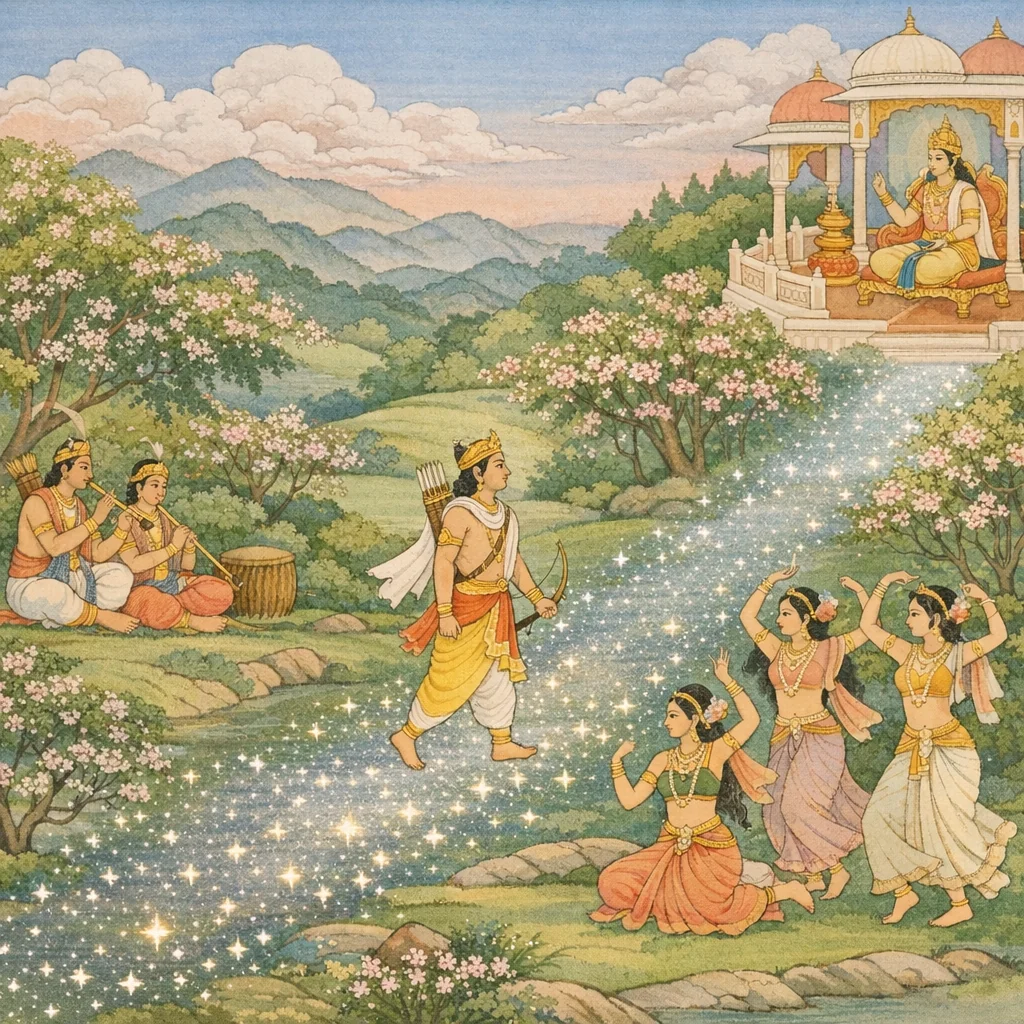
Vaiśaṃpāyana describes the arrival of Indra’s chariot after the lokapālas depart. The ratha appears with storm-like sound and a display of divine armaments and ominous brilliance, signaling celestial authority. Arjuna recognizes the presence of a divine emissary; Mātali approaches with respectful address and conveys Indra’s invitation, stating that devas, ṛṣis, gandharvas, and apsarases await the sight of Kuntī’s son. Mātali promises Arjuna will return after receiving weapons (labdhāstraḥ). Arjuna responds with reverent restraint, noting the chariot’s inaccessibility to ordinary rulers and even ritual patrons without tapas, and instructs Mātali to mount first. After Mātali takes the reins, Arjuna performs purification in the Gaṅgā, recites prescribed japa, and satisfies the ancestors according to rule. He then bids farewell to Mount Mandara, praising it as a refuge for dharma-minded ascetics and aspirants to svarga, and acknowledging its tīrthas and natural sanctities. Arjuna mounts the divine chariot, ascends beyond mortal sight, witnesses countless vimānas and self-luminous realms where neither sun nor moon is needed, observes star-like abodes of the meritorious, and encounters assemblies of siddhas, fallen heroes, gandharvas, guhyakas, ṛṣis, and apsarases. Mātali explains these as sukṛtins established in their own radiant stations. The chapter culminates with the sight of Airāvata at the gate and Arjuna’s approach to Indra’s Amarāvatī, marking the threshold of celestial initiation.
Chapter Arc: वैशम्पायन अर्जुन को दिव्य लोक में ले जाते हैं—वह सिद्ध-चारणों से सुशोभित, रम्य अमरपुरी को प्रत्यक्ष देखता है, जहाँ वायु तक पुण्यगन्ध से भरा है। → अर्जुन नन्दनवन, सुगन्धित पुष्पों, देवविमानों की सहस्र पंक्तियों और ‘सुरवीथी’ (नक्षत्रमार्ग) की विराट व्यवस्था को देखता हुआ इन्द्राज्ञा से आगे बढ़ता है—हर ओर स्तुति, आशीर्वाद और दिव्य अनुशासन का दबदबा बढ़ता जाता है। → इन्द्रसभा के निकट दिव्य संगीत का उत्कर्ष—तुम्बुरु आदि गन्धर्व सामगान गाते हैं और सहस्रों अप्सराएँ (घृताची, मेनका, रम्भा, उर्वशी आदि) मनोहर नृत्य से सभा-परिसर को आलोकित कर देती हैं; अर्जुन के लिए यह देवलोक की पूर्णता का साक्षात्कार बनता है। → अर्जुन का इन्द्रलोक में स्वागत-पर्यटन पूर्ण रूप से स्थापित हो जाता है—सभा का वैभव, कला, गन्ध, गति और देव-व्यवस्था उसके सामने स्पष्ट हो जाती है। → इन्द्रसभा का दर्शन तो हो गया—अब इन्द्र से प्रत्यक्ष संवाद, उद्देश्य (दिव्यास्त्र-प्राप्ति/कार्यादेश) और आगे की परीक्षा का संकेत अगले अध्यायों पर टिका रहता है।
Shlokas
Verse 1
हि >> मय न (0) है 7 त्रिचत्वारिशो< ध्याय: अर्जुनद्वारा देवराज इन्द्रका दर्शन तथा इन्द्रसभामें उनका स्वागत वैशम्पायन उवाच ददर्श स पुरी रम्यां सिद्धचारणसेविताम् । सर्वर्तुकुसुमै: पुण्य: पादपैरुपशोभिताम्,वैशम्पायनजी कहते हैं--राजन! अर्जुनने सिद्धों और चारणोंसे सेवित उस रम्य अमरावतीपुरीको देखा, जो सभी ऋतुओंके कुसुमोंसे विभूषित पुण्यमय वृक्षोंसे सुशोभित थी
Vaiśampāyana said: O king, Arjuna beheld the lovely city of Amarāvatī, attended by Siddhas and Cāraṇas, and made splendid by auspicious trees that bore flowers in every season.
Verse 2
तत्र सौगन्धिकानां च पुष्पाणां पुण्यगन्धिनाम् । उद्वीज्यमानो मिश्रेण वायुना पुण्यगन्धिना,वहाँ सुगन्धयुक्त कमल तथा पवित्र गन्धवाले अन्य पुष्पोंकी पवित्र गन्धसे मिली हुई वायु मानो व्यजन डुला रही थी
There, the holy fragrance of saugandhika lotuses and other sweet-scented flowers filled the air; mingled with that pure perfume, the breeze seemed to fan the place gently, as though a ceremonial whisk were being waved.
Verse 3
ननन््दनं च वन दिव्यमप्सरोगणसेवितम् । ददर्श दिव्यकुसुमैराद्दयद्धिरिव द्रुमै:,अप्सराओंसे सेवित दिव्य नन्दनवनका भी उन्होंने दर्शन किया, जो दिव्य पुष्पोंसे भरे हुए वृक्षोंद्वारा मानो उन्हें अपने पास बुला रहा था
He also beheld the celestial Nandana grove, frequented by hosts of Apsarases—its trees laden with divine blossoms seeming, as it were, to beckon him nearer.
Verse 4
नातप्ततपसा शकयो द्रष्टं नानाहिताग्निना । स लोक कक गं नापि युद्धे पराड्मुखै:,जिन्होंने तपस्या नहीं की है, जो अग्निहोत्रसे दूर रहे हैं तथा जिन्होंने युद्धमें पीठ दिखा दी है, वैसे लोग पुण्यात्माओंके उस लोकका दर्शन भी नहीं कर सकते
One who has not undergone austerity, who has not maintained the sacred fires of the agnihotra, and who turns his back in battle—such a man cannot even behold that blessed realm of the meritorious.
Verse 5
नायज्वभिनवत्रितिकैर्न वेदश्रुतिवर्जिति: । नानाप्लुताज्ैस्तीर्थेषु यज्ञदानबहिष्कृतै:,जिन्होंने यज्ञ नहीं किया है, व्रतका पालन नहीं किया है, जो वेद और श्रुतियोंके स्वाध्यायसे दूर रहे हैं, जिन्होंने तीर्थोंमें स्नान नहीं किया है तथा जो यज्ञ और दान आदि सत्कर्मोसे वंचित रहे हैं, ऐसे लोगोंको भी उस पुण्यलोकका दर्शन नहीं हो सकता
Vaiśampāyana said: Those who have not performed sacrifices, who have not observed vows, who have kept away from the study of the Veda and the sacred traditions, who have not bathed at holy fords, and who have been excluded from meritorious acts such as sacrifice and charity—such people, too, cannot obtain the vision of that blessed world.
Verse 6
नापि यज्ञहनै: क्षुद्रेर्दर्टं शक्य: कथंचन । पानपैर्गुरुतल्पैश्व मांसादैर्वा दुरात्मभि:,जो यज्ञोंमें विघ्म डालनेवाले नीच, शराबी, गुरुपत्नीगामी, मांसाहारी तथा दुरात्मा हैं, वे तो किसी भी प्रकार उस दिव्य लोकका दर्शन नहीं पा सकते
Vaiśampāyana said: Those petty-minded men who obstruct sacrifices—drunkards, violators of the teacher’s bed, meat-eaters and other wicked souls—can in no way obtain the vision of that divine world.
Verse 7
स तद् दिव्यं वनं पश्यन् दिव्यगीतनिनादितम् । प्रविवेश महाबाहु: शक्रस्य दयितां पुरीम्,जहाँ सब ओर दिव्य संगीत गूँज रहा था, उस दिव्य वनका दर्शन करते हुए महाबाहु अर्जुनने देवराज इन्द्रकी प्रिय नगरी अमरावतीमें प्रवेश किया
Vaiśampāyana said: Beholding that celestial forest, resonant with divine songs, the mighty-armed Arjuna entered Amarāvatī, the beloved city of Śakra (Indra).
Verse 8
तत्र देवविमानानि कामगानि सहस्रशः । संस्थितान्यभियातानि ददर्शायुतशस्तदा,वहाँ स्वेच्छानुसार गमन करनेवाले देवताओंके सहस्रों विमान स्थिरभावसे खड़े थे और हजारों इधर-उधर आते-जाते थे। उन सबको पाण्डुनन्दन अर्जुनने देखा। उस समय गन्धर्व और अप्सराएँ उनकी स्तुति कर रही थीं। फ़ूलोंकी सुगन्धका भार वहन करनेवाली पवित्र मन्द-मन्द वायु मानो उनके लिये चँवर डुला रही थी
There, he beheld thousands upon thousands of divine aerial cars, moving at will—some standing poised in stillness, others coursing to and fro in countless streams. At that time Arjuna, son of Pāṇḍu, saw them all: Gandharvas and Apsarases were offering praises, and a pure, gentle breeze—laden with the weight of flower-fragrance—seemed to fan him like a ceremonial whisk.
Verse 9
संस्तूयमानो गन्धर्वैरप्सरोभिश्नल पाण्डव: | पुष्पगन्धवहै: पुण्यैर्वायुभिश्चवानुवीजित:,वहाँ स्वेच्छानुसार गमन करनेवाले देवताओंके सहस्रों विमान स्थिरभावसे खड़े थे और हजारों इधर-उधर आते-जाते थे। उन सबको पाण्डुनन्दन अर्जुनने देखा। उस समय गन्धर्व और अप्सराएँ उनकी स्तुति कर रही थीं। फ़ूलोंकी सुगन्धका भार वहन करनेवाली पवित्र मन्द-मन्द वायु मानो उनके लिये चँवर डुला रही थी
Vaiśampāyana said: The Pāṇḍava (Arjuna) was being praised by the Gandharvas and the Apsarases, while gentle, sanctifying breezes—laden with the fragrance of flowers—seemed to fan him like a ceremonial whisk. In that celestial setting, he beheld the divine aerial cars: some standing steady, others moving about at will, revealing the ordered splendor of the gods’ realm and the honor accorded to one who has earned it through discipline and merit.
Verse 10
ततो देवा: सगन्धर्वा: सिद्धाश्न परमर्षय: | हृष्टा: सम्पूजयामासु: पार्थमक्लिष्टकारिणम्,तदनन्तर देवताओं, गन्धर्वों, सिद्धों और महर्षियोंने अत्यन्त प्रसन्न होकर अनायास ही महान् कर्म करनेवाले कुन्तीकुमार अर्जुनका स्वागत-सत्कार किया
Then the gods—together with the Gandharvas, the Siddhas, and the supreme seers—delighted at heart, honored and welcomed Pārtha (Arjuna), the doer of great deeds who accomplishes his aims without strain.
Verse 11
आशीवदि: स्तूयमानो दिव्यवादित्रनि:स्वनै: । प्रतिपेदे महाबाहुः शड्ःखदुन्दुभिनादितम्,कहीं उन्हें आशीर्वाद मिलता और कहीं स्तुति-प्रशंसा प्राप्त होती थी। स्थान-स्थानपर दिव्य वाद्योकी मधुर ध्वनिसे उनका स्वागत हो रहा था। इस प्रकार महाबाहु अर्जुन शंख और दुन्दुभियोंके गम्भीर नादसे गूँजते हुए 'सुरवीथी” नामसे प्रसिद्ध विस्तृत नक्षत्र-मार्गपर चलने लगे। इन्द्रकी आज्ञासे कुन्तीकुमारका सब ओर स्तवन हो रहा था और इस प्रकार वे गन्तव्य मार्गपर बढ़ते चले जा रहे थे
Vaiśampāyana said: As he received blessings and was praised on all sides, welcomed by the resonant music of celestial instruments, the mighty-armed Arjuna proceeded onward, his path echoing with the deep sounds of conches and kettledrums. Thus, under Indra’s command, he was honored and celebrated as he advanced along his destined route.
Verse 12
नक्षत्रमार्ग विपुलं सुरवीथीति विश्रुतम् इन्द्राज्ञया ययौ पार्थ: स्तूयमान: समन्ततः,कहीं उन्हें आशीर्वाद मिलता और कहीं स्तुति-प्रशंसा प्राप्त होती थी। स्थान-स्थानपर दिव्य वाद्योकी मधुर ध्वनिसे उनका स्वागत हो रहा था। इस प्रकार महाबाहु अर्जुन शंख और दुन्दुभियोंके गम्भीर नादसे गूँजते हुए 'सुरवीथी” नामसे प्रसिद्ध विस्तृत नक्षत्र-मार्गपर चलने लगे। इन्द्रकी आज्ञासे कुन्तीकुमारका सब ओर स्तवन हो रहा था और इस प्रकार वे गन्तव्य मार्गपर बढ़ते चले जा रहे थे
Vaiśampāyana said: By Indra’s command, Pārtha (Arjuna) proceeded along the broad celestial track of the stars, renowned as “Suravīthī.” As he went, he was praised on all sides—welcomed with blessings and hymns—so that his journey became not merely a passage through space, but a public affirmation of divine sanction and earned honor.
Verse 13
तत्र साध्यास्तथा विश्वे मरुतो5थाश्विनौ तथा । आदित्या वसवो रुद्रास्तथा ब्रह्मर्षपोडमला:,वहाँ साध्य, विश्वेदेव, मरुद्गण, अश्विनीकुमार, आदित्य, वसु, रुद्र तथा विशुद्ध ब्रह्मर्षिणण और अनेक राजर्षिगण एवं दिलीप आदि बहुत-से राजा, तुम्बुरु, नारद, हाहा, हूहू आदि गन्धर्वगण विराजमान थे
There, the Sādhyas and the Viśvedevas were present, as were the Maruts and the twin Aśvins. The Ādityas, the Vasus, and the Rudras also sat assembled, along with stainless, pure-minded Brahmarṣis.
Verse 14
राजर्षयश्व बहवो दिलीपप्रमुखा नृपा: । तुम्बुरुनरिदश्चैव गन्धर्वो च हहाहुहू:,वहाँ साध्य, विश्वेदेव, मरुद्गण, अश्विनीकुमार, आदित्य, वसु, रुद्र तथा विशुद्ध ब्रह्मर्षिणण और अनेक राजर्षिगण एवं दिलीप आदि बहुत-से राजा, तुम्बुरु, नारद, हाहा, हूहू आदि गन्धर्वगण विराजमान थे
Vaiśampāyana said: Many royal seers were present there, and many kings headed by Dilīpa. Tumburu and Nārada were also there, as well as the Gandharvas Hahā and Huhū.
Verse 15
तान् स सर्वान् समागम्य विधिवत् कुरुनन्दन: । ततो<पश्यद् देवराजं शतक्रतुमरिंदम:,शत्रुओंका दमन करनेवाले कुरुनन्दन अर्जुनने उन सबसे विधिपूर्वक मिलकर अन्तमें सौ यज्ञोंका अनुष्ठान करनेवाले देवराज इन्द्रका दर्शन किया
Vaiśampāyana said: After meeting all of them in due and proper manner, Arjuna—the delight of the Kurus and subduer of foes—then beheld Indra, the king of the gods, famed for the performance of a hundred sacrifices.
Verse 16
ततः पार्थों महाबाहुरवतीर्य रथोत्तमात् । ददर्श साक्षाद् देवेशं पितरं पाकशासनम्,उन्हें देखते ही महाबाहु पार्थ उस उत्तम रथसे उतर पड़े और देवेश्वर पिता पाकशासन (इन्द्र)-को उन्होंने प्रत्यक्ष देखा
Then Pārtha, the mighty-armed, descended from that excellent chariot. Before his very eyes he beheld the lord of the gods—his father, Pākaśāsana (Indra).
Verse 17
पाण्डुरेणातपत्रेण हेमदण्डेन चारुणा । दिव्यगन्धाधिवासेन व्यजनेन विधूयता,उनके मस्तकपर श्वेत छत्र तना हुआ था, जिसमें मनोहर स्वर्णमय दण्ड शोभा पा रहा था। उनके उभय पार्श्वमें दिव्य सुगन्धसे वासित चँवर डुलाये जा रहे थे
Vaiśaṃpāyana said: Over his head a white royal parasol was held aloft, adorned with a beautiful golden staff; and on either side he was fanned with yak-tail fans, perfumed with a divine fragrance—signs of honor and rightful sovereignty displayed in orderly, auspicious service.
Verse 18
विश्वावसुप्र भृतिभिरर्गन्धर्वे: स्तुतिवन्दनै: । स्तूयमान द्विजाग्रयैश्न ऋग्यजु:सामसम्भवै:,विश्वावसु आदि गन्धर्व स्तुति और वन्दनापूर्वक उनके गुण गाते थे। श्रेष्ठ ब्रह्मर्षिगण ऋग्वेद, यजुर्वेद और सामवेदके इन्द्रदेवतासम्बन्धी मन्त्रोंद्रारा उनका स्तवन कर रहे थे
Vaiśampāyana said: He was being praised by Gandharvas—led by Viśvāvasu—through hymns of eulogy and reverent salutations. At the same time, foremost among the twice-born sages extolled him with Vedic chants drawn from the Ṛg, Yajus, and Sāman traditions.
Verse 19
ततो5भिगम्य कौन्तेय: शिरसाभ्यगमद् बली । स चैन वृत्तपीनाभ्यां बाहुशभ्यां प्रत्यगृह्नत,तदनन्तर बलवान कुन्तीकुमारने निकट जाकर देवेन्द्रके चरणोंमें मस्तक रख दिया और उन्होंने अपनी गोल-गोल मोटी भुजाओंसे उठाकर अर्जुनको हृदयसे लगा लिया
Then the mighty son of Kuntī approached and bowed his head in reverence at Indra’s feet. Indra, with his rounded, powerful arms, lifted Arjuna up and drew him close to his heart.
Verse 20
ततः शक्रासने पुण्ये देवर्षिगणसेविते । शक्र: पाणौ गृहीत्वैनमुपावेशयदन्तिके,तत्पश्चात् इन्द्रने अर्जुनका हाथ पकड़कर अपने देवर्षिगणसेवित पवित्र सिंहासनपर उन्हें पास ही बिठा लिया
Then, upon Indra’s sacred throne—hallowed and attended by companies of divine seers—Śakra (Indra) took him by the hand and seated him close by.
Verse 21
मूर्थ्नि चैनमुपाप्राय देवेन्द्र: परवीरहा । अड्कमारोपयामास प्रश्रयावनतं तदा,तब शत्रुवीरोंका संहार करनेवाले देवराजने विनीतभावसे आये हुए अर्जुनका मस्तक सूँघा और उन्हें अपनी गोदमें बिठा लिया
Vaiśampāyana said: Then Devendra, the slayer of hostile heroes, smelled Arjuna’s head in affectionate approval and, seeing him bowed in humility, lifted him onto his lap.
Verse 22
सहस्राक्षनियोगात् स पार्थ: शक्रासनं गत: । अध्यक्रामदमेयात्मा द्वितीय इव वासव:,उस समय सहसनेत्रधारी देवेन्द्रके आदेशसे उनके सिंहासनपर बैठे हुए अपरिमित प्रभावशाली कुन्तीकुमार दूसरे इन्द्रकी भाँति शोभा पा रहे थे
At the command of the thousand-eyed Indra, that son of Pṛthā (Arjuna) approached and took his seat upon Indra’s throne. Possessed of immeasurable majesty, he shone there like a second Vāsava.
Verse 23
ततः प्रेम्णा वृत्रशत्रुरर्जुनस्य शुभं मुखम् | पस्पर्श पुण्यगन्धेन करेण परिसान्त्वयन्,इसके बाद वृत्रासुरके शत्रु इन्द्रने पवित्र गन्धयुक्त हाथसे बड़े प्रेमके साथ अर्जुनको सब प्रकारसे आश्वासन देते हुए उनके सुन्दर मुखका स्पर्श किया
Then Indra, the slayer of Vṛtra, affectionately touched Arjuna’s auspicious face with his hand fragrant with sacred perfume, soothing and reassuring him in every way.
Verse 24
प्रमार्जमान: शनकैर्बाहू चास्यायतौ शुभौ । ज्याशरक्षेपकठिनौ स्तम्भाविव हिरणमयौ,अर्जुनकी सुन्दर विशाल भुजाएँ प्रत्यंचा खींचकर बाण चलानेकी रगड़से कठोर हो गयी थीं। वे देखनेमें सोनेके खंभे-जैसी जान पड़ती थीं। देवराज उन भुजाओंपर धीरे-धीरे हाथ फेरने लगे
Vaiśaṃpāyana said: Gently stroking them, he caressed Arjuna’s two auspicious, long arms—hardened by the strain of drawing the bowstring and launching arrows—so that they seemed like golden pillars. Thus the lord of the gods touched those arms with slow, deliberate care.
Verse 25
वज्जग्रहणचिह्लेन करेण परिसान्त्वयन् । मुहुर्मुहुर्वज़धरो बाहू चास्फोटयच्छनै:,वज्रधारी इन्द्र वज्रधारणजनित चिह्से सुशोभित दाहिने हाथसे अर्जुनको बार-बार सान्त्वना देते हुए उनकी भुजाओंको धीरे-धीरे थपथपाने लगे
Vaiśampāyana said: Indra, wielder of the vajra, his right hand marked by the signs of holding the thunderbolt, reassured Arjuna again and again, gently patting and pressing his arms, granting calm and confidence in a moment of strain.
Verse 26
स्मयन्निव गुडाकेशं प्रेक्षमाण: सहस्रदूक् । हर्षेणोत्फुल्लनयनो न चातृप्यत वृत्रहा,सहसख््र नयनोंसे सुशोभित वृत्रसूदन इन्द्र निद्राविजयी अर्जुनको मुसकराते हुए-से देख रहे थे। उस समय इन्द्रकी आँखें हर्षसे खिल उठी थीं। वे उन्हें देखनेसे तृप्त नहीं होते थे
Indra, slayer of Vṛtra, the thousand-eyed, gazed upon Gudākeśa as though smiling; his eyes blossomed with delight, and he could not be sated by the sight of him.
Verse 27
एकासनोपविष्टो तौ शोभयांचक्रतु: सभाम् | सूर्याचन्द्रमसौ व्योम चतुर्दश्यामिवोदितौ,जैसे कृष्णपक्षकी चतुर्दशीको उदित हुए सूर्य और चन्द्रमा आकाशकी शोभा बढ़ाते हैं, उसी प्रकार एक सिंहासनपर बैठे हुए देवराज इन्द्र और कुन्तीकुमार अर्जुन देवसलभाको सुशोभित कर रहे थे
Vaiśampāyana said: Seated together upon a single throne, those two—Indra, lord of the gods, and Arjuna, son of Kuntī—made the divine assembly resplendent, like the sun and the moon rising together on the fourteenth lunar day and adorning the sky.
Verse 28
तत्र सम गाथा गायन्ति साम्ना परमवल्गुना । गन्धर्वस्तुम्बुरुश्रेष्ठा: कुशला गीतसामसु,उस समय वहाँ सामगानमें निपुण तुम्बुरु आदि श्रेष्ठ गन्धर्वगण सामगानके नियमानुसार अत्यन्त मधुर स्वरमें गाथागान करने लगे
There, the Gandharvas—foremost among them Tumburu—skilled in song and in the chanting of Sāman melodies, began to sing narrative lays in strict accordance with the rules of Sāmagāna, their voices exceedingly sweet.
Verse 29
घृताची मेनका रम्भा पूर्वचित्ति: स्वयंप्रभा । उर्वशी मिश्रकेशी च दण्डगौरी वरूथिनी,घृताची, मेनका, रम्भा, पूर्वचित्ति, स्वयंप्रभा, उर्वशी, मिश्रकेशी, दण्डगौरी, वरूथिनी, गोपाली, सहजन्या, कुम्भयोनि, प्रजागरा, चित्रसेना, चित्रलेखा, सहा और मधुरस्वरा--ये तथा और भी सहसीरों अप्सराएँ वहाँ इन्द्रसभामें भिन्न-भिन्न स्थानोंपर नृत्य करने लगीं। वे कमललोचना अप्सराएँ सिद्ध पुरुषोंके भी चित्तको प्रसन्न करनेमें संलग्न थीं। उनके कटि- प्रदेश और नितम्ब विशाल थे। नृत्य करते समय उनके उन्नत स्तन कम्पमान हो रहे थे। उनके कटाक्ष, हाव-भाव तथा माधुर्य आदि मन, बुद्धि एवं चित्तकी सम्पूर्ण वृत्तियोंका अपहरण कर लेते थे
Vaiśampāyana said: Ghṛtācī, Menakā, Rambhā, Pūrvacitti, Svayaṃprabhā, Urvaśī, Miśrakeśī, Daṇḍagaurī, and Varūthinī—these celebrated apsarases were present in Indra’s assembly, adorning it with their beauty and art.
Verse 30
गोपाली सहजन्या च कुम्भयोनि: प्रजागरा । चित्रसेना चित्रलेखा सहा च मधुरस्वरा,घृताची, मेनका, रम्भा, पूर्वचित्ति, स्वयंप्रभा, उर्वशी, मिश्रकेशी, दण्डगौरी, वरूथिनी, गोपाली, सहजन्या, कुम्भयोनि, प्रजागरा, चित्रसेना, चित्रलेखा, सहा और मधुरस्वरा--ये तथा और भी सहसीरों अप्सराएँ वहाँ इन्द्रसभामें भिन्न-भिन्न स्थानोंपर नृत्य करने लगीं। वे कमललोचना अप्सराएँ सिद्ध पुरुषोंके भी चित्तको प्रसन्न करनेमें संलग्न थीं। उनके कटि- प्रदेश और नितम्ब विशाल थे। नृत्य करते समय उनके उन्नत स्तन कम्पमान हो रहे थे। उनके कटाक्ष, हाव-भाव तथा माधुर्य आदि मन, बुद्धि एवं चित्तकी सम्पूर्ण वृत्तियोंका अपहरण कर लेते थे
Vaiśampāyana said: Gopālī, Sahajanyā, Kumbhayoni, Prajāgarā, Citrasenā, Citralekhā, Sahā, Madhurasvarā—along with Ghṛtācī, Menakā, Rambhā, Pūrvacitti, Svayaṃprabhā, Urvaśī, Miśrakeśī, Daṇḍagaurī, Varūthinī, and many thousands of other Apsarases—began to dance in different places within Indra’s assembly hall. Those lotus-eyed celestial nymphs were intent on delighting even the minds of accomplished Siddhas. Their waists and hips were broad; as they danced, their uplifted breasts trembled. Their sidelong glances, graceful gestures, and sweetness carried away the whole activity of mind, intellect, and heart.
Verse 31
एताश्षान्याश्व ननृतुस्तत्र तत्र सहस्रश: । चित्तप्रसादने युक्ता: सिद्धानां पच्मलोचना:,घृताची, मेनका, रम्भा, पूर्वचित्ति, स्वयंप्रभा, उर्वशी, मिश्रकेशी, दण्डगौरी, वरूथिनी, गोपाली, सहजन्या, कुम्भयोनि, प्रजागरा, चित्रसेना, चित्रलेखा, सहा और मधुरस्वरा--ये तथा और भी सहसीरों अप्सराएँ वहाँ इन्द्रसभामें भिन्न-भिन्न स्थानोंपर नृत्य करने लगीं। वे कमललोचना अप्सराएँ सिद्ध पुरुषोंके भी चित्तको प्रसन्न करनेमें संलग्न थीं। उनके कटि- प्रदेश और नितम्ब विशाल थे। नृत्य करते समय उनके उन्नत स्तन कम्पमान हो रहे थे। उनके कटाक्ष, हाव-भाव तथा माधुर्य आदि मन, बुद्धि एवं चित्तकी सम्पूर्ण वृत्तियोंका अपहरण कर लेते थे
Vaiśampāyana said: There, in many different places, these and countless other apsarases danced by the thousand. Lotus-eyed and intent on delighting the minds of the Siddhas, they performed in a way that brought pleasure and fascination to the assembled celestial beings.
Verse 32
महाकटितटश्रोण्य: कम्पमानै: पयोधरै: । कटाक्षहावमारधुर्यैश्वेतोबुद्धिमनोहरै:,घृताची, मेनका, रम्भा, पूर्वचित्ति, स्वयंप्रभा, उर्वशी, मिश्रकेशी, दण्डगौरी, वरूथिनी, गोपाली, सहजन्या, कुम्भयोनि, प्रजागरा, चित्रसेना, चित्रलेखा, सहा और मधुरस्वरा--ये तथा और भी सहसीरों अप्सराएँ वहाँ इन्द्रसभामें भिन्न-भिन्न स्थानोंपर नृत्य करने लगीं। वे कमललोचना अप्सराएँ सिद्ध पुरुषोंके भी चित्तको प्रसन्न करनेमें संलग्न थीं। उनके कटि- प्रदेश और नितम्ब विशाल थे। नृत्य करते समय उनके उन्नत स्तन कम्पमान हो रहे थे। उनके कटाक्ष, हाव-भाव तथा माधुर्य आदि मन, बुद्धि एवं चित्तकी सम्पूर्ण वृत्तियोंका अपहरण कर लेते थे
Vaiśampāyana said: With broad waists and ample hips, their breasts trembling as they danced, and with sidelong glances, graceful gestures, and sweetness that could steal away the mind, intellect, and heart—Ghṛtācī, Menakā, Rambhā, Pūrvacitti, Svayaṃprabhā, Urvaśī, Miśrakeśī, Daṇḍagaurī, Varūthinī, Gopālī, Sahajanyā, Kumbhayoni, Prajāgarā, Citrasenā, Citralekhā, and Madhurasvarā, along with many other apsarases—began to dance in different places within Indra’s assembly hall. Those lotus-eyed celestial nymphs were intent on delighting even the minds of the perfected sages; their beauty and artistry, expressed through glance and movement, overwhelmed the inner faculties and created enchantment in the court.
Verse 42
इस प्रकार श्रीमह्या भारत वनपवकि अन्तर्गत इन्द्रलोकाभिगमनपर्वमें बयालीसवाँ अध्याय पूरा हुआ
Thus ends the forty-second chapter of the Indralokābhigamana section within the Vana Parva of the great Mahābhārata. This colophon marks the completion of the chapter and signals a transition in the narrative.
Verse 43
इति श्रीमहा भारते वनपर्वणि इन्द्रलोकाभिगमनपर्वणि इन्द्रसभादर्शने त्रिचत्वारिंशो ध्याय:,इस प्रकार श्रीमहाभारत वनपरव्वके अन्तर्गत इन्रलोकाभिगमनपर्वमें इन्द्रसभादर्शनविषयक तैतालीसवाँ अध्याय पूरा हुआ
Thus, in the sacred Mahābhārata, within the Vana Parva—specifically the section on Arjuna’s ascent to Indra’s world—ends the forty-third chapter, describing the vision of Indra’s celestial assembly. In this way, the chapter on beholding Indra’s court is concluded, marking a formal closure to this episode and underscoring the epic’s practice of framing divine encounters as milestones in a hero’s moral and spiritual preparation.
Frequently Asked Questions
The implicit dilemma is sequencing power and piety: Arjuna must accept extraordinary martial empowerment while ensuring that ritual purity, humility, and prescribed obligations are not bypassed for expediency.
Authority and access are shown as merit-conditioned: divine resources are approached through discipline, respectful conduct, and correct rites, indicating that capability should be grounded in ethical qualification.
No explicit phalaśruti is stated here; the meta-function is narrative-ethical—linking celestial ascent to śauca, pitṛ-duty, and tapas—thereby situating later martial success within a dharmic framework.