Adhyaya 304
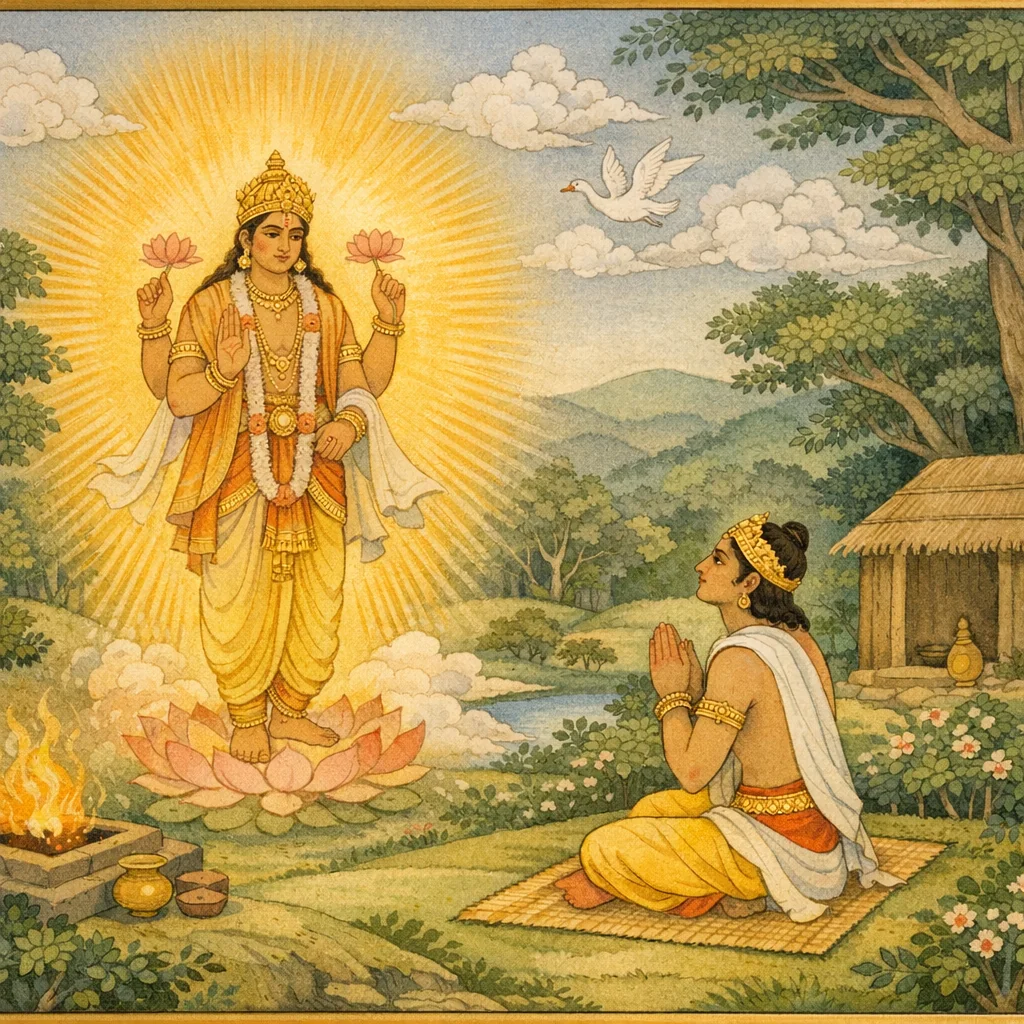
Chapter Arc: वन के एकांत में, दानवीर कर्ण के भीतर उठती प्रतिज्ञा-सी कठोरता को सूर्यदेव स्वयं संबोधित करते हैं—मानो पिता अपने पुत्र के भाग्य पर अंतिम बार हाथ रख रहा हो। → सूर्य कर्ण को सावधान करते हैं कि इन्द्र छल से उसके कुण्डल-कवच हरने आएँगे। वे समझाते हैं कि कीर्ति का मार्ग प्राण-विरोध (आत्म-विनाश) नहीं, बल्कि देह-रक्षा के साथ धर्म-पालन है; जीवित रहने पर ही माता-पिता, पुत्र और बन्धु अर्थ पाते हैं। → सूर्य का निर्णायक आदेश—‘इन्द्र को कुण्डल मत देना’; और साथ ही तीखा तर्क कि जो कीर्ति प्राणों को खा कर मिलती है, वह अंततः प्राणों सहित ही चली जाती है—यह उपदेश कर्ण की दान-प्रतिज्ञा पर सीधा प्रहार बनता है। → सूर्य कर्ण को यह भी दिखाते हैं कि कुण्डलों से वह आकाश में विशाखा-नक्षत्रों के बीच चन्द्रमा-सा शोभित है—अर्थात यह केवल आभूषण नहीं, जीवन-रक्षा का कवच है। अध्याय का अंत सूर्य की चेतावनी और कर्ण के सामने खड़े धर्म-संकट की स्पष्टता पर टिकता है। → इन्द्र जब याचक-वेष में आएँगे, तब कर्ण सूर्य की आज्ञा मानेगा या अपनी दान-कीर्ति की प्रतिज्ञा?
Shlokas
Verse 1
आकर () है एकाधिकांत्रेशततमो<ध्याय: सूर्यका कर्णको समझाते हुए उसे इन्द्रको कुण्डल न देनेका आदेश देना सूर्य उवाच माहितं कर्ण कार्षीस्त्वमात्मन: सुहृदां तथा । पुत्राणामथ भार्याणामथो मातुरथो पितु:,सूर्यने कहा--कर्ण! तुम अपना, अपने सुहृदोंका, पुत्रों और पत्नियोंका तथा माता- पिताका अहित न करो
Surya said: “Karna, do not bring about harm—either to yourself, or to your well-wishers, or to your sons and wives, or to your mother and your father.”
Verse 2
शरीरस्याविरो धेन प्राणिनां प्राणभृद्धर । इष्यते यशस: प्राप्ति: कीर्तिश्ष त्रिदिवे स्थिरा,प्राणधारियोंमें श्रेष्ठ वीर! अपने शरीरकी रक्षा करते हुए ही प्राणियोंको इहलोकमें यशकी प्राप्ति तथा स्वर्गमें स्थायी कीर्ति अभीष्ट होती है
O best of the life-bearing beings, O hero: only while safeguarding one’s own body in a manner consistent with life’s preservation do creatures rightly seek the attainment of honor in this world and enduring fame in heaven.
Verse 3
यस्त्वं प्राणविरोधेन कीर्तिमिच्छसि शाश्वतीम् । सा ते प्राणान् समादाय गमिष्यति न संशय:,यदि तुम प्राणोंका विरोध (नाश) करके सनातन कीर्ति प्राप्त करना चाहते हो तो इसमें संदेह नहीं कि वह (कीर्ति) तुम्हारे प्राणोंको लेकर ही जायगी
Sūrya said: “If you seek everlasting fame by acting against your own life—by bringing about the destruction of your vital breath—then be certain of this: that very ‘fame’ will depart only after taking your life with it. There is no doubt.”
Verse 4
जीवतां कुरुते कार्य पिता माता सुतास्तथा । ये चान्ये बान्धवा: केचिल्लोके5स्मिन् पुरुषर्षभ,पुरुषरत्न! पिता, माता, पुत्र तथा और जो कोई भी भाई-बन्धु इस लोकमें हैं, वे सब जीवित पुरुषोंसे ही अपने प्रयोजनकी सिद्धि करते हैं
Sūrya said: “In this world, O bull among men, a father, a mother, and sons—as well as whatever other relatives there may be—accomplish their purposes only through those who are alive.”
Verse 5
राजानश्न नरव्याप्र पौरुषेण निबोध तत् । कीर्तिश्व जीवत: साध्वी पुरुषस्य महाद्युते
O king, O tiger among men, understand this through the lens of true manly effort: for a great-souled man, illustrious fame is a noble companion even while he yet lives.
Verse 6
महातेजस्वी नरश्रेष्ठ] राजालोग भी जीवित रहनेपर ही पुरुषार्थसे कीर्तिलाभ करते हैं। इस बातको समझो; जीवित पुरुषके लिये ही कीर्ति अच्छी मानी गयी है ।। मृतस्य कीर्त्या कि कार्य भस्मी भूतस्य देहिन: । मृतः कीर्ति न जानीते जीवन् कीर्ति समश्षुते,जो मर गया, जिसका शरीर चिताकी आगमें जलकर भस्म हो गया; उसे कीर्तिसे क्या प्रयोजन है? मरा हुआ पुरुष कीर्तिके विषयमें कुछ नहीं जानता। जीवित पुरुष ही कीर्तिजनित सुखका अनुभव करता है
Sūrya said: “What use is fame to one who is dead, whose embodied form has been reduced to ashes? The dead do not know fame at all; it is the living who actually partake of the joy that arises from renown. Therefore, understand this: only while one lives can human effort bear the fruit of lasting reputation.”
Verse 7
मृतस्य कीर्तिर्मित्यस्य यथा माला गतायुष: । अहं तु त्वां ब्रवीम्येतद् भक्तो उसीति हितेप्सया,मरे हुए मनुष्यकी कीर्ति मुर्देके गलेमें पड़ी हुई मालाके समान व्यर्थ है। तुम मेरे भक्त हो, इसीलिये तुम्हारे हितकी इच्छासे मैं ये सब बातें कहता हूँ
The fame of one who is dead is as futile as a garland hung upon a corpse. Yet I tell you this for your welfare, because you are my devotee: do not be deluded by empty renown, but choose what truly sustains life and righteousness.
Verse 8
भक्तिमन्तो हि मे रक्ष्या इत्येतेनापि हेतुना । भक्तो5यं परया भक्त्या मामित्येव महाभुज । ममापि भक्तिरुत्पन्ना स त्वं कुरु वचो मम,मुझे अपने भक्तोंकी रक्षा करनी ही चाहिये, इसलिये भी तुमसे तुम्हारे हितकी बात कहता हूँ। महाबाहो! यह मेरा भक्त है, परम भक्तिभावसे मेरा भजन करता है, यह सोचकर मेरे मनमें भी तुम्हारे प्रति स्नेह जाग उठा है। अत: तुम मेरी आज्ञाका पालन करो
“Those who are devoted to me must indeed be protected—on this ground as well I speak to you for your welfare. O mighty-armed one, ‘This man is my devotee; with supreme devotion he worships me alone’—thinking thus, affection has arisen in me toward you too. Therefore, do as I command.”
Verse 9
अस्ति चात्र परं किज्चिदशध्यात्मं देवनिर्मितम् । अततश्न त्वां ब्रवीम्येतत् क्रियतामविशड्कया,इस सम्बन्धमें एक देवविहित आध्यात्मिक रहस्य है। इसी कारण तुमसे कह रहा हूँ कि तुम बेखटके यही कार्य करो, जिसे मैंने तुम्हें बतलाया है
Moreover, there is here a higher, divine mystery of the inner Self, ordained by the gods. For that very reason I tell you this: carry out what I have instructed, without hesitation or doubt.
Verse 10
देवगुहां त्वया ज्ञातुं न शक््यं पुरुषर्षभ । तस्मान्नाख्यामि ते गुह्ां काले वेत्स्यति तद् भवान्,पुरुषरत्न! देवताओंकी गुप्त बात तुम नहीं समझ सकते, इसीलिये वह गोपनीय रहस्य तुम्हें नहीं बता रहा हूँ। समय आनेपर तुम सब कुछ अपने-आप जान लोगे
Sūrya said: “O best of men, you are not yet able to comprehend the gods’ hidden counsel. Therefore I will not disclose that secret to you now. In due time, O jewel among men, you will come to know it of your own accord.”
Verse 11
पुनरुक्तं च वक्ष्यामि त्वं राधेय निबोध तत् । मास्मै ते कुण्डले दद्या भिक्षिते वजपाणिना,राधानन्दन! मैं फिर अपनी कही हुई बात दुहराता हूँ, उसे ध्यान देकर सुनो--इन्द्रके माँगनेपर भी तुम उन्हें अपने वे कुण्डल न देना'
Sūrya said: “I will say again what I have already told you—listen well, O Radheya. Even if the wielder of the thunderbolt comes to you as a supplicant, do not give away your earrings.”
Verse 12
शोभसे कुण्डलाभ्यां च रुचिराभ्यां महायुते । विशाखयोर्मध्यगत: शशीव विमले दिवि,महाद्युते! तुम इन दोनों मनोहर कुण्डलोंसे निर्मल आकाशमें विशाखा नामक दो नक्षत्रोंके बीच प्रकाशित होनेवाले चन्द्रमाकी भाँति शोभा पाते हो
Sūrya said: “O mighty one, you shine adorned with two beautiful earrings. Like the moon, radiant in the spotless sky when it appears between the twin stars called Viśākhā, so do you appear—bright and splendid.”
Verse 13
कीर्तिश्नव जीवत: साध्वी पुरुषस्येति विद्धि तत् प्रत्याख्येयस्त्वया तात कुण्डलार्थे सुरेश्वर:,तुम्हें यह मालूम होना चाहिये कि जीवित पुरुषके लिये ही कीर्ति प्रशंसनीय है। अतः तात! तुम्हें कुण्डलके लिये आये हुए देवराज इन्द्रको देनेसे इनकार कर देना चाहिये
Sūrya said: “Know this well: for a man who is still alive, fame alone is truly commendable and meaningful. Therefore, dear son, you should refuse the Lord of the gods who has come seeking your earrings.”
Verse 14
शक्या बहुविधैर्वाक्यै: कुण्डलेप्सा त्वयानघ । विहन्तुं देवराजस्य हेतुयुक्तै: पुन: पुन:,अनघ! तुम बारंबार युक्तियुक्त वचन कहकर अनेक प्रकारकी बातोंमें बहलाकर देवराज इन्द्रकी कुण्डल लेनेकी इच्छाको नष्ट कर सकते हो
Surya said: “O sinless one, by speaking many kinds of words—again and again, with well-reasoned arguments—you are capable of diverting the Lord of the gods from his desire to obtain your earrings.”
Verse 15
हेतुमदुपपन्नार्थर्माधुर्यकृत भूषणै: । पुरन्दरस्य कर्ण त्वं बुद्धिमेतामपानुद,कर्ण! अनेक कारण दिखाकर, नाना प्रकारकी युक्तियाँ सामने रखकर तथा माधुर्यगुणसे विभूषित वचन सुनाकर देवराज इन्द्रके इस कुण्डल लेनेके विचारको तुम पलट देना
Sūrya said: “O Karṇa, by presenting well-grounded reasons, by setting forth arguments that are coherent and apt, and by speaking words adorned with persuasive sweetness, you must turn back this intention of Purandara (Indra) to take your earrings.”
Verse 16
त्वं हि नित्यं नरव्याप्र स्पर्थसे सव्यसाचिना । सव्यसाची त्वया चेह युधि शूर: समेष्यति,नरव्याप्र! तुम सदा अर्जुनसे स्पर्धा रखते हो अत: शूरवीर अर्जुन युद्धमें कभी तुमसे अवश्य भिड़ेगा
The Sun said: “O tiger among men, you are ever in rivalry with Savyasācin (Arjuna). Therefore, here on the field of battle, that heroic Savyasācin will surely come to meet you in combat.”
Verse 17
न तु त्वामर्जुन: शक्त: कुण्डलाभ्यां समन्वितम् । विजेतुं युधि यद्यस्य स्वयमिन्द्र: सखा भवेत्,यदि तुम इन दोनों कुण्डलोंको धारण किये रहोगे, तो अर्जुन तुम्हें युद्धमें कदापि नहीं जीत सकते; भले ही साक्षात् इन्द्र भी उनकी सहायता करनेके लिये आ जायाँ
“But Arjuna will not be able to defeat you in battle so long as you remain adorned with these two earrings; even if Indra himself were to come as his ally, you would still be unconquerable.”
Verse 18
तस्मान्न देये शक्राय त्वयैते कुण्डले शुभे । संग्रामे यदि निर्जेतुं कर्ण कामयसे<र्जुनम्,अतः कर्ण! यदि तुम समरभूमिमें अर्जुनको जीतनेकी अभिलाषा रखते हो तो इन्द्रको ये दोनों शुभ कुण्डल कदापि न देना
“Therefore, O Karṇa, you must not give these two auspicious earrings to Śakra (Indra). If, in battle, you truly desire to defeat Arjuna, then do not part with this divine protection.”
Verse 300
इस प्रकार श्रीमहाभारत वनपवके अन्तर्गत कुण्डलाहरणपर्वमें सूर्यकर्णसंवादविषयक तीन सौवाँ अध्याय पूरा हुआ
Thus ends the three-hundredth chapter of the Vana Parva of the Śrī Mahābhārata, within the section known as the “Episode of the Removal of the Earrings,” dealing with the dialogue between Sūrya and Karṇa.
Verse 301
इति श्रीमहाभारते वनपर्वणि कुण्डलाहरणपर्वणि सूर्यकर्णसंवादे एकाधिकत्रिशततमो<5 ध्याय:
Thus ends the three-hundred-and-first chapter in the Vana Parva of the Śrī Mahābhārata, within the episode of the taking of the earrings, in the dialogue between Sūrya and Karṇa.
Verse 309
इस प्रकार श्रीमह्याभारत वनपर्वके अन्तर्गत कुण्डलाहरणपर्वमें सूर्य-कर्णसंवादविषयक तीन सौ एकवाँ अध्याय पूरा हुआ
Thus ends the three-hundred-and-first chapter of the Vana Parva of the Śrī Mahābhārata, within the episode known as the “Abduction of the Earrings,” centered on the dialogue between Sūrya and Karṇa. This closing formula marks the completion of the section, underscoring the ethical tension between divine counsel and human choice that frames Karṇa’s impending sacrifice and the larger moral stakes of the war to come.