Adhyaya 27
Dvaītavana: Brahmaghoṣa, Rṣi-saṅgha, and Baka Dālbhyā’s Upadeśa to Yudhiṣṭhira
Upa-parva: Dvaītavana-vāsa & Brāhmaṇa-saṅgati (Episode of Dvaītavana and the Brahmin Assemblage)
Vaiśaṃpāyana describes the Pandavas dwelling at Dvaītavana, where the forest becomes filled with Brahmins and ascetics. The lake and grove are characterized as sanctified by continuous brahmaghoṣa—Vedic recitation of Yajus, Ṛc, Sāman, and formal prose formulae—creating an atmosphere likened to Brahmaloka. The narrative juxtaposes the Pandavas’ martial readiness (the sound of bowstrings) with the sages’ ritual sound, presenting an idealized harmony of Kṣatra and Brahman. Baka Dālbhyā then addresses Yudhiṣṭhira during the sandhyā observance, urging attentive listening and articulating a doctrine of co-dependence: Brahman joined with Kṣatra functions like fire aided by wind, capable of overcoming adversaries and sustaining order. Illustrative statements emphasize that kingship without Brahmin counsel loses strength, while combined guidance and force bring public tranquility. The counsel concludes with practical instruction: a wise ruler should seek intelligence from Brahmins for obtaining what is lacking and increasing what is gained, and should host renowned, learned Veda-knowers. The chapter ends with the assembled Brahmins honoring Baka Dālbhyā and praising Yudhiṣṭhira; a catalog of prominent sages underscores the legitimacy and scale of the ascetic community gathered around the Pandavas.
Chapter Arc: वन के कठोर वर्तमान में द्रौपदी युधिष्ठिर के पास आती है—वह वही द्रौपदी है जो कभी इन्द्रप्रस्थ की सभा में राजाओं से घिरे धर्मराज को देख चुकी थी; अब उसी वैभव का अभाव उसके हृदय को चीरता है। → द्रौपदी स्मृतियों को शस्त्र बनाती है: सहस्रों सत्कृत पात्र, ब्राह्मणों का पूजन, भाइयों के मृष्टकुण्डल और युवावस्था का तेज—और फिर प्रश्न उठाती है कि ऐसे धर्मात्मा राजा का क्रोध क्यों नहीं जागता। वह धृतराष्ट्रपुत्रों की नृशंसता का स्मरण कराती है और युधिष्ठिर की क्षमा को कायरता-सी ठहराती है। → द्रौपदी का तीखा आक्षेप चरम पर पहुँचता है: ‘सहदेव, नकुल, अर्जुन—जो दुःख के अयोग्य हैं—उन्हें वन में कष्ट भोगते देखकर भी तुम्हारा मन्यु क्यों नहीं बढ़ता?’ यह क्षण युधिष्ठिर के ‘क्षमा-धर्म’ और ‘राजधर्म-प्रतिशोध’ के बीच सीधा टकराव बन जाता है। → युधिष्ठिर द्रौपदी के वेधक वचनों को सुनकर भी अपने संयम और धर्मनिष्ठा की भूमि नहीं छोड़ते; वे संकेत देते हैं कि क्रोध से नहीं, नीति और समय की प्रतीक्षा से लक्ष्य सिद्ध होगा—और कि प्रतिज्ञा-पालन (वनवास) ही अभी उनका व्रत है। → द्रौपदी की वाणी से उठी आग बुझती नहीं—प्रश्न हवा में रह जाता है: क्या धर्मराज की क्षमा अंततः धर्म की रक्षा करेगी, या अधर्म को और निर्भय करेगी?
Shlokas
Verse 1
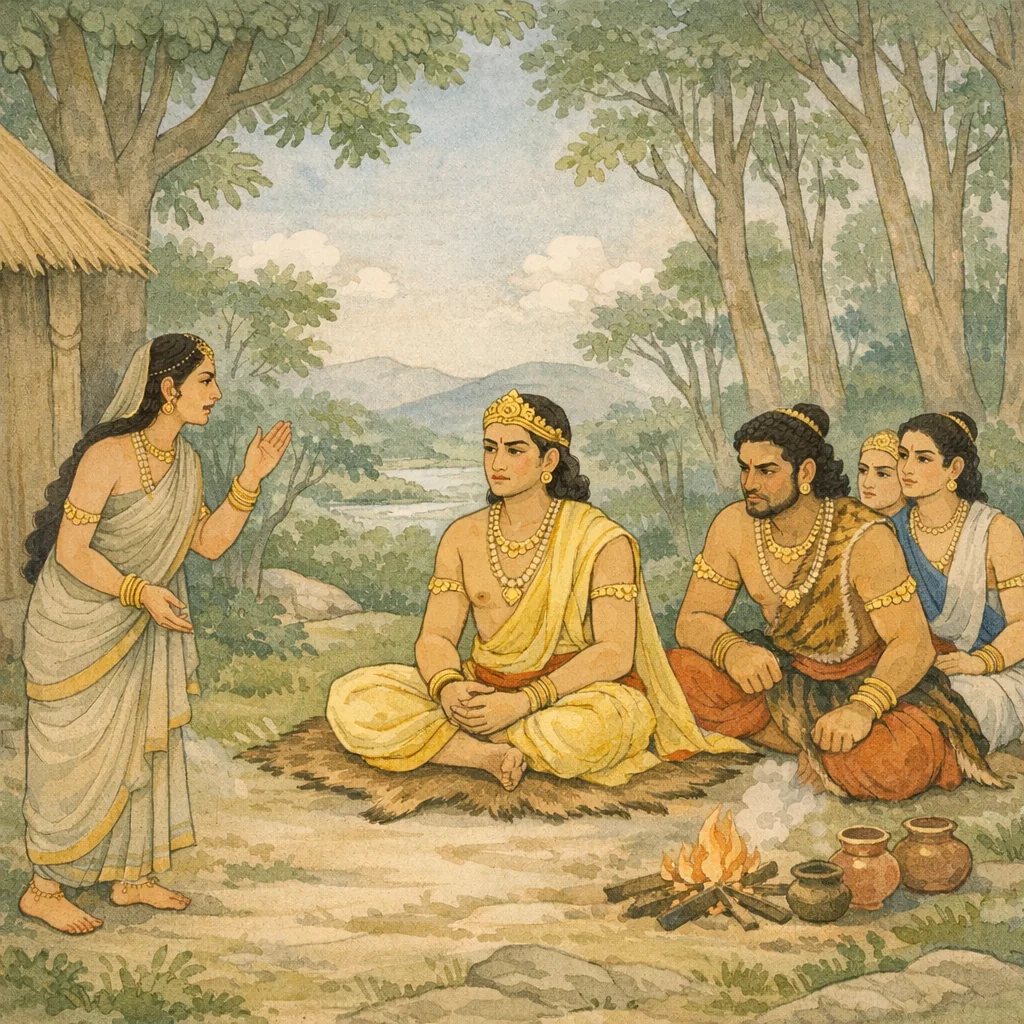
2.3 आए (0) है - बलिके द्वारा ब्राह्मणोंके साथ दुर्व्यवहार करनेपर उसका राज्यलक्ष्मीसे वियोग होनेका प्रसंग शान्तिपर्वके २२५ वें अध्यायमें आता है। सप्तविशो<्ध्याय: द्रौपदीका युधिष्ठिरसे उनके शत्रुविषयक क्रोधको उभाड़नेके लिये संतापपूर्ण वचन वैशम्पायन उवाच ततो वनगताः पार्था: सायाह्वले सह कृष्णया । उपविष्टा: कथाश्षक्रुर्द:खशोकपरायणा:,वैशम्पायनजी कहते हैं--जनमेजय! तदनन्तर वनमें गये हुए पाण्डव एक दिन सायंकालमें द्रौपदीके साथ बैठकर दुःख और शोकमें मग्न हो कुछ बातचीत करने लगे
Vaiśampāyana said: Then the Pāṇḍava brothers, having gone into the forest, sat down one evening together with Kṛṣṇā (Draupadī). Overwhelmed and absorbed in grief and sorrow, they began to speak among themselves.
Verse 2
प्रिया च दर्शनीया च पण्डिता च पतिव्रता । अथ कृष्णा धर्मराजमिदं वचनमत्रवीत्,पतिव्रता द्रौपदी पाण्डवोंकी प्रिया, दर्शनीया और विदुषी थी। उसने धर्मराजसे इस प्रकार कहा
Vaiśampāyana said: Beloved and pleasing to behold, learned, and steadfast in wifely fidelity, Kṛṣṇā (Draupadī) then addressed Dharmarāja with these words.
Verse 3
द्रौपहुुवाच न नूनं तस्य पापस्य दुःखमस्मासु किंचन । विद्यते धार्तराष्ट्रस्य नृशंसस्य दुरात्मन:,द्रौपदी बोली--राजन्! मैं समझती हूँ, उस क्रूर स्वभाववाले दुरात्मा धृतराष्ट्रपुत्र पापी दुर्योधनके मनमें हमलोगोंके लिये तनिक भी दुःख नहीं हुआ होगा
Draupadī said: “Surely that sinful man feels not the slightest sorrow for us. In the heart of Dhṛtarāṣṭra’s son—cruel and wicked—there is no compassion at all.”
Verse 4
यस्त्वां राजन् मया सार्धमजिनै: प्रतिवासितम् । वन॑ प्रस्थाप्य दुष्टात्मा नान्वतप्यत दुर्मति:,महाराज! उस नीच बुद्धिवाले दुष्टात्माने आपको भी मृगछाला पहनाकर मेरे साथ वनमें भेज दिया; किंतु इसके लिये उसे थोड़ा भी पश्चात्ताप नहीं हुआ
But that wicked-souled man, O King—of perverse understanding—sent you to the forest together with me, making you wear deerskins; and for this he felt not the slightest remorse.
Verse 5
आयसं हृदयं नूनं तस्य दुष्कृतकर्मण: । यस्त्वां धर्मपरं श्रेष्ठ रूक्षाण्यश्राववत् तदा,अवश्य ही उस कुकर्मीका हृदय लोहेका बना है, क्योंकि उसने आप-जैसे धर्मपरायण श्रेष्ठ पुछुषको भी उस समय कटु वचन सुनाये थे
Vaiśampāyana said: “Surely that evildoer’s heart must be made of iron, for he once made even you—O best of men, steadfast in dharma—hear harsh, cutting words.”
Verse 6
सुखोचितमदु:खार्ह दुरात्मा ससुहृदूगण: । ईदृशं दुःखमानीय मोदते पापपूरुष:,आप सुख भोगनेके योग्य हैं। दुःखके योग्य कदापि नहीं हैं, तो भी आपको ऐसे दुःखमें डालकर वह पापाचारी दुरात्मा अपने मित्रोंक साथ आनन्दित हो रहा है
Vaiśampāyana said: “You are fit for happiness, accustomed to comfort, and not deserving of suffering. Yet that wicked, sinful man—bringing upon you such misery—rejoices together with his circle of friends.”
Verse 7
चतुर्णामेव पापानामस्त्र न पतितं तदा । त्वयि भारत निष्क्रान्ते वनायाजिनवाससि,भारत! जब आप वल्कल-वस्त्र धारण करके वनमें जानेके लिये निकले, उस समय केवल चार ही पापात्माओंके नेत्रोंसे आँसू नहीं गिरा था
Vaiśampāyana said: “At that time, when you, O Bhārata, set out for the forest wearing the bark-garments of an ascetic, tears did not fall from the eyes of only four sinful men. All others were moved to grief and compassion, while those four alone remained untouched—revealing the moral blindness that accompanies adharma.”
Verse 8
दुर्योधनस्य कर्णस्य शकुनेश्न दुरात्मन: । दुर्भातुस्तस्य चोग्रस्य राजन् दःशासनस्य च,दुर्योधन, कर्ण, दुरात्मा शकुनि तथा उग्र स्वभाव-वाले दुष्ट भ्राता दुःशासन--इन्हींकी आँखोंमें आँसू नहीं थे
Vaiśampāyana said: “O King, there were no tears in the eyes of Duryodhana, Karṇa, the wicked-souled Śakuni, and that fierce, evil brother Duḥśāsana.”
Verse 9
इतरेषां तु सर्वेषां कुरूणां कुरुसत्तम । दुःखेनाभिपरीतानां नेत्रेभ्य: प्रापतज्जलम्,कुरुश्रेष्ठ! अन्य सभी कुरुवंशी दु:खमें डूबे हुए थे और उनके नेत्रोंसे अश्रुवर्षा हो रही थी
Vaiśaṃpāyana said: “But as for all the other Kurus, O best of the Kurus, overwhelmed on every side by grief, tears fell from their eyes.”
Verse 10
इदं च शयनं दृष्टवा यच्चासीत् ते पुरातनम् । शोचामि त्वां महाराज दु:ःखानह सुखोचितम्,महाराज! आज आपकी यह शबय्या देखकर मुझे पहलेकी राजोचित शय्याका स्मरण हो आता है और मैं आपके लिये शोकमें मग्न हो जाती हूँ; क्योंकि आप दुःखके अयोग्य और सुखके ही योग्य हैं
“Seeing this bed of yours, and remembering the former royal couch you once had, I grieve for you, O great king—one who is not fit for suffering, but worthy of happiness.”
Verse 11
दान्तं यच्च सभामध्य आसन रत्नभूषितम् | दृष्टवा कुशवृषीं चेमां शोको मां प्रदहत्ययम्,सभाभवनमें जो रत्नजटित हाथीदाँतका सिंहासन है, उसका स्मरण करके जब मैं इस कुशकी चटाईको देखती हूँ, तब शोक मुझे दग्ध किये देता है
Vaiśampāyana said: “When I remember that jewel-adorned seat of ivory that stood in the midst of the royal assembly, and then look upon this simple mat of kuśa-grass, this sorrow burns me to the core.”
Verse 12
यदपश्यं सभायां त्वां राजभि: परिवारितम् | तच्च राजन्नपश्यन्त्या: का शान्तिह॑ंदयस्य मे,राजन! मैं इन्द्रप्रस्थकी सभामें आपको राजाओंसे घिरा हुआ देख चुकी हूँ, अत: आज वैसी अवस्थामें आपको न देखकर मेरे हृदयको क्या शान्ति मिल सकती है?
Vaiśampāyana said: “When I once saw you in the royal assembly, surrounded by kings, that sight itself was a source of assurance. Now, O King, when I do not see you in that same state, what peace can my heart possibly find?”
Verse 13
या त्वाहं चन्दनादिग्धमपश्य॑ सूर्यवर्चसम् । सा त्वां पड़कमलादिग्धं दृष्टवा मुह्दामि भारत,भारत! जो पहले आपको चन्दनचर्चित एवं सूर्यके समान तेजस्वी देखती रही हूँ, वही मैं आपको कीचड़ एवं मैलसे मलिन देखकर मोहके कारण दु:खित हो रही हूँ
Vaiśampāyana said: “I who once beheld you anointed with sandal-paste and radiant like the sun—now, seeing you smeared with mud and filth, I am overcome by bewilderment and grieve, O Bhārata.”
Verse 14
या त्वाहं कौशिकैरव॑स्त्रै: शुभ्रैराच्छादितं पुरा । दृष्टवत्यस्मि राजेन्द्र सा त्वां पश्यामि चीरिणम्,राजेन्द्र! जो मैं पहले आपको उज्ज्वल रेशमी वस्त्रोंसे आच्छादित देख चुकी हूँ, वही आज वल्कल-वस्त्र पहने देखती हूँ
O king, I who once saw you covered in bright, fine silk garments now behold you wearing bark-cloth.
Verse 15
यच्च तद्रुक्मपात्रीभि्राह्मणेभ्य: सहस्रश: । हियते ते गृहादन्नं संस्कृतं सार्वकामिकम्,एक दिन वह था कि आपके घरसे सहसों ब्राह्मणोंके लिये सोनेकी थालियोंमें सब प्रकारकी रुचिके अनुकूल तैयार किया हुआ सुन्दर भोजन परोसा जाता था
Vaiśampāyana said: “And that food—beautifully prepared and suited to every taste—which used to be served from your house to thousands of brāhmaṇas in golden vessels, is now diminished and no longer forthcoming as before.”
Verse 16
यतीनामगृहाणां ते तथैव गृहमेधिनाम् । दीयते भोजन राजन्नतीवगुणवत् प्रभो,शक्तिशाली महाराज! उन दिनों प्रतिदिन यतियों, ब्रह्मचारियों और गृहस्थ ब्राह्मणोंको भी अत्यन्त गुणकारी भोजन अर्पित किया जाता था
Vaiśampāyana said: “O King, to those ascetics who kept no household, and likewise to the householders, food of exceptionally fine quality was given, O lord.”
Verse 17
सत्कृतानि सहस्राणि सर्वकामै: पुरा गृहे । सर्वकामै: सुविहितैर्यदपूजय था द्विजान्,पहले आपके राजभवनमें सहस्रों (सुवर्णमय) पात्र थे, जो सम्पूर्ण इच्छानुकूल भोज्य पदार्थोंसे भरे-पूरे रहते थे और उनके द्वारा आप समस्त अभीष्ट मनोरथोंकी पूर्ति करते हुए प्रतिदिन ब्राह्मणोंका सत्कार करते थे
Vaiśampāyana said: “Formerly, in your own palace, there were thousands of well-prepared provisions and gifts, complete with every desirable comfort; and with such excellently arranged means of fulfilling all wishes, you used to honor the brāhmaṇas with due reverence.”
Verse 18
तच्च राजन्नपश्यन्त्या: का शान्तिहंदयस्य मे | यत् ते भ्रातृन् महाराज युवानो मृष्टकुण्डला:,राजन्! आज वह सब न देखनेके कारण मेरे हृदयको क्या शान्ति मिलेगी? महाराज! आपके जिन भाइयोंको कानोंमें सुन्दर कुण्डल पहने हुए तरुण रसोइये अच्छे प्रकारसे बनाये हुए स्वादिष्ट अन्न परोसकर भोजन कराया करते थे, उन सबको आज वनमें जंगली फल-मूलसे जीवन-निर्वाह करते देख रही हूँ
And, O King, if I do not see them, what peace can my heart find? For, O great king, those very young brothers of yours—once adorned with shining earrings and served carefully prepared, delicious food by youthful cooks—are now seen by me sustaining themselves in the forest on wild fruits and roots.
Verse 19
अभोजयमन्त मिष्ट न्नेः सूदा: परमसंस्कृतै: । सर्वास्तानद्य पश्यामि वने वन्येन जीविन:,राजन्! आज वह सब न देखनेके कारण मेरे हृदयको क्या शान्ति मिलेगी? महाराज! आपके जिन भाइयोंको कानोंमें सुन्दर कुण्डल पहने हुए तरुण रसोइये अच्छे प्रकारसे बनाये हुए स्वादिष्ट अन्न परोसकर भोजन कराया करते थे, उन सबको आज वनमें जंगली फल-मूलसे जीवन-निर्वाह करते देख रही हूँ
Vaiśampāyana said: “O King, I now behold them all in the forest, sustaining themselves on wild fare. Those very brothers of yours—once served by youthful cooks wearing fine earrings, who offered exquisitely prepared, delicious food—are today living on forest fruits and roots. Seeing this reversal, how can my heart find peace?”
Verse 20
अदुःखाहनि् मनुष्येन्द्र नोपशाम्यति मे मन: । भीमसेनमिमं चापि दु:खितं वनवासिनम्,सुखाई दु:खितं दृष्टवा कस्मान्मन्युर्न वर्धते । नरेन्द्र! आपके भाई दुःख भोगनेके योग्य नहीं हैं; आज इन्हें दुःखमें देखकर मेरा चित्त किसी प्रकार शान्त नहीं हो पाता है। महाराज! वनमें रहकर दुःख भोगते हुए इन अपने भाई भीमसेनका स्मरण करके समय आनेपर क्या शत्रुओंके प्रति आपका क्रोध नहीं बढ़ेगा? मैं पूछती हूँ--युद्धसे कभी पीछे न हटनेवाले और सुख भोगनेके योग्य भीमसेनको स्वयं अपने हाथोंसे सब काम करते और दुःख उठाते देखकर शत्रुओंपर आपका क्रोध क्यों नहीं भड़क उठता?
Vaiśampāyana said: “O lord of men, my mind finds no peace on this day of sorrow. Seeing Bhīmasena too—fit for comfort—now distressed and dwelling in the forest, how does your wrath not increase? When you remember this brother of yours, enduring hardship in exile, will not your anger against the enemies surge when the time comes? I ask you: seeing Bhīma, who never retreats from battle and deserves to live in ease, forced to do every task with his own hands and to bear suffering—why does your fury against those foes not blaze up?”
Verse 21
ध्यायत: कि न मन्युस्ते प्राप्ते काले विवर्धते । भीमसेनं हि कर्माणि स्वयं कुर्वाणमच्युतम्
Vaiśaṃpāyana said: “As you brood, why does your anger not swell when the decisive moment has arrived—seeing Bhīmasena himself undertaking the deeds, while Acyuta (Kṛṣṇa) acts on his own as well?”
Verse 22
सत्कृतं विविधैयनिर्वस्त्रैरुच्चावचैस्तथा
Vaiśampāyana said: He was duly honored, and likewise provided with garments of many kinds—both fine and ordinary—according to propriety and circumstance.
Verse 23
अयं कुरून् रणे सर्वान् हन्तुमुत्सहते प्रभु:
Vaiśampāyana said: “This mighty lord is prepared to slay all the Kurus in battle.”
Verse 24
योअरर्जुनेनार्जुनस्तुल्यो द्विबाहुर्बहुबाहुना
Vaiśampāyana said: “He who, though only two-armed, was equal to Arjuna even when Arjuna displayed many arms.”
Verse 25
शरावमर्दे शीघ्रत्वात् कालान्तकयमोपम: । यस्य शस्त्रप्रतापेन प्रणता: सर्वपार्थिवा:
Vaiśampāyana said: “In the crushing of the enemy’s ranks he was swift, resembling Yama, the Ender of Time. By the might and splendor of his weapons, all earthly kings were brought to bow before him.”
Verse 26
यज्ञे तव महाराज ब्राह्मणानुपतस्थिरे । तमिमं पुरुषव्याप्र॑ पूजितं देवदानवै:
Vaiśampāyana said: “O great king, at your sacrifice the Brāhmaṇas attended upon you. This eminent man—honoured even by gods and Dānavas—was duly revered.”
Verse 27
ध्यायन्तमर्जुनं दृष्टवा कस्माद् राजन् न कुप्यसि । राजन्! आपके जो भाई अर्जुन दो ही भुजाओंसे युक्त होनेपर भी सहस्र भुजाओंसे विभूषित कार्तवीर्य अर्जुनके समान पराक्रमी हैं, बाण चलानेमें अत्यन्त फुर्ती रखनेके कारण जो शत्रुओंके लिये काल, अन्तक और यमके समान भयंकर हैं; महाराज! जिनके शस्त्रोंके प्रतापसे समस्त भूपाल नतमस्तक हो आपके यज्ञमें ब्राह्मणोंकी सेवाके लिये उपस्थित हुए थे, उन्हीं इन देव-दानवपूजित पुरुषसिंह अर्जुनको चिन्तामग्न देखकर आप शत्रुओंपर क्रोध क्यों नहीं करते? || २४--२६ $ ।। दृष्टवा वनगतं पार्थमदु:ःखाह सुखोचितम्,इति श्रीमहाभारते वनपर्वणि अर्जुनाभिगमनपर्वणि द्रौपदीपरितापवाक्ये सप्तविंशोडध्याय:
Vaiśampāyana said: “O King, seeing Arjuna sunk in thought, why do you not grow angry? When such a hero—though bearing only two arms—matches the might of Kārtavīrya Arjuna famed for a thousand arms; when, by the swiftness of his archery, he is to enemies like Death, the Ender, and Yama; when by the splendour of his weapons the kings of the earth once bowed their heads and came to your sacrifice to serve the Brāhmaṇas—seeing that very Arjuna, the lion among men worshipped by gods and demons, afflicted with anxiety, why do you not direct your wrath against your foes?”
Verse 28
यो देवांश्व मनुष्यांश्व॒ सर्पाश्नैकरथो&5जयत्
Vaiśampāyana said: “He, standing alone upon a single chariot, overcame gods, men, and serpents.”
Verse 29
यो यानैरद्धुताकारैर्हयैनगिश्व संवृतः
Vaiśampāyana said: “He was surrounded by wondrously fashioned vehicles and by horses…,”
Verse 30
प्रसहय वित्तान्यादत्त पार्थिवेभ्य: परंतप । क्षिपत्येकेन वेगेन पजडचबाणशतानि यः:
Vaiśampāyana said: “That hero, a scorcher of foes, forcibly seized the wealth of kings; and with a single surge of speed he would hurl forth hundreds of arrows from his bow—overwhelming opponents by sheer force and rapidity.”
Verse 31
तं॑ ते वनगतं दृष्टवा कस्मान्मन्युर्न वर्धते । परंतप! जिन्होंने पराजित नरेशोंके दिये हुए अद्भुत आकारवाले रथों, घोड़ों और हाथियोंसे घिरे हुए कितने ही राजाओंसे बलपूर्वक धन लिये थे, जो एक ही वेगसे पाँच सौ बाणोंका प्रहार करते हैं, उन्हीं अर्जुनको वनवासका कष्ट भोगते देख शत्रुओंपर आपका क्रोध क्यों नहीं बढ़ता? || २९-३० $ ।। श्यामं बृहन्तं तरुणं चर्मिणामुत्तमं रणे
Vaiśampāyana said: “Seeing him—Arjuna—gone to the forest, why does your wrath not increase, O scorcher of foes? When such a hero, who once forcibly took wealth from many kings surrounded by wondrous chariots, horses, and elephants given by defeated rulers, and who can strike with five hundred arrows in a single rush of speed—when that very Arjuna is made to endure the hardship of exile, why does your anger against the enemies not blaze up?”
Verse 32
दर्शनीयं च शूरं च माद्रीपुत्रं युधिष्ठिर
Vaiśampāyana said: “(He was) pleasing to behold and also truly valiant—Mādrī’s son, O Yudhiṣṭhira.”
Verse 33
नकुल॑ सहदेवं च दृष्टवा ते दु:खितावुभौ
Seeing Nakula and Sahadeva, those two were at once overcome with sorrow—an immediate, human response to the suffering of their kin, showing how compassion and shared grief arise even amid hardship and exile.
Verse 34
द्रुपदस्य कुले जातां स्नुषां पाण्डोर्महात्मन:,मैं द्रपदके कुलमें उत्पन्न हुई महात्मा पाण्डुकी पुत्रवधू, वीर धृष्टद्युम्नकी बहिन तथा वीरशिरोमणि पाण्डवोंकी पतिव्रता पत्नी हूँ। महाराज! मुझे इस प्रकार वनमें कष्ट उठाती देखकर भी आप शशत्रुओंके प्रति क्षमाभाव कैसे धारण करते हैं?
Vaiśampāyana said: “She (Draupadī), born in King Drupada’s line and the daughter-in-law of the great-souled Pāṇḍu, speaks from honor and dharma: though she is the devoted wife of the Pāṇḍavas and sister of the heroic Dhṛṣṭadyumna, she is made to suffer in the forest. Seeing her endure such hardship, she asks how the king can still keep forbearance toward his enemies—implying that patience which enables injustice is a failure of righteous duty.”
Verse 35
धृष्टद्युम्नस्य भगिनीं वीरपत्नीमनुव्रताम् मां वै वनगतां दृष्टवा कस्मात् क्षमसि पार्थिव,मैं द्रपदके कुलमें उत्पन्न हुई महात्मा पाण्डुकी पुत्रवधू, वीर धृष्टद्युम्नकी बहिन तथा वीरशिरोमणि पाण्डवोंकी पतिव्रता पत्नी हूँ। महाराज! मुझे इस प्रकार वनमें कष्ट उठाती देखकर भी आप शशत्रुओंके प्रति क्षमाभाव कैसे धारण करते हैं?
“Seeing me—Dhṛṣṭadyumna’s sister, the devoted wife of heroes, steadfast in my wifely vow—now driven into the forest, why do you, O king, still practice forbearance toward your enemies? Born in Drupada’s line, the daughter-in-law of the great-souled Pāṇḍu, and the chaste wife of the foremost among the Pāṇḍavas, how can you endure this injustice and yet forgive those who wrong you?”
Verse 36
नूनं च तव वै नास्ति मन्युर्भरतसत्तम । यत् ते हल श्च मां चैव दृष्टवा न व्यथते मन:,भरतश्रेष्ठ! निश्चय ही आपके हृदयमें क्रोध नहीं है, क्योंकि मुझे और अपने भाइयोंको भी कष्टमें पड़ा देख आपके मनमें व्यथा नहीं होती है!
Vaiśampāyana said: “Surely, O best of the Bharatas, there is no anger in you at all—since, on seeing me and your brothers brought low and afflicted, your mind does not even feel distress.”
Verse 37
न निर्मन्यु:क्षत्रियो$स्ति लोके निर्वचनं स्मृतम् । तदद्य त्वयि पश्यामि क्षत्रिये विपरीतवत्,संसारमें कोई भी क्षत्रिय क्रोधरहित नहीं होता, क्षत्रिय शब्दकी व्युत्पत्ति ही ऐसी है, जिससे उसका सक्रोध होना सूचित होता है।- परंतु आज आप-चजैसे क्षत्रियमें मुझे यह क्रोधका अभाव क्षत्रियत्वके विपरीत-सा दिखायी देता है
Vaiśampāyana said: “It is remembered as a settled definition in the world that no kṣatriya is without anger; even the very derivation of the word ‘kṣatriya’ implies a readiness to wrath in the protection of order. Yet today, in you—though you are a kṣatriya—I see the absence of anger, as if it were contrary to kṣatriya-nature.”
Verse 38
यो न दर्शयते तेज: क्षत्रियः काल आगते । सर्वभूतानि तं पार्थ सदा परिभवन्त्युत,कुन्तीनन्दन! जो क्षत्रिय समय आनेपर अपने प्रभावको नहीं दिखाता, उसका सब प्राणी सदा तिरस्कार करते हैं
Vaiśampāyana said: “O Pārtha, when the decisive moment arrives, the kṣatriya who does not display his rightful vigor and authority becomes an object of contempt; indeed, all beings continually disregard him.”
Verse 39
तत् त्वया न क्षमा कार्या शत्रून् प्रति कथंचन । तेजसैव हि ते शक््या निहन्तुं नात्र संशय:,महाराज! आपको शशत्रुओंके प्रति किसी प्रकार भी क्षमाभाव नहीं धारण करना चाहिये। तेजसे ही उन सबका वध किया जा सकता है, इसमें तनिक भी संशय नहीं है
Vaiśampāyana said: “Therefore, you must not adopt any attitude of forbearance toward your enemies in any way. By your own fiery power alone they can be slain—of this there is no doubt.”
Verse 40
तथैव य: क्षमाकाले क्षत्रियो नोपशाम्यति । अप्रिय: सर्वभूतानां सोअमुत्रेह च नश्यति,इसी प्रकार जो क्षत्रिय क्षमा करनेके योग्य समय आनेपर शान्त नहीं होता, वह सब प्राणियोंके लिये अप्रिय हो जाता है और इहलोक तथा परलोकमें भी उसका विनाश ही होता है
Likewise, a kṣatriya who does not become calm when the time for forgiveness has arrived becomes hateful to all beings; and he meets ruin both here in this world and there in the next.
Verse 213
सुखाई दु:खितं दृष्टवा कस्मान्मन्युर्न वर्धते । नरेन्द्र! आपके भाई दुःख भोगनेके योग्य नहीं हैं; आज इन्हें दुःखमें देखकर मेरा चित्त किसी प्रकार शान्त नहीं हो पाता है। महाराज! वनमें रहकर दुःख भोगते हुए इन अपने भाई भीमसेनका स्मरण करके समय आनेपर क्या शत्रुओंके प्रति आपका क्रोध नहीं बढ़ेगा? मैं पूछती हूँ--युद्धसे कभी पीछे न हटनेवाले और सुख भोगनेके योग्य भीमसेनको स्वयं अपने हाथोंसे सब काम करते और दुःख उठाते देखकर शत्रुओंपर आपका क्रोध क्यों नहीं भड़क उठता?
Vaiśampāyana said: “When one who deserves comfort is seen in misery, why does anger not rise? O king, your brothers are not fit to suffer hardship; seeing them in distress today, my mind cannot find peace. O ruler, as you dwell in the forest and endure affliction, when you remember your brother Bhīmasena, will your wrath against the enemies not grow when the time comes? I ask you: seeing Bhīma—who never retreats from battle and is worthy of enjoying prosperity—doing every task with his own hands and bearing pain, why does your fury against the foes not flare up?”
Verse 223
तं॑ ते वनगतं दृष्टवा कस्मान्मन्युर्न वर्धते । विविध सवारियाँ और नाना प्रकारके वस्त्रोंस जिनका सत्कार होता था, उन्हीं भीमसेनको वनमें कष्ट उठाते देख शत्रुओंके प्रति आपका क्रोध प्रज्वलित क्यों नहीं होता?
Vaiśampāyana said: “Seeing that Bhīmasena—once honored with many attendants and clothed in fine garments—now living in the forest and enduring hardship, why does your wrath against the enemies not blaze up and grow?”
Verse 236
त्वप्प्रतिज्ञां प्रतीक्ष॑स्तु सहतेडयं वृकोदर: । ये शक्तिशाली भीमसेन युद्धमें समस्त कौरवोंको नष्ट कर देनेका उत्साह रखते हैं, परंतु आपकी प्रतिज्ञा-पूर्तिकी प्रतीक्षा करमेके कारण अबतक शत्रुओंके अपराधको सहन करते हैं
Vaiśampāyana said: This Vṛkodara (Bhīma), though fully capable, endures the enemy’s offenses only because he is waiting for you to fulfill your vow. He has the ardor to destroy all the Kauravas in battle, yet restrains himself out of regard for your pledged word—showing that strength is to be governed by dharma and fidelity to promises.
Verse 283
तं॑ ते वनगतं दृष्टवा कस्मान्मन्युर्न वर्धते । जिन्होंने एकमात्र रथकी सहायतासे देवताओं, मनुष्यों और नागोंपर विजय पायी है, उन्हीं अर्जुनको वनवासका दुःख भोगते देख आपका क्रोध क्यों नहीं बढ़ता?
Vaiśampāyana said: “Seeing him living in the forest, why does your anger not increase? When that very Arjuna—who, with the aid of a single charioteer, has conquered gods, men, and nāgas—is now made to endure the sorrow of exile, how can your righteous wrath remain unmoved?”
Verse 316
नकुलं ते वने दृष्टवा कस्मान्मन्युर्न वर्थते । जो युद्धमें ढाल और तलवारसे लड़नेवाले वीरोंमें सर्वश्रेष्ठ है, जिनकी कद ऊँची है तथा जो श्यामवर्णके तरुण हैं, उन्हीं नकुलको आज वनमें कष्ट उठाते देखकर आपको क्रोध क्यों नहीं होता?
Vaiśampāyana said: “Seeing Nakula in the forest, why does anger not arise in you? He is foremost among heroes who fight with shield and sword—tall in stature, a dark-hued youth—yet today he is made to endure hardship in the wilderness; why does this not kindle your wrath?”
Verse 323
सहदेवं वने दृष्टवा कस्मात् क्षमसि पार्थिव । महाराज युधिष्ठिर! माद्रीके परम सुन्दर पुत्र शूरवीर सहदेवको वनवासका दुःख भोगते देखकर आप शत्रुओंको क्षमा कैसे कर रहे हैं?
Vaiśampāyana said: “O king, why do you practice forgiveness after seeing Sahadeva in the forest? O great king Yudhiṣṭhira—Sahadeva, the supremely handsome, heroic son of Mādrī, is enduring the hardships of exile; seeing him suffer so, how can you still pardon your enemies?”
Verse 333
अदुःखाहँ मनुष्येन्द्र कस्मान्मन्युर्न वर्थते । नरेन्द्र! नकुल और सहदेव दुःख भोगनेके योग्य नहीं हैं। इन दोनोंको आज दु:खी देखकर आपका क्रोध क्यों नहीं बढ़ रहा है?
Vaiśampāyana said: “O best of men, why does your anger not rise? O king, Nakula and Sahadeva are not fit to endure suffering. Seeing these two distressed today, how is it that your wrath does not increase?”
Verse 2736
न च ते वर्धते मन्युस्तेन मुह्यमि भारत । भारत! दुःखके अयोग्य और सुख भोगनेके योग्य अर्जुनको वनमें दुःख भोगते देखकर भी जो शत्रुओंके प्रति आपका क्रोध नहीं उमड़ता, इससे मैं मोहित हो रही हूँ
Vaiśampāyana said: “And yet your wrath does not increase—therefore I am bewildered, O Bhārata. Seeing Arjuna—fit to enjoy happiness and unfit for suffering—endure hardship in the forest, how does your anger not surge against the enemies? This leaves me confounded.”
Frequently Asked Questions
The tension is how a ruler maintains effective authority and public good while in exile: the chapter answers by prioritizing reliance on ethical counsel and learned guidance, showing that legitimacy can persist without territory when dharma-driven protection and patronage continue.
Brahman (knowledge, ritual authority, discernment) and Kṣatra (protective power, enforcement) are presented as mutually amplifying; when joined, they stabilize society and enable the ruler to act decisively without departing from dharma.
No explicit phalaśruti formula appears in the provided passage; instead, the chapter uses descriptive sanctification (Brahmaloka-like Dvaītavana) and communal approval (sages praising Yudhiṣṭhira and honoring Baka) as an implicit validation of the teaching’s efficacy.