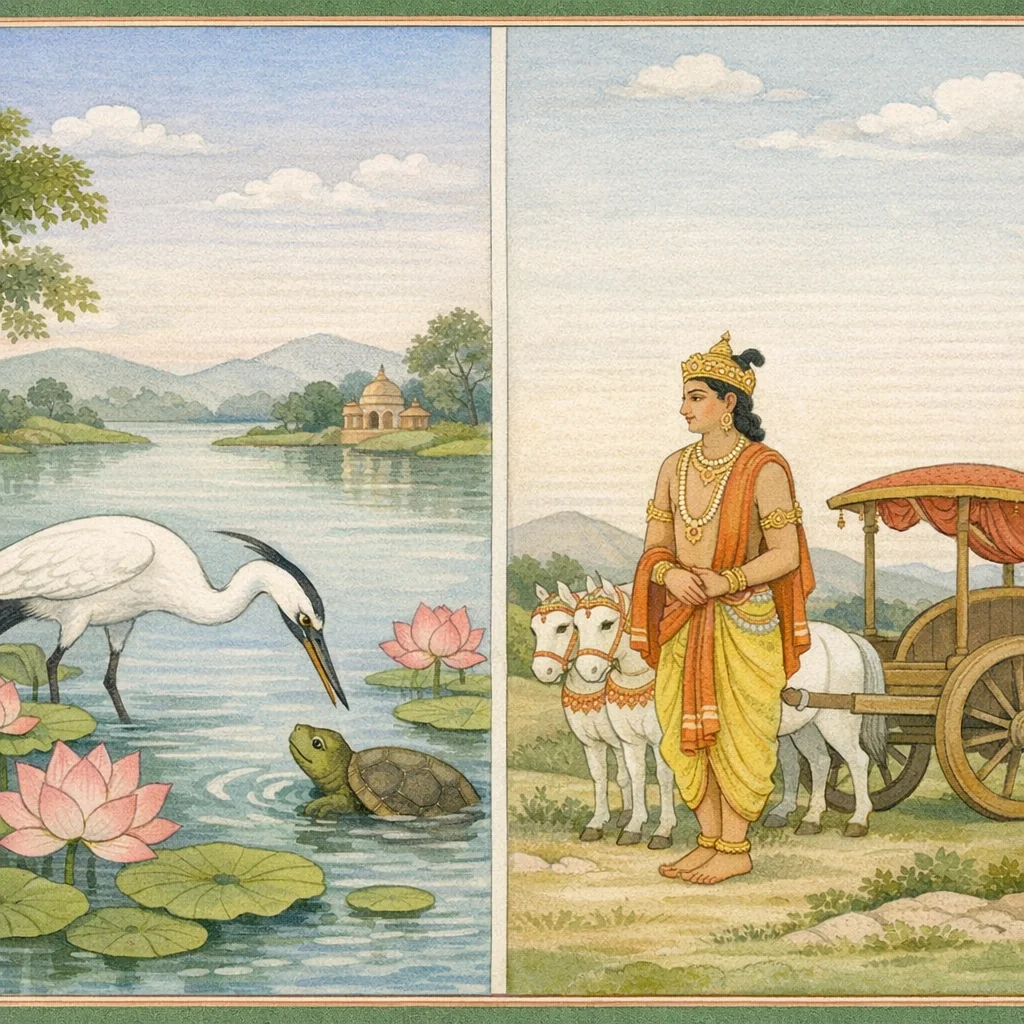
Adhyaya 200
Dharma-vyādha on the Subtlety of Dharma, Karma, and the Continuity of the Jīva (Āraṇyaka-parva 200)
Upa-parva: Mārkaṇḍeya–Dharma-vyādha Saṃvāda (Ethical Discourse on Dharma, Karma, and Jīva)
Mārkaṇḍeya introduces the Dharma-vyādha’s renewed instruction to a brāhmaṇa, asserting that dharma is grounded in śruti yet operates with subtle, many-branched complexity. The discourse addresses exceptional circumstances where untruth may be enjoined (e.g., life-threatening contexts and marriage negotiations), reframing ‘truth’ as that which maximally benefits beings (bhūta-hita) and warning that reversal of this principle becomes adharma. The speaker then surveys apparent inequities in human outcomes—competent persons failing, harmful persons prospering—arguing that such variance is intelligible through karmic causality rather than arbitrary control. The teaching proceeds to metaphysics: the jīva is described as not destroyed by bodily death, migrating under karmic bonds; the doer alone experiences the results, and deeds do not perish. Rebirth is sketched as graded by moral quality (deva, human, lower births), with saṃsāra characterized by recurring suffering. The chapter closes by prescribing ethical cultivation (gratitude, non-malice, disciplined conduct), leading to disenchantment, renunciation, sense-restraint, and the attainment of the highest goal through śama, dama, satya, and indriya-nigraha; the brāhmaṇa requests a technical account of the senses and the method and fruit of restraint.
Chapter Arc: Janamejaya is told how the Pandavas and gathered rishis question Markandeya: is there any being in the world older than even you—any other chiranjivi whose memory reaches further back? → Markandeya answers by turning to an ancient exemplum: the tale of King Indradyumna and the strange economy of merit—how even a famed king’s punya can be measured, exhausted, and contested. The narrative introduces a humble creature (a tortoise/kacchapa) and a crane (baka) as unexpected witnesses, hinting that dharma’s ledger is kept in places kings do not look. → A moral thunderclap is voiced in verse: the ‘sound’ (fame/echo) of righteous deeds touches both earth and heaven, and as long as that sound endures a person is truly ‘spoken of’—but when it fades, even greatness becomes vulnerable. The chapter pivots on this realization: immortality is not of body, but of remembered dharma. → Markandeya concludes with counsel: therefore one should remain steadfast in auspicious conduct, abandon the most sinful mind, and take refuge in dharma alone. The tale closes with the king’s dutiful response to a divine summons—he first sets two aged beings in their proper places, then proceeds by the same celestial conveyance to attain his destined station in heaven.
Shlokas
Verse 1
#८2:8 #:23:.7 () हि २ 7 नवनवर्त्याधेकशततमो< ध्याय: राजा इन्द्रद्युम्न तथा अन्य चिरजीवी प्राणियोंकी कथा वैशम्पायन उवाच मार्कण्डेयमृषय: पाण्डवा: पर्यपच्छन्नस्ति कश्चिद् भवतश्चिरजाततर इति
Vaiśampāyana said: The Pāṇḍavas questioned the sage Mārkaṇḍeya, asking, “Is there anyone older than you—someone even more long-lived?”
Verse 2
वैशम्पायनजी कहते हैं--जनमेजय! ऋषियों तथा पाण्डवोंने मार्कण्डेयजीसे पूछा --'भगवन्! कोई आपसे भी पहलेका उत्पन्न चिरजीवी इस जगतमें है या नहीं? ।। स तानुवाचास्ति खलु राजर्षिरिन्द्रद्मम्मो नाम क्षीणपुण्यस्त्रिदिवात् प्रच्युतः कीर्तिस्ति व्युच्छिन्नेति स मामुपातिष्ठदथ प्रत्यभिजानाति मां भवानिति,मार्कण्डेयजीने कहा--'है क्यों नहीं, सुनो। एक समय राजर्षि इन्द्रद्युम्न अपना पुण्य क्षीण हो जानेके कारण यह कहकर स्वर्गलोकसे नीचे गिरा दिये गये थे कि “जगतमें तुम्हारी कीर्ति नष्ट हो गयी है।” स्वर्गसे गिरनेपर वे मेरे पास आये और बोले--'“क्या आप मुझे पहचानते हैं?”
Vaiśampāyana said: “Janamejaya, the sages and the Pāṇḍavas asked Mārkaṇḍeya, ‘Revered sir, is there in this world any long-lived being who was born even before you, or not?’ He replied, ‘Indeed there is—there was a royal sage named Indradyumna. When his merit was exhausted, he fell from heaven, dismissed with the pronouncement, “Your fame in the world has been cut off.” After falling from the celestial realm, he came to me and asked, “Do you recognize me?”’”
Verse 3
तमहमन्रुवं॑ कार्यचेष्टाकुलत्वान्न वयं वासायनिका ग्रामैकरात्रवासिनो न प्रत्यभिजानीमो<-प्यात्मनो<र्थानामनुष्ठानं न शरीरोपतापेनात्मन: समारभामो3र्थानामनुष्ठानम्,“मैंने उनसे कहा--“हमलोग तीर्थयात्रा आदि भिन्न-भिन्न पुण्य कार्योकी चेष्टाओंमें व्यग्र रहते हैं, अतः किसी एक स्थानपर सदा नहीं रहते। एक गाँवमें केवल एक रात निवास करते हैं। अपने कार्योंका अनुष्ठान भी हमें भूल जाता है। व्रत-उपवास आदिमें लगे रहनेसे अपने शरीरको सदा कष्ट पहुँचानेके कारण आवश्यक कार्योंका आरम्भ भी हमसे नहीं हो पाता है, ऐसी दशामें हम आपको कैसे जान सकते हैं?”
Vaiśaṃpāyana said: “Then I replied to him: ‘We are constantly preoccupied with the bustle of undertaking various meritorious duties—pilgrimages and the like—so we do not remain settled in any one place. In each village we stay only for a single night. In such continual movement, even the proper performance of our own obligations slips from our awareness; and because we keep afflicting the body through vows, fasts, and austerities, we often cannot even begin the necessary tasks that ought to be done. In this condition, how could we possibly recognize you?’”
Verse 4
(एवमुक्तो राजर्षिरिन्द्रद्युम्न: पुनर्मामब्रवीद् अथास्ति वक्षित् त्वत्तश्नचिरे जाततर इति ।।) “मेरे ऐसा कहनेपर राजर्षि इन्द्रद्युम्नने पुन: मुझसे पूछा--“क्या आपसे भी पहलेका पैदा हुआ कोई पुरातन प्राणी है?” ।। (तं पुन: प्रत्यब्रवम) अस्ति खलु हिमवति प्रावारकर्णो नामोलूक: प्रतिवसति । स मत्तश्चिरजातो भवन्तं यदि जानीयादितः प्रकृष्टे चाध्वनि हिमवांस्तत्रासौ प्रतिवसतीति,“तब मैंने उन्हें पुनः उत्तर दिया--'हिमालय पर्वतपर प्रावारकर्ण नामसे प्रसिद्ध एक उलूक निवास करता है। वह मुझसे भी पहलेका उत्पन्न हुआ है। सम्भव है, वह आपको जानता हो। यहाँसे बहुत दूरकी यात्रा करनेपर हिमालय पर्वत मिलेगा। वहीं वह रहता है!
Vaiśaṃpāyana said: When I had spoken thus, the royal sage Indradyumna questioned me again: “Is there any ancient being, born long before you, whom you can name?” I replied once more: “Indeed, on the Himālaya there dwells an owl named Prāvārakarṇa. He is older than I. If he happens to know you, he may be able to recognize you. The Himālaya lies at a great distance from here; it is there that he resides.”
Verse 5
ततः स मामश्चो भूत्वा तत्रावहद् यत्र बभूवोलूक: | अथैनं स राजा पप्रच्छ प्रतिजानाति मां भवानिति,“तब इन्द्रद्युम्न अश्व बनकर मुझे वहाँतक ले गये, जहाँ उलूक रहता था। वहाँ जाकर राजाने उससे पूछा--“क्या आप मुझे जानते हैं?'
Then he, having become a horse, carried me to the place where Ulūka was staying. When we arrived there, the king questioned him: “Do you recognize me?”
Verse 6
स मुहूर्तमिव ध्यात्वाब्रवीदेनं नाभिजानामि भवन्तमिति स एवमुक्त इन्द्रद्युम्न: पुनस्तमुलूक-मब्रवीद् राजर्षि:,“उसने दो घड़ीतक सोच-विचारकर उनसे कहा--'मैं आपको नहीं जानता हूँ।' उलूकके ऐसा कहनेपर राजर्षि इन्द्रद्यम्नने पुन: उससे पूछा--
After reflecting for a short while, he said to him, “I do not recognize you, sir.” When Ulūka spoke thus, the royal sage Indradyumna questioned him again—pressing the matter further in a spirit of inquiry.
Verse 7
अथास्ति कश्चिद् भवतः सकाशाच्चिरजात इति स एवमुक्तोडब्रवीदस्ति खल्विन्द्रयुम्न॑ नाम सरस्तस्मिनू नाडीजड्घो नाम बकः प्रतिवसति सोअस्मत्तश्वचिरजाततरस्तं पृच्छेति तत इन्द्रद्मुम्नो मां चोलूकमादाय तत् सरो5गच्छद् यत्रासौ नाडीजड्घो नाम बको बभूव,“क्या आपसे भी पहलेका उत्पन्न हुआ कोई चिरजीवी प्राणी है?” उनके ऐसा पूछनेपर उलूकने कहा--'इन्द्रद्युम्न नामसे प्रसिद्ध एक सरोवर है। वहाँ नाडीजंघ नामसे प्रसिद्ध एक बक निवास करता है। वह हमसे बहुत पहलेका उत्पन्न हुआ है। उससे पूछिये।” तब इन्द्रद्युम्न मुझको और उलूकको भी साथ लेकर उस सरोवरपर गये जहाँ नाडीजंघ बक निवास करता था
Vaiśampāyana said: When he was asked, “Is there some long-lived being who was born even before you?”, he replied, “Indeed there is a lake called Indradyumna. There dwells a crane named Nādījaṅgha. He is far older than we are—ask him.” Then Indradyumna, taking me and the owl along, went to that lake where the crane named Nādījaṅgha lived.
Verse 8
सोअस्माभि: पृष्टो भवानिममिन्द्रद्मम्नं राजान-मभिजानातीति स॒ एवं मुहूर्त ध्यात्वाब्रवीन्ना-भिजानाम्यहमिद्रद्युम्नं राजानमिति । ततः सोअस्माभि: पृष्ट: कश्नचिद् भवतोडन्यश्विरजाततरो<स्तीति । स नो<ब्रवीदस्ति खल्वस्मिन्नेव सरस्यकूपारो नाम कच्छप: प्रतिवसति । स मत्तश्निरजाततर: । स यदि कथंचिदभिजानीयादिमं राजानं तमकूपारं पृच्छध्वमिति,“हमलोगोंने उस बकसे पूछा--'क्या आप-राजा इन्द्रद्युम्नको जानते हैं?” उसने दो घड़ीतक सोचकर उत्तर दिया--'मैं राजा इन्द्रद्यम्नको नहीं जानता हूँ।” तब हमलोगोंने उनसे पूछा--“क्या दूसरा कोई प्राणी ऐसा है? जिसका जन्म आपसे भी पहले हुआ हो?” उसने हमसे कहा--'है; इसी सरोवरमें अकूपार नामक एक कछुआ रहता है। वह मुझसे भी पहले उत्पन्न हुआ है। आपलोग उस अकूपारसे ही पूछिये। सम्भव है, वह इन राजर्षिको किसी तरह जानता हो”
Vaiśampāyana said: When we asked him, “Do you know this king Indradyumna?”, he reflected for a moment and replied, “I do not know King Indradyumna.” Then we asked him, “Is there anyone else who was born even earlier than you?” He answered, “Yes—indeed, in this very lake there lives a tortoise named Akūpāra. He is older than I. If anyone might somehow recognize this king, ask that Akūpāra.”
Verse 9
ततः: स बकस्तमकूपारं कच्छपं विज्ञापयामास । अस्माकमभिप्रेतं भवन्तं किज्चिदर्थमभिप्रष्टट साध्वागम्यतां 40 अक कह कच्छपस्तस्मात् सरस उत्थायाभ्यगच्छद् यत्र तिष्ठामो वयं तस्य आगतं चैनं वयमपृच्छाम भवानिन्द्रद्युम्नं राजानमभिजानातीति,“तब उस बकने अकूपार नामक कछुएको यह सूचना दी कि “हमलोग आपसे कुछ अभीष्ट प्रश्न पूछना चाहते हैं। कृपया आइये।” यह संदेश सुनकर वह कछुआ उस सरोवरसे निकलकर वहीं आया, जहाँ हमलोग तटपर खड़े थे। आनेपर उससे हमलोगोंने पूछा--“क्या आप राजा इन्द्रद्युम्नको जानते हैं?”
Then the crane informed the tortoise named Akūpāra: “We wish to ask you something that concerns our purpose; please come here.” Hearing this, the tortoise rose up from that lake and came to the place where we were standing. When he arrived, we asked him, “Do you know King Indradyumna?”
Verse 10
स मुहूर्त ध्यात्वा बाष्पसम्पूर्णनयन उद्विग्न-हदयो वेपमानो विसंज्ञकल्पः प्राउजलिरब्रवीत् । किमहमेनं न प्रत्यभिज्ञास्यामीह हानेन सहस््र-कृत्वश्चितिषु यूपा आहिता:,“उसने दो घड़ीतक ध्यान करके नेत्रोंमें आँसू भरकर उद्विग्न हृदयसे काँपते हुए अचेतकी-सी दशामें हाथ जोड़कर कहा--मैं इन्हें क्यों नहीं पहचानूगा। इन्होंने एक हजार बार अग्निस्थापनके समय यज्ञ-यूपोंकी स्थापना की है
After pondering for a moment, his eyes brimming with tears, his heart distressed, trembling and almost fainting, he spoke with folded hands: “How could I fail to recognize him here? With this very man, a thousand times over, I have set up the sacrificial posts (yūpa) at the fire-altars.”
Verse 11
सरश्नेदमस्य दक्षिणाभिर्दत्ताभिगोभिरति-क्रममाणाभि: कृतम् । अत्र चाहूं प्रतिवसामीति,“इनके द्वारा दक्षिणामें दी हुई गौओंके आने-जानेसे यह सरोवर बन गया है, जिसमें मैं निवास कर रहा हूँ!
Vaiśampāyana said: “This lake has been formed by the cows that were given away as sacrificial fees (dakṣiṇā) as they continually passed to and fro. Here, indeed, I dwell.”
Verse 12
अथैतत् सकल॑ं कच्छपेनोदाद्वतं श्रुत्वा तदनन्तरं देवलोकाद् देवरथ: प्रादुरासीद् वाचश्चाश्रूयन्तेन्द्रदमुम्न॑ प्रति प्रस्तुतस्ते स्वर्गों यथोचितं स्थान प्रतिपद्यस्व कीर्तिमानस्यव्यग्रो याहीति,“कच्छपके मुँहसे ये सारी बातें सुन लेनेके पश्चात् देवलोकसे एक दिव्य रथ आकर प्रकट हुआ और उसमेंसे इन्द्रद्युम्नके प्रति कही हुई कुछ बातें सुनायी देने लगीं--“राजन! आपके लिये स्वर्गलोक प्रस्तुत है। वहाँ चलकर यथोचित स्थान ग्रहण करें। आप कीर्तिमान् हैं। अतः निश्चिन्त होकर स्वर्गलोककी यात्रा करें”
Vaiśampāyana said: After hearing in full what the tortoise had spoken, immediately a divine chariot appeared from the world of the gods. Then words were heard addressed to Indradyumna: “Heaven is now made ready for you. Go and take your fitting place there. You are renowned; therefore proceed without anxiety to the heavenly realm.”
Verse 13
भवन्ति चात्र श्लोका:-- दिवं स्पृशति भूमिं च शब्द: पुण्यस्य कर्मण: । यावत् स शब्दो भवति तावत् पुरुष उच्यते,“इस विषयमें ये श्लोक हैं--'जबतक मनुष्यके पुण्यकर्मका शब्द भूलोक और देवलोकका स्पर्श करता है, जबतक दोनों लोकोंमें उसकी कीर्ति बनी रहती है, तभीतक वह पुरुष स्वर्गलोकका निवासी बताया जाता है
Vaiśaṃpāyana said: “On this matter, these verses are recited: ‘The fame (sound) of a person’s meritorious deeds touches both earth and heaven. So long as that fame endures—so long as his good name is heard in both worlds—so long is he spoken of as one who truly “dwells in heaven,” living on through honored remembrance.’”
Verse 14
अकीर्ति: कीर्त्यते लोके यस्य भूतस्य कस्यचित् | स पतत्यधमॉल्लोकान् यावच्छब्द: प्रकीर्त्यते,'संसारमें जिस किसी प्राणीकी अपकीर्ति कही जाती है--जबतक उसके अपयशका शब्द गूँजता रहता है, तबतकके लिये वह नीचेके लोकोंमें गिर जाता है
Vaiśampāyana said: If, in this world, any being becomes the subject of ill-fame, then so long as the report of that disgrace continues to be spoken, that person falls into the lower realms.
Verse 15
तस्मात् कल्याणवृत्तः स्या- दनन्ताय नर: सदा | विहाय चित्त पापिष्ठं धर्ममेव समाश्रयेत्,“इसलिये मनुष्यको सदा कल्याणकारी सत्कर्मोमें ही लगे रहना चाहिये। इससे अनन्त फलकी प्राप्ति होती है। पापपूर्ण चित्त (चिन्तन या विचार)-का परित्याग करके सदा धर्मका ही आश्रय लेना चाहिये'
Therefore a person should always live by wholesome conduct and engage in beneficent deeds, for these lead to imperishable reward. Abandoning the most sinful tendencies of the mind, one should take refuge in dharma alone.
Verse 16
ही 2 स॒राजाब्रवीत् तिष्ठ तावद्ू यावदिमौ वृद्धी यथास्थानं,“देवदूतकी यह बात सुनकर राजाने कहा--“जबतक इन दोनों वृद्धोंको इनके स्थानपर पहुँचा न दूँ तबतक ठहरे रहो”
Vaiśampāyana said: Hearing this, the king replied, “Wait here for a while, until I escort these two elderly persons back to their proper place.”
Verse 17
स मां प्रावारकर्ण चोलूकं॑ यथोचिते स्थाने प्रतिपाद्य तेनैव यानेन संस्थितो यथोचितं स्थानं प्रतिपेदे । तन्मयानुभूतं॑ चिरजीविनेदृशमिति पाण्डवानुवाच मार्कण्डेय:
He then set me down—clad in a cloak and wearing ear-ornaments—at the place that was proper. Remaining in that very conveyance, he himself returned to his own fitting abode. Markandeya then told the Pāṇḍavas: “Such was the extraordinary thing I experienced, though I am long-lived.”
Verse 18
“यह कहकर राजाने मुझे तथा प्रावारकर्ण नामक उलूकको यथोचित स्थानपर पहुँचा दिया और उसी रथसे स्वर्गकी ओर प्रस्थान करके वहाँ यथोचित स्थान प्राप्त कर लिया। इस प्रकार मैंने चिरजीवी होकर अनुभव किया है"--यह बात पाण्डवोंसे मार्कण्डेयजीने कही ।। पाण्डवाश्लोचु: साधु शोभनं भवता कृतं राजानमिन्द्रद्मुम्न॑ स्वर्गलोकाच्च्युतं स्वे स्थाने प्रतिपादयतेत्यथैतानब्रवीदसौ ननु देवकीपुत्रेणापि कृष्णेन नरके मज्जमानो राजर्षिनिगस्तस्मात् कृच्छात् पुन: समुद्धृत्य स्वर्ग प्रापित इति,पाण्डव बोले--'आपने यह बहुत अच्छा किया कि स्वर्गलोकसे भ्रष्ट हुए राजा इन्द्रद्यम्मको पुनः अपने स्थानकी प्राप्ति करवा दी।” तब इनसे मार्कण्डेयजीने कहा --देवकीनन्दन भगवान् श्रीकृष्णने भी नरकमें डूबते हुए राजर्षि नृगको उस भारी संकटसे छुड़ाकर फिर स्वर्गमें पहुँचा दिया'
Vaiśampāyana said: “Having said this, the king escorted me and the owl named Prāvārakarṇa to their proper places. Then, in that very chariot, he set out toward heaven and attained the station befitting him there. Thus have I, living long, personally witnessed it”—this is what Mārkaṇḍeya related to the Pāṇḍavas. The Pāṇḍavas said: “Well done—noble indeed is what you have accomplished: you restored King Indradyumna, who had fallen from the heavenly world, to his rightful place.” Then Mārkaṇḍeya replied: “Indeed, even Devakī’s son, Kṛṣṇa, rescued the royal sage Nṛga as he was sinking into hell, drew him out of that grievous distress, and enabled him to reach heaven again.”
Verse 199
इति श्रीमहाभारते वनपर्वणि मार्कण्डेयसमास्यापर्वणि इन्द्रद्युम्नोपाख्याने नवनवत्यधिकशततमो<ध्याय:
Thus, in the Śrī Mahābhārata, within the Vana Parva—under the section known as the Markandeya Samasya Parvan—ends the Indradyumna episode, concluding the one-hundred-and-ninety-ninth chapter (i.e., the 199th adhyāya).
Frequently Asked Questions
The chapter presents edge-cases where speaking untruth may be enjoined (notably in life-threatening situations and certain social negotiations), and resolves the tension by defining ‘true’ speech as that which maximally serves the welfare of beings (bhūta-hita).
Actions inevitably yield results to the same agent; apparent worldly randomness is interpreted through karmic continuity across lives, and ethical self-discipline is recommended as the reliable means to favorable outcomes and liberation-oriented progress.
Rather than a formal phalaśruti, the chapter offers a soteriological sequence: dharmic conduct produces stability and prosperity, which leads to disenchantment, renunciation, and—through śama, dama, satya, and indriya-nigraha—the attainment of the highest state (brahma-pada/mokṣa).