Adhyaya 155
Gandhamādana-praveśa and Vṛṣaparvan-āśrama (Entry toward Gandhamādana; hospitality and onward route)
Upa-parva: Gandhamādana–Himālaya Yātrā (Forest-journey episode within Āraṇyaka-parva)
Vaiśaṃpāyana recounts that after the rākṣasa is slain, Yudhiṣṭhira returns to Nārāyaṇāśrama and convenes his brothers and companions, explicitly recalling Arjuna’s earlier commitment to remain absent for five years in pursuit of knowledge and celestial weapons. The party consults and dismisses the resident ascetics with explanation; the brāhmaṇas approve, offering assurance that the present hardship will culminate in royal restoration through kṣatriya duty. Yudhiṣṭhira sets out with his brothers, Draupadī, priests (including Dhaumya), and the sage Lomāśa, with rākṣasa allies such as the Haiḍimbeya group providing transport at times. Traveling north, they behold Kailāsa, Maināka, Gandhamādana foothills, Meru, and the sacred Himalayan expanses. They reach the puṇya āśrama of the rājārṣi Vṛṣaparvan, are welcomed and instructed, and stay seven nights; on the eighth day they depart, entrusting brāhmaṇas and leaving fine garments and ornaments there. Guided along the indicated route, they enter Śveta mountain and proceed through caves, forests, Mālyavat, and finally the Gandhamādana region described through extensive ecological catalogues—trees, flowers, birds, waters, and minerals—culminating in the sighting of the austere sage Ārṣṭiṣeṇa, toward whom they advance for further guidance.
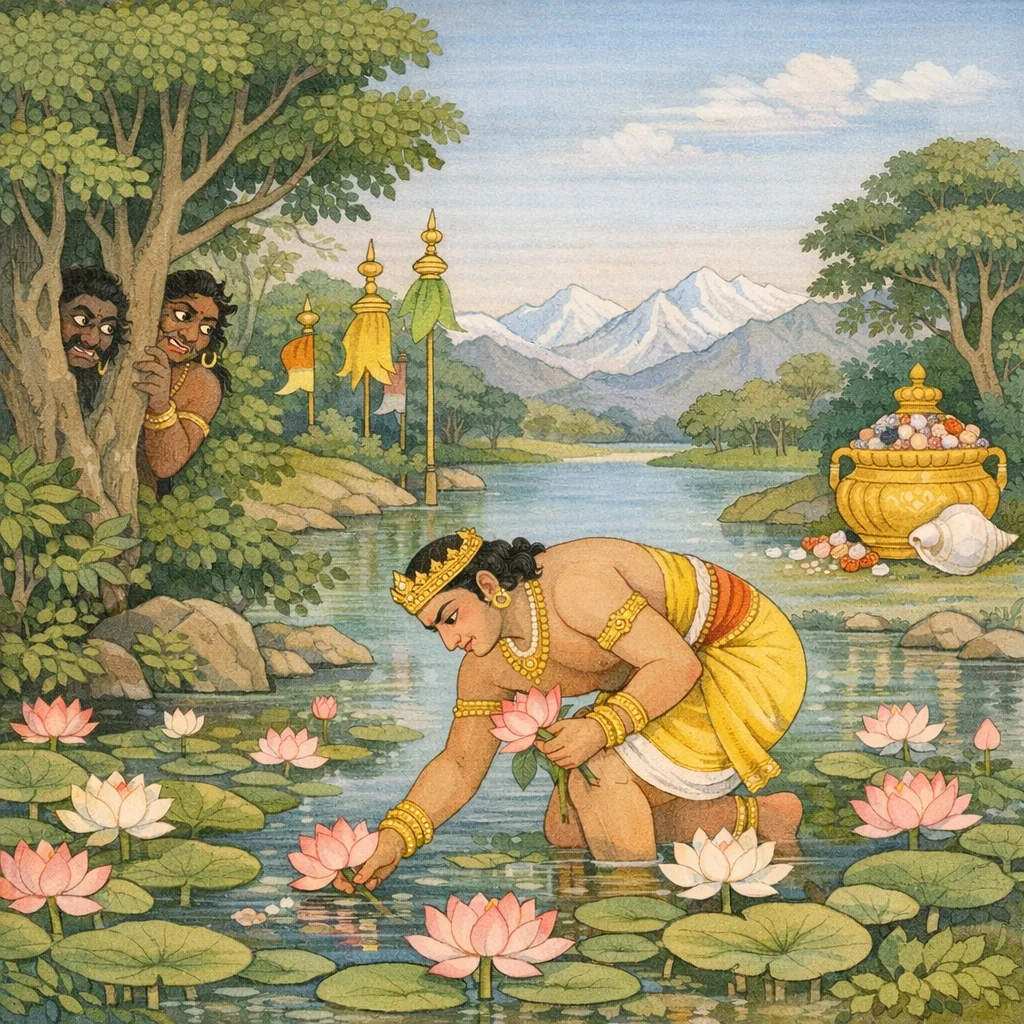
Chapter Arc: वनवास की कठोरता के बीच द्रौपदी की दृष्टि सौगन्धिक कमलों पर पड़ती है—उनकी सुगन्ध और दुर्लभता इच्छा को जगा देती है, और वही इच्छा भीमसेन के लिए प्रतिज्ञा बन जाती है। → भीम द्रौपदी के प्रिय पुष्पों के लिए आगे बढ़ता है, पर मार्ग में ‘नामक’ राक्षसों का दल उसे रोकता है। वे अधिकार, मर्यादा और भय दिखाकर उसे लौटाना चाहते हैं; भीम अपने परिचय और उद्देश्य को स्पष्ट करता है—यह पुष्पाहार धर्मपत्नी के लिए है। फिर भी टकराव बढ़ता है और बल-पराक्रम की परीक्षा सामने आ खड़ी होती है। → भीमविक्रम राक्षसों की रोक को तुच्छ मानकर उन पर टूट पड़ता है—उन्हें कदर्थित कर देता है और उनकी सामूहिक रोक-टोक को चीरकर आगे निकल जाता है। इसके बाद यक्षराज (कुबेर) के सरोवर पर पहुँचकर, आज्ञा/मर्यादा की शर्त के बीच, वह अमृत-कल्प जल पीता है और सौगन्धिक कमलों को उखाड़कर संग्रह करता है। → राक्षस कुबेर की अनुमति लेकर लौटते हैं; भीम को सरोवर में निर्भय, यथोपजोष विहरते देखते हैं। कुबेर की आज्ञा से बाधा हटती है और द्रौपदी के लिए पुष्प-संग्रह का उद्देश्य सिद्ध होता है—भीम की शक्ति अब अनुशासन/अनुमति के साथ संयत रूप लेती है। → कुबेर के क्षेत्र में भीम की इस निर्भीकता का आगे क्या परिणाम होगा—क्या यक्षराज स्वयं साक्षात् होकर भीम से संवाद/परीक्षा करेगा?
Shlokas
Verse 1
हि >> मय ० () आज अप चतुष्पञ्चाशर्दाधेिकशततमो< ध्याय: भीमसेनके द्वारा क्रोधवश नामक राक्षसोंकी पराजय और द्रोपदीके लिये सौगन्धिक कमलोंका संग्रह करना भीम उवाच पाण्डवो भीमसेनो<हं धर्मराजादनन्तर: । विशालां बदरीं प्राप्तो भ्रातृभि: सह राक्षसा:,भीमसेन बोले--राक्षसो! मैं धर्मराज युधिष्ठिरका छोटा भाई पाण्डुपुत्र भीमसेन हूँ और भाइयोंके विशाला बदरी नामक तीर्थमें आकर ठहरा हूँ। वहाँ पाउ्चालराजकुमारी द्रौपदीने सौगन्धिक नामक एक परम उत्तम कमल देखा। उसे देखकर वह उसी तरहके और भी बहुत-से पुष्प प्राप्त करना चाहती है, जो निश्चय ही यहींसे हवामें उड़कर वहाँ पहुँचा होगा
Bhīma said: “O Rākṣasa, I am Bhīmasena, a son of Pāṇḍu, the younger brother of Dharmarāja (Yudhiṣṭhira). Together with my brothers I have arrived at the sacred place called Viśālā Badarī and am staying here.”
Verse 2
अपश्यत् तत्र पाज्चाली सौगन्धिकमनुत्तमम् | अनिलोढमितो नूनं सा बहूनि परीप्सति,भीमसेन बोले--राक्षसो! मैं धर्मराज युधिष्ठिरका छोटा भाई पाण्डुपुत्र भीमसेन हूँ और भाइयोंके विशाला बदरी नामक तीर्थमें आकर ठहरा हूँ। वहाँ पाउ्चालराजकुमारी द्रौपदीने सौगन्धिक नामक एक परम उत्तम कमल देखा। उसे देखकर वह उसी तरहके और भी बहुत-से पुष्प प्राप्त करना चाहती है, जो निश्चय ही यहींसे हवामें उड़कर वहाँ पहुँचा होगा
There Pāñcālī (Draupadī) saw an incomparable saugandhika lotus. Concluding that it must surely have been carried here by the wind from this very region, she longed to obtain many more such blossoms—thus setting in motion Bhīma’s resolve to seek them out for her sake.
Verse 3
तस्या मामनवद्याड्या धर्मपत्न्या: प्रिये स्थितम् पुष्पाहारमिह प्राप्त निबोधत निशाचरा:,निशाचरो! तुम्हें मालूम होना चाहिये कि मैं उसी अनिन््द्य सुन्दरी धर्मपत्नीका प्रिय मनोरथ पूर्ण करनेके लिये उद्यत हो बहुत-से सौगन्धिक पुष्पोंका अपहरण करनेके लिये ही यहाँ आया हूँ
“O night-roamers (niśācaras), know this: I have come here to fulfill the cherished wish of my dharmapatnī—my blameless and noble wife—by bringing back many saugandhika blossoms.”
Verse 4
राक्षसा ऊचु: आक्रीडो<यं कुबेरस्य दयित: पुरुषर्षभ । नेह शक्यं मनुष्येण विहर्तु मर्त्यधर्मणा,राक्षसोंने कहा--नरश्रेष्ठ. यह सरोवर कुबेरकी परम प्रिय क्रीड़ास्थली है। इसमें मरणधर्मा मनुष्य विहार नहीं कर सकता
The rākṣasas said: “O bull among men, this is Kubera’s beloved pleasure-ground. Here a mortal human—bound to the law of death—cannot sport or take recreation.”
Verse 5
देवर्षयस्तथा यक्षा देवाश्नात्र वृकोदर । आमन्त्रय यक्षप्रवरं पिबन्ति रमयन्ति च । गन्धर्वाप्सरसश्वैव विहरन्त्यत्र पाण्डव,वृकोदर! देवर्षि, यक्ष तथा देवता भी यक्षराज कुबेरकी अनुमति लेकर ही यहाँका जल पीते और इसमें विहार करते हैं। पाण्डुनन्दन! गन्धर्व और अप्सराएँ भी इसी नियमके अनुसार यहाँ विहार करती हैं
Bhīma said: “O Vṛkodara, even the divine seers, the Yakṣas, and the gods here first seek the permission of the foremost of Yakṣas (Kubera); only then do they drink this water and take their pleasure. O son of Pāṇḍu, the Gandharvas and the Apsarases too sport here under the same rule.”
Verse 6
अन्यायेनेह यः कश्रनिदवमान्य धनेश्वरम् । विहर्तुमिच्छेद् दुर्वत्त: स विनश्येन्न संशय:,जो कोई दुराचारी पुरुष धनाध्यक्ष कुबेरकी अवहेलना करके अन्यायपूर्वक यहाँ विहार करना चाहेगा, वह नष्ट हो जायगा, इसमें संशय नहीं है
Bhīma said: “Whoever, acting unjustly, disregards the Lord of Wealth here and seeks to indulge in pleasure as a wicked man—he will surely be destroyed; of this there is no doubt.”
Verse 7
तमनादृत्य पद्मानि जिहीर्षसि बलादृत: । धर्मराजस्य चात्मानं ब्रवीषि भ्रातरं कथम्,भीमसेन! तुम अपने बलके घमंडमें आकर कुबेरकी अवहेलना करके यहाँसे कमलपुष्पोंका अपहरण करना चाहते हो। ऐसी दशामें अपने-आपको धर्मराजका भाई कैसे बता रहे हो?
“Disregarding him, and puffed up with the pride of your strength, you wish to seize these lotus-flowers by force. In such a state, how can you call yourself the brother of Dharmarāja?”
Verse 8
आमन्त्र्य यक्षराजं॑ वै तत: पिब हरस्व च । नातो<न्यथा त्वया शक््यं किंचित् पुष्करमीक्षितुम्,पहले यक्षराजकी आज्ञा ले लो, उसके बाद इस सरोवरका जल पीओ और यहाँसे कमलके फूल ले जाओ। ऐसा किये बिना तुम यहाँके किसी कमलकी ओर देख भी नहीं सकते
Bhīma said: “First seek the permission of the Yakṣa-king; then drink the water and take the lotuses away. Otherwise, you are not able—by any means—to so much as look upon anything in this lake.”
Verse 9
भीमसेन उवाच राक्षसास्तं न पश्यामि धनेश्वरमिहान्तिके । दृष्टवापि च महाराजं नाहं याचितुमुत्सहे,भीमसेन बोले--राक्षसो! प्रथम तो मैं यहाँ आस-पास कहीं भी धनाध्यक्ष कुबेरको देख नहीं रहा हूँ, दूसरे यदि मैं उन महाराजको देख भी लूँ तो भी उनसे याचना नहीं कर सकता, क्योंकि क्षत्रिय किसीसे कुछ माँगते नहीं हैं, यही उनका सनातन धर्म है। मैं किसी तरह क्षात्र-धर्मको छोड़ना नहीं चाहता
Bhīmasena said: “O Rākṣasa, I do not see here nearby that lord of wealth (Kubera). And even if I were to behold that great king, I would not bring myself to beg from him. For a kṣatriya does not ask for alms—this is his ancient duty. I do not wish, in any way, to abandon the kṣatriya’s dharma.”
Verse 10
न हि याचन्ति राजान एष धर्म: सनातन: । न चाहं हातुमिच्छामि क्षात्रधर्म कथंचन,भीमसेन बोले--राक्षसो! प्रथम तो मैं यहाँ आस-पास कहीं भी धनाध्यक्ष कुबेरको देख नहीं रहा हूँ, दूसरे यदि मैं उन महाराजको देख भी लूँ तो भी उनसे याचना नहीं कर सकता, क्योंकि क्षत्रिय किसीसे कुछ माँगते नहीं हैं, यही उनका सनातन धर्म है। मैं किसी तरह क्षात्र-धर्मको छोड़ना नहीं चाहता
Bhīmasena said: “Kings do not beg—this is the eternal rule of dharma. And I do not wish, in any way, to abandon the kṣatriya’s code of conduct.”
Verse 11
इयं च नलिनी रम्या जाता पर्वतनिर्झरे । नेयं भवनमासाद्य कुबेरस्प महात्मन:,यह रमणीय सरोवर पर्वतीय झरनोंसे प्रकट हुआ है, यह महामना कुबेरके घरमें नहीं है
Bhīmasena said: “This lovely lotus-pond has arisen from mountain streams. It is not something found by reaching the dwelling of the great-souled Kubera; it is a natural, enchanting lake born of the hills.”
Verse 12
तुल्या हि सर्वभूतानामियं वैश्रवणस्य च । एवं गतेषु द्रव्येषु कः क॑ याचितुमर्हति,अतः इसपर अन्य सब प्राणियोंका और कुबेरका भी समान अधिकार है। ऐसी सार्वजनिक वस्तुओंके लिये कौन किससे याचना करेगा?
Bhīmasena said: “This wealth is equally the rightful share of all beings—and of Vaiśravaṇa (Kubera) as well. When possessions are thus understood to be common in their ultimate claim, who can properly beg from whom? For what is public by nature, no one stands as a private giver and no one as a private supplicant.”
Verse 13
वैशम्पायन उवाच इत्युक्त्वा राक्षसान् सर्वान् भीमसेनो हामर्षण: । व्यगाहत महाबाहुरनलिनीं तां महाबल:ः,वैशम्पायनजी कहते हैं--जनमेजय! सभी राक्षसोंसे ऐसा कहकर अमर्षमें भरे हुए महाबली महाबाहु भीमसेन उस सरोवरमें प्रवेश करने लगे
Vaiśampāyana said: Having spoken thus to all the rākṣasas, Bhīmasena—burning with righteous indignation—plunged in. The mighty, long-armed hero, possessed of great strength, entered that lotus-filled lake, acting with fearless resolve in the face of hostile beings.
Verse 14
ततः स राक्षसैर्वाचा प्रतिषिद्ध: प्रतापवान् । मा मैवमिति सक्रोधैर्भर्सयद्धि: समन््ततः,उस समय क्रोधमें भरे राक्षस चारों ओरसे प्रतापी भीमको फटकारते हुए वाणीद्वारा रोकने लगे--“नहीं-नहीं, ऐसा न करो'
Then the mighty one (Bhīma) was checked by the rākṣasas with their words. Filled with anger, they surrounded him on all sides and harshly rebuked him, saying, “No—do not do this.”
Verse 15
कदर्थीकृत्य तु स तान् राक्षसान् भीमविक्रम: । व्यगाहत महातेजास्ते तं सर्वे न््यवारयन्,परंतु भयंकर पराक्रमी महातेजस्वी भीम उन सब राक्षसोंकी अवहेलना करके उस जलाशयमें उतर ही गये। यह देख सब राक्षस उन्हें रोकनेकी चेष्टा करते हुए चिल्ला उठे --
Having treated those rākṣasas with contempt, Bhīma—of dreadful prowess—entered the water-reservoir nonetheless. Seeing this, all the rākṣasas cried out and rushed to restrain him, attempting to block his advance.
Verse 16
गृह्नीत बध्नीत विकर्ततेम॑ं पचाम खादाम च भीमसेनम् | क्रुद्धा ब्रुवन्तो डभिययुर्द्रतं ते शस्त्राणि चोट्यम्य विवृत्तनेत्रा:,“अरे! इसे पकड़ो, बाँध लो, काट डालो, हम सब लोग इस भीमको पकायेंगे और खा जायँगे।” क्रोधपूर्वक उपर्युक्त बातें कहते और आँखें फाड़-फाड़कर देखते हुए वे सभी राक्षस शस्त्र उठाकर तुरंत उनकी ओर दौड़े
Vaiśampāyana said: “Seize him! Bind him! Cut him to pieces! Let us cook and eat Bhīmasena!” Thus shouting in fury, with eyes wide and glaring, those rākṣasas swiftly rushed toward him, brandishing their weapons—an image of unrestrained violence and predatory intent set against the Pandavas’ struggle to uphold themselves amid lawless threats in the forest.
Verse 17
ततः स गुर्वी यमदण्डकल्पां महागदां काञ्चनपट्टनद्धाम् । प्रगृह्दा तानभ्यपत॒त् तरस्वी ततोड<ब्रवीत् तिष्ठत तिष्ठतेति,तब भीमसेनने यमदण्डके समान विशाल और भारी गदा उठा ली, जिसपर सोनेका पत्र मढ़ा हुआ था। उसे लेकर वे बड़े वेगसे उन राक्षसोंपर टूट पड़े और ललकारते हुए बोले -- खड़े रहो, खड़े रहो”
Then Bhīmasena seized a massive, weighty mace—like Yama’s staff of punishment—bound with golden plating. With fierce speed he rushed straight at those rākṣasas and, challenging them, cried out: “Stand your ground! Stand!” The scene underscores righteous courage: when violent forces threaten the vulnerable, strength is to be wielded decisively, not for cruelty, but to restrain wrongdoing.
Verse 18
ते तं तदा तोमरपट्टिशाद्यि- व्यविद्धशस्त्रै: सहसा निपेतु: । जिघांसव: क्रोधवशा: सुभीमा भीम॑ समन्तात् परिवद्रुरुग्रा:,यह देख वे भयंकर क्रोधवश नामक राक्षस भीमसेनको मार डालनेकी इच्छासे शत्रुओंके शस्त्रोंको नष्ट कर देनेवाले तोमर, पट्टिश आदि आयुधोंको लेकर सहसा उनकी ओर दौड़े और उन्हें चारों ओरसे घेरकर खड़े हो गये। वे सब-के-सब बड़े उग्र स्वभावके थे। इधर भीमसेन कुन्तीदेवीके गर्भसे वायु देवताके द्वारा उत्पन्न होनेके कारण बड़े बलवान, शूरवीर, वेगशाली एवं शत्रुओंका वध करनेमें समर्थ थे। वे सदा ही सत्य एवं धर्ममें रत थे। पराक्रमी तो वे ऐसे थे कि अनेक शत्रु मिलकर भी उन्हें परास्त नहीं कर सकते थे
Vaiśampāyana said: Then, driven by wrath and intent on killing Bhīma, those exceedingly fearsome and fierce ones suddenly rushed upon him from all sides, surrounding him, armed with tomara-javelins, paṭṭiśa-battle-axes, and other weapons—missiles and blades meant to pierce and destroy. The scene sets Bhīma against a ring of enraged attackers, highlighting the ethical contrast between blind, anger-driven violence and the steadfast strength of a righteous warrior who does not yield to fear.
Verse 19
वातेन कुन्त्यां बलवान् सुजात: शूरस्तरस्वी द्विषतां निहन्ता । सत्ये च धर्मे च रत: सदैव पराक्रमे शत्रुभिरप्रधृष्य:,यह देख वे भयंकर क्रोधवश नामक राक्षस भीमसेनको मार डालनेकी इच्छासे शत्रुओंके शस्त्रोंको नष्ट कर देनेवाले तोमर, पट्टिश आदि आयुधोंको लेकर सहसा उनकी ओर दौड़े और उन्हें चारों ओरसे घेरकर खड़े हो गये। वे सब-के-सब बड़े उग्र स्वभावके थे। इधर भीमसेन कुन्तीदेवीके गर्भसे वायु देवताके द्वारा उत्पन्न होनेके कारण बड़े बलवान, शूरवीर, वेगशाली एवं शत्रुओंका वध करनेमें समर्थ थे। वे सदा ही सत्य एवं धर्ममें रत थे। पराक्रमी तो वे ऐसे थे कि अनेक शत्रु मिलकर भी उन्हें परास्त नहीं कर सकते थे
Vaiśaṃpāyana said: Born of Kuntī through the Wind-god, Bhīmasena was mighty and well-born—heroic, swift in force, and a slayer of foes. He was ever devoted to truth and dharma; and in valor he was unassailable, such that even many enemies together could not overpower him.
Verse 20
तेषां स मार्गान् विविधान् महात्मा विहत्य शस्त्राणि च शात्रवाणाम् | यथा प्रवीरान् निजघान भीम: परं शतं पुष्करिणीसमीपे,महामना भीमने शत्रुओंके भाँति-भाँतिके पैंतरों तथा अस्त्र-शस्त्रोंकी विफल करके उनके सौसे भी अधिक प्रमुख वीरोंको उस सरोवरके समीप मार गिराया
That great-souled hero shattered their many stratagems and rendered the enemies’ weapons futile. And just as Bhīma struck down the foremost champions, so by the lotus-pond he felled and slew more than a hundred of their leading warriors.
Verse 21
ते तस्य वीर्य च बल॑ च दृष्टवा विद्याबलं बाहुबलं तथैव । अशवनुवन्त: सहितं समन्ताद् द्रुतं प्रवीरा: सहसा निवृत्ता:,भीमसेनका पराक्रम, शारीरिक बल, विद्याबल और बाहुबल देखकर वे वीर राक्षस एक साथ संगठित होकर भी उनका वेग सहनेमें असमर्थ हो गये और सहसा सब ओससे युद्ध छोड़कर निवृत्त हो गये
Vaiśaṃpāyana said: Seeing his heroism and strength—his power born of knowledge as well as the might of his arms—the valiant foes, though gathered on every side, could not withstand his onrush. Swiftly and all at once, they turned back, abandoning the fight.
Verse 22
विदीर्यमाणास्तत एव तूर्ण- माकाशमास्थाय विमूढसंज्ञा: । कैलासश्ज्ण्यभिदुद्र॒वुस्ते भीमार्दिता: क्रोधवशा: प्रभग्ना:,भीमसेनकी मारसे क्षत-विक्षत एवं पीड़ित हो वे क्रोधवश नामक राक्षस अपनी सुध- बुध खो बैठे थे। अतः उनके पाँव उखड़ गये और वे तुरंत वहाँसे आकाशमें उड़कर कैलासके शिखरोंपर भाग गये
Vaiśaṃpāyana said: “Shattered then and there, they at once took to the sky, their senses bewildered. Smitten by Bhīma and broken in spirit, those rākṣasas—overpowered by wrath—fled toward the peaks of Kailāsa.”
Verse 23
स शक्रवद् दानवदैत्यसड्घान् विक्रम्य जित्वा च रणेडरिसड्घान् । विगाह्द[ तां पुष्करिणीं जितारि: कामाय जग्राह ततो<म्बुजानि,शत्रुविजयी भीम इन्द्रकी भाँति पराक्रम करके दानव और दैत्योंके दलको युद्धमें हराकर उस सरोवरमें प्रविष्ट हो इच्छानुसार कमलोंका संग्रह करने लगे
Vaiśampāyana said: Like Indra himself, Bhīma, the conqueror of foes, displayed mighty valor—overpowering and defeating in battle the assembled hosts of Dānavas and Daityas. Having thus subdued the enemy ranks, he plunged into that lotus-pond and, according to his desire, began gathering the lotuses there.
Verse 24
ततः स पीत्वामृतकल्पमम्भो भूयो बभूवोत्तमवीर्यतेजा: । उत्पाट्य जग्राह च सो<म्बुजानि सौगन्धिकान्युत्तमगन्धवन्ति,तदनन्तर उस सरोवरका अमृतके समान मधुर जल पीकर वे पुनः उत्तम बल और तेजसे सम्पन्न हो गये और श्रेष्ठ सुगन्धसे युक्त सौगन्धिक कमलोंको उखाड़-उखाड़कर संगृहीत करने लगे
Then, after drinking the lake-water—sweet as nectar—he regained exceptional strength and radiance. Thereafter he began to pluck up and gather the saugandhika lotuses, fragrant with the finest perfume.
Verse 25
ततस्तु ते क्रोधवशा: समेत्य धनेश्वरं भीमबलप्रणुन्ना: । भीमस्य वीर्य च बल॑ च संख्ये यथावदाचख्युरतीव भीता:,तब भीमसेनके बलसे पीड़ित और अत्यन्त भयभीत हुए क्रोधवशोंने धनाध्यक्ष कुबेरके पास जाकर युद्धमें भीमके बल और पराक्रमका यथावत् वृत्तान्त कह सुनाया
Then, driven by anger and shaken by the force of Bhīma’s might, they gathered themselves and went to the Lord of Wealth, Kubera. Trembling with great fear, they reported to him in full and accurate detail Bhīma’s prowess and strength as displayed in battle.
Verse 26
तेषां वचस्तत् तु निशम्य देव: प्रहस्य रक्षांसि ततो5भ्युवाच । गृह्नातु भीमो जलजानि कामात् कृष्णानिमित्तं विदितं ममैतत्,उनकी बातें सुनकर देवप्रवर कुबेरने हँसकर उन राक्षसोंसे कहा--“मुझे यह मालूम है। भीमसेनको द्रौपदीके लिये इच्छानुसार कमल ले लेने दो”
Hearing their words, the divine lord Kubera smiled and addressed the rākṣasas: “I already know the reason. Let Bhīma take as many water-born lotuses as he wishes, for Kṛṣṇā (Draupadī) is the cause.”
Verse 27
ततोअभ्यनुज्ञाप्य धनेश्वरं ते जग्मु: कुरूणां प्रवरं विरोषा: | भीमं च तस्यां ददृशुर्नलिन्यां यथोपजोषं विहरन्तमेकम्,तब धनाध्यक्षकी आज्ञा पाकर वे राक्षस रोषरहित हो कुरुप्रवर भीमके पास गये और उन्हें अकेले ही उस सरोवरमें इच्छानुसार विहार करते देखा
Then, having obtained the Lord of Wealth’s permission, they went—free of anger—to Bhīma, the foremost of the Kurus, and saw him there in that lotus-lake, alone, sporting at his pleasure.
Verse 153
इस प्रकार श्रीमहाभारत वनपर्वके अन्तर्गत तीर्थयात्रापर्वमें लोमशती र्थयात्राके प्रसंगमें सौगन्धिकाहरणविषयक एक सौ तिरपनवाँ अध्याय पूरा हुआ
Thus ends the one hundred and fifty-third chapter of the Tīrthayātrā section within the Vana Parva of the Śrī Mahābhārata, in the context of Lomāśa’s pilgrimage narrative, dealing with the episode of obtaining the fragrant saugandhika flowers.
Verse 154
इति श्रीमहाभारते वनपर्वणि तीर्थयात्रापर्वणि लोमशतीर्थयात्रायां सौगन्धिकाहरणे चतुष्पड्चाशदधिकशततमो<्ध्याय:
Thus ends the one hundred and fifty-fourth chapter of the Vana Parva of the Śrī Mahābhārata, within the Tīrthayātrā section—specifically in Lomāśa’s pilgrimage narrative—concerning the episode of obtaining the fragrant saugandhika flowers.
Frequently Asked Questions
The tension is between immediate survival in exile and long-term duty: Yudhiṣṭhira must conserve morale and legitimacy while pursuing a deliberate route that depends on counsel, restraint, and deferred objectives (including Arjuna’s absence).
The chapter models governance-by-conduct: a leader should consult the learned, honor hosts, accept discipline as formative, and treat hardship as a phase to be crossed through duty-aligned action rather than reactive force.
No explicit phalaśruti is stated; the chapter’s meta-function is structural—linking Arjuna’s vow, the party’s regulated movement, and the sacred-geographic pedagogy that prepares subsequent encounters and teachings.