Adhyaya 145
Ghaṭotkaca’s Conveyance to Badarī and Entry into the Nara-Nārāyaṇa Āśrama (घटोत्कच-वाहनम्; नरनारायणाश्रम-प्रवेशः)
Upa-parva: Gandhamādana–Badarī–Naranārāyaṇa Āśrama Episode (Pilgrimage and Ascent Motif)
Yudhiṣṭhira requests that Bhīma accept his rākṣasa son Ghaṭotkaca’s assistance so the party may proceed safely toward Gandhamādana with Draupadī. Bhīma, acting on his brother’s direction, instructs Ghaṭotkaca to carry his fatigued mother gently, keeping a low and careful flight path to avoid discomfort. Ghaṭotkaca affirms his capability to bear not only Draupadī but the wider party if required. The group is transported swiftly, observing varied lands and non-human populations, and arrives in the region of Kailāsa and the Nara-Nārāyaṇa hermitage near the expansive Badarī. The chapter provides an extended topographic and aesthetic catalog of the sacred landscape—rivers, birds, trees, and ritual installations—culminating in the Pandavas’ respectful approach, the sages’ welcoming reception, and the party’s settled presence in a purified, discipline-centered āśrama setting.
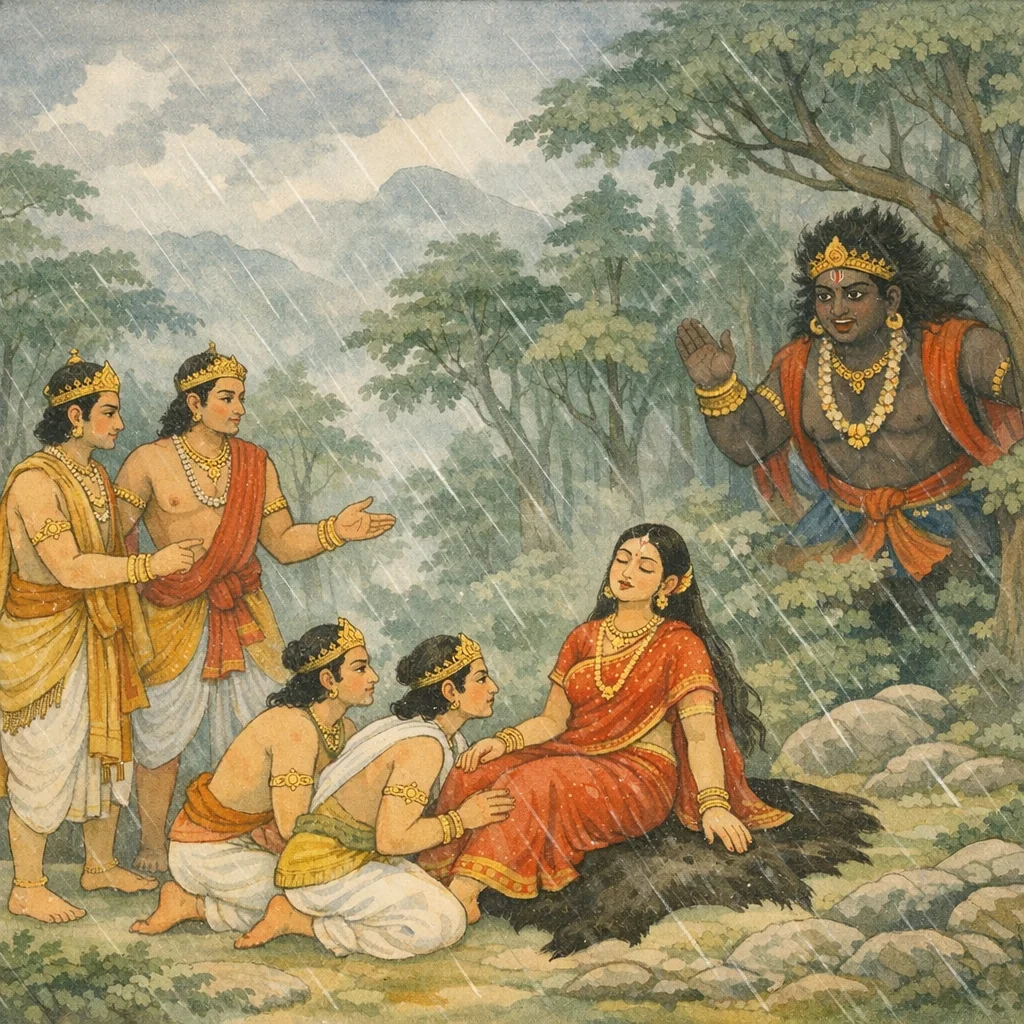
Chapter Arc: गन्धमादन-प्रवेश के कठिन पथ पर, वात-वर्षा और थकान से पीड़ित द्रौपदी अचानक मूर्छित होकर धरती पर गिर पड़ती है—पाण्डवों की तीर्थयात्रा का उत्साह एक क्षण में संकट में बदल जाता है। → सौकुमार्य-सम्पन्न पाञ्चाली का तपस्विनी-रूप में भी इस तरह टूट जाना पाण्डवों को भीतर तक हिला देता है; नकुल युधिष्ठिर को संकेत करते हैं कि यह श्यामलोचना राजकुमारी श्रान्त होकर निढाल पड़ी है, और सब उसके प्राण-रक्षण व शीत-वात से बचाने में लग जाते हैं। → द्रौपदी के होश में आते ही युधिष्ठिर भीमसेन से कहते हैं; भीम के स्मरण/आह्वान पर उसका राक्षस-पुत्र घटोत्कच तत्काल उपस्थित होकर कहता है—‘स्मृतोऽस्मि… शीघ्र शुश्रूषुरहमागतः’—और ‘आज्ञापय… सर्वं कर्तास्मि’ कहकर सेवा-प्रतिज्ञा करता है। → पाण्डव द्रौपदी को अजिन-आस्तरण पर विश्राम देते हैं; यमज (नकुल-सहदेव) उसके चरणों की मृदु संवाहना करते हैं, और घटोत्कच के आगमन से यात्रा-मार्ग की सुरक्षा व सहायता का आश्वासन स्थापित होता है। → घटोत्कच की ‘आज्ञा’ की प्रतीक्षा के साथ प्रश्न खुला रह जाता है—गन्धमादन के आगे कौन-सा नया विघ्न या अद्भुत सामना पाण्डवों की परीक्षा लेने वाला है?
Shlokas
Verse 1
हि मय न (0) है ४ चतुश्नत्वारिशर्दाधिकशततमो< ध्याय: द्रौपदीकी मूर्छा, पाण्डवोंके उपचारसे उसका सचेत होना तथा भीमसेनके स्मरण करनेपर घटोत्कचका आगमन वैशम्पायन उवाच क्रोशमात्र प्रयातेषु पाण्डवेषु महात्मसु । पद्धयामनुचिता गन्तुं द्रौपदी समुपाविशत्,वैशम्पायनजी कहते हैं--जनमेजय! महात्मा पाण्डव अभी कोसभर ही गये होंगे कि पांचालराजकुमारी तपस्विनी द्रौपदी सुकुमारताके कारण थककर बैठ गयी। वह पैदल चलनेयोग्य कदापि नहीं थी। उस भयानक वायु और वर्षसे पीड़ित हो दुःखमग्न होकर वह मूर्छित होने लगी थी
Vaiśampāyana said: O Janamejaya, when the noble Pāṇḍavas had gone only about a krośa, Draupadī—unfit to proceed on foot—sat down. Delicate by nature and afflicted by the harsh wind and rain, she sank into distress and began to lose consciousness.
Verse 2
श्रान्ता दुःखपरीता च वातवर्षेण तेन च । सौकुमार्याच्च पाज्चाली सम्मुमोह तपस्विनी,वैशम्पायनजी कहते हैं--जनमेजय! महात्मा पाण्डव अभी कोसभर ही गये होंगे कि पांचालराजकुमारी तपस्विनी द्रौपदी सुकुमारताके कारण थककर बैठ गयी। वह पैदल चलनेयोग्य कदापि नहीं थी। उस भयानक वायु और वर्षसे पीड़ित हो दुःखमग्न होकर वह मूर्छित होने लगी थी
Vaiśampāyana said: O Janamejaya, after the great Pāṇḍavas had gone only about a krośa, Pāñcālī (Draupadī)—the ascetic woman—overcome by her delicate constitution, exhausted and afflicted by sorrow, and tormented by that fierce wind and rain, began to lose consciousness.
Verse 3
सा कम्पमाना मोहेन बाहुभ्यामसितेक्षणा । वृत्ताभ्यामनुरूपा भ्यामूरन समवलम्बत,घबराहटसे काँपती हुई कजरारे नेत्रोंवाली कृष्णाने अपने गोल-गोल और सुन्दर हाथोंसे दोनों जाँघोंको थाम लिया
Vaiśampāyana said: Overcome by bewilderment and trembling with fear, Kṛṣṇā—dark-eyed—clasped her thighs with her two rounded, well-proportioned arms, as if seeking support in the midst of distress.
Verse 4
आलम्बमाना सहितावूरू गजकरोपमौ । पपात सहसा भूमौ वेपन्ती कदली यथा,हाथीकी सूँड़के समान चढ़ाव-उतारवाली परस्पर सटी हुई जाँघोंका सहारा ले केलेके वृक्षकी भाँति काँपती हुई वह सहसा पृथ्वीपर गिर पड़ी। सुन्दर अंगोंवाली द्रौपदीको टूटी हुई लताकी भाँति गिरती देख बलशाली नकुलने दौड़कर थाम लिया
Vaiśampāyana said: Supporting herself by her two thighs, pressed close together and rising and falling like an elephant’s trunk, she suddenly collapsed to the ground, trembling like a plantain tree.
Verse 5
तां पतन्तीं वरारोहां भज्यमानां लतामिव । नकुल: समभिद्रुत्य परिजग्राह वीर्यवान्,हाथीकी सूँड़के समान चढ़ाव-उतारवाली परस्पर सटी हुई जाँघोंका सहारा ले केलेके वृक्षकी भाँति काँपती हुई वह सहसा पृथ्वीपर गिर पड़ी। सुन्दर अंगोंवाली द्रौपदीको टूटी हुई लताकी भाँति गिरती देख बलशाली नकुलने दौड़कर थाम लिया
As the noble-limbed lady fell—trembling like a creeper that is snapping—valiant Nakula rushed forward and caught her, preventing her collapse. The scene underscores the Pandavas’ vigilant duty of protection and care toward Draupadi amid hardship, where strength is expressed through timely restraint and compassionate support rather than display.
Verse 6
नकुल उवाच राजन् पञज्चालराजस्य सुतेयमसितेक्षणा । श्रान्ता निपतिता भूमौ तामवेक्षस्व भारत,तत्पश्चात् नकुलने कहा--भरतकुलभूषण महाराज! यह श्याम नेत्रवाली पांचालराजकुमारी द्रौपदी थककर धरतीपर गिर पड़ी है, आप आकर इसे देखिये
Nakula said: “O King, this is the daughter of the king of Pañcāla, dark-eyed and noble. Exhausted, she has fallen upon the ground. O scion of Bharata’s line, come and look upon her.”
Verse 7
अदुःखार्हा परं दु:खं प्राप्तेयं मृदुगामिनी । आश्वासय महाराज तामिमां श्रमकर्शिताम्,राजन! यह मन्दगतिसे चलनेवाली देवी दुःख सहन करनेके योग्य नहीं है; तो भी इसपर महान् दुःख आ पड़ा है। रास्तेके परिश्रमसे यह दुर्बल हो गयी है। आप आकर इसे सान्त्वना दें
Nakula said: “O great king, this gentle lady is not one who should have to endure suffering; yet she has been struck by extreme distress. Worn down by the fatigue of the road, she has grown weak. Come and console her.”
Verse 8
वैशम्पायन उवाच राजा तु वचनात् तस्य भृशं दुःखसमन्वित: । भीमश्न सहदेवश्व सहसा समुपाद्रवन्,वैशम्पायनजी कहते हैं--जनमेजय! नकुलकी यह बात सुनकर राजा युधिष्छिर अत्यन्त दुखी हो गये और भीम तथा सहदेवके साथ सहसा वहाँ दौड़े आये
Vaiśampāyana said: Hearing his words, the king was overwhelmed with intense sorrow. Then Bhīma and Sahadeva, together with him, rushed there at once—moved by urgency and concern, as duty demands when a kinsman’s report signals danger.
Verse 9
तामवेक्ष्य तु कौन्तेयो विवर्णवदनां कृशाम् । अड्-कमानीय धर्मात्मा पर्यदेवयदातुर:,धर्मात्मा कुन्तीनन्दनने देखा--द्रौपदीके मुखकी कान्ति फीकी पड़ गयी है और उसका शरीर कृश हो गया है। तब वे उसे अंकमें लेकर शोकातुर हो विलाप करने लगे
Vaiśampāyana said: Seeing her—Draupadī—her face drained of color and her body grown thin, the son of Kuntī, righteous in nature, drew her into his lap and, overwhelmed with distress, began to lament. The scene underscores the dhārmic hero’s compassion: even amid exile and hardship, he responds to suffering not with hardness but with protective care and grief.
Verse 10
युधिछिर उवाच कथं वेश्मसु गुप्तेषु स्वास्तीर्णशयनोचिता । भूमौ निपतिता शेते सुखाहा वरवर्णिनी,युधिषछ्टिर बोले--अहो! जो सुरक्षित सदनोंमें सुसज्जित सुकोमल शय्यापर शयन करनेयोग्य है, वह सुख भोगनेकी अधिकारिणी परम सुन्दरी कृष्णा आज पृथ्वीपर कैसे सो रही है?
Yudhiṣṭhira said: “How is it that she—fit to rest upon well-spread beds in guarded palaces—now lies fallen on the bare earth? How can Kṛṣṇā, that supremely beautiful lady who deserves comfort, be sleeping thus?”
Verse 11
सुकुमारौ कथं पादौ मुखं च कमलप्रभम् । मत्कृतेड्द्य वरार्हाया: श्यामतां समुपागतम्,जो सुखके श्रेष्ठ साधनोंका उपभोग करनेयोग्य है, उसी द्रौपदीके ये दोनों सुकुमार चरण और कमलकी कान्तिसे सुशोभित मुख आज मेरे कारण कैसे काले पड़ गये हैं?
Yudhiṣṭhira said: “How is it that her two tender feet, and her lotus-radiant face—she who is worthy of the finest comforts—have today, because of me, fallen into darkened misery? How could this happen to Draupadī on my account?”
Verse 12
किमिदं द्यूतकामेन मया कृतमबुद्धिना । आदाय कृष्णां चरता वने मृगगणायुते,मुझ मूर्खने द्यूतक्रीड़ाकी कामनामें फँसकर यह क्या कर डाला? अहो! सहसोरों मृगसमूहोंसे भरे हुए इस भयानक वनमें द्रौपदीको साथ लेकर हमें विचरना पड़ा है
Yudhiṣṭhira said: “What is this that I, in my folly, have done—driven by the craving for dice? Taking Kṛṣṇā (Draupadī) with us, we have been forced to wander in the forest, crowded with herds of deer.”
Verse 13
सुखं प्राप्स्यसि कल्याणि पाण्डवान् प्राप्प वै पतीन् | इति द्रुपदराजेन पित्रा दत्ता5डयतेक्षणा,इसके पिता राजा द्रुपदने इस विशाललोचना द्रौपदीको यह कहकर हमें प्रदान किया था कि “कल्याणि! तुम पाण्डवोंको पतिरूपमें पाकर सुखी होगी।' परंतु मुझ पापीकी करतूतोंसे वह सब न पाकर यह परिश्रम, शोक और मार्गके कष्टसे कृश होकर आज पृथ्वीपर पड़ी सो रही है
“O auspicious one, you will attain happiness by gaining the Pāṇḍavas as your husbands”—so did her father, King Drupada, give this large-eyed Draupadī to us. Yet, because of my own sinful deeds, she has not obtained that promised happiness; worn down by toil, grief, and the hardships of the road, she now lies asleep upon the earth.
Verse 14
तत् सर्वमनवाप्येयं श्रमशोकाध्वकर्शिता । शेते निपतिता भूमौ पापस्य मम कर्मभि:,इसके पिता राजा द्रुपदने इस विशाललोचना द्रौपदीको यह कहकर हमें प्रदान किया था कि “कल्याणि! तुम पाण्डवोंको पतिरूपमें पाकर सुखी होगी।' परंतु मुझ पापीकी करतूतोंसे वह सब न पाकर यह परिश्रम, शोक और मार्गके कष्टसे कृश होकर आज पृथ्वीपर पड़ी सो रही है
Yudhiṣṭhira said: “Without attaining any of that promised happiness, she—worn down by exertion, grief, and the hardships of the road—lies fallen upon the earth. This is the consequence of my own sinful deeds.”
Verse 15
वैशम्पायन उवाच तथा लालप्यमाने तु धर्मराजे युधिष्ठिरे । धौम्यप्रभृतय: सर्वे तत्राजम्मुद्धिजोत्तमा:,वैशम्पायनजी कहते हैं--जनमेजय! धर्मराज युधिष्ठिर जब इस प्रकार विलाप कर रहे थे, उसी समय धौम्य आदि समस्त श्रेष्ठ ब्राह्मण भी वहाँ आ पहुँचे
Vaiśampāyana said: O Janamejaya, while Dharma-rāja Yudhiṣṭhira was lamenting in this manner, all the foremost Brahmins—beginning with Dhaumya—arrived there, men of excellent understanding.
Verse 16
ते समाश्वासयामासुराशीर्भिश्चाप्पपूजयन् । रक्षोघ्नांश्न॒ तथा मन्त्राउ्जेपुश्नक्रुश्च ते क्रिया:,उन्होंने महाराजको आश्वासन दिया और अनेक प्रकारके आशीर्वाद देकर उन्हें सम्मानित किया। तत्पश्चात् वे राक्षमोंका विनाश करनेवाले मन्त्रोंका जप तथा शान्तिकर्म करने लगे
Vaiśampāyana said: They comforted the king and honored him with many blessings. Thereafter, they began the recitation of mantras meant to destroy rākṣasas and performed rites of pacification, seeking to restore safety and order.
Verse 17
पठ्यमानेषु मन्त्रेषु शान्त्यर्थ परमर्षिभि: । स्पृश्यमाना करै: शीतैः: पाण्डवैश्व मुहुर्मुहु:,महर्षियोंद्वारा शान्तिके लिये मन्त्रपाठ होते समय पाण्डवोंने अपने शीतल हाथोंसे बार- बार द्रौपदीके अंगोंको सहलाया
Vaiśaṃpāyana said: While the great seers were reciting mantras intended to bring peace, the Pāṇḍavas again and again touched her with their cool hands, gently soothing her body to calm distress and restore well-being.
Verse 18
सेव्यमाना च शीतेन जलमिश्रेण वायुना । पाञ्चाली सुखमासाद्य लेभे चेत: शनै: शनै:,जलका स्पर्श करके बहती हुई शीतल वायुने भी उसे सुख पहुँचाया। इस प्रकार कुछ आराम मिलनेपर पांचालराजकुमारी द्रौपदीको धीरे-धीरे चेत हुआ
And as she was attended by the cool breeze mingled with moisture, Pāñcālī found a measure of comfort; gradually, little by little, she regained clarity and steadiness of mind.
Verse 19
परिगृहा च तां दीनां कृष्णामजिनसंस्तरे | पार्था विश्रामयामासुर्लब्धसंज्ञां तपस्विनीम्,होशमें आनेपर दीनावस्थामें पड़ी हुई तपस्विनी द्रौपदीको पकड़कर पाण्डवोंने मृगचर्मके बिस्तरपर सुलाया और उसे विश्राम कराया। नकुल और सहदेवने धनुषकी रगड़के चिह्लसे सुशोभित दोनों हाथोंद्वारा उसके लाल तलवोंसे युक्त और उत्तम लक्षणोंसे अलंकृत दोनों चरणोंको धीरे-धीरे दबाया
Vaiśaṃpāyana said: The Pāṇḍavas gently took up Kṛṣṇā (Draupadī), who lay in a pitiable state, and laid the ascetic woman upon a deerskin spread. When she regained consciousness, they soothed her and gave her rest—protective care that upheld her dignity and eased suffering in adversity.
Verse 20
तस्या यमौ रक्ततलौ पादौ पूजितलक्षणौ । कराभ्यां किणजाताभ्यां शनकै: संववाहतु:,होशमें आनेपर दीनावस्थामें पड़ी हुई तपस्विनी द्रौपदीको पकड़कर पाण्डवोंने मृगचर्मके बिस्तरपर सुलाया और उसे विश्राम कराया। नकुल और सहदेवने धनुषकी रगड़के चिह्लसे सुशोभित दोनों हाथोंद्वारा उसके लाल तलवोंसे युक्त और उत्तम लक्षणोंसे अलंकृत दोनों चरणोंको धीरे-धीरे दबाया
Vaiśampāyana said: The twin brothers gently massaged her two feet—whose soles were red and whose auspicious marks were worthy of reverence—with their two hands hardened by calluses. In the surrounding narrative, this is an act of attentive service to Draupadī in her weakened state, expressing familial duty and compassion amid hardship.
Verse 21
पर्याश्चासयदप्येनां धर्मराजो युधिष्ठिर: । उवाच च कुरुश्रेष्ठो भीमसेनमिदं वच:
Vaiśaṃpāyana said: King Yudhiṣṭhira, steadfast in dharma, had her seated nearby as well; and that best of the Kurus then spoke these words to Bhīmasena—setting the stage for counsel shaped by duty and right conduct amid their forest hardships.
Verse 22
फिर कुरुश्रेष्ठ धर्मराज युधिष्ठिरने भी द्रौपदीको बहुत आश्वासन दिया और भीमसेनसे इस प्रकार कहा-- ।। बहव: पर्वता भीम विषमा हिमदुर्गमा: । तेषु कृष्णा महाबाहो कथं नु विचरिष्यति,“महाबाहु भीम! यहाँ बहुत-से ऊँचे-नीचे पर्वत हैं, जिनपर चलना बर्फके कारण अत्यन्त कठिन है। उनपर द्रौपदी कैसे जा सकेगी?”
Vaiśampāyana said: “O Bhīma, there are many mountains here—uneven and treacherous, made hard to traverse by snow. On such paths, O mighty-armed one, how indeed will Kṛṣṇā (Draupadī) be able to move about?”
Verse 23
भीमसेन उवाच त्वां राजन् राजपुत्रीं च यमौ च पुरुषर्षभ । स्वयं नेष्यामि राजेन्द्र मा विषादे मन: कृथा:,भीमसेनने कहा--पुरुषरत्न! महाराज! आप मनमें खेद न करें। मैं स्वयं राजकुमारी द्रौपदी, नकुल-सहदेव और आपको भी ले चलूँगा
Bhīmasena said: “O King, and you too, O best of men—together with the princess and the twin brothers—I will personally lead you onward. O lord of kings, do not let your mind sink into grief.”
Verse 24
हैडिम्बश्न महावीयों विहगो मद्धलोपम: । वहेदनघ सर्वान्नो वचनात् ते घटोत्कच:,हिडिम्बाका पुत्र घटोत्कच भी महान् पराक्रमी है। वह मेरे ही समान बलवान् है और आकाशमें चल-फिर सकता है। अनधघ! आपकी आज्ञा होनेपर वह हम सबको अपनी पीठपर बिठाकर ले चलेगा
Bhīmasena said: “Ghaṭotkaca, the son of Hiḍimbā, is a mighty hero—able to move through the sky and equal to my own strength. O blameless one, if you command it, he will carry all of us upon his back and take us onward.”
Verse 25
वैशम्पायन उवाच अनुज्ञातो धर्मराज्ञा पुत्र॑ सस्मार राक्षसम् | घटोत्कचस्तु धर्मात्मा स्मृतमात्र: पितुस्तदा,वैशम्पायनजी कहते हैं--राजन्! तदनन्तर धर्मराजकी आज्ञा पाकर भीमसेनने अपने राक्षसपुत्रका स्मरण किया। पिताके स्मरण करते ही धर्मात्मा घटोत्कच हाथ जोड़े हुए वहाँ उपस्थित हुआ। उस महाबाहु वीरने पाण्डवों तथा ब्राह्मणोंको प्रणाम करके उनके द्वारा सम्मानित हो अपने भयंकर पराक्रमी पिता भीमसेनसे कहा--“महाबाहो! आपने मेरा स्मरण किया है और मैं शीघ्र ही सेवाकी भावनासे आया हूँ, आज्ञा कीजिये; मैं आपका सब कार्य अवश्य ही पूर्ण करूँगा।” यह सुनकर भीमसेनने राक्षस घटोत्कचको हृदयसे लगा लिया
Vaiśampāyana said: Having received Dharmarāja’s permission, Bhīmasena remembered his Rākṣasa son. At the very moment his father thought of him, the righteous-souled Ghaṭotkaca appeared there.
Verse 26
कृताञ्जलिरुपातिष्ठदभिवाद्याथ पाण्डवान् | ब्राह्मणांश्व महाबाहु:ः स च तैरभिनन्दित:,वैशम्पायनजी कहते हैं--राजन्! तदनन्तर धर्मराजकी आज्ञा पाकर भीमसेनने अपने राक्षसपुत्रका स्मरण किया। पिताके स्मरण करते ही धर्मात्मा घटोत्कच हाथ जोड़े हुए वहाँ उपस्थित हुआ। उस महाबाहु वीरने पाण्डवों तथा ब्राह्मणोंको प्रणाम करके उनके द्वारा सम्मानित हो अपने भयंकर पराक्रमी पिता भीमसेनसे कहा--“महाबाहो! आपने मेरा स्मरण किया है और मैं शीघ्र ही सेवाकी भावनासे आया हूँ, आज्ञा कीजिये; मैं आपका सब कार्य अवश्य ही पूर्ण करूँगा।” यह सुनकर भीमसेनने राक्षस घटोत्कचको हृदयसे लगा लिया
Vaiśampāyana said: Then, with hands joined in reverence, the mighty-armed one approached. Having bowed to the Pāṇḍavas and also to the brāhmaṇas, he was in turn greeted and honored by them.
Verse 27
उवाच भीमसेनं स पितरं भीमविक्रमम् । स्मृतो5स्मि भवता शीघ्र शुश्रूषुरहमागत:,वैशम्पायनजी कहते हैं--राजन्! तदनन्तर धर्मराजकी आज्ञा पाकर भीमसेनने अपने राक्षसपुत्रका स्मरण किया। पिताके स्मरण करते ही धर्मात्मा घटोत्कच हाथ जोड़े हुए वहाँ उपस्थित हुआ। उस महाबाहु वीरने पाण्डवों तथा ब्राह्मणोंको प्रणाम करके उनके द्वारा सम्मानित हो अपने भयंकर पराक्रमी पिता भीमसेनसे कहा--“महाबाहो! आपने मेरा स्मरण किया है और मैं शीघ्र ही सेवाकी भावनासे आया हूँ, आज्ञा कीजिये; मैं आपका सब कार्य अवश्य ही पूर्ण करूँगा।” यह सुनकर भीमसेनने राक्षस घटोत्कचको हृदयसे लगा लिया
Vaiśampāyana said: Then he addressed Bhīmasena—his father of formidable valor—saying, “You have remembered me, and I have come at once, eager to serve. Command me; I shall accomplish whatever task you require.”
Verse 28
आज्ञापय महाबाहो सर्व कर्तास्म्यसंशयम् । तच्छुत्वा भीमसेनस्तु राक्षसं परिषस्वजे,वैशम्पायनजी कहते हैं--राजन्! तदनन्तर धर्मराजकी आज्ञा पाकर भीमसेनने अपने राक्षसपुत्रका स्मरण किया। पिताके स्मरण करते ही धर्मात्मा घटोत्कच हाथ जोड़े हुए वहाँ उपस्थित हुआ। उस महाबाहु वीरने पाण्डवों तथा ब्राह्मणोंको प्रणाम करके उनके द्वारा सम्मानित हो अपने भयंकर पराक्रमी पिता भीमसेनसे कहा--“महाबाहो! आपने मेरा स्मरण किया है और मैं शीघ्र ही सेवाकी भावनासे आया हूँ, आज्ञा कीजिये; मैं आपका सब कार्य अवश्य ही पूर्ण करूँगा।” यह सुनकर भीमसेनने राक्षस घटोत्कचको हृदयसे लगा लिया
Vaiśampāyana said: “Command me, O mighty-armed one; without doubt I shall accomplish everything.” Hearing these words, Bhīmasena embraced the Rākṣasa with heartfelt affection.
Verse 144
इति श्रीमहा भारते वनपर्वणि तीर्थयात्रापर्वणि लोमशतीर्थयात्रायां गन्धमादनप्रवेशे चतुश्नत्वारिंशदधिकशततमो< ध्याय:,इस प्रकार श्रीमहाभारत वनपर्वके अन्तर्गत तीर्थयात्रापर्वमें लोमशती र्थयात्राके प्रस॑ंगमें गन्धमादनप्रवेशविषयक एक सौ चौवालीसवाँ अध्याय पूरा हुआ
Thus ends the one hundred and forty-fourth chapter in the Vana Parva of the Śrī Mahābhārata, within the section on pilgrimage (Tīrtha-yātrā Parva), in the episode of Lomāśa’s pilgrimage—specifically concerning the entry into Gandhamādana.
Frequently Asked Questions
The chapter balances urgency of travel with the obligation to avoid harm: extraordinary power (aerial transport by a rākṣasa) is ethically constrained by instructions to protect Draupadī’s comfort and safety.
Capability is validated when subordinated to care and restraint: strength should be deployed as guarded service—precise, gentle, and accountable to dharmic intention rather than mere speed or display.
No explicit phalaśruti is presented here; the meta-function is indirect, using sacred landscape and āśrama description to situate the audience in a normative moral ecology where disciplined conduct and reverence frame narrative progress.