Adhyaya 104
सगरोपाख्यानम् (Sagara-Upākhyāna): Śiva’s boon and the extraordinary birth of Sagara’s progeny
Upa-parva: Tīrtha-yātrā Upākhyāna: Sagara–Bhagīratha Anvākhyāna (Legend of Sagara and the origins of the Gaṅgā narrative thread)
The chapter opens with Lomāśa relaying a cosmological-royal claim: by the force of time (kāla-yoga) the ocean will return to its natural condition, with kin-relations functioning as the instrumental cause in the historical sequence associated with King Bhāgīratha. Yudhiṣṭhira requests a detailed explanation of how ‘kinsmen’ become causal agents and how the ocean’s fullness relates to Bhāgīratha’s exertion. Vaiśaṃpāyana signals that the account concerns Sagara’s greatness, after which Lomāśa narrates Sagara’s Ikṣvāku origin, his martial consolidation of sovereignty, and his lack of heirs. Seeking offspring, Sagara performs intense tapas on Kailāsa with his two queens (Vaidarbhī and Śaibyā), obtains Śiva’s boon promising sixty thousand sons from one queen and a single lineage-bearing son from the other, and is warned that the sixty thousand will meet collective destruction. When Vaidarbhī later produces a gourd-like gestation (alābu), Sagara considers discarding it, but a disembodied voice instructs him to extract and preserve the ‘seed’ and nurture it in heated vessels filled with ghee, through which the promised multitude of sons will be obtained—framing progeny as both gift and responsibility under divine ordinance.
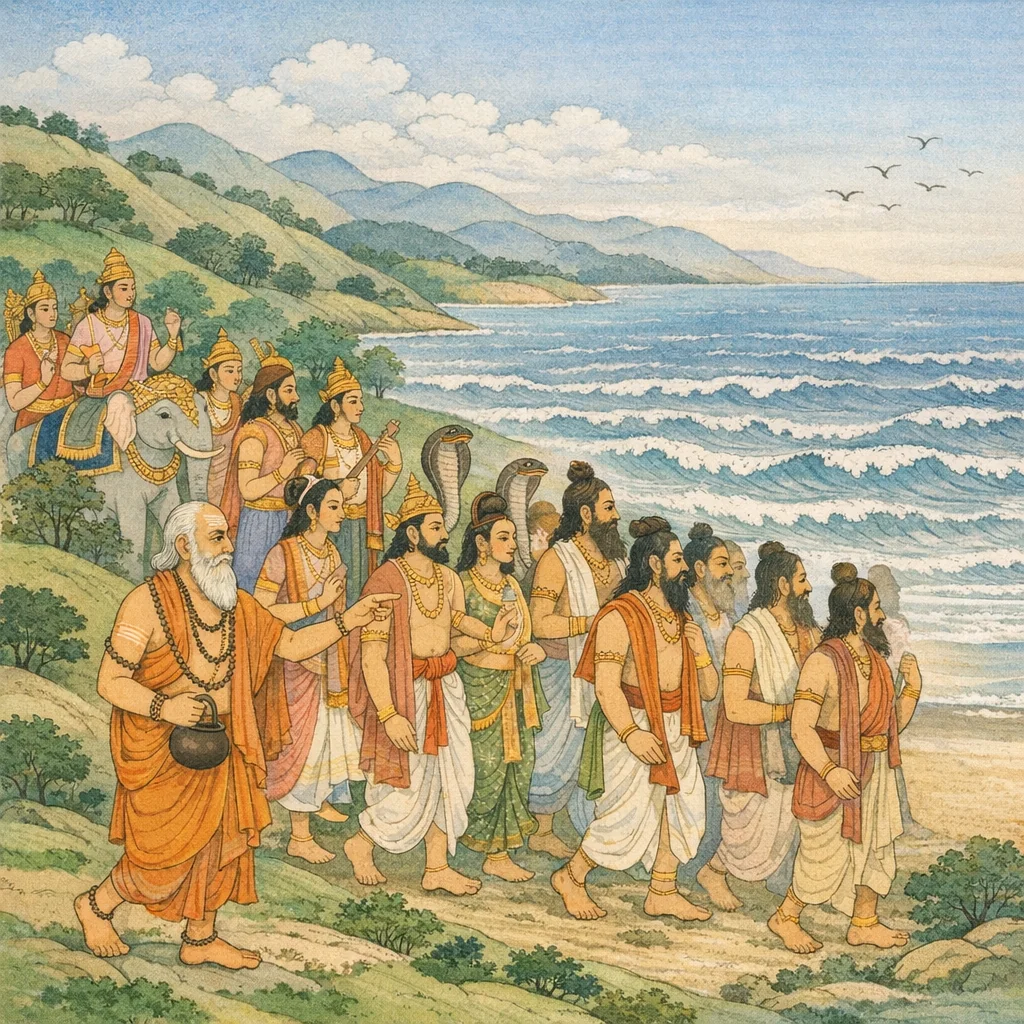
Chapter Arc: युधिष्ठिर लोमश से पूछते हैं—विन्ध्य पर्वत अचानक क्यों बढ़ने लगा, और देवताओं ने उसे रोकने के लिए क्या उपाय किया? → लोमश बताते हैं कि सूर्य मेरु की प्रदक्षिणा करता है; इसे देखकर विन्ध्य भी वैसा ही सम्मान चाहता है और सूर्य से अपनी प्रदक्षिणा की माँग करता है। देवता विन्ध्य को समझाने आते हैं, पर वह उनकी बात नहीं मानता—प्रकृति का संतुलन डगमगाने लगता है। → देवता अगस्त्य के पास जाते हैं और उनसे विन्ध्य के उच्छृंखल विस्तार को रोकने का उपाय करने का निवेदन करते हैं; अगस्त्य की तप-शक्ति ही वह ‘धर्म-बंधन’ बनती है जो पर्वत के अहंकार को थाम सकती है। → अगस्त्य देवताओं सहित समुद्र-तट की ओर प्रस्थान करते हैं—भीषण गर्जन वाले महासागर के सामने देव, गन्धर्व, नाग और ऋषि एकत्र होते हैं; कथा अगस्त्य-माहात्म्य के अगले चरण की ओर मुड़ती है। → समुद्र-तट पर पहुँचकर अगस्त्य से देवताओं की अगली याचना क्या होगी, और महासागर/कालेय दानवों के प्रसंग में कौन-सा निर्णायक कर्म घटेगा?
Shlokas
Verse 1
हि आय न [हुक है आम चतुर्राधिकशततमो< ध्याय: अगस्त्यजीका विन्ध्यपर्वतको बढ़नेसे रोकना और देवताओंके साथ सागर-तटपर जाना युधिछिर उवाच किमर्थ सहसा विन्ध्य: प्रवृद्ध: क्रोधमूर्च्छित: । एतदिच्छाम्यहं श्रोतुं विस्तरेण महामुने,युधिष्ठिरने पूछा--महामुने! विन्ध्यपर्वत किसलिये क्रोधसे मूर्छति हो सहसा बढ़ने लगा था? मैं इस प्रसंगको विस्तारपूर्वक सुनना चाहता हूँ
Yudhiṣṭhira said: “For what reason did the Vindhya mountain suddenly begin to grow, as though overcome and stupefied by anger? O great sage, I wish to hear this episode in full detail.”
Verse 2
लोमश उवाच अद्विराजं महाशैलं मेरुं कनकपर्वतम् । उदयास्तमने भानु: प्रदक्षिणमवर्तत,लोमशजीने कहा--राजन्! सूर्यदेव सुवर्णमय महान् पर्वत गिरिराज मेरुकी उदय और अस्तके समय परिक्रमा किया करते हैं
Lomaśa said: “O King, at sunrise and at sunset the Sun moves in reverential circumambulation around Meru—the sovereign of mountains, a vast peak made of gold.”
Verse 3
तं तु दृष्टवा तथा विन्ध्य: शैल: सूर्यमथाब्रवीत् । यथा हि मेरुर्भवता नित्यश: परिगम्यते,उन्हें ऐसा करते देख विन्ध्यगिरिने उनसे कहा--'भास्कर! जैसे आप मेरुकी प्रतिदिन परिक्रमा करते हैं, उसी तरह मेरी भी कीजिये।' यह सुनकर भगवान् सूर्यने गिरिराज विन्ध्यसे कहा--'गिरिश्रेष्ठ! मैं अपनी इच्छासे मेरुगिरिकी परिक्रमा नहीं करता हूँ। जिन्होंने इस संसारकी सृष्टि की है, उन विधाताने मेरे लिये यही मार्ग निश्चित किया है"
Lomaśa said: Seeing the Sun proceed in that manner, the Vindhya mountain spoke to him: “O Sun! Just as you daily circumambulate Mount Meru, so too circumambulate me.” Hearing this, the Sun replied: “O best of mountains, I do not circle Meru by my own whim. The Creator who fashioned this world has fixed this very path for me.”
Verse 4
प्रदक्षिणश्व॒ क्रियते मामेवं कुरु भास्कर । एवमुक्तस्तत: सूर्य: शैलेन्द्रं प्रत्यभाषत,उन्हें ऐसा करते देख विन्ध्यगिरिने उनसे कहा--'भास्कर! जैसे आप मेरुकी प्रतिदिन परिक्रमा करते हैं, उसी तरह मेरी भी कीजिये।' यह सुनकर भगवान् सूर्यने गिरिराज विन्ध्यसे कहा--'गिरिश्रेष्ठ! मैं अपनी इच्छासे मेरुगिरिकी परिक्रमा नहीं करता हूँ। जिन्होंने इस संसारकी सृष्टि की है, उन विधाताने मेरे लिये यही मार्ग निश्चित किया है"
Lomaśa said: “Seeing him act thus, the Vindhya mountain addressed the Sun: ‘O Bhāskara, just as you daily circumambulate Meru, so too circumambulate me.’ Hearing this, the Sun replied to the lord of mountains, Vindhya: ‘O best of mountains, I do not circle Meru by my own whim. The Creator who fashioned this world has fixed this very path for me.’”
Verse 5
नाहमात्मेच्छया शैलं करोम्येनं प्रदक्षिणम् एष मार्ग: प्रदिष्टो मे यैरिदं निर्मितं जगत्,उन्हें ऐसा करते देख विन्ध्यगिरिने उनसे कहा--'भास्कर! जैसे आप मेरुकी प्रतिदिन परिक्रमा करते हैं, उसी तरह मेरी भी कीजिये।' यह सुनकर भगवान् सूर्यने गिरिराज विन्ध्यसे कहा--'गिरिश्रेष्ठ! मैं अपनी इच्छासे मेरुगिरिकी परिक्रमा नहीं करता हूँ। जिन्होंने इस संसारकी सृष्टि की है, उन विधाताने मेरे लिये यही मार्ग निश्चित किया है"
Lomaśa said: “I do not circle this mountain by my own whim. This is the very course laid down for me by those who fashioned this world.”
Verse 6
एवमुक्तस्तत: क्रोधात् प्रवृद्ध/ सहसाचल: । सूर्याचन्द्रमसोर्मार्ग रोद्धुमिच्छन् परंतप,परंतप युधिष्ठिर! सूर्यदेवके ऐसा कहनेपर विन्ध्य-पर्वत सहसा कुपित हो सूर्य और चन्द्रमाका मार्ग रोक लेनेकी इच्छासे बढ़ने लगा
Lomaśa said: When the Sun-god spoke to him thus, the Vindhya mountain, inflamed with anger, suddenly began to grow, desiring to block the path of the Sun and the Moon—O Yudhiṣṭhira, scorcher of foes.
Verse 7
ततो देवा: सहिता: सर्व एव विन्ध्यं समागम्य महाद्विराजम् । निवारयामासुरुपायतस्तं न च सम तेषां वचनं चकार,यह देख सब देवता एक साथ मिलकर महान् पर्वतराज विन्ध्यके पास गये और अनेक उपायोंद्वारा उसके क्रोधका निवारण करने लगे; परंतु उसने उनकी बात नहीं मानी
Then all the gods, gathered together, approached Vindhya—the great king among mountains. By various means they tried to pacify and restrain him; yet he did not accept their counsel, refusing to heed their words.
Verse 8
अथाभिजममुर्मुनिमा श्रमस्थं तपस्विनं धर्मभृतां वरिष्ठम् अगस्त्यमत्यद्भुतवीर्यवन्तं त॑ चार्थमूचु: सहिता: सुरास्ते,तब वे सब देवता मिलकर अपने आश्रमपर विराजमान धर्मात्माओंमें श्रेष्ठ तपस्वी अगस्त्य मुनिके पास गये, जो अद्भुत प्रभावशाली थे। वहाँ जाकर उन्होंने अपना प्रयोजन कह सुनाया
Lomaśa said: Then those gods, assembled together, approached the sage Agastya—seated in his hermitage—an ascetic foremost among the upholders of dharma, endowed with wondrous power. Having reached him, they stated to him the purpose of their visit.
Verse 9
देवा ऊचु सूर्याचन्द्रमसोर्मार्ग नक्षत्राणां गतिं तथा । शैलराजो वृणोत्येष विन्ध्य: क्रोधवशानुग:,देवता बोले--द्विजश्रेष्ठ। यह पर्वतराज विन्ध्य क्रोधके वशीभूत होकर सूर्य और चन्द्रमाके मार्ग तथा नक्षत्रोंकी गतिको रोक रहा है। महाभाग! आपके सिवा दूसरा कोई इसका निवारण नहीं कर सकता। अत: आप चलकर इसे रोकिये
The gods said: “O best of the twice-born, this king of mountains—Vindhya—overpowered by anger, is obstructing the paths of the Sun and the Moon, and likewise the courses of the stars. Apart from you, no one can avert this. Therefore, please go and restrain him.”
Verse 10
त॑ निवारयितुं शक्तो नानन््य: कक्रिद् द्विजोत्तम । ऋते त्वां हि महाभाग तस्मादेनं निवारय,देवता बोले--द्विजश्रेष्ठ। यह पर्वतराज विन्ध्य क्रोधके वशीभूत होकर सूर्य और चन्द्रमाके मार्ग तथा नक्षत्रोंकी गतिको रोक रहा है। महाभाग! आपके सिवा दूसरा कोई इसका निवारण नहीं कर सकता। अत: आप चलकर इसे रोकिये
Lomaśa said: “O best of Brahmins, no one else has the power to restrain him. Except for you, O greatly fortunate one, there is none who can check this. Therefore, go and stop him.”
Verse 11
तच्छुत्वा वचन विप्र: सुराणां शैलमभ्यगात् । सो$भिगम्याब्रवीद् विन्ध्यं सदार: समुपस्थित:,देवताओंकी यह बात सुनकर विप्रवर अगस्त्य अपनी पत्नी लोपामुद्राके साथ विन्ध्यपर्वतके समीप गये और वहाँ उपस्थित हो उससे इस प्रकार बोले--
Hearing these words of the gods, the eminent sage Agastya went to the mountain. Approaching the Vindhya, he—accompanied by his wife—stood before it and addressed it in this manner.
Verse 12
मार्गमिच्छाम्यहं दत्त भवता पर्वतोत्तम | दक्षिणामभिगन्तास्मि दिशं कार्येण केनचित्,'पर्वतश्रेष्ठ! मैं किसी कार्यसे दक्षिण दिशाको जा रहा हूँ, मेरी इच्छा है, तुम मुझे मार्ग प्रदान करो
Lomaśa said: “O best of mountains, grant me a path. I am bound for the southern quarter on account of a certain duty; therefore, show me the way.”
Verse 13
यावदागमनं महां तावत् त्वं प्रतिपालय । निवृत्ते मयि शैलेन्द्र ततो वर्धस्व कामत:,“जबतक मैं पुन: लौटकर न आऊँ तबतक मेरी प्रतीक्षा करते रहो। शैलराज! मेरे लौट आनेपर तुम पुनः इच्छानुसार बढ़ते रहना”
Lomaśa said: “Until I return, wait and hold yourself in check. O lord of mountains, once I have come back, then you may grow again as you please.”
Verse 14
एवं स समयं कृत्वा विन्ध्येनामित्रकर्शन । अद्यापि दक्षिणाद्वेशाद् वारुणिर्न निवर्तते,शत्रुसूदन! विन्ध्यके साथ ऐसा नियम करके मित्रावरुणनन्दन अगस्त्यजी चले गये और आजतक दक्षिण प्रदेशसे नहीं लौटे
Lomaśa said: “Having thus made an agreement with the Vindhya mountain, O subduer of foes, Vāruṇi (Agastya), out of aversion to the southern region, has not returned even to this day, O slayer of enemies.”
Verse 15
एतत् ते सर्वमाख्यातं यथा विन्ध्यो न वर्धते । अगस्त्यस्य प्रभावेण यन्मां त्वं परिपृच्छसि,राजन! तुम मुझसे जो बात पूछ रहे थे, वह सब प्रसंग मैंने कह दिया। महर्षि अगस्त्यके ही प्रभावसे विन्ध्यपर्वत बढ़ नहीं रहा है
Lomaśa said: “I have told you everything you asked—how it is that the Vindhya mountain does not continue to grow. It is through the power and spiritual authority of the sage Agastya, O king, that its swelling has been checked.”
Verse 16
कालेयास्तु यथा राजन सुरै: सर्वैर्निषूदिता: । अगस्त्याद् वरमासाद्य तनन््मे निगदत: शूणु,राजन! सब देवताओंने अगस्त्यसे वर पाकर जिस प्रकार कालेय नामक दैत्योंका संहार किया, वह बता रहा हूँ, सुनो--
Lomaśa said: “O King, listen as I recount how the Daityas known as the Kāleyas were slain by all the gods, after obtaining a boon through Agastya. Hear from me the account of that destruction and its cause.”
Verse 17
त्रिदशानां वच: श्र॒त्वा मैत्रावरुणिरब्रवीत् । किमर्थमभियाता: स्थ वरं मत्त: कमिच्छथ । एवमुक्तास्ततस्तेन देवता मुनिमब्रुवन्,(सर्वे प्राउजलयो भूत्वा पुरन्दरपुरोगमा: ।) देवताओंकी बात सुनकर मित्रावरुणनन्दन अगस्त्यने पूछा--'देवताओ! आपलोग किसलिये यहाँ पधारे हैं और मुझसे कौन-सा वर चाहते हैं?” उनके इस प्रकार पूछनेपर इन्द्रको आगे करके सब देवताओंने हाथ जोड़कर मुनिसे कहा--
Hearing the words of the gods, Agastya, son of Mitra and Varuṇa, said: “For what purpose have you come here, and what boon do you desire from me?” Thus addressed, the deities—placing Indra at their head and joining their hands in reverence—replied to the sage.
Verse 18
एवं त्वयेच्छाम कृतं हि कार्य महार्णवं पीयमानं महात्मन् | ततो वधिष्याम सहानुबन्धान् कालेयसंज्ञान् सुरविद्धिषस्तान्,“महात्मन्! हम आपके द्वारा यह कार्य सम्पन्न कराना चाहते हैं कि आप सारे महासागरके जलको पी जायँ। तदनन्तर हमलोग देवद्रोही कालेय नामक दानवोंका उनके बन्धु-बान्धवोंसहित वध कर डालेंगे”
They said: “O great-souled one, we desire that this task be accomplished through you: that the vast ocean be drunk dry. Then, at the proper time, we shall slay those demons known as the Kāleyas—enemies of the gods—together with all their allies and dependents.”
Verse 19
त्रिदशानां वच: श्रुत्वा तथेति मुनिरत्रवीत् । करिष्ये भवतां काम॑ लोकानां च महत् सुखम्,देवताओंका यह कथन सुनकर महर्षि अगस्त्यने कहा--“बहुत अच्छा” मैं आपलोगोंका मनोरथ पूर्ण करूँगा। इससे सम्पूर्ण लोकोंको महान् सुख प्राप्त होगा
Hearing the words of the gods, the sage replied, “So be it.” “I shall fulfill your desire; and through this, great well-being and happiness will come to the worlds.”
Verse 20
एवमुक्त्वा ततो5गच्छत् समुद्र सरितां पतिम् ऋषिभिश्न तपःसिद्धे: सार्ध देवैश्व सुब्रत
Having spoken thus, he then set out for the ocean, the lord of rivers, accompanied by sages perfected through austerities and also by the gods—he, the steadfast observer of sacred vows.
Verse 21
सुव्रत! ऐसा कहकर अगस्त्यजी देवताओं तथा तपःसिद्ध ऋषियोंके साथ नदीपति समुद्रके तटपर गये ।। मनुष्योरगगन्धर्वयक्षकिंपुरुषास्तथा । अनुजममुर्महात्मानं द्रष्टकामास्तदद्भुतम्,उस समय मनुष्य, नाग, गन्धर्व, यक्ष और किन्नर सभी उस अद्धुत दृश्यको देखनेके लिये उन महात्माके पीछे चल दिये
Lomaśa said: “O Suvrata, having spoken thus, Agastya went with the gods and the ascetics perfected by austerity to the shore of the ocean, lord of rivers. Then humans, nāgas, gandharvas, yakṣas, and kiṃpuruṣas followed that great-souled sage, eager to behold the wondrous sight.”
Verse 22
ततो<भ्यगच्छन् सहिता: समुद्र भीमनि:स्वनम् । नृत्यन्तमिव चोर्मीभिववल्गन्तमिव वायुना,फिर वे सब लोग एक साथ भयंकर गर्जना करनेवाले समुद्रके समीप गये, जो अपने उत्ताल तरंगोंद्वारा मानो नृत्य कर रहा था; और वायुके द्वारा उछलता-कूदता-सा जान पड़ता था
Then they all went together to the sea, whose roar was terrifying. With its towering waves it seemed, as it were, to be dancing, and under the force of the wind it appeared to be leaping and surging—an awe-inspiring vision of nature’s power.
Verse 23
हसन्तमिव फेनौघै: स्खलन्तं कन्दरेषु च | नानाग्राहसमाकीर्ण नानाद्विजगणान्वितम्,वह फेनोंके समुदायद्वारा मानो अपनी हास्यछटा बिखेर रहा था; और कन्दराओंसे टकराता-सा जान पड़ता था। उसमें नाना प्रकारके ग्राह आदि जलजन्तु भरे हुए थे, तथा बहुत-से पक्षी निवास करते थे
It seemed to laugh with its surging masses of foam, and to stumble as it struck against caverns and rocky clefts. It was crowded with many kinds of aquatic creatures—crocodiles and the like—and was frequented by countless flocks of birds.
Verse 24
अगस्त्यसहिता देवा: सगन्धर्वमहोरगा: । ऋषयश्न महाभागा: समासेदुर्महोदधिम्,अगस्त्यजीके साथ देवता, गन्धर्व, बड़े-बड़े नाग और महाभाग ऋषिगण सभी महासागरके तटपर जा पहुँचे
Lomaśa said: Accompanied by Agastya, the gods—together with the Gandharvas and the mighty serpents—along with the blessed great seers, all arrived at the shore of the vast ocean.
Verse 103
इस प्रकार श्रीमहाभारत वनपर्वके अन्तर्गत तीर्थयात्रापर्वमें लोमशती र्थयात्राके प्रसंगमें अगस्त्यमाहात्म्य-वर्णणविषयक एक सौ तीनवाँ अध्याय पूरा हुआ
Thus, in the Śrī Mahābhārata, within the Vana Parva, in the Tīrtha-yātrā section, the one-hundred-and-third chapter concludes, describing the greatness of Agastya in the context of Lomaśa’s account of pilgrimage to the sacred fords.
Verse 104
इति श्रीमहाभारते वनपर्वणि तीर्थयात्रापर्वणि लोमशतीर्थयात्रायामगस्त्योदधिगमने चतुरधिकशततमो<ध्याय:
Thus ends the one-hundred-and-fourth chapter of the Vana Parva of the Śrī Mahābhārata, within the Tīrtha-yātrā section—Lomaśa’s account of sacred journeys—concerning Agastya’s reaching the ocean.
Frequently Asked Questions
Sagara confronts whether to discard an anomalous gestation (the alābu). The narrative resolves the dilemma by privileging restraint and procedural obedience to higher counsel over impulsive rejection, aligning kingship with careful stewardship of life and lineage.
Boons are not merely rewards but structured commitments: human effort (tapas) invites outcomes that must be managed through disciplined method, and large-scale power (many heirs) may carry built-in limits and consequences governed by kāla and dharma.
No explicit phalaśruti is stated in the provided verses; the meta-level function is etiological—explaining lineage causality and setting conditions for later events linked to Sagara’s descendants and the Bhāgīratha narrative thread.