Adhyaya 63
उद्योगपर्व — धृतराष्ट्रस्य दुर्योधनप्रति शक्तिस्मारक-उपदेशः (Udyoga Parva 63: Dhṛtarāṣṭra’s Counsel Reminding Duryodhana of Opponent Strength)
Upa-parva: Dhṛtarāṣṭra–Duryodhana Nīti-Upadeśa (Counsel on Assessing Pāṇḍava Power)
Chapter 63 presents Dhṛtarāṣṭra addressing Duryodhana with a corrective warning: Duryodhana is portrayed as mistaking a wrong path for the right, like an unknowing traveler. Dhṛtarāṣṭra then enumerates the strategic reality of the opposing side by describing the Pāṇḍavas’ exceptional capacities—Yudhiṣṭhira’s firm grounding in dharma, Bhīma’s unmatched physical force, and Arjuna’s superiority as the wielder of the Gāṇḍīva—framed through comparative metaphors that stress disproportionate risk. The counsel expands to allied figures such as Dhṛṣṭadyumna and Sātyaki, and culminates in the assertion that Kṛṣṇa’s presence renders the Pāṇḍava side practically unassailable. Dhṛtarāṣṭra urges Duryodhana to heed the words of well-wishers and senior authorities (Bhīṣma, Droṇa, Kṛpa, Vikarṇa, Bāhlīka), emphasizing institutional counsel. The chapter closes by invoking precedent from Virāṭa’s city as an evidentiary case: Arjuna’s demonstrated capacity there is presented as proof that Duryodhana’s forces have previously been checked, and that broader confrontation invites systemic loss. The thematic lesson is a synthesis of ethical restraint and strategic realism: ignoring dharma-aligned counsel and empirical indicators is positioned as a failure of governance judgment.
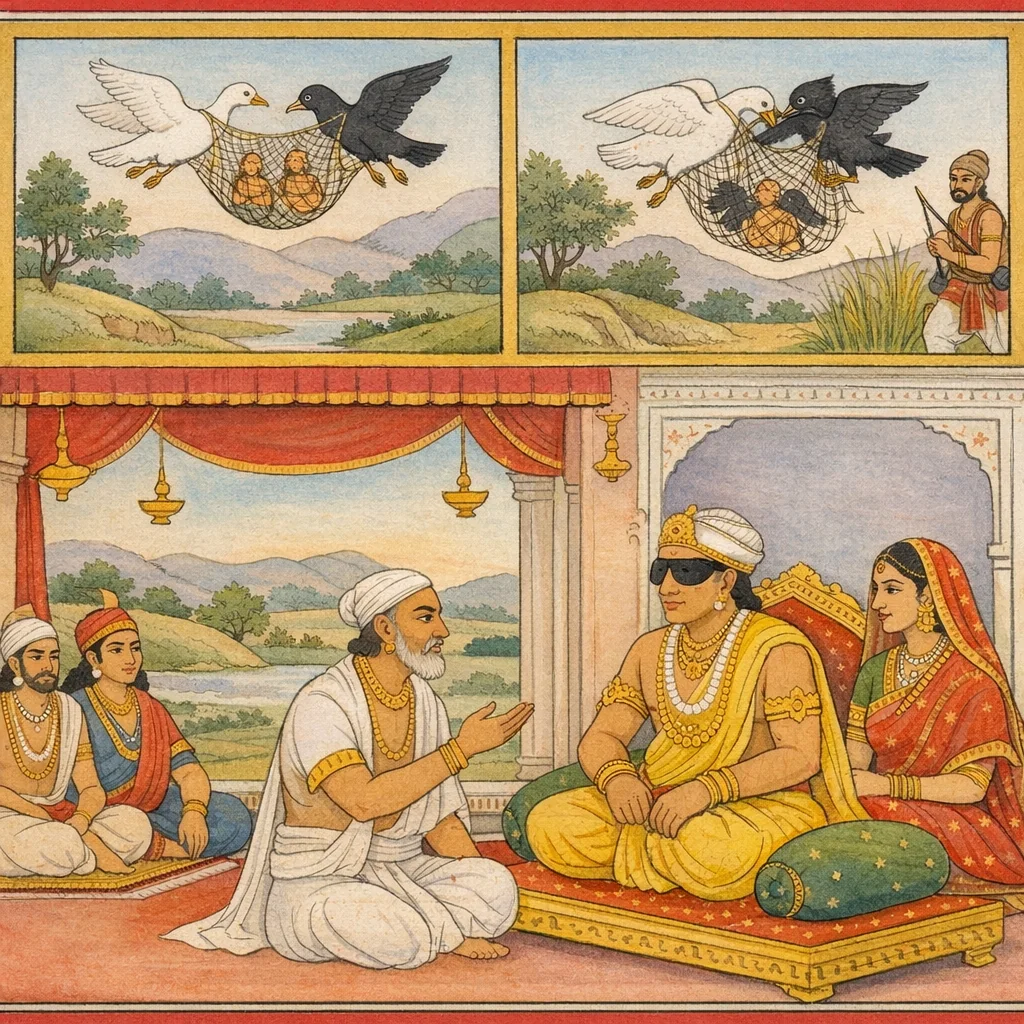
Chapter Arc: विदुर धृतराष्ट्र के सम्मुख कौटुम्बिक कलह की विनाश-शक्ति का स्मरण कराते हैं और संधि का मार्ग खोलने के लिए एक दृष्टान्त-कथा आरम्भ करते हैं—पक्षियों और जाल की कथा। → दो सदा-साथ रहने वाले पक्षी शिकारी के जाल में फँसते हैं; वे मिलकर जाल उठाकर आकाश में उड़ जाते हैं, परन्तु संकट के बीच एकता डगमगाती है—वे परस्पर दोषारोपण और झगड़े में उतर आते हैं। → जब दोनों पक्षी क्रोध में लड़ते हैं, तभी शिकारी चुपके से पास आकर उन्हें पकड़ लेता है—विदुर का संकेत स्पष्ट हो उठता है कि ‘विभाजन’ ही शत्रु का सबसे बड़ा अवसर है। → विदुर धृतराष्ट्र को नीति-सार सुनाते हैं: एकता में बल है, कलह में सर्वनाश। वे धृतराष्ट्र से आग्रह करते हैं कि युधिष्ठिर को ‘अंक’ (गोद/आश्रय) दें, संधि करें, क्योंकि युद्ध में किसी की भी निश्चित विजय नहीं और पाण्डव-समर्थन (द्रुपद, विराट, अर्जुन आदि) अत्यन्त प्रचण्ड है। → धृतराष्ट्र के भीतर पुत्रमोह और राज्यलोभ के रहते क्या वह विदुर की संधि-नीति स्वीकार करेगा, या दुर्योधन-पक्ष की हठधर्मिता उसे युद्ध की ओर धकेल देगी?
Shlokas
Verse 1
अपर चतु:षष्टितमो<5 ध्याय: विदुरका कौटुम्बिक कलहसे हानि बताते हुए धृतराष्ट्रको संधिकी सलाह देना विदुर उवाच शकुनीनामिहार्थाय पाशं भूमावयोजयत् । वश्चिच्छाकुनिकस्तात पूर्वेषामिति शुश्रुम
Vidura said: “For the sake of the Śakunis, he set a snare upon the ground. And, dear one, we have heard from the ancients that even the hunter himself can come under the power of the very snare he lays.”
Verse 2
विदुरजी कहते हैं--तात! हमने पूर्वपुरुषोंके मुखसे सुन रखा है कि किसी समय एक चिड़ीमारने चिड़ियोंको फँसानेके लिये पृथ्वीपर एक जाल फैलाया ।। तस्मिन् द्वौ शकुनौ बद्धौ युगपत् सहचारिणौ । तावुपादाय त॑ पाशं जग्मतु: खचरावुभौ
Vidura said: “My dear one, we have heard from the mouths of our forefathers that once a bird-catcher spread a net upon the earth to trap birds. In that net two birds—companions moving together—were caught at the same time. Lifting up that very net, both of them, though bound, rose into the sky.”
Verse 3
उस जालमें दो ऐसे पक्षी फँस गये, जो सदा साथ-साथ उड़ने और विचरनेवाले थे। वे दोनों पक्षी उस समय उस जालको लेकर आकाशमें उड़ चले ।। तौ विहायसमाक्रान्तौ दृष्टयवा शाकुनिकस्तदा । अन्वधावदनिर्विण्णो येन येन सम गच्छत:,चिड़ीमार उन दोनोंको आकाशमें उड़ते देखकर भी खिन्न या हताश नहीं हुआ। वे जिधर-जिधर गये, उधर-उधर ही वह उनके पीछे दौड़ता रहा
Two birds, ever flying and roaming together, were caught in a single net. In that moment they lifted the net and rose into the sky. Seeing them aloft, the fowler did not lose heart; wherever they flew in unison, he ran after them without discouragement.
Verse 4
तथा तमनुधावन्तं मृगयुं शकुनार्थिनम् । आश्रमस्थो मुनि: कश्रिद् ददर्शाथ कृताह्विक:,उन दिनों उस वनमें कोई मुनि रहते थे, जो उस समय संध्या-वन्दन आदि नित्यकर्म करके आश्रममें ही बैठे हुए थे। उन्होंने पक्षियोंको पकड़नेके लिये उनका पीछा करते हुए उस व्याधको देखा
Just then a certain sage, dwelling in his forest hermitage, had completed his prescribed rites—such as the twilight prayers—and sat within the ashram. He saw the hunter rushing along in pursuit, eager to catch the birds.
Verse 5
तावन्तरिक्षगौ शीघ्रमनुयान्तं महीचरम् । श्लोकेनानेन कौरव्य पप्रच्छ स मुनिस्तदा,कुरुनन्दन! उन आकाशचारी पक्षियोंके पीछे-पीछे भूमिपर पैदल दौड़नेवाले उस व्याधसे मुनिने निम्नांकित श्लोकके अनुसार प्रश्न किया--
Then, O scion of the Kurus, the sage questioned that hunter—running on foot along the ground, swiftly following the birds moving through the sky—using the following verse.
Verse 6
विचित्रमिदमाश्चर्य मृगहन् प्रतिभाति मे । प्लवमानौ हि खचरौ पदातिरनुधावसि,“अरे व्याध! मुझे यह बात बड़ी विचित्र और आश्चर्यजनक जान पड़ती है कि तू आकाशमें उड़ते हुए इन दोनों पक्षियोंके पीछे पृथ्वीपर पैदल दौड़ रहा है”
Vidura said: “This seems to me a strange and astonishing thing, O hunter: though those two birds are flying through the sky, you—on foot—are running after them along the earth.”
Verse 7
शाकुनिक उवाच पाशमेकमुभावेतौ सहितौ हरतो मम । यत्र वै विवदिष्येते तत्र मे वशमेष्यत:,व्याध बोला--मुने! ये दोनों पक्षी आपसमें मिल गये हैं, अतः मेरे एकमात्र जालको लिये जा रहे हैं। अब ये जहाँ-कहीं एक दूसरेसे झगड़ेंगे, वहीं मेरे वशमें आ जायँगे
The fowler replied: “Sage, these two birds are acting together, and so they are carrying off my single net. But wherever they fall into quarrel with one another, there they will come under my power.”
Verse 8
विदुर उवाच तौ विवादमनुप्राप्ती शकुनौ मृत्युसंधितौ । विगृहा[ च सुददुर्बुद्धी पृथिव्यां संनिपेततु:,विदुरजी कहते हैं--राजन्! तदनन्तर कुछ ही देरमें कालके वशीभूत हुए वे दोनों दुर्बद्धि पक्षी आपसमें झगड़ने लगे और लड़ते-लड़ते पृथ्वीपर गिर पड़े
Vidura said: Those two birds, driven by fate as though already bound for death, fell into strife. In their grievous folly they quarrelled and fought, until at last they dropped upon the earth. Thus is it shown that delusion and hostility, once indulged, carry beings toward ruin.
Verse 9
तौ युध्यमानौ संरब्धौ मृत्युपाशवशानुगौ । उपसृत्यापरिज्ञातो जग्राह मृगहा तदा,जब मौततके फंदेमें फँसे हुए वे पक्षी अत्यन्त कुपित होकर एक-दूसरेसे लड़ रहे थे, उसी समय व्याधने चुपचाप उनके पास आकर उन दोनोंको पकड़ लिया
Those two, fighting each other in blind fury, were already under Death’s noose. Then the hunter, approaching unnoticed, seized them both. The lesson is plain: when anger and mutual conflict consume one, one becomes easy prey to a third—self-control and discernment safeguard life and dharma.
Verse 10
एवं ये ज्ञातयो<र्थषु मिथो गच्छन्ति विग्रहम् तेडमित्रवशमायान्ति शकुनाविव विग्रहात्,इसी प्रकार जो कुट॒म्बीजन धन-सम्पत्तिके लिये आपसमें कलह करते हैं, वे युद्ध करके उन्हीं दोनों पक्षियोंकी भाँति शत्रुओंके वशमें पड़ जाते हैं
So too, kinsmen who, over wealth and property, fall into mutual quarrel and conflict end up under the control of their enemies—like two birds that, by fighting each other, become easy prey.
Verse 11
सम्भोजनं संकथन सम्प्रश्नो5थ समागम: । एतानि ज्ञातिकार्याणि न विरोध: कदाचन,साथ बैठकर भोजन करना, आपसमें प्रेमसे वार्तालाप करना, एक-दूसरेके सुख- दुःखको पूछना और सदा मिलते-जुलते रहना--ये ही भाई-बन्धुओंके काम हैं, परस्पर विरोध करना कदापि उचित नहीं है
Vidura says: Sharing a meal together, speaking with affection, inquiring after one another’s welfare, and maintaining regular association—these are the proper duties among kinsmen. Mutual hostility, however, is never right.
Verse 12
ये सम काले सुमनस: सर्वे वृद्धानुपासते । सिंहगुप्तमिवारण्यमप्रधृष्या भवन्ति ते,जो शुद्ध हृदयवाले मनुष्य समय-समयपर बड़े-बूढ़ोंकी सेवा एवं संग करते रहते हैं, वे सिंहसे सुरक्षित वनके समान दूसरोंके लिये दुर्धर्ष हो जाते हैं (शत्रु उनके पास आनेका साहस नहीं करते हैं)
Those who, at the proper times, are of pure heart and good will and attend upon the elders become hard to assail—like a forest guarded by a lion, to which enemies dare not draw near.
Verse 13
ये3र्थ संततमासाद्य दीना इव समासते । श्रियं ते सम्प्रयच्छन्ति द्विषद्धयों भरतर्षभ,भरतश्रेष्ठ) जो धनको पाकर भी सदा दीनोंके समान तृष्णासे पीड़ित रहते हैं, वे (आपसमें कलह करके) अपनी सम्पत्ति शत्रुओंको दे डालते हैं
Vidura says: “O bull among the Bharatas, those who, even after obtaining wealth, continue to live as if destitute—ever tormented by craving—end up handing over their prosperity to their enemies; for through mutual strife they ruin themselves, and their fortune passes away.”
Verse 14
धूमायन्ते व्यपेतानि ज्वलन्ति सहितानि च । धृतराष्ट्रोल्मुकानीव ज्ञातयो भरतर्षभ,भरतकुलभूषण धृतराष्ट्र! जैसे जलते हुए काष्ठ अलग-अलग कर दिये जानेपर जल नहीं पाते, केवल धुआँ देते हैं और परस्पर मिल जानेपर प्रज्वलित हो उठते हैं, उसी प्रकार कुटुम्बीजन आपसी फूटके कारण अलग-अलग रहनेपर अशक्त हो जाते हैं तथा परस्पर संगठित होनेपर बलवान् एवं तेजस्वी होते हैं
Vidura says: “When burning logs are separated, they do not blaze; they only smoke. When they are kept together, they flare up. In the same way, kinsmen—like the firebrands of Dhṛtarāṣṭra—become weak when divided by mutual discord, but when united they become strong and radiant. Therefore, O bull among the Bharatas, let not the family be broken by faction; unity is the strength that preserves the house and restrains ruin.”
Verse 15
इदमन्यत् प्रवक्ष्यामि यथा दृष्टं गिरो मया । श्रुत्वा तदपि कौरव्य यथा श्रेयस्तथा कुरु,कौरवनन्दन! पूर्वकालमें किसी पर्वतपर मैंने जैसा देखा था, उसके अनुसार यह एक दूसरी बात बता रहा हूँ। इसे भी सुनकर आपको जिसमें अपनी भलाई जान पड़े, वही कीजिये
Vidura said: “I shall tell you yet another matter, exactly as I once witnessed it and as these words have remained with me. Hear this too, O scion of the Kurus; then act in the way that truly leads to your welfare.”
Verse 16
वयं किरातै: सहिता गच्छामो गिरिमुत्तरम् । ब्राह्मणैदेवकल्पैश्न विद्याजम्भकवार्तिकै:ः,एक समयकी बात है, हम बहुत-से भीलों और देवोपम ब्राह्मणोंके साथ उत्तर-दिशामें गन्धमादन पर्वतपर गये थे। हमारे साथ जो ब्राह्मण थे, उन्हें मन्त्र-यन्त्रादिरूप विद्या और ओषधियोंके साधन आदिकी बातें बहुत प्रिय थीं
Vidura said: “Once, we journeyed with many Kirātas—mountain folk and hunters—toward the northern heights of Gandhamādana. With us went Brahmins, godlike in bearing, who delighted in discourse on the sciences: mantras and yantras, medicinal herbs, and the means of their practice.”
Verse 17
कुञ्जभूतं गिरिं सर्वमभितो गन्धमादनम् । दीप्यमानौषधिगणं सिद्धगन्धर्वसेवितम्,समस्त गन्धमादन पर्वत सब ओरसे कुंज-सा जान पड़ता था। वहाँ दिव्य ओषधियाँ प्रकाशित हो रही थीं। सिद्ध और गन्धर्व उस पर्वतपर निवास करते थे
Vidura said: “All around, the Gandhamādana mountain appeared like a vast grove. Its multitude of medicinal herbs shone with a radiant brilliance, and the peak was frequented and inhabited by Siddhas and Gandharvas.”
Verse 18
तत्रापश्याम वै सर्वे मधु पीतकमाक्षिकम् । मरुप्रपाते विषमे निविष्टं कुम्भसम्मितम्,वहाँ हम सब लोगोंने देखा, पर्वतकी एक दुर्गम गुफामें जहाँसे कोई कूल-किनारा न होनेके कारण गिरनेकी ही अधिक सम्भावना रहती है, एक मधुकोष है। वह मक्खियोंका तैयार किया हुआ नहीं था। उसका रंग सुवर्णके समान पीला था और वह देखनेमें घड़ेके समान जान पड़ता था
There we all beheld a mass of honey—golden-yellow in hue, not made by bees—set in a perilous mountain cleft where the ground fell away with no safe footing, so that a slip meant a likely plunge. It appeared in size and shape like a jar, drawing the eye even as the place itself warned of danger—an image of alluring gain found in a treacherous setting, inviting discernment and restraint.
Verse 19
आशीविषै रक्ष्यमाणं कुबेरदयितं भूशम् । यत् प्राप्य पुरुषो म्त्योउप्यमरत्वं नियच्छति,भयंकर विषधर सर्प उस मधुकी रक्षा करते थे। कुबेरको वह मधु अत्यन्त प्रिय था। हमारे साथी औषधसाधक ब्राह्मणलोग यह बता रहे थे कि इस मधुको पाकर मरणथधर्मा मनुष्य भी अमरत्व प्राप्त कर लेता है। इसको पीनेसे अंधेको दृष्टि मिल जाती है और बूढ़ा भी जवान हो जाता है
Vidura says: “That honey—dear to Kubera—was being guarded by deadly, venomous serpents. It is said that whoever obtains it, though subject to death, can secure immortality.” In context, the verse evokes the moral tension between alluring gains and the peril (and impropriety) that surrounds them, hinting that coveted ‘boons’ often come fenced by danger and ethical restraint.
Verse 20
अचक्षुर्लभते चक्षुरवृद्धो भवति वै युवा । इति ते कथयन्ति सम ब्राह्मणा जम्भसाधका:,भयंकर विषधर सर्प उस मधुकी रक्षा करते थे। कुबेरको वह मधु अत्यन्त प्रिय था। हमारे साथी औषधसाधक ब्राह्मणलोग यह बता रहे थे कि इस मधुको पाकर मरणथधर्मा मनुष्य भी अमरत्व प्राप्त कर लेता है। इसको पीनेसे अंधेको दृष्टि मिल जाती है और बूढ़ा भी जवान हो जाता है
Vidura said: “They used to tell us—those Brahmins skilled in conquering obstacles—that by obtaining it, even the blind gains sight, and one who is no longer young becomes youthful again.” In context, the verse highlights how alluring promises of extraordinary gain can be presented as authoritative testimony, inviting scrutiny about desire, credibility, and right conduct.
Verse 21
ततः किरातास्तद् दृष्टवा प्रार्थयन्तो महीपते । विनेशुर्विषमे तस्मिन् ससर्पे गिरिगह्दरे,महाराज! उस समय उस मधुका अद्भुत गुण सुनकर और उसे प्रत्यक्ष देखकर भीलोंने उसे पानेकी चेष्टा की; परंतु सर्पोंसे भरी हुई उस दुर्गम पर्वतगुहामें जाकर वे सब-के-सब नष्ट हो गये
Then the Kiratas, seeing it and longing for it, O king, entered that perilous mountain cavern filled with serpents—and there they all perished.
Verse 22
तथैव तव पुत्रो5यं पृथिवीमेक इच्छति । मधु पश्यति सम्मोहात् प्रपातं नानुपश्यति,इसी प्रकार आपका यह पुत्र दुर्योधन अकेला ही सारी पृथ्वीका राज्य भोगना चाहता है। यह मोहवश केवल मधुको ही देखता है, भावी पतन या विनाशकी ओर इसकी दृष्टि नहीं जाती है
So too, your son desires to possess the whole earth all by himself. Deluded by infatuation, he sees only the sweetness of gain, and does not look toward the precipice—his coming downfall and ruin.
Verse 23
दुर्योधनो योद्धुमना: समरे सव्यसाचिना । न च पश्यामि तेजो<स्य विक्रमं वा तथाविधम्,दुर्योधन समरभूमिमें सव्यसाची अर्जुनके साथ युद्ध करनेकी बात सोचता है, परंतु मैं इसके भीतर अर्जुनके समान तेज या पराक्रम नहीं देखता
Vidura said: “Duryodhana is intent on fighting Savyasācin (Arjuna) on the battlefield; yet I do not see in him that kind of radiance or prowess comparable to Arjuna’s. His resolve is loud, but his capacity does not match the opponent he seeks.”
Verse 24
एकेन रथमास्थाय पृथिवी येन निर्जिता । भीष्मद्रोणप्रभृतय: संत्रस्ता: साधुयायिन:,जिस वीरने अकेले ही रथपर बैठकर सारी पृथ्वीपर विजय पायी है, विराटनगरपर चढ़ाई करने गये हुए भीष्म और द्रोण-जैसे महान् योद्धाओंको भी जिसने भयभीत करके भगा दिया है, उसके सामने आपका पुत्र क्या पराक्रम कर सकता है? यह आप ही देखिये। आज भी वह वीर आपकी मैत्रीपूर्ण दृष्टिकी प्रतीक्षा कर रहा है और आपकी आज्ञासे वह कौरवोंका सारा अपराध क्षमा कर सकता है
Vidura said: “He who, mounting a single chariot, conquered the earth; he before whom even warriors like Bhīṣma and Droṇa—though advancing in a righteous campaign—were struck with fear and driven back: what valor can your son display against such a hero? Consider this yourself. Even now that mighty man awaits your friendly regard; and by your command he can forgive the entire wrongdoing of the Kauravas.”
Verse 25
विराटनगरे भग्ना: कि तत्र तव दृश्यताम् । प्रतीक्षमाणो यो वीर: क्षमते वीक्षितं तव,जिस वीरने अकेले ही रथपर बैठकर सारी पृथ्वीपर विजय पायी है, विराटनगरपर चढ़ाई करने गये हुए भीष्म और द्रोण-जैसे महान् योद्धाओंको भी जिसने भयभीत करके भगा दिया है, उसके सामने आपका पुत्र क्या पराक्रम कर सकता है? यह आप ही देखिये। आज भी वह वीर आपकी मैत्रीपूर्ण दृष्टिकी प्रतीक्षा कर रहा है और आपकी आज्ञासे वह कौरवोंका सारा अपराध क्षमा कर सकता है
Vidura said: “They were routed in the city of Virāṭa—what strength of yours is to be seen there? That hero, who still waits for your friendly glance, is capable—if you but look upon him with favor—of forgiving the entire wrongdoing of the Kauravas.”
Verse 26
ट्रुपदो मत्स्यराजश्न संक्रुद्धक्ष धनंजय: । न शेषयेयु: समरे वायुयुक्ता इवाग्नय:,राजा द्रुपद, मत्स्यनरेश विराट और क्रोधमें भरा हुआ अर्जुन--ये तीनों वायुका सहारा पाकर प्रज्वलित हुई त्रिविध अग्नियोंके समान जब युद्धभूमिमें आक्रमण करेंगे, तब किसीको जीता नहीं छोड़ेंगे
“King Drupada, King Virāṭa of the Matsyas, and Dhanañjaya (Arjuna) filled with wrath—when these three assail the battlefield, they will be like three fires kindled and fanned by the wind; they will leave no one standing in the fight.”
Verse 27
अड्के कुरुष्व राजानं धृतराष्ट्र युधिष्ठिरम् । युध्यतोर्हि द्वयोर्युद्धे नैकान्तेन भवेज्जय:,महाराज धृतराष्ट्र!् आप राजा युधिष्ठिरको अपनी गोदमें बैठा लीजिये; क्योंकि जब दोनों पक्षोंमें युद्ध छिड़ जायगा, तब विजय किसकी होगी, यह निश्चितरूपसे नहीं कहा जा सकता
“O King Dhṛtarāṣṭra, take King Yudhiṣṭhira into your lap; for when war breaks out between the two sides, it cannot be said with certainty who will win.”
Verse 64
इति श्रीमहा भारते उद्योगपर्वणि यानसंधिपर्वणि विदुरवाक्ये चतु:षष्टितमो5ध्याय: ।। घड़े ।। इस प्रकार श्रीमह्याभारत उद्योगपर्वके अन्तर्गत यानसंधिपर्वमें विदुरवाक्यविषयक चौसठवाँ अध्याय पूरा हुआ
Thus, in the sacred Mahābhārata, within the Udyoga Parva—specifically the Yāna–Saṃdhi Parva on the mission and negotiations—the sixty-fourth chapter, containing Vidura’s counsel, comes to its close. This closing formula marks the completion of his ethical and political admonitions, set within the wider endeavor to avert war through wisdom and diplomacy.
Frequently Asked Questions
The dilemma is whether to persist in a pride-driven course that disregards ethical counsel and realistic appraisal, or to adopt restraint and listen to elders whose advice aims at preventing broader harm to the polity.
Sound action requires aligning intention with dharma and evidence: strategic decisions should be guided by accurate assessment, humility before expertise, and awareness that moral blindness often manifests as misreading the path ahead.
No explicit phalaśruti appears in the provided passage; the meta-function is implicit—positioning this counsel as a diagnostic node in the epic where ignored advice becomes a narrative marker for preventable escalation.