Adhyaya 5
उद्योगपर्व — अध्याय ५ (कृष्णनीति: न्यायशम-उपदेशः; विराट-द्रुपदयोः सैन्यसमाह्वानम्)
Upa-parva: Udyoga Parva — Alliance Mobilization and Peace-Counsel Episode (Virāṭa–Drupada mustering; Kṛṣṇa’s counsel)
The chapter opens with Vāsudeva (Kṛṣṇa) affirming that a proposed statement is well-reasoned and goal-effective for the Pāṇḍava king, and that correct prior action (pūrvakārya) is essential for those seeking sound policy (sunīti). He stresses relational parity with both Kurus and Pāṇḍavas and frames the request as guidance to an elder, respected figure who is valued by Dhṛtarāṣṭra and connected to Droṇa and Kṛpa. Kṛṣṇa urges that a message beneficial to the Pāṇḍavas be sent immediately, arguing that if the Kuru leader adopts just peace (nyāyena śama), great destruction among kin can be avoided; if pride and delusion prevail, Duryodhana will meet ruin when facing the enraged Gāṇḍīva-bearer (Arjuna). The narration then shifts to Vaiśaṃpāyana: Virāṭa honors Kṛṣṇa and sends him home; after Kṛṣṇa departs for Dvārakā, Yudhiṣṭhira and Virāṭa complete military preparations. Virāṭa and Drupada dispatch summons to kings, who arrive energized and strong; hearing of the Pāṇḍava mustering, Dhṛtarāṣṭra’s son also gathers rulers. The earth is described as unsettled by the Kuru–Pāṇḍava cause as armies converge. Finally, Pāñcālya sends his aged, wise purohita as an envoy to the Kurus, aligned with Yudhiṣṭhira’s counsel.
Chapter Arc: वायुदेव के वचन से नीति का स्वर उठता है—“पहले उचित कार्य, अन्यथा पुरुष सुबालिश कहलाए”—और उसी क्षण श्रीकृष्ण के द्वारका-गमन तथा विराट-द्रुपद के संदेशों से राजाओं के जुटने का संकेत युद्ध-मेघों को घना कर देता है। → पक्ष-निर्णय की घड़ी आती है: अनेक नरेश कहते हैं कि कौरव और पाण्डव—दोनों से उनका समान सम्बन्ध है, अतः वे नीति और मर्यादा के अनुसार ही चलेंगे। पर संदेशों की गति, दूतों का आवागमन, और दूर-दूर से चतुरंगिणी सेनाओं का प्रस्थान—सब मिलकर अनिवार्य संघर्ष की ओर धकेलते हैं। → पाण्डवों के यहाँ ‘महद् बल’ के समागम का समाचार फैलते ही धृतराष्ट्र-पुत्र भी राजाओं को अपने पक्ष में खींचने लगते हैं; उधर युधिष्ठिर की सम्मति से पांचाल-नरेश द्रुपद अपने प्रज्ञा-वयोवृद्ध पुरोहित को कुरुओं के पास भेजते हैं—यह दूत-प्रेषण ही अध्याय का निर्णायक मोड़ बनता है, जहाँ नीति का वचन अब राजनय में बदल जाता है। → दोनों ओर से सेनाएँ क्रमशः एकत्र होने लगती हैं; पृथ्वी घोड़ों, रथों, हाथियों और पदातियों के भार से संकुल हो उठती है। नीति की भाषा अभी शेष है, पर तैयारी युद्ध की है—और दूत का प्रस्थान आगामी संवादों का द्वार खोल देता है। → वन-पर्वत सहित धरती को कंपित करती सेनाओं के बीच प्रश्न अधूरा रह जाता है—क्या नीति की पहली शर्त (पूर्व-कार्य) शान्ति होगी, या वही नीति युद्ध को धर्मोचित ठहराएगी?
Shlokas
Verse 1
अत--णक+ पञठ्चमो<ध्याय: भगवान् श्रीकृष्णका द्वारकागमन, विराट और द्रुपदके संदेशसे राजाओंका पाण्डवपक्षकी ओरसे युद्धके लिये आगमन वायुदेव उवाच उपपन्नमिदं वाक््यं सोमकानां धुरंधरे । अर्थसिद्धिकरं राज्ञ: पाण्डवस्यामितौजस:,(तत्पश्चात् भगवान) श्रीकृष्णने कहा--सभासदो! सोमकवंशके धुरंधर वीर महाराज द्रपदने जो बात कही है, वह उन्हींके योग्य है। इसीसे अमित तेजस्वी पाण्डुनन्दन राजा युधिष्ठिरके अभीष्ट कार्यकी सिद्धि हो सकती है इति श्रीमहा भारते उद्योगपर्वणि सेनोद्योगपर्वणि पुरोहितयाने पठचमो<ध्याय: ।। ५ || इस प्रकार श्रीमह्याभारत उद्योगपर्वके अन्तर्गत सेनोट्रोगपर्वमें पुरोहितप्रस्थानविषयक पॉचवाँ अध्याय पूरा हुआ ॥/ ५ ॥ दे | आह ॥ #* षष्ठो 5 ध्याय: ट्रुपदका पुरोहितको दौत्यकर्मके लिये अनुमति देना तथा पुरोहितका हस्तिनापुरको प्रस्थान दुपद उवाच भूतानां प्राणिन: श्रेष्ठा: प्राणिनां बुद्धिजीविन: । बुद्धिमत्सु नस: श्रेष्ठा नरेष्वपि द्विजातय:
Vāyudeva said: “This statement is fitting—worthy of a foremost champion among the Somakas. It can accomplish the desired purpose of the mighty Pāṇḍava king.” In context, the remark affirms Drupada’s counsel as apt and effective for securing Yudhiṣṭhira’s aim, praising prudent speech that upholds dharma and brings practical success as war draws near.
Verse 2
एतच्च पूर्व कार्य न: सुनीतमभिकाड्क्षताम् । अन्यथा हाचरन् कर्म पुरुष: स्यात् सुबालिश:,हमलोग सुनीतिकी इच्छा रखनेवाले हैं; अतः हमें सबसे पहले यही कार्य करना चाहिये। जो अवसरके विपरीत आचरण करता है, वह मनुष्य अत्यन्त मूर्ख माना जाता है
For us, who earnestly desire sound policy and right conduct, this must be done first. A man who acts contrary to the proper occasion and circumstance is deemed exceedingly foolish.
Verse 3
कि तु सम्बन्धकं तुल्यमस्माकं कुरुपाण्डुषु । यथेष्टं वर्तमानेषु पाण्डवेषु च तेषु च,परंतु हमलोगोंका कौरवों और पाण्डवोंसे एक-सा सम्बन्ध है। पाण्डव और कौरव दोनों ही हमारे साथ यथायोग्य अनुकूल बर्ताव करते हैं
But our bond is the same with both the Kurus and the Pāṇḍavas. Whether it is the Pāṇḍavas or those others (the Kauravas), they conduct themselves toward us in a fitting and agreeable manner as they choose.
Verse 4
इस प्रकार श्रीमह्याभारत उद्योगपर्वके अन्तर्गत सेनोट्योगपर्वमें दुपदवाक्यविषयक चौथा अध्याय पूरा हुआ,ते विवाहार्थमानीता वयं सर्वे तथा भवान् | कृते विवाहे मुदिता गमिष्यामो गृहान् प्रति इस समय हम और आप सब लोग विवाहोत्सवमें निमन्त्रित होकर आये हैं। विवाहकार्य सम्पन्न हो गया; अतः अब हम प्रसन्नतापूर्वक अपने-अपने घरोंको लौट जायूँगे
Drupada said: “All of us, and you as well, have been invited and brought here for the purpose of the wedding. Now that the marriage has been duly completed, we shall depart joyfully, each returning to our own home.”
Verse 5
भवान् वृद्धतमो राज्ञां वयसा च श्रुतेन च । शिष्यवत् ते वयं सर्वे भवामेह न संशय:,आप समस्त राजाओंमें अवस्था तथा शास्त्रज्ञान दोनों ही दृष्टियोंसे सबकी अपेक्षा बड़े हैं। इसमें संदेह नहीं कि हम सब लोग आपके शिष्यके समान हैं
Vāyu said: “You are the eldest among kings—superior both in years and in sacred learning. Of this there is no doubt: here, all of us stand before you as disciples.”
Verse 6
भवन्तं धृतराष्ट्रश्न सततं बहु मन्यते । आचार्ययो: सखा चासि द्रोणस्य च कृपस्यथ च,राजा धृतराष्ट्र भी सदा आपको विशेष आदर देते हैं, आचार्य द्रोण और कृप दोनोंके आप सखा हैं
Dhṛtarāṣṭra always holds you in very high esteem. You are also a close friend of the two preceptors—Droṇa and Kṛpa.
Verse 7
स भवान् प्रेषयत्वद्य पाण्डवार्थकरं वच: । सर्वेषां निश्चितं तन्नः प्रेषयिष्यति यद् भवान्,अतः आप ही आज पाण्डवोंकी कार्य-सिद्धिके अनुकूल संदेश भेजिये। आप जो भी संदेश भेजेंगे, वह हम सब लोगोंका निश्चित मत होगा
Therefore, venerable one, send today a message that will accomplish the Pāṇḍavas’ purpose. Whatever message you choose to dispatch will stand as the settled and unanimous resolve of us all.
Verse 8
यदि तावच्छमं कुर्यानन््यायेन कुरुपुड्रव: । न भवेत् कुरुपाण्डूनां सौभ्रात्रेण महान् क्षय:,यदि कुरुश्रेष्ठ दुर्योधन न्यायके अनुसार शान्ति स्वीकार करेगा, तो कौरव और पाण्डवोंमें परस्पर बन्धुजनोचित सौहार्दवश महान् संहार न होगा
If, even now, the bull among the Kurus were to make peace in accordance with justice, then there would be no great destruction of the Kurus and the Pāṇḍavas arising from their fraternal bond.
Verse 9
अथ दर्पान्वितो मोहान्न कुर्याद् धृतराष्ट्रज: । अन््येषां प्रेषयित्वा च पश्चादस्मान् समाह्ये,यदि धृतराष्ट्र-पुत्र दुर्योधन मोहवश घमंडमें आकर हमारा प्रस्ताव न स्वीकार करे, तो आप दूसरे राजाओंको युद्धका निमन्त्रण भेजकर सबके बाद हमलोगोंको आमन्त्रित कीजियेगा
If, blinded by delusion and swollen with pride, Dhṛtarāṣṭra’s son (Duryodhana) does not accept our proposal, then first send invitations to the other kings for the war; and only after that, invite us as well.
Verse 10
ततो दुर्योधनो मन्द: सहामात्य: सबान्धव: । निष्ठामापत्स्यते मूढ: क्रुद्धे गाण्डीवधन्चनि,फिर तो गाण्डीवधन्चा अर्जुनके कुपित होनेपर मन्दबुद्धि मूढ दुर्योधन अपने मन्त्रियों और बन्धुजनोंके साथ सर्वथा नष्ट हो जायगा
Then the dull-witted Duryodhana—deluded and obstinate—will meet utter ruin, together with his ministers and kinsmen, when the wielder of the Gāṇḍīva bow (Arjuna) is provoked to wrath.
Verse 11
वैशम्पायन उवाच ततः सत्कृत्य वार्ष्णेयं विराट: पृथिवीपति: । गृहान् प्रस्थापयामास सगणं सहबान्धवम्,वैशम्पायनजी कहते हैं--जनमेजय! तदनन्तर राजा विराटने सेवकवृन्द तथा बान्धवोंसहित वृष्णिकुलनन्दन भगवान् श्रीकृष्णका सत्कार करके उन्हें द्वारका जानेके लिये विदा किया
Vaiśampāyana said: Then King Virāṭa, lord of the land, having duly honored Vārṣṇeya (Kṛṣṇa), sent him off to his home, together with his attendants and kinsmen.
Verse 12
द्वारकां तु गते कृष्णे युधिष्ठिरपुरोगमा: । चक्रु: सांग्रामिकं सर्व विराटश्न महीपति:,श्रीकृष्णके द्वारका चले जानेपर युधिष्ठिर आदि पाण्डव तथा राजा विराट युद्धकी सारी तैयारियाँ करने लगे
When Kṛṣṇa had departed for Dvārakā, Yudhiṣṭhira—at the head of the Pāṇḍavas—together with King Virāṭa, set about making every preparation for war.
Verse 13
ततः सम्प्रेषयामास विराट: सह बान्धवै: । सर्वेषां भूमिपालानां द्रुपदश्च॒ महीपति:
Then King Virāṭa, together with his kinsmen, sent out messages; and so too did King Drupada—summoning the rulers of the earth.
Verse 14
बन्धुओंसहित राजा विराट तथा महाराज ट्रपदने मिल-कर सब राजाओंके पास युद्धका निमन्त्रण भेजा ।। वचनात् कुरुसिंहानां मत्स्यपाञज्चालयोश्न ते । समाजम्मुर्महीपाला: सम्प्रहृषषश महाबला:,कुरुकुलके सिंह पाण्डव, मत्स्यनरेश विराट तथा पांचालराज ट्रुपदके संदेशसे (दूर- दूरके) महाबली नरेश बड़े हर्ष और उत्साहमें भरकर वहाँ आने लगे
At the summons of the lion-like heroes of the Kuru line (the Pāṇḍavas), and at the call of the Matsya king Virāṭa and the Pāñcāla king Drupada, powerful rulers from many lands—filled with joy and eager resolve—began to assemble.
Verse 15
तच्छुत्वा पाण्डुपुत्राणां समागच्छन्महद् बलम् । धृतराष्ट्रसुता श्वापि समानिन्युर्महीपतीन्,पाण्डवोंके यहाँ विशाल सेना एकत्र हो रही है; यह सुनकर धृतराष्ट्रके पुत्रोंने भी भूमिपालोंको बुलाना आरम्भ कर दिया
Hearing that a great force was assembling on behalf of the sons of Pāṇḍu, the sons of Dhṛtarāṣṭra too began to summon the kings (their allied rulers).
Verse 16
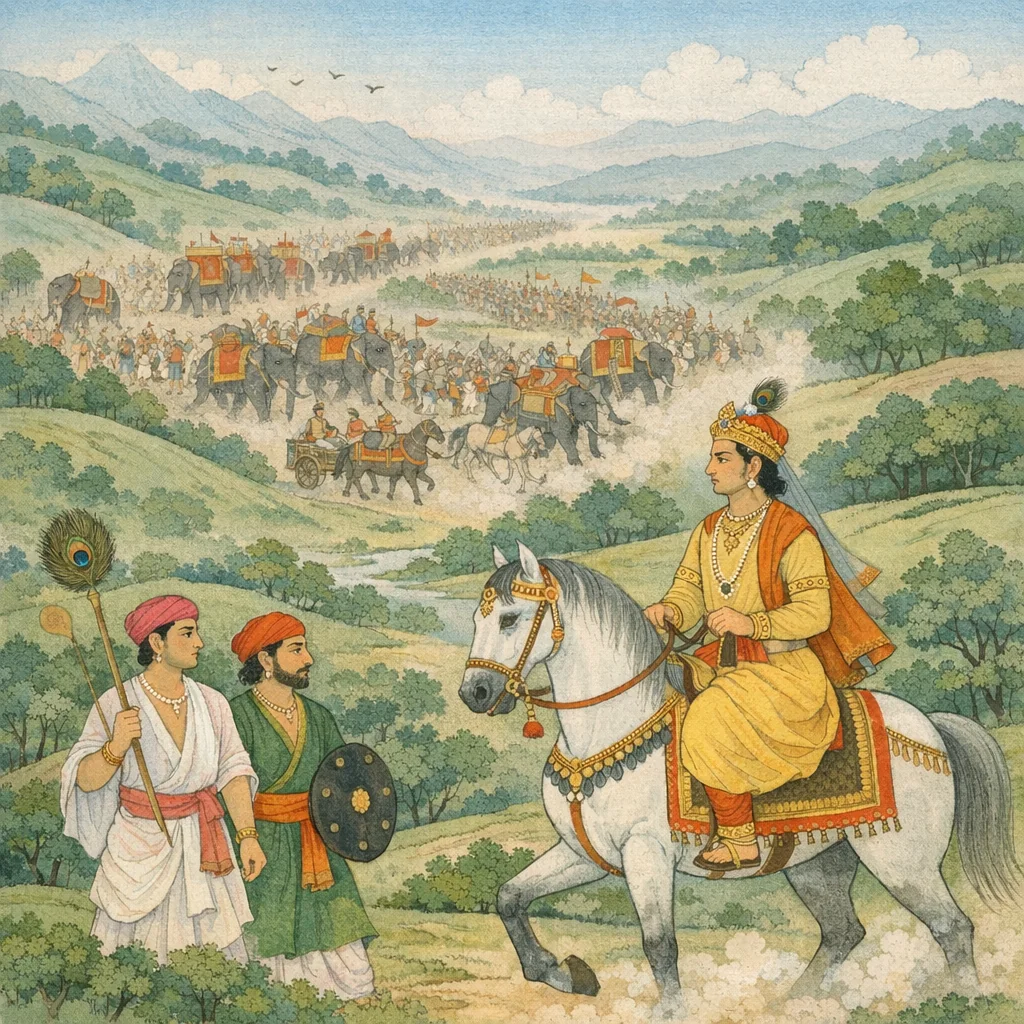
समाकुला मही राजन् कुरुपाण्डवकारणात् | तदा समभवत् कृत्स्ना सम्प्रयाणे महीक्षिताम्
Vaiśampāyana said: “O King, because of the conflict between the Kurus and the Pāṇḍavas, the whole earth fell into turmoil. At that time, as the kings set out to march, the entire world seemed swept into a single, restless movement.”
Verse 17
बलानि तेषां वीराणामागच्छन्ति ततस्तत:
Vaiśampāyana said: The military forces of those heroes kept arriving, from various places and in successive waves—an ominous gathering that signals the steady tightening of the conflict and the moral pressure that precedes war.
Verse 18
ततः प्रज्ञावयोवृद्धं पाउ्चाल्य: स्वपुरोहितम् | कुरुभ्य: प्रेषयामास युधिषछिरमते स्थित:,तदनन्तर पांचालनरेशने युधिष्ठिरकी सम्मतिके अनुसार बुद्धि और अवस्थामें भी बढ़े- चढ़े अपने पुरोहितको कौरवोंके पास भेजा
Then the king of the Pāñcālas, acting in accordance with Yudhiṣṭhira’s counsel, dispatched his own family priest—one advanced in wisdom and in years—to the Kuru court. The mission underscores a dharmic preference for counsel, negotiation, and restrained speech before any irrevocable step toward conflict.
Verse 166
संकुला च तदा भूमिश्नषतुरड्गरबलान्विता । राजन! इस प्रकार कौरवों तथा पाण्डवोंके उद्देश्यसे दूर-दूरके नरेश अपनी सेना लेकर प्रस्थान करने लगे। इनकी चतुरंगिणी सेनासे सारी पृथ्वी व्याप्त हुई-सी जान पड़ने लगी
Vaiśampāyana said: Then the earth became crowded, filled with the fourfold armies. O King, for the sake of the Kauravas and the Pāṇḍavas, rulers from far and wide began to set out with their forces. With those fourfold armies, it seemed as though the whole world had been covered—an ominous sign of how a dynastic quarrel draws all realms into the widening net of war.
Verse 176
चालयन्तीव गां देवीं सपर्वतवनामिमाम् । चारों ओरसे उन वीरोंके जो सैनिक आ रहे थे, वे पर्वतों और वनोंसहित इस सारी पृथ्वीको प्रकम्पित-सी कर रहे थे
Vaiśampāyana said: As those heroic warriors’ troops advanced from all directions, they seemed to shake this entire earth—revered like a goddess—together with her mountains and forests. The image underscores how the momentum toward war grows so vast that it disturbs the very order of the world, hinting at the grave ethical weight of massed violence.
Frequently Asked Questions
Whether the Kuru leadership will adopt a just peace initiative (nyāyena śama) to prevent kin-destruction, or allow pride and delusion (darpa, moha) to override counsel, thereby legitimizing escalation.
Sound action requires proper sequence and principled method: policy must begin with justice and restraint, because ignoring due process and counsel converts power into self-defeating conduct and amplifies collective harm.
No explicit phalaśruti appears in this unit; the chapter’s meta-level function is causal and instructional—showing how ethical counsel and diplomatic procedure condition later outcomes within the epic’s governance framework.