Adhyaya 153
भीष्मसेनापत्याभिषेकः (Bhīṣma’s Appointment as Commander-in-Chief)
Upa-parva: Senāpati-abhisheka (Bhīṣma appointed Commander) — Udyoga Parva
Vaiśaṃpāyana narrates Duryodhana’s formal appeal to Bhīṣma, made with folded hands amid allied rulers, arguing by analogy that an army without a leader disperses in battle. He supports the claim through a didactic exemplum: disparate counsel and competing valor among leaders undermine cohesion, whereas selecting a single capable, ethically steady commander yields victory. Duryodhana then praises Bhīṣma’s protective capacity through a sequence of cosmological comparisons (sun among lights, Indra among gods, Meru among mountains), requesting him to lead the Kaurava host. Bhīṣma accepts, affirming both his duty-bound commitment to fight for the Kauravas and his continuing goodwill toward the Pāṇḍavas; he acknowledges Arjuna as the only comparable warrior and indicates restraint regarding the sons of Pāṇḍu, focusing instead on opposing fighters. He further raises the command-order issue—either Karṇa fights first or Bhīṣma does—prompting Karṇa to refuse combat while Bhīṣma commands. The chapter closes with Bhīṣma’s ritual appointment, celebratory sounds, mass gifts to Brahmins, and a cluster of ominous portents (bloody mire-like rain, tremors, meteors, fearful cries), followed by the army’s departure and the establishment of the camp at Kurukṣetra.
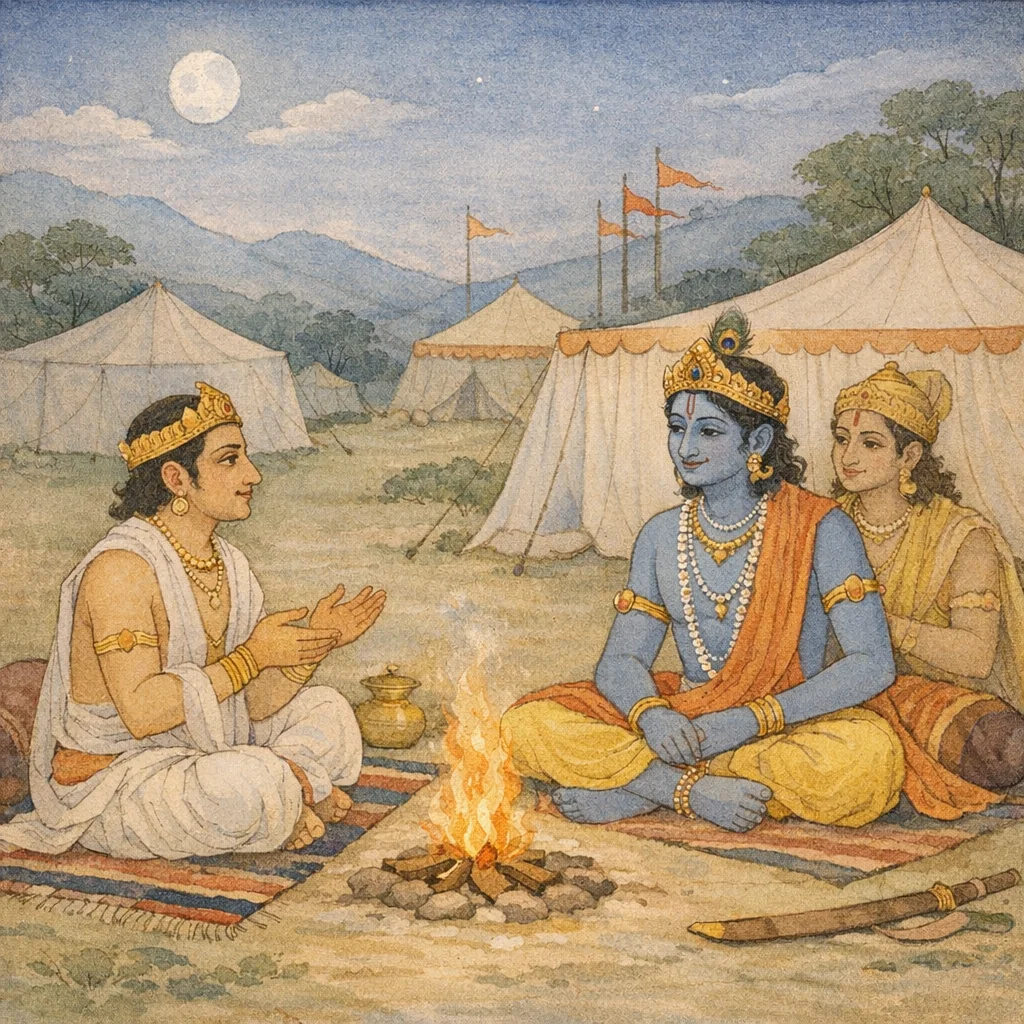
Chapter Arc: संकट की घड़ी में धर्मराज युधिष्ठिर अच्युत से पूछते हैं—“इस समय हमारे लिए क्या उचित है, जिससे हम स्वधर्म से न च्युत हों?” → युधिष्ठिर कृष्ण को स्मरण कराते हैं कि वे दुर्योधन, कर्ण, शकुनि और पाण्डवों—सबके मनोभाव जानते हैं; अतः अब निर्णय का भार भी उन्हीं पर है। कृष्ण धृतराष्ट्रसभा में हुए अपमान, दुर्योधन की दुष्ट-नीति और यहाँ तक कि स्वयं कृष्ण को बाँधने की आज्ञा तक का उल्लेख कर, कौरव-पक्ष की असाध्य हठधर्मिता स्पष्ट करते हैं। → कृष्ण निर्णायक स्वर में बताते हैं कि इस समय ‘समयोचित कर्तव्य’ युद्ध की तैयारी ही है—क्योंकि दुर्योधन का पाप-निश्चय, शकुनि-कर्ण-दुःशासन की उकसाहट और संधि-विरोध ने शांति के सभी द्वार बंद कर दिए हैं। → कृष्ण के वचन सुनकर पाण्डव-पक्ष का संकल्प स्थिर होता है; अर्जुन के कथन पर कृष्ण मुस्कराकर अनुमोदन करते हैं और समस्त पाण्डव योद्धाओं सहित युद्ध के लिए दृढ़ निश्चय करके उस रात्रि विश्राम करते हैं। → रात्रि का शांत विराम अगले दिन के सैन्य-निर्याण और अनिवार्य महासंग्राम की आहट बनकर रह जाता है।
Shlokas
Verse 1
हि न बा आम #ा5 चतुष्पञ्चाशर्दाधिकशततमो< ध्याय: अब भगवान् श्रीकृष्णसे अपने समयोचित कर्तव्यके | पूछना, भगवान्का युद्धको ही कर्तव्य बताना तथा इस विषयमें युधिष्ठिरका संताप और अर्जुनद्वारा श्रीकृष्णके वचनोंका समर्थन वैशम्पायन उवाच वासुदेवस्य तद् वाक््यमनुस्मृत्य युधिष्ठिर: । पुन: पप्रच्छ वार्ष्णेयं कथं मन्दो5ब्रवीदिदम्,वैशम्पायनजी कहते हैं--जनमेजय! भगवान् श्रीकृष्णके पूर्वोक्त कथनका स्मरण करके युधिष्ठिरने पुनः उनसे पूछा--'भगवन्! मन्दबुद्धि दुर्योधनने क्यों ऐसी बात कही?
Vaiśampāyana said: O Janamejaya, remembering those earlier words of Vāsudeva, Yudhiṣṭhira again questioned the Vārṣṇeya (Kṛṣṇa): “Lord, why did the dull-witted Duryodhana speak in this manner?”
Verse 2
अस्मिन्नभ्यागते काले कि च न: क्षममच्युत । कथं च वर्तमाना वै स्वधर्मान्न च्यवेमहि,“अच्युत! इस वर्तमान समयमें हमारे लिये क्या करना उचित है? हम कैसा बर्ताव करें? जिससे अपने धर्मसे नीचे न गिरें
Vaiśaṃpāyana said: “Acyuta, now that this critical time has arrived, what course is proper for us? How should we conduct ourselves so that we do not fall away from our own dharma?”
Verse 3
दुर्योधनस्य कर्णस्य शकुने: सौबलस्य च । वासुदेव मतज्ञोडसि मम सभ्रातृकस्य च,*वासुदेव! दुर्योधन, कर्ण और शकुनिके तथा भाइयोंसहित मेरे विचारोंको भी आप जानते हैं
Vaiśampāyana said: “O Vāsudeva, you know well the intentions and counsels of Duryodhana, Karṇa, and Śakuni the son of Subala—and you also understand my own mind, together with that of my brothers. Thus you are fully aware of the inner designs on both sides.”
Verse 4
विदुरस्यापि तद् वाक्यं श्रुतं भीष्मस्यथ चो भयो: । कुन्त्याश्न विपुलप्रज्ञ प्रज्ञा कार्त्स्न्येन ते श्रुता,“विदुरने और भीष्मजीने भी जो बातें कही हैं, उन्हें भी आपने सुना है। विशालबुद्धे ! माता कुन्तीका विचार भी आपने पूर्णरूपसे सुन लिया है
Vaiśampāyana said: You have also heard the words spoken by Vidura and by Bhīṣma—indeed, by both of them. O man of vast understanding, you have likewise heard Kuntī’s considered counsel in its entirety.
Verse 5
सर्वमेतदतिक्रम्य विचार्य च पुन: पुनः । क्षमं यन्नो महाबाहो तद् ब्रवीह्विचारयन्,“महाबाहो! इन सब विचारोंको लाँधकर स्वयं ही इस विषयपर बारंबार विचार करके हमारे लिये जो उचित हो, उसे नि:संकोच कहिये'
Vaiśampāyana said: “Setting aside all these considerations, and reflecting again and again on the matter yourself, O mighty-armed one, tell us—after due deliberation—what you judge to be proper for us.”
Verse 6
श्रुत्वैतद् धर्मराजस्य धर्मार्थसहितं वच: । मेघदुन्दुभिनिर्घोष: कृष्णो वाक्यमथाब्रवीत्,धर्मराजका यह धर्म और अर्थसे युक्त वचन सुनकर भगवान् श्रीकृष्णने मेघ और दुन्दुभिके समान गम्भीर स्वरमें यह बात कही
Hearing this statement of Dharmarāja—words aligned with both righteousness and practical welfare—Kṛṣṇa, whose voice resounded like thunderclouds and a war-drum, then spoke in reply.
Verse 7
कृष्ण उवाच उक्तवानस्मि यद् वाक्यं धर्मार्थसहितं हितम् । नतु ततन्निकृतिप्रज्ञे कौरव्ये प्रतेतिष्ठति,श्रीकृष्ण बोले--मैंने जो धर्म और अर्थसे युक्त हितकर बात कही है, वह छल-कपट करनेमें ही कुशल कुरुवंशी दुर्योधनके मनमें नहीं बैठती है
Krishna said: I have spoken words that are beneficial, grounded in dharma and sound policy. Yet they do not take root in the mind of that Kaurava, Duryodhana, whose intellect is skilled only in deceit and stratagem.
Verse 8
न च भीष्मस्य दुर्मेधा: शृणोति विदुरस्य वा । मम वा भाषितं किंचित् सर्वमेवातिवर्तते,खोटी बुद्धिवाला वह दुष्ट न भीष्मकी, न विदुरकी और न मेरी ही कोई बात सुनता है। वह सबकी सभी बातोंको लाँघ जाता है
That man of perverted understanding does not listen—neither to Bhīṣma, nor to Vidura, nor even to anything I say. He oversteps and disregards every counsel, casting aside all restraint and wise advice.
Verse 9
नैष कामयते धर्म नैष कामयते यश: । जितं स मन्यते सर्व दुरात्मा कर्णमाश्रित:,दुरात्मा दुर्योधन कर्णका आश्रय लेकर सभी वस्तुओंको जीती हुई ही समझता है। इसीलिये न यह धर्मकी इच्छा रखता है और न यशकी ही कामना करता है
Kṛṣṇa said: “He desires neither dharma nor true renown. That wicked-minded Duryodhana, having taken refuge in Karṇa, imagines everything already conquered. Therefore he has no longing for righteousness, nor any concern for honorable fame.”
Verse 10
बन्धमाज्ञापयामास मम चापि सुयोधन: । न चतं लब्धवान् काम॑ दुरात्मा पापनिश्चय:,पापपूर्ण निश्चयवाले उस दुरात्मा दुर्योधनने तो मुझे भी कैद कर लेनेकी आज्ञा दे दी थी; परंतु वह उस मनोरथको पूर्ण न कर सका
Kṛṣṇa said: “Suyodhana even issued an order to have me seized and bound. Yet that wicked man, fixed in sinful resolve, did not succeed in fulfilling that desire.”
Verse 11
न च भीष्मो न च द्रोणो युक्त तत्राहतुर्वच: । सर्वे तमनुवर्तन्ते ऋते विदुरमच्युत,अच्युत! वहाँ भीष्म तथा द्रोणाचार्य भी सदा उचित बात नहीं कहते हैं। विदुरको छोड़कर अन्य सब लोग दुर्योधनका ही अनुसरण कर लेते हैं
Kṛṣṇa said: “There, neither Bhīṣma nor Droṇa speaks what is truly fitting. Except for Vidura, everyone else falls in line behind him (Duryodhana), choosing compliance over what is right.”
Verse 12
शकुनि: सौबलश्चैव कर्णदुःशासनावपि । त्वय्ययुक्तान्यभाषन्त मूढा मूढममर्षणम्,सुबलपुत्र शकुनि, कर्ण और दुःशासन--इन तीनों मूखोंने मूढ़ और असहिष्णु दुर्योधनके समीप आपके विषयमें अनेक अनुचित बातें कही थीं
Krishna said: “Śakuni, the son of Subala, along with Karṇa and Duḥśāsana—these three deluded men—spoke many improper and unjust words about you, addressing them to the foolish and intolerant Duryodhana.”
Verse 13
कि च तेन मयोक्तेन यान्यभाषत कौरव: । संक्षेपेण दुरात्मासौ न युक्त त्वयि वर्तते,उन लोगोंने जो-जो बातें कहीं, उन्हें यदि मैं पुनः यहाँ दोहराऊँ तो इससे क्या लाभ है? थोड़ेमें इतना ही समझ लीजिये कि वह दुरात्मा कौरव आपके प्रति न्याययुक्त बर्ताव नहीं कर रहा है
“And what is the use of my repeating here all that the Kaurava said? In brief, understand this much: that wicked man is not acting toward you in a manner consistent with justice and propriety.”
Verse 14
पार्थिवेषु न सर्वेषु य इमे तव सैनिका: । यत् पापं यन्नकल्याणं सर्व तस्मिन् प्रतिष्ठितम्,इन सब राजाओंमें, जो आपकी सेनामें स्थित हैं, जो पाप और अमंगलकारक भाव नहीं है, वह सब अकेले दुर्योधनमें विद्यमान है
Kṛṣṇa said: “Among all these kings who stand as your soldiers, whatever sin and whatever inauspiciousness there is—its whole weight is lodged in that one man, Duryodhana.”
Verse 15
न चापि वयमत्यर्थ परित्यागेन कर्िचित् । कौरवै: शममिच्छामस्तत्र युद्धमनन्तरम्,हमलोग भी बहुत अधिक त्याग करके (सर्वस्व खोकर) कभी किसी भी दशामें कौरवोंके साथ संधिकी इच्छा नहीं रखते हैं। अत: इसके बाद हमारे लिये युद्ध ही करना उचित है
Kṛṣṇa said: “Nor do we ever seek peace with the Kauravas by making an excessive renunciation—by yielding so much that we lose what is rightfully ours. Therefore, once such a settlement is ruled out, what follows for us is war.”
Verse 16
वैशग्पायन उवाच तच्छुत्वा पार्थिवा: सर्वे वासुदेवस्य भाषितम् | अब्लुवन्तो मुखं राज्ञ: समुदैक्षन्त भारत,वैशम्पायनजी कहते हैं--भरतनन्दन! भगवान् श्रीकृष्णका यह कथन सुनकर सब राजा कुछ न बोलते हुए केवल महाराज युधिष्ठिरके मुँहकी ओर देखने लगे
Vaiśampāyana said: O Bhārata, having heard Vāsudeva’s words, all the kings fell silent; without speaking, they fixed their gaze upon the king’s face—looking to Yudhiṣṭhira for the decisive response.
Verse 17
युधिष्टिरस्त्वभिप्रायमभिलक्ष्य महीक्षिताम् । योगमाज्ञापयामास भीमार्जुनयमै: सह,युधिष्ठिरने राजाओंका अभिप्राय समझकर भीम, अर्जुन तथा नकुल-सहदेवके साथ उन्हें युद्धके लिये तैयार हो जानेकी आज्ञा दे दी
Vaiśaṃpāyana said: Yudhiṣṭhira, discerning the intention of the assembled kings, issued the command—together with Bhīma, Arjuna, and the twins, Nakula and Sahadeva—to make the necessary preparations for war.
Verse 18
ततः किलकिलाभूतमनीकं पाण्डवस्य ह | आज्ञापिते तदा योगे समहृष्यन्त सैनिका:,उस समय युद्धके लिये तैयार होनेकी आज्ञा मिलते ही समस्त योद्धा हर्षसे खिल उठे, फिर तो पाण्डवोंके सैनिक किलकारियाँ करने लगे
Then, indeed, the Pāṇḍavas’ host burst into loud battle-cries. When the order was given to make ready for the martial array, the soldiers were filled with exhilaration and raised their shouts.
Verse 19
अवध्यानां वध पश्यन् धर्मराजो युधिष्ठिर: । निःश्वसन् भीमसेनं च विजयं चेदमब्रवीत्
Vaiśaṃpāyana said: Seeing the slaughter of those who ought not to be slain, King Yudhiṣṭhira—guardian of dharma—sighed deeply and spoke these words to Bhīmasena and to Vijaya.
Verse 20
धर्मराज युधिष्ठिर यह देखकर कि युद्ध छिड़नेपर अवध्य पुरुषोंका भी वध करना पड़ेगा, खेदसे लंबी साँसें खींचते हुए भीमसेन और अर्जुनसे इस प्रकार बोले ।। यदर्थ वनवासश् प्राप्तं दु:खं च यन्मया । सो<5यमस्मानुपैत्येव परो<नर्थ: प्रयत्नतः,“जिससे बचनेके लिये मैंने वनवासका कष्ट स्वीकार किया और नाना प्रकारके दुःख सहन किये, वही महान् अनर्थ मेरे प्रयत्मसे भी टल न सका। वह हमलोगोंपर आना ही चाहता है
Vaiśaṃpāyana said: Seeing that once war breaks out even those who ought not to be slain would have to be killed, King Yudhiṣṭhira—heavy with remorse and drawing long sighs—spoke to Bhīmasena and Arjuna: “To avoid this very outcome I accepted the hardship of exile and endured many sufferings. Yet that great calamity has not been averted even by my efforts; it is determined to come upon us.”
Verse 21
तस्मिन् यत्न: कृतो<स्माभि: स नो हीन: प्रयत्नतः । अकृते तु प्रयत्ने5स्मानुपावृत्त: कलिमहान्,“यद्यपि उसे टालनेके लिये हमारी ओरसे पूरा प्रयत्न किया गया, किंतु हमारे प्रयाससे उसका निवारण नहीं हो सका और जिसके लिये कोई प्रयत्न नहीं किया गया था, वह महान् कलह स्वतः हमारे ऊपर आ गया
“In that matter we exerted ourselves; our effort was in no way lacking in earnestness. Yet, when the attempt did not succeed, the great strife—one that had not been deliberately sought—turned back and fell upon us of its own accord.”
Verse 22
कथं ह्ावध्यै: संग्राम: कार्य: सह भविष्यति । कथं हत्वा गुरून् वृद्धान् विजयो नो भविष्यति,“जो लोग मारने योग्य नहीं हैं, उनके साथ युद्ध करना कैसे उचित होगा? वृद्ध गुरुजनोंका वध करके हमें विजय किस प्रकार प्राप्त होगी?
“How can it be right for us to wage war against those who ought not to be slain? And after killing our aged elders and revered teachers, how could victory truly be ours?”
Verse 23
तच्छुत्वा धर्मराजस्य सव्यसाची परंतप: । यदुक्त वासुदेवेन श्रावयामास तद् वच:,धर्मराजकी यह बात सुनकर शत्रुओंको संताप देनेवाले सव्यसाची अर्जुनने भगवान् श्रीकृष्णकी कही हुई बातोंको उनसे कह सुनाया
Hearing the words of Dharmarāja, Arjuna—renowned as Savyasācī and a scorcher of foes—recounted to him the very message that Vāsudeva (Kṛṣṇa) had spoken.
Verse 24
उक्तवान् देवकीपुत्र: कुन्त्याश्न विदुरस्य च | वचन तत् त्वया राजन् निखिलेनावधारितम्,वे कहने लगे--“राजन्! देवकीनन्दन श्रीकृष्णने माता कुन्ती तथा विदुरजीके कहे हुए जो वचन आपको सुनाये थे, उनपर आपने पूर्णरूपसे विचार किया होगा
Vaiśaṃpāyana said: “O King, you have surely reflected in full upon that message which Devakī’s son (Śrī Kṛṣṇa) conveyed to you—words spoken by Queen Kuntī and by Vidura.”
Verse 25
नच तौ वक्ष्यतो5धर्ममिति मे नैछ्ठिकी मतिः । नापि युक्त च कौन्तेय निवर्तितुमयुध्यत:,“मेरा तो यह निश्चित मत है कि वे दोनों अधर्मकी बात नहीं कहेंगे। कुन्तीनन्दन! अब हमारे लिये युद्धसे निवृत्त हो जाना भी उचित नहीं है”
“I am firmly convinced that those two will not speak what is unrighteous. And, O son of Kuntī, it is not proper for us to withdraw from the war while we are still not engaged in fighting.”
Verse 26
तच्छुत्वा वासुदेवो5पि सव्यसाचिवचस्तदा | स्मयमानोअ<ब्रवीद् वाक््यं पार्थमेवमिति ब्रुवन्,अर्जुनका यह वचन सुनकर भगवान् श्रीकृष्ण भी युधिष्ठिरसे मुसकराते हुए बोले--'हाँ, अर्जुन ठीक कहते हैं!
Hearing Arjuna’s words, Vāsudeva (Śrī Kṛṣṇa) too, smiling, addressed Pārtha (Arjuna), affirming: “Yes—Arjuna speaks rightly.”
Verse 27
ततस्ते धृतसंकल्पा युद्धाय सहसैनिका: । पाण्डवेया महाराज तां रात्रि सुखमावसन्,महाराज जनमेजय! तदनन्तर योद्धाओंसहित पाण्डव युद्धके लिये दृढ़ निश्चय करके उस रातमें वहाँ सुखपूर्वक रहे
Then those Pāṇḍava princes—firm in their resolve for battle and accompanied by their troops—spent that night there in comfort. Thus spoke Vaiśaṃpāyana, addressing King Janamejaya.
Verse 153
इस प्रकार श्रीमहाभारत उद्योगपर्वके अन्तर्गत सैन्यनिर्याणपर्वमें दुर्योधनका अपनी सेनाकी युसाज्जित करना” इस विषयसे सम्बन्ध रखनेवाला एक सौ तिरपनवाँ अध्याय पूरा हुआ
Thus, in the Śrī Mahābhārata’s Udyoga Parva, within the section called the Sainya-niryāṇa Parva, the one-hundred-and-fifty-third chapter—concerned with Duryodhana’s mustering and arranging his own army for battle—comes to an end.
Verse 154
इति श्रीमहा भारते उद्योगपर्वणि सैन्यनिर्याणपर्वणि युधिष्ठिरार्जुनसंवादे चतुष्पज्चाशदधिकशततमो< ध्याय:,इस प्रकार श्रीमहा भारत उद्योगपर्वके अन्तर्गत सैन्यनिर्याणपर्वमें युधिष्टिर-अजुनि- संवादविषयक एक सौ चौवनवाँ अध्याय पूरा हुआ
Thus, in the revered Mahābhārata, within the Udyoga Parva—specifically the section on the marching forth of the armies—ends the one hundred and fifty-fourth chapter, presenting the dialogue between Yudhiṣṭhira and Arjuna. (This is the formal colophon marking the close of the chapter.)
Frequently Asked Questions
Bhīṣma accepts the command out of pledged duty to the Kuru throne while simultaneously affirming moral regard for the Pāṇḍavas, creating a tension between allegiance-based obligation and restraint toward kin whose cause he does not frame as wholly illegitimate.
The chapter teaches that collective strength requires a single competent coordinator: unified command reduces fragmentation caused by rival counsel and competing prestige, turning numbers into effective, disciplined action.
No formal phalaśruti is stated; the chapter’s meta-commentary is conveyed narratively through portents and framing—suggesting that leadership decisions and ethical constraints operate under consequential, world-order-signaling conditions.