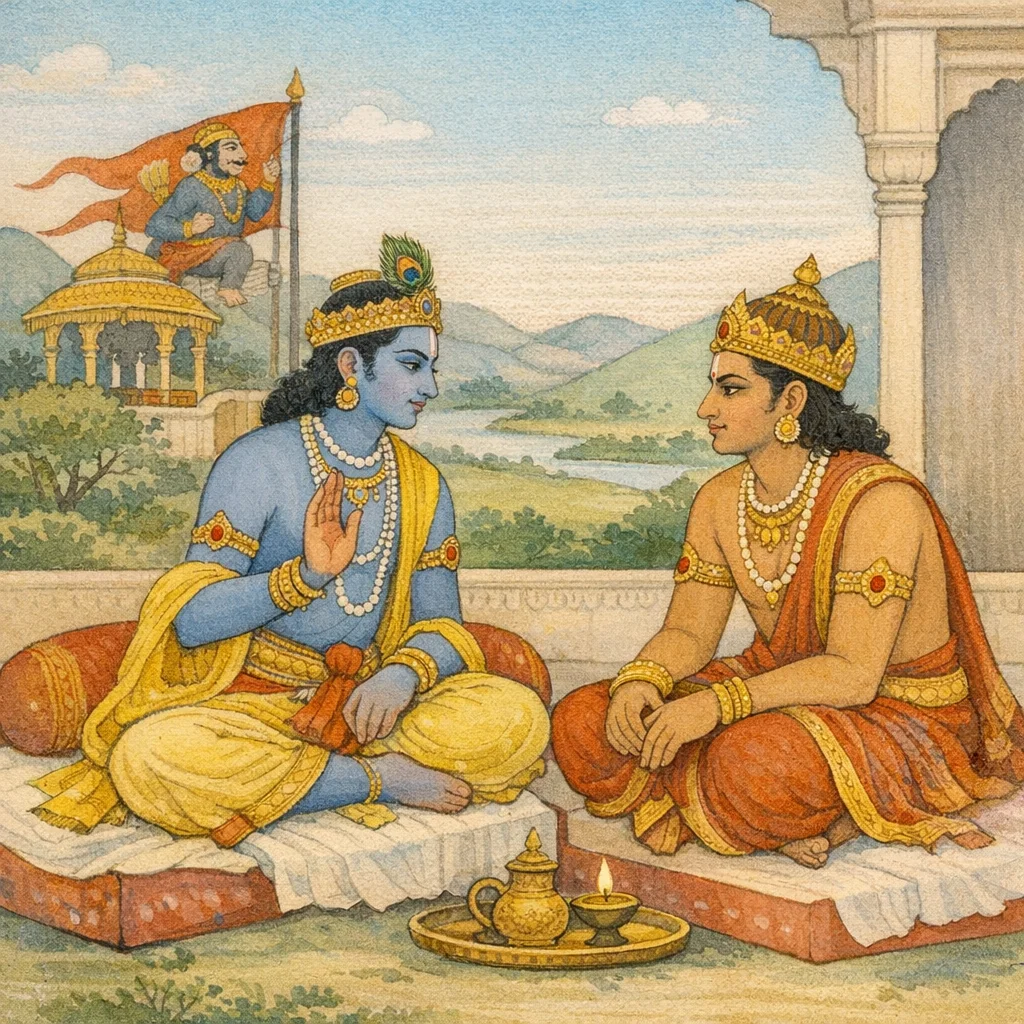
Adhyaya 141
उद्योगपर्व — अध्याय १४१: कर्ण–कृष्णसंवादः, उत्पात-स्वप्न-लक्षणानि (Karna–Krishna Dialogue: Omens and Dream-Signs)
Upa-parva: Karna–Kṛṣṇa Saṃvāda (Dialogue of Karṇa and Kṛṣṇa) — Omens and War-Portents Unit
Saṃjaya reports Karṇa’s response after hearing Kṛṣṇa’s beneficial counsel. Karṇa respectfully addresses Kṛṣṇa yet questions whether Kṛṣṇa seeks to unsettle him (1). He frames the impending destruction as already present, naming Śakuni, himself, Duḥśāsana, and Duryodhana as causal instruments within the Kaurava polity (2), and states that a massive, blood-mired conflict between Pāṇḍavas and Kurus is certain (3–4). Karṇa then catalogs ominous indicators: terrifying dreams, harsh portents, and celestial disturbances (5–10), alongside abnormal animal behavior and battlefield-signs interpreted as forecasting Dhārtarāṣṭra defeat and Yudhiṣṭhira’s victory (11–20). He adds extraordinary phenomena (e.g., violent atmospheric events and fearful apparitions) and moral-psychological markers of decline (e.g., hostility toward brāhmaṇas, teachers, and loyal servants) as additional defeat-signs (21–26). Karṇa recounts dream-visions favoring the Pāṇḍavas—Yudhiṣṭhira’s ascent and prosperity, Bhīma’s dominance, Arjuna’s radiance with Kṛṣṇa, and the white-clad allies—contrasted with red-omened figures on the Kaurava side and a trajectory toward the ‘southern’ realm of death (27–42). Kṛṣṇa concludes that ruin is imminent because Karṇa’s heart cannot receive counsel when destruction approaches and unjust policy appears as policy (43–44). Karṇa responds with either survival or a certain reunion in heaven, embraces Kṛṣṇa, and departs; Kṛṣṇa leaves swiftly with Sātyaki (45–49).
Chapter Arc: कर्ण के कठोर वचनों के उत्तर में श्रीकृष्ण स्वयं उसके सामने पाण्डव-पक्ष की ‘निश्चित विजय’ का उद्घोष करते हैं—यह केवल भविष्यवाणी नहीं, धर्म-बल का निर्णय है। → कृष्ण कर्ण को समझाते हैं कि राज्य-लाभ का जो अवसर और जो ‘पृथ्वी’ (धर्मसम्मत अधिकार) उन्हें दिया जा रहा है, उसे वह स्वीकार नहीं कर रहा; फिर वे कर्ण के सामने युद्ध का सजीव चित्र रखते हैं—भीष्म, द्रोण, कृप, दुर्योधन, जयद्रथ आदि को रणभूमि में देखकर उसके भीतर उठने वाले भय और विवेक-क्षोभ का संकेत करते हैं। → कृष्ण का निर्णायक वाक्य: ‘पाण्डवों की विजय ध्रुव है; इसमें संशय नहीं’—और पाण्डव-ध्वज पर उग्र वानरराज (हनुमान) का ‘जयध्वज’ बनकर उठना, विजय-चिह्न की तरह कर्ण के सामने खड़ा हो जाता है। → कृष्ण युद्ध के अनिवार्य परिणाम को नैतिक भाषा में बाँधते हैं: दुर्योधन-वश में रहने वाले राजा-राजकुमार शस्त्र-मृत्यु पाकर ‘उत्तम गति’ को प्राप्त होंगे; यह अध्याय कर्ण के निर्णय को तोड़ता नहीं, पर उसके परिणाम को अटल कर देता है। → कर्ण क्या इस चेतावनी के बाद भी दुर्योधन का साथ छोड़ेगा, या उसी मार्ग पर चलते हुए विनाश को चुन लेगा?
Shlokas
Verse 1
ऑपनआक्रात [छ। आर: द्विचत्वारिशर्दाधिकशततमो< ध्याय: भगवान् श्रीकृष्णका कर्णसे पाण्डवपक्षकी निश्चित विजयका प्रतिपादन संजय उवाच कर्णस्य वचन श्रुत्वा केशव: परवीरहा । उवाच प्रहसन् वाक््यं स्मितपूर्वमिदं यथा,संजय कहते हैं--राजन्! विपक्षी वीरोंका वध करनेवाले भगवान् केशव कर्णकी उपर्युक्त बात सुनकर ठठाकर हँस पड़े और मुसकराते हुए इस प्रकार बोले
Sanjaya said: “O King, after hearing Karna’s words, Keshava—slayer of hostile heroes—burst into laughter, and then, with a smile, spoke the following reply.”
Verse 2
श्रीभगवानुवाच अपि त्वां न लभेत् कर्ण राज्यलम्भोपपादनम् | मया दत्तां हि पृथिवीं न प्रशासितुमिच्छसि,श्रीभगवान् बोले--कर्ण! मैं जो राज्यकी प्राप्तिका उपाय बता रहा हूँ, जान पड़ता है वह तुम्हें ग्राह्म नहीं प्रतीत होता है। तुम मेरी दी हुई पृथ्वीका शासन नहीं करना चाहते हो
The Blessed Lord said: “Karna, it seems you do not accept the means I am setting forth for the attainment of sovereignty. You do not wish to govern the earth that I myself would place in your hands.”
Verse 3
ध्रुवो जय: पाण्डवानामितीदं न संशय: कश्नन विद्यतेडत्र । जयध्वजो दृश्यते पाण्डवस्य समुच्छितो वानरराज उग्र:,पाण्डवोंकी विजय अवश्यम्भावी है। इस विषयमें कोई भी संशय नहीं है। पाण्डुनन्दन अर्जुनका वानरराज हनुमानसे उपलक्षित वह भयंकर विजयध्वज बहुत ऊँचा दिखायी देता है
The victory of the Pāṇḍavas is certain—there is no doubt of it. Behold Arjuna’s banner of triumph, the son of Pāṇḍu: raised very high, marked by the fierce Monkey-King Hanumān, it stands conspicuous and terrible to see.
Verse 4
दिव्या माया विहिता भौमनेन समुच्छिता इन्द्रकेतुप्रकाशा । दिव्यानि भूतानि जयावहानि दृश्यन्ति चैवात्र भयानकानि,विश्वकर्माने उस ध्वजमें दिव्य मायाकी रचना की है। वह ऊँची ध्वजा इन्द्रध्वजके समान प्रकाशित होती है। उसके ऊपर विजयकी प्राप्ति करानेवाले दिव्य एवं भयंकर प्राणी दृष्टिगोचर होते हैं
A wondrous, divine illusion has been fashioned upon that banner by Viśvakarman (Bhaumana) and set aloft; it shines like Indra’s standard. Upon it are seen celestial beings—portents that promise victory—yet also forms that are terrifying to behold.
Verse 5
न सज्जते शैलवनस्पति भ्य ऊर्ध्व॑ तिर्यग्योजनमात्ररूप: । श्रीमान् ध्वज: कर्ण धनंजयस्य समुच्छित: पावकतुल्यरूप:,कर्ण! धनंजयका वह अग्निके समान तेजस्वी तथा कान्तिमान् ऊँचा ध्वज एक योजन लम्बा है। वह ऊपर अथवा अगल-बगलनमें पर्वतों तथा वृक्षोंसे कहीं अटकता नहीं है
Karna, the splendid banner of Dhanañjaya (Arjuna) rises high, extending a full yojana, radiant like fire. It does not snag against mountains or great trees, whether above or to the sides.
Verse 6
यदा द्रक्ष्यसि संग्रामे श्वेताश्व॑ं कृष्णसारथिम् | ऐन्द्रमस्त्रं विकुर्वाणमुभे चाप्यग्निमारुते,कर्ण! जब युद्धमें मुझ श्रीकृष्णको सारथि बनाकर आये हुए श्वेतवाहन अर्जुनको तुम ऐन्द्र, आग्नेय तथा वायव्य अस्त्र प्रकट करते देखोगे और जब गाण्डीवकी वज्र-गर्जनाके समान भयंकर टंकार तुम्हारे कानोंमें पड़ेगी, उस समय तुम्हें सत्ययुग, त्रेता और द्वापरकी प्रतीति नहीं होगी (केवल कलहस्वरूप भयंकर कलि ही दृष्टिगोचर होगा)
O Karṇa, when in battle you behold Arjuna—drawn by white horses and driven by Śrī Kṛṣṇa as charioteer—unleashing the Indra-weapon, and also the fiery and wind-born missiles; and when the thunder-like roar of the Gāṇḍīva strikes your ears, the very order of the ages will seem to collapse before you. You will no longer feel the presence of Satya, Tretā, or Dvāpara; only the dreadful spirit of Kali—sheer strife—will appear to rule your sight.
Verse 7
गाण्डीवस्य च निर्घोषं विस्फूर्जितमिवाशने: । न तदा भविता त्रेता न कृत॑ द्वापरं न च,कर्ण! जब युद्धमें मुझ श्रीकृष्णको सारथि बनाकर आये हुए श्वेतवाहन अर्जुनको तुम ऐन्द्र, आग्नेय तथा वायव्य अस्त्र प्रकट करते देखोगे और जब गाण्डीवकी वज्र-गर्जनाके समान भयंकर टंकार तुम्हारे कानोंमें पड़ेगी, उस समय तुम्हें सत्ययुग, त्रेता और द्वापरकी प्रतीति नहीं होगी (केवल कलहस्वरूप भयंकर कलि ही दृष्टिगोचर होगा)
And when the thunderous roar of the Gāṇḍīva—like the crack of a lightning-bolt—strikes your ears, O Karṇa, then for you there will be no sense of the Tretā age, nor of the Kṛta (Satya) age, nor even of the Dvāpara. Only the dreadful spirit of strife will seem present, as Arjuna comes with Śrī Kṛṣṇa as his charioteer and displays the divine missiles.
Verse 8
यदा द्रक्ष्यसि संग्रामे कुन्तीपुत्रं युधिष्ठिरम् । जपहोमसमायुक्तं स्वां रक्षन्तं महाचमूम्,जब जप और होममें लगे हुए कुन्तीपुत्र युधिष्ठिरको संग्राममें अपनी विशाल सेनाकी रक्षा करते तथा सूर्यके समान दुर्धर्ष होकर शत्रुसेनाको संतप्त करते देखोगे, उस समय तुम्हें सत्ययुग, त्रेता और द्वापरकी प्रतीति नहीं होगी
Sañjaya said: “When, on the battlefield, you behold Kuntī’s son Yudhiṣṭhira—steadfast in japa and sacrificial offerings, guarding his own vast host—then you will witness how inner discipline and sacred duty can stand within war itself, as a king protects his people while remaining anchored in righteousness.”
Verse 9
आदित्यमिव दुर्धर्ष तपन्तं शत्रुवाहिनीम् । न तदा भविता त्रेता न कृत॑ द्वापरं न च,जब जप और होममें लगे हुए कुन्तीपुत्र युधिष्ठिरको संग्राममें अपनी विशाल सेनाकी रक्षा करते तथा सूर्यके समान दुर्धर्ष होकर शत्रुसेनाको संतप्त करते देखोगे, उस समय तुम्हें सत्ययुग, त्रेता और द्वापरकी प्रतीति नहीं होगी
Sanjaya said: “When you behold Kuntī’s son Yudhiṣṭhira—steadfast in japa and sacrificial offerings—protecting his vast army in battle and scorching the enemy host like the sun, then the sense of time itself will be overturned for you: it will not feel like the Tretā age, nor like the Kṛta (Satya) age, nor even like the Dvāpara.”
Verse 10
यदा द्रक्ष्यसि संग्रामे भीमसेनं॑ महाबलम् | दुःशासनस्य रुधिरं पीत्वा नृत्यन्तमाहवे,जब तुम युद्धमें महाबली भीमसेनको दुःशासनका रक्त पीकर नाचते तथा मदकी धारा बहानेवाले गजराजके समान उन्हें शत्रुपक्षकी गजसेनाका संहार करते देखोगे, उस समय तुम्हें सत्ययुग, त्रेता और द्वापरकी प्रतीति नहीं होगी
Sañjaya said: When, on the battlefield, you behold the mighty Bhīmasena drinking Duḥśāsana’s blood and dancing in the midst of combat, then the very sense of living in an age of righteousness—Satya, Tretā, or Dvāpara—will vanish for you. Such a sight will proclaim how far the world has fallen into the harsh law of war and retribution, where vows and vengeance eclipse the gentler ideals of dharma.
Verse 11
प्रभिन्नमिव मातड़ुं प्रतिद्विरदघातिनम् । न तदा भविता त्रेता न कृतं द्वापरं न च,जब तुम युद्धमें महाबली भीमसेनको दुःशासनका रक्त पीकर नाचते तथा मदकी धारा बहानेवाले गजराजके समान उन्हें शत्रुपक्षकी गजसेनाका संहार करते देखोगे, उस समय तुम्हें सत्ययुग, त्रेता और द्वापरकी प्रतीति नहीं होगी
Sañjaya said: “Like a rut-maddened elephant that has broken loose, a slayer of opposing elephants, when you behold the mighty Bhīmasena dancing after drinking Duḥśāsana’s blood and, like a lordly elephant streaming ichor, crushing the enemy’s elephant-corps, then to you it will seem as though the ages themselves have collapsed—there will be no sense of Kṛta, no Tretā, nor even Dvāpara.”
Verse 12
यदा द्रक्ष्यसि संग्रामे द्रोणं शान्तनवं कृपम् । सुयोधनं च राजानं सैन्धवं च जयद्रथम्,जब तुम देखोगे कि युद्धमें आचार्य द्रोण, शान्तनुनन्दन भीष्म, कृपाचार्य, राजा दुर्योधन और सिन्धुराज जयद्रथ ज्यों ही युद्धके लिये आगे बढ़े हैं त्यों ही सव्यसाची अर्जुनने तुरंत उन सबकी गति रोक दी है, तब तुम हक््के-बक्केसे रह जाओगे और उस समय तुम्हें सत्ययुग, त्रेता और द्वापर कुछ भी सूझ नहीं पड़ेगा
Sañjaya said: When, on the battlefield, you behold Droṇa, Śāntanava Bhīṣma, Kṛpa, King Suyodhana (Duryodhana), and the Sindhu ruler Jayadratha—then (seeing them advance for war and their onset checked) you will be struck with astonishment. In that moment your mind will be so shaken that even the distinctions of the ages—Satya, Tretā, and Dvāpara—will not occur to you.
Verse 13
युद्धायापततस्तूर्ण वारितान् सव्यसाचिना । न तदा भविता त्रेता न कृत॑ द्वापरं न च,जब तुम देखोगे कि युद्धमें आचार्य द्रोण, शान्तनुनन्दन भीष्म, कृपाचार्य, राजा दुर्योधन और सिन्धुराज जयद्रथ ज्यों ही युद्धके लिये आगे बढ़े हैं त्यों ही सव्यसाची अर्जुनने तुरंत उन सबकी गति रोक दी है, तब तुम हक््के-बक्केसे रह जाओगे और उस समय तुम्हें सत्ययुग, त्रेता और द्वापर कुछ भी सूझ नहीं पड़ेगा
Sañjaya said: “When you see those rushing swiftly into battle checked at once by Savyasācin (Arjuna), then you will stand stunned; at that moment, neither the Tretā age nor the Kṛta (Satya) age nor even the Dvāpara will occur to your mind.”
Verse 14
यदा द्रक्ष्यसि संग्रामे माद्रीपुत्रो महाबलौ । वाहिनी धार्तराष्ट्राणां क्षोभयन्तौ गजाविव,जब युद्धस्थलमें अस्त्र-शस्त्रोंका प्रहार प्रगाढ़ अवस्थाको पहुँच जायगा (जोर-जोरसे होने लगेगा) और शत्रुवीरोंके रथको नष्ट-भ्रष्ट करनेवाले महाबली माद्रीकुमार नकुल-सहदेव दो गजराजोंकी भाँति धृतराष्ट्रपुत्रोंकी सेनाको क्षुब्ध करने लगेंगे तथा जब तुम अपनी आँखोंसे यह अवस्था देखोगे, उस समय तुम्हारे सामने न सत्ययुग होगा, न त्रेता और न द्वापर ही रह जायगा
Sañjaya said: “When, on the battlefield, you behold the two mighty sons of Mādrī—Nakula and Sahadeva—stirring up and throwing into confusion the army of Dhṛtarāṣṭra’s sons like two great elephants, then the reality of war will stand before your eyes in its full force. In that moment, the comforting notions of a righteous age will not remain for you—only the hard consequence of choosing conflict over conciliation will be visible.”
Verse 15
विगाढे शस्त्रसम्पाते परवीररथारुजौ । न तदा भविता त्रेता न कृतं द्वापरं न च,जब युद्धस्थलमें अस्त्र-शस्त्रोंका प्रहार प्रगाढ़ अवस्थाको पहुँच जायगा (जोर-जोरसे होने लगेगा) और शत्रुवीरोंके रथको नष्ट-भ्रष्ट करनेवाले महाबली माद्रीकुमार नकुल-सहदेव दो गजराजोंकी भाँति धृतराष्ट्रपुत्रोंकी सेनाको क्षुब्ध करने लगेंगे तथा जब तुम अपनी आँखोंसे यह अवस्था देखोगे, उस समय तुम्हारे सामने न सत्ययुग होगा, न त्रेता और न द्वापर ही रह जायगा
Sañjaya said: “When the clash of weapons grows dense and furious, and the mighty sons of Mādrī—Nakula and Sahadeva—who shatter the chariots of enemy heroes, begin to churn and throw into turmoil the army of Dhṛtarāṣṭra’s sons like two lordly elephants, then, as you behold that condition with your own eyes, before you there will remain neither the Tretā age, nor the Kṛta (Satya) age, nor even the Dvāpara.”
Verse 16
ब्रूया: कर्ण इतो गत्वा द्रोणं शान्तनवं कृपम् | सौम्यो<यं वर्तते मास: सुप्रापपवसेन्धन:,कर्ण! तुम यहाँसे जाकर आचार्य द्रोण, शान्तनुनन्दन भीष्म और कृपाचार्यसे कहना कि “यह सौम्य (सुखद) मास चल रहा है। इसमें पशुओंके लिये घास और जलानेके लिये लकड़ी आदि वस्तुएँ सुगमतासे मिल सकती हैं
Sañjaya said: “Karna, go from here and tell Drona, Bhishma the son of Shantanu, and Kripa: ‘This is a gentle, favorable month. In it, fodder for the animals and fuel such as firewood can be obtained with ease.’”
Verse 17
सर्वौषधिवनस्फीत: फलवानल्पमक्षिक: । निष्पड़को रसवत्तोयो नात्युष्णशिशिर: सुख:
Sañjaya said: “It is rich with every kind of medicinal herb and flourishing with forests; it bears abundant fruit and has few stinging insects. Its waters are clear and sweet-tasting, and the climate is neither excessively hot nor cold—altogether a place of ease and well-being.”
Verse 18
“सब प्रकारकी ओषधियों तथा फल-फूलोंसे वनकी समृद्धि बढ़ी हुई है, धानके खेतोंमें खूब फल लगे हुए हैं, मक्खियाँ बहुत कम हो गयी हैं, धरतीपर कीचड़का नाम नहीं है। जल स्वच्छ एवं सुस्वादु प्रतीत होता है, इस सुखद समयमें न तो अधिक गरमी है और न अधिक सर्दी ही (यह मार्गशीर्षमास चल रहा है) ।। सप्तमाच्चापि दिवसादमावास्या भविष्यति | संग्रामो युज्यतां तस्यां तामाहु: शक्रदेवताम्,“आजसे सातवें दिनके बाद अमावास्या होगी। उसके देवता इन्द्र कहे गये हैं। उसीमें युद्ध आरम्भ किया जाय'
Sañjaya said: “Seven days from today will be the night of amāvāsyā, the new moon. Its presiding deity is said to be Śakra (Indra). Let the battle be joined on that very day.”
Verse 19
तथा राज्ञो वदे: सर्वान् ये युद्धायाभ्युपागता: । यद् वो मनीषितं तद् वै सर्व सम्पादयाम्यहम्,इसी प्रकार जो युद्धके लिये यहाँ पधारे हैं, उन समस्त राजाओंसे भी कह देना “आपलोगोंके मनमें जो अभिलाषा है, वह सब मैं अवश्य पूर्ण करूँगा”
Sañjaya said: “In the same way, tell the king to address all those rulers who have come here seeking war: ‘Whatever you have resolved in your minds—every such desire—I shall certainly bring to completion.’”
Verse 20
राजानो राजपृत्राश्न दुर्योधनवशानुगा: । प्राप्प शस्त्रेण निधन प्राप्स्यन्ति गतिमुत्तमाम्
Sañjaya said: Those kings and royal princes who, bound by Duryodhana’s sway, will meet their end by weapons in battle, shall nevertheless attain an exalted destiny.
Verse 141
इस प्रकार श्रीमहाभारत उद्योगपर्वके अन्तर्गत भगवद्यानपर्वमें कर्णके द्वारा अपने निश्चित विचारका प्रतिपादनविषयक एक सौ इकतालीसवाँ अध्याय पूरा हुआ
Thus ends the one hundred and forty-first chapter of the Udyoga Parva of the Śrī Mahābhārata, within the section known as the Bhagavad-yāna Parva, in which Karṇa sets forth and affirms his settled conviction.
Verse 142
दुर्योधनके वशमें रहनेवाले जितने राजा और राजकुमार हैं, वे शस्त्रोंद्वारा मृत्युको प्राप्त होकर उत्तम गति लाभ करेंगे ।। इति श्रीमहाभारते उद्योगपर्वणि भगवद्यानपर्वणि कर्णोपनिवादे भगवद्धाक्ये द्विचत्वारिंशदधिकशततमो< ध्याय:,इस प्रकार श्रीमह्ाभारत उद्योगपर्वके अन्तर्गत भगवद्यानपर्वमें कर्णके द्वारा अपने अभिप्रायनिवेदनके प्रसंगरें भगवद्वाक्यविषयक एक सौ बयालीसवाँ अध्याय पूरा हुआ
Sañjaya said: “All the kings and princes who remain under Duryodhana’s control will meet death by weapons, and through that death they will attain a higher destiny.” Thus ends, in the Mahābhārata’s Udyoga Parva, within the Bhagavad-yāna section, in the context of Karṇa’s declaration of his intent, the one hundred and forty-second chapter concerning the Lord’s utterance.
Frequently Asked Questions
Karṇa faces a conflict between recognizing impending collective harm (and the credibility of Kṛṣṇa’s counsel) and maintaining factional loyalty; he acknowledges causality and portents yet refuses to pivot ethically or politically.
When societal collapse nears, the mind can misrecognize unjust strategy (anaya) as sound strategy (naya); thus, receptivity to ethical counsel is itself a moral capacity that can degrade under entrenched wrongdoing.
No formal phalaśruti is stated; the meta-commentary appears as Kṛṣṇa’s diagnostic observation about the failure of counsel at the threshold of destruction, positioning the chapter as a reflective lens on ethical cognition in crisis.