Adhyaya 119
ययातिपतनम् — Yayāti’s Fall and the Offer of Dharma (Nārada’s Account)
Upa-parva: Ākhyāna of Yayāti and Mādhavī (embedded exemplum within Udyoga Parva)
Nārada describes King Yayāti being dislodged from his celestial seat, mentally shaken and physically disarrayed, as grief and loss of merit overtake him. Yayāti repeatedly perceives and fails to perceive his surroundings, reflecting cognitive disorientation during his descent. He interrogates his own mind, suspecting an inner moral lapse that has caused his fall. Observers—kings, siddhas, and apsarases—witness him falling without support. A messenger, speaking under Indra’s directive, attributes the fall to Yayāti’s arrogance and instructs him to descend. Yayāti, accepting the verdict, falls toward Naimiṣa where four eminent kings (Pratardana, Vasumanas, Śibi Auśīnara, and Aṣṭaka) are performing a Vājapeya; he clings to the sacrificial “smoke-river” that connects earth and heaven as an image of ritual access. The kings question his identity, and Yayāti identifies himself as a rājarṣi fallen due to exhausted merit. They offer him the fruits of their ritual merit, but Yayāti refuses on ethical grounds, stating he is a kṣatriya and not inclined to diminish others’ puṇya. At this moment Mādhavī appears; the kings address her as an ascetic authority, and she reveals herself as Yayāti’s daughter, identifying the kings as his descendants (dauhitrāḥ). She declares that they are destined to rescue him and offers half of her accumulated dharma for his restoration. The kings honor her and, together with the ascetic Gālava, propose sharing tapas/merit to enable Yayāti’s return to heaven.
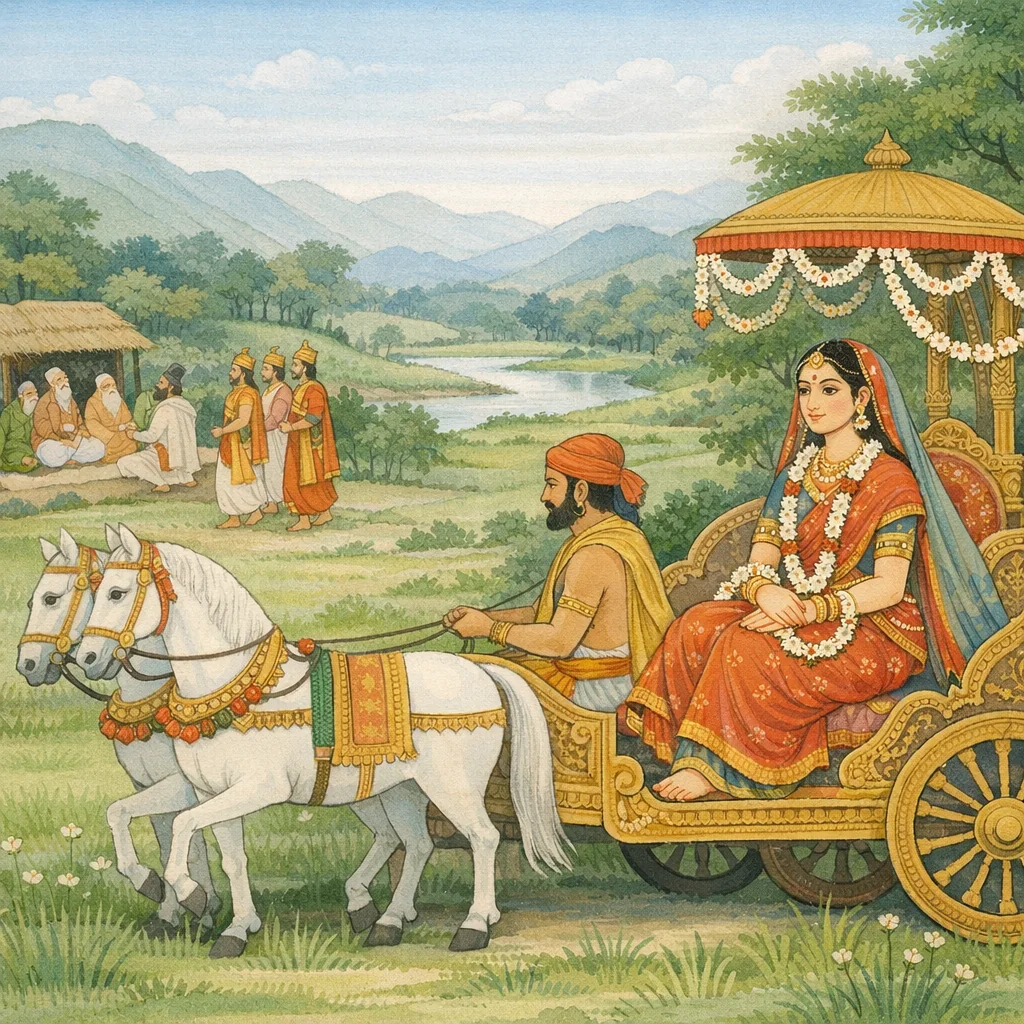
Chapter Arc: नारद के वचन-प्रवाह में गालव-चरित्र आगे बढ़ता है: माधवी को हार-माल्य सहित रथ पर बैठाकर उसके भाई (पूरु और यदु) उसे एक तपोवन-आश्रम की ओर ले चलते हैं—मानो राजसी वैभव को वन की शान्ति में अर्पित करने जा रहे हों। → प्रयाग-प्रदेश का वन-आश्रम असाधारण वैभव और भीड़ से भर उठता है—नाना जनपदों के राजा, ऋषि-समूह, और विविध प्राणी-जगत का सम्मिलित कोलाहल; वहीं माधवी का तप-जीवन आरम्भ होता है, और उसके चारों ओर प्रकृति का वर्णन वैदूर्य-अंकुरों-सी हरित, कोमल, मधुर-तिक्त घासों तक फैलता है—पर इस सौन्दर्य के भीतर प्रश्न उगता है: सिद्धि किस कर्म से मिलती है? → स्वर्ग-प्रसंग का द्वार खुलता है: एक राजा (ययाति) के विषय में जिज्ञासा उठती है—‘किस कर्म से यह सिद्ध हुआ? कहाँ तप किया? स्वर्ग में कैसे जाना/पहचाना जाता है?’—और जब स्वर्ग के विमानपाल, द्वारपाल, सिंहासन-रक्षक तक पूछे जाते हैं, तो सबके ज्ञान पर आवरण पड़ जाता है; वे उस नृप को पहचान नहीं पाते, और उसी क्षण राजा ‘हतौजस्’—तेज-हीन—हो जाता है। → अध्याय का निष्कर्ष दो धाराओं को जोड़ देता है: एक ओर माधवी का वन-तप और आश्रम-जीवन का स्थापत्य, दूसरी ओर स्वर्ग में ययाति की पहचान-भ्रंश और तेज-क्षय—यह संकेत कि स्वर्गीय सुख भी स्थिर नहीं, और पुण्य का भोग समाप्त होते ही पतन का द्वार खुलता है। → ययाति का तेज क्यों क्षीण हुआ, और यह ‘मोह’ किस प्रकार उसे स्वर्ग से नीचे खींचेगा—यह प्रश्न अगले अध्याय (ययातिमोह) की ओर कथा को धकेल देता है।
Shlokas
Verse 1
अपने-आप [छ। अंक विशर्त्याधिकशततमो< ध्याय: माथधवीका वनमें जाकर तप करना तथा ययातिका स्वर्गमें जाकर सुखभोगके पश्चात् मोहवश तेजोहीन होना नारद उवाच स तु राजा पुनस्तस्या: कर्तुकाम: स्वयंवरम् | उपगम्याश्रमपदं गज्भायमुनसंगमे,नारदजी कहते हैं--तदनन्तर राजा ययाति पुनः माधवीके स्वयंवरका विचार करके गंगा-यमुनाके संगम-पर बने हुए अपने आश्रममें जाकर रहने लगे
Narada said: Thereafter King Yayāti, once again intending to arrange Mādhavī’s svayaṃvara, went to his hermitage situated at the confluence of the Gaṅgā and Yamunā. The verse frames a ruler’s renewed resolve to act—returning to an āśrama setting that evokes restraint and reflection, suggesting that major social decisions (like a svayaṃvara) are best undertaken with deliberation and dharmic composure rather than impulse.
Verse 2
गृहीतमाल्यदामां तां रथमारोप्य माधवीम् । पूरुर्यदुश्चन भगिनीमाश्रमे पर्यधावताम्
Nārada said: Having taken garlands and wreaths, they placed Mādhavī upon a chariot and hurried about in the hermitage—Pūru and Yadu as well—seeking their sister. The scene underscores familial duty and the urgency to protect a woman’s honor and welfare within the bounds of dharma.
Verse 3
फिर हाथमें हार लिये बहिन माधवीको रथपर बिठाकर पूरु और यदु--ये दोनों भाई आश्रमपर गये ।। नागयक्षमनुष्याणां गन्धर्वमृगपक्षिणाम् | शैलद्रुमवनौकानामासीत् तत्र समागम:,उस स्वयंवरमें नाग, यक्ष, मनुष्य, गन्धर्व, पशु, पक्षी तथा पर्वत, वृक्ष और वनोंमें निवास करनेवाले प्राणियोंका शुभागमन हुआ
Nārada said: There, at that gathering (the svayaṃvara), an auspicious assembly formed—Nāgas, Yakṣas, human beings, Gandharvas, beasts, birds, and even the dwellers of mountains, trees, and forests all came together. The scene underscores how a righteous and celebrated rite draws beings of many orders into a shared, harmonious witness.
Verse 4
नानापुरुषदेश्यानामीश्चरैश्व समाकुलम् | ऋषिभिर्त्रह्मकल्पैश्व समन््तादावृतं वनम्,प्रयागका वह वन अनेक जनपदोंके राजाओंसे व्याप्त हो गया और ब्रह्माजीके समान तेजस्वी ब्रह्मर्षियोंने उस स्थानको सब ओरसे घेर लिया
Nārada said: “That forest grew crowded with rulers from many lands and peoples, and it was encircled on every side by brahmarṣis—sages radiant like Brahmā.” The scene shows how a sacred place gathers worldly power and spiritual authority together, as if to remind that political deeds must stand beneath the gaze of dharma embodied by the seers.
Verse 5
निर्दिश्यमानेषु तु सा वरेषु वरवर्णिनी | वरानुत्क्रम्य सर्वास्तान् वरं वृतवती वनम्,उस समय जब माधवीको वहाँ आये हुए वरोंका परिचय दिया जाने लगा, तब उस वरवर्णिनी कन््याने सारे वरोंको छोड़कर तपोवनका ही वररूपमें वरण कर लिया
Nārada said: When the assembled suitors were being pointed out and introduced to her, that fair-complexioned maiden passed over them all and chose the forest hermitage itself as her chosen ‘bridegroom’—embracing a life of austerity and renunciation rather than marriage.
Verse 6
अवतीर्य रथात् कन्या नमस्कृत्य च बन्धुषु | उपगम्य वन पुण्यं तपस्तेपे ययातिजा,ययातिनन्दिनी कुमारी माधवी रथसे उतरकर अपने पिता, भाई, बन्धु आदि कुटुम्बियोंको नमस्कार करके पुण्य तपोवनमें चली गयी और वहाँ तपस्या करने लगी
Nārada said: The maiden, Yayāti’s daughter, descended from the chariot. Having bowed in reverence to her father, brothers, and other kinsmen, she went to a holy forest and undertook austerities there—choosing disciplined renunciation and duty-bound restraint in the face of worldly ties.
Verse 7
उपवासै क्ष विविधैर्दीक्षाभिर्नियमैस्तथा । आत्मनो लघुतां कृत्वा बभूव मृगचारिणी,वह उपवासपूर्वक विविध प्रकारकी दीक्षाओं तथा नियमोंका पालन करती हुई अपने मनको राग-द्वेषादि दोषोंसे रहित करके वनमें मृगीके समान विचरने लगी
Nārada said: By undertaking various fasts, and by observing consecratory vows and disciplines, she made herself inwardly light—freeing the mind from attachments and aversions—and then lived in the forest, roaming like a doe. The verse highlights self-restraint as a means to inner purification and a life aligned with dharma rather than impulse.
Verse 8
वैदूर्याडकुरकल्पानि मृदूनि हरितानि च । चरन्तीश्लक्षणशष्पाणि तिक्तानि मधुराणि च,इस क्रमसे माधवी वैदूर्यमणिके अंकुरोंके समान सुशोभित, कोमल, चिकनी, तिक्त, मधुर एवं हरी-हरी घास चरती, पवित्र नदियोंके शुद्ध, शीतल, निर्मल एवं सुस्वादु जल पीती और मृगोंके आवासभूत, व्याप्ररहित एवं दावानलशून्य निर्जन वनोंमें मृगोंके साथ वनचारिणी मृगीकी भाँति विचरण करती थी। उसने ब्रह्मचर्यपालनपूर्वक महान् धर्मका आचरण किया
Narada said: “She grazed on tender, smooth blades of grass—green and soft—resembling sprouts of vaidūrya (cat’s-eye gem), tasting at once mildly bitter and sweet.”
Verse 9
स्रवन्तीनां च पुण्यानां सुरसानि शुचीनि च । पिबन्ती वारिमुख्यानि शीतानि विमलानि च,इस क्रमसे माधवी वैदूर्यमणिके अंकुरोंके समान सुशोभित, कोमल, चिकनी, तिक्त, मधुर एवं हरी-हरी घास चरती, पवित्र नदियोंके शुद्ध, शीतल, निर्मल एवं सुस्वादु जल पीती और मृगोंके आवासभूत, व्याप्ररहित एवं दावानलशून्य निर्जन वनोंमें मृगोंके साथ वनचारिणी मृगीकी भाँति विचरण करती थी। उसने ब्रह्मचर्यपालनपूर्वक महान् धर्मका आचरण किया
Nārada said: “She drank the foremost waters—cool, clear, and pure—of sacred rivers that flowed on, whose streams were fragrant and spotless.” Thus Mādhavī, radiant like fresh sprouts of vaidūrya-gems, grazed tender, smooth grasses of mixed tastes (bitter and sweet) and wandered like a doe among deer through solitary forests—free from fear and devoid of wildfire—while observing brahmacarya and practicing great dharma.
Verse 10
वनेषु मृगवासेषु व्याप्रविप्रोषितेषु च । दावाग्निविप्रयुक्तेषु शून्येषु गहनेषु च,इस क्रमसे माधवी वैदूर्यमणिके अंकुरोंके समान सुशोभित, कोमल, चिकनी, तिक्त, मधुर एवं हरी-हरी घास चरती, पवित्र नदियोंके शुद्ध, शीतल, निर्मल एवं सुस्वादु जल पीती और मृगोंके आवासभूत, व्याप्ररहित एवं दावानलशून्य निर्जन वनोंमें मृगोंके साथ वनचारिणी मृगीकी भाँति विचरण करती थी। उसने ब्रह्मचर्यपालनपूर्वक महान् धर्मका आचरण किया
Nārada said: In forests that were the haunts of deer—free from human disturbance and far from the bustle of activity—remote from the reach of wildfire, empty of settlements, and deep and secluded, Mādhavī lived like a doe among deer. Grazing on tender, smooth, fresh green shoots of grass and drinking the pure, cool, clear, sweet water of sacred rivers, she wandered through those solitary woods. Thus, while maintaining brahmacarya (chaste self-restraint), she practiced a lofty dharma.
Verse 11
चरन्ती हरिणै: सार्थ मृगीव वनचारिणी । चचार विपुलं धर्म ब्रह्मचर्येण संवृतम्,इस क्रमसे माधवी वैदूर्यमणिके अंकुरोंके समान सुशोभित, कोमल, चिकनी, तिक्त, मधुर एवं हरी-हरी घास चरती, पवित्र नदियोंके शुद्ध, शीतल, निर्मल एवं सुस्वादु जल पीती और मृगोंके आवासभूत, व्याप्ररहित एवं दावानलशून्य निर्जन वनोंमें मृगोंके साथ वनचारिणी मृगीकी भाँति विचरण करती थी। उसने ब्रह्मचर्यपालनपूर्वक महान् धर्मका आचरण किया
Nārada said: Moving about together with the deer, like a doe that roams the forest, she lived in the wilderness and practiced a vast and lofty dharma, guarded and sustained by brahmacarya (chaste self-restraint).
Verse 12
ययातिरपि पूर्वेषां राज्ञां वृत्तमनुछित: । बहुवर्षसहस्रायुर्युयुजे कालधर्मणा,राजा ययाति भी पूर्ववर्ती राजाओंके सदाचारका पालन करते हुए अनेक सहस्र वर्षोंकी आयु पूरी करके मृत्युको प्राप्त हुए
Nārada said: “King Yayāti too, faithfully following the established righteous conduct of the earlier kings, completed a lifespan of many thousands of years and then, in accordance with the law of Time, met his appointed end.”
Verse 13
पूर्ुर्यदुश्न द्वौ वंशे वर्धमानौ नरोत्तमौ | ताभ्यां प्रतेष्ठितो लोके परलोके च नाहुष:
Nārada said: “O Nāhuṣa, the two most eminent royal lineages—those of Pūru and of Yadu—have been steadily flourishing. Through them your standing and renown are established, both in this world and in the world beyond.”
Verse 14
उनके (पुत्रोंमेंसे) दो पुत्र नरश्रेष्ठ पूरु और यदु उस कुलमें अभ्युदयशील थे। उन्हीं दोनोंसे नहुषपुत्र ययाति इस लोक और परलोकमें भी प्रतिष्ठित हुए ।। महीपते नरपतिर्ययाति: स्वर्गमास्थित: । महर्षिकल्पो नृपति: स्वर्गाग्रयफलभुग् विभु:,राजन! महाराज ययाति महर्षियोंके समान पुण्यात्मा एवं तपस्वी थे। वे स्वर्गमें जाकर वहाँके श्रेष्ठ फलका उपभोग करने लगे
O king, in that lineage two sons—Pūru and Yadu, foremost among men—rose in prosperity. From those two, Yayāti, the son of Nahuṣa, became firmly renowned in this world and the next. The sovereign Yayāti attained heaven and dwelt there as a ruler of great power; like the great seers in merit and austerity, he enjoyed the choicest fruits of Svarga, his eminence established by righteousness and ascetic virtue.
Verse 15
बहुवर्षसहस्राख्ये काले बहुगुणे गते । राजर्षिषु निषण्णेषु महीयस्सु महर्थिषु,इस प्रकार वहाँ अनेक गुणोंसे युक्त कई हजार वर्षोका समय व्यतीत हो गया। ययातिका चित्त अपना स्वर्गीय वैभव देखकर स्वयं ही आश्वर्यवकित हो उठा। उनकी बुद्धिपर मोह छा गया और वे महान् समृद्धिशाली महत्तम राजर्षियोंके अपने समीप बैठे होनेपर भी सम्पूर्ण देवताओं, मनुष्यों तथा महर्षियोंकी भी अवहेलना करने लगे
Thus passed a span of many thousands of years, endowed with many excellences, while great royal sages and eminent seers sat nearby in attendance. Yet, beholding the splendor of heaven, Yayāti grew inwardly astonished; delusion clouded his judgment, and despite the presence of those most venerable royal sages, he began to slight and disregard even gods, humans, and great ṛṣis. The episode shows how prosperity and prolonged enjoyment can intoxicate the mind and erode reverence and ethical restraint.
Verse 16
अवमेने नरान् सर्वान् देवानृषिगणांस्तथा । ययातिर्मूढविज्ञानो विस्मयाविष्टचेतन:,इस प्रकार वहाँ अनेक गुणोंसे युक्त कई हजार वर्षोका समय व्यतीत हो गया। ययातिका चित्त अपना स्वर्गीय वैभव देखकर स्वयं ही आश्वर्यवकित हो उठा। उनकी बुद्धिपर मोह छा गया और वे महान् समृद्धिशाली महत्तम राजर्षियोंके अपने समीप बैठे होनेपर भी सम्पूर्ण देवताओं, मनुष्यों तथा महर्षियोंकी भी अवहेलना करने लगे
Nārada said: “Yayāti, his understanding clouded by delusion and his mind seized by astonishment, began to despise all men, and likewise the gods and the hosts of sages.” In the narrative, this marks the ethical fall that can follow prolonged enjoyment and heavenly splendor: wonder turns into intoxication, and intoxication into contempt for those worthy of reverence.
Verse 17
ततस्तं बुबुधे देव: शक्रो बलनिषूदन: । ते च राजर्षय: सर्वे धिगधिगित्येवमब्रुवन्,तदनन्तर बलसूदन इन्द्रदेवको ययातिकी इस अवस्थाका पता लग गया। वे सम्पूर्ण राजर्षिगण भी उस समय ययातिको धिक्कारने लगे
Then the god Śakra (Indra), the slayer of Bala, recognized him. And all the royal seers, crying “Shame! Shame!”, spoke thus—condemning the conduct they had witnessed. The passage underscores a moral judgment: when a ruler falls from dharma, even the exalted do not remain silent, and public censure becomes a form of ethical correction.
Verse 18
विचारश्न समुत्पन्नो निरीक्ष्य नहुषात्मजम् । को न्वयं कस्य वा राज्ञ: कथं वा स्वर्गमागत:,नहुषपुत्र ययातिको देखकर स्वर्गवासियोंमें यह विचार खड़ा हो गया--“यह कौन है? किस राजाका पुत्र है? और कैसे स्वर्गमें आ गया है?
Nārada said: Seeing the son of Nahuṣa, a doubt arose among the dwellers of heaven: “Who is this? Whose kingly son is he? And by what means has he come to Svarga?” The verse highlights how entry into heaven is expected to be grounded in recognizable merit and dharma, prompting scrutiny when an unfamiliar figure appears among the gods.
Verse 19
कर्मणा केन सिद्धो<5यं क््व वानेन तपश्चितम् । कथं वा ज्ञायते स्वर्गे केन वा ज्ञायतेडप्युत,“इसे किस कर्मसे सिद्धि प्राप्त हुई है? इसने कहाँ तपस्या की है? स्वर्गमें किस प्रकार इसे जाना जाय अथवा कौन यहाँ इसको जानता है?”
Nārada said: “By what deed has this one attained such success? In what forest did he perform austerities? And how is he recognized in heaven—or indeed, who here truly knows him?”
Verse 20
एवं विचारयन्तस्ते राजानं स्वर्गवासिन: । दृष्टवा पप्रच्छुरन्योन्यं ययातिं नृपतिं प्रति,इस प्रकार विचार करते हुए स्वर्गवासी ययातिके विषयमें एक-दूसरेकी ओर देखकर प्रश्न करने लगे
Reflecting thus, the dwellers of heaven looked to one another and began questioning each other about King Yayāti.
Verse 21
विमानपाला: शतशः: स्वर्गद्वाराभिरक्षिण: | पृष्टा आसनपालाश्न न जानीमेत्यथाब्रुवन्,सैकड़ों विमानरक्षकों, स्वर्गके द्वारपालों तथा सिंहासनके रक्षकोंसे पूछा गया; किंतु सबने यही उत्तर दिया--“हम इन्हें नहीं जानते”
Nārada said: “Hundreds of guardians of the celestial chariots—along with the gatekeepers of heaven and the keepers of the throne—were questioned. Yet all replied alike: ‘We do not know them.’”
Verse 22
सर्वे ते ह्वावृतज्ञाना नाभ्यजानन्त त॑ नृपम् स मुहूर्तादथ नूपो हतौजाश्वाभवत् तदा,उन सबके ज्ञानपर पर्दा पड़ गया था; अत: वे उन राजाको नहीं पहचान सके। फिर तो दो ही घड़ीमें राजा ययातिका तेज नष्ट हो गया
Nārada said: “The understanding of all of them became veiled, and therefore they did not recognize that king. Then, in a short while, that king’s vigor was struck down—his splendor and strength faded away at once.”
Verse 119
इस प्रकार श्रीमहाभारत उद्योगपर्वके अन्तर्गत भगवद्यानपर्वमें गालवचरित्रविषयक एक सौ उन्नीसवाँ अध्याय पूरा हुआ
Thus concludes the one hundred and nineteenth chapter, dealing with the narrative of Gālava, within the Bhagavadyāna section of the Udyoga Parva of the Śrī Mahābhārata.
Verse 120
इति श्रीमहाभारते उद्योगपर्वणि भगवद्यानपर्वणि गालवचरिते ययातिमोहे विंशत्यधिकशततमो<ध्याय:
Thus ends the one-hundred-and-twentieth chapter of the Udyoga Parva of the Śrī Mahābhārata—within the section on the Lord’s embassy—where the narrative of Gālava culminates in the episode known as “Yayāti’s Delusion.” This closing colophon signals the completion of the chapter’s moral reflection on desire, obligation, and the consequences of choices that bind one to suffering.
Frequently Asked Questions
Yayāti faces the dilemma of accepting others’ ritual merit to reverse his fall versus preserving ethical integrity by refusing a transfer that could diminish the donors’ puṇya; the chapter frames restoration as legitimate only when it does not become exploitative.
Merit and status are contingent and can be destabilized by arrogance; ethical self-scrutiny and restraint in benefiting from others are presented as safeguards, while kinship and voluntary sharing of dharma can function as morally acceptable support.
No explicit phalaśruti appears in this excerpt; the meta-function is exemplary—an embedded narrative used to interpret political and personal conduct through a precedent about pride, merit, and ethically bounded assistance.