Adhyaya 20
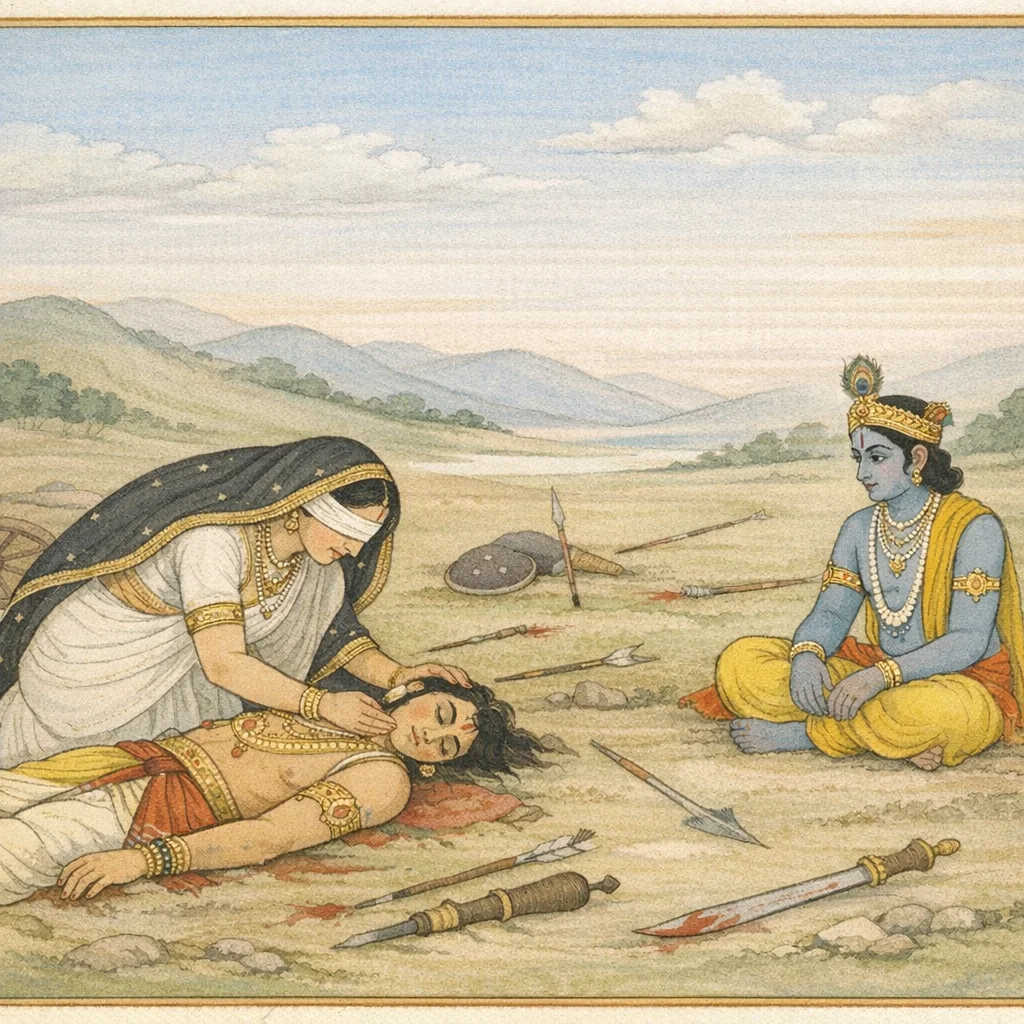
अभिमन्युविलापः (Abhimanyu-vilāpa) — Uttarā’s lament, observed and framed by Gandhārī
Upa-parva: Strī-vilāpa (Lamentations of the Women) — Abhimanyu and Virāṭa mourning episode
Gandhārī addresses Kṛṣṇa, identifying Abhimanyu as a warrior praised for strength and valor, once a terror to others yet now subject to death (1–3). She points out Uttarā, Virāṭa’s daughter and Abhimanyu’s wife, mourning beside the fallen hero (4–5). Uttarā performs intimate gestures of grief—touching, embracing, smelling his face, removing armor, and inspecting wounds—while speaking to Kṛṣṇa and comparing Abhimanyu’s qualities to Kṛṣṇa’s radiance and appearance (6–12). Her speech shifts from tender address to accusatory astonishment at the circumstances of his killing by multiple elite fighters, naming figures associated with the act (15–18). The lament expands into reflections on the hollowness of political gain without him, and on her desire to follow him to the world attained by the virtuous (19–26). Other women restrain and remove the distraught Uttarā (27–28). The scene then turns to Virāṭa’s body, described as attacked by scavenging birds and animals, while the women are unable to prevent it, underscoring post-war disorder and helplessness (29–31). The chapter closes by directing attention to multiple slain figures, reinforcing the scale of loss (32).
Chapter Arc: युद्ध-भूमि के शवों के बीच गान्धारी केशव से प्रश्न करती है—जिसे बल-शौर्य में अतुल कहा गया, वह वीर अब मृत्यु के वश कैसे पड़ा है? → गान्धारी की दृष्टि एक-एक शव पर ठहरती है; वह उन योद्धाओं को पहचानती है जो कभी ‘दुर्भेद्य’ थे, और अब निःशब्द हैं। वह कृष्ण से पूछती है कि जिनके लिए सेनाएँ चीरना खेल था, वे स्वयं कैसे कट गए। → गान्धारी का विलाप अभिमन्यु पर केंद्रित हो जाता है—वह उसके मुख की कमल-सी शोभा, शंख-सी ग्रीवा और मारे जाने पर भी न बुझती प्रभा देखती है; फिर मृत अभिमन्यु से ही बोल उठती है—‘तुम थककर सुख-नींद में हो क्या? तुम मुझे उत्तर क्यों नहीं देते?’ → वह अभिमन्यु की ‘अनाथ-सा’ मारे जाने की पीड़ा को शब्द देती है—पाण्डव-पांचालों के देखते हुए भी उसे घेरकर क्यों मारा गया; शोक का स्वर व्यक्तिगत मातृत्व से उठकर युद्ध-नीति और सामूहिक अपराध-बोध तक फैल जाता है। → गान्धारी का प्रश्न कृष्ण पर टिकता है—ऐसे वधों का उत्तर कौन देगा, और इस शोक का फल किस पर गिरेगा?
Shlokas
Verse 1
गान्धारी बोलीं--दशा्ईनन्दन केशव! जिसे बल और शौर्यमें अपने पितासे तथा तुमसे भी डेढ़ गुना बताया जाता था, जो प्रचण्ड सिंहके समान अभिमानमें भरा रहता था, जिसने अकेले ही मेरे पुत्रके दुर्भद्य व्यूहको तोड़ डाला था, वही अभिमन्यु दूसरोंकी मृत्यु बनकर स्वयं भी मृत्युके अधीन हो गया
Gāndhārī said: “O Keśava, delight of the Daśārhas! He who was spoken of as surpassing even his father—and even you—in strength and heroism by half again; he who stood swollen with pride like a fierce lion; he who, all alone, shattered the hard-to-break battle-formation of my sons—this very Abhimanyu, who became death to others, has himself fallen under the dominion of death.”
Verse 2
यो बिभेद चमूमेको मम पुत्रस्य दुर्भिदाम् । स भूत्वा मृत्युरन्येषां स्वयं मृत्युवशं गत:,गान्धारी बोलीं--दशा्ईनन्दन केशव! जिसे बल और शौर्यमें अपने पितासे तथा तुमसे भी डेढ़ गुना बताया जाता था, जो प्रचण्ड सिंहके समान अभिमानमें भरा रहता था, जिसने अकेले ही मेरे पुत्रके दुर्भद्य व्यूहको तोड़ डाला था, वही अभिमन्यु दूसरोंकी मृत्यु बनकर स्वयं भी मृत्युके अधीन हो गया
Vaiśampāyana said: “He who, all alone, shattered the hard-to-break battle-array of my son—becoming death to many others—has himself gone under the dominion of death.”
Verse 3
तस्योपलक्षये कृष्ण कार्ष्णेरमिततेजस: । अभिमन्योहतस्यथापि प्रभा नैवोपशाम्यति,श्रीकृष्ण! मैं देख रही हूँ कि मारे जानेपर भी अमिततेजस्वी अर्जुनपुत्र अभिमन्युकी कान्ति अभी बुझ नहीं पा रही है
Vaiśampāyana said: “O Krishna, I clearly perceive that the radiance of Abhimanyu—the son of Arjuna, possessed of immeasurable splendor—has not faded at all, even though he has been slain.”
Verse 4
एषा विराटदुहिता स्नुषा गाण्डीवधन्चन: । आर्ता बालं पतिं वीर दृष्टवा शोचत्यनिन्दिता,यह राजा विराटकी पुत्री और गाण्डीवधारी अर्जुनकी पुत्रवधू सती-साध्वी उत्तरा अपने बालक पति वीर अभिमन्युको मरा देख आर्त होकर शोक प्रकट कर रही है
Vaiśampāyana said: “This is Uttarā, the daughter of King Virāṭa and the daughter-in-law of Arjuna, the wielder of the Gāṇḍīva. Blameless and virtuous, she is stricken with grief; seeing her youthful husband, the hero Abhimanyu, slain, she laments in anguish.”
Verse 5
तमेषा हि समागम्य भार्या भर्तारमन्तिके । विराटदुहिता कृष्ण पाणिना परिमार्जति,श्रीकृष्ण! यह विराटकी पुत्री और अभिमन्युकी पत्नी उत्तरा अपने पतिके निकट जा उसके शरीरपर हाथ फेर रही है
Vaiśampāyana said: “Having come near her husband, this wife—Kṛṣṇā, the daughter of Virāṭa—gently strokes his body with her hand.”
Verse 6
तस्य वकक्त्रमुपाप्राय सौभद्रस्य मनस्विनी । विबुद्धकमलाकारं कम्बुवृत्तशिरोधरम्,सुभद्राकुमारका मुख प्रफुल्ल कमलके समान शोभा पाता है। उसकी ग्रीवा शंखके समान और गोल है। कमनीय रूप-सौन्दर्यसे सुशोभित माननीय एवं मनस्विनी उत्तरा पतिके मुखारविन्दको सूँघकर उसे गलेसे लगा रही है। पहले भी यह इसी प्रकार मधुके मदसे अचेत हो सलज्जभावसे उसका आलिंगन करती रही होगी
Vaiśampāyana said: Drawing close to the face of Saubhadra (Abhimanyu), the noble-minded Uttarā—beholding it like a fully opened lotus and his neck rounded like a conch—smelled that lotus-like face and clasped him to her breast. The scene conveys the intimate, helpless grief of a young wife in the aftermath of war, where love and propriety are overwhelmed by bereavement and the moral cost of violence becomes palpable.
Verse 7
काम्यरूपवती चैषा परिष्वजति भामिनी । लज्जमाना पुरा चैनं माध्वीकमदमूर्च्छिता,सुभद्राकुमारका मुख प्रफुल्ल कमलके समान शोभा पाता है। उसकी ग्रीवा शंखके समान और गोल है। कमनीय रूप-सौन्दर्यसे सुशोभित माननीय एवं मनस्विनी उत्तरा पतिके मुखारविन्दको सूँघकर उसे गलेसे लगा रही है। पहले भी यह इसी प्रकार मधुके मदसे अचेत हो सलज्जभावसे उसका आलिंगन करती रही होगी
Vaiśampāyana said: “This passionate, lovely woman embraces him. Bashful, and as if earlier too—overcome into a swoon by the intoxication of honeyed drink—she clasps him in her arms.”
Verse 8
तस्य क्षतजसंदिग्ध॑ जातरूपपरिष्कृतम् । विमुच्य कवचं कृष्ण शरीरमभिवीक्षते,श्रीकृष्ण! अभिमन्युका सुवर्णभूषित कवच खूनसे रँग गया है। बालिका उत्तरा उस कवचको खोलकर पतिके शरीरको देख रही है
Vaiśampāyana said: His golden, well-wrought armour had been stained with blood. Having unfastened and removed that cuirass, Kṛṣṇā (Uttarā) looked upon her husband’s body—an image of the human cost of war and the stark aftermath that follows even a righteous victory.
Verse 9
अवेक्षमाणा तं बाला कृष्ण त्वामभिभाषते । अयं ते पुण्डरीकाक्ष सदृशाक्षो निपातित:,उसे देखती हुई वह बाला तुमसे पुकारकर कहती है, 'कमलनयन! आपके भानजेके नेत्र भी आपके ही समान थे। ये रणभूमिमें मार गिराये गये हैं
Vaiśampāyana said: As the young girl kept looking at him, she addressed you, O Kṛṣṇa, crying out: “O lotus-eyed one, your sister’s son had eyes like yours. He has been struck down here on the battlefield.”
Verse 10
बले वीर्ये च सदृशस्तेजसा चैव तेडनघ । रूपेण च तथात्यर्थ शेते भुवि निपातित:,“अनघ! जो बल, वीर्य, तेज और रूपमें सर्वधा आपके समान थे, वे ही सुभद्राकुमार शत्रुओंद्वारा मारे जाकर पृथ्वीपर सो रहे हैं!
Vaiśampāyana said: “O blameless one, those who were in strength and valor like you, and equal to you in splendor, and exceedingly so in beauty as well—those very sons, the child of Subhadrā among them, have been struck down by enemies and now lie upon the earth.”
Verse 11
अत्यन्तं सुकुमारस्य राड़ुकवाजिनशायिन: । कच्चिदद्य शरीरं ते भूमौ न परितप्यते,(श्रीकृष्ण! अब उत्तरा अपने पतिको सम्बोधित करके कहती है) 'प्रियतम! आपका शरीर तो अत्यन्त सुकुमार है। आप रंकुमृगके चर्मसे बने हुए सुकोमल बिछौनेपर सोया करते थे। क्या आज इस तरह पृथ्वीपर पड़े रहनेसे आपके शरीरको कष्ट नहीं होता है?
Vaiśampāyana said: (Here Uttarā, addressing her husband, laments:) “Beloved, your body is exceedingly delicate. You were accustomed to resting on soft bedding made of ruru-deerskin. Does your body not suffer today, lying thus upon the bare earth?”
Verse 12
मातड़'भुजवर्ष्माणौ ज्याक्षेपकठिनत्वचौ । काज्चनाज्दिनौ शेते निक्षिप्प विपुलौ भुजी,“जो हाथीकी सूँड़के समान बड़ी हैं, निरन्तर प्रत्यंचा खींचनेके कारण रगड़से जिनकी त्वचा कठोर हो गयी है तथा जो सोनेके बाजूबन्द धारण करते हैं, उन विशाल भुजाओंको फैलाकर आप सो रहे हैं
“Your arms are vast like an elephant’s trunk; their skin has grown hard from the constant chafing of drawing the bowstring, and they are adorned with golden armlets. Yet now you lie with those mighty arms cast outstretched.”
Verse 13
व्यायम्य बहुधा नूनं सुखसुप्त: श्रमादिव । एवं विलपतीमार्ता न हि मामभिभाषसे,“निश्चय ही बहुत परिश्रम करके मानो थक जानेके कारण आप सुखकी नींद ले रहे हो। मैं इस तरह आर्त होकर विलाप करती हूँ, किंतु आप मुझसे बोलतेतक नहीं हैं
“Surely, after exerting yourself in many ways, you now lie in sweet sleep, as if overcome by sheer fatigue. I am here, anguished, lamenting like this—yet you do not speak to me at all.”
Verse 14
न स्मराम्यपराधं ते कि मां न प्रतिभाषसे । ननु मां त्वं पुरा दूरादभिवीक्ष्याभिभाषसे,“मैंने कोई अपराध किया हो, ऐसा तो मुझे स्मरण नहीं है, फिर क्या कारण है कि आप मुझसे नहीं बोलते हैं। पहले तो आप मुझे दूरसे भी देख लेनेपर बोले बिना नहीं रहते थे
“I do not recall having committed any offense against you. Why, then, do you not reply to me? In earlier days, even from a distance, you would see me and speak at once, never withholding your words.”
Verse 15
आर्यामार्य सुभद्रां त्वमिमांश्व त्रिदशोपमान् | पितृन् मां चैव दुःखार्ता विहाय क्व गमिष्यसि,“आर्य! आप माता सुभद्राको, इन देवताओंके समान ताऊ, पिता और चाचाओंको तथा मुझ दुःखातुरा पत्नीको छोड़कर कहाँ जायँगे?”
Vaiśampāyana said: “O noble lady, leaving mother Subhadrā, leaving these revered elders who are like the gods, leaving the fathers (the senior kinsmen), and leaving me as well—a wife stricken with grief—where will you go?”
Verse 16
तस्य शोणितदिग्धान् वै केशानुद्यम्य पाणिना । उत्सड़े वक्त्रमाधाय जीवन्तमिव पृच्छति,जनार्दन! देखो, अभिमन्युके सिरको गोदीमें रखकर उत्तरा उसके खूनसे सने हुए केशोंको हाथसे उठा-उठाकर सुलझाती है और मानो वह जी रहा हो, इस प्रकार उससे पूछती है
Vaiśampāyana said: Lifting with her hand his hair matted with blood, and placing his face upon her lap, she questions him as though he were still alive. The scene lays bare the human cost of war: a widow’s tenderness meets the irreversible consequence of adharma-driven slaughter, turning victory into grief and moral reckoning.
Verse 17
स्वस्त्रीयं वासुदेवस्य पुत्र गाण्डीवधन्चन: । कथं त्वां रणमध्यस्थं जघ्नुरेते महारथा:,'प्राणनाथ! आप वसुदेवनन्दन श्रीकृष्णके भानजे और गाण्डीवधारी अर्जुनके पुत्र थे। रणभूमिके मध्यभागमें खड़े हुए आपको इन महारथियोंने कैसे मार डाला?
Vaiśampāyana said: “O beloved lord of my life! You were the sister’s son of Vāsudeva (Kṛṣṇa) and the son of Arjuna, the wielder of the Gāṇḍīva. How, while you stood in the very midst of the battlefield, did these great chariot-warriors manage to slay you?”
Verse 18
धिगस्तु क्रूरकर्तृस्तान् कृपकर्णजयद्रथान् । द्रोणद्रौणायनी चोभौ यैरहं विधवा कृता,“उन क्रूरकर्मा कृपाचार्य, कर्ण और जयद्रथको धिक्कार है, द्रोणाचार्य और उनके पुत्रको भी धिक््कार है! जिन्होंने मुझे इसी उम्रमें विधवा बना दिया
Vaiśampāyana said: “Shame upon those doers of cruel deeds—Kṛpa, Karṇa, and Jayadratha! Shame also upon Droṇa and his son! It is by them that I have been made a widow while still in my youth.”
Verse 19
रथर्षभाणां सर्वेषां कथमासीत् तदा मन: । बालं त्वां परिवार्यक॑ मम दुःखाय जघ्नुषाम्,“आप बालक थे और अकेले युद्ध कर रहे थे तो भी मुझे दुःख देनेके लिये जिन लोगोंने मिलकर आपको मारा था, उन समस्त श्रेष्ठ महारथियोंके मनकी उस समय क्या दशा हुई थी?
Vaiśampāyana said: “What was the state of mind, at that time, of all those foremost chariot-warriors—who, to my sorrow, surrounded you though you were but a boy and struck you down?”
Verse 20
कथं नु पाण्डवानां च पठ्चालानां तु पश्यताम् | त्वं वीर निधन प्राप्तो नाथवान् सन्ननाथवत्,माधव! उत्तर, अभिमन्यु, काम्बोजनिवासी सुदक्षिण और सुन्दर दिखायी देनेवाले लक्ष्मण--ये सभी बालक थे। इन मारे गये बालकोंको देखो। युद्धके मुहानेपर सोये हुए परम सुन्दर कुमार लक्ष्मणपर भी दृष्टिपात करो ।। इति श्रीमहाभारते स्त्रीपर्वणि स्त्रीविलापपर्वणि गान्धारीवाक्ये विंशो5ध्याय: ।। २० |। इस प्रकार श्रीमह्या भारत सत्रीपर्वके अन्तर्गत ख्रीविलापपर्वमें गान्धारीवाक्यविषयक बीसवाँ अध्याय पूरा हुआ
How could you, O hero, meet your death while the Pāṇḍavas and the Pāñcālas looked on—though you had protectors, you fell as if protectorless? O Mādhava! Uttara, Abhimanyu, Sudakṣiṇa of Kāmboja, and the handsome prince Lakṣmaṇa—these were all mere boys. Look upon these slain children. Cast your gaze also upon the exceedingly beautiful young Lakṣmaṇa, asleep at the very mouth of battle.
Verse 21
“आपको युद्धस्थलमें बहुत-से महारथियोंद्वारा मारा गया देख आपके पिता पुरुषसिंह वीर पाण्डव अर्जुन कैसे जी रहे हैं?
Seeing you slain on the battlefield by many great chariot-warriors, how does your father—Arjuna, the heroic Pāṇḍava, lion among men—still continue to live?
Verse 22
न राज्यलाभो विपुल: शत्रूणां च पराभव: । प्रीतिं धास्यति पार्थानां त्वामृते पुष्करेक्षण,“कमलनयन! प्राणेश्वर! पाण्डवोंको जो यह विशाल राज्य मिल गया है, उन्होंने शत्रुओंको जो पराजित कर दिया है, यह सब कुछ आपके बिना उन्हें प्रसन्न नहीं कर सकेगा
Vaiśampāyana said: “Neither the vast gain of a kingdom nor the defeat of enemies will bring true joy to the Pāṇḍavas without you, O lotus-eyed one.”
Verse 23
तव शस्त्रजिताल्लोकान् धर्मेण च दमेन च । क्षिप्रमन््वागमिष्यामि तत्र मां प्रतिपालय,“आर्यपुत्र! आपके शस्त्रोंद्वारा जीते हुए पुण्यलोकोंमें मैं भी धर्म और इन्द्रिय-संयमके बलसे शीघ्र ही आऊँगी। आप वहाँ मेरी राह देखिये
“To the blessed worlds you have won by your weapons, I too shall soon follow—by the power of dharma and by self-restraint. There, wait for me and keep watch for my coming.”
Verse 24
दुर्मरं पुनरप्राप्ते काले भवति केनचित् । यदहं त्वां रणे दृष्टवा हतं जीवामि दुर्भगा,“जान पड़ता है कि मृत्युकाल आये बिना किसीका भी मरना अत्यन्त कठिन है, तभी तो मैं अभागिनी आपको युद्धमें मारा गया देखकर भी अबतक जी रही हूँ
Vaiśampāyana said: “Death is exceedingly hard to meet for anyone until the appointed time has truly arrived. That is why I, unfortunate as I am, still live—even after seeing you slain on the battlefield.”
Verse 25
कामिदानीं नरव्याप्र शलक्षणया स्मितया गिरा । पितृलोके समेत्यान्यां मामिवामन्त्रयिष्यसि,“नरश्रेष्ठूल आप पितृलोकमें जाकर इस समय मेरी ही तरह दूसरी किस स्त्रीको मन्द मुसकानके साथ मीठी वाणीद्वारा बुलायेंगे?
Vaiśampāyana said: “O tiger among men, when you have gone to the world of the Fathers, which other woman will you then summon—just as you summon me now—by your gentle smile and sweet, well-befitting words?”
Verse 26
नूनमप्सरसां स्वर्गे मनांसि प्रमथिष्यसि । परमेण च रूपेण गिरा च स्मितपूर्वया,“निश्चय ही स्वर्गमें जाकर आप अपने सुन्दर रूप और मन्द मुसकानयुक्त मधुर वाणीके द्वारा वहाँकी अप्सराओंके मनको मथ डालेंगे
Vaiśaṃpāyana said: “Surely, when you go to heaven, you will churn and unsettle the hearts of the Apsarases there—by your unsurpassed beauty and by your sweet speech, preceded by a gentle smile.”
Verse 27
प्राप्प पुण्यकृताललोकानप्सरोभि: समेयिवान् | सौभद्र विहरन् काले स्मरेथा: सुकृतानि मे,“सुभद्रानन्दन! आप पुण्यात्माओंके लोकोंमें जाकर अप्सराओंके साथ मिलकर विहार करते समय मेरे शुभ कर्मोंका भी स्मरण कीजियेगा
Vaiśampāyana said: “O son of Subhadrā, when you have attained the worlds reserved for the righteous and, united with the apsarases, sport there in due time, remember also the good deeds I have performed.”
Verse 28
एतावानिह संवासो विहितस्ते मया सह । षण्मासान् सप्तमे मासि त्वं वीर निधनं गत:,“वीर! इस लोकमें तो मेरे साथ आपका कुल छः: महीनोंतक ही सहवास रहा है। सातवें महीनेमें ही आप वीरगतिको प्राप्त हो गये”
Vaiśampāyana said: “So much, and no more, was the life of companionship ordained for you with me in this world—only six months. In the seventh month, O hero, you met your end, attaining the hero’s death.”
Verse 29
इत्युक्तवचनामेतामपकर्षन्ति दु:खिताम् । उत्तरां मोघसंकल्पां मत्स्यराजकुलस्त्रिय:,इस तरहकी बातें कहकर दु:खमें डूबी हुई इस उत्तराको जिसका सारा संकल्प मिट्टीमें मिल गया है, मत्स्यराज विराटके कुलकी स्त्रियाँ खींचकर दूर ले जा रही हैं
Vaiśaṃpāyana said: “After speaking thus, the women of King Virāṭa’s Matsya lineage dragged away Uttarā, who was overwhelmed with grief and whose hopes and resolve had been rendered futile.”
Verse 30
उत्तरामपकृष्यैनामार्तामार्ततरा: स्वयम् । विराट निहतं दृष्टवा क्रोशन्ति विलपन्ति च,शोकसे आतुर हुई उत्तराको खींचकर अत्यन्त आर्त हुई वे स्त्रियाँ राजा विराटको मारा गया देख स्वयं भी चीखने और विलाप करने लगी हैं
Vaiśampāyana said: “Drawing Uttará aside, she herself stricken with grief, the women—now even more distressed—beheld King Virāṭa slain; and, overwhelmed by sorrow, they began to cry out aloud and lament.”
Verse 31
द्रोणास्त्रशरसंकृत्तं शयानं रुधिरोक्षितम् | विराटं वितुदन्त्येते गृध्रगोमायुवायसा:,द्रोणाचार्यके बाणोंसे छिन्न-भिन्न हो खूनसे लथपथ होकर रणभूमिमें पड़े हुए राजा विराटको ये गीध, गीदड़ और कौए नोच रहे हैं
Vaiśampāyana said: Torn and mangled by the arrows of Droṇa’s weapon, lying on the battlefield and drenched in blood, King Virāṭa is being pecked and torn at by these vultures, jackals, and crows. The scene lays bare the grim moral cost of war: even the noble and the brave, once fallen, are reduced to helplessness, and the battlefield becomes a place where dignity is stripped away by violence and its aftermath.
Verse 32
वितुद्यमानं विहगैरविराटमसितेक्षणा: । न शवनुवन्ति विहगान् निवारयितुमातुरा:
Vaiśampāyana said: The dark-eyed women, distressed and overwhelmed, were unable to ward off the birds that kept pecking at the body, which lay exposed and without any royal protection or splendor. The scene underscores the helplessness of the mourners and the indignity that war can inflict even after life has departed.
Verse 33
विराटको उन विहंगमोंद्वारा नोचे जाते देख कजरारी आँखोंवाली उनकी रानियाँ आतुर हो-होकर उन्हें हटानेकी चेष्टा करती हैं, पर हटा नहीं पाती हैं ।। आसामातपततप्तानामायासेन च योषिताम् | श्रमेण च विवर्णानां वकत्राणां विप्लुतं वपु:,इन युवतियोंके मुखारविन्द धूपसे तप गये हैं, आयास और परिश्रमसे उनके रंग फीके पड़ गये हैं
Vaiśampāyana said: Seeing Virāṭa being torn by those birds, his dark-eyed queens, in desperate haste, tried to drive them off but could not. The young women’s lotus-like faces were scorched by the sun’s heat; and from exertion and fatigue their complexions had faded, so that their bodily appearance became marred and disordered. The scene underscores the women’s helplessness amid the aftermath of war, where even their efforts to act are overwhelmed by circumstance.
Verse 34
उत्तरं चाभिमन्युं च काम्बोजं च सुदक्षिणम् । शिशूनेतान् हतान् पश्य लक्ष्मणं च सुदर्शनम्
Vaiśampāyana said: “Behold—Uttarā and Abhimanyu, and also Kāmboja and Sudakṣiṇa; these children have been slain. Look too upon Lakṣmaṇa, the handsome one.” The verse underscores the moral horror of war’s aftermath: even the young and promising are not spared, intensifying the lament and the ethical reckoning that follows the great slaughter.
Verse 35
आयोधनशिरोमध्ये शयानं पश्य माधव
“O Mādhava, look—there he lies, stretched out in the very heart of the battlefield.” The line points to the stark aftermath of war: the once-mighty now fallen, inviting sober reflection on the cost of violence and the moral weight borne by victors and witnesses alike.
Verse 231
“वीर! आप पाण्डवों और पांचालोंके देखते-देखते सनाथ होते हुए भी अनाथकी भाँति कैसे मारे गये? ।। दृष्टवा बहुभिराक्रन्दे निहतं त्वां पिता तव । वीर: पुरुषशार्दटूल: कथं जीवति पाण्डव:
“O hero! How were you slain before the very eyes of the Pāṇḍavas and the Pāñcālas—though you had protectors—yet as if you were utterly without refuge? Seeing you killed amid the cries of many, how can your father live on? How can that Pāṇḍava—hero, tiger among men—continue to breathe?”
Frequently Asked Questions
The chapter raises the ethical problem of disproportionate force and collective responsibility: a celebrated young warrior is portrayed as surrounded and killed by multiple elite combatants, prompting questions about fairness, duty, and the moral legitimacy of wartime means.
The discourse teaches that worldly achievements—victory, territory, or prestige—are rendered fragile by impermanence and relational loss; grief becomes a lens for evaluating action beyond immediate outcomes, emphasizing the human cost embedded in policy and warfare.
No explicit phalaśruti is presented here; the chapter functions as narrative-ethical documentation whose significance lies in its role as evidentiary groundwork for subsequent ritual, reconciliation, and the later instructional parvans.