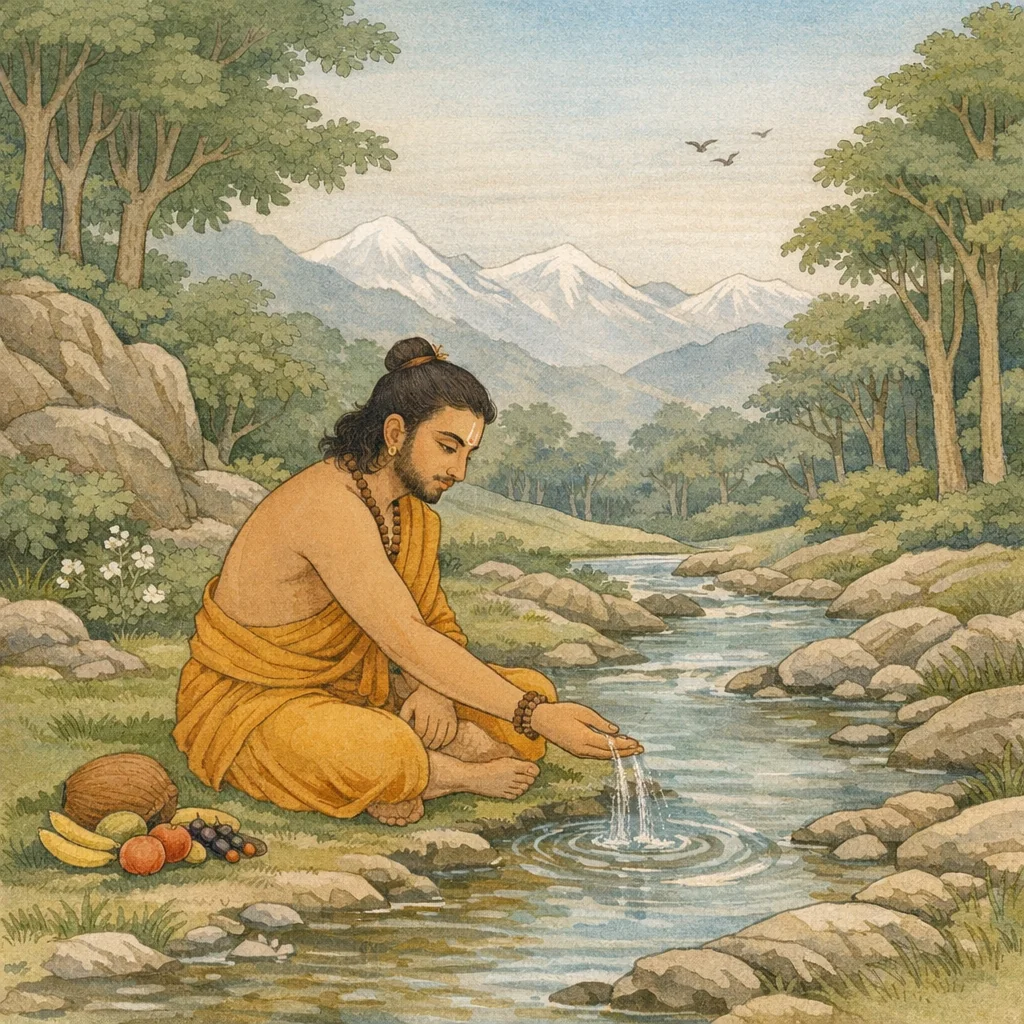
Adhyaya 9
अरण्यवृत्ति-वैराग्योपदेशः | Forest Discipline and the Program of Non-Attachment
Upa-parva: Mokṣa-dharma (Liberation Teachings) — Aranyavāsa & Vairāgya Discourse Unit
This chapter is a first-person ethical blueprint in which Yudhiṣṭhira describes a renunciatory life-plan. He requests attentive listening and outlines a ‘safe path’ that can be walked alone: abandoning village pleasures, adopting forest subsistence (fruits/roots), maintaining regulated ritual acts (fire offerings, ablutions), and tolerating heat/cold, hunger/thirst, and fatigue. The discourse escalates from external austerities to internal disciplines: solitude, measured speech, neutrality to praise and blame, freedom from expectation and possessiveness, and a posture of non-violence toward all beings. He describes mendicant movement without fixation on direction or destination, non-reactivity to opposites (pleasant/unpleasant), and acceptance of gain/loss in food and shelter. The chapter then frames craving (tṛṣṇā) as a root of wrongdoing, explains karmic entanglement and the cyclicality of saṃsāra (birth, death, aging, illness), and concludes with the aspiration for an imperishable, stable state through sustained conduct on a fearless path.
Chapter Arc: युद्ध-विजय के बाद भी युधिष्ठिर का मन क्षणभर में भीतर की ओर मुड़ जाता है—वह मन, श्रोत्र और अन्तरात्मा को एकाग्र कर जीवन का नया मार्ग चुनने का संकल्प करता है। → राजधर्म और गृहस्थ-सुखों से विरक्ति बढ़ती जाती है; युधिष्ठिर ‘साधु-मार्ग’ पर चलने की बात कहते हुए पूछते हैं कि एकाकी पुरुष के लिए कल्याणकारी पथ कौन-सा है, और संकेत देते हैं कि यदि प्रश्न न भी किया जाए तो भी वे उपदेश सुनने को तत्पर हैं। → युधिष्ठिर वनप्रस्थ-संन्यास की कठोरतम विधि का चित्र खींचते हैं—एकान्त-शील होकर आत्मतत्त्व का विचार, वन्य आहार, पितृ-देव-तर्पण, और देह-समापन तक उग्र नियमों का पालन; साथ ही यह बोध कि स्वभाव आगे-आगे चलता है और द्वन्द्व-विरोध अपने-आप उठते हैं, जिन्हें अचिन्त्य मानकर पार करना है। → वे सर्वसंग-त्याग, वागुराओं (स्नेह-बन्धनों) से परे, किसी के वश में न रहकर वायु-सदृश स्वतंत्र धर्म का वरण करते हैं; राजसत्ता भी अल्प कारणों से बन्धन बन जाती है—इसलिए ‘प्रज्ञा-अमृत’ पाकर अव्यय, शाश्वत, ध्रुव पद की याचना करते हैं। → युधिष्ठिर का यह संन्यास-निश्चय क्या राज्य-व्यवस्था और परिवार-धर्म के साथ निभ पाएगा, या कोई उन्हें रोककर राजधर्म की ओर लौटाएगा?
Shlokas
Verse 1
अत नवमो<्ध्याय: युधिष्ठटिरका वानप्रस्थ एवं संन्यासीके अनुसार जीवन व्यतीत करनेका निश्चय युधिछिर उवाच मुहूर्त तावदेकाग्रो मन:श्रोत्रेडन्तरात्मनि । धारयन्नपि तच्छुत्वा रोचेत वचनं मम,युधिष्ठिरने कहा--अर्जुन! तुम अपने मन और कानोंको अन्तःकरणमें स्थापित करके दो घड़ीतक एकाग्र हो जाओ, तब मेरी बात सुनकर तुम इसे पसंद करोगे
Yudhiṣṭhira said: “Arjuna, for a short while—about a muhūrta—gather your mind and your hearing into the inner self. Even by holding them steady, when you listen to what I say, you will find my words agreeable.”
Verse 2
साधुगम्यमहं मार्ग न जातु त्वत्कृते पुनः । गच्छेयं तद् गमिष्यामि हित्वा ग्राम्यसुखान्युत,मैं ग्राम्य सुखोंका परित्याग करके साधु पुरुषोंके चले हुए मार्गपर तो चल सकता हूँ; परंतु तुम्हारे आग्रहके कारण कदापि राज्य नहीं स्वीकार करूँगा
Yudhiṣṭhira said: “I can indeed follow the path trodden by the virtuous; abandoning worldly comforts, I am ready to go where that path leads. But for your sake or at your urging, I will never again accept kingship.”
Verse 3
क्षेम्यश्नैकाकिना गम्य: पन्था: को<स्तीति पृच्छ माम् | अथवा नेच्छसि प्रष्टमपृच्छन्नपि मे शूणु,एकाकी पुरुषके चलनेयोग्य कल्याणकारी मार्ग कौन-सा है? यह मुझसे पूछो अथवा यदि पूछना नहीं चाहते हो तो बिना पूछे भी मुझसे सुनो
Yudhiṣṭhira said: “Ask me—what path is there that is safe, auspicious, and fit to be walked by one who stands alone? Or, if you do not wish to ask, then listen to me even without asking.”
Verse 4
हित्वा ग्राम्यसुखाचारं तप्यमानो महत् तप: । अरण्ये फलमूलाशी चरिष्यामि मृगै: सह,मैं गँवारोंक सुख और आचारपर लात मारकर वनमें रहकर अत्यन्त कठोर तपस्या करूँगा, फल-मूल खाकर मृगोंके साथ विचरूँगा
Yudhiṣṭhira said: “Casting aside the comforts and conventions of ordinary village life, I shall undertake severe austerities. Living in the forest, subsisting on fruits and roots, I will wander together with the deer.”
Verse 5
जुद्वानोडग्निं यथाकालमुभौ कालावुपस्पृशन् | कृश: परिमिताहारश्चर्मचीरजटाधर:,दोनों समय स्नान करके यथासमय अग्निहोत्र करूँगा और परिमित आहार करके शरीरको दुर्बल कर दूँगा। मृगचर्म तथा वल्कल वस्त्र धारण करके सिरपर जटा रखूँगा
Yudhiṣṭhira said: “Bathing at both prescribed times and offering the sacred fire oblations at the proper hours, I shall live on measured food until my body grows lean. Wearing a deer-skin and bark-garments, and bearing matted locks upon my head, I will adopt the disciplined life of austerity.”
Verse 6
शीतवातातपसह: क्षुत्पिपासाश्रमक्षम: । तपसा विधिदृष्टेन शरीरमुपशोषयन्,सर्दी, गर्मी और हवाको सहूँगा, भूख, प्यास और परिश्रमको सहनेका अभ्यास डालूगा, शास्त्रोक्त तपस्याद्वारा इस शरीरको सुखाता रहूँगा
Yudhiṣṭhira said: “I will endure cold, wind, and heat; I will train myself to bear hunger, thirst, and toil. By austerity prescribed according to scriptural rule, I will keep this body steadily emaciated—subduing it through disciplined penance.”
Verse 7
मन:कर्णसुखा नित्यं शृण्वन्नुच्चावचा गिर: । मुदितानामरण्येषु वसतां मृगपक्षिणाम्,वनमें प्रसन्नतापूर्वक निवास करनेवाले पशु-पक्षियोंकी भाँति-भाँतिकी बोली, जो मन और कानोंको सुख देनेवाली होगी, नित्य सुनता रहूँगा
Yudhiṣṭhira said: “May I ever listen, day after day, to the varied calls that delight both mind and ear—like those of the beasts and birds who dwell in the forest in quiet gladness.”
Verse 8
आजिपघ्रन् पेशलान् गन्धान् फुल्लानां वृक्षवीरुधाम् नानारूपान् वने पश्यन् रमणीयान् वनौकस:,वनमें खिले हुए वृक्षों और लताओंकी मनोहर सुगन्ध सूँघता हुआ अनेक रूपवाले सुन्दर वनवासियोंको देखा करूँगा
Yudhiṣṭhira said: “In the forest, breathing in the gentle fragrance of trees and creepers in full bloom, I shall behold the delightful forest-dwellers of many forms.”
Verse 9
वानप्रस्थजनस्यापि दर्शनं कुलवासिनाम् | नाप्रियाण्याचरिष्यामि किंपुनग्रामवासिनाम्,वहाँ वानप्रस्थ महात्माओं तथा ऋषिकुलवासी ब्रह्मचारी ऋषि-मुनियोंका भी दर्शन होगा। मैं किसी वनवासीका भी अप्रिय नहीं करूँगा; फिर ग्रामवासियोंकी तो बात ही क्या है? अतः इस पूर्वोक्त धारणाके द्वारा निरन्तर विचरता हुआ मैं निर्भय मार्गका आश्रय ले जन्म, मृत्यु, जरा, व्याधि और वेदनाओंसे आक्रान्त हुए इस शरीरको अलग रख दूँगा ।। इति श्रीमहाभारते शान्तिपर्वणि राजधर्मानुशासनपर्वणि युधिष्ठिरवाक्ये नवमो<थ्याय: इस प्रकार श्रीमह्याभारत शान्तिपर्वके अन्तर्गत राजधर्मानुशासनपर्वमें युधिष्ठिरका वाक्यविषयक नवाँ अध्याय पूरा हुआ
Yudhiṣṭhira said: “I shall also have the opportunity to behold the forest-dwelling elders who live the vānaprastha life, as well as the brahmacārin sages who reside in the lineages of seers. I will not act in any way that is displeasing even to those who live in the forest—how much more, then, should I avoid offending those who live in villages. Thus, holding fast to this resolve and wandering steadily, I will take refuge in the fearless path and, setting aside this body—assailed by birth, death, old age, disease, and pain—attain release.”
Verse 10
एकान्तशीली विमृशन् पक््वापकक््वेन वर्तयन् । पितृन् देवांश्व वन्येन वाग्भिरद्धिश्च तर्पयन्,एकान्तमें रहकर आध्यात्मिक तत्त्वका विचार किया करूँगा और कच्चा-पक्का जैसा भी फल मिल जायगा, उसीको खाकर जीवन-निर्वाह करूँगा। जंगली फल-मूल, मधुर वाणी और जलके द्वारा देवताओं तथा पितरोंको तृप्त करता रहूँगा
Yudhiṣṭhira said: “Living in seclusion and reflecting upon the highest spiritual principles, I shall sustain myself on whatever fruit comes to hand—ripe or unripe. With forest produce, with gentle and truthful speech, and with water, I shall continue to satisfy the gods and the ancestors.”
Verse 11
एवमारण्यशास्त्राणामुग्रमुग्रतरं विधिम् । सेवमान: प्रतीक्षिष्ये देहस्यास्य समापनम्,इस प्रकार वनवासी मुनियोंके लिये शास्त्रमें बताये हुए कठोर-से-कठोर नियमोंका पालन करता हुआ इस शरीरकी आयु समाप्त होनेकी बाट देखता रहूँगा
Thus, observing the harshest—indeed ever harsher—discipline prescribed in the scriptures for forest-dwelling ascetics, I shall wait for the ending of this body’s span. In this resolve, Yudhiṣṭhira frames endurance and self-restraint as an ethical response: not escape, but a deliberate acceptance of austere dharma until life naturally concludes.
Verse 12
अथवैको5हमेकाहमेकैकस्मिन् वनस्पतौ । चरन् भैक्ष्यं मुनिर्मुण्ड: क्षपयिष्ये कलेवरम्,अथवा मैं मूँड़ मुड़ाकर मननशील संन्यासी हो जाऊँगा और एक-एक दिन एक-एक वृक्षसे भिक्षा माँगकर अपने शरीरको सुखाता रहूँगा
Or else I shall live alone—spending a single day at a time by a single tree—wandering as a shaven-headed, contemplative ascetic, begging for alms, and thus wearing away this body. In this resolve, Yudhiṣṭhira expresses a turn from royal life toward renunciation, seeking expiation and inner peace through austerity rather than power.
Verse 13
पांसुभि: समभिच्छन्न: शून्यागारप्रतिश्रय: । वृक्षमूलनिकेतो वा त्यक्तसर्वप्रियाप्रिय:,शरीरपर धूल पड़ी होगी और सूने घरोंमें मेरा निवास होगा अथवा किसी वृक्षके नीचे उसकी जड़में ही पड़ा रहूँगा। प्रिय और अप्रियका सारा विचार छोड़ दूँगा
Yudhiṣṭhira said: “Covered all over with dust, taking shelter in deserted houses, or else dwelling at the foot of a tree—lying there at its very root—I shall abandon every calculation of what is dear and what is not. Thus will I live, renouncing attachment and aversion, accepting hardship as my chosen discipline.”
Verse 14
न शोचन्न प्रद्नष्यंश्व तुल्यनिन्दात्मसंस्तुति: । निराशीरनरर्मिमो भूत्वा निर्द्धन्द्ो निष्परिग्रह:,किसीके लिये न शोक करूँगा न हर्ष। निन्दा और स्तुतिको समान समझूँगा। आशा और ममताको त्यागकर निर्दड्ध हो जाऊँगा तथा कभी किसी वस्तुका संग्रह नहीं करूँगा
Yudhiṣṭhira said: “I shall neither grieve for anyone nor exult. I shall regard censure and praise as equal. Casting off expectation and the sense of ‘I’ and ‘mine’, I shall become free from the pairs of opposites and live without hoarding or possessiveness.”
Verse 15
आत्माराम: प्रसन्नात्मा जडान्धबधिराकृति: । अकुर्वाण: परै: काज्चित् संविदं जातु कैरपि,आत्माके चिन्तनमें ही सुखका अनुभव करूँगा, मनको सदा प्रसन्न रखूँगा, कभी किसी दूसरेके साथ कोई बातचीत नहीं करूँगा, गूँगों, अंधों और बहरोंके समान न किसीसे कुछ कहूँगा, न किसीको देखूँगा और न किसीकी सुनूँगा
Yudhiṣṭhira said: “I shall delight only in the Self and keep my inner being ever serene. Taking on the manner of one who is dull, blind, and deaf, I will never enter into any conversation with anyone; I will neither speak to others, nor look at them, nor listen to them—finding contentment solely in self-contemplation.”
Verse 16
जड़माजड़मान् सर्वानविहिंसं श्चतुर्विधान् प्रजा: सर्वा: स्वधर्मस्था: सम: प्राणभूत: प्रति,चार प्रकारके समस्त चराचर प्राणियोंमेंसे किसीकी हिंसा नहीं करूँगा। अपने-अपने धर्ममें स्थित हुई समस्त प्रजाओं तथा सम्पूर्ण प्राणियोंके प्रति समभाव रखूँगा
Yudhiṣṭhira said: “Among all beings—whether dull-witted or discerning, and among the fourfold classes of subjects—I shall not harm anyone. Toward all creatures and all communities, each established in its own duty, I will maintain an even-minded regard, treating every living being with impartiality.”
Verse 17
न चाप्यवहसन् कज्वचिन्न कुर्वन् भ्रुकुटी: क्वचित् । प्रसन्नवदनो नित्य सर्वेन्द्रियसुसंयत:,न तो किसीकी हँसी उड़ाऊँगा और न किसीके प्रति भौंहोंको ही टेढ़ी करूँगा। सदा मेरे मुखपर प्रसन्नता छायी रहेगी और मैं सम्पूर्ण इन्द्रियोंकोी पूर्णतः संयममें रखूँगा
“I will not mock anyone, nor will I ever knit my brows at anyone. My face shall remain ever serene, and I will keep all my senses fully restrained.”
Verse 18
अपृच्छन् कस्यचिन्मार्ग प्रव्रजन्नेव केनचित् । न देशं न दिशं काज्चिद् गन्तुमिच्छन् विशेषतः,किसी भी मार्गसे चलता रहूँगा और कभी किसीसे रास्ता नहीं पूछँगा। किसी खास स्थान या दिशाकी ओर जानेकी इच्छा नहीं रखूँगा
Yudhiṣṭhira said: “As I set forth as a wanderer, I shall keep moving along whatever path comes, without asking anyone for directions. I will not cherish any particular destination or any specific quarter as my goal.”
Verse 19
गमने निरपेक्षश्न पश्चादनवलोकयन् | ऋजु: प्रणिहितो गच्छंस्त्रसं स्थावरवर्जक:,कहीं भी मेरे जानेका कोई विशेष उद्देश्य नहीं होगा। न आगे जानेकी उत्सुकता होगी, न पीछे फिरकर देखूँगा। सरल भावसे रहूँगा। मेरी दृष्टि अन्तर्मुखी होगी। स्थावर-जंगम जीवोंको बचाता हुआ आगे चलता रहूँगा
Yudhiṣṭhira said: “In my going forth I shall be without expectation and without any special aim. I will not look back behind me. Straight and self-restrained, I will walk with my attention inward, carefully avoiding harm—stepping so as to spare both the moving creatures and the immobile beings.”
Verse 20
स्वभावस्तु प्रयात्यग्रे प्रभवन्त्यशनान्यपि । दन्द्वानि च विरुद्धानि तानि सर्वाण्यचिन्तयन्,स्वभाव आगे-आगे चलता है, भोजन भी अपने-आप प्रकट हो जाते हैं, सर्दी-गर्मी आदि जो परस्पर विरोधी द्वन्द् हैं; वे सब आते-जाते रहते हैं, अत: इन सबकी चिन्ता छोड़ दूँगा
Yudhiṣṭhira said: “One’s own nature moves on in front, leading the way; even food appears of itself. The opposing pairs—such as cold and heat—keep coming and going. Therefore, I will cease worrying about all these.”
Verse 21
अल्पं वास्वादु वा भोज्यं पूर्वालाभेन जातुचित् । अन्येष्वपि चरेँल्लाभमलाभे सप्त पूरयन्,भिक्षा थोड़ी मिली या स्वादहीन मिली, इसका विचार न करके उसे पा लूँगा। यदि कभी एक घरसे भिक्षा नहीं मिली तो दूसरे घरोंमें भी जाऊँगा। मिल गया तो ठीक है, न मिलनेकी दशामें क्रमश: सात घरोंमें जाऊँगा, आठवेंमें नहीं जाऊँगा
Yudhiṣṭhira said: “Whether the food I receive is little or tasty, I shall accept it without brooding over what I failed to obtain earlier. If I do not get alms at one house, I will go on to others; if I obtain it, that is enough. But if I do not, I will proceed in order to seven houses and not go to an eighth.”
Verse 22
विधूमे न््यस्तमुसले व्यज्ारे भुक्तवज्जने । अतीतपात्रसंचारे काले विगतभिक्षुके,जब घरोंमेंसे धुआँ निकलना बंद हो गया हो, मूसल रख दिया गया हो, चूल्हेकी आग बुझ गयी हो, घरके सब लोग खा-पी चुके हों, परोसी हुई थालीको इधर-उधर ले जानेका काम समाप्त हो गया हो और भिखमंगे भिक्षा लेकर लौट गये हों, ऐसे समयमें मैं एक ही वक्त भिक्षाके लिये दो, तीन या पाँच घरोंतक जाया करूँगा। सब ओरसे स्नेहका बन्धन तोड़कर इस पृथ्वीपर विचरता रहूँगा
Yudhiṣṭhira said: “When no smoke rises from the houses, when the pestle has been set aside, when the hearth-fire has died down, when the household has finished eating, when the carrying about of the served dishes is over, and when the beggars have departed after receiving alms—at such a time I shall go for alms only once, to two, three, or at most five houses. Having cut off bonds of attachment on every side, I shall wander upon this earth.”
Verse 23
एककालं चरन् भैक्ष्यं त्रीनथ द्वे च पज्च वा | स्नेहपाशं विमुच्याहं चरिष्यामि महीमिमाम्,जब घरोंमेंसे धुआँ निकलना बंद हो गया हो, मूसल रख दिया गया हो, चूल्हेकी आग बुझ गयी हो, घरके सब लोग खा-पी चुके हों, परोसी हुई थालीको इधर-उधर ले जानेका काम समाप्त हो गया हो और भिखमंगे भिक्षा लेकर लौट गये हों, ऐसे समयमें मैं एक ही वक्त भिक्षाके लिये दो, तीन या पाँच घरोंतक जाया करूँगा। सब ओरसे स्नेहका बन्धन तोड़कर इस पृथ्वीपर विचरता रहूँगा
Yudhiṣṭhira said: “Living on alms taken only once a day, I shall go for begging to just two, three, or at most five houses. Casting off the bonds of affection, I will wander over this earth.”
Verse 24
अलाभे सति वा लाभे समदर्शी महातपा: । न जिजीविषुवत् किंचिन्न मुमूर्षवदाचरन्,कुछ मिले या न मिले, दोनों ही अवस्थामें मेरी दृष्टि समान होगी। मैं महान् तपमें संलग्न रहकर ऐसा कोई आचरण नहीं करूँगा, जिसे जीने या मरनेकी इच्छावाले लोग करते हैं
Yudhiṣṭhira said: “Whether there is gain or no gain, my vision will remain even. Engaged in great austerity and self-discipline, I will not act in any way like those driven by the craving to live, nor like those driven by the craving to die.”
Verse 25
जीवितं मरणं चैव नाभिनन्दन्न च द्विषन् । वास्यैकं तक्षतों बाहुं चन्दनेनैकमुक्षत:
Yudhiṣṭhira said: “Regarding life and death alike, he neither rejoiced nor hated. While one of his arms was being cut off, he anointed the other with sandal-paste.”
Verse 26
नाकल्याणं न कल्याणं चिन्तयन्नुभयोस्तयो: । न तो जीवनका अभिनन्दन करूँगा, न मृत्युसे द्वेष। यदि एक मनुष्य मेरी एक बाँहको बसूलेसे काटता हो और दूसरा दूसरी बाँहको चन्दनमिश्रित जलसे सींचता हो तो न पहलेका अमंगल सोचूँगा और न दूसरेकी मंगल-कामना करूँगा। उन दोनोंके प्रति समान भाव रखूँगा ।। या: काश्चिज्जीवता शक््या: कर्तुमभ्युदयक्रिया: । सर्वास्ता: समभित्यज्य निमेषादिव्यवस्थित:,जीवित पुरुषके द्वारा जो कोई भी अभ्युदयकारी कर्म किये जा सकते हैं, उन सबका परित्याग करके केवल शरीर-निर्वाहके लिये पलकोंके खोलने-मींचने या खाने-पीने आदिके कार्यमें ही प्रवृत्त हो सकूँगा
Yudhiṣṭhira said: “I shall not brood over ill nor long for good with regard to either of the two. I will neither rejoice in life nor hate death. If one man were to cut off one of my arms with an axe, and another were to bathe my other arm with sandal-scented water, I would not wish misfortune for the first nor prosperity for the second; toward both I would maintain the same disposition. And whatever acts of worldly advancement a living man might be able to perform—abandoning them all—I could remain intent only on bare bodily maintenance, occupied merely with blinking of the eyes and with eating and drinking.”
Verse 27
तेषु नित्यमसक्तश्न त्यक्तसर्वेन्द्रियक्रिय: । सुपरित्यक्तसंकल्प: सुनिर्णिक्तात्मकल्मष:,इन सब कार्योमें भी आसक्त नहीं होऊँगा। सम्पूर्ण इन्द्रियोंके व्यापारोंसे उपरत होकर मनको संकल्पशून्य करके अन्तःकरणका सारा मल धो डालूँगा
Yudhiṣṭhira said: “Even while engaged in those duties, I shall remain ever unattached. Withdrawing from the operations of all the senses, I shall render the mind free of compulsive resolve and wash away every stain from the inner self.”
Verse 28
विमुक्तः सर्वसंगेभ्यो व्यतीत: सर्ववागुरा: । न वशे कस्यचित्तिष्ठन् सधर्मा मातरिश्वन:,सब प्रकारकी आसक्तियोंसे मुक्त रहकर स्नेहके सारे बन्धनोंको लाँध जाऊँगा। किसीके अधीन न रहकर वायुके समान सर्वत्र विचरूँगा
Yudhiṣṭhira said: “Freed from every attachment, having passed beyond all nets of affection and entanglement, I shall not remain under anyone’s control. Established in dharma, I will move everywhere like the wind—unhindered and independent.”
Verse 29
वीतरागश्नरन्रेवं तुष्टिं प्राप्स्यामि शाश्वतीम् । तृष्णया हि महत् पापमज्ञानादस्मि कारित:,इस प्रकार वीतराग होकर विचरनेसे मुझे शाश्वत संतोष प्राप्त होगा। अज्ञानवश तृष्णाने मुझसे बड़े-बड़े पाप करवाये हैं
Yudhiṣṭhira said: “By moving about in this way, free from attachment, I shall attain lasting contentment. For it is craving that—through my ignorance—has driven me to commit great sins.”
Verse 30
कुशलाकुशलान्येके कृत्वा कर्माणि मानवा: । कार्यकारणसंश्लिष्टं स्वजनं नाम बिभ्रति
Some people, having performed deeds that are wholesome and unwholesome, still maintain what they call their ‘own people’—a circle of kin and allies bound together by calculations of ends and means, of advantage and causation.
Verse 31
कुछ मनुष्य शुभाशुभ कर्म करके कार्य-कारणसे अपने साथ जुड़े हुए स्वजनोंका भरण-पोषण करते हैं ।। आयुषोबच्ते प्रहायेदं क्षीणप्राणं कलेवरम् । प्रतिगृह्नाति तत् पापं कर्तु: कर्मफलं हि तत्,फिर आयुके अन्तमें जीवात्मा इस प्राणशून्य शरीरको त्यागकर पहलेके किये हुए उस पापको ग्रहण करता है; क्योंकि कर्ताको ही उसके कर्मका वह फल प्राप्त होता है
Yudhiṣṭhira said: “When the span of life reaches its end, the embodied being abandons this body whose vital force is spent; and then he takes up that very sin—because the fruit of action belongs to the doer. Even if a person sustains his dependents through deeds that are both auspicious and inauspicious, the moral consequence ultimately returns to the agent himself.”
Verse 32
एवं संसारचक्रे5स्मिन् व्याविद्धे रथचक्रवत् । समेति भूतग्रामो5यं भूतग्रामेण कार्यवान्,इस प्रकार रथके पहियेके समान निरन्तर घूमते हुए इस संसारचक्रमें आकर जीवोंका यह समुदाय कार्यवश अन्य प्राणियोंसे मिलता है
In this wheel of worldly existence, which keeps whirling like the wheel of a chariot, this multitude of living beings—driven by the force of their actions—comes together and meets with other multitudes of beings.
Verse 33
जन्ममृत्युजराव्याधिवेदनाभिरभिद्रुतम् । अपारमिव चास्वस्थ॑ संसारं त्यजत: सुखम्,इस संसारमें जन्म, मृत्यु, जरा, व्याधि और वेदनाओंका आक्रमण होता ही रहता है, जिससे यहाँका जीवन कभी स्वस्थ नहीं रहता। जो अपार-सा प्रतीत होनेवाले इस संसारको त्याग देता है, उसीको सुख मिलता है
Yudhiṣṭhira said: “This worldly existence is relentlessly assailed by birth, death, old age, disease, and pain; therefore life here never remains truly sound or secure. Happiness belongs to the one who renounces this saṁsāra, which appears boundless and offers no lasting well-being.”
Verse 34
दिव: पतत्सु देवेषु स्थाने भ्यश्न महर्षिषु । को हि नाम भवेनार्थी भवेत् कारणतत्त्ववित्,जब देवता भी स्वर्गसे नीचे गिरते हैं और महर्षि भी अपने-अपने स्थानसे भ्रष्ट हो जाते हैं, तब कारण-तत्त्वको जाननेवाला कौन मनुष्य इस जन्म-मरणरूप संसारसे कोई प्रयोजन रखेगा
When even the gods fall down from heaven, and even the great ṛṣis slip from their appointed stations, what man—knowing the truth of causes—would still seek any purpose in this saṁsāra of birth and death?
Verse 35
कृत्वा हि विविध कर्म तत्तद् विविधलक्षणम् | पार्थिवैर्नुपति: स्वल्पै: कारणैरेव बध्यते,भाँति-भाँतिके भिन्न-भिन्न कर्म करके विख्यात हुआ राजा भी किन्हीं छोटे-मोटे कारणोंसे ही दूसरे राजाओंद्वारा मार डाला जाता है
Yudhiṣṭhira said: “Even a king who has become renowned by performing many kinds of deeds, each marked by its own distinct character, can still be brought down—captured, restrained, or slain—by other rulers for reasons that are, in themselves, quite small. Such is the fragility of sovereignty and the peril of power.”
Verse 36
तस्मात् प्रज्ञामृतमिदं चिरान्मां प्रत्युपस्थितम् । तत् प्राप्य प्रार्थये स्थानमव्ययं शाश्रवतं ध्रुवम्,आज दीर्घकालके पश्चात् मुझे यह विवेकरूपी अमृत प्राप्त हुआ है। इसे पाकर मैं अक्षय, अविकारी एवं सनातन पदको प्राप्त करना चाहता हूँ
Therefore, after a long time, this nectar of discernment has at last come before me. Having attained it, I seek that state which is imperishable—unchanging, eternal, and steadfast.
Verse 37
एतया संततं धृत्या चरन्नेवंप्रकारया । जन्ममृत्युजराव्याधिवेदनाभिरभिद्रुतम् । देहं संस्थापयिष्यामि निर्भयं मार्गमास्थित:
“Sustained by this unwavering steadiness, and living in this manner, I shall keep the body composed and upheld—though it is assailed by the pains of birth, death, old age, and disease—having taken my stand upon the fearless path.”
Frequently Asked Questions
The tension is between social-role obligations (worldly governance and relational duties) and the pull toward solitary renunciation; the chapter frames withdrawal as an ethical remedy for craving and entanglement.
Peace is operationalized as disciplined conduct: reduce desire, practice non-harm, accept opposites without reactivity, and stabilize the mind through restraint and minimal dependence.
No explicit phalaśruti formula appears; the implied benefit is stated as attaining enduring contentment and seeking an imperishable, stable state by sustaining a fearless path of conduct.