Adhyaya 82
अग्राह्य-ज्ञातिसंबन्धमण्डल-विवेचनम् / Managing Unreadable Kinship Networks: Vāsudeva–Nārada on Cohesion
Upa-parva: Rājadharmānuśāsana (Teachings on Kingship and Public Order)
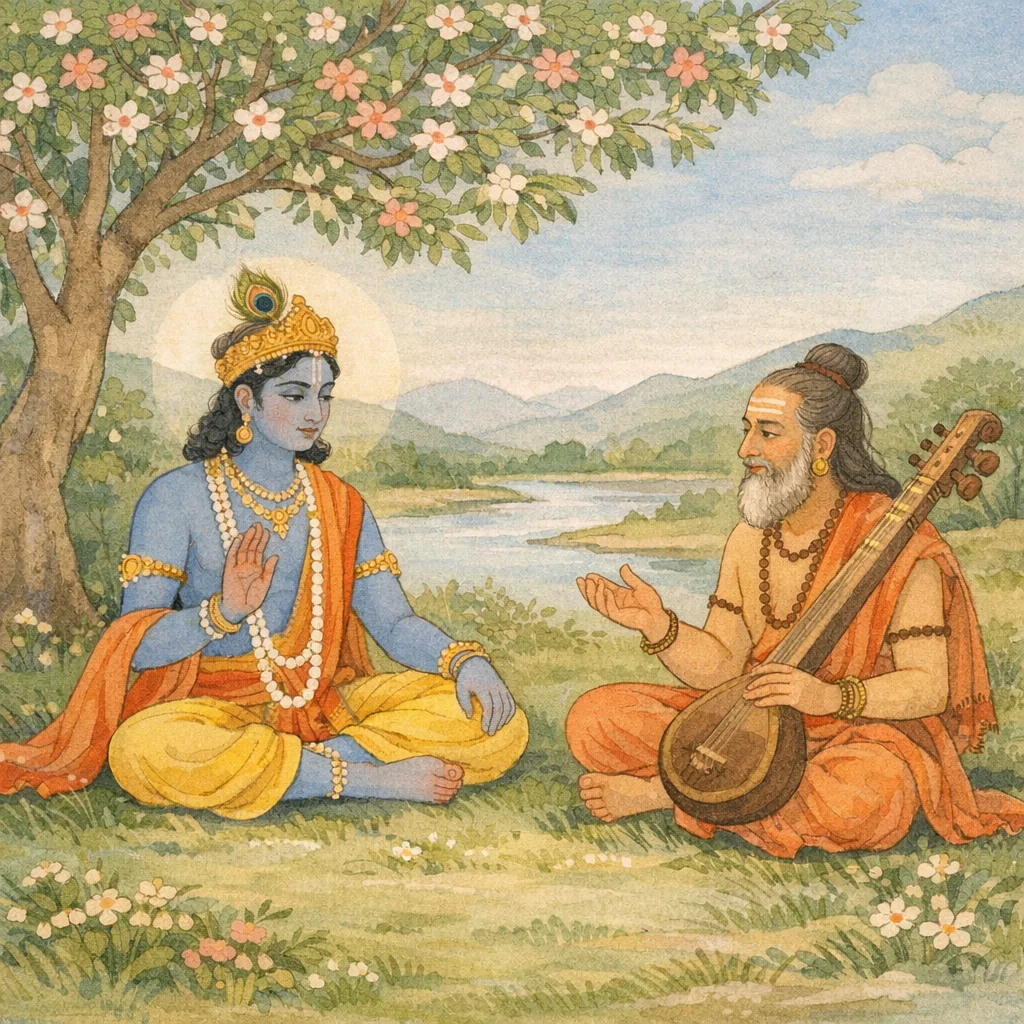
Yudhiṣṭhira asks how one can correctly assess ‘bhāva’ (disposition/intent) within an opaque field of kin and relations, including both allies and adversaries. Bhīṣma responds by citing an ancient exemplum: a dialogue between Vāsudeva and Nārada. Vāsudeva confesses distress over internal rivalries and comparative advantages among his associates, describing the pain caused by harsh speech and the dilemma of competing outcomes within a close circle. Nārada classifies crises as external or internal, diagnosing Vāsudeva’s situation as an internally generated predicament with deep roots that cannot be simply reversed. He cautions that reclaiming contested authority may be unachievable or may entail severe loss. Instead, Nārada prescribes an ‘effortless weapon’—continuous giving according to capacity, forbearance, self-restraint, straightforwardness, and fitting honor—paired with pacifying speech to settle hearts and minds. The chapter closes by stressing that groups collapse through division; as a leading figure, Vāsudeva must preserve coalition integrity through restraint, generosity, and disciplined governance, aligning short-term tactics with long-term stability.
Chapter Arc: युधिष्ठिर पितामह भीष्म से पूछते हैं—जब अपने ही सजातीय बन्धु और कुटुम्बी परस्पर स्पर्धा में इतने उग्र हो जाएँ कि उन्हें वश में करना असम्भव लगे, तब राजा/गृहस्थ किस नीति से घर-समाज को संभाले? → भीष्म इस कठिन गृह-राजनीति के लिए एक प्राचीन संवाद का आश्रय लेते हैं—वासुदेव (श्रीकृष्ण) और देवर्षि नारद/वायुदेव-सम्बद्ध उपदेश-परम्परा का प्रसंग। प्रश्न तीखा है: सुहृद् न हो, सुहृद् होकर भी अपण्डित हो, या सुहृद्-पण्डित होकर भी आत्मसंयमहीन हो—ऐसे लोगों के बीच नीति कैसे टिके? भीतर की ‘स्वकर्मजा’ आपत्ति (अपने ही कुल—अक्रूर-भोज-आहुक आदि—से उठी कलह) का संकेत तनाव बढ़ाता है। → उपदेश का शिखर उस नीति में आता है जहाँ कहा जाता है कि जब सजातीय बन्धु कटु, ओछी वाणी से आघात करें, तब प्रत्युत्तर में मधुर वचन, शान्ति-स्थापन और मन-वाणी-हृदय को साधने वाली ‘मृदु’ नीति अपनाकर उनके भीतर की जिह्वा/वाणी की विकृति को बिना ‘लोहे के शस्त्र’ के—अर्थात बिना कठोर दण्ड—धीरे-धीरे परिमार्जित किया जाए। → संवाद का निष्कर्ष यह बनता है कि कुल-समुदाय को जोड़ने का प्रधान साधन बाहुबल नहीं, बल्कि गुरु-तुल्य विवेक, समय-ज्ञान (भूत-वर्तमान-भविष्य का विचार), आत्मसंयम और मधुर भाषण है; इसी से यादव-समुदाय जैसे निकट सम्बन्धी भी सुख से बढ़ते हैं और कलह शान्त होती है।
Shlokas
Verse 1
युधिष्ठिरने पूछा-पितामह! यदि सजातीय बन्धुओं और सगे-सम्बन्धियोंके समुदायको पारस्परिक स्पर्धाके कारण वशमें करना असम्भव हो जाय, कुट॒म्बीजनोंमें ही यदि दो दल हों तो एकका आदर करनेसे दूसरा दल रुष्ट हो ही जाता है। ऐसी परिस्थितिके कारण यदि मित्र भी शत्रु बन जाय, तब उन सबके चित्तको किस प्रकार वशमें किया जा सकता है?
Yudhiṣṭhira said: “Grandfather, if a circle of one’s own kinsmen and close relations becomes impossible to bring under control because of mutual rivalry—if even within a household there are two factions, then honoring one inevitably angers the other. When such conditions turn even friends into enemies, how can the hearts of all those people be brought under one’s influence?”
Verse 2
भीष्म उवाच अत्राप्युदाहरन्तीममितिहासं पुरातनम् । संवादं वासुदेवस्य सुरषषेनरिदस्य च,भीष्मजीने कहा--युधिष्ठिर! इस विषयमें मनीषी पुरुष देवर्षि नारद और भगवान् श्रीकृष्णके भूतपूर्व संवादरूप इतिहासका उदाहरण दिया करते हैं
Bhishma said: “Here too, O Yudhishthira, the wise cite an ancient precedent from tradition—an old narrative in the form of a dialogue between Vasudeva (Sri Krishna) and the divine sage Narada.”
Verse 3
वायुदेव उवाच नासुद्गत् परमं मन्त्र नारदाहति वेदितुम् | अपण्डितो वापि सुहृत् पण्डितो वाप्यनात्मवान्
Vāyudeva said: “Nārada cannot comprehend that supreme mantra. Even a well-wishing friend may be unlearned; and even one who is learned may yet be without self-mastery.”
Verse 4
एक समय भगवान् श्रीकृष्णने कहा--देवर्षे! जो व्यक्ति सुहृद् न हो, जो सुहृद् तो हो किंतु पण्डित न हो तथा जो सुहृद् और पण्डित तो हो किंतु अपने मनको वशमें न कर सका हो--ये तीनों ही परम गोपनीय मन्त्रणाको सुनने या जाननेके अधिकारी नहीं हैं ।। स ते सौहृदमास्थाय किज्चिद् वक्ष्यामि नारद । कृत्स्नं बुद्धिबल प्रेक्ष्य सम्पृच्छेस्त्रेदिवंगम,स्वर्गमें विचरनेवाले नारदजी! मैं आपके सौहार्दपर भरोसा रखकर आपसे कुछ निवेदन करूँगा। मनुष्य किसी व्यक्तिमें बुद्धि-बलकी पूर्णता देखकर ही उससे कुछ पूछता या जिज्ञासा प्रकट करता है
Vāyu said: “Once, Bhagavān Śrī Kṛṣṇa declared: ‘O divine seer! Three kinds of people are not fit to hear or know a supremely confidential counsel: one who is not a true well-wisher; one who may be friendly but lacks discernment; and one who is both friendly and learned yet has not mastered his own mind. Therefore, trusting in your goodwill, O Nārada, I shall say something to you. A person reveals a question only after seeing in another the fullness of intelligence and strength of judgment. O Nārada, who moves in heaven, relying on your friendship I will submit a matter to you.’”
Verse 5
दास्यमैश्वर्यवादेन ज्ञातीनां न करोम्यहम् । अर्ध भोक्तास्मि भोगानां वाग्दुरुक्तानि च क्षमे,मैं अपनी प्रभुता प्रकाशित करके जाति-भाइयों, कुटुम्बीजनोंको अपना दास बनाना नहीं चाहता। मुझे जो भोग प्राप्त होते हैं, उनका आधा भाग ही अपने उपभोगमें लाता हूँ, शेष आधा भाग कुट॒म्बीजनोंके लिये ही छोड़ देता हूँ। और उनकी कड़वी बातोंको सुनकर भी क्षमा कर देता हूँ
Vāyu said: “I do not, by proclaiming my own lordship, turn my kinsmen into servants. Of whatever enjoyments come to me, I partake of only half; the other half I set aside for my family. And even when they speak harshly, I endure it with forgiveness.”
Verse 6
अरणीमग्निकामो वा मथ्नाति हृदयं मम । वाचा दुरुक्तं देवर्षे तन्मे दहति नित्यदा,देवर्ष! जैसे अग्निको प्रकट करनेकी इच्छावाला पुरुष अरणीकाष्ठका मन्थन करता है, उसी प्रकार इन कुटुम्बीजनोंका कटुवचन मेरे हृदयको सदा मथता और जलाता रहता है
Vāyu said: “Just as a man who longs to bring forth fire churns the araṇi-sticks, so do the harsh words spoken to me keep churning my heart; that ill-spoken speech, O divine seer, burns me continually.”
Verse 7
बलं संकर्षणे नित्यं सौकुमार्य पुनर्गदे । रूपेण मत्त: प्रद्युम्मन: सोडसहायो5स्मि नारद,नारदजी! बड़े भाई बलराममें सदा ही असीम बल है; वे उसीमें मस्त रहते हैं। छोटे भाई गदमें अत्यन्त सुकुमारता है (अतः वह परिश्रमसे दूर भागता है); रह गया बेटा प्रद्युम्न, सो वह अपने रूप-सौन्दर्यके अभिमानसे ही मतवाला बना रहता है। इस प्रकार इन सहायकोंके होते हुए भी मैं असहाय हूँ
Vāyu said: “In Saṅkarṣaṇa (Balarāma) there is ever-abiding strength, and he is absorbed in that very power. In Gada there is excessive delicacy, so he shuns exertion. As for Pradyumna, he is intoxicated by pride in his own beauty. Thus, though I have these helpers, O Nārada, I am as if without help.”
Verse 8
अन्ये हि सुमहाभागा बलवन्तो दुरुत्सहा: | नित्योत्थानेन सम्पन्ना नारदान्धकवृष्णय:,नारदजी! अन्धक तथा वृष्णिवंशमें और भी बहुत-से वीर पुरुष हैं, जो महान् सौभाग्यशाली, बलवान एवं दुःसह पराक्रमी हैं, वे सब-के-सब सदा उद्योगशील बने रहते हैं
O Nārada, among the Andhakas and the Vṛṣṇis there are many other heroes—men of great fortune, strong and hard to withstand—who are ever marked by constant readiness and tireless exertion.
Verse 9
यस्य न स्युर्न वै स स्याद् यस्य स्यु: कृत्स्नमेव तत् । द्वाभ्यां निवारितो नित्यं वृणोम्पेकतरं न च,ये वीर जिसके पक्षमें न हों, उसका जीवित रहना असम्भव है और जिसके पक्षमें ये चले जायँ, वह सारा-का-सारा समुदाय ही विजयी हो जाय। परंतु आहुक और अक्रूरने आपसमें वैमनस्य रखकर मुझे इस तरह अवरुद्ध कर दिया है कि मैं इनमेंसे किसी एकका पक्ष नहीं ले सकता
He said: “He who does not have these on his side cannot endure; but he for whom they stand becomes victorious along with his entire host. Yet Āhuka and Akrūra, by keeping mutual hostility, have continually restrained me so that I cannot choose either one’s side.”
Verse 10
स्यातां यस्याहुकाक्रूरी कि नु दुःखतरं ततः । यस्य चापि न तौ स्यातां कि नु दुःखतरं ततः,आपसमें लड़नेवाले आहुक और अक्रूर दोनों ही जिसके स्वजन हों, उसके लिये इससे बढ़कर दुःखकी बात और क्या होगी? और वे दोनों ही जिसके सुहृद् न हों, उसके लिये भी इससे बढ़कर और दु:ख क्या हो सकता है? (क्योंकि ऐसे मित्रोंका न रहना भी महान् दुःखदायी होता है)
Vāyu said: “If Āhuka and Akrūra—who contend with one another—both belong to a man as his own kinsmen, what sorrow could be greater than that? And if those two are not his well-wishers at all, what sorrow could be greater than that either—for the lack of such friends and supporters is itself a grievous loss.”
Verse 11
सो<5हं कितवमातेव द्वयोरपि महामते । एकस्य जयमाशंसे द्वितीयस्यापराजयम्,महामते! जैसे दो जुआरियोंकी एक ही माता एककी जीत चाहती है तो दूसरेकी भी पराजय नहीं चाहती, उसी प्रकार मैं भी इन दोनों सुहृदोंमेंसे एककी विजयकामना करता हूँ तो दूसरेकी भी पराजय नहीं चाहता
Vāyu said: “I am like the mother of two gamblers, O wise one. I wish for the victory of one, yet I do not wish for the defeat of the other. So too, regarding these two well-wishers, I desire one’s success without desiring the other’s downfall.”
Verse 12
ममैवं क्लिश्यमानस्य नारदोभयत: सदा । वक्तुमरहसि यच्छेयो ज्ञातीनामात्मनस्तथा
As I am thus afflicted and distressed, O Nārada, on every side and at all times, you ought to tell me what is truly best—both for my kinsmen and for myself as well.
Verse 13
नारदजी! इस प्रकार मैं सदा उभय पक्षका हित चाहनेके कारण दोनों ओरसे कष्ट पाता रहता हूँ। ऐसी दशामें मेरा अपना तथा इन जाति-भाइयोंका भी जिस प्रकार भला हो, वह उपाय आप बतानेकी कृपा करें ।। नारद उवाच आपदो द्विविधा: कृष्ण बह्याश्चाभ्यन्तराश्न ह । प्रादुर्भवन्ति वाष्णेय स्वकृता यदि वान्यत:,नारदजीने कहा--वृष्णिनन्दन श्रीकृष्ण! आपत्तियाँ दो प्रकारकी होती हैं--एक बाहा और दूसरी आशभ्यन्तर। वे दोनों ही स्वकृत* और परकृत+-भेदसे दो-दो प्रकारकी होती हैं
Narada said: “O Krishna, calamities are of two kinds—external and internal. And, O descendant of the Vrishnis, they arise in both ways: either from one’s own actions or from causes originating outside oneself.”
Verse 14
सेयमाभ्यन्तरा तुभ्यमापत् कृच्छा स्वकर्मजा । अक्रूरभोजप्रभवा सर्वे होते त्ववन्वया:,अक्रूर और आहुकसे उत्पन्न हुई यह कष्टदायिनी आपत्ति जो आपको प्राप्त हुई है, आभ्यन्तर है और अपनी ही करतूतोंसे प्रकट हुई है। ये सभी जिनके नाम आपने गिनाये हैं, आपके ही वंशके हैं
Nārada said: “This grievous calamity that has come upon you is internal in origin and born of your own actions. It has arisen from Akrūra and Bhoja; and all those you have named are indeed of your own lineage.”
Verse 15
अर्थहेतोहि कामाद् वा वाचा बीभत्सयापि वा । आत्मना प्राप्तमैश्वर्यमन्यत्र प्रतिपादितम्,आपने स्वयं जिस ऐश्वर्यको प्राप्त किया था, उसे किसी प्रयोजनवश या स्वेच्छासे अथवा कटुवचनसे डरकर दूसरेको दे दिया
Nārada said: Even if it is for the sake of profit, or out of desire, or even out of fear caused by harsh and repulsive words, one should not transfer to another the sovereignty and prosperity that one has attained by one’s own effort. To hand over one’s self-won power elsewhere, under such motives, is a moral failing and a lapse in steadfastness.
Verse 16
कृतमूलमिदानीं तज्ज्ञातिवृन्दे सहायवन् । न शक्यं पुनरादातुं वान्तमन्नमिव त्वया,सहायशाली श्रीकृष्ण! इस समय उग्रसेनको दिया हुआ वह ऐश्वर्य दृढ़मूल हो चुका है। उमग्रसेनके साथ जातिके लोग भी सहायक हैं; अतः उगले हुए अन्नकी भाँति आप उस दिये हुए ऐश्वर्यको वापस नहीं ले सकते
Nārada said: “That sovereignty you once bestowed has now taken firm root, supported by the circle of kinsmen. Therefore, even by you it cannot be taken back again—like food that has already been vomited.”
Verse 17
बशभ्रूग्रसेनयो राज्यं नाप्तुं शक्यं कथंचन । ज्ञातिभेदभयात् कृष्ण त्वया चापि विशेषत:,श्रीकृष्ण! अक्रूर और उमग्रसेनके अधिकारमें गये हुए राज्यको भाई-बन्धुओंमें फूट पड़नेके भयसे अन्यकी तो कौन कहे इतने शक्तिशाली होकर स्वयं भी आप किसी तरह वापस नहीं ले सकते
O Krishna, the kingdom that has passed into the hands of Akrūra and Ugrasena cannot be taken back by any means. For fear of a rift among kinsmen, not only others, but even you yourself—mighty as you are—cannot reclaim it.
Verse 18
तच्च सिध्येत् प्रयत्नेन कृत्वा कर्म सुदुष्करम् । महाक्षयं व्ययो वा स्याद् विनाशो वा पुनर्भवेत्,बड़े प्रयत्नसे अत्यन्त दुष्कर कर्म महान् संहाररूप युद्ध करनेपर राज्यको वापस लेनेका कार्य सिद्ध हो सकता है, परंतु इसमें धनका बहुत व्यय और असंख्य मनुष्योंका पुन: विनाश होगा
Nārada said: “That aim could indeed be accomplished by strenuous effort, by undertaking a deed exceedingly hard to perform. Yet it would entail great destruction and heavy expenditure, and once again there would be ruin—the renewed loss of countless lives.”
Verse 19
अनायसेन शस्त्रेण मृदुना हृदयच्छिदा । जिद्नामुद्धर सर्वेषां परिमृज्यानुमृज्य च,अतः श्रीकृष्ण! आप एक ऐसे कोमल शस्त्रसे, जो लोहेका बना हुआ न होनेपर भी हृदयको छेद डालनेमें समर्थ है, परिमार्जनः और अनुमार्जनः करके उन सबकी जीभ उखाड़ लें--उन्हें मूक बना दें (जिससे फिर कलहका आरम्भ न हो)
Nārada said: “With an effortless weapon—soft, yet capable of piercing the heart—first cleanse and then cleanse again, and thereby pull out the tongues of them all; make them silent, so that quarrel may not begin again.”
Verse 20
वायुदेव उवाच अनायसं मुने शस्त्र मृदु विद्यामहं कथम् | येनैषामुद्धरे जिह्नलां परिमृज्यानुमृज्य च,भगवान् श्रीकृष्णने कहा--मुने! बिना लोहेके बने हुए उस कोमल शस्त्रको मैं कैसे जानूँ, जिसके द्वारा परिमार्जज और अनुमार्जज करके इन सबकी जिह्ठलाको उखाड़ लूँ
Vāyudeva said: “O sage, how am I to know that gentle weapon which is not made of iron? By what means could I uproot the crookedness of their tongues—by repeatedly cleansing and polishing them?”
Verse 21
नारद उवाच शक्त्यान्नदानं सततं तितिक्षार्जवमार्दवम् यथार्हप्रतिपूजा च शस्त्रमेतदनायसम्,नारदजीने कहा--श्रीकृष्णप! अपनी शक्तिके अनुसार सदा अन्नदान करना, सहनशीलता, सरलता, कोमलता तथा यथायोग्य पूजन (आदर-सत्कार) करना--यही बिना लोहेका बना हुआ शस्त्र है
Narada said: “To give food continually according to one’s capacity; to practice forbearance, straightforwardness, and gentleness; and to offer fitting honor and hospitality to those who deserve it—this is a weapon that is forged without iron.”
Verse 22
ज्ञातीनां वक्तुकामानां कटुकानि लघूनि च । गिरा त्वं हृदयं वाचं शमयस्व मनांसि च
Nārada said: “When kinsmen are eager to speak, their words may turn bitter or belittling. Therefore, with your speech, soothe their hearts and calm their minds.”
Verse 23
जब सजातीय बन्धु आपके प्रति कड़वी तथा ओछी बातें कहना चाहें, उस समय आप मधुर वचन बोलकर उनके हृदय, वाणी तथा मनको शान्त कर दें ।। नामहापुरुष: वक्षिन्नानात्मा नासहायवान् । महतीं धुरमाधत्ते तामुद्यम्योरसा वह,जो महापुरुष नहीं है, जिसने अपने मनको वशमें नहीं किया है तथा जो सहायकोंसे सम्पन्न नहीं है, वह कोई भारी भार नहीं उठा सकता। अतः आप ही इस गुरुतर भारको हृदयसे उठाकर वहन करें
Nārada said: When kinsmen of your own kind are about to speak bitter and mean words to you, you should answer with sweetness, calming their heart, speech, and mind. One who is not truly great, who has not mastered himself, and who lacks support cannot lift a heavy burden. Therefore, you yourself must take up this weight from the heart and bear it firmly upon your breast.
Verse 24
सर्व एव गुरुं भारमनड्वान् वहते समे । दुर्गे प्रतीत: सुगवो भारं वहति दुर्वहम्,समतल भूमिपर सभी बैल भारी भार वहन कर लेते हैं; परंतु दुर्गण भूमिपर कठिनाईसे वहन करनेयोग्य गुरुतर भारको अच्छे बैल ही ढोते हैं
Nārada said: “On level ground, any ox can carry a heavy load. But on difficult terrain, only a proven, well-trained ox bears a load that is otherwise hard to carry.”
Verse 25
भेदाद् विनाश: संघानां संघमुख्योडसि केशव । यथा त्वां प्राप्य नोत्सीदेदयं संघस्तथा कुरु,केशव! आप इस यादवसंघके मुखिया हैं। यदि इसमें फूट हो गयी तो इस समूचे संघका विनाश हो जायगा; अतः आप ऐसा करें जिससे आपको पाकर इस संघका--इस यादवगणततन्त्र राज्यका मूलोच्छेद न हो जाय
O Keśava, you are the foremost of the Yādava confederacy. If division arises, this entire body will be destroyed. Therefore act so that, having you as its refuge, this community—this republican realm of the Yādavas—does not come to be cut off at the root.
Verse 26
नान्यत्र बुद्धिक्षान्तिभ्यां नान्यत्रेन्द्रियनिग्रहात् । नान्यत्र धनसंत्यागाद् गण: प्राज्ञेडवतिष्ठते
Nārada said: A community of the truly wise does not stand firm by any means other than clear understanding joined with forbearance, the restraint of the senses, and the renunciation of wealth. It is through these disciplines that the learned remain steady and society is held together in dharma.
Verse 27
बुद्धि, क्षमा और इन्द्रिय-निग्रहके बिना तथा धन वैभवका त्याग किये बिना कोई गण अथवा संघ किसी बुद्धिमान् पुरुषकी आज्ञाके अधीन नहीं रहता है ।। धन्यं यशस्यमायुष्यं स्वपक्षोद्धावनं सदा । ज्ञातीनामविनाश: स्याद् यथा कृष्ण तथा कुरु,श्रीकृष्ण! सदा अपने पक्षकी ऐसी उन्नति होनी चाहिये जो धन, यश तथा आयुकी वृद्धि करनेवाली हो और कुटु॒म्बीजनोंमेंसे किसीका विनाश न हो। यह सब जैसे भी सम्भव हो, वैसा ही कीजिये
Nārada said: Without discernment, forbearance, and restraint of the senses—and without renouncing attachment to wealth and splendor—no guild or collective body remains obedient to the command of a wise leader. Therefore, O Kṛṣṇa, act in such a way that your own side is continually uplifted in a manner that brings prosperity, fame, and longevity, and that none of your kinsmen come to ruin—do whatever is possible to secure this.
Verse 28
आयत्यां च तदात्वे च न ते<स्त्यविदितं प्रभो । षाड्गुण्यस्य विधानेन यात्रायानविधौ तथा,प्रभो! संधि, विग्रह, यान, आसन, द्वैधीभाव और समाश्रय--इन छहों गुणोंके यथासमय प्रयोगसे तथा शत्रुपर चढ़ाई करनेके लिये यात्रा करनेपर वर्तमान या भविष्यमें क्या परिणाम निकलेगा? यह सब आपसे छिपा नहीं है
Nārada said: “O lord, nothing is unknown to you—neither what will arise in the future nor what pertains to the present. You fully understand the timely application of the sixfold policy (ṣāḍguṇya) and likewise the rules for undertaking a military expedition or refraining from it. Therefore, in each proper use of these measures, you can discern what consequences will follow from marching against an enemy or choosing not to march.”
Verse 29
यादवा: कुकुरा भोजा: सर्वे चान्धकवृष्णय: । त्वय्यासक्ता महाबाहो लोका लोकेश्षुराक्ष ये
Nārada said: “The Yādavas, the Kukuras, the Bhojas, and all the Andhakas and Vṛṣṇis—indeed, all those peoples and even the rulers of the world who are devotedly attached to you, O mighty-armed one—(are drawn to you and stand aligned with you).”
Verse 30
त्वं गुरु: सर्वभूतानां जानीषे त्वं गतागतम् । त्वामासाद्य यदुश्रेष्ठमेधन्ते यादवा: सुखम्,आप समस्त प्राणियोंके गुरु हैं। भूत, वर्तमान और भविष्यको जानते हैं। आप-जैसे यदुकुलतिलक महापुरुषका आश्रय लेकर ही समस्त यादव सुखपूर्वक अपनी उन्नति करते हैं
Narada said: “You are the teacher of all beings; you know what has been and what will be. O best of the Yadus, it is by taking refuge in you that the Yadavas prosper and flourish in happiness.”
Verse 81
इति श्रीमहा भारते शान्तिपर्वणि राजधर्मानुशासनपर्वणि वासुदेवनारदसंवादो नामैकाशीतितमो<ध्याय:
Thus, in the revered Mahābhārata, within the Śānti Parvan—specifically in the section on the instruction of royal duties—ends the eighty-first chapter, entitled “The Dialogue between Vāsudeva and Nārada.”
Verse 293
उपासते हि त्वद्बुद्धिमृषयश्चापि माधव । महाबाहु माधव! कुकुर, भोज, अन्धक और वृष्णिवंशके सभी यादव आपमें प्रेम रखते हैं। दूसरे लोग और लोकेश्वर भी आपमें अनुराग रखते हैं। औरोंकी तो बात ही क्या है? बड़े- बड़े ऋषि-मुनि भी आपकी बुद्धिका आश्रय लेते हैं
Nārada said: “O Mādhava, the sages indeed take refuge in your wisdom. O mighty-armed Mādhava! All the Yādavas of the Kukura, Bhoja, Andhaka, and Vṛṣṇi lineages cherish love for you. Other people—and even rulers of the world—are devoted to you. What need is there to speak of anyone else? Even the greatest seers and ascetics rely upon your discerning intellect.”
Frequently Asked Questions
How a leader should act when kinship politics become ‘unreadable’—when allies and rivals overlap—so that any choice risks either injustice, internal rupture, or strategic loss.
Internal crises are best managed through non-coercive disciplines: measured generosity, tolerance, self-control, straightforward dealing, and appropriate honor, supported by pacifying speech that reduces retaliatory cycles.
No explicit phalaśruti is stated; the meta-point functions pragmatically: understanding coalition fragility and adopting ‘anāyasa-śastra’ (low-cost ethical instruments) is presented as the durable route to preventing ‘bheda’ and preserving collective welfare.