Adhyaya 74
Purohita-Niyoga and the Brahma–Kṣatra Concord (Aila–Kaśyapa Saṃvāda)
Upa-parva: Rājadharmānuśāsana Upa-Parva (Instruction on Kingly Governance)
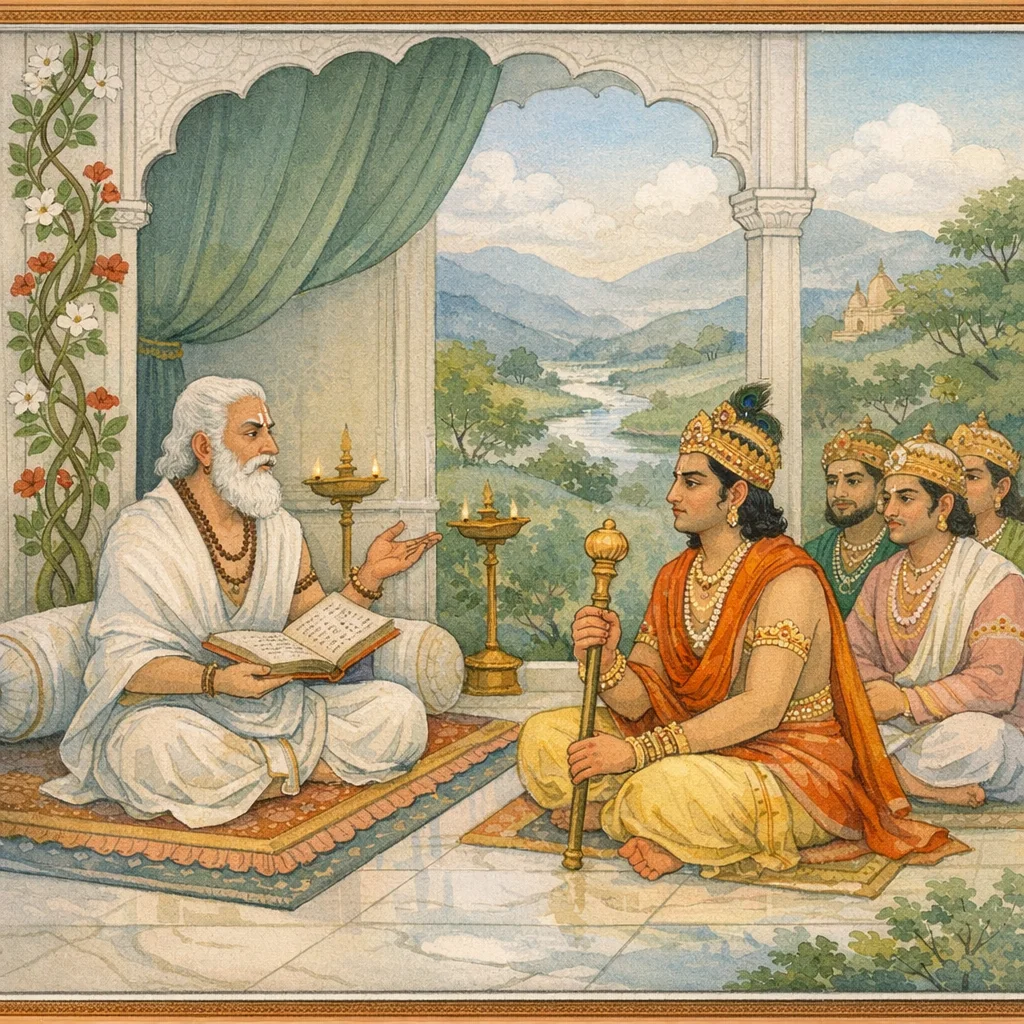
Bhīṣma advises that a king should appoint a learned, widely educated purohita who can evaluate dharma and artha without distortion. The chapter defines ruler and chaplain as mutually supportive, ethically aligned partners whose concord produces public welfare, while their mutual disrespect precipitates social ruin; the Brahma–Kṣatra dyad is described as the root of normative order. To substantiate this, Bhīṣma introduces an ancient dialogue between Aila and Kaśyapa. Aila asks what occurs when Brahmanical and Kṣatriya functions abandon each other; Kaśyapa answers that such opposition produces state decline, empowers predatory elements, and collapses education, ritual practice, and prosperity. The dialogue then pivots to the emergence of ‘Rudra’ as a figure for destructive consequence arising when wrongdoing becomes socially normalized; Kaśyapa interprets Rudra as an inner force (ātmā-rudra) in human hearts that, like fire, spreads confusion and makes communities collectively vulnerable to the effects of merit and demerit when boundaries between the harmful and the harmless are not maintained. The chapter concludes by distinguishing worldly mixed consequences from post-mortem differentiation, describing contrasting destinations for sustained virtue and sustained wrongdoing, and returning to the practical injunction: the king must appoint and honor a capable purohita, and formally empower him, because Brahmanical guidance strengthens Kṣatriya governance and vice versa.
Chapter Arc: युधिष्ठिर के सामने राजधर्म का एक सूक्ष्म प्रश्न उठता है—राज्य की कुशलता किन स्तंभों पर टिकी है, और राजा के लिए पुरोहित (धर्मात्मा, मन्त्रविद्) का स्थान क्या है? → वक्ता (ऐल–कश्यप संवाद के प्रसंग में) बताता है कि जिन राजाओं के पुरोहित धर्मात्मा और नीति-परामर्श में कुशल होते हैं, वहाँ अर्थ–काम–धर्म का निर्णय ठीक होता है; पर जिस राजा का पुरोहित नहीं, वह ‘उच्छिष्ट’ (अपूर्ण/अशुद्ध) समान है। ब्राह्मण और क्षत्रिय—इन दोनों के अनादर से प्रजा का विनाश बताया जाता है; क्षत्रिय यदि ब्राह्मण को त्याग दें तो वेदाध्ययन, यज्ञ, संतान-परंपरा—सब क्षीण होने लगते हैं। → दण्ड-नीति का तीखा नैतिक संकट उभरता है: जब पापी सभा में स्त्री/ब्राह्मण-हिंसा जैसे अपराधों का भी निर्भय होकर ‘अनुवाद’ (समर्थन/प्रशंसा/स्वीकृति) पा ले और राजा के निकट भी न डरे, तब क्षत्रिय-शासन में भय (अराजकता) जन्म लेता है। इसी बिंदु पर ऐल (पुरूरवा) दण्ड के पुण्य–पाप को स्पर्श करने और दण्ड-व्यवस्था के औचित्य पर प्रश्न उठाता है—यदि दण्ड का स्पर्श समान है तो फिर कोई सुकृत क्यों करे, दुष्कृत क्यों न करे? → उत्तर का सार यह स्थिर करता है कि ब्रह्म (ब्राह्मण-तत्त्व/धर्म-ज्ञान) और क्षत्र (राज-शक्ति/दण्ड) परस्पर-आश्रित हैं—एक दूसरे को धारण करते हैं; ब्राह्मण सब वर्णों में पूज्य है और राजा—even बलवान होकर भी—धर्म-आधारित मर्यादा में बंधा है। दण्ड का प्रयोजन अराजकता रोकना, धर्म की रक्षा और प्रजा की स्थिरता है; इसलिए राजा को पुरोहित-संयुक्त होकर ही शासन करना चाहिए।
Shlokas
Verse 1
/ हि ही बक। हि मा मी - यस्या ग्रियते कन्याया वाचा सत्ये कृते पति: | तामनेन विधानेन निजो विन्देत देवर: ।। (मनु० ९।६९) त्रिसप्ततितमो< ध्याय: विद्वान सदाचारी पुरोहितकी आवश्यकता तथा ब्राह्मण और क्षत्रियमें मेल रहनेसे लाभविषयक राजा पुरूरवाका उपाख्यान भीष्म उवाच राज्ञा पुरोहित: कार्यो भवेद् विद्वान् बहुश्रुतः । उभौ समीक्ष्य धर्मार्थावप्रमेयावनन्तरम्,भीष्मजी बोले--राजन्। राजाको चाहिये कि धर्म और अर्थकी गतिको अत्यन्त गहन समझकर अविलम्ब किसी ऐसे ब्राह्मणको पुरोहित बना ले, जो विद्वान् और बहुश्रुत हो
Bhishma said: “O King, a ruler should promptly appoint as his royal priest a learned Brahmin, widely versed in sacred and traditional lore. For the courses of dharma and artha are exceedingly subtle and hard to measure; therefore, having carefully examined both, the king should not delay in securing such guidance.”
Verse 2
धर्मात्मा मन्त्रविद् येषां राज्ञां राजन् पुरोहित: । राजा चैवंगुणो येषां कुशलं तेषु सर्वश:,राजन्! जिन राजाओंका पुरोहित धर्मात्मा एवं सलाह देनेमें कुशल होता है और जिनका राजा भी ऐसे ही गुणोंसे सम्पन्न (धर्मपरायण एवं गुप्त बातोंका जाननेवाला) होता है, उन राजा और प्रजाओंका सब प्रकारसे भला होता है
Bhishma said: O King, when a ruler’s royal priest is righteous in character and skilled in counsel, and when the king himself possesses the same qualities, then for such a king and his people there is well-being in every respect.
Verse 3
(तेषामर्थश्न कामश्न धर्मश्षेति विनिश्चय: । श्लोकांश्वोशनसा गीतांस्तान् निबोध युधिष्ठिर ।। उच्छिष्ट: स भवेद् राजा यस्य नास्ति पुरोहित: । उनके धर्म, अर्थ और काम तीनोंकी निश्चय ही सिद्धि होती है। युधिष्ठिर! इस विषयमें शुक्राचार्यके गाये हुए कुछ श्लोक हैं, उन्हें तुम सुनो। जिस राजाके पास पुरोहित नहीं है, वह उच्छिष्ट (अपवित्र) हो जाता है ।। रक्षसामसुराणां च पिशाचोरगपक्षिणाम् | शत्रूणां च भवेद् वध्यो यस्य नास्ति पुरोहित: ।। जिसके पास पुरोहित नहीं है, वह राजा राक्षसों, असुरों, पिशाचों, नागों, पक्षियोंका तथा शत्रुओंका वध्य होता है ।। ब्रूयात् कार्याणि सततं महोत्पातानि यानि च | इष्टमड्ल्नलयुक्तानि तथा55न्तःपुरिकाणि च ।। पुरोहितको चाहिये कि राजाके लिये जो सदा आवश्यक कर्तव्य हों, जो-जो बड़े बड़े उत्पात होने-वाले हों, जो अभीष्ट तथा माड्रलिक कृत्य हों तथा जो अन्तःपुरसे सम्बन्ध रखनेवाले वृत्तान्त हों, वे सब राजाको बतावे ।। गीतनृत्ताधिकारेषु सम्मतेषु महीपते: । कर्तव्यं करणीयं वै वैश्वदेवबलिस्तथा ।। राजाको प्रिय लगनेवाले जो गीत और नृत्यसम्बन्धी कार्य हों, उनमें करनेयोग्य कर्तव्यका पुरोहित निर्देश करे, बलिवैश्वदेवकर्मका सम्पादन करे ।। नक्षत्रस्यानुकूल्येन यः संजातो नरेश्वर: । राजशास्त्रविनीतश्न श्रेयान् राज्ञ: पुरोहित: ।। जो राजा अनुकूल नक्षत्रमें उत्पन्न हुआ है तथा राजशास्त्रकी पूर्ण शिक्षा प्राप्त कर चुका है, उससे भी श्रेष्ठ उसका पुरोहित होना चाहिये ।। अथान्यानां निमित्तानामुत्पातानामथार्थवित् ।। शत्रुपक्षक्षयज्ञश्न श्रेयान् सज्ञ: पुरोहित: ।) जो भिन्न-भिन्न प्रकारके निमित्तों और उत्पातोंका रहस्य जानता हो तथा शत्रुपक्षके विनाशकी प्रणालीका भी जानकार हो, ऐसा श्रेष्ठतम पुरुष राजाका पुरोहित होना चाहिये ।। उभौ प्रजा वर्धयतो देवान् सर्वान् सुतान् पितृन् | भवेयातां स्थितौ धर्मे श्रद्धेयौ सुतपस्विनौ,यदि राजा और पुरोहित धर्मनिष्ठ, श्रद्धेय तथा तपस्वी हों, एक-दूसरेके प्रति सौहार्द रखते हों और समान ह्ृदयवाले हों तो वे दोनों मिलकर प्रजाकी वृद्धि करते हैं तथा सम्पूर्ण देवताओं एवं पितरोंको तृप्त करके पुत्र और प्रजावर्गको भी अभ्युदयशील बनाते हैं। ऐसे ब्राह्मण (पुरोहित) और क्षत्रिय (राजा) का सम्मान करनेसे प्रजाको सुखकी प्राप्ति होती है
Bhishma said: ‘For them (the king and his realm), the attainment of dharma, artha, and kāma is assured. O Yudhiṣṭhira, listen to these verses sung by Uśanas (Śukrācārya). A king who has no purohita becomes “leftover” and impure—ritually unfit and politically vulnerable. Such a king becomes a lawful target for hostile forces: rākṣasas, asuras, piśācas, serpents, birds (as omens and agents of harm), and human enemies. Therefore the purohita should continually inform the king of what must always be done: necessary duties of state, impending great portents and calamities, desired and maṇḍalika (realm/feudatory-related) affairs, and matters pertaining to the inner palace. In activities the king favors—such as music and dance—the purohita should indicate what is proper to do, and he should also see to the performance of offerings like vaiśvadeva and bali. Even if a king is born under an auspicious constellation and trained in political science, the purohita ought to be superior in discernment—one who understands omens and extraordinary portents and knows the means of weakening and destroying the enemy’s faction. When king and purohita are both established in dharma, trustworthy, and austere, they together foster the growth of the people and bring satisfaction to gods and ancestors, thereby securing prosperity for offspring and subjects.’
Verse 4
परस्परस्य सुहृदौ विहितौ समचेतसौ । ब्रह्मक्षत्रस्य सम्मानात् प्रजा सुखमवाप्नुयात्,यदि राजा और पुरोहित धर्मनिष्ठ, श्रद्धेय तथा तपस्वी हों, एक-दूसरेके प्रति सौहार्द रखते हों और समान ह्ृदयवाले हों तो वे दोनों मिलकर प्रजाकी वृद्धि करते हैं तथा सम्पूर्ण देवताओं एवं पितरोंको तृप्त करके पुत्र और प्रजावर्गको भी अभ्युदयशील बनाते हैं। ऐसे ब्राह्मण (पुरोहित) और क्षत्रिय (राजा) का सम्मान करनेसे प्रजाको सुखकी प्राप्ति होती है
Bhīṣma said: When the king and the royal priest are established as mutual well-wishers, sharing a balanced and like-minded disposition, then by honoring the alliance of Brāhmaṇa and Kṣatriya the people attain happiness. In such concord, the ruler and priest together foster the growth and welfare of the subjects, uphold dharma through disciplined conduct, and secure prosperity for the community.
Verse 5
विमाननात् तयोरेव प्रजा नश्येयुरेव हि । ब्र्माक्षत्रं हि सर्वेषां वर्णानां मूलमुच्यते,उन दोनोंका अनादर करनेसे प्रजाका विनाश ही होता है, क्योंकि ब्राह्मण और क्षत्रिय सभी वर्णोके मूल कहे जाते हैं
Bhishma said: By showing contempt to those two, the people indeed come to ruin; for the Brahmin and the Kshatriya are declared to be the very root of all the social orders. The verse stresses that when society dishonors its guiding wisdom (brahminical discipline) and its protecting power (kshatriya governance), the common welfare collapses.
Verse 6
अत्राप्युदाहरन्तीममितिहासं पुरातनम् । ऐलकश्यपसंवादं तन्निबोध युधिछिर,इस विषयमें राजा पुरूरवा और महर्षि कश्यपके संवादरूप प्राचीन इतिहासका उदाहरण दिया करते हैं। युधिष्ठिर! तुम उसे सुनो
Here too they cite an ancient historical exemplar: the dialogue between King Purūravas of the Aila line and the sage Kaśyapa. O Yudhiṣṭhira, listen to it—so that this matter may be understood through precedent and instruction.
Verse 7
ऐल उवाच यदा हि ब्रह्म प्रजहाति क्षत्रं क्षत्रं यदा वा प्रजहाति ब्रह्म । अन्वग्बलं कतमे5स्मिन् भजन्ते तथा वर्णा: कतमे5स्मिन् प्रियन्ते
Aila said: “When the Brahmin order abandons the Kshatriya order—or when the Kshatriya order abandons the Brahmin order—then in whom does the rightful strength and authority reside? And in such a situation, which of the social orders align themselves with him, and which become dear and loyal to him?”
Verse 8
पुरूरवाने पूछा--महर्षे! ब्राह्मण और क्षत्रिय दोनों साथ रहकर ही सबल होते हैं; परंतु जब ब्राह्मण (पुरोहित) किसी कारणसे क्षत्रियको छोड़ देता है अथवा जब राजा ब्राह्मणका परित्याग कर देता है, तब अन्य वर्णके लोग इन दोनोंमेंसे किसका आश्रय ग्रहण करते हैं? तथा दोनोंमेंसे कौन सबको आश्रय देता है? ।। कश्यप उवाच विद्धं राष्ट्र क्षत्रियस्य भवति ब्रह्म क्षत्रं यत्र विरुद्धयतीह । अन्वग्बलं दस्यवस्तद् भजन्ते तथा वर्ण तत्र विदन्ति सन्त:,कश्यपने कहा--राजन! श्रेष्ठ पुरुष इस बातको जानते हैं कि संसारमें जहाँ ब्राह्मण क्षत्रियसे विरोध करता है, वहाँ क्षत्रियका राज्य छिन्न-भिन्न हो जाता है और लुटेरे दल-बलके साथ आकर उसपर अधिकार जमा लेते हैं तथा वहाँ निवास करनेवाले सभी वर्णके लोगोंको अपने अधीन कर लेते हैं
Kashyapa said: “O King, know this: wherever the priestly power (brahma) and the royal power (kṣatra) fall into hostility, the kṣatriya’s realm becomes wounded and broken. Then bands of robbers, gathering strength behind them, seize that land; and the good understand that in such a place all the social orders come under their domination. Thus, when Brahmin and Kshatriya abandon one another, the kingdom’s protection collapses and society becomes prey to lawlessness.”
Verse 9
नैषां ब्रह्म च वर्धते नोत पुत्रा न गर्गरो मथ्यते नो यजन्ते । नैषां पुत्रा वेदमधीयते च यदा ब्रद्ा क्षत्रिया: संत्यजन्ति,जब क्षत्रिय ब्राह्मणको त्याग देते हैं, तब उनका वेदाध्ययन आगे नहीं बढ़ता, उनके पुत्रोंकी भी वृद्धि नहीं होती, उनके यहाँ दही-दूधका मटका नहीं मथा जाता और न वे यज्ञ ही कर पाते हैं। इतना ही नहीं, उन ब्राह्मणोंके पुत्रोंका वेदाध्ययन भी नहीं हो पाता
Kāśyapa said: “When the kṣatriyas abandon the brāhmaṇas, the sacred learning among those people does not flourish. Their line does not prosper; the household’s ordinary rites of sustenance fail—milk and curd are not churned—and they are unable to perform sacrifices. Even their sons do not succeed in studying the Veda.”
Verse 10
नैषामर्थों वर्धते जातु गेहे नाधीयते सुप्रजा नो यजन्ते । अपध्वस्ता दस्युभूता भवन्ति ये ब्राह्मणान् क्षत्रिया: संत्यजन्ति,जो क्षत्रिय ब्राह्मणोंको त्याग देते हैं, उनके घरमें कभी धनकी वृद्धि नहीं होती। उनकी संतानें न तो पढ़ती हैं और न यज्ञ ही करती हैं। वे पदभ्रष्ट होकर डाकुओंकी भाँति लूटपाट करने लगते हैं
Kāśyapa said: For those Kṣatriyas who abandon the Brāhmaṇas, prosperity never truly increases in their households. Their children neither pursue sacred learning nor perform sacrifices. Fallen from their proper station, they become like bandits—living by plunder rather than by righteous rule.
Verse 11
वे दोनों ब्राह्मण और क्षत्रिय सदा एक-दूसरेसे मिलकर रहें, तभी वे एक-दूसरेकी रक्षा करनेमें समर्थ होते हैं। ब्राह्मणकी उन्नतिका आधार क्षत्रिय होता है और क्षत्रियकी उन्नतिका आधार ब्राह्मण
Kāśyapa said: “Let the two—Brahmin and Kshatriya—always live in mutual association; only then are they capable of protecting one another. The Kshatriya is the support of the Brahmin’s flourishing, and the Brahmin is the support of the Kshatriya’s flourishing.”
Verse 12
उभावेतौ नित्यमभिप्रपन्नौ सम्प्रापतुर्महतीं सम्प्रतिष्ठाम् । तयो: संधिभिद्यते चेत् पुराण- सतत: सर्व भवति हि सम्प्रमूढम्,ये दोनों जातियाँ जब सदा एक-दूसरेके आश्रित होकर रहती हैं, तब बड़ी भारी प्रतिष्ठा प्राप्त करती हैं और यदि इनकी प्राचीन कालसे चली आती हुई मैत्री टूट जाती है, तो सारा जगत् मोहग्रस्त एवं किंकर्तव्यविमूढ़ हो जाता है
Kāśyapa said: “When these two communities remain continually dependent upon one another—taking mutual refuge—they attain great standing and stability. But if their ancient, long-established bond of friendship is broken, then the whole world becomes perpetually bewildered, falling into confusion about what ought to be done.”
Verse 13
नात्र पारं लभते पारगामी महागाधे नौरिव सम्प्रपन्ना । चातुर्वर्ण्य भवति हि सम्प्रमूढं प्रजास्तत: क्षयसंस्था भवन्ति,जैसे महान् एवं अगाध समुद्रमें टूटी हुई नौका पार नहीं पहुँच पाती, उसी प्रकार उस अवस्थामें मनुष्य अपनी जीवनयात्राको कुशलपूर्वक पूर्ण नहीं कर पाते हैं। चारों वर्णोकी प्रजापर मोह छा जाता है और वह नष्ट होने लगती है
Kāśyapa said: “In such a condition, even one who is capable of crossing cannot reach the far shore—like a boat that has broken down in a vast and unfathomable sea. So too, people fail to carry their life’s journey to a safe and skillful completion. Delusion spreads over the communities of the four social orders, and from that confusion society declines toward ruin and dissolution.”
Verse 14
ब्रह्मवृक्षो रक्ष्यमाणो मधु हेम च वर्षति । अरक्ष्यमाण: सततमश्रु पापं च वर्षति,ब्राह्मणरूपी वृक्षकी यदि रक्षा की जाती है तो वह मधुर सुख और सुवर्णकी वर्षा करता है और यदि उसकी रक्षा नहीं की गयी तो उससे निरन्तर दुःखके आँसुओं और पापकी वृष्टि होती है
Kāśyapa said: “The Brahmin—likened to a sacred tree—when protected, showers sweetness like honey and wealth like gold. But when left unprotected, it continually rains tears of sorrow and brings forth sin. Therefore, safeguarding the Brahmin upholds welfare and restrains moral decline.”
Verse 15
न ब्रह्मचारी चरणादपेतो यदा ब्रद्द॒ ब्रह्मणि त्राणमिच्छेत् । आश्षूर्यतो वर्षति तत्र देव- स्तत्राभीक्ष्णं दुःसहाश्चाविशन्ति,जहाँ ब्रह्मचारी ब्राह्मण लुटेरोंके उपद्रवसे विवश हो वेदकी शाखाके स्वाध्यायसे वज्चित होता है और उसके लिये अपनी रक्षा चाहता है, वहाँ इन्द्रदेव यदि पानी बरसावें तो आश्चर्यकी ही बात है (वहाँ प्राय: वर्षा नहीं होती है) तथा महामारी और दुर्भिक्ष आदि दु:ःसह उपद्रव आ पहुँचते हैं
Kāśyapa said: “When a brahmacārin, driven away from his proper course, is forced to abandon the study of his Vedic branch because of harassment by robbers and seeks protection for the sake of Brahman (sacred learning), then if the god (Indra) sends rain there, it would be a wonder. In such a place, grievous calamities repeatedly enter—such as pestilence and famine.”
Verse 16
स्त्रियं हत्वा ब्राह्मणं वापि पाप: सभायां यत्र लभते5नुवादम् । राज्ञ: सकाशे न बिभेति चापि ततो भयं विद्यते क्षत्रियस्थ,जब पापात्मा मनुष्य किसी स्त्री अथवा ब्राह्मणकी हत्या करके लोगोंकी सभामें साधुवाद या प्रशंसा पाता है तथा राजाके निकट भी पापसे भय नहीं मानता, उस समय क्षत्रिय राजाके लिये बड़ा भारी भय उपस्थित होता है
Kashyapa said: When a sinful man, after killing a woman or even a Brahmin, receives approval and public praise in an assembly, and even in the king’s presence feels no fear or shame for his wrongdoing—then a grave danger arises for the Kshatriya king. For when society applauds atrocity and royal authority does not restrain it, the very foundations of righteous rule are threatened.
Verse 17
पापै: पापे क्रियमाणे हि चैल ततो रुद्रो जायते देव एष: । पापै: पापा: संजनयन्ति रुद्रं ततः सर्वान् साध्वसाधून् हिनस्ति,इलानन्दन! जब बहुत-से पापी पापाचार करने लगते हैं, तब ये संहारकारी रुद्रदेव प्रकट हो जाते हैं। पापात्मा पुरुष अपने पापोंद्वारा ही रुद्रको प्रकट करते हैं; फिर वे रुद्रदेव साधु और असाधु सब लोगोंका संहार कर डालते हैं
Kaśyapa said: “O son of Ilā, when many sinners persist in committing sin, then this god Rudra—who brings destruction—manifests. By their very sins, sinful people give rise to Rudra; and then Rudra destroys everyone, both the righteous and the unrighteous.”
Verse 18
ऐल उवाच कुतो रुद्र: कीदृशो वापि रुद्र: सत्त्वै: सत्त्वं दृश्यते वध्यमानम् । एतत् सर्व कश्यप मे प्रचक्ष्व कुतो रुद्रो जायते देव एष:,पुरूरवाने पूछा--कश्यपजी! ये रुद्रदेव कहाँसे आते हैं और कैसे हैं? इस जगत्में तो प्राणियोंद्वारा ही प्राणियोंका वध होता देखा जाता है; फिर ये रुद्रदेव किससे उत्पन्न होते हैं? ये सब बातें मुझे बताइये
Aila said: “From where does Rudra arise, and what is Rudra like? In this world one sees living beings killing other living beings. So from whom is this god Rudra born? O Kaśyapa, tell me all of this clearly.”
Verse 19
कश्यप उवाच आत्मा रुद्रो हृदये मानवानां स्व॑ं स्वं देहं परदेहं च हन्ति । वातोत्पातै: सदृशं रुद्रमाहु- देवैर्जीमूतैी: सदृशं रूपमस्य,कश्यपने कहा--राजन्! ये रुद्रदेव मनुष्योंके हृदयमें आत्मारूपसे निवास करते हैं और समय आनेपर अपने तथा दूसरेके शरीरोंका नाश करते हैं। विद्वान् पुरुष रुद्रको उत्पात-वायु (तूफानी हवा) के समान वेगवान् कहते हैं और उनका रूप बादलोंके समान बताते हैं
Kashyapa said: “Rudra abides as the very Self within the hearts of human beings. When the appointed time arrives, he brings about the destruction of one’s own body and also of another’s. The wise describe Rudra as swift and irresistible like a storm-wind, and they say his form is like the massed clouds.”
Verse 20
ऐल उवाच न वै वातः परिवृणोति ककश्रि- न्न जीमूतो वर्षति नापि देव: । तथायुक्तो दृश्यते मानुषेषु कामद्वेषाद् बध्यते मुहते च,पुरूरवाने कहा--कोई भी हवा किसीको आवृत नहीं करती है, न अकेले मेघ ही पानी बरसाता है, रुद्रदेव भी वर्षा नहीं करते हैं। जैसे वायु और बादलको आकाशमें संयुक्त देखा जाता है, उसी प्रकार मनुष्योंमें आत्मा मन, इन्द्रिय आदिसे संयुक्त ही देखा जाता है और वह राग द्वेषके कारण मोहग्रस्त होता है तथा मारा जाता है
Aila (Purūravas) said: “No wind by itself envelops anyone; nor does a cloud alone pour rain; nor does a god, by himself, make the rainfall. In the same way, among human beings the self is seen only in conjunction—with mind, senses, and the rest. Bound by desire and aversion, it falls into delusion and is brought to ruin.”
Verse 21
कश्यप उवाच यथैकगेहे जातवेदा: प्रदीप्त: कृत्स्नं ग्रामं दहते चत्वरं वा । विमोहनं कुरुते देव एष ततः सर्व स्पृश्यते पुण्यपापै:,कश्यपने कहा--जैसे एक घरमें लगी हुई आग प्रज्वलित हो आँगन तथा सारे गाँवको जला देती है, उसी प्रकार ये रुद्रदेव किसी एक प्राणीके भीतर विशेषरूपसे प्रकट हो दूसरोंके मनमें भी मोह उत्पन्न करते हैं; फिर सारे जगतका पुण्य और पापसे सम्बन्ध हो जाता है
Kashyapa said: “Just as a blazing fire kindled in a single house can burn down an entire village or even the public square, so this deity (Rudra), when manifesting with special force within one being, casts delusion into the minds of others as well. Thereafter the whole world becomes entangled—touched and affected—by merit and sin.”
Verse 22
ऐल उवाच यदि दण्ड: स्पृशते5पुण्यपापं पापै: पापे क्रियमाणे विशेषात् । कस्य हेतो: सुकृतं नाम कुर्याद् दुष्कृतं वा कस्य हेतोर्न कुर्यात्,पुरूरवाने पूछा--यदि पापियोंद्वारा विशेषरूपसे पाप और पुण्यात्माओंद्वारा विशेषरूपसे पुण्य किये जानेपर पुण्य-पापसे रहित आत्माको भी दण्ड भोगना पड़ता है, तब किसलिये कोई पुण्य करे और किसलिये पाप न करे?
Aila (Purūravas) said: If punishment comes to touch even one who is beyond both merit and sin—especially when sins are being committed by sinners—then for what reason should anyone perform what is called a good deed? And for what reason should anyone refrain from doing evil?
Verse 23
कश्यप उवाच असंत्यागात् पापकृतामपापां- स्तुल्यो दण्ड: स्पृशते मिश्रभावात् | शुष्केणाद दहाते मिश्रभावा- न्न मिश्र: स्थात् पापकृद्धिः कथंचित्,कश्यपने कहा--पापाचारियोंके संसर्गका त्याग न करनेसे पापहीन-धर्मात्मा पुरुषोंको भी उनसे मेल-जोल रखनेके कारण उनके समान ही दण्ड भोगना पड़ता है। ठीक उसी तरह, जैसे सूखी लकड़ियोंके साथ मिली होनेसे गीली लकड़ी भी जल जाती है। अतः विवेकी पुरुषको चाहिये कि वह पापियोंके साथ किसी तरह भी सम्पर्क न स्थापित करे
Kashyapa said: “If one does not renounce the company of sinners, even the sinless and righteous are touched by the same punishment, because association makes them ‘mixed’ with that taint. Just as wet wood, when lying together with dry wood, is burned, so too one should never remain in such a mixture. Therefore, a discerning person should not, in any way, establish contact with those who commit sin.”
Verse 24
ऐल उवाच साध्वसाधून् धारयतीह भूमि: साध्वसाधूंस्तापयतीह सूर्य: । साध्वसाधूंश्चापि वातीह वायु- रापस्तथा साध्वसाधून् पुनन्ति,पुरूरवा बोले--इस जगतमें पृथ्वी तो पापियों और पुण्यात्माओंको समान रूपसे धारण करती है। सूर्य भी भले-बुरोंको एक-सा ही संताप देते हैं। वायु साधु और दुष्ट दोनोंका स्पर्श करती है और जल पापी एवं पुण्यात्मा दोनोंको पवित्र करता है
Aila (Purūravas) said: In this world the earth supports both the righteous and the unrighteous alike. The sun scorches the good and the bad without distinction. The wind too blows upon both saintly and wicked persons, and water likewise purifies both the sinful and the virtuous.
Verse 25
कश्यप उवाच एवमस्मिन् वर्तते लोक एव नामुत्रैवं वर्तते राजपुत्र । प्रेत्यैतयोरन्तरावान् विशेषो यो वै पुण्यं चरते यश्च पापम्,कश्यपने कहा--राजकुमार! इस लोकमें ही ऐसी बात देखी जाती है, परलोकमें इस प्रकारका बर्ताव नहीं है। जो पुण्य करता है वह और जो पाप करता है वह--दोनों जब मृत्युके पश्चात् परलोकमें जाते हैं तो वहाँ उन दोनोंकी स्थितिमें बड़ा भारी अन्तर हो जाता है
Kashyapa said: “Prince, such distinctions are observed here in this world; in the next world things do not proceed in the same manner. After death, when the doer of merit and the doer of sin depart to the beyond, a great difference arises between their respective conditions.”
Verse 26
पुण्यस्य लोको मधुमान् घृतार्चि- हिरिण्यज्योतिरमृतस्य नाभि: । तत्र प्रेत्य मोदते ब्रह्मचारी न तत्र मृत्युर्न जरा नोत दुःखम्,पुण्यात्माका लोक मधुरतम सुखसे भरा होता है। वहाँ घीके चिराग जलते हैं। उसमें सुवर्णके समान प्रकाश फैला रहता है। वहाँ अमृतका केन्द्र होता है। उस लोकमें न तो मृत्यु है, न बुढ़ापा है और न दूसरा ही कोई दुःख है। ब्रह्मचारी पुरुष मृत्युके पश्चात् उसी स्वर्गादि लोकमें जाकर आनन्दका अनुभव करता है
Kāśyapa said: “The realm born of merit is sweet and delightful—lit by lamps of clarified butter, shining with a golden radiance, and holding the very ‘navel’ (central source) of immortality. Reaching that world after death, the disciplined brahmacārin rejoices there; for in that place there is neither death, nor old age, nor any other suffering.”
Verse 27
पापस्य लोको निरयो<प्रकाशो नित्यं दु:खं शोकभूयिष्ठमेव । तत्रात्मानं शोचति पापकर्म बह्वी: समा: प्रतपत्रप्रतिष्ठ:,पापीका लोक नरक है, जहाँ सदा अँधेरा छाया रहता है। वहाँ प्रतिदिन दुःख तथा अधिक-से-अधिक शोक होता है। पापात्मा पुरुष वहाँ बहुत वर्षोंतक कष्ट भोगता हुआ कभी एक स्थानपर स्थिर नहीं रहता और निरन्तर अपने लिये शोक करता रहता है
Kāśyapa said: “The realm allotted to sin is hell—devoid of light, ever filled with suffering, and overflowing with grief. There the doer of evil deeds laments for himself; for many years he is scorched by torment, finding no steady footing, and remains continually consumed by self-born sorrow.”
Verse 28
मिथोभेदाद् ब्राह्मणक्षत्रियाणां प्रजा दुःखं दुःसहं चाविशन्ति । एवं ज्ञात्वा कार्य एवेह नित्यं पुरोहितो नैकविद्यो नृपेण,ब्राह्मण और क्षत्रियोंमें परस्पर फूट होनेसे प्रजाको दुःसह दुःख उठाना पड़ता है। इन सब बातोंको समझ-बूझकर राजाको चाहिये कि वह सदाके लिये एक सदाचारी बहुज्ञ पुरोहित बना ही ले
Kāśyapa said: “When Brahmins and Kṣatriyas fall into mutual division, the people are overwhelmed by suffering—suffering that becomes hard to endure. Knowing this, a king should always ensure, as a standing duty, that he appoints a learned and well-qualified priest (purohita), skilled in many branches of knowledge, to guide and steady the realm.”
Verse 29
त॑ चैवान्वभिषिच्येत तथा धर्मो विधीयते । अग्र्यो हि ब्राह्मण: प्रोक्त: सर्वस्यैवेह धर्मत:,राजा पहले पुरोहितका वरण कर ले। उसके बाद अपना अभिषेक करावे। ऐसा करनेसे ही धर्मका पालन होता है; क्योंकि धर्मके अनुसार ब्राह्मण यहाँ सबसे श्रेष्ठ बताया गया है
And only after choosing a purohita should he proceed to his own consecration; in this way dharma is properly established. For, according to the order of righteousness, the Brāhmaṇa is declared here to be foremost for all.
Verse 30
पूर्व हि ब्रह्मण: सृष्टिरिति ब्रह्मविदो विदुः । ज्येछ्लेनाभिजनेनास्य प्राप्तं पूर्व यदुत्तरम्,वेदवेत्ता विद्वानोंका यह मत है कि सबसे पहले ब्राह्मणकी ही सृष्टि हुई है; अतः ज्येष्ठ तथा उत्तम कुलमें उत्पन्न होनेके कारण प्रत्येक उत्कृष्ट वस्तुपर सबसे पहले ब्राह्मणका ही अधिकार होता है
Kāśyapa said: “Those who know Brahman declare that, in the beginning, the Brāhmaṇa was created first. Therefore, by virtue of seniority and noble birth, what is foremost and excellent is held to belong first to the Brāhmaṇa.”
Verse 31
तस्मान्मान्यश्व पूज्यश्न ब्राह्मण: प्रसृताग्रभुक् । सर्व श्रेष्ठ विशिष्ट च निवेद्यं तस्य धर्मत:
Therefore, O Mānyaśva, the Brāhmaṇa is to be honored and revered. In accordance with dharma, one should offer him what is best and most distinguished—food placed into his outstretched hands—recognizing his sanctity and the moral order that upholds society.
Verse 32
ब्रह्म वर्धयति क्षत्र क्षत्रतो ब्रह्म वर्धते । एवं राज्ञा विशेषण पूज्या वै ब्राह्म॒णा: सदा,(राज्ञ: सर्वस्य चान्यस्य स्वामी राजपुरोहित: ।) ब्राह्मण क्षत्रियको बढ़ाता है और क्षत्रियसे ब्राह्मणकी उन्नति होती है। अतः राजाको विशेषरूपसे सदा ही ब्राह्मणोंकी पूजा करनी चाहिये; क्योंकि राजपुरोहित राजाका तथा अन्य सब लोगोंका भी स्वामी है
Kāśyapa said: The spiritual authority of the brāhmaṇa strengthens the kṣatriya power, and from kṣatriya protection and support the brāhmaṇa order likewise prospers. Therefore a king should, with special care, always honor brāhmaṇas; for the royal priest stands as a guiding lord—one who directs the king and, through him, the wider community as well.
Verse 73
इति श्रीमहाभारते शान्तिपर्वणि राजधर्मानुशासनपर्वणि ऐलकश्यपसंवादे त्रिसप्ततितमो<5ध्याय:
Thus, in the Śrī Mahābhārata, within the Śānti Parva—specifically the section on the instruction of royal duties (Rājadharmānuśāsana)—in the dialogue between Aila and Kaśyapa, ends the seventy-third chapter.
Verse 131
एतौ हि नित्यं संयुक्तावितरेतरधारणे । क्षत्रं वै ब्रह्मणो योनिर्योनि: क्षत्रस्य वै द्विजा:
Kāśyapa said: “These two are ever bound together, each sustaining the other. The Kṣatra (royal power) indeed arises from the Brāhmaṇa as its source; and the Brāhmaṇas, O twice-born, have the Kṣatra as their source (of protection and support).”
Verse 316
अवश्यमेव कर्ताव्यं राज्ञा बलवतापि हि । इसलिये ब्राह्मण सब वर्णोंका सम्माननीय और पूजनीय है। वही भोजनके लिये प्रस्तुत की हुई सब वस्तुओंको सबसे पहले भोगनेका अधिकारी है। सभी श्रेष्ठ और उत्तम पदार्थोंको धर्मके अनुसार पहले ब्राह्मणकी सेवामें ही निवेदित करना चाहिये। बलवान् राजाको भी अवश्य ऐसा ही करना चाहिये
Kāśyapa said: “This must certainly be done—even by a king, though he be powerful. A ruler is bound by dharma to honor and revere the brāhmaṇas; offerings and the best of provisions, when presented for eating, should be first dedicated to them in accordance with righteous custom.”
Frequently Asked Questions
The dilemma concerns institutional legitimacy: whether royal power can remain stable and welfare-producing without sustained alignment with learned ethical counsel, and what systemic harms arise when priestly and royal duties become antagonistic or neglected.
Ethical governance is presented as a cooperative system: knowledge-guided restraint and executive protection must be mutually reinforcing; when communities tolerate wrongdoing and blur boundaries between the harmful and the harmless, destructive consequences proliferate from within human dispositions.
No explicit phalaśruti formula is stated here; the chapter’s meta-claim is functional: understanding and implementing the Brahma–Kṣatra concord (via a qualified, honored purohita) is positioned as a necessary condition for social stability and the clear differentiation of ethical outcomes.