Adhyaya 266
मोक्षोपाय-निर्णयः (Determination of the Means to Liberation)
Upa-parva: Mokṣa-dharma (Liberation Teachings) — Self-restraint and the single path to mokṣa
Chapter 266 presents a focused dialogue in which Yudhiṣṭhira asks Bhīṣma to explain mokṣa specifically through valid ‘means’ (upāya), not through non-means. Bhīṣma affirms Yudhiṣṭhira’s fitness for subtle inquiry and argues for a single, coherent path to liberation, using analogical reasoning (a cause must match its effect; a path to one ‘shore’ does not reach another). He then enumerates a practical program of inner regulation: anger is cut by forbearance, desire by abandoning mental constructions, lethargy and confusion by disciplined practice, and fear by vigilance. The chapter lists methods for reducing illness and disturbance through moderated diet, diminishing greed and delusion through contentment, and weakening attachment through insight into impermanence. It culminates in a compact yogic-ethical syllabus: renouncing five obstacles (desire, anger, greed, fear, and sleep), cultivating supports (meditation, study, giving, truth, modesty, straightforwardness, patience, cleanliness, dietary purity, and sense-restraint), and progressively restraining speech, mind, and intellect under the ‘eye of knowledge’ until tranquility stabilizes the self. The result is described as a clean, lucid, and stable “road” to mokṣa marked by non-attachment, absence of agitation, and regulated conduct of body, speech, and mind.
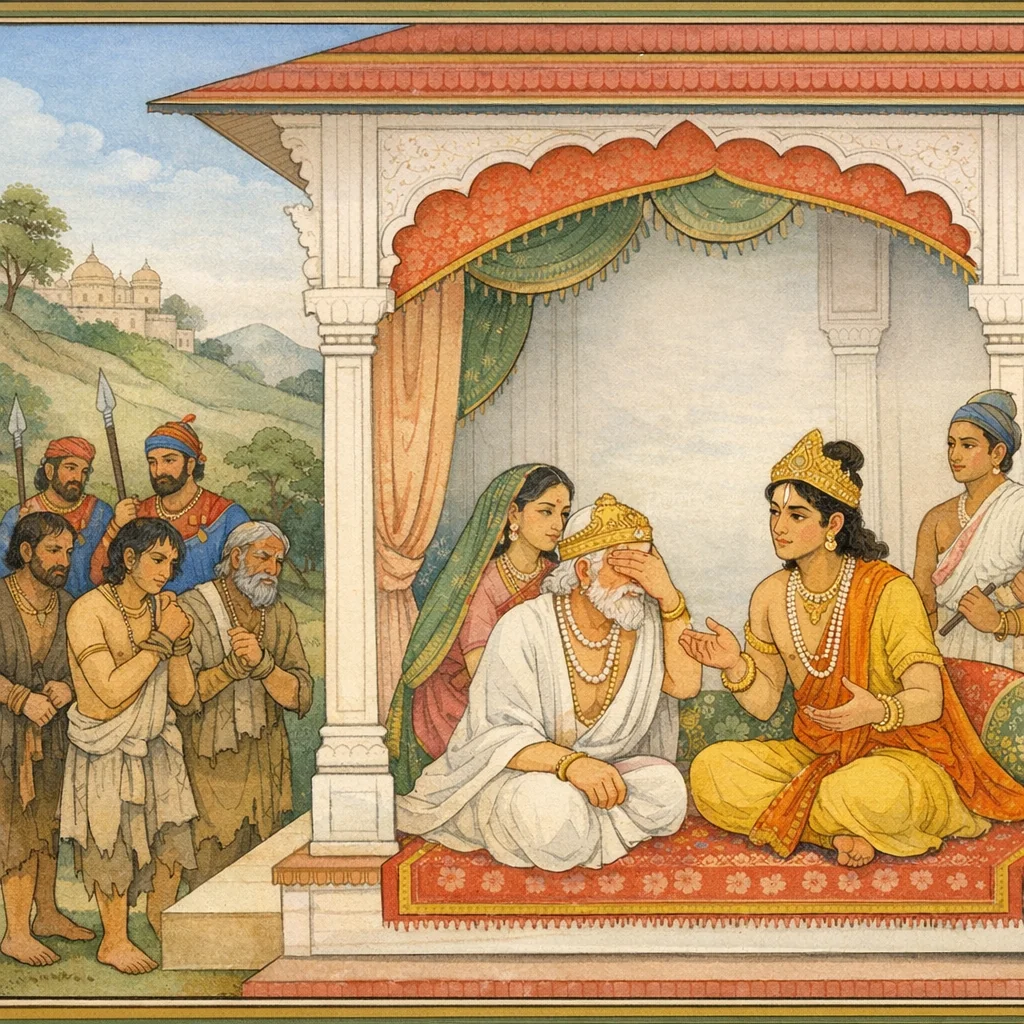
Chapter Arc: युधिष्ठिर पूछते हैं—राजा को प्रजा का शासन कैसे करना चाहिए, और दण्ड-नीति में धर्म का सर्वोत्तम मार्ग क्या है? → भीष्म एक प्राचीन इतिहास सुनाते हैं: राजा द्युमत्सेन के सामने अपराधियों को दण्ड देने का प्रश्न आता है। सत्यवान् देखता है कि पिता की आज्ञा से अनेक अपराधी वध के लिए ले जाए जा रहे हैं; वह दण्ड की कठोरता बनाम करुणा की सीमा पर प्रश्न उठाता है—क्या राज्य-रक्षा के लिए हिंसा अनिवार्य है? → संवाद का शिखर: सत्यवान् ‘अहिंसापूर्वक’ दण्ड-नीति का प्रतिपादन करता है—भय दिखाकर सर्वस्व-हरण, बन्धन, विरूपकरण, वध-दण्ड आदि से प्रजा क्लेश पाती है; पर साथ ही वह चेतावनी देता है कि जहाँ पापी को बड़ा दुःख नहीं मिलता, वहाँ पाप बढ़ते हैं और धर्म ‘हँसता’ (उपहासित होता) है। यहीं संतुलन का सूत्र निकलता है: दया भी, दण्ड भी—पर प्रथम-कल्प (श्रेष्ठ) उपायों से, युग-धर्म और अपराधी की शक्ति/आयु/काल का विचार करके। → सत्यवान् बताता है कि यह उपदेश उसे एक दयालु, विद्वान ब्राह्मण से मिला—कृतयुग में प्रथम-कल्प (अहिंसात्मक, सुधारक) उपायों से राजा विजय पाता है; युग-परिवर्तन के साथ धर्म घटता है, इसलिए दण्ड-नीति भी यथायोग्य समायोजित होनी चाहिए। मनु के वचन का आश्रय लेकर वह कहता है कि प्राणियों पर अनुकम्पा हेतु धर्म-उपदेश है—राजा का दण्ड भी लोक-कल्याण और धर्म-स्थापन के लिए हो, प्रतिशोध के लिए नहीं।
Shlokas
Verse 1
/ अपन कराता बछ। अं क्ज सप्तषष्ट्याधिकद्विशततमो< ध्याय: द्युमत्सेन और सत्यवान्का संवाद--अहिंसापूर्वक राज्यशासनकी श्रेष्ठठाका कथन युधिछिर उवाच कथं राजा प्रजा रक्षेत्र च किंचित् प्रधातयेत् । पृच्छामि त्वां सतां श्रेष्ठ तन्मे ब्रूहि पितामह,युधिष्ठिरने पूछा--सत्पुरुषोंमें श्रेष्ठ पितामह! मैं आपसे यह पूछ रहा हूँ कि राजा किस प्रकार प्रजाकी रक्षा करे, जिससे उसको किसीकी हिंसा न करनी पड़े, वह आप मुझे बतानेकी कृपा करें
Yudhiṣṭhira said: “How should a king protect his subjects, and how may he govern and punish when necessary—yet without resorting to violence? I ask you, O best among the virtuous; tell me this, Grandfather.”
Verse 2
भीष्म उवाच अत्राप्युदाहरन्तीममितिहासं पुरातनम् । द्युमत्सेनस्य संवाद राज्ञा सत्यवता सह,भीष्मजीने कहा--युधिष्ठिर! इस विषयमें राजा सत्यवानके साथ उनके पिता द्युमत्सेनका जो संवाद हुआ था, उसी प्राचीन इतिहासका उदाहरण दिया जाता है
Bhishma said: “Here too, an ancient precedent is cited—an old historical account: the dialogue of Dyumatsena with King Satyavat. By recalling that exchange, the matter at hand is illuminated through a time-tested example of dharma and right conduct.”
Verse 3
अव्याह्वतं व्याजहार सत्यवानिति नः श्रुतम् वधायोजन्नीयमानेषु पितुरेवानुशासनात्,हमने सुना है कि एक दिन सत्यवानने देखा कि पिताकी आज्ञासे बहुत-से अपराधी शूलीपर चढ़ा देनेके लिये ले जाये जा रहे हैं। उस समय उन्होंने पिताके पास जाकर ऐसी बात कही, जो पहले किसीने नहीं कही थी
Verse 4
अधर्मतां याति धर्मों यात्यधर्मश्न धर्मताम् वधो नाम भवेद् धर्मो नैतद् भवितुमहति,"पिताजी! यह सत्य है कि कभी ऊपरसे धर्म-सा दिखायी देनेवाला कार्य अधर्मरूप हो जाता है और अधर्म भी धर्मके रूपमें परिणत हो जाता है, तथापि किसी प्राणीका वध करना भी धर्म हो--ऐसा कदापि नहीं हो सकता”
Bhishma said: “At times, what is called ‘dharma’ slips into unrighteousness, and what is called ‘adharma’ may come to be regarded as righteous. Even so, it is not acceptable that the killing of a living being should be termed ‘dharma’—that cannot truly be.”
Verse 5
इुमत्सेन उवाच अथ चेदवधो धर्मो5धर्म: को जातु चिद् भवेत् | दस्यवश्नेन्न हन्येरन् सत्यवन् संकरो भवेत्,द्युमत्सेनने कहा--बेटा सत्यवान्! यदि अपराधीका वध न करना भी कभी धर्म हो तो अधर्म क्या हो सकता है? यदि चोर-डाकू मारे न जाय॑ँ तो प्रजामें वर्णसंकरता और धर्मसंकरता फैल जाय
Dyumatsena said: “O Satyavān, if refraining from killing even the guilty were ever to be called ‘dharma,’ then what, indeed, could count as ‘adharma’? For if thieves and bandits are not punished and slain, social confusion and the mixing of moral order will arise among the people.”
Verse 6
ममेदमिति नास्यैतत् प्रवर्तेत कलौ युगे । लोकयात्रा न चैव स्यादथ चेद् वेत्थ शंस नः,कलियुग आनेपर तो लोग “यह वस्तु मेरी है, इसकी नहीं है” ऐसा कहकर सीधे ही दूसरोंका धन हड़प लेंगे। इस तरह लोकयात्राका निर्वाह असम्भव हो जायगा। यदि तुम इसका कोई समाधान जानते हो, तो मुझसे बताओ
“In the Kali age, the notion ‘this is mine, not his’ will no longer function as a reliable restraint. People will brazenly seize others’ wealth, and the ordinary conduct of society—its shared livelihood and mutual dealings—will not endure. If you know a remedy for this, tell me.”
Verse 7
सत्यवानुवाच सर्व एते त्रयो वर्णा: कार्या ब्राह्मणबन्धना: । धर्मपाशनिबद्धानामन्यो>प्येवं चरिष्यति,सत्यवान् बोले--पिताजी! क्षत्रिय, वैश्य तथा शूद्र--इन तीनों वर्णोको ब्राह्मणोंके अधीन कर देना चाहिये। जब चारों वर्णोंके लोग धर्मके बन्धनमें बँधकर उसका पालन करने लगेंगे तो उनकी देखा-देखी दूसरे मनुष्य सूत-मागध आदि भी धर्मका आचरण करेंगे
Satyavān said: “Father, these three social orders—Kṣatriya, Vaiśya, and Śūdra—should be kept under the guiding restraint of the Brāhmaṇas. When people of the four varṇas become bound by the ‘noose’ of dharma and live in obedience to it, then others too—seeing their example, even groups such as Sūtas and Māgadhas—will likewise practice dharma.”
Verse 8
यो यस्तेषामपचरेत् तमाचक्षीत वै द्विज: । अयं मे न शृणोतीति तस्मिन् राजा प्रधारयेत्,इनमेंसे जो भी ब्राह्मणकी आज्ञाके विपरीत आचरण करे, उसके विषयमें ब्राह्मणको राजाके पास जाकर कहना चाहिये कि “अमुक मनुष्य मेरी बात नहीं सुनता है।” तब राजा उसी व्यक्तिको दण्ड दे
“Whoever among them acts contrary to a Brāhmaṇa’s injunction, the Brāhmaṇa should go to the king and say, ‘This man does not heed my word.’ Then the king should punish that person.”
Verse 9
तत्त्वाभेदेन यच्छास्त्रं तत् कार्य नान्यथाविधम् | असमीक्ष्यैव कर्माणि नीतिशास्त्रं यथाविधि,जो दण्ड-विधान शरीरके पाँचों तत्त्वोंकी अलग-अलग न कर सके अर्थात् किसीके प्राण न ले, उसीका प्रयोग करना चाहिये। नीतिशास्त्रकी आलोचना और अपराधीके कार्यपर भलीभाँति विचार किये बिना ही इसके विपरीत कोई दण्ड नहीं देना चाहिये
Dyumatsena said: “That treatise which lays down policy and punishment in accordance with the true principles (of reality and right conduct) should be applied exactly as prescribed, not in any other manner. Without properly examining the deeds (of the offender) and without due reflection on the science of polity as it is taught, one should not impose a punishment contrary to rule.”
Verse 10
दस्यून् निहन्ति वै राजा भूयसो वाप्यनागस: । भार्या माता पिता पुत्रो हन्यन्ते पुरुषेण ते । परेणापकृतो राजा तस्मात् सम्यक् प्रधारयेत्,राजा डाकुओं अथवा दूसरे बहुत-से निरपराध मनुष्योंको मार डालता है और इस प्रकार उसके द्वारा मारे गये पुरुषके पिता-माता, स्त्री और पुत्र आदि भी जीविकाका कोई उपाय न रह जानेके कारण मानो मार दिये जाते हैं, अतः किसी दूसरेके अपकार करनेपर राजाको भलीभाँति विचार करना चाहिये (जल्दबाजी करके किसीको प्राणदण्ड नहीं देना चाहिये)
Dyumatsena said: “A king may indeed slay bandits—or even many who are innocent. When a man is thus killed, his wife, mother, father, and son are, as it were, killed as well, for their means of livelihood is cut off. Therefore, even when provoked or wronged by another, a king should deliberate rightly and act with due consideration, not rushing into the punishment of death.”
Verse 11
असाधुश्चव पुरुषो लभते शीलमेकदा । साधोश्चवापि हासाधुभ्य: शोभना जायते प्रजा,दुष्ट पुरुष भी कभी साधुसंगसे सुधरकर सुशील बन जाता है तथा बहुत-से दुष्ट पुरुषोंकी संतानें भी अच्छी निकल जाती हैं
Dyumatsena said: Even an unrighteous man may, at some time, acquire good conduct; and even from the unrighteous, a worthy and admirable offspring can be born. Thus, one should not despair of moral transformation, nor judge the future solely by present character or lineage.
Verse 12
न मूलघात: कर्तव्यो नैष धर्म: सनातन: । अपि स्वल्पवधेनैव प्रायश्षित्तं विधीयते,इसलिये दुष्टोंको प्राणदण्ड देकर उनका मूलोच्छेद नहीं करना चाहिये। किसीकी जड़ उखाड़ना सनातन धर्म नहीं है। अपराधके अनुरूप साधारण दण्ड देना चाहिये, उसीसे अपराधीके पापोंका प्रायश्चित हो जाता है
Dyumatsena said: “One should not strike at the root—one should not seek total annihilation. Such a course is not the eternal dharma. Even by a light, proportionate punishment, expiation is accomplished; the offender’s sin is thereby worked off.”
Verse 13
उद्वेजनेन बन्धेन विरूपकरणेन च । वधदण्डेन ते क्लिश्या न पुरोहितसंसदि,अपराधीको उसका सर्वस्व छीन लेनेका भय दिखाया जाय अथवा उसे कैद कर लिया जाय या उसके किसी अंगको भंग करके उसे कुरूप बना दिया जाय; परंतु प्राणदण्ड देकर उनके कुटुम्बियोंको क्लेश पहुँचाना उचित नहीं है। इसी तरह यदि वे पुरोहित ब्राह्मणकी शरणमें जा चुके हों तो भी राजा उन्हें दण्ड न दे
Dyumatsena said: “Let such offenders be restrained by intimidation, by imprisonment, or by bodily disfigurement that makes them visibly marked; but they should not be tormented by the penalty of death, which only brings anguish upon their families. Likewise, even if they have taken refuge in the assembly or protection of a priestly Brāhmaṇa, the king should not inflict capital punishment upon them.”
Verse 14
यदा पुरोहित वा ते पर्येयु: शरणैषिण: । करिष्याम: पुनर्ब्रह्ममू न पापमिति वादिन:,यदि शरण चाहनेवाले डाकू या दुष्ट पुरुष पुरोहितकी शरणमें चले जायँँ और यह प्रतिज्ञा करें कि 'ब्रह्मम! अब हम फिर ऐसा पाप नहीं करेंगे" तो उन्हें छोड़ देना चाहिये। यह ब्रह्माजीका उपदेश है। सिर मुड़ाकर दण्ड और मृगचर्म धारण करनेवाला संन्यासी ब्राह्मण भी यदि पाप करे तो दण्ड पानेका अधिकारी है
Dyumatsena said: “If robbers or other wicked men, seeking refuge, come to your family priest and declare, ‘O Brahman, we shall not commit such sin again,’ then they should be released. This is the instruction of Brahmā. Yet even a renunciant brāhmaṇa—shaven-headed, bearing the staff and wearing a deer-skin—if he commits wrongdoing, is fit to receive punishment.”
Verse 15
तदा विसर्गमर्हा: स्युरितीदं धातृशासनम् | बिभ्रद् दण्डाजिन मुण्डो ब्राह्मणो5हति शासनम्,यदि शरण चाहनेवाले डाकू या दुष्ट पुरुष पुरोहितकी शरणमें चले जायँँ और यह प्रतिज्ञा करें कि 'ब्रह्मम! अब हम फिर ऐसा पाप नहीं करेंगे" तो उन्हें छोड़ देना चाहिये। यह ब्रह्माजीका उपदेश है। सिर मुड़ाकर दण्ड और मृगचर्म धारण करनेवाला संन्यासी ब्राह्मण भी यदि पाप करे तो दण्ड पानेका अधिकारी है
Then they should be released—this is the ordinance of the Creator. Even a Brahmin renunciant, with shaven head and bearing the staff and deerskin, if he commits wrongdoing, is still subject to punishment under the rule of law. The ethical point is that refuge and repentance can warrant mercy for offenders, yet religious appearance does not exempt anyone from accountability.
Verse 16
गरीयांसो गरीयांसमपराधे पुन: पुनः । तदा विसर्गमर्हन्ति न यथा प्रथमे तथा,यदि मनुष्य बार-बार अपराध करे, तो प्रमुख विचारकगण उसके अपराधके लिये गुरुतर दण्ड प्रदान करें। उस अवस्थामें पहले बारके अपराधकी भाँति वे बिना दण्ड दिये छोड़ देनेके योग्य नहीं रह जाते हैं
If a man commits offenses again and again, the foremost judges should award a heavier punishment for his crime. In that case, he is no longer fit to be released without penalty as he might be for a first offense.
Verse 17
हुमत्सेन उवाच यत्र यत्रैव शक््येरन् संयन्तुं समये प्रजा: । स तावान प्रोच्यते धर्मो यावन्न प्रतिलड्घ्यते,द्ुमत्सेनने कहा--बेटा! जहाँ-जहाँ भी प्रजाको धर्मकी मर्यादाके भीतर नियमन्त्रित करके रखा जा सके वहाँ-वहाँ वैसा करना धर्म ही बताया जाता है। जबतक कि धर्मका उल्लंघन नहीं किया जाता (तबतक ही वहाँ ऐसी व्यवस्था कर लेनी चाहिये)
Humatsena said: “My son, wherever and whenever it is possible to keep the people restrained within the bounds of proper order, that very measure is called dharma. Such an arrangement is to be maintained only so long as it does not transgress dharma itself.”
Verse 18
अहन्यमानेषु पुनः सर्वमेव पराभवेत् । पूर्वे पूर्वतरे चैव सुशास्या हुभवन् जना:
If people are not restrained and corrected when they do wrong, then in time everything is brought to ruin. Therefore those who came earlier—and those even more senior—must be well-governed and properly disciplined, so that order and welfare do not collapse.
Verse 19
मृदव: सत्य भूयिष्ठा अल्पद्रोहाल्पमन्यव: । पुराधिग्दण्ड एवासीद् वाग्दण्डस्तदनन्तरम्
Humatsena said: “In earlier times people were gentle, mostly truthful, rarely treacherous, and slow to anger. Then, at first, punishment was only by censure and moral disapproval; afterwards, punishment by harsh speech came into use.”
Verse 20
यदि धर्मका उल्लंघन करनेपर भी लुटेरोंका वध न किया जाय तो उनसे सारी प्रजाको कष्ट पहुँच सकता है। पहले और बहुत पहलेके लोगोंपर शासन करना सुगम था, क्योंकि उनका स्वभाव कोमल था, सत्यमें उनकी विशेष रुचि थी और द्रोह तथा क्रोधकी मात्रा उनमें बहुत कम थी। पहले अपराधीको धिककार देना ही बड़ा भारी दण्ड समझा जाता था। तदनन्तर अपराधकी मात्रा बढ़नेपर वाग्दण्डका प्रचार हुआ--अपराधीको कटुवचन सुनाकर छोड़ दिया जाने लगा ।। आसीदादानदण्डो5पि वधदण्डोड्द्य वर्तते । वधेनापि न शक््यन्ते नियन्तुमपरे जना:,इसके बाद आवश्यकता समझकर अर्थदण्ड भी चालू किया गया और आजकल तो वधका दण्ड भी प्रचलित हो गया है। बहुत-से दुष्टात्मा मनुष्योंको तो प्राणदण्डके द्वारा भी काबूमें लाना या मर्यादाके भीतर रखना असम्भव-सा हो रहा है
Humatsena said: “In earlier times, even confiscation of goods was considered sufficient punishment; but today the penalty of execution has come into use. Yet there are some people so incorrigible that they cannot be restrained within moral bounds even by putting them to death.”
Verse 21
नैव दस्युर्मनुष्याणां न देवानामिति श्रुति: । न गन्धर्वपितृणां च कः कस्येह न कश्नन,सुननेमें आया है कि डाकू मनुष्यों, देवताओं, गन्धर्वों अथवा पितरोंमेंसे किसीका आत्मीय नहीं होता। इतना ही नहीं, इस संसारमें कौन लुटेरा किसका है, यह प्रश्न ही नहीं उठ सकता। कोई डाकू किसीका नहीं होता है, यही कहना यथार्थ है
Humat-sena said: “Scriptural tradition declares that a bandit belongs to no one—neither to human beings nor to the gods, nor even to the Gandharvas or the Pitṛs. In this world, no one can truly claim, ‘This robber is mine’; a robber is, in reality, nobody’s own.”
Verse 22
पद्म श्मशानादादत्ते पिशाचाच्चापि दैवतम् | तेषु यः: समयं कश्रित् कुर्वीत हतबुद्धिषु
“A man may even take a lotus from a cremation-ground, and may even accept a deity from a piśāca (a malignant spirit). But whoever makes a pact or agreement with such people of ruined understanding—he acts without discernment and invites harm.”
Verse 23
वह तो मरघटमें जाकर मृत शरीरसे चिह्नभूत वस्त्र आदि उतार लाता है और देवताओंकी सम्पत्तिको भी लूट लेता है। जिनकी बुद्धि मारी गयी है, उन डाकुओंपर जो कोई विश्वास करता है, वह मूर्ख है ।। सत्यवानुवाच तान् न शक्नोषि चेत् साधून् परित्रातुमहिंसया । कस्यचिद् भूतभव्यस्य लाभेनान्तं तथा कुरु,सत्यवानने कहा--पिताजी! यदि आप लुटेरोंका वध न करके साधुओंकी रक्षा करनेमें असमर्थ हैं, अथवा उन दस्युओंको ही साधु बनाकर अहिंसाद्वारा उनकी प्राणरक्षा नहीं कर सकते तो भूत, वर्तमान और भविष्यमें उनके पारमार्थिक लाभका उद्देश्य सामने रखकर किसी उत्तम उपायसे उनका या उनकी दस्युवृत्तिका अन्त कर दीजिये
Humatsena said: “He goes even to the cremation-ground, strips from a dead body the identifying garments and the like, and even plunders what belongs to the gods. Whoever places trust in such bandits—men whose understanding is ruined—is a fool.” Satyavān replied: “Father, if you cannot protect the good without killing—if you cannot, by non-violence, reform those robbers into righteous men and preserve their lives—then, keeping in view their true welfare in past, present, and future, bring their end, or end their banditry, by some fitting means.”
Verse 24
राजानो लोकयात्रार्थ तप्यन्ते परमं तप: । तेडपत्रपन्ति तादृग्भ्यस्तथावृत्ता भवन्ति च,बहुत-से नरेश, लोगोंकी जीवनयात्राका यथावत् रूपसे निर्वाह हो, इस उददेश्यसे बड़ी भारी तपस्या करते हैं। वे राजा अपने राज्यमें चोर-डाकुओंके होनेसे लज्जाका अनुभव करते हैं। इसीलिये प्रजाको शुद्ध, सदाचारी एवं सुखी बनानेकी इच्छासे वैसी तपस्यामें प्रवृत्त होते हैं
Humatsena said: “Kings undertake the highest austerities for the sake of the world’s orderly continuance. They feel shame when their realm harbors thieves and robbers; therefore, desiring to make their subjects pure, well-conducted, and happy, they commit themselves to such disciplined exertion.”
Verse 25
वित्रास्यमाना: सुकृतो न कामादधघ्नन्ति दुष्कृतीन् । सुकृतेनैव राजानो भूयिष्ठं शासते प्रजा:,जब प्रजामें दण्डका भय उत्पन्न किया जाता है, तब वह सत्कर्मपरायण होती है; अतः भय दिखाकर प्रजाको धर्ममें लगाना ही दण्डका उद्देश्य है, किसीका प्राण लेना नहीं। राजालोग अपनी इच्छासे दुष्टोंका वध नहीं करते हैं। श्रेष्ठ नरेश प्रायः सत्कर्मों और सद्व्यवहारों-द्वारा ही दीर्घकालतक प्रजापर शासन करते हैं
Humatsena said: “When people are made to feel the fear of punishment, they turn toward good conduct; therefore the purpose of punishment is to instill dharma through deterrence, not to take life. Kings do not, out of mere personal desire, kill the wicked. The best rulers, for the most part, govern their subjects for a long time through virtue itself—by good deeds and proper, civilized conduct.”
Verse 26
श्रेयस: श्रेयसो<प्येवं वृत्तं लोको<नुवर्तते । सदैव हि गुरोर्वृत्तमनुवर्तन्ति मानवा:,इस प्रकार परम श्रेष्ठ राजाके सद॒व्यवहारका सब लोग अनुसरण करते हैं। मनुष्य स्वभावसे ही सदा बड़ोंके आचरणोंका अनुकरण करते हैं
Even so, people follow the conduct of one who is excellent—indeed, of one who is the best among the good. For human beings, by their very nature, always imitate the behavior of their elders and teachers.
Verse 27
आत्मानमसमाधाय समाधित्सति यः परान् | विषयेष्विन्द्रियवशं मानवा: प्रहसन्ति तम्,जो राजा स्वयं विषय भोगनेके लिये इन्द्रियोंका दास हो रहा है, अपने मनको काबूमें नहीं रख पाता, वह यदि दूसरोंको सदाचारका उपदेश देने लगे तो लोग उसकी हँसी उड़ाते हैं
Humatsena said: “A man who has not composed his own self, who is himself unsteady and enslaved by the senses amid sense-objects—if he tries to instruct others in self-control and right conduct, people only laugh at him.”
Verse 28
यो राज्ञो दम्भमोहेन किंचित् कुर्यादसाम्प्रतम् । सर्वोपायैर्नियम्य: स तथा पापान्निवर्तते,यदि कोई मनुष्य दम्भ या मोहके कारण राजाके साथ किंचिन्मात्र भी कोई अनुचित बर्ताव करने लगे तो सभी उपायोंसे उसका दमन करना चाहिये। ऐसा करनेपर वह पापकर्मसे दूर हट जाता है
If anyone, through arrogance or delusion, behaves in even the slightest improper way toward the king, he should be restrained by every means. When this is done, he turns back from sin and withdraws from evil deeds.
Verse 29
आत्मैवादौ नियन्तव्यो दुष्कृतं संनियच्छता । दण्डयेच्च महादण्डैरपि बन्धूननन्तरान्,जो राजा पापकी प्रवृत्तिको रोकना चाहता हो, उसे पहले अपने मनको ही वशमें करना चाहिये। फिर अपने सगे बन्धु-बान्धव भी अपराध करें तो उनको भी भारी-से-भारी दण्ड देना चाहिये
Humatsena said: “One who seeks to restrain wrongdoing must first bring his own self under control. Thereafter, even if his closest kinsmen commit offences, he should punish them as well—using even the severest penalties—so that sin is checked and justice remains impartial.”
Verse 30
यत्र वै पापकृन्नीचो न महद् दुःखमर्च्छति । वर्धन्ते तत्र पापानि धर्मो हसति च ध्रुवम्,जहाँ पाप करनेवाले नीचको महान् दुःख नहीं भोगना पड़ता है, वहाँ निश्चय ही पाप बढ़ता है और धर्मका हास होता है
Where a base person who commits sin does not have to endure great suffering, sin surely multiplies there, and dharma is inevitably mocked and diminished. The verse warns that when wrongdoing goes unpunished, moral order collapses and vice gains confidence.
Verse 31
इति कारुण्यशीलस्तु विद्वान् वै ब्राह्मणो5न्वशात् । इति चैवानुशिष्टो 5स्मि पूर्वस्तात पितामहै:,पिताजी! एक दयालु एवं विद्वान् ब्राह्मणने मुझे यह सब उपदेश दिया था। उस समय उसने कहा था कि “तात सत्यवान! मेरे पूर्वज पितामहोंने मुझे आश्वासन देते हुए अत्यन्त कृपापूर्वक ऐसी शिक्षा दी थी। इसलिये राजाको सत्ययुगमें जब कि धर्म अपने चारों चरणोंसे मौजूद रहता है, पूर्वोक्त प्रथम श्रेणीके (अहिंसामय) दण्डद्वारा ही प्रजाको वशमें करना चाहिये
Humatsena said: “Thus a compassionate and learned Brāhmaṇa instructed me. And in the same way I too was instructed earlier, dear child, by my forefathers and grandfathers.”
Verse 32
आश्वासयद्धि: सुभृशमनुक्रोशात् तथैव च । एतत् प्रथमकल्पेन राजा कृतयुगे जयेत्,पिताजी! एक दयालु एवं विद्वान् ब्राह्मणने मुझे यह सब उपदेश दिया था। उस समय उसने कहा था कि “तात सत्यवान! मेरे पूर्वज पितामहोंने मुझे आश्वासन देते हुए अत्यन्त कृपापूर्वक ऐसी शिक्षा दी थी। इसलिये राजाको सत्ययुगमें जब कि धर्म अपने चारों चरणोंसे मौजूद रहता है, पूर्वोक्त प्रथम श्रेणीके (अहिंसामय) दण्डद्वारा ही प्रजाको वशमें करना चाहिये
Humatsena said: “Indeed, with deep compassion, they greatly reassured and instructed me. Therefore, dear child, in the Kṛta (Satya) Yuga—when dharma stands firm on all four feet—a king should bring his subjects under control only by the first and highest mode of punishment, the gentle, non-violent form grounded in restraint and moral suasion.”
Verse 33
पादोनेनापि धर्मेण गच्छेत् त्रेतायुगे तथा । द्वापरे तु द्विपादेन पादेन त्वधरे युगे
Humatsena said: “Even with dharma diminished by a quarter, one may still proceed in the Tretā age. In the Dvāpara age, dharma stands on two quarters; but in the later (Kali) age it stands only on a single quarter. The teaching is that the moral capacity of the world declines across the yugas, so ethical effort must be understood against the backdrop of an age’s reduced stability of righteousness.”
Verse 34
“त्रेतायुग आनेपर धर्मका प्रचार एक चौथाई कम हो जाता है, द्वापरमें धर्मके दो ही पैर रह जाते हैं; परंतु कलियुगमें तो धर्मका चतुर्थ भाग ही शेष रह जाता है ।। तथा कलियुगे प्राप्ते राज्ञो दुश्चरितेन ह भवेत् कालविशेषेण कला धर्मस्य षोडशी,“इस प्रकार कलियुग उपस्थित होनेपर राजाके दुर्व्यवहारसे तथा उस कालविशेषका प्रभाव पड़नेसे सम्पूर्ण धर्मकी सोलहवीं कलामात्र शेष रह जायगी
Humatsena said: “In the Tretā age, the spread and strength of dharma diminishes by a quarter; in the Dvāpara age only two ‘legs’ of dharma remain; but in the Kali age merely a fourth part of dharma is left. And when the Kali age arrives, through the king’s corrupt conduct and through the particular force of that time itself, only a sixteenth portion of dharma will remain.” The teaching is that moral order declines not only because of an age’s tendencies, but also because rulers’ misconduct hastens and deepens that decline.
Verse 35
अथ प्रथमकल्पेन सत्यवन् संकरो भवेत् | आयु: शक्ति च कालं॑ च निर्दिश्य तप आदिशेत्,'सत्यवान्! यदि प्रथम श्रेणीके अहिंसात्मक दण्डसे धर्म और अधर्मका सम्मिश्रण होने लगे, तब दण्डनीय व्यक्तिकी आयु, शक्ति और कालको ध्यानमें रखते हुए राजा यथोचित दण्डके लिये आज्ञा प्रदान करे
Humatsena said: “Then, even by the first (and mildest) procedure, a man like Satyavān may fall into a confused mixture of dharma and adharma. Therefore, after considering the offender’s lifespan, strength, and the circumstances of time, the king should prescribe an appropriate punitive discipline.”
Verse 36
सत्याय हि यथा नेह जह्याद् धर्मफलं महत् । भूतानामनुकम्पार्थ मनु: स्वायम्भुवोडब्रवीत्,'स्वायम्भुव मनुने प्राणियोंपर अनुग्रह करनेके लिये धर्मका उपदेश किया है, जिससे इस जगतमें वह सत्यस्वरूप परमात्माकी प्राप्ति करानेवाले धर्मके महान् फलसे वंचित न रह जाय”
Out of compassion for living beings, Manu Svāyambhuva taught dharma, so that in this world they would not be deprived of dharma’s great fruit—the fruit that leads to the attainment of the Paramātman, the Supreme Self whose nature is Truth.
Verse 267
इति श्रीमहाभारते शान्तिपर्वणि मोक्षधर्मपर्वणि द्युमत्सेनसत्यवत्संवादे सप्तषष्ट्यधिकद्विशततमो<5ध्याय:
Thus, in the Śrī Mahābhārata, within the Śānti Parva—specifically the Mokṣadharma section—ends the dialogue between Dyumatsena and Satyavat, concluding the two-hundred and sixty-seventh chapter.
Frequently Asked Questions
The dilemma is methodological and ethical: how liberation can be pursued through valid causes (upāya) rather than inconsistent practices—resolved by presenting a unified discipline of restraint, moderation, and knowledge as the appropriate causal route to mokṣa.
Mokṣa is approached through a single integrated path: systematically reducing disruptive states (anger, desire, fear, confusion, sleep) and cultivating purifying virtues (truth, charity, patience, cleanliness, sense-control) under sustained knowledge-practice.
Rather than a formal phalaśruti, the chapter provides evaluative framing: the mokṣa-mārga is described as “prasanna, vimala, śuci” (clear, stainless, pure), and its marker is regulated conduct of speech, body, and mind grounded in tranquility.