Adhyaya 240
Adhyāya 240: Indriya–Manas–Buddhi–Ātman — The Inner Hierarchy and Restraint (इन्द्रिय-मनस्-बुद्धि-आत्म-क्रमः)
Upa-parva: Mokṣa-dharma (Liberation Teachings) — Indriya–Manas–Buddhi–Ātman Discourse Unit
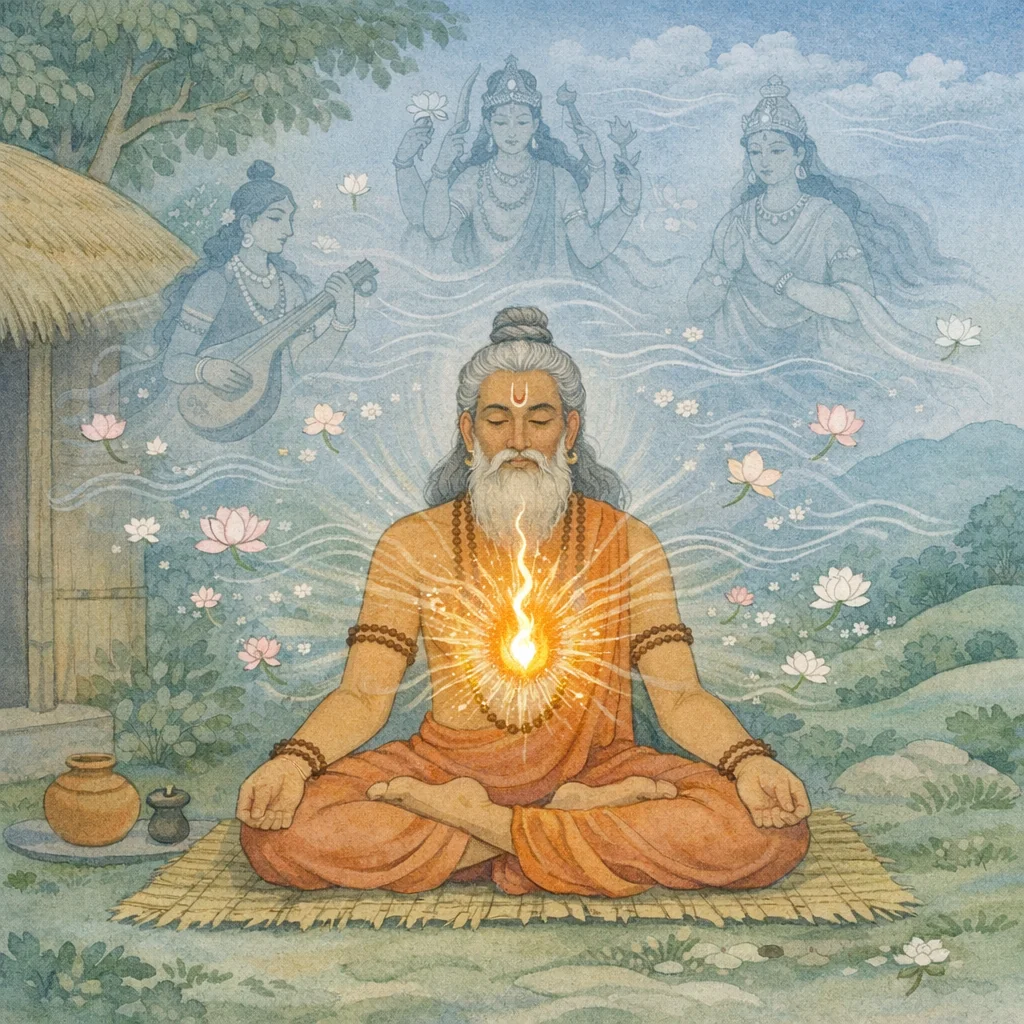
Vyāsa articulates a graded model of inner operation: objects stand beyond the senses, mind surpasses objects in coordinating pursuit, intellect (buddhi) surpasses mind in determination, and the self (ātman) is held to be superior to intellect. Buddhi is described as the human’s decisive faculty and as intimately reflective of the self; when it modulates into desire or request, it functions as mind. The discourse explains how buddhi appears differentiated through the senses—becoming hearing, touch, sight, taste, and smell—while remaining a subtle principle operating within the person across three affective conditions (commonly read as pleasure, pain, and neutrality). The instruction recommends remembering the distinct ‘adhiṣṭhānas’ (bases) and fully mastering the senses, since unregulated sequence and undifferentiated cognition sustain rajas with sattva following its motion. A disciplined person understands this as natural functioning and avoids oscillations of grief and elation. The self is said to be unperceivable by desire-driven senses; when the mind reins in the sensory ‘rays,’ the self shines forth like a lamp in a jar. Analogies (water-bird unstained by water; fish and water; reed and muñja) illustrate non-attachment and the subtle distinction-yet-association of kṣetrajña (knower) and guṇas/prakṛti.
Chapter Arc: शिष्य-मन के भीतर उठता प्रश्न—जिस ‘ज्ञानशक्ति’ से सुख-दुःख और समस्त पदार्थों का अनुभव होता है, वह अन्तःकरण की कौन-सी वृत्ति है, और योग उसे कैसे एकाग्र कर ब्रह्म-प्रकाश तक ले जाता है? → वक्ता योगकृत्य का क्रम खोलता है: बुद्धि-मन-इन्द्रियों का ‘एकत्व’ साधना, दमन और अध्यात्मशीलता की शर्तें, तथा मार्ग में आने वाले मोह, भ्रम, आवर्त जैसे विघ्न। साधक के सामने सूक्ष्म आकर्षण भी आते हैं—दिव्य सुगन्ध, दिव्य शब्द, दिव्य रूप—जो लक्ष्य से भटका सकते हैं। → जब योगी पाँचों इन्द्रियों को वश में कर, मन में दृढ़तापूर्वक स्थापित करता है और मन (छठा) भी शान्त हो जाता है—तब ‘प्रसीदन्ति च संस्थाय तदा ब्रह्म प्रकाशते’: भीतर धूमरहित अग्नि, दीप्त सूर्य और आकाशीय विद्युत्-सी ज्योति के रूप में आत्म-प्रकाश का अनुभव होता है। → साधना का नैतिक-मानसिक निष्कर्ष स्पष्ट होता है: काम, क्रोध, लोभ, भय और स्वप्न/निद्रा-प्रमाद जैसे दोषों का उच्छेद; सत्त्व-सेवन से धीर पुरुष निद्रा-आलस्य को जीतकर स्थिरता पाता है। योग का फल बाह्य चमत्कार नहीं, अन्तःकरण की प्रशान्ति और ब्रह्म-प्रकाश है।
Shlokas
Verse 1
है अर छा | अ-क्रा - अन्तःकरणमें जो ज्ञानशक्ति है, जिसके द्वारा मनुष्य सुख-दुःख और समस्त पदार्थोका अनुभव करते हैं, जो कि अन्तःकरणकी एक वृत्तिविशेष है, इसे ही “चेतना” कहते हैं। चत्वारिशर्दाधिकद्विशततमो< ध्याय: योगसे परमात्माकी प्राप्तिका वर्णन व्यास उवाच पृच्छतस्तव सत्पुत्र यथावदिह तत्त्वत: । सांख्यज्ञानेन संयुक्त यदेतत् कीर्तितं मया,व्यासजी कहते हैं--सत्पुत्र शुक! तुम्हारे प्रश्नके अनुसार मैंने जो यहाँ ज्ञानके विषयका यथार्थ रूपसे तात््विक वर्णन किया है, ये सब सांख्यज्ञानसे सम्बन्ध रखनेवाली बातें हैं
Vyāsa said: “O noble son, as you have asked, I have here described the truth of the matter in a proper and principled way. What I have stated is bound up with Sāṅkhya-knowledge (discriminative insight), setting the foundation for the higher pursuit of liberation.”
Verse 2
योगकृत्यं तु ते कृत्स्नं वर्तयिष्यामि तच्छृणु । एकत्वं बुद्धिमनसोरिन्द्रियाणां च सर्वश:
Vyāsa said: “Now listen. I shall set forth for you, in full, the entire discipline of Yoga—how the intellect and the mind are brought into oneness, and how the senses, in every respect, are gathered into that same unified control.”
Verse 3
तदेतदुपशान्तेन दान्तेनाध्यात्मशीलिना
This teaching is to be received and lived by one who is inwardly pacified, self-restrained, and devoted to the discipline of the Self—so that the instruction becomes an ethical transformation rather than mere learning.
Verse 4
योगदोषान् समुच्छिद्य पठच यान् कवयो विदु:,सत्त्वसंसेवनाद धीरो निद्रामुच्छेत्तुमरहति । विद्वानोंने योगके जो काम, क्रोध, लोभ, भय और पाँचवाँ स्वप्र--ये पाँच दोष बताये हैं उनका पूर्णतया उच्छेद करे। इनमेंसे क्रोधको शम (मनोनिग्रह) के द्वारा जीते, कामको संकल्पके त्यागद्वारा पराजित करे तथा धीर पुरुष सत्वगुणका सेवन करनेसे निद्राका उच्छेद कर सकता है
Vyāsa said: Having completely cut off the defects that obstruct yoga—those which the sages have identified—a steadfast person becomes fit to dispel sleep by cultivating sattva. The ethical thrust is self-purification: the aspirant must uproot inner enemies such as desire, anger, greed, fear, and the tendency toward sleep, so that clarity and disciplined wakefulness can support the yogic life.
Verse 5
काम॑ क्रोधं च लोभं च भयं स्वप्रं च पजचमम् । क्रोधं शमेन जयति काम॑ संकल्पवर्जनात्,सत्त्वसंसेवनाद धीरो निद्रामुच्छेत्तुमरहति । विद्वानोंने योगके जो काम, क्रोध, लोभ, भय और पाँचवाँ स्वप्र--ये पाँच दोष बताये हैं उनका पूर्णतया उच्छेद करे। इनमेंसे क्रोधको शम (मनोनिग्रह) के द्वारा जीते, कामको संकल्पके त्यागद्वारा पराजित करे तथा धीर पुरुष सत्वगुणका सेवन करनेसे निद्राका उच्छेद कर सकता है
Vyāsa said: Desire, anger, greed, fear, and—fifth—sleep: these are the five faults the wise identify. One should uproot them completely. Among them, anger is conquered by calm restraint; desire is overcome by abandoning indulgent intentions; and a steadfast person, by cultivating sattva (clarity and purity), becomes fit to cut off sleep.
Verse 6
धृत्या शिक्षोदरं रक्षेत् पाणिपादं च चक्षुषा,सत्त्वसंसेवनाद धीरो निद्रामुच्छेत्तुमरहति । विद्वानोंने योगके जो काम, क्रोध, लोभ, भय और पाँचवाँ स्वप्र--ये पाँच दोष बताये हैं उनका पूर्णतया उच्छेद करे। इनमेंसे क्रोधको शम (मनोनिग्रह) के द्वारा जीते, कामको संकल्पके त्यागद्वारा पराजित करे तथा धीर पुरुष सत्वगुणका सेवन करनेसे निद्राका उच्छेद कर सकता है मनुष्य धैर्यका सहारा लेकर शिश्न और उदरकी रक्षा करे अर्थात् विषयभोग और भोजनकी चिन्ता दूर कर दे। नेत्रोंकी सहायतासे हाथ और पैरोंकी, मनके द्वारा नेत्र और कानोंकी तथा कर्मके द्वारा मन और वाणीकी रक्षा करे अर्थात् इनको शुद्ध बनावे। सावधानीके द्वारा भयका और दिद्दान् पुरुषोंके सेवनसे दम्भका त्याग करे
Vyāsa said: By steadfastness one should guard the generative organ and the belly—curbing sensual indulgence and the obsession with food. By watchfulness of the eyes one should restrain the hands and feet from straying into wrongful acts. And by cultivating sattva, a self-possessed person becomes fit to cut off sleep (i.e., overcome torpor and negligence).
Verse 7
चक्षु:श्रोत्रे च मनसा मनोवाचं च कर्मणा । अप्रमादाद् भयं जह्माद् दम्भं प्राज्ञोपसेवनात्,सत्त्वसंसेवनाद धीरो निद्रामुच्छेत्तुमरहति । विद्वानोंने योगके जो काम, क्रोध, लोभ, भय और पाँचवाँ स्वप्र--ये पाँच दोष बताये हैं उनका पूर्णतया उच्छेद करे। इनमेंसे क्रोधको शम (मनोनिग्रह) के द्वारा जीते, कामको संकल्पके त्यागद्वारा पराजित करे तथा धीर पुरुष सत्वगुणका सेवन करनेसे निद्राका उच्छेद कर सकता है मनुष्य धैर्यका सहारा लेकर शिश्न और उदरकी रक्षा करे अर्थात् विषयभोग और भोजनकी चिन्ता दूर कर दे। नेत्रोंकी सहायतासे हाथ और पैरोंकी, मनके द्वारा नेत्र और कानोंकी तथा कर्मके द्वारा मन और वाणीकी रक्षा करे अर्थात् इनको शुद्ध बनावे। सावधानीके द्वारा भयका और दिद्दान् पुरुषोंके सेवनसे दम्भका त्याग करे
Vyāsa said: One should guard the senses and inner faculties in a disciplined chain—protecting the eyes and ears through the mind, and restraining mind and speech through right action. By vigilance one should cast off fear, and by keeping company with the wise one should abandon hypocrisy and pretension. A steadfast person, by cultivating sattva (clarity and balance), becomes fit to cut off the heaviness of sleep.
Verse 8
एवमेतान् योगदोषान् जयेन्नित्यमतन्द्रित: । अग्नीश्र ब्राह्माणांश्चार्चेद् देवता: प्रणमेत च,सत्त्वसंसेवनाद धीरो निद्रामुच्छेत्तुमरहति । विद्वानोंने योगके जो काम, क्रोध, लोभ, भय और पाँचवाँ स्वप्र--ये पाँच दोष बताये हैं उनका पूर्णतया उच्छेद करे। इनमेंसे क्रोधको शम (मनोनिग्रह) के द्वारा जीते, कामको संकल्पके त्यागद्वारा पराजित करे तथा धीर पुरुष सत्वगुणका सेवन करनेसे निद्राका उच्छेद कर सकता है इस प्रकार सदैव सावधानीपूर्वक आलस्य छोड़कर इन योगसम्बन्धी दोषोंको जीतनेका प्रयत्न करना चाहिये। एवं अग्नि और ब्राह्मणोंकी पूजा करनी चाहिये तथा देवताओंको प्रणाम करना चाहिये
Vyāsa said: “Thus one should always, without negligence, conquer these faults that obstruct yoga. One should worship the sacred fire and honor the brāhmaṇas, and also bow to the deities. By cultivating the quality of sattva, a steadfast person becomes fit to cut off sleep (slothful torpor).”
Verse 9
वर्जयेदुशतीं वाचं हिंसायुक्तां मनोनुदाम् । ब्रह्म तेजोमयं शुक्र यस्य सर्वमिदं रस:,सत्त्वसंसेवनाद धीरो निद्रामुच्छेत्तुमरहति । विद्वानोंने योगके जो काम, क्रोध, लोभ, भय और पाँचवाँ स्वप्र--ये पाँच दोष बताये हैं उनका पूर्णतया उच्छेद करे। इनमेंसे क्रोधको शम (मनोनिग्रह) के द्वारा जीते, कामको संकल्पके त्यागद्वारा पराजित करे तथा धीर पुरुष सत्वगुणका सेवन करनेसे निद्राका उच्छेद कर सकता है
Vyāsa said: One should avoid speech that is alluring yet harmful—words joined with violence that agitate and wound the mind. Brahman is of the nature of pure radiance, the stainless essence, of which all this world is but a taste and extract. By cultivating sattva (clarity and goodness), a steadfast person becomes fit to cut off sleep (sloth and heedlessness) and remain wakeful in disciplined awareness.
Verse 10
एतस्य भूतं भव्यस्य दृष्टं स्थावरजड्रमम् । साधकको चाहिये कि मनको पीड़ा देनेवाली हिंसायुक्त वाणीका प्रयोग न करे। तेजोमय निर्मल ब्रह्म सबका बीज (कारण) है। यह जो कुछ दिखायी दे रहा है, सब उसीका रस (कार्य) है। सम्पूर्ण चराचर जगत् उस ब्रह्मके ही ईक्षण (संकल्प) का परिणाम है || ९६ || ध्यानमध्ययन दान सत्यं द्वीरार्जवं क्षमा,सत्त्वसंसेवनाद धीरो निद्रामुच्छेत्तुमरहति । विद्वानोंने योगके जो काम, क्रोध, लोभ, भय और पाँचवाँ स्वप्र--ये पाँच दोष बताये हैं उनका पूर्णतया उच्छेद करे। इनमेंसे क्रोधको शम (मनोनिग्रह) के द्वारा जीते, कामको संकल्पके त्यागद्वारा पराजित करे तथा धीर पुरुष सत्वगुणका सेवन करनेसे निद्राका उच्छेद कर सकता है ध्यान, वेदाध्ययन, दान, सत्य, लज्जा, सरलता, क्षमा, शौच, आचारशुद्धि एवं इन्द्रियोंका निग्रह--इनके द्वारा तेजकी वृद्धि होती है और पापोंका नाश हो जाता है
Vyāsa said: Meditation, study of sacred learning, charity, truthfulness, modesty, straightforwardness, and forgiveness—by cultivating these, and by keeping company with (and strengthening) sattva, a steadfast person becomes fit to cut off sleep (i.e., overcome lethargy and torpor).
Verse 11
शौचमाचार संशुद्धिरिन्द्रियाणां च निग्रह: । एतैरविवर्धते तेज: पाप्मानं चापकर्षति,सत्त्वसंसेवनाद धीरो निद्रामुच्छेत्तुमरहति । विद्वानोंने योगके जो काम, क्रोध, लोभ, भय और पाँचवाँ स्वप्र--ये पाँच दोष बताये हैं उनका पूर्णतया उच्छेद करे। इनमेंसे क्रोधको शम (मनोनिग्रह) के द्वारा जीते, कामको संकल्पके त्यागद्वारा पराजित करे तथा धीर पुरुष सत्वगुणका सेवन करनेसे निद्राका उच्छेद कर सकता है ध्यान, वेदाध्ययन, दान, सत्य, लज्जा, सरलता, क्षमा, शौच, आचारशुद्धि एवं इन्द्रियोंका निग्रह--इनके द्वारा तेजकी वृद्धि होती है और पापोंका नाश हो जाता है
Vyāsa said: Purity, the cleansing of one’s conduct, and restraint of the senses—by these one’s inner radiance steadily increases and sin is drawn away. Further, by cultivating the quality of sattva, a steadfast person becomes fit to cut off excessive sleep. The teaching points to disciplined living as the means to weaken inner faults and strengthen clarity and spiritual vigor.
Verse 12
सिध्यन्ति चास्य सर्वार्था विज्ञानं च प्रवर्तते । सम: सर्वेषु भूतेषु लब्धालब्धेन वर्तयन्,सत्त्वसंसेवनाद धीरो निद्रामुच्छेत्तुमरहति । विद्वानोंने योगके जो काम, क्रोध, लोभ, भय और पाँचवाँ स्वप्र--ये पाँच दोष बताये हैं उनका पूर्णतया उच्छेद करे। इनमेंसे क्रोधको शम (मनोनिग्रह) के द्वारा जीते, कामको संकल्पके त्यागद्वारा पराजित करे तथा धीर पुरुष सत्वगुणका सेवन करनेसे निद्राका उच्छेद कर सकता है इतना ही नहीं, इनसे साधक के सभी मनोरथ सिद्ध होते हैं तथा उसे विज्ञानकी भी प्राप्ति होती है। योगीको चाहिये कि वह सम्पूर्ण प्राणियोंमें समान भाव रक्खे। जो कुछ भी मिले या न मिले, उसीसे संतोषपूर्वक निर्वाह करे। पापोंको धो डाले तथा तेजस्वी, मिताहारी और जितेन्द्रिय होकर काम और क्रोधको वशमें करके ब्रह्मपदको पानेकी इच्छा करे
Vyāsa said: By such discipline, all a seeker’s aims are fulfilled and true discernment begins to operate. Remaining even-minded toward all beings, and sustaining oneself with contentment whether one gains or does not gain, the steadfast person—by cultivating sattva—becomes fit to cut off sleep (i.e., lethargy and heedlessness). Thus the yogic life is marked by equality toward creatures, freedom from agitation over outcomes, and the inner clarity that arises from purity and self-mastery.
Verse 13
धूतपाप्मा तु तेजस्वी लघ्वाहारो जितेन्द्रिय: । कामक्रोधौ वशे कृत्वा निनीषेद् ब्रह्मण: पदम्,सत्त्वसंसेवनाद धीरो निद्रामुच्छेत्तुमरहति । विद्वानोंने योगके जो काम, क्रोध, लोभ, भय और पाँचवाँ स्वप्र--ये पाँच दोष बताये हैं उनका पूर्णतया उच्छेद करे। इनमेंसे क्रोधको शम (मनोनिग्रह) के द्वारा जीते, कामको संकल्पके त्यागद्वारा पराजित करे तथा धीर पुरुष सत्वगुणका सेवन करनेसे निद्राका उच्छेद कर सकता है इतना ही नहीं, इनसे साधक के सभी मनोरथ सिद्ध होते हैं तथा उसे विज्ञानकी भी प्राप्ति होती है। योगीको चाहिये कि वह सम्पूर्ण प्राणियोंमें समान भाव रक्खे। जो कुछ भी मिले या न मिले, उसीसे संतोषपूर्वक निर्वाह करे। पापोंको धो डाले तथा तेजस्वी, मिताहारी और जितेन्द्रिय होकर काम और क्रोधको वशमें करके ब्रह्मपदको पानेकी इच्छा करे
Vyāsa says: One who has washed away sin, is radiant, eats lightly, and has mastered the senses should bring desire and anger under control and aspire to reach the supreme state of Brahman. By cultivating sattva (clarity and purity), a steadfast person becomes fit to cut off sleep (sloth and torpor), advancing toward spiritual realization through disciplined self-mastery.
Verse 14
मनसश्रेन्द्रियाणां च कृत्वैकाग्र्यं समाहित: । पूर्वरात्रापरार्ध च धारयेन्मन आत्मनि,सत्त्वसंसेवनाद धीरो निद्रामुच्छेत्तुमरहति । विद्वानोंने योगके जो काम, क्रोध, लोभ, भय और पाँचवाँ स्वप्र--ये पाँच दोष बताये हैं उनका पूर्णतया उच्छेद करे। इनमेंसे क्रोधको शम (मनोनिग्रह) के द्वारा जीते, कामको संकल्पके त्यागद्वारा पराजित करे तथा धीर पुरुष सत्वगुणका सेवन करनेसे निद्राका उच्छेद कर सकता है
Vyāsa said: Having gathered the mind and the senses into one-pointed steadiness, the disciplined seeker should hold the mind within the Self through the latter half of the night and the early hours before dawn. By cultivating sattva, a steadfast person becomes fit to cut off sleep. The wise, in the discipline of yoga, speak of five faults—desire, anger, greed, fear, and sleep/dreaming; one should uproot them completely. Among these, anger is conquered by calm restraint of the mind, desire is overcome by abandoning compulsive intention and resolve, and by sustained reliance on sattva the resolute can dispel the heaviness of sleep.
Verse 15
योगी मन और इन्द्रियोंको एकाग्र करके रातके पहले और पिछले पहरमें ध्यानस्थ होकर मनको आत्मामें लगावे ।। जन्तो: पज्चेन्द्रियस्यास्य यदेकं छिद्रमिन्द्रियम् । ततो<स्य स्रवते प्रज्ञा दृते: पादादिवोदकम्,सत्त्वसंसेवनाद धीरो निद्रामुच्छेत्तुमरहति । विद्वानोंने योगके जो काम, क्रोध, लोभ, भय और पाँचवाँ स्वप्र--ये पाँच दोष बताये हैं उनका पूर्णतया उच्छेद करे। इनमेंसे क्रोधको शम (मनोनिग्रह) के द्वारा जीते, कामको संकल्पके त्यागद्वारा पराजित करे तथा धीर पुरुष सत्वगुणका सेवन करनेसे निद्राका उच्छेद कर सकता है जैसे मशकमें एक जगह भी छेद हो जाय तो वहाँसे पानी बह जाता है, उसी प्रकार पाँच इन्द्रियोंसे युक्त जीवात्माकी एक इन्द्रिय भी यदि छिठद्रयुक्त हुई-विषयोंकी ओर प्रवृत्ति हुई तो उसीसे उसकी बुद्धि क्षीण हो जाती है
Vyāsa said: For a living being endowed with the five senses, if even one sense becomes a “leak”—a breach that runs outward toward its objects—then wisdom drains away from him, just as water flows out through a hole in a vessel. Therefore, the steadfast person should cultivate sattva (clarity and balance) and thereby become fit to cut off sleep and dullness. In the discipline of yoga, one must uproot the recognized faults—desire, anger, greed, fear, and sleep—conquering anger through inner restraint, desire through renouncing compulsive resolve, and overcoming lethargy by sustained cultivation of sattva.
Verse 16
मनस्तु पूर्वमादद्यात् कुमीनमिव मत्स्यहा । ततः श्रोत्रं ततश्नक्षुर्जिन्वां प्राणं च योगवित्,सत्त्वसंसेवनाद धीरो निद्रामुच्छेत्तुमरहति । विद्वानोंने योगके जो काम, क्रोध, लोभ, भय और पाँचवाँ स्वप्र--ये पाँच दोष बताये हैं उनका पूर्णतया उच्छेद करे। इनमेंसे क्रोधको शम (मनोनिग्रह) के द्वारा जीते, कामको संकल्पके त्यागद्वारा पराजित करे तथा धीर पुरुष सत्वगुणका सेवन करनेसे निद्राका उच्छेद कर सकता है
Vyāsa said: “First, the knower of Yoga should seize and master the mind—like a fisherman taking a fish. Then he should bring under control the ear, then the eye, then the tongue, and also the vital breath. A steadfast person, by cultivating sattva (clarity and purity), becomes fit to cut off sleep (torpor) and remain wakeful in disciplined practice.”
Verse 17
जैसे मछलीमार जाल काटनेवाली दुष्ट मछलीको पहले पकड़ता है, उसी तरह योगवेत्ता साधक पहले अपने मनको वशगमें करे। उसके बाद कानका, फिर नेत्रका, तदनन्तर जिह्ठा और प्राण आदिका निग्रह करे ।। तत एतानि संयम्य मनसि स्थापयेद् यतिः । तथैवापोहा संकल्पान्मनो हात्मनि धारयेत्,सत्त्वसंसेवनाद धीरो निद्रामुच्छेत्तुमरहति । विद्वानोंने योगके जो काम, क्रोध, लोभ, भय और पाँचवाँ स्वप्र--ये पाँच दोष बताये हैं उनका पूर्णतया उच्छेद करे। इनमेंसे क्रोधको शम (मनोनिग्रह) के द्वारा जीते, कामको संकल्पके त्यागद्वारा पराजित करे तथा धीर पुरुष सत्वगुणका सेवन करनेसे निद्राका उच्छेद कर सकता है यत्नशील साधक इन पाँचों इन्द्रियोंको वशमें करके मनमें स्थापित करे। इसी प्रकार संकल्पोंका परित्याग करके मनको बुद्धिमें लीन करे
Vyāsa said: Therefore, having restrained these faculties, the ascetic should settle them within the mind. Likewise, casting off mental constructions and intentions, he should hold the mind steady in the Self. By cultivating sattva (clarity and balance), a steadfast person becomes fit to cut off sleep (torpor).
Verse 18
पज्चेन्द्रियाणि संधाय मनसि स्थापयेद् यतिः । यदैतान्यवतिष्ठन्ति मन:षष्ठान्यथात्मनि,सत्त्वसंसेवनाद धीरो निद्रामुच्छेत्तुमरहति । विद्वानोंने योगके जो काम, क्रोध, लोभ, भय और पाँचवाँ स्वप्र--ये पाँच दोष बताये हैं उनका पूर्णतया उच्छेद करे। इनमेंसे क्रोधको शम (मनोनिग्रह) के द्वारा जीते, कामको संकल्पके त्यागद्वारा पराजित करे तथा धीर पुरुष सत्वगुणका सेवन करनेसे निद्राका उच्छेद कर सकता है
Vyāsa said: “Let the ascetic gather the five senses and establish them in the mind. When these—together with the mind as the sixth—become steady within the Self, then the steadfast person, by cultivating sattva (clarity and purity), becomes fit to cut off sleep (torpor).”
Verse 19
विधूम इव दीप्तार्चिरादित्य इव दीप्तिमान्,सत्त्वसंसेवनाद धीरो निद्रामुच्छेत्तुमरहति । विद्वानोंने योगके जो काम, क्रोध, लोभ, भय और पाँचवाँ स्वप्र--ये पाँच दोष बताये हैं उनका पूर्णतया उच्छेद करे। इनमेंसे क्रोधको शम (मनोनिग्रह) के द्वारा जीते, कामको संकल्पके त्यागद्वारा पराजित करे तथा धीर पुरुष सत्वगुणका सेवन करनेसे निद्राका उच्छेद कर सकता है
Vyāsa said: “Like a smokeless flame, like the radiant sun, the steadfast person—by cultivating sattva—becomes fit to cut off sleep. A wise practitioner should completely uproot the five faults taught in yoga: desire, anger, greed, fear, and (as the fifth) dreaming. Of these, let him conquer anger through calm self-restraint, defeat desire by abandoning compulsive resolve, and by nourishing the quality of sattva the resolute one can bring sleep to an end.”
Verse 20
सर्वस्तत्र स सर्वत्र व्यापकत्वाच्च दृश्यते,सत्त्वसंसेवनाद धीरो निद्रामुच्छेत्तुमरहति । विद्वानोंने योगके जो काम, क्रोध, लोभ, भय और पाँचवाँ स्वप्र--ये पाँच दोष बताये हैं उनका पूर्णतया उच्छेद करे। इनमेंसे क्रोधको शम (मनोनिग्रह) के द्वारा जीते, कामको संकल्पके त्यागद्वारा पराजित करे तथा धीर पुरुष सत्वगुणका सेवन करनेसे निद्राका उच्छेद कर सकता है सब उस आत्मामें दृष्टिगोचर होते हैं और व्यापक होनेके कारण वह आत्मा सबमें दिखायी देता है। जो महात्मा ब्राह्मण मनीषी, महाज्ञानी, धैर्यवान् और सम्पूर्ण प्राणियोंके हितमें तत्पर रहनेवाले हैं, वे ही उस परमात्माका दर्शन कर पाते हैं
Vyāsa said: That Self is seen there and everywhere; because it pervades all, it is perceived in all beings. A steadfast person, by cultivating sattva, is fit to cut off sleep. The wise declare five faults that obstruct yoga—desire, anger, greed, fear, and as the fifth, dreaming; one should uproot them completely. Among these, one should conquer anger by calm restraint of the mind, overcome desire by abandoning compulsive resolve, and the steady-minded can end sleepiness through the practice of sattva. All things become visible in that Self, and because it is all-pervading, that Self is seen in everyone. Only those great-souled brahmins—reflective, supremely learned, patient, and devoted to the welfare of all creatures—attain the vision of the Supreme Self.
Verse 21
त॑ पश्यन्ति महात्मानो ब्राह्मणा ये मनीषिण: । धृतिमन्तो महाप्राज्ञा: सर्वभूतहिते रता:,सत्त्वसंसेवनाद धीरो निद्रामुच्छेत्तुमरहति । विद्वानोंने योगके जो काम, क्रोध, लोभ, भय और पाँचवाँ स्वप्र--ये पाँच दोष बताये हैं उनका पूर्णतया उच्छेद करे। इनमेंसे क्रोधको शम (मनोनिग्रह) के द्वारा जीते, कामको संकल्पके त्यागद्वारा पराजित करे तथा धीर पुरुष सत्वगुणका सेवन करनेसे निद्राका उच्छेद कर सकता है सब उस आत्मामें दृष्टिगोचर होते हैं और व्यापक होनेके कारण वह आत्मा सबमें दिखायी देता है। जो महात्मा ब्राह्मण मनीषी, महाज्ञानी, धैर्यवान् और सम्पूर्ण प्राणियोंके हितमें तत्पर रहनेवाले हैं, वे ही उस परमात्माका दर्शन कर पाते हैं
Vyāsa said: Only those great-souled brāhmaṇas who are reflective sages—steadfast in self-control, vast in understanding, and devoted to the welfare of all beings—are able to behold That (the Supreme Self). A disciplined person, by cultivating sattva (clarity and purity), becomes fit to cut off sleep (torpor) and thereby sustain wakeful insight. The teaching emphasizes inner conquest—purifying one’s nature and restraining the mind—so that direct vision of the all-pervading Self becomes possible.
Verse 22
एवं परिमितं कालमाचरन् संशितव्रत: । आसीनो हि रहस्येको गच्छेदक्षरसात्मताम्,सत्त्वसंसेवनाद धीरो निद्रामुच्छेत्तुमरहति । विद्वानोंने योगके जो काम, क्रोध, लोभ, भय और पाँचवाँ स्वप्र--ये पाँच दोष बताये हैं उनका पूर्णतया उच्छेद करे। इनमेंसे क्रोधको शम (मनोनिग्रह) के द्वारा जीते, कामको संकल्पके त्यागद्वारा पराजित करे तथा धीर पुरुष सत्वगुणका सेवन करनेसे निद्राका उच्छेद कर सकता है जो योगी प्रतिदिन नियत समयतक अकेला एकान्त स्थानमें बैठकर भलीभाँति नियमोंके पालनपूर्वक इस प्रकार योगाभ्यास करता है, वह अक्षर-ब्रह्मकी समताको प्राप्त हो जाता है
Vyāsa said: Practising thus for a measured period of time, firm in his vows, seated alone in a secluded place, one may attain identity with the Imperishable (akṣara). By cultivating sattva, the steadfast person becomes capable of cutting off sleep (torpor) as well.
Verse 23
प्रमोहो भ्रम आवर्तो घ्राणं श्रवणदर्शने । अद्भुतानि रसस्पर्शे शीतोष्णे मारुताकृति:,सत्त्वसंसेवनाद धीरो निद्रामुच्छेत्तुमरहति । विद्वानोंने योगके जो काम, क्रोध, लोभ, भय और पाँचवाँ स्वप्र--ये पाँच दोष बताये हैं उनका पूर्णतया उच्छेद करे। इनमेंसे क्रोधको शम (मनोनिग्रह) के द्वारा जीते, कामको संकल्पके त्यागद्वारा पराजित करे तथा धीर पुरुष सत्वगुणका सेवन करनेसे निद्राका उच्छेद कर सकता है
Vyāsa said: Delusion, error, and mental whirl arise through the senses—through smell, through hearing and sight; through taste and touch come strange fascinations; and through the experience of cold and heat the wind-like restlessness of the mind is stirred. A steady person, by cultivating sattva (clarity and balance), becomes fit to cut off sleep (sloth and heedlessness). Therefore the wise should completely uproot the five faults taught in yoga—desire, anger, greed, fear, and sleep/drowsiness: anger is conquered by calm self-restraint, desire by abandoning impulsive resolve, and sleep by sustained cultivation of sattva.
Verse 24
योगसाधनामें अग्रसर होनेपर मोह, भ्रम और आवर्त आदि विष्न प्राप्त होते हैं। फिर दिव्य सुगन्ध आती है और दिव्य शब्दोंके श्रवण एवं दिव्य रूपोंके दर्शन होते हैं। नाना प्रकारके अद्भुत रस और स्पर्शका अनुभव होता है। इच्छानुकूल सर्दी और गर्मी प्राप्त होती है तथा वायुरूप होकर आकाशमें चलने-फिरनेकी शक्ति आ जाती है ।। प्रतिभामुपसर्गाश्चाप्युपसंगृह योगत: । तांस्तत्त्वविदनादृत्य आत्मन्येव निवर्तयेत्,सत्त्वसंसेवनाद धीरो निद्रामुच्छेत्तुमरहति । विद्वानोंने योगके जो काम, क्रोध, लोभ, भय और पाँचवाँ स्वप्र--ये पाँच दोष बताये हैं उनका पूर्णतया उच्छेद करे। इनमेंसे क्रोधको शम (मनोनिग्रह) के द्वारा जीते, कामको संकल्पके त्यागद्वारा पराजित करे तथा धीर पुरुष सत्वगुणका सेवन करनेसे निद्राका उच्छेद कर सकता है प्रतिभा बढ़ जाती है। दिव्य भोग अपने आप उपस्थित हो जाते हैं। इन सब सिद्धियोंको योगबलसे प्राप्त करके भी तत्त्ववेत्ता योगी उनका आदर न करे; क्योंकि ये सब योगके विघ्न हैं। अत: मनको उनकी ओरसे लौटाकर आत्मामें ही एकाग्र करे
Vyāsa said: Having gathered (and recognized) the extraordinary manifestations and impediments that arise from yoga—such as heightened brilliance and other supernormal occurrences—the knower of truth should not prize them. Turning away from them, he should bring the mind back and rest it in the Self alone. By cultivating sattva, the steady and discerning practitioner becomes fit to cut off sleep (torpor) and remain wakefully established in inner discipline. (For such powers and enjoyments, though they may appear, are obstacles on the path and must not divert one from self-realization.)
Verse 25
कुर्यात् परिचयं योगे त्रैकाल्ये नियतो मुनि: । गिरिश्ज्ञे तथा चैत्ये वृक्षाग्रेषु च योजयेत्,सत्त्वसंसेवनाद धीरो निद्रामुच्छेत्तुमरहति । विद्वानोंने योगके जो काम, क्रोध, लोभ, भय और पाँचवाँ स्वप्र--ये पाँच दोष बताये हैं उनका पूर्णतया उच्छेद करे। इनमेंसे क्रोधको शम (मनोनिग्रह) के द्वारा जीते, कामको संकल्पके त्यागद्वारा पराजित करे तथा धीर पुरुष सत्वगुणका सेवन करनेसे निद्राका उच्छेद कर सकता है
Vyāsa said: A disciplined sage should cultivate steady familiarity with yoga at the three junctions of time (morning, midday, and evening). He should apply himself to practice on mountain-peaks, at sacred shrines, and on the tops of trees—places that foster solitude and alertness. By sustained reliance on sattva (clarity and purity), a steadfast person becomes fit to cut off sleepiness and lethargy, thereby removing obstacles that hinder self-mastery and inner realization.
Verse 26
आत्मनो व्यापिनस्तात ज्ञानमेतदनुत्तमम् । अब योगसम्बन्धी सम्पूर्ण कृत्योंका वर्णन आरम्भ करता हूँ, सुनो। तात! इन्द्रिय, मन और बुद्धिकी वृत्तियोंको सब ओरसे रोककर सर्वव्यापी आत्माके साथ उनकी एकता स्थापित करना ही योगशास्त्रियोंके मतमें सर्वोत्तम ज्ञान है,सत्त्वसंसेवनाद धीरो निद्रामुच्छेत्तुमरहति । विद्वानोंने योगके जो काम, क्रोध, लोभ, भय और पाँचवाँ स्वप्र--ये पाँच दोष बताये हैं उनका पूर्णतया उच्छेद करे। इनमेंसे क्रोधको शम (मनोनिग्रह) के द्वारा जीते, कामको संकल्पके त्यागद्वारा पराजित करे तथा धीर पुरुष सत्वगुणका सेवन करनेसे निद्राका उच्छेद कर सकता है नित्य-नियमसे रहकर योगी मुनि किसी पर्वतके शिखरपर किसी देववृक्षके समीप या एकान्त मन्दिरमें अथवा वृक्षोंके सम्मुख बैठकर तीन समय (सबेरे तथा रातके पहले और पिछले पहरोंमें) योगका अभ्यास करे ।। संनियम्येन्द्रियग्रामं कोछ्ठे भाण्डमना इव । एकाग्रं चिन्तयेन्नित्यं योगान्नोद्वेजयेन्मन: द्रव्य चाहनेवाले मनुष्य जैसे सदा द्रव्यसमुदायको कोठेमें बाँध करके रखता है, उसी तरह योगका साधक भी इन्द्रिय-समुदायको संयममें रखकर हृदयकमलमें स्थित नित्य आत्माका एकाग्रभावसे चिन्तन करे। मनको योगसे उद्विग्न न होने दे
Vyāsa said: “Dear one, this is the unsurpassed knowledge concerning the all-pervading Self. Now I shall begin the account of the complete discipline connected with Yoga—listen. To restrain from every side the movements of the senses, mind, and intellect, and to establish their unity with the all-pervading Self—this, in the view of the teachers of Yoga, is the highest knowledge. By cultivating sattva, a steadfast person becomes fit to cut off sleep. The learned declare five faults that obstruct Yoga: desire, anger, greed, fear, and, as the fifth, dreaming. One should uproot them completely. Among these, anger is conquered by calm self-restraint; desire is defeated by abandoning mental resolve and craving; and the steady person, by fostering the sattva-quality, can overcome sleep. Living by constant observances, the yogic sage should practice Yoga three times a day—seated on a mountain peak, near a divine tree, in a secluded shrine, or facing trees in a lonely place. Having restrained the ‘village’ of the senses as one locks up goods in a storehouse, he should daily contemplate with one-pointedness the eternal Self abiding in the lotus of the heart, and should not let the mind be agitated away from Yoga.”
Verse 27
येनोपायेन शक्येत संनियन्तुं चल॑ मन: । तं च युक्तो निषेवेत न चैव विचलेत् ततः,सत्त्वसंसेवनाद धीरो निद्रामुच्छेत्तुमरहति । विद्वानोंने योगके जो काम, क्रोध, लोभ, भय और पाँचवाँ स्वप्र--ये पाँच दोष बताये हैं उनका पूर्णतया उच्छेद करे। इनमेंसे क्रोधको शम (मनोनिग्रह) के द्वारा जीते, कामको संकल्पके त्यागद्वारा पराजित करे तथा धीर पुरुष सत्वगुणका सेवन करनेसे निद्राका उच्छेद कर सकता है जिस उपायसे चंचल मनको रोका जा सके, योगका साधक उसका सेवन करे और उस साधनसे वह कभी विचलित न हो
Vyāsa said: By whatever method the restless mind can be restrained, the disciplined practitioner should adopt that method and then not waver from it. By cultivating sattva (clarity and balance), a steadfast person becomes fit to cut off sleep (i.e., overcome dullness and lethargy) and remain wakeful in practice.
Verse 28
शून्या गिरिगुहा श्वैव देवतायतनानि च । शून्यागाराणि चैकाग्रो निवासार्थमुपक्रमेत्,सत्त्वसंसेवनाद धीरो निद्रामुच्छेत्तुमरहति । विद्वानोंने योगके जो काम, क्रोध, लोभ, भय और पाँचवाँ स्वप्र--ये पाँच दोष बताये हैं उनका पूर्णतया उच्छेद करे। इनमेंसे क्रोधको शम (मनोनिग्रह) के द्वारा जीते, कामको संकल्पके त्यागद्वारा पराजित करे तथा धीर पुरुष सत्वगुणका सेवन करनेसे निद्राका उच्छेद कर सकता है
Vyāsa said: “Let a focused seeker undertake to dwell in empty mountain-caves, in deserted shrines of the gods, and in uninhabited houses. By cultivating sattva (clarity and purity), a steadfast person becomes fit to cut off sleep (sloth and torpor).” The ethical thrust is ascetic discipline: choosing solitude and simplicity to weaken inner faults and strengthen clarity, vigilance, and self-mastery.
Verse 29
एकाग्रचित्त योगी पर्वतकी सूनी गुफा, देवमन्दिर तथा एकान्तस्थ शून्य गृहको ही अपने निवासके लिये चुने ।। नाभिष्वजेत् परं वाचा कर्मणा मनसापि वा । उपेक्षको यताहारो लब्धालब्धे समो भवेत्,सत्त्वसंसेवनाद धीरो निद्रामुच्छेत्तुमरहति । विद्वानोंने योगके जो काम, क्रोध, लोभ, भय और पाँचवाँ स्वप्र--ये पाँच दोष बताये हैं उनका पूर्णतया उच्छेद करे। इनमेंसे क्रोधको शम (मनोनिग्रह) के द्वारा जीते, कामको संकल्पके त्यागद्वारा पराजित करे तथा धीर पुरुष सत्वगुणका सेवन करनेसे निद्राका उच्छेद कर सकता है योगका साधक मन, वाणी या क्रियाद्वारा भी किसी दूसरेमें आसक्त न हो। सबकी ओरसे उपेक्षाका भाव रक्खे। नियमित भोजन करे और लाभ-हानिमें भी समान भाव रक््खे
Vyāsa said: A yogin of one-pointed mind should choose for his dwelling a lonely mountain cave, a temple, or an empty house situated in seclusion. He should not cling to another—by speech, by action, or even by thought. Remaining detached, eating in a regulated manner, he should be even-minded in gain and non-gain. By cultivating sattva, a steady person becomes fit to cut off sleep. The wise declare five faults for the yogic path—desire, anger, greed, fear, and, as the fifth, sleep; he should uproot them completely. Let him conquer anger through calm self-restraint, defeat desire by abandoning mental constructions and intentions, and by resorting to sattva he can dispel sleep. Thus the practitioner should maintain indifference toward all, keep discipline in food, and preserve equanimity amid profit and loss.
Verse 30
यश्लेनमभिनन्देत यश्नैनमपवादयेत् । समस्तयोश्षाप्यु भयोनाभिध्यायेच्छुभाशुभम्,सत्त्वसंसेवनाद धीरो निद्रामुच्छेत्तुमरहति । विद्वानोंने योगके जो काम, क्रोध, लोभ, भय और पाँचवाँ स्वप्र--ये पाँच दोष बताये हैं उनका पूर्णतया उच्छेद करे। इनमेंसे क्रोधको शम (मनोनिग्रह) के द्वारा जीते, कामको संकल्पके त्यागद्वारा पराजित करे तथा धीर पुरुष सत्वगुणका सेवन करनेसे निद्राका उच्छेद कर सकता है जो उसकी प्रशंसा करे और जो उसकी निन्दा करे, उन दोनोंमें वह समान भाव रकक््खे, एककी भलाई या दूसरेकी बुराई न सोचे
Vyāsa said: One should remain even-minded toward both the person who praises him and the person who censures him, not brooding on the ‘good’ in one or the ‘bad’ in the other. A steadfast man, by cultivating sattva (clarity and balance), is fit to cut off sleep. The wise, in the discipline of yoga, speak of five faults—desire, anger, greed, fear, and as the fifth, sleep/dreaming; one should uproot them completely. Let anger be conquered by self-restraint, and desire be overcome by abandoning compulsive intentions and imaginings.
Verse 31
न प्रहृष्येत लाभेषु नालाभेषु च चिन्तयेत् । सम: सर्वेषु भूतेषु सथर्मा मातरिश्वन:,सत्त्वसंसेवनाद धीरो निद्रामुच्छेत्तुमरहति । विद्वानोंने योगके जो काम, क्रोध, लोभ, भय और पाँचवाँ स्वप्र--ये पाँच दोष बताये हैं उनका पूर्णतया उच्छेद करे। इनमेंसे क्रोधको शम (मनोनिग्रह) के द्वारा जीते, कामको संकल्पके त्यागद्वारा पराजित करे तथा धीर पुरुष सत्वगुणका सेवन करनेसे निद्राका उच्छेद कर सकता है कुछ लाभ होनेपर हर्षसे फूल न उठे और न होनेपर चिन्ता न करे। समस्त प्राणियोंके प्रति समान दृष्टि रखे। वायुके समान सर्वत्र विचरता हुआ भी असंग और अनिकेत रहे
Vyāsa said: One should not exult when gains come, nor brood when gains do not come. Let one remain even-minded toward all beings. Like the wind—moving everywhere yet not clinging—one should live unattached and without a fixed abode. By cultivating sattva (clarity and steadiness), a resolute person becomes fit to cut off sleep and lethargy; and, as the wise teach, one should uproot the inner faults such as desire, anger, greed, fear, and the delusion of dreaming, conquering anger through self-restraint and desire through the abandonment of compulsive resolve.
Verse 32
एवं स्वस्थात्मन: साधो: सर्वत्र समदर्शिन: । षण्मासान्नित्ययुक्तस्य शब्दब्रह्मातिवर्तते,सत्त्वसंसेवनाद धीरो निद्रामुच्छेत्तुमरहति । विद्वानोंने योगके जो काम, क्रोध, लोभ, भय और पाँचवाँ स्वप्र--ये पाँच दोष बताये हैं उनका पूर्णतया उच्छेद करे। इनमेंसे क्रोधको शम (मनोनिग्रह) के द्वारा जीते, कामको संकल्पके त्यागद्वारा पराजित करे तथा धीर पुरुष सत्वगुणका सेवन करनेसे निद्राका उच्छेद कर सकता है इस प्रकार स्वस्थचित्त और सर्वत्र समदर्शी रहकर कर्मफलका उल्लंघन करके छः महीनेतक नित्य योगाभ्यास करनेवाला श्रेष्ठ योगी वेदोक्त परब्रह्म परमात्माका साक्षात्कार कर लेता है
Vyāsa said: Thus, for the virtuous person whose self is steady and who looks upon all situations with equal vision, one who remains constantly disciplined in yoga for six months transcends mere ‘verbal Brahman’—the level of sacred sound and scriptural formulation. By cultivating sattva, the steadfast practitioner becomes fit to cut off sleep (torpor and heedlessness). In this way, abiding in inner health and impartiality, and rising beyond attachment to the fruits of action, the accomplished yogin comes to direct realization of the supreme Brahman spoken of in the Vedas.
Verse 33
वेदनार्ता: प्रजा दृष्टया समलोष्टाश्मकाञ्चन: । एतस्मिन् विरतो मार्गे विरमेन्न च मोहित:,सत्त्वसंसेवनाद धीरो निद्रामुच्छेत्तुमरहति । विद्वानोंने योगके जो काम, क्रोध, लोभ, भय और पाँचवाँ स्वप्र--ये पाँच दोष बताये हैं उनका पूर्णतया उच्छेद करे। इनमेंसे क्रोधको शम (मनोनिग्रह) के द्वारा जीते, कामको संकल्पके त्यागद्वारा पराजित करे तथा धीर पुरुष सत्वगुणका सेवन करनेसे निद्राका उच्छेद कर सकता है प्रजाको धनकी प्राप्तिके लिये वेदनासे पीड़ित देख धनकी ओरसे विरक्त हो जाय-- मिट्टीके ढेले, पत्थर तथा स्वर्णको समान समझे। विरक्त पुरुष इस योगमार्गसे न तो विरत हो और न मोहमें ही पड़े
Vyāsa said: Seeing the people afflicted by suffering in their pursuit of gain, one should become dispassionate toward wealth, regarding a clod of earth, a stone, and gold as equal. Having entered this path, the renunciate should neither abandon the discipline nor fall into delusion. By cultivating sattva, the steady-minded person is able to cut off sleep (sloth and heedlessness) and remain fit for yoga.
Verse 34
अपि वर्णावकृष्टस्तु नारी वा धर्मकाड्क्षिणी । तावप्येतेन मार्गेण गच्छेतां परमां गतिम्,सत्त्वसंसेवनाद धीरो निद्रामुच्छेत्तुमरहति । विद्वानोंने योगके जो काम, क्रोध, लोभ, भय और पाँचवाँ स्वप्र--ये पाँच दोष बताये हैं उनका पूर्णतया उच्छेद करे। इनमेंसे क्रोधको शम (मनोनिग्रह) के द्वारा जीते, कामको संकल्पके त्यागद्वारा पराजित करे तथा धीर पुरुष सत्वगुणका सेवन करनेसे निद्राका उच्छेद कर सकता है कोई नीच वर्णका पुरुष और स्त्री ही क्यों न हो, यदि उनके मनमें धर्मसम्पादनकी अभिलाषा है तो इस योगमार्गका सेवन करनेसे उन्हें भी परमगतिकी प्राप्ति हो सकती है
Vyāsa said: Even a person of a socially “lowered” varṇa, or even a woman, if she longs to practice dharma, may—by following this very path of yoga—reach the highest goal. A steadfast person, by cultivating sattva, becomes fit to cut off sleep (that is, to overcome torpor and heedlessness).
Verse 35
अजं पुराणमजरं सनातन यदिन्द्रियेरुपलभेत निश्चलै: । अणोरणीयो महतो महत्तरं तदात्मना पश्यति मुक्तमात्मवान्,सत्त्वसंसेवनाद धीरो निद्रामुच्छेत्तुमरहति । विद्वानोंने योगके जो काम, क्रोध, लोभ, भय और पाँचवाँ स्वप्र--ये पाँच दोष बताये हैं उनका पूर्णतया उच्छेद करे। इनमेंसे क्रोधको शम (मनोनिग्रह) के द्वारा जीते, कामको संकल्पके त्यागद्वारा पराजित करे तथा धीर पुरुष सत्वगुणका सेवन करनेसे निद्राका उच्छेद कर सकता है जिसने अपने मनको वशगमें कर लिया है, वही योगी निश्चल मन, बुद्धि और इन्द्रियोंद्वारा जिसकी उपलब्धि होती है, उस अजन्मा, पुरातन, अजर, सनातन, नित्यमुक्त, अणुसे भी अणु और महानसे भी महान् परमात्माका आत्मासे अनुभव करता है
Vyāsa says: The self-controlled yogin, with mind, intellect, and senses made steady, realizes within himself that Supreme Self—unborn, ancient, undecaying, eternal, ever-free—subtler than the subtlest and greater than the greatest. Therefore the wise should completely cut off the five faults taught for yoga: desire, anger, greed, fear, and sleep/delusion. Let him conquer anger through calm restraint (śama), overcome desire by abandoning compulsive resolve (saṅkalpa), and, by cultivating sattva, become fit to dispel sleep; having mastered his mind, he directly experiences the Supreme by the Self.
Verse 36
आत्मारामेण बुद्धेन बोद्धव्यं शुचिकर्मणा । इसे प्राप्त करनेके लिये साधक सब ओरसे मनको हटाकर शाम, दम, आदि साधनोंसे सम्पन्न हो आत्मतत्त्वका चिन्तन करे, एकमात्र परमात्मामें ही रमण करे, ज्ञानवान् पुरुषसे ज्ञान ग्रहण करे एवं शास्त्रविहित पवित्र कर्तव्यकर्मोंका निष्कामभावसे अनुष्ठान करके ज्ञातव्य तत्त्वको जाने,सत्त्वसंसेवनाद धीरो निद्रामुच्छेत्तुमरहति । विद्वानोंने योगके जो काम, क्रोध, लोभ, भय और पाँचवाँ स्वप्र--ये पाँच दोष बताये हैं उनका पूर्णतया उच्छेद करे। इनमेंसे क्रोधको शम (मनोनिग्रह) के द्वारा जीते, कामको संकल्पके त्यागद्वारा पराजित करे तथा धीर पुरुष सत्वगुणका सेवन करनेसे निद्राका उच्छेद कर सकता है इदं महर्षेर्वचनं महात्मनो यथावदुक्तं मनसानुदृश्य च । अवेक्ष्य चेमां परमेष्ठिसाम्यतां प्रयान्ति चाभूतगतिं मनीषिण: महर्षि महात्मा व्यासके यथावद्रूपसे कहे गये इस उपदेशवाक्यपर मन-ही-मन विचार करके एवं इसको भली-भाँति समझकर जो इसके अनुसार आचरण करते हैं, वे मनीषी पुरुष ब्रह्माजीकी समानताको प्राप्त होते हैं और प्रलयकालपर्यन्त ब्रह्मलोकमें ब्रह्माजीके साथ रहकर अन्तमें उन्हींके साथ मुक्त हो जाते हैं
Vyāsa said: One who is wise and delights in the Self should realize the truth through pure, scripturally sanctioned action. By cultivating sattva (clarity and goodness), a steadfast person becomes fit to cut off the pull of sleep (torpor and heedlessness).
Verse 37
सत्त्वसंसेवनाद धीरो निद्रामुच्छेत्तुमरहति । विद्वानोंने योगके जो काम, क्रोध, लोभ, भय और पाँचवाँ स्वप्र--ये पाँच दोष बताये हैं उनका पूर्णतया उच्छेद करे। इनमेंसे क्रोधको शम (मनोनिग्रह) के द्वारा जीते, कामको संकल्पके त्यागद्वारा पराजित करे तथा धीर पुरुष सत्वगुणका सेवन करनेसे निद्राका उच्छेद कर सकता है
Vyāsa said: By cultivating sattva, a steadfast person becomes capable of cutting off excessive sleep. A wise practitioner of yoga should completely uproot the five faults taught by the learned—desire, anger, greed, fear, and (as the fifth) dreaming. Among these, anger is conquered through calm self-restraint (śama), desire is defeated by abandoning compulsive resolve (saṅkalpa), and the disciplined person, by fostering sattva, can overcome sleepiness and lethargy.
Verse 38
सत्त्वसंसेवनाद धीरो निद्रामुच्छेत्तुमरहति । विद्वानोंने योगके जो काम, क्रोध, लोभ, भय और पाँचवाँ स्वप्र--ये पाँच दोष बताये हैं उनका पूर्णतया उच्छेद करे। इनमेंसे क्रोधको शम (मनोनिग्रह) के द्वारा जीते, कामको संकल्पके त्यागद्वारा पराजित करे तथा धीर पुरुष सत्वगुणका सेवन करनेसे निद्राका उच्छेद कर सकता है
Vyāsa said: By cultivating sattva, a steadfast person becomes fit to cut off sleep. The wise, in the discipline of yoga, have declared five faults—desire, anger, greed, fear, and as the fifth, dreaming; these he should uproot completely. Of these, he should conquer anger through śama, the restraint of the mind; he should defeat desire by abandoning compulsive resolve (saṅkalpa). Thus, through the practice of the sattva-quality, the resolute person can overcome sleep and remain wakeful in self-control.
Verse 39
सत्त्वसंसेवनाद धीरो निद्रामुच्छेत्तुमरहति । विद्वानोंने योगके जो काम, क्रोध, लोभ, भय और पाँचवाँ स्वप्र--ये पाँच दोष बताये हैं उनका पूर्णतया उच्छेद करे। इनमेंसे क्रोधको शम (मनोनिग्रह) के द्वारा जीते, कामको संकल्पके त्यागद्वारा पराजित करे तथा धीर पुरुष सत्वगुणका सेवन करनेसे निद्राका उच्छेद कर सकता है
Vyāsa said: By cultivating the quality of sattva, a steadfast person becomes capable of cutting off excessive sleep. The wise, intent on yoga, should completely uproot the five faults that are taught—desire, anger, greed, fear, and as the fifth, dreaming. Among these, anger is to be conquered through calm self-restraint; desire is to be defeated by abandoning compulsive resolve and fixation. Thus, through sustained reliance on sattva, the resolute can overcome sleep and remain fit for disciplined practice.
Verse 40
सत्त्वसंसेवनाद धीरो निद्रामुच्छेत्तुमरहति । विद्वानोंने योगके जो काम, क्रोध, लोभ, भय और पाँचवाँ स्वप्र--ये पाँच दोष बताये हैं उनका पूर्णतया उच्छेद करे। इनमेंसे क्रोधको शम (मनोनिग्रह) के द्वारा जीते, कामको संकल्पके त्यागद्वारा पराजित करे तथा धीर पुरुष सत्वगुणका सेवन करनेसे निद्राका उच्छेद कर सकता है
Vyāsa teaches that a steadfast person, by cultivating sattva (clarity and balance), becomes capable of cutting off excessive sleep. A wise practitioner should completely uproot the five faults spoken of in yoga—desire, anger, greed, fear, and dream-delusion. Among these, anger is to be conquered through śama, the restraint of the mind; desire is to be defeated by abandoning compulsive intentions and cravings; and through sustained reliance on sattva the resolute person can overcome the pull of sleep and inertia.
Verse 41
सत्त्वसंसेवनाद धीरो निद्रामुच्छेत्तुमरहति । विद्वानोंने योगके जो काम, क्रोध, लोभ, भय और पाँचवाँ स्वप्र--ये पाँच दोष बताये हैं उनका पूर्णतया उच्छेद करे। इनमेंसे क्रोधको शम (मनोनिग्रह) के द्वारा जीते, कामको संकल्पके त्यागद्वारा पराजित करे तथा धीर पुरुष सत्वगुणका सेवन करनेसे निद्राका उच्छेद कर सकता है
Vyāsa said: By cultivating sattva, a steadfast person becomes fit to cut off sleep. A learned practitioner should completely uproot the five faults taught in yoga—desire, anger, greed, fear, and, as the fifth, dreaming. Among these, he should conquer anger through śama (the restraint of the mind), overcome desire by abandoning compulsive resolve and craving-intention, and by sustained reliance on the sattva-quality the resolute person can bring sleep to an end. The teaching frames self-mastery as the ethical foundation of yogic life: inner discipline, not external force, is the means to freedom from the mind’s disturbances.
Verse 42
सत्त्वसंसेवनाद धीरो निद्रामुच्छेत्तुमरहति । विद्वानोंने योगके जो काम, क्रोध, लोभ, भय और पाँचवाँ स्वप्र--ये पाँच दोष बताये हैं उनका पूर्णतया उच्छेद करे। इनमेंसे क्रोधको शम (मनोनिग्रह) के द्वारा जीते, कामको संकल्पके त्यागद्वारा पराजित करे तथा धीर पुरुष सत्वगुणका सेवन करनेसे निद्राका उच्छेद कर सकता है
Vyāsa says: By cultivating sattva, a steadfast person becomes fit to cut off excessive sleep. A wise practitioner should completely uproot the five faults taught in yoga—desire, anger, greed, fear, and, as the fifth, dreaming. Among these, anger is to be conquered through śama (restraint of the mind), desire is to be defeated by abandoning self-willed resolve, and through the steady practice of sattva one can overcome sleep.
Verse 43
सत्त्वसंसेवनाद धीरो निद्रामुच्छेत्तुमरहति । विद्वानोंने योगके जो काम, क्रोध, लोभ, भय और पाँचवाँ स्वप्र--ये पाँच दोष बताये हैं उनका पूर्णतया उच्छेद करे। इनमेंसे क्रोधको शम (मनोनिग्रह) के द्वारा जीते, कामको संकल्पके त्यागद्वारा पराजित करे तथा धीर पुरुष सत्वगुणका सेवन करनेसे निद्राका उच्छेद कर सकता है
Vyāsa teaches that a steadfast person, by cultivating sattva (clarity and purity), becomes capable of cutting off excessive sleep. A wise practitioner should completely uproot the five faults spoken of in yoga—desire, anger, greed, fear, and (as the fifth) dream-born delusion. Among these, anger is to be conquered through śama, the restraint of the mind; desire is to be defeated by abandoning compulsive resolve and craving-intent. Thus, through the steady practice of sattva, the disciplined person can overcome lethargy and drowsiness and move toward inner mastery.
Verse 44
सत्त्वसंसेवनाद धीरो निद्रामुच्छेत्तुमरहति । विद्वानोंने योगके जो काम, क्रोध, लोभ, भय और पाँचवाँ स्वप्र--ये पाँच दोष बताये हैं उनका पूर्णतया उच्छेद करे। इनमेंसे क्रोधको शम (मनोनिग्रह) के द्वारा जीते, कामको संकल्पके त्यागद्वारा पराजित करे तथा धीर पुरुष सत्वगुणका सेवन करनेसे निद्राका उच्छेद कर सकता है
Vyāsa said: By cultivating sattva, a steadfast person becomes fit to cut off sleep. A wise practitioner of yoga should completely uproot the five faults that are taught—desire, anger, greed, fear, and, as the fifth, dreaming. Of these, he should conquer anger through calm self-restraint (control of the mind), and defeat desire by abandoning compulsive resolve and craving-intent. Thus, through sustained reliance on the sattva quality, the resolute person can overcome sleep and remain wakeful in disciplined practice.
Verse 45
सत्त्वसंसेवनाद धीरो निद्रामुच्छेत्तुमरहति । विद्वानोंने योगके जो काम, क्रोध, लोभ, भय और पाँचवाँ स्वप्र--ये पाँच दोष बताये हैं उनका पूर्णतया उच्छेद करे। इनमेंसे क्रोधको शम (मनोनिग्रह) के द्वारा जीते, कामको संकल्पके त्यागद्वारा पराजित करे तथा धीर पुरुष सत्वगुणका सेवन करनेसे निद्राका उच्छेद कर सकता है
Vyāsa said: By cultivating sattva, a steadfast person becomes fit to cut off sleep. The wise declare that in the discipline of yoga there are five faults—desire, anger, greed, fear, and as the fifth, dreaming; one should eradicate them completely. Among these, anger is to be conquered by calm self-restraint, desire is to be overcome by abandoning compulsive resolve, and the steady-minded, by nourishing sattva, can bring sleep to an end.
Verse 46
सत्त्वसंसेवनाद धीरो निद्रामुच्छेत्तुमरहति । विद्वानोंने योगके जो काम, क्रोध, लोभ, भय और पाँचवाँ स्वप्र--ये पाँच दोष बताये हैं उनका पूर्णतया उच्छेद करे। इनमेंसे क्रोधको शम (मनोनिग्रह) के द्वारा जीते, कामको संकल्पके त्यागद्वारा पराजित करे तथा धीर पुरुष सत्वगुणका सेवन करनेसे निद्राका उच्छेद कर सकता है
Vyāsa said: By cultivating sattva, a steadfast person becomes fit to cut off sleep. A wise practitioner of yoga should completely uproot the five faults taught by the learned—desire, anger, greed, fear, and, as the fifth, dreaming. Among these, he should conquer anger through śama (inner restraint and mental discipline), and defeat desire by abandoning saṅkalpa (self-serving resolve and imaginative craving). Thus, through sustained reliance on the sattva quality, the resolute person can bring sleep under control and remove it as an obstacle to yoga.
Verse 47
सत्त्वसंसेवनाद धीरो निद्रामुच्छेत्तुमरहति । विद्वानोंने योगके जो काम, क्रोध, लोभ, भय और पाँचवाँ स्वप्र--ये पाँच दोष बताये हैं उनका पूर्णतया उच्छेद करे। इनमेंसे क्रोधको शम (मनोनिग्रह) के द्वारा जीते, कामको संकल्पके त्यागद्वारा पराजित करे तथा धीर पुरुष सत्वगुणका सेवन करनेसे निद्राका उच्छेद कर सकता है
Vyāsa teaches that a steadfast person, by cultivating sattva (clarity and balance), can overcome the pull of sleep and lethargy. The wise, intent on yoga, should uproot the five faults—desire, anger, greed, fear, and (as the fifth) dream-delusion. Among these, anger is to be conquered through śama, the inward restraint of the mind; desire is to be defeated by abandoning compulsive resolve and craving-intentions. Thus, through the steady practice of sattva, one becomes fit for wakeful discipline and the ethical purification required for yoga.
Verse 48
सत्त्वसंसेवनाद धीरो निद्रामुच्छेत्तुमरहति । विद्वानोंने योगके जो काम, क्रोध, लोभ, भय और पाँचवाँ स्वप्र--ये पाँच दोष बताये हैं उनका पूर्णतया उच्छेद करे। इनमेंसे क्रोधको शम (मनोनिग्रह) के द्वारा जीते, कामको संकल्पके त्यागद्वारा पराजित करे तथा धीर पुरुष सत्वगुणका सेवन करनेसे निद्राका उच्छेद कर सकता है
Vyāsa teaches that a steadfast person, by cultivating the quality of sattva, becomes fit to cut off excessive sleep and lethargy. A wise practitioner should completely uproot the five faults spoken of in yoga—desire, anger, greed, fear, and indulgent dreaming. Among these, anger is conquered through śama, the restraint and quieting of the mind; desire is defeated by abandoning compulsive resolve and craving-intentions. Thus, through sustained reliance on sattva, the disciplined person overcomes sleep and advances in inner control.
Verse 49
सत्त्वसंसेवनाद धीरो निद्रामुच्छेत्तुमरहति । विद्वानोंने योगके जो काम, क्रोध, लोभ, भय और पाँचवाँ स्वप्र--ये पाँच दोष बताये हैं उनका पूर्णतया उच्छेद करे। इनमेंसे क्रोधको शम (मनोनिग्रह) के द्वारा जीते, कामको संकल्पके त्यागद्वारा पराजित करे तथा धीर पुरुष सत्वगुणका सेवन करनेसे निद्राका उच्छेद कर सकता है
Vyāsa said: By cultivating sattva, a steadfast person becomes fit to cut off excessive sleep. The wise declare five faults that obstruct yoga—desire, anger, greed, fear, and, as the fifth, dream (sleep-bound delusion). One should uproot these five completely. Among them, anger is to be conquered by śama, the calm restraint of the mind; desire is to be defeated by abandoning compulsive intentions and cravings; and through sustained reliance on the sattva-quality, the resolute can overcome the pull of sleep and lethargy.
Verse 50
सत्त्वसंसेवनाद धीरो निद्रामुच्छेत्तुमरहति । विद्वानोंने योगके जो काम, क्रोध, लोभ, भय और पाँचवाँ स्वप्र--ये पाँच दोष बताये हैं उनका पूर्णतया उच्छेद करे। इनमेंसे क्रोधको शम (मनोनिग्रह) के द्वारा जीते, कामको संकल्पके त्यागद्वारा पराजित करे तथा धीर पुरुष सत्वगुणका सेवन करनेसे निद्राका उच्छेद कर सकता है
Vyāsa said: By cultivating the quality of sattva, a steadfast person becomes fit to cut off sleep. The wise declare that in the discipline of yoga there are five faults—desire, anger, greed, fear, and, as the fifth, dreaming—and one should uproot them completely. Among these, anger is to be conquered by calm self-restraint, desire is to be defeated by abandoning compulsive resolve, and through sustained reliance on sattva the resolute can overcome sleep itself.
Verse 51
सत्त्वसंसेवनाद धीरो निद्रामुच्छेत्तुमरहति । विद्वानोंने योगके जो काम, क्रोध, लोभ, भय और पाँचवाँ स्वप्र--ये पाँच दोष बताये हैं उनका पूर्णतया उच्छेद करे। इनमेंसे क्रोधको शम (मनोनिग्रह) के द्वारा जीते, कामको संकल्पके त्यागद्वारा पराजित करे तथा धीर पुरुष सत्वगुणका सेवन करनेसे निद्राका उच्छेद कर सकता है
Vyāsa said: By cultivating sattva, a steadfast person becomes capable of cutting off sleep. The wise, speaking of yoga, declare five faults—desire, anger, greed, fear, and, as the fifth, sleep/dreaming. One should uproot these completely. Among them, anger is to be conquered by calm self-restraint, and desire is to be defeated by abandoning compulsive resolve and craving-intent; likewise, through the practice of sattva, the resolute can overcome sleep.
Verse 52
सत्त्वसंसेवनाद धीरो निद्रामुच्छेत्तुमरहति । विद्वानोंने योगके जो काम, क्रोध, लोभ, भय और पाँचवाँ स्वप्र--ये पाँच दोष बताये हैं उनका पूर्णतया उच्छेद करे। इनमेंसे क्रोधको शम (मनोनिग्रह) के द्वारा जीते, कामको संकल्पके त्यागद्वारा पराजित करे तथा धीर पुरुष सत्वगुणका सेवन करनेसे निद्राका उच्छेद कर सकता है
Vyāsa teaches that a steadfast person, by cultivating sattva (clarity and balance), becomes capable of cutting off the pull of sleep. A wise practitioner of yoga should completely uproot the five faults taught by the learned—desire, anger, greed, fear, and (as the fifth) dream. Among these, anger is to be conquered through śama, the restraint of the mind; desire is to be defeated by abandoning compulsive resolve and craving-intentions; and through sustained reliance on sattva, the disciplined person can overcome sleep and remain fit for inner practice.
Verse 53
सत्त्वसंसेवनाद धीरो निद्रामुच्छेत्तुमरहति । विद्वानोंने योगके जो काम, क्रोध, लोभ, भय और पाँचवाँ स्वप्र--ये पाँच दोष बताये हैं उनका पूर्णतया उच्छेद करे। इनमेंसे क्रोधको शम (मनोनिग्रह) के द्वारा जीते, कामको संकल्पके त्यागद्वारा पराजित करे तथा धीर पुरुष सत्वगुणका सेवन करनेसे निद्राका उच्छेद कर सकता है
Vyāsa said: By cultivating sattva, a steadfast person becomes fit to cut off sleep. The wise declare five faults that obstruct yoga—desire, anger, greed, fear, and, as the fifth, dreaming; one should uproot them completely. Among these, anger is conquered by calm self-restraint, desire is defeated by abandoning compulsive intention and resolve, and the resolute, by resorting to the quality of sattva, can overcome sleep itself.
Verse 183
प्रसीदन्ति च संस्थाय तदा ब्रह्म प्रकाशते । योगी पाँचों इन्द्रियोंको वशमें करके उन्हें दृढ़तापूर्वक मनमें स्थापित करे। जब छठे मनसहित ये इन्द्रियाँ बुद्धिमें स्थिर होकर प्रसन्न (स्वच्छ) हो जाती हैं, तब उस योगीको ब्रह्मका साक्षात्कार हो जाता है
Vyāsa said: When the senses are gathered and made steady, they grow calm and clear; then Brahman shines forth. A yogin should bring the five senses under control and firmly establish them in the mind. When these senses—together with the sixth, the mind—stand stabilized in the intellect and become serene and transparent, the yogin attains direct realization of Brahman. The ethical thrust is inner governance: mastery of perception and thought is the condition for the highest truth to reveal itself, not as a mere conclusion of the intellect but as lived clarity.
Verse 240
इति श्रीमहाभारते शान्तिपर्वणि मोक्षधर्मपर्वणि शुकानुप्रश्ने चत्वारिंशदधिकद्विशततमो< ध्याय:,इस प्रकार श्रीमहाभारत शान्तिपर्वके अन्तर्गत मौक्षधर्मपर्वमें शुकदेवका अनुप्रश्नविषयक दो सौ चालीसवाँ अध्याय पूरा हुआ
Thus, in the Śrī Mahābhārata, within the Śānti Parvan—specifically in the Mokṣa-dharma section—ends the two-hundred-and-fortieth chapter, concerning Śuka’s follow-up inquiry. (This is the colophon marking the close of the chapter.)
Verse 1936
वैद्युतो अग्निरिवाकाशे दृश्यते55त्मा तथा55त्मनि । वह योगी अपने अन्तःकरणमें धूमरहित प्रज्वलित अग्नि, दीप्तिमान् सूर्य तथा आकाशमें चमकती हुई बिजलीकी ज्योतिके समान प्रकाशस्वरूप आत्माका दर्शन करता है
Vyāsa said: Just as lightning or fire is seen flashing in the open sky, so the Self is beheld within the Self. In yogic contemplation, the yogin perceives the inner Self as pure radiance—like a smokeless, blazing fire, like the brilliant sun, and like lightning shining in the sky—signifying a mind made clear and steady by discipline.
Frequently Asked Questions
The implicit problem is how a person should act in a sensory world without becoming governed by desire and aversion; the chapter frames the solution as disciplined regulation of mind and senses rather than withdrawal alone.
Buddhi can appear as mind and as sensory functions, but the self is distinct from these fluctuations; when the mind restrains sensory activity, self-knowledge becomes evident, enabling non-attachment amid experience.
Yes in doctrinal form: the text states that the self is not graspable by desire-driven senses, but becomes ‘manifest’ when mental control is established—implying a soteriological benefit of clarity, equanimity, and liberation-oriented insight.