Adhyaya 24
Śaṅkha–Likhita Upākhyāna: Daṇḍa, Confession, and the Purification of Kingship (शङ्ख-लिखितोपाख्यानम्)
Upa-parva: Rājadharmānushāsana (Instruction on Royal Duty) — Episode of Śaṅkha–Likhita and King Sudyumna
Yudhiṣṭhira asks by what action King Sudyumna attained the highest success. Vyāsa introduces an ancient exemplum concerning the ascetic brothers Śaṅkha and Likhita, who live in separate hermitages near the river Bāhudā amid fruit-bearing trees. Likhita visits Śaṅkha’s āśrama while Śaṅkha is absent and, without permission, takes and eats ripe fruits. On returning, Śaṅkha questions the source of the fruits; Likhita admits they were taken from the āśrama. Śaṅkha characterizes the act as theft/unauthorized taking and instructs Likhita to approach King Sudyumna, disclose the act, and accept punishment in accordance with dharma. Likhita reports the matter to Sudyumna, requesting adjudication. The king inquires into grounds and authorization, and even offers to grant boons; however, Likhita insists on punishment rather than compensation. Sudyumna administers a severe penalty (cutting off the hands), after which Likhita returns to Śaṅkha in distress. Śaṅkha states he bears no personal anger; the violation was of dharma and expiation has been completed. He instructs Likhita to perform prescribed rites and proceed to the river. Upon immersion, Likhita’s hands reappear, likened to lotus-forms; Śaṅkha attributes this to tapas and divine order, clarifying that he is not the punisher—daṇḍa belongs to the king. Vyāsa concludes that Sudyumna attained excellence through this strict adherence to kṣatriya duty: the protection of subjects through principled punishment, not through symbolic gestures, and that daṇḍa is central to kṣatra-dharma.
Chapter Arc: वैशम्पायन जनमेजय से कहते हैं—व्यास युधिष्ठिर को राजा ‘वाजिग्रीव/हयग्रीव’ का चरित्र सुनाकर राजधर्म की ओर दृढ़ता से मोड़ते हैं, ताकि शोक में डूबा राजा फिर से शासन-कर्तव्य स्वीकार करे। → व्यास युधिष्ठिर के मन में उठते संदेह को छूते हैं—वनवास में तपस्वी भाइयों ने जो दुःख सहे, उसका फल अब राज्य-सुख और प्रजा-रक्षा के रूप में मिलना चाहिए; वे युधिष्ठिर को नहुषपुत्र ययाति की भाँति पृथ्वी-पालन का आदेश देते हैं। साथ ही वे यह भी बताते हैं कि दैव-आघात से कर्मकाल में कार्य सिद्ध न हो तो उसे ‘अतिक्रम’ (दोष) नहीं कहा जाता—यह कथन युधिष्ठिर के अपराध-बोध से टकराता है। → हयग्रीव का युद्ध-यज्ञ रूपक चरम पर पहुँचता है—धनुष यूप, ज्या रशना, शर कुश, खड्ग स्रुव, रुधिर घृत, रथ वेदी और युद्ध अग्नि बन जाते हैं; राजा पापियों को ‘यज्ञवत्’ आहुति देकर धर्म-स्थापन करता है और अंततः रण में प्राणों की आहुति देकर देव-लोक में आनंद पाता है। → व्यास निष्कर्ष रखते हैं—वेद-शास्त्र का सम्यक् अध्ययन, युक्ति से दण्ड-धारण, चातुर्वर्ण्य की स्वधर्म-स्थापना, द्विजों का तर्पण, प्रजा-पालन और संग्राम-विजय—इनसे कीर्ति और स्वर्ग-सिद्धि मिलती है; यही राजधर्म का पूर्ण पथ है, जिसे युधिष्ठिर को अपनाना है। → युधिष्ठिर के भीतर यह प्रश्न शेष रहता है कि ‘दैव’ और ‘पुरुषार्थ’ के बीच अपने रक्तपात का भार कैसे तौला जाए—और वे व्यास से आगे कौन-सा प्रायश्चित्त/नीति पूछेंगे।
Shlokas
Verse 1
अपन क्राता छा अर: चतुर्विशो$ध्याय: व्यासजीका युधिष्ठिरको राजा हयग्रीवका चरित्र सुनाकर उन्हें राजोचित कर्तव्यका पालन करनेके लिये जोर देना वैशम्पायन उवाच पुनरेव महर्षिस्तं कृष्णद्वैपायनो मुनि: । अजातशत्रुं कौन्तेयमिदं वचनमब्रवीत्,वैशम्पायनजी कहते हैं--जनमेजय! श्रीकृष्णद्वैपायन महर्षि व्यासजीने अजातशत्रु कुन्तीकुमार युधिष्ठिरसे पुन: इस प्रकार कहा--
Vaiśampāyana said: Then again the great seer, the sage Kṛṣṇa-Dvaipāyana (Vyāsa), addressed Ajātaśatru—Kuntī’s son Yudhiṣṭhira—and spoke these words. The narrative frames Vyāsa’s renewed instruction to the king, urging him toward steadfast performance of royal duty (rājadharma) grounded in ethical restraint and responsibility.
Verse 2
अरण्ये वसतां तात भ्रातृणां ते मनस्विनाम् । मनोरथा महाराज ये तत्रासन् युधिछिर
Vaiśampāyana said: “O dear one, while your high-minded brothers were living in the forest, O great king Yudhiṣṭhira, what hopes and intentions did they entertain there?”
Verse 3
प्रशाधि पृथिवीं पार्थ ययातिरिव नाहुष:,“कुन्तीनन्दन! तुम नहुषपुत्र ययातिके समान इस पृथिवीका पालन करो। तुम्हारे इन तपस्वी भाइयोंने वनवासके समय बड़े दुःख उठाये हैं। नरव्याप्र! अब ये उस दुःखके बाद सुखका अनुभव करें
Vaiśampāyana said: “O Pārtha, govern and protect the earth as Yayāti, the son of Nahuṣa, once did. O son of Kuntī, your ascetic brothers endured great suffering during their exile in the forest; now, after that hardship, let them experience happiness.”
Verse 4
अरण्ये दुःखवसतिरनुभूता तपस्विभि: । दुःखस्यान्ते नरव्याप्र सुखान्यनुभवन्तु वै,“कुन्तीनन्दन! तुम नहुषपुत्र ययातिके समान इस पृथिवीका पालन करो। तुम्हारे इन तपस्वी भाइयोंने वनवासके समय बड़े दुःख उठाये हैं। नरव्याप्र! अब ये उस दुःखके बाद सुखका अनुभव करें
“In the forest the ascetics endured a dwelling of sorrow. O hero among men, at the end of suffering, let them indeed enjoy happiness.”
Verse 5
धर्ममर्थ च कामं॑ च भ्रातृभि: सह भारत । अनुभूय ततः पश्चात् प्रस्थातासि विशाम्पते,“भरतनन्दन! प्रजानाथ! इस समय भाइयोंके साथ तुम धर्म, अर्थ और कामका उपभोग करो। पीछे वनमें चले जाना
Vaiśampāyana said: “O Bhārata, lord of the people—first, together with your brothers, experience and fulfill dharma, artha, and kāma in due measure. After that, you may depart (for the forest), O ruler.”
Verse 6
अर्थिनां च पितृणां च देवतानां च भारत | आनृण्यं गच्छ कौन्तेय तत् सर्व च करिष्यसि
Vaiśampāyana said: “O Bhārata, O son of Kuntī, strive to become free from all debts—those owed to supplicants, to the ancestors, and to the gods. By doing so, you will duly accomplish all that is required.”
Verse 7
“भरतनन्दन! कुन्तीकुमार! पहले याचकों, पितरों और देवताओंके ऋणसे उऋण हो लो, फिर वह सब करना ।। सर्वमेधाश्वमेधाभ्यां यजस्व कुरुनन्दन । ततः पश्चान्महाराज गमिष्यसि परां गतिम्
Vaiśampāyana said: “O delight of the Bharatas, O son of Kuntī—first free yourself from the debts you owe: to supplicants (through generosity), to the ancestors (through rites and continuity), and to the gods (through sacrifice). Only after becoming discharged from these obligations should you undertake everything else. Perform the Sarvamedha and the Aśvamedha, O joy of the Kurus; then, O great king, you will thereafter attain the highest state.”
Verse 8
“कुरुनन्दन! महाराज! पहले सर्वमेध और अश्वमेध यज्ञोंका अनुष्ठान करो। उससे परम गतिको प्राप्त करोगे ।। भ्रातृश्व सर्वान् क्रतुभि: संयोज्य बहुदक्षिणै: । सम्प्राप्त: कीर्तिमतुलां पाण्डवेय भविष्यसि,'पाण्डुपुत्र! अपने समस्त भाइयोंको बहुत-सी दक्षिणावाले यज्ञोंमें लगाकर तुम अनुपम कीर्ति प्राप्त कर लोगे
Vaiśampāyana said: “O joy of the Kurus, O great king—first undertake the Sarvamedha and Aśvamedha sacrifices. By that you will attain the highest goal. And, O son of Pāṇḍu, by engaging all your brothers in sacrifices rich in gifts, you will win an incomparable fame.”
Verse 9
विद्यस्ते पुरुषव्याप्र वचनं कुरुसत्तम । शृणुष्वैवं यथा कुर्वन् न धर्माच्च्यवसे नूप,“कुरुश्रेष्ठ! पुरुषसिंह नरेश्वर! मैं तो तुम्हारी बात समझता हूँ। अब तुम मेरा यह वचन सुनो, जिसके अनुसार कार्य करनेपर धर्मसे च्युत नहीं होओगे
Vaiśampāyana said: “O tiger among men, O best of the Kurus! I understand your intent. Now listen to my counsel; if you act in accordance with it, O king, you will not fall away from dharma.”
Verse 10
आददानस्य विजयं विग्रहं च युधिष्ठिर । समानधर्मकुशला: स्थापयन्ति नरेश्वर,“राजा युधिष्ठिर! विषम भावसे रहित धर्ममें कुशल पुरुष विजय पानेकी इच्छावाले राजाके लिये संग्रामकी ही स्थापना करते हैं
Vaiśampāyana said: “O Yudhiṣṭhira, O lord of men: for a king who seeks to secure victory and is prepared to take up conflict, those who are skilled in dharma and free from partiality establish the course of war itself—treating it as a regulated means toward rightful success rather than as mere passion or cruelty.”
Verse 11
(प्रत्यक्षमनुमानं च उपमानं तथा55गम: । अभ्पित्तिस्तथैतिहां संशयो निर्णयस्तथा ।। आकारो हीड़ितश्चैव गतिश्रेष्ठा च भारत । प्रतिज्ञा चैव हेतुश्व दृष्टानतोपनयौ तथा ।। उक्त निगमन तेषां प्रमेयं च प्रयोजनम् । एतानि साधनान्याहुर्बहुवर्गप्रसिद्धये ।। “भरतनन्दन! प्रत्यक्ष, अनुमान, उपमान, आगम, अर्थापत्ति, ऐतिहा, संशय, निर्णय, आकृति, संकेत, गति, चेष्टा, प्रतिज्ञा, हेतु, उदाहरण, उपनय और निगमन--इन सबका प्रयोजन है प्रमेयकी सिद्धि। बहुत-से वर्गोंकी प्रसिद्धिके लिये इन सबको साधन बताया गया है ।। प्रत्यक्षमनुमानं च सर्वेषां योनिरिष्यते । प्रमाणज्ञो हि शकनोति दण्डनीतौ विचक्षण: ।। अप्रमाणवतां नीतो दण्डो हन्यान्महीपतिम् ।) “इनमेंसे प्रत्यक्ष और अनुमान ये दो सभीके लिये निर्णयके आधार माने गये हैं। प्रत्यक्ष आदि प्रमाणोंको जाननेवाला पुरुष दण्डनीतिमें कुशल हो सकता है। जो प्रमाणशून्य हैं, उनके द्वारा प्रयोगमें लाया हुआ दण्ड राजाका विनाश कर सकता है ।। देशकालप्रतीक्षी यो दस्यून् मर्षयते नृपः । शास्त्रजां बुद्धिमास्थाय युज्यते नैनसा हि सः
Vaiśampāyana said: “O Bhārata, the means of knowing are declared to be direct perception, inference, comparison, authoritative testimony, presumption (from necessity), tradition, doubt, and ascertainment; also form/appearance, indication (conventional sign), the best course of action, and conduct/gesture; and in reasoning, proposition, reason, example, application, and conclusion. The purpose of all these is the establishment of what is to be known; they are taught for making matters widely intelligible among many groups. Among these, perception and inference are regarded as the root of decision for all. One who understands valid means of knowledge can become discerning in the science of punishment and governance; but punishment administered by those who lack proper grounds can destroy a king. A ruler who, considering place and time, endures (or temporarily overlooks) the depredations of bandits, relying on wisdom born of śāstra, is not thereby stained with sin.”
Verse 12
“देश और कालकी प्रतीक्षा करनेवाला जो राजा शास्त्रीय बुद्धिका आश्रय ले लुटेरोंके अपराधको धैर्यपूर्वक सहन करता है अर्थात् उनको दण्ड देनेमें जल्दी नहीं करता, समयकी प्रतीक्षा करता है, वह पापसे लिप्त नहीं होता ।। आदाय बलिषड्भागं यो राष्ट्र नाभिरक्षति । प्रतिगृह्लाति तत् पापं चतुर्थाशेन भूमिप:,“जो प्रजाकी आयका छठा भाग करके रूपमें लेकर भी राष्ट्रकी रक्षा नहीं करता है, वह राजा उसके चौथाई पापको मानो ग्रहण कर लेता है
Vaiśampāyana said: “A king who waits for the right place and time, relying on the discernment taught by the śāstras, endures the offenses of robbers with patience—meaning he does not rush to punish, but watches for the proper moment—does not become tainted by sin. But the ruler who takes the people’s levy, the sixth share, and yet does not protect the realm, is said to take upon himself a fourth part of their wrongdoing as sin.”
Verse 13
निबोध च यथा535तिष्ठ न् धर्मान्न च्यवते नृूपः । निग्रहाद् धर्मशास्त्राणामनुरुद्धान्नपेतभी:
Vaiśampāyana said: “Understand how a king, standing firm in righteousness, does not slip from dharma. By exercising restraint in accordance with the injunctions of the Dharma-śāstras, he remains disciplined and does not fall into fear or moral collapse.”
Verse 14
“मेरी वह बात सुनो, जिसके अनुसार चलनेवाला राजा धर्मसे नीचे नहीं गिरता। धर्मशास्त्रोंकी आज्ञाका उल्लंघन करनेसे राजाका पतन हो जाता है और यदि धर्मशास्त्रका अनुसरण करता है तो वह निर्भय होता है ।। कामक्रोधावनादृत्य पितेव समदर्शन: । शास्त्रजां बुद्धिमास्थाय युज्यते नैनसा हि सः,“जो काम और क्रोधकी अवहेलना करके शास्त्रीय विधिका आश्रय ले सर्वत्र पिताके समान समदृष्टि रखता है, वह कभी पापसे लिप्त नहीं होता
Vaiśampāyana said: “A king who disregards lust and anger, looks upon all with the even gaze of a father, and grounds his judgment in the wisdom born of the śāstras, does not become tainted by sin. By violating the commands of dharma-śāstra a ruler falls; by following them he stands fearless and secure in righteousness.”
Verse 15
दैवेनाभ्याहतो राजा कर्मकाले महद्ुते । न साधयति यत् कर्म न तत्राहुरतिक्रमम्
Vaiśampāyana said: “When a king is struck down by fate at the very time for action, and therefore cannot accomplish the task he set out to do, the wise do not call that a moral transgression. The failure is attributed to overpowering destiny rather than to a deliberate breach of duty.”
Verse 16
“महातेजस्वी युधिष्ठिर! दैवका मारा हुआ राजा कार्य करनेके समय जिस कार्यको नहीं सिद्ध कर पाता, उसमें उसका कोई दोष या अपराध नहीं बताया जाता है ।। तरसा बुद्धिपूर्व वा निग्राह्मा एव शत्रवः । पापै: सह न संदध्याद् राज्यं पण्यं न कारयेत्
Vaiśampāyana said: “O mighty Yudhiṣṭhira, when a king is struck down by fate and, at the time of action, cannot bring a task to completion, no blame or offence is imputed to him for that failure. Yet enemies must be restrained—either swiftly or with deliberate intelligence. One should not enter into alliance with the wicked, nor should one treat the kingdom as a commodity to be traded or made into an object of bargaining.”
Verse 17
'शत्रुओंको अपने बल और बुद्धिसे काबूमें कर ही लेना चाहिये। पापियोंके साथ कभी मेल नहीं करना चाहिये। अपने राज्यको बाजारका सौदा नहीं बनाना चाहिये ।। शुराशक्षार्याश्व सत्कार्या विद्वांसश्न युधिष्ठिर । गोमिनो धनिनश्लैव परिपाल्या विशेषत:,'युधिष्ठिर! शूरवीरों, श्रेष्ठ पुरुषों तथा विद्वानोंका सत्कार करना बहुत आवश्यक है। अधिक-से-अधिक गौएँ रखनेवाले धनी वैश्योंकी विशेषरूपसे रक्षा करनी चाहिये
Vaiśampāyana said: “O Yudhiṣṭhira, men of valor should be honored; so too should the noble and the learned be duly respected. And those prosperous householders—especially the wealthy Vaiśyas who possess many cattle—must be protected with particular care.”
Verse 18
व्यवहारेषु धर्मेषु योक्तव्याश्व॒ बहुशुता: । (प्रमाणज्ञा महीपाल न्यायशास्त्रावलम्बिन: । वेदार्थतत्त्वविद् राज॑स्तर्कशास्त्रबहुश्रुता: ।। मन्त्रे च व्यवहारे च नियोक्तव्या विजानता । 'जो बहुज्ञ विद्वान् हों, उन्हींको धर्म तथा शासन-कार्योंमें लगाना चाहिये। भूपाल! जो प्रमाणोंके ज्ञाता, न्यायशास्त्रका अवलम्बन करनेवाले, वेदोंके तत्त्वज्ञ तथा तर्कशास्त्रके बहुश्रुत विद्वान् हों, उन्हींको विज्ञ पुरुष मन्त्रणा तथा शासन-कार्यमें लगाये ।। तर्कशास्त्रकृता बुद्धिर्धर्मशास्त्रकृता च या ।। दण्डनीतिकृता चैव त्रैलोक्यमपि साधयेत् | “तर्कशास्त्र, धर्मशास्त्र तथा दण्डनीतिसे प्रभावित हुई बुद्धि तीनों लोकोंकी भी सिद्धि कर सकती है ।। नियोज्या वेदतत्त्वज्ञा यज्ञकर्मसु पार्थिव ।। वेदज्ञा ये च शास्त्रज्ञास्ते च राजन् सुबुद्धय: । “राजन! भूपाल! जो वेदोंके तत्त्वज्ञ, वेदज्ञ, शास्त्रज्ञ तथा उत्तम बुद्धिसे सम्पन्न हों, उन्हें यज्ञकर्मोमें नियुक्त करना चाहिये ।। आन्वीक्षिकीत्रयीवार्तादण्डनीतिषु पारगा: । ते तु सर्वत्र योक्तव्यास्ते च बुद्धे:ः परं गता: ।।) गुणयुक्तेडपि नैकस्मिन् विश्वसेत विचक्षण:,“आन्वीक्षिकी (वेदान्त), वेदत्रयी, वार्ता तथा दण्डनीतिके जो पारंगत दिद्दान हों, उन्हें सभी कार्योमें नियुक्त करना चाहिये; क्योंकि वे बुद्धिकी पराकाष्ठाको पहुँचे हुए होते हैं। एक व्यक्ति कितना ही गुणवान् क्यों न हो, विद्वान् पुरुषको उसपर विश्वास नहीं करना चाहिये
Vaiśampāyana said: In matters of law and dharma, the king should appoint those who are widely learned—men who understand valid means of proof, who rely on the discipline of jurisprudence, who grasp the true purport of the Veda, and who are well trained in reasoning. A discerning ruler should employ such knowledgeable persons both in counsel and in administration. And even if a single individual appears richly endowed with virtues, a wise man should not place his trust entirely in one person alone.
Verse 19
अरक्षिता दुर्विनीतो मानी स्तब्धो5भ्यसूयक: । एनसा युज्यते राजा दुर्दान्त इति चोच्यते,“जो राजा प्रजाकी रक्षा नहीं करता, जो उद्ण्ड, मानी, अकड़ रखनेवाला और दूसरोंके दोष देखनेवाला है, वह पापसे संयुक्त होता है और लोग उसे दुर्दान्त कहते हैं
Vaiśampāyana said: “A king who does not protect his subjects—who is ill-disciplined, proud, stiff with arrogance, and given to fault-finding—becomes yoked to sin; people therefore call him ‘unruly and ungovernable’ (durdānta).”
Verse 20
ये3रक्ष्यमाणा हीयन्ते दैवेनाभ्याहता नृप । तस्करैश्वापि हीयन्ते सर्व तद्् राजकिल्बिषम्,“नरेश्वरर जो लोग राजाकी ओरसे सुरक्षित न होनेके कारण अनावृष्टि आदि दैवी आपत्तियोंसे तथा चोरोंके उपद्रवसे नष्ट हो जाते हैं, उनके इस विनाशका सारा पाप राजाको ही लगता है
Vaiśampāyana said: “O king, those who decline and perish because they are not protected by the king—struck by calamities of fate such as drought, or harmed by thieves—of that destruction, the entire blame and sin falls upon the king.”
Verse 21
सुमन्त्रिते सुनीते च सर्वतश्नोपपादिते । पौरुषे कर्मणि कृते नास्त्यधर्मो युधिष्ठिर,'युधिष्ठिर! अच्छी तरह मन्त्रणा की गयी हो, सुन्दर नीतिसे काम लिया गया हो और सब ओरसे पुरुषार्थपूर्वक प्रयत्न किये गये हों (उस अवस्थामें यदि प्रजाको कोई कष्ट हो जाय) तो राजाको उसका पाप नहीं लगता
Vaiśampāyana said: “O Yudhiṣṭhira, when counsel has been well deliberated, policy has been rightly applied, and every effort grounded in human initiative has been made on all sides, then—even if some hardship befalls the people—no unrighteousness (adharma) accrues to the king.”
Verse 22
विच्छिद्यन्ते समारब्धा सिद्धान्ते चापि दैवत:ः । कृते पुरुषकारे तु नैनः स्पृशति पार्थिवम्,“आरम्भ किये हुए कार्य दैवकी प्रतिकूलतासे नष्ट हो जाते हैं और उसके अनुकूल होनेपर सिद्ध भी हो जाते हैं; परंतु अपनी ओरसे (यथोचित) पुरुषार्थ कर देनेपर (यदि कार्यकी सिद्धि नहीं भी हुई तो) राजाको पापका स्पर्श नहीं प्राप्त होता है
Vaiśampāyana said: “Undertakings that have been begun are cut short when destiny turns adverse, and they reach completion when destiny is favorable. Yet if a king has duly exerted his own human effort, then—even if success does not come—no sin touches him.”
Verse 23
अत्र ते राजशार्दूल वर्तयिष्ये कथामिमाम् | यद् वृत्तं पूर्वराजर्षे्हयग्रीवस्य पाण्डव,“राजसिंह पाण्डुकुमार! इस विषयमें मैं तुम्हें एक कथा सुना रहा हूँ, जो पूर्वकालवर्ती राजर्षि हयग्रीवके जीवनका वृत्तान्त है
Here, O tiger among kings, I shall relate to you this tale—an account of what befell the royal sage Hayagrīva in former times, O Pāṇḍava.
Verse 24
शत्रून् हत्वा हतस्याजौ शूरस्याक्लिष्टकर्मण: । असहायस्य संग्रामे निर्जितस्य युधिष्ठिर,“हयग्रीव बड़े शुरवीर और अनायास ही महान् कर्म करनेवाले थे। युधिष्ठिर! उन्होंने युद्धमें शत्रुओंकी मार गिराया था; परंतु पीछे असहाय हो जानेपर वे संग्राममें परास्त हुए और शत्रुओंके हाथसे मारे गये इति श्रीमहाभारते शान्तिपर्वणि राजधर्मानुशासनपर्वणि व्यासवाक्ये चतुर्विशो5ध्याय:
Vaiśampāyana said: “O Yudhiṣṭhira, that hero—whose deeds were accomplished without strain—had slain his enemies in battle. Yet later, when he became without support, he was overcome in the fight, defeated, and killed by the enemy.”
Verse 25
यत् कर्म वै निग्रहे शात्रवाणां योगश्चाग्रय: पालने मानवानाम् । कृत्वा कर्म प्राप्प कीर्ति स युद्धाद् वाजिग्रीवो मोदते स्वर्गलोके,उन्होंने शत्रुओंको परास्त करनेमें जो पराक्रम दिखाया था, मानवीय प्रजाके पालनमें जिस श्रेष्ठ उद्योग एवं एकाग्रताका परिचय दिया था, वह अदभुत था। उन्होंने पुरुषार्थ करके युद्धसे उत्तम कीर्ति पायी और इस समय वे राजा हयग्रीव स्वर्गलोकमें आनन्द भोग रहे हैं
Vaiśampāyana said: “The deeds he performed—his power in subduing enemies and his foremost discipline and focused effort in protecting the people—were remarkable. Having done his duty and won noble fame through battle, King Vājigrīva now rejoices in the heavenly world.”
Verse 26
तानिमे भरतश्रेष्ठ प्राप्तुवन्तु महारथा: । “तात! महाराज युधिष्ठिर! वनमें रहते समय तुम्हारे मनस्वी भाइयोंके मनमें जो-जो मनोरथ उत्पन्न हुए थे, भरतश्रेष्ठ! उन्हें ये महारथी वीर प्राप्त करें,संयुक्तात्मा समरेष्वाततायी शस्त्रैश्छिन्नो दस्युभिर्वध्यमान: । अश्वग्रीव: कर्मशीलो महात्मा संसिद्धार्थों मोदते स्वर्गलोके “वे अपने मनको वशमें करके समरांगणमें हथियार लेकर शत्रुओंका वध कर रहे थे; परंतु डाकुओंने उन्हें अस्त्र-शस्त्रोंसे छिन्न-भिन्न करके मार डाला। इस समय कर्मपरायण महामनस्वी हयग्रीव पूर्णमनोरथ होकर स्वर्गलोकमें आनन्द कर रहे हैं
Vaiśaṃpāyana said: “O best of the Bharatas! May these great chariot-warriors attain those very aims that arose in the hearts of your high-minded brothers while they lived in the forest. Though self-controlled, and though they fought in battle as relentless assailants, they were cut down by weapons and slain by bandits. Now that great-souled, duty-devoted Aśvagrīva—his purpose fulfilled—rejoices in the world of heaven.”
Verse 27
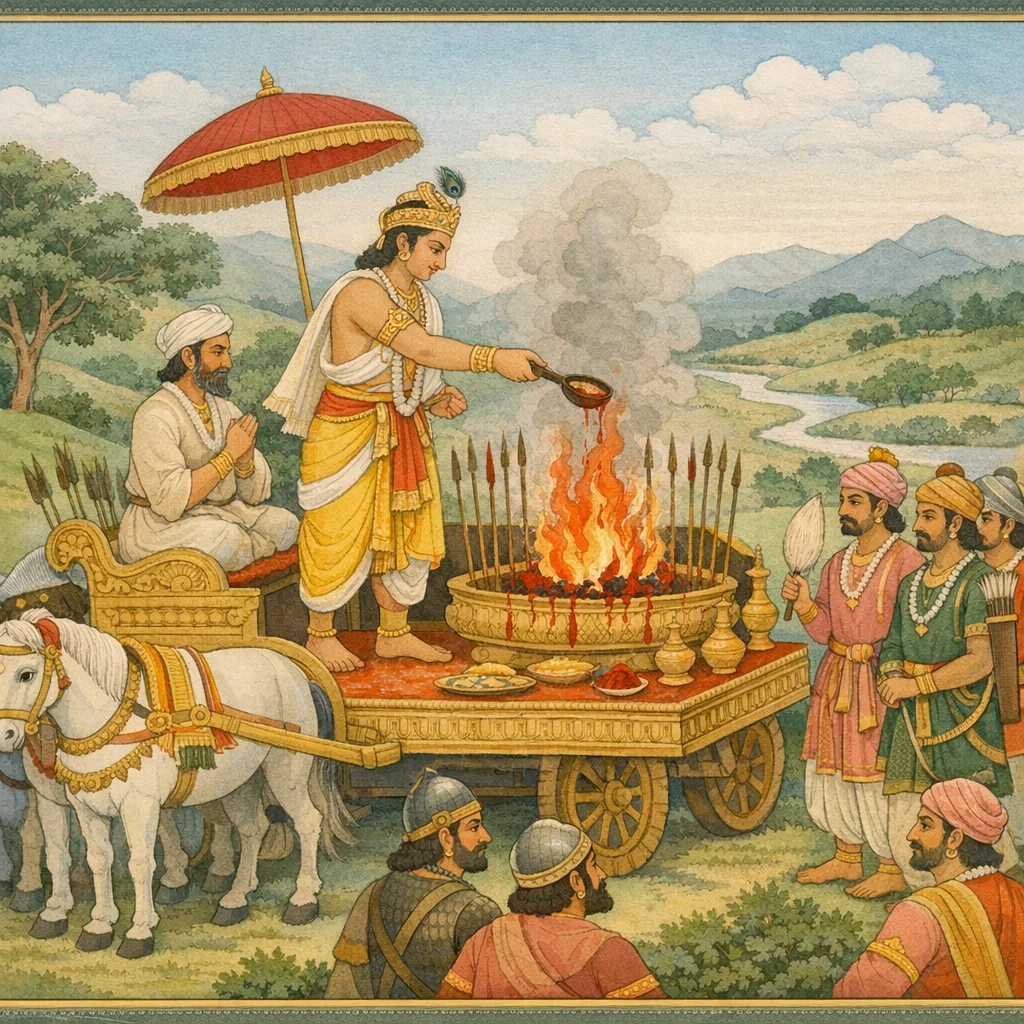
धनुर्यूपो रशना ज्या शर: खुक् स्रुवः खड्गो रुधिरं यत्र चाज्यम् । रथो वेदी कामगो युद्धमग्नि- श्वातुर्होत्रं चतुरो वाजिमुख्या:,“उनका धनुष ही यूप था, करधनी प्रत्यज्चाके समान थी, बाण खुकु और तलवार खुवाका काम दे रही थी, रक्त ही घृतके तुल्य था, इच्छानुसार विचरनेवाला रथ ही वेदी था, युद्ध अग्नि था और चारों प्रधान घोड़े ही ब्रह्मा आदि चारों ऋत्विज् थे। इस प्रकार वे वेगशाली राजसिंह हयग्रीव उस यज्ञरूपी अग्निमें शत्रुओंकी आहुति देकर पापसे मुक्त हो गये तथा अपने प्राणोंको होमकर युद्धकी समाप्तिरूपी अवभूथ-स्नान करके वे इस समय देवलोकमें आनन्दित हो रहे हैं
Vaiśampāyana said: “His bow served as the sacrificial post; the belt-strap became the bowstring; the arrows were like the ladle, and the sword performed the work of the offering-spoon. There, blood itself took the place of ghee. His chariot, moving wherever he willed, was the altar; the battle was the fire; and his four foremost horses were as the four chief priests of the cāturhotra rite. Thus that swift, lion-like king Hayagrīva, offering his enemies into the fire of this ‘sacrifice’ and finally offering up his own life-breath, became freed from sin; and having completed the war as though it were the concluding avabhṛtha bath, he now rejoices in the world of the gods.”
Verse 28
हुत्वा तस्मिन् यज्ञवद्दावथारीन् पापान्मुक्तो राजसिंहस्तरस्वी | प्राणान् हुत्वा चावभूथे रणे स वाजिग्रीवो मोदते देवलोके,“उनका धनुष ही यूप था, करधनी प्रत्यज्चाके समान थी, बाण खुकु और तलवार खुवाका काम दे रही थी, रक्त ही घृतके तुल्य था, इच्छानुसार विचरनेवाला रथ ही वेदी था, युद्ध अग्नि था और चारों प्रधान घोड़े ही ब्रह्मा आदि चारों ऋत्विज् थे। इस प्रकार वे वेगशाली राजसिंह हयग्रीव उस यज्ञरूपी अग्निमें शत्रुओंकी आहुति देकर पापसे मुक्त हो गये तथा अपने प्राणोंको होमकर युद्धकी समाप्तिरूपी अवभूथ-स्नान करके वे इस समय देवलोकमें आनन्दित हो रहे हैं
Vaiśampāyana said: Having offered his foes there as oblations, as though in a sacrifice, the mighty lion among kings was freed from sin. And having offered up his very life-breaths, and having performed, as it were, the concluding ablution of that sacrifice in the battlefield, that horse-necked hero now rejoices in the world of the gods. The passage frames war in the imagery of a Vedic rite: weapons and chariot become sacrificial implements, blood becomes ghee, and the battlefield becomes the fire—suggesting that disciplined, duty-bound combat and self-offering can be construed as a grim “sacrifice,” culminating in heavenly reward.
Verse 29
रष्ट्र रक्षन् बुद्धिपूर्व नयेन संत्यक्तात्मा यज्ञशीलो महात्मा । सर्वाल्लोंकान् व्याप्य कीर्त्या मनस्वी वाजिग्रीवो मोदते देवलोके,“यज्ञ करना उन महामना नरेशका स्वभाव बन गया था। वे नीतिके द्वारा बुद्धिपूर्वक राष्ट्रकी रक्षा करते हुए शरीरका परित्याग करके मनस्वी हयग्रीव सम्पूर्ण जगत्में अपनी कीर्ति फैलाकर इस समय देवलोकमें आनन्दित हो रहे हैं
Vaiśampāyana said: Protecting the kingdom with forethought and sound policy, that great-souled man—whose very nature was sacrifice—renounced the body. The high-minded Vājigrīva, having spread his fame throughout all worlds, now rejoices in the divine realm.
Verse 30
दैवीं सिद्धि मानुषीं दण्डनीतिं योगन्यासै: पालयित्वा महीं च । तस्माद् राजा धर्मशीलो महात्मा वाजिग्रीवो मोदते देवलोके,“योग (कर्मविषयक उत्साह) और न्यास (अहंकार आदिके त्याग) सहित दैवी सिद्धि, मानुषी सिद्धि, दण्डनीति तथा पृथ्वीका पालन करके धर्मशील महात्मा राजा हयग्रीव उसीके पुण्यसे इस समय देवलोकमें सुख भोगते हैं
Vaiśampāyana said: Having upheld the earth through disciplined governance (daṇḍanīti), together with yogic resolve in action and the renunciation of ego (nyāsa), and having attained both divine and human forms of success, that righteous and great-souled king Vājigrīva now rejoices in the world of the gods as a result of his merit.
Verse 31
विद्वांस्त्यागी श्रद्दधधान: कृतज्ञ- स्त्यक्त्वा लोकं मानुषं कर्म कृत्वा । मेधाविनां विदुषां सम्मतानां तनुत्यजां लोकमाक्रम्य राजा,वे विद्वान, त्यागी, श्रद्धालु और कृतज्ञ राजा हयग्रीव अपने कर्तव्यका पालन करके मनुष्यलोकको त्यागकर मेधावी, सर्वसम्मानित, ज्ञानी एवं पुण्य तीर्थोमें शरीरका त्याग करनेवाले पुण्यात्माओंके लोकमें जाकर स्थित हुए हैं
Vaiśampāyana said: The king—wise, renouncing, full of faith, and grateful—having performed his human duties and then leaving the mortal world, attained the realm of those who are intelligent and learned, honored by all, and who lay down the body in holy places. There he came to abide.
Verse 32
सम्यग वेदान् प्राप्य शास्त्राण्यधीत्य सम्यग राज्यं पालयित्वा महात्मा । चातुर्वर्ण्य स्थापयित्वा स्वधर्मे वाजिग्रीवो मोदते देवलोके,*वेदोंका ज्ञान पाकर, शास्त्रोंका अध्ययन करके, राज्यका अच्छी तरह पालन करते हुए महामना राजा हयग्रीव चारों वर्णोके लोगोंको अपने-अपने धर्ममें स्थापित करके इस समय देवलोकमें आनन्द भोग रहे हैं
Vaiśampāyana said: Having duly attained the Vedas and studied the authoritative treatises, and having governed the kingdom well as a great-souled ruler, Vājigrīva—after establishing the four social orders in their respective duties—now rejoices in the world of the gods. The verse frames righteous learning and just kingship as mutually reinforcing, culminating in a meritorious afterlife.
Verse 33
जित्वा संग्रामान् पालयित्वा प्रजाश्न सोम॑ पीत्वा तर्पयित्वा द्विजाग्र्यान् । युक्त्या दण्डं धारयित्वा प्रजानां युद्धे क्षीणो मोदते देवलोके,“राजा हयग्रीव अनेकों युद्ध जीतकर, प्रजाका पालन करके, यज्ञोंमें सोमरस पीकर, श्रेष्ठ ब्राह्णोंको दक्षिणा आदिसे तृप्त करके युक्तिसे प्रजाजनोंकी रक्षाके लिये दण्ड धारण करते हुए युद्धमें मारे गये और अब देवलोकमें सुख भोगते हैं
Vaiśampāyana said: “Having conquered many battles, having protected his subjects, having drunk the Soma in sacrifices, and having satisfied the foremost Brāhmaṇas with gifts and honors, King Hayagrīva—upholding the rod of punishment with discernment for the safeguarding of the people—fell in battle. Now, in the world of the gods, he rejoices.”
Verse 34
वृत्तं यस्य श्लाघनीयं मनुष्या: सन््तो विद्वांसो$र्हयन्त्यर्हणीयम् । स्वर्ग जित्वा वीरलोकानवाप्य सिद्धि प्राप्त: पुण्यकीर्तिर्महात्मा,'साधु एवं विद्वान् पुरुष उनके स्पृहणीय एवं आदरणीय चरित्रकी सदा भूरि-भूरि प्रशंसा करते हैं। पुण्यकीर्ति महामना हयग्रीवने स्वर्गलोक जीतकर वीरोंको मिलनेवाले लोकोंमें पहुँचकर उत्तम सिद्धि प्राप्त कर ली'
Vaiśaṃpāyana said: “His conduct is worthy of praise; virtuous and learned people continually honor what deserves honor in him. Having conquered heaven and attained the worlds granted to heroes, that great-souled one—of holy fame—has reached the highest fulfillment.”
Frequently Asked Questions
Whether a minor, non-violent appropriation within an āśrama setting can be normalized or must be treated as a breach of consent and dharma requiring public confession and formal adjudication.
Daṇḍa must be applied impartially and institutionally—even when the offender is respected—because lawful punishment functions as social protection and as a mechanism of expiation that restores ethical order.
Yes: Vyāsa explicitly generalizes the case, stating that Sudyumna’s excellence and ‘paramā siddhi’ arise from correct kṣatriya conduct—protecting subjects through daṇḍa—thereby positioning the episode as a normative template for rājadharma.