Adhyaya 200
Keśava-tattva-kathana (On the Principle of Keśava: Cosmogony and Divine Epithets)
Upa-parva: Mokṣa-dharma / Nārāyaṇīya-oriented Discourse (Cosmogony and Viṣṇu-Nārāyaṇa Mahātmyam)
Yudhiṣṭhira addresses Bhīṣma with a request to hear, in principled terms (tattvena), about Puṇḍarīkākṣa Acyuta—Viṣṇu/Nārāyaṇa as the uncreated agent and the source and dissolution of beings. Bhīṣma replies that this account is heard from established transmitters (Rāma Jāmadagnya, Nārada, Kṛṣṇa Dvaipāyana, Asita Devala, Vālmīki, and Mārkaṇḍeya), situating the discourse within a chain of authoritative reception. The chapter narrates a cosmogony: the formation of the mahābhūtas (wind, fire/light, waters, space, earth), the Lord’s repose upon the waters, and the contemplation of Saṃkarṣaṇa as support. From the navel-lotus arises Brahmā, followed by the appearance of the asura Madhu and his defeat, yielding the epithet Madhusūdana. A genealogical sequence proceeds through Brahmā’s mind-born sons, Dakṣa, his daughters, Kaśyapa’s marriages, and the emergence of devas, danavas, and other categories of beings, including the Vāmana form of Viṣṇu and its consequences for divine prosperity and adversarial defeat. The chapter also outlines the ordering of time (day-night, seasons, divisions of the day), creation of clouds and mobile/immobile life, and an account of varṇa origination. It describes yuga-based shifts in reproductive norms and concludes by emphasizing Keśava’s inconceivable, supra-human status.
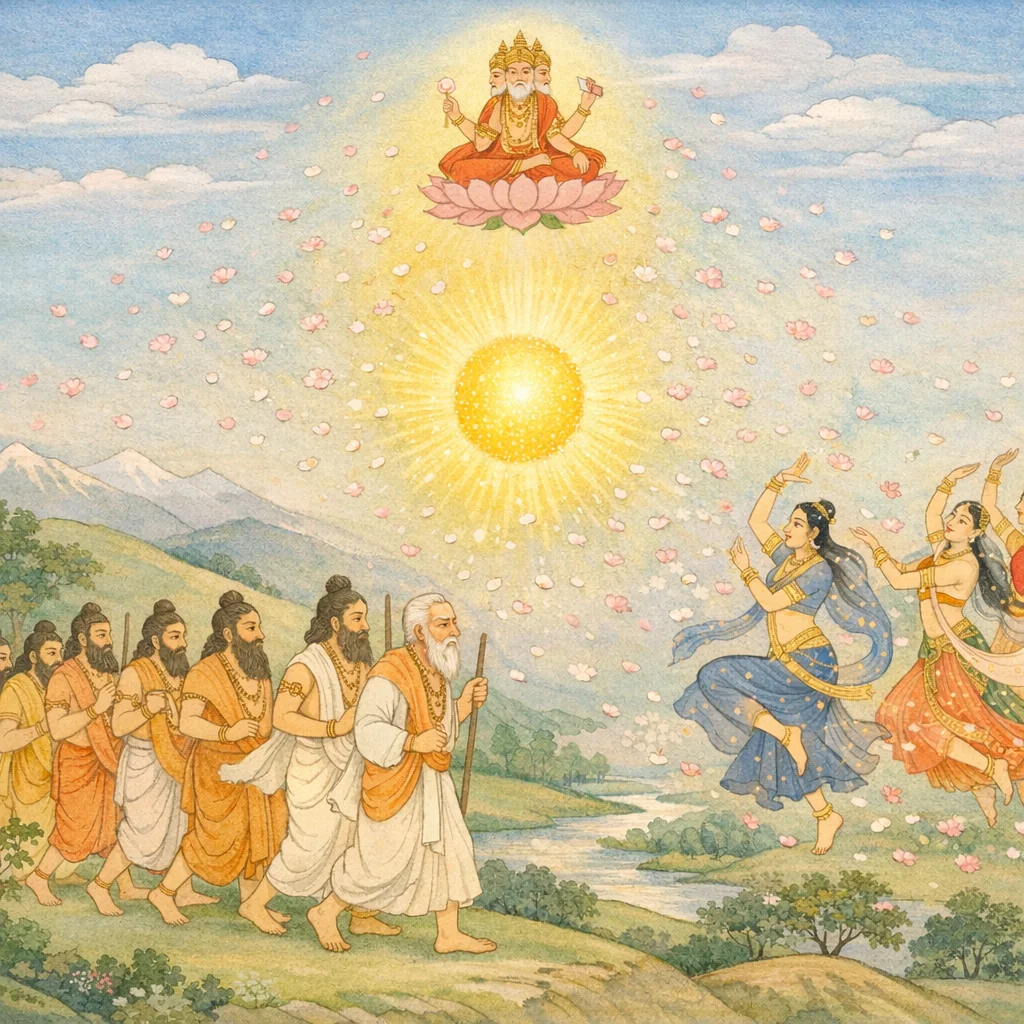
Chapter Arc: युधिष्ठिर भीष्म से जिज्ञासा करता है—विरूपक के उपदेश के बाद ब्राह्मण-जापक और राजा इक्ष्वाकु ने क्या उत्तर दिया, उनका संवाद क्या रहा, और ‘क्रममुक्ति’ व ‘लोकान्तर-प्राप्ति’ का रहस्य कैसे घटित हुआ। → भीष्म उस प्रसंग को आगे बढ़ाते हैं: ब्राह्मण धर्म का सत्कार कर यम, काल, मृत्यु और स्वर्ग की वंदना करता है; फिर ‘फल’ (जप का पुण्य) को लेकर एक सूक्ष्म नैतिक-सांस्कृतिक तनाव उभरता है—क्या साधना का फल दान/समर्पण से सिद्धि बदलती है, और क्या जापक स्वयं फल-त्याग कर भी उसी गति को पा सकता है। → राजा का निर्णायक वचन—यदि फल-समर्पण से तुम्हारी श्रद्धा और सिद्धि ‘अफला’ हो जाती है, तो मेरे साथ चलो और जप का फल मुझे प्राप्त कराओ—और उसी के साथ दिव्य संकेत प्रकट होते हैं: पुष्प-वर्षा, अप्सराओं का नर्तन, दिशाओं में हाहाकार, और स्तुत्य ज्योति का ब्रह्मा में प्रवेश। → महात्मा धर्म को अग्रणी मानकर प्रसन्नचित्त आगे बढ़ते हैं; भीष्म निष्कर्ष रूप में ‘जापकानां फलम्’—जप करने वालों की गति—को यथाश्रुत वर्णित कर देते हैं और युधिष्ठिर से पूछते हैं कि अब और क्या सुनना है। → भीष्म का प्रश्न—“कि भूयः श्रोतुमिच्छसि?”—अगले अध्याय के लिए जिज्ञासा छोड़ देता है कि युधिष्ठिर मोक्ष-मार्ग के किस अगले सोपान/उपाख्यान को चुनेंगे।
Shlokas
Verse 1
युधिष्ठिरने पूछा--पितामह! उस समय विरूपके पूर्वोक्त वचन कहनेपर ब्राह्मण और राजा इक्ष्वाकु उन दोनोंने उसे कया उत्तर दिया, यह मुझे बताइये
Yudhishthira said: “Grandfather, when Virupaka had spoken those earlier words, what reply did the Brahmin and King Ikshvaku—those two—give him? Please tell me.”
Verse 2
अथवा तौ गतौ तत्र यदेतत् कीर्तितं त्वया । संवादो वा तयो: को5भूत् कि वा तौ तत्र चक्रतुः,तथा आपने जो यह स््योमुक्ति, क्रममुक्ति और लोकान्तरकी प्राप्तिरूप तीन प्रकारकी गति बतायी है, उनमेंसे वे दोनों किस गतिको प्राप्त हुए? उस समय उन दोनोंमें क्या बातचीत हुई और उन्होंने क्या किया?
Yudhiṣṭhira said: “Or, if the two of them went there as you have described, what conversation took place between them, and what did they do there? And regarding the three kinds of destiny you have explained—immediate liberation, liberation by stages, and attainment of another world—which of these paths did those two attain? What was said between them at that time, and what actions did they perform?”
Verse 3
भीष्म उवाच तथेत्येवं प्रतिश्रुत्य धर्म सम्पूज्य च प्रभो । यम॑ काल च मृत्युं च स्वर्ग सम्पूज्य चाहत:,भीष्मजीने कहा--प्रभो! तब “बहुत अच्छा” कहकर ब्राह्मणने धर्म, यम, काल, मृत्यु और स्वर्ग--इन सभी पूजनीय देवताओंका पूजन किया। वहाँ पहलेसे जो ब्राह्मण मौजूद थे और दूसरे भी जो श्रेष्ठ ब्राह्मण वहाँ पधारे थे, उन सबके चरणोंमें सिर झुकाकर सबकी यथोचित पूजा करके ब्राह्मणने राजासे कहा--
Bhishma said: Having assented with the words “So be it,” the Brahmin duly honored Dharma, and then worshipped Yama, Time, Death, and Heaven as venerable divine powers. After paying respectful homage—bowing to the feet of the Brahmins already present and to those eminent Brahmins who arrived thereafter—he performed the appropriate courtesies and then addressed the king.
Verse 4
पूर्व ये चापरे तत्र समेता ब्राह्मणर्षभा: । सर्वान् सम्पूज्य शिरसा राजानं सोडब्रवीद् द्विज:,भीष्मजीने कहा--प्रभो! तब “बहुत अच्छा” कहकर ब्राह्मणने धर्म, यम, काल, मृत्यु और स्वर्ग--इन सभी पूजनीय देवताओंका पूजन किया। वहाँ पहलेसे जो ब्राह्मण मौजूद थे और दूसरे भी जो श्रेष्ठ ब्राह्मण वहाँ पधारे थे, उन सबके चरणोंमें सिर झुकाकर सबकी यथोचित पूजा करके ब्राह्मणने राजासे कहा--
Bhishma said: There, both the earlier-arrived and the later-arrived foremost Brahmins had assembled. Having bowed his head and duly honored them all, the Brahmin then addressed the king—framing his words in the spirit of reverence and dharma, where proper respect to the worthy precedes counsel to rulers.
Verse 5
फलेनानेन संयुक्तो राजर्षे गच्छ मुख्यताम् । भवता चाभ्यनुज्ञातो जपेयं भूय एव ह,*राजर्षे! इस फलसे संयुक्त होकर आप श्रेष्ठ गतिको प्राप्त कीजिये और आपकी आज्ञा लेकर मैं फिर जपमें लग जाऊँगा
Bhishma said: “O royal sage, endowed with this merit as its fruit, go on to the highest state. And with your permission, I shall once again take up my japa (sacred recitation).”
Verse 6
वरश्न मम पूर्व हि दत्तो देव्या महाबल । श्रद्धा ते जपतो नित्यं भवत्विति विशाम्पते,“महाबली प्रजानाथ! मुझे देवी सावित्रीने वर दिया है कि जपमें तुम्हारी नित्य श्रद्धा बनी रहेगी”
Bhishma said: “O mighty one, long ago the goddess granted me a boon: ‘O lord of the people, may unwavering faith ever abide in you as you continually practice japa (sacred recitation).’”
Verse 7
राजोवाच यद्येवमफला सिद्धि: श्रद्धा च जपितुं तव । गच्छ विप्र मया सार्थ जापकं फलमाप्रुहि,राजाने कहा--विप्रवर! यदि इस प्रकार मुझे फल समर्पण करनेके कारण आपको फलकी प्राप्ति नहीं हो रही है और पुनः: जप करनेमें ही आपकी श्रद्धा होती है तो आप मेरे साथ ही चलें और जप-दानजनित फलको प्राप्त करें
The king said: “If, as you say, the attainment becomes fruitless for you because you have offered the merit to me, and yet your faith remains fixed on continuing your recitation, then come with me, O brāhmaṇa. Receive the fruit that arises from japa and charitable giving.”
Verse 8
ब्राह्मण उवाच कृतः प्रयत्न: सुमहान् सर्वेषां संनिधाविह । सह तुल्यफलावावं गच्छावो यत्र नौ गति:,ब्राह्मणने कहा--राजन्! मैंने यहाँ सबके समीप आपको अपने जपका फल देनेके लिये महान् प्रयत्न किया है; फिर भी आपका आग्रह साथ-साथ फलका उपभोग करनेका रहा है; अतः: हम दोनों समान फलके ही भागी हों। चलिये, जहाँतक हम दोनोंकी गति हो सके, साथ-साथ चलें
The Brāhmaṇa said: “O king, here in the presence of all I have made a very great effort to offer you the fruit of my austerity and recitation. Yet your insistence has been that we should partake of the result together. Therefore, let us both be equal sharers in the same merit. Come—let us go together as far as our destiny allows.”
Verse 9
भीष्य उवाच व्यवसायं तयोस्तत्र विदित्वा त्रिदशेश्वर: | सह देवैरुपययौ लोकपालैस्तथैव च,भीष्मजी कहते हैं--राजन्! उन दोनोंका वहाँ ऐसा निश्चय जानकर सम्पूर्ण देवताओं तथा लोकपालोंके साथ देवराज इन्द्र उस स्थानपर आये। उनके साथ साध्यगण, विश्वेदेवषण और मरुद्गण भी थे। बड़े-बड़े वाद्य बज रहे थे। नदियाँ, पर्वत, समुद्र, नाना प्रकारके तीर्थ, तपस्या, संयोगविधि, वेद, स्तोभ (साम-गानकी पूर्तिके लिये बोले जानेवाले अक्षर हाई हावु इत्यादि), सरस्वती, नारद, पर्वत, विश्वावसु, हाहा, हूहू, परिवारसहित चित्रसेन गन्धर्व, नाग, सिद्ध, मुनि, देवाधिदेव प्रजापति ब्रह्मा, सहस्रों मस्तकवाले शेषनाग तथा अचिन्त्य देव भगवान् विष्णु भी वहाँ पधारे। प्रभो! उस समय आकाशमें भेरियाँ और तुरही आदि बाजे बज रहे थे
Bhishma said: “O King, learning of the firm resolve those two had formed there, Indra, lord of the Thirty-three gods, came to that place accompanied by the gods and likewise by the guardians of the worlds.”
Verse 10
साध्याश्न विश्वे मरुतो वाद्यानि सुमहान्ति च । नद्य: शैला: समुद्राश्व॒ तीर्थानि विविधानि च,भीष्मजी कहते हैं--राजन्! उन दोनोंका वहाँ ऐसा निश्चय जानकर सम्पूर्ण देवताओं तथा लोकपालोंके साथ देवराज इन्द्र उस स्थानपर आये। उनके साथ साध्यगण, विश्वेदेवषण और मरुद्गण भी थे। बड़े-बड़े वाद्य बज रहे थे। नदियाँ, पर्वत, समुद्र, नाना प्रकारके तीर्थ, तपस्या, संयोगविधि, वेद, स्तोभ (साम-गानकी पूर्तिके लिये बोले जानेवाले अक्षर हाई हावु इत्यादि), सरस्वती, नारद, पर्वत, विश्वावसु, हाहा, हूहू, परिवारसहित चित्रसेन गन्धर्व, नाग, सिद्ध, मुनि, देवाधिदेव प्रजापति ब्रह्मा, सहस्रों मस्तकवाले शेषनाग तथा अचिन्त्य देव भगवान् विष्णु भी वहाँ पधारे। प्रभो! उस समय आकाशमें भेरियाँ और तुरही आदि बाजे बज रहे थे
Bhishma said: “The Sādhyas, the Viśvedevas, and the Maruts were present, and great musical instruments resounded. Rivers, mountains, oceans, and many kinds of sacred fords (tīrthas) also appeared there.”
Verse 11
तपांसि संयोगविधिवेंदा: सतो भा: सरस्वती । नारद: पर्वतश्चैव विश्वावसुर्हहाहुहू:,भीष्मजी कहते हैं--राजन्! उन दोनोंका वहाँ ऐसा निश्चय जानकर सम्पूर्ण देवताओं तथा लोकपालोंके साथ देवराज इन्द्र उस स्थानपर आये। उनके साथ साध्यगण, विश्वेदेवषण और मरुद्गण भी थे। बड़े-बड़े वाद्य बज रहे थे। नदियाँ, पर्वत, समुद्र, नाना प्रकारके तीर्थ, तपस्या, संयोगविधि, वेद, स्तोभ (साम-गानकी पूर्तिके लिये बोले जानेवाले अक्षर हाई हावु इत्यादि), सरस्वती, नारद, पर्वत, विश्वावसु, हाहा, हूहू, परिवारसहित चित्रसेन गन्धर्व, नाग, सिद्ध, मुनि, देवाधिदेव प्रजापति ब्रह्मा, सहस्रों मस्तकवाले शेषनाग तथा अचिन्त्य देव भगवान् विष्णु भी वहाँ पधारे। प्रभो! उस समय आकाशमें भेरियाँ और तुरही आदि बाजे बज रहे थे
Bhishma said: “O King, austerities, the ordinances governing sacred conjunctions and rites, the Vedas, the stobha-syllables used to complete Sāman chants, Sarasvatī, Nārada, Parvata, and the Gandharvas Viśvāvasu, Hahā, and Hūhū—all were present there.”
Verse 12
गन्धर्वश्षित्रसेनश्व॒ परिवारगणैर्युत: । नागा: सिद्धाश्न मुनयो देवदेव: प्रजापति:,भीष्मजी कहते हैं--राजन्! उन दोनोंका वहाँ ऐसा निश्चय जानकर सम्पूर्ण देवताओं तथा लोकपालोंके साथ देवराज इन्द्र उस स्थानपर आये। उनके साथ साध्यगण, विश्वेदेवषण और मरुद्गण भी थे। बड़े-बड़े वाद्य बज रहे थे। नदियाँ, पर्वत, समुद्र, नाना प्रकारके तीर्थ, तपस्या, संयोगविधि, वेद, स्तोभ (साम-गानकी पूर्तिके लिये बोले जानेवाले अक्षर हाई हावु इत्यादि), सरस्वती, नारद, पर्वत, विश्वावसु, हाहा, हूहू, परिवारसहित चित्रसेन गन्धर्व, नाग, सिद्ध, मुनि, देवाधिदेव प्रजापति ब्रह्मा, सहस्रों मस्तकवाले शेषनाग तथा अचिन्त्य देव भगवान् विष्णु भी वहाँ पधारे। प्रभो! उस समय आकाशमें भेरियाँ और तुरही आदि बाजे बज रहे थे
Bhishma said: “O King, there also came the Gandharva Citrāsena, accompanied by his retinue, along with the Nāgas, the Siddhas, and the sages; and even Prajāpati, the divine progenitor among the gods.”
Verse 13
विष्णु: सहस्रशीर्षश्ष देवो 5चिन्त्य: समागमत् | अवाद्यन्तान्तरिक्षे च भेर्यस्तूर्याणि वा विभो,भीष्मजी कहते हैं--राजन्! उन दोनोंका वहाँ ऐसा निश्चय जानकर सम्पूर्ण देवताओं तथा लोकपालोंके साथ देवराज इन्द्र उस स्थानपर आये। उनके साथ साध्यगण, विश्वेदेवषण और मरुद्गण भी थे। बड़े-बड़े वाद्य बज रहे थे। नदियाँ, पर्वत, समुद्र, नाना प्रकारके तीर्थ, तपस्या, संयोगविधि, वेद, स्तोभ (साम-गानकी पूर्तिके लिये बोले जानेवाले अक्षर हाई हावु इत्यादि), सरस्वती, नारद, पर्वत, विश्वावसु, हाहा, हूहू, परिवारसहित चित्रसेन गन्धर्व, नाग, सिद्ध, मुनि, देवाधिदेव प्रजापति ब्रह्मा, सहस्रों मस्तकवाले शेषनाग तथा अचिन्त्य देव भगवान् विष्णु भी वहाँ पधारे। प्रभो! उस समय आकाशमें भेरियाँ और तुरही आदि बाजे बज रहे थे
Bhishma said: “O King, the inconceivable Lord—Vishnu—and Shesha of a thousand heads also arrived there. And, O mighty one, in the sky drums and trumpets resounded.”
Verse 14
पुष्पवर्षाणि दिव्यानि तत्र तेषां महात्मनाम् | ननृतुश्चाप्सर: संघास्तत्र तत्र समनन््ततः,वहाँ उन महात्माओंपर दिव्य फूलोंकी वर्षा होने लगी। झुंडकी झुंड अप्सराएँ सब ओर नृत्य करने लगीं
Bhishma said: “There, upon those great-souled ones, a shower of celestial flowers began to fall; and companies of Apsarases danced in every direction, all around.”
Verse 15
अथ स्वर्गस्तथा रूपी ब्राह्मणं वाक्यमब्रवीत् । संसिद्धस्त्वं महाभाग त्वं च सिद्धस्तथा नूप,तदनन्तर मूर्तिमान् स्वर्गने ब्राह्यणसे कहा--“महाभाग! तुम सिद्ध हो गये।' फिर राजासे कहा--“नरेश्वर! तुम भी सिद्ध हो गये"
Then Svarga, assuming a visible form, addressed the brāhmaṇa: “O fortunate one, you have attained full accomplishment.” Thereafter he spoke to the king as well: “O lord of men, you too have attained perfection.”
Verse 16
अथ तौ सहितौ राजलन्नन्योन्यविधिना तत:ः । विषयप्रतिसंहारमुभावेव प्रचक्रतु:,राजन! तदनन्तर वे दोनों एक-दूसरेका उपकार करते हुए एक साथ हो गये। उन्होंने एक ही साथ अपने मनको विषयोंकी ओरसे हटा लिया
Bhīṣma said: “Then, O king, the two of them came together in harmony, each acting with consideration for the other. Thereafter, both simultaneously undertook the withdrawal of their senses and mind from sense-objects.”
Verse 17
प्राणापानौ तथोदानं समान व्यानमेव च । एवं तौ मनसि स्थाप्य दधतु: प्राणयोर्मन:,तदनन्तर प्राण, अपान, उदान, समान और व्यान--इन पाँचों प्राण-वायुओंको हृदयमें स्थापित किया; इस प्रकार स्थित हुए उन दोनोंने मनको प्राण और अपानके साथ मिला दिया। भौहोंके नीचे नासिकाके अग्रभागपर दृष्टि रखते हुए मनसहित प्राण-अपानको उन्होंने दोनों भौहोंके बीच स्थिर किया
Bhīṣma said: “They placed within the mind the five vital currents—prāṇa and apāna, and likewise udāna, samāna, and vyāna. Having thus arranged them inwardly, they then yoked the mind to the two chief breaths, prāṇa and apāna.”
Verse 18
उपस्थितकृतौ तौ च नासिकाग्रमधो भ्रुवो: । भ्रुकुट्या चैव मनसा शनैर्धारयतस्तदा,तदनन्तर प्राण, अपान, उदान, समान और व्यान--इन पाँचों प्राण-वायुओंको हृदयमें स्थापित किया; इस प्रकार स्थित हुए उन दोनोंने मनको प्राण और अपानके साथ मिला दिया। भौहोंके नीचे नासिकाके अग्रभागपर दृष्टि रखते हुए मनसहित प्राण-अपानको उन्होंने दोनों भौहोंके बीच स्थिर किया
Bhīṣma said: “Then those two, having composed themselves, slowly held the mind steady with a slight furrow of concentration, fixing their gaze on the tip of the nose beneath the eyebrows. Thereafter, they established the five vital currents—prāṇa, apāna, udāna, samāna, and vyāna—in the heart; abiding thus, they joined the mind with prāṇa and apāna and stabilized that mind-supported breath between the two eyebrows.”
Verse 19
निश्चैष्टा भ्यां शरीरा भ्यां स्थिरदृष्टी समाहितौ । जितात्मानौ तथा5<धाय मूर्धन्यात्मानमेव च,इस प्रकार मनको जीतकर दृष्टिको एकाग्र करके उन दोनोंने प्राणसहित मनको सुषुम्णा मार्गद्वारा मूर्धामें स्थापित कर दिया। फिर वे दोनों समाधिमें स्थित हो गये। उस समय उन दोनोंके शरीर जड़की भाँति चेष्टाहीन हो गये
Bhīṣma said: With their bodies becoming motionless, their gaze steady and their minds collected, those two—having mastered themselves—placed the life-breath together with the mind in the crown of the head through the suṣumṇā channel. Thereafter they remained absorbed in samādhi, and their bodies appeared inert, as if without any movement.
Verse 20
तालुदेशमथोद्दाल्य ब्राह्मणस्य महात्मन: । ज्योतिर्ज्वाला सुमहती जगाम त्रिदिवं तदा,इसी समय महात्मा ब्राह्मणके तालुदेश (ब्रह्म-रन्ध्र) का भेदन करके एक ज्योतिर्मयी विशाल ज्वाला निकली और स्वर्गकी ओर चल दी
Bhīṣma said: Then, piercing the region of the palate—the brahma-randhra—of that great-souled brāhmaṇa, a vast, radiant flame of light emerged and at once proceeded toward the heavenly world. The passage underscores the ideal of a disciplined, purified life culminating in an auspicious departure, where inner spiritual power is portrayed as rising upward through the highest aperture.
Verse 21
हाहाकारस्तथा दिक्षु सर्वेषां सुमहानभूत् । तज्ज्योति:ः स्तूयमान सम ब्रह्माणं प्राविशत् तदा,फिर तो सम्पूर्ण दिशाओंमें महान् कोलाहल मच गया। उस ज्योतिकी सभी लोग स्तुति करने लगे। प्रजानाथ! प्रादेशके बराबर लंबे पुरुषका आकार धारण किये वह तेज:पुंज ब्रह्माजीके पास पहुँचा, तब ब्रह्माजीने आगे बढ़कर उसका स्वागत किया
Then a tremendous outcry arose in all directions. That radiant being, praised by all, approached Brahmā; and at that moment Brahmā stepped forward to receive it with honor. The scene underscores how extraordinary spiritual power naturally draws reverence and how rightful authority responds with due hospitality and recognition.
Verse 22
ततः स्वागतमित्याह तत् तेज: प्रपितामह: । प्रादेशमात्र पुरुष॑ प्रत्युदूगम्य विशाम्पते,फिर तो सम्पूर्ण दिशाओंमें महान् कोलाहल मच गया। उस ज्योतिकी सभी लोग स्तुति करने लगे। प्रजानाथ! प्रादेशके बराबर लंबे पुरुषका आकार धारण किये वह तेज:पुंज ब्रह्माजीके पास पहुँचा, तब ब्रह्माजीने आगे बढ़कर उसका स्वागत किया
Then the Prāpitāmaha (Brahmā), stepping forward, said, “Welcome!” O lord of the people. That radiant being—having assumed the form of a man of about a span’s measure—approached Brahmā, while all around there arose a great tumult in every direction and the assembled beings began to praise that light. The scene underscores reverence for divine radiance and the proper ethic of honoring a worthy arrival through respectful reception.
Verse 23
भूयश्चैवापरं प्राह वचन मधुरं तदा । जापकैस्तुल्यफलता योगानां नात्र संशय:,ब्रह्माजीने उस तेजोमय पुरुषका स्वागत करनेके पश्चात् पुनः उससे मधुर वाणीमें इस प्रकार कहा--'विप्रवर! योगियोंको जो फल मिलता है, निस्संदेह वही फल जप करनेवालोंको भी प्राप्त होता है
Bhīṣma said: Then, once again, he spoke further in sweet words: “There is no doubt here—those who practice japa (repetition of sacred formulae) attain a fruit equal to that attained by yogins.” The statement affirms an ethical and spiritual parity: disciplined devotion through repeated remembrance can yield the same inner and ultimate benefit as formal yogic practice.
Verse 24
जापक ब्राह्मण एवं महाराज इक्ष्वाकुकी ऊर्ध्वगति योगस्य तावदेते भ्य: प्रत्यक्ष फलदर्शनम् । जापकानां विशिष्ट तु प्रत्युत्थानं समाहितम्,“योगियोंको जिस फलकी प्राप्ति होती है, वह इन सभासदोंने प्रत्यक्ष देखा है; किंतु जापकोंको उनसे भी श्रेष्ठ फल प्राप्त होता है, यह सूचित करनेके लिये ही मैंने उठकर तुम्हारा स्वागत किया है
Bhishma said: “O king, this assembly has directly witnessed the manifest results of the yoga that leads upward (to higher states) in the case of the Brahmin devoted to japa and in the case of the great king Ikshvaku. Yet the fruit attained by those who practice japa is even superior. It is precisely to indicate that higher excellence that I rose and offered you a respectful welcome.”
Verse 25
उष्यतां मयि चेत्युक्त्वा चेतयत् सततं पुनः । अथाय्यं प्रविवेशास्य ब्राह्मणो विगतज्वर:,“अब तुम मेरे भीतर सुखपूर्वक निवास करो।' इतना कहकर ब्रह्माजीने उसे पुनः तत्त्वज्ञान प्रदान किया। आज्ञा पाकर वह ब्राह्मण-तेज रोग-शोकसे मुक्त हो ब्रह्माजीके मुखारविन्दमें प्रविष्ट हो गया
Bhishma said: Having said, “Dwell within me in comfort,” Brahmā again and again awakened him to true knowledge. Then, on receiving the command, that Brahmin—freed from fever and distress—entered into Brahmā’s lotus-like mouth, signifying complete release and reabsorption into the divine source.
Verse 26
राजाप्येतेन विधिना भगवन्तं पितामहम् । यथैव द्विजशार्दूलस्तथैव प्राविशत् तदा,राजा इक्ष्वाकु भी उस श्रेष्ठ ब्राह्मणकी ही भाँति विधिपूर्वक भगवान् ब्रह्माजीके मुखारविन्दमें प्रविष्ट हो गये
Bhishma said: “By this very prescribed method, the king too entered the presence of the Blessed Pitāmaha (Brahmā). Just as the foremost of Brahmins did, so did the king at that time—approaching in the same disciplined, rule-governed manner.”
Verse 27
स्वयम्भुवमथो देवा अभिवाद्य ततो<ब्रुवन् । जापकानां विशिष्ट तु प्रत्युत्थानं समाहितम्,तदनन्तर देवताओंने ब्रह्माजीको प्रणाम करके कहा--“भगवन्! आपने जो आगे बढ़कर इस ब्राह्मणका स्वागत किया है, इससे सिद्ध हो गया कि जापकोंको योगियोंसे भी श्रेष्ठ फलकी प्राप्ति होती है
Bhishma said: Then the gods, having bowed to Svayambhu (Brahmā), spoke: “O Lord, by your composed and deliberate act of rising to welcome this practitioner of japa, it is made clear that those devoted to sacred recitation attain a fruit superior even to that of yogins.”
Verse 28
जापकार्थमयं यत्नो यदर्थ वयमागता: । कृतपूजाविमौ तुल्यौ त्वया तुल्यफलाविमौ,“इस जापक ब्राह्मणको सदगति देनेके लिये ही आपने ऐसा उद्योग किया था। इसीको देखनेके लिये हमलोग भी आये थे। आपने इन दोनोंका समानरूपसे आदर किया और ये दोनों ही एक-सी स्थितिमें पहुँचकर आपके समान फलके भागी हुए हैं
Bhishma said: “This effort of yours was undertaken precisely to secure a blessed destiny for the Brahmin devoted to japa. That is what we too came to witness. You honored these two alike, and therefore both have reached the same state—each becoming entitled to a reward equal to your own.”
Verse 29
योगजापकर्योर्द[ष्टं फलं सुमहदद्य वै । सर्वाल्लॉकानतिक्रम्य गच्छेतां यत्र वाज्छितम्,“आज हमलोगोंने योगी और जापकके महान् फलको प्रत्यक्ष देख लिया। वे सम्पूर्ण लोकोंको लाँधकर जहाँ उनकी इच्छा हो, जा सकते हैं'
Bhīṣma said: “Today we have directly witnessed the exceedingly great fruit attained by a yogin and a practitioner of japa. Transcending all the worlds, they are able to go wherever they desire.”
Verse 30
ब्रह्मोवाच महास्मृतिं पठेद् यस्तु तथैवानुस्मृतिं शुभाम् । तावप्येतेन विधिना गच्छेतां मत्सलोकताम्,ब्रह्माजीनी कहा--देवताओ! जो महास्मृति तथा कल्याणमयी अनुस्मृतिका पाठ करता है, वह भी इसी विधिसे मेरा सालोक्य प्राप्त कर लेता है। जो योगका भक्त है, वह भी देहत्यागके पश्चात् इसी विधिसे मेरे लोकोंको प्राप्त कर लेता है, इसमें संशय नहीं है। अब तुम सब लोग अपनी अभीष्ट-सिद्धिके लिये अपने-अपने स्थानको जाओ। मैं तुम लोगोंका अभीष्ट साधन करता रहूँगा
Brahmā said: “Whoever recites the Mahāsmṛti, and likewise the auspicious Anusmṛti, by this very discipline attains residence in my world. Thus, through faithful remembrance and prescribed practice, one gains the fruit of proximity to the divine realm.”
Verse 31
यश्च योगे भवेद् भक्त: सो5पि नास्त्यत्र संशय: । विधिनानेन देहान्ते मम लोकानवाप्लुयात् । साधये गम्यतां चैव यथास्थानानि सिद्धये,ब्रह्माजीनी कहा--देवताओ! जो महास्मृति तथा कल्याणमयी अनुस्मृतिका पाठ करता है, वह भी इसी विधिसे मेरा सालोक्य प्राप्त कर लेता है। जो योगका भक्त है, वह भी देहत्यागके पश्चात् इसी विधिसे मेरे लोकोंको प्राप्त कर लेता है, इसमें संशय नहीं है। अब तुम सब लोग अपनी अभीष्ट-सिद्धिके लिये अपने-अपने स्थानको जाओ। मैं तुम लोगोंका अभीष्ट साधन करता रहूँगा
Bhishma said: “And whoever becomes devoted through Yoga—about him too there is no doubt here: by this very prescribed method, at the end of the body he attains Brahmā’s worlds. Therefore, go now, each to your proper station, for the accomplishment of your respective aims; I shall continue to bring about the fulfillment of what you desire.”
Verse 32
भीष्म उवाच इत्युक्त्वा स तदा देवस्तत्रैवान्तरधीयत । आमन्त्रय च ततो देवा ययु: स्वं स्व॑ं निवेशनम्,भीष्मजी कहते हैं--राजन्! ऐसा कहकर ब्रह्माजी वहीं अन्तर्धान हो गये। देवता भी उनकी आज्ञा पाकर अपने-अपने स्थानको चले गये
Bhishma said: “O King, having spoken thus, that divine being (Brahmā) vanished then and there. Thereafter, the gods, having been duly dismissed by him, departed each to his own abode.”
Verse 33
ते च सर्वे महात्मानो धर्म सत्कृत्य तत्र वै । पृष्ठतो5नुययू राजन् सर्वे सुप्रीतचेतस:,राजन! फिर वे सभी महात्मा धर्मको सत्कार-पूर्वक आगे करके प्रसन्नचित्त हो पीछे- पीछे चल दिये
Bhishma said: “And all those great-souled men, having duly honoured Dharma there and placing it foremost, followed behind—O king—each with a heart filled with gladness.”
Verse 34
एतत् फलं जापकानां गतिकश्नैषा प्रकीर्तिता । यथाश्रुतं महाराज कि भूय: श्रोतुमिच्छसि,महाराज! मैंने जैसा सुना था, उसके अनुसार जापकोंको मिलनेवाले इस उत्तम फल और गतिका वर्णन किया। अब तुम और क्या सुनना चाहते हो?
Bhishma said: “This is the reward of those devoted to japa, and this is the course (destiny) declared for them. O great king, I have related it just as I heard it; what more do you wish to hear?”
Verse 200
इति श्रीमहाभारते शान्तिपर्वणि मोक्षधर्मपर्वणि जापकोपाख्याने द्विशततमो<ध्याय:
Thus ends the two-hundredth chapter of the Mokṣadharma section within the Śānti Parva of the Śrī Mahābhārata, in the episode known as the “Jāpaka-upākhyāna.” In the ethical frame of Śānti Parva, this closing colophon signals the completion of a unit of instruction oriented toward liberation (mokṣa) and disciplined spiritual practice, as transmitted by Bhīṣma in his counsel.
Frequently Asked Questions
The chapter’s dilemma is epistemic-ethical: whether one should approach divine authority through mere naming and praise or through tattva—an accountable, principle-based understanding that grounds dharma, governance, and self-conduct in a coherent view of causality.
Ordered life (social, political, and personal) is portrayed as derivative of an underlying cosmic order: time, elements, and functions arise from a single organizing principle; recognizing this supports steadiness, humility, and responsibility rather than self-justifying power.
No explicit phalaśruti formula is stated in these verses; the meta-commentary appears as Bhīṣma’s appeal to authoritative transmission and the closing assertion that Keśava is inconceivable and not merely human, framing the chapter as doctrinal grounding within mokṣa-oriented instruction.