Adhyaya 155
Tapas as the Root of Attainment (तपः—साधनमूलप्रशंसा)
Upa-parva: Rājadharmānuśāsana Parva (Instruction on the Duties of Kings)
Bhīṣma asserts that tapas (disciplined austerity) is the root-source of successful action and attainment: without “heated” discipline, a confused agent does not obtain the fruit of rites or efforts (1). He attributes cosmic and intellectual origins to tapas—Prajāpati’s creation and the seers’ realization of the Vedas are both grounded in disciplined practice (2). Tapas is described as progressively mastered, capable of sustaining life on minimal supports (fruit, roots, air) and enabling concentrated vision across the three worlds (3). Practical arts and structured knowledges—medicines, remedies, and the “three vidyās”—are said to be perfected through tapas, making it the operational means (4). The discourse amplifies tapas as the method for what is otherwise difficult, resistant, or inaccessible (5), including moral rehabilitation: even severe transgressions are stated to be removable through well-performed austerity (6). Bhīṣma then distinguishes forms of tapas, elevating withdrawal and especially fasting as paramount among austerities (7–8), while also ranking renunciation (saṃnyāsa) as the highest tapas (9). He links sensory restraint to protection of resources and to success in both artha and dharma (10). Finally, he universalizes tapas as the pathway by which ṛṣis, ancestors, devas, humans, and other beings attain success and even divinity, presenting tapas as a general law of elevation (11–13).
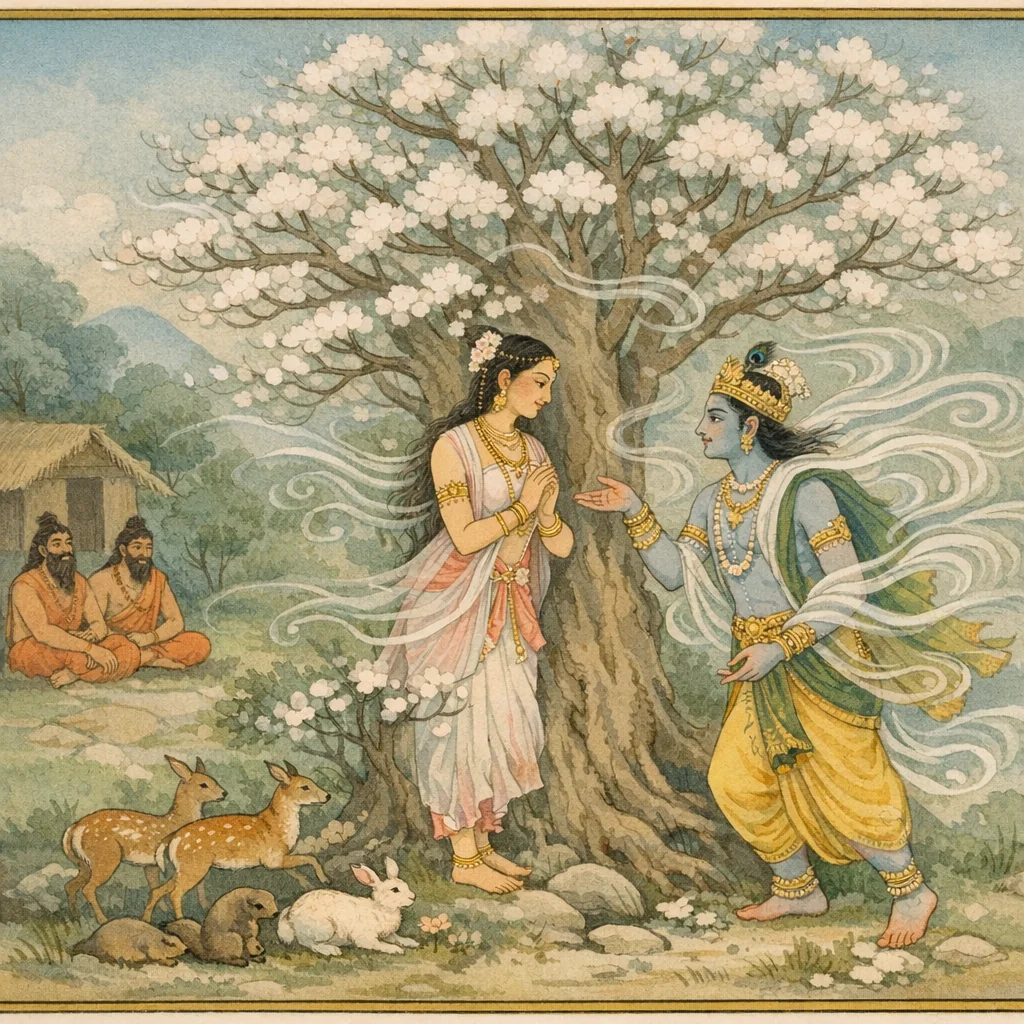
Chapter Arc: युधिष्ठिर भीष्म से पूछते हैं—जो व्यक्ति बलवान, निकटवर्ती और उपकार-अपकार करने में समर्थ हो, उसके क्रोधागमन पर मनुष्य अपने बल का आश्रय लेकर कैसे आचरण करे कि अपना उद्धार हो सके। → भीष्म उत्तर को नीति-कथा में बाँधते हैं और वायु तथा शाल्मली (सेमल) वृक्ष के प्राचीन संवाद का उपाख्यान उठाते हैं। शाल्मली अपनी शोभा, शाखाओं पर बसे पक्षियों-पशुओं और तपस्वियों के आश्रय का गर्व करता है; वायु की प्रचण्ड शक्ति—जो सरिताओं, सरोवरों, समुद्रों तक को सुखा सकती है—कथा में भय और परीक्षा का वातावरण रचती है। → शाल्मली के आत्म-प्रशंसात्मक भरोसे के सामने वायु की सर्वव्यापी, शोषक और उच्छेदक क्षमता का प्रतिपादन निर्णायक क्षण बनता है—बल के मद में की गई विकत्थना और निकटस्थ शक्तिशाली के प्रति अविवेकपूर्ण द्रोह का परिणाम स्पष्ट हो उठता है। → उपाख्यान के माध्यम से भीष्म संकेत देते हैं कि बल का आश्रय विवेक से हो: अहंकार, खोखली डींग और प्रतिरूप (छल-आवरण) से बलवान के प्रति वैर न साधें; विनय, समय-ज्ञान, और हितकारी व्यवहार से संकट का ‘उद्धार’ खोजें—विशेषतः जब सामने वाला निकटवर्ती और समर्थ हो।
Shlokas
Verse 1
(दाक्षिणात्य अधिक पाठका १ श्लोक मिलाकर कुल १२३ श्लोक हैं) ऑपन--माजल बछ। जि चतुष्पञ्चाशर्दाधिकशततमो< ध्याय: नारदजीका सेमल-वृक्षसे प्रशंसापूर्वक प्रश्न युधिछिर उवाच बलिन: प्रत्यमित्रस्य नित्यमासन्नवर्तिन: । उपकारापकाराभ्यां समर्थस्योद्यतस्य च,युधिष्ठिरने पूछा--पितामह! जो बलवान, नित्य निकटवर्ती, उपकार और अपकार करनेमें समर्थ तथा नित्य उद्योगशील है, ऐसे शत्रुके साथ यदि कोई अल्प बलवान, असार एवं सभी बातोंमें छोटी हैसियत रखनेवाला मनुष्य मोहवश शेखी बघारते हुए अयोग्य बातें कहकर वैर बाँध ले और वह बलवान शत्रु अत्यन्त कुपित हो उस दुर्बल मनुष्यको उखाड़ फेंकनेके लिये आक्रमण कर दे, तब वह आक्रान्त मनुष्य अपने ही बलका भरोसा करके उस आक्रमणकारीके साथ कैसा बर्ताव करे? (जिससे उसकी रक्षा हो सके)
Yudhiṣṭhira said: “Grandfather, when an enemy is powerful, ever close at hand, able both to help and to harm, and always energetic and ready to act—if a man of little strength and slight standing, deluded, boasts and speaks improper words and thereby provokes enmity, and that mighty foe, greatly enraged, attacks to uproot him—then how should the one under attack, relying only on his own limited strength, conduct himself toward the aggressor so that he may be protected?”
Verse 2
मोहाद् विकत्थनामात्रैरसारो5ल्ल्पबलो लघु: । वाम्भिरप्रतिरूपाभिरभिद्रुह्य पितामह,युधिष्ठिरने पूछा--पितामह! जो बलवान, नित्य निकटवर्ती, उपकार और अपकार करनेमें समर्थ तथा नित्य उद्योगशील है, ऐसे शत्रुके साथ यदि कोई अल्प बलवान, असार एवं सभी बातोंमें छोटी हैसियत रखनेवाला मनुष्य मोहवश शेखी बघारते हुए अयोग्य बातें कहकर वैर बाँध ले और वह बलवान शत्रु अत्यन्त कुपित हो उस दुर्बल मनुष्यको उखाड़ फेंकनेके लिये आक्रमण कर दे, तब वह आक्रान्त मनुष्य अपने ही बलका भरोसा करके उस आक्रमणकारीके साथ कैसा बर्ताव करे? (जिससे उसकी रक्षा हो सके)
Yudhishthira said: “Grandfather, if a man of little strength—hollow and of small standing—through delusion provokes enmity by mere boasting and improper words against a powerful enemy who is always close at hand, capable of doing both benefit and harm, and ever energetic; and if that strong enemy, greatly enraged, attacks to uproot the weak man—then how should the man under attack, relying only on his own limited power, conduct himself toward the assailant so that he may be protected?”
Verse 3
आत्मनो बलमास्थाय कथं वर्तेत मानव: । आगच्छतो>तिक्रुद्धस्य तस्योद्धरणकाम्यया,युधिष्ठिरने पूछा--पितामह! जो बलवान, नित्य निकटवर्ती, उपकार और अपकार करनेमें समर्थ तथा नित्य उद्योगशील है, ऐसे शत्रुके साथ यदि कोई अल्प बलवान, असार एवं सभी बातोंमें छोटी हैसियत रखनेवाला मनुष्य मोहवश शेखी बघारते हुए अयोग्य बातें कहकर वैर बाँध ले और वह बलवान शत्रु अत्यन्त कुपित हो उस दुर्बल मनुष्यको उखाड़ फेंकनेके लिये आक्रमण कर दे, तब वह आक्रान्त मनुष्य अपने ही बलका भरोसा करके उस आक्रमणकारीके साथ कैसा बर्ताव करे? (जिससे उसकी रक्षा हो सके)
Yudhiṣṭhira asked: “Relying only on his own strength, how should a man conduct himself when a far stronger enemy—ever near, capable of both help and harm, and constantly energetic—has been provoked by the man’s foolish boasting and now advances in extreme anger, intent on uprooting him? What course of conduct will protect the one who is under attack?”
Verse 4
भीष्म उवाच अत्राप्युदाहरन्तीममितिहासं पुरातनम् । संवादं भरतश्रेष्ठ शाल्मले: पवनस्य च,भीष्मजीने कहा--भरतश्रेष्ठ! इस विषयमें विज्ञ पुरुष वायु और सेमलवृक्षके संवादरूप एक प्राचीन इतिहासका उदाहरण दिया करते हैं
Bhishma said: “Here too, O best of the Bharatas, the wise cite an ancient historical example—namely, a dialogue between the silk-cotton tree (śālmali) and the Wind.”
Verse 5
हिमवन्तं समासाद्य महानासीद् वनस्पति: । वर्षपूगाभिसंवृद्ध: शाखी स्कन्धी पलाशवान्,हिमालय पर्वतपर एक बहुत बड़ा वनस्पति था, जो बहुत वर्षोंसे बढ़कर प्रबल हो गया था। वह स्कन्ध, शाखा और पत्तोंसे खूब हरा-भरा था
Bhīṣma said: Having reached the Himavat, there stood a mighty tree. Nourished and strengthened by the accumulation of many years, it was robust—bearing a solid trunk, spreading branches, and abundant foliage.
Verse 6
तत्र सम मत्तमातड्जा घर्मा्ता: श्रमकर्शिता: । विश्राम्यन्ति महाबाहो तथान्या मृगजातय:,महाबाहो! उसके नीचे बहुत-से मतवाले हाथी तथा दूसरे-दूसरे पशु धूपसे पीड़ित और परिश्रमसे थकित होकर विश्राम करते थे
There, beneath it, spread all about, intoxicated elephants—scorched by the heat and worn down by exertion—would rest, O mighty-armed one; and so too would other kinds of wild creatures.
Verse 7
नल्वमात्रपरीणाहो घनच्छायो वनस्पति: । सारिकाशुकसंजुष्ट: पुष्पवान्ू फलवानपि,उस वृक्षकी लंबाई चार सौ हाथकी थी। छाया बड़ी सघन थी। उसपर तोते और मैनाओंके समूह बसेरा लेते थे। वह वृक्ष फल और फूल दोनोंसे ही भरा था
Bhishma said: “There stood a great tree—its trunk not of great girth, yet its shade was dense and deep. Flocks of mynas and parrots frequented it, and it was laden with blossoms as well as fruits.”
Verse 8
सार्थिका वणिजश्षापि तापसाक्षु वनौकस: । वसन्ति तत्र मार्गस्था: सुरम्ये नगसत्तमे,दल बाँधकर यात्रा करनेवाले वणिक्, वनवासी तपस्वी तथा दूसरे राहगीर भी उस रमणीय एवं श्रेष्ठ वृक्षेके नीचे निवास किया करते थे
Bhishma said: “There, upon that most delightful and excellent mountain, caravan-travellers and merchants, forest-dwelling ascetics, and other wayfarers who were on the road would also take up residence.”
Verse 9
तस्य ता विपुला: शाखा दृष्टवा स्कन्ध॑ च सर्वश: । अभिगम्याब्रवीदेनं नारदो भरतर्षभ,भरतश्रेष्ठ] उस वृक्षकी बड़ी-बड़ी शाखाओं तथा मोटे तनोंको देखकर देवर्षि नारद उसके पास गये और इस प्रकार बोले--
Bhishma said: Seeing its vast branches and its trunk in every aspect, the divine sage Narada approached it and addressed it thus, O bull among the Bharatas.
Verse 10
अहो नु रमणीयस्त्वमहो चासि मनोहर: । प्रीयामहे त्वया नित्यं तरुप्रवर शाल्मले,अहो! शाल्मले! तुम बड़े रमणीय और मनोहर हो। तरुप्रवर! तुमसे हमें सदा प्रसन्नता प्राप्त होती है
Bhishma said: “Ah! How delightful you are—how truly charming. O foremost of trees, O śālmali, through you we are continually gladdened.”
Verse 11
कृपा : कर ् न फ सदैव शकुनास्तात मृगाश्चाथ तथा गजा: । वसन्ति तव संहृष्टा मनोहर मनोहरा:,“तात! मनोहर वृक्षराज! तुम्हारी शाखाओंपर सदा ही बहुत-से पक्षी तथा नीचे अनेकानेक मृग एवं हाथी प्रसन्नतापूर्वक निवास करते हैं
Bhīṣma said: “Dear child—O charming lord of trees! Upon your branches many birds ever abide; and below, countless deer, and even elephants, dwell joyfully. Your very presence becomes a refuge that gathers living beings in peace.”
Verse 12
तव शाखा महाशाख स्कन्धांश्व विपुलांस्तथा । न वै प्रभग्नान् पश्यामि मारुतेन कथंचन,“महान् शाखाओंसे सुशोभित वनस्पते! मैं देखता हूँ कि तुम्हारी शाखाओं और मोटे तनोंको वायुदेव भी किसी तरह तोड़ नहीं सके हैं
Bhīṣma said: “O great tree, adorned with mighty branches! I do not see your branches and broad trunks broken in any way—even by the Wind-god. Your steadfastness in the face of force stands as a sign of inner strength: what is rooted in firmness and right order does not easily yield to turmoil.”
Verse 13
कि नु ते पवनस्तात प्रीतिमानथवा सुह्ृत् । त्वां रक्षति सदा येन वने5त्र पवनो ध्रुवम्
Bhīṣma said: “Dear child, what is this Wind to you—does it bear you affection, or is it your friend? For it is surely the Wind that constantly protects you here in this forest.”
Verse 14
“तात! क्या पवनदेव तुमसे किसी कारणवश विशेष प्रसन्न रहते हैं अथवा वे तुम्हारे सुहृद हैं, जिससे इस वनमें सदा तुम्हारी निश्चितरूपसे रक्षा करते हैं ।। भगवान् पवन: स्थानाद् वृक्षानुच्चावचानपि । पर्वतानां च शिखराण्याचालयति वेगवान्,“भगवान् वायु इतने वेगशाली हैं कि छोटे-बड़े वृक्षोंको कौन कहे, पर्वतोंके शिखरोंको भी अपने स्थानसे हिला देते हैं
Bhīṣma said: “Dear child, is the Wind-god for some reason especially pleased with you, or is he your well-wisher—so that in this forest he continually protects you with certainty? For the blessed Wind, swift in force, can shake even trees of every size from their place, and can even set the very peaks of mountains trembling.”
Verse 15
शोषयत्येव पातालं बहन् गन्धवह:ः शुचि: । सरांसि सरितकश्चैव सागरांश्व तथैव च,“गन्धवाही पवित्र पवन पाताल, सरोवर, सरिताओं और समुद्रोंको भी सुखा सकता है
Bhīṣma said: “The pure wind, bearer of fragrance, can indeed dry up even the netherworld; likewise it can dry up lakes, rivers, and even the oceans.”
Verse 16
संरक्षति त्वां पवन: सखित्वेन न संशय: । तस्मात् त्व बहुशाखो5पि पर्णवान् पुष्पवानपि,“इसमें संदेह नहीं कि वायुदेव तुम्हें अपना मित्र माननेके कारण ही तुम्हारी रक्षा करते हैं; इसीलिये तुम अनेक शाखाओंसे सम्पन्न तथा पत्ते और पुष्पोंसे हरे-भरे हो
Bhishma said: “There is no doubt that the Wind-god protects you because he regards you as a friend. Therefore, you stand flourishing—rich in many branches, and adorned with leaves and blossoms.”
Verse 17
इदं च रमणीयं ते प्रतिभाति वनस्पते । यदिमे विहगास्तात रमन्ते मुदितास्त्वयि,“तात वनस्पते! तुम्हारे पास यह बड़ा ही रमणीय दृश्य जान पड़ता है कि ये पक्षी तुम्हारी शाखाओंपर बड़े प्रसन्न रहकर रमण कर रहे हैं
Bhishma said: “O venerable lord of the forest, this too appears delightful about you—that these birds, dear one, rejoice and sport upon you, happily at ease in your shelter.”
Verse 18
एषां पृथक् समस्तानां श्रूयते मधुरस्वर: । पुष्पसम्मोदने काले वाशतां सुमनोहरम्,“वसन्त ऋतुमें अत्यन्त मनोरम बोली बोलनेवाले इन पक्षियोंका अलग-अलग तथा सबका एक साथ बड़ा मधुर स्वर सुनायी पड़ता है
Bhīṣma said: “Whether heard one by one or all together, the birds’ voices are sweet. At the time when flowers are opening and delighting the senses—springtime—their calls become exceedingly charming.”
Verse 19
तथेमे गर्जिता नागा: स्वयूथकुलशोभिता: । घर्मा्तास्वां समासाद्य सुखं विन्दन्ति शाल्मले,'शाल्मले! अपने यूथकुलसे सुशोभित ये गर्जना करते हुए गजराज धूपसे पीड़ित हो तुम्हारे पास आकर सुख पाते हैं
Bhishma said: “So too these mighty elephants, trumpeting loudly and adorned by the splendour of their own herds and lineages—when afflicted by the heat, they come to you, O Śālmali, and find comfort.”
Verse 20
तथैव मृगजातीभिरन्याभिरभिशो भसे । तथा सर्वाधिवासैश्व शोभसे मेरुवद्द्रुम,“वृक्षप्रवर! इसी प्रकार दूसरी-दूसरी जातिके पशु भी तुम्हारी शोभा बढ़ा रहे हैं। तुम सबके निवास-स्थान होनेके कारण मेरुपर्वतके समान सुशोभित होते हो
Bhishma said: “In the same way, other and other kinds of deer and wild creatures also add to your beauty. And because you serve as a dwelling-place for all, you shine like Mount Meru, O tree!”
Verse 21
ब्राह्मणैश्व तप:सिद्धैस्तापसै: श्रमणैस्तथा । त्रिविष्टपसमं मन््ये तवायतनमेव हि,“तपस्यासे शुद्ध हुए तापसों, ब्राह्मणों तथा श्रमणोंसे संयुक्त हो तुम्हारा यह स्थान मुझे स्वर्गके समान जान पड़ता है!
Bhīṣma said: “Because this place is graced by Brāhmaṇas perfected through austerity, by forest-ascetics, and by renunciant śramaṇas as well, I regard your abode itself as equal to Triviṣṭapa (heaven).”
Verse 153
इस प्रकार श्रीमहाभारत शान्तिपर्वके अन्तर्गत आपद्धर्मपर्वमें गीदड़-गोमायुका संवाद एवं मरे हुए बालकका पुनर्जीवनविषयक एक सौ तिरपनवाँ अध्याय पूरा हुआ
Thus concludes the one hundred and fifty-third chapter of the Āpaddharma section within the Śānti Parva of the Śrī Mahābhārata, dealing with the dialogue between the jackal and the gomāyuka and the account concerning the revival of a dead child.
Verse 154
इति श्रीमहाभारते शान्तिपर्वणि आपद्धर्मपर्वणि पवनशाल्मलिसंवादे चतुष्पड्चाशदधिकशततमो<्ध्याय:
Thus, in the Śrī Mahābhārata, within the Śānti Parvan—specifically the Āpaddharma Parvan—ends the dialogue between Pavana (the Wind) and the Śālmalī tree, constituting the one-hundred-and-fifty-fourth chapter.
Frequently Asked Questions
The chapter addresses the practical dilemma of efficacy and moral recovery: how an individual can secure legitimate results from action and also rehabilitate ethical standing after wrongdoing—answering with tapas as the enabling discipline for both.
Discipline precedes attainment: tapas—expressed as restraint, withdrawal, and regulated conduct—functions as the causal infrastructure for knowledge, capability, and ethical reliability, making outer success dependent on inner governance.
While not framed as a formal phalaśruti, the closing generalization serves a meta-claim: tapas is presented as universally efficacious—capable of producing success across beings and culminating even in devatva—thereby positioning the teaching as a broad soteriological and practical rule.