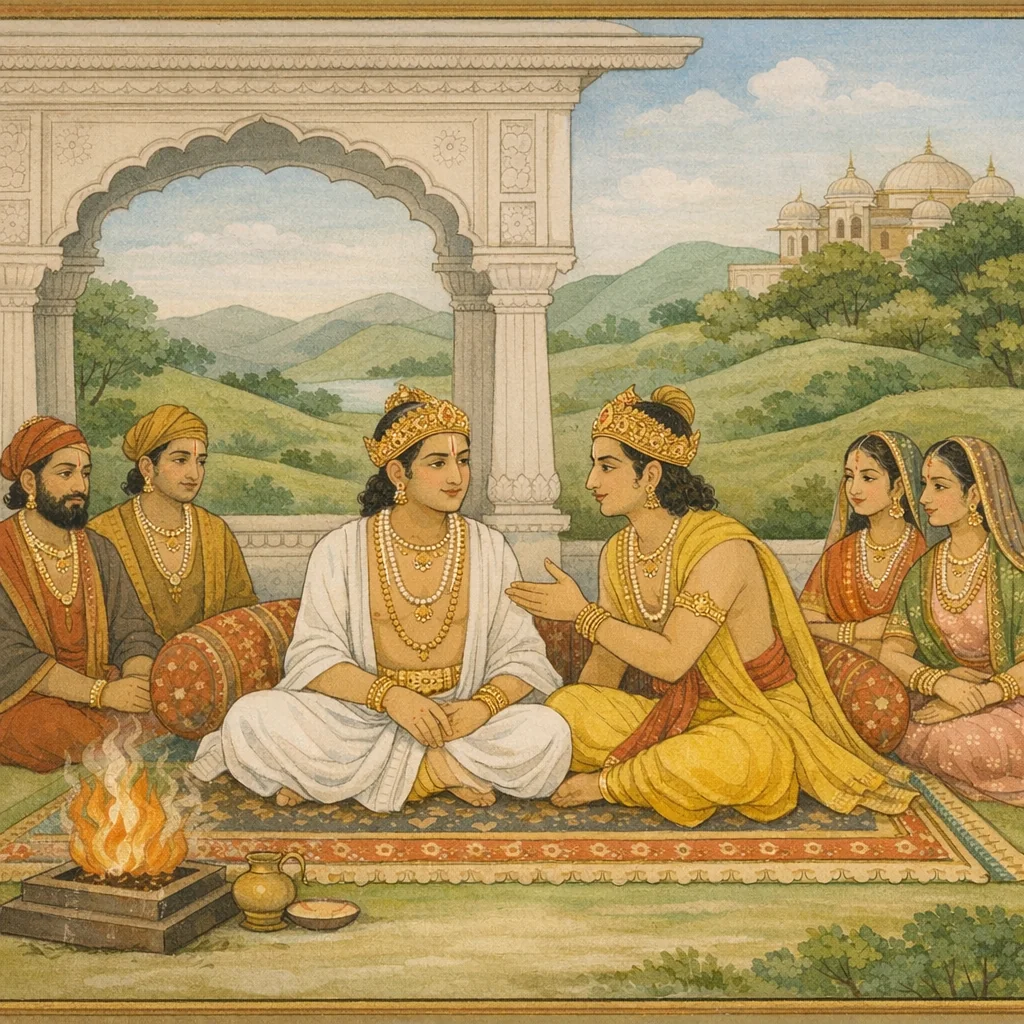
Adhyaya 12
Nakula’s Counsel on Yajña, Dāna, and Tyāga (नकुलोपदेशः—यज्ञदानत्यागविचारः)
Upa-parva: Rājadharmānuśāsana Upa-Parva (Royal Duties and Normative Governance)
Vaiśaṃpāyana narrates Nakula’s reply after hearing Arjuna, addressed to the Kuru ruler as an ethical-ritual clarification. Nakula argues that devas and pitṛs are situated on the path of action (karma), and that rejecting Vedic injunctions constitutes a severe form of nāstikya. He distinguishes forms of tyāga: lawful giving of dharma-earned wealth into principal sacrifices; misguided self-harm or status-seeking austerity; and disciplined mendicant restraint without attachment. He elevates inner dispositions—freedom from anger, joy-driven volatility, and slander—alongside study and guru-service as markers of genuine renunciation. A key comparative claim weighs the āśramas, placing special burden on the gṛhastha because yajña depends on household resources and orderly provisioning. Nakula warns that abandoning great sacrifices and ancestral rites and then seeking wandering renunciation leaves one ‘between worlds’ (socially and spiritually unmoored). He concludes that action done from pride is sterile, whereas action joined to tyāga yields great fruit, and that kṣātra-dharma—protecting, conquering lawfully, and gifting to the learned—supports ascent rather than regret.
Chapter Arc: अर्जुन के वचन सुनकर सभा में एक और स्वर उठता है—नकुल, जो गृहस्थ-धर्म की महिमा को राजधर्म के शोक-भार के सामने ढाल बनाकर रखता है, युधिष्ठिर को समझाने के लिए आगे आता है। → युधिष्ठिर के मन में युद्धोत्तर ग्लानि और त्याग-वैराग्य का आकर्षण बना रहता है; नकुल उसी के प्रतिवाद में वेद-विहित कर्म, यज्ञ, दान और संयम से युक्त गृहस्थ-आश्रम को ‘देवताओं का आधार’ बताकर सिद्ध करता है—कि देव भी कर्म-फल पर स्थित हैं और धर्मलब्ध धन का यज्ञों में विनियोग ही शुद्धि है। → नकुल ‘काम और स्वर्ग’ को तुला पर रखकर महर्षियों का मार्ग घोषित करता है—विधि से चलने वाले त्यागी गृहस्थ का पथ कहीं नष्ट नहीं होता; चित्त-समाधान से ब्रह्मभाव को प्राप्त गृहस्थ की देवता भी स्पृहा करते हैं, और क्षात्र-धर्म से पृथ्वी जीतकर मन्त्रविद् ब्राह्मणों को दान देकर स्वर्ग-मार्ग सुनिश्चित होता है। → वह निष्कर्ष देता है कि वेद-विरुद्ध आचरण नास्तिकता की ओर ले जाता है, जबकि श्रुति-सम्पन्न ब्राह्मणों के मत से गृहस्थ-आश्रम सब आश्रमों में श्रेष्ठ है—क्योंकि यहीं से यज्ञ, दान, अतिथि-सत्कार और लोक-धारण संभव है; अतः युधिष्ठिर को शोक त्यागकर वेद-विहित कर्म में स्थित होना चाहिए। → युधिष्ठिर के अंतर्मन में अभी भी ‘त्याग बनाम कर्तव्य’ का द्वंद्व पूरी तरह शांत नहीं होता—अगले उपदेश में यह प्रश्न और सूक्ष्म रूप से उठने को तैयार रहता है।
Shlokas
Verse 1
अपन काल छा | अपड--#क+ द्ादशोड् ध्याय: नकुलका गृहस्थ-धर्मकी प्रशंसा करते हुए राजा युधिष्ठिरको समझाना वैशम्पायन उवाच अर्जुनस्य वच: श्रुत्वा नकुलो वाक्यमत्रवीत् | राजानमभिसप्प्रेक्ष्य सर्वधर्मभूतां वरम्,वैशम्पायनजी कहते हैं--राजन्! अर्जुनकी बात सुनकर नकुलने भी सम्पूर्ण धर्मात्माओंमें श्रेष्ठ राजा युधिष्ठिरकी ओर देखकर कुछ कहनेको उद्यत हुए। शत्रुओंका दमन करनेवाले जनमेजय! महाबाहु नकुल बड़े बुद्धिमान् थे। उनकी छाती चौड़ी, मुख ताम्रवर्णका था। वे बड़े मितभाषी थे। उन्होंने भाईके चित्तका अनुसरण करते हुए कहा
Vaiśampāyana said: Having heard Arjuna’s words, Nakula began to speak. Looking toward King Yudhiṣṭhira—foremost among all upholders of dharma—he prepared to address him, aligning his own counsel with his brother’s intent.
Verse 2
अनुरुध्य महा प्राज्ञो क्षातुश्चित्तमरिंदम । व्यूढोरस्को महाबाहुस्ताम्रास्यो मितभाषिता,वैशम्पायनजी कहते हैं--राजन्! अर्जुनकी बात सुनकर नकुलने भी सम्पूर्ण धर्मात्माओंमें श्रेष्ठ राजा युधिष्ठिरकी ओर देखकर कुछ कहनेको उद्यत हुए। शत्रुओंका दमन करनेवाले जनमेजय! महाबाहु नकुल बड़े बुद्धिमान् थे। उनकी छाती चौड़ी, मुख ताम्रवर्णका था। वे बड़े मितभाषी थे। उन्होंने भाईके चित्तका अनुसरण करते हुए कहा
Vaiśampāyana said: O subduer of foes, the very wise Nakula, aligning himself with his brother’s intention, spoke. Broad-chested and strong-armed, copper-faced and measured in speech, he addressed the matter with restraint.
Verse 3
नकुल उवाच विशाखयूपे देवानां सर्वेषामग्नयश्िता: । तस्माद् विद्धि महाराज देवा: कर्मफले स्थिता:,नकुल बोले--महाराज! विशाखयूप नामक क्षेत्रमें सम्पूर्ण देवताओंद्वारा की हुई अग्निस्थापनाके चिह्न (ईटोंकी बनी हुई वेदियाँ) मौजूद हैं। इससे आपको यह समझना चाहिये कि देवता भी वैदिक कर्मों और उनके फलोंपर विश्वास करते हैं
Nakula said: “O great king, at Viśākhayūpa there remain the established fire-altars of all the gods. Therefore understand this: even the gods stand by ritual action and its results.”
Verse 4
अनास्तिकानां भूतानां प्राणदा: पितरश्न ये । तेडपि कर्मव कुर्वन्ति विधिं सम्प्रेक्ष्य पार्थिव,राजन्! आस्तिकताकी बुद्धिसे रहित समस्त प्राणियोंके प्राणदाता पितर भी शास्त्रके विधिवाक्योंपर दृष्टि रखकर कर्म ही करते हैं
Nakula said: “Even the Pitṛs—who are the givers and sustainers of life for beings that lack faith—still act only after looking to the scriptural rule. O king, they too perform their duties with the ordinance in view.”
Verse 5
वेदवादापविद्धांस्तु तान् विद्धि भृशनास्तिकान् । न हि वेदोक्तमुत्सृज्य विप्र: सर्वेषु कर्मसु
Know those who have cast aside the authority of Vedic teaching to be thoroughgoing unbelievers. For a brāhmaṇa does not, in any of his prescribed duties, abandon what is enjoined by the Veda.
Verse 6
अत्याश्रमानयं सर्वनित्याहुर्वेदनिश्चया:
Nakula said: “Those who are firmly resolved in Vedic understanding declare this to be a discipline of constant practice—one that leads a person through the proper stages of life and steadies conduct.”
Verse 7
वित्तानि धर्मलब्धानि क्रतुमुख्येष्ववासृजन्,महाराज! जो धर्मसे प्राप्त किये हुए धनका श्रेष्ठ यज्ञोमें उपयोग करता है और अपने मनको वशमें रखता है, वह मनुष्य त्यागी माना गया है
Nakula says: O King, the person who spends wealth acquired through righteous means on the foremost sacrificial rites, and who keeps the mind under control, is truly regarded as one who has renounced—because his giving is grounded in dharma and his inner impulses are mastered.
Verse 8
कृतात्मा स महाराज स वै त्यागी स्मृतो नर:,महाराज! जो धर्मसे प्राप्त किये हुए धनका श्रेष्ठ यज्ञोमें उपयोग करता है और अपने मनको वशमें रखता है, वह मनुष्य त्यागी माना गया है
Nakula said: “O great king, that person is called self-controlled and truly a renouncer who employs wealth obtained through dharma in the highest sacrificial acts and keeps the mind under restraint.”
Verse 9
अनवेक्ष्य सुखादानं तथैवोर्ध्व प्रतिष्ठित: । आत्मत्यागी महाराज स त्यागी तामसो मतः,महाराज! जिसने गृहस्थ-आश्रमके सुखभोगोंको कभी नहीं देखा, फिर भी जो ऊपरवाले वानप्रस्थ आदि आश्रमोंमें प्रतेष्ठित होकर देहत्याग करता है, उसे तामस त्यागी माना गया है
Nakula said: “O great king, one who has never even experienced the rightful enjoyments and responsibilities of household life, yet establishes himself in the ‘higher’ stages such as forest-dwelling and then abandons the body—such a renouncer is regarded as a tāmasa (dark, deluded) renouncer.”
Verse 10
अनिकेत: परिपतन वृक्षमूलाश्रयो मुनि: । अपाचक: सदा योगी स त्यागी पार्थ भिक्षुक:,पार्थ! जिसका कोई घर-बार नहीं, जो इधर-उधर विचरता और चुपचाप किसी वृक्षके नीचे उसकी जड़पर सो जाता है, जो अपने लिये कभी रसोई नहीं बनाता और सदा योगपरायण रहता है, ऐसे त्यागीको भिक्षुक कहते हैं
Nakula says: “O Pārtha, a mendicant is that renunciate sage who has no fixed dwelling, who wanders about, who quietly takes shelter at the root of a tree, who never cooks for himself, and who remains constantly devoted to yoga. Such a one—living by relinquishment rather than possession—is called a bhikṣuka.”
Verse 11
इस प्रकार श्रीमह्याभारत शान्तिपर्वके अन्तर्गत राजधमनुशासनपर्वमें अजुनके वचनके प्रयंगरें ऋषियों और पक्षिरूपधारी इन्द्रके संवादका वर्णनविषयक ग्यारहवाँ अध्याय पूरा हुआ,क्रोधहर्षावनादृत्य पैशुन्यं च विशेषत: । विप्रो वेदानधीते य: स त्यागी पार्थ उच्यते कुन्तीनन्दन! जो ब्राह्मण क्रोध, हर्ष और विशेषतः चुगलीकी अवहेलना करके सदा वेदोंके स्वाध्यायमें लगा रहता है, वह त्यागी कहलाता है
O Pārtha, a Brahmin who sets aside anger and elation—and, above all, refuses the habit of slander—and who remains steadily devoted to the study of the Vedas, is called a true renunciant.
Verse 12
आश्रमांस्तुलया सर्वान् धृतानाहुर्मनीषिण: । एकततश्च त्रयो राजन् गृहस्थाश्रम एकत:,राजन! कहते हैं कि एक समय मनीषी पुरुषोंने चारों आश्रमोंको (विवेकके) तराजूपर रखकर तौला था। एक ओर तो अन्य तीनों आश्रम थे और दूसरी ओर अकेला गृहस्थ- आश्रम था नरेन्द्र! कुन्तीकुमार! आप क्षत्रियधर्मके अनुसार पराक्रमद्वारा इस पृथ्वीपर विजय पाकर मन्त्रवेत्ता ब्राह्मणोंको यज्ञमें बहुत-सी दक्षिणाएँ देकर स्वर्गसे भी ऊपर चले जायँगे? अत: आज आपको शोक नहीं करना चाहिये ।। इति श्रीमहा भारते शान्तिपर्वणि राजधर्मानुशासनपर्वणि नकुलवाक्ये द्वादशो<5ध्याय:
Nakula said: “O King, the wise declare that once all the āśramas were placed upon the scales of discernment and weighed: on one side stood the other three āśramas together, and on the other side stood the householder’s āśrama alone.”
Verse 13
समीक्ष्य तुलया पार्थ काम॑ स्वर्ग च भारत | अयं पन्था महर्षीणामियं लोकविदां गति:
Nakula said: “O Pārtha, O Bhārata—having weighed desire and heaven in the balance, this is the path of the great seers; this is the course upheld by those who truly know the world.”
Verse 14
भरतवंशी नरेश! पार्थ! इस प्रकार विवेककी तुलापर रखकर जब देखा गया तो गृहस्थ-आश्रम ही महत्त्वपूर्ण सिद्ध हुआ; क्योंकि वहाँ भोग और स्वर्ग दोनों सुलभ थे। तबसे उन्होंने निश्चय किया कि “यही मुनियोंका मार्ग है और यही लोकवेत्ताओंकी गति है! ।। इति य: कुरुते भावं स त्यागी भरतर्षभ । न य: परित्यज्य गृहान् वनमेति विमूढवत्,भरतश्रेष्ठ) जो ऐसा भाव रखता है, वही त्यागी है। जो मूर्खकी तरह घर छोड़कर वनमें चला जाता है, वह त्यागी नहीं है
Nakula said: “O bull among the Bharatas, true renunciation lies in one’s inner resolve and discernment. Whoever cultivates non-possessiveness and lives by duty is the real renouncer. But one who, like a deluded man, merely leaves his home and goes to the forest is not thereby a renouncer.”
Verse 15
यदा कामान् समीक्षेत धर्मवैतंसिको नर: । अथीनं मृत्युपाशेन कण्ठे बध्नाति मृत्युराट्,वनमें रहकर भी यदि धर्मध्वजी मनुष्य काम-भोगोंपर दृष्टिपात (उनका स्मरण) करता है तो यमराज उसके गलेमें मौतका फंदा डाल देते हैं
Nakula said: “When a man who parades as righteous—wearing dharma like a banner—still turns his gaze toward sense-pleasures, even in the solitude of the forest, the Lord of Death binds that helpless man by the throat with the noose of mortality.”
Verse 16
अभिमानकृतं कर्म नैतत् फलवदुच्यते । त्यागयुक्ते महाराज सर्वमेव महाफलम्,महाराज! यही कर्म यदि अभिमानपूर्वक किया जाय तो वह सफल नहीं होता, और त्यागपूर्वक किया हुआ सारा कर्म ही महान् फलदायक होता है
Nakula said: “An act performed out of pride is not called truly fruitful. But, O King, when action is joined with renunciation—done without possessiveness and self-display—then every deed becomes greatly rewarding.”
Verse 17
शमो दमस्तथा धैर्य सत्यं शौचमथार्जवम् । यज्ञो धृतिश्च धर्मश्न नित्यमार्षो विधि: स्मृत:,शम, दम, धैर्य, सत्य, शौच, सरलता, यज्ञ, धृति तथा धर्म--इन सबका ऋषियोंके लिये निरन्तर पालन करनेका विधान है
Nakula said: “Tranquillity of mind, self-restraint, steadfast courage, truthfulness, purity, and straightforwardness; along with sacrifice, perseverance, and discernment of dharma—these are remembered as the perennial, rishi-ordained rule of conduct to be continually practiced.”
Verse 18
पितृदेवातिथिकृते समारम्भो5त्र शस्यते । अत्रैव हि महाराज त्रिवर्ग: केवलं फलम्,महाराज! गृहस्थ-आश्रममें ही देवताओं, पितरों तथा अतिथियोंके लिये किये जानेवाले आयोजनकी प्रशंसा की जाती है। केवल यहीं धर्म, अर्थ और काम--ये तीनों सिद्ध होते हैं
Nakula says: In the householder’s stage of life, undertaking acts meant for the ancestors, the gods, and guests is especially praised. For it is here, O King, that the three aims of life—dharma (righteous duty), artha (material well-being), and kāma (legitimate enjoyment)—are truly and fully realized as their proper fruit.
Verse 19
एतस्मिन् वर्तमानस्य विधावप्रतिषेधिते । त्यागिन: प्रसृतस्येह नोच्छित्तिविद्यते क्वचित्,यहाँ रहकर वेदविहित विधिका पालन करनेवाले निष्ठावान् त्यागीका कभी विनाश नहीं होता--वह पारलौकिक उन्नतिसे कभी वज्चित नहीं रहता
For one who lives in this world while following the Veda-sanctioned rule of conduct—without transgressing what is forbidden—there is, for the steadfast renunciant devoted to relinquishment, no destruction anywhere. Such a person is never cut off from higher, otherworldly progress.
Verse 20
असृजद्धि प्रजा राजन् प्रजापतिरकल्मष: । मां यक्ष्यन्तीति धर्मात्मा यज्ञैविविधदक्षिणै:,राजन! पापरहित धर्मात्मा प्रजापतिने इस उद्देश्यसे प्रजाओंकी सृष्टि की कि “ये नाना प्रकारकी दक्षिणावाले यज्ञोंद्वारा मेरा यजन करेंगी”
O King, the stainless Prajāpati created living beings with this intent: ‘They will worship me.’ Being righteous in purpose, he ordained that they should honor him through sacrifices accompanied by many kinds of sacrificial gifts—thus grounding society in duty, gratitude, and sacred reciprocity.
Verse 21
वीरुधश्रैव वक्षांश्व यज्ञार्थ वै तथौषधी: । पशुंश्चैव तथा मेध्यान् यज्ञार्थानि हवींषि च,इसी उद्देश्यसे उन्होंने यज्ञसम्पादनके लिये नाना प्रकारकी लता-वेलों, वृक्षों, ओषधियों, मेध्य पशुओं तथा यज्ञार्थक हविष्योंकी भी सृष्टि की है
Nakula said: For the sake of sacrifice, He brought forth creeping plants and trees, and likewise medicinal herbs; and also animals fit for ritual purity, along with the oblations meant for sacrificial rites. The passage frames creation itself as ordered toward dharma: the world’s resources are not merely for consumption, but for regulated, sanctifying use through yajña, which sustains cosmic and social harmony.
Verse 22
गृहस्थाश्रमिणस्तच्च यज्ञकर्म विरोधकम् | तस्माद् गार्हस्थ्यमेवेह दुष्करं दुर्लभ तथा,वह यज्ञकर्म गृहस्थाश्रमी पुरुषको एक मर्यादाके भीतर बाँध रखनेवाला है; इसलिये गा्हस्थ्यधर्म ही इस संसारमें दुष्कर और दुर्लभ है
Nakula said: “For one who lives in the householder stage, the obligations of sacrificial duty act as a restraint, setting limits and demanding disciplined conduct. Therefore, in this world, the householder’s way of life is indeed difficult to uphold and rare to accomplish well.”
Verse 23
तत् सम्प्राप्य गृहस्था ये पशुधान्यधनान्विता: । न यजन्ते महाराज शाश्रचतं तेषु किल्बिषम्,महाराज! जो गृहस्थ उसे पाकर पशु और धन-धान्यसे सम्पन्न होते हुए भी यज्ञ नहीं करते हैं, उन्हें सदा ही पापका भागी होना पड़ता है
Nakula said: “O great king, those householders who, after attaining prosperity and becoming endowed with cattle, grain, and wealth, do not perform sacrifice, incur enduring fault; a lasting stain of sin rests upon them.”
Verse 24
स्वाध्याययज्ञा ऋषयो ज्ञानयज्ञास्तथा परे | अथापरे महायज्ञान् मनस्येव वितन्वते,कुछ ऋषि वेद-शास्त्रोंका स्वाध्यायरूप यज्ञ करनेवाले होते हैं, कुछ ज्ञानयज्ञमें तत्पर रहते हैं और कुछ लोग मनमें ही ध्यानरूपी महान् यज्ञोंका विस्तार करते हैं
Nakula said: “Among the sages, some perform sacrifice in the form of Vedic study; others are devoted to the sacrifice of knowledge. Still others, without outward display, expand great sacrifices within the mind itself—through inward contemplation.”
Verse 25
एवं मन:समाधान मार्गमातिष्ठतो नृप । द्विजातेब्रह्म भूतस्य स्पृहयन्ति दिवौकस:,नरेश्वर! चित्तको एकाग्र करना-रूप जो साधन है उसका आश्रय लेकर ब्रह्मभूत हुए द्विजके दर्शनकी अभिलाषा देवता भी रखते हैं
Nakula said: “O king, when a twice-born has become ‘brahman-realized’ by firmly taking to the path of steadying the mind in concentration, even the dwellers of heaven long for the sight of such a person.”
Verse 26
स रत्नानि विचित्राणि संहृतानि ततस्तत: । मखेष्वनभिसंत्यज्य नास्तिक्यमभिजल्पसि,इधर-उधरसे जो विचित्र रत्न संग्रह करके लाये गये हैं, उनका यज्ञोंमें वितरण न करके आप नास्तिकताकी बातें कर रहे हैं
Nakul said: “These various precious gems have been gathered from here and there; yet, without distributing them in sacrificial rites, you speak words of disbelief. To hoard what has been collected and then deny the sacred order is ethically inconsistent—wealth is meant to be purified and shared through dharmic giving, not used to justify irreverence.”
Verse 27
कुट॒म्बमास्थिते त्यागं न पश्यामि नराधिप । राजसूयाश्दमेधेषु सर्वमेधेषु वा पुन:,नरेश्वर! जिसपर कुट॒म्बका भार हो, उसके लिये त्यागका विधान नहीं देखनेमें आता है। उसे तो राजसूय, अश्वमेध अथवा सर्वमेध यज्ञोंमें प्रवृत्त होना चाहिये
Nakula said: “O king, for one who is burdened with the responsibilities of a household, I do not see renunciation as the proper rule. Rather, such a person should engage in great sacrificial duties—like the Rājasūya, the Aśvamedha, or again the Sarvamedha—fulfilling obligation through sanctioned action instead of withdrawal.”
Verse 28
ये चान्ये क्रतवस्तात ब्राह्मणैरभिपूजिता: । तैर्यजस्व महीपाल शक्रो देवपतिर्यथा,भूपाल! इनके सिवा जो दूसरे भी ब्राह्मणोंद्वारा प्रशंसित यज्ञ हैं, उनके द्वारा देवराज इन्द्रके समान आप भी यज्ञपुरुषकी आराधना कीजिये
O dear one, O protector of the earth: perform also those other sacrificial rites that are honored and commended by the Brahmins. By worshipping the Lord of sacrifice through them, may you conduct your kingship like Indra, the lord of the gods—upholding order, generosity, and the sacred duties that sustain the realm.
Verse 29
राज्ञ: प्रमाददोषेण दस्युभि: परिमुष्यताम् | अशरण्य: प्रजानां यः स राजा कलिरुच्यते,राजाके प्रमाददोषसे लुटेरे प्रबल होकर प्रजाको लूटने लगते हैं, उस अवस्थामें यदि राजाने प्रजाको शरण नहीं दी तो उसे मूर्तिमान् कलियुग कहा जाता है
When, through a king’s negligent fault, robbers grow bold and plunder the people, and the king fails to provide them refuge and protection, such a ruler is called ‘Kali’ embodied—an age of moral decline made manifest in the person of the king.
Verse 30
अश्वान् गाश्नैव दासीश्व करेणूश्न॒ स्वलंकृता: । ग्रामाउ्जनपदांश्वैव क्षेत्राणि च गृहाणि च,प्रजानाथ! यदि हमलोग ईर्ष्यायुक्त मनवाले होकर ब्राह्मणोंको घोड़े, गाय, दासी, सजी- सजायी हथिनी, गाँव, जनपद, खेत और घर आदिका दान नहीं करते हैं तो राजाओंमें कलियुग समझे जायँगे
O lord of the people! If, with hearts tainted by envy, we do not bestow upon the Brahmins horses, cows, maidservants, richly adorned she-elephants, and even villages, districts, fields, and houses, then we shall be deemed ‘Kali’ among kings.
Verse 31
अप्रदाय द्विजातिभ्यो मात्सर्याविष्टचेतस: । वयं ते राजकलयो भविष्याम विशाम्पते,प्रजानाथ! यदि हमलोग ईर्ष्यायुक्त मनवाले होकर ब्राह्मणोंको घोड़े, गाय, दासी, सजी- सजायी हथिनी, गाँव, जनपद, खेत और घर आदिका दान नहीं करते हैं तो राजाओंमें कलियुग समझे जायँगे
Nakula said: “If, with minds seized by envy, we fail to give gifts to the twice-born—then, O lord of the people, O protector of subjects, we shall be regarded as ‘Kali among kings’.”
Verse 32
अदातार: शरण्याश्ष॒ राजकिल्बिषभागिन: । दोषाणामेव भोक्तारो न सुखानां कदाचन,जो दान नहीं देते, शरणागतोंकी रक्षा नहीं करते, वे राजाओंके पापके भागी होते हैं। उन्हें दुःख-ही-दु:ख भोगना पड़ता है, सुख तो कभी नहीं मिलता
Those who refuse to give and who fail to protect those seeking refuge become sharers in a king’s moral transgression. Such people are destined to reap only the fruits of fault and suffering; happiness does not truly come to them.
Verse 33
अनिष्ट्वा च महायज्ञैरकृत्वा च पितृस्वधाम् | तीर्थेष्वनभिसम्प्लुत्य प्रव्रजिष्पसि चेत् प्रभो,प्रभो! बड़े-बड़े यज्ञोंका अनुष्ठान, पितरोंका श्राद्ध तथा तीर्थोंमें स्नान किये बिना ही आप संन्यास ले लेंगे तो हवा-द्वारा छिन्न-भिन्न हुए बादलोंके समान नष्ट हो जायँगे। लोक और परलोक दोनोंसे भ्रष्ट होकर (त्रिशंकुके समान) बीचमें ही लटके रह जायूँगे
Nakula said: “O lord, if you depart into renunciation without having performed the great sacrifices, without having duly offered the ancestral rites (the svadhā for the Pitṛs), and without bathing at the sacred fords, then you will be ruined—like clouds torn apart and scattered by the wind. Fallen from both this world and the next, you will hang in between, like Triśaṅku.”
Verse 34
छिन्ना भ्रमिव गन्तासि विलयं मारुतेरितम् । लोकयोरुभयोर्भ्रष्टो हुन्तराले व्यवस्थित:,प्रभो! बड़े-बड़े यज्ञोंका अनुष्ठान, पितरोंका श्राद्ध तथा तीर्थोंमें स्नान किये बिना ही आप संन्यास ले लेंगे तो हवा-द्वारा छिन्न-भिन्न हुए बादलोंके समान नष्ट हो जायँगे। लोक और परलोक दोनोंसे भ्रष्ट होकर (त्रिशंकुके समान) बीचमें ही लटके रह जायूँगे
Nakula said: “O lord, if you depart into dissolution like a cloud-bank torn apart and driven by the wind, then I—fallen away from both this world and the next—will remain suspended in the in-between, as it were.”
Verse 35
अन्तर्बहिश्व यत् किंचिन्मनोव्यासंगकारकम् | परित्यज्य भवेत् त्यागी न हित्वा प्रतितिष्ठति,बाहर और भीतर जो कुछ भी मनको फँसानेवाली चीजें हैं, उन सबको छोड़नेसे मनुष्य त्यागी होता है। केवल घर छोड़ देनेसे त्यागकी सिद्धि नहीं होती
Nakula said: Whatever there is—within oneself or outside—that entangles the mind and creates attachment, by abandoning all that a person truly becomes a renunciant. Renunciation is not accomplished merely by leaving one’s home; without giving up inner clinging, one does not become firmly established in true detachment.
Verse 36
एतस्मिन् वर्तमानस्य विधावप्रतिषेधिते । ब्राह्मणस्य महाराज नोच्छित्तिविद्यते क्वचित्,महाराज! इस गृहस्थ-आश्रममें ही रहकर वेद-विहित कर्ममें लगे हुए ब्राह्मगका कभी उच्छेद (पतन) नहीं होता
O great king, for a brāhmaṇa who lives in this (householder) condition and follows the Veda-ordained rule of life—one that is not prohibited—there is nowhere any destruction or downfall. Remaining in the gṛhastha-āśrama and engaged in prescribed duties, he does not come to ruin.
Verse 37
निहत्य शत्रूंस्तरसा समृद्धान् शक्रो यथा दैत्यबलानि संख्ये । कः पार्थ शोचेन्निरत: स्वथधर्मे पूर्व: स्मृते पार्थिव शिष्टजुष्टे,कुन्तीनन्दन! जैसे इन्द्र युद्धमें दैत्योंकी सेनाओंका संहार करते हैं, उसी प्रकार जो वेगपूर्वक बढ़े-चढ़े शत्रुओंका वध करके विजय पा चुका हो और पूर्ववर्ती राजाओंद्वारा सेवित अपने धर्ममें तत्पर रहता हो, ऐसा (आपके सिवा) कौन राजा शोक करेगा?
Nakula said: “Having swiftly struck down powerful enemies—just as Indra destroys the hosts of the Daityas in battle—what king, O Partha, would grieve, if he is steadfast in his own dharma, a path remembered from of old and practiced by righteous kings? Having won victory by valor and remaining devoted to the time-honored royal duty, who (other than you) would fall into sorrow?”
Verse 38
क्षात्रेण धर्मेण पराक्रमेण जित्वा महीं मन्त्रविद्भ्य: प्रदाय । नाकस्य पृष्ठेडसि नरेन्द्र गन्ता न शोचितव्यं भवताद्य पार्थ
Nakula said: “Having conquered the earth by the warrior’s dharma and by valor, and then having bestowed it upon those learned in counsel and sacred knowledge, you, O king, will go to the summit of heaven. Therefore, O Pārtha, you ought not to grieve today.”
Verse 56
देवयानेन नाकस्य पृष्ठमाप्नोति भारत | भारत! जो वेदोंकी आज्ञाके विरुद्ध चलते हैं, उन्हें बड़ा भारी नास्तिक समझिये। वेदकी आज्ञाका उल्लंघन करके सब प्रकारके कर्म करनेपर भी कोई ब्राह्मण देवयान मार्गके द्वारा स्वर्गलोककी पृष्ठभूमिमें पैर नहीं रख सकता
Nakula said: “O Bhārata, by the path of the gods one reaches the heights of heaven. But those who act in defiance of the Vedas should be regarded as grave unbelievers. Even if a Brahmin performs every kind of rite and action, if he violates the Vedic injunctions he cannot, by the devayāna path, set foot upon the very threshold of the heavenly world.”
Verse 66
ब्राह्मणा:श्रुतिसम्पन्नास्तानू निबोध नराधिप | यह गृहस्थ-आश्रम सब आश्रमोंसे ऊँचा है। यह बात वेदोंके सिद्धान्तको जाननेवाले श्रुतिसम्पन्न ब्राह्मण कहते हैं। नरेश्वरर आप उनकी सेवामें उपस्थित होकर इस बातको समझिये
Nakula said: “O king, understand this from Brahmins who are accomplished in Vedic learning. The householder’s stage of life is held to be higher than all the other āśramas. This is what Brahmins, well-versed in the Vedas and their established conclusions, declare. Therefore, O lord of men, attend upon them in service and grasp this truth.”
Frequently Asked Questions
Whether one may claim renunciation while neglecting prescribed obligations—especially sacrifices, ancestral rites, and protective responsibilities—versus practicing tyāga as non-attachment within one’s lawful station (notably gṛhastha and kṣātra duties).
Actions motivated by pride (abhimāna) are described as fruitless, while the same actions—ritual, giving, protection—when performed with relinquishment of ownership and desire are said to yield ‘great fruit,’ aligning social duty with inner discipline.
Yes: it asserts continuity and non-decline for the practitioner moving within the Brahmanically endorsed discipline (vipra-niṣevita vidhi), and it frames lawful kṣātra performance plus gifting to the learned as conducive to favorable posthumous attainment rather than regret.