Adhyaya 106
Nīti-upadeśa to a Rājaputra: Self-restraint, Alliances, and Rival-Management (नीतिउपदेशः)
Upa-parva: Rājadharmānuśāsana Upa-Parva (राजधर्मानुशासन उपपर्व)
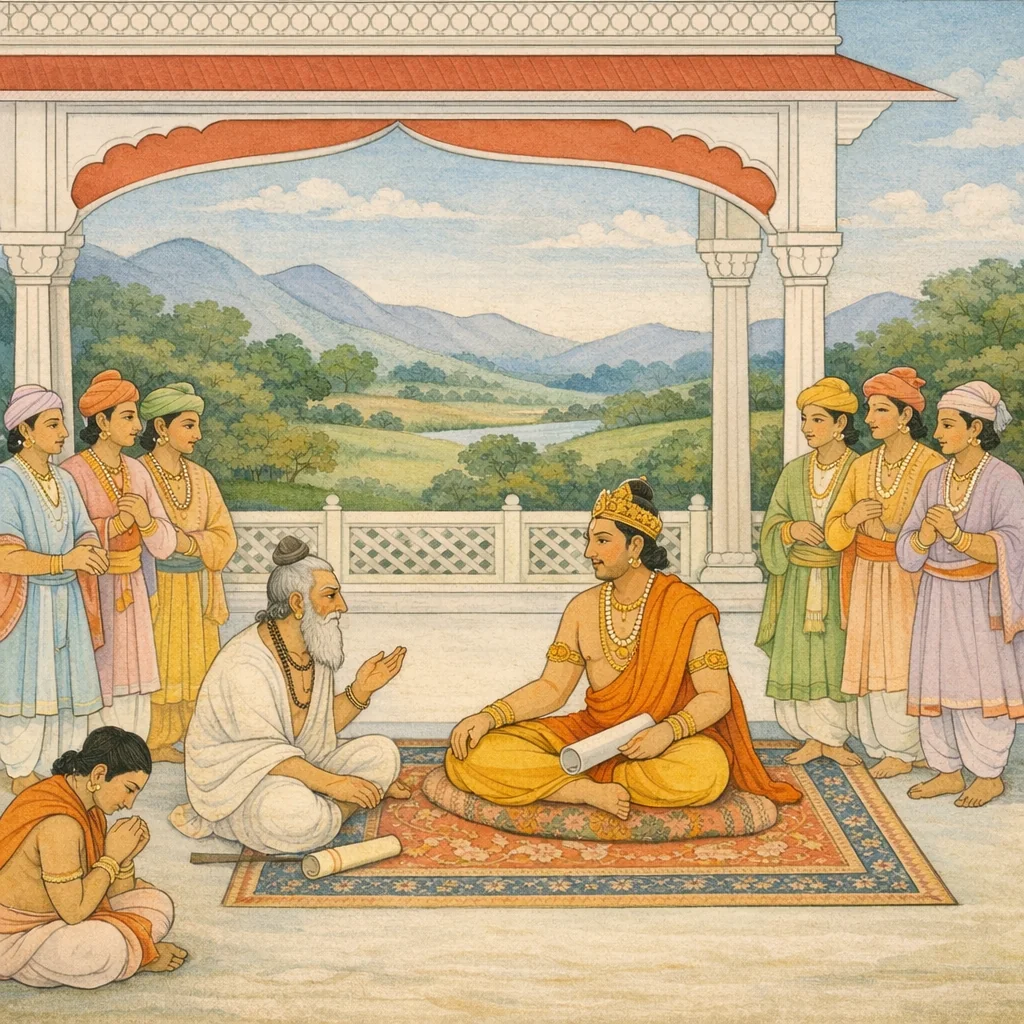
A muni offers a rāja-putra a structured entry into rāja-nīti, beginning with eligibility: if kṣatriya resolve is present and the prince can enact disciplined conduct, the teacher will disclose policy for attaining and stabilizing rule. The prince requests instruction, framing the meeting as auspicious and purposive. The muni then prescribes foundational self-regulation—abandoning pride, arrogance, anger, elation, and fear—and recommends approaching even a counter-party with formal humility to obtain livelihood/support, suggesting legitimacy can be built through ritualized deference and exemplary conduct. He links purity of action and disciplined adherence to one’s śāstra with becoming a recognized measure (pramāṇa) among beings and gaining capable, uncorrupted allies. The counsel then pivots to strategic governance: secure friendly strength, deliberate well, fragment opponents internally, and weaken hostile capacity through negotiated arrangements and competitive countermeasures. The text also outlines resource and prestige tactics—redirecting scarce luxuries and pleasures, draining an adversary’s treasury through indulgence, and shaping elite opinion by publicizing the rival’s yajña and dāna among brāhmaṇas to influence behavior. It warns against exposing one’s intentions to an opponent and advocates operating from advantageous territory with unreliable associates if useful. Additional measures include imposing difficult projects, obstructing infrastructure (e.g., river-bund works), and emphasizing how fiscal exhaustion leads to subordination. The closing verses describe rhetoric about fate versus human agency as a tool for discouraging an adversary, and list further “dambha-yogas” (deceptive stratagems), presented as actions requiring resolve and careful execution within the narrative’s statecraft frame.
Chapter Arc: Yudhishthira’s courtly inquiry turns to a razor-edged manual of statecraft: how a seeker of fortune can actually *make* a kingdom—if he has the nerve and the discipline to carry counsel into action. → Kālakavṛkṣīya Muṇika lays out a step-by-step ascent: win trust through impeccable purity of conduct, approach the truth-bound king of Videha (Janaka), accept honor without vanity, and begin the dangerous work of entering the inner circle while quietly reading the fractures of the realm. → The counsel sharpens into covert strategy—“split the inner enemies, pierce bilva with bilva”: use one rival to check another, break hostile alliances from within, and turn the king’s favor into a lever that moves the whole state. → Muṇika seals the teaching with its moral horizon: righteous conduct is not merely useful but salvific—pious action leads to the highest course and heavenly station; thus even hard statecraft must be yoked to śauca (purity) and dharma. → Having secured his aim, the advised agent is sent onward toward the suffering multitude and a knower of yoga-dharma—hinting that political success must next be tested against the ethics of compassion and spiritual law.
Shlokas
Verse 1
(दाक्षिणात्य अधिक पाठके ४ ३ श्लोक मिलाकर कुल ५८३ “लोक हैं) #द१०3८5>> हु # पञ्चाधिकशततमोब< ध्याय: कालकवृक्षीय मुनिके द्वारा गये हुए राज्यकी प्राप्तिके लिये विभिन्न उपायोंका वर्णन मुनिर्वाच अथ चेत् पौरुषं किंचित् क्षत्रियात्मनि पश्यसि । ब्रवीमि तां तु ते नीति राज्यस्य प्रतिपत्तये,मुनिने कहा--राजकुमार! यदि तुम अपनेमें कुछ पुरुषार्थ देखते हो तो मैं तुम्हें राज्यकी प्राप्तिके लिये एक नीति बता रहा हूँ
The sage said: “Prince, if you perceive even a little resolve and capacity for effort within your kṣatriya nature, then I shall tell you a nīti—a practical policy—for attaining kingship.”
Verse 2
तां चेच्छक्नोषि निर्मातुं कर्म चैव करिष्यसि । शृणु सर्वमशेषेण यत् त्वां वक्ष्यामि तत्त्वतः,यदि तुम उसे कार्यरूपमें परिणत कर सको, उसके अनुसार ही सारा कार्य करो तो मैं उस नीतिका यथार्थरूपसे वर्णन करता हूँ। तुम वह सब पूर्णरूपसे सुनो
Bhishma said: “If you can put that policy into practice and will act accordingly, then listen—fully, without omission—to everything I shall tell you, exactly as it truly is.”
Verse 3
आचरिष्यसि चेत् कर्म महतोअ<र्थानवाप्स्यसि | राज्यं राज्यस्य मन्त्र वा महतीं वा पुन: श्रियम्
Bhīṣma said: “If you carry out this duty as instructed, you will attain great benefits—either sovereignty itself, or the power of counsel that guides a kingdom, or again a vast prosperity.”
Verse 4
राजोवाच ब्रवीतु भगवाननीतिमुपपन्नो<स्म्यहं प्रभो
The king said: “O venerable lord, please expound the principles of right conduct. I am prepared to receive your guidance, O master.”
Verse 5
मुनिर्वाच हित्वा दम्भं च काम॑ च क्रोध॑ हर्ष भयं तथा
The sage said: “Having abandoned hypocrisy and desire, and likewise anger, elation, and fear…”
Verse 6
तमुत्तमेन शौचेन कर्मणा चाभिधारय,तुम पवित्र व्यवहार और उत्तम कर्मद्वारा अपने प्रति विदेहराजका विश्वास उत्पन्न करो। विदेहराज सत्यप्रतिज्ञ हैं; अतः वे तुम्हें अवश्य धन प्रदान करेंगे। यदि ऐसा हुआ तो तुम समस्त प्राणियोंके लिये प्रमाणभूत (विश्वासपात्र) तथा राजाकी दाहिनी बाँह हो जाओगे
Bhīṣma said: “Win him over through the highest purity of conduct and through noble deeds. By such spotless behavior, awaken the Videha king’s trust in you. The king of Videha is true to his vows; therefore he will surely grant you wealth. If that happens, you will become a reliable standard for all beings and the king’s right arm—his foremost support in governance.”
Verse 7
दातुमर्ति ते वित्त वैदेह: सत्यसंगर: । प्रमाणं सर्वभूतेषु प्रग्रहं च भविष्यसि,तुम पवित्र व्यवहार और उत्तम कर्मद्वारा अपने प्रति विदेहराजका विश्वास उत्पन्न करो। विदेहराज सत्यप्रतिज्ञ हैं; अतः वे तुम्हें अवश्य धन प्रदान करेंगे। यदि ऐसा हुआ तो तुम समस्त प्राणियोंके लिये प्रमाणभूत (विश्वासपात्र) तथा राजाकी दाहिनी बाँह हो जाओगे
Bhishma said: “The king of Videha, steadfast in truth and firm in his pledge, is fit to grant you wealth. Win his confidence through pure conduct and excellent deeds. If he does so, you will become a trustworthy standard for all beings and the king’s effective right hand in governance.”
Verse 8
ततः सहायान् सोत्साहॉल्लप्स्यसे5व्यसनान् शुचीन् | वर्तमान: स्वशास्त्रेण संयतात्मा जितेन्द्रिय:
Then, with renewed zeal, you will obtain worthy and pure-minded allies in times of distress. Living in accordance with your own prescribed discipline, self-restrained and master of your senses, you will be able to endure adversity and secure support through righteous conduct.
Verse 9
तेनैव त्वं धृतिमता श्रीमता चाभिसत्कृत:,आन्तरैभेंदयित्वारीन् बिल्व॑ बिल्वेन भेदय | राजा जनक बड़े धीर और श्रीसम्पन्न हैं। जब वे तुम्हारा सत्कार करेंगे, तब सभी लोगोंके विश्वास-पात्र होकर तुम अत्यन्त गौरवान्वित हो जाओगे। उस अवस्थामें तुम मित्रोंकी सेना इकट्ठी करके अच्छे मन्त्रियोंक साथ सलाह लेकर अन्तरंग व्यक्तियों-द्वारा शत्रुदलमें फूट डलवाकर बेलको बेलसे ही फोड़ो (शत्रुके सहयोगसे ही शत्रुका विध्वंस कर डालना)
Bhīṣma said: “By that very means you will be honored by the steadfast and prosperous King Janaka. When he receives you with due respect, you will become trusted among the people and greatly distinguished. Then, gathering the forces of your allies and taking counsel with capable ministers, create dissension within the enemy ranks through their own intimates—split the bilva with a bilva: bring about the enemy’s ruin by using the enemy’s own supports against him.”
Verse 10
प्रमाणं सर्वभूतेषु गत्वा च ग्रहणं महत् । ततः सुह्ृद्बलं लब्ध्वा मन्त्रयित्वा सुमन्त्रिभि:
Bhīṣma said: “Having gone among all beings to establish one’s credibility and standing, and having secured substantial support, then—after obtaining the strength of loyal well-wishers—one should deliberate with excellent counsellors.”
Verse 11
परैर्वा संविदं कृत्वा बलमप्यस्य घातय,अथवा दूसरोंसे मेल करके उन्हींके द्वारा शत्रुके बलका भी नाश कराओ। राजकुमार! जो शुभ पदार्थ अलभ्य हैं, उनमें तथा स्त्री, ओढ़ने-बिछानेके सुन्दर वस्त्र, अच्छे-अच्छे पलंग, आसन, वाहन, बहुमूल्य गृह, तरह-तरहके रस, गन्ध और फल--इन्हीं वस्तुओंमें शत्रुको आसक्त करो। भाँति-भाँतिके पक्षियों और विभिन्न जातिके पशुओंके पालनकी भी आसक्ति शत्रुके मनमें पैदा करो, जिससे यह शत्रु धीरे-धीरे धनहीन होकर स्वतः नष्ट हो जाय
Bhishma said: “Either make a pact with others and have them strike down even the enemy’s strength; or, by joining hands with others, get the enemy’s power destroyed through them. Prince, entangle the foe in those alluring goods that are hard to obtain—women, fine garments for covering and bedding, excellent beds, seats, vehicles, costly houses, and varieties of tastes, fragrances, and fruits. Also kindle in his mind a fondness for keeping many kinds of birds and animals of diverse breeds, so that, little by little, he becomes drained of wealth and perishes of himself.”
Verse 12
अलभ्या ये शुभा भावा: स्त्रियश्चवाच्छादनानि च । शय्यासनानि यानानि महाहाणि गृहाणि च,अथवा दूसरोंसे मेल करके उन्हींके द्वारा शत्रुके बलका भी नाश कराओ। राजकुमार! जो शुभ पदार्थ अलभ्य हैं, उनमें तथा स्त्री, ओढ़ने-बिछानेके सुन्दर वस्त्र, अच्छे-अच्छे पलंग, आसन, वाहन, बहुमूल्य गृह, तरह-तरहके रस, गन्ध और फल--इन्हीं वस्तुओंमें शत्रुको आसक्त करो। भाँति-भाँतिके पक्षियों और विभिन्न जातिके पशुओंके पालनकी भी आसक्ति शत्रुके मनमें पैदा करो, जिससे यह शत्रु धीरे-धीरे धनहीन होकर स्वतः नष्ट हो जाय
Bhīṣma said: “Those desirable and auspicious enjoyments that are hard to obtain—women, fine garments for covering and adornment, beds and seats, conveyances, and costly houses—these are the very objects by which an enemy may be entangled. By fostering his attachment to such luxuries, his resources are gradually drained, and he comes to ruin of his own accord.”
Verse 13
पक्षिणो मृगजातानि रसगन्धा: फलानि च । तेष्वेव सज्जयेथास्त्वं यथा नश्यत्वयं पर:,अथवा दूसरोंसे मेल करके उन्हींके द्वारा शत्रुके बलका भी नाश कराओ। राजकुमार! जो शुभ पदार्थ अलभ्य हैं, उनमें तथा स्त्री, ओढ़ने-बिछानेके सुन्दर वस्त्र, अच्छे-अच्छे पलंग, आसन, वाहन, बहुमूल्य गृह, तरह-तरहके रस, गन्ध और फल--इन्हीं वस्तुओंमें शत्रुको आसक्त करो। भाँति-भाँतिके पक्षियों और विभिन्न जातिके पशुओंके पालनकी भी आसक्ति शत्रुके मनमें पैदा करो, जिससे यह शत्रु धीरे-धीरे धनहीन होकर स्वतः नष्ट हो जाय
Bhīṣma said: “Birds, various kinds of game-animals, delicacies and fragrances, and fruits—fix your enemy’s attachment upon precisely these. By luring him into such pleasures and costly pursuits, he will gradually be drained of wealth and strength, and thus this adversary will come to ruin of his own accord.”
Verse 14
यद्येवं प्रतिषेद्धव्यो यद्युपेक्षणमर्हति । न जातु विवृतः कार्य: शत्रु: सुनयमिच्छता,यदि ऐसा करते समय कभी शत्रुकोी उस व्यसनकी ओर जानेसे रोकने या मना करनेकी आवश्यकता पड़े तो वह भी करना चाहिये, अथवा वह उपेक्षाके योग्य हो तो उपेक्षा ही कर देनी चाहिये; किंतु उत्तम नीतिका फल चाहनेवाले राजाको चाहिये कि वह किसी भी दशामें शत्रुपर अपना गुप्त मनोभाव प्रकट न होने दे
Bhishma said: “If, in such a situation, the enemy ought to be restrained, then he should indeed be restrained; if he deserves to be ignored, then he should be ignored. But a king who seeks the fruits of sound policy must never, under any circumstance, lay open his inner intention before an enemy.”
Verse 15
रमस्व परमामित्रे विषये प्राज्ञसम्मत: । भजस्व श्वेतकाकीयैर्मित्रधर्ममनर्थकै:ः
Bhīṣma said: “Dwell contentedly in a realm that is free from hostility and approved by the wise. Do not associate with the so‑called ‘friendship’ practiced by the Śvetakāka type—friendship that is ultimately ruinous and brings no true benefit.”
Verse 16
तुम बुद्धिमानोंके विश्वासभाजन बनकर अपने महाशत्रुके राज्यमें सानन्द विचरण करो और कुत्ते, हिरन, तथा कौओंकी तरह” चौकन्ने रहकर निरर्थक बर्तावोंद्वारा विदेहराजके प्रति मित्रधर्मका पालन करो ।। आरम्भांश्वास्य महतो दुश्चरांश्व प्रयोजय । नदीवच्च विरोधांश्व बलवद्धिर्विरुध्यताम्,शत्रुको इतने बड़े-बड़े कार्य करनेकी प्रेरणा दो, जिनका पूरा होना अत्यन्त कठिन हो और बलवान् राजाओंके साथ शत्रुका ऐसा विरोध करा दो, जो किसी विशाल नदीके समान अत्यन्त दुस्तर हो
Bhishma said: “Become a person in whom the wise place their trust, and move about cheerfully within the realm of your great enemy. Yet remain as watchful as a dog, a deer, or a crow; and by seemingly pointless, harmless actions, keep up the outward duties of friendship toward the king of Videha. At the same time, urge him to undertake grand enterprises that are extremely hard to accomplish, and contrive for him conflicts with powerful kings—conflicts as difficult to cross as a great river.”
Verse 17
उद्यानानि महाहाणि शयनान्यासनानि च । प्रतिभोगसुखेनैव कोशमस्य विरेचय,बड़े-बड़े बगीचे लगवाकर, बहुमूल्य पलंग-बिछौने तथा भोग-विलासके अन्य साथनोंमें खर्च कराकर उसका सारा खजाना खाली करा दो
Bhishma said: “Have vast pleasure-gardens made, and procure costly beds and seats; by indulgence and enjoyment alone, drain his treasury completely.”
Verse 18
यज्ञदाने प्रशाध्यस्मै ब्राह्मणाननुवर्ण्य तान् । ते त्वां प्रतिकरिष्यन्ति तं भोक्ष्यन्ति वृका इव,तुम मिथिलाके प्रसिद्ध ब्राह्मणोंकी प्रशंसा करके उनके द्वारा विदेहराजको बड़े-बड़े यज्ञ और दान करनेका उपदेश दिलाओ। नित्य ही वे ब्राह्मण तुम्हारा उपकार करेंगे और विदेहराजको भेड़ियोंके समान नोच खायेंगे
Bhishma said: “Win him over in matters of sacrifice and charity by praising those Brahmins and commending them to him. They, in turn, will repay your favor; and they will consume that king of Videha like wolves.”
Verse 19
असंशयं पुण्यशील: प्राप्रोति परमां गतिम् । त्रिविष्टपे पुण्यतमं स्थान प्राप्रोति मानव:,इसमें संदेह नहीं कि पुण्यशील मानव परम गतिको प्राप्त होता है। उसे स्वर्गलोकमें परम पवित्र स्थानकी प्राप्ति होती है
Bhishma said: “Without any doubt, a person of virtuous conduct attains the highest destination. In the heavenly world (Triviṣṭapa) he gains the most sanctified and excellent abode.”
Verse 20
कोशक्षये त्वमित्राणां वशं कौसल्य गच्छति । उभयत्र प्रयुक्तस्य धर्मेणाधर्म एव च,कोसलराज! धर्म अथवा अधर्म या उन दोनोंमें ही प्रवृत्त रहनेवाले राजाका कोष निश्चय ही खाली हो जाता है। खजाना खाली होते ही राजा अपने शत्रुओंके वशमें आ जाता है
Bhishma said: “When the treasury is exhausted, O Kaushalya, a king inevitably falls under the control of his enemies. For the ruler who is continually engaged on both sides—now in dharma and now in adharma—his wealth is surely drained; and once the coffers are empty, his independence collapses and he becomes vulnerable to hostile powers.”
Verse 21
फलार्थमूल व्युच्छिद्येत् तेन नन्दन्ति शत्रव: | न चास्मै मानुषं कर्म दैवमस्योपवर्णय,शत्रुके राज्यमें जो फल-मूल और खेती आदि हो, उसे गुप्तरूपसे नष्ट करा दे। इससे उसके शत्रु प्रसन्न होते हैं। यह कार्य किसी मनुष्यका किया हुआ न बतावे। दैवी घटना कहकर इसका वर्णन करे
Bhishma said: “Secretly cut off the roots of his sustenance—fruits, roots, and cultivation within the enemy’s realm. By this his foes will rejoice. And do not let it be said that it was done by human hands; describe it as a calamity sent by the divine.”
Verse 22
असंशयं दैवपर: क्षिप्रमेव विनश्यति । याजयैनं विश्वजिता सर्वस्वेन वियुज्य तम्,इसमें संदेह नहीं कि दैवका मारा हुआ मनुष्य शीघ्र ही नष्ट हो जाता है। हो सके तो शत्रुको विश्वजित् नामक यज्ञमें लगा दो और उसके द्वारा दक्षिणारूपमें सर्वस्वदान कराकर उसे निर्धन बना दो
There is no doubt: a man struck down by fate, as by a divine blow, perishes swiftly. If you can, entangle that enemy in the sacrifice called Viśvajit, and have him give away all he owns as dakṣiṇā, stripping him of his wealth.
Verse 23
ततो गच्छसि सिद्धार्थ:पीड्यमानं महाजनम् | योगधर्मविदं पुण्यं कंचिदस्योपवर्णयेत्,इससे तुम्हारा मनोरथ सिद्ध होगा। तदनन्तर तुम्हें कष्ट पाते हुए किसी श्रेष्टपुरुषकी दुरवस्थाका और किसी योगधर्मके ज्ञाता पुण्यात्मा पुरुषकी महिमाका राजाके सामने वर्णन करना चाहिये, जिससे शत्रु राजा अपने राज्यको त्याग देनेकी इच्छा करने लगे। यदि कदाचित् वह प्रकृतिस्थ ही रह जाय, उसके ऊपर वैराग्यका प्रभाव न पड़े, तब अपने नियुक्त किये हुए पुरुषोंद्वारा सर्वशत्रुविनाशक सिद्ध औषधके प्रयोगसे शत्रुके हाथी, घोड़े और मनुष्योंको मरवा डालना चाहिये
Bhishma said: “Then you will depart with your purpose fulfilled. Thereafter, before that king you should describe the distress of the common people who are being oppressed, and also extol some virtuous man who knows the dharma of yoga. By such a portrayal, the hostile king may be moved to renounce his kingdom. (If, however, he remains unmoved and dispassion does not arise in him, then—through men appointed by you—one should employ a proven, all-destroying medicinal agent to bring about the death of the enemy’s elephants, horses, and soldiers.)”
Verse 24
अपि त्यागं बुभूषेत कच्चिद् गच्छेदनामयम् । सिद्धेनौषधियोगेन सर्वशत्रुविनाशिना । नागानश्चान् मनुष्यांश्न कृतकैरुपघातयेत्,इससे तुम्हारा मनोरथ सिद्ध होगा। तदनन्तर तुम्हें कष्ट पाते हुए किसी श्रेष्टपुरुषकी दुरवस्थाका और किसी योगधर्मके ज्ञाता पुण्यात्मा पुरुषकी महिमाका राजाके सामने वर्णन करना चाहिये, जिससे शत्रु राजा अपने राज्यको त्याग देनेकी इच्छा करने लगे। यदि कदाचित् वह प्रकृतिस्थ ही रह जाय, उसके ऊपर वैराग्यका प्रभाव न पड़े, तब अपने नियुक्त किये हुए पुरुषोंद्वारा सर्वशत्रुविनाशक सिद्ध औषधके प्रयोगसे शत्रुके हाथी, घोड़े और मनुष्योंको मरवा डालना चाहिये
Bhīṣma said: “See whether he can be brought to desire renunciation, and whether he may depart from his kingdom without illness or disturbance. Describe before that king the pitiable condition of some truly great man who suffers, and also the glory of a virtuous soul who knows the discipline of yoga—so that the hostile ruler may be moved to abandon his realm. If, however, he remains steady in his natural disposition and detachment does not take hold, then, through agents you have appointed, employ a perfected medicinal art—said to destroy all enemies—to bring about the killing of the enemy’s elephants, horses, and men.”
Verse 25
एते चान्ये च बहवो दम्भयोगा: सुचिन्तिता: । शकक््या विषहता कर्तु पुरुषेण कृतात्मना,राजकुमार! अपने मनको वशमें रखनेवाला पुरुष यदि धर्मविरुद्ध आचरण करना सह सके तो ये तथा और भी बहुत-से भलीभाँति सोचे हुए कपटपूर्ण प्रयोग हैं, जो उसके द्वारा किये जा सकते हैं
Bhishma said: “These, and many other well-conceived stratagems of deceit, can indeed be carried out by a self-controlled man, O prince—if he is able to endure acting in ways that run contrary to dharma.”
Verse 33
अथैतद् रोचते राजन पुनर्ब्रहि ब्रवीमि ते । यदि तुम मेरी बतायी हुई नीतिके अनुसार कार्य करोगे तो तुम्हें पुन: महान् वैभव, राज्य, राज्यकी मन्त्रणा और विशाल सम्पत्तिकी प्राप्ति होगी। राजन्! यदि मेरी यह बात तुम्हें रचती हो तो फिरसे कहो, क्या मैं तुमसे इस विषयका वर्णन करूँ?
Bhīṣma said: “If this pleases you, O King, then speak again and I shall tell you further. If you act in accordance with the policy of conduct I have taught, you will once more attain great prosperity—sovereignty, the counsel and administration of the kingdom, and abundant wealth. O King, if my words are agreeable to you, say so again: shall I describe this matter to you in detail?”
Verse 43
अमोघो<यं भवत्वद्य त्वया सह समागम: । राजाने कहा--प्रभो! आप अवश्य उस नीतिका वर्णन करें। मैं आपकी शरणमें आया हूँ। आपके साथ जो समागम प्राप्त हुआ है, यह आज व्यर्थ न हो
Bhishma said: “May this meeting with you today not prove fruitless. Let it bear true result through the teaching of right conduct and statecraft that you seek in refuge.”
Verse 56
अप्यमित्राणि सेवस्व प्रणिपत्य कृताञज्जलि: । मुनिने कहा--राजन्! तुम दम्भ, काम, क्रोध, हर्ष और भयको त्यागकर हाथ जोड़ मस्तक झुकाकर शत्रुओंकी भी सेवा करो
Bhishma said: “O king, even your enemies should be served—approach them with humility, bow down, and with hands joined in reverence.” The counsel stresses disciplined self-restraint and strategic humility: abandoning pride and impulsive passions, one preserves dharma and secures peace even when dealing with adversaries.
Verse 86
अभ्युद्धरति चात्मानं॑ प्रसादयति च प्रजा: । फिर तो तुम्हें बहुत-से शुद्ध हृदयवाले, दुर्व्यसनोंसे रहित तथा उत्साही सहायक मिल जायँगे। जो मनुष्य शास्त्रके अनुकूल आचरण करता हुआ अपने मन और इन्द्रियोंको वशमें रखता है, वह अपना तो उद्धार करता ही है, प्रजाको भी प्रसन्न कर लेता है
Bhīṣma said: One who lives in accordance with the śāstras, keeping the mind and senses under control, uplifts and rescues his own self; and by that very disciplined, righteous conduct he also brings contentment and goodwill to the people. Such a person becomes a source of public satisfaction because his self-mastery supports just and steady governance and inspires confidence among the subjects.
Verse 103
आन्तरैभेंदयित्वारीन् बिल्व॑ बिल्वेन भेदय | राजा जनक बड़े धीर और श्रीसम्पन्न हैं। जब वे तुम्हारा सत्कार करेंगे, तब सभी लोगोंके विश्वास-पात्र होकर तुम अत्यन्त गौरवान्वित हो जाओगे। उस अवस्थामें तुम मित्रोंकी सेना इकट्ठी करके अच्छे मन्त्रियोंक साथ सलाह लेकर अन्तरंग व्यक्तियों-द्वारा शत्रुदलमें फूट डलवाकर बेलको बेलसे ही फोड़ो (शत्रुके सहयोगसे ही शत्रुका विध्वंस कर डालना)
Bhishma advises a strategy of statecraft: first, create internal dissension among enemies through trusted insiders, then break the enemy by means of the enemy’s own supports—like splitting a bilva fruit with another bilva. He adds that King Janaka is steadfast and prosperous; once Janaka honors you, you will become widely trusted and highly esteemed. From that secure position, gather the forces of allies, consult capable ministers, and—through confidential agents—sow division in the opposing camp so that the enemy is undone by its own internal fractures.
Verse 104
इस प्रकार श्रीमह्याभारत शान्तिपर्वके अन्तर्गत राजधमनुशासनपर्वमें कालकवृक्षीय गुनिका उपदेशविषयक एक सौ चारवाँ अध्याय पूरा हआ
Thus, in the Śrī Mahābhārata, within the Śānti Parva—specifically in the section on the instruction of royal duty (Rājadharmānuśāsana)—the one-hundred-and-fourth chapter, dealing with the teaching known as the ‘Kālakavṛkṣīya’ counsel of Guṇikā, comes to its close.
Verse 105
इति श्रीमहा भारते शान्तिपर्वणि राजधर्मानुशासनपर्वणि कालकवृक्षीये पञ्चाधिकशततमो<ध्याय:
Thus ends the one-hundred-and-fifth chapter, the “Kālaka and Vṛkṣī” section, within the instruction on Royal Duties (Rājadharma) in the Śānti Parva of the revered Mahābhārata. The narrative frame remains Bhīṣma’s authoritative teaching on kingship and dharma, marking the formal close of this chapter’s ethical discourse.
Frequently Asked Questions
How a prince should become fit for rule by combining personal discipline with actionable governance tools—alliances, counsel, secrecy, and resource management—under competitive political conditions.
Sustained self-control and disciplined conduct are presented as the base of authority; from that base, careful counsel, reliable allies, and prudent fiscal strategy enable stability and security.
No explicit phalaśruti is stated in this chapter; its framing is pragmatic, presenting policy outcomes (status, allies, stability, and control of rivals) as the implied results of correct practice.