Adhyaya 56
Gadā-yuddhe Bhīma–Duryodhanayoḥ Tumulaḥ Saṃprahāraḥ (Mace-duel’s intense exchange)
Upa-parva: Gadā-yuddha (Bhīma–Duryodhana Duel) Episode
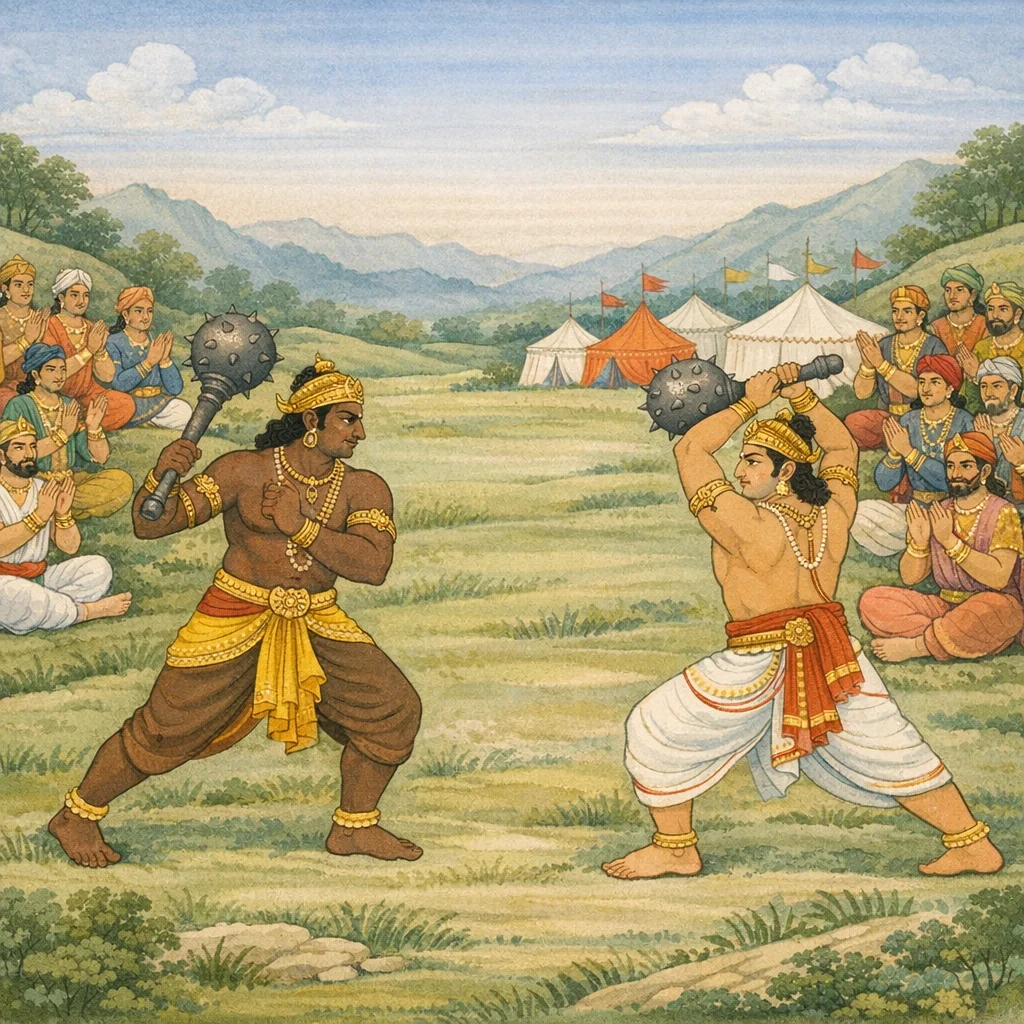
Saṃjaya reports that Duryodhana advances to meet Bhīmasena, and the two engage in a loud, forceful gadā contest likened to charging bulls and mythic adversaries. Both fighters become bloodied and fatigued, pause briefly, then resume with renewed intensity. The narration details patterned footwork and rotational circuits (maṇḍalas), feints, avoidance, and re-approach—cataloging recognized maneuvers and the duelists’ expertise. Spectators (including devas and gandharvas) register astonishment and uncertainty about the outcome. Duryodhana lands notable strikes (including to Bhīma’s head/temple region), producing momentary imbalance, while Bhīma answers with heavy blows that stagger Duryodhana to his knees and briefly to the ground. The armies react audibly; Duryodhana’s anger rises at opposing acclaim; both continue trading impactful hits. The chapter closes with Bhīma recovering composure after being struck down, regaining awareness, and standing firm—emphasizing endurance, tactical adaptation, and the duel’s unresolved volatility at this stage.
Chapter Arc: संजय के वचन से धृतराष्ट्र के हृदय में अपशकुनों की छाया उतरती है—विजय का स्वप्न टूटता दिखता है और पिता-राजा अपने ही पुत्र के भाग्य को लेकर काँप उठता है। → धृतराष्ट्र मानव-जन्म को धिक्कारते हुए (पुत्र-शोक की आशंका में) विलाप करता है; उधर रणभूमि में भीमसेन प्रतिज्ञा-दीप्त होकर गदा उठाता है और दुर्योधन के सामने वाणी के बाण छोड़ता है—पुराने अपराधों (वारणावत) की स्मृति जगा कर उसे युद्ध के लिए उकसाता है। → भीम और दुर्योधन का तीखा वाग्युद्ध चरम पर पहुँचकर गदायुद्ध में बदल जाता है; दुर्योधन ‘बहुत कथन’ छोड़कर सीधे युद्ध का आह्वान करता है और दोनों की गदाएँ पर्वत-शिखरों-सी उठती हैं—सभा-जन/योद्धा ताल-ध्वनि से दुर्योधन को उन्मत्त हाथी की तरह और भड़काते हैं। → युद्ध का औपचारिक आरम्भ स्थापित हो जाता है—प्रतिज्ञा, अपमान, स्मृति और क्रोध अब कर्म में ढलते हैं; धृतराष्ट्र का विलाप क्षण भर थमता है, पर भय बना रहता है कि यह द्वंद्व कुल-नाश का निर्णायक द्वार है। → गदाओं की पहली टक्कर के साथ निर्णायक परिणाम निकट है—क्या दुर्योधन अपने अहंकार सहित टूटेगा, या भीम की प्रतिज्ञा रक्त में लिखी जाएगी?
Shlokas
Verse 1
ऑपनक्रात बछ। ््ज्टस:, षट्पञज्चाशत्तमो< ध्याय: दुर्योधनके लिये अपशकुन, भीमसेनका उत्साह तथा भीम और दुर्योधनमें वाग्युद्धके पश्चात् गदायुद्धका आरम्भ वैशम्पायन उवाच ततो वाग्युद्धम भवत् तुमुलं जनमेजय । यत्र दुःखान्वितो राजा धृतराष्ट्रोडब्रवीदिदम्,वैशम्पायनजी कहते हैं--जनमेजय! तदनन्तर भीमसेन और दुर्योधनमें भयंकर वाग्युद्ध होने लगा। इस प्रसंगको सुनकर राजा धृतराष्ट्र बहुत दुःखी हुए और संजयसे इस प्रकार बोले--
Vaiśampāyana said: Then, O Janamejaya, a fierce and tumultuous war of words arose. Hearing of that exchange, King Dhṛtarāṣṭra—overwhelmed with sorrow—spoke these words to Sañjaya, for the clash of speech was already foreshadowing the imminent clash of weapons and the moral ruin brought by obstinate pride.
Verse 2
धिगस्तु खलु मानुष्यं यस्य निछ्ठेयमीदृशी । एकादशचमूभर्ता यत्र पुत्रो ममानघ,“निष्पाप संजय! जिसका परिणाम ऐसा दुःखद होता है, उस मानव-जन्मको धिक्कार है! मेरा पुत्र एक दिन ग्यारह अक्षौहिणी सेनाओंका स्वामी था। उसने सब राजाओंपर हुक्म चलाया और सारी पृथ्वीका अकेले उपभोग किया; किंतु अन्तमें उसकी यह दशा हुई कि गदा हाथमें लेकर उसे वेगपूर्वक पैदल ही युद्धमें जाना पड़ा
Vaiśampāyana said: “Fie upon the human condition, when its final outcome is such as this! My son—blameless Saṃjaya—who once commanded eleven armies, who held sway over kings and enjoyed the whole earth as if alone, has come at last to this: taking up a mace in his hand, he must rush on foot into battle.”
Verse 3
अज्ञाप्य सर्वान् नृपतीन् भुक्त्वा चेमां वसुंधराम् । गदामादाय वेगेन पदाति: प्रस्थितो रणे,“निष्पाप संजय! जिसका परिणाम ऐसा दुःखद होता है, उस मानव-जन्मको धिक्कार है! मेरा पुत्र एक दिन ग्यारह अक्षौहिणी सेनाओंका स्वामी था। उसने सब राजाओंपर हुक्म चलाया और सारी पृथ्वीका अकेले उपभोग किया; किंतु अन्तमें उसकी यह दशा हुई कि गदा हाथमें लेकर उसे वेगपूर्वक पैदल ही युद्धमें जाना पड़ा
Vaiśampāyana said: “Having issued commands to all the kings and having enjoyed this very earth, he then took up his mace and, with haste, set out on foot for battle.”
Verse 4
भूत्वा हि जगतो नाथो हानाथ इव मे सुतः । गदामुद्यम्य यो याति किमन्यद् भागधेयत:,“जो मेरा पुत्र सम्पूर्ण जगत्का नाथ था, वही अनाथकी भाँति गदा हाथमें लेकर युद्धस्थलमें पैदल जा रहा था। इसे भाग्यके सिवा और क्या कहा जा सकता है?
Vaiśampāyana said: “My son, who once stood as the lord and protector of the whole world, now goes on foot to the battlefield like one without refuge, raising his mace in hand. What else can this be called, if not the decree of fate?”
Verse 5
अहो दु:खं महत प्राप्तं पुत्रेण मम संजय । एवमुक्त्वा स दु:खातों विरराम जनाधिप:,“संजय! हाय! मेरे पुत्रने बड़ा भारी दुःख उठाया।” ऐसा कहकर राजा धृतराष्ट्र दु:खसे पीड़ित हो चुप हो रहे
Dhṛtarāṣṭra, overwhelmed by grief, cried out to Saṃjaya: “Alas, what immense sorrow has been brought upon me through my son!” Having spoken thus, the lord of men—stricken with anguish—fell silent.
Verse 6
संजय उवाच स मेघनिनदो हर्षान्निनदन्निव गोवृष: । आजुहाव तदा पार्थ युद्धाय युधि वीर्यवान्,संजयने कहा--महाराज! उस समय रणभूमिमें मेघके समान गम्भीर गर्जना करनेवाले पराक्रमी दुर्योधनने हर्षमें भरकर जोर-जोरसे शब्द करनेवाले साँड़की भाँति सिंहनाद करके कुन्तीपुत्र भीमसेनको युद्धके लिये ललकारा
Sañjaya said: Then that mighty warrior, whose roar was deep like thunderclouds, exulting with joy, bellowed like a powerful bull and loudly challenged Pārtha (Bhīmasena) to fight on the battlefield.
Verse 7
भीममाह्दयमाने तु कुरुराजे महात्मनि । प्रादुरासन् सुघोराणि रूपाणि विविधान्युत,महामनस्वी कुरुराज दुर्योधन जब भीमसेनका आह्वान करने लगा, उस समय नाना प्रकारके भयंकर अपशकुन प्रकट हुए
Sañjaya said: As the Kuru king, the high-souled Duryodhana, began to challenge Bhīma, many kinds of exceedingly dreadful portents manifested. In the moral atmosphere of the war, these ominous signs signal the ripening of destructive intent and the approach of inevitable ruin born of adharma.
Verse 8
ववुर्वाता: सनिर्घाता: पांशुवर्ष पपात च | बभूवुश्च दिश: सर्वास्तिमिरेण समावृता:,बिजलीकी गड़गड़ाहटके साथ प्रचण्ड वायु चलने लगी, सब ओर धूलिकी वर्षा होने लगी, सम्पूर्ण दिशाएँ अन्धकारसे आच्छन्न हो गयीं, आकाशसे महान् शब्द तथा वज्रकी-सी गड़गड़ाहटके साथ रोंगटे खड़े कर देनेवाली सैकड़ों भयंकर उल्काएँ भूतलको विदीर्ण करती हुई गिरने लगीं। प्रजानाथ! अमावास्याके बिना ही राहुने सूर्यको ग्रस लिया, वन और वृक्षोंसहित सारी पृथ्वी जोर-जोरसे काँपने लगी
Sañjaya said: “With thunderous crashes, fierce winds began to blow; a rain of dust fell, and all the directions were shrouded in darkness. These ominous portents signal a moral and cosmic disturbance accompanying the war—nature itself seeming to recoil as adharma swells and destruction draws near.”
Verse 9
महास्वना: सनिर्घातास्तुमुला लोमहर्षणा: । पेतुस्तथोल्का: शतश: स्फोटयन्त्यो नभस्तलात्,बिजलीकी गड़गड़ाहटके साथ प्रचण्ड वायु चलने लगी, सब ओर धूलिकी वर्षा होने लगी, सम्पूर्ण दिशाएँ अन्धकारसे आच्छन्न हो गयीं, आकाशसे महान् शब्द तथा वज्रकी-सी गड़गड़ाहटके साथ रोंगटे खड़े कर देनेवाली सैकड़ों भयंकर उल्काएँ भूतलको विदीर्ण करती हुई गिरने लगीं। प्रजानाथ! अमावास्याके बिना ही राहुने सूर्यको ग्रस लिया, वन और वृक्षोंसहित सारी पृथ्वी जोर-जोरसे काँपने लगी
Sañjaya said: With thunderous roars and crashing detonations—violent and hair-raising—hundreds of meteors fell from the face of the sky, bursting as they descended. These terrifying portents darkened the directions and shook the world’s confidence, signaling that the war had crossed into a phase where adharma and destruction would surge, and where nature itself seemed to protest the unfolding slaughter.
Verse 10
राहुश्नाग्रसदादित्यमपर्वणि विशाम्पते । चकम्पे च महाकम्पं पृथिवी सवनद्रुमा,बिजलीकी गड़गड़ाहटके साथ प्रचण्ड वायु चलने लगी, सब ओर धूलिकी वर्षा होने लगी, सम्पूर्ण दिशाएँ अन्धकारसे आच्छन्न हो गयीं, आकाशसे महान् शब्द तथा वज्रकी-सी गड़गड़ाहटके साथ रोंगटे खड़े कर देनेवाली सैकड़ों भयंकर उल्काएँ भूतलको विदीर्ण करती हुई गिरने लगीं। प्रजानाथ! अमावास्याके बिना ही राहुने सूर्यको ग्रस लिया, वन और वृक्षोंसहित सारी पृथ्वी जोर-जोरसे काँपने लगी
Sañjaya said: “O lord of the people, though it was not the new-moon time, Rāhu seized and swallowed the Sun. Then the earth—together with its forests and trees—shuddered in a tremendous quake.” In the war-narrative, such cosmic portents signal a collapse of auspicious order and foreshadow grave, dharma-shaking destruction about to unfold.
Verse 11
नीचे धूल और कंकड़की वर्षा करती हुई रूखी हवा चलने लगी। पर्वतोंके शिखर टूट- टूटकर पृथ्वीपर गिरने लगे
Sañjaya said: A harsh, drying wind began to blow, driving down a shower of dust and gravel. Mountain peaks cracked apart and, breaking repeatedly, fell upon the earth—an ominous upheaval of nature mirroring the moral and martial disorder of the war.
Verse 12
मृगा बहुविधाकारा: सम्पतन्ति दिशो दश । दीप्ता: शिवाश्लवाप्पनदन् घोररूपा: सुदारुणा:,नाना प्रकारकी आकृतिवाले मृग दसों दिशाओंमें दौड़ लगाने लगे। अत्यन्त भयंकर एवं घोररूप धारण करनेवाली सियारिनें जिनका मुख अग्निसे प्रज्वलित हो रहा था, अमंगलसूचक बोली बोल रही थीं
Beasts of many shapes rushed about in all ten directions. She-jackals, blazing as though their mouths were aflame, dreadful in form and fierce, cried out with voices that foretold ill omen.
Verse 13
रक्षाश्न वाता: प्रववुर्नीचै: शर्करकर्षिण: । गिरीणां शिखराण्येव न्यपतन्त महीतले,निर्घाताश्न महाघोरा बभूवुलोमहर्षणा: । दीप्तायां दिशि राजेन्द्र मृगाश्नाशुभवेदिन: राजेन्द्र! अत्यन्त भयंकर और रोमांचकारी शब्द प्रकट हो रहे थे, दिशाएँ मानो जल रही थीं और मृग किसी भावी अमंगलकी सूचना दे रहे थे
Sañjaya said: “Winds laden with dust and gravel blew low, dragging pebbles along. Mountain-peaks, as it were, seemed to fall upon the earth. Terrifying thunderbolts resounded—dreadful, hair-raising portents. In a direction that looked as though it were aflame, O King, beasts gave signs that foretold misfortune.”
Verse 14
उदपानगताशक्षापो व्यवर्धन्त समन्तत:ः । अशरीरा महानादा: श्रूयन्ते सम तदा नूप,नरेश्वर! कुओंके जल सब ओरसे अपने-आप बढ़ने लगे और बिना शरीरके ही जोर- जोरसे गर्जनाएँ सुनायी दे रही थीं
Sañjaya said: “O king, at that time the waters in the wells began to rise of their own accord on every side, and mighty roars—though coming from no visible bodies—were heard.”
Verse 15
एवमादीनि दृष्टवाथ निमित्तानि वृकोदर: । उवाच भ्रातरं ज्येष्ठं धर्मराजं युधिष्ठिरम्,इस प्रकार बहुत-से अपशकुन देखकर भीमसेन अपने ज्येष्ठ भ्राता धर्मराज युधिष्ठिरसे बोले--
Having observed these and other ominous portents, Vṛkodara (Bhīma) addressed his eldest brother—Dharmarāja Yudhiṣṭhira.
Verse 16
नैष शक्तो रणे जेतुं मन्दात्मा मां सुयोधन: । अद्य क्रोध॑ विमोक्ष्यामि निगूढं हृदये चिरम्,'भैया! यह मन्दबुद्धि दुर्योधन रणभूमिमें मुझे किसी प्रकार परास्त नहीं कर सकता। आज मैं अपने हृदयमें चिरकालसे छिपाये हुए क्रोधको कौरवराज दुर्योधनपर उसी प्रकार छोड़ूँगा, जैसे अर्जुनने खाण्डववनमें अग्निको छोड़ा था। पाण्डुनन्दन! आज आपके हृदयका काँटा मैं निकाल दूँगा
“Brother! This dull-witted Suyodhana cannot defeat me in battle. Today I shall unleash upon Duryodhana the wrath I have long kept hidden in my heart.”
Verse 17
सुयोधने कौरवेन्द्रे खाण्डवेडग्निमिवार्जुन: । शल्यमपद्योद्धरिष्यामि तव पाण्डव हृच्छयम्,'भैया! यह मन्दबुद्धि दुर्योधन रणभूमिमें मुझे किसी प्रकार परास्त नहीं कर सकता। आज मैं अपने हृदयमें चिरकालसे छिपाये हुए क्रोधको कौरवराज दुर्योधनपर उसी प्रकार छोड़ूँगा, जैसे अर्जुनने खाण्डववनमें अग्निको छोड़ा था। पाण्डुनन्दन! आज आपके हृदयका काँटा मैं निकाल दूँगा
Sañjaya said: “Against Suyodhana, lord of the Kurus, I shall unleash my long-concealed wrath—just as Arjuna once released the fire in the Khāṇḍava forest. O Pāṇḍava, I will remove the thorn lodged in your heart.”
Verse 18
निहत्य गदया पापमिमं कुरुकुलाधमम् । अद्य कीर्तिमयीं मालां प्रतिमोक्ष्याम्यहं त्वयि,“मैं अपनी गदासे इस कुरुकुलाधम पापीको मारकर आज आपको कीर्तिमयी माला पहनाऊँगा
Sañjaya said: “Having slain this sinful wretch—the disgrace of the Kuru line—with my mace, today I shall place upon you a garland made of fame.”
Verse 19
हत्वेमं पापकर्माणं गदया रणमूर्थनि । अद्यास्य शतधा देहं भिनझि गदयानया,'युद्धके मुहानेपर गदाके आघातसे इस पापीका वध करके आज इसी गदासे इसके शरीरके सौ-सौ टुकड़े कर डालूँगा
Sañjaya said: “Having slain this evil-doer with the mace at the very forefront of the battle, today I will smash his body into a hundred pieces with this very mace.”
Verse 20
नायं प्रवेष्टा नगरं पुनर्वारणसाह्दयम् । सर्पोत्सर्गस्थ शयने विषदानस्य भोजने,“अब फिर कभी यह हस्तिनापुरमें प्रवेश नहीं करेगा। भरतश्रेष्ठ! इसने जो मेरी शय्यापर साँप छोड़ा था, भोजनमें विष दिया था, प्रमाणकोटिके जलमें मुझे गिराया था, लाक्षागृहमें जलानेकी चेष्टा की थी, भरी सभामें मेरा उपहास किया था, सर्वस्व हर लिया था तथा बारह वर्षोतक वनवास और एक वर्षतक अज्ञातवासके लिये विवश किया था; इसके द्वारा प्राप्त हुए मैं इन सभी दुःखोंका अन्त कर डालूँगा
Sañjaya said: “He shall never again enter the city—Hastināpura, the beloved of the Kurus. For he once set a serpent loose upon my bed, and he administered poison in my food.”
Verse 21
प्रमाणकोट्यां पातस्य दाहस्य जतुवेश्मनि । सभायामवहासस्य सर्वस्वहरणस्यथ च,“अब फिर कभी यह हस्तिनापुरमें प्रवेश नहीं करेगा। भरतश्रेष्ठ! इसने जो मेरी शय्यापर साँप छोड़ा था, भोजनमें विष दिया था, प्रमाणकोटिके जलमें मुझे गिराया था, लाक्षागृहमें जलानेकी चेष्टा की थी, भरी सभामें मेरा उपहास किया था, सर्वस्व हर लिया था तथा बारह वर्षोतक वनवास और एक वर्षतक अज्ञातवासके लिये विवश किया था; इसके द्वारा प्राप्त हुए मैं इन सभी दुःखोंका अन्त कर डालूँगा
Sañjaya said: “(He recalled) the outrage of being hurled into the Pramāṇakoṭī waters, the attempt to burn him in the house of lac, the public humiliation in the royal assembly, and the seizure of all his possessions. These remembered injuries frame a moral crisis: the speaker’s resolve to end his suffering by retaliating against the one who repeatedly violated kinship, justice, and the codes of royal conduct.”
Verse 22
वर्षमज्ञातवासस्य वनवासस्य चानघ । अद्यान्तमेषां दुःखानां गन्ताहं भरतर्षभ,“अब फिर कभी यह हस्तिनापुरमें प्रवेश नहीं करेगा। भरतश्रेष्ठ! इसने जो मेरी शय्यापर साँप छोड़ा था, भोजनमें विष दिया था, प्रमाणकोटिके जलमें मुझे गिराया था, लाक्षागृहमें जलानेकी चेष्टा की थी, भरी सभामें मेरा उपहास किया था, सर्वस्व हर लिया था तथा बारह वर्षोतक वनवास और एक वर्षतक अज्ञातवासके लिये विवश किया था; इसके द्वारा प्राप्त हुए मैं इन सभी दुःखोंका अन्त कर डालूँगा
Sañjaya said: “O sinless one, O bull among the Bharatas! Today I shall bring to an end these sufferings that arose from the year of concealment and the forest-exile.”
Verse 23
एकाह्वा विनिहत्येमं भविष्याम्यात्मनोडनृण: । अद्यायुर्धार्राष्ट्रस्थ दुर्मतेरकृतात्मन:
Sañjaya said: “Having challenged and slain this man in single combat, I shall be free of my debt to myself. Today the life of that evil-minded, undisciplined man who stands with the Dhārtarāṣṭras will come to an end.”
Verse 24
अद्य सौख्य॑ तु राजेन्द्र कुरुराजस्य दुर्मते:
Sanjaya said: “O best of kings, today the misguided lord of the Kurus has (only) a fleeting ‘comfort’—a grim, ironic respite amid the ruin brought on by his own wrong judgment.”
Verse 25
समाप्तं च महाराज नारीणां दर्शन पुन: । 'राजेन्द्र! महाराज! आज खोटी बुद्धिवाले कुरुराज दुर्योधनका सारा सुख समाप्त हो गया। अब इसके लिये पुनः अपनी स्त्रियोंको देखना और उनसे मिलना असम्भव है ।। २४ ई | अद्यायं कुरुराजस्य शान्तनो: कुलपांसन:
Sañjaya said: “O great king, the chance to behold the womenfolk again has come to an end.” In context, this signals the irreversible closure brought by war—Duryodhana’s remaining worldly comforts, including reunion with his wives and household, are now cut off, underscoring how adharma-driven ambition culminates in total personal and dynastic loss.
Verse 26
राजा च धृतराष्ट्रोड्द्य श्रुत्वा पुत्र निपातितम्
Sañjaya said: And today King Dhṛtarāṣṭra, upon hearing that his son had been struck down, was overwhelmed by the bitter consequence of his own attachment—an ethical turning-point where grief exposes the cost of adharma in war.
Verse 27
इत्युक्त्वा राजशार्दूल गदामादाय वीर्यवान्
Sañjaya said: Having spoken thus, the mighty warrior took up his mace—addressing the king as “tiger among kings”—and prepared to act, revealing the resolve and urgency of martial duty as the battle unfolded.
Verse 28
अभ्यतिष्ठत युद्धाय शक्रो वृत्रमिवाह्ययन् । नृपश्रेष्ठी ऐसा कहकर पराक्रमी भीमसेन हाथमें गदा ले युद्धके लिये खड़े हो गये और जैसे इन्द्रने वृत्रासुरको ललकारा था, उसी प्रकार वे दुर्योधनका आह्वान करने लगे ।। २७६ || तमुद्यतगद दृष्टवा कैलासमिव शुद्धिणम्
Sañjaya said: Then Bhīmasena stood forth, ready for battle, challenging Duryodhana just as Indra once challenged Vṛtra. Seeing him with his mace raised—radiant and formidable like Mount Kailāsa—his opponent beheld a warrior poised to strike, embodying the fierce resolve of righteous vengeance within the grim ethics of war.
Verse 29
राज्ञश्न धृतराष्ट्रस्य तथा त्वमपि चात्मन:
“(Act) for King Dhṛtarāṣṭra as well—and you too, for your own sake.” Sañjaya frames the counsel as a duty owed both to the blind monarch and to oneself, implying that right action in a time of ruin safeguards not only the ruler’s welfare but also one’s personal integrity and future accountability.
Verse 30
द्रौपदी च परिक्लिष्टा सभामध्ये रजस्वला
Sañjaya said: And Draupadī—already distressed—stood in the midst of the royal assembly while in her menstrual period, highlighting the deliberate humiliation inflicted upon her and the grave breach of dharma that occurs when a vulnerable woman is exposed and shamed in public.
Verse 31
द्यूतेन वज्चितो राजा यत् त्वया सौबलेन च | वने दुःखं च यत् प्राप्तमस्माभिस्त्वत्कृतं महत्
Sañjaya said: “The king was cheated in the dice-game by you and by Śakuni of Subala’s line; and the great suffering that we endured in the forest—this too was brought about by you.”
Verse 32
विराटनगरे चैव योन्यन्तरगतैरिव । तत् सर्व पातयाम्यद्य दिष्ट्या दृष्टोडसि दुर्मते
Sañjaya said: “And in the city of Virāṭa as well—like one who has slipped into a hidden passage—I shall today bring all that down. By fate you have come into my sight, you wicked-minded one.”
Verse 33
'तूने भरी सभामें जो रजस्वला द्रौपदीको अपमानित करके उसे क्लेश पहुँचाया था, सुबलपुत्र शकुनिके द्वारा जूएमें जो राजा युधिष्ठिरको ठग लिया था, तुम्हारे कारण हम सब लोगोंने जो वनमें महान् दुःख उठाया था और विराटनगरमें जो हमें दूसरी योनिमें गये हुए प्राणियोंके समान रहना पड़ा था; इन सब कष्टोंके कारण मेरे मनमें जो क्रोध संचित है, वह सब-का-सब आज तुझपर डाल दूँगा। दुर्मते! सौभाग्यसे आज तू मुझे दीख गया है ।। ३० --३२ ।। त्वत्कृतेइसौ हत:ः शेते शरतल्पे प्रतापवान् | गाड़ेयो रथिनां श्रेष्ठो निहतो याज्ञसेनिना,“तेरे ही कारण रथियोंमें श्रेष्ठ प्रतापी गंगानन्दन भीष्म द्रुपदकुमार शिखण्डीके हाथसे मारे जाकर बाण-शय्यापर सो रहे हैं
Sañjaya said: “Because of you, that mighty one lies upon a bed of arrows—Gāṅgeya Bhīṣma, foremost among chariot-warriors—brought down in battle through Yājñasenī’s (Draupadī’s) side.”
Verse 34
हतो द्रोणश्न॒ कर्णश्ष॒ तथा शल्य: प्रतापवान् । वैराग्नेरादिकर्तासौ शकुनि: सौबलो हतः,“ट्रोणाचार्य, कर्ण और प्रतापी शल्य मारे गये तथा इस वैरकी आगको प्रज्वलित करनेमें जिसका सबसे पहला हाथ था, वह सुबलपुत्र शकुनि भी मार डाला गया
Sañjaya said: “Droṇa has been slain, and Karṇa as well; likewise the valiant Śalya. And Śakuni, son of Subala—who was the first to kindle this fire of enmity—has also been killed.”
Verse 35
प्रातिकामी तथा पापो द्रौपद्या: क्लेशकृद्धत: । भ्रातरस्ते हता: सर्वे शूरा विक्रान्तयोधिन:,“दौपदीको क्लेश देनेवाला पापात्मा प्रातिकामी भी मारा गया। साथ ही जो पराक्रमपूर्वक युद्ध करनेवाले थे, वे तेरे सभी शूरवीर भाई भी मारे जा चुके हैं
Sañjaya said: “That sinful Prātikāmī too—who had been a source of anguish to Draupadī—has been slain. And all your brothers as well, heroic men and valiant fighters in battle, have been killed.”
Verse 36
एते चान्ये च बहवो निहतास्त्वत्कृते नृपा: । त्वामद्य निहनिष्यामि गदया नात्र संशय:,'ये तथा और भी बहुत-से नरेश तेरे लिये युद्धमें मारे गये हैं। आज तुझे भी गदासे मार गिराऊँगा, इसमें संशय नहीं है”
Sañjaya said: “These and many other kings have been slain on your account. Today I shall strike you down with my mace—of this there is no doubt.”
Verse 37
इत्येवमुच्चै राजेन्द्र भाषमाणं वृकोदरम् । उवाच गतभी राजन पुत्रस्ते सत्यविक्रम:,राजेन्द्र! इस प्रकार उच्चस्वरसे बोलनेवाले भीमसेनसे आपके सत्यपराक्रमी पुत्रने निर्भय होकर कहा--
Sañjaya said: “O lord of kings, as Vṛkodara (Bhīma) spoke aloud in this manner, your son—of true valor—addressed him without fear.”
Verse 38
कि कत्थनेन बहुना युध्यस्व त्वं वृकोदर । अद्य तेडहं विनेष्यामि युद्धअ्रद्धां कुलाधम,“वृकोदर! बहुत बढ़-बढ़कर बातें बनानेसे क्या लाभ? तू मेरे साथ संग्राम कर ले। कुलाधम! आज मैं तेरा युद्धका हौसला मिटा दूँगा
Sañjaya said: “What is the use of all this boasting, O Vṛkodara? Fight with me. O disgrace to your lineage, today I shall destroy your confidence for battle.”
Verse 39
न हि दुर्योधन: क्षुद्र केनचित् त्वद्धिधेन वै । शक्यस्त्रासयितुं वाचा यथान्य: प्राकृतो नर:
Sañjaya said: “Duryodhana is not a petty man, nor can he—though it be for his own good—be frightened by anyone’s words as an ordinary person might be.”
Verse 40
'“ओ नीच! तेरे-जैसा कोई भी मनुष्य अन्य प्राकृत पुरुषके समान दुर्योधनको वाणीद्वारा नहीं डरा सकता ।। चिरकालेप्सितं दिष्टया हृदयस्थमिदं मम । त्वया सह गदायुद्धं त्रिदशैरुपपादितम्,'सौभाग्यकी बात है कि मेरे हृदयमें दीर्घकालसे जो तेरे साथ गदायुद्ध करनेकी अभिलाषा थी, उसे देवताओंने पूर्ण कर दिया
Sañjaya said: “O base one! No ordinary man like you can intimidate Duryodhana with words. Yet it is fortunate: the long-cherished desire in my heart—to fight a mace-duel with you—has now been fulfilled by the gods.”
Verse 41
किं वाचा बहुनोक्तेन कत्थितेन च दुर्मते । वाणी सम्पद्यतामेषा कर्मणा मा चिरं कृथा:,'दुर्बुद्धे! वाणीद्वारा बहुत शेखी बघारनेसे क्या होगा? तू जो कुछ कहता है, उसे शीघ्र ही कार्यरूपमें परिणत कर”
Sañjaya said: “What is the use of so many words and boastful talk, O foolish-minded one? Let your speech be fulfilled by action—do not delay long.”
Verse 42
तस्य तद् वचन श्रुत्वा सर्व एवाभ्यपूजयन् । राजान: सोमकाश्चैव ये तत्रासन् समागता:,दुर्योधनकी यह बात सुनकर वहाँ आये हुए समस्त राजाओं तथा सोमकोंने उसकी बड़ी सराहना की
Sañjaya said: Hearing his words, all who were present expressed their approval. The kings assembled there—along with the Somakas—praised and honored that statement.
Verse 43
ततः सम्पूजित: सर्व: सम्प्रहृष्टतनूरुह: । भूयो धीरां मतिं चक्रे युद्धाय कुरुनन्दन:,तदनन्तर सबसे सम्मानित हो कुरुनन्दन दुर्योधनने युद्धके लिये धीर बुद्धिका आश्रय लिया। उस समय उसके शरीरमें रोमांच हो आया था
Sañjaya said: Then, having been fully honored by all, with his body’s hairs standing on end in exhilaration, the Kuru prince (Duryodhana) once again steadied his resolve and fixed his courageous mind upon the coming battle.
Verse 44
उन्मत्तमिव मातज्ूं तलशब्दैर्नराधिपा: । भूय: संहर्षयांचक्रुर्दुयोधनममर्षणम्,इसके बाद जैसे लोग ताली बजाकर मतवाले हाथीको कुपित कर देते हैं, उसी प्रकार राजाओंने ताली पीटकर अमर्षशील दुर्योधनको पुन: हर्ष और उत्साहसे भर दिया
Sañjaya said: As kings, by the clapping of palms, provoke a rutting elephant into greater frenzy, so did the rulers again rouse Duryodhana—quick to anger—filling him anew with exhilaration and martial ardor.
Verse 45
त॑ महात्मा महात्मानं गदामुद्यम्य पाण्डव: | अभिदुद्राव वेगेन धार्तराष्ट्र वृकोदर:
Sañjaya said: Then the great-souled Pāṇḍava, Vṛkodara (Bhīma), lifting up his mace, rushed with full speed toward that great-souled Dhārtarāṣṭra (Duryodhana).
Verse 46
महामनस्वी पाण्डुपुत्र भीमसेनने गदा उठाकर आपके महामना पुत्र दुर्योधनपर बड़े वेगसे आक्रमण किया ।। बृंहन्ति कुञ्जरास्तत्र हया ह्रेषन्ति चासकृत् । शस्त्राणि चाप्यदीप्यन्त पाण्डवानां जयैषिणाम्,उस समय हाथी बारंबार चिग्घाड़ने और घोड़े हिनहिनाने लगे। साथ ही विजयाभिलाषी पाण्डवोंके अस्त्र-शस्त्र चमक उठे
Sañjaya said: The great-souled Bhīmasena, son of Pāṇḍu, lifted his mace and, with tremendous force, charged at your high-minded son Duryodhana. Then the elephants trumpeted again and again and the horses repeatedly neighed; and the weapons of the victory-seeking Pāṇḍavas flashed brightly.
Verse 56
इति श्रीमहाभारते शल्यपर्वणि गदापर्वणि गदायुद्धारम्भे षघट्पञ्चाशत्तमो ध्याय: ।। ५६ || इस प्रकार श्रीमह्याभारत शल्यपर्वके अन्तर्गत यदापर्वमें गदायुद्धका आरम्भविषयक छप्पनवाँ अध्याय पूरा हुआ
Sanjaya concludes: Thus, in the revered Mahabharata, within the Shalya Parva—specifically in the section concerning the mace (Gadā Parva)—the fifty-sixth chapter, describing the commencement of the mace-fight, comes to an end. This colophon marks the formal transition into the climactic duel, framing it as a decisive and morally weighty moment within the war narrative.
Verse 233
समाप्तं भरतश्रेष्ठ मातापित्रोश्व दर्शनम् । “आज एक दिनमें इसका वध करके मैं अपने-आपसे उऋण हो जाऊँगा। भरतभूषण! आज दुर्बुद्धि एवं अजितात्मा धृतराष्ट्रपुत्रकी आयु समाप्त हो गयी है। इसे माता-पिताके दर्शनका अवसर भी अब नहीं मिलनेवाला है
Sañjaya said: “O best of the Bharatas, the chance for him to behold his mother and father has come to an end. ‘Today, within a single day, by slaying him I shall free myself from my own debt. O ornament of the Bharata line! Today the life-span of Dhṛtarāṣṭra’s son—foolish in counsel and unconquered in self—has reached its limit. For him there will no longer be any opportunity even to see his parents.’”
Verse 256
प्राणान् श्रियं च राज्यं च त्यक्त्वा शेष्यति भूतले । “कुरुराज शान्तनुके कुलका यह जीता-जागता कलंक आज अपने प्राण, लक्ष्मी तथा राज्यको छोड़कर सदाके लिये पृथ्वीपर सो जायगा
Sañjaya said: “Having abandoned his very life, his prosperity, and his kingdom, he will lie upon the earth.” The line underscores the moral collapse of royal pride in war: sovereignty and fortune prove transient, and the end of adharma-driven ambition is death and dishonor on the battlefield.
Verse 266
स्मरिष्यत्यशुभं कर्म यत्तच्छकुनिबुद्धिजम् । “आज राजा धुृतराष्ट्र अपने इस पुत्रको मारा गया सुनकर अपने उन अशुभ कर्मोंको याद करेंगे, जिन्हें उन्होंने शकुनिकी सलाहके अनुसार किया था”
Sanjaya said: Dhṛtarāṣṭra will recall the inauspicious deeds—those born of Śakuni’s counsel—when he hears that this son of his has been slain. The verse underscores how unethical choices, once embraced for advantage, return as bitter remembrance in the hour of loss.
Verse 283
भीमसेन: पुनः क्रुद्धों दुर्योधनमुवाच ह । शिखरयुक्त कैलास पर्वतके समान गदा उठाये दुर्योधनको खड़ा देख भीमसेन पुनः कुपित हो उससे इस प्रकार बोले--
Sanjaya said: Bhimasena, once again inflamed with anger, addressed Duryodhana. Seeing Duryodhana standing firm with his mace raised—like Mount Kailasa crowned with peaks—Bhima’s wrath surged anew, and he spoke to him in these words. The scene underscores how pride and fury harden the combatants’ resolve, pushing the duel toward a decisive, morally charged climax.
Verse 293
समर तद् दुष्कृतं कर्म यद् वृत्तं वारणावते । “दुर्योधन! वारणावत नगरमें जो कुछ हुआ था, राजा धुृतराष्ट्रके और अपने भी उस कुकर्मको तू याद कर ले
Sañjaya said: “In this battle, recall that evil deed—the wrongdoing that took place at Vāraṇāvata. Duryodhana, remember that sinful act committed there, implicating both King Dhṛtarāṣṭra and yourself.”
Frequently Asked Questions
The chapter stages a dharma-sankat of regulated combat: whether victory should be pursued purely by force or through deceptive timing and evasive stratagems, under the scrutiny of observers who treat conduct as inseparable from outcome.
Endurance and method are portrayed as complementary virtues: composure after reversal, disciplined recovery, and tactical clarity can be as decisive as raw strength, especially when outcomes remain uncertain.
No explicit phalaśruti appears in this adhyāya; its meta-function is implicit—recording how public evaluation, technique, and resilience operate within the epic’s broader inquiry into dharma and consequence.