Adhyaya 15
शल्य–युधिष्ठिरयुद्धप्रारम्भः (Commencement of the Śalya–Yudhiṣṭhira Duel)
Upa-parva: Yudhiṣṭhira–Śalya Saṃgrāma (Battle Engagement Unit)
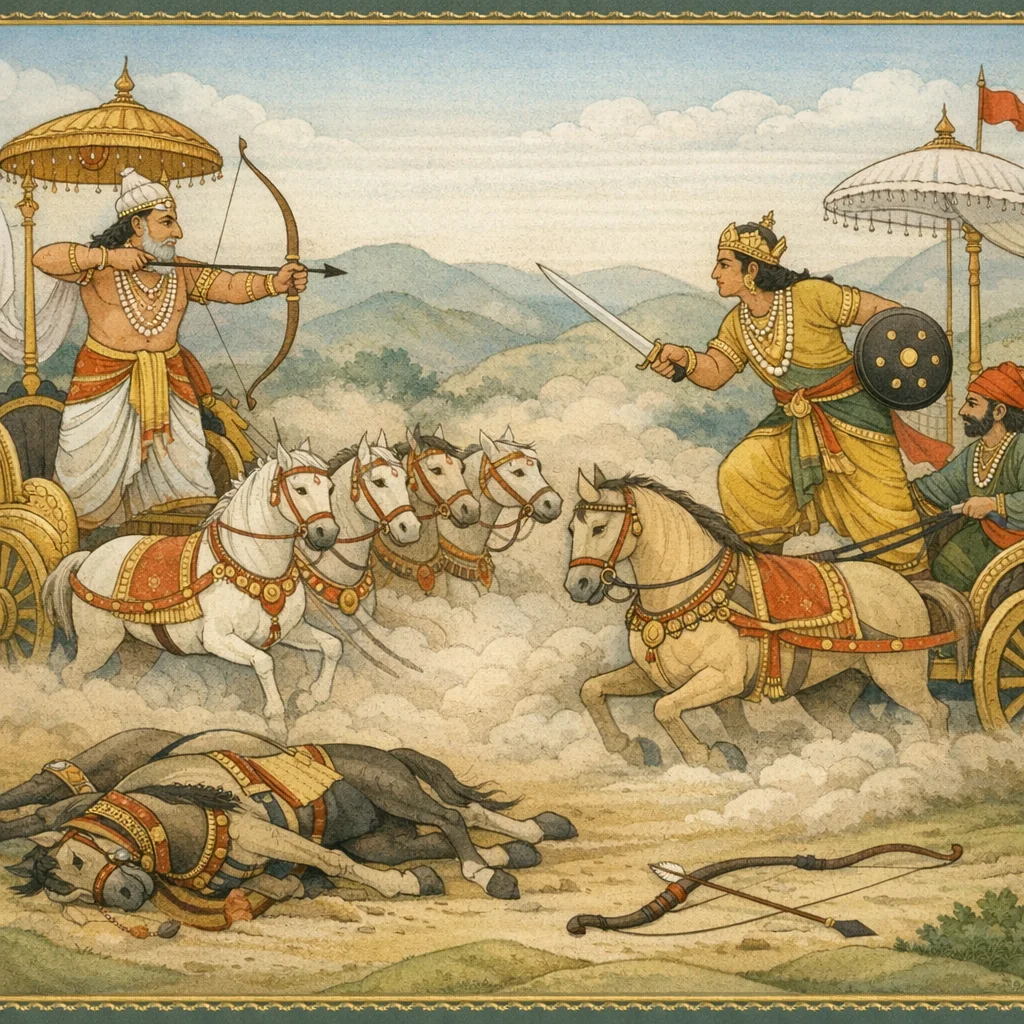
Saṃjaya reports a renewed Kaurava surge spearheaded by Śalya, producing localized engagements across the field. Multiple pairings are specified: Arjuna showers Kṛpa and Kṛtavarman; Sahadeva checks Śakuni; Śikhaṇḍin confronts Aśvatthāman; Bhīma engages Duryodhana; and Yudhiṣṭhira advances toward Śalya. Śalya’s battlefield performance is described as singularly forceful, pressuring Yudhiṣṭhira and then turning to strike Bhīma, prompting admiration even among opposing ranks. Under heavy assault, Pāṇḍava forces waver; Yudhiṣṭhira, previously portrayed as restrained, manifests an intensified martial affect and resolves upon a decisive contest. He summons allies and assigns a protective formation: Sātyaki and Dhṛṣṭadyumna guard the chariot-wheels, Arjuna provides rear protection, and Bhīma leads the advance. Instruments sound; forces rally; the narrative narrows into a direct exchange of arrow-showers between Śalya and Yudhiṣṭhira. Tactical details follow: mutual bow-cutting, horse and charioteer strikes, banner removal, and a brief extraction of Śalya by Aśvatthāman before Śalya remounts a prepared chariot, re-entering the confrontation.
Chapter Arc: संजय धृतराष्ट्र को रणभूमि का दृश्य सुनाते हैं—एक ओर दुर्योधन और द्रुपदकुमार धृष्टद्युम्न का घोर संग्राम, दूसरी ओर शल्य की बाण-वर्षा से पाण्डव-पक्ष का डगमगाना। → दुर्योधन धृष्टद्युम्न (द्रोण-वधकर्ता) को तीव्र शरों से बार-बार बेधता है, जबकि मद्रराज शल्य चारों दिशाओं में सायक-वर्षा कर सात्यकि और वृकोदर सहित पाण्डव महारथियों को पीड़ित करता है; सहायता को बढ़ने वाले भी शल्य के प्रहारों से ठिठकते हैं। → शल्य सात्यकि के धनुष को पकड़ की जगह से काट देता है और उसके चारों घोड़ों का वध कर उसे विरथ कर देता है; इसके बाद सात्यकि दूसरे रथ पर चढ़कर वेग से शल्य पर टूट पड़ता है और शल्य भी उन्मत्त गज की भाँति प्रत्युद्यय करता है—दोनों का आमना-सामना अध्याय का शिखर बनता है। → रण का केंद्र शल्य बन जाता है—उसकी मारक क्षमता के सामने पाण्डव-पक्ष को पुनर्संयोजन करना पड़ता है; सात्यकि का पुनः रथारूढ़ होकर लौटना पाण्डवों के लिए क्षीण परंतु जीवित आशा का संकेत देता है। → शल्य और सात्यकि का निर्णायक द्वंद्व अभी शेष है—अगले क्षणों में किसका रथ टिकेगा और किसका पराक्रम टूटेगा?
Shlokas
Verse 1
अकाल पञ्चदशो<् ध्याय: दुर्योधन और धृष्टद्युम्नका एवं अर्जुन और अभश्व॒त्थामाका तथा शल्यके साथ नकुल और सात्यकि आदिका घोर सग्राम संजय उवाच दुर्योधनो महाराज धृष्टय्युम्नश्न पार्षत: । चक्रतुः सुमहद् युद्ध शरशक्तिसमाकुलम्
Sanjaya said: O King, Duryodhana and Dhṛṣṭadyumna, the son of Pārṣata (Drupada), engaged in a very great battle—one choked with arrows and spears. The verse frames the war as an overwhelming clash of leaders, where personal rivalry and royal ambition drive a violence that engulfs all, testing the moral endurance of those who witness and participate.
Verse 2
संजय कहते हैं--महाराज! एक ओर दुर्योधन तथा द्रुपदकुमार धृष्टद्युम्न महान् युद्ध कर रहे थे। वह युद्ध बाणों और शक्तियोंके प्रहारसे व्याप्त हो रहा था ।। तयोरासन् महाराज शरधारा: सहस्रश: । अम्बुदानां यथा काले जलधारा: समन्ततः,राजाधिराज! जैसे वर्षाकालमें सब ओर मेघोंकी जलधाराएँ बरसती हैं, उसी प्रकार उन दोनोंकी ओरसे बाणोंकी सहस्रों धाराएँ गिर रही थीं
Sañjaya said: O King, on one side Duryodhana and on the other Drupada’s son Dhṛṣṭadyumna fought a mighty battle. That combat was filled with the blows of arrows and spears. From both of them, O Mahārāja, thousands of streams of arrows poured forth on every side—like the sheets of rain that fall from clouds in the rainy season.
Verse 3
राजा च पार्षतं विद्ध्वा शरै: पञठ्चभिराशुगै: । द्रोणहन्तारमुग्रेषुं पुनर्विव्याध सप्तभि:,राजा दुर्योधनने पाँच शीघ्रगामी बाणोंद्वारा भयंकर बाणवाले द्रोणहन्ता धृष्टद्युम्नको बींधकर पुन: सात बाणोंद्वारा उन्हें घायल कर दिया
Sañjaya said: The king (Duryodhana), having struck the son of Pṛṣata (Dhṛṣṭadyumna) with five swift arrows, again pierced that fierce archer—the slayer of Droṇa—with seven more. The scene underscores the relentless escalation of violence in battle, where personal enmity and the drive for victory repeatedly override restraint.
Verse 4
धृष्टद्युम्नस्तु समरे बलवान् दृढविक्रम: । सप्तत्या विशिखानां वै दुर्योधनमपीडयत्,तब सुदृढ़ पराक्रमी बलवान धृष्टद्युम्नने संग्रामभूमिमें सत्तर बाण मारकर दुर्योधनको पीड़ित कर दिया
Sañjaya said: In the thick of battle, the mighty and steadfastly valorous Dhṛṣṭadyumna pressed Duryodhana hard, striking him with seventy arrows. The scene underscores the relentless momentum of war, where prowess and resolve are measured by disciplined force rather than by restraint or reconciliation.
Verse 5
पीडितं वीक्ष्य राजानं सोदर्या भरतर्षभ । महत्या सेनया सार्ध परिवत्र॒ु: सम पार्षतम्,भरतश्रेष्ठ! राजा दुर्योधनको पीड़ित हुआ देख उसके सारे भाइयोंने विशाल सेनाके साथ आकर धृष्टद्युम्नको घेर लिया
Sañjaya said: O bull among the Bharatas, seeing King Duryodhana hard-pressed, his own brothers, with a great host, closed in and surrounded Dhṛṣṭadyumna. Thus did kinship-loyalty and the urge to shield their leader sharpen the violence, turning personal allegiance into coordinated martial force.
Verse 6
स तै: परिवृतः शूर: सर्वतो$तिरथैर्भुशम् व्यचरत् समरे राजन् दर्शयन्नस्त्रलाघवम्,राजन्! उन अतिरथी वीरोंद्वारा सब ओरसे घिरे हुए धृष्टद्युम्म अपनी अस्त्रसंचालनकी फुर्ती दिखाते हुए समरभूमिमें विचरने लगे
Sañjaya said: O King, though surrounded on every side by mighty atirathas, the heroic Dhṛṣṭadyumna ranged over the battlefield, displaying swift mastery in the handling of weapons—disciplined prowess amid the crush of war.
Verse 7
शिखण्डी कृतवर्माणं गौतमं च महारथम् | प्रभद्रकै: समायुक्तो योधयामास धन्विनौ,दूसरी ओर शिखण्डीने प्रभद्रकोंकी सेना साथ लेकर कृतवर्मा और महारथी कृपाचार्य --इन दोनों धनुर्धरोंसे युद्ध छेड़ दिया
Sañjaya said: Then Śikhaṇḍī, supported by the Prabhadraka troops, engaged in battle the two bowmen—Kṛtavarmā and the great chariot-warrior Gautama (Kṛpācārya). Thus, under war’s relentless demands, opposing champions were set against each other, each bound by allegiance and martial duty.
Verse 8
तत्रापि सुमहद् युद्ध घोररूपं विशाम्पते । प्राणान् संत्यजतां युद्धे प्राणद्यूताभिदेवने,प्रजानाथ! वहाँ भी जीवनका मोह छोड़कर प्राणोंकी बाजी लगाकर खेले जानेवाले युद्धरूपी जूएमें लगे हुए समस्त सैनिकोंमें घोर संग्राम हो रहा था
Sañjaya said: Even there, O lord of the people, a vast and dreadful battle raged—among warriors who, casting off attachment to life, had entered the field as though into a gambling match where the stake was one’s very breath. Thus war appeared as a grim wager, where lives are risked and lost, and the ethical horror of combat stands revealed even amid resolve.
Verse 9
शल्य: सायकवर्षाणि विमुज्चन् सर्वतोदिशम् | पाण्डवान् पीडयामास ससात्यकिवृकोदरान्,इधर शल्य सम्पूर्ण दिशाओंमें बाणोंकी वर्षा करते हुए युद्धमें सात्यकि और भीमसेनसहित पाण्डवोंको पीड़ा देने लगे
Sañjaya said: Pouring forth a shower of arrows in every direction, Śalya began to harass the Pāṇḍava forces in battle, pressing them hard—including Sātyaki and Bhīma (Vṛkodara). Thus the grim momentum of war was shown, as martial prowess was turned to overwhelm the foe, deepening the ethical weight of violence even within kṣatriya duty.
Verse 10
तथा तौ तु यमौ युद्धे यमतुल्यपराक्रमौ । योधयामास राजेन्द्र वीर्येणास्त्रबलेन च,राजेन्द्र! वे युद्धमें यमराजके तुल्य पराक्रमी नकुल और सहदेवके साथ भी अपने पराक्रम और अस्त्रबलसे युद्ध कर रहे थे
Sañjaya said: Then those two twins—Nakula and Sahadeva, whose prowess in battle was like that of Yama—were engaged in combat. O king, they were fought against with sheer valor and with the force of weapons, as the struggle pressed on in the righteous yet terrible course of war.
Verse 11
शल्यसायकनुन्नानां पाण्डवानां महामृथधे । त्रातारं नाभ्यगच्छन्त केचित्तत्र महारथा:,जब शल्य अपने बाणोंसे पाण्डव महारथियोंकों आहत कर रहे थे, उस समय उस महासमरमें उन्हें कोई अपना रक्षक नहीं मिलता था
Sañjaya said: In that great clash, as Śalya’s arrows struck the Pāṇḍava champions, those mighty warriors found no protector to come to their aid on that battlefield—an image of war’s harsh moral pressure, where even the valiant can be left without refuge amid the momentum of violence.
Verse 12
ततस्तु नकुलः शूरो धर्मराजे प्रपीडिते | अभिदुद्राव वेगेन मातुलं मातृनन्दन:,जब धर्मराज युधिष्ठिर शल्यकी मारसे अत्यन्त पीड़ित हो गये, तब माताको आनन्दित करनेवाले शूरवीर नकुलने बड़े वेगसे अपने मामापर आक्रमण किया
Sañjaya said: Then, when King Yudhiṣṭhira—steadfast in dharma—was being grievously oppressed, the valiant Nakula, intent on gladdening his mother and upholding his family’s duty, charged with great speed against his maternal uncle.
Verse 13
संछाद्य समरे शल्यं नकुल: परवीरहा । विव्याध चैनं दशभि: स्मयमान: स्तनान्तरे,शत्रुवीरोंका संहार करनेवाले नकुलने समरांगणमें शल्यको शरसमूहोंद्वारा आच्छादित करके मुसकराते हुए उनकी छातीमें दस बाण मारे
Sañjaya said: In the thick of battle, Nakula—slayer of enemy champions—covered Śalya with a shower of arrows and, smiling with confident resolve, pierced him with ten shafts in the region of the chest.
Verse 14
इस प्रकार श्रीमह्याभारत शल्यपर्वमें संकुलयुद्धविषयक चौदहवाँ अध्याय पूरा हुआ,सर्वपारसवैर्बाणै: कर्मारपरिमार्जिति: । स्वर्णपुड्खै: शिलाधौतैर्धनुर्यन्त्रप्रचोदितै: वे बाण सब-के-सब लोहेके बने थे। कारीगरने उन्हें अच्छी तरह माँज-धोकर स्वच्छ बनाया था। उनमें सोनेके पंख लगे थे और उन्हें सानपर चढ़ाकर तेज किया गया था। वे दसों बाण धनुषरूपी यन्त्रपर रखकर चलाये गये थे
Sañjaya said: Those arrows were all of iron, carefully cleaned and polished by the smith. They bore golden fletching, were whetted on stone to a keen edge, and were discharged with the force of a bow acting like a precise engine. The description underscores the deliberate, crafted efficiency of warfare—where human skill and intent turn tools into instruments of lethal consequence.
Verse 15
शल्यस्तु पीडितस्तेन स्वस्रीयेण महात्मना । नकुल॑ पीडयामास पत्रिभिनतपर्वभि:,अपने महामनस्वी भानजेके द्वारा पीड़ित हुए शल्यने झुकी हुई गाँठवाले बहुसंख्यक बाणोंद्वारा नकुलको गहरी चोट पहुँचायी इति श्रीमहाभारते शल्यपर्वणि संकुलयुद्धे पजडचदशो< ध्याय: इस प्रकार श्रीमह्याभारत शल्यपर्वनें संकुलयुद्धविषयक पंद्रहवाँ अध्याय पूरा हुआ
Sañjaya said: Afflicted by that great-souled son of his sister, Śalya in turn struck Nakula hard, tormenting him with many arrows whose joints were bent. In the fierce press of battle, kinship does not suspend a warrior’s duty, and retaliation follows injury.
Verse 16
ततो युधिछिरो राजा भीमसेनो5थ सात्यकि: । सहदेवश्न माद्रेयो मद्रराजमुपाद्रवन्,तदनन्तर राजा युधिष्ठिर, भीमसेन, सात्यकि और माद्रीकुमार सहदेवने एक साथ मद्रराज शल्यपर आक्रमण किया
Sañjaya said: Then King Yudhiṣṭhira, Bhīmasena, Sātyaki, and Sahadeva—the son of Mādrī—together rushed to assail Śalya, the king of Madra. This coordinated advance reflects the Pāṇḍavas’ resolve to confront a formidable leader through unity and disciplined action rather than isolated heroics.
Verse 17
तानापतत एवाशु पूरयाणान् रथस्वनै: । दिशश्व विदिशश्वैव कम्पयानांश्ष मेदिनीम्
Sañjaya said: They rushed in at once, and as they advanced they filled the quarters and the intermediate directions with the thunder of their chariots, making the very earth tremble. The verse underscores the overwhelming momentum of battle, where collective force and martial noise become a sign of impending destruction.
Verse 18
युधिष्टिरं त्रिभिविद्ध्वा भीमसेनं च पठचभि:,माननीय नरेश! मद्रराज शल्यने युद्धस्थलमें युधिष्ठिरको तीन, भीमसेनको पाँच, सात्यकिको सौ और सहदेवको तीन बाणोंसे घायल करके महामनस्वी नकुलके बाणसहित धनुषको क्षुरप्रसे काट डाला। शल्यके बाणोंसे कटा हुआ वह धनुष टूक-टूक होकर बिखर गया
Sañjaya said: O revered king, the Madra ruler Śalya, standing on the battlefield, pierced Yudhiṣṭhira with three arrows and Bhīmasena with five; he struck Sātyaki with a hundred and Sahadeva with three. Then, with a razor-headed shaft, he cut apart Nakula’s bow together with the arrows set upon it. Severed by Śalya’s missiles, that bow shattered into pieces and scattered.
Verse 19
सात्यकि च शतेनाजौ सहदेवं त्रिभि: शरै: । ततस्तु सशरं चापं नकुलस्य महात्मन:,माननीय नरेश! मद्रराज शल्यने युद्धस्थलमें युधिष्ठिरको तीन, भीमसेनको पाँच, सात्यकिको सौ और सहदेवको तीन बाणोंसे घायल करके महामनस्वी नकुलके बाणसहित धनुषको क्षुरप्रसे काट डाला। शल्यके बाणोंसे कटा हुआ वह धनुष टूक-टूक होकर बिखर गया
Sañjaya said: In the thick of battle, Śalya struck Sātyaki with a hundred arrows and Sahadeva with three. Then, with a razor-edged shaft, he cut to pieces the great-souled Nakula’s bow together with the arrows set upon it—an act that displays the ruthless precision of war, where prowess is measured by disabling an opponent’s means of fighting rather than by mere slaughter.
Verse 20
मद्रेश्वर: क्षुरप्रेण तदा मारिष चिच्छिदे । तदशीर्यत विच्छिन्नं धनु: शल्यस्य सायकै:,माननीय नरेश! मद्रराज शल्यने युद्धस्थलमें युधिष्ठिरको तीन, भीमसेनको पाँच, सात्यकिको सौ और सहदेवको तीन बाणोंसे घायल करके महामनस्वी नकुलके बाणसहित धनुषको क्षुरप्रसे काट डाला। शल्यके बाणोंसे कटा हुआ वह धनुष टूक-टूक होकर बिखर गया
Sañjaya said: Then the lord of Madra (Śalya), O noble one, with a razor-headed arrow, cut that bow down. Severed by Śalya’s shafts, it shattered and fell apart into fragments.
Verse 21
अथान्यद् धनुरादाय माद्रीपुत्रो महारथ: । मद्रराजरथं तूर्ण पूरयामास पत्रिभि:,इसके बाद माद्रीपुत्र महारथी नकुलने तुरंत ही दूसरा धनुष हाथमें लेकर मद्रराजके रथको बाणोंसे भर दिया
Sañjaya said: Then Nakula, the great chariot-warrior, son of Mādrī, took up another bow and swiftly filled the chariot of the king of Madra with a shower of arrows.
Verse 22
युधिष्ठिरस्तु मद्रेशं सहदेवश्न मारिष । दशभिर्दशभिर्बाणैरुरस्पेनमविध्यताम्,आर्य! साथ ही युधिष्ठिर और सहदेवने दस-दस बाणोंसे उनकी छाती छेद डाली
Sañjaya said: Then Yudhiṣṭhira and Sahadeva, O venerable one, struck the lord of Madra with ten arrows each, piercing him in the chest.
Verse 23
भीमसेनस्तु त॑ षष्ट्या सात्यकिर्दशभि: शरै: । मद्रराजमभिद्र॒ुत्य जघ्नतु: कड्कपत्रिभि:,फिर भीमसेनने साठ और सात्यकिने कंकपत्रयुक्त दस बाणोंसे मद्रराजपर वेगपूर्वक प्रहार किया
Sañjaya said: Bhīmasena, with sixty arrows, and Sātyaki, with ten arrows tipped with vulture-feathers, rushed upon the king of Madra and struck him forcefully.
Verse 24
मद्रराजस्तत: क्रुद्ध: सात्यकिं नवभि: शरै: । विव्याध भूय: सप्तत्या शराणां नतपर्वणाम्,तब कुपित हुए मद्रराज शल्यने सात्यकिको झुकी हुई गाँठवाले नौ बाणोंसे घायल करके फिर सत्तर बाणोंद्वारा क्षत-विक्षत कर दिया
Sañjaya said: Then the king of Madra, Śalya, inflamed with anger, pierced Sātyaki with nine arrows; and again he tore him further with seventy arrows whose joints were bent.
Verse 25
अथास्य सशरं चापं मुष्टी चिच्छेद मारिष । हयांश्व चतुर: संख्ये प्रेषयामास मृत्यवे
Sañjaya said: Then, O venerable one, he cut off his opponent’s bow along with the arrow already set upon it, and also severed his bow-hand. In that very clash of battle he dispatched the four horses to Death—an image of relentless martial skill where the momentum of war leaves little room for restraint.
Verse 26
मान्यवर! इसके बाद शल्यने उनके बाणसहित धनुषको मुट्ठी पकड़नेकी जगहसे काट दिया और संग्राममें उनके चारों घोड़ोंको भी मौतके घर भेज दिया ।। विरथं सात्यकिं कृत्वा मद्रराजो महारथ: । विशिखानां शतेनैनमाजघान समन्ततः,सात्यकिको रथहीन करके महारथी मद्रराज शल्यने सौ बाणोंद्वारा उन्हें सब ओरसे घायल कर दिया
Sañjaya said: Having deprived Satyaki of his chariot, Shalya, the king of Madra and a great chariot-warrior, struck him on every side with a hundred arrows. The episode underscores the ruthless momentum of battlefield skill, where disabling an opponent’s mobility becomes a decisive tactic, even as the larger war continues to test the limits of kshatriya duty and restraint.
Verse 27
माद्रीपुत्रो च संरब्धौ भीमसेनं च पाण्डवम् | युधिष्ठटिरं च कौरव्य विव्याध दशभि: शरै:,कुरुनन्दन! इतना ही नहीं, उन्होंने क्रोधमें भरे हुए माद्रीकुमार नकुल-सहदेव, पाण्डुपुत्र भीमसेन तथा युधिष्ठिरको भी दस बाणोंसे क्षत-विक्षत कर दिया
Sañjaya said: O scion of the Kurus, the two sons of Mādrī—fired with wrath—also struck Bhīmasena, the Pāṇḍava, and Yudhiṣṭhira; O joy of the Kurus, they pierced them with ten arrows. The scene underscores how anger in battle drives even noble warriors to intensify violence, as the conflict escalates beyond restraint.
Verse 28
तत्राद्भुतमपश्याम मद्रराजस्य पौरुषम् । यदेनं सहिता: पार्था नाभ्यवर्तन्त संयुगे,उस महान संग्राममें हमलोगोंने मद्रराज शल्यका यह अद्भुत पराक्रम देखा कि समस्त पाण्डव एक साथ होकर भी इन्हें युद्धमें पपाजित न कर सके
There we witnessed the wondrous prowess of Śalya, the king of Madra: even when the Pāṇḍavas stood united, they could not overpower him in the clash of battle. The scene underscores how, in war, sheer numbers do not guarantee victory when confronted by exceptional valor and skill.
Verse 29
अथान्यं रथमास्थाय सात्यकि: सत्यविक्रम: । पीडितान् पाण्डवान् दृष्टवा मद्रराजवशंगतान्
Sañjaya said: Then Sātyaki, whose valor never failed, mounted another chariot. Seeing the Pāṇḍavas hard-pressed and brought under the sway of the king of Madra, he prepared to act—moved by loyalty to allies and the warrior’s duty to protect those overwhelmed in battle.
Verse 30
आपततन्तं रथं तस्य शल्य: समितिशोभन:
Sañjaya said: Then Śalya—renowned for his splendor in the clash of armies—advanced against that onrushing chariot, meeting the charge in the very midst of battle.
Verse 31
स संनिपातस्तुमुलो बभूवाद्धुतदर्शन:,शूरवीर सात्यकि और मद्रराज शल्य इन दोनोंका वह संग्राम बड़ा भयंकर और अद्भुत दिखायी देता था। वह वैसा ही था, जैसा कि पूर्वकालमें शम्बरासुर और देवराज इन्द्रका युद्ध हुआ था
Sañjaya said: That clash became thunderous and astonishing to behold. The battle between the heroic warrior Sātyaki and Śalya, king of Madra, appeared exceedingly dreadful and wondrous—like the ancient combat once fought between the demon Śambara and Indra, lord of the gods. The comparison underscores how war can display extraordinary prowess while remaining a fearful spectacle, reminding the listener that even ‘marvel’ in battle is inseparable from peril and destruction.
Verse 32
सात्यकेश्वैव शूरस्य मद्राणामधिपस्य च । यादृशो वै पुरा वृत्त: शम्बरामरराजयो:,शूरवीर सात्यकि और मद्रराज शल्य इन दोनोंका वह संग्राम बड़ा भयंकर और अद्भुत दिखायी देता था। वह वैसा ही था, जैसा कि पूर्वकालमें शम्बरासुर और देवराज इन्द्रका युद्ध हुआ था
Sañjaya said: The battle between the heroic Sātyaki and the lord of the Madras was terrifying and wondrous to behold. It resembled that ancient combat which once took place between the asura Śambara and the king of the gods, Indra—suggesting a clash of extraordinary prowess where the outcome would be decided by valor, endurance, and martial dharma.
Verse 33
सात्यकि: प्रेक्ष्य समरे मद्रराजमवस्थितम् | विव्याध दशभिर्बाणैस्तिष्ठ तिछेति चाब्रवीत्,सात्यकिने समरांगणमें खड़े हुए मद्रराजको देखकर उन्हें दस बाणोंसे बीध डाला और कहा--'खड़े रहो, खड़े रहो”
Sañjaya said: Seeing the king of Madra standing firm in the battle, Sātyaki pierced him with ten arrows and called out, “Stand your ground—stand!” The moment underscores the warrior code of confronting a worthy opponent openly, challenging him to remain steadfast even under assault.
Verse 34
मद्रराजस्तु सुभृशं विद्धस्तेन महात्मना । सात्यकिं प्रतिविव्याध चित्रपुड्खै: शितै: शरै:,महामनस्वी सात्यकिके द्वारा अत्यन्त घायल किये हुए मद्रराजने विचित्र पंखवाले पैने बाणोंसे सात्यकिको भी घायल करके बदला चुकाया
Sañjaya said: The king of Madra, grievously wounded by that great-souled warrior, retaliated by piercing Sātyaki with sharp arrows fitted with variegated feathers. In the heat of battle, injury is answered with counter-injury—an act of martial reciprocity that drives the cycle of violence forward rather than restoring peace.
Verse 35
ततः पार्था महेष्वासा: सात्वताभिसूतं नृपम् | अभ्यवर्तन् रथैस्तूर्ण मातुलं वधकाड्क्षया,तब महाथधनुर्धर पृथापुत्रोंने सात्यकिके साथ उलझे हुए मामा मद्रराज शल्यके वधकी इच्छासे रथोंद्वारा उनपर आक्रमण किया
Sañjaya said: Then the mighty bowmen, the sons of Pṛthā, swiftly wheeled their chariots and charged the king—Sātvata’s charioteer—who was their maternal uncle, driven by the desire to slay him.
Verse 36
तत आसीतू परामर्दस्तुमुल: शोणितोदक: । शूराणां युध्यमानानां सिंहानामिव नर्दताम्,फिर तो वहाँ घोर संग्राम छिड़ गया। सिंहोंके समान गर्जते और जूझते हुए शूरवीरोंका खून पानीकी तरह बहाया जाने लगा
Sañjaya said: Then there arose a crushing, tumultuous battle, a very flood of blood. As the heroes fought on, roaring like lions, blood flowed as though it were water.
Verse 37
तेषामासीन्महाराज व्यतिक्षेप: परस्परम् सिंहानामामिषेप्सूनां कूजतामिव संयुगे,महाराज! जैसे मांसके लोभसे सिंह गर्जते हुए आपसमें लड़ते हों, उसी प्रकार उस युद्धस्थलमें उन समस्त योद्धाओंका एक-दूसरेके प्रति भयंकर प्रहार हो रहा था
Sañjaya said: O King, among those warriors there arose a fierce mutual clash—like lions, craving flesh, roaring as they fight in battle. So on that battlefield, all of them were striking one another with dreadful blows.
Verse 38
तेषां बाणसहस्रौधैराकीर्णा वसुधाभवत् । अन्तरिक्षं च सहसा बाणभूतम भूत्तदा,उस समय उनके सहस्रों बाणसमूहोंसे रणभूमि आच्छादित हो गयी और आकाश भी सहसा बाणमय प्रतीत होने लगा
Sañjaya said: So dense were the torrents of their thousands of arrows that the very earth became carpeted over; and the sky too, all at once, seemed to turn into arrows themselves.
Verse 39
शरान्धकारं सहसा कृतं तत्र समन्तत: । अभ्रच्छायेव संजज्ञे शरैर्मुक्तर्महात्मभि:,उन महामनस्वी वीरोंके छोड़े हुए बाणोंसे सहसा चारों ओर अन्धकार छा गया। मेघोंकी छाया-सी प्रकट हो गयी
Sañjaya said: In that place, a sudden darkness of arrows spread on every side. It appeared like the shadow of a cloud, caused by the shafts released by great-souled warriors.
Verse 40
तत्र राजन शरैमुक्तिनिर्मुक्तिरिव पन्नगै: । स्वर्णपुड्खै: प्रकाशद्/िर्व्यरोचन्त दिशस्तदा,राजन! केंचुल छोड़कर निकले हुए सर्पोंके समान वहाँ छूटे हुए सुवर्णमय पंखवाले चमकीले बाणोंसे उस समय सम्पूर्ण दिशाएँ प्रकाशित हो उठी थीं
Sanjaya said: O King, there the quarters of the sky blazed at that time with shining arrows whose golden fletchings flashed—like serpents that have slipped free after casting off their skins. The image conveys how the battle’s violence filled every direction with dazzling, relentless motion, turning the very space of the world into a theatre of fear and awe.
Verse 41
तत्राद्भुतं परं चक्रे शल्य: शत्रुनिबर्हण: । यदेक: समरे शूरो योधयामास वै बहून्,उस रणभूमिमें शत्रुसूदन शूरवीर शल्यने यह बड़ा अद्भुत पराक्रम किया कि अकेले ही वे उन बहुसंख्यक वीरोंके साथ युद्ध करते रहे
Sañjaya said: There on the battlefield, Śalya—the crusher of foes—performed a most astonishing feat: though alone, that heroic warrior continued to engage and fight against many opponents in the thick of battle. The verse highlights the awe inspired by singular martial prowess, while also underscoring the grim ethic of war where valor is measured amid mass violence.
Verse 42
मद्रराज भुजोत्सृष्टे: कड़कबर्हिणवाजितै: । सम्पतद्धिः शरैघोरिरवाकीर्यत मेदिनी,मद्रराजकी भुजाओंसे छूटकर गिरनेवाले कंक और मोरकी पाँखोंसे युक्त भयानक बाणोंद्वारा वहाँकी सारी पृथ्वी ढक गयी थी
Sañjaya said: Released from the arms of the king of Madra, dreadful arrows—adorned with vulture-feathers and peacock-plumes—fell in volleys, so that the very earth there seemed to be strewn over and covered by them. The scene underscores the relentless, impersonal force of battle, where martial prowess turns the battlefield itself into a witness of overwhelming violence.
Verse 43
तत्र शल्यरथं राजन् विचरन्तं महाहवे । अपश्याम यथापूर्व शक्रस्यासुरसंक्षये,राजन! जैसे पूर्वकालमें असुरोंका विनाश करते समय इन्द्रका रथ आगे बढ़ता था, उसी प्रकार उस महासमरमें हमलोगोंने राजा शल्यके रथको विचरते देखा था
Sanjaya said: “There, O King, in that great battle we beheld King Śalya’s chariot moving about—just as, in former times, Indra’s chariot advanced while he was destroying the Asuras. By this comparison, Śalya’s swift, commanding presence is portrayed as a formidable force on the field, intensifying the moral weight of the war’s devastation.”
Verse 173
प्रतिजग्राह समरे सेनापतिरमित्रजित् । वे अपने रथकी घर्घराहटसे सम्पूर्ण दिशाओं और विदिशाओंको गुँजाते हुए पृथ्वीको कम्पित कर रहे थे। सहसा आक्रमण करनेवाले उन वीरोंको शत्रुविजयी सेनापति शल्यने समरभूमिमें आगे बढ़नेसे रोक दिया
Sanjaya said: In the thick of battle, the commander—conqueror of foes—received their onset. With the rumbling roar of their chariots they made all directions and intermediate quarters resound, as though shaking the earth itself. Yet Shalya, the victorious commander, checked those heroes who were rushing in suddenly, preventing them from pressing further on the battlefield—an act of tactical restraint amid the fury of war.
Verse 293
अभिदुद्राव वेगेन मद्राणामधिपं बलात् । तत्पश्चात् सत्यपराक्रमी सात्यकिने दूसरे रथपर आरूढ़ होकर पाण्डवोंको पीड़ित तथा मद्रराजके अधीन हुआ देख बड़े वेगसे बलपूर्वक उनपर धावा किया
Sañjaya said: Then, with great speed, he forcefully charged at the lord of the Madras. After that, the truthfully valiant Sātyaki—having mounted another chariot—seeing the Pāṇḍavas harassed and brought under the sway of the king of Madra, rushed upon him with tremendous momentum, driven by resolve and duty to protect his allies.
Verse 306
प्रत्युद्ययौ रथेनैव मत्तो मत्तमिव द्विपम् युद्धमें शोभा पानेवाले शल्य उनके रथको अपनी ओर आते देख स्वयं भी रथके द्वारा ही उनकी ओर बढ़े। ठीक उसी तरह, जैसे एक मतवाला हाथी दूसरे मदमत्त हाथीका सामना करनेके लिये जाता है
Sañjaya said: Seeing Śalya—renowned for his splendor in battle—advance toward him in his chariot, he too drove forward in his own chariot to meet him, like an intoxicated elephant going to confront another maddened elephant.
Frequently Asked Questions
The implicit pressure-point is leadership duty under collapse-risk: Yudhiṣṭhira must choose between preserving broader force stability and personally entering a high-stakes duel, accepting that royal responsibility may require direct exposure to danger.
The chapter models coordinated responsibility: decisive intent is operationalized through clear role assignment (wheel-guards, rear-guard, vanguard), illustrating that ethical leadership in crisis depends on structured cooperation, not isolated valor.
No explicit phalaśruti is stated here; the chapter’s meta-significance is conveyed implicitly through narrative emphasis on resolve, morale, and disciplined formation as determinants of outcome within the epic’s broader dharma framework.