Adhyaya 12
Book 10, Adhyāya 12: Aśvatthāmā’s Request for the Cakra and the Brahmaśiras Context
Upa-parva: Aśvatthāmā–Kṛṣṇa Saṃvāda (Divine Weapon Request Episode)
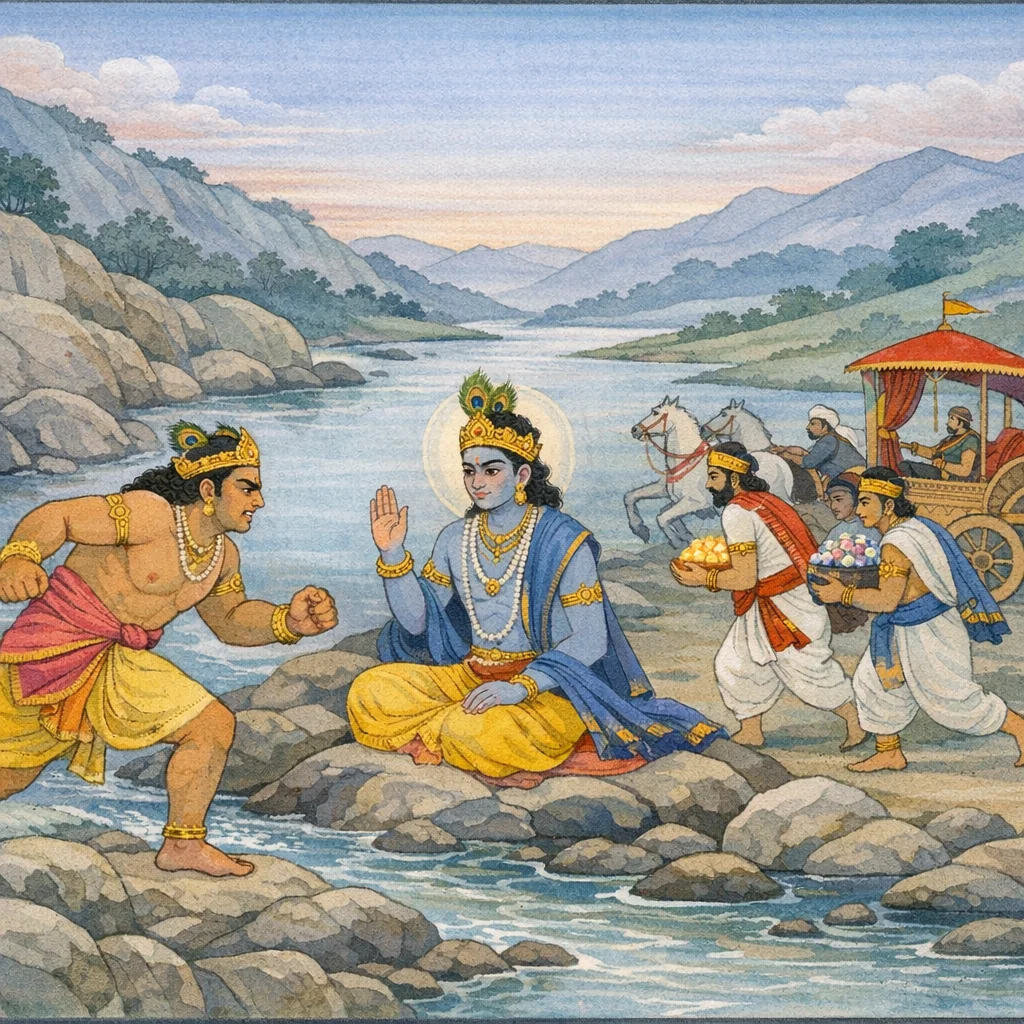
Vaiśaṃpāyana reports that after a key departure, Kṛṣṇa addresses Yudhiṣṭhira regarding Bhīma’s distressed state and the need for vigilance. The narration then turns to the Brahmaśiras astra: Droṇa’s instruction to his son emphasizes non-deployment among humans even in extreme danger, alongside an appraisal of the son’s instability. The account shifts to Dvārakā, where Aśvatthāmā—honored among the Vṛṣṇis—approaches Kṛṣṇa privately and claims parity in receiving the Brahmaśiras lineage, requesting in exchange Kṛṣṇa’s cakra as a war-winning instrument. Kṛṣṇa offers alternative weapons but sets a practical test: Aśvatthāmā attempts to lift or move the cakra with both hands and full effort, fails, and withdraws dejected. Kṛṣṇa then articulates the unique standing of Arjuna (Gāṇḍīva-bearer, Śiva’s approver) and notes that even close kin (e.g., Pradyumna, Balarāma) never requested such an incomparable weapon. The chapter closes by characterizing Aśvatthāmā as volatile and knowledgeable of Brahmaśiras, motivating protective vigilance toward Bhīma.
Chapter Arc: रात्रि के संहार के बाद भी शोक शांत नहीं होता—पाण्डवों में विशेषतः भीमसेन पुत्र-शोक से उन्मत्त होकर अकेले ही द्रोणपुत्र अश्वत्थामा का पीछा करते हैं, और श्रीकृष्ण उसकी चपलता व क्रूरता को देखकर सावधान करते हैं। → भीम का आवेग बढ़ता जाता है; वह अश्वत्थामा को पकड़ने/उठाने/हिलाने तक का प्रयत्न करता है, पर द्रोणपुत्र अपनी दुष्ट बुद्धि और अस्त्र-ज्ञान के बल पर बच निकलने की चेष्टा करता है। कृष्ण संकेत करते हैं कि यह साधारण शत्रु नहीं—इसके पास ब्रह्मशिर (ब्रह्मास्त्र-सम) विद्या है, अतः वृकोदर को ‘रक्ष्य’ रहना चाहिए। → अश्वत्थामा, पराजय-आशंका और उन्माद में, अपने अंतिम आश्रय—अत्यन्त भयावह दिव्यास्त्र—की ओर झुकता है; उसके भीतर की क्रूरता और चपलता निर्णायक रूप से प्रकट होती है, और पाण्डव-पक्ष पर महाविनाश का खतरा छा जाता है। → भीम का प्रत्यक्ष बल-प्रयास निष्फल पड़ता है; अश्वत्थामा अवसर पाकर रथ, घोड़े और विविध रत्नादि समेटकर हटता/भागता है—पर उसका हटना शांति नहीं, बल्कि और बड़े अनर्थ की भूमिका बनता है। → कृष्ण की चेतावनी के साथ अध्याय का अंत इस आशंका पर टिकता है कि क्रूर, चपल और ब्रह्मशिर-विद्या-धारी अश्वत्थामा अब कौन-सा विनाशकारी उपाय करेगा।
Shlokas
Verse 1
(दाक्षिणात्य अधिक पाठका ई “लोक मिलाकर कुल ३१ ह “लोक हैं।) भी हा +ज (2) आमने द्वादशोड् ध्याय: श्रीकृष्णका अश्वत्थामाकी चपलता एवं क्रूरताके प्रसंगमें सुदर्शनचक्र माँगनेकी बात सुनाते हुए उससे भीमसेनकी रक्षाके लिये प्रयत्न करनेका आदेश देना वैशम्पायन उवाच तस्मिन् प्रयाते दुर्धर्षे यदूनामृषभस्तत: । अब्रवीत् पुण्डरीकाक्ष: कुन्तीपुत्रं युधिष्ठिरम्,वैशम्पायनजी कहते हैं--राजन! दुर्धर्ष वीर भीमसेनके चले जानेपर यदुकुलतिलक कमलनयन भगवान् श्रीकृष्णने कुन्तीपुत्र युधिष्ठिस्से कहा--
Vaiśampāyana said: When the unconquerable Bhīmasena had departed, Kṛṣṇa—the foremost of the Yādavas, lotus-eyed—addressed Yudhiṣṭhira, the son of Kuntī. The narrative turns from battlefield movement to responsible counsel: Kṛṣṇa prepares to guide the king toward protective action and restraint amid the moral chaos following night-time slaughter.
Verse 2
एष पाण्डव ते भ्राता पुत्रशोकपरायण: । जिघांसुद्रौणिमाक्रन्दे एक एवाभिधावति,'पाण्डुनन्दन! ये आपके भाई भीमसेन पुत्रशोकमें मग्न होकर युद्धमें द्रोणकुमारके वधकी इच्छासे अकेले ही उसपर धावा कर रहे हैं
Vaiśampāyana said: “This brother of yours, O Pāṇḍava, overwhelmed by grief for his son, is rushing alone in a fury—crying out as he goes—intent on killing Drauṇi.” The verse highlights how personal bereavement can drive even a righteous warrior into solitary, vengeance-driven action amid the moral chaos of war.
Verse 3
भीम: प्रियस्ते सर्वेभ्यो भ्रातृभ्यो भरतर्षभ । त॑ कृच्छुगतमद्य त्वं कस्मान्नाभ्युपपद्यसे
Vaiśampāyana said: “O bull among the Bharatas, Bhīma is dear to you above all your brothers. Now that he has fallen into distress, why do you not go to his aid?”
Verse 4
“भरतश्रेष्ठ) भीमसेन आपको समस्त भाइयोंसे अधिक प्रिय हैं; किंतु आज वे संकटमें पड़ गये हैं। फिर आप उनकी सहायताके लिये जाते क्यों नहीं हैं? ।। यत् तदाचष्ट पुत्राय द्रोण: परपुरञ्जय: । अस्त्रं ब्रहद्मशिरो नाम दहेत पृथिवीमपि,'शत्रुओंकी नगरीपर विजय पानेवाले द्रोणाचार्यने अपने पुत्रको जिस ब्रह्मशिर नामक अस्त्रका उपदेश दिया है, वह समस्त भूमण्डलको भी दग्ध कर सकता है
Vaiśampāyana said: “O best of the Bharatas! Bhīmasena is dearer to you than all your brothers, yet today he has fallen into peril. Why then do you not go to aid him? That weapon which Droṇa—conqueror of enemy strongholds—taught to his son, the missile called Brahmaśiras, is capable of burning even the earth itself.”
Verse 5
तन्महात्मा महा भाग: केतु: सर्वधनुष्मताम् । प्रत्यपादयदाचार्य: प्रीयमाणो धनंजयम्,“सम्पूर्ण धनुर्धरोंके सिरमौर महाभाग महात्मा द्रोणाचार्यने प्रसन्न होकर वह अस्त्र पहले अर्जुनको दिया था
Vaiśampāyana said: That great-souled, highly fortunate preceptor—renowned as the foremost among all archers—being pleased, formally bestowed that weapon upon Dhanañjaya (Arjuna). The moment underscores the ethical weight of a teacher’s favor: mastery is not merely skill, but a trust conferred through discipline, worthiness, and the guru’s approval.
Verse 6
त॑ पुत्रो5प्पेक एवैनमन्वयाचदमर्षण: । ततः प्रोवाच पुत्राय नातिदहृष्टमना इव,“अश्वत्थामा इसे सहन न कर सका। वह उनका एकलौता पुत्र था; अतः उसने भी अपने पितासे उसी अस्त्रके लिये प्रार्थना की। तब आचार्यने अपने पुत्रको उस अस्त्रका उपदेश कर दिया; किंतु इससे उनका मन अधिक प्रसन्न नहीं था
Vaiśampāyana said: Then his only son too, unable to bear it, begged him for that very weapon. Thereupon the teacher instructed his son in that missile; yet his heart seemed not greatly pleased—hinting at the moral weight and peril of passing on such destructive power, even to one’s own child.
Verse 7
विदितं चापल॑ं ह्यासीदात्मजस्य दुरात्मन: । सर्वधर्मविदाचार्य: सोडन्वशात् स्वसुतं ततः,उन्हें अपने दुरात्मा पुत्रकी चपलता ज्ञात थी; अतः सब धर्मोके ज्ञाता आचार्यने अपने पुत्रको इस प्रकार शिक्षा दी--
Vaiśampāyana said: The teacher already knew the fickle, wayward nature of his own wicked-minded son. Therefore, being a knower of all dharma, the preceptor then instructed his son accordingly—seeking to restrain him through right counsel and discipline.
Verse 8
परमापदगतेनापि न सम तात त्वया रणे । इदमस्त्रं प्रयोक्तव्यं मानुषेषु विशेषत:,“बेटा! बड़ी-से-बड़ी आपत्तिमें पड़नेपर भी तुम्हें रणभूमिमें विशेषतः मनुष्योंपर इस अस्त्रका प्रयोग नहीं करना चाहिये”
Vaiśampāyana said: “Even if you are driven into the direst calamity, you must not resort to this weapon in battle, my son. Above all, it is not to be employed against human beings.”
Verse 9
इत्युक्तवान् गुरु: पुत्र द्रोण: पश्चादथोक्तवान् । न त्वं जातु सतां मार्गे स्थातेति पुरुषर्षभ,“नरश्रेष्ठ! अपने पुत्रसे ऐसा कहकर गुरु द्रोण पुनः: उससे बोले--“बेटा! मुझे संदेह है कि तुम कभी सत्पुरुषोंके मार्गपर स्थिर नहीं रहोगे”
Vaiśampāyana said: Having spoken thus, the teacher Droṇa then addressed his son again: “O bull among men, I do not believe you will ever stand firm upon the path followed by the good.”
Verse 10
स तदाज्ञाय दुष्टात्मा पितुर्वचनमप्रियम् । निराश: सर्वकल्याणै: शोकात् पर्यचरन्महीम्,'पिताके इस अप्रिय वचनको सुन और समझकर दृष्टात्मा द्रोणपुत्र सब प्रकारके कल्याणकी आशा छोड़ बैठा और बड़े शोकसे पृथ्वीपर विचरने लगा
Having understood that unwelcome command of his father, the wicked-souled son of Droṇa abandoned all hope of auspicious outcomes and, overwhelmed by grief, wandered over the earth.
Verse 11
ततस्तदा कुरुश्रेष्ठ वनस्थे त्वयि भारत । अवसद् द्वारकामेत्य वृष्णिश्रि: परमार्चित:
Vaiśampāyana said: “Then, O best of the Kurus, while you, O Bhārata, were dwelling in the forest, the glory of the Vṛṣṇis—highly honored—came to Dvārakā and fell into decline.”
Verse 12
“'भरतनन्दन! कुरुश्रेष्ठी] तदनन्तर जब तुम वनमें रहते थे, उन्हीं दिनों अश्वत्थामा द्वारकामें आकर रहने लगा। वहाँ वृष्णिवंशियोंने उसका बड़ा सत्कार किया ।। स कदाचित् समुद्रान्ते वसन् द्वारवतीमनु । एक एक॑ समागम्य मामुवाच हसन्निव,“एक दिन द्वारकामें समुद्रके तटपर रहते समय उसने अकेले ही मुझ अकेलेके पास आकर हँसते हुए-से कहा-- इति श्रीमहाभारते सौप्तिकपर्वणि ऐषीकपर्वणि युधिष्िरकृष्णसंवादे द्वादशो 5 ध्याय: इस प्रकार श्रीमह्याभारत सौप्तिकपर्वके अन्तर्गत ऐषीकपर्वनें युधिष्ठिर और श्रीकृष्णका संवादविषयक बारहवाँ अध्याय पूरा हुआ
Vaiśampāyana said: “O delight of the Bharatas, best among the Kurus—after that, during the time you were living in the forest, Aśvatthāmā came to Dvārakā and took up residence there. The Vṛṣṇis received him with great honor. Once, while staying by the seashore near Dvāravatī, he approached me alone and spoke, as if smiling…”
Verse 13
यत् तदुग्रं तप: कृष्ण चरन् सत्यपराक्रम: । अगस्त्याद् भारताचार्य: प्रत्यपद्यत मे पिता,“दशार्हनन्दन! श्रीकृष्ण! भरतवंशके आचार्य मेरे सत्यपराक्रमी पिताने उग्र तपस्या करके महर्षि अगस्त्यसे जो ब्रह्मास्त्र प्राप्त किया था, वह देवताओं और गन्धर्वोद्वारा सम्मानित अस्त्र इस समय जैसा मेरे पिताके पास है, वैसा ही मेरे पास भी है; अतः यदुश्रेष्ठ! आप मुझसे वह दिव्य अस्त्र लेकर रणभूमिमें शत्रुओंका नाश करनेवाला अपना चक्र नामक अस्त्र मुझे दे दीजिये”
Vaiśampāyana said: “O Kṛṣṇa! My father—an ācārya of the Bharata line, steadfast in truth and mighty in valor—once practiced fierce austerities and obtained from the sage Agastya that divine Brahmāstra. That weapon, honored among gods and Gandharvas, is with me now just as it was with my father. Therefore, O best of the Yadus, accept from me that celestial missile, and in return grant me your discus-weapon, the Cakra, which destroys enemies on the battlefield.”
Verse 14
अस्त्रं ब्रह्मशिरो नाम देवगन्धर्वपूजितम् । तदद्य मयि दाशार्ह यथा पितरि मे तथा,“दशार्हनन्दन! श्रीकृष्ण! भरतवंशके आचार्य मेरे सत्यपराक्रमी पिताने उग्र तपस्या करके महर्षि अगस्त्यसे जो ब्रह्मास्त्र प्राप्त किया था, वह देवताओं और गन्धर्वोद्वारा सम्मानित अस्त्र इस समय जैसा मेरे पिताके पास है, वैसा ही मेरे पास भी है; अतः यदुश्रेष्ठ! आप मुझसे वह दिव्य अस्त्र लेकर रणभूमिमें शत्रुओंका नाश करनेवाला अपना चक्र नामक अस्त्र मुझे दे दीजिये”
Vaiśampāyana said: “O Dāśārha, I possess today the weapon called Brahmaśiras—honoured by the gods and the Gandharvas—just as it was possessed by my father. Therefore, O best of the Yadus, take from me this divine missile, and in return grant me your discus-weapon, the cakra, which destroys enemies on the battlefield.”
Verse 15
अस्मत्तस्तदुपादाय दिव्यमस्त्रं यदूत्तम | ममात्यस्त्रं प्रयच्छ त्वं चक्रं रिपुहणं रणे,“दशार्हनन्दन! श्रीकृष्ण! भरतवंशके आचार्य मेरे सत्यपराक्रमी पिताने उग्र तपस्या करके महर्षि अगस्त्यसे जो ब्रह्मास्त्र प्राप्त किया था, वह देवताओं और गन्धर्वोद्वारा सम्मानित अस्त्र इस समय जैसा मेरे पिताके पास है, वैसा ही मेरे पास भी है; अतः यदुश्रेष्ठ! आप मुझसे वह दिव्य अस्त्र लेकर रणभूमिमें शत्रुओंका नाश करनेवाला अपना चक्र नामक अस्त्र मुझे दे दीजिये”
Vaiśampāyana said: “Take from me that supreme, divine weapon; and in return, grant me your own foremost weapon—the discus that slays enemies in battle.”
Verse 16
स राजन् प्रीयमाणेन मयाप्युक्त: कृताज्जलिः । याचमान: प्रयत्नेन मत्तो<5स्त्रं भरतर्षभ,“भरतश्रेष्ठ) वह हाथ जोड़कर बड़े प्रयत्नके द्वारा मुझसे अस्त्रकी याचना कर रहा था, तब मैंने भी प्रसन्नतापूर्वक ही उससे कहा--
Vaiśaṃpāyana said: “O king, that man, with palms joined in reverence, was earnestly begging me for a weapon. Pleased by his demeanor and intent, I too spoke to him favorably.”
Verse 17
देवदानवगन्धर्वमनुष्यपतगोरगा: । न समा मम वीर्यस्य शतांशेनापि पिण्डिता:,“ब्रह्मन! देवता, दानव, गन्धर्व, मनुष्य, पक्षी और नाग--ये सब मिलकर मेरे पराक्रमके सौवें अंशकी भी समानता नहीं कर सकते
Vaiśampāyana said: “O Brahmin, even if the gods, demons, Gandharvas, human beings, birds, and serpents were all gathered together as one, they would still not equal even a hundredth part of my prowess.”
Verse 18
इदं धनुरियं शक्तिरिदं चक्रमियं गदा | यद्यदिच्छसि चेदस्त्र॑ मत्तस्तत् तद् ददामि ते,“यह मेरा धनुष है, यह शक्ति है, यह चक्र है और यह गदा है। तुम जो-जो अस्त्र मुझसे लेना चाहते हो, वही वह तुम्हें दिये देता हूँ
Vaiśampāyana said: “Here is my bow; here is the spear; here is the discus; and here is the mace. Whatever weapon you wish to take from me—each and every one of those I grant to you.”
Verse 19
इस प्रकार श्रीमहाभारत सौप्तिकपर्वके अन्तर्गत ऐषीकपरवनें अश्वत्थामाके वधके लिये भीमसेनका प्रस्थानविषयक ग्यारहवाँ अध्याय पूरा हुआ,यच्छकनोषि समुद्यन्तुं प्रयोक्तुमपि वा रणे । तद् गृहाण विनास्त्रेण यन्मे दातुमभीप्ससि “तुम मुझे जो अस्त्र देना चाहते हो, उसे दिये बिना ही रणभूमिमें मेरे जिस आयुधको उठा अथवा चला सको, उसे ही ले लो'
“Whatever weapon you are able to lift up or even wield in battle—take that, without my having to bestow it as a formal missile. Take, on your own strength, the very armament you claim you wish to receive from me.”
Verse 20
स सुनाभं सहस्रारं वजनाभमयस्मयम् । वत्रे चक्रं महाभागो मत्त: स्पर्धन्मया सह,“तब उस महाभागने मेरे साथ स्पर्धा रखते हुए मुझसे मेरा वह लोहमय चक्र माँगा, जिसकी सुन्दर नाभिमें वज्र लगा हुआ है तथा जो एक सहसखत्र अरोंसे सुशोभित होता है!
Vaiśampāyana said: “Competing with me, that illustrious man asked from me my iron discus—beautiful at the hub, set with a thunderbolt, and adorned with a thousand spokes.”
Verse 21
“मैंने भी कह दिया--'ले लो चक्र," मेरे इतना कहते ही उसने सहसा उछलकर बायें हाथसे चक्रको पकड़ लिया
Vaiśampāyana said: “I too said, ‘Take the discus.’ The moment I had spoken those words, he sprang up at once and seized the discus with his left hand.”
Verse 22
न चैनमशकत् स्थानात् संचालयितुमप्युत । अथैनं दक्षिणेनापि गृहीतुमुपचक्रमे,“परंतु वह उसे अपनी जगहसे हिला भी न सका। तब उसने उसे दाहिने हाथसे उठानेका प्रयत्न आरम्भ किया
He could not move it from its place even in the least. Then he began to attempt to seize and lift it with his right hand as well.
Verse 23
गृहाण चक्रमित्युक्तो मया तु तदनन्तरम् | जग्राहोत्पत्य सहसा चक्रं सवब्येन पाणिना,सर्वयत्नबलेनापि गृह्नन्नेवमिदं तत: । ततः सर्वबलेनापि यदैनं॑ न शशाक ह 'सारा प्रयत्त और सारी शक्ति लगाकर भी जब उसे पकड़कर उठा अथवा हिला न सका, तब द्रोणकुमार मन-ही-मन बहुत दुःखी हो गया। भारत! यत्न करके थक जानेपर वह उसे लेनेकी चेष्टासे निवृत्त हो गया
Vaiśampāyana said: When I told him, “Take up the discus,” he immediately sprang up and, with his left hand, seized the wheel. Yet, even exerting every effort and all his strength, he could not lift it or move it. When, despite straining with his full power, he still failed to take it, Droṇa’s son became inwardly distressed; and, exhausted by his attempts, he desisted from trying to carry it away.
Verse 24
उद्यन्तुं वा चालयितु द्रौणि: परमदुर्मना: । कृत्वा यत्नं परिश्रान्त: स न्यवर्तत भारत,'सारा प्रयत्त और सारी शक्ति लगाकर भी जब उसे पकड़कर उठा अथवा हिला न सका, तब द्रोणकुमार मन-ही-मन बहुत दुःखी हो गया। भारत! यत्न करके थक जानेपर वह उसे लेनेकी चेष्टासे निवृत्त हो गया
Droṇi, utterly downcast, strove to lift it or to move it; but, wearied by his exertions, O Bhārata, he drew back.
Verse 25
निवृत्तमनसं तस्मादभिप्रायाद् विचेतसम् | अहमामन्त्र्य संविग्नमश्व॒त्थामानमन्रुवम्,“जब उस संकल्पसे उसका मन हट गया और वह दु:ःखसे अचेत एवं उद्विग्न हो गया, तब मैंने अश्वत्थामाको बुलाकर पूछा--
When his mind turned away from that intention and he became distraught—overwhelmed by grief and agitation—I summoned Aśvatthāmā and questioned him—
Verse 26
य: सदैव मनुष्येषु प्रमाणं परमं गत: । गाण्डीवधन्वा श्वेताश्व: कपिप्रवरकेतन:
He who among men had ever attained the highest measure of authority and excellence—Arjuna, bearer of the Gāṇḍīva bow, driver of the white horses, and he whose banner bore the foremost of monkeys—was thus recalled and named as the supreme exemplar in the human world.
Verse 27
यः साक्षाद् देवदेवेशं शितिकण्ठमुमापतिम् । बन्द्धयुद्धे पराजिष्णुस्तोषयामास शड्करम्
Vaiśampāyana said: He who, though liable to be defeated in a bound and regulated combat, directly pleased Śaṅkara—Śiva, the Lord of the gods, the blue-throated consort of Umā. The verse declares that even amid war’s harsh arena, reverence and devotion toward the divine may win grace beyond mere martial success.
Verse 28
यस्मात् प्रियतरो नास्ति ममान्य: पुरुषो भुवि । नादेयं यस्य मे किज्चिदपि दारा: सुतास्तथा
Vaiśampāyana said: “For me, on this earth, there is no other man dearer than he. There is nothing of mine that I would not give to him—my possessions, even my wife and my sons as well.”
Verse 29
तेनापि सुह्दा ब्रह्मन् पार्थेनाक्लिष्टकर्मणा । नोक्तपूर्वमिदं वाक््यं यत् त्वं मामभिभाषसे
Even by that dear friend—Pārtha, whose deeds were untainted by baseness—this statement was never spoken before. Yet you now address me with these words, O Brāhmaṇa, as though such a charge were fitting.
Verse 30
“ब्रह्म! जो मनुष्य समाजमें सदा ही परम प्रामाणिक समझे जाते हैं, जिनके पास गाण्डीव धनुष और श्वेत घोड़े हैं, जिनकी ध्वजापर श्रेष्ठ वानर विराजमान होता है, जिन्होंने बन्द्रयुद्धमें साक्षात् देवदेवेश्वर नीलकण्ठ उमा-वल्लभ भगवान् शंकरको पराजित करनेका साहस करके उन्हें संतुष्ट किया था, इस भूमण्डलमें मुझे जिनसे बढ़कर परम प्रिय दूसरा कोई मनुष्य नहीं है, जिनके लिये मेरे पास स्त्री, पुत्र आदि कोई भी ऐसी वस्तु नहीं है, जो देने योग्य न हो, अनायास ही महान् कर्म करनेवाले मेरे उस प्रिय सुहृद् कुन्तीकुमार अर्जुनने भी पहले कभी ऐसी बात नहीं कही थी, जो आज तुम मुझसे कह रहे हो ।। ब्रह्मचर्य महद् घोरें तीर्त्वा द्वादशवार्षिकम् | हिमवत्पाश्वमास्थाय यो मया तपसार्जित:
“O Brāhmaṇa! He who among men is ever held to be the highest standard of authority—bearer of the Gāṇḍīva bow and the white horses, whose banner bears the foremost of monkeys; he who, in a bound combat, dared to confront Śaṅkara himself—Śiva of the blue throat, Umā’s lord—and yet pleased him; he than whom none is dearer to me upon this earth, and for whose sake there is nothing—wife and sons included—that I would not give; even my beloved friend Arjuna, Kuntī’s son, doer of great deeds without strain, never before spoke such words as you speak to me today. And having completed a great and dreadful observance of brahmacarya for twelve years, dwelling upon the flank of the Himālaya, I obtained through my tapas him of whom this is spoken.”
Verse 31
समानव्रतचारिण्यां रुक्मिण्यां योडन्वजायत । सनत्कुमारस्तेजस्वी प्रद्युम्नो नाम मे सुत:
Vaiśampāyana said: “From Rukmiṇī, who observed the same vows and discipline, there was born a radiant son—Sanatkumāra (incarnate)—named Pradyumna, my son.”
Verse 32
तेनाप्येतन््महद् दिव्यं चक्रमप्रतिमं रणे । न प्रार्थितमभून्मूढ यदिदं प्रार्थितं त्वया
Even he never asked for that great and divine discus—matchless in battle. Foolish man, yet this is what you have asked for.
Verse 33
“मूढ ब्राह्मण! मैंने बारह वर्षोंतक अत्यन्त घोर ब्रह्मचर्यव्रतका पालन करके हिमालयकी घाटीमें रहकर बड़ी भारी तपस्याके द्वारा जिसे प्राप्त किया था, मेरे समान व्रतका पालन करनेवाली रुक्मिणीदेवीके गर्भसे जिसका जन्म हुआ है, जिसके रूपमें साक्षात् तेजस्वी सनत्कुमारने ही मेरे यहाँ अवतार लिया है, वह प्रद्युम्न मेरा प्रिय पुत्र है। परंतु रणभूमिमें जिसकी कहीं तुलना नहीं है, मेरे इस परम दिव्य चक्रको कभी उस प्रद्युम्नने भी नहीं माँगा था, जिसकी आज तुमने माँग की है ।। रामेणातिबलेनैतन्नोक्तपूर्व कदाचन । न गदेन न साम्बेन यदिदं प्रार्थितं त्वया,“अत्यन्त बलशाली बलरामजीने भी पहले कभी ऐसी बात नहीं कही है। जिसे तुमने माँगा है, उसे गद और साम्बने भी कभी लेनेकी इच्छा नहीं की
“Foolish brahmin! After observing an exceedingly severe vow of brahmacarya for twelve years and dwelling in the Himalayan valleys, I obtained by great austerity the son who was born from the womb of Queen Rukmiṇī, herself steadfast in vows—one in whose very form the radiant Sanatkumāra has, as it were, descended into my house. That Pradyumna is my beloved son. Yet even he—peerless on the battlefield—has never asked me for this supremely divine discus, the very thing you ask for today. Even the mighty Balarāma has never spoken such a request; nor have Gada or Sāmba ever desired what you are seeking.”
Verse 34
द्वारकावासिभिश्नान्यर्वष्ण्यन्धकमहारथै: । नोक्तपूर्वमिदं जातु यदिदं प्रार्थितं त्वया,“द्वारकामें निवास करनेवाले जो अन्य वृष्णि तथा अन्धकवंशके महारथी हैं, उन्होंने भी कभी मेरे सामने ऐसा प्रस्ताव नहीं किया था, जैसा कि तुमने इस चक्रको माँगते हुए किया है
“Even the other great chariot-warriors of the Vṛṣṇi and Andhaka clans who dwell in Dvārakā have never once made such a proposal before me—such as you have made in asking for this discus.”
Verse 35
भारताचार्यपुत्रस्त्वं मानित: सर्वयादवै: । चक्रेण रथिनां श्रेष्ठ क॑ नु तात युयुत्ससे,“तात! रथियोंमें श्रेष्ठ! तुम तो भरतकुलके आचार्यके पुत्र हो। सम्पूर्ण यादवोंने तुम्हारा बड़ा सम्मान किया है। फिर बताओ तो सही, इस चक्रके द्वारा तुम किसके साथ युद्ध करना चाहते हो?”
Vaiśampāyana said: “You are the son of the preceptor of the Bharata line, and you have been honored by all the Yādavas. O best of chariot-warriors, dear one—tell me: with whom do you now wish to fight, wielding this discus?”
Verse 36
एवमुक्तो मया द्रौणिमामिदं प्रत्युवाच ह । प्रयुज्य भवते पूजां योत्स्ये कृष्ण त्ववा सह
Thus addressed by me, Drauṇi replied: “Having duly offered you honor, O Kṛṣṇa, I will fight together with you.”
Verse 37
प्रार्थितं ते मया चक्रं देवदानवपूजितम् । अजेय: स्यामिति विभो सत्यमेतद् ब्रवीमि ते
Vaiśampāyana said: “I begged from you that discus, revered by both gods and Dānavas, thinking, ‘O Lord, may I become unconquerable.’ I tell you this truth.”
Verse 38
“जब मैंने इस तरह पूछा, तब द्रोणकुमारने मुझे इस प्रकार उत्तर दिया--'श्रीकृष्ण! मैं आपकी पूजा करके फिर आपके ही साथ युद्ध करूँगा। प्रभो! मैं यह सच कहता हूँ कि मैंने इस देव-दानवपूजित चक्रको आपसे इसीलिये माँगा था कि इसे पाकर अजेय हो जाऊँ ।। त्वत्तो5हं दुर्लभ॑ काममनवाप्यैव केशव । प्रतियास्यामि गोविन्द शिवेनाभिवदस्व माम्,किंतु केशव! अब मैं अपनी इस दुर्लभ कामनाको आपसे प्राप्त किये बिना ही लौट जाऊँगा। गोविन्द! आप मुझसे केवल इतना कह दें कि “तेरा कल्याण हो”
Vaiśampāyana said: “When I questioned him in this way, Droṇa’s son replied: ‘Keśava, without obtaining from you this rare boon I sought, I will return. Govinda, grant me at least this much—address me with the words “May there be auspiciousness for you.”’”
Verse 39
एतत् सुभीम॑ भीमानामृषभेण त्वया धृतम् | चक्रमप्रतिचक्रेण भुवि नान्योडभिपद्यते,“यह चक्र अत्यन्त भयंकर है और आप भी भयानक वीरोंके शिरोमणि हैं। आपके किसी विरोधीके पास ऐसा चक्र नहीं है। आपने ही इसे धारण कर रखा है। इस भूतलपर दूसरा कोई पुरुष इसे नहीं उठा सकता”
“This discus is exceedingly dreadful, and you are the foremost among dreadful heroes. None of your adversaries possesses such a discus; you alone bear it. Upon this earth there is no second man who can lift it.”
Verse 40
एतावदुक््त्वा द्रौणिर्मा युग्यानश्वान् धनानि च । आदायोपययोौ काले रत्नानि विविधानि च,“मुझसे इतना ही कहकर द्रोणकुमार अश्वत्थामा रथमें जोतने योग्य घोड़े, धन तथा नाना प्रकारके रत्न लेकर वहाँसे यथासमय लौट गया
Vaiśampāyana said: Having said only this much, Droṇa’s son Aśvatthāman departed at the proper time, taking with him horses fit to be yoked to a chariot, along with wealth and various kinds of jewels.
Verse 41
स संरम्भी दुरात्मा च चपल: क्रूर एव च । वेद चास्त्रं ब्रह्मशिरस्तस्माद् रक्ष्यो वृकोदर:,“वह क्रोधी, दुष्टात्मा, चपल और क्रूर है। साथ ही उसे ब्रह्मास्त्रका भी ज्ञान है; अतः उससे भीमसेनकी रक्षा करनी चाहिये”
Vaiśampāyana said: “He is impetuous in wrath, wicked at heart, fickle, and indeed cruel. Moreover, he knows the weapon called Brahmaśiras; therefore Vṛkodara (Bhīma) must be carefully protected from him.”
Frequently Asked Questions
The dilemma is whether grief and strategic insecurity justify seeking or deploying catastrophic weapons; the text frames such pursuit as requiring discipline and ethical eligibility rather than emotional impulse.
Power is not merely possessed but governed: divine instruments and knowledge demand restraint, and inability (practical and moral) functions as a safeguard against destabilizing escalation.
No explicit phalaśruti appears; the meta-commentary is implicit in the narrative design—demonstrating that the epic’s moral economy constrains weapon access through qualification, lineage, and demonstrated capability.