Adhyaya 1
अध्याय १: उत्पात-दर्शनम् तथा वृष्णि-विनाश-श्रवणम् (Omens Observed and the Hearing of the Vṛṣṇi Destruction)
Upa-parva: Mausala-Upa-Parva (Omens and the Report of Vṛṣṇi Catastrophe)
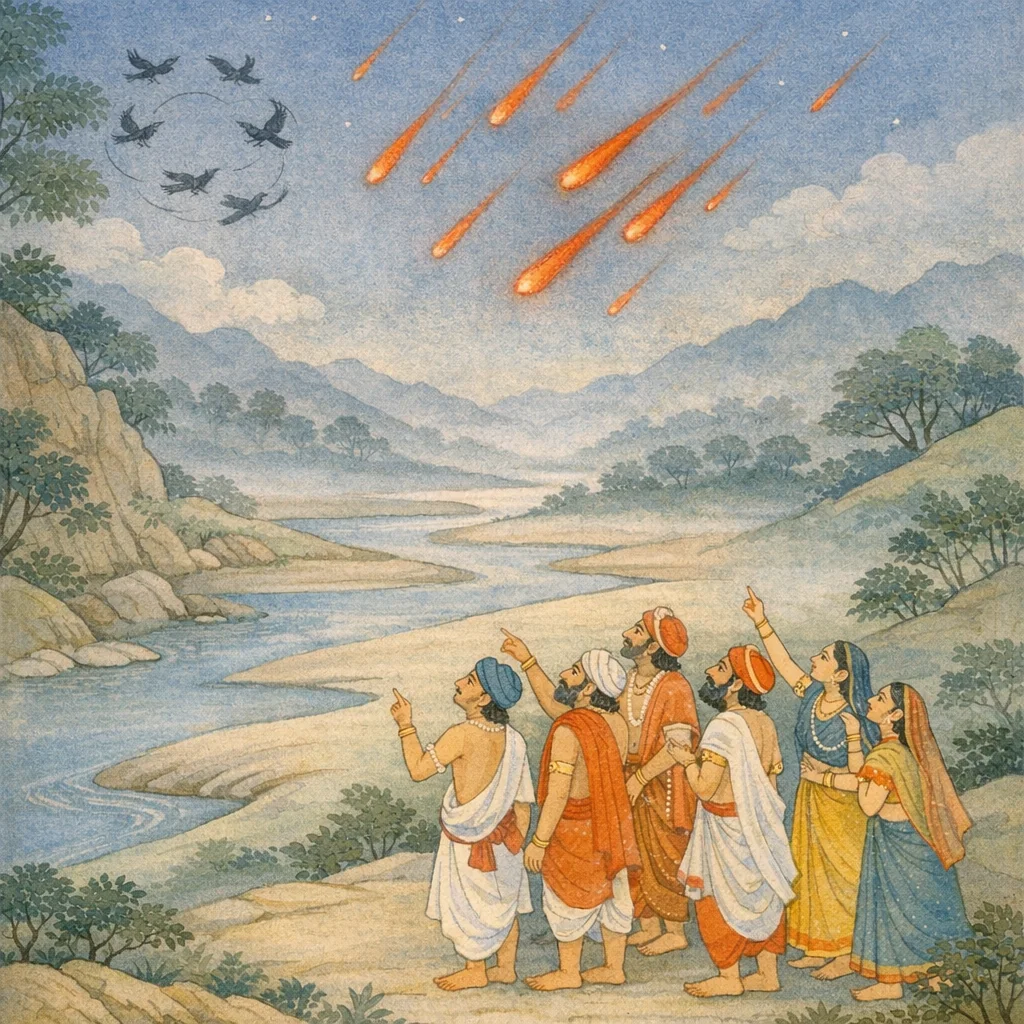
Vaiśaṃpāyana reports that in the thirty-sixth year, King Yudhiṣṭhira observes a cluster of adverse portents: harsh winds with thunder and gravel-like rain; birds circling in inauspicious directions; great rivers seeming to flow backward; horizons veiled by mist; meteors dropping with ember-like showers; the sun obscured by dust, rising without clear rays and appearing as if marked by headless-trunk forms; and dreadful tri-colored halos around the moon and sun with ash-reddish tones. These repeated signs generate persistent anxiety. Subsequently, Yudhiṣṭhira hears that the Vṛṣṇi host has been destroyed in a ‘mausala’ episode—mutual assault interpreted as effected by brahma-daṇḍa power. He gathers his brothers to deliberate on next steps. The Pāṇḍavas are distressed; they struggle to accept the report, especially the notion of Vāsudeva’s death, described as nearly unimaginable. The chapter closes with the brothers seated in grief and shaken resolve, indicating a transition from post-war consolidation to an existential reckoning with impermanence and the limits of sovereignty.
Chapter Arc: वैशम्पायन जनमेजय को बतलाते हैं कि महाभारत-युद्ध के बाद वर्षों बीतने पर द्वारका और वृष्णि-यादवों के ऊपर अनिष्ट की छाया घिर आती है—आकाश, दिशाएँ और नदियाँ तक भय-सूचक संकेत देने लगती हैं। → भयंकर उत्पात प्रकट होते हैं—रेत और कंकड़ बरसाती आँधियाँ, अपसव्य उड़ते शकुन, कुहरे से ढकी दिशाएँ, और अंगार-वर्षिणी उल्काएँ। नगर में हृदय-उद्वेग बढ़ता है; फिर भी काल का प्रवाह रुकता नहीं। इसी बीच साम्ब के गर्भ से ‘मूसल’ का जन्म—यदुवंश-विनाश का बीज—और उसे रोकने के लिए राजाज्ञा से कठोर निषेध (सुरासव न करने का नियम) स्थापित होता है। → छत्तीसवें वर्ष ‘कालचोदित’ वृष्णि-यादव आपस में मूसलों से ही एक-दूसरे का संहार करते हैं—विनाश बाहर से नहीं, अपने ही हाथों से घटित होता है; और यह सब उन पूर्व-लक्षणों की सत्यता सिद्ध कर देता है। → राजभय और शासन से नियम बनाए जाते हैं, दंड-विधान तक घोषित होता है कि जो छिपकर नशीली वस्तु बनाएगा वह सपरिवार कठोर दंड का भागी होगा; परंतु कथा का निष्कर्ष यही है कि जगत्-प्रभु होकर भी श्रीकृष्ण ‘कृतान्त’ (नियत अंत) को अन्यथा करने की इच्छा नहीं करते—काल का विधान अपना मार्ग लेता है। → उत्पातों की घनीभूत छाया और मूसल-जन्य नियति संकेत देती है कि द्वारका का वैभव और वृष्णियों की शक्ति शीघ्र ही पूर्ण पतन की ओर बढ़ रही है।
Shlokas
Verse 1
दक्षिण भारतीय पाठसे लिये गये... १५॥ प अं १५॥ आश्रमवासिकपर्वकी कुल श्लोकसंख्या -- ११०९। भीकम (0) अमान साम्बके पेटसे यदुवंश-विनाशके लिये मूसल पैदा होनेका ऋषियोंद्वारा शाप ॥ ३० श्रीपरमात्मने नम: ।। श्रीमहाभारतम् मौसलपर्व प्रथमो 5 ध्याय: युधिष्ठटिरका अपशकुन देखना, यादवोंके विनाशका समाचार सुनना, द्वारकामें ऋषियोंके शापवश साम्बके पेटसे मूसलकी उत्पत्ति तथा मदिराके निषेधकी कठोर आज्ञा नारायणं नमस्कृत्य नरं चैव नरोत्तमम् | देवीं सरस्वतीं व्यासं ततो जयमुदीरयेत् ।। अन्तर्यामी नारायणस्वरूप भगवान् श्रीकृष्ण, (उनके नित्यसखा) नरस्वरूप नरश्रेष्ठ अर्जुन, (उनकी लीला प्रकट करनेवाली) भगवती सरस्वती और (उन लीलाओंका संकलन करनेवाले) महर्षि वेदव्यासको नमस्कार करके जय (महाभारत)-का पाठ करना चाहिये ।। वैशम्पायन उवाच षट्त्रिंशे त्वथ सम्प्राप्ते वर्ष कौरवनन्दन: । ददर्श विपरीतानि निमित्तानि युधिष्ठिर:,वैशम्पायनजी कहते हैं-जनमेजय! महाभारत युद्धके पश्चात् जब छत्तीसवाँ वर्ष प्रारम्भ हुआ तब कौरवनन्दन राजा युधिष्ठिरको कई तरहके अपशकुन दिखायी देने लगे अनायास ही महान् कर्म करनेवाले बलरामजीका यह शासन समझकर सब लोगोंने राजाके भयसे यह नियम बना लिया कि “आजसे न तो मदिरा बनाना है न पीना' ।। इति श्रीमहाभारते मौसलपर्वणि मुसलोत्पत्तौ प्रथमो5ध्याय:
Vaiśampāyana said: “O descendant of the Kurus, when the thirty-sixth year after the great war had arrived, King Yudhiṣṭhira began to behold ominous, adverse portents. These signs foreshadowed a moral and social unraveling: when dharma is about to be eclipsed, the world itself seems to warn the righteous through unsettling indications.”
Verse 2
ववुर्वाताश्व निर्घाता रूक्षा: शर्करवर्षिण: । अपसव्यानि शकुना मण्डलानि प्रचक्रिरे,बिजलीकी गड़गड़ाहटके साथ बालू और कंकड़ बरसानेवाली प्रचण्ड आँधी चलने लगी। पक्षी दाहिनी ओर मण्डल बनाकर उड़ते दिखायी देने लगे
Vaiśampāyana said: Harsh, violent winds began to blow, accompanied by thunderous crashes, and they rained down grit and pebbles. Birds, too, wheeled in circles in an inauspicious manner—portents that signaled a grave disorder in the moral and natural order and foreshadowed impending calamity.
Verse 3
प्रत्यगूहुर्महानद्यो दिशो नीहारसंवृता: । उल्काश्चाज्रारवर्षिण्य: प्रापतन् गगनाद् भुवि
Vaiśampāyana said: Great rivers seemed to flow backward, the quarters were veiled in mist, and blazing meteors—raining down with dreadful cries—fell from the sky to the earth. These ominous reversals in nature signal a moral and cosmic disorder, foreshadowing the impending ruin brought about by the Yādavas’ own decline in restraint and dharma.
Verse 4
बड़ी-बड़ी नदियाँ बालूके भीतर छिपकर बहने लगीं। दिशाएँ कुहरेसे आच्छादित हो गयीं। आकाशसे पृथ्वीपर अंगार बरसानेवाली उल्काएँ गिरने लगीं ।। आदित्यो रजसा राजन् समवच्छन्नमण्डल: । विरश्मिरुदये नित्यं कबन्धै: समदृश्यत,राजन! सूर्यमण्डल धूलसे आच्छन्न हो गया था। उदयकालनमें सूर्य तेजोहीन प्रतीत होते थे और उनका मण्डल प्रतिदिन अनेक कबन्धों (बिना सिरके धड़ों)-से युक्त दिखायी देता था
Vaiśaṃpāyana said: “O King, the sun’s disk became wholly veiled by dust. At sunrise it appeared bereft of rays, and day after day it seemed to be accompanied by ominous ‘kabandhas’—trunk-like, headless forms—portending disorder in the world and the waning of auspiciousness.”
Verse 5
परिवेषाश्र दृश्यन्ते दारुणाश्रन्द्रसूर्ययो: । त्रिवर्णि: श्यामरूक्षान्तास्तथा भस्मारुणप्रभा:,चन्द्रमा और सूर्य दोनोंके चारों ओर भयानक घेरे दृष्टिगोचर होते थे। उन घेरोंमें तीन रंग प्रतीत होते थे। उनका किनारेका भाग काला एवं रूखा होता था। बीचमें भस्मके समान धूसर रंग दीखता था और भीतरी किनारेकी कान्ति अरुणवर्णकी दृष्टिगोचर होती थी
Vaiśampāyana said: Terrifying halos were seen encircling both the moon and the sun. Those rings appeared in three distinct colors: their outer edge looked dark and harsh, the middle seemed ash-grey, and the inner rim shone with a reddish glow. Such ominous signs in the heavens foreshadow the moral and social unraveling that is about to manifest on earth, indicating a world slipping from order into calamity.
Verse 6
एते चान्ये च बहव उत्पाता भयशंसिन: । दृश्यन्ते बहवो राजन् हृदयोद्वेगकारका:
Vaiśampāyana said: “These and many other ominous portents—foretelling fear—are being seen in great number, O King, and they agitate the heart.”
Verse 7
राजन! ये तथा और भी बहुत-से भयसूचक उत्पात दिखायी देने लगे, जो हृदयको उद्विग्न कर देनेवाले थे ।। कस्यचित् त्वथ कालस्य कुरुराजो युधिष्ठिर: । शुश्राव वृष्णिचक्रस्य मौसले कदनं कृतम्,इसके थोड़े ही दिनों बाद कुरुराज युधिष्ठिरने यह समाचार सुना कि मूसलको निमित्त बनाकर आपसमें महान् युद्ध हुआ है; जिसमें समस्त वृष्णिवंशियोंका संहार हो गया। केवल भगवान् श्रीकृष्ण और बलरामजी ही उस विनाशसे बचे हुए हैं। यह सब सुनकर पाण्डुनन्दन युधिष्ठिने अपने समस्त भाइयोंको बुलाया और पूछा--'अब हमें क्या करना चाहिये?
O King, many other ominous portents also began to appear—fear-inducing signs that deeply unsettled the heart. Then, after some time, King Yudhiṣṭhira of the Kurus heard that among the Vṛṣṇis a terrible slaughter had occurred, brought about by the mace (mausala)—a ruinous internecine conflict that destroyed their entire circle.
Verse 8
विमुक्तं वासुदेवं च श्रुत्वा रामं च पाण्डव: । समानीयाब्रवीद् भ्रातृन् किं करिष्याम इत्युत,इसके थोड़े ही दिनों बाद कुरुराज युधिष्ठिरने यह समाचार सुना कि मूसलको निमित्त बनाकर आपसमें महान् युद्ध हुआ है; जिसमें समस्त वृष्णिवंशियोंका संहार हो गया। केवल भगवान् श्रीकृष्ण और बलरामजी ही उस विनाशसे बचे हुए हैं। यह सब सुनकर पाण्डुनन्दन युधिष्ठिने अपने समस्त भाइयोंको बुलाया और पूछा--'अब हमें क्या करना चाहिये?
Vaiśampāyana said: Hearing that Vāsudeva (Kṛṣṇa) had been spared, and that Rāma (Balarāma) too had survived, the Pāṇḍava (Yudhiṣṭhira) summoned his brothers and said, “What are we to do now?” The news signals the collapse of the Vṛṣṇi line through internecine violence, and it presses the Pāṇḍavas toward a dharmic decision in the face of impermanence and the end of an era.
Verse 9
परस्परं समासाद्य ब्रह्मदण्डबलात् कृतान् । वृष्णीन् विनष्टांस्ते श्रुत्वा व्यथिता: पाण्डवाभवन्,ब्राह्मणोंक शापके बलसे विवश हो आपसमें लड़-भिड़कर सारे वृष्णिवंशी विनष्ट हो गये। यह बात सुनकर पाण्डवोंको बड़ी वेदना हुई। भगवान् श्रीकृष्णका वध तो समुद्रको सोख लेनेके समान असम्भव था; अतः उन वीरोंने भगवान् श्रीकृष्णके विनाशकी बातपर विश्वास नहीं किया
Vaiśampāyana said: Driven by the irresistible force of the Brahmin’s punitive staff—namely, the power of a curse—they confronted one another and fought, and the Vṛṣṇis were destroyed. Hearing that news, the Pāṇḍavas were stricken with anguish, for the fall of Śrī Kṛṣṇa seemed as impossible as drying up the ocean; therefore those heroes could not readily accept the report of his destruction.
Verse 10
निधन वासुदेवस्य समुद्रस्येव शोषणम् । वीरा न श्रद्दधधुस्तस्य विनाशं शार्ज्र्धन्चन:,ब्राह्मणोंक शापके बलसे विवश हो आपसमें लड़-भिड़कर सारे वृष्णिवंशी विनष्ट हो गये। यह बात सुनकर पाण्डवोंको बड़ी वेदना हुई। भगवान् श्रीकृष्णका वध तो समुद्रको सोख लेनेके समान असम्भव था; अतः उन वीरोंने भगवान् श्रीकृष्णके विनाशकी बातपर विश्वास नहीं किया
Vaiśampāyana said: “To speak of Vāsudeva’s death was like speaking of drying up the ocean—an impossibility. Therefore those heroic men did not believe the report of the destruction of Śārṅgadhanvan (Kṛṣṇa, the wielder of the Śārṅga bow).”
Verse 11
मौसलं ते समाश्रित्य दुःखशोकसमन्विता: । विषण्णा हतसंकल्पा: पाण्डवा: समुपाविशन्,इस मौसलकाण्डकी बातको लेकर सारे पाण्डव दुःख-शोकमें डूब गये। उनके मनमें विषाद छा गया और वे हताश हो मन मारकर बैठ गये
Vaiśampāyana said: Hearing of that calamity of the club-episode, the Pāṇḍavas were overwhelmed by grief and sorrow. Their spirits sank; their resolve broke, and, in despondency, they sat down.
Verse 12
जनमेजय उवाच कथं विनष्टा भगवन्नन्धका वृष्णिभि: सह | पश्यतो वासुदेवस्य भोजाश्वचैव महारथा:,जनमेजयने पूछा--भगवन्! भगवान् श्रीकृष्णके देखते-देखते वृष्णियोंसहित अन्धक तथा महारथी भोजवंशी क्षत्रिय कैसे नष्ट हो गये?
Janamejaya said: “O revered one, how did the Andhakas perish together with the Vṛṣṇis—how did the Bhojas too, those great chariot-warriors, meet destruction while Vāsudeva (Kṛṣṇa) was looking on?”
Verse 13
वैशग्पायन उवाच षट्त्रिंशेड्थ ततो वर्षे वृष्णीनामनयो महान् । अन्योन्यं मुसलैस्ते तु निजघ्नु: कालचोदिता:,वैशम्पायनजीने कहा--राजन्! महाभारतयुद्धके बाद छत्तीसवें वर्ष वृष्णिवंशियोंमें महान् अन्यायपूर्ण कलह आरम्भ हो गया। उसमें कालसे प्रेरित होकर उन्होंने एक-दूसरेको मूसलों (अरों)-से मार डाला
Vaiśampāyana said: “Then, in the thirty-sixth year, a great outbreak of unrighteous discord arose among the Vṛṣṇis. Driven onward by Time (fate), they struck down one another with clubs (musala-weapons).”
Verse 14
जनमेजय उवाच केनानुशप्तास्ते वीरा: क्षयं वृष्ण्यन्धका गता: । भोजाश्ष द्विजवर्य त्वं विस्तरेण वदस्व मे,जनमेजयने पूछा--विप्रवर! वृष्णि, अन्धक तथा भोजवंशके उन वीरोंको किसने शाप दिया था जिससे उनका संहार हो गया? आप यह प्रसंग मुझे विस्तारपूर्वक बताइये
Janamejaya said: “By whom were those heroes cursed, O best of Brahmins, that the Vṛṣṇis and Andhakas met with destruction—and the Bhojas as well? Tell me this episode in detail.”
Verse 15
वैशम्पायन उवाच विश्वामित्रं च कण्वं च नारंद च तपोधनम् । सारणप्रमुखा वीरा ददृशुर्द्धारकां गतान्,वैशम्पायनजीने कहा--राजन्! एक समयकी बात है, महर्षि विश्वामित्र, कण्व और तपस्याके धनी नारदजी द्वारकामें गये हुए थे। उस समय दैवके मारे हुए सारण आदि वीर साम्बको स्त्रीके वेषमें विभूषित करके उनके पास ले गये। उन सबने उन मुनियोंका दर्शन किया और इस प्रकार पूछा--
Vaiśampāyana said: Viśvāmitra, Kaṇva, and Nārada—rich in ascetic power—had gone to Dvārakā. Then the warriors led by Sāraṇa, driven by fate, approached those sages after dressing Sāmba in a woman’s guise. Having beheld the seers, they addressed them with a question—setting in motion a morally charged episode where irreverence toward the holy invites grave consequence.
Verse 16
ते तान् साम्बं पुरस्कृत्य भूषयित्वा स्त्रियं यथा । अब्रुवन्नुपसंगम्य दैवदण्डनिपीडिता:,वैशम्पायनजीने कहा--राजन्! एक समयकी बात है, महर्षि विश्वामित्र, कण्व और तपस्याके धनी नारदजी द्वारकामें गये हुए थे। उस समय दैवके मारे हुए सारण आदि वीर साम्बको स्त्रीके वेषमें विभूषित करके उनके पास ले गये। उन सबने उन मुनियोंका दर्शन किया और इस प्रकार पूछा--
Vaiśampāyana said: Driven by the pressure of divine retribution, they brought Sāmba to the fore, having adorned him like a woman. Approaching the sages, they addressed them—thus setting in motion a reckless mockery of holy men that will ripen into calamity for their own clan.
Verse 17
ही 75५ 3 23. ४ / 75 (ते; आवक आय /75 80 4८१ 0-::6:28.7%7:#8 40330 6 4803 28 ४] हि हे -& ६ ५४७७ |] का जलन ८ 5 ५ हा. 3 हैः ्क 2८ श्ट १ ५ रे > ५ / है. / (रद ०:१०) २३१ / ९ ५ ; है रे) है. ३ हे |। की] ई प्रहार र 42-४४ “नाक पी 0 । /% पी 2 ५ इयं स्त्री पुत्रकामस्य बश्रोरमिततेजस: । ऋषय: साधु जानीत किमियं जनयिष्यति,“महर्षियो! यह स्त्री अमित तेजस्वी बश्रुकी पत्नी है। बभ्रुके मनमें पुत्रकी बड़ी लालसा है। आपलोग ऋषि हैं; अतः अच्छी तरह सोचकर बतावें, इसके गर्भसे क्या उत्पन्न होगा?
Vaiśampāyana said: “This woman is the wife of the exceedingly radiant Babhrū, who longs intensely for a son. O sages, you are seers—consider well and tell: what will she bring forth from her womb?”
Verse 18
इत्युक्तास्ते तदा राजन् विप्रलम्भप्रधर्षिता: । प्रत्यब्रुवंस्तान् मुनयो यत् तच्छुणु नराधिप,राजन! नरेश्वर! ऐसी बात कहकर उन यादवोंने जब ऋषियोंको धोखा दिया और इस प्रकार उनका तिरस्कार किया तब उन्होंने उन बालकोंको जो उत्तर दिया, उसे सुनो
Vaiśampāyana said: “O King, when those Yādavas had spoken thus and, by their deceitful mockery, had insulted the sages, the munis replied to those youths. Listen, O lord of men, to what they said.”
Verse 19
वृष्ण्यन्धकविनाशाय मुसलं घोरमायसम् | वासुदेवस्य दायाद: साम्बो5यं जनयिष्यति,राजन! जन दुर्बुद्धि बालकोंके वज्चनापूर्ण बर्तावसे वे सभी महर्षि कुपित हो उठे। क्रोधसे उनकी आँखें लाल हो गयीं और वे एक-दूसरेकी ओर देखकर इस प्रकार बोले -- क्रूर, क्रोधी और दुराचारी यादवकुमारो! भगवान् श्रीकृष्णका यह पुत्र साम्ब एक भयंकर लोहेका मूसल उत्पन्न करेगा जो वृष्णि और अन्धकवंशके विनाशका कारण होगा। उसीसे तुम लोग बलराम और श्रीकृष्णके सिवा अपने शेष समस्त कुलका संहार कर डालोगे। हलधारी श्रीमान् बलरामजी स्वयं ही अपने शरीरको त्यागकर समुद्रमें चले जायँगे और महात्मा श्रीकृष्ण जब भूतलपर सो रहे होंगे उस समय जरा नामक व्याध उन्हें अपने बाणोंसे बींध डालेगा
Vaiśampāyana said: “O king, for the destruction of the Vṛṣṇis and the Andhakas, this Sāmba—an heir of Vāsudeva—will bring forth a dreadful iron club.”
Verse 20
येन यूयं सुदुर्वत्ता नृशंसा जातमन्यव: । उच्छेत्तार: कुलं कृत्स्नमृते रामजनार्दनी,राजन! जन दुर्बुद्धि बालकोंके वज्चनापूर्ण बर्तावसे वे सभी महर्षि कुपित हो उठे। क्रोधसे उनकी आँखें लाल हो गयीं और वे एक-दूसरेकी ओर देखकर इस प्रकार बोले -- क्रूर, क्रोधी और दुराचारी यादवकुमारो! भगवान् श्रीकृष्णका यह पुत्र साम्ब एक भयंकर लोहेका मूसल उत्पन्न करेगा जो वृष्णि और अन्धकवंशके विनाशका कारण होगा। उसीसे तुम लोग बलराम और श्रीकृष्णके सिवा अपने शेष समस्त कुलका संहार कर डालोगे। हलधारी श्रीमान् बलरामजी स्वयं ही अपने शरीरको त्यागकर समुद्रमें चले जायँगे और महात्मा श्रीकृष्ण जब भूतलपर सो रहे होंगे उस समय जरा नामक व्याध उन्हें अपने बाणोंसे बींध डालेगा
Vaiśampāyana said: “By this deed you have become utterly depraved—cruel, violent, and inflamed with anger—fit to cut down your entire lineage, sparing only Rāma and Janārdana.”
Verse 21
समुद्र यास्यति श्रीमांस्त्यक्त्वा देह हलायुध: । जरा कृष्णं महात्मानं शयानं भुवि भेत्स्यति,राजन! जन दुर्बुद्धि बालकोंके वज्चनापूर्ण बर्तावसे वे सभी महर्षि कुपित हो उठे। क्रोधसे उनकी आँखें लाल हो गयीं और वे एक-दूसरेकी ओर देखकर इस प्रकार बोले -- क्रूर, क्रोधी और दुराचारी यादवकुमारो! भगवान् श्रीकृष्णका यह पुत्र साम्ब एक भयंकर लोहेका मूसल उत्पन्न करेगा जो वृष्णि और अन्धकवंशके विनाशका कारण होगा। उसीसे तुम लोग बलराम और श्रीकृष्णके सिवा अपने शेष समस्त कुलका संहार कर डालोगे। हलधारी श्रीमान् बलरामजी स्वयं ही अपने शरीरको त्यागकर समुद्रमें चले जायँगे और महात्मा श्रीकृष्ण जब भूतलपर सो रहे होंगे उस समय जरा नामक व्याध उन्हें अपने बाणोंसे बींध डालेगा
Vaiśampāyana said: “The illustrious wielder of the plough-weapon (Balarāma) will abandon his body and depart to the sea. And when the great-souled Kṛṣṇa is lying upon the earth, the hunter named Jarā will pierce him with his arrow(s), O king.”
Verse 22
इत्यब्रुवन्त ते राजन् प्रलब्धास्तैर्दुरात्मभि: । मुनयः क्रोधरक्ताक्षा: समीक्ष्याथ परस्परम्,राजन! जन दुर्बुद्धि बालकोंके वज्चनापूर्ण बर्तावसे वे सभी महर्षि कुपित हो उठे। क्रोधसे उनकी आँखें लाल हो गयीं और वे एक-दूसरेकी ओर देखकर इस प्रकार बोले -- क्रूर, क्रोधी और दुराचारी यादवकुमारो! भगवान् श्रीकृष्णका यह पुत्र साम्ब एक भयंकर लोहेका मूसल उत्पन्न करेगा जो वृष्णि और अन्धकवंशके विनाशका कारण होगा। उसीसे तुम लोग बलराम और श्रीकृष्णके सिवा अपने शेष समस्त कुलका संहार कर डालोगे। हलधारी श्रीमान् बलरामजी स्वयं ही अपने शरीरको त्यागकर समुद्रमें चले जायँगे और महात्मा श्रीकृष्ण जब भूतलपर सो रहे होंगे उस समय जरा नामक व्याध उन्हें अपने बाणोंसे बींध डालेगा
Vaiśampāyana said: “O King, thus were those sages addressed—mocked by those wicked youths. The seers, their eyes reddened with anger, looked at one another and then spoke.”
Verse 23
तथोकत्वा मुनयस्ते तु ततः केशवमभ्ययु: । अथाब्रवीत् तदा वृष्णीन् श्र॒त्वैवं मधुसूदन:,ऐसा कहकर वे मुनि भगवान् श्रीकृष्णके पास चले गये। (वहाँ उन्होंने उनसे सारी बातें कह सुनायीं।) यह सब सुनकर भगवान् मधुसूदनने वृष्णिवंशियोंसे कहा--
Vaiśampāyana said: “Having spoken thus, those sages then went to Keśava. After hearing everything in that manner, Madhusūdana addressed the Vṛṣṇis.”
Verse 24
अन्तज्ञो मतिमांस्तस्य भवितव्यं तथेति तान् | एवमुकत्वा हृषीकेश: प्रविवेश पुरं तदा,“ऋषियोंने जैसा कहा है, वैसा ही होगा।' बुद्धिमान् श्रीकृष्ण सबके अन्तको जाननेवाले हैं। उन्होंने उपर्युक्त बात कहकर नगरमें प्रवेश किया
Hṛṣīkeśa (Śrī Kṛṣṇa), wise and knowing the end of all beings, said to them, “As the ṛṣis have spoken, so it shall be.” Having said this, he then entered the city.
Verse 25
कृतान्तमन्यथा नैच्छत् कर्तु स जगतः प्रभु: । श्वोभूतेडथ ततः साम्बो मुसलं तदसूत वै,यद्यपि भगवान् श्रीकृष्ण सम्पूर्ण जगत्के ईश्वर हैं तथापि यदुवंशियोंपर आनेवाले उस कालको उन्होंने पलटनेकी इच्छा नहीं की। दूसरे दिन सबेरा होते ही साम्बने उस मूसलको जन्म दिया
Though Śrī Kṛṣṇa is the Lord of the whole world, he did not wish to overturn the kṛtānta—the destined end—appointed to fall upon the Yādavas. When the next morning came, Sāmba brought forth that club.
Verse 26
येन वृष्ण्यन्धककुले पुरुषा भस्मसात् कृता: । वृष्ण्यन्धकविनाशाय किंकरप्रतिमं महत्,वह वही मूसल था जिसने वृष्णि और अन्धककुलके समस्त पुरुषोंको भस्मसात् कर दिया। वृष्णि और अन्धक वंशके वीरोंका विनाश करनेके लिये वह महान् यमदूतके ही तुल्य था
That very club was what reduced the men of the Vṛṣṇi and Andhaka line to ashes. Brought forth for the destruction of the Vṛṣṇis and Andhakas, it was a mighty thing, like a servant of Yama himself.
Verse 27
असूत शापजं घोरं तच्च राज्ञे न्यवेदयन् | विषण्णरूपस्तद् राजा सूक्ष्मं चूर्णमकारयत्,जब साम्बने उस शापजनित भयंकर मूसलको पैदा किया तब यदुवंशियोंने उसे ले जाकर राजा उग्रसेनको दे दिया। उसे देखते ही राजाके मनमें विषाद छा गया। उन्होंने उस मूसलको कुटवाकर अत्यन्त महीन चूर्ण करा दिया
When Sāmba brought forth that dreadful club born of the curse, the Yādavas carried it and reported it to King Ugrasena. At the sight of it the king was overcome with sorrow, and he ordered the club to be crushed and ground into the finest powder.
Verse 28
तच्चूर्ण सागरे चापि प्राक्षिपन् पुरुषा नूप । अघोषयंश्व नगरे वचनादाहुकस्य ते
Those men, O king, cast that powder into the sea; and, at Āhuka’s command, they also made a public proclamation throughout the city.
Verse 29
जनार्दनस्य रामस्य बश्रोश्नैव महात्मन: । अद्यप्रभृति सर्वेषु वृष्ण्यन्धककुलेष्विह
Vaiśampāyana said: “From this very day onward, among all the clans of the Vṛṣṇis and the Andhakas here, the mighty-armed Janārdana and Rāma—those great-souled ones—will be as if their arms are heated with wrath.”
Verse 30
सुरासवो न कर्तव्य: सर्वर्नगरवासिभि: । नरेश्वर! राजाकी आज्ञासे उनके सेवकोंने उस लोहचूर्णको समुद्रमें फेंक दिया। फिर उमग्रसेन, श्रीकृष्ण, बलराम और महामना बश्रुके आदेशसे राजपुरुषोंने नगरमें यह घोषणा करा दी कि “आजसे समस्त वृष्णिवंशी और अन्धकवंशी क्षत्रियोंके यहाँ कोई भी नगरनिवासी मदिरा न तैयार करें || २८-२९३$ ।। यश्न नो<विदितं कुर्यात् पेयं कश्चिन्नरः क्वचित्
Vaiśampāyana said: “O king, no citizen of the city should prepare intoxicating liquor. Let the making of spirits be prohibited for all residents.”
Verse 31
ततो राजभयात् सर्वे नियमं चक्रिरे तदा । नरा: शासनमाज्ञाय रामस्याक्लिष्टकर्मण:
Then, out of fear of the king’s authority, they all at that time undertook a strict rule of conduct. Those men, having understood the command of Rāma—whose deeds were unwearied and resolute—submitted themselves to his ordinance.
Verse 306
जीवन् स शूलमारोहेत् स्वयं कृत्वा सबान्धव: । 'जो मनुष्य कहीं भी हमलोगोंसे छिपकर कोई नशीली पीनेकी वस्तु तैयार करेगा वह स्वयं वह अपराध करके जीतेजी अपने भाई-बन्धुओंसहित शूलीपर चढ़ा दिया जायगा'
Vaiśaṃpāyana said: “Whoever, hiding from us anywhere, prepares an intoxicating drink—having committed that offense by his own act—shall be impaled while still alive, together with his kinsmen.”
Frequently Asked Questions
The dilemma is how a responsible ruler should respond when signs and reports indicate catastrophic, seemingly fated events: whether to treat them as actionable intelligence for policy, or as symptoms of an inevitable karmic turning that limits effective intervention.
The implied upadeśa is that even the most stable political orders are contingent; vigilance and deliberation remain duties, yet outcomes may still reflect broader temporal and karmic processes beyond individual mastery.
No explicit phalāśruti is presented here; the chapter functions as a diagnostic prologue, using omen catalogues and the shock of news to frame the epic’s concluding movement toward withdrawal and renunciation.