Adhyaya 56
कर्णस्य एकाकि-प्रहारः तथा पाण्डव-महारथ-परिवेष्टनम् | Karṇa’s concentrated assault and the Pāṇḍava encirclement
Upa-parva: भीमसेन-विक्रम-दर्शनम् (Bhīmasena-vikrama-darśanam) — Karṇa’s counter-assault amid Bhīma’s rout
Dhṛtarāṣṭra questions Sañjaya after hearing that Kaurava troops were broken in engagement with Bhīmasena, asking which Kaurava champion prevailed and what Karṇa did upon seeing the routed force. Sañjaya reports that in the afternoon Karṇa strikes down Somaka units in Bhīma’s view, while Bhīma continues to harry Dhārtarāṣṭra ranks. Observing the flight caused by Bhīma, Karṇa directs his charioteer toward the Pāñcālas; Śalya advances and manages the horses through the hostile mass. Karṇa’s arrow volleys intensify, prompting leading Pāṇḍava fighters (Śikhaṇḍin, Bhīma, Dhṛṣṭadyumna, Nakula, Sahadeva, the Draupadeyas, and Sātyaki) to surround him and strike with counted volleys; Karṇa counters by cutting Sātyaki’s bow and banner, wounding him, and rapidly dismounting the Draupadeyas. He repeatedly turns back attackers, inflicts heavy losses on Pāñcāla and Cedi forces, and creates a battlefield confusion likened to darkness from arrows. The narration emphasizes Karṇa’s agility and the resulting morale reversal: Kauravas praise him, Duryodhana signals celebration, yet attrition remains mutual as other Kaurava leaders also strike the Pāṇḍava host and Bhīma continues to be a central pressure point.
Chapter Arc: कौरव-पक्ष के रथयूथपतियों के बीच एक नई प्रतिज्ञा की गूँज उठती है—युद्ध स्वयं स्वर्गद्वार है, और आज वही द्वार अनायास खुला पड़ा है। → अश्वत्थामा अपने क्षत्रिय-धर्म को साक्षी रखकर घोषणा करता है कि धृष्टद्युम्न को मारे बिना वह कवच नहीं उतारेगा; और यदि अर्जुन, भीम आदि उसे बचाने आएँ, तो उन्हें भी बाणों से रोक देगा। इस प्रतिज्ञा के साथ रथों के समूह आमने-सामने आकर संकुलयुद्ध में उलझ जाते हैं। → रथयूथपतियों का महासंनिपात ‘काल-युगान्त’ के समान जनक्षयकारी बन उठता है—आकाश में देव-गन्धर्व-अप्सराएँ देखने को एकत्र होती हैं, वाद्य-घोष और साधुवाद गूँजते हैं, और पृथ्वी-आकाश दिव्य मालाओं व स्वर्ण-पंख वाले शरों से नक्षत्रों-सी चित्रित प्रतीत होते हैं। → अध्याय का अंत युद्ध के दृश्य-वैभव और भीषणता को स्थिर करता है—प्रतिज्ञा की धार युद्ध को और तीक्ष्ण बनाती है, पर निर्णायक फल अभी दूर है। → अश्वत्थामा की प्रतिज्ञा के बाद अगला अध्याय उसी ‘प्रतिज्ञा-प्रवाह’ को आगे बढ़ाने का संकेत देता है—धृष्टद्युम्न पर सीधा संकट अब अवश्यंभावी है।
Shlokas
Verse 1
इस प्रकार श्रीमहाभारत कर्णपर्वमें संकुलयुद्धाविषयक छप्पनवाँ अध्याय पूरा हुआ ॥/ ५६ ॥। >> श््जु अीस-न्अ - संशप्तकोंके सेनापति त्रिगर्तराज सुशर्मा कौरवोंके पक्षमें था। यह सुशर्मा उससे भिन्न पाण्डव-पक्षका योद्धा था। सप्तपञ्चाशत्तमो<्ध्याय: दुर्योधनका सैनिकोंको प्रोत्साहन देना और अश्वत्थामाकी प्रतिज्ञा संजय उवाच दुर्योधनस्तत: कर्णमुपेत्य भरतर्षभ । अब्रवीन्मद्रराजं च तथैवान्यांश्व॒ पार्थिवान्,संजय कहते हैं--भरतश्रेष्ठ! तदनन्तर दुर्योधन कर्णके पास जाकर मद्रराज शल्य तथा अन्य राजाओंसे बोला--
Sañjaya said: “O bull among the Bharatas, thereafter Duryodhana approached Karna and addressed King Shalya of Madra as well, and likewise the other kings.”
Verse 2
यद्च्छयैतत् सम्प्राप्तं स्वर्गद्वारमपावृतम् । सुखिन: क्षत्रिया: कर्ण लभन्ते युद्धमीदृूशम्,“कर्ण! यह स्वर्गका खुला हुआ द्वाररूप युद्ध बिना इच्छाके अपने-आप प्राप्त हुआ है। ऐसे युद्धको सुखी क्षत्रियगण ही पाते हैं
Sañjaya said: “O Karna, this battle—like an open gateway to heaven—has come to you of its own accord, without being sought. Only fortunate kshatriyas obtain such a war.”
Verse 3
सदृशौ: क्षत्रियै: शूरै: शूराणां युद्ध्यतां युधि | इष्टं भवति राधेय तदिदं समुपस्थितम्,“राधानन्दन! अपने समान बलवाले शूरवीर क्षत्रियोंके साथ रणभूमिमें जूझनेवाले शूरवीरोंको जो अभीष्ट होता है, वही यह संग्राम हमारे सामने उपस्थित है
Sañjaya said: “O Rādhēya, for heroic kṣatriyas who fight in battle, what they most desire is to meet equally matched, valiant warriors on the field. That very wished-for encounter—the true test of strength and honor—now stands before us as the present war.”
Verse 4
हत्वा च पाण्डवान् युद्धे स्फीतामुर्वीमवाप्स्यथ । निहता वा परैर्युद्धे वीरलोकमवाप्स्यथ,“तुम सब लोग युद्धस्थलमें पाण्डवोंका वध करके भूतलका समृद्धिशाली राज्य प्राप्त करोगे अथवा शत्रुओंद्वारा युद्धमें मारे जाकर वीरगति पाओगे'
Sañjaya said: “By slaying the Pāṇḍavas in battle, you will obtain the flourishing sovereignty of the earth; or, if you are slain by the enemy in the fight, you will attain the heroes’ world.”
Verse 5
दुर्योधनस्य तच्छुत्वा वचन क्षत्रियर्षभा: । ह्ृष्टा नादानुदक्रोशन् वादित्राणि च सर्वश:,दुर्योधनकी वह बात सुनकर क्षत्रियशिरोमणि वीर हर्षमें भरकर सिंहनाद करने और सब प्रकारके बाजे बजाने लगे
Sañjaya said: Hearing those words of Duryodhana, the bull-like heroes among the kṣatriyas, filled with exhilaration, raised loud battle-cries and roars, and caused every kind of musical instrument to be sounded.
Verse 6
ततः प्रमुदिते तस्मिन् दुर्योधनबले तदा । हर्षयंस्तावकान् योधान् द्रौणिवचनमत्रवीत्,तदनन्तर आनन्दमग्न हुई दुर्योधनकी उस सेनामें अश्वत्थामाने आपके योद्धाओंका हर्ष बढ़ाते हुए कहा--
Sañjaya said: Then, when Duryodhana’s army had become elated, Aśvatthāmā—seeking to heighten the joy and confidence of your warriors—spoke these words.
Verse 7
प्रत्यक्ष॑ सर्वसैन्यानां भवतां चापि पश्यताम् | न्यस्तशस्त्रो मम पिता धृष्टद्युम्नेन पातित:,“समस्त सैनिकोंके सामने आपलोगोंके देखते-देखते जिन्होंने हथियार डाल दिया था, उन मेरे पिताको धृष्टद्युम्नने मार गिराया था
Sañjaya said: “In full view of all the armies—and even as you yourselves watched—my father, having laid down his weapons, was struck down by Dhṛṣṭadyumna.”
Verse 8
स तेनाहममर्षेण मित्रार्थे चापि पार्थिवा: । सत्यं व: प्रतिजानामि तद् वाक्यं मे निबोधत,“राजाओ! उससे होनेवाले अमर्षके कारण तथा मित्र दुर्योधनके कार्यकी सिद्धिके लिये मैं आपलोगोंसे सच्ची प्रतिज्ञा करके कहता हूँ, आपलोग मेरी यह बात सुनिये
Sañjaya said: “O kings, stirred by that affront and also for the sake of accomplishing my friend Duryodhana’s purpose, I make to you a truthful vow. Listen carefully to my words.”
Verse 9
धृष्टद्युम्नमहत्वाहं न विमोक्ष्यामि दंशनम् | अनृतायां प्रतिज्ञायां नाहं स्वर्गमवाप्रुयाम्,“मैं धृष्टद्युम्मको मारे बिना अपना कवच नहीं उतारूँगा।” यदि यह मेरी प्रतिज्ञा झूठी हो जाय तो मुझे स्वर्गलोककी प्राप्ति न हो
Sañjaya said: “Unless I have slain Dhṛṣṭadyumna, I will not loosen or remove my armor. If this vow of mine should prove false, may I not attain heaven.”
Verse 10
अर्जुनो भीमसेनश्व योधो यो रक्षिता रणे | धृष्टद्युम्नस्य तं संख्ये निहनिष्यामि सायकै:,“अर्जुन और भीमसेन आदि जो योद्धा रणभूमिमें धृष्टद्युम्नकी रक्षा करेगा, उसे मैं युद्धस्थलमें अपने बाणोंद्वारा मार डालूँगा”
Sañjaya said: “Whether it be Arjuna, Bhimasena, or any other warrior who, in the press of battle, stands as Dhrishtadyumna’s protector—him, on the field of combat, I shall strike down with my arrows.”
Verse 11
एवमुक्ते तत: सर्वा सहिता भारतीचमू: । अभ्यद्रवत कौन्तेयांस्तथा ते चापि पाण्डवा:,अश्वत्थामाके ऐसा कहनेपर सारी कौरव-सेना एक साथ होकर दुन्तीपुत्रोंके सैनिकोंपर टूट पड़ी तथा पाण्डवोंने भी कौरवोंपर धावा बोल दिया
Sañjaya said: When those words were spoken, the entire Kaurava host, closing ranks as one, surged forward against the sons of Kuntī. The Pāṇḍavas too, answering the assault without yielding, charged in turn against the Kauravas—thus the battle’s fury rose on both sides.
Verse 12
स संनिपातो रथयूथपानां बभूव राजन्नतिभीमरूप: । जनक्षय: कालयुगान्तकल्प: प्रावर्तताग्रे कुरुसूजजयानाम्,राजन! रथयूथपतियोंका वह संघर्ष बड़ा भयंकर था। कौरवों और सूंजयोंके आगे प्रलयकालके समान जनसंहार आरम्भ हो गया था
Sañjaya said: O King, the massed clash of the chieftains of the chariot-squadrons became terrifying in form. At the very front of the Kurus and the Sṛñjayas, a slaughter of men began—like the doom that comes at the end of an age.
Verse 13
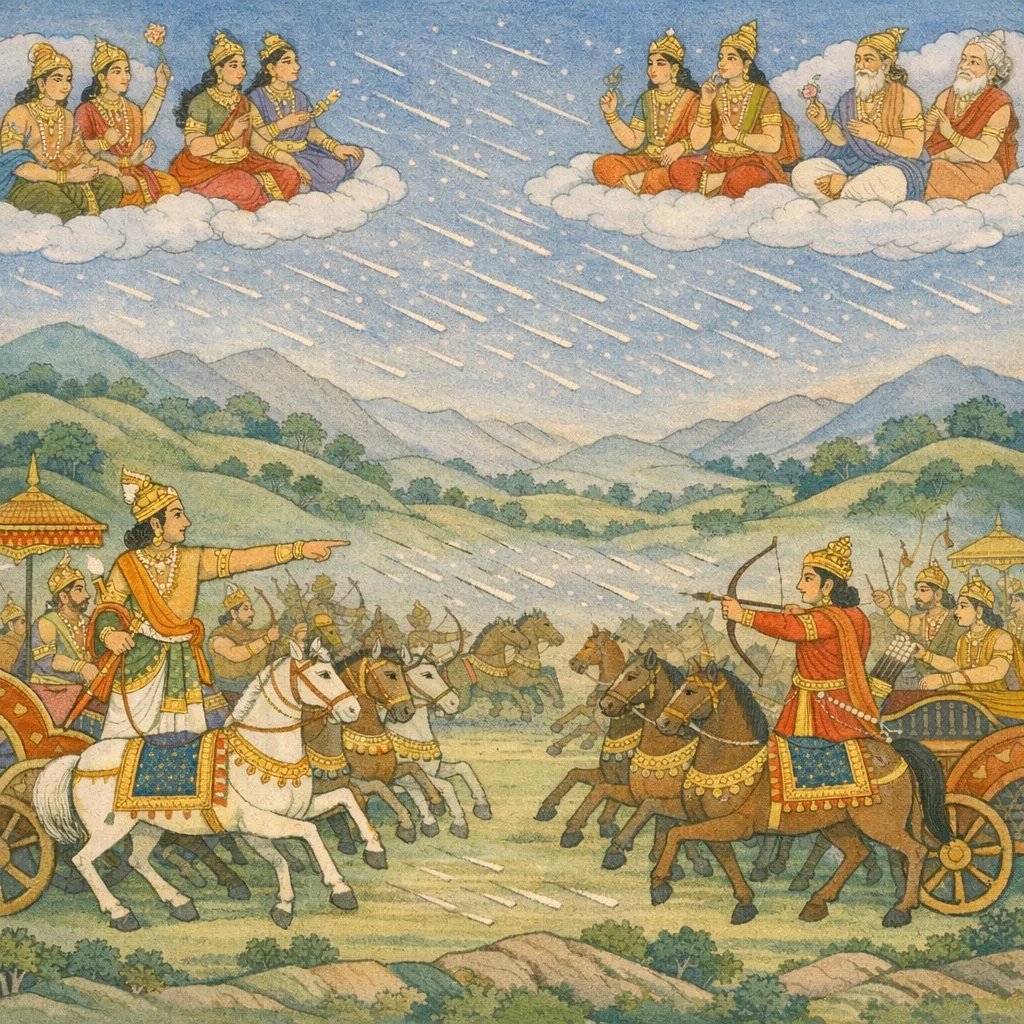
ततः प्रवृत्ते युधि सम्प्रहारे भूतानि सर्वाणि सदैवतानि । आसन् समेतानि सहाप्सरोभि- दिदृक्षमाणानि नरप्रवीरान्,तदनन्तर युद्धस्थलमें जब भीषण मार-काट होने लगी, उस समय देवताओं तथा अप्सराओंसहित समस्त प्राणी उन नरवीरोंको देखनेकी इच्छासे एकत्र हो गये थे
Sañjaya said: Then, when the battle had truly begun and the fierce clash was underway, all beings—together with the gods—assembled there, accompanied by the Apsarases, eager to behold those foremost of men.
Verse 14
दिव्यैश्व माल्यैरविविधैश्व गन्धै- दिव्यैश्व रत्नैविविधैर्नराग्रयान् । रणे स्वकर्मोद्गहत: प्रवीरा- नवाकिरजन्नप्सरस: प्रह्ृष्टा:,रणभूमिमें अपने कर्मका ठीक-ठीक भार वहन करनेवाले मनुष्योंमें श्रेष्ठ प्रमुख वीरोंपर हर्षमें भरी हुई अप्सराएँ दिव्य हारों, भाँति-भाँतिके सुगन्धित पदार्थों एवं नाना प्रकारके दिव्य रत्नोंकी वर्षा करती थीं
Sañjaya said: On the battlefield, the delighted Apsarases showered the foremost of men—those heroic champions who were steadfastly bearing the full weight of their own appointed duty—with celestial garlands, many kinds of fragrant perfumes, and diverse divine jewels.
Verse 15
समीरणस्तांश्व निषेव्य गन्धान् सिषेव सर्वानपि योधमुख्यान् । निषेव्यमाणास्त्वनिलेन योधा: परस्परघ्ना धरणीं निपेतु:,वायु उन सुगन्धोंको ग्रहण करके समस्त श्रेष्ठ योद्धाओंकी सेवामें लग जाती थी और उस वायुसे सेवित योद्धा एक-दूसरेको मारकर धराशायी हो जाते थे
The wind took up those fragrances and seemed to attend upon all the foremost warriors; yet the fighters, thus fanned by that breeze, slew one another and fell down upon the earth.
Verse 16
सा दिव्यमाल्यैरवकीर्यमाणा सुवर्णपुड्खैश्न शरैर्विचित्रै: । नक्षत्रसंघैरिव चित्रिता द्यौ: क्षितिर्बभौ योधवरैर्विचित्रा,दिव्य मालाओं तथा सुवर्णमय पंखवाले विचित्र बाणोंसे आच्छादित और श्रेष्ठ योद्धाओंसे विचित्र शोभाको प्राप्त हुई वह रणभूमि नक्षत्रसमूहोंसे चित्रित आकाशके समान सुशोभित हो रही थी
Sañjaya said: The battlefield, strewn with celestial garlands and covered with wondrous arrows whose shafts were fitted with golden feathers, shone resplendent. Adorned with excellent warriors, the earth appeared like the sky painted with clusters of stars.
Verse 17
ततोडन््तरिक्षादपि साधुवादै- वदित्रघोषै: समुदीर्यमाण: । ज्याघोषनेमिस्वननादचित्र: समाकुल: सो5भवत् सम्प्रहार:,तत्पश्चात् आकाशसे भी साधुवाद एवं वाद्योंकी ध्वनि आने लगी, जिससे प्रत्यंचाकी टंकारों और रथोंके पहियोंके घर्घर शब्दोंसे युक्त वह संग्राम अधिक कोलाहलपूर्ण हो उठा था
Then, even from the sky, cries of approval and the booming of instruments rose up. Mingled with the twang of bowstrings and the rumbling of chariot-wheels, the clash of arms became all the more tumultuous.
Verse 57
इति श्रीमहाभारते कर्णपर्वणि अश्व॒त्थामप्रतिज्ञायां सप्तपठ्चाशत्तमो<5ध्याय: ।। ५७ || इस प्रकार श्रीमह्याभारत कर्णपर्वमें अश्वत्थामाका प्रतिज्ञाविषयक सत्तावनवाँ अध्याय पूरा हुआ
Sañjaya said: “Thus, in the Śrī Mahābhārata, within the Karṇa Parva, the fifty-seventh chapter—concerning Aśvatthāmā’s vow—comes to an end.”
Frequently Asked Questions
Dhṛtarāṣṭra’s inquiry reflects an ethical anxiety about dependence on singular champions for legitimacy and survival: whether victory can be claimed through forceful reversals despite the broader moral trajectory implied by earlier choices.
The chapter underscores that tactical brilliance and visible leadership can temporarily reorder outcomes, yet they operate within a larger causality of alliances, prior actions, and collective morale—suggesting limits to isolated heroism as a stable foundation for dharmic order.
No explicit phalaśruti appears in this passage; the meta-commentary functions implicitly through Sañjaya’s evaluative witnessing (adbhuta/astonishing descriptions), positioning the episode as evidence within the epic’s broader moral and historical accounting.