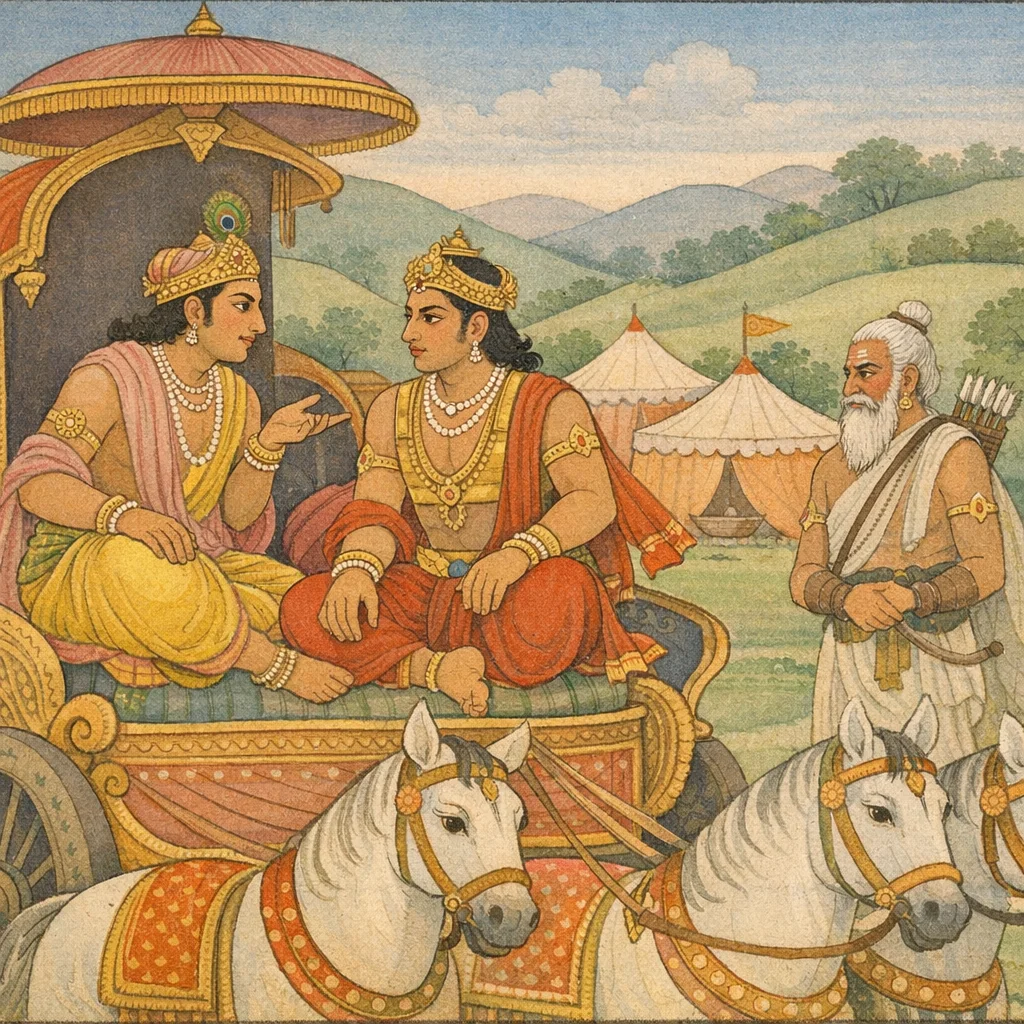
Adhyaya 5
Droṇācāryaḥ Senāpatiḥ (Droṇa Appointed Commander-in-Chief)
Upa-parva: Senāpati-Niyoga (Appointment of Droṇa as Commander)
Saṃjaya reports that Duryodhana, encouraged upon seeing Karṇa prepared, raises the urgent problem of leaderless forces and asks whom to appoint after Bhīṣma. He argues that an army without a commander disperses like a boat without a helmsman or a chariot without a charioteer. Karṇa responds by acknowledging the qualifications of multiple senior warriors but warns that selecting one among rivals can demoralize the rest; he recommends Droṇa as the elder guru and universal instructor, whose authority would be broadly accepted. Duryodhana then addresses Droṇa with a formal rationale for suitability—emphasizing lineage status, learning, age, intellect, valor, administrative judgment, austerity, and gratitude—and requests protection and victory under Droṇa’s guidance. Droṇa accepts, stating his mastery of Vedic disciplines and weapons and his intent to enact the praised qualities in action against the Pāṇḍavas. The Kaurava kings perform the installation, likened to the gods appointing Skanda, and the army celebrates with instruments, auspicious proclamations, and victory-cries, interpreting the appointment as a strategic advantage.
Chapter Arc: संजय धृतराष्ट्र को बताता है कि रथ पर स्थित, पुरुषसिंह कर्ण के सामने दुर्योधन अपनी सेना की दशा और आगे की नीति पर विचार करता है—विजय की चाह के बीच नेतृत्व का प्रश्न सबसे पहले उठ खड़ा होता है। → दुर्योधन कर्ण की प्रशंसा करते हुए कहता है कि तुम्हारे संरक्षण से सेना ‘सनाथ’ है, पर बिना मार्गदर्शक के यात्रियों की तरह ‘अनायका सेना’ दोषों में गिरती है; एक ही समय सबको सेनापति नहीं बनाया जा सकता, इसलिए एक ऐसे प्रधान की आवश्यकता है जिसमें समस्त विशिष्ट गुण हों। → दुर्योधन निर्णायक प्रस्ताव रखता है—दुर्धर्ष, शस्त्रधारियों में श्रेष्ठ द्रोणाचार्य के रहते कोई दूसरा सेनापति टिक नहीं सकता; वे सेनानायकों, योद्धाओं और बुद्धिमानों में भी श्रेष्ठ, और स्वयं दुर्योधन के गुरु हैं। → दुर्योधन कर्ण के समक्ष स्पष्ट करता है कि विजय-इच्छुक देवताओं ने जैसे कार्तिकेय को सेनापति बनाया था, वैसे ही उसे शीघ्र द्रोणाचार्य को सेनापति नियुक्त करना चाहिए—युद्ध की दिशा अब गुरु-द्रोण के हाथों में सौंपने का संकल्प बनती है। → द्रोणाचार्य की नियुक्ति के बाद युद्ध की रणनीति और पांडव-पक्ष पर उसके प्रभाव का संकेत देकर अध्याय आगे के उग्र संघर्ष की ओर मोड़ देता है।
Shlokas
Verse 1
अपना छा अर पञठ्चमो< ध्याय: कर्णका दुर्योधनके समक्ष सेनापति-पदके लिये द्रोणाचार्यका नाम प्रस्तावित करना संजय उवाच रथस्थं पुरुषव्याप्रं दृष्टवा कर्णमवस्थितम् | हृष्टो दुर्योधनो राजन्निदं वचनमब्रवीत्,संजय कहते हैं--राजन्! पुरुषसिंह कर्णको रथपर बैठा देख दुर्योधनने प्रसन्न होकर इस प्रकार कहा--
Sañjaya said: O King, seeing Karna—lion among men—seated upon his chariot and standing ready, Duryodhana was filled with delight and spoke these words.
Verse 2
सनाथमिव मन्ये5हं भवता पालितं बलम् | अत्र कि नु समर्थ यद्धितं तत् सम्प्रधार्यताम्,“कर्ण! तुम्हारे द्वारा इस सेनाका संरक्षण हो रहा है, इससे मैं इसे सनाथ हुई-सी मानता हूँ। अब यहाँ हमारे लिये क्या करना उपयोगी और हितकर है, इसका निश्चय करो”
Sanjaya said: “I regard this army as though it has found a protector, since it is being safeguarded by you. Now, consider carefully and decide what course here is truly feasible—and what will be beneficial for us.”
Verse 3
कर्ण उवाच ब्रृहि नः पुरुषव्याप्र त्वं हि प्राज्ञतमो नृप । यथा चार्थपति: कृत्यं पश्यते न तथेतर:,कर्णने कहा--पुरुषसिंह नरेश्वर! तुम तो बड़े बुद्धिमान् हो | स्वयं ही अपना विचार हमें बताओ; क्योंकि धनका स्वामी उसके सम्बन्धमें आवश्यक कर्तव्यका जैसा विचार करता है, वैसा दूसरा कोई नहीं कर सकता
Karna said: “Tell us, O tiger among men, O king—for you are the wisest. State your own considered judgment to us; for just as the master of wealth best understands what must be done regarding his own affairs, so no other person can see it in the same way.”
Verse 4
इस प्रकार श्रीमहाभारत द्रोणपर्वके अन्तर्गत द्रोणाभिषेकपर्वमें कर्णका आश्वायनविषयक चौथा अध्याय पूरा हुआ,ते सम सर्वे तव वच: श्रोतुकामा नरेश्वर । नान्याय्यं हि भवान् वाक्यं ब्रूयादिति मतिर्मम अतः नरेश्वर! हम सब लोग तुम्हारी ही बात सुनना चाहते हैं। मेरा विश्वास है कि तुम कोई ऐसी बात नहीं कहोगे, जो न््यायसंगत न हो
Sanjaya said: “O king, all of us alike are eager to hear your words. For I am convinced that you would not utter any statement that is unjust or contrary to right conduct. Therefore, O lord of men, speak.”
Verse 5
दुर्योधन उवाच भीष्म: सेनाप्रणेता55सीद् वयसा विक्रमेण च । श्रुतेन चोपसम्पन्न: सर्वेर्योधगणैस्तथा,दुर्योधनने कहा--कर्ण! पहले आयु, बल-पराक्रम और विद्यामें सबसे बढ़े-चढ़े पितामह भीष्म हमारे सेनापति थे। वे अत्यन्त यशस्वी महात्मा पितामह समस्त योद्धाओंको साथ ले उत्तम युद्ध-प्रणालीद्वारा मेरे शत्रुओंका संहार करते हुए दस दिनोंतक हमारा पालन करते आये हैं इति श्रीमहा भारते द्रोणपर्वणि द्रोणाभिषेकपर्वणि कर्णवाक्ये पठचमो<ध्याय:
Duryodhana said: “Bhīṣma was our commander-in-chief—preeminent in age and in martial prowess, and also accomplished in learning—so too acknowledged by all the companies of warriors.”
Verse 6
तेनातियशसा कर्ण घ्नता शत्रुगणान् मम । सुयुद्धेन दशाहानि पालिता: स्मो महात्मना,दुर्योधनने कहा--कर्ण! पहले आयु, बल-पराक्रम और विद्यामें सबसे बढ़े-चढ़े पितामह भीष्म हमारे सेनापति थे। वे अत्यन्त यशस्वी महात्मा पितामह समस्त योद्धाओंको साथ ले उत्तम युद्ध-प्रणालीद्वारा मेरे शत्रुओंका संहार करते हुए दस दिनोंतक हमारा पालन करते आये हैं
Duryodhana said: “O Karṇa, by that supremely renowned hero—slaying the hosts of my enemies—through disciplined and excellent warfare, we were protected for ten days by the great-souled one.”
Verse 7
तस्मिन्नसुकरं कर्म कृतवत्यास्थिते दिवम् । क॑ नु सेनाप्रणेतारं मन्यसे तदनन्तरम्,वे तो अत्यन्त दुष्कर कर्म करके अब स्वर्गलोकके पथपर आरूढ़ हो गये हैं। ऐसी दशामें उनके बाद तुम किसे सेनापति बनाये जानेयोग्य मानते हो?
Since he has accomplished that exceedingly difficult deed and has now departed to heaven, whom do you judge fit to be appointed as the commander of the army after him?
Verse 8
न विना नायकं सेना मुहूर्तमपि तिष्ठति । आहवेष्वाहवश्रेष्ठ नेतृहीनेव नौर्जले,समरांगणके श्रेष्ठ वीर! सेनापतिके बिना कोई सेना दो घड़ी भी संग्राममें टिक नहीं सकती है। ठीक उसी तरह, जैसे मल्लाहके बिना नाव जलमें स्थिर नहीं रह सकती है
Duryodhana said: “An army cannot stand firm even for a moment without a commander. In battles, O best of warriors, a host bereft of leadership is like a boat upon the waters without a helmsman—unable to hold its course or remain steady.”
Verse 9
यथा ह्मुकर्णधारा नौ रथश्नलासारथियथा । द्रवेद् यथेष्टं तद्धत् स्यादृते सेनापतिं बलम्,जैसे बिना नाविककी नाव जहाँ-कहीं भी जलमें बह जाती है और बिना सारथिका रथ चाहे जहाँ भटक जाता है, उसी प्रकार सेनापतिके बिना सेना भी जहाँ चाहे भाग सकती है
Duryodhana said: “Just as a boat without a helmsman drifts wherever the waters carry it, and a chariot without a charioteer wanders as it pleases, so too an army, bereft of its commander, may break formation and flee in any direction. Leadership is the restraint that turns mere force into purposeful action.”
Verse 10
अदेशिको यथा सार्थ: सर्व: कृच्छं समृच्छति । अनायका तथा सेना सर्वान् दोषान् समरछति,जैसे कोई मार्गदर्शक न होनेपर यात्रियोंका सारा दल भारी संकटमें पड़ जाता है, उसी प्रकार सेनानायकके बिना सेनाको सब प्रकारकी कठिनाइयोंका सामना करना पड़ता है
Duryodhana said: “Just as a caravan of travelers, lacking a guide, falls into every kind of peril, so too an army without a commander is driven into all manner of faults and hardships.”
Verse 11
स भवान् वीक्ष्य सर्वेषु मामकेषु महात्मसु । पश्य सेनापतिं युक्तमनु शान्तनवादिह,अतः तुम मेरे पक्षके सब महामनस्वी वीरोंपर दृष्टि डालकर यह देखो कि भीष्मजीके बाद अब कौन उपयुक्त सेनापति हो सकता है
Duryodhana said: “Having surveyed all the high-souled heroes on my side, please consider and point out here who, after Śāntanu’s descendant Bhīṣma, is truly fit to be appointed commander of the army.”
Verse 12
य॑ हि सेनाप्रणेतारं भवान् वक्ष्यति संयुगे । त॑ वयं सहिता: सर्वे करिष्यामो न संशय:,इस युद्धस्थलमें तुम जिसे सेनापतिपदके योग्य बताओगे, नि:संदेह हम सब लोग मिलकर उसीको सेनानायक बनायेंगे
Whomever you declare here on the battlefield to be fit to lead the army—that very person we all, united together, will appoint as commander; of this there is no doubt.
Verse 13
कर्ण उवाच सर्व एव महात्मान इमे पुरुषसत्तमा: । सेनापतित्वमर्हन्ति नात्र कार्या विचारणा,कर्णने कहा--राजन्! ये सभी महामनस्वी पुरुष-प्रवर नरेश सेनापति होनेके योग्य हैं। इस विषयमें कोई अन्यथा विचार करनेकी आवश्यकता नहीं है
Karna said: “O King, all these are great-souled men, the best among persons. Each is worthy to hold the command of the army; there is no need for further deliberation on this matter.”
Verse 14
कुलसंहननज्ञानैर्बलविक्रमबुद्धिभि: । युक्ता: श्रुतज्ञा धीमन््त आहवेष्वनिवर्तिन:,जो राजा यहाँ मौजूद हैं, वे सभी अपने कुल, शरीर, ज्ञान, बल, पराक्रम और बुद्धिकी दृष्टिसे सेनापति-पदके योग्य हैं। ये सब-के-सब वेदज्ञ, बुद्धिमान् और युद्धसे कभी पीछे न हटनेवाले हैं
Karna said: “All the kings present here are fit for the office of commander, being endowed with knowledge of their lineage and bodily constitution, and possessing strength, valor, and sound judgment. They are all learned in sacred tradition, intelligent, and never turn back from battle.”
Verse 15
युगपन्न तु ते शक्या: कर्तु सर्वे पुर:सरा: । एक एव तु कर्तव्यो यस्मिन् वैशेषिका गुणा:
Karna said: “All of those leaders cannot be appointed at once. Rather, one alone should be chosen—the one in whom the distinguishing excellences are found.”
Verse 16
परंतु सब-के-सब एक ही समय सेनापति नहीं बनाये जा सकते, इसलिये जिस एकमें सभी विशिष्ट गुण हों, उसीको अपनी सेनाका प्रधान बनाना चाहिये ।। अन्योन्यस्पर्धिनां होषां यद्येकं यं करिष्यसि । शेषा विमनसो व्यक्त न योत्स्यन्ति हितास्तव,किंतु ये सभी नरेश परस्पर एक-दूसरेसे स्पर्धा रखनेवाले हैं। यदि इनमेंसे किसी एकको सेनापति बना लोगे तो शेष सब लोग मन-ही-मन अप्रसन्न हो तुम्हारे हितकी भावनासे युद्ध नहीं करेंगे, यह बात बिलकुल स्पष्ट है
Karna said: “These kings are all rivals of one another. If you appoint any single one among them as commander, it is certain the rest will become inwardly displeased and, lacking goodwill toward your cause, will not fight with full commitment—this is plain. Therefore, since all cannot be made commander at the same time, you should choose as chief of the army the one person in whom the most exceptional qualities are found.”
Verse 17
अयं च सर्वयोधानामाचार्य: स्थविरो गुरु: । युक्त: सेनापति: कर्तु द्रोण: शस्त्रभृतां वर:,इसलिये जो इन समस्त योद्धाओंके आचार्य, वयोवृद्ध गुरु तथा शस्त्रधारियोंमें श्रेष्ठ हैं, वे आचार्य द्रोण ही इस समय सेनापति बनाये जानेके योग्य हैं
He is the preceptor of all these warriors—an aged and venerable teacher. Therefore Droṇa, the foremost among weapon-bearers, is the fitting choice to be appointed commander of the army at this time.
Verse 18
को हि तिष्ठति दुर्थर्षे द्रोणे शस्त्रभृतां वरे । सेनापतिःस्यादन्यो<स्माच्छुक्राज्ञिरसदर्शनात्,सम्पूर्ण शस्त्रधारियोंमें श्रेष्ठ, दुर्जय वीर द्रोणाचार्यके रहते हुए इन शुक्राचार्य और बृहस्पतिके समान महानुभावको छोड़कर दूसरा कौन सेनापति हो सकता है?
Karna said: “Who could stand firm when the unconquerable Droṇa—foremost among those who bear weapons—is present? Other than this man, whose stature is like that of Śukra and Aṅgiras (Bṛhaspati), who else could rightly be commander of the army?”
Verse 19
न च सो>प्यस्ति ते योध: सर्वराजसु भारत । द्रोणं यः समरे यान्तं नानुयास्यति संयुगे,भारत! समस्त राजाओंमें तुम्हारा कोई भी ऐसा योद्धा नहीं है, जो समरभूमिमें आगे जानेवाले द्रोणाचार्यके पीछे-पीछे न जाय
Karna said: “O Bhārata, among all the kings on your side there is not even one warrior who, when Droṇa advances into battle, would fail to follow him in the fight.”
Verse 20
एष सेनाप्रणेतृणामेष शस्त्रभूतामपि | एष बुद्धिमतां चैव श्रेष्ठो राजन् गुरुस्तव,राजन! तुम्हारे ये गुरुदेव समस्त सेनापतियों, शस्त्रधारियों और बुद्धिमानोंमें श्रेष्ठ हैं
Karna said: “O King, this man—your teacher—is foremost among commanders of armies, among those who are themselves like living weapons, and among the wise as well.”
Verse 21
एवं दुर्योधनाचार्यमाशु सेनापतिं कुरु । जिगीषन्तो<सुरान् संख्ये कार्तिकेयमिवामरा:,अतः दुर्योधन! जैसे असुरोंपर विजयकी इच्छा रखनेवाले देवताओंने रणक्षेत्रमें कार्तिकेयको अपना सेनापति बनाया था, इसी प्रकार तुम भी आचार्य द्रोणको शीघ्र सेनापति बनाओ
Karna said: “Therefore, O Duryodhana, quickly appoint the Teacher (Drona) as commander of the army. Just as the gods, desiring victory over the asuras in battle, made Kārtikeya their general on the battlefield, so should you make Drona the leader of our forces.”
Frequently Asked Questions
The dilemma is selecting a single commander among multiple qualified seniors: merit-based appointment risks injuring peer honor and reducing morale, yet postponing appointment threatens organizational collapse; the text resolves this by privileging a universally acknowledged guru-authority.
Collective action requires legitimate leadership and clear role-definition; in crisis, stability often depends on choosing an authority whose acceptance is institutional (guru, elder, widely trusted), not merely competitive (peer rivalry).
No explicit phalaśruti is stated; the meta-commentary is implicit in the public ritual and acclamation, which function as a narrative marker that legitimacy and morale are treated as force-multipliers within the epic’s ethical-political framework.