Adhyaya 22
रथचिह्नवर्णनम् / Description of Chariot Standards and Allied Advances
Upa-parva: Rathacihna-varṇana (Chariot-Standards and Cavalry Descriptions Episode)
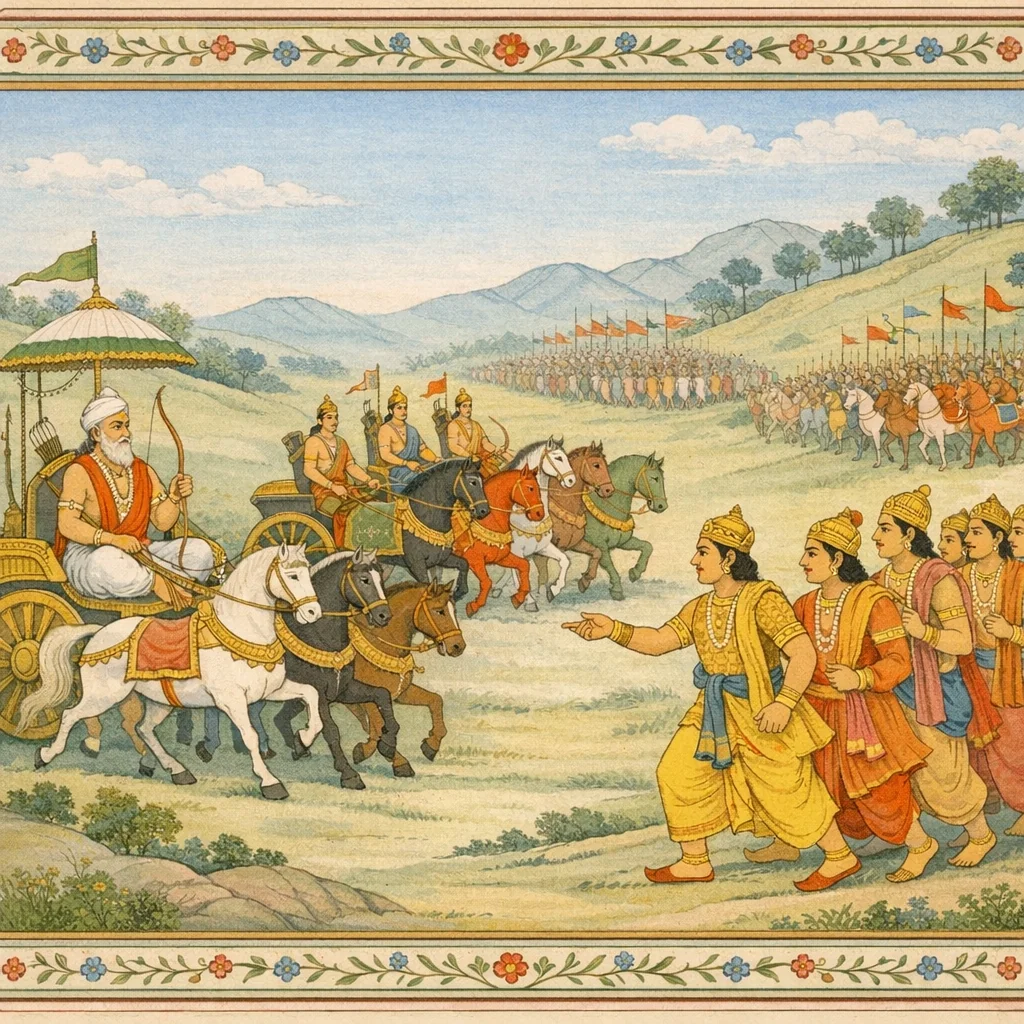
Dhṛtarāṣṭra asks Saṃjaya to enumerate the ratha-cihnāni and distinguishing marks of those advancing in a forceful approach toward Droṇa, led by Bhīma and supported by multiple allies. Saṃjaya responds with a structured battlefield register: successive leaders are identified through the colors, patterns, and ornamentation of their horses, the appearance of banners and armor, and the composition of accompanying troops. The chapter functions less as doctrinal discourse and more as an intelligence-style visual map—encoding presence, rank, and momentum through material signs (golden trappings, varied equine hues, and coordinated entourages). It culminates in the impression of a dense, multi-king coalition whose assembled brilliance is rhetorically emphasized, while maintaining the reportorial frame of war narration.
Chapter Arc: धृतराष्ट्र, युद्धभूमि की धूल और शंखनाद के बीच, संजय से पूछते हैं—जब द्रोणाचार्य ने महासमर में पाण्डवों को रोककर मोर्चा बाँधा, तब आगे क्या घटा? → वीरता का मानदण्ड उछलता है—वही सच्चा शूर है जो भग्न-सेनाओं को देखकर भी लौटकर मोर्चा सँभाले। द्रोण की अडिग व्यवस्था देखकर दोनों पक्षों में बेचैनी फैलती है; पाण्डवों की शक्ति स्वीकारते हुए भी कौरव-शिविर में यह भय उठता है कि कहीं भारद्वाजपुत्र पर असह्य भार न पड़ जाए। → सेनाके मध्य, स्वजनों से घिरे दुर्योधन कर्ण से प्रहर्षित होकर बोलता है; कर्ण का आग्रह निर्णायक बनता है—‘शीघ्र चलो, जहाँ द्रोण व्यवस्थित हैं; कहीं यतव्रती द्रोण को पाण्डव महानाग पर कूदते कोकाओं की तरह घेरकर मार न डालें।’ → कर्ण की बात सुनकर दुर्योधन भाइयों सहित द्रोण के रथ की ओर बढ़ता है। उधर पाण्डव-रथों का महान कोलाहल उठता है—एकमात्र लक्ष्य: द्रोण का वध। → द्रोण को घेरने के लिए बढ़ती पाण्डव-वाहिनी और द्रोण की रक्षा को दौड़ते दुर्योधन-कर्ण—दोनों धाराएँ टकराने ही वाली हैं।
Shlokas
Verse 1
इति श्रीमहाभारते द्रोणपर्वणि संशप्तकवधपर्वणि द्रोणयुद्धे द्वाविशो5ध्याय: ।॥ २२ || इस प्रकार श्रीमह्मा भारत द्रोणपर्वके अन्तर्गत संशप्तकवधपर्वमें द्रोणाचार्यका युद्धविषयक बाईसवाँ अध्याय पूरा हुआ ॥/ २२ ॥। (दाक्षिणात्य अधिक पाठके २ श्लोक मिलाकर कुल ३२ श्लोक हैं।) न-आऔका-<> २ त्रयोविशो<् ध्याय: पाण्डव-सेनाके महारथियोंके रथ, घोड़े, ध्वज तथा धनुषोंका विवरण धृतराष्ट उवाच सर्वेषामेव मे ब्रूहि रथचिह्वानि संजय । ये द्रोणमभ्यवर्तन्त क़्रुद्धा भीमपुरोगमा:,धृतराष्ट्रने पूछा--संजय! द्रोणाचार्यने उस महासमरमें जब पाण्डवों तथा समस्त पांचालोंको मार भगाया, तब क्षत्रियोंके लिये यशका विस्तार करनेवाली, कायरोंद्वारा न अपनायी जानेवाली और श्रेष्ठ पुरुषोंद्वारा सेवित युद्धविषयक उत्तम बुद्धिका आश्रय लेकर क्या कोई दूसरा वीर भी उनके सामने आया?
Thus ends the twenty-second chapter in the Droṇa Parva of the Śrī Mahābhārata, within the section on the slaying of the Saṁśaptakas, describing the battle with Droṇa. Dhṛtarāṣṭra said: “Sañjaya, tell me the distinguishing marks of the chariots of them all—those warriors who, with Bhīma at their head and inflamed with wrath, advanced to confront Droṇa.”
Verse 2
आर्या युद्धे मतिं कृत्वा क्षत्रियाणां यशस्करीम् । असेवितां कापुरुषै: सेवितां पुरुषर्षभै:,धृतराष्ट्रने पूछा--संजय! द्रोणाचार्यने उस महासमरमें जब पाण्डवों तथा समस्त पांचालोंको मार भगाया, तब क्षत्रियोंके लिये यशका विस्तार करनेवाली, कायरोंद्वारा न अपनायी जानेवाली और श्रेष्ठ पुरुषोंद्वारा सेवित युद्धविषयक उत्तम बुद्धिका आश्रय लेकर क्या कोई दूसरा वीर भी उनके सामने आया?
Sañjaya said: “Having fixed his resolve upon the noble discipline of battle—one that brings renown to kṣatriyas, is shunned by the cowardly, and is embraced by the best of men—(Dhṛtarāṣṭra asks:) when Droṇācārya, in that great encounter, drove back the Pāṇḍavas together with all the Pāñcālas, did any other hero step forward to face him?”
Verse 3
स हि वीरोन्नत: शूरो यो भग्नेषु निवर्तते । अहो नासीत् पुमान् कश्रिद् दृष्टवा द्रोणं व्यवस्थितम्,वही वीरोंमें उन्नतिशील और शौर्यसम्पन्न है, जो सैनिकोंके भाग जानेपर स्वयं युद्धक्षेत्रमें लौटकर आ जाय। अहो! क्या उस समय द्रोणाचार्यको डटा हुआ देखकर पाण्डवोंमें कोई भी वीर पुरुष नहीं था (जो द्रोणाचार्यका सामना कर सके)
Sañjaya said: Truly, he alone is a hero—noble among warriors and rich in valor—who, when others have broken and fled, turns back and returns to the battlefield. Alas! When Droṇa stood firmly arrayed, was there then no manly warrior at all among the Pāṇḍavas who could face him?
Verse 4
जृम्भमाणमिव व्याप्र॑ प्रभिन्नमिव कुज्जरम् । त्यजन्तमाहवे प्राणान् संनद्ध॑ं चित्रयोधिनम्,जँभाई लेते हुए व्याप्र तथा मदकी धारा बहानेवाले गजराजकी भाँति पराक्रमी, युद्धमें प्राणोंका विसर्जन करनेके लिये उद्यत, कवच आदिसे सुसज्जित, विचित्र रीतिसे युद्ध करनेवाले, शत्रुओंका भय बढ़ानेवाले, कृतज्ञ, सत्यपरायण, दुर्योधनके हितैषी तथा शूरवीर, भरद्वाजनन्दन महाधनुर्धर पुरुषसिंह द्रोणाचार्यको युद्धमें डटा हुआ देख किन शूरवीरोंने लौटकर उनका सामना किया? संजय! यह वृत्तान्त मुझसे कहो
Sañjaya said: “He stood in battle like a yawning tiger, like an elephant in musth. Fully armoured and fighting with varied stratagems, he was ready to cast away his very life in the fray.”
Verse 5
महेष्वासं नरव्याप्रं द्विषतां भयवर्धनम् । कृतज्ञं सत्यनिरतं दुर्योधनहितैषिणम्,जँभाई लेते हुए व्याप्र तथा मदकी धारा बहानेवाले गजराजकी भाँति पराक्रमी, युद्धमें प्राणोंका विसर्जन करनेके लिये उद्यत, कवच आदिसे सुसज्जित, विचित्र रीतिसे युद्ध करनेवाले, शत्रुओंका भय बढ़ानेवाले, कृतज्ञ, सत्यपरायण, दुर्योधनके हितैषी तथा शूरवीर, भरद्वाजनन्दन महाधनुर्धर पुरुषसिंह द्रोणाचार्यको युद्धमें डटा हुआ देख किन शूरवीरोंने लौटकर उनका सामना किया? संजय! यह वृत्तान्त मुझसे कहो
Sañjaya said: “(I saw) Droṇa—mighty with the great bow, a tiger among men, one who increases the fear of his foes; grateful for kindness shown, steadfast in truth, and devoted to Duryodhana’s welfare.”
Verse 6
भारद्वाजं तथानीके दृष्टवा शूरमवस्थितम् | के शूरा: संन्यवर्तन्त तन््ममाचक्ष्व संजय,जँभाई लेते हुए व्याप्र तथा मदकी धारा बहानेवाले गजराजकी भाँति पराक्रमी, युद्धमें प्राणोंका विसर्जन करनेके लिये उद्यत, कवच आदिसे सुसज्जित, विचित्र रीतिसे युद्ध करनेवाले, शत्रुओंका भय बढ़ानेवाले, कृतज्ञ, सत्यपरायण, दुर्योधनके हितैषी तथा शूरवीर, भरद्वाजनन्दन महाधनुर्धर पुरुषसिंह द्रोणाचार्यको युद्धमें डटा हुआ देख किन शूरवीरोंने लौटकर उनका सामना किया? संजय! यह वृत्तान्त मुझसे कहो
Seeing Bharadvāja’s son, the heroic Droṇa, standing firm in the battle-array, (Dhṛtarāṣṭra asks:) “Which warriors turned back to confront him? Sañjaya, tell me this account.”
Verse 7
संजय उवाच तान् दृष्टवा चलितानू् संख्ये प्रणुन्नान् द्रोणसायकै: । पज्चालान् पाण्डवान् मत्स्यान् सृज्जयांश्वेदिकिकयान्,संजयने कहा--महाराज! कौरवोंने देखा कि पांचाल, पाण्डव, मत्स्य, सूंजय, चेदि और केकय-देशीय योद्धा युद्धमें द्रोणाचार्यके बाणोंसे पीड़ित हो विचलित हो उठे हैं तथा जैसे समुद्रकी महान् जलराशि बहुत-से नावोंको बहा ले जाती है, उसी प्रकार द्रोणाचार्यके धनुषसे छूटकर शीघ्र ही प्राण हर लेनेवाले बाण-समुदायने पाण्डव-सैनिकोंको मार भगाया है। तब वे सिंहनाद एवं नाना प्रकारके रण-वाद्योंका गम्भीर घोष करते हुए शत्रुओंके रथारोहियों, हाथीसवारों तथा पैदल सैनिकोंको सब ओरसे रोकने लगे
Sañjaya said: Seeing them shaken on the battlefield—harried and driven back by Droṇa’s arrows—the Pāñcālas, the Pāṇḍavas, the Matsyas, the Sṛñjayas, and the warriors of Cedi and Kekaya, the Kauravas recognized the crushing force of Droṇa’s martial prowess.
Verse 8
द्रोणचापविमुक्तेन शरौघेणाशुहारिणा । सिन्धोरिव महौघेन हियमाणान् यथा प्लवान्,संजयने कहा--महाराज! कौरवोंने देखा कि पांचाल, पाण्डव, मत्स्य, सूंजय, चेदि और केकय-देशीय योद्धा युद्धमें द्रोणाचार्यके बाणोंसे पीड़ित हो विचलित हो उठे हैं तथा जैसे समुद्रकी महान् जलराशि बहुत-से नावोंको बहा ले जाती है, उसी प्रकार द्रोणाचार्यके धनुषसे छूटकर शीघ्र ही प्राण हर लेनेवाले बाण-समुदायने पाण्डव-सैनिकोंको मार भगाया है। तब वे सिंहनाद एवं नाना प्रकारके रण-वाद्योंका गम्भीर घोष करते हुए शत्रुओंके रथारोहियों, हाथीसवारों तथा पैदल सैनिकोंको सब ओरसे रोकने लगे
Sañjaya said: “O King, the mass of arrows released from Droṇa’s bow—swift and life-taking—drove the opposing host into flight. Just as a mighty surge of the ocean carries away many boats, so did that torrent of shafts sweep away the warriors before him.”
Verse 9
कौरवा: सिंहनादेन नानावाद्यस्वनेन च । रथद्विपनरांश्वैव सर्वत:ः समवारयन्,संजयने कहा--महाराज! कौरवोंने देखा कि पांचाल, पाण्डव, मत्स्य, सूंजय, चेदि और केकय-देशीय योद्धा युद्धमें द्रोणाचार्यके बाणोंसे पीड़ित हो विचलित हो उठे हैं तथा जैसे समुद्रकी महान् जलराशि बहुत-से नावोंको बहा ले जाती है, उसी प्रकार द्रोणाचार्यके धनुषसे छूटकर शीघ्र ही प्राण हर लेनेवाले बाण-समुदायने पाण्डव-सैनिकोंको मार भगाया है। तब वे सिंहनाद एवं नाना प्रकारके रण-वाद्योंका गम्भीर घोष करते हुए शत्रुओंके रथारोहियों, हाथीसवारों तथा पैदल सैनिकोंको सब ओरसे रोकने लगे
Sañjaya said: The Kauravas, raising lion-like battle-cries and the deep clamour of many kinds of war-instruments, pressed in from every side—using chariots, elephants, infantry, and horses—to hem in the enemy. In the epic’s moral air, the verse shows how collective spirit and coordinated force seize an opponent’s momentary disarray, turning fear and confusion into advantage on the battlefield.
Verse 10
तान् पश्यन् सैन्यमध्यस्थो राजा स्वजनसंवृत: । दुर्योधनो<ब्रवीत् कर्ण प्रहृष्ट: प्रहसन्निव,सेनाके बीचमें खड़े हो स्वजनोंसे घिरे हुए राजा दुर्योधनने पाण्डव-सैनिकोंकी ओर देखते हुए अत्यन्त प्रसन्न होकर कर्णसे हँसते हुए-से कहा
Sañjaya said: Standing in the midst of his army and surrounded by his own men, King Duryodhana, gazing at the Pāṇḍava forces, spoke to Karṇa—highly elated, as though laughing. The scene underscores the war’s moral tension: confidence and mockery spring from attachment to one’s side, even as the battlefield demands sober discernment of duty and consequence.
Verse 11
दुर्योधन उवाच पश्य राधेय पज्चालानू प्रणुन्नान् द्रोणसायकै: । सिंहेनेव मृगान् वन्यांस्त्रासितान् दृढ्धन्वना,दुर्योधन बोला--राधानन्दन! देखो, सुदृढ़ धनुष धारण करनेवाले द्रोणाचार्यके बाणोंसे ये पांचाल सैनिक उसी प्रकार पीड़ित हो रहे हैं, जैसे सिंह वनवासी मृगोंको त्रस्त कर देता है
Duryodhana said: “Look, O Rādheya (son of Rādhā), how the Pāñcāla warriors are being driven back and harried by Droṇa’s arrows. They are terrified, like wild deer in the forest when a lion—mighty, as one who bears a firm bow—sets upon them.”
Verse 12
नैते जातु पुनर्युद्धमीहेयुरिति मे मति: । यथा तु भग्ना द्रोणेन वातेनेव महाद्रुमा:,मेरा तो ऐसा विश्वास है कि ये फिर कभी युद्धकी इच्छा नहीं करेंगे। जैसे वायु बड़े-बड़े वृक्षोंको उखाड़ देती है, उसी प्रकार द्रोणाचार्यने युद्धसे इनके पाँव उखाड़ दिये हैं
Duryodhana said: “It is my conviction that these men will never again wish to engage in battle. Just as a mighty wind uproots great trees, so has Droṇa, by his onslaught, torn the very footing of their will to fight.”
Verse 13
अर्दयमाना: शरैरेते रुक्मपुड्खैर्महात्मना । पथा नैकेन गच्छन्ति घूर्णमानास्ततस्तत:,महामना द्रोणके सुवर्णमय पंखयुक्त बाणोंद्वारा पीड़ित होकर ये इधर-उधर चक्कर काटते हुए एक ही मार्गसे नहीं भाग रहे हैं
Duryodhana said: “Struck and harassed by the great warrior’s arrows—golden-feathered shafts—these men do not flee by a single clear route. Reeling in confusion, they whirl and scatter here and there.”
Verse 14
संनिरुद्धाश्न॒ कौरव्यैद्रोणेन च महात्मना । एते<न्ये मण्डली भूता: पावकेनेव कुझड्जरा:,कौरव-सैनिकों तथा महामना द्रोणने इनकी गति रोक दी है। जैसे दावानलसे हाथी घिर जाते हैं, उसी प्रकार ये तथा अन्य पाण्डव-योद्धा कौरवोंसे घिर गये हैं
Duryodhana said: “These warriors have been checked and hemmed in by the Kauravas, and by the great-souled Droṇa. Like elephants surrounded by a raging forest-fire, they and the other Pāṇḍava fighters have been encircled.”
Verse 15
भ्रमरैरिव चाविष्टा द्रोणस्य निशितै: शरै: । अन्योन्यं समलीयन्त पलायनपरायणा:,भ्रमरोंके समान द्रोणके पैने बाणोंसे घायल होकर ये रणभूमिसे पलायन करते हुए एक-दूसरेकी आउडमें छिप रहे हैं
Duryodhana said: “Stung and swarming like bees, struck by Droṇa’s razor-sharp arrows, they—intent only on flight—press into one another, seeking cover behind each other as they try to escape the battlefield.”
Verse 16
एष भीमो महाक्रोधी हीन: पाण्डवसृञ्जयै: । मदीयैरावृतो योधै: कर्ण नन्दयतीव माम्,यह महाक्रोधी भीमसेन पाण्डव तथा सूंजयोंसे रहित हो मेरे योद्धाओंसे घिर गया है। कर्ण! इस अवस्थामें भीमसेन मुझे आनन्दित-सा कर रहा है
Duryodhana said: “Look—this Bhīma, fierce with great wrath, has been cut off from the Pāṇḍavas and the Sṛñjayas. Surrounded by my warriors, he seems, O Karṇa, to gladden my heart.”
Verse 17
व्यक्त द्रोणमयं लोकमद्य पश्यति दुर्मति: । निराशो जीवितान्नूनमद्य राज्याच्च पाण्डव:,निश्चय ही आज जीवन और राज्यसे निराश हो यह दुर्बुद्धि पाण्डुकुमार सारे संसारको द्रोणगमय ही देख रहा होगा
Duryodhana said: “Today that fool clearly sees the whole world as nothing but Droṇa. Surely, the Pāṇḍava has now lost hope—of life itself and of his kingdom as well.”
Verse 18
कर्ण उवाच नैष जातु महाबाहुर्जीवन्नाहवमुत्सूजेत् । न चेमान् पुरुषव्यात्र सिंहनादान् सहिष्यति,कर्ण बोला--राजन्! यह महाबाहु भीमसेन जीतेजी कभी युद्ध नहीं छोड़ सकता है। पुरुषसिंह! तुम्हारे सैनिक जो ये सिंहनाद कर रहे हैं, इन्हें भीमसेन कभी नहीं सहेगा
Karna said: “O king, this mighty-armed Bhīmasena will never abandon the battle while he yet lives. And, O tiger among men, he will not tolerate these lion-roars raised by your warriors.”
Verse 19
न चापि पाण्डवा युद्धे भज्येरन्निति मे मति: । शूराश्ष बलवन्तश्न कृतास्त्रा युद्धदुर्मदा:,पाण्डव शूरवीर, बलवान अस्त्र-विद्यामें निपुण तथा युद्धमें उन््मत्त होकर लड़नेवाले हैं। ये रणभूमिसे कभी भाग नहीं सकते हैं। मेरा यही विश्वास है
Karna said: “Nor do I think that the Pāṇḍavas will be broken in battle. They are heroes and strong, fully trained in the use of weapons, and fiercely intoxicated with the ardor of war. Such warriors do not turn away from the battlefield.”
Verse 20
विषाग्निद्यूतसंक्लेशान् वनवासं च पाण्डवा: । स्मरमाणा न हास्यन्ति संग्राममिति मे मति:,मैं ऐसा मानता हूँ कि पाण्डव तुम्हारे द्वारा दिये हुए विष, अग्निदाह और द्यूतके क्लेशों तथा वनवासको याद करके कभी युद्धभूमि नहीं छोड़ेंगे
Karna said: “The Pāṇḍavas, remembering the sufferings caused by poison, the burning attempt, the misery of the dice-game, and their exile to the forest, will not abandon the battlefield. Such is my conviction.”
Verse 21
निवृत्तो हि महाबाहुरमितौजा वृकोदर: । वरान् वरान् हि कौन्तेयो रथोदारान् हनिष्यति,अमिततेजस्वी महाबाहु कुन्तीपुत्र वृकोदर इधरकी ओर लौटे हैं। वे बड़े-बड़े उदार महारथियोंको चुन-चुनकर मारेंगे
Karna said: “Indeed, the mighty-armed Vṛkodara, of immeasurable prowess, has turned back toward this side. That son of Kuntī will now single out and strike down, one after another, the foremost and noble chariot-warriors.”
Verse 22
असिना धनुषा शक््त्या हयैनगिनरि रथै: | आयसेन च दण्डेन व्रातान् व्रातान् हनिष्यति,वे खड्ग, धनुष, शक्ति, घोड़े, हाथी, मनुष्य एवं रथोंद्वारा और लोहेके डंडेसे समूह-के- समूह सैनिकोंका संहार कर डालेंगे
Karna said: “With sword, bow, and spear; with horses, elephants, and chariots; and even with iron clubs, he will slaughter the warriors in mass after mass.”
Verse 23
तमेनमनुवर्तन्ते सात्यकिप्रमुखा रथा: । पज्चाला: केकया मत्स्या: पाण्डवाश्न विशेषत:,देखो, भीमसेनके पीछे सात्यकि आदि महारथी तथा पांचाल, केकय, मत्स्य और विशेषत: पाण्डव योद्धा भी आ रहे हैं
Karna said: “Following close behind him, the chariot-warriors led by Sātyaki are advancing. The Pāñcālas, the Kekayas, the Matsyas—and, above all, the Pāṇḍava fighters—are coming in pursuit.”
Verse 24
शुराश्न बलवन्तश्न विक्रान्ताश्व महारथा: । विनिध्नन्तश्न भीमेन संरब्धेनाभिचोदिता:,क्रोधमें भरे हुए भीमसेनसे प्रेरित हो वे शूरवीर, बलवान् पराक्रमी महारथी सैनिक हमारे सैनिकोंको मारते आ रहे हैं
Karna said: “Those heroic, strong, and valiant great chariot-warriors—spurred on by Bhīma in his furious wrath—are striking down our troops as they advance.”
Verse 25
ते द्रोणमभिवर्तन्ते सर्वतः कुरुपुड्भवा: | वृकोदरं परीप्सन्त: सूर्यमभ्रगणा इव,वे कुरुश्रेष्ठ पाण्डव भीमसेनकी रक्षाके लिये द्रोणाचार्यको सब ओरसे उसी प्रकार घेर रहे हैं, जैसे बादल सूर्यको ढक लेते हैं
Karna said: “The foremost of the Kurus press in upon Droṇa from every side, intent on securing (protecting) Vṛkodara (Bhīma). They surround him just as masses of clouds cover the sun.”
Verse 26
(समरेषु तु निर्दिष्टा: पाण्डवा: कृष्णबान्धवा: । ह्वीमन्त: शत्रुमरणे निपुणा: पुण्यलक्षणा: ।। बहव: पार्थिवा राजंस्तेषां वशगता रणे । मावमंस्था: पाण्डवांस्त्वं नारायणपुरोगमान् ।।) राजन! पाण्डवोंके सहायक बन्धु श्रीकृष्ण हैं। वे उन्हें युद्धविषयक कर्तव्यका निर्देश किया करते हैं। वे लज्जाशील, शत्रुओंको मारनेकी कलामें निपुण तथा पवित्र लक्षणोंसे युक्त हैं। रणभूमिमें बहुत-से भूपाल उनके वशमें आ चुके हैं। अतः भगवान् नारायण जिनके अगुआ हैं, उन पाण्डवोंकी तुम अवहेलना न करो। एकायनगता होते पीडयेयुर्यतव्रतम् । अरक्ष्यमाणं शलभा यथा दीपं मुमूर्षव:,ये सब एक रास्तेपर चल रहे हैं। यदि व्रत और नियमका पालन करनेवाले द्रोणाचार्यकी रक्षा न की गयी तो ये उन्हें उसी प्रकार पीड़ा देंगे, जैसे मरनेकी इच्छावाले पतंग दीपकको बुझा देनेकी चेष्टा करते हैं
Karna said: “O King, the Pāṇḍavas have Śrī Kṛṣṇa as their kinsman and ally; he continually directs them in the duties of war. They are modest in bearing, skilled in bringing down enemies, and marked by auspicious qualities. On the battlefield many kings have already come under their sway. Therefore do not slight the Pāṇḍavas, who advance with Nārāyaṇa at their head. Moving with a single purpose, they will torment the vow-bound Droṇa if he is left unprotected—just as moths, bent on their own destruction, rush at a lamp to extinguish it.”
Verse 27
असंशयं कृतास्त्राश्न पर्याप्ताश्चापि वारणे | अतिभारमहं मन्ये भारद्वाजे समाहितम्,इसमें संदेह नहीं कि वे पाण्डव योद्धा अस्त्र-विद्यामें निपुण तथा द्रोणाचार्यकी गतिको रोकनेमें समर्थ हैं। मुझे ऐसा जान पड़ता है कि इस समय भरद्वाजनन्दन द्रोणाचार्यपर बहुत बड़ा भार आ पहुँचा है
Karna said: “Without doubt, those Pāṇḍava warriors are trained in the use of weapons and are fully capable of checking Droṇa’s advance. It seems to me that, at this moment, an exceedingly heavy burden has fallen upon Droṇa, the son of Bhāradvāja.”
Verse 28
शीघ्रमनुगमिष्यामो यत्र द्रोणो व्यवस्थित: । कोका इव महानागं मा वै हन्युर्यतव्रतम्,अत: हमलोग शीघ्र वहीं चलें, जहाँ टद्रोणाचार्य खड़े हैं। कहीं ऐसा न हो कि कुछ भेड़िये (जैसे पाण्डव-सैनिक) महान् गजराज-जैसे व्रतधारी द्रोणाचार्यका वध कर डालें
Karna said: “Let us quickly go to where Droṇa is stationed, lest those jackal-like foes strike down the great, elephant-like Droṇa—steadfast in his vowed discipline.”
Verse 29
संजय उवाच राधेयस्य वच: श्रुत्वा राजा दुर्योधनस्तत: । भ्रातृभि: सहितो राजन प्रायाद् द्रोणरथं प्रति,संजय कहते हैं--महाराज! राधानन्दन कर्णकी बात सुनकर राजा दुर्योधन अपने भाइयोंके साथ द्रोणाचार्यके रथकी ओर चल दिया
Sañjaya said: O King, having heard the words of Rādheya (Karna), King Duryodhana then set out, accompanied by his brothers, toward Droṇa’s chariot.
Verse 30
तत्रारावो महानासीदेकं द्रोणं जिघांसताम् | पाण्डवानां निवृत्तानां नानावर्णह्योत्तमै:,वहाँ अनेक प्रकारके रंगवाले उत्तम घोड़ोंसे जुते हुए रथोंद्वारा एकमात्र द्रोणाचार्यको मार डालनेकी इच्छासे लौटे हुए पाण्डव-सैनिकोंका महान् कोलाहल प्रकट हो रहा था
There a mighty uproar arose: the Pāṇḍava warriors, having turned back with the single aim of slaying Droṇa, surged forward in chariots yoked to superb horses of many colors.
Frequently Asked Questions
No explicit dharma-sankat is argued as a formal dilemma; the ethical pressure is implicit—how rulers rely on mediated knowledge (reports and signs) to judge unfolding violence and responsibility.
The chapter underscores epistemic discipline in governance: recognition systems, reliable description, and the dependence of political judgment on structured information during crisis.
A direct phalaśruti is not presented here; the meta-function is archival—preserving a recognizable map of participants and signs to situate subsequent events within the epic’s war chronicle.