Adhyaya 199
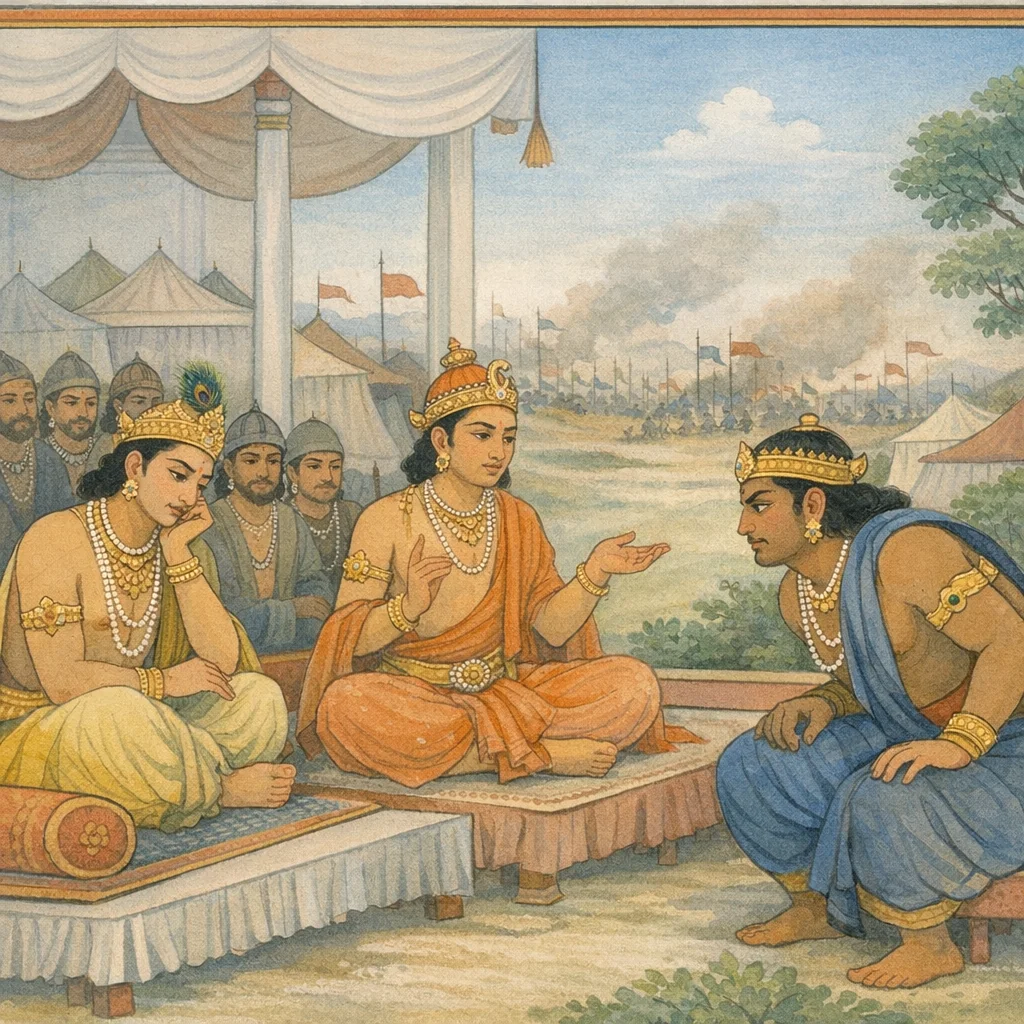
Chapter Arc: संजय वर्णन करते हैं कि अर्जुन की बात सुनकर सभा-स्थल पर बैठे महारथी मौन हो जाते हैं—न कोई समर्थन, न विरोध; युद्ध के बीच एक भारी नैतिक सन्नाटा उतर आता है। → भीमसेन क्रोध से भरकर अर्जुन को कठोर वचनों से कुत्सित करते हैं—उसे वनवासी मुनि-सा ‘दण्ड-त्यागी’ बताकर व्यंग्य करते हैं और स्मरण दिलाते हैं कि पाण्डवों की प्रतिष्ठा केवल शौर्य से टिकी है, संकोच से नहीं। वे अपनी गदा-शक्ति और देव-दानव-राक्षसों तक को शर-वर्षा से द्रवित करने की क्षमता का उद्घोष कर अर्जुन के भय/संकोच को चुनौती देते हैं। → भीम का तीखा आरोप चरम पर पहुँचता है: ‘जैसे जयद्रथ का मस्तक दूर फेंका गया, वैसे ही द्रोण का मस्तक निषाद-स्थान में न फेंक पाने की भूल’—यह वाक्य युद्ध-धर्म, प्रतिशोध और आत्मग्लानि को एक साथ भड़काकर अर्जुन के भीतर निर्णायक उबाल पैदा करता है। → धृष्टद्युम्न का वक्तव्य प्रसंग को दिशा देता है—द्रोण के साथ वंशानुगत वैर और युद्ध-आवश्यकता का स्मरण कराते हुए वह अर्जुन को धर्म-संगत युद्ध में प्रवृत्त करता है; साथ ही यह भी रेखांकित होता है कि युधिष्ठिर असत्यवादी नहीं और अर्जुन अधार्मिक नहीं—अर्थात् पाण्डव-पक्ष अपने नैतिक आधार को बचाए रखते हुए आगे बढ़ने का संकल्प करता है। → नारायणास्त्र-प्रसंग की छाया में यह अध्याय अगले क्षण की ओर धकेलता है—क्या अर्जुन अपने संकोच/भय को त्यागकर द्रोणपुत्र (अश्वत्थामा) के आतंक और अस्त्र-प्रयोग के विरुद्ध निर्णायक प्रतिकार करेगा?
Shlokas
Verse 1
संजय कहते हैं--महाराज! अर्जुनकी यह बात सुनकर वहाँ बैठे हुए सब महारथी मौन रह गये। उनसे प्रिय या अप्रिय कुछ नहीं बोले
Sanjaya said: “O great king, on hearing Arjuna’s words, all the great chariot-warriors seated there fell silent. They spoke nothing to him—neither what would please nor what would displease—revealing the moral weight of the moment and the restraint demanded amid the turmoil of war.”
Verse 2
ततः क्रुद्धो महाबाहुर्भीमसेनो5भ्यभाषत । कुत्सयन्निव कौन्तेयमर्जुनं भरतर्षभ,भरतश्रेष्ठ] तब महाबाहु भीमसेनको क्रोध चढ़ आया। उन्होंने कुन्तीकुमार अर्जुनको फटकारते हुए-से कहा
Sañjaya said: “Then Bhīmasena, the mighty-armed, overcome with anger, spoke—addressing Arjuna, Kuntī’s son, as though rebuking him, O bull among the Bharatas. The moment signals a moral tension within the Pāṇḍava camp: righteous fury and impatience press against the demands of restraint, duty, and strategic conduct in war.”
Verse 3
मुनिर्यथारण्यगतो भाषसे धर्मसंहितम् । न्यस्तदण्डो यथा पार्थ ब्राह्मण: संशितव्रत:,'पार्थ! वनवासी मुनि अथवा किसी भी प्राणीको दण्ड न देते हुए कठोर व्रतका पालन करनेवाला ब्राह्मण जिस प्रकार धर्मका उपदेश करता है, उसी प्रकार तुम भी धर्मसम्मत बातें कह रहे हो
Sanjaya said: “O Partha, the words you speak are in harmony with dharma—like the counsel of a sage who has gone to the forest, or like the instruction of a strict-vowed Brahmin who has laid aside the rod and does not punish any creature. In the same way, your speech too is ethically grounded.”
Verse 4
क्षतत्राता क्षताज्जीवन क्षन्ता स्त्रीष्वपि साधुषु । क्षत्रिय: क्षितिमाप्रोति क्षिप्रं धर्म यश: श्रिय:,'परंतु जो क्षति (संकट)-से अपना तथा दूसरोंका त्राण करता है, युद्धमें शत्रुओंको क्षति पहुँचाना ही जिसकी जीविका है तथा जो स्त्रियों और साधु पुरुषोंपर क्षमाभाव रखता है, वही क्षत्रिय है और उसे ही शीघ्र इस पृथ्वीके राज्य, धर्म, यश और लक्ष्मीकी प्राप्ति होती है
Sañjaya said: “He is a true kṣatriya who rescues himself and others from peril, whose livelihood is to inflict harm upon enemies in battle, and who yet shows forbearance toward women and toward the virtuous. Such a man swiftly attains sovereignty over the earth, along with dharma, fame, and prosperity.”
Verse 5
स भवान् क्षत्रियगुणैर्युक्त: सर्वे: कुलोदह: । अविपक्रिद् यथा वाचं व्याहरन् नाद्य शोभसे,“तुम समस्त क्षत्रियोचित गुणोंसे सम्पन्न और इस कुलका भार वहन करनेमें समर्थ होते हुए भी आज मूर्खके समान बातें कर रहे हो, यह तुम्हें शोभा नहीं देता है
Sañjaya said: “Though you are endowed with every virtue proper to a kṣatriya and are capable of upholding the burden and honor of your lineage, today you do not appear worthy—speaking words like an unthinking man. Such speech does not befit you.”
Verse 6
पराक्रमस्ते कौन्तेय शक्रस्येव शचीपते: । न चाति वर्तसे धर्म वेलामिव महोदधि:,“कुन्तीनन्दन! तुम्हारा पराक्रम शचीपति इन्द्रके समान है। महासागर जैसे अपनी तट- भूमिका उल्लंघन नहीं करता, उसी प्रकार तुम भी कभी धर्म-मर्यादाका उल्लंघन नहीं करते हो
Sañjaya said: “O son of Kuntī, your prowess is like that of Śakra (Indra), the lord of Śacī. And just as the great ocean does not overstep its shoreline, so you never transgress the boundary of dharma.”
Verse 7
न पूजयेत् त्वां को न्वद्य यत् त्रयोदशवार्षिकम् | अमर्ष पृष्ठतः कृत्वा धर्ममेवाभिकाड्क्षसे,“आज तेरह वर्षोसे संचित किये हुए अमर्षको पीछे करके जो तुम धर्मकी ही अभिलाषा रखते हो, इसके लिये कौन तुम्हारी पूजा नहीं करेगा?
Sañjaya said: “Who, indeed, would not honor you today, when—setting aside the resentment accumulated over thirteen years—you still choose to seek only dharma? In such restraint and steadfast longing for righteousness, you become worthy of reverence.”
Verse 8
दिष्टया तात मनस्तेउद्य स्वधर्ममनुवर्तते । आनुृशंस्ये च ते दिष्ट्या बुद्धि: सततमच्युत,“तात! सौभाग्यकी बात है कि इस समय भी तुम्हारा मन अपने धर्मका ही अनुसरण करता है। धर्मसे कभी च्युत न होनेवाले मेरे भाई! तुम्हारी बुद्धि क्रूरताकी ओर न जाकर जो सदा दयाभावमें ही रम रही है, यह भी कम सौभाग्यकी बात नहीं है
Sañjaya said: “Blessed indeed, dear one, that even now your mind continues to follow its own righteous duty. And blessed too that your understanding, O unwavering one, remains constantly inclined to compassion rather than to cruelty.”
Verse 9
यत् तु धर्मप्रवृत्तस्य हृतं राज्यमधर्मत: । द्रौपदी च परामृष्टा सभामानीय शत्रुभि:,'परंतु धर्ममें तत्पर रहनेपर भी जो शत्रुओंने अधर्मसे हमारा राज्य छीन लिया, द्रौपदीको सभामें लाकर अपमानित किया तथा हमें वलकल और मृगचर्म पहनाकर तेरह वर्षोके लिये जो वनमें निर्वासित कर दिया, हम वैसे बर्तावके योग्य कदापि नहीं थे
Sañjaya said: “Yet, though he was steadfastly devoted to dharma, his kingdom was seized by the enemies through unrighteous means; and Draupadī too was violated—brought into the royal assembly and subjected to humiliation by those foes.”
Verse 10
वन॑ प्रत्राजिताश्षास्म वल्कलाजिनवासस: । अनर्हमाणास्तं भावं॑ त्रयोदश समा: परै:,'परंतु धर्ममें तत्पर रहनेपर भी जो शत्रुओंने अधर्मसे हमारा राज्य छीन लिया, द्रौपदीको सभामें लाकर अपमानित किया तथा हमें वलकल और मृगचर्म पहनाकर तेरह वर्षोके लिये जो वनमें निर्वासित कर दिया, हम वैसे बर्तावके योग्य कदापि नहीं थे
Sañjaya said: “We were driven into the forest, made to wear garments of bark and deer-skin, and forced by our enemies to endure that condition for thirteen years—though we did not deserve such treatment. Even while we remained devoted to dharma, they seized our kingdom through unrighteous means and humiliated Draupadī by bringing her into the assembly.”
Verse 11
एतान्यमर्षस्थानानि मर्षितानि मयानघ । क्षत्रधर्मप्रसक्तेन सर्वमेतदनुछितम्,“अनघ! ये सारे अन्याय अमर्षके स्थान थे--असहा थे, परंतु मैंने सब चुपचाप सह लिये। क्षत्रिय-धर्ममें आसक्त होनेके कारण ही यह सब कुछ सहन किया गया है
Sañjaya said: “O blameless one, these were occasions fit to provoke intolerable indignation; yet I endured them. Being devoted to the kṣatriya code, I bore all this—even though it was improper.”
Verse 12
तमधर्ममपाकृष्टं स्मृत्वाद्य सहितस्त्वया । सानुबन्धान् हनिष्यामि क्षुद्रान् राज्यहरानहम्,“परंतु अब उनके उन नीचतापूर्ण पापकर्मोंको याद करके मैं तुम्हारे साथ रहकर अपने राज्यका अपहरण करनेवाले इन नीच शत्रुओंको उनके सगे-सम्बन्धियोंसहित मार डालूँगा
Verse 13
त्वया हि कथित पूर्व युद्धायाभ्यागता वयम् । घटामहे यथाशक्ति त्वं तु नो5द्य जुगुप्ससे,“तुमने ही पहले युद्धके लिये कहा था और उसीके अनुसार हम यहाँ आकर यथाशक्ति उसके लिये प्रयत्न कर रहे हैं, परंतु आज तुम्हीं हमारी निन्दा करते हो!
Sañjaya said: “It was you who earlier called us to this war; accordingly we have come and are striving to the best of our ability. Yet today it is you who looks upon us with contempt and censures us.”
Verse 14
स्वधर्म नेच्छसे ज्ञातुं मिथ्यावचनमेव ते । भयार्दितानामस्माकं वाचा मर्माणि कृन्तसि
Sañjaya said: “You do not wish to understand your own duty; instead, false speech alone is what you choose. With your words you cut into the vital points of us who are already stricken with fear.”
Verse 15
“तुम अपने क्षत्रिय-धर्मको नहीं जानना चाहते। तुम्हारी ये सारी बातें मिथ्या ही हैं। एक तो हम स्वयं ही भयसे पीड़ित हो रहे हैं, ऊपरसे तुम भी अपने वाग्बाणोंद्वारा हमारे मर्मस्थानोंको छेदे डालते हो ।। वपन् व्रणे क्षारमिव क्षतानां शत्रुकर्शन । विदीर्यते मे हृदयं त्वया वाकृुशल्यपीडितम्,'शत्रुसूदन! जैसे कोई घायल मनुष्योंके घावपर नमक बिखेर दे (और वे वेदनासे छटपटाने लगें), उसी प्रकार तुम अपने वाग्बाणोंसे पीड़ित करके मेरे हृदयको विदीर्ण किये डालते हो
Sañjaya said: “You do not wish to understand the duty of a kshatriya; all your words are false. We are already tormented by fear, and on top of that you pierce our vital points with the arrows of your speech. O subduer of foes—just as one sprinkles salt upon the wounds of the injured, so my heart is being torn apart, pained by your skillful, cutting words.”
Verse 16
अधर्ममेनं विपुलं धार्मिक: सन् न बुद्ध्यसे । यत् त्वमात्मानमस्मांश्व॒ प्रशस्यान् न प्रशंससि,“यद्यपि तुम और हम प्रशंसाके पात्र हैं, तो भी तुम जो अपनी और हमारी प्रशंसा नहीं करते हो, यह बहुत बड़ा अधर्म है और तुम धार्मिक होते हुए इस अधर्मको नहीं समझ रहे हो
Sañjaya said: “This is a grave unrighteousness, and though you are a man devoted to dharma, you do not perceive it: that you, though worthy of praise—both yourself and us as well—do not offer praise.”
Verse 17
वासुदेवे स्थिते चापि द्रोणपुत्रं प्रशंससि । यः कलां षोडशी पूर्णा धनंजय न तेडहति,“धनंजय! भगवान् श्रीकृष्णके रहते हुए भी तुम द्रोणपुत्रकी प्रशंसा करते हो, जो तुम्हारी पूरी सोलहवीं कलाके बराबर भी नहीं है
Sañjaya said: “Even while Vāsudeva (Kṛṣṇa) stands with you, you still praise Droṇa’s son (Aśvatthāmā). O Dhanañjaya, he is not worthy of even a full sixteenth part of your prowess.”
Verse 18
स्वयमेवात्मनो दोषान् ब्रुवाण: किन्न लज्जसे | दारयेयं महीं क्रोधाद् विकिरेयं च पर्वतान्,'स्वयं ही अपने दोषोंका वर्णन करते हुए तुम्हें लज्जा क्यों नहीं आती है? आज मैं अपनी इस सुवर्णभूषित भयंकर एवं भारी गदाको क्रोधपूर्वक घुमाकर इस पृथ्वीको विदीर्ण कर सकता हूँ, पर्वतोंको चूर-चूर करके बिखेर सकता हूँ तथा प्रचण्ड आँधीकी तरह पर्वतपर प्रकाशित होनेवाले ऊँचे-ऊँचे वृक्षोंकोी भी तोड़ और उखाड़ सकता हूँ
Sañjaya said: “As you yourself proclaim your own faults, why do you not feel shame? In anger I could split the earth and scatter the mountains.”
Verse 19
आविषध्यैतां गदां गुर्वी भीमां काउ्चानमालिनीम् । गिरिप्रकाशान् क्षितिजान् भज्जेयमनिलो यथा,'स्वयं ही अपने दोषोंका वर्णन करते हुए तुम्हें लज्जा क्यों नहीं आती है? आज मैं अपनी इस सुवर्णभूषित भयंकर एवं भारी गदाको क्रोधपूर्वक घुमाकर इस पृथ्वीको विदीर्ण कर सकता हूँ, पर्वतोंको चूर-चूर करके बिखेर सकता हूँ तथा प्रचण्ड आँधीकी तरह पर्वतपर प्रकाशित होनेवाले ऊँचे-ऊँचे वृक्षोंकोी भी तोड़ और उखाड़ सकता हूँ
Sañjaya said: “Brandishing that heavy, terrifying mace—adorned with golden ornaments—I could, in wrath, split the very earth, shatter mountains into fragments, and, like a violent gale, break and uproot the lofty trees that stand gleaming upon the hills. How is it that, while proclaiming your own faults, you do not feel shame?”
Verse 20
द्रावयेयं शरैश्वापि सेन्द्रान् देवान्ू समागतान् । सराक्षसगणान् पार्थ सासुरोरगमानवान्,'पार्थ! असुर, नाग, मानव तथा राक्षसगणोंसहित सम्पूर्ण देवता और इन्द्र भी आ जाय तो मैं उन्हें बाणोंद्वारा मारकर भगा सकता हूँ
Sañjaya said: “O Pārtha, even if the gods—Indra included—were to assemble together, along with hosts of Rākṣasas, Asuras, Nāgas, and men, I could still drive them back by means of my arrows.”
Verse 21
स त्वमेवंविध॑ जाननू् भ्रातरं मां नरर्षभ । द्रोणपुत्राद् भयं कर्तु नारहस्थमितविक्रम,“अमित पराक्रमी नरश्रेष्ठ अर्जुन! मुझ अपने भ्राताको ऐसा जानकर तुम्हें द्रोणपुत्रसे भय नहीं करना चाहिये
Sañjaya said: “O bull among men, O Arjuna of immeasurable prowess—knowing me to be such a brother to you, you ought not to give way to fear of Droṇa’s son. Let not anxiety overcome you; stand firm in your strength and in the duty of a warrior.”
Verse 22
अथवा तिष्ठ बीभत्सो सह सर्व: सहोदरै: । अहमेनं गदापाणिफर्जेष्याम्येकी महाहवे,“अथवा अर्जुन! तुम अपने समस्त भाइयोंके साथ यहीं खड़े रहो। मैं हाथमें गदा लेकर इस महासमरमें अकेला ही अश्वत्थामाको परास्त करूँगा'
Sañjaya said: “Or else, O Arjuna (Bībhatsa), you remain standing here together with all your brothers. I, with mace in hand, will confront him and defeat him single-handed in this great battle.”
Verse 23
ततः पाञ्चालराजस्य पुत्र: पार्थमथाब्रवीत् । संक़्रुद्धमिव नर्दन्तं हिरण्यकशिपुर्हरिम्,तदनन्तर जैसे पूर्वकालमें अत्यन्त क्रुद्ध होकर दहाड़ते हुए नृसिंहावतारधारी भगवान् विष्णुसे दैत्यराज हिरण्यकशिपुने बातें की थी, उसी प्रकार वहाँ अर्जुनसे पांचालराजकुमार धृष्टद्युम्नने इस प्रकार कहा
Sañjaya said: Then the son of the king of the Pāñcālas—Dhṛṣṭadyumna—addressed Pārtha (Arjuna). He spoke in a manner like Hiraṇyakaśipu once spoke to Hari (Viṣṇu) in the form of Narasiṃha, who, exceedingly wrathful, roared aloud—thus indicating a tense, confrontational exchange amid the moral pressure of war.
Verse 24
धष्टहुम्न उवाच बीभत्सो विप्रकर्माणि विदितानि मनीषिणाम् | याजनाध्यापने दान॑ तथा यज्ञप्रतिग्रहौ,धृष्टद्युम्न बोला--'अर्जुन! यज्ञ करना और कराना, वेदोंको पढ़ना और पढ़ाना तथा दान देना और प्रतिग्रह स्वीकार करना-ये छः कर्म ही ब्राह्मणोंके लिये मनीषी पुरुषोंमें प्रसिद्ध हैं। इनमेंसे किस कर्ममें टद्रोणाचार्य प्रतिष्ठित थे। अपने धर्मसे भ्रष्ट होकर उन्होंने क्षत्रिय-धर्मका आश्रय ले रखा था। पार्थ! ऐसी अवस्थामें यदि मैंने ट्रोणाचार्यका वध किया तो तुम इसके लिये मेरी निनदा क्यों करते हो। वह नीच कर्म करनेवाला ब्राह्मण दिव्यास्त्रोंद्रारा हमलोगोंका संहार करता था
Dhṛṣṭadyumna said: “O Bībhatsu (Arjuna), the duties of a brāhmaṇa are well known among the wise: performing sacrifices and officiating for others, studying the Veda and teaching it, giving gifts, and accepting gifts and sacrificial fees. In which of these duties was Droṇa truly established? Having fallen from his own dharma, he had taken refuge in the dharma of a kṣatriya. In such a condition, if I have slain Droṇa, why do you censure me? That brāhmaṇa, engaged in base conduct, was destroying us with divine weapons.”
Verse 25
षष्ठमध्ययनं नाम तेषां कस्मिन् प्रतिष्ठित: । हतो द्रोणो मया होवं किं मां पार्थ विगर्हसे,धृष्टद्युम्न बोला--'अर्जुन! यज्ञ करना और कराना, वेदोंको पढ़ना और पढ़ाना तथा दान देना और प्रतिग्रह स्वीकार करना-ये छः कर्म ही ब्राह्मणोंके लिये मनीषी पुरुषोंमें प्रसिद्ध हैं। इनमेंसे किस कर्ममें टद्रोणाचार्य प्रतिष्ठित थे। अपने धर्मसे भ्रष्ट होकर उन्होंने क्षत्रिय-धर्मका आश्रय ले रखा था। पार्थ! ऐसी अवस्थामें यदि मैंने ट्रोणाचार्यका वध किया तो तुम इसके लिये मेरी निनदा क्यों करते हो। वह नीच कर्म करनेवाला ब्राह्मण दिव्यास्त्रोंद्रारा हमलोगोंका संहार करता था
Dhṛṣṭadyumna said: “Among them, the ‘sixfold discipline’ is spoken of—on which of those duties was Droṇa truly established? I have slain Droṇa; why, O Pārtha, do you censure me? Having fallen away from his own proper dharma, he had taken refuge in the kṣatriya’s way; and while acting thus, he was destroying us with divine weapons. In such a condition, why should my killing of him be condemned?”
Verse 26
अपक्रान्तः स्वधर्माच्च क्षात्रधर्म व्यपाश्रित: । अमानुषेण हन्त्यस्मानस्त्रेण क्षुद्रकर्मकृत्,धृष्टद्युम्न बोला--'अर्जुन! यज्ञ करना और कराना, वेदोंको पढ़ना और पढ़ाना तथा दान देना और प्रतिग्रह स्वीकार करना-ये छः कर्म ही ब्राह्मणोंके लिये मनीषी पुरुषोंमें प्रसिद्ध हैं। इनमेंसे किस कर्ममें टद्रोणाचार्य प्रतिष्ठित थे। अपने धर्मसे भ्रष्ट होकर उन्होंने क्षत्रिय-धर्मका आश्रय ले रखा था। पार्थ! ऐसी अवस्थामें यदि मैंने ट्रोणाचार्यका वध किया तो तुम इसके लिये मेरी निनदा क्यों करते हो। वह नीच कर्म करनेवाला ब्राह्मण दिव्यास्त्रोंद्रारा हमलोगोंका संहार करता था
Dhṛṣṭadyumna said: “Having fallen away from his own dharma and taken refuge in the warrior’s code, he is slaughtering us with superhuman weapons—though he is one who performs base deeds. In such a condition, if I have slain Droṇa, why do you censure me, Pārtha?”
Verse 27
तथा मायां प्रयुड्चानमसहां ब्राह्मणब्रुवम् । माययैव विहन्याद् यो न युक्तं पार्थ तत्र किम्,कुन्तीनन्दन! जो ब्राह्मण कहलाकर भी दूसरोंके लिये मायाका प्रयोग करता हो और असहा हो उठा हो, उसे यदि कोई मायासे ही मार डाले तो इसमें अनुचित क्या है?
Dhṛṣṭadyumna said: “If someone, though calling himself a brāhmaṇa, employs deceitful illusion against others and is intolerant and aggressive, then what impropriety is there, O Pārtha, O son of Kuntī, if he is struck down by illusion in return?”
Verse 28
तस्मिंस्तथा मया शस्ते यदि द्रौणायनी रुषा । कुरुते भैरवं नादं तत्र कि मम हीयते,मेरे द्वारा द्रोणाचार्यके इस अवस्थामें मारे जानेपर यदि द्रोणपुत्र क्रोधपूर्वक भयानक गर्जना करता हो तो उसमें मेरी क्या हानि है?
Dhṛṣṭadyumna said: “If, after I have struck him down in that condition, Droṇa’s son—seized by wrath—raises a dreadful roar, what loss is that to me?”
Verse 29
न चाद्भुतमिदं मन्ये यद् द्रौणिर्युद्धसंज्ञया । घातयिष्यति कौरव्यान् परित्रातुमशक्नुवन्,मैं इसे कोई अद्भुत बात नहीं मान रहा हूँ; अश्वत्थामा इस युद्धके द्वारा कौरवोंको मरवा डालेगा; क्योंकि वह स्वयं उनकी रक्षा करनेमें असमर्थ है
Dhṛṣṭadyumna said: “I do not regard this as anything astonishing—that Droṇa’s son, under the pretext of ‘war,’ will have the Kauravas slain, since he is unable to protect them himself.”
Verse 30
यच्च मां धार्मिको भूत्वा ब्रवीषि गुरुघातिनम् । तदर्थमहसमुत्पन्न: पाउचाल्यस्य सुतो5नलात्,इसके सिवा तुम धार्मिक होकर जो मुझे गुरुकी हत्या करनेवाला बता रहे हो, वह भी ठीक नहीं है; क्योंकि मैं इसीलिये अग्निकुण्डसे पांचालराजका पुत्र होकर उत्पन्न हुआ था
And besides, it is not proper that you, claiming to be righteous, call me a slayer of my teacher. For I was born precisely for that purpose—arising from the fire as the son of the Pāñcāla king.
Verse 31
यस्य कार्यमकार्य वा युध्यत: स्यात् सम॑ रणे । त॑ं कथं ब्राह्मण ब्रूया: क्षत्रियं वा धनंजय,धनंजय! रणभूमिमें युद्ध करते समय जिसके लिये कर्तव्य और अकर्तव्य दोनों समान हों, उसे तुम ब्राह्मण अथवा क्षत्रिय कैसे कह सकते हो?
Dhṛṣṭadyumna said: “O Dhanañjaya, if, while fighting on the battlefield, a man regards what ought to be done and what ought not to be done as the same, how can you call him either a brāhmaṇa or a kṣatriya? When discernment of duty collapses in war, the very marks of caste and conduct lose their meaning.”
Verse 32
यो हाानस्त्रविदो हन्याद् ब्रह्मास्त्रै: क्रोधमूर्च्छित: । सर्वोपायैर्न स कथं वध्य: पुरुषसत्तम,पुरुषप्रवर! जो क्रोधसे व्याकुल होकर ब्रह्मास्त्र न जाननेवालोंको भी ब्रह्मास्त्रसे ही मार डाले, उसका सभी उपायोंसे वध करना कैसे उचित नहीं है?
Dhṛṣṭadyumna said: “O best and foremost of men, if someone, maddened by anger, were to slay even those who do not know the Brahmāstra by means of Brahmāstras, how could it be improper to put him to death by every possible means?”
Verse 33
विधर्मिणं धर्मविद्धि: प्रोक्ते तेषां विषोपमम् । जाननू् धर्मार्थतत्त्वज्ञ कि मामर्जुन गर्हसे,धर्म और अर्थका तत्त्व जाननेवाले अर्जुन! जो अपना धर्म छोड़कर परधर्म ग्रहण कर लेता है, उस विधर्मीको धर्मज्ञ पुरुषोंने धर्मात्माओंके लिये विषके तुल्य बताया है। यह सब जानते हुए भी तुम मेरी निन्दा क्यों करते हो?
Dṛṣṭadyumna said: “Those who know dharma have declared the ‘vidharmī’—one who abandons his own rightful duty and takes up another’s— to be like poison for the truly righteous. O Arjuna, knower of the principles of dharma and artha, even though you understand this, why do you censure me?”
Verse 34
नृशंस: स मया55क्रम्य रथ एव निपातित:ः । तन्मामनिन्दयं बीभत्सो किमर्थ नाभिनन्दसे,बीभत्सो! द्रोणाचार्य क्रूर एवं नृशंस थे, इसलिये मैंने रथपर ही आक्रमण करके उनको मार गिराया। अतः मैं निन्दाका पात्र नहीं हूँ। फिर तुम किसलिये मेरा अभिनन्दन नहीं करते हो?
Dṛṣṭadyumna said: “That cruel and ruthless man was struck down by me by assaulting him while he was still upon his chariot. Therefore I am not deserving of blame. Why then, O Bībhatsa, do you not commend me?”
Verse 35
कालानलसमं पार्थ ज्वलनार्कविषोपमम् । भीम॑ द्रोणशिरश्छिन्नं न प्रशंभसि मे कथम्,पार्थ! द्रोणका मस्तक प्रलयकालकी अग्निके समान अत्यन्त भयंकर तथा लौकिक अग्नि, सूर्य एवं विषके तुल्य संताप देनेवाला था, अतः मैंने उसका छेदन किया है। इसके लिये तुम मेरी प्रशंसा क्यों नहीं करते?
Dhṛṣṭadyumna said: “O Pārtha, Drona’s head was like the fire of the end-time—terrible, scorching like blazing flame, the sun, and poison. I have cut it off; why then do you not praise me for it, O Pārtha?”
Verse 36
योडसौ ममैव नान्यस्य बान्धवान् युधि जध्निवान् | छित्त्वापि तस्य मूर्धानं नैवास्मि विगतज्वर:,जिसने युद्धके मैदानमें दूसरे किसीके नहीं, मेरे ही बन्धु-बान्धवोंका वध किया था, उसका मस्तक काट लेनेपर भी मेरा क्रोध और संताप शान्त नहीं हुआ
He who, on the battlefield, slew my own kinsmen—and not another’s—: even after cutting off his head, my burning anguish has not left me; my fevered wrath is still unquenched.
Verse 37
तच्च मे कृन्तते मर्म यन्न तस्य शिरो मया । निषादविषये क्षिप्तं जयद्रथशिरो यथा
That thought cuts into my very heart: that I did not hurl his head into the Niṣādas’ country, as Jayadratha’s head was once cast.
Verse 38
जैसे तुमने जयद्रथके मस्तकको दूर फेंका था, उसी प्रकार मैंने द्रोणाचार्यके मस्तकको जो निषादोंके स्थानमें नहीं फेंक दिया, वह भूल मेरे मर्मस्थानोंका छेदन कर रही है ।। अथावधश्च शत्रूणामधर्म: श्रूयते<$र्जुन । क्षत्रियस्य हि धर्मो<5यं हन्याद्धन्येत वा पुन:,अर्जुन! सुननेमें आया है कि शत्रुओंका वध न करना भी अधर्म ही है। क्षत्रियके लिये तो यह धर्म ही है कि वह युद्धमें शत्रुको मार डाले या फिर स्वयं उसके हाथसे मारा जाय
Dhrishtadyumna said: “Just as you once hurled Jayadratha’s head far away, so too I should have cast Drona’s head among the Niṣādas. That I did not do so—this mistake—now pierces me at my very vital points. And, Arjuna, it is said that even refraining from killing one’s enemies can become unrighteousness. For a kṣatriya, this indeed is the rule of duty: in battle he must either slay, or else be slain.”
Verse 39
स शत्रुर्निहतः संख्ये मया धर्मेण पाण्डव । यथा त्वया हतः शूरो भगदत्त: पितुः सखा,पाण्डुनन्दन! द्रोणाचार्य मेरे शत्रु थे, अतः मैंने युद्धमें धर्मके अनुसार ही उनका वध किया है। ठीक उसी तरह, जैसे तुमने अपने पिताके प्रिय मित्र शूरवीर भगदत्तका वध किया था
Dhṛṣṭadyumna said: “That enemy has been slain by me in battle, O Pāṇḍava, in accordance with dharma. Just so did you, O son of Pāṇḍu, slay the heroic Bhagadatta—your father’s friend.”
Verse 40
पितामहं रणे हत्वा मन्यसे धर्ममात्मन: । मया शत्रौ हते कस्मात् पापे धर्म न मन््यसे
Dhṛṣṭadyumna said: “After slaying the grandsire in battle, you consider yourself to be acting in accordance with dharma. Why then, when I have slain an enemy, do you not regard that same act as dharma, but as sin?”
Verse 41
तुम युद्धमें पितामहको मारकर भी अपने लिये तो धर्म ही मानते हो, किंतु मेरे द्वारा एक पापी शत्रुके मारे जानेपर भी इस कार्यको धर्म नहीं समझते; इसका क्या कारण है? ।। सम्बन्धावनतं पार्थ न मां त्वं वक्तुमहसि । स्वगात्रकृतसोपानं निषण्णमिव दन्तिनम्,पार्थ! जैसे हाथी सम्बन्ध स्थापित कर लेनेपर लोगोंको अपने ऊपर चदढ़ानेके लिये अपने ही शरीरकी सीढ़ी बनाकर बैठ जाता है, उसी प्रकार मैं भी तुम्हारे साथ सम्बन्ध होनेके कारण नतमस्तक होता हूँ; अतः तुम्हें मेरे प्रति ऐसी बातें नहीं कहनी चाहिये
Dhrishtadyumna said: “O Partha, because of our relationship I stand before you with my head bowed; therefore you should not speak to me in that manner. Just as an elephant, once it has formed an attachment, sits down and makes a ‘stair’ of its own body so that people may climb upon it, so too I, bound by kinship and alliance with you, submit myself—yet you ought not to press me with reproaches about dharma and sin in this way.”
Verse 42
क्षमामि ते सर्वमेव वाग्व्यतिक्रममर्जुन । द्रौपद्या द्रौपदेयानां कृते नानयेन हेतुना,अर्जुन! मैं अपनी बहिन द्रौपदी और उसके पुत्रोंके नाते ही तुम्हारी इन सारी उलटी या कड़वी बातोंको सहे लेता हूँ, दूसरे किसी कारणसे नहीं
Dhṛṣṭadyumna said: “Arjuna, I forgive you entirely for this transgression of speech—your harsh and improper words. I endure it only for the sake of Draupadī and the sons of Draupadī, and for no other reason.”
Verse 43
कुलक्रमागतं वैरं ममाचार्येण विश्रुतम् । तथा जानात्ययं लोको न यूय॑ पाण्डुनन्दना:,द्रोणाचार्यके साथ मेरा वंशपरम्परागत वैर चला आ रहा है, जो बहुत प्रसिद्ध है। उसे यह सारा संसार जानता है; क्या तुम पाण्डवोंको इसका पता नहीं है?
Dhṛṣṭadyumna said: “The enmity between my lineage and my teacher has come down through the family line and is widely known. The whole world knows it as such—do you, sons of Pāṇḍu, not know this as well?”
Verse 44
नानृती पाण्डवो ज्येष्ठो नाहं वाधार्मिको<र्जुन शिष्यद्रोही हत: पापो युध्यस्व विजयस्तव,अर्जुन! तुम्हारे बड़े भाई पाण्डुनन्दन युधिष्ठिर असत्यवादी नहीं हैं और न मैं ही अधर्मी हूँ। द्रोणाचार्य पापी और शिष्यद्रोही थे, इसलिये मारे गये। अब तुम युद्ध करो; विजय तुम्हारे हाथमें है
Dhṛṣṭadyumna said: “The eldest of the Pāṇḍavas (Yudhiṣṭhira) is not a speaker of falsehood, and I too am not unrighteous, O Arjuna. Droṇa was sinful and a betrayer of his own disciples; therefore he has been slain. Now fight—victory will be yours.”
Verse 197
इति श्रीमहा भारते द्रोणपर्वणि नारायणास्त्रमोक्षपर्वणि धृष्टद्युम्नवाक्ये सप्तनवत्यधिकशततमो<ध्याय:
Thus, in the sacred Mahābhārata, within the Droṇa Parva—specifically in the section describing the discharge of the Nārāyaṇa weapon—ends the one-hundred-and-ninety-seventh chapter, presented as the words of Dhṛṣṭadyumna. The colophon frames the episode as a grave moment in the war where divine weaponry is invoked, and it signals the ethical weight of restraint and proper conduct when facing overwhelming force.