Adhyaya 19
द्रोणस्य सुपर्णव्यूहः — युधिष्ठिरप्रत्यव्यूहः (Droṇa’s Suparṇa Formation and Yudhiṣṭhira’s Counter-array)
Upa-parva: Vyūha-nirmāṇa and Yudhiṣṭhira-abhiprāya (Suparṇa-vyūha episode)
Sañjaya reports that Droṇa, having arranged an operational linkage involving Arjuna and the Saṃśaptaka host, advances in a fully deployed formation against the Pāṇḍava army with the intent of reaching Yudhiṣṭhira (Dharmarāja). Droṇa’s Suparṇa-vyūha is described anatomically—head, eyes, neck, wings, back, and tail—each assigned to prominent Kaurava leaders and allied contingents, producing a detailed schematic of command placement. Yudhiṣṭhira observes the array and counters with a maṇḍala-ardha formation, then communicates concern about being drawn under a brāhmaṇa-warrior’s operational control; Dhṛṣṭadyumna responds by pledging to block Droṇa and engages aggressively. The clash expands into a dense, disorienting melee with vivid similes (clouds, lightning, oceanic surge), emphasizing loss of recognition between friend and foe, the breakdown of visibility, and the mechanical violence of chariots, cavalry, infantry, and elephants. Amid mutual engagements—Dhṛṣṭadyumna checked by Durmukha, Droṇa intermittently impeded yet still effective—Droṇa continues to strike the Yudhiṣṭhira-aligned forces and finally moves directly toward Yudhiṣṭhira during the ongoing confusion.
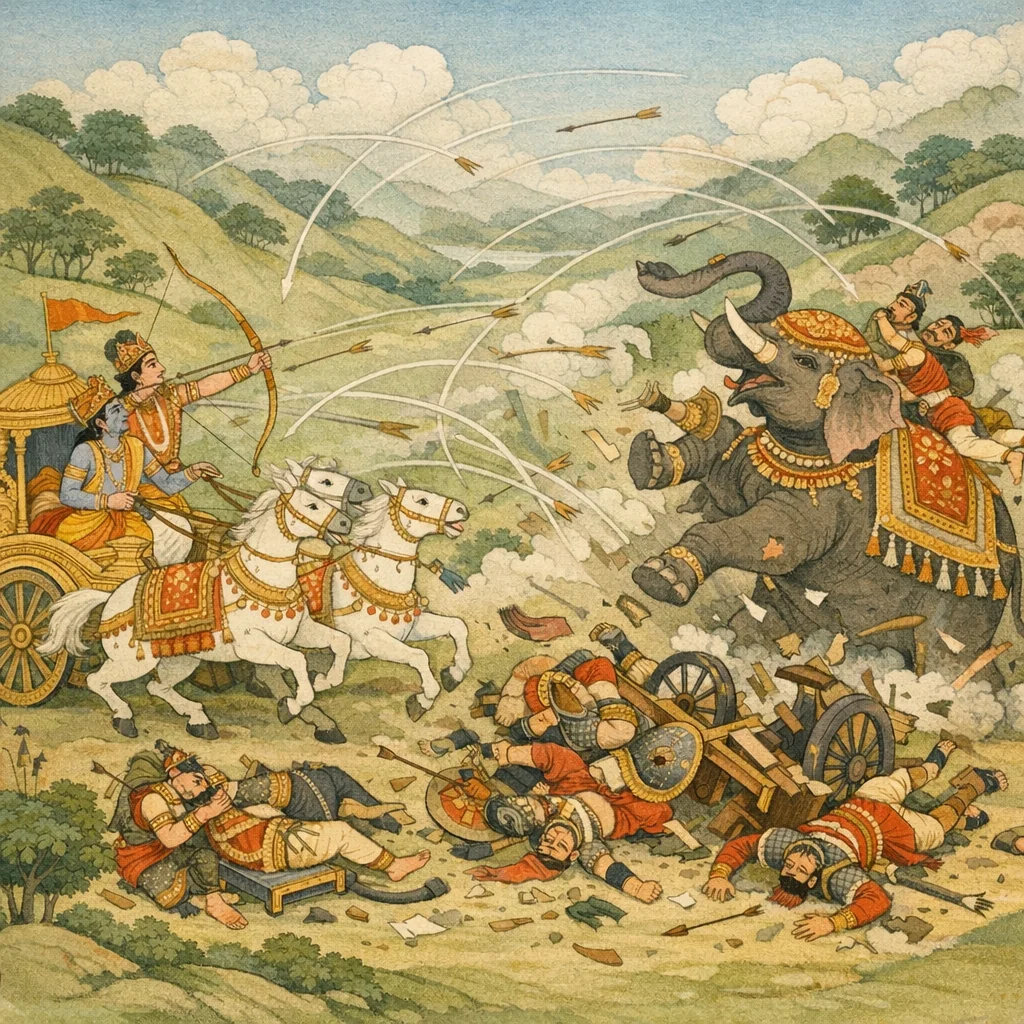
Chapter Arc: संजय धृतराष्ट्र से कहते हैं—संशप्तकगणों को फिर लौटता देख अर्जुन कृष्ण से रथ हाँकने का आग्रह करता है; वह प्रतिज्ञा-शत्रुओं पर अपना घोर अस्त्रबल दिखाने को उद्यत है। → अर्जुन क्रुद्ध रुद्र-तुल्य होकर संशप्तकों पर बाण-वर्षा करता है। संशप्तक क्षत्रिय ‘कालचोदित’ होकर विविध शरजाल छोड़ते हैं; रथ, गज, अश्व और ध्वजों से भरा रणक्षेत्र घनघोर बन जाता है। → अर्जुन के बाणों से गन्धर्वनगर-सदृश सुसज्जित रथ चूर-चूर होते हैं; पताका-अंकुश-ध्वज से विभूषित गजराज इन्द्र-वज्र से कटे वृक्षों की भाँति गिरते हैं; सारथियों सहित घोड़े धराशायी होते हैं और भूमि महारथियों के शवों से आच्छादित हो ‘प्रेतीभूत’ सी प्रतीत होती है। → संशप्तक-समूह अर्जुन के सामने क्षीण पड़ता दिखता है, पर इसी बीच रण की दिशा बदलती है—अर्जुन के इस मोर्चे पर उलझे रहने से पाण्डव-सेना का केन्द्र असुरक्षित हो जाता है। → उधर व्यूढानीक द्रोण, अर्जुन के प्रमत्त/व्यस्त होने का अवसर पाकर, युधिष्ठिर पर संगठित आक्रमण के लिए बढ़ता है—पाण्डव-धर्मराज को घेरने की घड़ी आ पहुँचती है।
Shlokas
Verse 1
(दाक्षिणात्य अधिक पाठके २६ श्लोक मिलाकर कुल ३३३ “लोक हैं।) न२्््स्नितास्स श््यु नी नल एकोनविशो< ध्याय: संशप्तकगणोंके साथ अर्जुनका घोर युद्ध संजय उवाच दृष्टवा तु संनिवृत्तांस्तान् संशप्तकगणान् पुनः । वासुदेवं महात्मानमर्जुन: समभाषत
Sanjaya said: Seeing those bands of the Saṁśaptakas once again drawn up and returning to the fight, Arjuna addressed the great-souled Vāsudeva (Krishna).
Verse 2
संजय कहते हैं--राजन्! उन संशप्तकगणोंको पुनः लौटा हुआ देख अर्जुनने महात्मा श्रीकृष्णसे कहा-- ।। चोदयाश्वान् हृषीकेश संशप्तकगणानू् प्रति | नैते हास्यन्ति संग्रामं जीवन्त इति मे मति:,“हृषीकेश! घोड़ोंको इन संशप्तकगणोंकी ओर ही बढ़ाइये। मुझे ऐसा जान पड़ता है, ये जीते-जी रणभूमिका परित्याग नहीं करेंगे
Sanjaya said: O King, seeing those Saṃśaptaka warriors return once again, Arjuna spoke to the great-souled Śrī Kṛṣṇa: “Hṛṣīkeśa, urge the horses forward—straight toward the Saṃśaptakas. It is my conviction that these men will not abandon the battle while they still live.”
Verse 3
पश्य मे<स्त्रबलं घोर बाह्वदोरिष्वसनस्य च | अद्यैतान् पातयिष्यामि क्रुद्धो रुद्रः पशूनिव
Sañjaya said: “Behold the dreadful might of my weapons and the force of my arms and bow. Today, in wrath, I shall strike these men down—like Rudra felling beasts.”
Verse 4
“आज आप मेरे अस्त्र, भुजाओं और धनुषका बल देखिये। क्रोधमें भरे हुए रुद्रदेव जैसे पशुओं (जगतके जीवों) का संहार करते हैं, उसी प्रकार मैं भी इन्हें मार गिराऊँगा' ।। ततः कृष्ण: स्मितं कृत्वा प्रतिनन्द्य शिवेन तम् । प्रावेशयत दुर्धर्षो यत्र यत्रैच्छदर्जुन:
Sañjaya said: “Today behold the might of my weapons, my arms, and my bow. As Rudra, filled with wrath, destroys living beings, so shall I strike these men down.” Thereupon Kṛṣṇa, smiling, approved him with auspicious words; and the irresistible Lord guided Arjuna wherever Arjuna wished to go.
Verse 5
तब श्रीकृष्णने मुसकराकर अर्जुनकी मंगलकामना करते हुए उनका अभिनन्दन किया और दुर्धर्ष वीर अर्जुनने जहाँ-जहाँ जानेकी इच्छा की, वहीं-वहीं उस रथको पहुँचाया ।। स रथो भ्राजते>त्यर्थमुह्यामानो रणे तदा । उह्यूमानमिवाकाशे विमान पाण्डुरैरहयै:,रणभूमिमें श्वेत घोड़ोंद्वारा खींचा जाता हुआ वह रथ उस समय आकाशमें उड़नेवाले विमानके समान अत्यन्त शोभा पा रहा था
Sañjaya said: In that battle, the chariot shone so brilliantly that one could scarcely grasp its full splendor. Drawn across the field by pale-white horses, it looked like a celestial aerial car moving through the sky—an image that underscores how Kṛṣṇa’s steady, auspicious guidance enabled Arjuna to be carried wherever he willed amid the moral strain of war.
Verse 6
मण्डलानि ततक्षुक्रे गतप्रत्यागतानि च । यथा शक्ररथो राजन् युद्धे देवासुरे पुरा,राजन! पूर्वकालमें देवताओं और असुरोंके संग्राममें इन्द्रका रथ जिस प्रकार चलता था, उसी प्रकार अर्जुनका रथ भी कभी आगे बढ़कर और कभी पीछे हटकर मण्डलाकार गतिसे घूमने लगा
Sañjaya said: “O King, Arjuna’s chariot began to wheel in circular courses—now advancing, now withdrawing—just as, in ancient times, Indra’s chariot moved in the war between the gods and the asuras.”
Verse 7
अथ नारायणा: क्रुद्धा विविधायुधपाणय: । छादयन्त: शरव्रातै: परिवद्रुर्धन॑जयम्
Sañjaya said: Then the Nārāyaṇas, enraged and bearing weapons of many kinds, surged around Dhanañjaya (Arjuna), overwhelming him by covering him with dense volleys of arrows. The scene underscores how, in war, wrath and collective force can momentarily eclipse even a foremost warrior, testing steadiness and right conduct amid chaos.
Verse 8
तब क्रोधमें भरे हुए नारायणीसेनाके गोपोंने हाथोंमें नाना प्रकारके अस्त्र-शस्त्र लेकर अर्जुनको अपने बाण-समूहोंसे आच्छादित करते हुए उन्हें चारों ओरसे घेर लिया ।। अदृश्यं च मुहूर्तेन चक्रुस्ते भरतर्षभ । कृष्णेन सहित युद्धे कुन्तीपुत्रं धनंजयम्,भरतश्रेष्ठ! उन्होंने दो ही घड़ीमें श्रीकृष्णसहित कुन्तीकुमार अर्जुनको युद्धमें अदृश्य कर दिया
Sanjaya said: Then, inflamed with anger, the cowherds of the Narayani host seized various weapons and missiles and, showering Arjuna with dense volleys of arrows, surrounded him on every side. In a moment, O bull of the Bharatas, they made him invisible from view. O best of the Bharatas, within a short while they so covered Kunti’s son Dhananjaya—fighting together with Krishna—that in the battle he could no longer be seen. The episode underscores how, in war, sheer massed force and coordinated assault can temporarily eclipse even the most righteous and skilled warrior, testing steadiness of purpose amid overwhelming pressure.
Verse 9
क्रुद्धस्तु फाल्गुन: संख्ये द्विगुणीकृतविक्रम: । गाण्डीवं धनुरामृज्य तूर्ण जग्राह संयुगे,तब अर्जुनने कुपित होकर युद्धमें अपना द्विगुण पराक्रम प्रकट करते हुए गाण्डीव धनुषको सब ओरसे पोंछकर उसे तुरंत हाथमें लिया
Sanjaya said: Enraged, Arjuna (Phalguna) in the thick of battle displayed a redoubled prowess. Wiping his bow Gāṇḍīva clean, he swiftly took it up for the fight—signaling a deliberate, disciplined return to action where anger is harnessed into focused martial duty rather than reckless violence.
Verse 10
बद्ध्वा च भ्रुकुटिं वक्रे क्रोधस्य प्रतिलक्षणम् । देवदत्तं महाशड्खं पूरयामास पाण्डव:
Sañjaya said: With his brows knit into a crooked frown—the unmistakable sign of rising wrath—the Pāṇḍava filled the great conch Devadatta with a resounding blast. In the moral atmosphere of the war, this outward gesture signals an inner resolve: anger is present, yet it is being harnessed into disciplined action within the demands of battle and duty.
Verse 11
फिर पाण्डुकुमारने भौंहें टेढ़ी करके क्रोधको सूचित करनेवाले अपने महान् शंख देवदत्तको बजाया ।। अथास्त्रमरिसंघष्न॑ त्वाष्ट्रम भ्यस्यदर्जुन: । ततो रूपसहस्राणि प्रादुरासन् पृथक् पृथक्,तदनन्तर अर्जुनने शत्रुसमूहोंका नाश करनेवाले त्वाष्ट नामक अस्त्रका प्रयोग किया। फिर तो उस अस्त्रसे सहस्रों रूप पृथक्-पृथक् प्रकट होने लगे
Sañjaya said: Then Arjuna set in motion the Tvaṣṭṛ weapon, a missile famed for destroying masses of foes. At once, from that astric force, thousands of distinct forms manifested separately—an overwhelming display of war-power that signals how the battle is being driven not only by human valor but by the perilous escalation of supernatural means.
Verse 12
आत्मन: प्रतिरूपैस्तैर्नानारूपैरविमोहिता: । अन्योन्येनार्जुनं मत्वा स्वमात्मानं च जध्निरे,अपने ही समान आकृतिवाले उन नाना रूपोंसे मोहित हो वे एक-दूसरेको अर्जुन मानकर अपने तथा अपने ही सैनिकोंपर प्रहार करने लगे
Sañjaya said: Bewildered by those many forms that resembled Arjuna himself, they mistook one another for Arjuna and, in that delusion, struck down their own men—and even their own selves. The episode underscores how confusion and misperception in war can turn violence inward, collapsing discernment (viveka) and eroding the very bonds of loyalty and duty that armies rely upon.
Verse 13
अयमर्जुनो<यं गोविन्द इमौ पाण्डवयादवौ । इति ब्रुवाणा: सम्मूढा जध्नुरन्योन्यमाहवे,ये अर्जुन हैं, ये श्रीकृष्ण हैं, ये दोनों अर्जुन और श्रीकृष्ण हैं--इस प्रकार बोलते हुए वे मोहाच्छन्न हो युद्धमें एक-दूसरेपर आघात करने लगे
Sañjaya said: “This is Arjuna; this is Govinda; these two are the Pāṇḍava and the Yādava.” Saying such things, the warriors—their minds clouded by delusion—fell upon one another in the battle, striking each other. The scene underscores how confusion and misperception in war can overturn discernment and drive men into self-destructive violence.
Verse 14
मोहिता: परमास्त्रेण क्षयं जग्मु: परस्परम् । अशोभन्त रणे योधा: पुष्पिता इव किंशुका:,उस दिव्यास्त्रसे मोहित हो वे परस्परके आघातसे क्षीण होने लगे। उस रणक्षेत्रमें समस्त योद्धा फूले हुए पलाश वृक्षके समान शोभा पा रहे थे
Sañjaya said: Bewildered by that supreme missile-weapon, the warriors, striking one another, began to waste away toward destruction. Yet on that battlefield they appeared resplendent—like kiṃśuka trees in full bloom—terrible in their beauty even as mutual slaughter advanced.
Verse 15
तत:ः शरसहस्राणि तैरविमुक्तानि भस्मसात् । कृत्वा तदस्त्रं तान् वीराननयद् यमसादनम्,तत्पश्चात् उस दिव्यास्त्रने संशप्तकोंके छोड़े हुए सहस्रों बाणोंको भस्म करके बहुसंख्यक वीरोंको यमलोक पहुँचा दिया
Sañjaya said: Then, reducing to ashes the thousands of arrows they had released, he employed that weapon and sent those warriors to the abode of Yama—turning their assault into their final passage in the war’s grim economy of fate and consequence.
Verse 16
अथ प्रहस्य बीभत्सुर्ललित्थान् मालवानपि | मावेल्लकांस्त्रिगर्ताश्न॒ यौधेयांक्षार्दयच्छरै:,इसके बाद अर्जुनने हँसकर ललित्थ, मालव, मावेल्लक, त्रिगर्त तथा यौधेय सैनिकोंको बाणोंद्वारा गहरी पीड़ा पहुँचायी
Sañjaya said: Then Arjuna, the Terrible-in-battle, smiling, struck the Lalittha, Mālava, Māvellaka, Trigarta, and Yaudheya warriors with his arrows, causing them acute suffering. The scene underscores the grim ethic of kṣatriya warfare: even a moment of outward ease or confidence on the battlefield immediately turns into decisive, disciplined violence directed against armed opponents.
Verse 17
ते हन्यमाना वीरेण क्षत्रिया: कालचोदिता: । व्यसृजज्छरजालानि पार्थ नानाविधानि च,वीर अर्जुनके द्वारा मारे जाते हुए क्षत्रियगण कालसे प्रेरित हो अर्जुनके ऊपर नाना प्रकारके बाणसमूहोंकी वर्षा करने लगे
Sañjaya said: Struck down by that hero, the kṣatriya warriors—driven on as if by Time itself—poured forth upon Arjuna, O Pārtha, volleys of arrows of many kinds. Even while being slain, they answered with relentless counter-attack, showing the grim ethic of battlefield duty where courage persists under the compulsion of fate.
Verse 18
न ध्वजो नार्जुनस्तत्र न रथो न च केशव: । प्रत्यदृश्यत घोरेण शरवर्षेण संवृत:,उस भयंकर बाण-वर्षासे ढक जानेके कारण वहाँ न ध्वज दिखायी देता था, न रथ; न अर्जुन दृष्टिगोचर हो रहे थे, न भगवान् श्रीकृष्ण
Sañjaya said: There, neither the banner nor Arjuna was to be seen—neither the chariot nor Keśava. Covered over by a dreadful rain of arrows, they disappeared from sight, as if the very signs of righteous resolve and divine guidance had been veiled by the violence of war.
Verse 19
ततस्ते लब्धलक्षत्वादन्योन्यमभिचुक्रुशु: हतौ कृष्णाविति प्रीत्या वासांस्यादुधुवुस्तदा,उस समय “हमने अपने लक्ष्यको मार लिया” ऐसा समझकर वे एक-दूसरेकी ओर देखते हुए चोर-जोरसे सिंहनाद करने लगे और श्रीकृष्ण तथा अर्जुन मारे गये--ऐसा सोचकर बड़ी प्रसन्नताके साथ अपने कपड़े हिलाने लगे इति श्रीमहाभारते द्रोणपर्वणि संशप्तकवधपर्वणि अर्जुनसंशप्तकयुद्धे एकोनविंशो5 ध्याय: इस प्रकार श्रीमह्ाभारत द्रोणपर्वके अन्तर्गत संशप्तकवधपर्वरमें अर्जुन-संशप्तक- युद्धविषयक उतन्नीसवाँ अध्याय पूरा हुआ
Sañjaya said: Then, thinking they had gained their aim, they shouted to one another with loud cries. Believing with delight that Kṛṣṇa and Arjuna had been slain, they joyfully waved their garments at that moment—an exultation born of war’s delusion and the haste to claim victory before truth is known.
Verse 20
भेरीमृदड्शशड्खांश्व दध्मुर्वीरा: सहस्रश: । सिंहनादरवांक्षोग्रांक्ष॒क्रिरे तत्र मारिष,आर्य! वे सहस्रों वीर वहाँ भेरी, मृदंग और शंख बजाने तथा भयानक सिंहनाद करने लगे
Sañjaya said: There, thousands of warriors blew conches and beat kettledrums and other war-drums, and they raised fierce, terrifying lion-roars—an uproar meant to proclaim strength, rally their own ranks, and strike fear into the opposing host as the battle’s violence gathered momentum.
Verse 21
ततः प्रसिष्विदे कृष्ण: खिन्नश्नार्जुनमब्रवीत् । क्वासि पार्थ न पश्ये त्वां कच्चिज्जीवसि शत्रुहन्,उस समय श्रीकृष्ण पसीने-पसीने हो गये और खिन्न होकर अर्जुनसे बोले--'पार्थ! कहाँ हो। मैं तुम्हें देख नहीं पाता हूँ। शत्रुओंका नाश करनेवाले वीर! कया तुम जीवित हो?”
Then Kṛṣṇa broke into sweat; distressed, he called out to Arjuna: “Where are you, Pārtha? I cannot see you. O slayer of foes—are you still alive?”
Verse 22
तस्य तद् भाषितं श्रुत्वा त्वरमाणो धनंजय: । वायव्यास्त्रेण तैरस्तां शरवृष्टिमपाहरत्,श्रीकृष्णका वह वचन सुनकर अर्जुनने बड़ी उतावलीके साथ वाययव्यास्त्रका प्रयोग करके शत्रुओंद्वारा की हुई उस बाण-वर्षाको नष्ट कर दिया
Sañjaya said: Hearing those words, Dhanañjaya (Arjuna), acting with urgent resolve, employed the Vāyavya weapon and swept away the shower of arrows that the foes had unleashed.
Verse 23
ततः संशप्तकव्रातान् साश्वद्विपरथायुधान् । उवाह भगवान् वायु: शुष्कपर्णचयानिव,तदनन्तर भगवान् वायुदेवने घोड़े, हाथी, रथ और आयुधोंसहित संशप्तकसमूहोंको वहाँसे सूखे पत्तोंके ढेरकी भाँति उड़ाना आरम्भ किया
Sanjaya said: Then the divine Wind-god swept away the bands of the Saṃśaptakas—together with their horses, elephants, chariots, and weapons—scattering them as easily as heaps of dry leaves.
Verse 24
न्क्हा पट प्टतचत, ह्च्प्ट्ण्स्प्प पता / बन हर के "23 ८: न्टाप्यत- ५ ५ ३७ “ले ६३७. जी उह्मानास्तु ते राजन् बह्नबशोभन्त वायुना | प्रडीना: पक्षिण: काले वृक्षेभ्य इव मारिष,माननीय महाराज! वायुके द्वारा उड़ाये जाते हुए वे सैनिक समय-समयपर वृक्षोंसे उड़नेवाले पक्षियोंके समान शोभा पा रहे थे
Sanjaya said: O King, those warriors, borne and scattered by the wind, appeared splendid—like birds that, at the proper season, take flight from the trees, O venerable one.
Verse 25
तांस्तथा व्याकुलीकृत्य त्वरमाणो धनंजय: । जघान निशितैर्बाणै: सहस्राणि शतानि च,उन सबको व्याकुल करके अर्जुन अपने पैने बाणोंसे शीघ्रतापूर्वक उनके सौ-सौ और हजार-हजार योद्धाओंका एक साथ संहार करने लगे
Sañjaya said: Having thus thrown them into confusion, Dhanañjaya (Arjuna), acting with swift resolve, struck them down with his razor-sharp arrows—slaying warriors by the hundreds and by the thousands. The verse underscores the grim momentum of battle: tactical prowess and urgency drive mass destruction, raising the ethical weight of violence even when performed in a sanctioned war.
Verse 26
शिरांसि भल्लैरहरद् बाहूनपि च सायुधान् । हस्तिहस्तोपमां श्लोरून् शरैरुव्यामपातयत्,उन्होंने भल्ल्लोंद्वारा उनके सिर उड़ा दिये, आयुधोंसहित भुजाएँ काट डालीं और हाथीकी सूँड़के समान मोटी जाँघोंको भी बाणोंद्वारा पृथ्वीपर काट गिराया
Sañjaya said: With razor-headed arrows he sheared off their heads; he also cut down their arms even as they still held their weapons, and with his shafts he felled to the earth their thighs—thick like an elephant’s trunk. The verse underscores the brutal efficiency of battlefield skill, where martial prowess, though admired, manifests as relentless violence within the tragic compulsion of war.
Verse 27
पृष्ठच्छिन्नान् विचरणान् बाहुपाश्वेक्षणाकुलान् । नानाड्ावयवैहीनांश्वकारारीन् धनंजय:,(( धनंजयने शत्रुओंको शरीरके अनेक अंगोंसे विहीन कर दिया। किन्हींकी पीठ काट ली तो किन्हींके पैर उड़ा दिये। कितने ही सैनिक बाहु, पसली और नेत्रोंसे वंचित होकर व्याकुल हो रहे थे
Sañjaya said: Dhanañjaya (Arjuna) reduced the enemy warriors to a pitiable state—some with their backs cleft, some still staggering about, others frantic from the loss of arms, ribs, or eyes, and many deprived of various limbs and bodily parts. The narration underscores the grim, dehumanizing reality of battle even when waged in the name of duty, where victory is purchased through terrible bodily harm.
Verse 28
गन्धर्वनगराकारान् विधिवत्कल्पितान् रथान् | शरैविशकलीकुर्वश्रक्रे व्यश्वरथद्विपान्,उन्होंने गन्धर्वनगरोंके समान प्रतीत होनेवाले और विधिवत् सजे हुए रथोंके अपने बाणोंद्वारा टुकड़े-टुकड़े कर दिये और शत्रुओंको हाथी, घोड़े एवं रथोंसे वंचित कर दिये
Sañjaya said: With his arrows he shattered into fragments the duly arrayed chariots that looked like the wondrous cities of the Gandharvas, and he stripped the enemy of their chariots and elephants—breaking their martial pride and the very supports of their power in battle.
Verse 29
मुण्डतालवनानीव तत्र तत्र चकाशिरे । छिन्ना रथध्वजव्राता: केचित्तत्र क्वचित् क्वचित्,वहाँ कहीं-कहीं रथवर्ती ध्वजोंके समूह ऊपरसे कट जानेके कारण मुण्डित तालवनोंके समान प्रकाशित हो रहे थे
Sañjaya said: Here and there on the battlefield, some chariots—whose clusters of banners had been cut off—stood out conspicuously, resembling groves of palmyra trees with their tops shorn. The image underscores the relentless destructiveness of war: even the proud emblems of warriors are reduced to mutilated remnants, revealing the fragility of martial glory.
Verse 30
सोत्तरायुधिनो नागा: सपताकाड्कुशध्वजा: । पेतु: शक्राशनिहता द्रुमवन्त इवाचला:,पताका, अंकुश और ध्वजोंसे विभूषित गजराज वहाँ इन्द्रके वज्ञसे मारे हुए वृक्षयुक्त पर्वतोंके समान ऊपर चढ़े हुए योद्धाओंसहित धराशायी हो गये
Sañjaya said: The great war-elephants, bearing armed warriors upon their backs and adorned with banners, goads, and standards, fell to the ground—struck down as if by Indra’s thunderbolt—like mountain-masses clothed in trees collapsing.
Verse 31
चामरापीडकवचा: स्रस्तान्त्रनयनास्तथा । सारोहास्तुरगा: पेतु: पार्थबाणहता: क्षितौ
Sañjaya said: Warriors clad in armor and adorned with yak-tail fans, their eyes and bodies slackened in collapse, fell to the earth—along with their horses and charioteers—struck down by the arrows of Pārtha.
Verse 32
चामर, माला और कवचोंसे युक्त बहुत-से घोड़े अर्जुनके बाणोंसे मारे जाकर सवारोंसहित धरतीपर पड़े थे। उनकी आँतें और आँखें बाहर निकल आयी थीं ।। विप्रविद्धासिनखराश्शकिन्नवर्मष्टि शक्तय: । पत्तयश्कछिन्नवर्माण: कृपणा: शेरते हता:,पैदल सैनिकोंके खड़्ग एवं नखर कटकर गिरे हुए थे। कवच, ऋष्टि और शक्तियोंके टुकड़े-टुकड़े हो गये थे। कवच कट जानेसे अत्यन्त दीन हो वे मरकर पृथ्वीपर पड़े थे
Sañjaya said: Foot-soldiers lay slain upon the earth—some with their swords and nails (claws) shattered by the impact of arrows; others with their armour cut through, their spears and javelins broken to pieces. Stripped of protection and reduced to utter helplessness, they fell in death.
Verse 33
तैर्हतैर्हन्यमानैश्व पतद्धिः पतितैरपि । भ्रमद्धिर्निष्टनद्धिश्व क्र्रमायोधनं बभौ,कितने ही वीर मारे गये थे और कितने ही मारे जा रहे थे। कुछ गिर गये थे और कुछ गिर रहे थे। कितने ही चक्कर काटते और आघात करते थे। इन सबके द्वारा वह युद्धस्थल अत्यन्त क़्रूरतापूर्ण जान पड़ता था
Sañjaya said: The battlefield appeared progressively more dreadful—strewn with those already slain and those still being struck down; with warriors falling and fallen; and with men reeling about, crying out, and striking amid the chaos.
Verse 34
रजश्व सुमहज्जातं शान्तं रुधिरवृष्टिभि: । मही चाप्यभवद् दुर्गा कबन्धशतसंकुला,रक्तकी वर्षसे वहाँकी उड़ती हुई भारी धूलराशि शान्त हो गयी और सैकड़ों कबन्धों (बिना सिरकी लाशों)-से आच्छादित होनेके कारण उस भूमिपर चलना कठिन हो गया
Sañjaya said: The vast cloud of dust that had risen in the battle subsided, being weighed down and stilled by showers of blood. And the very earth became hard to traverse, choked with hundreds of headless trunks—so that the battlefield itself turned into a perilous ground.
Verse 35
तद् बभौ रौद्रबी भत्सं बीभत्सोर्यानमाहवे । आक्रीडमिव रुद्रस्य घ्नत: कालात्यये पशून्,रणक्षेत्रमें अर्जुनका वह भयंकर एवं बीभत्स रथ प्रलयकालमें पशुओं (जगतके जीवों) का संहार करनेवाले रुद्रदेवके क्रीड़ास्थल-सा प्रतीत हो रहा था
Sañjaya said: In that battle, Arjuna’s chariot—terrible and ghastly in its fury—seemed like Rudra’s very playground, as at the end of time when he strikes down living beings. The sight spoke not only of prowess, but of war’s dreadful, world-shaking cost, where even righteous combat takes on an apocalyptic form.
Verse 36
ते वध्यमाना: पार्थेन व्याकुलाश्न रथद्विपा: । तमेवाभिमुखा: क्षीणा: शक्रस्यातिथितां गता:,अर्जुनके द्वारा मारे जाते हुए रथ और हाथी व्याकुल होकर उन्हींकी ओर मुँह करके प्राणत्याग करनेके कारण इन्द्रलोकके अतिथि हो गये
Sañjaya said: As they were being cut down by Pārtha (Arjuna), the chariot-warriors and the elephant-corps, thrown into confusion, turned their faces toward him alone; and, exhausted, they gave up their lives facing him—thus becoming guests of Śakra (Indra) in heaven. The verse underscores the grim ethic of the battlefield: death in combat, met without turning away, is portrayed as leading to a heavenly destiny.
Verse 37
सा भूमिर्भरतश्रेष्ठ निहतैस्तैर्महारथै: । आस्तीर्णा सम्बभौ सर्वा प्रेतीभूते: समन्तत:,भरतश्रेष्ठ! वहाँ मारे गये महारथियोंसे आच्छादित हुई वह सारी भूमि सब ओरसे प्रेतोंद्ारा घिरी हुई-सी जान पड़ती थी
Sañjaya said: O best of the Bharatas, that entire stretch of earth, covered over with those slain great chariot-warriors, appeared on every side as though encircled by spirits of the dead—an image of the battlefield’s moral ruin and the dreadful cost of kṣatriya warfare.
Verse 38
एतस्मिन्नन्तरे चैव प्रमत्ते सव्यसाचिनि । व्यूढानीकस्ततो द्रोणो युधिष्ठिरमुपाद्रवत्,जब इधर सव्यसाची अर्जुन उस युद्धमें भली प्रकार लगे हुए थे, उसी समय अपनी सेनाका व्यूह बनाकर द्रोणाचार्यने युधिष्ठिरपर आक्रमण किया
Sañjaya said: In that very moment, while Savyasācin (Arjuna) was absorbed in the fighting and seemingly off his guard, Droṇa—having arrayed his forces in a battle-formation—launched an assault upon Yudhiṣṭhira. The episode shows how, in war, a commander exploits openings when a key protector is engaged elsewhere, sharpening the ethical tension between strategic necessity and striking at a dharma-minded king.
Verse 39
त॑ प्रत्यगृह्लंस्त्वरिता व्यूढानीका: प्रहारिण: । युधिष्टिरं परीप्सन्तस्तदासीत् तुमुलं महत्,व्यूह-रचनापूर्वक प्रहार करनेमें कुशल योद्धाओंने युधिष्ठिरको पकड़नेकी इच्छासे तुरंत ही उनपर चढ़ाई कर दी, वह युद्ध बड़ा भयानक हुआ
Warriors skilled in striking after forming their battle-array rushed at once upon Yudhiṣṭhira, intent on seizing him; and then the fighting grew vast, tumultuous, and dreadful.
Frequently Asked Questions
Yudhiṣṭhira’s concern reflects the tension between maintaining sovereign agency and being tactically constrained by an opponent who is also a brāhmaṇa-teacher figure; the chapter frames this as an anxiety about falling under another’s ‘vaśa’ (operational control) while still fulfilling kṣātra obligations.
The text illustrates how formations and diversions can decisively shape outcomes, but also how large-scale violence produces moha (confusion) that erodes discrimination and increases unintended harm—an implicit caution about the limits of control in complex systems.
No explicit phalaśruti appears in this chapter segment; its significance is primarily narrative-analytic, supplying tactical schematics (vyūha mapping) and a moral psychology of confusion that contextualize Droṇa’s approach toward Yudhiṣṭhira.