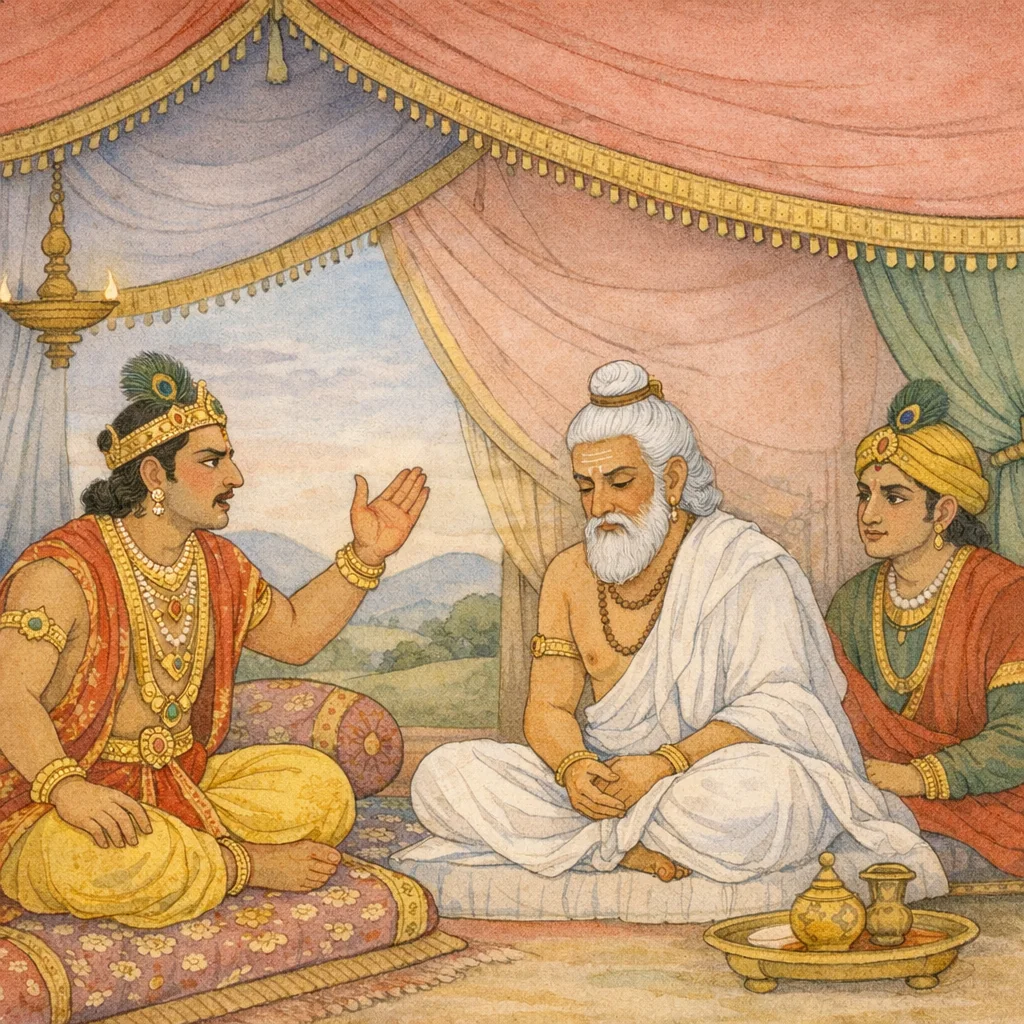
Adhyaya 152
भीमसेन–अलायुधयुद्धम् / Bhīmasena and Alāyudha: Night Engagement and Command Responses
Upa-parva: Ghaṭotkaca–Alāyudha Saṃgrāma (Rākṣasa-yuddha episode within Droṇa-parva)
Sanjaya reports the arrival of the rākṣasa leader Alāyudha, welcomed by the Kaurava ranks as a renewed source of confidence amid a fear-inducing night engagement. Duryodhana, observing Karṇa’s distress, frames Alāyudha as the appropriate counter to Ghaṭotkaca and urges him to act. Alāyudha advances; Bhīmasena shifts focus to meet the approaching adversary, producing a concentrated duel characterized first by missile exchanges and then by heavy-weapon and close-quarters striking. Rākṣasa detachments, acting under Alāyudha’s direction, pressure allied formations (including Pañcālas and Sṛñjayas), prompting a broader tactical response. Krishna issues coordinating instructions: designated warriors move to check Karṇa and other rākṣasas, while Arjuna is urged to track Alāyudha’s movement to protect Bhīma. The chapter culminates in an intense, tumulous contest between Bhīma and Alāyudha—goaded by mutual resolve—where chariot components and improvised implements are used when standard weapons are disrupted, underscoring the breakdown of conventional combat boundaries under night conditions.
Chapter Arc: Sanjaya begins: with Jayadratha slain, the Kuru camp reels; Duryodhana, like a serpent with broken fangs, sits breathless and poisoned by defeat, staring at the ruin wrought by Arjuna, Bhima, and Satyaki. → Duryodhana’s grief turns to accusation. He upbraids Drona—his commander and guru—charging him with failing to protect Jayadratha and failing to crush the Pandavas despite vast resources. He laments that allies no longer stand firm, that his ‘well-wishers’ have led him into sin through greed for kingdom, and that the Kuru cause is sinking even as the enemy rises. → In a raw, oath-laden outburst, Duryodhana binds his words with vows and sacred merit, pressing Drona to grant permission and full license to slay the Pandavas—declaring life itself worthless without his foremost friends and champions, and demanding decisive, uncompromising action. → Sanjaya narrates the full measure of Kuru calamity: the Pandavas’ ascendancy, the Dhartarashtras’ decline, and the moral corrosion within the Kuru leadership as blame replaces clarity. The chapter closes with Duryodhana’s remorse and recrimination hanging over the command tent. → Whether Drona will answer Duryodhana’s reproach with renewed ferocity—or with the restraint of a teacher bound by dharma—remains poised for the next movement of the war.
Shlokas
Verse 1
2: बछ। सं: पजञज्चाशर्दाधिकशततमोब् ध्याय: व्याकुल हुए दुर्योधनका खेद प्रकट करते हुए द्रोणाचार्यको उपालम्भ देना संजय उवाच सैन्धवे निहते राजन् पुत्रस्तव सुयोधन: । अश्रुपूर्णमुखो दीनो निरुत्साहो द्विषज्जये,संजय कहते हैं--राजन्! सिंधुराज जयद्रथके मारे जानेपर आपका पुत्र दुर्योधन बहुत दुःखी हो गया। उसके मुँहपर आँसुओंकी धारा बहने लगी। शत्रुओंको जीतनेका उसका सारा उत्साह जाता रहा
Sañjaya said: “O King, when the lord of Sindhu (Jayadratha) had been slain, your son Suyodhana (Duryodhana) became overwhelmed with grief. His face was filled with tears; dejected and dispirited, he lost the drive with which he sought victory over his foes.”
Verse 2
दुर्मना निःश्वसन् दुष्टो भग्नदंष्ट इवोरग: । आगस्कृत् सर्वलोकस्य पुत्रस्ते55रतिं परामगात्,जिसके दाँत तोड़ दिये गये हैं, उस दुष्ट सर्पफे समान वह मन-ही-मन दुःखी हो लंबी साँस खींचने लगा। सम्पूर्ण जगत्का अपराध करनेवाले आपके पुत्रको बड़ी पीड़ा हुई
Sañjaya said: “Your son, wicked and inwardly dejected, began to heave deep sighs—like a serpent whose fangs have been broken. Having incurred guilt against the whole world, he fell into extreme anguish.”
Verse 3
दृष्टवा तत्कदनं घोरं स्वबलस्य कृतं महत् । जिष्णुना भीमसेनेन सात्वतेन च संयुगे
Sañjaya said: “Seeing that dreadful and massive slaughter of his own forces, wrought in battle by Jiṣṇu (Arjuna), by Bhīmasena, and by the Sātvata (Kṛṣṇa), the king was shaken by the moral weight of war’s ruin—where prowess and strategy turn into a fearful harvest of lives.”
Verse 4
स विवर्ण: कृशो दीनो बाष्पविप्लुतलोचन: । युद्धस्थलमें अर्जुन, भीमसेन और सात्यकिके द्वारा अपनी सेनाका अत्यन्त घोर संहार हुआ देखकर वह दीन, दुर्बल और कान्तिहीन हो गया। उसके नेत्रोंमें आँसू भर आये ।। ३ ६ || अमन्यतार्जुनसमो न योद्धा भुवि विद्यते,माननीय नरेश! उसे यह निश्चय हो गया कि “इस भूतलपर अर्जुनके समान कोई दूसरा योद्धा नहीं है। समरांगणमें कुपित हुए अर्जुनके सामने न द्रोण, न कर्ण, न अश्वत्थामा और न कृपाचार्य ही ठहर सकते हैं"
Sanjaya said: Seeing on the battlefield the exceedingly dreadful destruction of his own army wrought by Arjuna, Bhimasena, and Satyaki, he became wretched—emaciated, weak, and drained of all color; his eyes overflowed with tears. Then, O honored king, he came to the firm conclusion: “On this earth there is no warrior equal to Arjuna. When Arjuna is enraged in the arena of battle, neither Drona nor Karna nor Ashvatthama nor Kripa can stand before him.”
Verse 5
न द्रोणो न च राधेयो नाश्व॒त्थामा कृपो न च । क्रुद्धस्य समरे स्थातुं पर्याप्ता इति मारिष,माननीय नरेश! उसे यह निश्चय हो गया कि “इस भूतलपर अर्जुनके समान कोई दूसरा योद्धा नहीं है। समरांगणमें कुपित हुए अर्जुनके सामने न द्रोण, न कर्ण, न अश्वत्थामा और न कृपाचार्य ही ठहर सकते हैं"
Sanjaya said: “Neither Drona, nor Radheya (Karna), nor Ashvatthama, nor even Kripa is sufficient to stand firm in battle before Arjuna when he is enraged.”
Verse 6
निर्जित्य हि रणे पार्थ: सर्वान् मम महारथान् । अवधीत् सैन्धवं संख्ये न च कश्निदवारयत्,वह सोचने लगा कि “आजके युद्धमें अर्जुनने हमारे सभी महारथियोंकों जीतकर सिंधुराजका वध कर डाला, किंतु कोई भी उन्हें समरांगणमें रोक न सका
Sanjaya said: Having indeed conquered in battle all of my great chariot-warriors, Partha (Arjuna) slew the king of Sindhu in the thick of combat; and no one was able to restrain him on the battlefield.
Verse 7
सर्वथा हतमेवेदं कौरवाणां महद् बलम् | न हास्य विद्यते त्राता साक्षादपि पुरंदर:,“कौरवोंकी यह विशाल सेना अब सर्वथा नष्टप्राय ही है। साक्षात् देवराज इन्द्र भी इसकी रक्षा नहीं कर सकते
Sanjaya said: “In every respect, this great army of the Kauravas is as good as slain—virtually destroyed. There is no protector left for it; not even Purandara (Indra) himself, though present in person, could save it.”
Verse 8
यमुपाश्रित्य संग्रामे कृत: शस्त्रसमुद्यम: । स कर्णो निर्जित: संख्ये हतश्नैव जयद्रथ:,“जिसका भरोसा करके मैंने युद्धके लिये शस्त्र-संग्रहकी चेष्टा की, वह कर्ण भी युद्धस्थलमें परास्त हो गया और जयद्रथ भी मारा ही गया
Sanjaya said: “Relying on him, I had mustered my resolve and made ready the weapons for battle. Yet that very Karna was defeated on the field, and Jayadratha too was indeed slain.”
Verse 9
यस्य वीर्य समाश्रित्य शमं याचन्तमच्युतम् । तृणवत् तमहं मन्ये स कर्णो निर्जितो युधि,“जिसके पराक्रमका आश्रय लेकर मैंने संधिकी याचना करनेवाले श्रीकृष्णको तिनकेके समान समझा था, वह कर्ण युद्धमें पराजित हो गया”
Sañjaya said: “Relying on the might of that warrior, I once deemed Acyuta—Śrī Kṛṣṇa—who came seeking peace, as insignificant as a blade of grass. Yet that very Karṇa has now been defeated in battle.”
Verse 10
एवं क्लान्तमना राजन्नुपायाद् द्रोणमीक्षितुम् । आगस्कृत् सर्वलोकस्य पुत्रस्ते भरतर्षभ,राजन! भरतश्रेष्ठ! सम्पूर्ण जगत्का अपराध करनेवाला आपका पुत्र जब इस प्रकार सोचते-सोचते मन-ही-मन बहुत खिन्न हो गया, तब आचार्य द्रोणका दर्शन करनेके लिये उनके पास गया
Sañjaya said: “O King, when your son—who had made himself an offender in the eyes of the whole world—became inwardly exhausted and dejected by such reflections, he went to see Droṇa, seeking an audience with the preceptor.”
Verse 11
तदनन्तर वहाँ उसने कौरवोंके महान् संहारका वह सारा समाचार कहा और यह भी बताया कि शत्रु विजयी हो रहे हैं और महाराज धृतराष्ट्रके सभी पुत्र विपत्तिके समुद्रमें डूब रहे हैं
Thereafter, in that very place, he reported in full the tidings of the great slaughter of the Kauravas. He also made it known that the enemy was gaining victory, and that all the sons of King Dhṛtarāṣṭra were sinking into an ocean of calamity.
Verse 12
दुर्योधन उवाच पश्य मूर्धाभिषिक्तानामाचार्य कदनं महत् | कृत्वा प्रमुखत: शूरं भीष्मं मम पितामहम्,दुर्योधन बोला--आचार्य! जिनके मस्तकपर विधिपूर्वक राज्याभिषेक किया गया था, उन राजाओंका यह महान् संहार देखिये। मेरे शूरवीर पितामह भीष्मसे लेकर अबतक कितने ही नरेश मारे गये
Duryodhana said: “O Teacher, behold this great slaughter of kings who had been duly consecrated upon the throne. Making my heroic grandsire Bhīṣma the foremost, so many rulers have been struck down.”
Verse 13
त॑ निहत्य प्रलुब्धोड्यं शिखण्डी पूर्णममानस: । पाज्चाल्यै: सहित: सर्व: सेनाग्रमभिवर्तते,व्याधों-जैसा बर्ताव करनेवाला यह शिखण्डी भीष्मको मारकर मन-ही-मन उत्साहसे भरा हुआ है और समस्त पांचाल सैनिकोंके साथ सेनाके मुहानेपर खड़ा है
Duryodhana said: “Having struck down Bhīṣma, that Śikhaṇḍin—acting like a hunter and inwardly elated—now advances to the very front of the army together with all the Pāñcāla warriors.”
Verse 14
अपरभ्नापि दुर्थर्ष: शिष्यस्ते सव्यसाचिना । अक्षौहिणी: सप्त हत्वा हतो राजा जयद्रथ:,सव्यसाची अर्जुनने मेरी सात अक्षौहिणी सेनाओंका संहार करके आपके दूसरे दुर्धर्ष शिष्य राजा जयद्रथको भी मार डाला है। मुझे विजय दिलानेकी इच्छा रखनेवाले मेरे जो- जो उपकारी सुहृद् युद्धमें प्राण देकर यमलोकमें जा पहुँचे हैं, उनका ऋण मैं कैसे चुका सकूँगा?
Duryodhana said: “Even your other disciple—hard to assail—has been slain by Savyasācin (Arjuna). After destroying seven akṣauhiṇīs of my forces, Arjuna has also killed King Jayadratha. How can I ever repay the debt I owe to those benefactor-friends of mine who, desiring to secure my victory, have given up their lives in battle and reached the realm of Yama?”
Verse 15
अस्मद्विजयकामानां सुहृदामुपकारिणाम् | गन्तास्मि कथमानृण्यं गतानां यमसादनम्,सव्यसाची अर्जुनने मेरी सात अक्षौहिणी सेनाओंका संहार करके आपके दूसरे दुर्धर्ष शिष्य राजा जयद्रथको भी मार डाला है। मुझे विजय दिलानेकी इच्छा रखनेवाले मेरे जो- जो उपकारी सुहृद् युद्धमें प्राण देकर यमलोकमें जा पहुँचे हैं, उनका ऋण मैं कैसे चुका सकूँगा?
Duryodhana said: “How can I ever become free of debt to those beneficent friends of mine who desired my victory and have gone to Yama’s abode, laying down their lives in battle? How can I repay what I owe to the fallen?”
Verse 16
ये मदर्थ परीप्सन्ते वसुधां वसुधाधिपा: । ते हित्वा वसुधैश्चर्य वसुधामधिशेरते
Duryodhana said: “Those kings, lords of the earth, who strive for my sake—abandoning their earthly sovereignty and its splendor—now lie upon the very ground.”
Verse 17
जो भूमिपाल मेरे लिये इस भूमिको जीतना चाहते थे, वे स्वयं भूमण्डलका एऐश्वर्य त्यागकर भूमिपर सो रहे हैं ।। सो<हं कापुरुष: कृत्वा मित्राणां क्षयमीदृशम् । अश्वमेधसहस्रेण पावितुं न समुत्सहे,मैं कायर हूँ, अपने मित्रोंका ऐसा संहार कराकर हजारों अश्वमेध-यज्ञोंसे भी अपनेको पवित्र नहीं कर सकता
“Those kings who, for my sake, wished to conquer this land now lie upon the earth, having themselves renounced the sovereignty of the whole world. I—base and cowardly—having brought about such destruction of my friends, do not dare to think that even a thousand Aśvamedha sacrifices could purify me.”
Verse 18
मम लुब्धस्य पापस्य तथा धर्मापचायिन: । व्यायामेन जिगीषन्त: प्राप्ता वैवस्वतक्षयम्,हाय! मुझ लोभी तथा धर्मनाशक पापीके लिये युद्धके द्वारा विजय चाहनेवाले मेरे मित्रगण यमलोक चले गये
“Alas! Because of me—greedy, sinful, and a destroyer of dharma—my friends, striving through the exertion of battle to win victory, have reached the abode of Vaivasvata (Yama), the realm of death.”
Verse 19
कथं पतितवृत्तस्य पृथिवी सुद्दां द्रुह: विवरं नाशकद् दातुं मम पार्थिवसंसदि,मुझ आचारभ्रष्ट और मित्रद्रोहीके लिये राजाओंके समाजमें यह पृथ्वी फट क्यों नहीं जाती, जिससे मैं उसीमें समा जाऊँ
Duryodhana said: “How is it that the earth does not split open and grant me a chasm in the assembly of kings—me, whose conduct has fallen from the right path, a betrayer of friends—so that I might sink into it?”
Verse 20
यो>हं रुधिरसिक्ताडूुं राज्ञां मध्ये पितामहम् । शयानं नाशकं त्रातुं भीष्ममायोधने हतम्,मेरे पितामह भीष्म राजाओंके बीच युद्धस्थलमें मारे गये और अब खूनसे लथपथ होकर बाणशबय्यापर पड़े हैं; परंतु मैं उनकी रक्षा न कर सका
I could not protect Bhīṣma, my grandsire—slain in the battle—who, in the midst of kings, lies on his bed of arrows, his body drenched in blood.
Verse 21
त॑ मामनार्यपुरुषं मित्रद्रुहमधार्मिकम् । कि वक्ष्यति हि दुर्धर्ष: समेत्य परलोकजित्,ये परलोक-विजयी दुर्धर्ष वीर भीष्म यदि मैं उनके पास जाऊँ तो मुझ नीच, मित्रद्रोही तथा पापात्मा पुरुषसे क्या कहेंगे?
What will that unconquerable hero—victorious in the other world—say when he meets me, a base and ignoble man, a betrayer of friends, and one who stands outside dharma? If I go before him, how will he address me?
Verse 22
जलसंध॑ महेष्वासं पश्य सात्यकिना हतम् । मदर्थमुद्यतं शूरं प्राणांस्त्यक्त्वा महारथम्,आचार्य! देखिये तो सही, मेरे लिये प्राणोंका मोह छोड़कर राज्य दिलानेको उद्यत हुए महाधनुर्धर शूरवीर महारथी जलसंधको सात्यकिने मार डाला
Duryodhana said: “O Teacher, look—Jalasaṃdha, that great archer, has been slain by Sātyaki. That heroic mahāratha, who had cast aside attachment even to his own life and stood ready for my sake—to win me the kingdom—has been killed.”
Verse 23
काम्बोजं निहतं दृष्टवा तथालम्बुषमेव च । अन्यान् बहुंश्व सुहददो जीवितार्थो5द्य को मम,काम्बोजराज, अलम्बुष तथा अन्यान्य बहुत-से सुहृदोंको मारा गया देखकर भी अब मेरे जीवित रहनेका क्या प्रयोजन है?
Duryodhana said: “Seeing the Kāmboja king slain, and Alambuṣa as well, and many other dear allies fallen—what purpose is there for my life today?”
Verse 24
व्यायच्छन्तो हता: शूरा मदर्थे येडपराड्मुखा: । यतमाना: परं शक्त्या विजेतुमहितान् मम,शत्रुओंके संताप देनेवाले आचार्य! जो युद्धसे विमुख न होनेवाले शूरवीर सुहृद् मेरे लिये जूझते और मेरे शत्रुओंको जीतनेके लिये यथाशक्ति पूरी चेष्टा करते हुए मारे गये हैं, उनका अपनी शक्तिभर ऋण उतारकर आज मैं यमुनाके जलसे उन सभीका तर्पण करूँगा
Duryodhana said: “Those heroic men who never turned away—who strove and exerted themselves for my sake—have been slain while doing all they could to overcome my enemies. O Ācārya, who burn my foes with your prowess, today I shall repay my debt to them to the full of my ability by offering them libations with the waters of the Yamunā.”
Verse 25
तेषां गत्वाहमानृण्यमद्य शक्त्या परंतप । तर्पयिष्यामि तानेव जलेन यमुनामनु,शत्रुओंके संताप देनेवाले आचार्य! जो युद्धसे विमुख न होनेवाले शूरवीर सुहृद् मेरे लिये जूझते और मेरे शत्रुओंको जीतनेके लिये यथाशक्ति पूरी चेष्टा करते हुए मारे गये हैं, उनका अपनी शक्तिभर ऋण उतारकर आज मैं यमुनाके जलसे उन सभीका तर्पण करूँगा
“O scorcher of foes, today I shall go and, to the best of my ability, discharge my debt to those men. Following the Yamunā, I will offer them the water-oblations—those very warriors, my well-wishing friends, who did not turn away from battle, who fought for my sake, and who, striving with all their strength to conquer my enemies, have been slain.”
Verse 26
सत्यं ते प्रतिजानामि सर्वशस्त्रभूतां वर । इष्टापूर्तेन च शपे वीर्येण च सुतैरपि,समस्त शस्त्रधारियोंमें श्रेष्ठ गुरुदेव! आज मैं अपने यज्ञ-यागादि तथा कुँआ, बावली बनवाने आदि शुभ कर्मोंकी, पराक्रमकी तथा पुत्रोंकी शपथ खाकर आपके सामने सच्ची प्रतिज्ञा करता हूँ कि अब मैं पाण्डवोंके सहित समस्त पांचालोंको युद्धमें मारकर ही शान्ति पाऊँगा अथवा मेरे वे सुहृद् युद्धमें मरकर जिन लोकोंमें गये हैं, उसीमें मैं भी चला जाऊँगा
Duryodhana said: “I make you a true vow, O best among those who are the very embodiment of all weapons. I swear it by my sacrificial merits and acts of public beneficence, and also by my valor and by my sons: I shall find peace only after slaying the Pāṇḍavas together with all the Pāñcālas in battle; otherwise, I shall go to the same worlds where my dear allies, fallen in war, have gone.”
Verse 27
निहत्य तान् रणे सर्वान् पञज्चालान् पाण्डवै: सह । शान्तिं लब्धास्मि तेषां वा रणे गन्ता सलोकताम्,समस्त शस्त्रधारियोंमें श्रेष्ठ गुरुदेव! आज मैं अपने यज्ञ-यागादि तथा कुँआ, बावली बनवाने आदि शुभ कर्मोंकी, पराक्रमकी तथा पुत्रोंकी शपथ खाकर आपके सामने सच्ची प्रतिज्ञा करता हूँ कि अब मैं पाण्डवोंके सहित समस्त पांचालोंको युद्धमें मारकर ही शान्ति पाऊँगा अथवा मेरे वे सुहृद् युद्धमें मरकर जिन लोकोंमें गये हैं, उसीमें मैं भी चला जाऊँगा
Duryodhana said: “Only after slaying them all in battle—the entire Pañcāla host together with the Pāṇḍavas—shall I find peace. Otherwise, I shall go from this battlefield to the very same world to which my fallen comrades have gone.”
Verse 28
सो<हं तत्र गमिष्यामि यत्र ते पुरुषर्षभा: | हता मदर्थ संग्रामे युध्यमाना: किरीटिना,वे पुरुषशिरोमणि सुहृद् रणभूमिमें मेरे लिये युद्ध करते-करते अर्जुनके हाथसे मारे जाकर जिन लोकोंमें गये हैं, वहीं मैं भी जाऊँगा
Duryodhana said: “I too shall go to that very realm where those bull-like heroes of yours have gone—slain by the diademed Arjuna while fighting in battle for my sake. If they have fallen for me, then I will follow them there.”
Verse 29
न हीदानीं सहाया मे परीप्सन्त्यनुपस्कृता: । श्रेयो हि पाण्डून् मन्यन्ते न तथास्मान् महाभुज,महाबाहो! इस समय जो मेरे सहायक हैं, वे अरक्षित होनेके कारण हमारी सहायता करना नहीं चाहते हैं। वे जैसा पाण्डवोंका कल्याण चाहते हैं, वैसा हमलोगोंका नहीं
Duryodhana said: “Not now do my allies wish to protect me, for they feel we are left unguarded and ill-prepared. They think the welfare of the Pāṇḍavas is preferable, but they do not wish the same good for us, O mighty-armed one.”
Verse 30
स्वयं हि मृत्युर्विहित: सत्यसंधेन संयुगे । भवानुपेक्षां कुरुते शिष्यत्वादर्जुनस्य हि,युद्धस्थलमें सत्यप्रतिज्ञ भीष्मने स्वयं ही अपनी मृत्यु स्वीकार कर ली और आप भी हमारी इसलिये उपेक्षा करते हैं कि अर्जुन आपके प्रिय शिष्य हैं
Duryodhana said: “Indeed, in the midst of battle, Bhīṣma—steadfast in his vow of truth—has as it were ordained his own death. And you, for your part, show neglect toward our cause, precisely because Arjuna is your beloved disciple.”
Verse 31
अतो विनिहता: सर्वे येडस्मज्जयचिकीर्षव: । कर्णमेव तु पश्यामि सम्प्रत्यस्मज्जयैषिणम्,इसलिये हमारी विजय चाहनेवाले सभी योद्धा मारे गये। इस समय तो मैं केवल कर्णको ही ऐसा देखता हूँ, जो सच्चे हृदयसे मेरी विजय चाहता है
Therefore, all those warriors who were intent on securing victory for us have been slain. At this moment, I see only Karṇa as one who truly seeks our victory with unwavering resolve.
Verse 32
यो हि मित्रमविज्ञाय याथातथ्येन मन्दधी: । मित्रार्थ योजयत्येनं तस्य सोडरथोडवसीदति,जो मूर्ख मनुष्य मित्रको ठीक-ठीक पहचाने बिना ही उसे मित्रके कार्यमें नियुक्त कर देता है, उसका वह काम बिगड़ जाता है
Duryodhana said: “For a dull-witted man who, without truly recognizing a friend as he really is, assigns him to carry out a friend’s task—his very purpose is ruined and the undertaking collapses.”
Verse 33
तादृग् रूप॑ कृतमिदं मम कार्य सुद्दत्तमै: । मोहाल्लुब्धस्य पापस्य जिद्दास्य धनमीहत:,मेरे परम सुह्ृद् कहलानेवालोंने मोहवश धन (राज्य) चाहनेवाले मुझ लोभी, पापी और कुटिलके इस कार्यको उसी प्रकार चौपट कर दिया है
“My undertaking has been ruined in just that manner by those utterly misguided men who call themselves my closest friends. Through delusion, they have brought to nothing the design of me—greedy, sinful, and scheming—who was striving to seize wealth and sovereignty.”
Verse 34
हतो जयद्रथश्वैव सौमदत्तिश्न वीर्यवान् । अभीषाहा: शूरसेना: शिबयो5थ वसातय:,जयद्रथ और सोमदत्तकुमार भूरिश्रवा मारे गये। अभीषाह, शूरसेन, शिबि तथा वसातिगण भी चल बसे
Duryodhana said: “Jayadratha has been slain, and so too the valiant son of Somadatta. The Abhīṣāhas, the Śūrasenas, the Śibis, and the Vasātis as well have also perished.”
Verse 35
सो5हमद्य गमिष्यामि यत्र ते पुरुषर्षभा: । हता मदर्थे संग्रामे युध्यमाना: किरीटिना,वे नरश्रेष्ठ सुहृद् रणभूमिमें मेरे लिये युद्ध करते-करते अर्जुनके हाथसे मारे जाकर जिन लोकोंमें गये हैं, वहीं आज मैं भी जाऊँगा
Duryodhana said: “Today I too shall go to that very realm where those bull-like heroes have gone—slain in battle for my sake, while fighting, by the hands of the diademed Arjuna.”
Verse 36
न हि मे जीवितेनार्थस्तानृते पुरुषर्ष भान् आचार्य: पाण्डुपुत्राणामनुजानातु नो भवान्,उन पुरुषरत्न मित्रोंके बिना अब मेरे जीवित रहनेका कोई प्रयोजन नहीं है। आप हम पाण्डुपुत्रोंके आचार्य हैं, अतः मुझे जानेकी आज्ञा दें
Duryodhana said: “Indeed, my life has no purpose without those bull-like heroes. You are the preceptor of the sons of Pāṇḍu; therefore, grant me leave to depart.”
Verse 131
ततस्तत्सर्वमाचख्यौ कुरूणां वैशसं महत् । परान् विजयतश्चापि धार्तराष्ट्रानू निमज्जत:
Then he reported in full that great calamity and slaughter that had befallen the Kurus—how the opposing side was prevailing in victory, while the sons of Dhṛtarāṣṭra were sinking into ruin.
Verse 150
इति श्रीमहाभारते द्रोणपर्वणि जयद्रथवधपर्वणि दुर्योधनानुतापे पजञ्चाशदधिकशततमो<ध्याय:
Thus, in the Śrī Mahābhārata, within the Droṇa Parva—specifically the section on the slaying of Jayadratha—this concludes the chapter titled “Duryodhana’s Remorse,” the one-hundred-and-fiftieth chapter.
Frequently Asked Questions
The chapter implicitly tests the boundary between sanctioned martial duty and escalation under night conditions: leaders pursue strategic necessity (neutralizing a high-impact adversary) while the disorder of nocturnal conflict increases the likelihood of improvised, less-regulated engagement.
Crisis leadership requires coordinated allocation of roles: while a primary duel draws attention, command must simultaneously protect vulnerable sectors, prevent morale collapse, and assign specialized counters—showing that tactical success depends on system-wide orchestration, not isolated heroics.
No explicit phalaśruti is presented in this chapter segment; its meta-commentary functions indirectly through Sanjaya’s observational framing, emphasizing how fear, confidence, and command decisions shape outcomes under extreme uncertainty.