Adhyaya 142
सहदेव-राधेय-संग्रामः; शल्य-प्रभावः; अलम्बुस-निवर्तनम् (Sahadeva and Karṇa; Śalya’s pressure; Alambusa’s interception)
Upa-parva: Droṇa-vadha-prasaṅga (Command-phase engagements leading toward Droṇa’s fall)
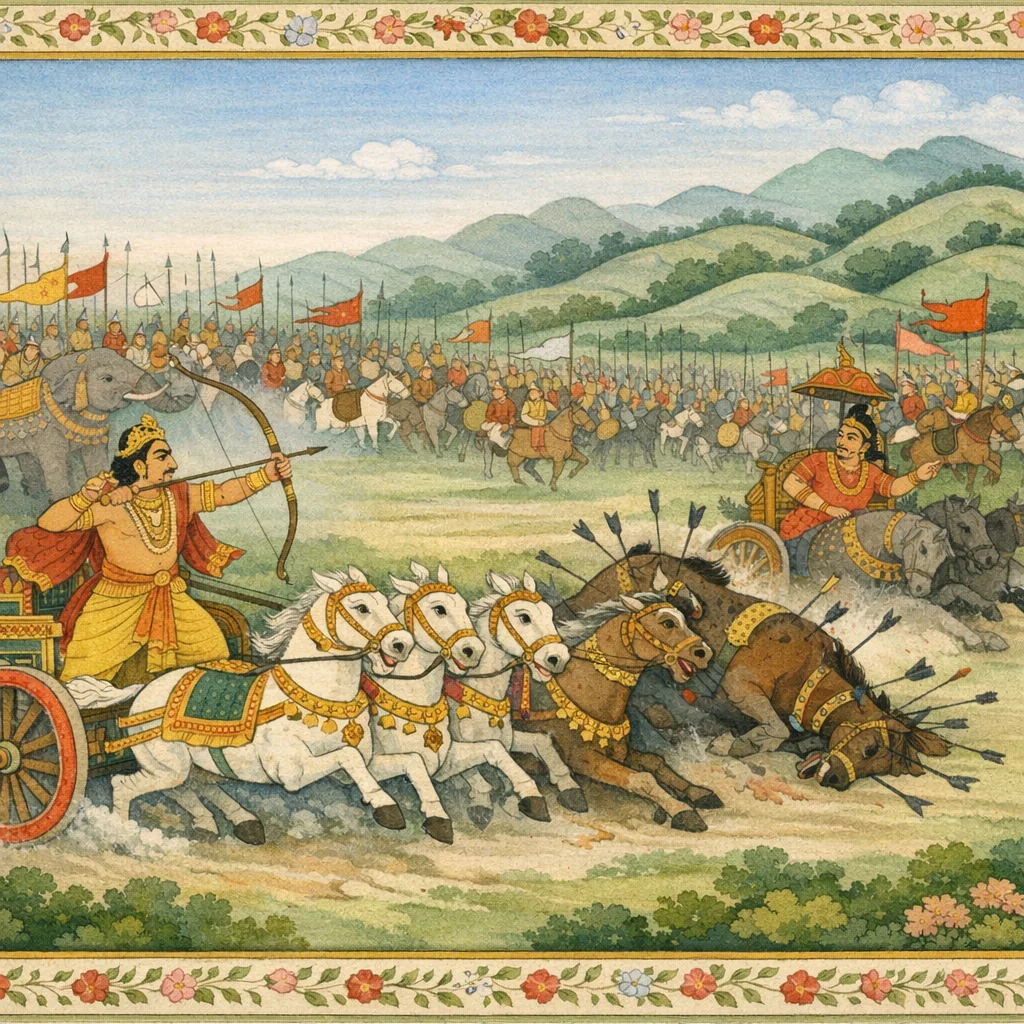
Sañjaya reports that Sahadeva advances with the intent to reach Droṇa, but Karṇa (Vaikartana) checks him in battle. A close engagement unfolds: Sahadeva strikes Karṇa with multiple arrows; Karṇa counters with a dense volley, severs Sahadeva’s bow, kills his horses, and slays his charioteer, forcing Sahadeva to fight on foot. Sahadeva cycles through weapons—sword and shield, then a heavy mace, then a spear, and finally a chariot-wheel cast like an upraised wheel of time—each neutralized by Karṇa’s arrows. Pressed back and wounded, Sahadeva withdraws from the immediate fight. Karṇa approaches and addresses him with derisive counsel to avoid battling superior rathins and to go where Arjuna is engaged; crucially, Karṇa does not kill Sahadeva, explicitly grounded in remembrance of Kuntī’s words and his commitment to truthfulness. Sahadeva, distressed by wounds and the sting of Karṇa’s speech, retreats and mounts another chariot. The scene then shifts: Śalya (Madra king) overwhelms Virāṭa and kills Śatānīka; Virāṭa is badly pierced and evacuated, and the Pāṇḍava–Pāñcāla army breaks in flight under Śalya’s arrow-showers. Seeing the rout, Vāsudeva and Dhanaṃjaya move toward Śalya, but the rākṣasa Alambusa advances to intercept; Arjuna quickly defeats him, cuts his standard and disables key elements of his chariot, driving him off, then proceeds toward Droṇa’s vicinity while Kaurava troops fall in large numbers.
Chapter Arc: धृतराष्ट्र के सम्मुख संजय का वृत्तांत—अर्जुन क्रोध से भरा हुआ कौरव-सेना में घुस चुका है; वह सेना अश्वत्थामा और कर्ण की कठोर रक्षा-व्यवस्था में भी ‘अप्रवेश्य’ कही जाती है, फिर भी धनंजय उसे चीरता चला जा रहा है। → अर्जुन के इस प्रचंड प्रवेश से कौरव-पक्ष में शोक और आशंका की आग धधकती है—राजा-राजवाड़े और जयद्रथ-सहित योद्धा ‘ग्रस्त’ से दिखने लगते हैं। इसी उथल-पुथल में शिनिवंशी सात्यकि रथ से आगे बढ़कर भीम की दिशा में जाता है और कौरवों के एक प्रमुख रक्षक—अलम्बुष—से उसका घोर सामना होता है; साथ ही दुःशासन के दल भी तेजी से जुटते हैं। → अलम्बुष के प्रहारों से घायल होने पर भी सात्यकि अपनी गति और कौशल नहीं छोड़ता; वह तीव्र बाण-वर्षा से अलम्बुष के वेगवान अश्वों को चूर-चूर कर देता है और फिर शत्रु-पंक्ति को तोड़ते हुए दुःशासन के रथ-घोड़ों को अग्नि-सदृश बाणों से मार गिराता है—कौरव-रक्षा की एक कड़ी वहीं ढह जाती है। → अलम्बुष-वध के साथ सात्यकि का मार्ग खुलता है; कौरवों की त्वरित सहायता-टुकड़ियाँ भी इस धक्के से बिखरती हैं और अर्जुन के अभियान (जयद्रथ-वध की ओर) को अप्रत्यक्ष बल मिलता है। अध्याय का पटाक्षेप ‘अलम्बुष-वध’ के रूप में होता है। → अर्जुन अभी भी शत्रु-सेना के भीतर है और कर्ण-अश्वत्थामा की रक्षा-रेखा शेष है—अगला संघर्ष और अधिक उग्र होने वाला है।
Shlokas
Verse 1
(दाक्षिणात्य अधिक पाठका ३ “लोक मिलाकर कुल १२५३ श्लोक हैं।) भीकम (2 अमान चत्वारिशर्दाधिकशततमोब ध्याय: सात्यकिद्वारा राजा अलम्बुषका और दुःशासनके घोड़ोंका वध धृतराष्ट्र रवाच अहन्यहनि मे दीप्त॑ यश: पतति संजय । हता मे बहवो योधा मन्ये कालस्य पर्ययम्,धृतराष्ट्र बोले--संजय! प्रतिदिन मेरा उज्ज्वल यश घटता या मन्द पड़ता जा रहा है, मेरे बहुत-से योद्धा मारे गये, इसे मैं समयका ही फेर समझता हूँ
Dhritarashtra said: “Sañjaya, day after day my once-bright fame is falling and growing dim. Many of my warriors have been slain. I take this as a turning of Time itself.”
Verse 2
धनंजय: सुसंक्रुद्ध: प्रविष्टो मामकं बलम् | रक्षितं द्रौणिकर्णाभ्यामप्रवेश्यं सुरैरपि,अश्वत्थामा और कर्णके द्वारा सुरक्षित मेरी सेनामें, जहाँ देवताओंका भी प्रवेश असम्भव था, क्रोधमें भरे हुए अर्जुन प्रविष्ट हो गये
Sañjaya said: Dhanañjaya (Arjuna), inflamed with fierce anger, forced his way into our Kaurava host—an array guarded by Aśvatthāmā and Karṇa, so formidable that even the gods could not have entered.
Verse 3
ताभ्यामूर्जितवीर्याभ्यामाप्यायितपराक्रम: । सहित: कृष्णभीमाभ्यां शिनीनामृषभेण च,महान् पराक्रमी श्रीकृष्ण और भीमसेन तथा शिनिप्रवर सात्यकिका साथ होनेसे अर्जुनका बल तथा पराक्रम और भी बढ़ गया है
Sañjaya said: With those two heroes of mighty strength at his side, Arjuna’s prowess and martial energy were further invigorated; for he was accompanied by Śrī Kṛṣṇa and Bhīmasena, and also by Sātyaki—the bull among the Śinis.
Verse 4
तदाप्रभूति मां शोको दहत्यग्निरिवाशयम् । ग्रस्तानिव प्रपश्यामि भूमिपालान् ससैन्धवान्,जबसे यह बात मुझे मालूम हुई है, तबसे शोक मुझे उसी प्रकार दग्ध कर रहा है, जैसे काष्ठसे पैदा होनेवाली आग अपने आधारभूत काष्ठको ही जला देती है। मैं सिंधुराज जयद्रथसहित समस्त राजाओंको कालके गालमें गया हुआ ही समझता हूँ
Sañjaya said: From that moment onward, grief has been burning me, as fire burns the very fuel on which it rests. I see the kings—together with the Sindhu ruler Jayadratha—as though already swallowed by Death.
Verse 5
अप्रियं सुमहत् कृत्वा सिन्धुराज: किरीटिन: । चक्षुविषयमापन्न: कथं जीवितमाप्लनुयात्,सिंधुराज जयद्रथ किरीटधारी अर्जुनका महान् अप्रिय करके जब उनकी आँखोंके सामने आ गया है, तब कैसे जीवित रह सकता है?
Sañjaya said: “Having done a very great wrong to Arjuna, the diadem-wearing hero, how could the king of Sindhu—Jayadratha—survive once he has come within Arjuna’s sight?”
Verse 6
अनुमानाच्च पश्यामि नास्ति संजय सैन्धव: । युद्ध तु तद् यथावृत्तं तन्ममाचक्ष्व तत्त्तत:ः,संजय! मैं अनुमानसे यह देख रहा हूँ कि सिंधुराज जयद्रथ अब जीवित नहीं है। अब वह युद्ध जिस प्रकार हुआ था, वह सब यथार्थरूपसे बताओ
Sañjaya said: “From the signs and by inference I perceive that the king of Sindhu, Jayadratha, is no longer alive. Now, tell me—exactly as it happened—how that battle unfolded, step by step.”
Verse 7
यश्च विक्षोभ्य महतीं सेनामालोड्य चासकृत् । एक: प्रविष्ट: संक्रुद्धो नलिनीमिव कुज्जर:,संजय! जैसे हाथी किसी पोखरेमें प्रवेश करता है, उसी प्रकार जिन्होंने अकेले ही कुपित होकर मेरी विशाल सेनाको क्षुब्ध करके बारंबार उसे मथकर उसके भीतर प्रवेश किया था, उन वृष्णिवंशी वीर सात्यकिने अर्जुनके लिये प्रयत्नपूर्वक जैसा युद्ध किया था, उसका वर्णन करो; क्योंकि तुम कथा कहनेमें कुशल हो
Sanjaya said: “Describe how that Vṛṣṇi hero Sātyaki fought with strenuous resolve for Arjuna—how, enraged, he alone plunged into my vast army, shook it into turmoil, and again and again churned through its ranks, like an elephant entering a lotus-filled pond.”
Verse 8
तस्य मे वृष्णिवीरस्य ब्रूहि युद्धं यथातथम् । धनंजयार्थे यत्तस्य कुशलो हासि संजय,संजय! जैसे हाथी किसी पोखरेमें प्रवेश करता है, उसी प्रकार जिन्होंने अकेले ही कुपित होकर मेरी विशाल सेनाको क्षुब्ध करके बारंबार उसे मथकर उसके भीतर प्रवेश किया था, उन वृष्णिवंशी वीर सात्यकिने अर्जुनके लिये प्रयत्नपूर्वक जैसा युद्ध किया था, उसका वर्णन करो; क्योंकि तुम कथा कहनेमें कुशल हो
Sanjaya said: “Tell me, exactly as it happened, of the battle fought by that hero of the Vṛṣṇi line. Describe how he strove for Dhanañjaya (Arjuna), for you, Sanjaya, are skilled in recounting events.”
Verse 9
संजय उवाच तथा तु वैकर्तनपीडितं त॑ भीम॑ प्रयान्तं पुरुषप्रवीरम् । समीक्ष्य राजन् नरवीरमध्ये शिनिप्रवीरो$नुययौ रथेन,संजयने कहा--राजन्! पुरुषोंमें प्रमुख वीर भीमसेन अर्जुनके पास जाते समय जब पूर्वोक्त प्रकारसे कर्णद्वारा पीड़ित होने लगे, तब उन्हें उस अवस्थामें देखकर शिनिवंशके प्रधान वीर सात्यकिने उन नरवीरोंके समूहमें रथके द्वारा भीमसेनकी सहायताके लिये उनका अनुसरण किया
Sañjaya said: “O King, seeing Bhīma—foremost among men—pressing onward, yet being harried by Vaikartana (Karna), the chief hero of the Śini line, Sātyaki, followed after him by chariot amid the host of warriors, in order to support him.”
Verse 10
नदन् यथा वज्रधरस्तपान्ते ज्वलन् यथा जलदान्ते च सूर्य: । निष्नन्नमित्रान् धनुषा दृढेन स कम्पयंस्तव पुत्रस्य सेनाम्,जैसे वज्रधारी इन्द्र वर्षाकालमें मेघरूपसे गर्जना करते हैं और जैसे सूर्य शरत्कालमें प्रज्वलित होते हैं, उसी प्रकार गरजते और तेजसे प्रज्वलित होते हुए सात्यकि अपने सुदृढ़ धनुषद्वारा आपके पुत्रकी सेनाको कँपाते हुए शत्रुओंका संहार करने लगे
Sañjaya said: “Roaring like Indra, wielder of the thunderbolt, at the close of the hot season, and blazing like the sun when the clouds have dispersed, Sātyaki—slaying foes with his firm bow—set your son’s army trembling.”
Verse 11
त॑ यान्तमश्वै रजतप्रकाशै- रायोधने वीरवरं नदन्तम् | नाशवनुवन् वारयितु त्वदीया: सर्वे रथा भारत माधवाग्रयम्,भारत! उस युद्धस्थलमें रजतवर्णके अभश्रोंद्वारा आगे बढ़ते और गरजना करते हुए मधुवंशशिरोमणि वीरवर सात्यकिको आपके सारे रथी मिलकर भी रोक न सके
Sañjaya said: On the battlefield, that foremost hero of the Vṛṣṇis—Sātyaki, the best of the Mādhava line—advanced, his horses gleaming like silver and his war-cries resounding. All your chariot-warriors together, O Bhārata, were unable to check or turn him back.
Verse 12
अमर्षपूर्णस्त्वनिवृत्तयोधी शरासनी काज्चनवर्मधारी । अलम्बुष: सात्यकिं माधवाग्रय- मवारयद् राजवरो5भिपत्य,उस समय सोनेका कवच और धनुष धारण किये, युद्धसे कभी पीठ न दिखानेवाले, राजाओंमें श्रेष्ठ अलम्बुषने अमर्षमें भरकर मधुकुलके महान् वीर सात्यकिको सहसा सामने आकर रोका
Then Alambuṣa, foremost among kings, clad in golden armor and bearing his bow—an unretreating warrior who never turned his back on battle—surged forward in wrath and suddenly barred the path of Sātyaki, the great hero of the Madhu line.
Verse 13
तयोरभूद् भारत सम्प्रहारो यथाविधो नैव बभूव कश्ित् | प्रेक्षनत एवाहवशोभिनौ तौ योधास्त्वदीयाक्ष् परे च सर्वे,भरतनन्दन! उन दोनोंका जैसा संग्राम हुआ, वैसा दूसरा कोई युद्ध नहीं हुआ था। आपके और शत्रुपक्षके समस्त योद्धा संग्राममें शोभा पानेवाले उन दोनों वीरोंको देखते ही रह गये थे
Sañjaya said: O Bhārata, the clash between those two was of such a kind that no other battle like it had ever occurred. O delight of the Bharatas, all the warriors—both on your side and on the enemy’s—could only stand and watch those two heroes, radiant in the splendor of combat.
Verse 14
आविध्यदेनं दशभ्रि: पृषत्कै- रलम्बुषो राजवर: प्रसहा । अनागतानेव तु तान् पृषत्कां- श्रिच्छेद बाणै: शिनिपुजड्रवो5डपि,राजाओंमें श्रेष्ठ अलम्बुषने सात्यकिको बलपूर्वक दस बाण मारे। शिनिप्रवर सात्यकिने भी बाणोंद्वारा अपने पास आनेसे पहले ही उन समस्त बाणोंको काट गिराया
Sañjaya said: The eminent king Alambuṣa, with force, struck him (Sātyaki) with ten arrows. But Sātyaki, the foremost of the Śinis, even before those shafts could reach him, cut down all those arrows with his own missiles.
Verse 15
पुनः स बाणैस्त्रिभिरग्निकल्पै- राकर्णपूर्णनिशितै: सपुड्खै: । विव्याध देहावरणं विदार्य ते सात्यकेराविविशु: शरीरम्,तब अलम्बुषने धनुषको कानतक खींचकर अग्निके समान प्रज्वलित, सुन्दर पंखवाले तीन तीखे बाणोंद्वारा पुनः सात्यकिपर प्रहार किया। वे बाण सात्यकिके कवचको विदीर्ण करके उनके शरीरमें घुस गये
Sañjaya said: Once again he struck Sātyaki with three arrows, blazing like fire, keen-edged, drawn to the ear in full measure, and furnished with feathers. Tearing through Sātyaki’s body-armor, those shafts pierced and entered his very flesh.
Verse 16
तै: कायमस्याग्न्यनिलप्र भावै- विंदार्य बाणैर्निश्तिज्वलद्धि: | आजसघ्निवांस्तान् रजतप्रकाशा- नश्नांक्षतुर्भिश्चतुर: प्रसहा,अग्नि और वायुके समान प्रभावशाली उन प्रज्वलित तीखे बाणोंद्वारा सात्यकिका शरीर विदीर्ण करके अलम्बुषने चाँदीके समान चमकनेवाले उनके उन चारों घोड़ोंको भी चार बाणोंसे हठात् घायल कर दिया
Sañjaya said: With blazing, razor-sharp arrows whose force was like fire and wind, Alambuṣa tore into Sātyaki’s body; then, with four more shafts, he violently struck and wounded Sātyaki’s four horses, shining like silver.
Verse 17
तथा तु तेनाभिहतस्तरस्वी नप्ता शिनेशक्षुक्रधरप्रभाव: । अलम्बुषस्योत्तमवेगवद्धि- रश्वांश्षतुर्भि्निजघान बाणै:,इस प्रकार अलम्बुषके द्वारा घायल होकर चक्रधारी विष्णुके समान प्रभावशाली और वेगवान् वीर शिनिपौत्र सात्यकिने अपने उत्तम वेगवाले चार बाणोंद्वारा राजा अलम्बुषके चारों घोड़ोंको मार डाला
Sañjaya said: Struck by Alambuṣa, the swift Sātyaki—grandson of Śini, radiant in prowess like the bearer of the vajra—answered with disciplined speed and, with four well-aimed arrows, slew Alambuṣa’s four horses. In the harsh law of battle, he cripples the enemy’s mobility rather than striking blindly, turning injury into controlled reprisal.
Verse 18
अथास्य सूतस्य शिरो निकृत्य भल्लेन कालानलसंनिभेन । सकुण्डलं पूर्णशशिप्रकाशं भ्राजिष्णु वक्त्रं निचकर्त देहात्,तत्पश्चात् उनके सारथिका भी मस्तक काटकर कालाग्निके समान तेजस्वी भल्लद्दारा पूर्ण चन्द्रमाके समान कान्तिसे प्रकाशित होनेवाले उनके कुण्डलमण्डित मुखमण्डलको भी धड़से काट गिराया
Sañjaya said: Then, severing the charioteer’s head with a bhalla arrow blazing like the fire of Kāla (Time), he next cut from the body the radiant face—adorned with earrings and shining like the full moon. The verse marks the grim momentum of battlefield violence, where skill and wrath eclipse restraint, and death comes not only to famed warriors but also to those bound to them by duty.
Verse 19
निहत्य त॑ पार्थिवपुत्रपौत्र संख्ये यदूनामृषभः प्रमाथी । ततोडन्वयादर्जुनमेव वीर: सैन्यानि राजंस्तव संनिवार्य,राजन! शत्रुओंको मथ डालनेवाले यदुकुलतिलक वीर सात्यकिने इस प्रकार युद्धस्थलमें राजाके पुत्र और पौत्र अलम्बुषको मारकर आपकी सेनाको स्तब्ध करके फिर अर्जुनका ही अनुसरण किया
Sañjaya said: Having slain that Alambusha—counted among kings like a son and grandson—on the battlefield, the heroic Sātyaki, bull of the Yadus and fierce crusher of foes, then checked your armies, O King, and proceeded to follow Arjuna alone. The verse shows war’s relentless momentum: a decisive killing is immediately followed by strategic restraint, undertaken in loyal support of Arjuna’s cause.
Verse 20
लि शी जं 7४ 2 है ब >चस शी] ॥ १४ 2 ४ हा > & 200 / है ४ 5 + कं | 232: ९ अन्वागतं वृष्णिवीरं समीक्ष्य तथारिमध्ये परिवर्तमानम् । घ्नन्तं कुरूणामिषुभिर्बलानि पुन: पुनर्वायुमिवा भ्रपूगान्,उस समय गोदुग्ध, कुन्दकुसुम, चन्द्रमा तथा हिमके समान कान्तिवाले सिंधुदेशीय सुशिक्षित सुन्दर घोड़े, जो सोनेकी जालीसे आवृत थे, पुरुषसिंह सात्यकि जहाँ-जहाँ जाना चाहते, वहाँ-वहाँ उन्हें ले जाते थे। अजमीढवंशी भरतनन्दन! इस प्रकार जैसे वायु मेघोंकी घटाको छित्न-भिन्न करती रहती है, वैसे ही बारंबार बाणोंद्वारा कौरव-सेनाओंका संहार करते और शत्रुओंके बीचमें विचरते हुए वृष्णिवीर सात्यकिको वहाँ आया हुआ देख योद्धाओंमें प्रधान आपके पुत्र दुःशासनको अगुआ बनाकर आपके बहुत-से पुत्र तथा आपके पक्षके अन्य योद्धा भी शीघ्रतापूर्वक एक साथ ही उनपर टूट पड़े
Sañjaya said: Seeing the Vṛṣṇi hero (Sātyaki) arrive and move about in the very midst of the enemy, repeatedly striking down the Kuru forces with his arrows—like the wind again and again scattering masses of clouds—Duryodhana’s warriors, led by Duḥśāsana, rushed together to overwhelm him. The verse highlights the battlefield ethic of concentrated counter-attack against a single, highly effective combatant, even as it underscores the relentless, almost elemental force of Sātyaki’s assault.
Verse 21
ततो<5वहन् सैन्धवा: साधुदान्ता गोक्षीरकुन्देन्दुहिमप्रकाशा: । सुवर्णजालावतता: सदश्वा यतो यत: कामयते नृसिंह:,उस समय गोदुग्ध, कुन्दकुसुम, चन्द्रमा तथा हिमके समान कान्तिवाले सिंधुदेशीय सुशिक्षित सुन्दर घोड़े, जो सोनेकी जालीसे आवृत थे, पुरुषसिंह सात्यकि जहाँ-जहाँ जाना चाहते, वहाँ-वहाँ उन्हें ले जाते थे। अजमीढवंशी भरतनन्दन! इस प्रकार जैसे वायु मेघोंकी घटाको छित्न-भिन्न करती रहती है, वैसे ही बारंबार बाणोंद्वारा कौरव-सेनाओंका संहार करते और शत्रुओंके बीचमें विचरते हुए वृष्णिवीर सात्यकिको वहाँ आया हुआ देख योद्धाओंमें प्रधान आपके पुत्र दुःशासनको अगुआ बनाकर आपके बहुत-से पुत्र तथा आपके पक्षके अन्य योद्धा भी शीघ्रतापूर्वक एक साथ ही उनपर टूट पड़े
Sañjaya said: Then the well-trained horses of Sindhu—radiant like cow’s milk, jasmine blossoms, the moon, and snow—covered with nets of gold, bore the lion-like warrior wherever he wished to go. Thus, moving amid the enemy host and repeatedly cutting down the Kaurava forces with showers of arrows, Sātyaki appeared on the field; and seeing him, Duryodhana’s foremost fighters—led by Duḥśāsana—together rushed swiftly to overwhelm him.
Verse 22
अथात्मजास्ते सहिताभिपेतु- रन्ये च योधास्त्वरितास्त्वदीया: । कृत्वा मुखं भारत योधमुख्यं दुःशासन त्वत्सुतमाजमीढ,उस समय गोदुग्ध, कुन्दकुसुम, चन्द्रमा तथा हिमके समान कान्तिवाले सिंधुदेशीय सुशिक्षित सुन्दर घोड़े, जो सोनेकी जालीसे आवृत थे, पुरुषसिंह सात्यकि जहाँ-जहाँ जाना चाहते, वहाँ-वहाँ उन्हें ले जाते थे। अजमीढवंशी भरतनन्दन! इस प्रकार जैसे वायु मेघोंकी घटाको छित्न-भिन्न करती रहती है, वैसे ही बारंबार बाणोंद्वारा कौरव-सेनाओंका संहार करते और शत्रुओंके बीचमें विचरते हुए वृष्णिवीर सात्यकिको वहाँ आया हुआ देख योद्धाओंमें प्रधान आपके पुत्र दुःशासनको अगुआ बनाकर आपके बहुत-से पुत्र तथा आपके पक्षके अन्य योद्धा भी शीघ्रतापूर्वक एक साथ ही उनपर टूट पड़े
Sañjaya said: Then your sons, together with other warriors of your side, rushed forward in haste. O Bhārata, O descendant of Ajamīḍha, making your son Duḥśāsana—the foremost among fighters—their vanguard, they fell upon him as a united force. The scene shows how, in the press of war, loyalty to kin and duty to faction drive men to collective assault, even as the moral weight of battle deepens through relentless violence.
Verse 23
ते सर्वतः सम्परिवार्य संख्ये शैनेयमाजघ्नुरनीकसाहा: । स चापि तान् प्रवर: सात्वतानां न्यवारयद् बाणजालेन वीर:,वे सभी बड़ी-बड़ी सेनाओंका आक्रमण सहनेमें समर्थ थे। उन सबने युद्धस्थलमें सात्यकिको चारों ओरसे घेरकर उनपर प्रहार आरम्भ कर दिया। सात्वतशिरोमणि वीर सात्यकिने भी अपने बाणोंके समूहसे उन सबको आगे बढ़नेसे रोक दिया
Sañjaya said: Enduring the assault of many great battle-formations, those warriors surrounded Śaineya (Sātyaki) on all sides in the thick of combat and began to strike at him. But the heroic Sātyaki—foremost among the Sāttvatas—checked their advance, holding them back with a dense net of arrows.
Verse 24
निवार्य तांस्तूर्णममित्रघाती नप्ता शिने: पत्रिभिरग्निकल्पै: । दुःशासनस्याभिजघान वाहा- नुद्यम्य बाणासनमाजमीढ
Sañjaya said: Having swiftly checked them, the slayer of foes—Śini’s grandson—raised his bow and struck down Duḥśāsana’s horses with feathered arrows blazing like fire. In the ruthless press of battle, he chose to disable the chariot’s power of movement, a tactically decisive act that also signals the grim ethics of war where survival and duty drive swift, forceful choices.
Verse 25
अजमीढनन्दन! उन सबको रोककर शत्रुघाती शिनिपौत्र सात्यकिने तुरंत ही धनुष उठाकर अग्निके समान तेजस्वी बाणोंद्वारा दुःशासनके घोड़ोंको मार डाला ।। ततोडर्जुनो हर्षमवाप संख्ये कृष्णश्न दृष्टवा पुरुषप्रवीरम्,उस समय श्रीकृष्ण और अर्जुन पुरुषोंमें प्रधान वीर सात्यकिको उस युद्धभूमिमें उपस्थित देख बड़े प्रसन्न हुए
Sañjaya said: “O descendant of Ajmīḍha! After checking them all, the enemy-slaying Sātyaki—grandson of Śini—swiftly lifted his bow and, with arrows blazing like fire, struck down the horses of Duḥśāsana. Then, in the thick of battle, Arjuna was filled with joy; and Kṛṣṇa too, seeing that foremost of men, Sātyaki, present on the battlefield, became greatly pleased.”
Verse 139
इस प्रकार श्रीमहाभारत द्रोणपर्वके अन्तर्गत जयद्रथवधपर्वमें भीमसेन और कर्णका युद्धविषयक एक सौ उनतालीसवाँ अध्याय पूरा हुआ
Sañjaya said: Thus, in the Śrī Mahābhārata, within the Droṇa Parva—specifically in the section concerning the slaying of Jayadratha—the one hundred and thirty-ninth chapter, dealing with the battle between Bhīmasena and Karṇa, is concluded. The narration frames the war not merely as combat, but as a morally charged sequence of vows, duties, and consequences unfolding within the larger struggle for dharma.
Verse 140
इति श्रीमहाभारते द्रोणपर्वणि जयद्रथवधपर्वणि अलम्बुषवधे चत्वारिंशदाधिकशततमो< ध्याय:,इस प्रकार श्रीमहाभारत द्रोणपर्वके अन्तर्गत जयद्रथवधपर्वमें अलग्बुषवधविषयक एक सौ चालीसवाँ अध्याय पूरा हुआ
Sañjaya said: “Thus, in the Śrī Mahābhārata, within the Droṇa Parva, in the section concerning the slaying of Jayadratha, the one-hundred-and-fortieth chapter—dealing with the killing of Alambuṣa—comes to an end.” This colophon marks the close of the episode within the war’s larger moral and strategic arc, where decisive violence is framed as the outcome of vows, duty (dharma), and the inexorable momentum of the battlefield.
Frequently Asked Questions
Karṇa gains a decisive advantage over Sahadeva but refrains from killing him; the dilemma is whether battlefield opportunity overrides prior ethical commitment—resolved here by Karṇa’s adherence to Kuntī’s instruction and his satya-saṃdhi.
The episode illustrates that agency in conflict is not only technical (weapon-skill) but also normative: remembered obligations and truth-keeping can function as higher-order constraints that redirect outcomes even amid extreme pressure.
No explicit phalaśruti appears in this chapter; its meta-significance is narrative-ethical, showing how vow and kin-linked obligation operate as causal determinants within the war’s karmic and strategic texture.