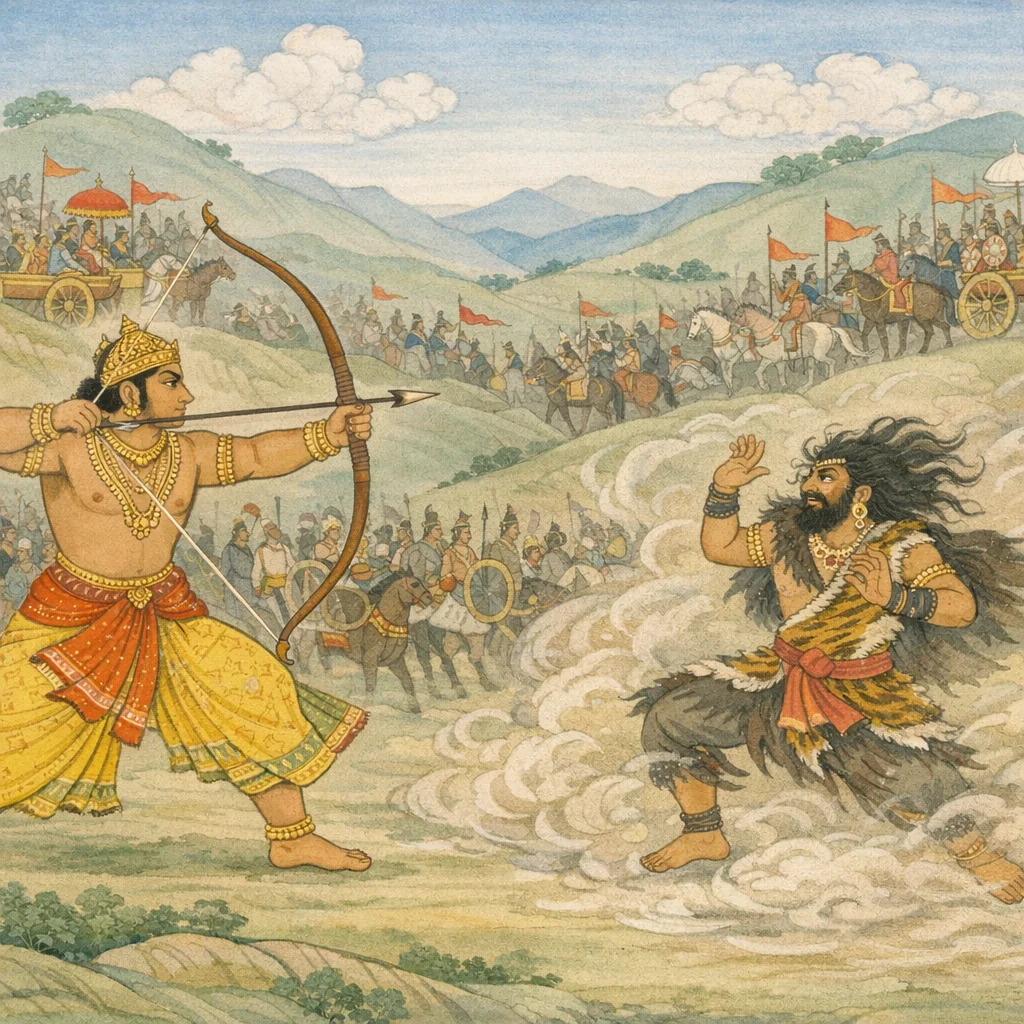
Adhyaya 110
Adhyāya 110: Dhṛtarāṣṭra’s Lament on Fate; Saṃjaya’s Reproof and the Princes’ Assault on Bhīma (द्रोणपर्व, अध्याय ११०)
Upa-parva: Bhīma–Karṇa Saṃvāda and the Kaurava Princes’ Engagement (contextual war-episode within Droṇa Parva)
Dhṛtarāṣṭra opens with a fatalistic thesis—daiva (fate) overrides pauruṣa (human effort)—prompted by Karṇa’s inability to overcome the Pāṇḍava in direct engagement. He recalls Duryodhana’s repeated assertions about Karṇa’s unmatched prowess and then asks what Duryodhana said upon seeing Karṇa checked and withdrawing. Dhṛtarāṣṭra further depicts Bhīma as an overwhelming force: even senior Kaurava champions, though aware of Bhīma’s strength and resolve, appear unable to stand firm before him; approaching Bhīma in anger is likened to entering fire or confronting Death. Saṃjaya responds with a corrective, attributing the catastrophe to Dhṛtarāṣṭra’s earlier choices—creating enmity, yielding to his sons’ counsel, and refusing salutary advice—framed as a self-administered poison now bearing fruit. Saṃjaya then narrates the immediate tactical sequence: five Kaurava brothers (Durmarṣaṇa, Duḥsaha, Durmada, Durdhara, Jaya) surround Bhīma with arrows; Bhīma receives them with composure, Karṇa advances, and despite Kaurava support, Bhīma kills the five princes and their charioteers, demonstrating battlefield momentum and the fragility of morale rooted in boast rather than assessment.
Chapter Arc: संजय धृतराष्ट्र से कहता है—द्रौपदी के पुत्र रण में एक ऐसे उग्र वीर से पीड़ित हो उठे हैं कि क्षणभर को उन्हें अपना कर्तव्य भी सूझता नहीं; उसी बीच सोमदत्त-पुत्र शल का प्रचण्ड प्रहार पाण्डव-पक्ष पर टूट पड़ता है। → शल एक-एक बाण से द्रौपदेयों को वक्ष में बेधकर उन्हें विचलित करता है; उधर राक्षस अलम्बुष पाण्डव-सेना में हाथी, घोड़े, पैदल और रथियों को बाण-वृष्टि से गिराता चला जाता है, जिससे मोर्चा डगमगाने लगता है। → भीमसेन क्रोध से दहकते अग्नि-तुल्य होकर ‘त्वाष्ट्र’ अस्त्र का संधान करते हैं और अलम्बुष के उन्माद को तोड़ते हुए उसे पराजय की ओर ढकेल देते हैं; साथ ही द्रौपदी-पुत्र शत्रु-शमन शतानीक (नकुल-पुत्र) शल पर निर्णायक प्रहार कर उसे धराशायी कर देता है। → अलम्बुष की मार से क्षत-विक्षत पाण्डव-सेना में भीम की विजय-ध्वनि उठती है; मरुद्गणों के इन्द्र-स्तवन की भाँति योद्धा भीम की प्रशंसा करते हैं और मोर्चा फिर सँभल जाता है—द्रौपदेयों पर छाया भय हटता है। → अलम्बुष घोर रूप धारण कर भीमसेन से कुछ कहता/ललकारता है—संकेत देता हुआ कि राक्षसी प्रतिशोध और भीषण प्रतिघात अभी शेष है।
Shlokas
Verse 1
ऑपनआक्राता बछ। अकाल अष्टाधिकशततमोब<् ध्याय: द्रौपदीपुत्रोंके द्वारा सोमदत्तकुमार शलका वध तथा भीमसेनके द्वारा अलम्बुषकी पराजय संजय उवाच द्रौपदेयान् महेष्वासान् सौमदत्तिमहायशा: । एकैकं पज्चभिर्विद्ध्वा पुनर्विव्याध सप्तभि:,संजय कहते हैं--राजन्! महायशस्वी शलने महाधनुर्धर द्रौपदीपुत्रोंमेंसे एक-एकको पाँच-पाँच बाणोंसे बीधकर पुनः सात बाणोंद्वारा घायल कर दिया
Sañjaya said: O King, the illustrious son of Somadatta, a renowned warrior, struck each of the mighty-armed sons of Draupadī with five arrows, and then again wounded them with seven more.
Verse 2
ते पीडिता भृशं तेन रौद्रेण सहसा विभो । प्रमूढा नैव विविदुर्म॒धे कृत्यं सम किंचन,प्रभो! उस भयंकर वीरके द्वारा अत्यन्त पीड़ित होनेके कारण वे सहसा मोहित हो यह नहीं जान सके कि इस समय युद्धमें हमारा कर्तव्य क्या है?
Sañjaya said: Tormented exceedingly by that fierce and dreadful warrior, they were suddenly thrown into bewilderment, O lord, and could not discern at that moment what duty or proper course of action remained for them in the midst of battle.
Verse 3
नाकुलिश्व शतानीकः सौमदत्तिं नरर्षभम् । द्वाभ्यां विदृध्वानदद्धृष्ट: शराभ्यां शत्रुकर्शन:,तब नकुलके पुत्र शत्रुसूदन शतानीकने दो बाणोंद्वारा नरश्रेष्ठ शलको घायल करके बड़े हर्षके साथ सिंहनाद किया
Sañjaya said: Nakulīśvaśatānīka, the son of Nakula, struck Saumadatti—the bull among men—with two arrows. Having pierced him, that afflicter of foes roared aloud in exultation, as warriors do amid the fierce press of battle.
Verse 4
तथेतरे रणे यत्तास्त्रिभिस्त्रिभिरजिह्मगै: । विव्यधु: समरे तूर्ण सौमदत्तिममर्षणम्,इसी प्रकार अन्य द्रौपदीपुत्रोंने भी समरांगणमें प्रयत्तशील होकर अमर्षशील शलको तुरंत ही तीन-तीन बाणोंद्वारा बींध डाला
Sañjaya said: Likewise, the other warriors—pressing forward in the battle—swiftly pierced the unyielding Saumadatti in the thick of combat, each striking him with three straight-flying arrows.
Verse 5
स तान् प्रति महाराज पञ्च चिक्षेप सायकान् | एकैकं हृदि चाजघ्ने एकैकेन महायशा:,महाराज! तब महायशस्वी शलने उनपर पाँच बाण चलाये, जिनमेंसे एक-एकके द्वारा एक-एककी छाती छेद डाली
Sañjaya said: O King, turning against them, the greatly renowned warrior shot five arrows. With each single arrow he struck each man in the heart.
Verse 6
ततस्ते भ्रातर: पञ्च शरैर्विद्धा महात्मना । परिवार्य रणे वीर विव्यधु: सायकैर्भुशम्,फिर महामना शलके बाणोंसे घायल हुए उन पाँचों भाइयोंने उस वीरको रफक्षेत्रमें चारों ओरसे घेरकर अपने बाणोंद्वारा अत्यन्त घायल कर दिया
Sañjaya said: Then those five brothers, pierced by the arrows of that great-souled warrior, surrounded the hero on the battlefield and, in return, struck him fiercely with their own shafts, grievously wounding him.
Verse 7
आर्जुनिस्तु हयांस्तस्य चतुर्भिनिशितै: शरै: | प्रेषयामास संक़ुद्धो यमस्य सदन प्रति,अर्जुनकुमार श्रुतकीर्तिने अत्यन्त कुपित हो चार तीखे बाणोंद्वारा शलके चारों घोड़ोंको यमलोक भेज दिया
Sañjaya said: Arjuni (Śrutakīrti), inflamed with wrath, struck down his opponent’s four horses with four razor-sharp arrows, sending them to Yama’s abode—an image of swift, lethal retribution amid the ruthless ethics of battlefield necessity.
Verse 8
भैमसेनिर्धनुश्छित्त्वा सौमदत्तेरमहात्मन: । ननाद बलवन्नादं विव्याध च शितै: शरै:,फिर भीमसेनके पुत्र सुतसोमने पैने बाणोंद्वारा महामना सोमदत्तकुमारके धनुषको काटकर उन्हें भी बींध डाला और बड़े चोरसे गर्जना की
Sañjaya said: Bhīmasena’s son cut down the bow of the high-souled son of Somadatta, then pierced him with sharp arrows and roared aloud with great force—an act that displays the fierce momentum of battle, where prowess and intimidation are used to break an opponent’s capacity to fight.
Verse 9
यौधिष्ठिरिर्ध्वजं तस्य छित्त्वा भूमावपातयत् । नाकुलिश्लाथ यन्तारं रथनीडादपाहरत्,तदनन्तर युधिष्छिरकुमार प्रतिविन्ध्यने शलकी ध्वजा काटकर पृथ्वीपर गिरा दी। फिर नकुलपुत्र शतानीकने उनके सारथिको मारकर रथकी बैठकसे नीचे गिरा दिया
Sañjaya said: Yudhiṣṭhira’s son cut down his opponent’s banner and made it fall to the ground. Then Nakula’s son struck down the charioteer and dragged him from the chariot-seat. In the grim ethics of battle, the fall of the standard signals a warrior’s humiliation and shaken morale, while the killing of the driver shows how the fight turns to disabling the enemy’s capacity to continue—an escalation that reflects the ruthless momentum of the Kurukṣetra war.
Verse 10
साहदेविस्तु त॑ ज्ञात्वा भ्रातृभिविमुखीकृतम् | क्षुरपप्रेण शिरो राजन् निचकर्त महात्मन:,राजन! अन्तमें सहदेवकुमारने यह जानकर कि मेरे भाइयोंने शलको युद्धसे विमुख कर दिया है, महामनस्वी शलके मस्तकको क्षुरप्रसे काट डाला
Sañjaya said: O King, when the son of Sahadeva realized that Śala had been turned away from the fight by his brothers, he struck down that great-souled warrior by severing his head with a razor-edged arrow—an act that underscores the ruthless finality of battlefield duty once a foe is isolated and rendered vulnerable.
Verse 11
तच्छिरो न्यपतद् भूमौ तपनीयविभूषितम् । भ्राजयत् तं रणोद्देशं बालसूर्यसमप्रभम्,सोमदत्तकुमारका प्रातःकालके सूर्यकी भाँति प्रकाशमान सुवर्णभूषित वह मस्तक उस रणभूमिको प्रकाशित करता हुआ पृथ्वीपर गिर पड़ा
Sañjaya said: That head, adorned with ornaments of refined gold, fell upon the earth. Shining like the radiance of the morning sun, it lit up that region of the battlefield—an image that underscores how war turns even noble splendor into a momentary, tragic spectacle.
Verse 12
सौमदत्ते: शिरो दृष्टवा निहतं तन्महात्मन: । वित्रस्तास्तावका राजन प्रदुद्रुवुरनेकथा,महाराज! महामना शलके मस्तकको कटा हुआ देख आपके सैनिक अत्यन्त भयभीत हो अनेक दलोंमें बँटकर भागने लगे
Sañjaya said: O King, when your troops saw the severed head of the noble Saumadatti lying slain, they were struck with terror and fled in many directions, breaking into scattered groups. The sight of a fallen great warrior shattered their resolve and turned the battlefield into a scene of panic and dispersal.
Verse 13
अलम्बुषस्तु समरे भीमसेनं महाबलम् । योधयामास संक्रुद्धो लक्ष्मणं रावणिर्यथा,तदनन्तर जैसे पूर्वकालमें रावणकुमार मेघनादने लक्ष्मणके साथ युद्ध किया था, उसी प्रकार अत्यन्त क्रोधमें भरे हुए राक्षस अलम्बुषने महाबली भीमसेनके साथ संग्राम आरम्भ किया
Sañjaya said: In the thick of battle, the mighty rākṣasa Alambuṣa, inflamed with wrath, engaged the powerful Bhīmasena in combat—just as Rāvaṇa’s son (Meghanāda/Indrajit) once fought with Lakṣmaṇa in former times. The verse underscores how anger and rivalry intensify warfare, and how epic memory is used to frame present violence through a well-known earlier exemplar.
Verse 14
सम्प्रयुद्धौ रणे दृष्टवा तावुभौ नरराक्षसौ । विस्मय: सर्वभूतानां प्रहर्ष. समजायत,उस रणक्षेत्रमें उन दोनों मनुष्य एवं राक्षसको युद्ध करते देख समस्त प्राणियोंको अत्यन्त आश्चर्य और हर्ष हुआ
Sañjaya said: Seeing those two—one a man and the other a rākṣasa—locked in close combat on the battlefield, all beings were seized with astonishment, and a surge of exhilaration arose among them. The scene underscores how extraordinary prowess in war can captivate even impartial onlookers, though such delight remains bound to the tragic spectacle of violence.
Verse 15
आर्ष्यशुद्धिं ततो भीमो नवभिर्निशितै: शरै: । विव्याध प्रहसन् राजन् राक्षसेन्द्रममर्षणम्,राजन्! फिर भीमसेनने हँसते हुए नौ पैने बाणों-द्वारा ऋष्यशृंगकुमार अमर्षशील राक्षसराज अलम्बुषको घायल कर दिया
Sañjaya said: Then Bhīma, laughing, pierced the Rakṣasa-king Alambuṣa—fierce and intolerant of affront—with nine sharp arrows, O King. The moment underscores Bhīma’s fearless resolve in battle and the moral contrast between disciplined Kṣatriya valor and the violent, wrath-driven nature attributed to the Rakṣasa foe.
Verse 16
तद् रक्ष: समरे विद्धं कृत्वा नादं भयावहम् | अभ्यद्रवत् ततो भीम॑ ये च तस्य पदानुगा:,तब समरांगणमें घायल हुआ वह राक्षस भयंकर गर्जना करके भीमसेनकी ओर दौड़ा। उसके सेवकोंने भी उसीका साथ दिया
Sañjaya said: Wounded in the thick of battle, that rākṣasa let out a fearsome roar and then charged straight at Bhīma; and those who followed in his footsteps rushed along with him as well.
Verse 17
स भीम॑ पज्चभिर्विद्ध्वा शरैः संनतपर्वभि: । भैमान् परिजघानाशु रथांस्त्रिशतमाहवे,उसने झुकी हुई गाँठवाले पाँच बाणोंद्वारा भीमसेनको घायल करके उनके साथ आये हुए तीन सौ रथियोंका समरभूमिमें शीघ्र ही संहार कर डाला
Sañjaya said: Having pierced Bhīmasena with five arrows whose joints were bent, he swiftly struck down on the battlefield three hundred chariot-warriors who had come in Bhīma’s support—revealing the war’s ruthless momentum, where prowess and strategy overwhelm even formidable allies and sharpen the grim tension between martial duty and the devastation it brings.
Verse 18
पुनश्चतुःशतान् हत्वा भीम॑ विव्याध पत्रिणा | सो5तिविद्धस्तथा भीमो राक्षसेन महाबल:
Sañjaya said: After slaying four hundred more men, Bhīma was then pierced by an arrow. Though grievously wounded in that way, the mighty Bhīma held his ground against the powerful rākṣasa foe—showing how, in the brutal ethics of battlefield duty, courage and endurance are tested amid relentless violence.
Verse 19
प्रतिलभ्य तत: संज्ञां मारुति: क्रोधमूर्च्छित:,तदनन्तर पुन: होशमें आकर क्रोधसे व्याकुल हुए वायुपुत्र भीमने भार वहन करनेमें समर्थ, उत्तम तथा भयंकर धनुष तानकर पैने बाणोंद्वारा सब ओरसे अलम्बुषको पीड़ित कर दिया
Sañjaya said: Regaining consciousness, Bhīma—Māruti’s son—still overcome and agitated by wrath, drew his excellent, dreadful bow, strong enough to bear great strain. With sharp arrows shot from every side, he tormented Alambuṣa, pressing him hard in the battle. Ethically, the scene shows how fury, once reawakened, can intensify violence, even as a warrior’s duty drives decisive action against a threatening foe.
Verse 20
विकृष्य कार्मुकं घोरं भारसाधनमुत्तमम् । अलम्बुषं शरैस्ती&णैरदयामास सर्वतः,तदनन्तर पुन: होशमें आकर क्रोधसे व्याकुल हुए वायुपुत्र भीमने भार वहन करनेमें समर्थ, उत्तम तथा भयंकर धनुष तानकर पैने बाणोंद्वारा सब ओरसे अलम्बुषको पीड़ित कर दिया
Sañjaya said: Regaining his composure and shaken with wrath, Bhīma—the son of the Wind—drew his formidable, excellent bow, capable of bearing great strain, and from every side tormented Alambuṣa with sharp arrows. The scene underscores the relentless momentum of battle, where anger and duty drive warriors to decisive, even merciless, action.
Verse 21
स विद्धो बहुभिर्बाणैनीलाज्जनचयोपम: । शुशुभे सर्वतो राजन् प्रफुल्ल इव किंशुक:
Sañjaya said: Struck by many arrows, he—dark as a heap of blue collyrium—still shone on every side, O King, like a kiṃśuka tree in full bloom. The verse underscores a grim battlefield paradox: even amid grievous wounds, a warrior’s steadfast presence can appear radiant, revealing how courage and resolve are praised in war despite the suffering it entails.
Verse 22
राजन्! काले काजलके ढेरके समान वह राक्षस बहुत-से बाणोंद्वारा सब ओरसे घायल होकर लहूलुहान हो खिले हुए पलाशके वृक्षके समान सुशोभित होने लगा ।। स वध्यमान: समरे भीमचापच्युतै: शरै: । स्मरन् भ्रातृवधं चैव पाण्डवेन महात्मना
Sañjaya said: O King, that rākṣasa—dark as a heap of black collyrium—was struck from every side by many arrows. Bleeding profusely, he came to look splendid, like a palāśa tree in full bloom. Even as he was being cut down in battle by shafts released from Bhīma’s bow, he kept recalling the slaying of his brother by the great-souled Pāṇḍava—his mind fixed on vengeance amid the moral ruin of war.
Verse 23
तिष्ठेदानीं रणे पार्थ पश्य मे5द्य पराक्रमम्,'पार्थ! इस समय तुम रणक्षेत्रमें डटे रहो और आज मेरा पराक्रम देखो। दुर्मते! मेरे बलवान भाई राक्षसराज बकको जो तुमने मार डाला था, वह सब कुछ मेरी आँखोंकी ओटमें हुआ था (मेरे सामने तुम कुछ नहीं कर सकते थे)”
Sañjaya said: “Stand firm now on the battlefield, O Pārtha, and behold my prowess today. O misguided one! The mighty brother of mine—Baka, king of the Rākṣasas—whom you once slew, all that happened only because it was hidden from my sight; before my very eyes you would have been unable to do such a deed.”
Verse 24
बको नाम सुद्दुर्बुद्धे राक्षसप्रवरो बली । परोक्षं मम तद् वृत्तं यद् भ्राता मे हतस्त्वया,'पार्थ! इस समय तुम रणक्षेत्रमें डटे रहो और आज मेरा पराक्रम देखो। दुर्मते! मेरे बलवान भाई राक्षसराज बकको जो तुमने मार डाला था, वह सब कुछ मेरी आँखोंकी ओटमें हुआ था (मेरे सामने तुम कुछ नहीं कर सकते थे)”
Sañjaya said: “O utterly misguided one! There was a mighty lord among the Rākṣasas named Baka. The fact that you killed my brother happened away from my sight—out of my presence. Stand firm now on this battlefield, Pārtha, and witness my prowess today.”
Verse 25
एवमुक््त्वा ततो भीममन्तर्धानं गतस्तदा । महता शरवर्षेण भूशं तं समवाकिरत्,भीमसेनसे ऐसा कहकर वह राक्षस उसी समय अन्तर्धान हो गया और फिर उनके ऊपर बाणोंकी भारी वर्षा करने लगा
Sañjaya said: Having spoken thus, that rākṣasa at once vanished from sight; and then, with a mighty shower of arrows, he fiercely covered Bhīmasena on all sides—an act of war that relies on concealment and overwhelming force rather than open, face-to-face combat.
Verse 26
भीमस्तु समरे राजन्नदृश्ये राक्षसे तदा | आकाशं पूरयामास शरै: संनतपर्वभि:,राजन! उस समय समरांगणमें राक्षसके अदृश्य हो जानेपर भीमसेनने झुकी हुई गाँठवाले बाणोंद्वारा वहाँके समूचे आकाशको भर दिया
Sañjaya said: O King, when that rākṣasa became invisible on the battlefield, Bhīmasena, refusing to yield to fear or confusion, filled the very sky with arrows—shafts whose joints were bent—so that the unseen foe might be checked and forced into view.
Verse 27
स वध्यमानो भीमेन निमेषाद् रथमास्थित: । जगाम धरणीं चैव क्षुद्र: खं सहसागमत्,भीमसेनके बाणोंकी मार खाकर राक्षस अलम्बुष पलक मारते-मारते अपने रथपर आ बैठा। वह क्षुद्र निशाचर कभी तो धरतीपर आ जाता और कभी सहसा आकाशमें पहुँच जाता था
Sañjaya said: Struck by Bhīma’s onslaught, the vile night-roaming rākṣasa Alambuṣa, in the blink of an eye, regained his chariot. Then, by his deceptive power, he would at one moment drop to the earth and at the next suddenly rise into the sky—an evasive, ignoble tactic amid the fierce press of battle.
Verse 28
उच्चावचानि रूपाणि चकार सुबहूनि च । अर्णुर्बृहत् पुन: स्थूलो नादान् मुज्चन्निवाम्बुद:,उसने वहाँ छोटे-बड़े बहुत-से रूप धारण किये। वह मेघके समान गर्जना करता हुआ कभी बहुत छोटा हो जाता और कभी महान्, कभी सूक्ष्मरूप धारण करता और कभी स्थूल बन जाता था
Sañjaya said: He assumed many forms, both high and low, in great variety. Like a thundercloud releasing its rumbling roar, he would become at one moment minute, at another vast; now subtle, now gross—displaying a terrifying, wondrous power amid the turmoil of battle.
Verse 29
उच्चावचास्तथा वाचो व्याजहार समन्ततः । निपेतुर्गगनाच्चैव शरधारा: सहस्रश:
Sañjaya said: From all sides, cries of many kinds—high and low, fierce and wavering—rang out; and from the sky itself, torrents of arrows fell in their thousands, as the battle’s fury swelled and overwhelmed all restraint.
Verse 30
इसी प्रकार वहाँ सब ओर घूम-घूमकर वह भिन्न-भिन्न प्रकारकी बोलियाँ भी बोलता था। उस समय भीमसेनपर आकाशसे बाणोंकी सहस्रों धाराएँ गिरने लगीं ।। शक्तय: कणपा: प्रासा: शूलपट्टिशतोमरा: । शतघ्न्य: परिघाश्नैव भिन्दिपाला: परश्च॒धा:
Sañjaya said: As he wheeled about on every side, he even uttered various kinds of cries and calls. Just then, upon Bhīmasena there poured down from above countless streams of arrows; and along with them flew many kinds of weapons—spears, lances, tridents, swords and tomaras, iron clubs and bludgeons, bhindipālas and battle-axes—so that the assault became a relentless storm of war directed against him.
Verse 31
शिला: खडगा गुडाश्चैव ऋष्टीर्वजाणि चैव ह । सा राक्षसविसृष्टा तु शस्त्रवृष्टि: सुदारुणा
Sañjaya said: “Stones, swords, maces, spears, and heavy clubs—such was the dreadful rain of weapons unleashed by the rākṣasa. It fell with terrifying force, intensifying the chaos of battle and showing how violence, when driven by wrath and brute power, multiplies suffering on all sides.”
Verse 32
जघान पाण्डुपुत्रस्य सैनिकान् रणमूर्थनि । शक्ति, कणप, प्रास, शूल, पट्टिश, तोमर, शतघ्नी, परिघ, भिन्दिपाल, फरसे, शिलाएँ, खड्ग, लोहेकी गोलियाँ, ऋष्टि और वज्र आदि अस्त्र-शस्त्रोंकी वर्षा होने लगी। राक्षसद्वारा की हुई उस भयंकर शण्त्रवर्षने युद्धके मुहानेपर पाण्डुपुत्र भीमके बहुत-से सैनिकोंका संहार कर डाला || ३०-३१ ह || तेन पाण्डवसैन्यानां सूदिता युधि वारणा:,राजन! राक्षस अलम्बुषने युद्धस्थलमें पाण्डव-सेनाके बहुत-से हाथियों, घोड़ों और पैदल सैनिकोंका बारंबार संहार किया, उसके बाणोंसे छिन्न-भिन्न होकर बहुतेरे रथी रथोंसे गिर पड़े
Sañjaya said: On the very front of the battlefield, the rākṣasa Alambuṣa struck down the soldiers of the son of Pāṇḍu. By him, O King, the elephants of the Pāṇḍava host were grievously afflicted in the fight; and on the field he repeatedly slaughtered many elephants, horses, and foot-soldiers of the Pāṇḍavas. Torn and shattered by his arrows, many chariot-warriors fell from their chariots.
Verse 33
हयाश्न बहवो राजन् पत्तयश्न तथा पुनः । रथेभ्यो रथिन: पेतुस्तस्य नुन्ना: सम सायकै:,राजन! राक्षस अलम्बुषने युद्धस्थलमें पाण्डव-सेनाके बहुत-से हाथियों, घोड़ों और पैदल सैनिकोंका बारंबार संहार किया, उसके बाणोंसे छिन्न-भिन्न होकर बहुतेरे रथी रथोंसे गिर पड़े
Sañjaya said: O King, many horses and many foot-soldiers were cut down again and again; and numerous chariot-warriors, struck and driven back by his straight-flying arrows, fell from their chariots.
Verse 34
शोणितोदां रथावर्ता हस्तिग्राहसमाकुलाम् । छत्रहंसां कर्दमिनीं बाहुपन्नगसंकुलाम्,उसने युद्धस्थलमें खूनकी नदी बहा दी, जिसमें रक्त ही पानीके समान बहता था, रथ भँवरोंके समान जान पड़ते थे, हाथियोंके शरीर उस नदीमें ग्राहके समान सब ओर छा रहे थे, छत्र हंसोंका भ्रम उत्पन्न करते थे, वहाँ कीच जम गयी थी, कटी हुई भुजाएँ सर्पोके समान सब ओर व्याप्त हो रही थीं। राजन्! बारंबार चेदि, पांचाल और सूंजयोंको बहाती हुई वह नदी राक्षसोंसे घिरी हुई थी
Sañjaya said: The battlefield became like a river of blood—its water was gore. Chariots looked like swirling eddies; elephants, like crocodiles thronging the stream. Umbrellas seemed like white swans upon it; the ground turned to mire, and severed arms lay everywhere like writhing serpents. O King, that dreadful river, repeatedly sweeping away the Cedis, the Pāñcālas, and the Śṛñjayas, appeared encircled by rākṣasa-like horrors.
Verse 35
नदीं प्रावर्तयामास रक्षोगणसमाकुलाम् । वहन्तीं बहुधा राजंश्वेदिपडणचालसूञ्जयान्,उसने युद्धस्थलमें खूनकी नदी बहा दी, जिसमें रक्त ही पानीके समान बहता था, रथ भँवरोंके समान जान पड़ते थे, हाथियोंके शरीर उस नदीमें ग्राहके समान सब ओर छा रहे थे, छत्र हंसोंका भ्रम उत्पन्न करते थे, वहाँ कीच जम गयी थी, कटी हुई भुजाएँ सर्पोके समान सब ओर व्याप्त हो रही थीं। राजन्! बारंबार चेदि, पांचाल और सूंजयोंको बहाती हुई वह नदी राक्षसोंसे घिरी हुई थी
Sañjaya said: O King, he set in motion a river—thronged with hosts of rākṣasas—that again and again swept away the Cedis, the Pāṇḍavas, the Pāñcālas, and the Śṛñjayas.
Verse 36
त॑ तथा समरे राजन् विचरन्तमभीतवत् | पाण्डवा भृशसंविग्ना: प्रापश्यंस्तस्य विक्रमम्,महाराज! उस निशाचरको समरांगणमें इस प्रकार निर्भय-सा विचरते देख पाण्डव अत्यन्त उद्विग्न हो उसका पराक्रम देखने लगे
Sañjaya said: “O King, seeing that night-roaming warrior moving about on the battlefield in just such a fearless manner, the Pāṇḍavas—deeply shaken—stood watching his prowess.”
Verse 37
तावकानां तु सैन्यानां प्रहर्ष: समजायत । वादित्रनिनदक्षोग्र: सुमहान् रोमहर्षण:,उस समय आपके सैनिकोंको महान् हर्ष हो रहा था। वहाँ रणवाद्योंका रोमांचकारी एवं भयंकर शब्द बड़े जोर-जोरसे होने लगा
Sañjaya said: Among your troops a great exhilaration arose. Then the thunderous, tumultuous blare of the war-instruments swelled mightily—terrifying and hair-raising—as the battle pressed on.
Verse 38
त॑ श्रुत्वा निनदं घोरं तव सैन्यस्यथ पाण्डव: । नामृष्यत यथा नागस्तलशब्दं समीरितम्,आपकी सेनाका वह घोर हर्षनाद सुनकर पाण्डुकुमार भीमसेन नहीं सहन कर सके। ठीक उसी तरह, जैसे हाथी ताल ठोंकनेका शब्द नहीं सह सकता
Sañjaya said: Hearing that dreadful roar of exultation raised by your army, the Pāṇḍava Bhīmasena could not endure it—just as an elephant cannot bear the sound of clapping the palms in challenge.
Verse 39
ततः क्रोधाभिताम्राक्षो निर्दहन्रिव पावक: । संदधे त्वाष्ट्रमस्त्र॑ं स स्वयं त्वष्टेव मारुति:,तब वायुकुमार भीमसेनने जलानेको उद्यत हुए अग्निके समान क्रोधसे लाल आँखें करके त्वाष्ट नामक अस्त्रका संधान किया, मानो साक्षात् त्वष्टा ही उसका प्रयोग कर रहे हों
Sañjaya said: Then Māruti’s son (Bhīmasena), his eyes reddened by wrath and blazing like a consuming fire, fitted and invoked the Tvāṣṭra weapon—appearing as though Tvaṣṭṛ himself were setting it in motion.
Verse 40
तत: शरसहस््राणि प्रादुरासन् समन्ततः । तैः शरैस्तव सैन्यस्य विद्रव: सुमहान भूत्,उससे चारों ओर सहस्रों बाण प्रकट होने लगे। उन बाणोंद्वारा आपकी सेनाका महान् संहार होने लगा
Sañjaya said: Then, from every side, thousands of arrows suddenly appeared. Struck by those shafts, your army fell into a great rout and devastation.
Verse 41
तदस्त्र॑ प्रेरितं तेन भीमसेनेन संयुगे । राक्षसस्य महामायां हत्वा राक्षसमार्दयत्
Sañjaya said: In the thick of battle, that weapon—set in motion by Bhīmasena—shattered the great illusion of the Rākṣasa and then struck down the Rākṣasa himself.
Verse 42
युद्धस्थलमें भीमसेनके द्वारा चलाये हुए उस अस्त्रने राक्षसकी महामायाको नष्ट करके उसे गहरी पीड़ा दी ।। स वध्यमानो बहुधा भीमसेनेन राक्षस: । संत्यज्य समरे भीम॑ द्रोणानीकमुपाद्रवत्,बारंबार भीमसेनकी मार खाकर राक्षसराज अलम्बुष रणक्षेत्रमें उनका सामना छोड़कर द्रोणाचार्यकी सेनामें भाग गया
Sañjaya said: On the battlefield, the weapon loosed by Bhīmasena shattered the rākṣasa’s great illusion and wrung him with grievous pain. Struck again and again by Bhīmasena, the rākṣasa—Alambuṣa, lord of the rākṣasas—abandoned the direct contest with Bhīma and rushed toward Droṇa’s battle-array.
Verse 43
तस्मिंस्तु निर्जिते राजन् राक्षसेन्द्रे महात्मना । अनादयन् सिंहनादै: पाण्डवा: सर्वतो दिशम्,राजन! महामना भीमसेनके द्वारा राक्षसराज अलम्बुषके पराजित हो जानेपर पाण्डव- सैनिकोंने सम्पूर्ण दिशाओंको अपने सिंहनादोंसे निनादित कर दिया
Sañjaya said: O King, when that lord of the rākṣasas had been overcome by the great-souled hero, the Pāṇḍavas filled all directions with their lion-roars.
Verse 44
अपूजयन् मारुतिं च संहृष्टास्ते महाबलम् । प्रह्ादं समरे जित्वा यथा शक्रं मरुद्गणा:,उन्होंने अत्यन्त हर्षमें भरकर महाबली भीमसेनकी उसी प्रकार भूरि-भूरि प्रशंसा की, जैसे मरुदगणोंने समरांगणमें प्रह्नमादको जीतकर आये हुए देवराज इन्द्रकी स्तुति की थी
Sañjaya said: Rejoicing greatly, they honored and praised again and again the mighty son of the Wind (Bhīma), just as the hosts of the Maruts extol Indra (Śakra) when he returns from battle after conquering Prahrāda.
Verse 107
इस प्रकार श्रीमह्ाभारत द्रोणपर्वके अन्तर्गत जयद्रथवधपर्वमें संकुलयुद्धाविषयक एक सौ सातवाँ अध्याय पूरा हुआ
Sañjaya said: Thus ends the one hundred and seventh chapter of the Drona Parva of the Śrī Mahābhārata, within the Jayadratha-slaying section, describing the fierce and confused mêlée of battle.
Verse 108
इति श्रीमहाभारते द्रोणपर्वणि जयद्रथवधपर्वणि अलम्बुषपराजये अष्टाधिकशततमो< ध्याय:,इस प्रकार श्रीमहाभारत द्रोणपर्वके अन्तर्गत जयद्रथवधपर्वमें अलग्बुषकी पराजयविषयक एक सौ आठवाँ अध्याय पूरा हुआ
Sañjaya said: Thus, in the Śrī Mahābhārata, within the Droṇa Parva, in the Jayadratha-slaying section, the one hundred and eighth chapter—dealing with the defeat of Alambuṣa—comes to an end.
Verse 186
निपपात रथोपस्थे मूर्च्छयाभिपरिप्लुत: । फिर चार सौ योद्धाओंको मारकर भीमसेनको भी एक बाणसे घायल किया। इस प्रकार राक्षसके द्वारा अत्यन्त घायल किये जानेपर महाबली भीमसेन मूर्छित हो रथकी बैठकमें गिर पड़े
Sañjaya said: Overwhelmed by a swoon, he collapsed onto the seat of the chariot. The scene underscores the brutal momentum of battle: even a mighty warrior, when grievously wounded, is reduced to helplessness—reminding the listener that strength and valor are fragile before the relentless consequences of violence.
Verse 226
घोरं रूपमथो कृत्वा भीमसेनमभाषत । भीमसेनके धनुषसे छूटे हुए बाणोंद्वारा समरभूमिमें घायल होकर और महात्मा पाण्डुकुमार भीमके द्वारा किये गये अपने भाईके वधका स्मरण करके उस राक्षसने भयंकर रूप धारण कर लिया और भीमसेनसे कहा--
Sañjaya said: Assuming a dreadful form, the rākṣasa addressed Bhīmasena. Wounded on the battlefield by arrows released from Bhīma’s bow, and recalling the slaying of his own brother at the hands of the great-souled Bhīma, the son of Pāṇḍu, he took on a terrifying appearance and spoke to Bhīmasena.
Frequently Asked Questions
The chapter frames a dharma-sankat between fatalism and responsibility: Dhṛtarāṣṭra interprets events as daiva, while Saṃjaya insists that prior political choices and refusal of guidance materially caused the present devastation.
Strategic and ethical outcomes are cumulative: agency operates through earlier decisions, counsel accepted or rejected, and the governance of pride; invoking fate cannot substitute for accountability in leadership.
No explicit phalaśruti is stated; the meta-commentary functions implicitly through Saṃjaya’s diagnostic rebuke, positioning the episode as an instructional warning on causality, counsel, and the ethics of rule.