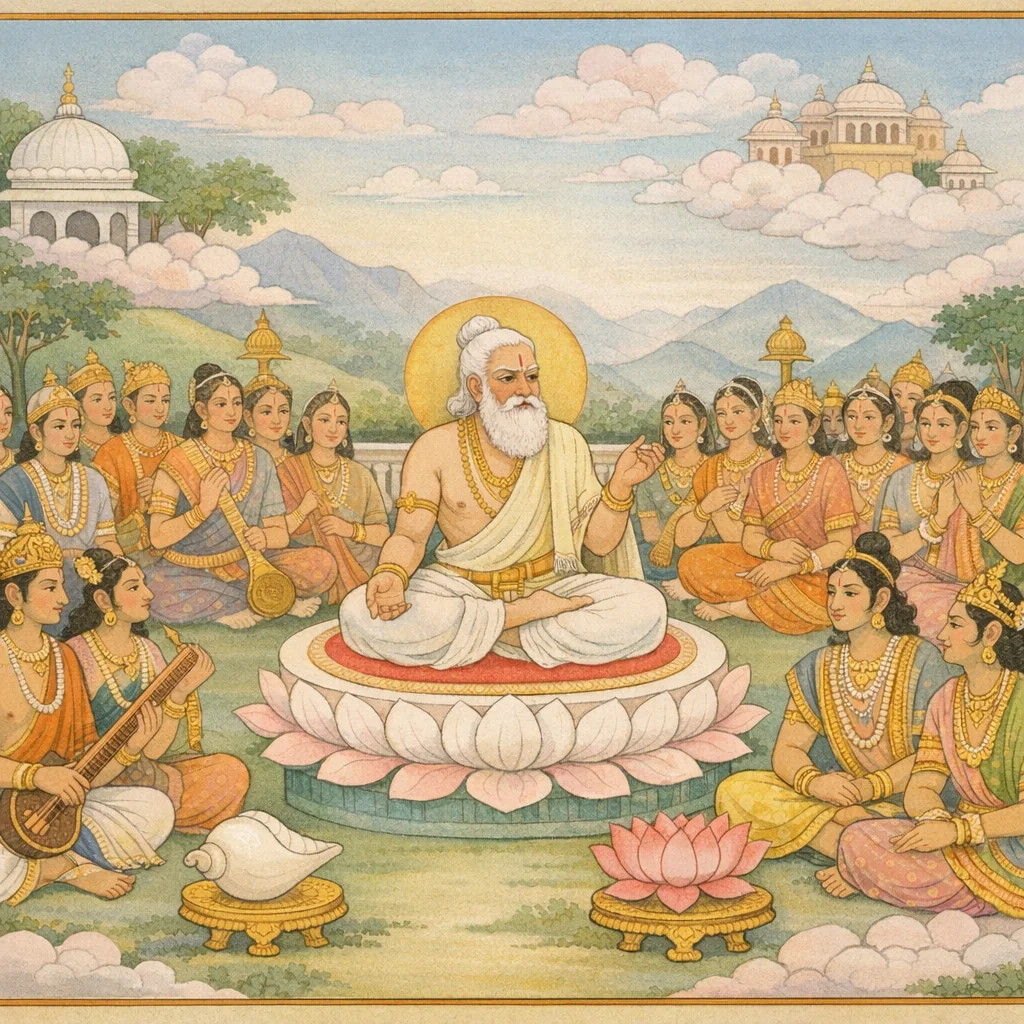
Adhyaya 69
Adhyāya 69: Strategic duels under Bhīṣma’s command (Virāṭa–Bhīṣma; Arjuna–Aśvatthāmā; Bhīma–Duryodhana; Abhimanyu–Lakṣmaṇa)
Upa-parva: Bhīṣma-vadha preparation and mid-battle engagements (contextual war-narration unit within Bhīṣma-parva)
Sañjaya reports a sequence of tightly interleaved engagements. Virāṭa strikes Bhīṣma with three arrows and also wounds Bhīṣma’s horses; Bhīṣma answers with ten gold-feathered shafts, reaffirming his battlefield control. Aśvatthāmā (Drauṇi) targets Arjuna, and Arjuna counters by cutting his bow and pressing him with sharp, feathered arrows; Aśvatthāmā replaces his bow and replies with a large volley, striking both Arjuna and Vāsudeva (Kṛṣṇa). Arjuna, angered, draws lethal śilīmukha arrows, pierces Aśvatthāmā’s armor, yet notes his steadiness and, invoking a deliberate judgment, shows clemency toward Droṇa’s son and shifts to broader combat against other Kaurava fighters. Parallel to this, Duryodhana and Bhīma exchange heavy arrow-strikes, with vivid description of Duryodhana’s chest ornament surrounded by arrows. Abhimanyu (Saubhadra) attacks multiple opponents (Citraseṇa, Purumitra, Satyavrata), breaks Citraseṇa’s bow, and disperses surrounding princes who attempt to encircle him. Lakṣmaṇa (Duryodhana’s son) then confronts Abhimanyu; mutual wounding follows, Abhimanyu kills Lakṣmaṇa’s horses and charioteer, and Lakṣmaṇa hurls a śakti that Abhimanyu cuts down mid-flight. Lakṣmaṇa is withdrawn by his charioteer (Gautama). The chapter closes with generalized melee imagery—fighters dismounted or unarmored grappling at close quarters—followed by Bhīṣma intensifying his assault with divine weapons, leaving the ground covered with fallen elephants, horses, and warriors.
Chapter Arc: युद्धभूमि के बीच, जिज्ञासा का एक दिव्य द्वार खुलता है—देवर्षि-गन्धर्व विस्मित हैं और पितामह भीष्म से पूछते हैं कि वह परम, गुह्य, शाश्वत तत्त्व कौन है जिसे जानकर सब कुछ जाना जाता है। → प्रश्न साधारण नहीं: ‘भूत, भविष्य और भवितव्य’ के पार जो परम पद है, जो प्रभु है, जो ब्रह्म है—उसका स्वरूप क्या है? सभा की उत्सुकता बढ़ती है, क्योंकि उत्तर केवल शास्त्र नहीं, साक्षात् अनुभूति का संकेत मांगता है। → भीष्म का निर्णायक उद्घोष: वही सनातन देव, सर्वगुह्यमय, शिवस्वरूप, लोकधारक, जय-पराजय के पार का स्वामी—‘वासुदेव’ है; वही परम ब्रह्म, परम पद, अक्षर-अव्यक्त महः है। → भीष्म वासुदेव की सर्वव्यापकता, लोक-धारण, प्रभुत्व और परम-गुह्यता का स्तवन करते हुए निष्कर्ष देते हैं कि उसी को जानना वास्तविक ज्ञान है; उसी में धर्म, यश और मोक्ष का आधार है। → युद्ध के कोलाहल के भीतर यह प्रश्न शेष रह जाता है—जब परम सत्य वासुदेव ही हैं, तो रण में मनुष्य का कर्तव्य (धर्म) किस प्रकार स्थिर रहे?
Shlokas
Verse 1
/ [दाक्षिणात्य अधिक पाठका १ श्लोक मिलाकर कुल ७६ “लोक हैं।] अपन बक। ] अतिफऑशाएड< $. शक्तिसे तात्पर्य यहाँ पाण्डवोंकी शक्तिसे है। २. मेरे पुत्रोंकी बार-बार पराजयका क्या कारण है, वही कारणविषयक प्रश्न है। षट्षष्टितमो<5 ध्याय: नारायणावतार श्रीकृष्ण एवं नरावतार अर्जुनकी महिमाका प्रतिपादन भीष्म उवाच ततः स भगवान् देवो लोकानामीशभ्षरेश्वर: । ब्रह्मा प्रत्युवाचेदं स्निग्धगम्भीरया गिरा,भीष्मजी कहते हैं--दुर्योधन! तब लोकेश्वरोंके भी ईश्वर दिव्यरूपधारी श्रीभगवानने स्नेहमधुर गम्भीर वाणीमें ब्रह्माजीसे इस प्रकार कहा--
Bhishma said: Then that Blessed Lord, the divine Sovereign—Lord even of the rulers of the worlds—addressed Brahmā in words that were at once affectionate and profoundly grave.
Verse 2
विदितं तात योगासे सर्वमेतत् तवेप्सितम् । तथा तद् भवितेत्युक्त्वा तत्रैवान्तरधीयत,“तात! तुम्हारे मनमें जैसी इच्छा है, वह सब मुझे योगबलसे ज्ञात हो गयी है। उसके अनुसार ही सब कार्य होगा'--ऐसा कहकर भगवान् वहीं अन्तर्धान हो गये
Bhīṣma said: “Dear child, by the power of yogic insight I have understood everything you desire in your heart. It shall come to pass accordingly.” Having spoken thus, the Lord disappeared then and there.
Verse 3
ततो देवर्षिगन्धर्वा विस्मयं परमं गता: । कौतूहलपरा: सर्वे पितामहमथाब्रुवन्,तब देवता, ऋषि और गन्धर्व सभी बड़े विस्मयमें पड़े। उन सबने अत्यन्त उत्सुक होकर पितामह ब्रह्माजीसे कहा--
Then the divine seers and the Gandharvas were seized by the greatest astonishment. All of them, filled with eager curiosity, addressed Pitāmaha Brahmā.
Verse 4
को न्वयं यो भगवता प्रणम्य विनयाद् विभो । वाम्भि: स्तुतो वरिष्ठाभि: श्रोतुमिच्छाम तं वयम्,'प्रभो! आपने विनयपूर्वक प्रणाम करके श्रेष्ठ वचनोंद्वारा जिनकी स्तुति की है, ये कौन थे? हम उनके विषयमें सुनना चाहते हैं!
Bhishma said: “O mighty one, who is that person whom you—after bowing with humility—praised with the finest words? We wish to hear about him.”
Verse 5
एवमुक्तस्तु भगवान् प्रत्युवाच पितामह: । देवब्रह्यार्षिगन्धर्वान् सर्वान् मधुरया गिरा,उनके इस प्रकार पूछनेपर भगवान् ब्रह्माने उन समस्त देवताओं, ब्रह्मर्षियों और गन्धर्वोंसे मधुर वाणीमें कहा--
Thus addressed, the Blessed Grandsire Brahmā replied in return. To all those gods, Brahmarṣis, and Gandharvas, he spoke in a gentle and sweet voice.
Verse 6
यत् तत् परं भविष्यं च भवितव्यं च यत्परम् । भूतात्मा च प्रभुश्चैव ब्रह्म यच्च परं पदम्
Bhishma said: That which is the supreme future, and that which must inevitably come to pass as the highest necessity; that which is the inner Self of all beings and also the sovereign Lord; that which is Brahman and the supreme state—this is the ultimate reality being spoken of.
Verse 7
तेनास्मि कृतसंवाद: प्रसन्नेन सुरर्षभा: । जगतोनुग्रहार्थाय याचितो मे जगत्पति:
“Thus, O best of the gods, I have held this dialogue with the gracious Lord. The Master of the universe himself requested me to speak, for the welfare and uplift of the world.”
Verse 8
मानुषं लोकमातिष्ठ वासुदेव इति श्रुत: । असुराणां वधार्थाय सम्भवस्व महीतले
Bhīṣma said: “Take your station in the world of men—renowned as Vāsudeva—and be born upon the earth for the purpose of destroying the Asuras.”
Verse 9
'श्रेष्ठ देवताओ! जो परम तत्त्व हैं, भूत, भविष्य और वर्तमान--तीनों जिनके उत्तकृष्ट स्वरूप हैं तथा जो इन सबसे विलक्षण हैं, जिन्हें सम्पूर्ण भूतोंका आत्मा और सर्वशक्तिमान् प्रभु कहा गया है, जो परम ब्रह्म और परम पदके नामसे विख्यात हैं, उन्हीं परमात्माने मुझे दर्शन देकर मुझसे प्रसन्न हो बातचीत की है। मैंने उन जगदीश्वरसे सम्पूर्ण जगत्पर कृपा करनेके लिये यों प्रार्थना की है कि प्रभो! आप वासुदेव नामसे विख्यात होकर कुछ कालतक मनुष्यलोकमें रहें और असुरोंके वधके लिये इस भूतलपर अवतीर्ण हों || ६-- ८ ।। संग्रामे निहता ये ते दैत्यदानवराक्षसा: । त इमे नृषु सम्भूता घोररूपा महाबला:,“जो-जो दैत्य, दानव तथा राक्षस संग्रामभूमिमें मारे गये थे, वे मनुष्यलोकमें उत्पन्न हुए हैं और अत्यन्त बलवान् होकर जगत्के लिये भयंकर बन बैठे हैं
Bhishma said: “Those Daityas, Dānavas, and Rākṣasas who were slain in battle have now been born among human beings. Taking on dreadful forms and immense strength, they have become a terror to the world.”
Verse 10
तेषां वधार्थ भगवान् नरेण सहितो वशी । मानुषीं योनिमास्थाय चरिष्यति महीतले,“उन सबका वध करनेके लिये सबको वशमें करनेवाले भगवान् नारायण नरके साथ मनुष्ययोनिमें अवतीर्ण होकर भूतलपर विचरेंगे
Bhīṣma said: “For the purpose of destroying them, the Blessed Lord—self-controlled and the master of all—will assume a human birth together with Nara, and will move upon the earth. Thus, the divine enters the human sphere to restrain oppressive power and restore the moral order through decisive action.”
Verse 11
नरनारायणौ यौ तौ पुराणावृषिसत्तमौ । सहितौ मानुषे लोके सम्भूतावमितद्युती
Bhīṣma said: “Those two—Nara and Nārāyaṇa—ancient and foremost among seers, of immeasurable radiance, have together taken birth in the human world.”
Verse 12
“ऋषियोंमें श्रेष्ठ जो पुरातन महर्षि अमित तेजस्वी नर और नारायण हैं, वे एक साथ मानवलोकमें अवतीर्ण होंगे ।। अजेयौ समरे यत्तौ सहितैरमरैरपि । मूढास्त्वेती न जानन्ति नरनारायणावृषी
Bhīṣma said: “Among the seers, the foremost are the ancient great sages Nara and Nārāyaṇa, of immeasurable splendor. Those two will descend together into the world of men. When they are roused for battle, they are unconquerable—even if the gods themselves unite against them. Yet the deluded do not recognize who these two sages, Nara and Nārāyaṇa, truly are.”
Verse 13
'युद्धभूमिमें यदि वे विजयके लिये यत्नशील हों तो सम्पूर्ण देवता भी उन्हें परास्त नहीं कर सकते। मूढ़ मनुष्य उन नर-नारायण ऋषिको नहीं जान सकेंगे ।। तस्याहमग्रज: पुत्र: सर्वस्य जगत: प्रभु: । वासुदेवो<र्चनीयो व: सर्वलोकमहेश्वर:,“सम्पूर्ण जगतका स्वामी मैं ब्रह्मा उन भगवान्का ज्यैष्ठ पुत्र हूँ। तुम सब लोगोंको उन सर्वलोकमहेश्वर भगवान् वासुदेवकी आराधना करनी चाहिये
Bhīṣma said: “If those two strive for victory on the battlefield, even all the gods together cannot defeat them. Deluded men will not recognize those sages Nara and Nārāyaṇa. I am Brahmā, the lord of the whole world, and the eldest son of that Supreme Lord. Therefore you all should worship Vāsudeva, the great Lord of all worlds.”
Verse 14
तथा मनुष्यो5यमिति कदाचित् सुरसत्तमा: । नावज्ञेयो महावीर्य: शड्खचक्रगदाधर:,'सुरश्रेष्टण! शंख, चक्र और गदा धारण करनेवाले उन महापराक्रमी भगवान् वासुदेवका “ये मनुष्य हैं' ऐसा समझकर अनादर नहीं करना चाहिये
Bhīṣma said: “O best of the gods, never at any time should that mighty one—Vāsudeva, bearer of conch, discus, and mace—be slighted by thinking, ‘He is only a human.’”
Verse 15
एतत् परमकं गुहमेतत् परमकं पदम् | एतत् परमकं ब्रह्म एतत् परमकं यश:
Bhīṣma said: “This is the highest secret; this is the highest state to be attained. This is the supreme Brahman itself, and this is the highest glory.”
Verse 16
यत् तत् पुरुषसंज्ञं वै गीयते ज्ञायते न च,'ये ही पुरुष नामसे कहे जाते हैं, किंतु इनका वास्तविक रूप जाना नहीं जा सकता। ये ही विश्वस्रष्टा ब्रह्माजीके द्वारा परम सुख, परम तेज और परम सत्य कहे गये हैं
Bhīṣma said: That reality which is spoken of under the designation “Puruṣa” is praised in sacred discourse, yet it cannot be fully grasped by ordinary knowing. The Creator himself proclaims it as the highest bliss, the highest radiance, and the highest truth—pointing beyond names to the ineffable ground of all being.
Verse 17
एतत् परमकं तेज एतत् परमकं सुखम् | एतत् परमकं सत्य कीर्तितं विश्वकर्मणा,'ये ही पुरुष नामसे कहे जाते हैं, किंतु इनका वास्तविक रूप जाना नहीं जा सकता। ये ही विश्वस्रष्टा ब्रह्माजीके द्वारा परम सुख, परम तेज और परम सत्य कहे गये हैं
Bhīṣma said: “This indeed is the supreme radiance; this is the supreme bliss. This is the supreme truth—so it has been proclaimed by the cosmic creator, Viśvakarman.” Thus he points beyond mere names and descriptions to the ultimate reality that grounds right understanding and right conduct.
Verse 18
तस्मात् सेन्द्रै: सुरै: सर्वैलोकैश्वामितविक्रम: । नावज्ञेयो वासुदेवो मानुषो5यमिति प्रभु:
Therefore, O mighty one, Vāsudeva should never be treated with contempt as merely a human. All the worlds, together with the gods and Indra, know his immeasurable power; to slight him is to ignore the higher order that sustains dharma amid the coming war.
Verse 19
“इसलिये “ये मनुष्य हैं,, ऐसा समझकर इन्द्र आदि सम्पूर्ण देवताओं तथा संसारके मनुष्योंको अमित पराक्रमी भगवान् वासुदेवकी अवहेलना नहीं करनी चाहिये ।। यश्न मानुषमात्रोडयमिति ब्रूयात् स मन्दधी: । हृषीकेशमवज्ञानात् तमाहुः पुरुषाधमम्,“जो सम्पूर्ण इन्द्रियोंके स्वामी इन भगवान् वासुदेवको केवल मनुष्य कहता है, वह मूर्ख है। भगवान्की अवहेलना करनेके कारण उसे नराधम कहा गया है
Therefore, thinking, “He is only a man,” neither Indra and the other gods nor the people of the world should ever slight the Lord Vāsudeva of immeasurable prowess. Whoever says, “He is merely a human being,” is dull-witted; for by scorning Hṛṣīkeśa, Lord of the senses, he is called the lowest among men. The ethical point is clear: contempt born of superficial judgment becomes a moral failing when directed toward the truly divine and supremely worthy.
Verse 20
योगिन त॑ महात्मानं प्रविष्टं मानुषीं तनुम् । अवमन्येद् वासुदेवं तमाहुस्तामसं जना:,“भगवान् वासुदेव साक्षात् परमात्मा हैं और योगशक्तिसे सम्पन्न होनेके कारण उन्होंने मानव-शरीरमें प्रवेश किया है। जो उनकी अवहेलना करता है, उसे ज्ञानी पुरुष तमोगुणी बताते हैं
Vāsudeva, the great-souled yogin, has entered and abides in a human body. Whoever holds Vāsudeva in contempt, the wise declare to be tamasic—one ruled by darkness and delusion.
Verse 21
“जो चराचरस्वरूप श्रीवत्सचिह्नभूषित उत्तम कान्तिसे सम्पन्न भगवान् पद्मनाभको नहीं जानता, उसे विद्वान् पुरुष तमोगुणी कहते हैं
Bhishma said: The wise declare a man to be ruled by darkness (tamas) if he does not recognize the Lord Padmanabha—He whose form pervades all moving and unmoving beings, who is adorned with the Śrīvatsa mark, and who shines with supreme splendor.
Verse 22
किरीटकौस्तुभधरं मित्राणामभयंकरम् । अवजानम् महात्मानं घोरे तमसि मज्जति,“जो किरीट और कौस्तुभमणि धारण करनेवाले तथा मित्रों (भक्तजनों)-को अभय देनेवाले हैं, उन परमात्माकी अवहेलना करनेवाला मनुष्य घोर नरकमें डूबता है
Bhīṣma said: “He who shows contempt for that Supreme Lord—who bears the crown and the Kaustubha jewel, and who grants fearlessness to his friends and devotees—sinks into dreadful darkness, a terrible hell.”
Verse 23
एवं विदित्वा तत्त्वार्थ लोकानामीश्ररेश्वर: । वासुदेवो नमस्कार्य: सर्वलोकै: सुरोत्तमा:,'सुरश्रेष्ठटण! इस प्रकार तात्चिक वस्तुको समझकर सब लोगोंको लोकेश्वरोंके भी ईश्वर भगवान् वासुदेवको नमस्कार करना चाहिये”
Having thus understood the true reality and meaning of things, all people should bow in reverence to Vāsudeva—the supreme Lord over the lords of the worlds—who is the highest among the gods.
Verse 24
भीष्म उवाच एवमुक््त्वा स भगवान् देवान् सर्षिगणान् पुरा । विसृज्य सर्वभूतात्मा जगाम भवनं स्वकम्,भीष्मजी कहते हैं--दुर्योधन! देवताओं तथा ऋषियोंसे ऐसा कहकर पूर्वकालमें सर्वभूतात्मा भगवान् ब्रह्माने उन सबको विदा कर दिया। फिर वे अपने लोकको चले गये
Bhishma said: O Duryodhana! Having spoken thus in former times to the gods together with the companies of seers, the Blessed Lord—who is the inner Self of all beings—dismissed them all and then departed to his own abode.
Verse 25
ततो देवा: सगन्धर्वा मुनयो5प्सरसो5पि च । कथां तां ब्रह्मणा गीतां श्रुत्वा प्रीता दिवं ययु:,तत्पश्चात् ब्रह्माजीकी कही हुई उस परमार्थ-चर्चाको सुनकर देवता, गन्धर्व, मुनि और अप्सराएँ--ये सभी प्रसन्नतापूर्वक स्वर्गलोकमें चले गये
Then the gods, together with the Gandharvas, the sages, and the Apsarases, having heard that discourse on the highest truth (paramārtha) sung by Brahmā, were filled with joy and departed to heaven.
Verse 26
एतच्छुतं मया तात ऋषीणां भावितात्मनाम् | वासुदेव॑ कथयतां समवाये पुरातनम्,तात! एक समय शुद्ध अन्तःकरणवाले महर्षियोंका एक समाज जुटा हुआ था, जिसमें वे पुरातन भगवान् वासुदेवकी माहात्म्य-कथा कह रहे थे। उन्हींके मुँहसे मैंने ये सब बातें सुनी हैं
Bhīṣma said: “Dear child, I have heard this from the lips of sages whose minds are purified and disciplined. Long ago, when a venerable assembly of such seers had gathered and were recounting the ancient greatness of Vāsudeva, I listened to these matters from them.”
Verse 27
रामस्य जामदग्न्यस्य मार्कण्डेयस्य धीमत: । व्यासनारदयोश्वापि सकाशाद् भरतर्षभ,भरतश्रेष्ठ] इसके सिवा जमदग्निनन्दन परशुराम, बुद्धिमान् मार्कण्डेय, व्यास तथा नारदसे भी मैंने यह बात सुनी है
Bhīṣma said: “O bull among the Bharatas, I have also heard this very matter from Rāma Jāmadagnya (Paraśurāma), from the wise Mārkaṇḍeya, and likewise from Vyāsa and Nārada.”
Verse 28
एतमर्थ च विज्ञाय श्रुत्वा च प्रभुमव्ययम् वासुदेवं महात्मानं लोकानामीश्चरेश्वरम्,(जानामि भरतश्रेष्ठ कृष्णं नारायणं प्रभुम् ।) भरतकुलभूषण! इस विषयको सुन और समझकर मैं वसुदेवनन्दन भगवान् श्रीकृष्णको अविनाशी प्रभु परमात्मा लोकेश्चरेश्वर और सर्वशक्तिमान् नारायण जानता हूँ
Bhīṣma said: “Having understood this purport and having heard of the imperishable Lord, I recognize Vāsudeva—great-souled Kṛṣṇa—as the supreme ruler of rulers, the sovereign Lord of all worlds, indeed Nārāyaṇa Himself. O best of the Bharatas, this is my settled conviction.”
Verse 29
यस्य चैवात्मजो ब्रह्मा सर्वस्य जगत: पिता । कथं न वासुदेवो यमर्च्यश्लेज्यश्ष॒ मानवै:,सम्पूर्ण जगतके पिता ब्रह्मा जिनके पुत्र हैं, वे भगवान् वासुदेव मनुष्योंके लिये आराधनीय तथा पूजनीय कैसे नहीं हैं?
Bhīṣma said: “Brahmā, the father of the entire universe, is himself the son of that Lord. How, then, could Vāsudeva not be worthy of reverent worship and devoted adoration by human beings?”
Verse 30
वारितो5सि मया तात मुनिभिरव्वेदपारगै: । मा गच्छ संयुगं तेन वासुदेवेन धन्विना,तात! वेदोंके पारंगत विद्वान् महर्षियोंने तथा मैंने तुमको मना किया था कि तुम धनुर्धर भगवान् वासुदेवके साथ विरोध न करो, पाण्डवोंके साथ लोहा न लो; परंतु मोहवश तुमने इन बातोंका कोई मूल्य नहीं समझा। मैं समझता हूँ, तुम कोई क्रूर राक्षस हो; क्योंकि राक्षसोंके ही समान तुम्हारी बुद्धि सदा तमोगुणसे आच्छन्न रहती है
Bhīṣma said: “Dear child, you were warned—by me and by sages who have mastered the Vedas. Do not go into battle against that bow-bearing Vāsudeva. Yet, deluded, you did not value these counsels.”
Verse 31
मा पाण्डवै: सार्थमिति तत् त्वं मोहान्न बुध्यसे । मन्ये त्वां राक्षसं क्रूरं तथा चासि तमोवृत:,तात! वेदोंके पारंगत विद्वान् महर्षियोंने तथा मैंने तुमको मना किया था कि तुम धनुर्धर भगवान् वासुदेवके साथ विरोध न करो, पाण्डवोंके साथ लोहा न लो; परंतु मोहवश तुमने इन बातोंका कोई मूल्य नहीं समझा। मैं समझता हूँ, तुम कोई क्रूर राक्षस हो; क्योंकि राक्षसोंके ही समान तुम्हारी बुद्धि सदा तमोगुणसे आच्छन्न रहती है
Bhishma said: “Out of delusion you do not understand that you must not take the field against the Pandavas. I deem you a cruel rakshasa, for your mind is veiled in darkness. The great seers, learned and skilled in Vedanta, and I as well warned you: do not set yourself against the bow-bearing Lord Vasudeva; do not wage war with the Pandavas. Yet, overcome by delusion, you gave no weight to these counsels. Your intellect, like that of the rakshasas, remains ever covered by the quality of tamas.”
Verse 32
यस्माद् द्विषसि गोविन्द पाण्डवं तं धनंजयम् । नरनारायणोौ देवौ कोडन्यो द्विष्याद्धि मानव:,तुम भगवान् गोविन्द तथा पाण्डुनन्दन धनंजयसे द्वेष करते हो। वे दोनों ही नर और नारायण देव हैं। तुम्हारे सिवा दूसरा कौन मनुष्य उनसे द्वेष कर सकता है?
Bhishma said: “Since you, Govinda, bear hatred toward that Pandava—Dhanañjaya—who among men, other than you, could hate him? For those two are the divine pair Nara and Narayana.”
Verse 33
तस्माद् ब्रवीमि ते राजन्नेष वै शाश्वतोडव्यय: । सर्वलोकमयो नित्य: शास्ता धात्रीधरो ध्रुव:,राजन! इसलिये तुम्हें यह बता रहा हूँ कि ये भगवान् श्रीकृष्ण सनातन, अविनाशी, सर्वलोकस्वरूप, नित्य शासक, धरणीधर एवं अविचल हैं
Therefore, O King, I tell you this: he—Śrī Kṛṣṇa—is eternal and imperishable. He embodies all worlds, is the ever-present ruler and ordainer, the bearer of the earth, and the unwavering foundation.
Verse 34
यो धारयति लोकांस्त्रींश्वराचरगुरु: प्रभु: । योद्धा जयश्न जेता च सर्वप्रकृतिरी श्वर:,ये चराचरगुरु भगवान् श्रीहरि तीनों लोकोंको धारण करते हैं। ये ही योद्धा हैं, ये ही विजय हैं और ये ही विजयी हैं। सबके कारणभूत परमेश्वर भी ये ही हैं
Bhishma declares that the supreme Lord—teacher and master of all that moves and does not move—upholds the three worlds. He is himself the warrior, the very principle of victory, and the victor; he is the sovereign God who is the source and ground of all beings and all natures.
Verse 35
राजन् सर्वमयो होष तमोरागविवर्जित: । यत: कृष्णस्ततो धर्मो यतो धर्मस्ततो जय:,राजन! ये श्रीहरि सर्वस्वरूप और तम एवं रागसे रहित हैं। जहाँ श्रीकृष्ण हैं, वहाँ धर्म है और जहाँ धर्म है, वहीं विजय है
Bhishma said: “O King, He (Śrī Kṛṣṇa) is the all-pervading embodiment of everything, free from darkness (tamas) and passion (rāga). Where Kṛṣṇa stands, there stands dharma; and where dharma stands, there is victory.”
Verse 36
तस्य माहात्म्ययोगेन योगेनात्ममयेन च । धृता: पाण्डुसुता राजन् जयश्लैषां भविष्यति,उनके माहात्म्ययोगसे तथा आत्मस्वरूपयोगसे समस्त पाण्डव सुरक्षित हैं। राजन! इसीलिये इनकी विजय होगी
Bhīṣma said: “O King, sustained and protected by his yoga of greatness and by the yoga in which the Self is realized as all, the sons of Pāṇḍu stand firm. Therefore, victory will surely cleave to them.”
Verse 37
श्रेयोयुक्तां सदा बुद्धिं पाण्डवानां दधाति यः । बलं॑ चैव रणे नित्यं भयेभ्यश्षैव रक्षति,वे पाण्डवोंको सदा कल्याणमयी बुद्धि प्रदान करते हैं, युद्धमें बल देते हैं और भयसे नित्य उनकी रक्षा करते हैं
Bhīṣma said: “He who continually grants the Pāṇḍavas a discerning intelligence aligned with what is truly beneficial, who also bestows upon them unfailing strength in battle, and who ever protects them from fears—such a guardian power stands behind their welfare.”
Verse 38
स एष शाश्चतो देव: सर्वगुह्ममय: शिव: । वासुदेव इति ज्ञेयो यन्मां पृष्छसि भारत,भारत! जिनके विषयमें तुम मुझसे पूछ रहे हो, वे सनातन देवता सर्वगुह्ममय कल्याणस्वरूप परमात्मा ही 'वासुदेव” नामसे जाननेयोग्य हैं
Bhīṣma said: “He indeed is the eternal God—auspicious and the very embodiment of all sacred mysteries. Know Him as Vāsudeva, O Bhārata, about whom you are asking me.”
Verse 39
ब्राह्मणै: क्षत्रियर्वैश्यै: शूद्रश्न कृतलक्षणै: । सेव्यते<भ्यर्च्यते चैव नित्ययुक्तै: स्वकर्मभि:,ब्राह्मण, क्षत्रिय, वैश्य और शुभ लक्षणसम्पन्न शूद्र--ये सभी नित्य तत्पर होकर अपने कर्माद्वारा इन्हींकी सेवा-पूजा करते हैं
Bhīṣma said: “By brāhmaṇas, kṣatriyas, vaiśyas, and by śūdras endowed with auspicious marks, He is continually served and duly worshipped—each remaining steadfast and offering that service through the faithful performance of one’s own prescribed duties.”
Verse 40
द्वापरस्य युगस्यान्ते आदौ कलियुगस्य च । सात्वतं विधिमास्थाय गीत: संकर्षणेन वै,(कृष्णेति नाम्ना विख्यात इमं लोकं स रक्षति ।) द्वापययुगके अन्त और कलियुगके आदिमें संकर्षणने श्रीकृष्णोपासनाकी विधिका आश्रय ले इन्हींकी महिमाका गान किया है। ये ही श्रीकृष्णनामसे विख्यात होकर इस लोककी रक्षा करते हैं
Bhīṣma said: “At the close of the Dvāpara age and at the beginning of the Kali age, Saṅkarṣaṇa, adopting the Sātvata (Vaiṣṇava) discipline of worship, sang the glory of Kṛṣṇa. He—renowned by the name ‘Kṛṣṇa’—protects this world.”
Verse 41
स एष सर्व सुरमर्त्यलोक॑ समुद्रकक्ष्यान्तरितां पुरी च । युगे युगे मानुषं चैव वासं पुन: पुन: सृजते वासुदेव:,ये भगवान् वासुदेव ही युग-युगमें देवलोक, मर्त्यलोक तथा समुद्रसे घिरी हुई द्वारिका नगरीका निर्माण करते हैं और ये ही बारंबार मनुष्यलोकमें अवतार ग्रहण करते हैं
Bhīṣma said: “He—Vāsudeva—again and again, age after age, brings into being the realms of gods and mortals, and even that city encircled by the ocean; and He repeatedly establishes His dwelling among human beings as well.”
Verse 66
इति श्रीमहाभारते भीष्मपर्वणि भीष्मवधपर्वणि विश्वोपाख्याने षट्षष्टितमो<ध्याय:
Thus, in the Śrī Mahābhārata, within the Bhīṣma Parva—specifically in the section concerning the slaying of Bhīṣma—ends the sixty-sixth chapter of the Viśvopākhyāna. This is a colophon marking the close of a narrative unit, situating the episode within the larger ethical frame of the war where even the fall of a revered elder is treated as a solemn, textually ordered event.
Verse 156
एतदक्षरमव्यक्तमेतद् वै शाश्वतं महः । “ये भगवान् ही परम गुह्य हैं। ये ही परम पद हैं। ये ही परम ब्रह्म हैं। ये ही परम यश हैं और ये ही अक्षर, अव्यक्त एवं सनातन तेज हैं
Bhīṣma said: “This is the Imperishable; this indeed is the Unmanifest; this is the eternal Great Splendour. He is the Blessed Lord, the supreme mystery—He is the highest goal, the supreme Brahman, the supreme glory, and the imperishable, unmanifest, everlasting radiance.”
Verse 231
देवं चराचरात्मानं श्रीवत्साड्कं सुवर्चसम् । पद्मनाभं च जानाति तमाहुस्तामसं बुधा:
Bhishma said: “One who recognizes the Lord—the very Self of all that moves and does not move—radiant, marked with the Śrīvatsa, and known as Padmanābha, yet still calls Him ‘tāmasa’ (of darkness/ignorance), is described by the wise as being in a state of tamas.”
Frequently Asked Questions
Arjuna’s superiority over Aśvatthāmā creates a choice between total neutralization and measured restraint; the text marks Arjuna’s decision to show consideration to Droṇa’s son (a brahmin warrior and teacher’s heir) while still fulfilling battlefield responsibilities.
Competence is presented as both technical and judgment-based: mastery of weapons is paired with situational prioritization—when to press, when to disengage, and how to protect larger objectives amid rapidly changing threats.
No explicit phalaśruti appears in this chapter segment; its meta-commentary is indirect, conveyed through Sañjaya’s evaluative framing of valor and steadiness as exemplary qualities within the epic’s ethical-historical record.