Adhyaya 60
Abhimanyunidhana-prakāśaḥ — Vasudeva–Kṛṣṇa–Subhadrā–Kuntī śoka-saṃvāda (Disclosure and Consolation)
Upa-parva: Āśvamedhika-parva — Abhimanyu-nidhana-smṛti (Vasudeva–Subhadrā śoka-saṃvāda episode)
Vaiśaṃpāyana reports that Kṛṣṇa, while narrating the war before his father Vasudeva, deliberately passes over Abhimanyu’s death to prevent acute distress (1–3). Subhadrā, learning of her son’s fall in battle, collapses and urges Kṛṣṇa to state the truth; Vasudeva, seeing her, also faints from grief (4–6). Reviving, Vasudeva questions Kṛṣṇa: why the death was concealed, how Abhimanyu was killed, whether he was struck from behind, whether his face was disfigured, and what he said regarding Subhadrā and Vasudeva—framing Abhimanyu as spirited and proud in youthful valor (7–14). Kṛṣṇa replies with a corrective account: Abhimanyu did not retreat or act dishonorably; he fought intensely, slew large numbers, and was exhausted by major adversaries before falling into Duryodhana’s side’s control; he is portrayed as difficult to defeat in single combat and as attaining a heroic destination (16–23). The narrative then shifts to the women’s mourning: Subhadrā’s sister approaches Pṛthā (Kuntī) and Draupadī seeking the children; Kuntī consoles Subhadrā by invoking mortality, kṣatriya lineage, and the assurance of Uttarā’s pregnancy, and she arranges śrāddha-associated giving and donations (24–40). The chapter closes with renewed counsel to abandon consuming grief, framing Abhimanyu’s end as a time-governed event and his posthumous state as honorable (41).
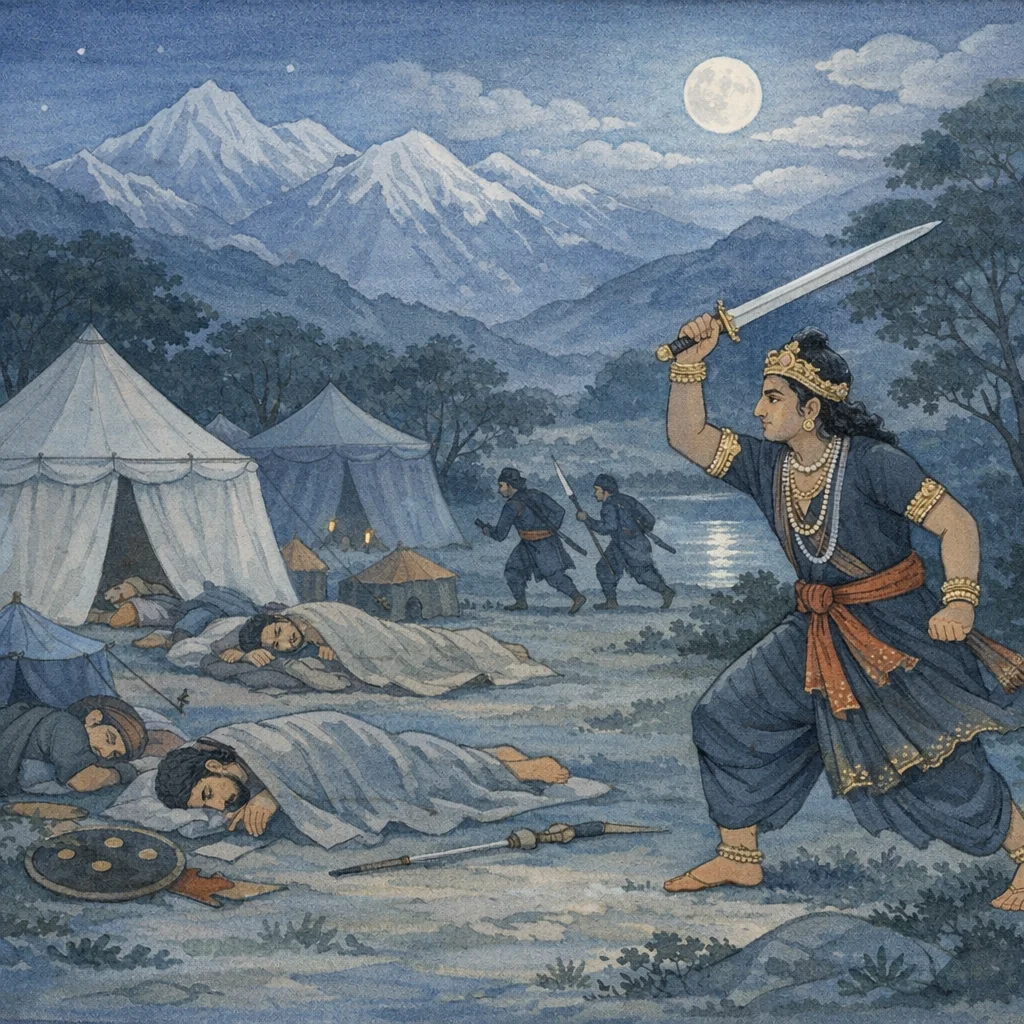
Chapter Arc: वसुदेव कृष्ण से पूछते हैं कि जिसे लोग ‘अद्भुत’ कहते हैं, वह महाभारत-युद्ध वास्तव में कैसा था—और प्रत्यक्षदर्शी से यथातथ्य सुनाने का आग्रह करते हैं। → कृष्ण के सामने युद्ध का विराट विस्तार खुलता है: पाण्डवों का भीष्म, द्रोण, कर्ण, कृप और शल्य जैसे महारथियों से सामना; दिनों-दिन बढ़ती क्षति; धृष्टद्युम्न का सेनानायकत्व और भीम का रक्षक-रूप; फिर भी थकान, निरुत्साह और टूटते रथ-वाहन। → रात में शिबिर में निश्चिन्त सोई पाण्डव-सेना पर द्रोणपुत्र अश्वत्थामा का धावा—पिता-वध का प्रतिशोध बनकर वह सोते हुए सैनिकों का संहार करता है। → कृष्ण युद्ध का समापन-चित्र देते हैं: अठारह दिनों तक चला लोमहर्षक संग्राम, जिसमें असंख्य पृथिवीपाल मारे गए और स्वर्गगामी हुए; कथा सुनते-सुनते वृष्णियों पर भी दुःख-शोक का भार उतर आता है। → युद्ध-वर्णन के बाद शोक की छाया बनी रहती है—आगे यह पीड़ा वृष्णि-समाज और उत्तरकथा में किस रूप में फूटेगी, इसका संकेत देकर अध्याय विराम लेता है।
Shlokas
Verse 1
वसुदेवजीने पूछा--वृष्णिनन्दन! मैं प्रतिदिन बातचीतके प्रसंगमें लोगोंके मुँहसे सुनता आ रहा हूँ कि महाभारत-युद्ध बड़ा अद्भुत हुआ था। इसलिये पूछता हूँ कि कौरवों और पाण्डवोंमें किस तरह युद्ध हुआ?
Vasudeva said: “O delight of the Vṛṣṇis! Day after day, in the course of ordinary conversation, I keep hearing from people’s own mouths that the war of the Mahābhārata was truly extraordinary. Therefore I ask: how did the war unfold between the Kauravas and the Pāṇḍavas?”
Verse 2
त्वंतु प्रत्यक्षदर्शी च रूपज्ञश्न महाभुज । तस्मात् प्रब्रृहि संग्रामं याथातथ्येन मेडनघ,महाबाहो! तुम तो उस युद्धके प्रत्यक्षदर्शी हो और उसके स्वरूपको भी भलीभाँति जानते हो: अत: अनघ! मुझसे उस युद्धका यथार्थ वर्णन करो
Vasudeva said: “You are a direct witness of it, and you also understand the true nature of what occurred, O mighty-armed one. Therefore, O sinless hero, tell me the account of that war exactly as it happened.”
Verse 3
यथा तदभवद् युद्ध॑ पाण्डवानां महात्मनाम् । भीष्मकर्णकृपद्रोणशल्यादिभिरनुत्तमम्,महात्मा पाण्डवोंका भीष्म, कर्ण, कृपाचार्य, द्रोणाचार्य और शल्य आदिके साथ जो परम उत्तम युद्ध हुआ था, वह किस तरह हुआ?
Vasudeva said: “How did that battle come to pass—the supremely momentous war of the great-souled Pāṇḍavas against Bhīṣma, Karṇa, Kṛpa, Droṇa, Śalya, and the other foremost warriors? Tell me in what manner it unfolded.”
Verse 4
अन््येषां क्षत्रियाणां च कृतास्त्राणामनेकश: । नानावेषाकृतिमतां नानादेशनिवासिनाम्,दूसरे-दूसरे देशोंमें निवास करनेवाले, भाँति-भाँतिकी वेशभूषा और आकृतिवाले जो अस्त्र-विद्यामें निपुण बहुसंख्यक क्षत्रिय वीर थे, उन्होंने भी किस प्रकार युद्ध किया था?
Vasudeva said: “And how, in many ways, did those other Kshatriya warriors—masters of weapons, dwelling in diverse lands and marked by varied dress and appearance—also fight?”
Verse 5
वैशम्पायन उवाच इत्युक्त: पुण्डरीकाक्ष: पित्रा मातुस्तदन्तिके । शशंस कुरुवीराणां संग्रामे निधनं यथा,वैशम्पायनजी कहते हैं--माताके निकट पिताके इस प्रकार पूछनेपर कमलनयन भगवान् श्रीकृष्ण कौरव वीरोंके संग्राममें मारे जानेका वह प्रसंग यथावत् रूपसे सुनाने लगे
Vaiśampāyana said: Thus questioned by his father in the presence of his mother, the lotus-eyed Lord Śrī Kṛṣṇa began to recount, just as it happened, the episode of how the Kuru heroes met their end upon the field of battle.
Verse 6
वासुदेव उवाच अत्यद्भुतानि कर्माणि क्षत्रियाणां महात्मनाम् | बहुलत्वान्न संख्यातुं शक््यान्यब्दशतैरपि,श्रीकृष्णने कहा--पिताजी! महाभारत-युद्धमें काममें आनेवाले मनस्वी क्षत्रिय वीरोंके कर्म बड़े अदभुत हैं। वे इतने अधिक हैं कि यदि विस्तारके साथ उनका वर्णन किया जाय तो सौ वर्षोमें भी उनकी समाप्ति नहीं हो सकती
Vāsudeva said: “Father, the deeds performed by the great-souled kṣatriya warriors—deeds that came to the fore in the Mahābhārata war—are exceedingly wondrous. They are so numerous that, even if one attempted to describe them in full detail, they could not be completely counted even in a hundred years.”
Verse 7
प्राधान्यतस्तु गदत: समासेनैव मे शृणु । कर्माणि पृथिवीशानां यथावदमरथद्ुते,अतः देवताओंके समान तेजस्वी तात! मैं मुख्य-मुख्य घटनाओंको ही संक्षेपसे सुना रहा हूँ, आप उन भूपतियोंके कर्म यथावत् रूपसे सुनिये
Vāsudeva said: “Listen to me as I recount in brief, choosing what is most important. O messenger of the immortals, hear in proper order and in true form the deeds of the lords of the earth. In such a telling, the moral weight lies in discerning what is principal and in reporting actions faithfully, rather than being lost in excess detail.”
Verse 8
भीष्म: सेनापतिरभूदेकादशचमूपति: । कौरव्य: कौरवेन्द्राणां देवानामिव वासव:,जैसे इन्द्र देवताओंकी सेनाके स्वामी हैं, उसी प्रकार कुरुकुलतिलक भीष्म भी श्रेष्ठ कौरववीरोंके सेनापति बनाये गये थे। वे ग्यारह अक्षौहिणी सेनाके संरक्षक थे
Vāsudeva said: “Bhīṣma became the commander-in-chief, lord of eleven army-divisions (akṣauhiṇīs). Among the Kuru kings he stood like Vāsava (Indra) among the gods—appointed as the foremost protector and leader of the Kaurava host. The verse shows that authority in war is entrusted to the most venerable and capable, and that such eminence bears grave responsibility for the lives and dharma of those led.”
Verse 9
शिखण्डी पाण्डुपुत्राणां नेता सप्तचमूपति: । बभूव रक्षितो धीमान् श्रीमता सव्यसाचिना,पाण्डवोंके सेनानायक शिखण्डी थे, जो सात अक्षौहिणी सेनाओंका संचालन करते थे। बुद्धिमान शिखण्डी श्रीमान् सव्यसाची अर्जुनके द्वारा सुरक्षित थे
Vāsudeva said: “Śikhaṇḍī became the commander of the sons of Pāṇḍu, a leader over the seven army-divisions (akṣauhiṇīs). That wise warrior was kept protected by the illustrious Savyasācin (Arjuna).” The verse highlights disciplined leadership and the duty of protection in a righteous cause: command is joined to responsibility, and strength is guided by prudent guardianship.
Verse 10
तेषां तदभवद् युद्ध दशाहानि महात्मनाम् | कुरूणां पाण्डवानां च सुमहल्लोमहर्षणम्,उन महामनस्वी कौरवों और पाण्डवोंमें दस दिनोंतक महान् रोमांचकारी युद्ध हुआ
Vāsudeva said: “Thus, among those great-souled warriors, there occurred a battle that lasted ten days—between the Kurus and the Pāṇḍavas—an immense and hair-raising conflict, stirring awe and dread at the scale of its violence.”
Verse 11
ततः शिखण्डी गाड़ेयं युध्यमानं महाहवे । जघान बहुभिर्बाणै: सह गाण्डीवधन्चना,फिर दसवें दिन शिखण्डीने महासमरमें जूझते हुए गंगानन्दन भीष्मको गाण्डीवधारी अर्जुनकी सहायतासे बहुसंख्यक बाणोंद्वारा बहुत घायल कर दिया
Then Śikhaṇḍī, in the midst of that great battle, struck the Gāṅgeya (Bhīṣma) as he fought on, piercing him with many arrows—acting together with Arjuna, the wielder of the Gāṇḍīva. The scene underscores how strategy and circumstance in war can override personal valor: Bhīṣma’s formidable prowess is checked through alliance, tactical positioning, and the constraints of his own vows and choices.
Verse 12
अकरोत् स ततः काल॑ शरतल्पगतो मुनि: । अयनं दक्षिण हित्वा सम्प्राप्ते चोत्तरायणे,तत्पश्चात् भीष्मजी बाणशय्यापर पड़ गये। जबतक दक्षिणायन रहा है, वे मुनिव्रतका पालन करते हुए शरशय्यापर सोते रहे हैं। दक्षिणायन समाप्त होकर उत्तरायणके आनेपर ही उन्होंने मृत्यु स्वीकार की है
Vāsudeva said: Thereafter that sage, lying upon his bed of arrows, chose the moment of his passing. He did not depart while the sun’s course was in the southern direction; only when that season ended and the northern course arrived did he accept death—showing disciplined mastery over time and steadfast observance of his vowed conduct even amid the aftermath of war.
Verse 13
ततः सेनापतिरभूद् द्रोणो<स्त्रविदुषां वर: । प्रवीर: कौरवेन्द्रस्य काव्यो दैत्यपतेरिव,तदनन्तर अस्त्रवेत्ताओंमें श्रेष्ठ आचार्य द्रोण कौरवपक्षके सेनापति बनाये गये। वे कौरवराजकी सेनाके प्रमुख वीर थे, मानो दैत्यराज बलिकी सेनाके प्रधान संरक्षक शुक्राचार्य हों
Then Droṇa—foremost among those skilled in the science of weapons—was appointed commander of the army. He stood as the Kaurava king’s chief champion, like Kāvya (Śukrācārya), the preceptor and protector of the lord of the Daityas, standing at the head of his forces.
Verse 14
अक्षौहिणीभ्रि: शिष्टाभिननवभिरद्द्धिजसत्तम: । संवृत: समरश्लाघी गुप्त: कृपवृषादिभि:,उस समय मरनेसे बची हुई नौ अक्षौहिणी सेना उन्हें सब ओरसे घेरकर खड़ी थी। वे स्वयं तो युद्धका हौसला रखते ही थे, कृपाचार्य और कर्ण भी सदा उनकी रक्षा करते रहते थे
Vāsudeva said: “That foremost among the prosperous was hemmed in on every side by the nine akṣauhiṇīs that still remained. Though he himself was eager for battle and took pride in the contest, he was continually protected by Kṛpa and by Vṛṣa (Karna) and others.”
Verse 15
धृष्टय्युम्नस्त्वभून्नेता पाण्डवानां महास्त्रवित् । गुप्तो भीमेन मेधावी मित्रेण वरुणो यथा,इधर महान् अस्त्रवेत्ता धृष्टद्युम्न पाण्डवसेनाके अधिनायक हुए। जैसे मित्र वरुणकी रक्षा करते हैं, उसी प्रकार भीमसेन मेधावी धृष्टद्युम्नकी रक्षा करने लगे
Vāsudeva said: “Dhṛṣṭadyumna became the commander of the Pāṇḍavas, a master of great weapons. The wise Dhṛṣṭadyumna was protected by Bhīma, just as Varuṇa is safeguarded by Mitra.”
Verse 16
स च सेनापरिवृतो द्रोणप्रेप्सुर्महामना: । पितुर्निकारान् संस्मृत्य रणे कर्माकरोन्महत्,पाण्डवसेनासे घिरे हुए महामनस्वी वीर धृष्टद्युम्नने द्रोणके द्वारा अपने पिताके अपमानका स्मरण करके उन्हें मार डालनेके लिये युद्धमें बड़ा भारी पराक्रम दिखाया
Surrounded by his army, the high-souled Dhṛṣṭadyumna—intent on reaching Droṇa—remembered the humiliations inflicted upon his father and, in the thick of battle, performed a mighty deed.
Verse 17
तस्मिंस्ते पृथिवीपाला द्रोणपार्षतसंगरे । नानादिगागता वीरा: प्रायशो निधनं गता:,धृष्टद्युम्न और द्रोणके उस भीषण संग्राममें नाना दिशाओंसे आये हुए भूपाल अधिक संख्यामें मारे गये
Vāsudeva said: In that dreadful battle between Droṇa and the son of Pārṣata (Dhṛṣṭadyumna), many warrior-kings who had come from various directions met their end in great numbers. The verse lays bare the sweeping, indiscriminate cost of war: even rulers drawn from far and wide are carried away by the momentum of violence, reminding the listener of the grave ethical weight borne by those who unleash or sustain such conflict.
Verse 18
दिनानि पज्च तद् युद्धमभूत् परमदारुणम् | ततो द्रोण: परिश्रान्तो धृष्टद्युम्नवशं गत:,उन दोनोंका वह परम दारुण युद्ध पाँच दिनोंतक चलता रहा। अन्तमें द्रोणाचार्य बहुत थक गये और धृष्टद्युम्नके वशमें पड़कर मारे गये
For five days that battle raged with extreme ferocity. Then Droṇa, worn out by the strain, fell into the power of Dhṛṣṭadyumna and was slain—showing how even the mightiest warrior, overcome by exhaustion and circumstance, becomes vulnerable to the consequences of war and to earlier vows.
Verse 19
ततः सेनापतिरभूत् कर्णो दौर्योधने बले । अक्षौहिणीभ्रि: शिष्टाभिवृत: पञचभिराहवे,तत्पश्चात् दुर्योधनकी सेनामें कर्णको सेनापति बनाया गया, जो मरनेसे बची हुए पाँच अक्षौहिणी सेनाओंसे घिरकर युद्धके मैदानमें खड़ा था
Then Karṇa became the commander-in-chief of Duryodhana’s army. On the battlefield he stood surrounded by the five remaining akṣauhiṇīs—what was left after the earlier slaughter—taking up leadership in a war already morally exhausted by relentless loss.
Verse 20
तिस्रस्तु पाण्डुपुत्राणां चम्वो बीभत्सुपालिता: । हतप्रवीरभूयिष्ठा बभूवु: समवस्थिता:,उस समय पाण्डवोंके पास तीन अक्षौहिणी सेनाएँ शेष थीं, जिनकी रक्षा अर्जुन कर रहे थे। उनमें बहुत-से प्रमुख वीर मारे गये थे; फिर भी वे युद्धके लिये डटी हुई थीं
Vāsudeva said: The sons of Pāṇḍu still had three army-divisions remaining, guarded by Arjuna (Bībhatsu). Though most of their foremost champions had been slain, those forces nonetheless stood firm, arrayed and ready for battle—showing resolve amid grievous loss and the grim persistence of war.
Verse 21
ततः पार्थ समासाद्य पतड़ इव पावकम् | पजञ्चत्वमगमत् सौतिर्द्धितीयेडहनि दारुण:,कर्ण दो दिनतक युद्ध करता रहा। वह बड़े क्रूर स्वभावका था। जैसे पतंग जलती आगमें कूदकर जल मरता है, उसी प्रकार वह दूसरे दिनके युद्धमें अर्जुनसे भिड़कर मारा गया
Vāsudeva said: “Then, O Pārtha, the son of Sūta, fierce by nature, closed with you and met his end on the second day. Like a moth that rushes into a blazing fire and is consumed, he confronted you in battle and was slain.” The verse offers an ethical warning: reckless aggression and deluded valor, when driven by cruelty rather than dharma, hasten one’s destruction.
Verse 22
हते कर्णे तु कौरव्या निरुत्साहा हतौजस: । अक्षौहिणीभिस्तिसूभिमरद्रेशं पर्यवारयन्,कर्णके मारे जानेपर कौरव हतोत्साह होकर अपनी शक्ति खो बैठे और मद्रराज शल्यको सेनापति बनाकर उन्हें तीन अक्षौहिणी सेनाओंसे सुरक्षित रखकर उन्होंने युद्ध आरम्भ किया
Vāsudeva said: When Karṇa had been slain, the Kauravas lost their resolve and their strength. Then, appointing Śalya, the king of Madra, as their commander, they surrounded and protected him with three akṣauhiṇīs and resumed the battle.
Verse 23
हतवाहनभूयिष्ठा: पाण्डवा5पि युधिष्ठटिरम् । अक्षौहिण्या निरुत्साहा: शिष्टया पर्यवारयन्,पाण्डवोंके भी बहुत-से वाहन नष्ट हो गये थे। उनमें भी अब युद्धविषयक उत्साह नहीं रह गया था तो भी वे शेष बची हुई एक अक्षौहिणी सेनासे घिरे हुए युधिष्ठिरको आगे करके शल्यका सामना करनेके लिये बढ़े
Vāsudeva said: The Pāṇḍavas too had lost most of their mounts and vehicles. Though their ardor for battle had waned, they nevertheless advanced to face Śalya, placing Yudhiṣṭhira at their head, while being surrounded by the one remaining akṣauhiṇī of their army.
Verse 24
अवधीन्मद्रराजानं कुरुराजो युधिष्ठिर: । तस्मिंस्तदार्धदिवसे कृत्वा कर्म सुदुष्करम्,कुरुराज युधिष्ठिरने अत्यन्त दुष्कर पराक्रम करके दोपहर होते-होते मद्रराज शल्यको मार गिराया
Vāsudeva said: King Yudhiṣṭhira of the Kurus slew the king of Madra. By midday, having accomplished a deed of extreme difficulty, the Kuru king brought down Śalya.
Verse 25
हते शल्ये तु शकुनिं सहदेवो महामना: । आहर्तारें कलेस्तस्य जघानामितविक्रम:,शल्यके मारे जानेपर अमित पराक्रमी महामना सहदेवने कलहकी नींव डालनेवाले शकुनिको मार दिया
Vāsudeva said: When Śalya had been slain, the great-souled Sahadeva—of immeasurable prowess—killed Śakuni, the instigator and fomenter of that strife.
Verse 26
निहते शकुनौ राजा धार॑राष्ट्र: सुदुर्मना: । अपाक्रामद् गदापाणिहत भूयिष्ठसैनिक:,शकुनिकी मृत्यु हो जानेपर राजा दुर्योधनके मनमें बड़ा दुःख हुआ। उसके बहुत-से सैनिक युद्धमें मार डाले गये थे। इसलिये वह अकेला ही हाथमें गदा लेकर रणभूमिसे भाग निकला
When Śakuni had been slain, Dhṛtarāṣṭra’s son (Duryodhana) was plunged into deep grief. With most of his troops already destroyed, he withdrew from the battlefield, fleeing alone with a mace in hand.
Verse 27
तमन्वधावत् संक्रुद्धो भीमसेन: प्रतापवान् । हदे द्वैपायने चापि सलिलस्थं ददर्श तम्,इधरसे अत्यन्त क्रोधमें भरे हुए प्रतापी भीमसेनने उसका पीछा किया और द्वैपायन नामक सरोवरमें पानीके भीतर छिपे हुए दुर्योधनका पता लगा लिया
Vāsudeva said: Enraged, the mighty and valorous Bhīmasena pursued him. He then spotted him as well—hidden within the waters of the lake called Dvaipāyana.
Verse 28
हतशिष्टेन सैन्येन समन्तात् परिवार्य तम् । अथोपविविशुर्द्वश हृदस्थं पञच पाण्डवा:,तदनन्तर हर्षमें भरे हुए पाँचों पाण्डव मरनेसे बची हुई सेनाके द्वारा उसपर चारों ओरसे घेरा डालकर तालाबमें बैठे हुए दुर्योधनके पास जा पहुँचे
Vāsudeva said: Then the five Pāṇḍavas, filled with exultation, surrounded him on all sides with the remnants of their army and approached Duryodhana, who was seated within the lake.
Verse 29
विगाहा सलिल त्वाशु वाग्बाणैर्भुशविक्षत: । उत्थाय स गदापाणिरयुद्धाय समुपस्थित:,उस समय भीमसेनके वाग्बाणोंसे अत्यन्त घायल होकर दुर्योधन तुरंत पानीसे बाहर निकला और हाथमें गदा ले युद्धके लिये उद्यत हो पाण्डवोंके पास आ गया
Though grievously wounded by Bhīmasena’s piercing words—like arrows—Duryodhana quickly came out of the water; then, rising at once with mace in hand, he stepped forward to face the Pāṇḍavas, ready for combat.
Verse 30
ततः स निहतो राजा धार्तराष्ट्रो महारणे | भीमसेनेन विक्रम्य पश्यतां पृथिवीक्षिताम्,तत्पश्चात् उस महासमरमें सब राजाओंके देखते-देखते भीमसेनने पराक्रम करके धृतराष्ट्रपुत्र राजा दुर्योधनको मार डाला
Vāsudeva said: Then, in that great battle, the Dhārtarāṣṭra king was slain by Bhīmasena through sheer prowess, while the rulers of the earth looked on.
Verse 31
ततस्तत् पाण्डवं सैन्यं प्रसुप्तं शिबिरे निशि । निहतं द्रोणपुत्रेण पितुर्वधममृष्यता,इसके बाद रातके समय जब पाण्डवोंकी सेना अपनी छावनीमें निश्चिन्त सो रही थी, उसी समय द्रोणपुत्र अश्वत्थामाने अपने पिताके वधको न सह सकनेके कारण आक्रमण किया और सबको मार गिराया
After that, at night, while the Pāṇḍava army slept unworried in its camp, it was slain by Droṇa’s son Aśvatthāmā, who could not endure the killing of his father.
Verse 32
हतपुत्रा हतबला हतमित्रा मया सह । युयुधानसहायेन पज्च शिष्टास्तु पाण्डवा:,उस समय पाण्डवोंके पुत्र, मित्र और सैनिक सब मारे गये। केवल मेरे और सात्यकिके साथ पाँचों पाण्डव शेष रह गये हैं
Vāsudeva said: “Their sons are slain, their strength is broken, their friends are destroyed. Along with me—and with Yuyudhāna as an ally—only the five Pāṇḍavas remain.”
Verse 33
सहैव कृपभोजाभ्यां द्रौणिर्युद्धादमुच्यत । युयुत्सुश्चापि कौरव्यो मुक्त:पाण्डवसंश्रयात्,कौरवोंके पक्षमें कृपाचार्य और कृतवर्माके साथ द्रोणपुत्र अश्वत्थामा युद्धसे जीवित बचा है। कुरुवंशी युयुत्सु भी पाण्डवोंका आश्रय लेनेके कारण बच गये हैं
Vāsudeva said: “Along with Kṛpa and Bhoja (Kṛtavarman), Droṇa’s son Aśvatthāman escaped alive from the war. And Yuyutsu too, though a Kaurava by birth, was spared because he had taken refuge with the Pāṇḍavas.”
Verse 34
निहते कौरवेन्द्रे तु सानुबन्धे सुयोधने । विदुर: संजयश्चैव धर्मराजमुपस्थितौ,बन्धु-बान्धवोंसहित कौरवराज दुर्योधनके मारे जानेपर विदुर और संजय धर्मराज युधिष्ठिरके आश्रयमें आ गये हैं
Vāsudeva said: “When the lord of the Kauravas—Suyodhana (Duryodhana)—had been slain, together with his remaining supporters and associates, Vidura and Sañjaya came and took refuge with Dharmarāja Yudhiṣṭhira.”
Verse 35
एवं तदभवद् युद्धमहान्यष्टादश प्रभो । यत्र ते पृथिवीपाला निहता: स्वर्गमावसन्,प्रभो! इस प्रकार अठारह दिनोंतक वह युद्ध हुआ है। उसमें जो राजा मारे गये हैं, वे स्वर्गलोकमें जा बसे हैं
Vāsudeva said: “Thus it came to pass, O lord: that great war lasted for eighteen days. And there, those kings—rulers of the earth—who were slain took up their abode in heaven.”
Verse 36
वैशम्पायन उवाच शृण्वतां तु महाराज कथां तां लोमहर्षणाम् । दुःखशोकपरिकक््लेशा वृष्णीनामभवंस्तदा,वैशम्पायनजी कहते हैं--महाराज! रोंगटे खड़े कर देनेवाली उस युद्ध-वार्ताको सुनकर वृष्णिवंशी लोग दुःख-शोकसे व्याकुल हो गये
Vaiśampāyana said: “O great king, as they listened to that hair-raising account, the Vṛṣṇis were then overwhelmed—beset by sorrow, grief, and distress.”
Verse 60
इति श्रीमहा भारते आश्वमेधिके पर्वणि अनुगीतापर्वणि वासुदेववाक्ये षष्टितमो5 ध्याय:,इस प्रकार श्रीमह्याभारत आश्वमेधिकपवके अन्तर्गत अनुगीतापर्वमें श्रीकृष्णद्वारा युद्धवृत्तानतका कथनविषयक साठवाँ अध्याय पूरा हुआ
Thus, in the Śrī Mahābhārata, within the Āśvamedhika Parva, in the Anugītā section, the sixtieth chapter—containing Vāsudeva’s discourse—concludes. Here ends the chapter in which Śrī Kṛṣṇa recounts the events of the war, framing them as a reflective teaching within the post-war ethical and spiritual context.
Frequently Asked Questions
Whether it is ethically permissible to delay painful truth to prevent immediate harm: Kṛṣṇa omits Abhimanyu’s death to protect Vasudeva, but the household’s grief dynamics require timely, accurate disclosure and accountability in narration.
The chapter teaches disciplined grief: acknowledging loss without collapsing into rage or paralysis, interpreting death within kṣatriya duty and kāla, and translating sorrow into socially constructive rites and generosity.
No explicit phalaśruti is stated here; the meta-function is practical and ethical—modeling how truthful narration, consolation, and śrāddha-linked giving stabilize community life after catastrophic events.