Adhyaya 53
Uttanka’s Inquiry and Vāsudeva’s Adhyātma Exposition (Guṇa–Ritual–Immanence Teaching)
Upa-parva: Uttanka–Vāsudeva Saṃvāda (Adhyātma and Aśvamedha-Ritual Identification Episode)
Uttanka requests a precise exposition of adhyātma from Keśava, indicating that the response will determine whether he offers praise or a curse—an opening that establishes the high stakes of doctrinal clarity. Vāsudeva replies by locating tamas, rajas, and sattva as states dependent on him, and by asserting mutual indwelling: all beings are in him and he is in all beings. The discourse extends this derivation to classes of entities (Rudras, Vasus, Daityas, Yakṣas, Rākṣasas, Nāgas, Gandharvas, Apsarases), and to ontological pairs (sat/asat, avyakta/vyakta, akṣara/kṣara), presenting them as aspects of his own nature. He then identifies the four āśrama-dharmas and sacrificial actions as similarly grounded in him. The chapter further connects Vedic revelation to Oṃkāra and equates key Aśvamedha components—Soma, yūpa, priestly functions, hymns, offerings, and expiatory rites—with divine presence. Vāsudeva describes dharma as his ‘mind-born’ beloved principle characterized by compassion toward all beings, and explains his repeated entry into diverse yonis and forms across the three worlds for dharma’s protection and re-establishment. He closes by portraying adaptive conduct in each birth-category and by reframing the Kuru catastrophe: those aligned with adharma were overcome under the law of time, while the Pāṇḍavas attain renown; the inquiry is declared answered in full.
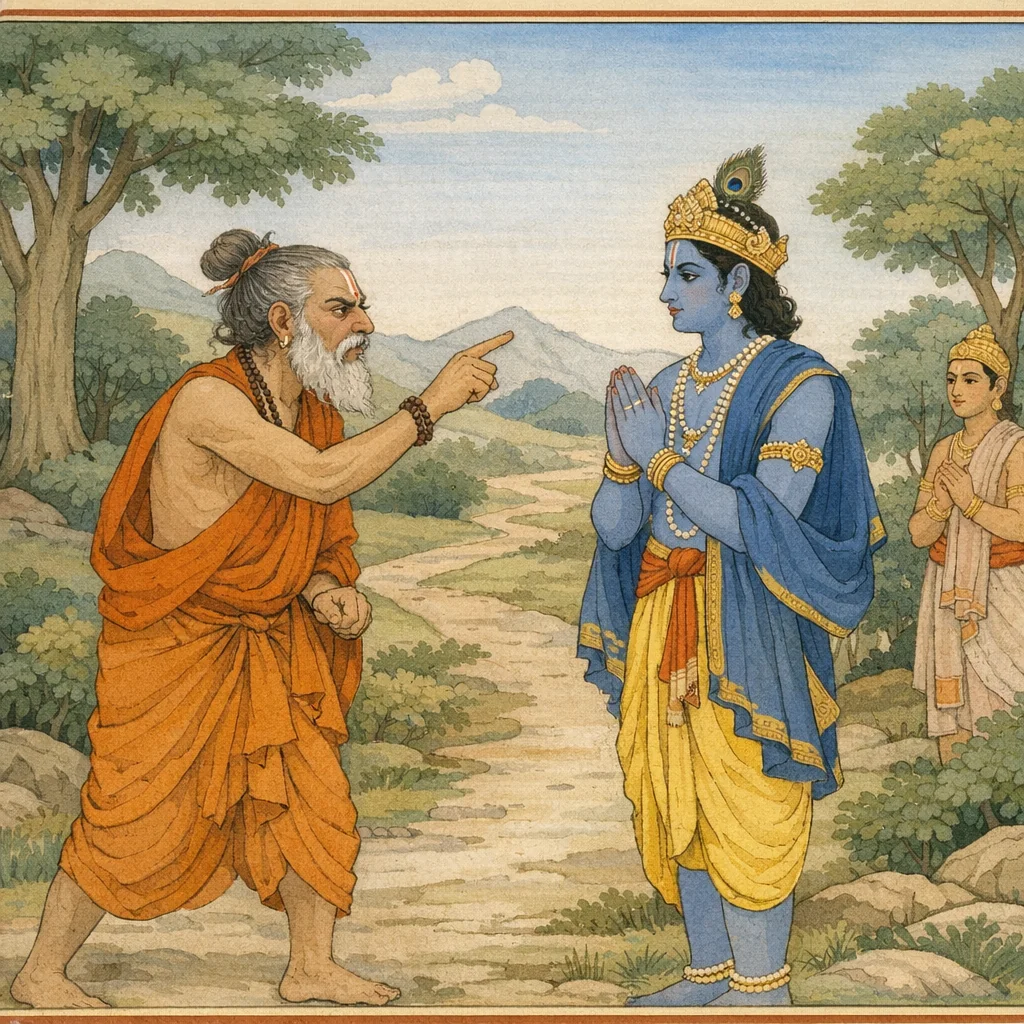
Chapter Arc: मार्ग में अर्जुन बार-बार वृष्णिवंशी सखा श्रीकृष्ण को आलिंगन करता है; रथ दूर होते ही वह कठिनता से दृष्टि समेटता है—वियोग की छाया में कथा एक नए प्रसंग, उत्तंक-मुनि, की ओर मुड़ती है। → उत्तंक ब्राह्मणश्रेष्ठ मधुसूदन का सत्कार कर कुशल पूछता है और तीखे प्रश्न उठाता है—क्या कौरव-पाण्डव कुल में अविचल सौहार्द स्थापित हुआ? क्या सब राजा अपने-अपने राष्ट्रों में सुख से रहेंगे? कृष्ण के उत्तरों से संकेत मिलता है कि शांति-प्रयास हुए, पर विनाश टल न सका। → कृष्ण के कथन सुनते ही उत्तंक क्रोध से उबल पड़ता है, रोष से नेत्र फैल जाते हैं; वह कृष्ण को दोषी मानकर शाप देने को उद्यत होता है—यहीं संवाद का ताप चरम पर पहुँचता है। → कृष्ण उत्तंक को रोकते हैं: पहले अध्यात्म-तत्त्व सुनने का आग्रह करते हैं और कहते हैं कि उसके बाद भी इच्छा हो तो शाप दे देना; साथ ही वे स्पष्ट करते हैं कि कौरवों को शांत करने का उन्होंने भरसक प्रयत्न किया, पर वे विनाश की ओर ही बढ़े। → उत्तंक का क्रोध अभी शांत नहीं; अध्यात्म-उपदेश के बाद क्या वह शाप देगा या विवेक से लौटेगा—यह अनिश्चितता अगले अध्याय की देहरी पर छोड़ दी जाती है।
Shlokas
Verse 1
(दाक्षिणात्य अधिक पाठका ३ *लोक मिलाकर कुल ५८ ३ “लोक हैं) >>: >> | अ>॥ की स्नॉसीिस्स त्रिपञज्चाशत्तमो<ड्ध्याय: मार्गमें श्रीकृष्णसे कौरवोंके विनाशकी बात सुनकर उत्तड़ मुनिका कुपित होना और श्रीकृष्णका उन्हें शान्त करना वैशम्पायन उवाच तथा प्रयान्तं वार्ष्णेयं द्वारकां भरतर्षभा: । परिष्वज्य न्यवर्तन्त सानुयात्रा: परंतपा:,वैशम्पायनजी कहते हैं--राजन्! इस प्रकार द्वारका जाते हुए भगवान् श्रीकृष्णको हृदयसे लगाकर भरतवंशके श्रेष्ठ वीर शत्रुसंतापी पाण्डव अपने सेवकों-सहित पीछे लौटे
Vaiśampāyana said: “O best of the Bharatas, as Vārṣṇeya (Śrī Kṛṣṇa) set out for Dvārakā, the Pandava heroes—scorchers of their foes—embraced him with heartfelt affection and then turned back, returning with their attendants.”
Verse 2
पुन: पुनश्च वार्ष्णेयं पर्यष्वजत फाल्गुन: । आ चरक्षुविषयाच्चैनं स ददर्श पुन: पुन:,अर्जुनने वृष्णिवंशी प्यारे सखा श्रीकृष्णको बारंबार छातीसे लगाया और जबतक वे आँखोंसे ओझल नहीं हुए, तबतक उन्हींकी ओर वे बारंबार देखते रहे
Vaiśampāyana said: Again and again Phālguna (Arjuna) embraced Vārṣṇeya (Śrī Kṛṣṇa). And until Kṛṣṇa passed beyond the range of his sight, Arjuna kept looking toward him repeatedly—an expression of steadfast affection, gratitude, and reverence for the friend who had guided him through the burdens of war and dharma.
Verse 3
कृच्छेणैव तु तां पार्थो गोविन्दे विनिवेशिताम् । संजहार ततो दृष्टिं कृष्णश्वाप्पपराजित:,जब रथ दूर चला गया, तब पार्थने बड़े कष्टसे श्रीकृष्णकी ओर लगी हुई अपनी दृष्टिको पीछे लौटाया। किसीसे पराजित न होनेवाले श्रीकृष्णकी भी यही दशा थी
Vaiśaṃpāyana said: Only with great effort did Pārtha withdraw his gaze, which had been fixed upon Govinda. And Kṛṣṇa too—invincible to all—was in the same condition, struggling to turn away. The scene underscores the depth of their bond: even the mightiest are momentarily overcome, not by an enemy, but by love, duty, and the pain of separation.
Verse 4
तस्य प्रयाणे यान्यासन् निमित्तानि महात्मन: । बहुन्यद्भुतरूपाणि तानि मे गदतः शृणु,महामना भगवान्की यात्राके समय जो बहुत-से अद्भुत शकुन प्रकट हुए, उन्हें बताता हूँ, सुनो
Vaiśampāyana said: “At the time of that great-souled one’s departure, many omens appeared—numerous and wondrous in form. Listen as I recount them to you.”
Verse 5
वायुर्वेगेन महता रथस्य पुरतो ववौ । कुर्वन्नि:शर्करं मार्ग विरजस्कमकण्टकम्,उनके रथके आगे बड़े वेगसे हवा आती और रास्तेकी धूल, कंकण तथा काँटोंको उड़ाकर अलग कर देती थी
Vaiśaṃpāyana said: A mighty wind blew swiftly in front of the chariot, clearing the road—sweeping away gravel, lifting the dust, and removing thorns—so that the path became clean, smooth, and unobstructed. The scene underscores a providential ease granted to the journey, as if nature itself cooperated to ensure unhindered progress.
Verse 6
ववर्ष वासवश्वैव तोयं शुचि सुगन्धि च । दिव्यानि चैव पुष्पाणि पुरत: शार्डधन्वचन:,इन्द्र श्रीकृष्णके सामने पवित्र एवं सुगन्धित जल तथा दिव्य पुष्पोंकी वर्षा करते थे
Vaiśampāyana said: Indra (Vāsava) caused a shower to fall—pure, fragrant water and heavenly flowers—before Śārṅgadhanvan, Śrī Kṛṣṇa. The scene signals divine approval and reverence, presenting Kṛṣṇa as worthy of worship and reminding the listener that righteous power is ultimately sanctioned by higher moral order.
Verse 7
स प्रयातो महाबाहु: समेषु मरुधन्वसु । ददर्शाथ मुनिश्रेष्ठमुत्तडकममितौजसम्,इस प्रकार मरुभूमिके समतल प्रदेशमें पहुँचकर महाबाहु श्रीकृष्णने अमिततेजस्वी मुनिश्रेष्ठ उत्तंकका दर्शन किया
Vaiśampāyana said: Proceeding onward, the mighty-armed one reached the level stretches of the desert; there he beheld the foremost of sages, Uttanka, a seer of immeasurable spiritual radiance. The episode frames a meeting where royal power and divine agency are brought into dialogue with ascetic authority, reminding the listener that dharma is clarified not only on battlefields but also through encounters with truth-speaking sages.
Verse 8
स तं सम्पूज्य तेजस्वी मुनिं पृुथुललोचन: । पूजितस्तेन च तदा पर्यपृच्छदटनामयम्,विशाल नेत्रोंवाले तेजस्वी श्रीकृष्ण उत्तंक मुनिकी पूजा करके स्वयं भी उनके द्वारा पूजित हुए। तत्पश्चात् उन्होंने मुनिका कुशल-समाचार पूछा
Having duly honored that radiant sage, the wide-eyed, illustrious one (Kṛṣṇa) was in turn honored by him. Then, in a spirit of courteous righteousness, he inquired after the sage’s well-being during his travels—asking whether all was free from hardship and disorder.
Verse 9
स पृष्ट: कुशल तेन सम्पूज्य मधुसूदनम् । उत्तड़को ब्राह्मणश्रेष्ठस्तत: पप्रच्छ माधवम्,उनके कुशल-मंगल पूछनेपर विप्रवर उत्तंकने भी मधुसूदन माधवकी पूजा करके उनसे इस प्रकार प्रश्न किया--
When he had been asked about his welfare, the foremost brāhmaṇa Uttanka first duly honored Madhusūdana (Kṛṣṇa). Then, having paid him reverence, he proceeded to question Mādhava—thus continuing the dialogue in a manner marked by courtesy, dharma, and proper respect toward a revered guest and guide.
Verse 10
कच्चिच्छौरे त्वया गत्वा कुरुपाण्डवसझ तत् | कृतं॑ सौश्रात्रमचलं तन्मे व्याख्यातुमहसि,'शूरनन्दन! क्या तुम कौरवों और पाण्डवोंके घर जाकर उनमें अविचल भ्रातृभाव स्थापित कर आये? यह बात मुझे विस्तारके साथ बताओ
Vaiśampāyana said: “O Śauri, after going to that assembly of the Kurus and the Pāṇḍavas, have you succeeded in establishing an unwavering bond of brotherhood among them? Please explain this to me in detail.”
Verse 11
अपि संधाय तान् वीरानुपावृत्तोडसि केशव । सम्बन्धिन: स्वदयितान् सतत वृष्णिपुड्रव,केशव! क्या तुम उन वीरोंमें संधि कराकर ही लौट रहे हो? वृष्णिपुंगव! वे कौरव, पाण्डव तुम्हारे सम्बन्धी तथा तुम्हें सदा ही परम प्रिय रहे हैं
Vaiśampāyana said: “Keśava, are you returning only after having brought about a reconciliation with those heroes? O foremost of the Vṛṣṇis, the Kauravas and the Pāṇḍavas are your own kinsmen, and they have always been exceedingly dear to you.”
Verse 12
कच्चित् पाण्डुसुता: पञठ्च धृतराष्ट्रस्य चात्मजा: । लोकेषु विहरिष्यन्ति त्वयवा सह परंतप
Vaiśampāyana said: “Do the five sons of Pāṇḍu, and the sons of Dhṛtarāṣṭra as well, still move about in the world—either together with you or under your protection, O scorcher of foes?”
Verse 13
“परंतप! क्या पाण्डुके पाँचों पुत्र और धृतराष्ट्रके भी सभी आत्मज संसारमें तुम्हारे साथ सुखपूर्वक विचर सकेंगे? ।। स्वराष्ट्रे ते च राजान: कच्चित् प्राप्स्यन्ति वै सुखम् । कौरवेषु प्रशान्तेषु त्वया नाथेन केशव,“केशव! तुम-जैसे रक्षक एवं स्वामीके द्वारा कौरवोंके शान्त कर दिये जानेपर अब पाण्डवनरेशोंको अपने राज्यमें सुख तो मिलेगा न?
Vaiśampāyana said: “O scorcher of foes! Will the five sons of Pāṇḍu, and all the sons of Dhṛtarāṣṭra as well, be able to move about in the world together with you in peace and happiness? And, Keśava—now that the Kauravas have been pacified by you, their protector and lord—will those Pāṇḍava kings truly obtain happiness in their own realm?”
Verse 14
या मे सम्भावना तात त्वयि नित्यमवर्तत । अपि सा सफला तात कृता ते भरतान् प्रति,“तात! मैं सदा तुमसे इस बातकी सम्भावना करता था कि तुम्हारे प्रयत्नसे कौरव- पाण्डवोंमें मेल हो जायगा। मेरी जो वह सम्भावना थी, भरतवंशियोंके सम्बन्धमें तुमने वह सफल तो किया है न?”
Vaiśampāyana said: “Dear child, I always cherished this hope regarding you—that through your effort reconciliation would arise among the Kauravas and the Pāṇḍavas. Tell me, dear one: has that hope of mine, concerning the descendants of Bharata, been fulfilled by you?”
Verse 15
श्रीभगवानुवाच कृतो यत्नो मया पूर्व सौशाम्ये कौरवान् प्रति । नाशक्यन्त यदा साम्ये ते स्थापयितुमज्जसा
The Blessed Lord said: “Formerly I exerted myself to bring the Kauravas to reconciliation and peace. Yet, when they could not be firmly established in concord with ease, the path of harmony failed to take hold.”
Verse 16
न दिष्टमप्यतिक्रान्तुं शक््यं बुद्धया बलेन वा,महर्षे! प्रारब्धके विधानको कोई बुद्धि अथवा बलसे नहीं मिटा सकता। अनघ! आपको तो ये सब बातें मालूम ही होंगी कि कौरवोंने मेरी, भीष्मजीकी तथा विदुरजीकी सम्मतिको भी ठुकरा दिया
Vaiśaṃpāyana said: “O great sage, even what is ordained by destiny cannot be overstepped—neither by intellect nor by strength. No one can erase what has already begun to bear fruit as fate’s decree. O blameless one, you surely know all this: the Kauravas rejected even my counsel, as well as that of Bhīṣma and Vidura.”
Verse 17
महर्षे विदितं भूय: सर्वमेतत् तवानघ । तेडत्यक्रामन् मतिं महां भीष्मस्य विदुरस्यथ च,महर्षे! प्रारब्धके विधानको कोई बुद्धि अथवा बलसे नहीं मिटा सकता। अनघ! आपको तो ये सब बातें मालूम ही होंगी कि कौरवोंने मेरी, भीष्मजीकी तथा विदुरजीकी सम्मतिको भी ठुकरा दिया
O great ṛṣi, blameless one! All this is already known to you. Yet the Kauravas rejected my counsel, and also that of Bhīṣma and Vidura. O maharishi, what has been ordained by destiny from the outset cannot be undone by any wisdom or by any strength.
Verse 18
ततो यमक्षयं जग्मु: समासाद्येतरेतरम् । पज्चैव पाण्डवा: शिष्टा हतामित्रा हतात्मजा: । धार्रराष्ट्रश्न निहता: सर्वे ससुतबान्धवा:,इसीलिये वे आपसमें लड़-भिड़कर यमलोक जा पहुँचे। इस युद्धमें केवल पाँच पाण्डव ही अपने शत्रुओंको मारकर जीवित बच गये हैं। उनके पुत्र भी मार डाले गये हैं। धृतराष्ट्रके सभी पुत्र, जो गान्धारीके पेटसे पैदा हुए थे, अपने पुत्र और बान्धवोंसहित नष्ट हो गये
Vaiśampāyana said: Then, closing upon one another, they went to the abode of Yama, meeting their end in mutual combat. In that war, only the five Pāṇḍavas remained alive, having slain their enemies, yet their own sons were also killed. All the Dhārtarāṣṭras—the sons of Dhṛtarāṣṭra born of Gāndhārī—were destroyed, together with their sons and kinsmen.
Verse 19
इत्युक्तवचने कृष्णे भूशं क्रोधसमन्वित: । उत्तड़क इत्युवाचैनं रोषादुत्फुल्ललोचन:,भगवान् श्रीकृष्णके इतना कहते ही उत्तंक मुनि अत्यन्त क्रोधसे जल उठे और रोषसे आँखें फाड़-फाड़कर देखने लगे। उन्होंने श्रीकृष्णसे इस प्रकार कहा
Vaiśampāyana said: When Kṛṣṇa had spoken these words, the sage Uttaṅka blazed with intense anger. With eyes widened in wrath, he addressed Śrī Kṛṣṇa as follows.
Verse 20
उत्तडुक उवाच यस्माच्छक्तेन ते कृष्ण न त्राता: कुरुपुड्रवा: । सम्बन्धिन: प्रियास्तस्माच्छप्स्ये5हं त्वामसंशयम्,उत्तंक बोले--श्रीकृष्ण! कौरव तुम्हारे प्रिय सम्बन्धी थे, तथापि शक्ति रखते हुए भी तुमने उनकी रक्षा न की। इसलिये मैं तुम्हें अवश्य शाप दूँगा
Uttaṅka said: “O Kṛṣṇa, though you had the power, you did not protect the foremost of the Kurus, the Kauravas. Since they were your own dear kinsmen, for that reason I shall certainly curse you.”
Verse 21
नच ते प्रसभं यस्मात् ते निगृह निवारिता: । तस्मान्मन्युपरीतस्त्वां शप्स्यामि मधुसूदन,मधुसूदन! तुम उन्हें जबर्दस्ती पकड़कर रोक सकते थे, पर ऐसा नहीं किया। इसलिये मैं क्रोधमें भरकर तुम्हें शाप दूँगा
“And yet you did not forcibly seize and restrain them, though you could have. Therefore, overwhelmed by anger, I shall curse you, O Madhusūdana!”
Verse 22
त्वया शक्तेन हि सता मिथ्याचारेण माधव । ते परीताः कुरुश्रेष्ठा नश्यन्तः सम ह्ुपेक्षिता:,माधव! कितने खेदकी बात है, तुमने समर्थ होते हुए भी मिथ्याचारका आश्रय लिया। युद्धमें सब ओरसे आये हुए वे श्रेष्ठ कुरुवंशी नष्ट हो गये और तुमने उनकी उपेक्षा कर दी
O Mādhava, though you were fully capable, you resorted to a false course of conduct. Those foremost men of the Kuru line, hemmed in on every side in battle, were destroyed—while you looked on with indifference. Alas, what a grievous matter this is.
Verse 23
वायुदेव उवाच शृणु मे विस्तरेणेदं यद् वक्ष्ये भुगुनन्दन । गृहाणानुनयं चापि तपस्वी हासि भार्गव,श्रीकृष्णने कहा--भृगुनन्दन! मैं जो कुछ कहता हूँ, उसे विस्तारपूर्वक सुनिये। भार्गव! आप तपस्वी हैं, इसलिये मेरी अनुनय-विनय स्वीकार कीजिये
Vāyudeva said: “Bhṛgu’s descendant, listen carefully and in full to what I am about to say. O Bhārgava, since you are an ascetic, accept also my respectful entreaty.”
Verse 24
श्रुत्वा च मे तदध्यात्मं मुज्चेथा: शापमद्य वै । न च मां तपसाल्पेन शक्तोडभिभवितुं पुमान्
Vāyu said: “Having heard from me that teaching concerning the Self, you shall indeed be released from the curse today. And no man is capable of overpowering me by a small measure of austerity.”
Verse 25
तपस्ते सुमहद्दीप्तं गुरवश्ञापि तोषिता:,आपका तप और तेज बहुत बढ़ा हुआ है। आपने गुरुजनोंको भी सेवासे संतुष्ट किया है। द्विजश्रेष्ठट आपने बाल्यावस्थासे ही ब्रह्मचर्यका पालन किया है। ये सारी बातें मुझे अच्छी तरह ज्ञात हैं। इसलिये अत्यन्त कष्ट सहकर संचित किये हुए आपके तपका मैं नाश कराना नहीं चाहता हूँ
Vāyu said: “Your austerity is exceedingly great and radiant, and you have also pleased your teachers through devoted service. O best of the twice-born, from childhood you have observed brahmacarya. All this is well known to me; therefore I do not wish to destroy the austerity you have amassed through severe hardship.”
Verse 26
कौमारं ब्रह्मचर्य ते जानामि द्विजसत्तम | दुःखार्जितस्य तपसस्तस्मान्नेच्छामि ते व्ययम्,आपका तप और तेज बहुत बढ़ा हुआ है। आपने गुरुजनोंको भी सेवासे संतुष्ट किया है। द्विजश्रेष्ठट आपने बाल्यावस्थासे ही ब्रह्मचर्यका पालन किया है। ये सारी बातें मुझे अच्छी तरह ज्ञात हैं। इसलिये अत्यन्त कष्ट सहकर संचित किये हुए आपके तपका मैं नाश कराना नहीं चाहता हूँ
Vāyu said: “O best of twice-born, I know well the brahmacarya you have observed since boyhood. Therefore I do not wish to cause any loss to your austerity—painfully accumulated through hardship.”
Verse 52
इस प्रकार श्रीमह्याभारत आश्वमेधिकपरववके अन्तर्गत अनुगीतापर्वमें श्रीकृष्णका द्वारकाकी प्रस्थानविषयक बावनवाँ अध्याय पूरा हुआ
Thus, in the Śrī Mahābhārata, within the Āśvamedhika Parva and specifically in the Anugītā sub-section, the fifty-second chapter—concerning Śrī Kṛṣṇa’s departure for Dvārakā—comes to its close. The colophon signals a transition in the narrative from instruction and reflection back to the onward movement of events, emphasizing the orderly completion of discourse and the resumption of dharma-guided action.
Verse 53
इति श्रीमहाभारते आश्वमेधिके पर्वणि अनुगीतापर्वणि उत्तड़कोपाख्याने कृष्णोत्तड़कसमागमे त्रिपड्चाशत्तमो5ध्याय:
Thus, in the Śrī Mahābhārata, within the Aśvamedhika Parva, in the Anugītā section, in the episode known as the Uttaḍaka-upākhyāna, at the meeting of Kṛṣṇa and Uttaḍaka, ends the fifty-third chapter. The line functions as a formal colophon, situating the discourse within its larger narrative frame and marking the completion of the chapter.
Verse 153
ततस्ते निधन प्राप्ता: सर्वे ससुतबान्धवा: । श्रीभगवानने कहा--महर्षे! मैंने पहले कौरवोंके पास जाकर उन्हें शान्त करनेके लिये बड़ा प्रयत्न किया, परंतु वे किसी तरह संधिके लिये तैयार न किये जा सके। जब उन्हें समतापूर्ण मार्गमें स्थापित करना असम्भव हो गया, तब वे सब-के-सब अपने पुत्र और बन्धु-बान्धवोंसहित युद्धमें मारे गये
Vaiśampāyana said: Thereafter, all of them met their end—together with their sons and kinsmen. The sense conveyed is that, despite earnest efforts to bring the Kauravas to peace and establish them on an equitable path, reconciliation proved impossible; thus they, along with their familial supporters, were slain in the war—an ethical warning about the ruin that follows obstinate refusal of concord and dharma.
Verse 243
न च ते तपसो नाशमिच्छामि तपतां वर । मैं आपको अध्यात्मतत्त्व सुना रहा हूँ। उसे सुननेके पश्चात् यदि आपकी इच्छा हो तो आज मुझे शाप दीजियेगा। तपस्वी पुरुषोंमें श्रेष्ठ महर्ष!ी आप यह याद रखिये कि कोई भी पुरुष थोड़ी-सी तपस्याके बलपर मेरा तिरस्कार नहीं कर सकता। मैं नहीं चाहता कि आपकी तपस्या नष्ट हो जाय
Vāyu said: “I do not wish your austerity to be ruined, O best among ascetics. I am about to explain to you the truth of the Self; after hearing it, if you still desire, you may curse me today. But remember this, O great sage, foremost among the austere: no man, on the strength of a little penance, can treat me with contempt. I do not want your hard-won tapas to be destroyed.”
Frequently Asked Questions
Uttanka frames the exchange as contingent on truthful doctrinal disclosure—implying that misalignment between teaching and reality warrants moral censure—thereby positioning adhyātma as a criterion for legitimate authority.
A non-dualizing claim of comprehensive immanence: guṇas, beings, and ontological categories (manifest/unmanifest, perishable/imperishable) are grounded in Vāsudeva, and ritual order is a recognizable expression of that same ground.
Rather than a formal phalaśruti, it ends with a closure formula—Vāsudeva states that the entirety of what was asked has been explained—signaling doctrinal completeness and integrating the teaching into the epic’s post-war dharma-restoration frame.