Adhyaya 22
सप्तहोतृ-विधानम् एवं इन्द्रिय–मनःसंवादः (The Seven Hotṛs and the Debate of Senses and Mind)
Upa-parva: Indriya–Manas Saṃvāda (Dialogue of the Senses and the Mind)
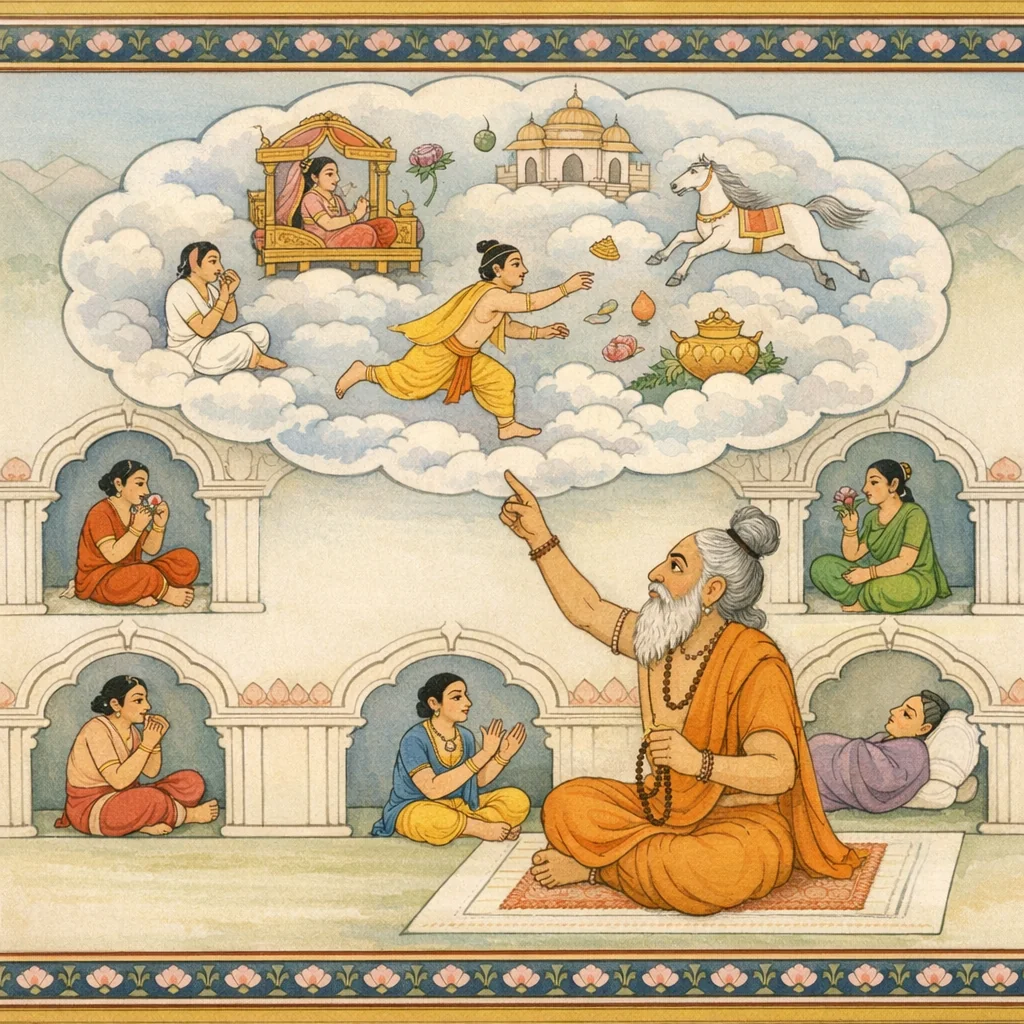
A brāhmaṇa introduces an “ancient itihāsa” concerning the prescribed arrangement (vidhāna) of seven hotṛs, identified as the five sensory faculties—smell (ghrāṇa), sight (cakṣus), taste (jihvā), touch (tvak), hearing (śrotra)—together with mind (manas) and intellect (buddhi). Though co-present in a subtle locus, they do not apprehend one another’s objects, because each operates within its own guṇa-domain. The brāhmaṇa explains that each faculty fails to grasp the object-range of the others: smell alone grasps odors; taste alone grasps flavors; sight alone grasps forms; touch alone grasps tactile contacts; hearing alone grasps sounds; mind alone apprehends doubt and deliberative fluctuation; intellect alone reaches niṣṭhā (settled determination/decision). The chapter then stages a disputation: mind claims superiority by asserting that without it the senses cannot function, likening sense activity without mind to empty houses or extinguished fires. The senses respond by challenging the mind to enjoy or cognize without them, and by issuing cross-assignment tests (e.g., grasp form by smell), implying functional interdependence. The exchange concludes with a balanced thesis: each remains attached to its own capacity, lacks direct access to the others’ capacities, and yet mutual cooperation is required for lived cognition and satisfaction.
Chapter Arc: ब्राह्मण प्राचीन इतिहासनुमा उपदेश छेड़ता है—मन, बुद्धि और पाँच इन्द्रियाँ मानो ‘सप्त होता’ बनकर भीतर के यज्ञ में नियुक्त हैं; वे सूक्ष्म अवकाश में रहते हुए भी एक-दूसरे को नहीं ‘देखते’ (अर्थात् नहीं जानते)। → इन्द्रियाँ अपने-अपने विषयों का दावा करती हैं और परस्पर सीमाएँ खींचती हैं—घ्राण, रसना, त्वचा, श्रोत्र, मन, बुद्धि रूप-ज्ञान का अधिकार नहीं रखते; चक्षु उसे ग्रहण करता है। ‘गुण-अज्ञान’ और ‘गुण-ज्ञान’ की बहस उठती है: गुणों में रमे हुए ये होता एक-दूसरे के स्वभाव को भी ठीक से नहीं पहचानते। → संवाद तीखा होकर उलट-पुलट हो जाता है—श्रोत्र से गन्ध, घ्राण से शब्द, रसना से स्पर्श जैसे असंगत ‘विनिमय’ का प्रस्ताव रखकर यह दिखाया जाता है कि विषय-ग्रहण का अभिमान भ्रम है; इन्द्रियाँ और मन-बुद्धि वस्तुतः परस्पर-आश्रित हैं और ‘मैं ही जानता/भोगता हूँ’ का दावा टिकता नहीं। → ब्राह्मण स्वप्न-जागरण के उदाहरण से निष्कर्ष देता है: मन अनेक संकल्पों और स्वप्न-आश्रयों से प्रेरित होकर विषयों की ओर दौड़ता है; पर प्राणक्षय/क्षय की घड़ी में वही विषय-आधारित संकल्प शांत हो जाते हैं—जैसे ईंधन-क्षय पर अग्नि स्वतः बुझती है।
Shlokas
Verse 1
अपन बछ। है २ >> द्ाविशोदष्ध्याय: मन-बुद्धि और इन्द्रियरूप सप्त होताओंका, यज्ञ तथा मन- इन्द्रिय-संवादका वर्णन ब्राह्मण उवाच अत्राप्युदाहरन्तीममितिहासं पुरातनम् । सुभगे सप्तहोतृणां विधानमिह यादृशम्,ब्राह्मणने कहा--सुभगे! इसी विषयमें इस पुरातन इतिहासका भी उदाहरण दिया जाता है। सात होताओंके यज्ञका जैसा विधान है, उसे सुनो
The Brāhmaṇa said: “Here too, on this very matter, an ancient traditional account is cited as an illustration. O fortunate lady, listen to the rule and arrangement of the sacrifice as it is taught here—namely, the ordinance concerning the seven ‘hotṛs’ (officiants).”
Verse 2
घ्राणश्नक्षुश्न जिह्ना च त्वक् श्रोत्रं चैव पञजचमम् | मनो बुद्धिश्व सप्तैते होतार: पृथगाश्रिता:,नासिका, नेत्र, जिह्ठदा, त्वचा और पाँचवाँ कान, मन और बुद्धि--ये सात होता अलग- अलग रहते हैं। यद्यपि ये सभी सूक्ष्म शरीरमें ही निवास करते हैं तो भी एक-दूसरेको नहीं देखते हैं। शोभने! इन सात होताओंको तुम स्वभावसे ही पहचानो
The Brāhmaṇa said: “The nose, the eyes, the tongue, the skin, and as the fifth the ear—together with the mind and the intellect—these seven are the ‘hotṛs’ (officiating agents) that abide separately. Though all of them dwell within the subtle body, they do not perceive one another. O fair one, recognize these seven hotṛs as they truly are, by their own nature.”
Verse 3
सूक्ष्मेअवकाशे तिष्ठन्तो न पश्यन्तीतरेतरम् । एतान् वै सप्तहोतृस्त्वं स्वभावाद् विद्धि शोभने,नासिका, नेत्र, जिह्ठदा, त्वचा और पाँचवाँ कान, मन और बुद्धि--ये सात होता अलग- अलग रहते हैं। यद्यपि ये सभी सूक्ष्म शरीरमें ही निवास करते हैं तो भी एक-दूसरेको नहीं देखते हैं। शोभने! इन सात होताओंको तुम स्वभावसे ही पहचानो
Dwelling together within a subtle inner space, they do not perceive one another. O fair one, know these as the seven ‘hotṛ’-priests by their very nature—each functioning separately though residing in the same subtle body.
Verse 4
ब्राह्मण्युवाच सूक्ष्मेअवकाशे सन्तस्ते कं नान्योन्यदर्शिन: । कथंस्वभावा भगवन्नेतदाचक्ष्व मे प्रभो,ब्राह्मणीने पूछा--भगवन्! जब सभी सूक्ष्म शरीरमें ही रहते हैं, तब एक-दूसरेको देख क्यों नहीं पाते? प्रभो! उनके स्वभाव कैसे हैं? यह बतानेकी कृपा करें
The Brahmin woman said: “Though all these beings abide within the same subtle sphere, why do they not perceive one another? O Blessed Lord, please explain to me, O Master, what their inherent dispositions are.”
Verse 5
ब्राह्मण उवाच गुणाज्ञानमविज्ञानं गुणज्ञानमभिज्ञता | परस्परं गुणानेते नाभिजानन्ति कह्िचित्,ब्राह्मणने कहा--प्रिये! (यहाँ देखनेका अर्थ है, जानना) गुणोंको न जानना ही गुणवानको न जानना कहलाता है और गुणोंको जानना ही गुणवान्को जानना है। ये नासिका आदि सात होता एक-दूसरेके गुणोंको कभी नहीं जान पाते हैं (इसीलिये कहा गया है कि ये एक-दूसरेको नहीं देखते हैं)
The Brāhmaṇa said: “Not knowing the qualities is true ignorance; knowing the qualities is real discernment. Yet these (sense-faculties) do not truly recognize one another’s qualities in mutual relation—none of them fully apprehends the other.”
Verse 6
जिद्दा चक्षुस्तथा श्रोत्रं वाड्मनो बुद्धिरेव च । न गन्धानधिगच्छन्ति प्राणस्तानधिगच्छति,जीभ, आँख, कान, त्वचा, मन और बुद्धि--ये गन्धोंको नहीं समझ पाते, किंतु नासिका उसका अनुभव करती है
The brāhmaṇa said: “The tongue, the eyes, the ears, the skin, the mind, and even the intellect do not apprehend smells; it is prāṇa—the vital breath, working through the organ of smell—that apprehends them.”
Verse 7
घ्राणं चक्षुस्तथा श्रोत्रं वाड्मनो बुद्धिरेव च । न रसानधिगच्छन्ति जिह्नला तानधिगच्छति,नासिका, कान, नेत्र, त्वचा, मन और बुद्धि--ये रसोंका आस्वादन नहीं कर सकते। केवल जिह्नला उसका स्वाद ले सकती है
The brāhmaṇa said: “The nose, the eyes, the ears, speech, the mind, and even the intellect do not themselves apprehend tastes. Taste is grasped only by the tongue.”
Verse 8
घ्राणं जिह्ना तथा श्रोत्रं वाड्मनो बुद्धिरेव च । न रूपाण्यधिगच्छन्ति चक्षुस्तान्यधिगच्छति,नासिका, जीभ, कान, त्वचा, मन और बुद्धि--ये रूपका ज्ञान नहीं प्राप्त कर सकते; किंतु नेत्र इनका अनुभव करते हैं
The brāhmaṇa said: “The nose, the tongue, the ear, speech, the mind, and even the intellect do not apprehend forms. It is the eye alone that directly grasps them.”
Verse 9
घ्राणं जिद्दा ततदश्नक्षुः श्रोत्रं बुद्धिर्मनस्तथा । न स्पर्शानधिगच्छन्ति त्वक् च तानधिगच्छति,नासिका, जीभ, आँख, कान, बुद्धि और मन--ये स्पर्शका अनुभव नहीं कर सकते; किंतु त्वचाको उसका ज्ञान होता है
The brāhmaṇa said: “The nose, the tongue, the eyes, the ears, the intellect, and the mind—none of these can apprehend touch. It is the skin alone that truly cognizes tactile contact.”
Verse 10
घ्राणं जिह्ना च चक्षुश्न॒ वाड्मनो बुद्धिरेव च । न शब्दानधिगच्छन्ति श्रोत्रं तानधिगच्छति,नासिका, जीभ, आँख, त्वचा, मन और बुद्धि--इन्हें शब्दका ज्ञान नहीं होता; किंतु कानको होता है
The brāhmaṇa said: “The nose, the tongue, the eyes, the skin, the mind, and even the intellect do not apprehend sound. It is the ear alone that apprehends sounds.”
Verse 11
घ्राणं जिह्ना च चक्षुश्न त्वक् श्रोत्रं बुद्धिरेव च । संशयं नाधिगच्छन्ति मनस्तमधिगच्छति,नासिका, जीभ, आँख, त्वचा, कान और बुद्धि--ये संशय (संकल्प-विकल्प) नहीं कर सकते। यह काम मनका है
The brāhmaṇa said: “The nose, the tongue, the eyes, the skin, the ears, and even the intellect do not themselves generate doubt or indecision. It is the mind that reaches and produces that wavering; therefore moral steadiness and right discernment depend on mastering the mind rather than blaming the senses.”
Verse 12
घ्राणं जिह्ना च चक्षुश्न त्वक् श्रोत्र मन एव च | न निष्ठामधिगच्छन्ति बुद्धिस्तामधिगच्छति,इसी प्रकार नासिका, जीभ, आँख, त्वचा, कान, और मन--वे किसी बातका निश्चय नहीं कर सकते। निश्चयात्मक ज्ञान तो केवल बुद्धिको होता है
The Brāhmaṇa said: “The nose, the tongue, the eyes, the skin, the ears, and even the mind—these do not arrive at firm ascertainment. It is the intellect (buddhi) alone that reaches decisive knowledge.”
Verse 13
अत्राप्युदाहरन्तीममितिहासं पुरातनम् । इन्द्रियाणां च संवादं मनसश्लैव भामिनि,भामिनि! इस विषयमें इन्द्रियों और मनके संवादरूप एक प्राचीन इतिहासका उदाहरण दिया जाता है
Here too, O fair lady, an ancient illustrative tale is cited—namely, a dialogue between the senses and the mind—offered as an example to clarify this matter and its ethical import.
Verse 14
मन उवाच नाप्राति मामृते प्राणं रसं जिदह्दा न वेत्ति च । रूप॑ चक्षुर्न गृह्नाति त्वक् स्पर्श नावबुध्यते,एक बार मनने इन्द्रियोंसे कहा--मेरी सहायताके बिना नासिका सूँघ नहीं सकती, जीभ रसका स्वाद नहीं ले सकती, आँख रूप नहीं देख सकती, त्वचा स्पर्शका अनुभव नहीं कर सकती और कानोंको शब्द नहीं सुनायी दे सकता। इसलिये मैं सब भूतोंमें श्रेष्ठ और सनातन हूँ
Mind said: “Without me, the vital breath does not attain its proper function; the tongue cannot know taste; the eye does not apprehend form; and the skin does not perceive touch.”
Verse 15
न श्षोत्रं बुध्यते शब्द मया हीन॑ कथंचन । प्रवरं सर्वभूतानामहमस्मि सनातनम्,एक बार मनने इन्द्रियोंसे कहा--मेरी सहायताके बिना नासिका सूँघ नहीं सकती, जीभ रसका स्वाद नहीं ले सकती, आँख रूप नहीं देख सकती, त्वचा स्पर्शका अनुभव नहीं कर सकती और कानोंको शब्द नहीं सुनायी दे सकता। इसलिये मैं सब भूतोंमें श्रेष्ठ और सनातन हूँ
Mind said: “Without me, the ear can in no way apprehend sound. Therefore I am the foremost among all beings, eternal.”
Verse 16
अगाराणीव शून्यानि शान्तार्चिष इवाग्नय: । इन्द्रियाणि न भासन्ते मया हीनानि नित्यश:,“मेरे बिना समस्त इन्द्रियाँ बुझी लपटोंवाली आग और सूने घरकी भाँति सदा श्रीहीन जान पड़ती हैं
Mind said: “Without me, the senses never truly shine. Deprived of my presence, they appear perpetually bereft of splendor—like deserted houses, or like fires whose flames have been quenched.”
Verse 17
काष्ठानीवार्द्रशुष्काणि यतमानैरपीन्द्रियै: । गुणार्थान् नाधिगच्छन्ति मामृते सर्वजन्तव:,संसारके सभी जीव इन्द्रियोंके यत्न करते रहनेपर भी मेरे बिना उसी प्रकार विषयोंका अनुभव नहीं कर सकते, जिस प्रकार कि सूखे-गीले काष्ठ कोई अनुभव नहीं कर सकते
Mind said: “Just as pieces of wood—whether wet or dry—do not themselves ‘experience’ anything, so too all living beings, even when their senses strive and exert themselves, cannot truly apprehend the objects of the senses and their qualities without me. It is the mind that makes sensory contact meaningful; without it, effort and organs remain inert.”
Verse 18
इच्धियाण्यूचु: एवमेतद् भवेत् सत्यं यथैतन्मन्यते भवान् | ऋते<5स्मानस्मदर्थास्त्वं भोगान् भुड्क्ते भवान् यदि,यह सुनकर इन्द्रियोंने कहा--महोदय! यदि आप भी हमारी सहायता लिये बिना ही विषयोंका अनुभव कर सकते तो हम आपकी इस बातको सच मान लेतीं
The senses said: “Yes—this would indeed be true, just as you think, sir, if you could enjoy objects of experience without us, who exist for that very purpose. But without our participation, how could you possibly partake of pleasures?”
Verse 19
यद्यस्मासु प्रलीनेषु तर्पणं प्राणधारणम् । भोगान् भुद्क्ते भवान् सत्यं यथैतन्मन्यते तथा,हमारा लय हो जानेपर भी आप तृप्त रह सकें, जीवन धारण कर सकें और सब प्रकारके भोग भोग सकें तो आप जैसा कहते और मानते हैं, वह सब सत्य हो सकता है
Mind said: “If, even after we have dissolved (into our source), you are still able to find satisfaction, sustain life, and enjoy all objects of experience, then what you say and believe may indeed be true.”
Verse 20
अथवास्मासु लीनेषु तिष्ठत्सु विषयेषु च । यदि संकल्पमात्रेण भुद्ुक्ते भोगान् यथार्थवत्,अथवा हम सब इन्द्रियाँ लीन हो जायँ या विषयोंमें स्थित रहें, यदि आप अपने संकल्पमात्रसे विषयोंका यथार्थ अनुभव करनेकी शक्ति रखते हैं और आपको ऐसा करनेमें सदा ही सफलता प्राप्त होती है तो जरा नाकके द्वारा रूपका तो अनुभव कीजिये, आँखसे रसका तो स्वाद लीजिये और कानके द्वारा गन्धोंको तो ग्रहण कीजिये। इसी प्रकार अपनी शक्तिसे जिह्लाके द्वारा स्पर्शका, त्वचाके द्वारा शब्दका और बुद्धिके द्वारा स्पर्शका तो अनुभव कीजिये
Mind said: “Whether the senses are withdrawn into us or remain engaged with their objects—if, by mere intention, you can truly experience enjoyments exactly as they are, and if you never fail in doing so—then test it: perceive form through the nose, taste flavor with the eye, and grasp scents with the ear. Likewise, by your power, let the tongue apprehend touch, the skin apprehend sound, and let the intellect apprehend touch.”
Verse 21
अथ चेन्मन्यसे सिद्धिमस्मदर्थेषु नित्यदा । प्राणेन रूपमादत्स्व रसमादत्स्व चक्षुषा,अथवा हम सब इन्द्रियाँ लीन हो जायँ या विषयोंमें स्थित रहें, यदि आप अपने संकल्पमात्रसे विषयोंका यथार्थ अनुभव करनेकी शक्ति रखते हैं और आपको ऐसा करनेमें सदा ही सफलता प्राप्त होती है तो जरा नाकके द्वारा रूपका तो अनुभव कीजिये, आँखसे रसका तो स्वाद लीजिये और कानके द्वारा गन्धोंको तो ग्रहण कीजिये। इसी प्रकार अपनी शक्तिसे जिह्लाके द्वारा स्पर्शका, त्वचाके द्वारा शब्दका और बुद्धिके द्वारा स्पर्शका तो अनुभव कीजिये
Mind said: “If you believe you always succeed in accomplishing our purposes, then reverse the very order of the senses: take in form through the breath, and taste flavor through the eyes.” This is a sharp challenge, meant to expose the fixed limits of the sense-organs and to show that mere intention cannot overrule the natural boundaries of perception; true knowledge requires disciplined discernment, not arrogant claims of mastery.
Verse 22
श्रोत्रेण गन्धानादत्स्व स्पर्शानादत्स्व जिह्दया । त्वचा च शब्दमादत्स्व बुद्धया स्पर्शभथापि च,अथवा हम सब इन्द्रियाँ लीन हो जायँ या विषयोंमें स्थित रहें, यदि आप अपने संकल्पमात्रसे विषयोंका यथार्थ अनुभव करनेकी शक्ति रखते हैं और आपको ऐसा करनेमें सदा ही सफलता प्राप्त होती है तो जरा नाकके द्वारा रूपका तो अनुभव कीजिये, आँखसे रसका तो स्वाद लीजिये और कानके द्वारा गन्धोंको तो ग्रहण कीजिये। इसी प्रकार अपनी शक्तिसे जिह्लाके द्वारा स्पर्शका, त्वचाके द्वारा शब्दका और बुद्धिके द्वारा स्पर्शका तो अनुभव कीजिये इति श्रीमहाभारते आश्वमेधिके पर्वणि अनुगीतापर्वणि ब्राह्मणगीतासु द्वाविंशोडध्याय:
Mind said: “Take in smells with the ear; take in touch with the tongue. And take in sound with the skin; and even take in touch with the intellect as well.” (By deliberately inverting the normal functions of the senses, the statement challenges one to ask whether perception truly belongs to the external organs, or whether it is ultimately constructed and authorized by the mind’s resolve and cognition.)
Verse 23
बलवन्तो हानियमा नियमा दुर्बलीयसाम् । भोगानपूर्वानादत्स्व नोच्छिष्टं भोक्तुमहति,आप-जैसे बलवान् लोग नियमोंके बन्धनमें नहीं रहते, नियम तो दुर्बलोंके लिये होते हैं। आप नये ढंगसे नवीन भोगोंका अनुभव कीजिये। हमलोगोंकी जूठन खाना आपको शोभा नहीं देता
Mind said: “The strong are not meant to be bound by restrictive rules; such restraints are for the weaker. Take up unprecedented pleasures in new ways. It does not befit you to live on what is left over by others.”
Verse 24
यथा हि शिष्य: शास्तारं श्र॒त्यर्थमभिधावति । ततः श्रुतमुपादाय श्रुत्यर्थमुपतिछठति,जैसे शिष्य श्रुतिके अर्थको जाननेके लिये उपदेश करनेवाले गुरुके पास जाता है और उनसे श्रुतिके अर्थका ज्ञान प्राप्त करके फिर स्वयं उसका विचार और अनुसरण करता है, वैसे ही आप सोते और जागते समय हमारे ही दिखाये हुए भूत और भविष्य-विषयोंका उपभोग करते हैं
“Just as a student runs to the teacher in order to understand the meaning of the revealed teaching (the Veda), and then—having received what was heard—stands by that meaning through reflection and practice; so too, in your sleeping and waking, you experience only those objects of past and future that are shown by us (the inner faculties).”
Verse 25
विषयानेवमस्माभिर्दर्शितानभिमन्यसे । अनागतानतीतांक्ष स्वप्ने जागरणे तथा,जैसे शिष्य श्रुतिके अर्थको जाननेके लिये उपदेश करनेवाले गुरुके पास जाता है और उनसे श्रुतिके अर्थका ज्ञान प्राप्त करके फिर स्वयं उसका विचार और अनुसरण करता है, वैसे ही आप सोते और जागते समय हमारे ही दिखाये हुए भूत और भविष्य-विषयोंका उपभोग करते हैं
Mind said: “Thus you take as real the objects of experience that we ourselves present to you. Whether in dream or in waking, you undergo and ‘enjoy’ matters of the future and the past exactly as we display them—like a student who approaches a teacher to learn the meaning of the Veda, gains that understanding, and then reflects on it and follows it on his own.”
Verse 26
वैमनस्यं गतानां च जन्तूनामल्पचेतसाम् | अस्मदर्थ कृते कार्य दृश्यते प्राणधारणम्,जो मनरहित हुए मन्दबुद्धि प्राणी हैं, उनमें भी हमारे लिये ही कार्य किये जानेपर प्राण- धारण देखा जाता है
Even among dull-witted creatures that have sunk into dejection and lost their inner composure, one still sees the impulse to sustain life when some task is undertaken for our sake. The mind thus points to a subtle ethical truth: beings endure and act not only for themselves, but are often drawn to preserve life and effort in answer to duty, dependence, or the needs of others.
Verse 27
बहूनपि हि संकल्पान् मत्वा स्वप्लानुपास्य च बुभुक्षया पीड्यमानो विषयानेव धावति,बहुत-से संकल्पोंका मनन और स्वप्लोंका आश्रय लेकर भोग भोगनेकी इच्छासे पीड़ित हुआ प्राणी विषयोंकी ओर ही दौड़ता है
For, after entertaining many intentions and clinging to dreams, a person—tormented by craving—runs only toward sense-objects. The mind shows how desire, fed by imagined plans and dreamlike projections, drives one away from steadiness and into the pursuit of fleeting pleasures.
Verse 28
अगारमद्वारमिव प्रविश्य संकल्पभोगान् विषये निबद्धान् | प्राणक्षये शान्तिमुपैति नित्यं दारुक्षयेडग्निज्वलितो यथैव,विषय-वासनासे अनुविद्ध संकल्पजनित भोगोंका उपभोग करके प्राणशक्तिके क्षीण होनेपर मनुष्य बिना दरवाजेके घरमें घुसे हुए मनुष्यकी भाँति उसी तरह शान्त हो जाता है, जैसे समिधाओंके जल जानेपर प्रज्वलित अग्नि स्वयं ही बुझ जाती है
Mind said: “Having entered the sense-world like a man who has slipped into a house without a door, one goes on consuming enjoyments born of mental constructions and bound to their objects. But when the vital force is exhausted, he inevitably comes to quietude—just as a blazing fire dies out of itself when its fuel-sticks are consumed.”
Verse 29
इस प्रकार श्रीमह्याभारत आश्वमेधिकपर्वके अन्तर्गत अनुगीतापर्वमें ब्राह्मण-गीताविषयक इक्कीसवाँ अध्याय पूरा हुआ,काम तु नः स्वेषु गुणेषु सड़: काम च नान्योन्यगुणोपलब्धि: । अस्मान् विना नास्ति तवोपलब्धि- स्तावदते त्वां न भजेत् प्रहर्ष:. भले ही हमलोगोंकी अपने-अपने गुणोंके प्रति आसक्ति हो और भले ही हम परस्पर एक-दूसरेके गुणोंको न जान सकें; किंतु यह बात सत्य है कि आप हमारी सहायताके बिना किसी भी विषयका अनुभव नहीं कर सकते। आपके बिना तो हमें केवल हर्षसे ही वंचित होना पड़ता है
The Brahmin said: “Granted, we are attached to our own respective qualities, and granted too that we may not fully recognize one another’s qualities. Yet this much is true: without us you cannot apprehend any object at all. And without you, we are deprived of joy alone—there can be no gladness for us.”
Frequently Asked Questions
It addresses misattribution of agency and knowledge: whether mind can claim independent supremacy, or whether ethical self-governance requires acknowledging the bounded authority and necessary cooperation of each cognitive faculty.
Cognition is modular yet coordinated: each sense apprehends only its own object-field, mind mediates doubt and intention, intellect stabilizes decision, and practical clarity arises when no faculty overreaches its proper scope.
No explicit phalaśruti appears in this excerpt; the meta-function is pedagogical—clarifying the architecture of perception and inner governance to support disciplined conduct and sound judgment.