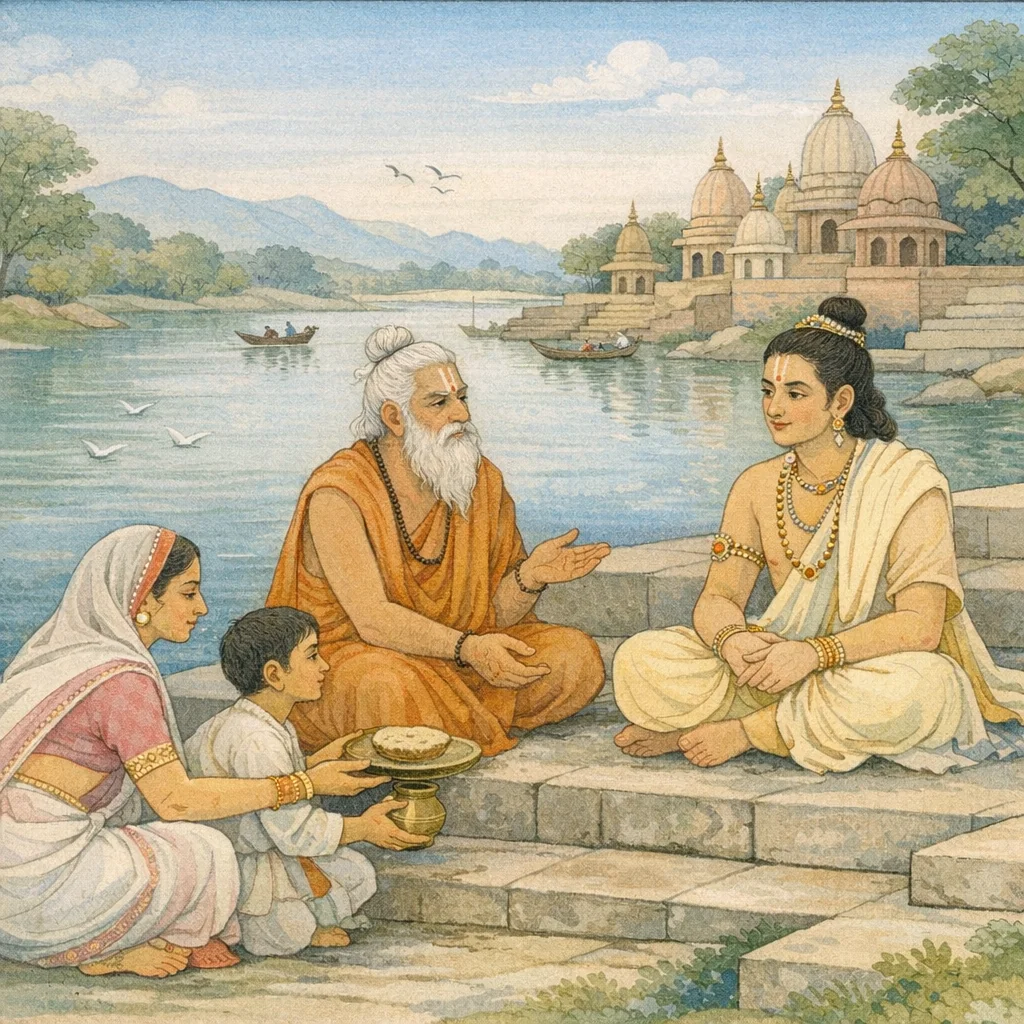
Adhyaya 124
Śāṇḍilī–Sumanā-saṃvāda: Sat-strī-samudācāra and Pati-dharma (Conduct of the Virtuous Wife)
Upa-parva: Strī-dharma / Pati-dharma Anuśāsana (Conduct of Virtuous Women)
Yudhiṣṭhira asks Bhīṣma to describe the established conduct (samudācāra) of virtuous women who uphold dharma. Bhīṣma recounts how Sumanā (identified as Kaikeyī in the framing) questioned the radiant Śāṇḍilī in the divine realm about the practices that enabled her to attain devaloka, noting her luminous appearance, purity of dress, and extraordinary vigor. Śāṇḍilī replies that her attainment did not depend on external ascetic markers (ochre robes, bark garments, shaved head, matted locks) but on disciplined relational ethics: she avoided harsh or harmful speech toward her husband; remained vigilant in honoring deities, ancestors, and Brahmins; served her parents-in-law; rejected slander, indiscreet standing at doorways, and excessive talk; avoided improper laughter and harmful acts; maintained discretion regarding secrets; welcomed her husband’s return with a seat and respectful attention; refrained from foods he did not approve; rose early to manage household tasks; observed auspicious restraint during his absence; did not indulge in adornment when he was away; did not disturb his sleep even amid urgent duties; ensured the household was orderly and clean; and maintained guarded privacy. Bhīṣma concludes that a woman who follows this dharma-path is honored in heaven like Arundhatī; the chapter ends with a phalaśruti promising devaloka and Nandana enjoyment to one who recites this narrative regularly.
Chapter Arc: भीष्म युधिष्ठिर से कहते हैं—दान और अहिंसा के विषय में एक प्राचीन इतिहास सुनो: मैत्रेय और कृष्णद्वैपायन व्यास का संवाद, जो छिपे आचरण में वाराणसी में घटित हुआ। → व्यास ‘अज्ञातचरित’ होकर मैत्रेय के पास/एक स्वैरिणी-कुल के निकट आते हैं; साधु-तेज और गृहस्थ-जीवन के बीच दूरी, तप-भाग्य और ‘पृथक् आचरण’ का प्रश्न उठता है—क्या श्रेष्ठता तप से है या करुणा-दान से? → व्यास के मुख से ‘उत्तम व्रत’ का सार उद्घोषित होता है—तीन पद: (1) किसी को पीड़ा न देना/द्रोह न करना, (2) यथाशक्ति दान देना, (3) परम सत्य बोलना; और भूखे-प्यासे को अन्न-जल देने को महायज्ञ-सदृश लोक-विजय कहा जाता है। → पुण्यकर्मियों की पहचान यज्ञ-दान-तप नहीं, बल्कि भूतों के प्रति अनभिद्रोह है; जो दूसरों का द्रव्य हरते हैं वे पतन को जाते हैं। साधक को उपदेश मिलता है—स्वधर्म में रम, यज, दे, और आनंदपूर्वक धर्माचरण कर; तब वैद्य या तपस्वी भी तुझे पराभूत नहीं कर सकते।
Shlokas
Verse 1
इस प्रकार श्रीमह्याभारत अनुशासनपर्वके अन्तर्गत दानधर्मपर्वमें कीड़ेका उपाख्यानविषयक एक सौ उतन्नीसवाँ अध्याय पूरा हुआ ॥/ ११९ ॥। ऑपन--र< बछ। ] अत्ऑकाड विशर्त्याधिकशततमो< ध्याय: व्यास और मैत्रेयका संवाद--दानकी प्रशंसा और कर्मका रहस्य युधिछिर उवाच विद्या तपश्च दानं च किमेतेषां विशिष्यते । पृच्छामि त्वां सतां श्रेष्ठ तन्मे ब्रूहि पितामह,युधिष्ठटिरने पूछा--सत्पुरुषोंमें श्रेष्ठ पितामह! विद्या, तप और दान--इनमेंसे कौन-सा श्रेष्ठ है? यह मैं आपसे पूछता हूँ, मुझे बताइये
Yudhiṣṭhira said: “O Pitāmaha, best among the virtuous, I ask you—among learning, austerity, and giving, which is the most excellent? Please tell me.”
Verse 2
भीष्म उवाच अत्राप्युदाहरन्तीममितिहासं पुरातनम् । मैत्रेयस्य च संवाद कृष्णद्वैयायनस्थ च,भीष्मजीने कहा--राजन! इस विषयमें श्रीकृष्णद्वैयायन व्यास और मैत्रेयके संवादरूप इस प्राचीन इतिहासका उदाहरण दिया जाता है
Bhishma said: “Here too, O king, an ancient precedent is cited—this old historical account in the form of a dialogue between Maitreya and Krishna Dvaipayana (Vyasa).”
Verse 3
कृष्णद्वैपायनो राजन्नज्ञातचरितं चरन् । वाराणस्यामुपातिष्ठ न्मैत्रेयं स्वैरिणीकुले,नरेश्वर! एक समयकी बात है--भगवान् श्रीकृष्ण-द्वैपायन व्यासजी गुप्तरूपसे विचरते हुए वाराणसी-पुरीमें जा पहुँचे। वहाँ मुनियोंकी मण्डलीमें बैठे हुए मुनिवर मैत्रेयजीके यहाँ वे उपस्थित हुए
Bhīṣma said: “O King, Kṛṣṇa Dvaipāyana (Vyāsa), wandering with his identity concealed, once arrived in Vārāṇasī. There, in the dwelling of the sage Maitreya—within the quarter associated with the Svairiṇīs—he presented himself.”
Verse 4
तमुपस्थितमासीन ज्ञात्वा स मुनिसत्तम । अर्चित्वा भोजयामास मैत्रेयो5शनमुत्तमम्,पास आकर बैठे हुए मुनिवर व्यासजीको पहचानकर मैत्रेयजीने उनका पूजन किया और उन्हें उत्तम अन्न भोजन कराया
Recognizing the foremost of sages (Vyāsa) who had arrived and was seated, Maitreya first honored him with due reverence and then served him an excellent meal.
Verse 5
तदन्नमुत्तमं भुक्त्वा गुणवत् सार्वकामिकम् | प्रतिष्ठमानो5स्मयत प्रीत: कृष्णो महामना:,वह उत्तम लाभदायक और सबकी रुचिके अनुकूल अन्न भोजन करके महामना व्यासजी बहुत संतुष्ट हुए। फिर जब वे वहाँसे चलने लगे तो मुस्कराये
Having eaten that excellent food—rich in quality and suited to every taste—the great-souled Krishna (Vyāsa) became fully pleased. Then, as he rose to depart from there, he smiled.
Verse 6
तमुत्स्मयन्तं सम्प्रेक्ष्य मैत्रेय: कृष्णमब्रवीत् । कारण ब्रूहि धर्मात्मन् व्यस्मयिष्ठा: कुतश्न ते,उन्हें मुस्कराते देख मैत्रेयजीने व्यासजीसे पूछा--'धर्मात्मन्! विद्वन्! मैं आपको अभिवादन- एवं प्रणाम करके यह पूछता हूँ कि आप अभी-अभी जो मुस्कराये हैं, उसका क्या कारण है? आपको हँसी कैसे आयी? आप तो तपस्वी और धैर्यवान् हैं। आपको कैसे सहसा उल्लास हो आया? यह मुझे बताइये
Seeing him smiling, Maitreya addressed Krishna: “O righteous one, tell me the reason. From what cause have you become so suddenly astonished (and smiled)?”
Verse 7
तपस्विनो धृतिमत: प्रमोद: समुपागत: । एतत् पृच्छामि ते विद्वन्नभिवाद्य प्रणम्य च,उन्हें मुस्कराते देख मैत्रेयजीने व्यासजीसे पूछा--'धर्मात्मन्! विद्वन्! मैं आपको अभिवादन- एवं प्रणाम करके यह पूछता हूँ कि आप अभी-अभी जो मुस्कराये हैं, उसका क्या कारण है? आपको हँसी कैसे आयी? आप तो तपस्वी और धैर्यवान् हैं। आपको कैसे सहसा उल्लास हो आया? यह मुझे बताइये
Bhīṣma said: “A sudden joy has come upon you—though you are an ascetic and steadfast in self-control. Therefore, O learned one, after saluting and bowing to you, I ask: what is the reason you just smiled? How did this laughter arise in you? Tell me the cause of this unexpected gladness.”
Verse 8
आत्मनश्ष् तपोभाग्यं महाभाग्यं तवेह च । पृथगाचरतस्तात पृथगात्मसुखात्मनो: । अल्पान्तरमहं मन्ये विशिष्टमपि चान्वयात्,“तात! मैं अपनेमें तपस्याजनित सौभाग्य देखता हूँ और आपमें यहाँ सहज महाभाग्य प्रतिष्ठित है (क्योंकि आप मेरे गुरुपुत्र हैं)। जीवात्मा और परमात्मामें मैं बहुत थोड़ा अनार मानता हूँ। परमात्माका सभी पदार्थोंके साथ सम्बन्ध है; क्योंकि वह सर्वव्यापी है। इसीलिये मैं उसे जीवात्माकी अपेक्षा श्रेष्ठ भी मानता हूँ, किंतु आप तो जीवात्माको परमात्मासे अभिन्न जाननेवाले हैं, फिर आपका आचरण इस मान्यतासे भिन्न हो रहा है; क्योंकि आपको कुछ विस्मय हुआ है और मुझे नहीं हुआ है'
Bhishma said: “I see in myself the good fortune born of austerity, and in you, here, an innate and great blessedness—since you stand in the line of my teacher. Yet, dear one, your conduct appears to separate what should not be separated: the individual self that seeks its own happiness and the Supreme Self (Paramātman). I consider the difference between them to be very slight; and still, because the Supreme Self is connected with all things—being all-pervading—I also regard it as superior. But you are one who knows the individual self to be non-different from the Supreme; why then does your behavior diverge from that understanding, as though you have fallen into wonder while I have not?”
Verse 9
व्यास उवाच अतिच्छन्दातिवादाभ्यां स्मयो5यं समुपागत: । असत्यं वेदवचनं कस्माद् वेदोडनृतं वदेत्,व्यासजीने कहा--ब्रह्मन! अतिथिको अत्यन्त गौरव प्रदान करते हुए उसकी इच्छाके अनुसार सत्कार करना “अतिच्छन्द' कहलाता है और वाणीद्वारा अतिथिके गौरवका जो प्रकाशन किया जाता है, उसे “अतिवाद' कहते हैं। मुझे यहाँ अतिच्छन््द और अतिवाद दोनों प्राप्त हुए हैं, इसीलिये मेरा यह विस्मय एवं हर्षोल्लास प्रकट हुआ है। (दान और आतिथ्य आदिका महत्त्व वेदोंके द्वारा प्रतिपादित हुआ है।) वेदोंका वचन कभी मिथ्या नहीं हो सकता। भला, वेद क्यों असत्य कहेगा?
Vyāsa said: “Through both extraordinary honoring (aticchanda) and lavish words of praise (ativāda), this feeling of delighted wonder has come upon me. The utterance of the Veda cannot be false—why would the Veda ever speak untruth?”
Verse 10
त्रीण्येव तु पदान्याहु: पुरुषस्योत्तमं व्रतम् । न द्रह्मेच्चैव दद्याच्च सत्यं चैव परं वदेत्,वेद मनुष्यके लिये तीन बातोंको उत्तम व्रत बताते हैं--(१) किसीके प्रति द्रोह न करे, (२) दान दे तथा (३) दूसरोंसे सदा सत्य बोले
Vyāsa said: “They declare that for a person there are only three steps that constitute the highest vow: do not commit treachery or harm toward anyone, give in charity, and always speak the supreme truth.”
Verse 11
इति वेदोक्तमृषिभि: पुरस्तात् परिकल्पितम् | इदानीं चैव न: कृत्यं पुरस्ताच्च परिश्रुतम्,वेदके इस कथनका सबसे पहले ऋषियोंने पालन किया। हमने भी बहुत पहलेसे इसे सुन रखा है और इस समय भी वेदकी इस आज्ञाका पालन करना हमारा कर्तव्य है
“Thus has this been laid down from of old by the seers, in accordance with the Veda. We too have heard of it from ancient times, and even now it is our duty to carry out this Vedic injunction.”
Verse 12
अल्पो5पि तादृशो दायो भवत्युत महाफल: । तृषिताय च ते दत्त हृदयेनानसूयता,शास्त्रविधिके अनुसार दिया हुआ थोड़ा-सा भी दान महान् फल देनेवाला होता है। तुमने ईर्ष्या-रहित हृदयसे भूखे-प्यासे अतिथिको अन्न-जलका दान किया है
Vyāsa said: “Even a small gift, when given in such a manner, becomes greatly fruitful. You offered food and water to a thirsty guest with a heart free from envy; therefore that modest charity yields immense merit. The teaching is that the inner disposition—non-jealousy, goodwill, and respect for dharma—magnifies the spiritual result of giving beyond the material quantity given.”
Verse 13
तृषितस्तृषिताय त्वं दत्त्वैतद् दर्शन॑ं मम । अजैषीर्महतो लोकान् महायज्ञैरिव प्रभो,प्रभो! मैं भूखा और प्यासा था। तुमने मुझ भूखे-प्यासेको अन्न-जल देकर तृप्त किया। इस पुण्यके प्रभावसे महान् यज्ञोंद्वारा प्राप्त होनेवाले बड़े-बड़े लोकोंपर तुमने विजय पायी है--यह मुझे प्रत्यक्ष दिखायी देता है
Vyāsa said: “When I was parched with hunger and thirst, you satisfied me by giving food and water; I see this with my own eyes. By the power of that merit, O lord, you have won great heavenly realms—realms that are otherwise attained through mighty sacrifices.”
Verse 14
ततो दानपवित्रेण प्रीतो5स्मि तपसैव च । पुण्यस्यैव हि ते सत्त्वं पुण्यस्यैव च दर्शनम्,इस दानके द्वारा पवित्र हुई तुम्हारी तपस्यासे मैं बहुत संतुष्ट हुआ हूँ। तुम्हारा बल पुण्यका ही बल है और तुम्हारा दर्शन भी पुण्यका ही दर्शन है
“Therefore, I am deeply pleased with you—both by your austerity and by that austerity being sanctified through giving. Indeed, your strength is nothing but the strength born of merit, and your vision too is a vision grounded in merit.”
Verse 15
पुण्यस्यैवाभिगन्धस्ते मनन््ये कर्मविधानजम् । अधिकं मार्जनात् तात तथा चैवानुलेपनात्,तुम्हारे शरीरसे जो सदा पुण्यकी ही सुगन्ध फैलती रहती है, इसे मैं इस दानरूप पुण्यकर्मके अनुष्ठानका फल मानता हूँ। तात! दान करना तीर्थ-स्नान तथा वैदिक व्रतकी पूर्तिसे भी बढ़कर है
Vyāsa said: “The fragrance of merit that continually emanates from you, I believe, is born of your disciplined performance of righteous acts—especially the merit of giving. Dear one, the practice of charity surpasses even bodily cleansing and anointing; it is greater than mere external purification, for it is an inner consecration that spreads the scent of virtue.”
Verse 16
शुभं सर्वपवित्रेभ्यो दानमेव परं द्विज । नो चेत् सर्वपवित्रेभ्यो दानमेव परं भवेत्,ब्रह्म! जितने पवित्र कर्म हैं, उन सबमें दान ही सबसे बढ़कर पवित्र एवं कल्याणकारी है। यदि दान ही समस्त पवित्र वस्तुओंसे श्रेष्ठ न होता तो वेद-शास्त्रोंमें उसकी इतनी प्रशंसा नहीं की जाती
Vyāsa said: “O twice-born one, among all things deemed pure and auspicious, giving (dāna) alone is the highest. If giving were not supreme among all purifying acts, it would not be praised so extensively in the Vedas and the śāstras.”
Verse 17
यानीमान्युत्तमानीह वेदोक्तानि प्रशंससि । तेषां श्रेष्ठतरं दानमिति मे नात्र संशय:,तुम जिन-जिन वेदोक्त उत्तम कर्मोंकी यहाँ प्रशंसा करते हो, उन सबयमें दान ही श्रेष्ठतर है, इस विषयमें मुझे संशय नहीं है
Vyāsa said: “Among the excellent, Veda-sanctioned acts that you praise here, I have no doubt that giving (dāna) is the most superior.”
Verse 18
दानकृद्धि: कृत: पन्था येन यान्ति मनीषिण: । ते हि प्राणस्य दातारस्तेषु धर्म: प्रतिष्ठित:,दाताओंने जो मार्ग बना दिया है, उसीसे मनीषी पुरुष चलते हैं। दान करनेवाले प्राणदाता समझे जाते हैं। उन्हींमें धर्म प्रतिष्ठित है
Vyāsa said: The path has been laid down by those who practice giving; by that very path the wise proceed. For givers are regarded as bestowers of life itself, and in them dharma finds its firm foundation.
Verse 19
यथा वेदा: स्वधीताश्ष यथा चेन्द्रियसंयम: । सर्वत्यागो यथा चेह तथा दानमनुत्तमम्,जैसे वेदोंका स्वाध्याय, इन्द्रियोंका संयम और सर्वस्वका त्याग उत्तम है, उसी प्रकार इस संसारमें दान भी अत्यन्त उत्तम माना गया है
Vyāsa said: “Just as the diligent study of the Vedas, the restraint of the senses, and the renunciation of all possessions are held to be excellent, so too in this world charity (dāna) is regarded as supremely excellent.”
Verse 20
त्वं हि तात महाबुद्धे सुखमेष्यसि शोभनम् । सुखात् सुखतरप्राप्तिमाप्रुते मतिमान्नर:,तात! महाबुद्धे! तुमको इस दानके कारण उत्तम सुखकी प्राप्ति होगी। बुद्धिमान् मनुष्य दान करके उत्तरोत्तर सुख प्राप्त करता है
Vyāsa said: “O dear one, O great-minded man, through this act of giving you will attain excellent happiness. A wise person, by giving, gains ever greater happiness—moving from happiness to still higher happiness.”
Verse 21
तन्नः प्रत्यक्षमेवेदमुपलभ्यमसंशयम् । श्रीमन्तः प्राप्तुवन्त्यर्थान् दानं यज्ञं तथा सुखम्,यह बात हमलोगोंके सामने प्रत्यक्ष है। हमें निःसंदेह ऐसा ही समझना चाहिये। तुम- जैसे श्रीसम्पन्न पुरुष जब धन पाते हैं, तब उससे दान, यज्ञ और सुख भोग करते हैं
Vyāsa said: “This is directly evident before us and can be understood without doubt: when prosperous men obtain wealth, they employ it for gifts, for sacrifice, and for the enjoyment of lawful happiness.”
Verse 22
सुखादेव परं दुःखं दुःखादप्यपरं सुखम् । दृश्यते हि महाप्राज्ञ नियतं वै स्वभावत:,महाप्राज्ञ! किंतु जो लोग विषयसुखोंमें आसक्त हैं, वे सुखसे ही महान् दुःखमें पड़ते हैं और जो तपस्या आदिके द्वारा दुःख उठाते हैं, उन्हें दु:खसे ही सुखकी प्राप्ति होती देखी जाती है। सुख और दुःख मनुष्यके स्वभावके अनुसार नियत हैं
Vyāsa said: “From pleasure itself, greater sorrow arises; and from sorrow too, a further happiness arises. This is indeed seen, O greatly wise one: by one’s very nature, the alternation is fixed. Those who cling to sense-pleasures fall from pleasure into intense suffering, while those who endure hardship through austerity and discipline are seen to attain happiness from that very suffering.”
Verse 23
त्रिविधानीह वृत्तानि नरस्याहुर्मनीषिण: । पुण्यमन्यत् पापमन्यन्न पुण्यं न च पापकम्,इस जगत्में मनीषी पुरुषोंने मनुष्यके तीन प्रकारके आचरण बतलाये हैं--पुण्यमय, पापमय तथा पुण्य-पाप दोनोंसे रहित
Vyāsa said: In this world, the wise declare that a human being’s conduct is of three kinds—one that is meritorious, one that is sinful, and one that is neither merit nor sin. Thus, beyond the ethical polarity of virtue and vice, there is also a mode of action characterized by freedom from both, pointing toward inner detachment and transcendence of moral accounting.
Verse 24
न वृत्तं मन्यते तस्य मन््यते न च पातकम् | तथा स्वकर्मनिर्वत्तं न पुण्यंन च पापकम्,ब्रह्मनिष्ठ पुरुष कर्तापनके अभिमानसे रहित होता है। अतः उसके किये हुए कर्मको न पुण्य माना जाता है न पाप। उसे अपने कर्मजनित पुण्य और पापकी प्राप्ति होती ही नहीं है
Vyāsa said: For that person, no deed is regarded as ‘merit,’ nor is any regarded as ‘sin.’ Likewise, actions that arise from one’s own prescribed work do not become either virtuous or vicious for him. Established in Brahman and free from the conceit of doership, he does not accrue the fruits of merit and demerit born of action.
Verse 25
यज्ञदानतप:शीला नरा वै पुण्यकर्मिण: । येअभिद्रह्मन्ति भूतानि ते वै पापकृतो जना:,जो यज्ञ, दान और तपस्यामें प्रवीण रहते हैं, वे ही मनुष्य पुण्य कर्म करनेवाले हैं तथा जो प्राणियोंसे द्रोह करते हैं, वे ही पापाचारी समझे जाते हैं
Vyāsa said: Those people who are devoted to sacrifice, charity, and austerity are truly doers of merit. But those who bear malice toward living beings and harm them are to be known as sinners. The verse sets an ethical measure of dharma: inner discipline and generosity elevate, while hostility to creatures marks moral downfall.
Verse 26
द्रव्याण्याददते चैव दुःखं यान्ति पतन्ति च । ततोअचन्यत् कर्म यक्किंचिन्न पुण्यं न च पातकम्,जो मनुष्य दूसरोंके धन चुराते हैं, वे दुःख पाते और नरकमें पड़ते हैं। इन उपर्युक्त शुभाशुभ कर्मोसे भिन्न जो साधारण चेष्टा है, वह न तो पुण्य है और न तो पाप ही है
Vyāsa said: Those who seize the property of others inevitably meet with suffering and fall into hell. Apart from such acts of merit and demerit, whatever other ordinary activity there is—mere routine exertion—counts as neither virtue nor sin.
Verse 27
रमस्वैधस्व मोदस्व देहि चैव यजस्व च । न त्वामभिभविष्यन्ति वैद्या न च तपस्विन:,महर्षे! तुम आनन्दपूर्वक स्वधर्म-पालनमें रत रहो, तुम्हारी निरन्तर उन्नति हो, तुम प्रसन्न रहो, दान दो और यज्ञ करो। विद्वान् और तपस्वी तुम्हारा पराभव नहीं कर सकेंगे
Vyāsa said: “Delight in life while remaining firmly engaged in your own dharma; may you continually prosper. Be joyful; give in charity and perform sacrifice. Learned men and ascetics will not be able to overpower you.”
Verse 120
इति श्रीमहाभारते अनुशासनपर्वणि दानधर्मपर्वणि मैत्रेयभिक्षायां विंशत्यधिकशततमो<ध्याय:
Thus, in the Śrī Mahābhārata, within the Anuśāsana Parva, in the section on the dharma of gifts, in the episode concerning Maitreya’s alms, the one-hundred-and-twentieth chapter comes to an end.
Frequently Asked Questions
Yudhiṣṭhira seeks a definitional account of sat-strī-samudācāra—what concrete behaviors constitute virtuous women’s dharma in household life.
The text prioritizes internalized discipline—non-harmful speech, respectful relational conduct, discretion, and orderly household governance—over external ascetic appearances as the basis of ethical merit.
Yes. The closing verses state that reciting this narrative regularly leads to attainment of devaloka and comfortable dwelling in Nandana, marking a formal recitation-benefit claim.