Adhyaya 99
Satyavatī’s Disclosure and the Summoning of Vyāsa (Niyoga for Kuru Succession)
Upa-parva: Satyavatī–Vyāsa Niyoga (Dynastic Continuity Episode)
Bhīṣma proposes inviting a qualified brāhmaṇa to generate progeny in Vicitravīrya’s kṣetra for dynastic expansion. Vaiśaṃpāyana narrates Satyavatī’s response: she affirms Bhīṣma’s authority and recounts her earlier life as a ferrymaster’s daughter, her encounter with the sage Parāśara, the concealment through darkness, and the transformation of her former fish-odor into a pleasing fragrance. She explains that Parāśara’s son, Kṛṣṇa Dvaipāyana—later known as Vyāsa for arranging the Vedas—can be recalled for urgent duties. Bhīṣma evaluates the proposal through a triadic lens (dharma–artha–kāma and their consequences) and accepts it as beneficial for the kula. Satyavatī mentally summons Vyāsa, who appears immediately; she performs rites of welcome and then petitions him as both elder son and brother to Vicitravīrya to protect the lineage by producing heirs through niyoga. Vyāsa consents on dharmic grounds but requests preparatory observance; Satyavatī argues for immediate conception due to the dangers of a rulerless polity. Vyāsa then sets a condition: the queens must be able to endure his appearance and presence for the rite to succeed, and Satyavatī proceeds to counsel the daughter-in-law privately toward this dynastic duty.
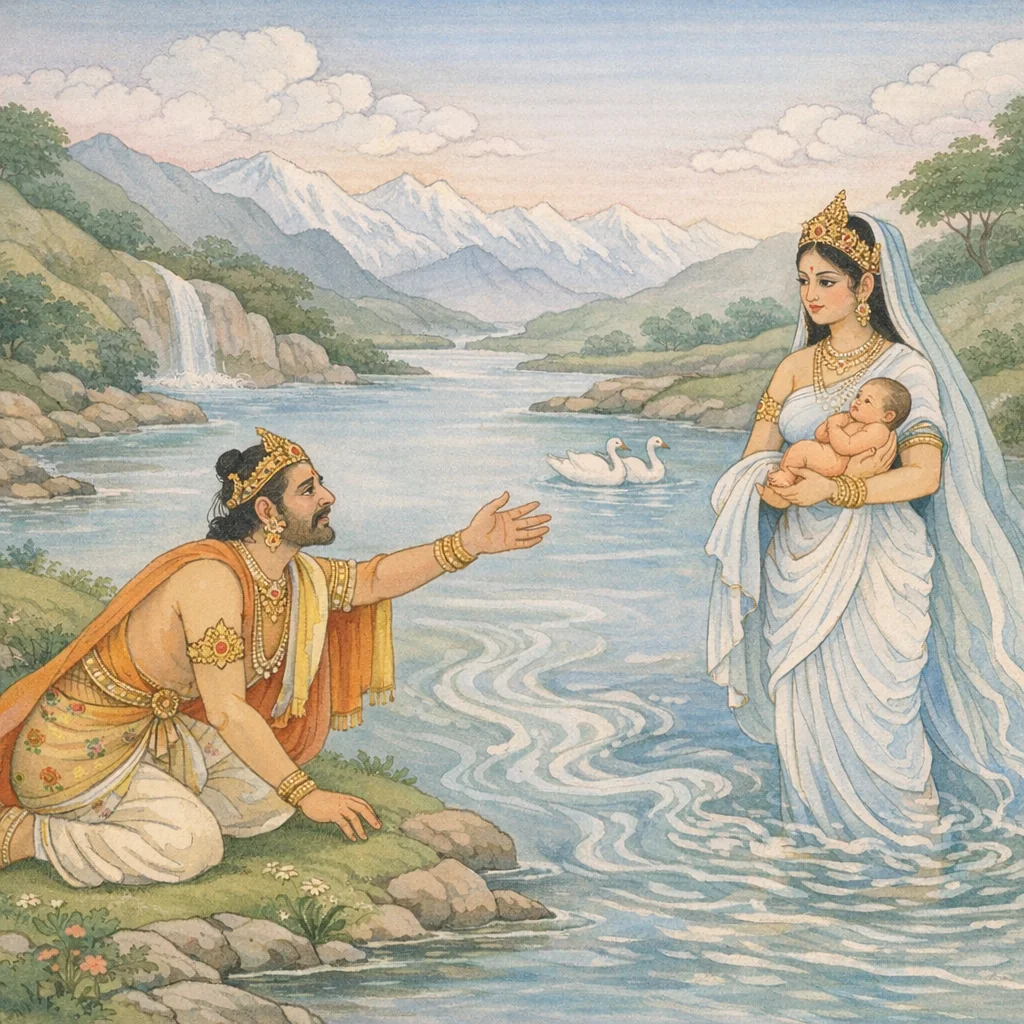
Chapter Arc: जनमेजय के समक्ष वैशम्पायन शान्तनु और गंगा के पुनर्मिलन का मधुर, किंतु रहस्यमय प्रसंग उठाते हैं—देवी स्वयं ‘कालोऽयम्’ जानकर राजा के पास आती हैं। → गंगा विवाह की शर्त रखती हैं: राजा उनके किसी भी शुभ-अशुभ कर्म को न रोके, न प्रश्न करे, न अप्रिय वचन बोले। शान्तनु प्रेमवश मौन-व्रत स्वीकार कर लेते हैं; फिर एक-एक कर आठ पुत्र जन्म लेते हैं, और गंगा उन्हें जल में प्रवाहित करती जाती हैं—राजा भीतर-ही-भीतर टूटता है, पर वचन-बद्ध रहता है। → आठवें पुत्र के जन्म पर शान्तनु का धैर्य टूटता है; वे दुःखार्त होकर गंगा को रोकते/प्रश्न करते हैं—यहीं शर्त भंग होती है और रहस्य का द्वार खुलता है। → गंगा अपना दिव्य सत्य प्रकट करती हैं: ये पुत्र वसु हैं, वसिष्ठ (आपव) के शाप से मुक्त होने हेतु मानव-जन्म लेकर शीघ्र मुक्ति पाने आए थे; शान्तनु के अतिरिक्त कोई ऐसा पिता न था जो यह भार उठा सके। वे बताती हैं कि आठवाँ पुत्र अद्वितीय तेजस्वी होगा—कुल का आनन्द, जन-नायक—और राजा को उसे ‘महाव्रत’ सहित पालने का आदेश देकर विदा लेती हैं। → गंगा के प्रस्थान के बाद शान्तनु के हाथ में रह जाता है केवल वह आठवाँ शिशु—जिसका भविष्य ‘भीष्म’ के रूप में महाभारत की धुरी बनने वाला है।
Shlokas
Verse 1
वैशम्पायनजी कहते हैं--जनमेजय! राजा शान्तनुका मधुर मुसकानयुक्त मनोहर वचन सुनकर यशस्विनी गंगा उनकी एऐश्वर्य-वृद्धिके लिये उनके पास आयीं। तटपर विचरते हुए उन नृपश्रेष्ठको देखकर सती साध्वी गंगाको वसुओंको दिये हुए वचनका स्मरण हो आया। साथ ही राजा प्रतीपकी बात भी याद आ गयी। तब यही उपयुक्त समय है, ऐसा मानकर वसुओंको मिले हुए शापसे प्रेरित हो वे स्वयं संतानोत्पादनकी इच्छासे पृथ्वीपति महाराज शान्तनुके समीप चली आयीं और अपनी मधुर वाणीसे महाराजके मनको आनन्द प्रदान करती हुई बोलीं--'भूपाल! मैं आपकी महारानी बनूँगी एवं आपके अधीन रहूँगी
Vaiśampāyana said: “Janamejaya, when King Śāntanu heard those charming words spoken with a gentle smile, the illustrious Gaṅgā came to him to increase his royal fortune. Seeing that best of kings wandering along the riverbank, the virtuous and chaste Gaṅgā remembered the promise she had given to the Vasus, and she also recalled King Pratīpa’s words. Judging the moment fitting, and impelled by the curse that had fallen upon the Vasus, she approached the lord of the earth, Mahārāja Śāntanu, desiring to beget offspring. Delighting the king’s mind with her sweet speech, she said: ‘O protector of the land, I shall become your queen and remain under your authority.’”
Verse 2
(प्रजार्थिनी राजपुत्रं शान्तनुं पृथिवीपतिम् । प्रतीपवचनं चापि संस्मृत्यैव स्वयं नूप ।। कालो<5यमिति मत्वा सा वसूनां शापचोदिता ।) उवाच चैव राज्ञ: सा ह्वादयन्ती मनो गिरा । भविष्यामि महीपाल महिषी ते वशानुगा,वैशम्पायनजी कहते हैं--जनमेजय! राजा शान्तनुका मधुर मुसकानयुक्त मनोहर वचन सुनकर यशस्विनी गंगा उनकी एऐश्वर्य-वृद्धिके लिये उनके पास आयीं। तटपर विचरते हुए उन नृपश्रेष्ठको देखकर सती साध्वी गंगाको वसुओंको दिये हुए वचनका स्मरण हो आया। साथ ही राजा प्रतीपकी बात भी याद आ गयी। तब यही उपयुक्त समय है, ऐसा मानकर वसुओंको मिले हुए शापसे प्रेरित हो वे स्वयं संतानोत्पादनकी इच्छासे पृथ्वीपति महाराज शान्तनुके समीप चली आयीं और अपनी मधुर वाणीसे महाराजके मनको आनन्द प्रदान करती हुई बोलीं--'भूपाल! मैं आपकी महारानी बनूँगी एवं आपके अधीन रहूँगी
Vaiśampāyana said: “O king, remembering the words of Pratīpa and urged on by the curse that had fallen upon the Vasus, she—desiring offspring—considered, ‘This is the right time,’ and of her own accord approached Śāntanu, the royal prince and lord of the earth. Then, delighting the king’s mind with sweet speech, she said: ‘O protector of the land, I shall become your queen and remain obedient to your will.’”
Verse 3
यत् तु कुर्यामहं राजज्छुभं वा यदि वाशुभम् | न तद् वारयितव्यास्मि न वक्तव्या तथाप्रियम्,(परंतु एक शर्त है--) राजन! मैं भला या बुरा जो कुछ भी करूँ, उसके लिये आपको मुझे नहीं रोकना चाहिये और मुझसे कभी अप्रिय वचन भी नहीं कहना चाहिये
“But there is this condition, O King: whether I do something auspicious or something inauspicious, you must not restrain me for it; and you must not speak to me in a way that utters words displeasing to me.”
Verse 4
एवं हि वर्तमाने<हं त्वयि वत्स्यामि पार्थिव । वारिता विप्रियं चोक्ता त्यजेयं त्वामसंशयम्,'पृथ्वीपते! ऐसा बर्ताव करनेपर ही मैं आपके समीप रहूँगी। यदि आपने कभी मुझे किसी कार्यसे रोका या अप्रिय वचन कहा तो मैं निश्चय ही आपका साथ छोड़ दूँगी'
“Only if you conduct yourself in this way, O king, will I live with you. If you ever restrain me from any act or speak to me a displeasing word, I will certainly abandon you without doubt.”
Verse 5
तथेति सा यदा तूक्ता तदा भरतसत्तम | प्रहर्षमतुलं लेभे प्राप्य तं पार्थिवोत्तमम्,भरतश्रेष्ठ] उस समय बहुत अच्छा कहकर राजाने जब उसकी शर्त मान ली, तब उन नृपश्रेष्ठको पतिरूपमें प्राप्त करके उस देवीको अनुपम आनन्द मिला
Vaiśampāyana said: When she had thus spoken, the best of the Bharatas accepted her condition with the words, “So be it.” Then that lady attained incomparable joy on obtaining that foremost of kings as her husband.
Verse 6
(रथमारोप्य तां देवीं जगाम स तया सह । सा च शान्तनुमभ्यागात् साक्षाल्लक्ष्मीरिवापरा ।।) तब राजा शान्तनु देवी गंगाको रथपर बिठाकर उनके साथ अपनी राजधानीको चले गये। साक्षात् दूसरी लक्ष्मीके समान सुशोभित होनेवाली गंगादेवी शान्तनुके साथ गयीं। आसाद्य शान्तनुस्तां च बुभुजे कामतो वशी । न प्रष्टव्येति मन्वानो नस तां किंचिदूचिवान्,इन्द्रियोंको वशमें रखनेवाले राजा शान्तनु उस देवीको पाकर उसका इच्छानुसार उपभोग करने लगे। पिताका यह आदेश था कि उससे कुछ पूछना मत; अत: उनकी आज्ञा मानकर राजाने उससे कोई बात नहीं पूछी
Having seated that goddess upon a chariot, he set out with her. And she came with King Śāntanu, radiant like Lakṣmī herself in another form. Śāntanu, master of his senses, having obtained her, lived with her according to their mutual desire; yet, remembering the earlier injunction not to question her, he asked her nothing at all.
Verse 7
स तस्या: शीलवृत्तेन रूपौदार्यगुणेन च । उपचारेण च रहस्तुतोष जगतीपति:,उसके उत्तम शील-स्वभाव, सदाचार, रूप, उदारता, सदगुण तथा एकान्त सेवासे महाराज शान्तनु बहुत संतुष्ट रहते थे
Vaiśampāyana said: By her noble character and conduct—by her beauty, generosity, and virtues—and also by her attentive service in private, the lord of the earth, King Śāntanu, remained greatly pleased and content with her.
Verse 8
दिव्यरूपा हि सा देवी गड़ा त्रिपथगामिनी । मानुषं विग्रहं कृत्वा श्रीमन्तं वरवर्णिनी,त्रिपथगामिनी दिव्यरूपिणी देवी गंगा ही अत्यन्त सुन्दर मनुष्य-देह धारण करके देवराज इन्द्रके समान तेजस्वी नृूपशिरोमणि महाराज शान्तनुको, जिन्हें भाग्यसे इच्छानुसार सुख अपने-आप मिल रहा था, सुन्दरी पत्नीके रूपमें प्राप्त हुई थीं
Vaiśampāyana said: That goddess Gaṅgā—of divine form, famed as the ‘three-path-goer’—assumed a human body. The exquisitely beautiful one then came to the illustrious king Śāntanu, radiant like Indra, as his wife, as though fortune itself had taken visible form to meet him.
Verse 9
भाग्योपनतकामस्य भार्या चोपनताभवत् | शान्तनोर्न॒प्सिंहस्य देवराजसमझूुते:,त्रिपथगामिनी दिव्यरूपिणी देवी गंगा ही अत्यन्त सुन्दर मनुष्य-देह धारण करके देवराज इन्द्रके समान तेजस्वी नृूपशिरोमणि महाराज शान्तनुको, जिन्हें भाग्यसे इच्छानुसार सुख अपने-आप मिल रहा था, सुन्दरी पत्नीके रूपमें प्राप्त हुई थीं
Vaiśampāyana said: To King Śāntanu—lion among rulers, radiant like Indra—desire’s fulfillment came as if by destiny itself. The goddess Gaṅgā, the divine river who moves along the three paths, assumed an exquisitely beautiful human form and came to him as his wife, as though fortune had placed happiness in his hands without effort.
Verse 10
सम्भोगस्नेहचातुर्यर्हावभावसमन्वितै: । राजानं रमयामास यथा रेमे तथैव स:,गंगादेवी हाव-भावसे युक्त सम्भोग-चातुरी और प्रणय-चातुरीसे राजाको जैसे-जैसे रमातीं, उसी-उसी प्रकार वे उनके साथ रमण करते थे
Vaiśaṃpāyana said: Endowed with the arts of love and affection, and skilled in graceful gestures and expressions, the goddess Gaṅgā delighted the king; and in the very manner she sported with him, so too did he respond, sharing in that same intimacy.
Verse 11
स राजा रतिससक्तव्वादुत्तमस्त्रीगुणै्त: । संवत्सरानृतून् मासान् बुबुधे न बहून् गतान्,उस दिव्य नारीके उत्तम गुणोंने उनके चित्तको चुरा लिया था; अतः वे राजा उसके साथ रति-भोगमें आसक्त हो गये। कितने ही वर्ष, ऋतु और मास व्यतीत हो गये, किंतु उसमें आसक्त होनेके कारण राजाको कुछ पता न चला
Vaiśampāyana said: The king, captivated by that woman’s excellent qualities, became absorbed in sensual enjoyment with her. Many years, seasons, and months passed, yet—because of his infatuation—he did not even notice how much time had gone by.
Verse 12
रममाणस्तया सार्ध यथाकामं नरेश्वर: | अष्टावजनयत् पुत्रांस्तस्थाममरसंनि भान्,उसके साथ इच्छानुसार रमण करते हुए महाराज शान्तनुने उसके गर्भसे देवताओंके समान तेजस्वी आठ पुत्र उत्पन्न किये
Vaiśaṃpāyana said: Enjoying her company as he wished, the king Śāntanu begot eight sons upon her—sons radiant and splendid like the gods.
Verse 13
जात॑ जातं च सा पुत्र क्षिपत्यम्भसि भारत । प्रीणाम्यहं त्वामित्युक्त्वा गड़ा स्रोतस्यमज्जयत्,भारत! जो-जो पुत्र उत्पन्न होता, उसे वह गंगाजीके जलमें फेंक देती और कहती --“(वत्स! इस प्रकार शापसे मुक्त करके) मैं तुम्हें प्रसन्न कर रही हूँ।” ऐसा कहकर गंगा प्रत्येक बालकको धारामें डुबो देती थी
Vaiśaṃpāyana said: “O Bhārata, each time a son was born, she would cast him into the water. Saying, ‘My child, I am pleasing you (by releasing you from the curse),’ Gaṅgā would submerge each infant in the river’s current.”
Verse 14
तस्य तन्न प्रियं राज्ञ: शान्तनोरभवत् तदा । न च तां किंचनोवाच त्यागाद् भीतो महीपति:,पत्नीका यह व्यवहार राजा शान्तनुको अच्छा नहीं लगता था, तो भी वे उस समय उससे कुछ नहीं कहते थे। राजाको यह डर बना हुआ था कि कहीं यह मुझे छोड़कर चली न जाय
At that time her conduct did not please King Śāntanu; yet the lord of the earth said nothing at all to her, fearing that if he objected she might abandon him.
Verse 15
अथैनामष्ट मे पुत्रे जाते प्रहसतीमिव । उवाच राजा दु:खार्त: परीप्सन् पुत्रमात्मन:,तदनन्तर जब आठवाँ पुत्र उत्पन्न हुआ, तब हँसती हुई-सी अपनी स्त्रीसे राजाने अपने पुत्रका प्राण बचानेकी इच्छासे दुःखातुर होकर कहा--
Then, when her eighth son was born, she appeared as though smiling. The king, stricken with grief yet intent on saving his own child’s life, spoke to his wife—seeking to prevent what he feared would happen next.
Verse 16
मा वधी: कस्य कासीति कि हिनत्सि सुतानिति । पुत्रध्नि सुमहत् पापं सम्प्राप्तं ते सुगर्हितम्,“अरी! इस बालकका वध न कर, तू किसकी कन्या है? कौन है? क्यों अपने ही बेटोंको मारे डालती है। पुत्रधातिनि! तुझे पुत्रहत्याका यह अत्यन्त निन्दित और भारी पाप लगा है!
Vaiśampāyana said: “Do not kill him! Whose daughter are you—who are you? Why do you strike down your own sons? O slayer of children, a very great and deeply censurable sin of filicide has come upon you.”
Verse 17
रूयुवाच पुत्रकाम न ते हन्मि पुत्र पुत्रवतां वर । जीर्णस्तु मम वासो5यं यथा स समय: कृत:,स्त्री बोली--पुत्रकी इच्छा रखनेवाले नरेश! तुम पुत्रवानोंमें श्रेष्ठ हो। मैं तुम्हारे इस पुत्रको नहीं मारूँगी; परंतु यहाँ मेरे रहनेका समय अब समाप्त हो गया; जैसी कि पहले ही शर्त हो चुकी है
The woman said: “O king who longs for a son, best among those blessed with sons! I will not kill your child. But my time of dwelling here has now run out, exactly as the condition agreed upon earlier was set.”
Verse 18
अहं गड्जा जह्ुसुता महर्षिगणसेविता । देवकार्यार्थसिद्धार्थमुषिताहं त्वया सह,मैं जह्ुकी पुत्री और महर्षियोंद्वारा सेवित गंगा हूँ। देवताओंका कार्य सिद्ध करनेके लिये तुम्हारे साथ रह रही थी
Vaiśampāyana said: “I am Gaṅgā, the daughter of Jahnu, revered and attended by hosts of great seers. I have been dwelling with you so that the gods’ purpose may be fulfilled.”
Verse 19
इमे5ष्टौ वसवो देवा महाभागा महौजस: । वसिष्ठशापदोषेण मानुषत्वमुपागता:,ये तुम्हारे आठ पुत्र महातेजस्वी महाभाग वसु देवता हैं। वसिष्ठजीके शाप-दोषसे ये मनुष्य-योनिमें आये थे
Vaiśampāyana said: “These are the eight Vasus—divine beings of great fortune and mighty splendor. Through the fault incurred by Vasiṣṭha’s curse, they came to assume human birth.”
Verse 20
तेषां जनयिता नान्यस्त्वदृते भुवि विद्यते । मद्विधा मानुषी धात्री लोके नास्तीह काचन,तुम्हारे सिवा दूसरा कोई राजा इस पृथ्वीपर ऐसा नहीं था, जो उन वसुओंका जनक हो सके। इसी प्रकार इस जगतमें मेरी-जैसी दूसरी कोई मानवी नहीं है, जो उन्हें गर्भमें धारण कर सके
Vaiśampāyana said: “On this earth, apart from you, there exists no other who could be the begetter of those (Vasus). Likewise, in this world there is no other human woman like me who could bear them in the womb.”
Verse 21
तस्मात् तज्जननीहेतोमनिषत्वमुपागता । जनयित्वा वसूनष्टौ जिता लोकास्त्वयाक्षया:,अतः इन वसुओंकी जननी होनेके लिये मैं मानवशरीर धारण करके आयी थी। राजन! तुमने आठ वसुओंको जन्म देकर अक्षय लोक जीत लिये हैं
Therefore, for the very purpose of becoming the mother of those (Vasus), I assumed a human condition and came to the mortal world. O King, by bringing forth the eight Vasus, you have won imperishable realms—fruits of merit and renown.
Verse 22
देवानां समयस्त्वेष वसूनां संश्रुतो मया । जात॑ जात॑ मोक्षयिष्ये जन्मतो मानुषादिति,वसु देवताओंकी यह शर्त थी और मैंने उसे पूर्ण करनेकी प्रतिज्ञा कर ली थी कि जो-जो वसु जन्म लेगा, उसे मैं जन्मते ही मनुष्य-योनिसे छुटकारा दिला दूँगी
Vaiśampāyana said: “This was the covenant of the gods concerning the Vasus, and I had heard and accepted it. I had vowed: ‘Each Vasu who is born as a human I shall release, immediately upon birth, from the condition of human life.’”
Verse 23
तत् ते शापाद् विनिर्मुक्ता आपवस्य महात्मन: । स्वस्ति ते<स्तु गमिष्यामि पुत्र पाहि महाव्रतम्,इसलिये अब वे वसु महात्मा आपव (वसिष्ठ)-के शापसे मुक्त हो चुके हैं। तुम्हारा कल्याण हो, अब मैं जाऊँगी। तुम इस महान् व्रतधारी पुत्रका पालन करो
“Through that, the Vasus have now been released from the curse of the great-souled Āpava (Vasiṣṭha). May well-being be yours. I shall now depart; protect and raise this son, steadfast in a great vow.”
Verse 24
(अयं तव सुतस्तेषां वीर्येण कुलनन्दन: । सम्भूतो5ति जनानन्यान् भविष्यति न संशय: ।।) यह तुम्हारा पुत्र सब वसुओंके पराक्रमसे सम्पन्न होकर अपने कुलका आनन्द बढ़ानेके लिये प्रकट हुआ है। इसमें संदेह नहीं कि यह बालक बल और पराक्रममें दूसरे सब लोगोंसे बढ़कर होगा। एष पर्यायवासो मे वसूनां संनिधौ कृत: । मत्प्रसूतिं विजानीहि गड्भादत्तमिमं सुतम्,यह बालक वसुओंमेंसे प्रत्येफके एक-एक अंशका आश्रय है--सम्पूर्ण वसुओंके अंशसे इसकी उत्पत्ति हुई है। मैंने तुम्हारे लिये वसुओंके समीप प्रार्थना की थी कि 'राजाका एक पुत्र जीवित रहे'। इसे मेरा बालक समझना और इसका नाम “गंगादत्त” रखना
Vaiśampāyana said: “This son of yours has been born endowed with the valor of those Vasus, O delight of the Kuru line. There is no doubt that this child will surpass all other people in strength and heroism. This child is, as it were, the successive abode of the Vasus, established in their very presence—know him to be born through me. Recognize this son as ‘Gaṅgādatta’ (the gift of Gaṅgā).”
Verse 98
इति श्रीमहाभारते आदिपर्वणि सम्भवपर्वणि भीष्मोत्पत्तावष्टननवतितमो< ध्याय: ।। ९८ || इस प्रकार श्रीमहाभारत आदिपव॑के अन्तर्गत सम्भवपर्वमें भीष्मोत्पत्तिविषयक अद्ठानबेवाँ अध्याय पूरा हुआ
Thus, in the Śrī Mahābhārata, within the Ādi Parva and specifically the Sambhava Parva, the ninety-eighth chapter—concerning the birth and origin of Bhīṣma—concludes. This closing colophon marks the completion of the chapter and frames the narrative as part of the larger ethical-historical account of the Kuru lineage.
Frequently Asked Questions
How to preserve lawful succession when ordinary marital inheritance fails: the chapter weighs personal discomfort and social sensitivities against a dharma-sanctioned institutional remedy (niyoga) for protecting the kula and the realm.
Dharma is contextual and consequential: wise agents distinguish dharma, artha, and kāma along with their downstream effects, selecting actions that sustain collective order even when the solution is personally demanding.
No explicit phalaśruti is stated here; the meta-level emphasis is practical-ethical—succession and governance are framed as prerequisites for social stability, with arājaka conditions depicted as materially and ritually destabilizing.