Adhyaya 40
Takṣaka’s agency, Parīkṣit’s rites, and Janamejaya’s enthronement (वैयासिक परम्परा-प्रसङ्गः)
Upa-parva: Janamejaya-janma–Takṣaka-prasaṅga (Succession after Parīkṣit’s death)
Sauti reports that ministers, seeing the king encircled by the serpent’s coils, react with visible grief. Hearing the tumult, they rush and perceive the extraordinary nāga Takṣaka moving through the sky, described with luminous imagery. The royal residence is portrayed as surrounded by fire and blazing due to the serpent’s venomous force; attendants flee in fear as the structure collapses like something struck by lightning. After Parīkṣit is declared slain by Takṣaka’s potency, the court—led by the royal priest and ministers—performs the prescribed posthumous rites. The citizens then collectively install the king’s young son as sovereign, identified as the Kuru hero Janamejaya, who governs with counsel from ministers and priestly guidance, in continuity with ancestral models. The ministers subsequently approach the Kāśi ruler Suvarṇavarman and seek Vapuṣṭamā as a bride; she is granted after dharmic consideration. Janamejaya receives her with satisfaction, remains devoted, and the pair are depicted enjoying ordered royal leisure, with Vapuṣṭamā characterized as a pleasing consort in the inner apartments.
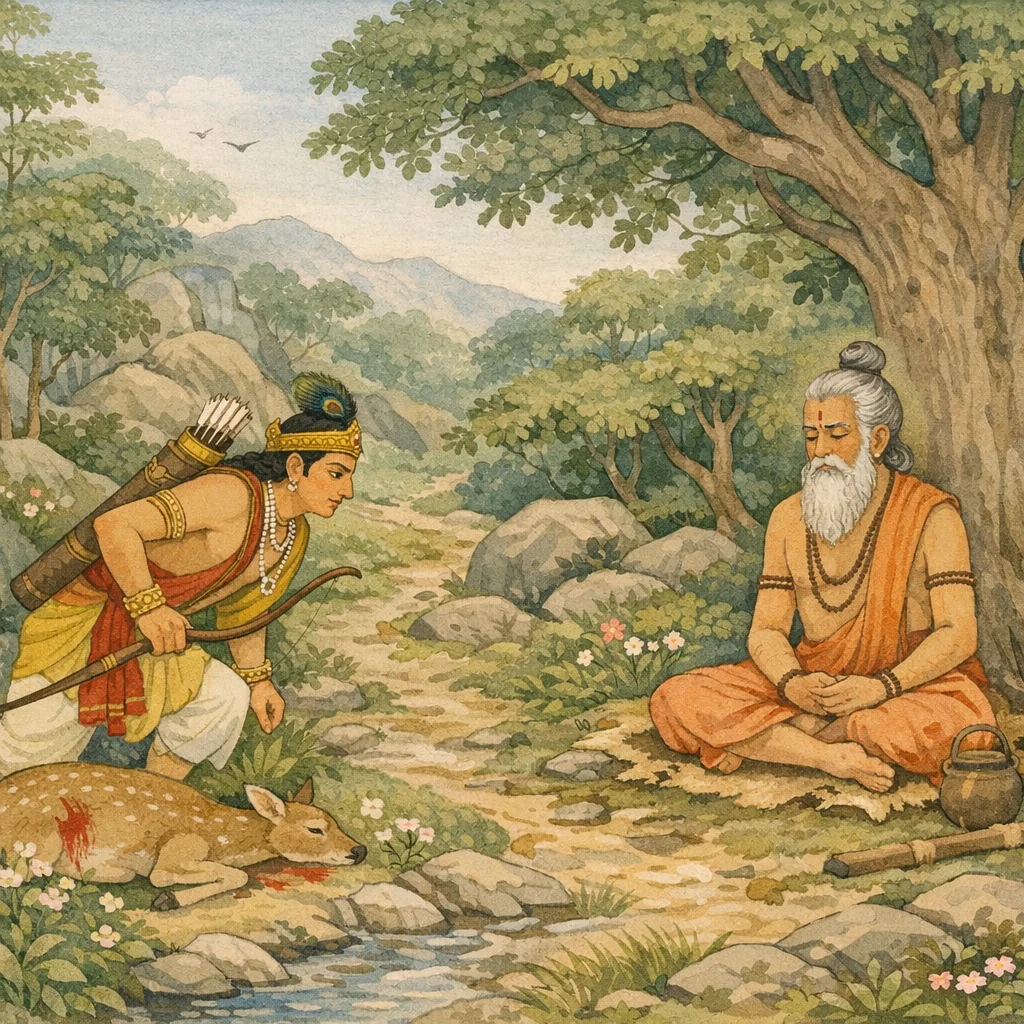
Chapter Arc: शौनक ऋषि सूतनन्दन उग्रश्रवा से पूछते हैं—जिस ‘जरत्कारु’ नाम का आपने उल्लेख किया, उसका कारण और निरुक्ति क्या है? → उग्रश्रवा ‘जरा’ (क्षय) और ‘कारु’ (शरीर) के अर्थों से नाम-व्युत्पत्ति बताते हुए कथा को आगे बढ़ाते हैं और समय-चक्र को राजा परीक्षित के प्रसंग तक ले आते हैं। परीक्षित वन में शिकार करते हुए प्यास-थकान से व्याकुल हो जाते हैं। → घायल मृग का पीछा करते-करते परीक्षित एक मुनि के आश्रम/समीप पहुँचते हैं और धनुष उठाए, प्यास से व्याकुल होकर परिचय देते हुए जल/मार्ग पूछते हैं—पर मुनि मौन रहते हैं; इसी मौन से राजा का अहं आहत होता है और अपमान-बोध तीव्र हो उठता है। → कथा-धारा स्पष्ट करती है कि यही क्षण आगे चलकर राजा के अनुचित व्यवहार और उसके परिणामों (शाप/तक्षक-प्रसंग) की भूमिका बनेगा; अध्याय परीक्षित-उपाख्यान की स्थापना करके समाप्त होता है। → मुनि के मौन के प्रत्युत्तर में क्रुद्ध राजा क्या करेगा, और यह क्रोध किस प्रकार वंश-भाग्य को मोड़ेगा?
Shlokas
Verse 1
इस प्रकार श्रीमह्या भारत आदिपर्वके अन्तर्गत आस्तीकपर्वर्में जरत्कारु मुनिका अन्वेषणविषयक उनतालीसवाँ अध्याय पूरा हुआ ॥/ ३९ ॥। 3: --ऋऋ्- चत्वारिशो< ध्याय: जरत्कारुकी तपस्या, राजा परीक्षित्॒का उपाख्यान तथा राजाद्वारा मुनिके कंधेपर साँप रखनेके कारण दु:खी हुए कृशका १ |गीको उत्तेजित करना शौनक उवाच जरत्कारुरिति ख्यातो यस्त्वया सूतनन्दन । इच्छामि तदहं श्रोतुं ऋषेस्तस्य महात्मन:,शौनकजीने पूछा--सूतनन्दन! आपने जिन जरत्कारु ऋषिका नाम लिया है, उन महात्मा मुनिके सम्बन्धमें मैं यह सुनना चाहता हूँ कि पृथ्वीपर उनका जरत्कारु नाम क्यों प्रसिद्ध हुआ? जरत्कारु शब्दकी व्युत्पत्ति क्या है? यह आप ठीक-ठीक बतानेकी कृपा करें
Śaunaka said: “O Sūta’s son, you have mentioned a sage renowned by the name Jaratkāru. I wish to hear about that great-souled seer—why he became famous on earth by the name ‘Jaratkāru’, and what the derivation and meaning of that word is.”
Verse 2
कि कारणं जरत्कारोनमितत् प्रथितं भुवि | जरत्कारुनिरुक्तिं त्वं यथावद् वक्तुमहसि,शौनकजीने पूछा--सूतनन्दन! आपने जिन जरत्कारु ऋषिका नाम लिया है, उन महात्मा मुनिके सम्बन्धमें मैं यह सुनना चाहता हूँ कि पृथ्वीपर उनका जरत्कारु नाम क्यों प्रसिद्ध हुआ? जरत्कारु शब्दकी व्युत्पत्ति क्या है? यह आप ठीक-ठीक बतानेकी कृपा करें
Śaunaka said: “For what reason has this name ‘Jaratkāru’ become well-known on the earth? Please explain to me, correctly and in full, the derivation and intended sense of the word ‘Jaratkāru.’”
Verse 3
सौतिरुवाच जरेति क्षयमाहुर्वैं दारुणं कारुसंज्ञितम् | शरीरं कारु तस्यासीत्तत् स धीमाउछनै: शनै:,उग्रश्रवाजीने कहा--शौनकजी! जरा कहते हैं क्षयको और कारु शब्द दारुणका वाचक है। पहले उनका शरीर कारु अर्थात् खूब हट्टा-कट्टा था। उसे परम बुद्धिमान् महर्षिने धीरे-धीरे तीव्र तपस्याद्वारा क्षीण बना दिया। ब्रह्म! इसलिये उनका नाम जरत्कारु पड़ा। वासुकिकी बहिनके भी जरत्कारु नाम पड़नेका यही कारण था
Sauti said: “The word jarā is used to mean ‘wasting away,’ and the term kāru denotes what is ‘dreadful’ or ‘severe.’ Formerly, his body was kāru—robust and well-built; but that wise sage gradually reduced it through intense austerities. Therefore, O Brahman, he came to be known as Jaratkāru. For the same reason, Vāsuki’s sister also received the name Jaratkārū.”
Verse 4
क्षपयामास तीव्रेण तपसेत्यत उच्यते । जरत्कारुरिति ब्रह्मन् वासुकेर्भगिनी तथा,उग्रश्रवाजीने कहा--शौनकजी! जरा कहते हैं क्षयको और कारु शब्द दारुणका वाचक है। पहले उनका शरीर कारु अर्थात् खूब हट्टा-कट्टा था। उसे परम बुद्धिमान् महर्षिने धीरे-धीरे तीव्र तपस्याद्वारा क्षीण बना दिया। ब्रह्म! इसलिये उनका नाम जरत्कारु पड़ा। वासुकिकी बहिनके भी जरत्कारु नाम पड़नेका यही कारण था
Śaunaka said: “Because he wore down (his body) through intense austerity, he is therefore called ‘Jaratkāru.’ O Brahman, Vāsuki’s sister too bears the same name for the very same reason.”
Verse 5
एवमुक्तस्तु धर्मात्मा शौनकः प्राहसत् तदा । उग्रश्रवासमामन्त्रय उपपन्नमिति ब्रुवन्,उम्रश्रवाजीके ऐसा कहनेपर धर्मात्मा शौनक उस समय खिलखिलाकर हँस पड़े और फिर उग्रश्रवाजीको सम्बोधित करके बोले--'तुम्हारी बात उचित है”
Thus addressed, the righteous-minded Śaunaka laughed aloud at that moment. Then, calling Ugrāśravas to him, he replied, “What you have said is fitting and proper.”
Verse 6
शौनक उवाच उक्त नाम यथापूर्व सर्व तच्छुमतवानहम् । यथा तु जातो हयास्तीक एतदिच्छामि वेदितुम् । तच्छुत्वा वचन तस्य सौति: प्रोवाच शास्त्रतः,शौनकजी बोले--सूतपुत्र! आपने पहले जो जरत्कारु नामकी व्युत्पत्ति बतायी है, वह सब मैंने सुन ली। अब मैं यह जानना चाहता हूँ कि आस्तीक मुनिका जन्म किस प्रकार हुआ? शौनकजीका यह वचन सुनकर उग्रश्नवाजीने पुराणशास्त्रके अनुसार आस्तीकके जन्मका वृत्तान्त बताया
Śaunaka said: “I have heard in full, as you previously explained, the derivation and significance of the name Jaratkāru. Now I wish to know how the sage Āstīka was born.” Hearing Śaunaka’s words, Sauti began to relate—according to the authoritative tradition—the account of Āstīka’s birth.
Verse 7
सौतिरु्वाच संदिश्य पन्नगान् सर्वान् वासुकि: सुसमाहित: । स्वसारसमुद्यम्य तदा जरत्कारुमृषिं प्रति,उग्रश्रवाजी बोले--नागराज वासुकिने एकाग्रचित्त हो खूब सोच-समझकर सब सर्पोंको यह संदेश दे दिया--“मुझे अपनी बहिनका विवाह जरत्कारु मुनिके साथ करना है!
Ugraśravas (Sauti) said: Having thoughtfully delivered his message to all the serpents, Vāsuki, the lord of the Nāgas, with a steady and collected mind, then resolved to offer his own sister in marriage and proceeded toward the sage Jaratkāru.
Verse 8
अथ कालस्य महत: स मुनि: संशितव्रत: । तपस्यभिरतो धीमान् स दारान् नाभ्यकाड्क्षत,तदनन्तर दीर्घकाल बीत जानेपर भी कठोर व्रतका पालन करनेवाले परम बुद्धिमान् जरत्कारु मुनि केवल तपमें ही लगे रहे। उन्होंने स्त्रीसंग्रहकी इच्छा नहीं की
After a very long time had passed, that sage of firm vows—wise and wholly devoted to austerity—did not desire to take a wife. The narrative underscores his deliberate choice of ascetic discipline over household life, highlighting the ethical tension between personal renunciation and the social duty of continuing one’s lineage.
Verse 9
स तूर्थ्वरेतास्तपसि प्रसक्तः स्वाध्यायवान् वीतभय: कृतात्मा | चचार सर्वा पृथिवीं महात्मा न चापि दारान् मनसाध्यकाड्क्षत,वे ऊध्वरेता ब्रह्मचारी थे। तपस्यामें संलग्न रहते थे। नित्य नियमपूर्वक वेदोंका स्वाध्याय करते थे। उन्हें कहींसे कोई भय नहीं था। वे मन और इन्द्रियोंको सदा काबूमें रखते थे। महात्मा जरत्कारु सारी पृथ्वीपर घूम आये; किंतु उन्होंने मनसे कभी स्त्रीकी अभिलाषा नहीं की
Śaunaka said: He was a lifelong celibate, wholly devoted to austerity—steadfast in Vedic study, free from fear, and self-controlled. That great-souled Jaratkāru wandered over the entire earth, yet he never even in his mind desired a wife.
Verse 10
ततो<5परस्मिन् सम्प्राप्ते काले कम्मिंश्चिदेव तु । परिक्षिन्नाम राजासीद् ब्रह्मन् कौरववंशज:,ब्रह्म! तदनन्तर किसी दूसरे समयमें इस पृथ्वीपर कौरववंशी राजा परीक्षित् राज्य करने लगे
Śaunaka said: Then, at a later time when that occasion had arrived, O Brāhmaṇa, there was on this earth a king named Parīkṣit, born in the Kaurava lineage. (The narrative turns from earlier events to the righteous succession of rule, indicating continuity of royal responsibility and dharma across generations.)
Verse 11
यथा पाण्डुर्महाबाहुर्धनुर्धरवरो युधि । बभूव मृगयाशील: पुरास्य प्रपितामह:,युद्धमें समस्त धनुर्धारियोंमें श्रेष्ठ उनके प्रपितामह महाबाहु पाण्डु जिस प्रकार पूर्वकालमें शिकार खेलनेके शौकीन हुए थे, उसी प्रकार राजा परीक्षित् भी थे
Śaunaka said: “Just as his great-grandfather Pāṇḍu—mighty-armed and the foremost of bowmen in battle—was in former times devoted to hunting, so too was King Parīkṣit.”
Verse 12
मृगान् विध्यन् वराहांश्व तरक्षून् महिषांस्तथा । अन््यांश्व विविधान् वन्यांश्वचार पृथिवीपति:,महाराज परीक्षित् वराह, तरक्षु (व्याप्रविशेष), महिष तथा दूसरे-दूसरे नाना प्रकारके वनके हिंसक पशुओंका शिकार खेलते हुए वनमें घूमते रहते थे
Śaunaka said: King Parīkṣit, the lord of the earth, roamed through the forest engaged in the hunt—shooting deer, boars, tarakṣus, buffaloes, and other various wild creatures. The verse situates the king in the kṣatriya milieu of royal sport and power, while also foreshadowing the ethical tension that hunting and forest-encounters can precipitate in the epic’s moral universe.
Verse 13
स कदाचिन्मृगं विद्ध्वा बाणेनानतपर्वणा । पृष्ठतो धनुरादाय ससार गहने वने,एक दिन उन्होंने गहन वनमें धनुष लेकर झुकी हुई गाँठवाले बाणसे एक हिंसक पशुको बींध डाला और भागनेपर बहुत दूरतक उसका पीछा किया
Once, having struck a deer with an arrow whose joints were bent, he took up his bow from behind and rushed after it deep into the dense forest. That moment of hunting and pursuit set a chain of consequences in motion, testing restraint, responsibility for one’s deeds, and the ethical weight of harm done—even when done as custom.
Verse 14
यथैव भगवान् रुद्रो विद्ध्वा यज्ञमृगं दिवि । अन्वगच्छद् धनुष्पाणि: पर्यन्वेष्टमितस्तत:ः,जैसे भगवान् रुद्र आकाशमें मृगशिरा नक्षत्रको बींध-कर उसे खोजनेके लिये धनुष हाथमें लिये इधर-उधर घूमते फिरे, उसी प्रकार परीक्षित् भी घूम रहे थे
Just as the blessed Lord Rudra, having pierced the sacrificial deer in the sky, roamed about with bow in hand, searching for it here and there, so too did Parīkṣit wander restlessly in pursuit. The simile suggests how a ruler’s agitation, once driven by the chase, can resemble a divine hunt, and it hints at the ethical tension between rightful action and impulsive pursuit.
Verse 15
न हि तेन मृगो विद्धो जीवन् गच्छति वै वने । पूर्वरूप॑ तु तत्तूर्ण सो5गात् स्वर्गगतिं प्रति,उनके द्वारा घायल किया हुआ मृग कभी वनमें जीवित बचकर नहीं जाता था; परंतु आज जो महाराज परीक्षितका घायल किया हुआ मृग तत्काल अदृश्य हो गया था, वह वास्तवमें उनके स्वर्गवासका मूर्तिमान् कारण था। उस मृगके साथ राजा परीक्षित् बहुत दूरतक खिंचे चले गये
For a deer struck by his arrow would never escape alive into the forest. Yet on this occasion, the deer that King Parīkṣit wounded vanished at once—an ominous foretoken that became, in effect, the embodied cause leading toward the king’s ascent to heaven (his death). Drawn along by that deer, Parīkṣit was pulled far away in pursuit.
Verse 16
परिक्षितो नरेन्द्रस्य विद्धो यन्नष्टवान् मृग: । दूरं चापहतस्तेन मृूगेण स महीपति:,उनके द्वारा घायल किया हुआ मृग कभी वनमें जीवित बचकर नहीं जाता था; परंतु आज जो महाराज परीक्षितका घायल किया हुआ मृग तत्काल अदृश्य हो गया था, वह वास्तवमें उनके स्वर्गवासका मूर्तिमान् कारण था। उस मृगके साथ राजा परीक्षित् बहुत दूरतक खिंचे चले गये
Śaunaka said: “The deer that King Parīkṣit had struck—though such a wounded animal ordinarily does not survive in the forest—vanished at once. In truth, that very deer became the embodied cause leading to the king’s departure to heaven (his death). Drawn along in pursuit of it, King Parīkṣit was carried far away.”
Verse 17
परिश्रान्त: पिपासार्त आससाद मुनि वने । गवां प्रचारेष्वासीनं वत्सानां मुखनि:सृतम्,उन्हें बड़ी थकावट आ गयी। वे प्याससे व्याकुल हो उठे और इसी दशामें वनमें शमीक मुनिके पास आये। वे मुनि गौओंके रहनेके स्थानमें आसनपर बैठे थे और गौओंका दूध पीते समय बछड़ोंके मुखसे जो बहुत-सा फेन निकलता, उसीको खा-पीकर तपस्या करते थे। राजा परीक्षितने कठोर व्रतका पालन करनेवाले उन महर्षिके पास बड़े वेगसे आकर पूछा। पूछते समय वे भूख और थकावटसे बहुत आतुर हो रहे थे और धनुषको उन्होंने ऊपर उठा रखा था। वे बोले--'ब्रह्मन! मैं अभिमन्युका पुत्र राजा परीक्षित् हूँ। मेरे बाणोंसे विद्ध होकर एक मृग कहीं भाग निकला है। क्या आपने उसे देखा है?” मुनि मौन-व्रतका पालन कर रहे थे, अतः उन्होंने राजाको कुछ भी उत्तर नहीं दिया
Exhausted and tormented by thirst, he came upon a sage in the forest. The sage was seated in the cattle-grazing enclosure, sustaining his austerity by taking what flowed from the calves’ mouths as they drank milk. In this setting, the episode frames a moral tension: a king driven by urgency and bodily distress approaches a vow-bound ascetic whose silence is itself a discipline, setting the stage for a clash between royal impatience and ascetic restraint.
Verse 18
भूयिष्ठमुपयुञ्जानं फेनमापिबतां पय: । तमभिद्रुत्य वेगेन स राजा संशितव्रतम्,उन्हें बड़ी थकावट आ गयी। वे प्याससे व्याकुल हो उठे और इसी दशामें वनमें शमीक मुनिके पास आये। वे मुनि गौओंके रहनेके स्थानमें आसनपर बैठे थे और गौओंका दूध पीते समय बछड़ोंके मुखसे जो बहुत-सा फेन निकलता, उसीको खा-पीकर तपस्या करते थे। राजा परीक्षितने कठोर व्रतका पालन करनेवाले उन महर्षिके पास बड़े वेगसे आकर पूछा। पूछते समय वे भूख और थकावटसे बहुत आतुर हो रहे थे और धनुषको उन्होंने ऊपर उठा रखा था। वे बोले--'ब्रह्मन! मैं अभिमन्युका पुत्र राजा परीक्षित् हूँ। मेरे बाणोंसे विद्ध होकर एक मृग कहीं भाग निकला है। क्या आपने उसे देखा है?” मुनि मौन-व्रतका पालन कर रहे थे, अतः उन्होंने राजाको कुछ भी उत्तर नहीं दिया
Śaunaka said: The king hurried swiftly toward that sage, steadfast in austere vows. The ascetic lived chiefly on the foam that gathers at the mouths of calves as they drink the cows’ milk—taking even such scant remnants as the fuel of his tapas. In the larger episode, Parīkṣit, exhausted and tormented by thirst and hunger while pursuing a deer wounded by his arrow, approaches Śamīka in the forest and questions him; the sage, observing a vow of silence, gives no reply—thus preparing the ground for the king’s later lapse and its grave ethical consequences.
Verse 19
अपृच्छद् धनुरुद्यम्य त॑ मुनि क्षुच्छूमान्वित: । भो भो ब्रद्वान्नहं राजा परीक्षिदभिमन्युज:,उन्हें बड़ी थकावट आ गयी। वे प्याससे व्याकुल हो उठे और इसी दशामें वनमें शमीक मुनिके पास आये। वे मुनि गौओंके रहनेके स्थानमें आसनपर बैठे थे और गौओंका दूध पीते समय बछड़ोंके मुखसे जो बहुत-सा फेन निकलता, उसीको खा-पीकर तपस्या करते थे। राजा परीक्षितने कठोर व्रतका पालन करनेवाले उन महर्षिके पास बड़े वेगसे आकर पूछा। पूछते समय वे भूख और थकावटसे बहुत आतुर हो रहे थे और धनुषको उन्होंने ऊपर उठा रखा था। वे बोले--'ब्रह्मन! मैं अभिमन्युका पुत्र राजा परीक्षित् हूँ। मेरे बाणोंसे विद्ध होकर एक मृग कहीं भाग निकला है। क्या आपने उसे देखा है?” मुनि मौन-व्रतका पालन कर रहे थे, अतः उन्होंने राजाको कुछ भी उत्तर नहीं दिया
Śaunaka said: Tormented by hunger and exhaustion, the king raised his bow and questioned the sage: “Ho, ho, brāhmaṇa! I am King Parīkṣit, the son of Abhimanyu. A deer, struck by my arrows, has fled somewhere—have you seen it?” The scene sets a moral tension: a ruler’s urgent pursuit and bodily distress collide with a sage’s vow of silence, foreshadowing a grave lapse in restraint.
Verse 20
मया विद्धो मृगो नष्ट: कच्चित् तं दृष्टवानसि । स मुनिस्तं तु नोवाच किंचिन्मौनव्रते स्थित:,उन्हें बड़ी थकावट आ गयी। वे प्याससे व्याकुल हो उठे और इसी दशामें वनमें शमीक मुनिके पास आये। वे मुनि गौओंके रहनेके स्थानमें आसनपर बैठे थे और गौओंका दूध पीते समय बछड़ोंके मुखसे जो बहुत-सा फेन निकलता, उसीको खा-पीकर तपस्या करते थे। राजा परीक्षितने कठोर व्रतका पालन करनेवाले उन महर्षिके पास बड़े वेगसे आकर पूछा। पूछते समय वे भूख और थकावटसे बहुत आतुर हो रहे थे और धनुषको उन्होंने ऊपर उठा रखा था। वे बोले--'ब्रह्मन! मैं अभिमन्युका पुत्र राजा परीक्षित् हूँ। मेरे बाणोंसे विद्ध होकर एक मृग कहीं भाग निकला है। क्या आपने उसे देखा है?” मुनि मौन-व्रतका पालन कर रहे थे, अतः उन्होंने राजाको कुछ भी उत्तर नहीं दिया
Śaunaka said: “A deer, struck by my arrow, has fled and vanished. Have you perhaps seen it?” But that sage, established in a vow of silence, did not speak at all in reply.
Verse 21
तस्य स्कन्धे मृतं सर्प क्रुद्धो राजा समासजत् । समुत्क्षिप्प धनुष्कोट्या स चैनं समुपैक्षत,तब राजाने कुपित हो धनुषकी नोकसे एक मरे हुए साँपको उठाकर उनके कंधेपर रख दिया, तो भी मुनिने उनकी उपेक्षा कर दी
Seeing the sage remain indifferent, the king—angered—lifted a dead snake with the tip of his bow and placed it upon the sage’s shoulder. Even then, the ascetic paid him no heed, maintaining his detached composure. The episode shows how unchecked royal anger and wounded pride can turn into disrespect toward a self-controlled holy man, while the sage’s silence embodies forbearance and inner steadiness.
Verse 22
न स किंचिदुवाचैनं शुभं वा यदि वाशुभम् | स राजा क्रोधमुत्सूज्य व्यथितस्तं तथागतम् | दृष्टवा जगाम नगरमृषिस्त्वासीत् तथैव स:,उन्होंने राजासे भला या बुरा कुछ भी नहीं कहा। उन्हें इस अवस्थामें देख राजा परीक्षितने क्रोध त्याग दिया और मन-ही-मन व्यथित हो पश्चात्ताप करते हुए वे अपनी राजधानीको चले गये। वे महर्षि ज्यों-कें-त्यों बैठे रहे
He did not say anything to him—neither a blessing nor a harsh word. Seeing the sage in that condition, King Parīkṣit let go of his anger; inwardly troubled and remorseful, he returned to his capital. The great ṛṣi, however, remained seated just as he was.
Verse 23
न हि तं राजशार्टूल॑ क्षमाशीलो महामुनि: । स्वधर्मनिरतं भूपं समाक्षिप्तो5प्यधर्षयत्,राजाओंमें श्रेष्ठ भूपाल परीक्षित् अपने धर्मके पालनमें तत्पर रहते थे, अत: उस समय उनके द्वारा तिरस्कृत होनेपर भी क्षमाशील महामुनिने उन्हें अपमानित नहीं किया
O tiger among kings, the great sage—patient and forbearing by nature—did not retaliate against that ruler who was devoted to his own royal duty, even though he had been insulted. The episode shows that true ascetic strength lies in restraint, and that a king’s steadfastness in dharma is no warrant for contempt, but calls forth measured forbearance in the wise.
Verse 24
न हि तं राजशार्दूलस्तथा धर्मपरायणम् | जानाति भरतमश्रेष्ठस्तत एनमधर्षयत्,भरतवंशशिरोमणि नृपश्रेष्ठ परीक्षित् उन धर्मपरायण मुनिको यथार्थरूपमें नहीं जानते थे; इसीलिये उन्होंने महर्षिका अपमान किया
That bull among kings, the best of the Bharatas, did not truly recognize him as so steadfast a devotee of dharma; therefore, in ignorance of the sage’s real nature, he affronted him. The verse underscores how failure to discern virtue in another can lead to ethical lapse and disrespect toward the righteous.
Verse 25
तरुणस्तस्य पुत्रो$ भूत् तिग्मतेजा महातपा: । शृज्जी नाम महाक्रोधो दुष्प्रसादो महाव्रत:,मुनिके शृंगी नामक एक पुत्र था, जिसकी अभी तरुणावस्था थी। वह महान् तपस्वी, दुःसह तेजसे सम्पन्न और महान् व्रतधारी था। उसमें क्रोधकी मात्रा बहुत अधिक थी; अतः उसे प्रसन्न करना अत्यन्त कठिन था
Śaunaka said: “He had a son who was still young, yet possessed of fierce brilliance and great ascetic power. Named Śṛṅgī, he was quick to anger, difficult to appease, and steadfast in severe vows.” The verse highlights the ethical tension that can arise when spiritual discipline and power are joined with uncontrolled wrath.
Verse 26
स देवं परमासीन सर्वभूतहिते रतम् । ब्रह्माणमुपतस्थे वै काले काले सुसंयत:,वह समय-समयपर मन और इन्द्रियोंको संयममें रखकर सम्पूर्ण प्राणियोंके हितमें तत्पर रहनेवाले, उत्तम आसनपर विराजमान आचार्यदेवकी सेवामें उपस्थित हुआ करता था
With his mind and senses well restrained, he would, at regular intervals, attend upon Brahmā—the divine preceptor—who sat upon an exalted seat and was ever devoted to the welfare of all beings. The verse highlights disciplined self-control expressed as steady service to a beneficent, world-sustaining authority.
Verse 27
स तेन समनुज्ञातो ब्रह्मणा गृहमेयिवान् । सख्योक्त: क्रीडमानेन स तत्र हसता किल,शृंगी उस दिन आचार्यकी आज्ञा लेकर घरको लौट रहा था। रास्तेमें उसका मित्र ऋषिकुमार कृश, जो धर्मके लिये कष्ट उठानेके कारण सदा ही कृश (दुर्बल) रहा करता था, खेलता मिला। उसने हँसते-हँसते शृंगी ऋषिको उसके पिताके सम्बन्धमें ऐसी बात बतायी, जिसे सुनते ही वह रोषमें भर गया। द्विजश्रेष्ठ! मुनिकुमार शुंगी क्रोधके आवेशमें आनेपर अत्यन्त तीक्ष्ण (कठोर) एवं विषके समान विनाशकारी हो जाता था
With Brahmā’s permission, he set out for home. On the way, a friend—met while playing and laughing—spoke to him in jest; but the remark concerned his father and, once heard, it kindled fierce anger in the young ascetic. Thus the narrative shows how careless speech, even in play, can provoke destructive wrath in one whose temper is sharp and ruinous like poison.
Verse 28
संरम्भात् कोपनो5तीव विषकल्पो मुने: सुतः । उद्दिश्य पितरं तस्य यच्छुत्वा रोषमाहरत् । ऋषिपुत्रेण धर्मार्थे कृशेन द्विजसत्तम,शृंगी उस दिन आचार्यकी आज्ञा लेकर घरको लौट रहा था। रास्तेमें उसका मित्र ऋषिकुमार कृश, जो धर्मके लिये कष्ट उठानेके कारण सदा ही कृश (दुर्बल) रहा करता था, खेलता मिला। उसने हँसते-हँसते शृंगी ऋषिको उसके पिताके सम्बन्धमें ऐसी बात बतायी, जिसे सुनते ही वह रोषमें भर गया। द्विजश्रेष्ठ! मुनिकुमार शुंगी क्रोधके आवेशमें आनेपर अत्यन्त तीक्ष्ण (कठोर) एवं विषके समान विनाशकारी हो जाता था
Śaunaka said: The sage’s son was exceedingly quick to anger; when provoked, he became like poison itself in his destructive power. Hearing a remark directed at his father, he was at once seized by wrath.
Verse 29
कृश उवाच तेजस्विनस्तव पिता तथैव च तपस्विन: । शवं स्कनन््धेन वहति मा शंंगिन् गर्वितो भव,कृशने कहा--शंगिन्! तुम बड़े तपस्वी और तेजस्वी बनते हो, किंतु तुम्हारे पिता अपने कंधेपर मुर्दा सर्प ढो रहे हैं। अब कभी अपनी तपस्यापर गर्व न करना
Kṛśa said: “Your father, though possessed of spiritual radiance and austerity as well, carries a corpse upon his shoulder. Therefore, O Śaṅgin, do not become proud of your ascetic practice.”
Verse 30
व्याहरत्स्वृषिपुत्रेषु मा सम किंचिद् वचो वद । अस्मद्विधेषु सिद्धिषु ब्रह्मवित्सु तपस्विषु,हम-जैसे सिद्ध, ब्रह्मवेत्ता तथा तपस्वी ऋषिपुत्र जब कभी बातें करते हों, उस समय तुम वहाँ कुछ न बोलना
Kṛśa said: “When the sons of sages are conversing, do not speak any word in their midst. In the presence of accomplished ones like us—adepts, knowers of Brahman, and ascetics—maintain restraint and silence.”
Verse 31
क्व ते पुरुषमानित्वं क्व ते वाचस्तथाविधा: । दर्पजा: पितरं द्रष्टा यस्त्वं शवधरं तथा,कहाँ है तुम्हारा पौरषका अभिमान, कहाँ गयीं तुम्हारी वे दर्पभरी बातें? जब तुम अपने पिताको मुर्दा ढोते चुपचाप देख रहे हो!
“Where now is your pride in manly prowess? Where are those very words you once spoke—so full of arrogance? You, who were born of pride, stood by in silence and watched as your own father was carried like a corpse.”
Verse 32
पित्रा च तव तत् कर्म नानुरूपमिवात्मन: । कृतं मुनिजनश्रेष्ठ येनाहं भूशदु:ःखित:,मुनिजनशिरोमणे! तुम्हारे पिताके द्वारा कोई अनुचित कर्म नहीं बना था; इसलिये जैसे मेरे ही पिताका अपमान हुआ हो उस प्रकार तुम्हारे पिताके तिरस्कारसे मैं अत्यन्त दुःखी हो रहा हूँ
That deed done by your father was, as it were, not in keeping with his own true nature, O best among sages. Because of that, I am overwhelmed with grief—as though my own father had been dishonoured—seeing your father treated with contempt.
Verse 40
इति श्रीमहाभारते आदिपर्वणि आस्तीकपर्वणि परिक्षिदुपाख्याने चत्वारिंशो5ध्याय:
Thus ends the fortieth chapter in the Ādi Parva of the Śrī Mahābhārata, within the Āstīka section, in the episode concerning King Parīkṣit. This is the colophon marking the close of the chapter and situating it within the larger narrative frame.
Frequently Asked Questions
The chapter frames a governance dilemma: how a polity should respond when sovereign authority is abruptly disrupted—balancing grief and fear with the obligation to complete rites, secure succession, and prevent institutional collapse.
Legitimacy is maintained through disciplined duty: ritual obligations, lawful succession, and counsel-based administration serve as stabilizing dharmic mechanisms even under extraordinary disruption.
No explicit phalaśruti is stated here; the chapter’s function is archival-causal, linking a death event to rites, succession, and alliance formation as the narrative foundation for Janamejaya’s later historical role.