Adhyaya 214
Indraprastha Prosperity and the Arjuna–Kṛṣṇa Yamunā Excursion (इन्द्रप्रस्थ-वैभवम् तथा यमुनाविहारः)
Upa-parva: Indraprastha-vaibhava (Pandava Governance and Courtly Leisure) — contextual unit
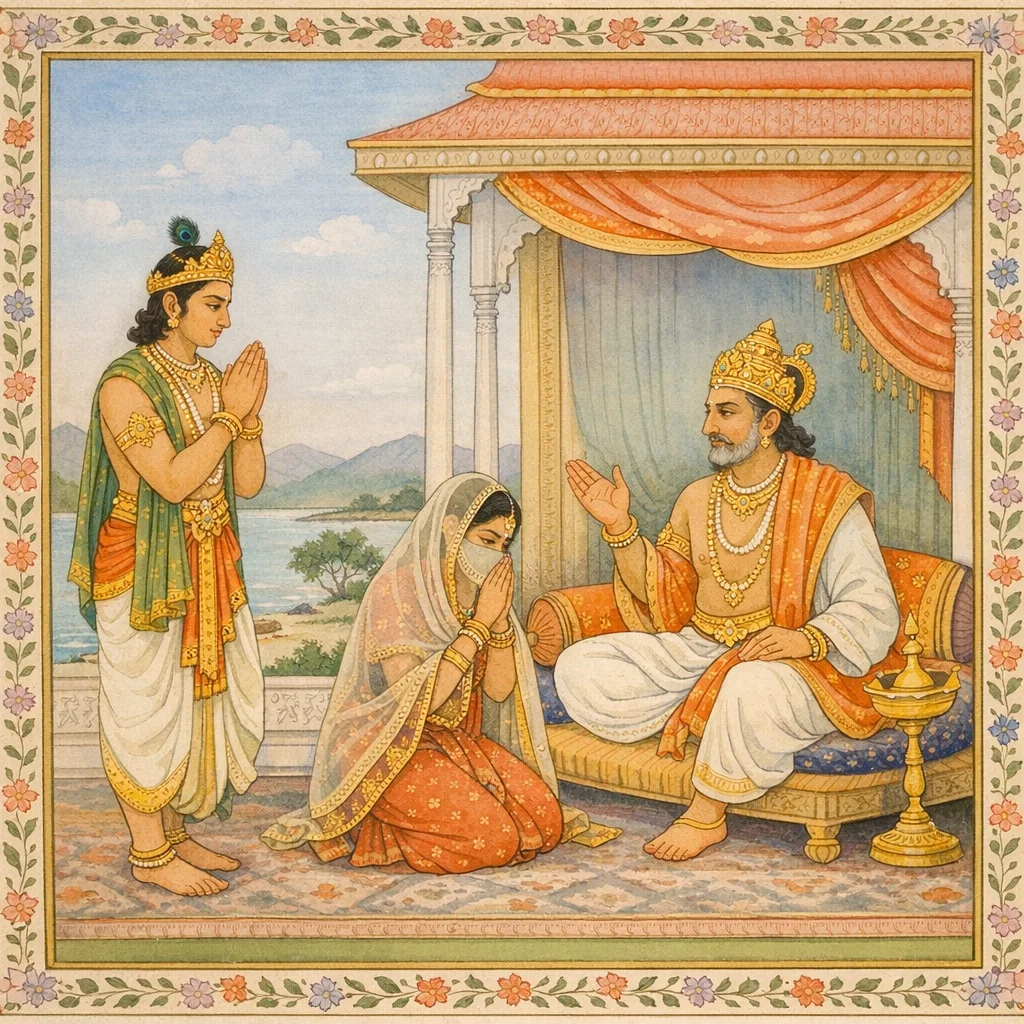
Vaiśaṃpāyana describes the Pandavas established at Indraprastha under the authority of Dhṛtarāṣṭra and the Kuru lineage, with Yudhiṣṭhira portrayed as a ruler whose conduct integrates dharma, artha, and kāma in balanced measure. The populace experiences security and satisfaction attributed not merely to fortune but to deliberate, agreeable, and truthful governance; the king’s speech is characterized by appropriateness and non-injury. Brahmin advisors led by Dhaumya attend him, and the Pandavas’ collective presence is likened to a well-ordered sacrificial rite supported by the Vedas. After some time, Arjuna proposes to Kṛṣṇa a leisure outing to the Yamunā with friends, receives formal leave from Yudhiṣṭhira, and the pair proceed to a richly appointed recreational area filled with food, drink, music, and communal play. Draupadī and Subhadrā are noted as distributing fine garments and ornaments among the women during festivities. The scene culminates with a radiant ascetic-brahmin figure approaching Arjuna and Vāsudeva, prompting them to rise in respect, signaling an impending dialogue or request that will redirect the narrative.
Chapter Arc: वनवास-प्रतिज्ञा के बंधन में बँधे कुन्तीपुत्र अर्जुन पूर्वदिशा के तीर्थों की ओर निकलते हैं—जहाँ हर स्नान एक पाप-क्षालन है और हर दान एक नई कीर्ति। → अगस्त्यवट, वसिष्ठपर्वत और भृगुतुङ्ग जैसे पुण्यस्थलों में शौच-स्नान कर वे ब्राह्मणों को सहस्रों गौएँ दान देते हुए आगे बढ़ते हैं। महेन्द्रपर्वत के तपोवनों को निहारते-निहारते वे समुद्र-तट से मणिपूर पहुँचते हैं, जहाँ एक राजवंश की विचित्र परंपरा—एक समय में केवल एक ही संतान—उनके सामने प्रश्न बनकर खड़ी होती है। → मणिपूर के राजा प्रभञ्जन (वंश-परंपरा का स्मरण कराते हुए) अर्जुन से अपनी एकमात्र कन्या चित्राङ्गदा का विवाह-प्रस्ताव रखते हैं और वंश-रक्षा हेतु शर्त रखते हैं कि उत्पन्न पुत्र मणिपूर का उत्तराधिकारी होगा। अर्जुन ‘तथास्तु’ कहकर प्रतिज्ञा करते हैं—और धर्म, प्रेम, तथा वचन-पालन को एक ही गांठ में बाँध देते हैं। → अर्जुन चित्राङ्गदा को स्वीकार कर मणिपूर में तीन वर्ष निवास करते हैं। पुत्र उत्पन्न होने पर वे पत्नी को हृदय से लगाकर, राजा से अनुमति लेकर, अपने तीर्थ-पर्यटन/वनवास-मार्ग पर पुनः अग्रसर हो जाते हैं—कर्तव्य की धारा में निजी सुख को भी मर्यादा से प्रवाहित करते हुए। → अर्जुन का पथ फिर खुलता है—पूर्वदिशा के आगे कौन-सा तीर्थ, कौन-सा बंधन, और कौन-सा वरदान उनका इंतज़ार कर रहा है?
Shlokas
Verse 1
(दाक्षिणात्य अधिक पाठका १ श्लोक मिलाकर कुल ३७ श्लोक हैं) चतुर्दशाधिकद्विशततमो< ध्याय: अर्जुनका पूर्वदिशाके तीर्थोंमें भ्रमण करते हुए ए मणिपूरमें जाकर चित्रांगदाका पाणिग्रहण करके उसके गर्भसे एक पुत्र उत्पन्न करना वैशम्पायन उवाच कथयित्वा च तत् सर्व ब्राह्मणेभ्य: स भारत । प्रययाौ हिमवत्पाश्व॑ ततो वज्रधरात्मज:,वैशम्पायनजी कहते हैं--जनमेजय! रातकी वह सारी घटना ब्राह्मणोंसे कहकर इन्द्रपुत्र अर्जुन हिमालयके पास चले गये
Vaiśampāyana said: “O descendant of Bharata (Janamejaya), after narrating that entire episode to the brāhmaṇas, Arjuna—the son of the wielder of the thunderbolt (Indra)—departed for the vicinity of the Himālaya.”
Verse 2
अगस्त्यवटमासाद्य वसिष्ठस्य च पर्वतम् | भगुतुज़े च कौन्तेय: कृतवाज्छौचमात्मन:,अगस्त्यवट, वसिष्ठपर्वत तथा भृगुतुंगपर जाकर उन्होंने शौच-स्नान आदि किये
Vaiśampāyana said: Reaching the Agastya banyan-tree and the mountain associated with Vasiṣṭha, and also Bhṛgu’s peak, the son of Kuntī performed his personal purification—attending to cleanliness and bathing—thus preparing himself in disciplined purity for what was to follow.
Verse 3
प्रददौ गोसहस्राणि सुबहूनि च भारत । निवेशांश्व द्विजातिभ्य: सोडददत् कुरुसत्तम:,भारत! कुरुश्रेष्ठ अर्जुनने उन तीथ्थोमें ब्राह्मणोंकों कई हजार गौएँ दान कीं और द्विजातियोंके रहनेके लिये घर एवं आश्रम बनवा दिये
Vaiśampāyana said: O Bhārata, that best of the Kurus bestowed very many thousands of cows in gift, and he also provided dwellings and settlements for the twice-born.
Verse 4
हिरण्यविन्दोस्तीर्थें च स्नात्वा पुरुषसत्तम: । दृष्टवान् पाण्डवश्रेष्ठ: पुण्यान्यायतनानि च,हिरण्यबिंदुतीर्थमें स्नान करके पाण्डवश्रेष्ठ पुरुषोत्तम अर्जुनने अनेक पवित्र स्थानोंका दर्शन किया
Vaiśampāyana said: Having bathed at the sacred ford called Hiraṇyavindu, Arjuna—the best of the Pāṇḍavas, foremost among men—went on to visit many holy shrines.
Verse 5
अवतीर्य नरश्रेष्ठो ब्राह्मणैः सह भारत । प्राचीं दिशमभिप्रेप्सुर्जगाम भरतर्षभ:,जनमेजय! तत्पश्चात् हिमालयसे नीचे उतरकर भरत-कुलभूषण नरश्रेष्ठ अर्जुन पूर्व दिशाकी ओर चल दिये
Vaiśampāyana said: “O Bhārata (descendant of Bharata), after descending from the Himālaya, Arjuna—the finest of men and an ornament of the Bharata lineage—set out together with brāhmaṇas, intent on proceeding toward the eastern direction, O Janamejaya.”
Verse 6
आनुपूर्व्येण तीर्थानि दृष्टवान् कुरुसत्तम: । नदीं चोत्पलिनीं रम्यामरण्यं नैमिषं प्रति,भारत! फिर उस यात्रामें कुरुश्रेष्ठ धनंजयने क्रमशः अनेक तीर्थोका तथा नैमिषारण्यतीर्थमें बहनेवाली रमणीय उत्पलिनी नदी, नन््दा, अपरनन्दा, यशस्विनी कौशिकी (कोसी), महानदी, गयातीर्थ और गंगाजीका भी दर्शन किया
Vaiśampāyana said: Then Dhanañjaya, the best of the Kurus, visited in due sequence many sacred fords; and on the way toward the Naimiṣa forest, O Bhārata, he beheld the lovely river Utpalinī as well.
Verse 7
नन्दामपरनन्दां च कौशिकी च यशस्विनीम् । महानदीं गयां चैव गड़ामपि च भारत,भारत! फिर उस यात्रामें कुरुश्रेष्ठ धनंजयने क्रमशः अनेक तीर्थोका तथा नैमिषारण्यतीर्थमें बहनेवाली रमणीय उत्पलिनी नदी, नन््दा, अपरनन्दा, यशस्विनी कौशिकी (कोसी), महानदी, गयातीर्थ और गंगाजीका भी दर्शन किया
Vaiśampāyana said: Then, O Bhārata, he visited in due order many sacred fords—beholding the rivers Nandā and Aparanandā, the famed Kauśikī, the Mahānadī, the holy Gayā, and also the Gaṅgā.
Verse 8
एवं तीर्थानि सर्वाणि पश्यमानस्तथा5< श्रमान् । आत्मन: पावन कुर्वन् ब्राह्मणेभ्यो ददौ च गा:,इस प्रकार उन्होंने सब तीर्थों और आश्रमोंको देखते हुए स्नान आदिसे अपनेको पवित्र करके ब्राह्मणोंके लिये बहुत-सी गौएँ दान कीं
Thus, as he went about beholding all the sacred fords and the hermitages, he purified himself through ritual acts such as bathing, and he also bestowed many cows in charity to the Brahmins.
Verse 9
अड्वड़कलिड्लेषु यानि तीर्थानि कानिचित् | जगाम तानि सर्वाणि पुण्यान्यायतनानि च,तदनन्तर अंग, वंग और कलिंग देशोंमें जो कोई भी पवित्र तीर्थ और मन्दिर थे, उन सबमें वे गये
Vaiśampāyana said: Thereafter, in the regions of Aṅga, Vaṅga, and Kaliṅga, he visited every sacred ford and holy place of worship that existed—moving from shrine to shrine in a spirit of reverence, seeking merit through pilgrimage.
Verse 10
दृष्टवा च विधिवत् तानि धनं चापि ददौ ततः । कलिडूराष्ट्रद्वारेषु ब्राह्मणा: पाण्डवानुगा: । अभ्यनुज्ञाय कौन्तेयमुपावर्तन्त भारत,और उन तीर्थोंका दर्शन करके उन्होंने विधिपूर्वक वहाँ धन-दान किया। कलिंग राष्ट्रके द्वारपर पहुँचकर अर्जुनके साथ चलनेवाले ब्राह्मण उनकी अनुमति लेकर वहाँसे लौट गये
Having duly visited those sacred places, he then made gifts of wealth in the prescribed manner. When they reached the gateways of the Kaliṅga country, the Brāhmaṇas who had been accompanying the Pāṇḍavas—after taking leave of Kuntī’s son—turned back from there, O Bhārata.
Verse 11
स तु तैरभ्यनुज्ञातः कुन्तीपुत्रो धनंजय: । सहायैरल्पकै: शूर: प्रययौ यत्र सागर:,परंतु कुन्तीपुत्र शूरवीर धनंजय उन ब्राह्मणोंकी आज्ञा ले थोड़े-से सहायकोंके साथ उस स्थानकी ओर गये, जहाँ समुद्र लहराता था
Granted leave by them, Dhanañjaya (Arjuna), Kuntī’s son—a hero of proven valor—set out with only a small band of companions toward the place where the ocean surged.
Verse 12
स कलिज्जनतिक्रम्प देशानायतनानि च । हर्म्याणि रमणीयानि प्रेक्षमाणो ययौ प्रभु:,कलिंग देशको लाँधघकर शक्तिशाली अर्जुन अनेक देशों, मन्दिरों तथा रमणीय अट्टालिकाओंका दर्शन करते हुए आगे बढ़े
Vaiśampāyana said: The mighty lord (Arjuna), having crossed the lands of the Kaliṅga people, proceeded onward, observing along the way various regions and sacred abodes, and the delightful mansions and lofty residences.
Verse 13
महेन्द्रपर्वत॑ं दृष्टवा तापसैरुपशोभितम् | समुद्रतीरेण शनैर्मणिपूरं जगाम ह,इस प्रकार वे तपस्वी मुनियोंसे सुशोभित महेन्द्र पर्वतका दर्शन कर समुद्रके किनारे- किनारे यात्रा करते हुए धीरे-धीरे मणिपूर पहुँच गये
Vaiśampāyana said: Having beheld Mount Mahendra, made resplendent by ascetics, he proceeded slowly along the seashore and in due course reached Maṇipūra.
Verse 14
तत्र सर्वाणि तीर्थानि पुण्यान्यायतनानि च । अभिगम्य महाबाहुरभ्यगच्छन्महीपतिम्,वहाँके सम्पूर्ण तीर्थों और पवित्र मन्दिरोंमें जानेके बाद महाबाहु अर्जुन मणिपूरनरेशके पास गये
There, after visiting all the sacred fords (tīrthas) and the holy shrines, the mighty-armed Arjuna went to meet the king of that land.
Verse 15
मणिपूरेश्वरं राजन् धर्मज्ञं चित्रवाहनम् । तस्य चित्राड्भदा नाम दुहिता चारुदर्शना,राजन! मणिपूरके स्वामी धर्मज्ञ चित्रवाहन थे। उनके चित्रांगदा नामवाली एक परम सुन्दरी कन्या थी
Vaiśampāyana said: “O King, there was the lord of Maṇipura, the righteous and law-knowing ruler Citravāhana. He had a daughter named Citrāṅgadā, a maiden of captivating beauty.”
Verse 16
तां ददर्श पुरे तस्मिन् विचरन्तीं यदृच्छया । दृष्टवा च तां वरारोहां चकमे चैत्रवाहनीम्,उस नगरमें विचरण करती हुई उस सुन्दर अंगोंवाली चित्रवाहनकुमारीको अकस्मात् देखकर अर्जुनके मनमें उसे प्राप्त करनेकी अभिलाषा हुई
Vaiśampāyana said: In that city he happened to see the princess Citravāhanī wandering about. On seeing that noble-limbed maiden, desire arose in Arjuna’s heart to win her as his own—an episode that sets in motion questions of rightful marriage, consent, and the dharmic ordering of alliances.
Verse 17
अभिगम्य च राजानमवदत् स्वं प्रयोजनम् । देहि मे खल्विमां राजन क्षत्रियाय महात्मने,अतः राजासे मिलकर उन्होंने अपना अभिप्राय इस प्रकार बताया--“महाराज! मुझ महामनस्वी क्षत्रियको आप अपनी यह पुत्री प्रदान कर दीजिये'
Having approached the king, he stated his own purpose: “O King, please grant me this maiden—(to be given) to a noble Kshatriya of great spirit.” The request is framed in the idiom of royal consent and socially sanctioned marriage, emphasizing propriety and the king’s role as guardian of the daughter’s dharma.
Verse 18
के | 7 “/ तच्छुत्वा त्वब्रवीद् राजा कस्य पुत्रोड5सि नाम किम् | उवाच तं पाण्डवोडहं कुन्तीपुत्रो धनंजय:,यह सुनकर राजाने पूछा--“आप किनके पुत्र हैं और आपका क्या नाम है?' अर्जुनने उत्तर दिया, “मैं महाराज पाण्डु तथा कुन्तीदेवीका पुत्र हूँ। मुझे लोग धनंजय कहते हैं'
Hearing this, the king asked, “Whose son are you, and what is your name?” Arjuna replied to him, “I am a son of Pāṇḍu—Kuntī’s son. People know me as Dhanaṃjaya.” The exchange foregrounds the ethical weight of truthful self-identification and lineage in royal and dharmic discourse.
Verse 19
तमुवाचाथ राजा स सान्त्वपूर्वमिदं वच: । राजा प्रभञ्जनो नाम कुलेडस्मिन् सम्बभूव ह,तब राजाने उन्हें सान्त्वना देते हुए कहा--“इस कुलमें पहले प्रभंजन नामसे प्रसिद्ध एक राजा हो गये हैं
Vaiśampāyana said: Then that king addressed him with words of reassurance: “In this very lineage there once arose a king renowned by the name Prabhañjana.”
Verse 20
अपुत्र: प्रसवेनार्थी तपस्तेपे स उत्तमम् । उग्रेण तपसा तेन देवदेव: पिनाकधृक्,“उनके कोई पुत्र नहीं था, अतः उन्होंने पुत्रकी इच्छासे उत्तम तपस्या प्रारम्भ की। पार्थ! उन्होंने उस उग्र तपस्यासे पिनाकधारी देवाधिदेव महेश्वरको संतुष्ट कर लिया। तब देवदेवेश्वर भगवान् उमापति उन्हें वरदान देते हुए बोले--“तुम्हारे कुलमें एक-एक संतान होती जायगी”
Vaiśampāyana said: Being without a son and longing for offspring, he undertook excellent austerities. By that fierce penance he pleased the God of gods, the bearer of the Pināka (Śiva). Then Umāpati, the Lord of lords, granted him a boon, declaring that in his lineage children would be born in succession. The passage frames progeny not as entitlement but as a fruit of disciplined devotion and divine grace, emphasizing restraint, perseverance, and reverence toward the divine order.
Verse 21
ईश्वरस्तोषित: पार्थ देवदेव उमापति: । स तस्मै भगवान् प्रादादेकैकं प्रसवं कुले,“उनके कोई पुत्र नहीं था, अतः उन्होंने पुत्रकी इच्छासे उत्तम तपस्या प्रारम्भ की। पार्थ! उन्होंने उस उग्र तपस्यासे पिनाकधारी देवाधिदेव महेश्वरको संतुष्ट कर लिया। तब देवदेवेश्वर भगवान् उमापति उन्हें वरदान देते हुए बोले--“तुम्हारे कुलमें एक-एक संतान होती जायगी”
Vaiśampāyana said: “O Pārtha, the Lord—Mahādeva, the God of gods, Umāpati—was pleased. Then that Blessed One granted him a boon: ‘In your lineage, offspring will be born one by one (each generation continuing with a single child).’”
Verse 22
एकैक: प्रसवस्तस्माद् भवत्यस्मिन् कुले सदा | तेषां कुमारा: सर्वेषां पूर्वेषां मम जज्ञिरे,“इस कारण हमारे इस कुलमें सदासे एक-एक संतान ही होती चली आ रही है। मेरे अन्य सभी पूर्वजोंके तो पुत्र होते आये हैं, परंतु मेरे यह एक कन्या ही हुई है। यही इस कुलकी परम्पराको चलानेवाली है। अतः भरतश्रेष्ठ! इसके प्रति मेरी यही भावना रहती है कि “यह मेरा पुत्र है!
“Therefore, in our lineage it has always been the rule that only one child is born in each generation. All my earlier forefathers had sons; but for me, only a single daughter has been born. She alone will carry forward the continuity of this family. Hence, O best of the Bharatas, my settled conviction toward her is this: ‘She is my son.’”
Verse 23
एका च मम कन्येयं कुलस्योत्पादिनी भूशम् । पुत्रो ममायमिति मे भावना पुरुषर्षभ,“इस कारण हमारे इस कुलमें सदासे एक-एक संतान ही होती चली आ रही है। मेरे अन्य सभी पूर्वजोंके तो पुत्र होते आये हैं, परंतु मेरे यह एक कन्या ही हुई है। यही इस कुलकी परम्पराको चलानेवाली है। अतः भरतश्रेष्ठ! इसके प्रति मेरी यही भावना रहती है कि “यह मेरा पुत्र है!
Vaiśampāyana said: “I have only this one daughter, and she is the one who will greatly sustain and continue our lineage. In our family, from ancient times, there has always been only a single child in each generation. All my forefathers had sons, but for me there has been only this one daughter. Therefore, O best of men, my settled conviction toward her is: ‘She is my son.’”
Verse 24
पत्रिका हेतुविधिना संज्ञिता भरतर्षभ | तस्मादेक: सुतो यो<स्यां जायते भारत त्वया,“यद्यपि यह पुत्री है, तो भी हेतुविधिसे (अर्थात् इससे जो प्रथम पुत्र होगा, वह मेरा ही पुत्र माना जायगा, इस हेतुसे) मैंने इसे पुत्रकी संज्ञा दे रखी है। भरतश्रेष्ठ! तुम्हारे द्वारा इसके गर्भसे जो एक पुत्र उत्पन्न हो, वह यहीं रहकर इस कुलपरम्पराका प्रवर्तक हो; इस कन्याके विवाहका यही शुल्क आपको देना होगा। पाण्डुनन्दन! इसी शर्तके अनुसार आप इसे ग्रहण करें!
Vaiśampāyana said: “O bull among the Bharatas, this maiden has been formally designated as a ‘son’ by a legal stipulation. Therefore, the one son who is born from her through you, O Bhārata, is to be regarded accordingly—so that the lineage and its obligations are preserved by prior agreement.”
Verse 25
एतच्छुल्क॑ भवत्वस्या: कुलकृज्जायतामिह । एतेन समयेनेमां प्रतिगृह्लीष्व पाण्डव,“यद्यपि यह पुत्री है, तो भी हेतुविधिसे (अर्थात् इससे जो प्रथम पुत्र होगा, वह मेरा ही पुत्र माना जायगा, इस हेतुसे) मैंने इसे पुत्रकी संज्ञा दे रखी है। भरतश्रेष्ठ! तुम्हारे द्वारा इसके गर्भसे जो एक पुत्र उत्पन्न हो, वह यहीं रहकर इस कुलपरम्पराका प्रवर्तक हो; इस कन्याके विवाहका यही शुल्क आपको देना होगा। पाण्डुनन्दन! इसी शर्तके अनुसार आप इसे ग्रहण करें!
Vaiśampāyana said: “Let this be her bride-price: let a son be born here who will continue the line of this family. O Pāṇḍava, accept this maiden on this condition—that the first son born from her womb through you shall remain here and become the founder and sustainer of this lineage.”
Verse 26
स तथेति प्रतिज्ञाय तां कन्यां प्रतिगृह्म च । उवास नगरे तस्मिंस्तिस्र: कुन्तीसुत: समा:,“तथास्तु” कहकर अर्जुनने वैसा ही करनेकी प्रतिज्ञा की और उस कन्याका पाणिग्रहण करके उन्होंने तीन वर्षोतक उसके साथ उस नगरमें निवास किया
Vaiśampāyana said: “Having pledged, ‘So be it,’ he accepted the maiden in marriage; and Kuntī’s son dwelt in that city with her for three years.”
Verse 27
तस्यां सुते समुत्पन्ने परिष्वज्य वराड़नाम् । आमन्त्रय नृपतिं तं॑ तु जगाम परिवर्तितुम्,उसके गर्भसे पुत्र उत्पन्न हो जानेपर उस सुन्दरीको हृदयसे लगाकर अर्जुनने विदा ली तथा राजा चित्रवाहनसे पूछकर वे पुनः तीर्थोमें भ्रमण करनेके लिये चल दिये
Vaiśampāyana said: When a son was born to her, Arjuna embraced that noble lady with affection. Having taken leave of King Citravāhana with due courtesy, he departed again, resuming his wandering pilgrimage to sacred fords.
Verse 214
इति श्रीमहाभारते आदिपर्वणि अर्जुनवनवासपर्वणि चित्राड्भदासड्रमे चतुर्दशाधिकद्विशततमो<5 ध्याय:,इस प्रकार श्रीमह्याभारत आदिपर्वके अन्तर्गत अर्जुनवनवासपर्वमें चित्रांगगायमागमविषयक दो सौ चौदहवाँ अध्याय पूरा हुआ
Thus, in the Śrī Mahābhārata, within the Ādi Parva, in the section concerning Arjuna’s exile to the forest, the two-hundred-and-fourteenth chapter—dealing with the arrival of Citrāṅgadā—comes to an end.
Frequently Asked Questions
Rather than a single dilemma, the chapter foregrounds a governance problem: how a ruler can sustain prosperity without ethical compromise—showing that public contentment is linked to intentional, truthful, and non-harmful conduct, not to chance alone.
Legitimacy is performative and ethical: balanced pursuit of dharma, artha, and kāma, disciplined speech, and visible protection of society generate stable well-being; prosperity (lakṣmī) is depicted as anchored in right administration.
No explicit phalaśruti appears in the cited verses; the meta-point is implicit—this episode functions as a transition from civic order to the next consequential encounter, illustrating how narrative shifts emerge from ordinary courtly life.