Adhyaya 211
Raivataka-giri Mahotsava and the Counsel on Subhadrā’s Marriage (रैवतके महोत्सवः — सुभद्राविवाहोपायविचारः)
Upa-parva: Subhadrā-haraṇa (Raivataka Utsava Episode) — within Ādi Parva
Vaiśaṃpāyana narrates to Janamejaya a grand celebration of the Vṛṣṇi–Andhakas on Mount Raivataka: mass gifts to brāhmaṇas, jeweled mansions, illuminated trees, and continuous music and dance. Prominent figures—Balarāma with Revatī, King Ugrasena, and other Vṛṣṇi leaders—move through the festivities with attendants and performers. In this auspicious tumult, Kṛṣṇa and Arjuna arrive and notice Subhadrā, beautifully adorned among companions. Arjuna’s focused attention reveals attraction; Kṛṣṇa interprets it and identifies Subhadrā as his sister, offering to speak to their father if Arjuna’s intent is firm. Arjuna praises her qualities and asks for a practical means to obtain her hand. Kṛṣṇa outlines Kṣatriya marriage conventions—svayaṃvara as a standard form, yet uncertain in outcome, and forcible abduction as another praised option for valorous warriors—advising Arjuna accordingly. They then dispatch swift messengers to Dharmarāja Yudhiṣṭhira in Indraprastha; upon hearing, Yudhiṣṭhira grants consent, formalizing the plan within Pandava authority and inter-house protocol.
Chapter Arc: युन्दोपयुन्दोपाख्यान में दो अजेय भाइयों का उदय होता है—देव, गन्धर्व, यक्ष, नाग, मनुष्य और राक्षसों से वे रत्न छीनकर त्रिलोकी में अपनी धाक जमा लेते हैं। → जब उनके सामने कोई प्रतिषेधकर्ता नहीं बचता, वे निरुद्योग होकर इन्द्रलोक-सम वैभव में भोग-विलास करते हैं। दिव्य भोग, वरासन, स्त्रियों का संग और मदिरा—इन सबके बीच उनके भीतर बल, धन-रत्न और वरदान का मद बढ़ता जाता है। तभी देवताओं की ओर से संकट-निवारण हेतु तिलोत्तमा का प्रस्थापन होता है—एक ऐसी अप्सरा, जो सौन्दर्य से ही अहंकार और संयम दोनों की परीक्षा बन जाए। → मदिरापान से रक्तान्त नेत्रों वाले दोनों भाई तिलोत्तमा को देखते ही व्यथित और आसक्त हो उठते हैं। वरदान, बल और मद के उन्माद में वे उसी पर अधिकार के लिए परस्पर भिड़ जाते हैं—और उनका संघर्ष इतना प्रचण्ड होता है कि लोक भय और विषाद से काँप उठते हैं, मानो आकाश में दो सूर्य टकरा रहे हों। → देवगण और महर्षियों सहित पितामह (ब्रह्मा) प्रसंग में प्रकट होकर व्यवस्था करते हैं; इन्द्र का त्रिलोकी-धारण पुनः स्थिर होता है और ब्रह्मलोक-गमन/देव-व्यवस्था के संकेत के साथ यह उपाख्यान अपने निष्कर्ष की ओर बढ़ता है। जनमेजय को कथावाचक यह भी सूचित करता है कि जो कुछ उस समय घटित हुआ, वह क्रमशः यथावत कहा गया है। → नारद-चोदित पूर्व-समय/प्रतिज्ञा का स्मरण कराया जाता है—और संकेत मिलता है कि देव-योजना के पीछे नियति-प्रेरित अनुशासन है, जिससे आगे की कथा में अन्य पात्रों/उपाख्यान-श्रृंखला का द्वार खुलता है।
Shlokas
Verse 1
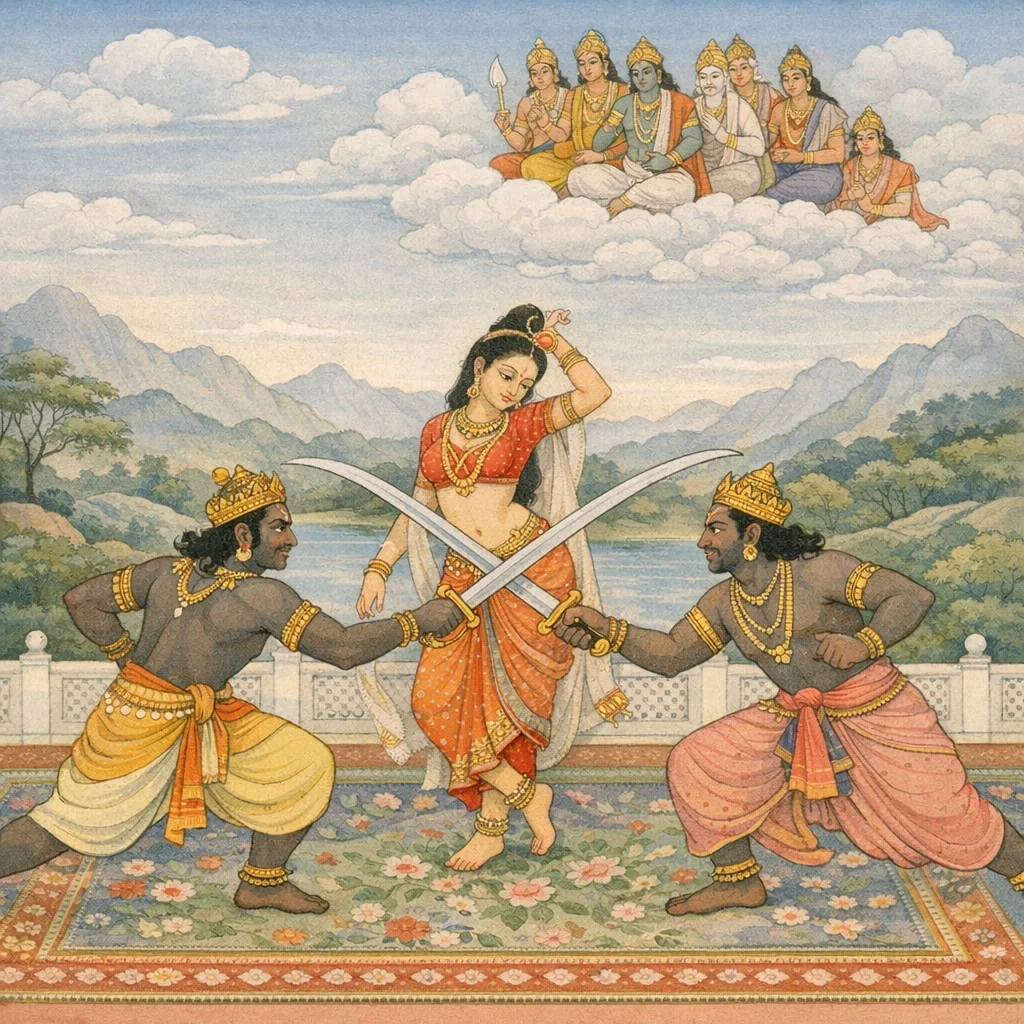
इस प्रकार श्रीमह्याभारत आदिपर्वके अन्तर्गत विदुरागमनराज्यलम्भपर्वमें युन्दोपयुन्दोपाख्यानके प्रसंगरें तिलोत्तमाप्रस्थापनविषयक दो सौ दसवाँ अध्याय पूरा हुआ ॥/ २१० ॥/ ऑपन-- माल बछ। ्-ज:डि एकादशाधिकद्वधिशततमो<्ध्याय: तिलोत्तमापर मोहित होकर सुन्द-उपसुन्दका आपसमें लड़ना और मारा जाना एवं तिलोत्तमाको ब्रह्माजीद्वारा वरप्राप्ति तथा पाण्डवोंका द्रौपदीके विषयमें नियम- निर्धारण नारद उवाच जित्वा तु पृथिवीं दैत्यौ निःसपत्नौ गतव्यथौ । कृत्वा त्रैलोक्यमव्यग्रं कृतकृत्यौ बभूवतु:,नारदजी कहते हैं--युधिष्ठिर! वे दोनों दैत्य सुन्द और उपसुन्द सारी पृथ्वीको जीतकर शत्रुओंसे रहित एवं व्यथारहित हो तीनों लोकोंको पूर्णतः अपने वशमें करके कृतकृत्य हो गये
Narada said: “O Yudhiṣṭhira, the two demons, Sunda and Upasunda, having conquered the earth, became without rivals and without distress. Having brought the three worlds under their sway without hindrance, they deemed their purpose fulfilled—thus setting the ground for the moral reversal to come, when unbridled power and pride become the seed of ruin.”
Verse 2
देवगन्धर्वयक्षाणां नागपार्थिवरक्षसाम् | आदाय सर्वरत्नानि परां तुष्टिमुपागतौ,देवता, गन्धर्व, यक्ष, नाग, मनुष्य तथा राक्षसोंके सभी रत्नोंको छीनकर उन दोनों दैत्योंको बड़ा हर्ष प्राप्त हुआ
Narada said: “Having seized all the precious jewels of the gods, Gandharvas, Yakṣas, Nāgas, earthly kings, and Rākṣasas, those two Daityas were filled with supreme delight. The verse reveals the intoxicating pleasure of plunder and dominion, implicitly set against restraint and rightful dharma.”
Verse 3
यदा न प्रतिषेद्धारस्तयो: सन््तीह केचन । निरुद्योगौ तदा भूत्वा विजद्वातेडमराविव,जब त्रिलोकीमें उनका सामना करनेवाले कोई नहीं रह गये, तब वे देवताओंके समान अकर्मण्य होकर भोग-विलासमें लग गये
Nārada said: “When, in this world, there remained no one at all able to oppose those two, they lost all purposeful exertion and, like gods, lapsed into idleness, pleasure, and indulgence. The verse hints at the peril of power without resistance: it draws rulers away from disciplined duty into complacent delight.”
Verse 4
स्त्रीभिमल्यैश्व गन्धैश्व भक्ष्यभोज्यै: सुपुष्कलै: । पानैश्न विविधै््द्यै: परां प्रीतिमवापतु:,सुन्दरी स्त्रियों, मनोहर मालाओं, भाँति-भाँतिके सुगन्ध-द्रव्यों, पर्याप्त भोजन- सामग्रियों तथा मनको प्रिय लगनेवाले अनेक प्रकारके पेय रसोंका सेवन करके वे बड़े आनन्दसे दिन बिताने लगे
Narada said: “Surrounded by beautiful women, garlands, and perfumes, and enjoying abundant delicacies and meals along with many kinds of delightful, almost heavenly, drinks, they passed their days at the height of pleasure. The verse portrays a life absorbed in sensual indulgence, implicitly contrasted with dharma and self-restraint.”
Verse 5
अन्त:पुरवनोयद्याने पर्वतेषु वनेषु च । यथेप्सितेषु देशेषु विजह्ाातेडमराविव,अन्तःपुरके उपवन और उद्यानमें, पर्वतोंपर, वनोंमें तथा अन्य मनोवांछित प्रदेशोंमें भी वे देवताओंकी भाँति विहार करने लगे
Nārada said: “In the inner-palace groves and pleasure-gardens, on mountains, in forests, and in other places they desired, they roamed about in enjoyment—moving as freely and splendidly as the gods themselves. The verse underscores a phase of unrestrained royal leisure, where privilege grants effortless access to every pleasing place.”
Verse 6
ततः कदाचिद् विन्ध्यस्य प्रस्थे समशिलातले । पुष्पिताग्रेषु शालेषु विहारमभिजग्मतु:,तदनन्तर एक दिन विन्ध्यपर्वतके शिखरपर जहाँकी शिलामयी भूमि समतल थी और जहाँ ऊँचे शाल-वृक्षोंकी शाखाएँ फूलोंसे भरी हुई थीं, वहाँ वे दोनों दैत्य विहार करनेके लिये गये
Then, on one occasion, the two of them went out for recreation on a level, rocky plateau of the Vindhya range, where tall śāla trees stood with their upper branches in bloom.
Verse 7
दिव्येषु सर्वकामेषु समानीतेषु तावुभौ । वरासनेषु संहृष्टी सह स्त्रीभिर्निषीदतु:,वहाँ उनके लिये सम्पूर्ण दिव्य भोग प्रस्तुत किये गये, तदनन्तर वे दोनों भाई श्रेष्ठ आसनोंपर सुन्दरी स्त्रियोंके साथ आनन्दमग्न होकर बैठे
When every kind of celestial enjoyment had been brought and set before them, the two brothers—delighted—sat upon excellent seats in the company of beautiful women.
Verse 8
ततो वादित्रनृत्या भ्यामुपातिष्ठ न्त तौ स्त्रिय: । गीतैश्व स्तुतिसंयुक्तै: प्रीत्या समुपजग्मिरे,तदनन्तर बहुत-सी स्त्रियाँ प्रेमपूर्वक उनके पास आयीं और वाद्य, नृत्य, गीत एवं स्तुति- प्रशंसा आदिके द्वारा उन दोनोंका मनोरंजन करने लगीं
Then many women approached the two of them with affectionate delight. They attended upon them with instrumental music and dance, and, with songs joined to words of praise, they sought to please and entertain them.
Verse 9
ततस्तिलोत्तमा तत्र वने पुष्पाणि चिन्वती । वेशं सा55क्षिप्तमाधाय रक्तेनैकेन वाससा,इसी समय तिलोत्तमा वहाँ वनमें फूल चुनती हुई आयी। उसके शरीरपर एक ही लाल रंगकी महीन साड़ी थी। उसने ऐसा वेश धारण कर रखा था, जो किसी भी पुरुषको उन्मत्त बना सकता था
Then Tilottamā came there into the forest, gathering flowers. She had assumed a deliberately provocative guise, clad in a single red garment—an appearance crafted to unsettle and intoxicate the minds of men.
Verse 10
नदीतीरेषु जातान् सा कर्णिकारान् प्रचिन्वती । शनैर्जगाम तं॑ देशं यत्रास्तां तौ महासुरौ,नदीके किनारे उगे हुए कनेरके फूलोंका संग्रह करती हुई वह धीरे-धीरे उसी स्थानकी ओर गयी, जहाँ वे दोनों महादैत्य बैठे थे
Gathering the karṇikāra blossoms that had grown along the riverbank, she moved on slowly toward the very place where those two mighty asuras were seated.
Verse 11
तौ तु पीत्वा वरं पानं मदरक्तान्तलोचनौ । दृष्टवैव तां वरारोहां व्यथितौ सम्बभूवतु:,उन दोनोंने बहुत अच्छा मादक रस पी लिया था, जिससे उनके नेत्र नशेके कारण कुछ लाल हो गये थे। उस सुन्दर अंगोंवाली तिलोत्तमाको देखते ही वे दोनों दैत्य कामवेदनासे व्यथित हो उठे
After drinking an excellent intoxicating draught, the edges of their eyes grew red with drunkenness. The moment they beheld Tilottamā—fair-limbed and noble-hipped—the two daityas were seized by agitation and distress born of desire.
Verse 12
तावुत्थायासन हित्वा जम्मतुर्यत्र सा स्थिता | उभौ च कामसममत्तावुभौ प्रार्थयतश्न ताम्,और अपना आसन छोड़कर खड़े हो उसी स्थानपर गये, जहाँ वह खड़ी थी। दोनों ही कामसे उन्मत्त हो रहे थे, इसलिये दोनों ही उसे अपनी स्त्री बनानेके लिये उससे प्रेमकी याचना करने लगे
Rising from their seats and leaving them behind, the two went to the place where she was standing. Both, driven into frenzy by desire, began to entreat her—each seeking to win her as his wife.
Verse 13
दक्षिणे तां करे सुभ्रूं सुन्दो जग्राह पाणिना । उपसुन्दो5पि जग्राह वामे पाणौ तिलोत्तमाम्,सुन्दने सुन्दर भौंहोंवाली तिलोत्तमाका दाहिना हाथ पकड़ा और उपसुन्दने उसका बायाँ हाथ पकड़ लिया
Nārada said: Sundā seized the fair-browed Tilottamā by her right hand, and Upasundā likewise grasped her left.
Verse 14
वरप्रदानमत्तौ तावौरसेन बलेन च । धनरत्नमदाभ्यां च सुरापानमदेन च,एक तो वे दुर्लभ वरदानके मदसे उन्मत्त थे, दूसरे उनपर अपने स्वाभाविक बलका नशा सवार था। इसके सिवा धनमद, रत्नमद और सुरापानके मदसे भी वे उन्मत्त हो रहे थे
Nārada said: “Those two were intoxicated—one with the pride of having received a rare boon, the other with the arrogance of innate, hereditary strength. Beyond that, they were further maddened by the vanity of wealth, the conceit of jewels, and the intoxication born of drinking liquor.”
Verse 15
सर्वरेतैर्मदैर्मत्तावन्योन्यं भ्रुकुटीकृतौ । (तौ कटाक्षेण दैत्येन्द्रावाकर्षति मुहुर्मुहु: । दक्षिणेन कटाक्षेण सुन्दं जग्राह कामिनी ।। वामेनैव कटाक्षेण उपसुन्द जिघृक्षती । गन्धाभरणरूपैस्तौ व्यामोहं जग्मतुस्तदा ।।) मदकामसमाविष्टौ परस्परमथोचतु:,इन सभी मदोंसे उन्मत्त होनेके कारण आपसमें ही एक-दूसरेपर उनकी भौंहें तन गयीं। तिलोत्तमा कटाक्षद्वारा उन दोनों दैत्यराजोंको बार-बार अपनी ओर आकृष्ट कर रही थी। उस कामिनीने अपने दाहिने कटाक्षसे सुन्दको आकृष्ट कर लिया और बायें कटाक्षसे वह उपसुन्दको वशमें करनेकी चेष्टा करने लगी। उसकी दिव्य सुगन्ध, आभूषणराशि तथा रूपसम्पत्तिसे वे दोनों दैत्य तत्काल मोहित हो गये। उनमें मद और कामका आवेश हो गया; अतः वे एक-दूसरेसे इस प्रकार बोले--
Nārada said: Intoxicated by every kind of pride and passion, the two turned their brows upon each other in mutual hostility. Tilottamā, by repeated sidelong glances, kept drawing both demon-kings toward herself again and again. With a glance from the right she seized Sunda’s attention, and with a glance from the left she sought to captivate Upasunda. Bewildered at once by her fragrance, ornaments, and beauty, the pair fell into delusion. Overpowered by intoxication and desire, they then spoke to one another—
Verse 16
मम भार्या तव गुरुरिति सुन्दो5भ्यभाषत । मम भार्या तव वधूरुपसुन्दो5भ्यभाषत,सुन्दने कहा--“अरे! यह मेरी पत्नी है, तुम्हारे लिये माताके समान है।' यह सुनकर उपसुन्द बोल उठा--“नहीं-नहीं, यह मेरी भार्या है, तुम्हारे लिये तो पुत्रवधूके समान है!
Nārada said: Sunda declared, “She is my wife; therefore she is your guru, to be revered like a mother.” Upasunda retorted, “She is my wife; therefore she is your daughter-in-law.” Thus each brother sought to claim the same woman by redefining kinship through social and ethical hierarchy—showing how desire can warp dharma and turn even family ties into weapons of argument.
Verse 17
नैषा तव ममैषेति ततस्तौ मन्युराविशत् | तस्या रूपेण सम्मत्तौ विगतस्नेहसौहदी,“यह तुम्हारी नहीं है, मेरी है'' यही कहते-कहते उन दोनोंको क्रोध चढ़ आया। तिलोत्तमाके रूपसे मतवाले होकर वे दोनों स्नेह और सौहार्दसे शून्य हो गये
Nārada said: Repeating again and again, “She is not yours—she is mine,” anger entered those two. Bewildered by Tilottamā’s beauty, they became intoxicated with desire and were stripped of all affection and friendly regard for one another.
Verse 18
तस्या हेतोर्गदे भीमे संगृह्लीतावुभौ तदा । प्रगृह्ा च गदे भीमे तस्यां तौ काममोहितौ,उस सुन्दरीको पानेके लिये दोनों भाइयोंने उस समय हाथमें भयंकर गदाएँ ले लीं। दोनों ही उसके प्रति कामसे मोहित हो रहे थे
Nārada said: For her sake, at that moment both of them seized their dreadful maces. Lifting those terrible clubs, the two—bewildered by desire for her—were driven toward conflict.
Verse 19
अहं पूर्वमहं पूर्वमित्यन्योन्यं निजघ्नतु: । तौ गदाभिहतौ भीमौ पेततुर्थरणीतले,'पहले मैं इसे प्राप्त करूँगा”, “नहीं, पहले मैं'; ऐसा कहते हुए दोनों एक-दूसरेको मारने लगे। इस प्रकार गदाओंकी चोट खाकर वे दोनों भयानक दैत्य धरतीपर गिर पड़े
Nārada said: Crying, “I will get it first—no, I first!”, the two struck at one another in rivalry. Smashed by the blows of their maces, those two dreadful beings fell down upon the battlefield.
Verse 20
रुधिरेणावसिक्ताज्ै द्वाविवार्को नभश्न्युतौ । ततस्ता विद्रुता नार्य: स च दैत्यगणस्तथा,उनके सारे अंग खूनसे लथपथ हो रहे थे। ऐसा जान पड़ता था, मानो आकाशसे दो सूर्य पृथ्वीपर गिर गये हों। उनके मारे जानेपर वे सब स्त्रियाँ वहाँसे भाग गयीं और दैत्योंका वह सारा समुदाय विषाद और भयसे कम्पित होकर पातालमें चला गया। तत्पश्चात् विशुद्ध अन्त:करणवाले भगवान् ब्रह्माजी देवताओं और महर्षियोंके साथ तिलोत्तमाकी प्रशंसा करते हुए वहाँ आये और भगवान् पितामहने उसे वरके द्वारा प्रसन्न किया
Nārada said: Smeared all over with blood, the two of them appeared like two suns fallen from the sky. When they were slain, the women fled from that place, and the entire host of Dānavas/Daityas, shaken by grief and fear, withdrew to the nether regions. Thereafter, the self-purified Lord Brahmā, accompanied by the gods and great seers, arrived praising Tilottamā and, as the Grandfather of the worlds, gratified her by granting a boon.
Verse 21
पातालमगमत् सर्वो विषादभयकम्पित: । ततः पितामहस्तत्र सह देवैर्महर्षिभि:,उनके सारे अंग खूनसे लथपथ हो रहे थे। ऐसा जान पड़ता था, मानो आकाशसे दो सूर्य पृथ्वीपर गिर गये हों। उनके मारे जानेपर वे सब स्त्रियाँ वहाँसे भाग गयीं और दैत्योंका वह सारा समुदाय विषाद और भयसे कम्पित होकर पातालमें चला गया। तत्पश्चात् विशुद्ध अन्त:करणवाले भगवान् ब्रह्माजी देवताओं और महर्षियोंके साथ तिलोत्तमाकी प्रशंसा करते हुए वहाँ आये और भगवान् पितामहने उसे वरके द्वारा प्रसन्न किया
Nārada said: The entire host, shaken by grief and fear, descended into Pātāla, the netherworld. Then the Grandsire, Brahmā, arrived there together with the gods and the great seers. In the sweep of the tale, overwhelming violence and sudden defeat scatter even the mighty; yet Brahmā’s coming with sages of purified heart proclaims the restoration of cosmic order through praise, discernment, and the granting of boons—not through further bloodshed.
Verse 22
आजगाम विशुद्धात्मा पूजयंश्न तिलोत्तमाम् | वरेणच्छन्दयामास भगवान् प्रपितामह:,उनके सारे अंग खूनसे लथपथ हो रहे थे। ऐसा जान पड़ता था, मानो आकाशसे दो सूर्य पृथ्वीपर गिर गये हों। उनके मारे जानेपर वे सब स्त्रियाँ वहाँसे भाग गयीं और दैत्योंका वह सारा समुदाय विषाद और भयसे कम्पित होकर पातालमें चला गया। तत्पश्चात् विशुद्ध अन्त:करणवाले भगवान् ब्रह्माजी देवताओं और महर्षियोंके साथ तिलोत्तमाकी प्रशंसा करते हुए वहाँ आये और भगवान् पितामहने उसे वरके द्वारा प्रसन्न किया
Nārada said: Then the Blessed Grandsire—Brahmā, of purified inner being—arrived, honoring Tilottamā. Pleased with her, he gratified her by granting a boon. In the wider narrative, the Daityas’ violent menace collapses into fear and grief, while the gods and seers answer not with further cruelty but by publicly acknowledging merit and restoring moral order through a measured, beneficent reward.
Verse 23
वरं दित्सु: स तत्रैनां प्रीत: प्राह पितामह: । आदित्यचरितॉल्लोकान् विचरिष्यसि भाविनि,इन्द्रे त्रलोक्यमाधाय ब्रह्मलोक॑ गतः प्रभु: । वर देनेके लिये उत्सुक हुए ब्रह्माजी स्वयं ही प्रसन्नतापूर्वक बोले--'भामिनि! जहाँतक सूर्यकी गति है, उन सभी लोकोंमें तू इच्छानुसार विचर सकेगी। तुझमें इतना तेज होगा कि कोई आँख भरकर तुझे अच्छी तरह देख भी न सकेगा।” इस प्रकार सम्पूर्ण लोकोंके पितामह ब्रह्माजी तिलोत्तमाको वरदान देकर तथा त्रिलोकीकी रक्षाका भार इन्द्रको सौंपकर पुन: ब्रह्मलोकको चले गये
Eager to grant a boon, the Grandsire Brahmā, pleased with her, spoke to her there: “O passionate one, you shall roam at will through all the worlds reached by the Sun’s course.” Having entrusted the guardianship of the three worlds to Indra, the Lord then departed to Brahmā’s own realm. The episode affirms a moral order: extraordinary beauty and power are gifts to be governed by cosmic authority and set within a hierarchy of responsibility—Brahmā bestows, Indra administers, and the recipient is bound to the limits of the Sun’s ordained path.
Verse 24
तेजसा च सुदृष्टां त्वां न करिष्यति कश्नन । एवं तस्यै वरं दत्त्वा सर्वतलोकपितामह:
Narada said: “Endowed with radiant splendor and a beauty that draws every eye, no one will be able to disregard you or treat you as insignificant.” Thus, having granted her this boon, the Grandsire of all the worlds (Brahmā) concluded the bestowal.
Verse 25
नारद उवाच एवं तौ सहितौ भूत्वा सर्वार्थेष्वेकनिश्चयौ,नारदजी कहते हैं--युधिष्ठिर! इस प्रकार सुन्द और उपसुन्दने परस्पर संगठित और सभी बातोंमें एकमत रहकर भी तिलोत्तमाके लिये कुपित हो एक-दूसरेको मार डाला। अतः भरतवंशशिरोमणियो! मैं तुम सब लोगोंसे स्नेहवश कहता हूँ कि यदि मेरा प्रिय चाहते हो, तो ऐसा कुछ नियम बना लो, जिससे द्रौपदीके लिये तुम सब लोगोंमें फ़ूट न होने पावे। तुम्हारा कल्याण हो
Narada said: “Thus, though the two were united and of one resolve in all matters, they became enraged over Tilottamā and ended up killing one another. Therefore, O foremost of the Bharata line, I say this to you all out of affection: if you wish what is dear to me, establish such a rule among yourselves that no division may arise among you on account of Draupadī. May welfare be yours.”
Verse 26
तिलोत्तमार्थ संक़्रुद्धावन्योन्यमभिजषध्नतु: । तस्माद् ब्रवीमि व: स्नेहात् सर्वान् भरतसत्तमा:,नारदजी कहते हैं--युधिष्ठिर! इस प्रकार सुन्द और उपसुन्दने परस्पर संगठित और सभी बातोंमें एकमत रहकर भी तिलोत्तमाके लिये कुपित हो एक-दूसरेको मार डाला। अतः भरतवंशशिरोमणियो! मैं तुम सब लोगोंसे स्नेहवश कहता हूँ कि यदि मेरा प्रिय चाहते हो, तो ऐसा कुछ नियम बना लो, जिससे द्रौपदीके लिये तुम सब लोगोंमें फ़ूट न होने पावे। तुम्हारा कल्याण हो
Nārada said: “Though they were united and acting in concert, Sundā and Upasundā, enraged on account of Tilottamā, struck each other down. Therefore, out of affection, I say this to all of you, O best of the Bharatas: if you value what is dear to me, establish a rule among yourselves so that no division arises among you over Draupadī—may your welfare be secured.”
Verse 27
यथा वो नात्र भेद: स्यात् सर्वेषां द्रौपदीकृते । तथा कुरुत भद्रं वो मम चेत् प्रियमिच्छथ,नारदजी कहते हैं--युधिष्ठिर! इस प्रकार सुन्द और उपसुन्दने परस्पर संगठित और सभी बातोंमें एकमत रहकर भी तिलोत्तमाके लिये कुपित हो एक-दूसरेको मार डाला। अतः भरतवंशशिरोमणियो! मैं तुम सब लोगोंसे स्नेहवश कहता हूँ कि यदि मेरा प्रिय चाहते हो, तो ऐसा कुछ नियम बना लो, जिससे द्रौपदीके लिये तुम सब लोगोंमें फ़ूट न होने पावे। तुम्हारा कल्याण हो
Nārada said: “Arrange matters so that no division arises among you on account of Draupadī. Do so, for your welfare—if you wish to do what is pleasing to me.”
Verse 28
वैशम्पायन उवाच एवमुक्ता महात्मानो नारदेन महर्षिणा । समयं चक्रिरे राज॑स्ते5न्योन्यवशमागता: । समक्ष तस्य देवर्षेनारदस्थामितौजस:,वैशम्पायनजी कहते हैं--जनमेजय! देवर्षि नारदके ऐसा कहनेपर एक-दूसरेके अधीन रहनेवाले उन अमिततेजस्वी महात्मा पाण्डवोंने देवर्षिके सामने ही यह नियम बनाया--
Vaiśampāyana said: “O King (Janamejaya), when the great sage Nārada had spoken thus, those high-souled Pāṇḍavas—now bound by mutual restraint and deference—made an agreement, in the very presence of the divine seer Nārada of immeasurable splendor.”
Verse 29
(एकैकस्य गृहे कृष्णा वसेद् वर्षमकल्मषा ।) द्रौपद्या न: सहासीनानन्योन्यं योडभिदर्शयेत् स नो द्वादश वर्षाणि ब्रह्मचारी वने वसेत्,“हममेंसे प्रत्येकके घरमें पापरहित द्रौपदी एक-एक वर्ष निवास करे। द्रौपदीके साथ एकान्तमें बैठे हुए हममेंसे एक भाईको यदि दूसरा देख ले, तो वह बारह वर्षोंतक ब्रह्मचर्यपूर्वक वनमें निवास करे”
“Let the blameless Kṛṣṇā (Draupadī) dwell for one year in the house of each of us in turn. And if, while one of us is seated in privacy with Draupadī, another brother should see them, then that one must live in the forest for twelve years, observing the vow of brahmacarya.”
Verse 30
कृते तु समये तस्मिन् पाण्डवैर्धर्मचारिभि: । नारदो<प्यगमत् प्रीत इष्टं देशं महामुनि:,धर्मका आचरण करनेवाले पाण्डवोंद्वारा यह नियम स्वीकार कर लिये जानेपर महामुनि नारदजी प्रसन्न हो अभीष्ट स्थानको चले गये
Vaiśampāyana said: “When that agreed time and condition had been duly established by the dharma-observing Pāṇḍavas, the great sage Nārada too, pleased at their adherence to right conduct, departed for the place of his choosing.”
Verse 31
भारत! इस प्रकार नारदजीकी प्रेरणासे पाण्डवोंने पहले ही नियम बना लिया था। इसीलिये वे सब आपसमें कभी एक-दूसरेके विरोधी नहीं हुए
O Bhārata, thus, prompted by Nārada, the Pāṇḍavas had already established a rule beforehand. Therefore none of them ever became opposed to another, and their unity remained intact through mutual restraint and agreed conduct.
Verse 231
(एतद् विस्तरश: सर्वमाख्यातं ते नरेश्वर । काले च तस्मिन् सम्पन्नं यथावज्जनमेजय ।।) नरेश्वर जनमेजय! उस समय जो बातें जिस प्रकार घटित हुई थीं, वे सब मैंने तुम्हें विस्तारपूर्वक बतायी हैं। इति श्रीमहाभारते आदिपर्वणि विदुरागमनराज्यलम्भपर्वणि सुन्दोपसुन्दोपाख्याने एकादशाधिकद्विशततमो<ध्याय:
Vaiśampāyana said: “O king, I have narrated to you in full detail everything that occurred at that time, exactly as it happened, O Janamejaya.”
Verse 243
इन्द्रे त्रलोक्यमाधाय ब्रह्मलोक॑ गतः प्रभु: । वर देनेके लिये उत्सुक हुए ब्रह्माजी स्वयं ही प्रसन्नतापूर्वक बोले--'भामिनि! जहाँतक सूर्यकी गति है, उन सभी लोकोंमें तू इच्छानुसार विचर सकेगी। तुझमें इतना तेज होगा कि कोई आँख भरकर तुझे अच्छी तरह देख भी न सकेगा।” इस प्रकार सम्पूर्ण लोकोंके पितामह ब्रह्माजी तिलोत्तमाको वरदान देकर तथा त्रिलोकीकी रक्षाका भार इन्द्रको सौंपकर पुन: ब्रह्मलोकको चले गये
Nārada said: Having entrusted the protection of the three worlds to Indra, the Lord (Brahmā) departed for Brahmaloka. Eager to grant a boon, Brahmā spoke with gracious satisfaction: “O passionate one (Bhāminī)! Wherever the sun’s course extends, in all those worlds you shall roam at will. Such radiance will be in you that no one will be able to look steadily at you with full sight.” Thus the grandsire of all worlds, having bestowed this boon upon Tilottamā and having placed the burden of guarding the three worlds upon Indra, returned again to Brahmaloka.
Verse 331
एवं तै: समय: पूर्व कृतो नारदचोदितै: । न चाभिद्यन्त ते सर्वे तदान्योन्येन भारत
Thus, urged on by Nārada, they had earlier made a mutual agreement; and, O Bhārata, at that time none of them violated it or acted treacherously toward one another.
Frequently Asked Questions
The dilemma concerns aligning personal desire and political alliance with socially recognized dharma: whether to rely on svayaṃvara (procedurally orthodox yet uncertain) or to adopt a more forceful Kṣatriya method that is described as praised in certain warrior codes but ethically sensitive in broader social evaluation.
Even decisive action is framed as accountable action: the chapter models how intent is tested through counsel, norms, and authorization (notably by seeking Yudhiṣṭhira’s consent), emphasizing that dharma often operates as process and deliberation rather than mere outcome.
No explicit phalaśruti is stated here; the meta-function is narrative-structural—showing how alliances and legitimacy are constructed through recognized conventions and hierarchical consent, which later stabilizes political bonds within the epic’s broader causal chain.