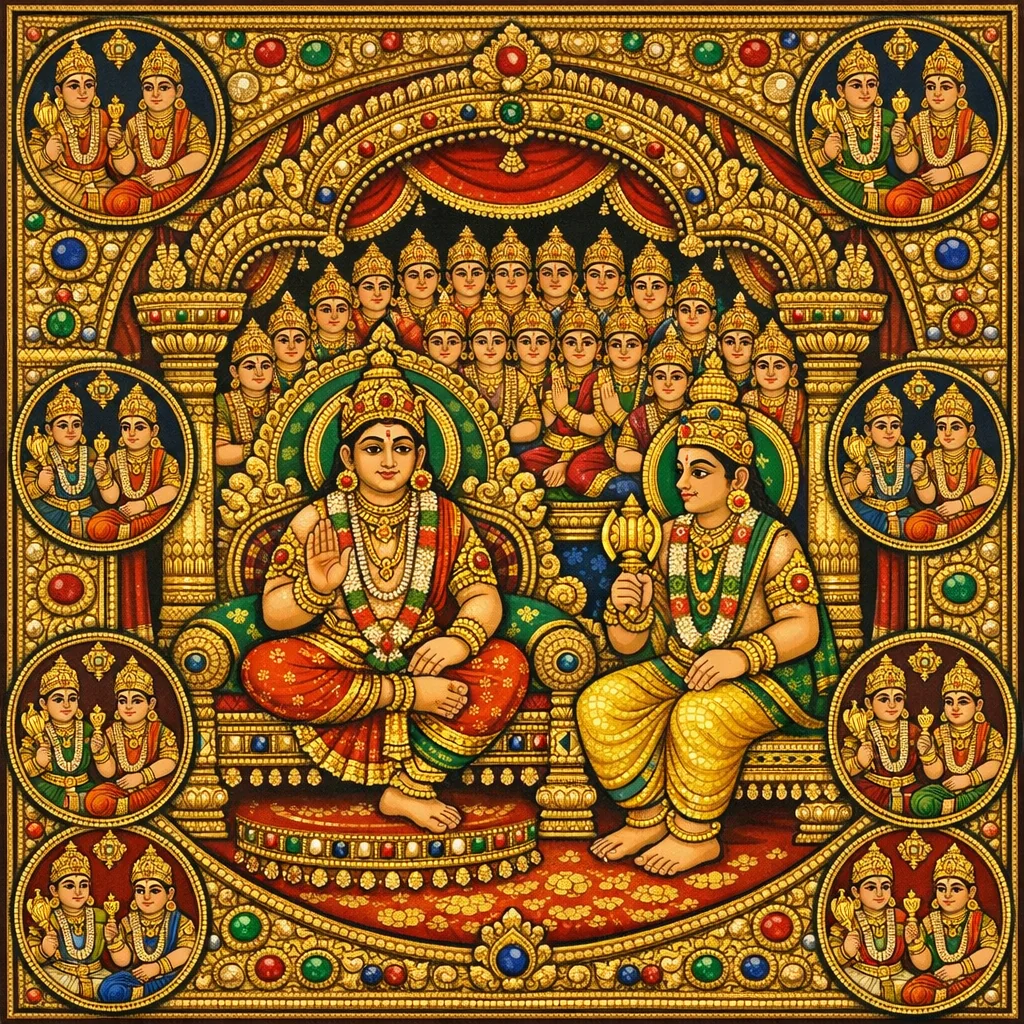
Adhyaya 36
मन्वन्तरानुक्रमवर्णनम् (Enumeration of Manvantara Cycles) — with focus on Svārociṣa Manvantara
This Adhyāya unfolds as a question-and-answer transmission: Śāṃśapāyana asks, in proper sequence (anukramāt), for the remaining Manvantaras, together with their ruling Manus, the corresponding Indras (Śakra), and the leadership of the devas. Sūta replies with a systematic survey of Manvantaras—past and future—clearly separating what has elapsed from what is yet to come, and noting that the account may be given in concise (samāsa) or expanded (vistara) form. The chapter then enumerates the Manus, naming the earlier set and indicating an intention to describe the eight forthcoming. Having observed that the Svāyambhuva Manvantara has already been covered, the discourse turns to the Svārociṣa Manvantara: it outlines the prajā-sarga (generation/ordering of beings) under the second Manu and specifies the deva-gaṇas active in that period, especially the Tuṣita deities. Proceeding in catalog style, it lists gaṇas and named devas as authoritative rosters, serving as a cosmological index that correlates divine offices with a particular Manvantara. Overall, the Adhyāya’s technical strength is its enumerative clarity, mapping time-administration (Manu) to divine cohorts (devas/gaṇas) as a reusable reference for later cosmography and genealogy.
Shlokas
Verse 1
इति श्रीब्रह्माण्डे महापुराणे वायुप्रोक्ते पूर्वभागे द्वितीये ऽनुष्गपादे वेदव्यसनाख्यानं स्वायंभुवमन्वन्तरवर्णनं च नाम पञ्चत्रिंशत्तमो ऽध्यायः शांशपायन उवाच मन्वन्तराणि शेषाणि श्रोतुमिच्छाम्यनुक्रमात् / मन्वन्तराधिपांश्चैव शक्रदेवपुरोगमान्
Thus, in the Śrī Brahmāṇḍa Mahāpurāṇa proclaimed by Vāyu, in the former section, second part (anuṣṭubh metre), ends the thirty-fifth chapter, “The account of the Veda’s calamity and the description of the Svāyambhuva Manvantara.” Śāṃśapāyana said: I wish to hear, in due order, the remaining Manvantaras, and also their rulers, with Śakra (Indra) and the gods at the fore.
Verse 2
सूत उवाच मन्वन्तराणि यानि स्युरतीतानागतानि ह / समासा द्विस्तराच्चैव ब्रुवतो मे निबोधत
Sūta said: The Manvantaras that have passed and those yet to come, I shall speak of both in brief and in detail; attend carefully to my words.
Verse 3
स्वायंभुवो मनुः पूर्वं मनुः स्वारोचिषस्तथा / उत्तमस्तामसश्चैव रैवतश्चाक्षुषस्तथा
First was Manu Svayambhuva, then Manu Svarocisa; thereafter came Manu Uttama, Tamasa, Raivata, and also Caksusa.
Verse 4
षडेते मनवो ऽतीता वक्ष्याम्यष्टावनागतान् / सावर्णिश्चैव रौच्यश्च भौत्यो वैवस्वतस्तथा
These six Manus have passed into the past; now I shall speak of the eight Manus yet to come—Savarni, Raucya, Bhautya, and likewise Vaivasvata.
Verse 5
वक्ष्याम्येतान्पुरस्तात्तु मनोर्वेवस्वतस्य च / मनवः पञ्च ये ऽतीता मानसांस्तान्निबोधत
First I shall speak of the Manus who came before Vaivasvata Manu; know well, with inward attention, those five Manus who have already passed.
Verse 6
मन्वन्तरं मया वो ऽध्य क्रान्तं स्वायंभुवस्य ह / अत ऊर्ध्वं प्रवक्ष्यामि मनाः स्वारोचिषस्य ह
Today I have recounted to you the Manvantara of Svayambhuva Manu; henceforth I shall proclaim the Manvantara of Svarocisa Manu.
Verse 7
प्रजासर्गं समासेन द्वितीयस्य महात्मनः / आसन्वै तुषिता देवा मनोः स्वारोचिषे ऽन्तरे
In brief is told the creation of beings in the age of the second great-souled Manu; in the Manvantara of Svarocisa, the Tusita gods were present.
Verse 8
पारावताश्च विद्वांसो द्वावेव तु गणौ स्मृतौ / तुषितायां समुत्पन्नाः क्रतोः पुत्राः स्वरोचिषः
Parāvatas and the wise—these alone are remembered as the two hosts. Born in Tuṣitā, they are the sons of Ṛṣi Kratu, known as Svarociṣa.
Verse 9
पारावताश्च वासिष्ठा द्वादश द्वौ गणौ स्मृतौ / छन्दजाश्च चतुर्विंशद्देवास्ते वै तदा स्मृताः
Parāvatas and Vāsiṣṭhas are remembered as two hosts, twelve in each. And the Chandajas—twenty-four deities—are likewise recalled of that time.
Verse 10
दिवस्पर्शो ऽथ जामित्रो गोपदो भासुरस्तथा / अजश्च भगवाश्चैव द्रविणश्य महा बलः
Divasparśa, Jāmitra, Gopada, and Bhāsura; and also Aja, Bhagavān, and Draviṇaśya of mighty strength.
Verse 11
आयश्चापि महाबाहुर्महौजाश्चापि वीर्यवान् / चिकित्वान्विश्रुतो यस्तु चांशो यश्चैव पठ्यते
Āya the mighty-armed, Mahaujā the valiant and powerful; and Cikitvān the renowned, and Cāṃśa whose name is recited.
Verse 12
ऋतश्चद्वादशस्तेषां तुषिताः परिकीर्त्तिताः / इत्येते क्रतुपुत्रास्तु तदासन्सोमपायिनः
Among them, twelve named Ṛta are praised as Tuṣitas. Thus these sons of Ṛṣi Kratu were, in that age, drinkers of the Soma.
Verse 13
प्रचेताश्चैव यो देवो विश्वदेवस्तथैव च / समञ्जो विश्रुतो यस्तु ह्यजिह्मश्चारिमर्द्दनः
Pracetā is that very deity, and likewise the Viśvadeva; Samañja is renowned—upright, without crookedness, a crusher of foes.
Verse 14
आयुर्दानो महामानो दिव्यमानस्तथैव च / अजेयश्च महाभागो यवीयांश्च महाबलः
Āyurdāna, Mahāmāna, and Divyamāna; Ajeya the unconquered, Mahābhāga the blessed—young, yet of mighty strength.
Verse 15
होता यज्वा तथा ह्येते परिक्रान्ताः परावताः / इत्येता देवता ह्यासन्मनोः स्वारोचिषान्तरे
Hotā and Yajvā—these ranged far and wide; thus were these deities in Manu’s time, in the Svārociṣa Manvantara.
Verse 16
सोमपास्तु तदा ह्येताश्चतुर्विशति देवताः / तेषामिन्द्रस्तदा ह्यासीद्विपश्चिल्लोकविश्रुतः
Then these twenty-four deities were drinkers of Soma; among them, Indra at that time was Vipaścit, famed throughout the worlds.
Verse 17
ऊर्जा वसिष्ठपुत्रश्च स्तंबः काश्यप एव च / भार्गवश्च तधा प्राम ऋषभोंऽङ्गिरसस्तथा
Ūrjā, the son of Vasiṣṭha, Staṃbha, and Kāśyapa; likewise Bhārgava, Prāma, and Ṛṣabha—also of the line of Aṅgiras.
Verse 18
पौलस्त्यश्चैव दत्तो ऽत्रिरात्रेयो निश्चलस्तथा / पौलहो ऽथार्वरीवांश्च एते सप्तर्षयस्तथा
Paulastya, Datta, Atriratreya, and Nishcala; also Paulaha and Atharvariva—these are remembered as the Seven Rishis.
Verse 19
चैत्रः किंपुरुष श्चैव कृतान्तो विभृतो रविः / बृहदुक्थो नवः सेतुः श्रुतश्चेति नव स्मृताः
Caitra, Kimpuruṣa, Kṛtānta, Vibhṛta, Ravi, Bṛhaduktha, Nava, Setu, and Śruta—these nine are remembered.
Verse 20
मनोः स्वारोचिषस्यैते पुत्रा वंशकराः प्रभो / पुराणे परिसंख्याता द्वितीयं वै तदन्तरम्
O Lord, these are the sons of Manu Svārociṣa, founders of lineages; they are enumerated in the Purāṇa—this is the second Manvantara.
Verse 21
सप्तर्षयो मनुर्देवाः पितरश्च चतुष्टयम् / मूलं मन्वन्तरस्यैते तेषां चैवान्वयाः प्रजाः
The Seven Rishis, Manu, the Devas, and the fourfold Pitṛs—these are the root of a Manvantara; from their lineage arise the beings.
Verse 22
ऋषीणां देवताः पुत्राः पितरो देवसूनवः / ऋषयो देवपुत्राश्च इति शास्त्रे विनिश्चयः
This is the śāstric certainty: the Devas are sons of the Rishis; the Pitṛs are sons of the Devas; and the Rishis too are called Deva-sons.
Verse 23
मनोः क्षत्रं विशश्चैव सप्तर्षिभ्यो द्विजा तयः / एतन्मन्वन्तरं प्रोक्तं समासाच्च न विस्तरात्
From Manu arose the Kṣatriyas and the Vaiśyas, and from the Seven Ṛṣis the twice-born (Dvijas). This Manvantara has been declared in brief, not in full detail.
Verse 24
स्वायंभुवे न विस्तारो ज्ञेयः स्वारोचिषस्य च / न शक्यो विस्तरस्तस्य वक्तुं वर्षशतैरपि
The full expanse of the Svāyambhuva and the Svārociṣa Manvantaras is not easily known; their detailed account cannot be spoken even in hundreds of years.
Verse 25
पुनरुक्तबहुत्वात्तु प्रजानां वै कुलेकुले / तृतीये त्वथ पर्याये उत्तमस्यान्तरे मनोः
Yet, because the peoples have been repeatedly spoken of, clan after clan, now in the third sequence the account proceeds within the period of Manu Uttama.
Verse 26
पञ्च देवगणा प्रोक्तास्तान्वक्ष्यामि निबोधत / सुधामानश्च ये देवा ये चान्ये वशवर्त्तिनः
Five hosts of gods are spoken of; I shall declare them—listen well: the devas called Sudhāmāna, and other devas who abide under divine rule.
Verse 27
प्रतर्दनाः शिवाः सत्यागणा द्वादशकाः स्मृताः / सत्यो धृतिर्दमो दान्तः क्षमः क्षामो ध्वनिः शुचिः
Pratardana, Śiva, and the Satya-gaṇas are remembered as twelve: Satya, Dhṛti, Dama, Dānta, Kṣama, Kṣāma, Dhvani, and Śuci.
Verse 28
इषोर्ज्जश्च तथा श्रेष्ठः सुपर्णो द्वादशस्तथा / इत्येते द्वादश प्रोक्ताः सुधामानस्तु नामभिः
Iṣorjja, likewise Śreṣṭha, and Suparṇa, and so too the twelfth—thus these twelve are declared by the names of Sudhāmān.
Verse 29
सहस्रधारो विश्वायुः समितारो वृहद्वसुः / विश्वधा विश्वकर्मा च मानसस्तु विराजसः
Sahasradhāra, Viśvāyu, Samitāra, and Vṛhadvasu; also Viśvadhā and Viśvakarmā, and Mānas of the line of Virāja.
Verse 30
ज्योतिश्चैव विभासश्च कीर्त्तिता वंशवर्तिनः / अवध्यो ऽवरतिर्देवो वसुर्धिष्ण्यो विभावसुः
Jyoti and Vibhāsa are praised as abiding in the lineage; likewise Avadhya, Avarati-deva, Vasu, Dhiṣṇya, and Vibhāvasu.
Verse 31
वित्तः क्रतुः सुधर्मा च धृतधर्मा यशस्विजः / रथोर्मिः केतुमाञ्छ्चैव कीर्त्तितास्तु प्रतर्दनाः
Vitta, Kratu, Sudharmā, Dhṛtadharmā, and Yaśasvij; and also Rathormi and Ketumān—these are praised in the line of Pratardana.
Verse 32
हंसस्वारौ वदान्यौ च प्रतर्दनयशस्करौ / सुदानो वसुदानश्च सुमञ्जसविषावुभौ
Haṃsasvāra and Vadānya, who increase the fame of Pratardana; Sudāna and Vasudāna; and also Sumañjasa and Viṣāva—both of them.
Verse 33
यमो वह्निर् यतिश्चैव सुचित्रः सुतपास्तथा / शिवा ह्येते तु विज्ञेया यज्ञिया द्वादशापराः
Yama, Vahni (Agni), Yati, Suchitra, and Sutapā—these are to be known as of Śiva’s own nature; they are another twelve, the yajñiya deities.
Verse 34
सत्यानामपि नामानि निबोधत यथातथम् / दिक्पतिर्वाक्पतिश्चैव विश्वः शंभुस्तथैव च
Learn also, just as they are, the names of the Satya: Dikpati, Vākpati, Viśva, and likewise Śambhu.
Verse 35
स्वमृडीको दिविश्चैव वर्चोधामा बृहद्वपुः / अश्वश्चैव सदश्वश्च क्षेमानन्दौ तथैव च
Svamṛḍīka, Divi, Varcodhāmā, Bṛhadvapu, Aśva, Sadaśva, and likewise Kṣema and Ānanda.
Verse 36
सत्या ह्येते परिक्रान्ता यज्ञिया द्वादशापराः / इत्येता देवता ह्यासन्नौत्तमस्यान्तरे मनोः
These indeed are the Satya, another twelve yajñiya deities; thus were these divinities in the Manvantara of Uttama Manu.
Verse 37
तेषामिन्द्रस्तु देवानां सुशान्तिर्नाम विश्रुतः / पुत्रास्त्तवङ्गिरसस्ते वै उत्तमस्य प्रजापतेः
Among those gods, their Indra was famed by the name Suśānti; and they were sons of the line of Aṅgiras, offspring of Uttama Prajāpati.
Verse 38
वशिष्ठपुत्राः सप्तासन्वाशिष्ठा इति विश्रुताः / सप्तर्षयस्तु ते सर्व उत्तमस्यान्तरे मनोः
Vasiṣṭha had seven sons, renowned as the “Vāśiṣṭhas.” All of them were the Seven Ṛṣis in the Manvantara of Manu Uttama.
Verse 39
आचश्च परशुश्चैव दिव्यो दिव्यौषधिर्नयः / देवाम्वुजश्चाप्रतिमौ महोत्साहो गजस्तथा
Āca and Paraśu; Divya, Divyauṣadhi, and Naya; Devāmbuja and Apratima; Mahotsāha, and likewise Gaja—these were their names.
Verse 40
विनीतश्च सुकेतुश्च सुमित्रः सुमतिः श्रुतिः / उत्तमस्य मनोः पुत्रास्त्रयोदश महात्मनः
Vinīta, Suketu, Sumitra, Sumati, and Śruti—these great-souled ones were among the thirteen sons of Manu Uttama.
Verse 41
एते क्षत्रप्रणेतारस्तृतीयं चैतदन्तरम् / औत्तमः परिसंख्यातः सर्गः स्वारोचिषेण तु
These were the founders of the kṣatriya order; this is the third Manvantara. By Svārociṣa Manu’s reckoning, this creation is counted as the “Auttama-sarga.”
Verse 42
विस्तरेणानुपूर्व्या च तामसस्य निबोधत / चतुर्थे त्वथ पर्याये तामसस्यातरे मनोः
Now understand, in due order and in fuller detail, the account of Tāmasa (Manu). In the fourth cycle comes the Manvantara of Manu Tāmasa.
Verse 43
सत्याः सुरूपाः सुधियो हरयश्च गणाः स्मृताः / पुलस्त्यपुत्रास्ते देवास्तामसस्यान्तरे मनोः
Satya, Surūpa, Sudhi, and Hari are remembered as the divine hosts (gaṇas). These gods are the sons of Pulastya, belonging to the intermediate period of Manu Tāmāsa.
Verse 44
गणस्तु तेषां देवानामेकैकः पञ्चविंशकः / इन्द्रियाणां प्रतीयेत ऋषयः प्रतिजानते
Each host among those gods is, one by one, twenty-five in number. They are to be understood as the faculties of the senses (indriyas), so the ṛṣis affirm.
Verse 45
सप्रमाणास्तु शीर्षण्यं मनश्चैवाष्टमं तथा / इन्द्रियाणि तथा देवा मनोस्तस्यान्तरे स्मृताः
The seven pramāṇas with the supreme (śīrṣaṇya), and as the eighth, the mind (manas). Likewise the senses and the gods are remembered in the intermediate period of that Manu.
Verse 46
तेषां बभूव देवानां शिबिरिन्द्रः प्रतापवान् / सप्तर्षयोंऽतरे ये च तान्निबोधत सत्तमाः
Among those gods there arose the mighty Śibirindra. And the Saptarṣis who belong to that interval—know them as well, O best of beings.
Verse 47
काव्य आङ्गिरसश्चैव काश्यपः पृथुरेव च / अत्रेयस्त्वग्निरित्येव ज्योतिर्धामा च भार्गवः
Kāvya, Āṅgirasa, Kāśyapa, and Pṛthu; Ātreya, Agni, Jyotirdhāmā, and Bhārgava—these are the (Saptarṣis).
Verse 48
पौलहश्चरकश्चात्र वाशिष्ठः पीवरस्तथा / चैत्रस्तथैव पौलस्त्य ऋषयस्तामसेंऽतरे
In the Tāmāsa Manvantara, these sages are remembered here: Paulaha, Caraka, Vāśiṣṭha, Pīvara, Caitra, and Paulastya.
Verse 49
जानुजङ्घस्तथा शान्तिर्नरः ख्यातिः शुभस्तथा / प्रियभृत्यो परीक्षिच्च प्रस्थलो ऽथ दृढेषुधिः
Also named are Jānujanggha, Śānti, Nara, Khyāti, and Śubha; and likewise Priyabhṛtya, Parīkṣi, Prasthala, and Dṛḍheṣudhi.
Verse 50
कृशाश्वः कृतबन्धुश्च तामसस्य मनोः सुताः / पञ्चमेत्वथ पर्याये मनोः स्वारोचिषेंऽतरे
Kṛśāśva and Kṛtabandhu are sons of Manu Tāmāsa; and in the sequence of the Svārociṣa Manvantara, this is the fifth account.
Verse 51
गुणास्तु ये समाख्याता देवानां तान्निबोधत / अमिताभा भूतरयो वैकुण्ठाः ससुमेधसः
Know the qualities spoken of among the gods: Amitābha, Bhūtaraya, Vaikuṇṭha, and Sasumedhasa.
Verse 52
वरिष्ठाश्च शुभाः पुत्रा वसिष्ठस्य प्रजापतेः / चतुर्दश तु चत्वारो गणास्तेषां सुभास्वराः
The sons of Prajāpati Vasiṣṭha are most excellent and auspicious; there are four gaṇas of them, fourteen in each, sweet-voiced and radiant.
Verse 53
उग्रः प्रज्ञो ऽग्निभावश्च प्रज्योतिश्चामृतस्तथा / सुमतिर्वा विरावश्च धामा नादः श्रवास्तथा
Ugra, the wise one, of fiery nature, radiant light, and immortal nectar; likewise Sumati, Virāva, Dhāma, Nāda, and Śravā.
Verse 54
वृत्तिराशी च वादश्च शबरश्च चतुर्दश / अमिताभाः स्मृता ह्येते देवाः स्वारोचिषेंऽतरे
Vṛtti, Rāśi, Vāda, and Śabara—thus fourteen in all; in the Svārociṣa Manvantara these deities are remembered as the ‘Amitābhas’.
Verse 55
मतिश्च सुमतिश्चैव ऋतसत्यौ तथैधनः / अधृतिर्विधृतिश्चैव दमो नियम एव च
Mati and Sumati, Ṛta and Satya, and Aidhana; also Adhṛti and Vidhṛti, Dama and Niyama.
Verse 56
व्रतो विष्णुः सहश्चैव द्युतिमान्सुश्रवास्तथा / इत्येतानीह नामानि आभूतयसां विदुः
Vrata, Viṣṇu, Saha, Dyutimān, and Suśravā—these are known here as the names of the Ābhūtaya deities.
Verse 57
वृषो भेत्ता जयो भीमः शुचिर्दान्तो यशो दमः / नाथो विद्वानजेयश्च कृशो गौरो ध्रुवस्तथा
Vṛṣa, Bhettā, Jaya, Bhīma, Śuci, Dānta, Yaśas, Dama; and also Nātha, Vidvān, Ajeya, Kṛśa, Gaura, and Dhruva.
Verse 58
कीर्त्तितास्तु विकुण्ठा वै सुमेधांस्तु निबोधत / मेधा मेधा तिथिश्चैव सत्यमेधास्तथैव च
The Vaikunthas have been extolled; O Sumedhas, know these names—Medhā, Medhā, Tithi, and likewise Satyamedhā.
Verse 59
पृश्निमेधाल्पमेधाश्च भूयोमेधाश्च यः प्रभुः / दीप्तिमेधा यशोमेधा स्थिरमेधास्तथैव च
There is the lord called Pṛśnimedhā, Alpamedhā, and Bhūyomedhā; and also Dīptimedhā, Yaśomedhā, and Sthiramedhā.
Verse 60
सर्वमेधा सुमेधाश्च प्रतिमेधाश्च यः स्मृतः / मेधजा मेधहन्ता च कीर्त्तितास्ते सुमेधसः
He is remembered as Sarvamedhā, Sumedhā, and Pratimedhā; and as Medhajā and Medhahantā—these Sumedhas have been duly praised.
Verse 61
विभुरिन्द्रस्तथा तेषामासीद्वि क्रान्तपौरुषः / पौलस्त्यो दवबाहुश्च सुधामा नाम काश्यपः
Among them was Vibhū Indra, of conquering valor; and also Paulastya, Davabāhu, and the Kāśyapa named Sudhāmā.
Verse 62
हिरण्यरोमाङ्गिरसो वेदश्रीश्चैव भार्गवः / ऊर्ध्वबाहुश्च वाशिष्ठः पर्जन्यः पौलहस्तथा
There were Hiraṇyaromā of the Aṅgirasa line, Vedaśrī the Bhārgava; Ūrdhvabāhu of the Vāsiṣṭhas, and also Parjanya and Paulaha.
Verse 63
सत्यनेत्रस्तथात्रेय ऋषयो रैवतेंऽतरे / महावीर्यः सुसंभाव्यः सत्यको हरहा शुचिः
In the Raivata Manvantara are renowned Satyanetra, the sage Ātreya, and also Mahāvīrya, Susambhāvya, Satyaka, Harahā, and the pure Śuci.
Verse 64
बलबन्धुर्निरामित्रः कंबुः शृगो धृतव्रतः / रैवतस्य च पुत्रास्ते पञ्चमं वै तदन्तरम्
Balabandhu, Nirāmitra, Kambu, Śṛga, and Dhṛtavrata were the sons of Raivata; that interval is indeed the fifth Manvantara.
Verse 65
स्वारोचिषश्चोत्तमो ऽपि तामसो रैवतस्तथा / प्रियव्रतान्वया ह्येते चत्वारो मनवः स्मृताः
Svārociṣa, Uttama, Tāmasa, and Raivata—these four Manus are remembered as belonging to the lineage of Priyavrata.
Verse 66
षष्ठे खल्वपि पर्याये देवा ये चाक्षुषेंऽतरे / आद्याः प्रसूता भाव्यश्च पृथुकाश्च दिवौकसः
In the sixth succession, within the Cākṣuṣa Manvantara, the gods—Ādya, Prasūta, Bhāvya, and Pṛthuka—are known as the divaukasa, dwellers of heaven.
Verse 67
महानुभावा लेखास्छ पञ्च देवगणाः स्मृताः / दिवौकसः सर्व एव प्रोच्यन्ते मातृनामभिः
Mahānubhāva and Lekhā are remembered among five companies of gods; and all these divaukasa are spoken of by the names of the Mātṛs, the Divine Mothers.
Verse 68
अत्रेः पुत्रस्य नप्तारो ह्यारण्यस्य प्रजापतेः / गणस्तु तेषां देवानामेकैको ह्यष्टकः स्मृतः
They are the grandsons of Atri’s son, born of Prajāpati Āraṇya’s line; and among that host of gods, each one is remembered as a distinct Aṣṭaka.
Verse 69
अन्तरिक्षो वसुर्हव्यो ह्यतिथिश्च प्रियव्रतः / श्रोता मन्तानुमन्ता च त्वाद्या ह्येते प्रकीर्त्तिताः
Antarikṣa, Vasu, Havya, Atithi, and Priyavrata; and also Śrotā, Mantā (the contemplator), and Anumantā—these are proclaimed as the foremost ones.
Verse 70
श्येनभद्रस्तथा चैव श्वेतचक्षुर्महायशाः / सुमनाश्च प्रचेताश्च वनेनः सुप्रचेत्सौ
Also (among them are) Śyenabhadra, the greatly renowned Śvetacakṣu, Sumanā, Pracetas, Vanena, and Supracetas—these too belong to that divine host.
Verse 71
मुनिश्चैव महासत्त्वः प्रसूताः परिकीर्त्तिताः / विजयः सुजयश्चैव मनस्योदौ तथैव च
Muni and Mahāsattva are spoken of as deities who came forth in birth; likewise Vijaya and Sujaya, and also Manasyu and Uda.
Verse 72
मतिः परिमतिश्चैव विचेताः प्रियनिश्चयः / भव्या ह्येते स्मृता देवाः पृथुकांश्च निबोधत
Mati, Parimati, Vicetā, and Priyaniścaya—these gods are remembered as auspicious and splendid; and now, learn also of the Pṛthukāṃśas.
Verse 73
ओजिष्ठः शकुनो देवो वानत्दृष्टस्तथैव च / सत्कृतः सत्यदृष्टिश्च जिगीषुर्विजयस्तथा
Ojistha, Sakuna, Deva, and Vanatdrishta; likewise Satkṛta, Satyadrishti, Jigishu, and Vijaya—these too are named among the gods.
Verse 74
अजितश्च महाभागः पृथुकास्ते दिवौकसः / लेशास्तथा प्रवक्ष्यामि नामतस्तान्निबोधत
Ajita too is greatly blessed; they are the divaukasa, dwellers of heaven, called Prithuka. Now I shall speak of a portion of them by name—listen and take heed.
Verse 75
मनोजवः प्रघासश्च प्रचेताश्च महायशाः / ध्रुवो ध्रुवक्षितिश्चैव अत्युतश्चैव वीर्यवान्
Manojava, Praghāsa, and Praceta of great renown; also Dhruva, Dhruvakṣiti, and Atyuta the mighty—these too are named.
Verse 76
युवना बृहस्पतिश्चैव लेखाः संपरिकीर्त्तिताः / मनोजवो महावीर्यस्तेषामिन्द्रस्तदाभवत्
Yuvanā and Bṛhaspati—these names too, called ‘Lekhā’, are duly celebrated. Among them, Manojava of great might became Indra at that time.
Verse 77
उत्तमो भार्गवश्चैव हविष्मानङ्गिरःसुतः / सुधामा काश्यपश्चैव वशिष्ठो विरजास्तथा
Uttama, Bhārgava, and Havishmān, son of Aṅgiras; also Sudhāmā, Kāśyapa, Vasiṣṭha, and Viraja—these too are revered sages.
Verse 78
अतिनामा च पौलस्त्यः सहिष्णुः पौलहस्तथा / मधुरात्रेय इत्येते सप्त वै चाक्षुषेंऽतरे
Atināmā, Paulastya, Sahiṣṇu, likewise Paulaha, and Madhurātreya—these indeed are the seven (ṛṣis) in the Cākṣuṣa Manvantara.
Verse 79
ऊरुः पुरुः शतद्युम्नस्तपस्वी सत्यवाक्कृतिः / अग्निष्टुदतिरात्रश्च सुद्युम्नशचेति ते नव
Ūru, Puru, Śatadyumna, Tapasvī, Satyavākkṛti, Agniṣṭut, Atirātra, and Sudyumna—these are said to be nine.
Verse 80
अभिमन्युश्च दशमो नाड्वलेया मनोः सुताः / चाक्षुषस्य सुताः ह्येते षष्ठं चैव तदन्तरम्
The tenth is Abhimanyu; these are the sons of Manu Nāḍvaleya. All of them are sons of Cākṣuṣa, and this is the sixth Manvantara.
Verse 81
वैवस्वतेन संख्यातस्तत्सर्गः सांप्रतेन तु / विस्तरेणानुपूर्व्या च चाक्षुषस्यान्तरे मनोः
That creation (sarga) was reckoned briefly by Vaivasvata (Manu); but the present narrator will describe, in due order and in detail, the Manvantara of Manu Cākṣuṣa.
Verse 82
ऋषय ऊचुः चाक्षुषः कस्य दायादः संभूतः सक्य वान्वये / तस्यान्ववाये ये ऽप्यन्येतान्नो ब्रूहि यथातथम्
The ṛṣis said: “Cākṣuṣa—whose heir was he, and in what lineage was he born? And those others also in his line of descent—tell us of them truly, just as they are.”
Verse 83
सूत उवाच चाक्षुषस्य विसर्गं तु समासाच्छृणुत द्विजाः / यस्यान्ववाये संभूतः पृथुर्वैन्यः प्रतापवान्
Suta said: O twice-born ones, hear in brief of the emanation of Cākṣuṣa Manu; in his line was born the mighty Pṛthu Vainya, radiant in prowess.
Verse 84
प्रजानां पतयश्चान्ये दक्षः प्राचेतसस्तथा / उत्तानपादं जग्राह पुत्रमत्रिप्रजापतिः
There were other lords of beings as well—Dakṣa, the son of Prācetas; and Prajāpati Atri accepted Uttānapāda as his son.
Verse 85
दत्तकः स तु पुत्रो ऽस्य राजा ह्यासीत्प्रजापतिः / स्वायंभुवेन मनुना दत्तो ऽत्रेः कारणं प्रति
He was his adopted son; and that king indeed became a Prajāpati. Svāyambhuva Manu, for a certain cause, bestowed him upon Atri.
Verse 86
मन्वन्तरमथासाद्य भविष्यच्चाक्षुषस्य ह / षष्ठं तदनु वक्ष्यामि उपोद्धातेन वै द्विजाः
Now, having come to the manvantara that shall follow Cākṣuṣa, O twice-born ones, I shall speak of the sixth manvantara with a fitting prelude.
Verse 87
उत्तानपादाच्चतुरः सूनृतासूत भामिनी / धर्मस्य कन्या सुश्रोणी सूनृता नाम विश्रुता
From Uttānapāda, the fair lady Sūnṛtā bore four sons; she was Dharma’s daughter, graceful of form, renowned by the name Sūnṛtā.
Verse 88
उत्पन्ना जापि धर्मेम ध्रुवस्य जननी शुभा / धर्मस्य पत्न्यां लक्ष्मयां वै उत्पन्ना सा शुचिस्मिता
Though born in the line of Dharma, the auspicious Śubhā became the mother of Dhruva; and Śucismitā, of pure smile, was indeed born of Lakṣmī, the wife of Dharma.
Verse 89
ध्रुवं च कीर्त्तिमन्तं च त्वायुष्मन्तं वसुं तथा / उत्तानपादो ऽजनयत्कन्ये द्वे च शुचिस्मिते
Uttānapāda begot Dhruva, Kīrtimān, Āyuṣmān, and Vasu; and, O Śucismite, he also had two daughters.
Verse 90
स्वरामनस्विनी चैव तयोः पुत्राः प्रकीर्त्तिताः / ध्रुवो वर्षसहस्राणि दश दिव्यानि वीर्यवान्
Svarā and Manasvinī are proclaimed as their sons; and Dhruva, mighty in valor, performed austerities for ten thousand divine years.
Verse 91
तपस्तेपे निराहारः प्रार्थयन्विपुलं यशः / त्रेतायुगे तु प्रथमे पौत्रः स्वायंभुवस्य तु
Fasting, he performed austerities, praying for vast renown; he was the grandson of Svāyambhuva Manu, in the earliest age of the Tretāyuga.
Verse 92
आत्मानं धारयन्योगान्प्रार्थयन्सुमहद्यशः / तस्मै ब्रह्मा ददौ प्रीतो ज्योतिषां स्थानमुत्तमम्
Steadying himself in yoga, he prayed for exceedingly great glory; Brahmā, pleased, granted him the highest station among the celestial lights.
Verse 93
आभूतसंप्लवाद्दिव्यमस्तोदयविवार्जितम् / तस्यातिमात्रामृद्धिं च महिमानं निरीक्ष्य तु
Beholding that divine state after the cosmic dissolution, free from the distinction of setting and rising, and seeing its immeasurable prosperity and majesty.
Verse 94
दैत्या सुराणामाचार्यः श्लोकमप्युशाना जगौ / अहो ऽस्य तपसो वीर्यमहो श्रुतमहो व्रतम्
Uśanā, preceptor of Daityas and Devas, uttered a verse: “Ah! the potency of his austerity; ah! his sacred learning; ah! his vow!”
Verse 95
कृत्वा यदेनमुपरि ध्रुवं सप्तर्षयः स्थिताः / द्रुवे त्रिदिवमासक्तमीश्वरः स दिवस्पतिः
He whom they established as Dhruva—above him the Seven Ṛṣis took their station; to Dhruva the celestial realm clung—he, the Lord, is Divaspati.
Verse 96
ध्रुवात्सृष्टिं च भव्यं च भूमिस्तौ सुषुवे नृपौ / स्वां छायामाह वै सृष्टिर्भवनारीति तां प्रभुः
From Dhruva, Bhūmi bore two kings, Sṛṣṭi and Bhavya. The Lord said to Sṛṣṭi: “You are my own shadow; be known as Bhavanārī.”
Verse 97
सत्याभिव्यहृतेस्तस्य सद्यः स्त्री साभवत्तदा / दिव्यसंहनना छाया दिव्याभरणभूषिता
At the utterance of his truthful word, that shadow instantly became a woman—of divine form and adorned with celestial ornaments.
Verse 98
छायायां सृष्टिराधत्त पञ्च पुत्रानकल्मषान् / प्राजीनगर्भं वृषभं वृकञ्च वृकलं धृतिम्
From Chāyā’s creation arose five stainless sons: Prājīnagarbha, Vṛṣabha, Vṛka, Vṛkala, and Dhṛti.
Verse 99
पत्नी प्राचीनगर्भस्य सुवर्चा सुषुवे नुपम् / नाम्नोदारधियं पुत्रमिन्द्रो यः पूर्वजन्मनि
Suvarcā, wife of Prājīnagarbha, bore a noble son named Udāradhī—he who in a former birth had been Indra.
Verse 100
संवत्सरसहस्रान्ते सकृदाहारमाहरन् / एवं मन्वन्तरं युक्त इन्द्रत्वं प्राप्तवान्प्रभुः
At the end of each thousand years he took food but once; thus, disciplined through a whole manvantara, the Lord attained the rank of Indra.
Verse 101
उदारधेः सुतं भद्राजनयत्सा दिवञ्जयम् / रिपुं रिपुञ्जयाज्जज्ञे वराङ्गी तु दिवञ्जयात्
From Udāradhī, Bhadrā bore a son named Divañjaya; from Divañjaya, Varāṅgī bore Ripuñjaya, and from Ripuñjaya was born Ripu.
Verse 102
रिपोराधत्त बृहती वक्षुषं सर्वतेजसम् / तस्य पुत्रो मनुर्विद्वान् ब्रह्मक्षत्त्रप्रवत्तकः / व्यजीजनत्पुष्करिणी वारुणी चाक्षुषं मनुम्
From Ripu, Bṛhatī bore Vakṣuṣa, radiant with every splendor. His son was the wise Manu, establisher of Brahmin and Kṣatriya dharma. Puṣkariṇī and Vāruṇī gave birth to Cākṣuṣa Manu.
Verse 103
ऋषय ऊचुः प्रजापतेः सुता कस्माद्वारुणी प्रोच्यते ऽनघ / एतदाचक्ष्व तत्वेन कुशलो ह्यसि विस्तरे
The sages said: “O blameless one, why is Prajāpati’s daughter called Vāruṇī? Tell us this in truth and in full detail, for you are skilled in sacred exposition.”
Verse 104
सूत उवाच अरण्यस्योदकः पुत्रो वरुणत्वमुपागतः / तेन सा वारुणी ज्ञेया भ्रात्रा ख्यातिमुपागता
Sūta said: “Udaka, son of Araṇya, attained the state of Varuṇa; therefore she is to be known as Vāruṇī, having gained renown through her brother.”
Verse 105
मनोरजायन्त दश नड्वलायां सुताः शुभाः / कन्यायां सुमहावीर्या विरजस्य प्रजापतेः
From Naḍvalā were born to Manu ten auspicious sons; and from Kanyā were born to Prajāpati Viraja sons of exceedingly great valor.
Verse 106
ऊरुः पुरुः शतद्युम्नस्तपस्वी सत्यवाक्कृतिः / अग्निष्टुदतिरात्रश्च सुद्युम्नश्चेति वै नव
Ūru, Puru, Śatadyumna, Tapasvī, Satyavākkṛti, Agniṣṭut, Atirātra, and Sudyumna—these are indeed the nine (sons) named.
Verse 107
अभिमन्युश्च दशमो नड्वलायां मनोः सुताः / ऊरोरजनयत्पुत्रान्षडाग्नेयी महाप्रभान्
Abhimanyu was Manu’s tenth son by Naḍvalā; and through Ūru, Āgneyī bore six sons of mighty splendor.
Verse 108
अङ्गं सुमनसं ख्यातिङ्गयं शुक्रं व्रजाजिनौ / अङ्गात्सुनीथापत्यंवै वेनमेकं व्यजायत
Among Anga, Sumanas, Khyātiṅgaya, Śukra, Vraja, and Ajina; from Anga, in Sunīthā’s womb, a single son was born—Vena.
Verse 109
तस्यापराधाद्वेनस्य प्रकोपस्तु महानभूत् / प्रजार्थमृषयो यस्यममन्थुर्दक्षिणां करम्
Because of Vena’s offense, a great wrath arose; for the sake of the people, the sages churned his right hand.
Verse 110
जनितस्तस्य पाणौ तु मथिते रूपवान्पृथुः / जनयित्वा सुतं तस्य पृथुं प्रथितपौरुषम्
When his hand was churned, the handsome Pṛthu was born; thus appeared that son Pṛthu, famed for mighty valor.
Verse 111
अब्रु वंस्त्वेष वो राजा ऋषयो मुदिताः प्रजाः / स धन्वी कवची जज्ञे तेजसा निर्दहन्निव
They proclaimed, “This is your king”; sages and people rejoiced. He was born an archer clad in armor, as though his splendor could burn all before him.
Verse 112
वृत्तीनामेष वो दाता भविष्यति नराधिपः / पृथुर्वैन्यस्तदा लोकान्ररक्ष क्षत्रपूर्वजः
This lord of men shall be the giver of your livelihoods; then Pṛthu Vainya, forefather of the kṣatriyas, protected the worlds.
Verse 113
राजसूयाभिषिक्तानामाद्यस्स वसुधाधिपः / तस्य स्तवार्थमुत्पन्नौ निपुणौ सूतमागधौ
Among the kings anointed by the Rājasūya, he was the first lord of the earth. For the sake of his praise, the skilled Sūta and Māgadha were brought forth.
Verse 114
तेनेयं गौर्महाराज्ञा दुग्धा सस्यानि धीमता / प्रजानां वृत्तिकामानां देवैश्चर्षिगणैः सह
That wise great king milked this earth, as though she were a cow; crops flowed forth for the livelihood of the people, together with the Devas and the hosts of Rishis.
Verse 115
पितृभिर् दानवैश्चैव गन्धर्वैश्चाप्सरोगणैः / सर्पैः पुण्यजनैश्चैव पर्वतैर्वृक्षवीरुधैः
By the Pitris, the Danavas, the Gandharvas and the hosts of Apsaras; by serpents, by the Punyajanas, and by mountains, trees, and creeping plants as well.
Verse 116
तेषु तेषु तु पात्रेषु दुह्यमाना वसुंधरा / प्रादाद्यथेप्सि तं क्षीरं तेन प्राणानधारयन्
As Vasundharā was milked into each and every vessel, she granted the milk that was desired; by that they sustained their very life-breath.
Verse 117
शांशपायन उवाच विस्तरेण पृथोर्जन्म कीर्त्तयस्व महाव्रत / यथा महात्मना तेन पूर्वं दुग्धा वसुंधरा
Śāṃśapāyana said: O keeper of the great vow, recount in full the birth of Prithu—how that great-souled one once milked Vasundharā.
Verse 118
यथा देवैश्च नागैश्च यथा ब्रह्मर्षिभिः सह / यक्षै राक्षसगन्धर्वैरप्सरोभिर्यथा पुरा
As it was with the Devas and the Nāgas, so too with the Brahmarṣis; and as in ancient times with the Yakṣas, Rākṣasas, Gandharvas, and Apsarās.
Verse 119
यथा यथा च वै सूत विधिना येन येन च / तेषां पात्रविशेषांश्च दोग्धारं क्षीरमेव च
O Sūta, in whatever manner and by whatever rite it was done—tell of their distinct vessels, the one who milked, and the milk itself.
Verse 120
तथा वत्सविशेषांश्च त्वंनः प्रब्रूहि पृच्छताम् / यथा क्षीरविशेषांश्च सर्वानेवानुपूर्वशः
So too, as we inquire, tell us of the distinct kinds of calves; and likewise recount, in due order, all the varieties of milk.
Verse 121
यस्मिंश्च कारणे पाणिर्वनस्य मथितः पुरा / कुद्धैर्महर्षिभिः पूर्वैः कारणं ब्रूहि तद्धि नः
And for what reason did the sages of old, angered, churn the forest and draw forth its essence? Tell us that cause indeed.
Verse 122
सूत उवाच कथयिष्यामि वो विप्राः पृथोर्वैन्यस्य संभवम् / एकाग्राः प्रयताश्चैव शुश्रूषध्वं द्विजोत्तमाः
Sūta said: O vipras, I shall relate to you the manifestation of Pṛthu Vainya. O best of the twice-born, listen with focused minds and disciplined reverence.
Verse 123
नाशुद्धाय न पापाय नाशिष्यायाहिताय च / वर्त्तनीयमिदं ब्रह्म नाव्रताय कथञ्चन
This sacred Brahman-teaching should not be imparted to the impure, the sinful, the unfit disciple, or one who means harm; and never, in any way, to one without vows.
Verse 124
धन्यं यशस्यमायुष्यं पुण्यं वेदैश्च संमितम् / रहस्यमृषिभिः प्रोक्तं शृणुयाद्यो ऽनसूयकः
This tale is blessed, fame-bestowing, life-prolonging, meritorious, and in accord with the Vedas; this secret spoken by the sages should be heard by one free from envy.
Verse 125
यश्चैवं श्रावयेन्मर्त्यः पृथोर्वैन्यस्य संभवम् / ब्राह्मणेभ्यो नमस्कृत्य न स शोचेत्कृताकृतम्
Whoever, bowing to the Brahmanas, causes this account of Prithu Vainya’s birth to be recited, does not grieve over what was done or left undone.
Verse 126
गोप्ता धर्मस्य राजासौ बभूवात्रिसमः प्रभुः / अत्रिवंशसमुत्पन्नो ह्यङ्गो नाम प्रजापतिः
That king became a guardian of Dharma, a lord equal to Atri; from Atri’s lineage arose the Prajapati named Anga.
Verse 127
तस्य पुत्रो ऽभवद्वेनो नात्यर्थं धार्मिकस्तथा / जातो मृत्युसुतायां वै सुनीथायां प्रजापतिः
His son was Vena, not greatly devoted to Dharma; that Prajapati was born of Sunitha, the daughter of Mrityu, Lord of Death.
Verse 128
स मातामहदोषेण वेनः कालात्म जात्मजः / स धर्मं वृष्ठतः कृत्वा कामाल्लोकेष्वर्तत
Through the fault of his maternal grandsire, Vena, son of Kālātmaja, cast Dharma behind him and, driven by desire, moved about among the worlds.
Verse 129
स्थापनां स्थापयामास धर्मायेतां स पार्थिवः / वेदशास्त्राण्यतिक्रम्य सो ऽधर्मे निरतो ऽभवत्
That king set up an ordinance claiming it was for Dharma; yet, transgressing the Vedas and the śāstras, he became devoted to adharma.
Verse 130
निःस्वाध्यायवष्ट्कारे तस्मिन्राज्यं प्रशासति / न पिबन्ति तदा सोमं महायज्ञेषु देवताः
While he ruled, there was no svādhyāya and no vaṣaṭ-cry; then the gods did not drink soma in the great sacrifices.
Verse 131
न यष्टव्यं न दातव्यमिति तस्य प्रजापतेः / आसीत्प्रतिज्ञा क्रूरेयं विनाशे प्रत्युपस्थिते
This was the cruel vow of that Prajāpati: “no sacrifice is to be performed, no gift is to be given”; and destruction drew near.
Verse 132
अहमीज्यश्च पूज्यश्च यज्ञे देवद्विजातिभिः / मयि यज्ञा विधातव्या मयि होतव्यमित्यपि
He proclaimed: “In sacrifice, gods and the twice-born must worship and offer to me alone; the yajñas are to be ordained for me, and the oblations are to be poured for me.”
Verse 133
तमतिक्रान्तमर्यादमवदानसुसंवृतम् / ऊचुर्महर्षयः सर्वे मरीचिप्रमुखास्तदा
Then all the great sages, led by Marīci, seeing him who had overstepped all bounds and was veiled in sin, spoke thus:
Verse 134
वयं दीक्षां प्रवेक्ष्यामः संवत्सरशतं नृप / त्वं मा कार्षीरधर्मं वै नैष धर्मः सनातनः
O king, we shall enter upon the consecrated vow for a hundred years; do not commit adharma, for this is not the eternal Dharma.
Verse 135
निधने संप्रसूतस्त्वं प्रजापतिरसंशयः / पालयिष्ये प्रजाश्चेति पूर्वं ते समयः कृतः
You were born in a time of ruin; without doubt you are Prajāpati. Formerly you made this covenant: ‘I shall protect the people.’
Verse 136
तां स्तथा वादिनः सर्वान्ब्रह्मर्षीनब्रवीत्तदा / वेनः प्रहस्य दुर्बुद्धिर्विदितेन च कोविदः
To all those brahmarṣis who spoke thus, Vena of perverse mind laughed, posing as one skilled in knowledge, and replied.
Verse 137
स्रष्टा धर्मस्य कश्चान्यः श्रोतव्यं कस्य वा मया / वीर्यण तपसा सत्यैर्मया वा कः समो भुवि
Who else but I is the maker of Dharma? Whose words should I heed? In valor, austerity, and truth, who on earth is equal to me?
Verse 138
मन्दात्मानो न नूनं मां यूयं जानीत तत्त्वतः / प्रभवं सर्वलोकानां धर्माणां च विशेषतः
O dull-souled ones, surely you do not know Me in truth; I am the source of all worlds, and especially of the sacred dharmas.
Verse 139
इच्छन्दहेयं पृथिवीं प्लावयेयं जलेन वा / सृजेयं वा ग्रसेयं वा नात्र कार्या विचारणा
If I so desire, I can burn the earth or flood it with waters; I can create or I can devour—here there is no need for deliberation.
Verse 140
यदा न शक्यते स्तंभादानार्य्यभृशसंहितः / अनुनेतुं तदा वेनस्ततः क्रुद्धा महर्षयः
When Vena—unyielding as a pillar, un-Āryan and fiercely cruel—could not be restrained, then the great sages grew wrathful.
Verse 141
निगृह्य तं च बाहुभ्यां विस्फुरन्तं महा बलम् / ततो ऽस्य वामहस्तं ते ममन्थुर्भृशकोपिताः
Seizing him with their arms and restraining that mighty one who writhed, they, inflamed with anger, then churned and crushed his left hand.
Verse 142
तस्मात्प्रमथ्यमानाद्वै जज्ञ पूर्वमिति श्रुतिः / ह्रस्वो ऽतिमात्रं पुरुषः कृष्णश्चापि बभूव ह
As the śruti relates, from that churning there was first born a man: short in stature, with limbs overlarge, and of dark complexion.
Verse 143
स भीतः प्राञ्जलिश्चैव तस्थिवानाकुलेन्द्रियः / तमार्त्तं विह्वलं दृष्ट्वा निषीदेत्यब्रुवन्किल
Fearful, he stood with palms joined, his senses in turmoil. Seeing him distressed and trembling, they said, “Sit down.”
Verse 144
निषादवंशकर्तासौ बभूवानन्तविक्रमः / धीवरानसृजच्चापि वेनकल्मषसंभवान्
He became the founder of the Niṣāda lineage, of boundless prowess; and he also brought forth the dhīvaras—fishers born of Vena’s taint.
Verse 145
ये चान्ये विन्ध्यनिलयास्तंबुरास्तुबुराः खशाः / अधर्मरुचयश्चापि विद्धि तान्वेनकल्मषान्
And other dwellers of the Vindhya—Tamburas, Tuburas, Khaśas—and those who delight in adharma: know them all to be born of Vena’s taint.
Verse 146
पुनर्महर्षयस्तस्य पाणिं वेनस्य दक्षिणम् / अरणीमिव संरब्धा ममन्थुर्जातमन्यवः
Then the great sages, their wrath aroused, churned Vena’s right hand as one churns the araṇi to kindle sacred fire.
Verse 147
पृथुस्तस्मात्समुत्पन्नः कराज्जलजसन्निभात् / पृथोः करतलाद्वापि यस्माज्जातः पृषुस्ततः
From that lotus-like hand arose Pṛthu; and since Pṛṣu was born from Pṛthu’s palm, he was therefore named Pṛṣu.
Verse 148
दीप्यमानश्च वपुषा साक्षादग्निरिव ज्वलन् / आद्यमाजगवं नाम धनुर्गृह्य महारवम्
Blazing with radiant splendor, he flamed like fire itself; and taking up the primal bow named Ājagava, he uttered a mighty roar.
Verse 149
शारांश्च बिभ्रद्रक्षार्थ कवचं च महाप्रभम् / तस्मिञ्जा ते ऽथ भूतानि संप्रहृष्टानि सर्वशः
For protection he bore arrows and donned a splendid, radiant armor; and when he was born, all beings everywhere rejoiced.
Verse 150
समापेतुर्महाराजं वेनश्च त्रिदिवं गतः / समुत्पन्नेन राजर्षिः सत्पुत्रेण महात्मना
All gathered before the great king, and Vena departed to Tridiva, the heavenly realm. With the birth of that noble, great-souled son, the rajarshi’s purpose was fulfilled.
Verse 151
त्रातः स पुरुषव्याघ्रः पुन्नाम्नो नरकात्तदा / तं नद्यश्च समुद्राश्च रत्नान्यादाय सर्वशः
Then that tiger among men was delivered from the hell called Punnāma. Rivers and oceans, from every quarter, brought forth jewels and came to him.
Verse 152
अभिषेकाय तोयं च सर्व एवोपत स्थिरे / पितामहश्च भगवानङ्गिरोभिः सहामरैः
With water for the abhiṣeka, all stood ready in attendance. And the blessed Pitāmaha, Brahmā, came there too, accompanied by the Aṅgiras sages and the gods.
Verse 153
स्थावराणि च भूतानि जङ्गमानि च सर्वशः / समागम्य तदा वैन्यमभ्य षिञ्चन्नराधिपम्
Then all beings, both immobile and moving in every way, gathered together and performed the sacred anointing of Vainya, lord of men.
Verse 154
महता राजराजेन प्रजापालं महाद्युतिम् / सो ऽभिषिक्तो महाराजो देवैरङ्गिरसः सुतैः
By the great King of kings, that radiant guardian of the people was consecrated as Mahārāja by the gods, the sons of Aṅgirasa.
Verse 155
आदि राजो महाभागः पृथुर्वैन्यः प्रतापवान् / पित्रापरञ्जितास्तस्य प्रजास्तेनानुरञ्जिताः
Pṛthu Vainya, the blessed and mighty primordial king, was glorious; his subjects were satisfied by his father, and he in turn won the love of the people.
Verse 156
ततो राजेति नामास्य ह्यनुरागादजायत / आपस्तस्तंभिरे तस्य समुद्रमभियास्यतः
Thus, out of loving devotion, the name “Rāja” came to be his; and as he advanced toward the ocean, the waters stood still before him.
Verse 157
पर्वताश्चावदीर्यन्त ध्वजभङ्गश्च नाभवत् / अकृष्टपच्या पृथिवी सिद्ध्यन्त्यन्नानि चिन्तया
Mountains split asunder, yet the royal banner did not break; the earth ripened without ploughing, and by mere thought food came to perfection.
Verse 158
सर्वकामदुघा गावः पृटके पुटके मधु / एतस्मिन्नेव काले तु यजतस्तस्य वै मखे
The cows were wish-fulfilling, and in baskets and jars there was honey. At that very time, the sacrificer was worshipping in his sacred rite.
Verse 159
सोमे सुते समु त्पन्नः सूतः सौत्ये तदाहनि / तस्मिन्नेवं समुत्पन्ने पुनर्जज्ञे ऽथ मागधः
On the day the Soma was pressed, in the Sautya rite the Sūta was born; and when he had thus arisen, then the Māgadha was born again.
Verse 160
सामगेषु च गायत्सु शुभाण्डे वैश्वदेविके / समागते समुत्पन्नस्तस्मान्मागध उच्यते
As the Sāma-chanters sang, and all had gathered for the auspicious Vaiśvadevika rite, he came into being; therefore he is called Māgadha.
Verse 161
ऐन्द्रेण हविषा चापि हविः पृक्तं बृहस्पतेः / जुहावेन्द्राय दैवेन ततः सूतो व्यजायत
Along with the offering for Indra, Bṛhaspati’s oblation became mixed in; by divine dispensation it was poured out to Indra, and then the Sūta was born.
Verse 162
प्रमादस्तत्र संजज्ञ प्रायश्चित्तं च कर्मसु / शिष्यहव्येन यत्पृक्तमभिभूतं गुरोर्हविः
There a lapse occurred, and in the rites an expiation (prāyaścitta) became necessary; for the teacher’s oblation was overpowered when it was mixed with the disciple’s offering.
Verse 163
अधरोत्तरचारेण जज्ञे तद्वर्णवैकृतम् / यच्च क्षत्रात्समभवद्ब्राह्मण्यां हीनयोनितः
By conduct that mixed what is low and what is high, a distortion of that varna came to be; and so too one who arose from a kshatriya in a brahmani, born of an inferior womb.
Verse 164
सूतः पूर्वेण साधर्म्यात्तुल्यधर्मः प्रकीर्त्तितः / मध्यमो ह्येष सूतस्य धर्मः क्षेत्रोपजीवनम्
The suta is proclaimed to have a dharma akin to the former, by reason of similarity; the suta’s middle duty is livelihood from the fields—living by agriculture.
Verse 165
रथनागाश्वचरितं जघन्यं च चिकित्सितम् / पृथुस्तवार्थं तौ तत्र समाहूतौ महर्षिभिः
The handling of chariot, elephant, and horse, and also healing—counted as a lower craft—are spoken of; for the praise of Prithu, those two were summoned there by the great rishis.
Verse 166
तावूचुर्मुनयः सर्वे स्तूयतामेष पार्थिवः / कर्मैतदनुरूपं च पात्रं चायं नराधिपः
Then all the sages said, “Let this earthly king be praised; this act accords with the work, and this lord of men is a worthy vessel.”
Verse 167
तावूचतुस्ततः सर्वांस्तानृषीन्सूतमागधौ / आवां देवानृषींश्चैव प्रीणयावः स्वकर्मतः
Then the suta and the magadha said to all those rishis, “By our own appointed work we shall gladden both the devas and the rishis.”
Verse 168
न चास्य विद्वो वै कर्म न तथा लक्षणं यशः / स्तोत्रं येनास्य कुर्याव प्रोचुस्तेजस्विनो द्विजाः
The learned did not yet know his deeds, his marks, and his fame as they truly were; then the radiant twice-born said: “By what hymn shall we praise him?”
Verse 169
एष कर्मरतो नित्यं सत्यवाक्संयतेन्द्रियः / ज्ञानशीलो वदान्यश्च संग्रामेष्वपरजितः
He is ever devoted to righteous action, truthful in speech and restrained in his senses; wise in knowledge, generous in giving, and unbeaten in battle.
Verse 170
ऋषिभिस्तौ नियुक्तौ तु भविष्यैः स्तूयतामिति / यानि कर्माणि कृतवान् पृथुः पश्चान्महाबलः
The seers appointed those two, saying, “Let him be praised by those yet to come”; and then followed all the deeds that mighty Prithu later performed.
Verse 171
तानि गीतनिबद्धानि ह्यस्तुतां सूतमागधौ / ततस्तवान्ते सुप्रीतः पृथुः प्रादात्प्रजेश्वरः
Those deeds were woven into song, and the Suta and the Magadha sang his praise; when the hymn ended, Prithu, lord of the people, greatly pleased, bestowed gifts upon them.
Verse 172
अनूपदेशं सूताय मगधं मागधाय च / तदादि पृथिवीपालाः स्तूयन्ते सूतमागधैः
Prithu granted Anupadesha to the Suta and the land of Magadha to the Magadha; from that time onward, the rulers of the earth are praised by Sutas and Magadhas.
Verse 173
आशीर्वादैः प्रबोध्यन्ते सूतमागधबन्दिभिः / तं दृष्ट्वा परमप्रीताः प्रजा ऊचुर्महर्षयः
Sūtas, Māgadhas, and bards roused him with words of blessing. Seeing him, the people and the great ṛṣis, filled with supreme joy, spoke:
Verse 174
एष वृत्तिप्रदो वैन्यो भविष्यति नराधिपः / ततो वैन्यं महाभागं प्रजाः समभिदुद्रुवुः
This Vainya will become the king of men, the giver of livelihood. Then the people rushed toward that fortunate Vainya.
Verse 175
त्वं नो वृत्तिं विधत्स्वेति महार्षिवच नात्तदा / सो ऽभिद्रुतः प्रजाभिस्तु प्रजाहितचिकीर्षया
“Provide us with livelihood,” said the great ṛṣis, yet at that time he did not accept their words. Still, intent on the people’s welfare, he was surrounded as the people rushed to him.
Verse 176
धनुर्गृहीत्वा बाणांश्च वसुधामाद्रवद्बली / ततो वैन्यभयत्रस्ता गौर्भूत्वा प्राद्रवन्मही
The mighty one took up bow and arrows and ran after the Earth. Then the Earth, terrified of Vainya, assumed the form of a cow and fled.
Verse 177
तां पृथुर्धनुरादाय द्रवन्तीमन्वधावत / सा लोकान्ब्रह्मलोकादीन्गत्वा वैन्यभयात्तदा
Pṛthu took up his bow and chased the fleeing Earth. Then, out of fear of Vainya, she went to the worlds, beginning with Brahmaloka and beyond.
Verse 178
संददर्शाग्रतो वैन्यं कार्मुकोद्यतपाणिकम् / ज्वलद्भिर्निशितैर्बाणैर्दीप्ततेजसमच्युतम्
She beheld Vainya before her—his hand raised with bow, armed with blazing, keen arrows, radiant with a tejas like that of Acyuta.
Verse 179
महायोगं महात्मानं दुर्द्धर्षममरैरपि / अलबन्ती तु सा त्राणं वैन्यमेवान्वपद्यत
He was a great yogin, a great-souled one, unassailable even to the Immortals; finding no other refuge, she sought protection in Vainya alone.
Verse 180
कृताञ्जलिपुटा देवी पूज्या लोकैस्त्रिभिः सादा / उवाच वैनं नाधर्मः स्त्रीवधे परिपश्यति
With palms joined, the Goddess—ever worshipped in the three worlds—said to Vainya: “In the slaying of a woman, no dharma is to be found.”
Verse 181
कथं धारयिता चासि प्रजा या वर्द्धिता मया / मयि लोकाः स्थिता राजन्मयेदं धार्यते जगत्
O King, how will you uphold the people whom I have nurtured and increased? The worlds abide in me; by me this universe is sustained.
Verse 182
मत्कृते न विनश्येयुः प्रजाः पार्थिव वर्द्धिताः / स मां नर्हसि वै हन्तुं श्रेयस्त्वं च चिकीर्षसि
O ruler of the earth, let not the people who have flourished because of me be destroyed; therefore you ought not slay me, if you seek the highest good.
Verse 183
प्रजानां पृथिवीपाल शृणु चेदं वचो मम / उपायतः समारब्धा सर्वे सिद्ध्यन्त्युपक्रमाः
O guardian of the earth, hear my word for the sake of the people: all undertakings begun with wise means attain success.
Verse 184
हत्वापि मां न शक्तस्त्वं प्रजानां पालने नृप / अन्तर्भूता भविष्यामि जहि कोपं महाद्युते
O king, even if you slay me, you will not be able to safeguard the people; I shall vanish from sight—O mighty in splendor, abandon wrath.
Verse 185
अवध्यश्च स्त्रियः प्राहुस्तिर्यग्योनिगतेष्वपि / सत्त्वषु पृथिवीपाल धम न त्यक्तुमर्हसि
It is declared that women are not to be slain, even if they be in an animal birth; O guardian of the earth, do not forsake dharma toward all beings.
Verse 186
एवं बहुविधं वाक्यं श्रुत्वा तस्या महामनाः / क्रोधं निगृह्य धर्मात्मा वसुधामिदमब्रवीत्
Hearing her many kinds of words, the great-souled, dharma-abiding one restrained his anger and spoke thus to Vasudhā, the Earth.
Verse 187
एकस्यार्थाय यो हन्यादात्मनो वा परस्य च / एकं प्राणी बहून्वापि कर्म तस्यास्ति पातकम्
Whoever, for the gain of a single person—his own or another’s—kills one living being or many, that deed is sin for him.
Verse 188
यस्मिंस्तु निहते भद्रे जीवन्ते बहवः सुखम् / तस्मिन्हते नास्ति शुभे पातकं चोपपातकम्
O auspicious one, if by the killing of one individual many can live happily, then there is no sin, major or minor, in killing that person.
Verse 189
सो ऽहं प्रजानिमित्तं त्वां हनिष्यामि वसुन्धरे / यदि मे वचनं नाद्य करिष्यसि जगद्धितम्
Therefore, O Vasundhara, I shall kill you for the sake of my subjects if you do not carry out my command today for the welfare of the world.
Verse 190
त्वां निहत्याशु बाणेन मच्छासनपराङ्मुखीम् / आत्मानं प्रथयित्वेह प्रजा धारयिता स्वयम्
Having quickly killed you with an arrow for turning away from my command, I will expand myself here and sustain the subjects personally.
Verse 191
सा त्वं वचनमास्थाय मम धर्मभृतां वरे / संजीवय प्रजा नित्यं शक्ता ह्यसि न संशयः
Therefore, O best among the upholders of Dharma, abide by my word and revive these subjects constantly; for you are indeed capable, there is no doubt.
Verse 192
दुहितृत्वं च मे गच्छ चैवमेतमहं शरम् / नियच्छेयं त्वद्वधार्थमुद्यन्तं घोरदर्शनम्
Accept the status of being my daughter. In this way, I will withdraw this terrible-looking arrow raised for your destruction.
Verse 193
प्रत्युवाच ततो वैन्यमेवमुक्ता सती मही / सर्वमेतदहं राजन्विधास्यामि न संशयः
Then the Earth, thus addressed, replied to Vainya: “O King, I shall accomplish all this; there is no doubt.”
Verse 194
वत्सं तु मम तं पश्य क्षरेयं येन वत्सला / समां च कुरु सर्वत्र मां त्वं धर्म्मभृतां वर / यथा विस्पन्दमानं मे क्षीरं सर्वत्र भावयेत्
“Behold my calf; by him I shall pour forth milk with motherly affection. O best of the upholders of dharma, make me level everywhere, so that my trembling milk may spread in all places.”
Verse 195
सूत उवाच तत उत्सारयामास शिलाजालनि सर्वशः / धनुष्कोट्या तथा वैन्यस्तेन शैला विवर्द्धिताः
Sūta said: then Vainya drove away the masses of rocks on every side; and with the tip of his bow he raised the mountains higher.
Verse 196
मन्वन्तरेष्वतीतेषु विषमासीद्वसुन्धरा / स्वभावेना भवत्तस्याः समानि विषमाणि च
In the manvantaras that had passed, the Earth was uneven; by her very nature there were places level and places rough.
Verse 197
न हि पूर्वनिसर्गे वै विषमे पृथिवीतले / प्रविभागः पुराणां वा ग्रामाणां वापि विद्यते
For in the primordial creation, when the surface of the earth was uneven, there was no division of cities, nor of villages.
Verse 198
न सस्यानि न गोरक्षं न कृषिर्न वणिक्पथः / चाक्षुषस्यान्तरे पूर्वमासीदेतत्पुरा किल
Before the Cākṣuṣa Manvantara, in ancient times, it is said there were no crops, no protection of cattle, no farming, and no paths of trade.
Verse 199
वैवस्वतेंऽतरे तस्मिन्सर्व स्यैतस्य संभवः / समत्वं यत्र यत्रासीद्भूमेः कस्मिंश्चिदेव हि
In that Vaivasvata Manvantara, all this came into being; wherever the earth was level in some place, there it could arise.
Verse 200
तत्र तत्र प्रजास्ता वै निवसंति च सर्वशः / आहारः फल मूले तु प्रजानामभवत्किल
Here and there the peoples dwelt in every place; their food, it is said, was only fruits and roots.
Frequently Asked Questions
The narrative shifts from the already-covered Svāyambhuva Manvantara to the Svārociṣa Manvantara, signaled by the statement that Svāyambhuva has been ‘crossed/covered’ and that the next exposition will be of Svārociṣa.
Administrative cosmology: it preserves structured rosters—Manu sequence and the deva-gaṇas (notably Tuṣitas) assigned to a given Manvantara—serving as an index for time-cycle governance rather than terrestrial measurements.
Because Purāṇic chronology ties each Manvantara to a specific divine administration; detailed lists function as identifiers for that age, allowing later sections to anchor events, rites, and lineages to a precise temporal regime.