Adhyaya 13
अग्निनिचयः (Agninichaya) / The Accumulation of Sacred Fire & the Classification of Pitṛs by Time-Order
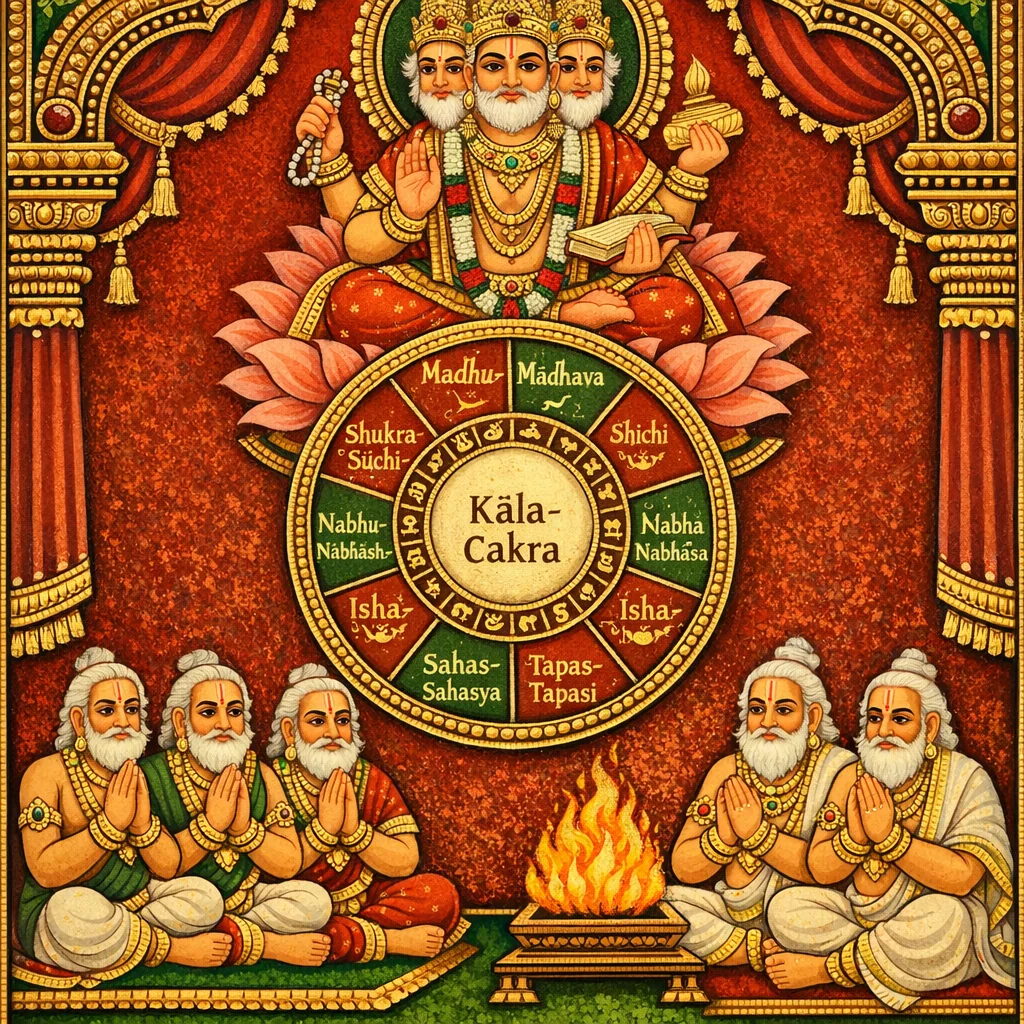
The chapter begins with Sūta’s narration in the Svāyambhuva Manvantara: as Brahmā generates progeny, orders of beings arise—humans, asuras, and devas—followed by the Pitṛs (ancestors) who revere Brahmā in a paternal mode (pitṛvat). It briefly restates their origin and then systematizes the Pitṛs through a calendrical-cosmological scheme: the six seasons (ṛtus) starting with Madhu are identified as Pitṛ-devatās, supported by the śruti-style formula “ṛtavaḥ pitaraḥ devāḥ.” Named Pitṛ-groups such as Agniṣvātta and Barhiṣad are distinguished by ritual competence and relation to fire rites (non-kindlers of sacred fire versus agnihotra performers), linking ancestral being to yajña taxonomy. The chapter lists month-pairs aligned with seasonal phases (Madhu–Mādhava, Śuci–Śukra, Nabhas–Nabhasya, etc.) and explains “abhi-mānin” as presiding identities stationed in temporal loci—half-months, months, seasons, ayanas, and years. Overall, it converts genealogical categories into a rigorous time-map integrating creation, ritual classification, and cosmic chronology.
Shlokas
Verse 1
इति श्रीब्रह्माण्डे महापुराणे वायुप्रोक्ते पूर्वभागे द्वितीये ऽनुषङ्गपादे अग्निनिचयो नाम द्वादशो ऽध्यायः सुत उवाच ब्रह्मणः सृजतः पुत्रान् पूर्वं स्वायंभुवेंऽतरे / गात्रेभ्यो जज्ञिरे तस्य मनुष्यासुरदेवताः
Thus, in the Śrī Brahmāṇḍa Mahāpurāṇa, in the former section spoken by Vāyu, in the second Anuṣaṅga-pāda, is the twelfth chapter called “Agninicaya.” Sūta said: At the beginning of the Svāyambhuva Manvantara, as Brahmā created his sons, from his very limbs were born humans, asuras, and devas.
Verse 2
पितृवन्मन्यमानास्तं जज्ञिरे पितरो ऽपि च / तेषां निसर्गः प्रागुक्तः समासाच्छ्रुयतां पुनः
Regarding him as a father, the Pitṛs too were born. Their origin was told earlier; now hear it again in brief.
Verse 3
देवासुरमनुष्यांश्च सृष्ट्वा ब्रह्माभ्यमन्यत / पितृवन्मन्यमाना वै जज्ञिरे ऽस्योपपक्षतः
Having created devas, asuras, and humans, Brahmā reflected; and the Pitṛs—regarding him as a father—were born from his side.
Verse 4
मध्वादयः षडृतवः पितॄंस्तान्परिचक्षते / ऋतवः पितरो देवा इत्येषा वैदिकी श्रुतिः
The six seasons, beginning with Madhū, are spoken of as those Pitṛs. “The seasons are the Pitṛs, and the Pitṛs are the devas”—such is the Vedic Śruti.
Verse 5
मन्वन्तरेषु सर्वेषु ह्यतीतानागतेषु वै / एते स्वायंभुवे पूर्वमुत्पन्नाश्चान्तरे शुभे
In all Manvantaras—past and yet to come—these first arose in the auspicious Svāyambhuva Manvantara.
Verse 6
अग्निष्वात्ता स्मृता नाम्ना तथा बर्हिषदश्च वै / अयज्वानस्तथा तेषामासन्ये गृहमेधिनः
They are remembered by the name Agniṣvātta, and likewise as Barhiṣada; and among them were others who performed no yajña, being gṛhamedhin, householders.
Verse 7
अग्निष्वात्ता स्मृतास्ते वै पितरो नाहिताग्नयः / यज्वानस्तेषु ये त्वासन्पितरः सोमपीथिनः
The Pitara known as Agniṣvātta are those who had not established the sacred fires; but among them, those who were yajvān are the Pitara who drink Soma.
Verse 8
स्मृता बर्हिषदस्ते वै पितर स्त्वग्निहोत्रिणः / ऋतवः पितरो देवाः शास्त्रे ऽस्मिन्निश्चयं गताः
The Pitara called Barhiṣada are those who perform the agnihotra; and in this śāstra it is firmly concluded that the seasons are Pitara-devas.
Verse 9
मधुमाधवौ रसौ ज्ञेयौ शुचिशुक्रौ च शुष्मिणौ / नभाश्चैव नभस्यश्च जीवावेतापुदात्दृतौ
Madhu and Mādhava are to be known as embodiments of rasa; Śuci and Śukra as radiant and vigorous; and Nabhā and Nabhasya—these two are called Jīva, bearing the state termed apudāt-dṛta.
Verse 10
इषश्चैव तथोर्जश्च स्वधावन्तावृदात्दृतौ / सहश्चैव सहस्यश्च घोरावेतापुदात्दृतौ
Iṣa and Ūrja—these two are called svadhāvant and bear the state vṛdāt-dṛta; Saha and Sahasya—these two are called ghora, and bear the state apudāt-dṛta.
Verse 11
तपाश्चैव तपस्यश्च मन्युमन्तौ तु शैशिरौ / कालावस्थासु षट्स्वेते मासाख्या वै व्यवस्थिताः
Tapa and Tapasya, and also Manyumanta and Śaiśira—these six names of months are duly set within the six conditions of Time.
Verse 12
इमे च ऋतवः प्रोक्ताश्चेतनाचेतनेषु वै / ऋतवो ब्रह्मणः पुत्रा विज्ञेयास्ते ऽभिमानिनः
These seasons are declared to operate in both the sentient and the insentient; the seasons are sons of Brahmā, to be known as the presiding ‘abhimānin’ powers.
Verse 13
मासार्द्धमासस्थानेषु स्थानिनौ ऋतवो मताः / स्थानानां व्यतिरेकेण ज्ञेयाः स्थानागिमानिनः
In the stations of the month and the half-month, the seasons are held to be the abiding presiders; by distinction of the stations, they are known as the ‘sthānābhimānin’ lords of place.
Verse 14
अहोरात्राणि मासाश्च ऋतवश्चायनानि च / संवत्सराश्च स्थानानि कामाख्या ह्यभिमानिनाम्
Day and night, the months, the seasons, the ayanas, and the years—these are the stations of the abhimānin powers, spoken of under the name ‘Kāma’.
Verse 15
एतेषु स्थानिनो ये तु कालावस्था व्यवस्थिताः / तत्सतत्त्वास्तदात्मानस्तान्वक्ष्यामि निबोधत
The conditions of Time that abide in these stations are of that very essence and of that very Self; I shall declare them—listen and understand.
Verse 16
पार्वण्यस्ति थयः संध्याः पक्षा मासार्द्धसंमिताः / निमेषाश्च कलाः कष्ठा मुहुर्त्ता दिवसाः क्षयाः
Parva-seasons and the twilight junctions, the fortnights and the half-month measures—these are the stations of time. Nimeṣas, kalās, kāṣṭhās, muhūrtas, days, and waning (kṣaya) are also its reckonings.
Verse 17
द्वावर्द्धमासौ मासस्तु द्वौ मासावृ तुरुच्यते / ऋतुत्रयं चाप्ययनं द्वे ऽयने दक्षिणोत्तरे
Two half-months make a month; two months are called a ṛtu (season). Three seasons make an ayana; and the two ayanas are the southern and the northern courses.
Verse 18
संवत्सरः समेतश्च स्थानान्येतानि स्थानिनाम् / ऋतवस्तु निमेः पुत्रा विज्ञेयास्ते तथैव षट्
Their totality is the saṃvatsara, the year—these are the abodes of the holders of time. The ṛtus, the seasons, are known as the sons of Nimi, and they are six in number.
Verse 19
ऋतुपुत्राः स्मृताः पञ्च प्रजाः स्वार्तवलक्षणाः / यस्माच्चैवार्त्तवेभ्यस्तु जायन्ते स्थाणु जङ्गमाः
From the sons of the seasons are remembered five kinds of creatures, bearing the marks of the seasonal power (ārtava). For from those ārtavas are born all beings, both the unmoving and the moving.
Verse 20
आर्तवाः पितरस्तस्मादृतवश्च पितामहाः / समेतास्तु प्रसूयन्ते प्रजाश्चैव प्रजापतेः
Therefore the ārtavas are called the fathers, and the ṛtus the grandfathers. When they come together, they bring forth the creatures of Prajāpati.
Verse 21
तस्मात्स्मृतः प्रजानां वै वत्सरः प्रपितामहः / स्थानेषु स्थानिनो ह्येते स्थानात्मानः प्रकीर्त्तिताः
Therefore, for all beings, Vatsara is remembered as the Prapitāmaha, the great forefather. These abide in their respective stations and are proclaimed as the very souls of those abodes.
Verse 22
तदाख्यास्तत्ससत्त्वाश्च तदात्मानश्च ते स्मृताः / प्रजापतिः स्मृतो यस्तु स तु संवत्सरो मतः
They are remembered by his very name, endowed with his sattva, and regarded as his own essence. He who is remembered as Prajāpati is indeed held to be Saṃvatsara.
Verse 23
संवत्सरसुतो ह्यग्नि ऋत इत्युच्यते बुधैः / ऋतात्तु ऋतवो यस्माज्जज्ञिरे ऋतवस्ततः
Agni, the son of Saṃvatsara, is called Ṛta by the wise—the sacred order. From Ṛta the seasons were born; therefore they are known as Ṛtavaḥ.
Verse 24
मासाः षडर्तवो ज्ञेयास्तेषां पञ्चर्तवाः स्मृताः / द्विपदां चतुष्पदां चैव पक्षिणां सर्वतामपि
From the months one should know the six seasons; and among them five are remembered as ārtava—pertaining to bipeds, quadrupeds, and birds, in all their kinds.
Verse 25
स्थावराणां च पञ्चानां पुष्पं कालार्त्तवं स्मृतम् / ऋतुत्वमार्तवत्वं च पितृत्वं च प्रकीर्त्तितम्
For the five kinds of immobile beings (sthāvara), the flower is remembered as kāla-ārtava—the seasonal sign of time. Here are also proclaimed seasonhood (ṛtutva), ārtava-ness, and fatherhood (pitṛtva).
Verse 26
इत्येते पितरो ज्ञेया ऋतवश्चार्तवाश्च ये / सर्वभूतानि तेभ्यो यदृतुकालाद्विजज्ञिरे
Thus these Pitṛs are to be known as the Seasons and also as the Ārtavas; for from them all beings were born, according to the time of the seasons.
Verse 27
तस्मादेते हि पितर आर्तवा इति नः श्रुतम् / मन्वन्तरेष्विह त्वेते स्थिताः कालभिमानिनः
Therefore we have heard that these Pitṛs are called the Ārtavas; through the Manvantaras they abide here, bearing the authority of Kāla, Time.
Verse 28
कार्यकारणयुक्तास्तु ए श्वर्याद्व्याप्य संस्थिताः / स्थानाभिमानिनो ह्येते तिष्ठन्तीह प्रसंगमात्
Joined to the bond of cause and effect, they abide pervading all with divine lordship; and, identifying with their appointed stations, they remain here by the force of circumstance.
Verse 29
अग्निष्वात्ता बर्हिषदः पितरो विविधाः पुनः / जज्ञे स्वधापितृभ्यस्तु द्वे कन्ये लोकविश्रुते
The Pitṛs called Agniṣvātta and Barhiṣad are again of many kinds; and from the Svadhā-Pitṛs were born two maidens renowned in the worlds.
Verse 30
मेना च धारणी चैव याभ्यां धतमिदं जगत् / ते उभे ब्रह्मवादिन्यौ योगिन्यौ चैव ते उभे
Those two—Menā and Dhāraṇī—by whom this world is upheld: both are proclaimers of Brahman, and both indeed are Yoginīs.
Verse 31
पितरस्ते निजे कन्ये धर्मार्थं प्रददुः शुभे / अग्निष्वात्तास्तु ये प्रोक्तास्तेषां मेना तु मानसी
O auspicious maiden! Those Pitṛs gave their own daughter for the sake of dharma. Of those called the Agniṣvāttas, Menā was the mind-born daughter.
Verse 32
धारणी मानसी चैव कन्या बर्हिषदां स्मृता / मेरोस्तां धारणीं नाम पत्न्यर्थं वा सृजन् घुभाम्
Dhāraṇī, the mind-born maiden, is remembered as the daughter of the Barhiṣad Pitṛs. Meru created that auspicious one, named Dhāraṇī, to be his wife.
Verse 33
पितरस्ते बर्हिषदः स्मृता ये सोमपायिनः / अग्निष्वात्तास्तु तां मेना पत्नी हिमवते ददुः
The Pitṛs remembered as the Barhiṣads, drinkers of Soma—those very Agniṣvāttas gave Menā to Himavān as his wife.
Verse 34
उपहूता स्मृता ये वै तद्दौहित्रान्निबोधत / मेना हिमवतः पत्नी मैनाकं सा व्यजायत
Know the grandsons of those remembered as the Upahūtas. Menā, the wife of Himavān, gave birth to Maināka.
Verse 35
गङ्गां सरिद्वरां चैव पत्नी या लवणोदधेः / मैनाकस्या त्मजः क्रौचः क्रैञ्चद्वीपो यतः स्मृतः
Gaṅgā, the foremost of rivers, is also remembered as the wife of the Salt Ocean (Lavaṇodadhi). Maināka’s son is Krauca, from whom the name Kraiñcadvīpa is known.
Verse 36
मेरोस्तु धारणी पत्नी दिव्यौषधिसमन्वितम् / मन्दरं सुषुवे पुत्रं तिस्रः कन्याश्च विश्रुताः
Dharanī, the wife of Meru, endowed with divine healing herbs, bore a son named Mandara and three daughters famed in renown.
Verse 37
वेलां च नियतिं चैव तृतीयां चायतिं विदुः / धातुश्चैवायतिः पत्नी विधातुर्नियतिः स्मृता
They are known as Velā, Niyati, and thirdly Ayati. Ayati is said to be the wife of Dhātu, and Niyati is remembered as the wife of Vidhātu.
Verse 38
स्वायं भुवेंऽतरे पूर्वं ययोर्वै कीर्त्तिताः प्रजाः / सुषुवे सागराद्वेला कन्यामेकामनिन्दिताम्
Before the Svāyambhuva Manvantara, among those whose progeny has already been recounted, Velā bore from Sāgara one blameless daughter.
Verse 39
सवर्णां नाम सामुद्रीं पत्नीं प्राचीनबर्हिषः / सवर्णायां सुता जाता दश प्राचीनबर्हिषः
Prācīnabarhiṣ took as wife the ocean-born maiden named Savarṇā. From Savarṇā, ten sons were born to Prācīnabarhiṣ.
Verse 40
सर्वे प्रचेतसो नाम धनुर्वेदस्य पारगाः / तेषां स्वायंभुवो दक्षः पुत्रत्वं जग्मि वान्प्रभुः
All of them were known as the Pracetas, perfected in the lore of archery (Dhanurveda). Among them, the lord Dakṣa of Svāyambhuva came to be as a son.
Verse 41
त्रयंबकस्याभिशापेन चाक्षुषस्यातरे मनोः / एतच्छुत्वा ततः सूतमपृच्छच्छांशपायनिः
By the curse of Tryambaka, this occurred in the intervening age of Manu Cākṣuṣa. Hearing this, Śāṃśapāyani then questioned the Sūta.
Verse 42
उत्पन्नः स कथं दक्षो ह्यभिशापाद्भवस्य तु / चाक्षुषस्यान्तरे पूर्वं तन्नः प्रब्रूहि पृच्छताम्
How did Dakṣa come to be, through the curse of Bhava (Śiva)? Tell us who ask, what occurred earlier in the intervening age of Manu Cākṣuṣa.
Verse 43
इत्युक्तः कथयामास सूतो दक्षाश्रयां कथाम् / शांशपायनिमामन्त्र्य त्र्यंबकाच्छापकारणम्
Thus addressed, the Sūta began to recount the tale concerning Dakṣa. Invoking Śāṃśapāyani, he explained the cause of the curse from Tryambaka.
Verse 44
सूत उवाच दक्षस्यासन्सुता ह्यष्टौ कन्या याः कीर्त्तिता मया / स्वेभ्यो गृहेभ्य आनाय्य ताः पिताभ्यर्चयद्गृहे
Sūta said: Dakṣa had eight daughters, whom I have already named. Bringing them from their respective homes, the father worshipped and honored them in his house.
Verse 45
ततस्त्वभ्यर्चिताः सर्वा न्यवसंस्ताः पितुर्गृहे / तासां ज्येष्ठा सती नाम पत्नी या त्र्यंबकस्य वै
Then all of them, having been duly honored, dwelt in their father’s house. The eldest among them was named Satī, who indeed was the wife of Tryambaka (Śiva).
Verse 46
नाजुहावात्मजां तां वै दक्षो रुद्रमभिद्विषन् / अकरोत्संनतिं दक्षे न कदाचिन्महेश्वरः
Daksha, harboring hatred for Rudra, did not summon his own daughter; and Maheshvara never once bowed before Daksha.
Verse 47
जामाता श्वशुरे तस्मिन्स्वभावात्तेजसि स्थितः / ततो ज्ञात्वा सती सर्वाः न्यवसंस्ताः पितुर्गृहे
The son-in-law, before that father-in-law, stood by his very nature in radiant majesty; knowing this, Sati dwelt in her father’s house with all her sisters.
Verse 48
जगाम साप्यनाहूता सती तत्स्व पितुर्गृहम् / ताभ्यो हीनां पिता चक्रे सत्याः पूजामसंमताम्
Though uninvited, Sati went to her father’s house; yet her father arranged for her a worship that was inferior and unseemly compared with the others.
Verse 49
ततो ऽब्रवीत्सा पितरं देवी क्रोधादमर्षिता / यवीयसीभ्यो प्यधमां पूजां कृत्वा मम प्रभो
Then the Goddess, inflamed with wrath and unable to endure it, spoke to her father: “O lord, why have you given me a lowly worship, when even the younger ones received better honor?”
Verse 50
असत्कृत्य पितर्मां त्वं कृतवानसि गर्हितम् / अहं ज्येष्ठा वरिष्ठा च त्वं मां सत्कर्तुमर्ह सि
Father, by failing to honor me you have done what is blameworthy; I am the eldest and the most worthy, and you should duly revere me.
Verse 51
एवमुक्तो ऽब्रवीदेनां दक्षः संरक्तलोचनः / त्वत्तः श्रेष्ठावरिष्ठाश्च पूज्या बालाः सुता मम
Thus addressed, Daksha, his eyes reddened, said to her: “My young daughters are superior to you and worthy of worship.”
Verse 52
तासां चैव तु भर्तार स्ते मे बहुमाताः सति / ब्रह्मिष्ठाः सुतपस्काश्च महायोगाः सुधार्मिकाः
O Sati, their husbands too are greatly honored by me—steadfast in Brahman, mighty in austerity, great yogins, and righteous in dharma.
Verse 53
गुणैश्चैवाधिकाः श्लाघ्याः सर्वे ते त्र्यंबकात्सति / वसिष्ठो ऽत्रिः पुलस्त्यश्च ह्यङ्गिरा पुलहः क्रतुः
O Sati, all of them are richer in virtues and worthy of praise, even beyond Tryambaka—Vasiṣṭha, Atri, Pulastya, Aṅgiras, Pulaha, and Kratu.
Verse 54
भृगुर्मरीचिश्च तथा श्रैष्ठा जामातरो मम / यस्मान्मां स्पर्द्धते शर्वः सदा चैवावमन्यते
Bhṛgu and Marīci too are my foremost sons-in-law; for Śarva ever contends with me and continually holds me in contempt.
Verse 55
तेन त्वां न विभूषोमि प्रतिकूलो हि मे भवः / इत्युक्तवांस्तदा दक्षः संप्रमूढेन चेतसा
Therefore I do not adorn you, for Bhava is hostile to me—so spoke Daksha then, his mind utterly deluded.
Verse 56
शापार्थमात्मनश्चैव ये चोक्ताः परमर्षयः / तथोक्ता पितरं सा वै क्रुद्धा देवीदम ब्रवीत्
Recalling the purpose of her curse and the words spoken by the supreme seers, the enraged Goddess spoke thus to her father.
Verse 57
वाङ्मनः कर्मभिर्यस्माददुष्टां मां विगर्हसे / तस्मात्त्यजाम्यहमिमं देहं तात तवात्मजम्
Since by speech, mind, and deed you revile me though I am blameless, therefore, O father, I—your daughter—abandon this body.
Verse 58
ततस्तेनावमानेन सती दुःखादमर्षिता / अब्रवीद्वचनं देवी नमस्कृत्य स्वयंभुवे
Stung by that insult, Satī, overwhelmed with sorrow and unable to endure it, spoke; the Goddess bowed to the Self-born Lord and uttered her words.
Verse 59
यत्राहमुपपद्ये च पुनर्देहेन भास्वता / तत्राप्यहमसंभूता संभूता धार्मिकादपि
Wherever I may be born again in a radiant body, even there I shall not be born of you; I shall be born of one who is righteous and devoted to dharma.
Verse 60
गच्छेयं धर्मपत्नीत्वं त्र्यंबकस्यैव धीमतः / तत्रैवाथ समासीना युक्तात्मानं समादधे
I shall become the righteous consort of the wise Tryambaka (Śiva); so resolved, the Goddess sat there and gathered her soul in yogic concentration.
Verse 61
धारयामास चाग्नेयीं धारणां मनसात्मनः / तत आत्मसमुत्थो ऽस्या वायुना समुदीरितः / सर्वागेभ्यो विनिःसृत्य वह्निस्तां भस्मसात्करोत्
She upheld the fiery dhāraṇā with mind and inner power. Then the fire, born from her own self and fanned by the wind, burst forth from every limb and reduced her to ashes.
Verse 62
तदुपश्रुत्य निधनं सत्या देवो ऽथ शूलभृत् / संवादं च तयोर्बुद्धा याथातथ्येन शङ्करः / दक्षस्य च ऋषीणां च चुकोप भगवान्प्रभुः
Hearing of Satī’s death, and understanding their exchange in its true course, Śaṅkara the trident-bearer—the Lord—burned with wrath against Dakṣa and the ṛṣis.
Verse 63
रुद्र उवाच सर्वेषामेव लोकानां भूर्लोकस्त्वादिरुच्यते / तं सदा धारयिष्यामि निदेशात्परमेष्ठिनः
Rudra said: Of all the worlds, Bhūrloka is spoken of as the first. By the command of Parameṣṭhin, I shall uphold it forever.
Verse 64
अस्यां क्षितौ धृता लोकाः सर्वे तिष्ठन्ति भास्वराः / तानहं धारया मीह सततं च तदाज्ञया
Upon this earth, all the worlds, upheld, stand radiant. By His command, I sustain them here unceasingly.
Verse 65
चातुर्वर्ण्यं हि देवानां ते चाप्येकत्र भुञ्जते / नाहं तैः सह भोक्षये वै ततो दास्यन्ति ते पृथक्
Even among the gods there is the fourfold order, and they partake together. I shall not eat with them; therefore they will offer my portion separately.
Verse 66
यस्मादवमता दक्ष मत्कृते ऽनागसा सती / प्रशस्ताश्चेतराः सर्वाः स्वसुता भर्तृभिः सह
O Daksha, because for my sake you slighted Sati who was without fault, therefore may all your daughters, together with their husbands, be praised and attain auspicious good, and the others as well.
Verse 67
तस्मा द्वैवस्वते प्राप्ते पुनरेते महर्षयः / उत्पत्स्यन्ते द्वितीये वै मम यज्ञ ह्ययोनिचाः
Therefore, when the Dvaivasvata Manvantara arrives, these great sages will arise again; in my second sacrifice they will manifest as ayonicā—born without a womb.
Verse 68
हुते वै ब्रह्मणा शुक्रे चाक्षुषस्यातरे मनोः / अभिव्याहृत्य सर्वांस्तान् दक्षं चैवाशपत्पुनः
In the interval of Cākṣuṣa Manu, at the time of Śukra, Brahmā offered the oblation; naming them all aloud, he again pronounced a curse upon Daksha.
Verse 69
भविता मानुषो राजा चाक्षुषस्य त्वमन्वये / प्राचीनबर्हिषः पौत्रः पुत्रश्चैव प्रचे तसाम्
You shall become a human king in the lineage of Cākṣuṣa Manu—grandson of Prācīnabarhiṣ and also a son of the Pracetas.
Verse 70
दक्ष एवेह नाम्ना तु मारिषायां जनिष्यसि / कन्यायां शाखिनां त्वं वै प्राप्ते वैवस्वतेंऽतरे
Here you shall be born with the very name “Daksha,” from Māriṣā’s womb; in the interval of the Vaivasvata Manvantara, you will be born of the daughter of the Śākhin lineage.
Verse 71
विघ्नं तत्रा प्यहं तुभ्यमाचरिष्यामि दुर्मते / धर्म्मयुक्ते च ते कार्ये एकस्मिंस्तु दुरासदे
O misguided one, even there I shall bring obstacles upon you; and your one task, though aligned with dharma, will become exceedingly hard to accomplish.
Verse 72
सुत उवाच तदुपश्रुत्य दक्षस्तु रुद्रं सो ऽभ्य शपत्पुनः / यस्मात्त्वं मत्कृते ऽनिष्टमृषीणां कृतवानसि / तस्मात्सार्द्धं सुरैर्यज्ञे न त्वां यक्ष्यन्ति वै द्विजाः
Suta said: Hearing this, Daksha again cursed Rudra: “Since for my sake you have wrought harm upon the rishis, therefore in the yajña, even together with the devas, the twice-born shall not offer worship to you.”
Verse 73
हुत्वाऽहुतिं तव क्रूर ह्यपः स्प्रक्ष्यन्ति कर्मसु / इहैव वत्स्यसि तथा दिवं हित्वा युगक्षयात्
O cruel one, when your oblation is offered, in the rites the waters shall touch it; and until the yuga’s end you shall dwell here alone, having forsaken heaven.
Verse 74
ततो देवैःस तैः सार्द्धं नेज्यते पृथसिज्यते / ततो ऽभिव्याहृतो दक्षो रुद्रेणामिततेजसा
Thereafter he is not worshipped together with those devas, but is worshipped apart; then Rudra of immeasurable splendor spoke in reply to Daksha.
Verse 75
स्वायंभुवीं तनुं त्यक्त्वा उत्पन्नो मानुषेष्विह
Casting off the body of Svayambhuva, he was born here among humankind.
Verse 76
ज्ञात्वा गृहपतिर्दक्षो यज्ञाना मीश्वरं प्रभुम् / समस्तेनेह यज्ञेन सो ऽयजद्दैवतैः सह
Knowing the Lord, the sovereign Master of all sacrifices, Daksha the householder performed here the complete sacrifice, together with the gods.
Verse 77
अथ देवी सती या तु प्राप्ते वैवस्वतेंऽतरे / मेनायां तामुमां देवीं जनयामास शैलराट्
Then, when the Vaivasvata Manvantara arrived, that Goddess who had been Satī was born as the Goddess Umā in Menā, brought forth by the king of mountains.
Verse 78
या तु देवी सती पूर्वमासीत्पश्चादुमाभवत् / सदा पत्नी भवस्यैषा न तया मुच्यते भवः
The Goddess who was Satī before became Umā thereafter; she is ever the wife of Bhava (Śiva), and Bhava is never parted from her.
Verse 79
मरीचं कश्यपं देवी यथादितिरनुव्रता / यथा नारायणं श्रीश्च मघवतं शची यथा
As Goddess Aditi is devoted to Marīci and Kaśyapa, as Śrī is devoted to Nārāyaṇa, so too is Śacī devoted to Maghavat (Indra).
Verse 80
विष्णुं कीर्ती रुषा मूर्यं वसिष्ठं चाप्यरुन्धती / नैतास्तु विजहत्येतान् भर्तॄन् देव्यः कदाचन
Kīrti with Viṣṇu, Ruṣā with Mūrya, and Arundhatī with Vasiṣṭha—these goddesses never forsake their husbands.
Verse 81
आवर्तमानाः कल्पेषु जायन्ते तैः पुनः सह / एवं प्राचेतसो दक्षो जज्ञे वै चाक्षुषेंऽतरे
They return again and again in the kalpas and are born once more together with them. Thus Dakṣa, sprung from the Prācetas, was born in the Cākṣuṣa Manvantara.
Verse 82
दशभ्यस्तु प्रचेतोभ्यो मारिषायां पुनर्नृपः / जज्ञे तदाभिशापेन द्वितीय इति नः श्रुतम्
From the ten Prācetas, in Māriṣā’s womb, that king was born again; because of the curse uttered then, he was known as “the second,” so we have heard.
Verse 83
भृगवादयश्च ये सप्त जज्ञिरे च महर्षयः / आद्ये त्रेतायुगे पूर्वं मनोर्वैवस्वतस्य च
The seven great seers, beginning with Bhṛgu, were also born—earlier, in the first Tretāyuga, before Manu Vaivasvata.
Verse 84
देवस्य महतो यज्ञे वारुणीं बिभ्रतस्तनुम् / इत्येषो ऽनुशयो ह्यासीत्तयोर्जात्यन्तरानुगः
In the great sacrifice of the mighty Deity, (one) bore a body in the form of Vāruṇī. Such was the anuśaya—the latent imprint—that followed them both through other births.
Verse 85
प्रजापतेश्च दक्षस्य त्र्यबकस्य च धीमतः / तस्मान्नानुशयः कार्यो वैरेष्विह कदाचन
Prajāpati Dakṣa and Tryambaka (Śiva) are both wise; therefore, in this world one should never foster anuśaya—hidden rancor—in enmities.
Verse 86
जात्यन्तरगतस्यापि भवितस्य शुभाशुभैः / ख्यातिं न मुञ्चते जन्तुस्तन्न कार्यं विपश्चिता
Even if one is born into another caste, through the auspicious and inauspicious fruits of karma a being does not relinquish its repute; therefore the wise should not act in such a way.
Verse 87
इत्येषा समनुक्रान्ता कथा पापप्रमोचनी / या दक्षमधिकृत्येह त्वया पूर्वं प्रचौदिता
Thus has this sin-dispelling tale been recounted in brief—this account concerning Daksha, which you earlier prompted by your inquiry.
Verse 88
पितृवंशप्रसंगेन कथा ह्येषा प्रकीर्त्तिता / पितॄणामानुपूर्व्येण देवान्वक्ष्याम्यतः परम्
This account was proclaimed in connection with the lineage of the Pitris; henceforth I shall describe the gods in due order, following the succession of the Pitris.
Verse 89
त्रेतायुगमुखे पूर्वमासन्स्वायंभुवेंऽतरे / देवायामा इति ख्याताः पूर्वं ये यज्ञसूनवः
In former times, at the dawn of the Tretā Yuga, in the Svāyambhuva Manvantara, those who had earlier been the sons of Yajña were famed as the Devāyāmas.
Verse 90
प्रथिता ब्रह्मणः पुत्रा अजत्वादजितास्तु ते / पुत्राः स्वायंभुवस्यैते शक्ता नाम तु मानसाः
They were renowned sons of Brahmā; being ‘aja’ (unborn), they were called the Ajitas. These were the mind-born sons of Svāyambhuva, known by the name Śaktā.
Verse 91
तेषां यतो गणा ह्येते देवानां तु त्रयः स्मृताः / छन्दजास्तु त्रयस्त्रिंशत्सर्गे स्वायंभुवस्य ह
From them indeed these divine hosts arose; and three classes of gods are remembered. In the creation of Svāyambhuva Manu, the gods born of the Chandas are counted as thirty-three.
Verse 92
यदुर्ययातिर्देवौ द्वौ वीवधस्रासतो मतिः / विभासश्च क्रतुश्चैव प्रयातिर्विश्रुतो द्युतिः
Yadu and Yayāti are two gods; likewise Vīvadhasrāsa and Mati. Vibhāsa and Kratu, and also Prayāti—deities renowned for their radiant splendor.
Verse 93
वायव्यः संयमश्चैव यामा द्वादश कीर्त्तिताः / असमश्चोग्रदृष्टिश्च सुनयो ऽथ शुचिश्रवाः
Vāyavya and Saṃyama are praised among the twelve deities called the Yāmās. Asama, Ogradṛṣṭi, Sunaya, and Śuciśravā are also counted there.
Verse 94
केवलो विश्वरूपश्च सुदक्षो मधुपस्तथा / तुरीय इद्रयुक्चैव युक्तो ग्रावजितस्तु वै
Kevala, Viśvarūpa, Sudakṣa, and Madhupa; and also Turīya, Idrayuk, Yukta, and Grāvajit—these too are named among the deities.
Verse 95
चनिमा विश्वदेवा च जविष्ठो मितवानपि / जरो विभुर्विभावश्च स ऋचीको ऽथ दुर्दिहः
Canimā and Viśvadevā; also Javiṣṭha and Mitavān. Jaro, Vibhu, Vibhāva, Ṛcīko, and Durdiha—these too are spoken of as deities.
Verse 96
श्रुतिर्गृणानो ऽथ बृहच्छुक्रा द्वादश कीर्त्तिताः / आसन्स्वायंभुवस्यैते चान्तरे सोमपायिनः
Śruti, Gṛṇāna, and Bṛhacchukra—these are proclaimed as twelve. In the Manvantara of Svāyambhuva, they all were drinkers of Soma.
Verse 97
दीप्तिमन्तो गणा ह्येते वीर्यवन्तो महाबलाः / तेषामिन्द्रस्तद्दा ह्यासीत्प्रथमे विश्वभुक्त प्रभुः
These hosts were radiant, mighty in valor, and of great strength. Then Indra was their foremost—the sovereign Lord who enjoys the world.
Verse 98
असुरा ये तदा तेषामासन् दायादबान्धवाः / सुपर्णयक्षगन्धर्वाः पिशाचोरगराक्षसाः
The Asuras of that time were their co-heirs, yet not their kin. There were also Suparṇas, Yakṣas, Gandharvas, Piśācas, Uragas, and Rākṣasas.
Verse 99
अष्टौ ताः पितृभिः सार्द्धमासन्या देवयोनयः / स्वायंभुवेन्तरे ऽतीताः प्रजास्तासां महस्रशः
Those eight divine-born orders, together with the Pitṛs, formed another class. In the Manvantara of Svāyambhuva they have passed away; their progeny were countless thousands.
Verse 100
प्रभावरूपसंपन्ना आयुषा च बलेन च / विस्तरादिह नोच्यन्ते माप्रसंगो भवेदिह
They were endowed with majesty and fair form, with long life and strength. Here they are not described in detail, lest the discourse grow too long.
Verse 101
स्वायंभुवो विसर्गस्तु विज्ञेयः सांप्रतेन ह / अतीतो वर्तमानेन दृष्टो वैवस्वते न सः
The emanative creation of Svāyambhuva is to be understood in the present; in the Vaivasvata Manvantara it is not seen by those of this time, for it has already passed.
Verse 102
प्रजाभिर्देवाताभिश्च ऋषिभिः पितृभिः सह / तेषां सर्पर्षयः पूर्वमासन्ये तान्निबोधत
Along with the peoples, the gods, the ṛṣis, and the Pitṛs; before them there were the Serpent-sages—listen and understand about them.
Verse 103
भृग्वं गिरा मरीचिश्च पुलस्त्यः पुलहः क्रतुः / अत्रिश्चैव वसिष्ठस्च सप्त स्वायंभुवे ऽतरे
Bhṛgu, Aṅgiras, Marīci, Pulastya, Pulaha, Kratu, Atri, and Vasiṣṭha—these are the seven ṛṣis in the Manvantara of Svāyambhuva.
Verse 104
आग्नीध्रश्चाग्निबाहुश्च मोधा मेधातिथिर् वसुः / ज्योतिष्मान् द्युतिमान्हव्यः सवनः सत्त्र एव च
Āgnīdhra, Agnibāhu, Modhā, Medhātithi, Vasu, Jyotiṣmān, Dyutimān, Havya, Savana, and Sattra—these too are revered names.
Verse 105
मनोः स्वायंभुवस्यैते दश पुत्रा महौजसः / वायुवेगा महासत्त्वा राजानः प्रथमेंऽतरे
These ten sons of Manu Svāyambhuva were of mighty splendor; swift as the wind and great in essence—within the first Manvantara they became kings.
Verse 106
सासुरं तत्सुगन्धर्वं सयक्षोरगराक्षसम् / सपिशाचमनुष्यञ्च ससुपर्णाप्सरोगणम्
There were the Devas, the Gandharvas, the Yakshas, the Nagas and Rakshasas, the Piśācas and humans as well, together with Suparṇas and hosts of Apsarases.
Verse 107
नशक्यमानु पूर्व्येण वक्तुं वर्षशतैरपि / बहुत्वान्नामधेयानां संख्या तेषां कुतः कुले
In the manner of the ancients, it cannot be fully told even in hundreds of years; for the names are so many—how could their clans ever be counted?
Verse 108
या वै प्रजा युगाख्यास्तु आसन्स्वायंभुवेंऽतरे / कालेन महतातीता अयनाब्दयुगक्रमैः
Those beings who were known by the names of the Yugas in the Manvantara of Svayambhuva have long since passed away in the stream of Mahākāla, in the succession of ayanas, years, and yugas.
Verse 109
ऋषय ऊचुः क एष भगवान् कालः सर्वभूतापहारकः / कस्य योनिः किमादिश्च किं सतत्त्वः किमात्मकः
The Rishis said: “Who is this Bhagavān called Time, the taker-away of all beings? From whom is he born, what is his beginning, what is his true tattva, and what is his very nature?”
Verse 110
किमस्य चक्षुः का मूर्तिः के वा अवयवाः स्मृताः / किं नामधेयं को ऽस्यात्मा एप्तत्त्वं ब्रूहि तत्त्वतः
What is his eye, what is his form (mūrti), and what limbs are remembered of him? What is his name, and who is his ātman? Tell us this truth, truly and in essence.
Verse 111
सूत उवाच श्रूयता कालसद्भावः श्रुत्वा चैवावधार्यताम् / सूर्ययोनिर्निमेषादिः संख्याचक्षुः स उच्यते
Sūta said: Hear the true nature of Time (Kāla), and having heard, hold it well in mind. Born of the Sun, from which arise the nimeṣa and other measures, it is called “the eye of reckoning.”
Verse 112
मूर्तिरस्य त्वहो रात्रो निमेषावयवश्च सः / संवत्सरः सतत्त्वश्च नाम चास्य कलात्मकः
Its form is day and night, and the nimeṣa and the rest are its limbs. It is the very principle that appears as the saṃvatsara (year), and its name too is said to be “kalātmaka,” made of time-portions.
Verse 113
साम्प्रतानागतातीतकालात्मा स प्रजापतिः / पञ्चधा प्रविभक्तां तु कालावस्थां निबोधत
That Prajāpati is the very Self of present, future, and past time. Now understand the condition of Time, which is divided into fivefold states.
Verse 114
दिवसार्द्धमासमासैश्च ऋतुभिस्त्वयनैस्तथा / संवत्सरस्तु प्रथमो द्वितीयः परिवत्सरः
In the sequence of day, half-day, month and sub-month, seasons (ṛtu) and ayanas— the first is called Saṃvatsara, and the second Parivatsara.
Verse 115
इड्रवत्सरस्तृतीयश्च चतुर्थश्चानुवत्सरः / पञ्चमो वत्सरस्तेषां कालःस युगसज्ञितः
The third is called Idra-vatsara, and the fourth Anu-vatsara. The fifth is Vatsara; this span of time among them is known by the name “Yuga.”
Verse 116
तेषां तत्त्वं प्रवक्ष्यामि कीर्त्यमानं निबोधत / क्रतुरग्निस्तु यः प्रोक्तः स तु संवत्सरो मतः
I shall declare their true principle; understand what is sung in praise. He who is spoken of as Kratu-Agni is regarded as Samvatsara, the sacred Year.
Verse 117
आदितेयस्त्वसौ सूर्यः कालाग्निः परिवत्सरः / शुक्लकृष्णगतिश्चापि अपां सारमयः खगः
That Sun is the son of Aditi; Kāla-Agni is called Parivatsara. His course follows the bright and dark fortnights, and he is like a bird formed of the essence of the waters.
Verse 118
स इडावत्सरः सोमः पुराणे निश्चयं गतः / यश्चायं पवते लोकांस्तनुभिः सप्तसप्तभिः
That Soma is Idavatsara—this is firmly established in the Purana. And he purifies the worlds with his seven-times-seven embodied forms.
Verse 119
अनुवाता च लोकस्य स वायुरनुवत्सरः / अहङ्कारादुदग्रुद्रः संभूतो ब्रह्मणास्तु यः
The following breeze of the world is he; that Vayu is called Anuvatsara. And he is the fierce Rudra, born from Brahma out of ahamkara, the sense of “I”.
Verse 120
स रुद्रो वत्सर स्तेषां विज्ञेयो नीललोहितः / सतत्त्वं तस्य वक्ष्यमि कीर्त्यमानं निबोधत
Among them, that Rudra is to be known as Vatsara—know him as Nīlalohita. I shall speak of his true nature; understand what is sung in praise.
Verse 121
अङ्गप्रत्यङ्गसंयोगात्कालात्मा प्रतितामहः / ऋक्सामयजुषां योनिः पञ्चानां पतिरीश्वरः
From the union of limbs and sub-limbs, He is Time’s very Self, the supreme Pitāmaha; He is the womb of Ṛk, Sāma, and Yajus, and Īśvara, Lord of the Five.
Verse 122
सो ऽग्निर्यमश्च कालश्च संभूतिः स प्रजापतिः / प्रोक्तः संवत्सरश्चेति सूर्य चोनिर्मनीषिभिः
He is Agni, and He is Yama, and He is Kāla; He is Saṃbhūti, He is Prajāpati. The sages have declared Him to be Saṃvatsara, and also the Sun’s very womb.
Verse 123
यस्मात्कालविभागानां मासर्त्वयनयोरपि / ग्रहनक्षत्रशीतोष्णवर्षायुः कर्मणां तथा
From Him arise the divisions of time—months, seasons, and the ayanas—along with planets and constellations, cold and heat, rains, lifespan, and the ordering of karmic acts.
Verse 124
योनिः स प्रविभागानां दिवसानां च भास्करः / वैकारिकः प्रसन्नात्मा ब्रह्मपुत्रः प्रजापतिः
He is the womb of those divisions and the Bhāskara of the days; He is Vaikārika, serene of soul, Prajāpati—the son of Brahmā.
Verse 125
एको नैको ऽथ दिवसो मासो ऽथर्तुः पितामहः / आदित्यः सविता भानुर्जीवनो ब्रह्मसत्कृतः
He is One, and yet He is many; He is the Pitāmaha of day, of month, and of season. He is Āditya, Savitā, Bhānu—the giver of life—honored by Brahmā.
Verse 126
प्रभवश्चाव्ययश्चैव भूतानां तेन भास्करः / ताराभिमानी विज्ञेयो द्वितीयः परिवत्सरः
Bhāskara is the origin and the imperishable support of all beings; known as the lord of the stars, he is the second Parivatsara.
Verse 127
सोमः सर्वौंषधिपतिर्यस्मात्स प्रपितामहः / आजीवः सर्वभूतानां योगक्षेमकृदीश्वरः
Soma is lord of all healing herbs; therefore he is called Prapitāmaha. He is the livelihood of all beings, the Lord who grants yoga and well-being.
Verse 128
आवेक्षमाणः सततं बिभर्ति जगदंशुभिः / तिथीनां पर्वसंधीनां पूर्णिमादर्शयोरपि
Ever watchful, he upholds the world with his rays; he also governs the tithis, the junctions of sacred observances, and the full moon and new moon.
Verse 129
योनिर्निशाकरो यश्च अमृतात्मा प्रजापतिः / तस्मात्स पितृमान्सोमः स्मृत इङ्वत्सरात्मकः
He who is the womb of origin, the night-maker, Prajāpati of immortal essence—therefore Soma, allied with the Pitṛs, is remembered as the very form of Iṅvatsara.
Verse 130
प्राणापानसमानाद्यैर्व्यानोदानात्मकैरपि / कर्मभिः प्राणिनां लोके सर्वचेष्टाप्रवर्तकः
Through prāṇa, apāna, samāna, and also as vyāna and udāna, he sets in motion every activity of living beings in the world.
Verse 131
पञ्चानां चेन्द्रियमनोर्बुद्धिस्मृतिबलात्मनाम् / समानकालकरणक्रियाः संपादयन्नपि
Even while accomplishing at the same time the functions of the five—senses, mind, intellect, memory, strength, and the Self (Ātman).
Verse 132
सर्वात्मा सर्वलोकेश आवहप्रवहादिभिः / वर्त्तते चोपकारैर्यस्तनुभिः सप्तसप्तभिः
He is the Self of all, the Lord of all worlds; through aids such as āvaha and pravaha, He operates in seven times seven forms.
Verse 133
विधाता सर्वभूतानाङ्क्षेमी नित्यं प्रभञ्जनः / योनिरग्नेरपां भूमे रवेश्चन्द्रमसश्चयः
He is Vidhātā, the ordainer of all beings, ever their well-wisher—Prabhañjana; and He is the source of fire, waters, earth, the sun, and the moon.
Verse 134
वायुः प्रजापतिर्भूतो लोकात्मा प्रपितामहः / अहोरात्रकरस्तस्मात्स वायुरनुवत्सरः
Vāyu, becoming Prajāpati, is the Soul of the worlds, the primeval grandsire; he fashions day and night—therefore Vāyu is called Anuvatsara.
Verse 135
एते प्रजानां पतयश्चत्वार उपपक्षजाः / पितरः सर्वलोकानां लोकात्मानः प्रकीर्त्तिताः
These four Prajāpatis, born of the secondary line, are lords of creatures; they are proclaimed as the Pitṛs of all worlds, as the very souls of the worlds.
Verse 136
ध्यायतो ब्रह्माणो वक्त्रादुदन्समभवद्भवः / ऋषिर्विप्रा महादेवो भूतात्मा प्रपितामहः
As Brahmā meditated, from his mouth arose Bhava—Ṛṣi and vipra, Mahādeva, the very Self of all beings, the supreme Forefather (Prapitāmaha).
Verse 137
ईश्वरः सर्वभूतानां प्रणवो यो ऽथपठ्यते / आत्मावेशेन भूतानामङ्गप्रत्यङ्गसंभवः
He who is the Lord of all beings is recited as the Praṇava; by the in-dwelling of his own Self he brings forth the limbs and sub-limbs of creatures.
Verse 138
उन्मादको ऽनुग्रहकृद्रुद्रो वत्सर उच्यते / सूर्य्यश्च चन्द्रमाश्चाग्निर्वायू रुद्रस्तथैव च
Rudra, who stirs beings and bestows grace, is called Vatsara; the Sun and the Moon, Fire and Wind—these too are, likewise, Rudra.
Verse 139
युगाभिमानी कालात्मा नित्यं संक्षयकृद्विभुः / रुद्रः प्रविष्टो भगवाञ्जगत्यस्मिन्स्वतेजसा
Presiding over the yugas, Time itself, ever working dissolution—the all-pervading Bhagavān Rudra has entered this world by his own radiance.
Verse 140
आश्रयान्मयि संयोगात्तनुभिर्नाममिस्तथा / ततस्तस्य तु वीर्येण लोकानुग्रहकारकम्
Taking refuge in me and through union with me, he bears names according to his many forms; then, by his own vīrya, the work of grace for the worlds is accomplished.
Verse 141
देवत्वं च पितृत्वं च कालत्वं चास्य यत्परम् / तस्माद्वै सर्वथा रुद्रस्तद्विद्वद्भिरभीज्यते
Since in Him abide the supreme divinity, fatherhood, and the very nature of Time, therefore Rudra is worshipped in every way by the wise.
Verse 142
यतः पतिः स भगवान् प्रजेशानां प्रजापतिः / भावनः सर्वभूतानां सर्वात्मा नीललोहितः
He is that Bhagavan—the Lord of the Prajeśas, the Prajāpati—nourisher of all beings, the Self of all, Nīlalohita (Blue-Red).
Verse 143
औषधीः प्रतिसंधत्ते रुद्रः क्षीणाः पुनःपुनः / प्रजापतिमुखैर्देवैः सम्यगिष्टफलार्थिभिः
Rudra restores again and again the herbs that have waned; the gods, led by Prajāpati, worship Him duly, seeking the true fruit of sacrifice.
Verse 144
त्रिभिरेव कपालैश्च त्रयंबकैरौषधिक्षये / इज्यते भगवान् यस्मात्तस्मार्त्र्यंबक उच्यते
When the herbs are depleted, the Bhagavan is worshipped by the Tryambakas with three kapālas (skulls); therefore He is called Tryambaka.
Verse 145
गायत्री चैव त्रिष्टुप्च जगती चैव याः स्मृताः / त्र्यंबका नामतः प्रेम्णा योनयस्ता वनस्पतेः
Gāyatrī, Triṣṭup, and Jagatī—the metres remembered in tradition—are lovingly called by name “Tryambakā”; they are the wombs (sources) of the Lord of plants.
Verse 146
ताभिरेकत्वभूताभिस्त्रिविधाभिः स्ववीर्यतः / त्रिसाधनः पुरोडाशस्त्रिकपालः स वै स्मृतः
By those threefold powers, diverse yet made one, through its own potency, that puroḍāśa offering is remembered as having three means and three bowls.
Verse 147
त्र्यंबकः स पुरोडाशस्तेनैष त्र्यंबकः स्मृतः / इत्येतत्पञ्चवर्षं हि युगं प्रोक्तं मनीषिभिः
That puroḍāśa is Tryambaka; therefore it is remembered as Tryambaka. Thus the sages have declared a yuga to be of five years.
Verse 148
यश्चैष पञ्चधात्मा वै प्रोक्तः संवत्सरो द्विजैः / सैकः षट्को विजज्ञे ऽथ मध्वादिऋतुसंज्ञकः
The saṃvatsara that the twice-born declared to have a fivefold nature—though one—was then understood as six seasons, bearing names such as Madhu and the rest.
Verse 149
ऋतुपुत्रार्त्तवाः पञ्च इति सर्गः समासतः / इत्येष बहुमानो वै प्राणिना जीवितानि च / नदीवेग इवासक्तः कालो धावति संहरन्
“Sons of the seasons” and the ārtavas are five—such is the creation in brief. Thus Time, clinging like a river’s rush, speeds on and carries away the lives of beings.
Verse 150
एतेषां यदपत्यं वै तदशक्यं प्रमाणतः / बहुत्वात्परिसंख्यातुं पुत्र पौत्रमनन्तकम्
Their progeny cannot be determined by any measure; so vast is it that the endless line of sons and grandsons cannot be counted.
Verse 151
इमं वंशं प्रजेशानां महतः पुण्यकर्मणाम् / कीर्त्तयन्पुण्यकीर्त्तीनां महतीं सिद्धिमाप्नुयात्
Whoever recites this lineage of the Prajapatis, great in meritorious deeds, and sings the holy fame of the renowned, attains great siddhi.
Frequently Asked Questions
Rather than a royal Solar/Lunar dynastic vamśa, this chapter catalogs an ancestral-cosmological lineage: the Pitṛ orders arising in Brahmā’s creation, especially the named classes Agniṣvātta and Barhiṣad, defined through their ritual status and relationship to sacred fire.
No bhuvana-distance measures dominate the sampled material; the chapter’s ‘technical data’ is calendrical-astronomical in form—month-pairs and the six ṛtus—used to encode cosmic order through time units (ahorātra, māsa, ṛtu, ayana, saṃvatsara).
This adhyāya is not part of the Lalitopākhyāna arc; its focus is cosmological time-ordering and Pitṛ classification. Its ‘esoteric’ payoff lies in correlating presiding-identities (abhimānins) with temporal stations, a key Purāṇic method for linking ritual life to cosmic structure.