Adhyaya 67
अमावसुवंशानुकीर्तनम् (Amāvasu-vaṃśānukīrtanam) — Recitation of the Amāvasu Lineage; Dhanvantari’s Origin
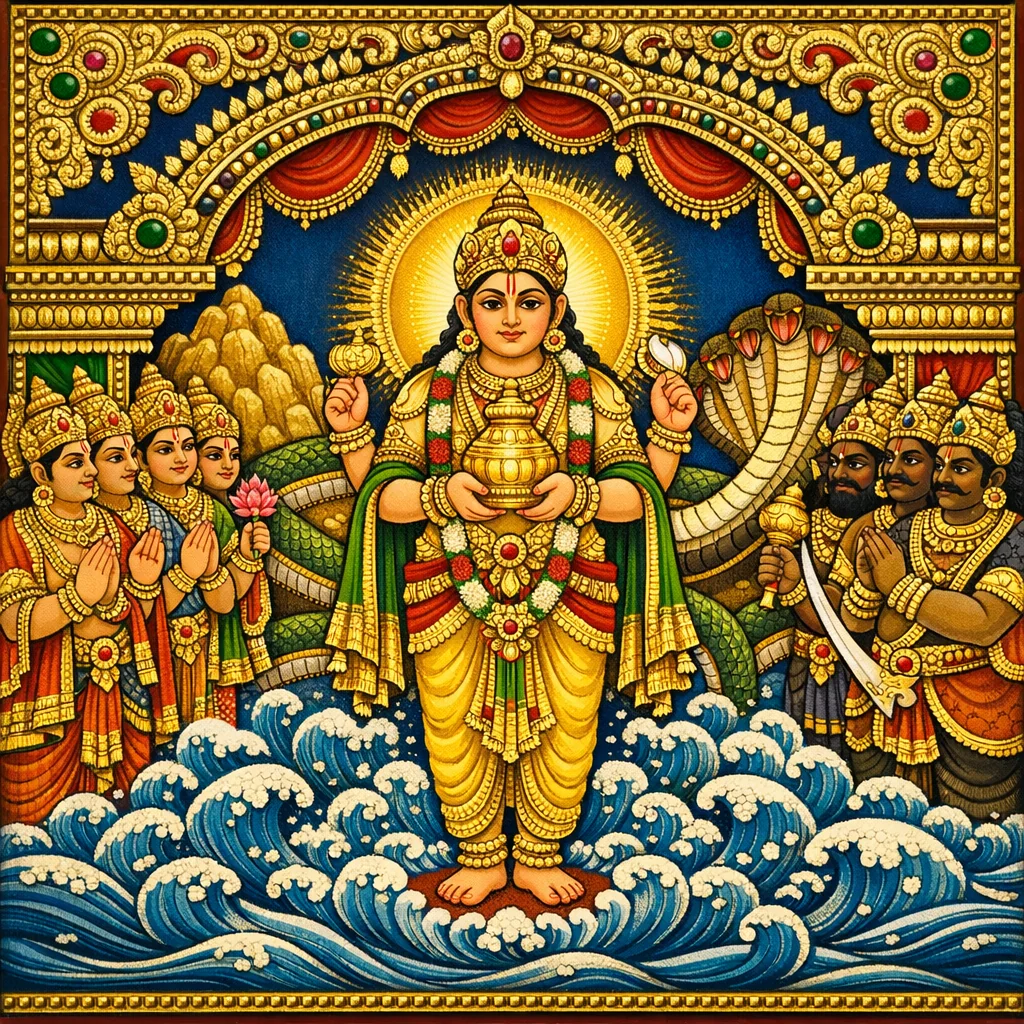
This Adhyaya is a genealogical recitation (vaṃśānukīrtana) that moves from Āyu’s descendants into notable royal and rishi branches. It begins by naming five sons born in Prabhā (from Naya, daughter of Svarbhānu), starting with Nahusha and including Kṣatravṛddha and others famed in the three worlds. The focus then narrows to Kṣatravṛddha’s line: Sunahotra and his three righteous heirs—Kāśa, Śala, and Gṛtsamada—followed by Śunaka (Śaunaka). A key theme is varṇa multiplicity: from this lineage arise Brahmanas, Kshatriyas, Vaishyas, and Shudras, presenting genealogical branching as a social-cosmic taxonomy. Sub-branches are traced (Ārṣṭiṣeṇa/Śiśira; the Kāśi line: Kāśipa → Dīrghatapas → Dhanva → Dhanvantari). When the sages ask Sūta about Dhanvantari’s status and human birth, Sūta replies with the canonical account: Dhanvantari emerged at the churning of the ocean (amṛta-manthana), born from a pot (kalaśa), radiant with Śrī, and set in relation to Viṣṇu and sacrificial allotments, establishing medical-divine authority within yajña order and cosmic history.
Shlokas
Verse 1
इति श्रीब्रह्माण्डे महापुराणे वायुप्रोक्ते मध्यमभागे तृतीय उवोद्धात पादे भार्गवचरिते अमावसुवंशानुकीर्त्तनं नाम षट्षष्टितमो ऽध्यायः // ६६// आयोः पुत्रा महात्मानः पञ्चैवासन्महाबलाः / स्वर्भानुत नयायां ते प्रभायां जज्ञिरे नृपाः
Thus, in the holy Brahmāṇḍa Mahāpurāṇa, in the middle section spoken by Vāyu, within the Bhārgava narrative in the third pāda, ends the sixty-sixth chapter called “Recital of the Lineage of Amāvasu.” The great-souled Āyu had five mighty sons; those kings were born of Prabhā, daughter of Svarbhānu.
Verse 2
नहुषः प्रथमस्तेषां क्षत्रवृद्धस्ततः स्मृतः / रंभो रजिरनेनाश्च त्रिषु लोकेषु विश्रुताः
Among them, Nahuṣa was the first; next is remembered Kṣatravṛddha. Rambha, Raji, and Anena became renowned in the three worlds.
Verse 3
क्षत्रवृद्धात्मजश्चैव सुनहोत्रो महायशाः / सुनहोत्रस्य दायादास्त्रयः परमधार्मिकाः
Sunahotra, of great renown, was the son of Kṣatravṛddha. Sunahotra had three heirs, all supremely devoted to dharma.
Verse 4
काशः शलश्च द्वावेतौ तथा गृत्समदः प्रभुः / पुत्रो गृत्समदस्यापि शुनको यस्य शौनकः
Kāśa and Śala were those two, and also Gṛtsamada the lord. Gṛtsamada’s son was Śunaka, who is known as Śaunaka.
Verse 5
ब्राह्मणाः क्षत्रियाश्चैव वैश्याः शूद्रास्तथैव च / एतस्य वंशेसंभूता विचित्रैः कर्मभिर्द्विजाः
Brāhmaṇas, kṣatriyas, vaiśyas, and śūdras alike arose in this lineage; and the twice-born became known through diverse deeds.
Verse 6
शलात्मजो ह्यार्ष्टिषेणः शिशिरस्तस्य जात्मजः / शौनकाश्चार्ष्टिषेणाश्च क्षत्रोपेता द्विजातयः
Ārṣṭiṣeṇa was the son of Śala, and his son was Śiśira. The Śaunakas and the Ārṣṭiṣeṇas were twice-born, endowed with kṣatriya might.
Verse 7
काश्यस्य काशिपो राजा पुत्रो दीर्घतपास्तथा / धन्वश्च दीर्घतपसो विद्वान्धन्वन्तरीस्ततः
Kāśipa the king was the son of Kāśya, and his son was Dīrghatapā. Dīrghatapā’s son was Dhanva, and from Dhanva was born the wise Dhanvantari.
Verse 8
तपसोंऽते महातेजा जातो वृद्धस्य धीमतः / अथैनमृषयः प्रोचुः सूतं वाक्यमिद पुनः
At the end of his austerities, to that aged and wise one was born a son of mighty splendor. Then the sages again spoke these words to Sūta.
Verse 9
ऋषय ऊचुः कश्च धन्वन्तरिर्देवो मानुषेष्विह जज्ञिवान् / एतद्वेदितुमिच्छामस्तन्नोब्रूहि परन्तप
The sages said: Who is that god Dhanvantari who was born here among men? We wish to know this—tell us, O subduer of foes.
Verse 10
सूत उवाच धन्वन्तरेः संभवो ऽयं श्रूयतामिह वै द्विजाः / स संभूतः समुद्रान्ते मथ्यमाने ऽमृते पुरा
Sūta said: O twice-born ones, hear of Dhanvantari’s coming forth. Long ago, when the ocean was churned for amṛta, he arose from the sea.
Verse 11
उत्पन्नः कलशात्पूर्वं सर्वतश्च श्रिया वृतः / सद्यःसंसिद्धकार्यं तं दृष्ट्वा विष्णुखस्थितः
He first arose from a vessel, encompassed on every side by the splendor of Śrī. Seeing his purpose instantly fulfilled, Viṣṇu remained poised in the heavens.
Verse 12
अब्जस्त्वमिति होवाच तस्मादब्जस्तु स स्मृतः / अब्जः प्रोवाच विष्णुं तं तनयो ऽस्मि तव प्रभो
He said, “You are Abja”; therefore he was remembered by the name Abja. Then Abja spoke to Viṣṇu: “O Lord, I am your son.”
Verse 13
विधत्स्व भागं स्थानं च मम लोके सुरोत्तम / एवमुक्तः स दृष्ट्वा तु तथ्यं प्रोवाच स प्रभुः
O best of the gods, appoint for me my share and my station in my own world. Thus addressed, the Lord beheld the truth and spoke what was real.
Verse 14
कृतो यज्ञविभागस्तु दैतेयैर्हि सुरैस्तथा / वेदेषु विधियुक्तं च विधिहोत्रं महर्षिभिः
The Daityas and the gods established the divisions of the sacrifice; and the great seers set forth in the Vedas the homa rite, joined to proper ordinance.
Verse 15
न सक्यमिह होमं वै तुभ्यं कर्तुं कदायन / अर्वाक्सूतो ऽसि हे देव तव मन्त्रो न वै प्रभो
O deva, here no homa can ever be performed for you; for you are arvāksūta—O Lord, the mantra is not yours to wield.
Verse 16
द्वितीयायां तु संभूत्यां लोके ख्यातिं गमिष्यसि / अणिमादियुतां सिद्धिं गतस्तत्र भविष्यसि
In your second birth you shall attain renown in the world; and, having gained the siddhis beginning with aṇimā, you shall abide there.
Verse 17
एतेनैव शरीरेण देवत्वं प्राप्स्यसि प्रभो / चा (च) तुर्मन्त्रैर्घृतैर्गव्यैर्यक्ष्यन्ते त्वां द्विजातयः
O Lord, with this very body you shall attain divinity; and the twice-born shall worship you in sacrifice with four mantras, with ghee and offerings born of the cow.
Verse 18
अथ वा त्वं पुनश्चैव ह्यायुर्वेदं विधास्यसि / अवश्यभावीह्यर्थो ऽयं प्राग्दृष्टस्त्वब्जयोनिना
Or else you shall once again establish the Ayurveda. This purpose is surely destined; it was foreseen long ago by Brahmā, the Lotus-born.
Verse 19
द्वितीयं द्वापर प्राप्य भविता त्वं न संशयः / तस्मात्तस्मै वरं दत्त्वा विष्णुरन्तर्दधे ततः
When the second Dvāpara is reached, you shall surely come to be—without doubt. Then, granting him a boon, Viṣṇu vanished from that place.
Verse 20
द्वितीये द्वापरे प्राप्ते सौनहोत्रः स काशिराट् / पुत्रकामस्तपस्तेपे नृपो दीर्घतपास्तथा
When the second Dvāpara arrived, Saunahotra, the king of Kāśī, longing for a son, undertook prolonged austerities.
Verse 21
अब्जं देवं तु पुत्रार्थे ह्यारिराधयिषुर्नृपः / वरेण च्छन्दयामास ततो धन्वन्तरिर्नृपम्
Seeking a son, the king wished to worship the Lotus-deity. Then Dhanvantari pleased the king by granting him a boon.
Verse 22
नृप उवाच भगवन्यदि तुष्टस्त्वं पुत्रो मे गतिमान्भवेः / तथेति समनुज्ञाय तत्रैवान्तरधात्प्रभुः
The king said, “O Bhagavān, if you are pleased, let my son be endowed with vigor and noble power.” Saying “So be it,” the Lord assented and vanished there itself.
Verse 23
तस्य गेहे समुत्पन्नो देवो धन्वन्तरिस्तदा / काशिराजो महाराजः सर्व रोगप्रणाशनः
In his house, at that very time, the god Dhanvantari was born. He was the great king of Kashi, the destroyer of all diseases.
Verse 24
आयुर्वेदं भरद्वाजात्प्राप्येह सभिषक्क्रियम् / तमष्टधा पुनर्व्यस्य शिष्येभ्यः प्रत्यपादयत्
Having received Ayurveda with its healing practices from Bharadvaja, he rearranged it anew into eight divisions and handed it down to his disciples.
Verse 25
धन्वन्तरिसुतश्चापि केतुमानिति विश्रुतः / अथ केतुमतः पुत्रो जज्ञे भीमरथो नृपः
Dhanvantari’s son too became renowned as Ketuman. Then Ketuman’s son was born—the king Bhimaratha.
Verse 26
पुत्रो भीमरथस्यापि जातो धीमान्प्रजेश्वरः / दिवोदास इति ख्यातो वाराणस्यधिपो ऽभवत्
Bhimaratha too had a son, a wise lord of the people. Renowned as Divodasa, he became the ruler of Varanasi.
Verse 27
एतस्मिन्नेव काले तु पुरीं वारामसीं पुरा / शून्यां निवेशयामास क्षेमको नाम राक्षसः
At that very time, the ancient city of Varamasi was made empty and desolate by a rakshasa named Ksemaka.
Verse 28
शप्ता हि सा पुरी पूर्वं निकुंभेन महात्मना / शून्या वर्षसहस्रं वै भवित्रीति पुनः पुनः
That city was formerly cursed by the great-souled Nikumbha: “Again and again it shall remain empty for a thousand years.”
Verse 29
तस्यां तु शप्तमात्रायां दिवोदासः प्रजेश्वरः / विषयान्ते पुरीं रम्यां गोमत्यां संन्यवेशयत्
During the time of that curse, Divodasa, lord of the people, established a lovely city at the edge of his realm on the Gomati.
Verse 30
ऋषय ऊचुः वाराणसीं किमर्थं तां निकुंभः शप्तवान्पुरा / निकुंभश्चापि धर्मात्मा सिद्धक्षेत्रं शशाप यः
The sages said: “For what reason did the righteous Nikumbha once curse Varanasi? Why did he, though devoted to dharma, curse even that sacred siddha-field?”
Verse 31
सूत उवाच दिवोदासस्तु राजर्षिर्नगरीं प्राप्य पार्थिवः / वसते स महातेजाः स्फीतायां वै नराधिपः
Suta said: “Divodasa, the royal sage, having reached the city, dwelt there as a mighty lord of men in that flourishing place.”
Verse 32
एतस्मिन्नेव काले तु कृतदारो महेश्वरः / देव्याः स प्रियकामस्तु वसन्वै श्वशुरान्तिके
At that very time, Maheshvara, having entered into marriage, dwelt near his father-in-law, fulfilling the beloved wish of the Goddess.
Verse 33
देवाज्ञया पारिषदा विश्वरुपास्तपोधनाः / पूर्वोक्तरूपसंवेषैस्तोषयन्ति महेश्वरीम्
By the gods’ command, the ascetic attendants of manifold forms don the previously described guises and delight Maheshvarī.
Verse 34
हृष्यते तैर्महादेवो मेना नैव तु तुष्यति / जुगुप्सते सा नित्यं वै देवं देवीं तथैव च
Mahādeva rejoices at them, yet Menā is not satisfied; she ever feels revulsion toward both the god and the goddess alike.
Verse 35
मम पार्श्वे त्वनाचारस्तव भर्त्ता महेश्वरः / दरिद्रः सर्वथैवेह हा कष्टं लज्जते न वै
To my mind, your husband Maheshvara is one who violates propriety; here he is poor in every way—alas, and he feels no shame at all.
Verse 36
मात्रा तथोक्ता वचसा स्त्रीस्वभावान्न चक्षमे / स्मितं कृत्वा तु वरदा हरपार्श्वमथागमत्
Thus addressed by her mother, she could not bear it, by a woman’s nature; yet the boon-giving Goddess, smiling, went to Hara’s side.
Verse 37
विषण्णवदना देवी महादेवमभाषत / नेह वत्स्याम्यहं देव नय मां स्वं निवेशनम्
With a downcast face the Goddess spoke to Mahādeva: “O Deva, I shall not dwell here; lead me to your own abode.”
Verse 38
तथोक्तस्तु महादेवः सर्वांल्लोकान्निरीक्ष्य ह / वासार्थं रोचयामास पृथिव्यां तु द्विजोत्तमाः
Thus addressed, Mahādeva surveyed all the worlds; O best of the twice-born, upon the earth he chose a place for his dwelling.
Verse 39
वाराणसीं महातेजाः सिद्धक्षेत्रं महेश्वरः / दिवोदासेन तां ज्ञात्वा निविष्टां नगरीं भवः
Maheshvara of mighty splendor knew Vārāṇasī as a perfected sacred field; understanding it to be the city established by Divodāsa, Bhava took note of it.
Verse 40
पार्श्वस्थं स समाहूय गणेशं क्षेममब्रवीत् / गणेश्वर पुरीं गत्वा शून्यां वाराणसीं कुरु
Then he summoned Ganesha at his side, spoke kindly of his welfare, and said: “O Ganeshvara, go to the city and make Vārāṇasī empty.”
Verse 41
मृदुना चाभ्युपायेन अतिवीर्यः स पार्थिवः / ततो गत्वा निकुंभस्तु पुरीं वाराणसीं पुरा
That king of surpassing valor employed a gentle means; then Nikumbha went first to the city of Vārāṇasī.
Verse 42
स्वप्ने संदर्शयामास मङ्कनं नामतो द्विजम् / श्रेयस्ते ऽहं करिष्यामि स्थानं मे रोचयानघ
In a dream he revealed himself to a twice-born named Maṅkana: “I shall bring you welfare; O blameless one, choose a place for me.”
Verse 43
मद्रूपां प्रतिमां कृत्वा नगर्यन्ते निवेशय / तथा स्वप्ने यथा दृष्टं सर्वं कारितवान्द्विजः
Having fashioned an image in my very form, he had it installed within the city. That brahmin caused everything to be done exactly as he had seen in the dream.
Verse 44
नगरीद्वार्यनुज्ञाप्य राजानं तु यथाविधि / पूजा तुमहती चैव नित्यमेव प्रयुज्यते
Having obtained leave from the city gatekeeper, he duly sought the king’s sanction as prescribed. There, a great worship is performed every day without fail.
Verse 45
गन्धैर्धूपैश्च वाल्यैश्च प्रेक्षणीयेस्तथैव च / अन्नप्रदानयुक्तैश्च ह्यत्यद्भुतमिवाभवत्
With fragrances, incense, offerings, and rites worthy to behold, and with gifts of food as well, it all appeared as something utterly wondrous.
Verse 46
एवं संपूज्यते तत्र नित्यमेव गणेश्वरः / ततो वरसहस्राणि नागराणां प्रयच्छति
Thus Gaṇeśvara is worshiped there every day in full reverence. Thereupon he bestows thousands of boons upon the people of the city.
Verse 47
पुत्रान्हिरण्यमायूंषि सर्वकामांस्तथैव च / राज्ञस्तु महिषी श्रेष्टा सुयशा नाम विश्रुता
He grants sons, gold, long life, and the fulfillment of every desire. The king’s foremost queen was renowned by the name Suyashā.
Verse 48
पुत्रार्थमागता साध्वी राज्ञा देवी प्रचोदिता / पूजां तु विपुलां कृत्वा देवी पुत्रानयाचत
Seeking sons, the virtuous Goddess came, urged by the king. Having performed abundant worship, the Goddess implored the deity for sons.
Verse 49
पुनः पुनरथागत्य बहुशः पुत्रकारणात् / न प्रयच्छति पुत्रांस्तु निकुंभः कारणेन तु
Again and again she returned, many times, for the sake of sons; yet Nikumbha, for some reason, did not grant sons.
Verse 50
क्रुध्यते यदि राजा तु तत किञ्चित्प्रवर्त्तते / अथ दीर्घेण कालेन क्रोधो राजानमाविशत्
If the king grows angry, something is sure to be set in motion; and after a long time, wrath entered and seized the king.
Verse 51
भूतं त्विदं मंहद्द्वारि नागराणां प्रयच्छति / प्रीत्या वरांश्च शतशो न किञ्चिन्नः प्रयच्छति
This spirit grants gifts at the great gate to the townsfolk; gladly it bestows hundreds of boons, yet to us it gives nothing at all.
Verse 52
मामकैः पूज्यते नित्यं नगर्यां मम चैव तु / स याचितश्च बहुशो देव्या मे पुत्रकारणात्
In my city my people worship him daily; and my queen, the Goddess, has begged him many times for the sake of sons.
Verse 53
न ददाति च पुत्रं मे कृतघ्नो बहुभोजनः / अतो नार्हति पूजा तु मत्सकाशात्कथञ्चन
He is ungrateful and given to excessive feasting; he does not even give me my son. Therefore, in my presence, he is in no way worthy of worship.
Verse 54
तस्मात्तु नाशयिष्यामितस्य स्थानं दुरात्मनः / एवं तु स विनिश्चित्य दुरात्मा राजकिल्बिषी
Therefore I shall destroy the place of that wicked one. Having resolved thus, that evil-souled man, stained with royal sin, set about his deed.
Verse 55
स्थानं गणपतेश्तस्य नाशयामास दुर्मतिः / भग्नमायतनं दृष्ट्वा राजानमशपत्प्रभुः
That ill-minded man destroyed the sacred place of Gaṇapati. Seeing the shrine broken, the Lord pronounced a curse upon the king.
Verse 56
यस्माद्विनापराधं मे त्वया स्थानं विनाशितम् / अकस्मात्तु पुरी शून्या भवित्रीते नराधिप
Since, though I am without offense, you have destroyed my place, O ruler of men, your city shall suddenly become empty and desolate.
Verse 57
ततस्तेन तु शापेन शून्या वाराणसी तदा / शप्त्वा पुरीं निकुंभस्तु महादेवमथानयत्
By that curse, Vārāṇasī then became empty. Having cursed the city, Nikumbha thereafter brought Mahādeva there.
Verse 58
शून्यां पुरीं महा देवो निर्ममे पदमात्मनः / तुल्यां देवविभूत्या तु देव्याश्चैव महामनाः
Mahādeva fashioned an empty city as the seat of his own Self; the great-minded Lord made it equal to divine splendor and worthy of the Goddess as well.
Verse 59
रमते तत्र वै देवी ह्यैश्वर्यात्सा तु विस्मिता / देव्या क्रीडार्थमीशानो देवो वाक्यमथाब्रवीत्
There the Goddess delighted, astonished by her own sovereignty; then, for the Goddess’s sacred play, the Lord Īśāna spoke these words.
Verse 60
नाहं वेश्म विमोक्ष्यामि ह्यविमुक्तं हि मे गृहम् / प्रहस्यैनामथोवाच ह्यविमुक्तं हि मे गृहम् / नाहं देवि गमिष्यामि त्वन्यत्रेदं विहाय वै
I will not abandon this dwelling; this is my home called Avimukta. Smiling, he said to her—this is indeed my home, Avimukta. O Goddess, leaving this behind, I shall not go elsewhere.
Verse 61
मया सह रमस्वेह क्षेत्रे भामिन्यनुत्तमे / तस्मात्तदविमुक्तं हि प्रोक्तं देवेन वै स्वयम्
O peerless beauty, delight here with me in this sacred kṣetra; therefore the God himself has named it Avimukta.
Verse 62
एवं वाराणसी शप्ता ह्यविमुक्तं च कीर्त्तिता / यस्मिन्वसेद्भवो देवः सर्वदेवनमस्कृतः
Thus Vārāṇasī was proclaimed and renowned as Avimukta; for there dwells Bhava Deva (Śiva), revered by all the gods.
Verse 63
युगेषु त्रिषु धर्मात्मा सह देव्या महेश्वरः / अन्तर्द्धानं कलौ याति तत्पुरं तु महात्मनः
In the three yugas, righteous Maheshvara abides together with the Goddess; but in the Kali Yuga, he—and the city of that great-souled one—passes into concealment.
Verse 64
अन्तर्हिते पुरे तस्मिन्पुरी सा वसते पुनः / एवं वाराणसी शप्ता निवेशं पुनरागता
When that city had become hidden, the city was inhabited once more; thus Varanasi, though under a curse, returned again to its abode.
Verse 65
भद्रसेनस्य पुत्राणां शतमुत्तमधन्विनाम् / हत्वा निवेशयामास दिवोदासो नराधिपः
Having slain a hundred sons of Bhadrasena, mighty archers, King Divodasa established his seat there.
Verse 66
भद्रसेनस्य राज्यं तु हतं तेन बलीयसा / भद्रसेनस्य पुत्रस्तु दुर्मदो नाम नामतः
By that stronger one, Bhadrasena’s kingdom was brought to ruin; and a son of Bhadrasena was known by the name Durmada.
Verse 67
दिवोदासेन बालेति घृणया स विसर्जितः / दिवोदासाद्दृषद्वत्यां वीरो जज्ञे प्रतर्द्दनः
Divodasa, moved by compassion, released him saying, “He is but a child”; and from Divodasa at Drishadvati was born the hero named Pratardana.
Verse 68
तेन पुत्रेण बालेन प्रहृतं तस्य वै पुनः / वैरस्यान्त महाराज तदा तेन विधित्सता
That boy, his son, struck him again. O great king, seeking to bring the enmity to an end, he then resolved to act so.
Verse 69
प्रतर्दनस्य पुत्रौ द्वौ वत्सो गर्गश्च विश्रुतौ / वत्सपुत्रो ह्यलर्कस्तु सन्नतिस्तस्य चात्मजः
Pratardana had two renowned sons, Vatsa and Garga. Vatsa’s son was Alarka, and Alarka’s son was Sannati.
Verse 70
अलर्कं प्रति राजर्षिं श्रोकों गीतः पुरातनैः / षष्टिवर्षसहस्राणि षष्टिवर्षशतानि च
Concerning the royal sage Alarka, the ancients sang this old verse: for sixty thousand years, and for six hundred years besides (60,600 years), he endured (in life and reign).
Verse 71
युवा रूपेण संपन्नो ह्यलर्कः काशिसत्तमः / लोपामुद्राप्रसादेन परमायुरवाप्तवान्
Alarka, the finest of Kashi, was endowed with youthful form; by Lopamudra’s grace he attained a supreme span of life.
Verse 72
शापस्यान्ते महाबाहुर्हत्वा क्षेमकराक्षसम् / रम्यामावासयामास पुरीं वाराणसीं नृपः
At the curse’s end, the mighty-armed king slew the rakshasa Ksemakara and caused the fair city of Varanasi to be inhabited once more.
Verse 73
सन्नतेरपि दायादः सुनीथो नाम धार्मिकः / सुनीथस्य तु दायादः क्षैमाख्यो नाम धार्मिकः
In Sannati’s line there arose a righteous heir named Sunītha; and Sunītha’s heir was Kṣaima, likewise devoted to dharma.
Verse 74
क्षेमस्य केतुमान्पुत्रः सुकेतुस्तस्य चात्मजः / सुकेतुतनयश्चापि धर्मकेतुरिति श्रुतः
Kṣaima’s son was Ketumān, and his son was Suketu. Suketu’s son too is heard of as Dharmaketu.
Verse 75
धर्मकेतोस्तु दायादः सत्यकेतुर्महारथः / सत्यकेतुसुतश्चापि विभुर्नाम प्रजेश्वरः
Dharmaketu’s heir was Satyaketu, a mighty chariot-warrior. And Satyaketu’s son was Vibhu, a lord of the people.
Verse 76
सुविभुस्तु विभोः पुत्रः सुकुमारस्ततः स्मृतः / सुकुमारस्य पुत्रस्तु धृष्टकेतुः सुधार्मिकः
Vibhu’s son was Suvibhu; after him is remembered Sukumāra. And Sukumāra’s son was Dhṛṣṭaketu, most devoted to dharma.
Verse 77
धृष्टकेतोस्तु दायादो वेणुहोत्रः प्रजेश्वरः / वेणुहोत्रसुतश्चापि गार्ग्यो वै नाम विश्रुतः
Dhṛṣṭaketu’s heir was Veṇuhotra, a lord of the people. And Veṇuhotra’s son too became renowned by the name Gārgya.
Verse 78
गार्ग्यस्य गर्गभूमिस्तु वंशो वत्सस्य धीमतः / ब्राह्मणाः क्षत्रियाश्चैव तयोः पुत्राः सुधार्मिकाः
Gārgya’s line was known as Gargabhūmi, and the lineage of the wise Vatsa was likewise renowned. From the two arose both brāhmaṇas and kṣatriyas, and their sons were exceedingly righteous in dharma.
Verse 79
विक्रान्ता बलवन्तश्च सिहतुल्यपराक्रमाः / इत्येते काश्यपाः प्रोक्ता रजेरपि निबोधत
They were bold and mighty, with valor equal to a lion’s. These are declared to be the Kāśyapas; now learn also of Raje.
Verse 80
रजेः पुत्रशतान्यासन्पञ्च वीर्यवतो भुवि / राजेयमिति विख्यातं क्षत्र सिंद्रभयावहम्
Raje had a hundred sons, and upon the earth five were especially mighty in prowess. Their kṣatriya line became famed as Rājeya, bringing dread to enemies.
Verse 81
तदा देवासुरे युद्धे समुत्पन्ने सुदारुणे / देवाश्चैवासुराश्चैव पितामहमथाब्रुवन्
Then there arose a most dreadful war between the devas and the asuras. Both devas and asuras spoke thereafter to Pitāmaha, Brahmā.
Verse 82
आवयोर्भगवन्युद्धे विजेता को भविष्यति / ब्रूहि नः सर्वलोकेश श्रोतुमिच्छामहे वयम्
O Bhagavān, in this war between us, who will be the victor? O Lord of all worlds, tell us; we long to hear.
Verse 83
ब्रह्मोवाच / येषामर्थाय संग्रामे रजिरात्तायुधः प्रभुः / योत्स्यते ते विजष्यन्ते त्रींल्लोकान्नात्र संशयः
Brahmā said: For whose sake the Lord Raji, taking up his weapons in battle, will fight—those shall conquer the three worlds; of this there is no doubt.
Verse 84
रजिर्यतस्ततो लक्ष्मीर्यतो लक्ष्मीस्ततो धृतिः / यतो धृतिस्ततो धर्मो यतो धर्मस्ततो जयः
Where Raji is, there is Lakṣmī; where Lakṣmī is, there is steadfastness. Where steadfastness is, there is Dharma; where Dharma is, there is victory.
Verse 85
ते देवा दानवाः सर्वे ततः श्रुत्वा रजेर्जयम् / अभ्ययुर्जयमिच्छन्तः स्तुवन्तो राजसत्तमम्
Then all the Devas and Dānavas, hearing of Raji’s victory, drew near desiring triumph, praising that best of kings.
Verse 86
ते हृष्टमनसः सर्वे राजानं देवदानवाः / ऊचुरस्मज्जयाय त्वं गृहाम वरकार्मुकम्
All the Devas and Dānavas, their minds rejoicing, said to the king: “For our victory, accept this excellent bow.”
Verse 87
रजिरुवाच अहं जेष्यामि भो दैत्या देवाञ्च्छ क्रपुरोगमान् / इन्द्रो भवामि धर्मात्मा ततो योत्स्ये रणाजिरे
Raji said: “O Daityas! I shall conquer the Devas, with Indra their leader at the fore. Established in Dharma, I shall become Indra; then I shall fight upon the field of battle.”
Verse 88
दानवा ऊचुः अस्माकमिन्द्रः प्रह्लादस्तस्यार्थे विजयामहे / अस्मिन्तु समये राजंस्तिष्ठेथा देवनोदिते
The Dānavas said: “Prahlāda is our Indra; for his sake we seek victory. O king, at this time, urged by the Devas, remain here.”
Verse 89
स तथेति ब्रुवन्नेव देवैरप्यभिनोदितः / भविष्यसींद्रो जित्वेति देवैरपि निमन्त्रितः
He replied, “So be it,” and was acclaimed even by the Devas. The Devas too invited him, saying, “By victory you shall become Indra.”
Verse 90
जघान दानवान्सर्वान्ये ऽवध्या वज्रपाणयः / स विप्रनष्टां देवानां परमश्रीः श्रियं वशी
Vajrapāṇi slew all the Dānavas who were deemed unkillable. He mastered and restored the Devas’ lost supreme splendor, bringing Śrī again under sway.
Verse 91
निहत्य दानवान्सर्वा नाजहार रजिः प्रभुः / तं तथाह रजिं तत्र देवैः सह शतक्रतुः
Though he had slain all the Dānavas, the lord Raji did not take up (the office/kingdom). Then, there, Śatakratu, together with the Devas, spoke thus to Raji.
Verse 92
रजिपुत्रो ऽहमित्युक्त्वा पुनरेवाब्रहवीद्वचः / इन्द्रो ऽसि राजन्देवानां सर्वेषां नात्र संशयः
Saying, “I am the son of Raji,” he spoke again: “O king, you are Indra of all the Devas; of this there is no doubt.”
Verse 93
यस्याहमिन्द्रः पुत्रस्ते ख्यातिं यास्यामि शत्रुहन् / स तु शक्रवचः श्रुत्वा वञ्चितस्तेन मायया
“I, Śatruhan, am Indra’s son; I shall increase your renown,” he said. But hearing Śakra’s words, he was deceived by that māyā.
Verse 94
तथेत्येवाह वै राजा प्रीयमाणः शतक्रतुम् / तस्मिंस्तु देवसदृशे दिवं प्राप्ते महीपतौ
Pleased with Śatakratu, the king replied, “So be it.” And when that earth-lord, godlike in splendor, attained heaven.
Verse 95
दायाद्यमिन्द्रादा जह्नुराचार्यतनया रजेः / तानि पुत्रशतान्यस्य तच्च स्थानं शचीपतेः
Raje’s teacher-born sons seized the right of inheritance from Indra. His hundreds of sons, and that very station, became the seat of Śacīpati.
Verse 96
समाक्रामन्त बहुधा स्वर्गलोकं त्रिविष्टपम् / ततः काले बहुतिथे समतीते महाबलः
In many ways they pressed into Svargaloka, the Triviṣṭapa. Then, when a long span of time had passed, that mighty one.
Verse 97
हतराज्यो ऽब्रवीच्छक्रो हतभागो बृहस्पतिम् / बदरी फलमात्रं वै पुरोडाशं विधत्स्व मे
Śakra, bereft of kingdom and fortune, said to Bṛhaspati: “Prepare for me a puroḍāśa offering, only as much as a badarī fruit.”
Verse 98
ब्रह्मर्षे येन तिष्ठेयं तेजसाप्यायितस्ततः / ब्रह्मन्कृशो ऽहं विमना त्दृतराज्यो हृतासनः
O Brahmarishi, tell me the means by which, nourished again by that tejas, I may stand firm. O Brahman, I am emaciated and downcast—bereft of my kingdom and stripped of my seat.
Verse 99
हतौजा दुर्बलो युद्धे रजिपुत्रेः प्रसीद मे / बृहस्पतिरुवाच यद्येवं चोदितःशक्र त्वयास्यां पूर्वमेव हि
My tejas is struck down; in battle I am weak. O son of Raji, be gracious to me.” Bṛhaspati said: “O Śakra, if you urge me thus, then indeed from the very beginning…”
Verse 100
नाभविष्यत्त्वत्प्रियार्थमकर्त्तव्यं ममानघ / प्रयतिष्यामि देवेन्द्र त्वद्धितार्थं महाद्युते
O blameless one, for what is dear to you there will be nothing I must not do. O Devendra, O great in splendor, I shall strive for your welfare.
Verse 101
यज्ञभागं च राज्यं च अचिरात्प्रतिपत्स्यसे / तथा शक्र गमिष्यामि मा भूत्ते विक्लवं मनः
Before long you will regain both your share in the yajña and your kingship. O Śakra, I shall go and do so; let not your mind be shaken.
Verse 102
ततः कर्म चकारास्य तेजःसंवर्द्धनं महत् / तेषां च बुद्धिसंमोहमकरोद्बुद्धिसत्तमः
Then the foremost in wisdom performed a mighty rite that greatly increased his tejas, and he also cast delusion upon the understanding of those others.
Verse 103
ते यदा तु सुसंमूडा रागान्मत्तो विधर्मिणः / ब्रह्मद्विषश्च संबृत्ता हतवीर्यपराक्रमाः
When they became utterly deluded, intoxicated by passion, straying from dharma and turning into haters of Brahman, their vigor and valor were destroyed.
Verse 104
ततो लेभे ऽसुरैश्वर्यमैन्द्रस्थानं तथोत्तमम् / हत्वा रजिसुतान्सर्वान्कामक्रोधपरायणान्
Then he gained the sovereignty of the Asuras and the supreme seat of Indra, having slain all the sons of Raji who were devoted to desire and wrath.
Verse 105
य इदं च्यवनं स्थानात्प्रतिष्ठां च शतक्रतोः / शृणुयाच्छ्रावयेद्वापि न स दौरात्म्यमाप्नुयात्
Whoever hears, or causes others to hear, this account of Indra (Śatakratu) falling from his station and regaining his honor, shall not attain wickedness of heart.
Frequently Asked Questions
It recites the Amāvasu-related lineage stream beginning with Āyu’s descendants (including Nahuṣa and Kṣatravṛddha), then details Kṣatravṛddha → Sunahotra → (Kāśa, Śala, Gṛtsamada) and the Kāśī branch (Kāśipa → Dīrghatapas → Dhanva → Dhanvantari).
The verse frames lineage as a generator of diverse karmic functions: a single dynastic root can branch into multiple social-ritual roles, presenting varna not only as social classification but as genealogical and vocational diversification across time.
Sūta explains that Dhanvantari’s origin is cosmic: he manifested during the Samudra-manthana at the emergence of amṛta, born from a pot (kalaśa) and radiant with Śrī; his placement is then interpreted through yajña order and divine allotment in relation to Viṣṇu.